



The recipe to make oil paint is pretty short: a drying oil mixed with pigment. This means that your choice of oil is quite important. M. Graham Artist Oils are made with walnut oil, a clear oil known for its non-brittle and non-yellowing properties. This means less cracking in a painting over time and the whites and blues will remain the colour the painter intended for years to come. Walnut oil can also hold more pigment than other oils so the paint is intense and goes a long way.

Walnut Oil versus Linseed Oil
For an oil to dry to a film it needs to be unsaturated, to be able to absorb oxygen from the air and polymerise. Of the four main drying oils found in artists’ colours today, only two have more than a 400 year history of wide spread, common use in paintings: walnut and linseed (the other two drying oils for oil painting are of more recent use: poppy and safflower). Both walnut and linseed oils have exhibited a high degree of permanence and have been used interchangeably for centuries but because of its high linolenic acid content, linseed oil yellows and is more brittle than walnut oil. As the master artist Giorgio Vasari wrote in 1550 “grind the colours with walnut or linseed oil, though walnut oil is better because it yellows less with time”. During the 16th and 17th century it was common practice to execute the portions of a painting where colour retention was unimportant with linseed oil. We therefore find its presence in browns, blacks and other colours where the yellowing of the oil did not matter. Wherever colour retention was important such as in passages of white or blue we often find that they used walnut oil.
The Two M. Graham Walnut Oil Mediums

M. Graham Walnut Oil can be used as part of a solvent-free studio to clean your brushes between colours, simply swirl your dirty brush in the oil and squeeze out the colour into a towel. Using M. Graham Walnut Oil as a painting medium to make the paint more fluid will slow the drying time as well as add more gloss. If you wish to speed the drying time use M. Graham Walnut Alkyd Oil Medium which contains no solvents. Both can be used with any brand of oil paint.
Trying out the M. Graham Oil Paints

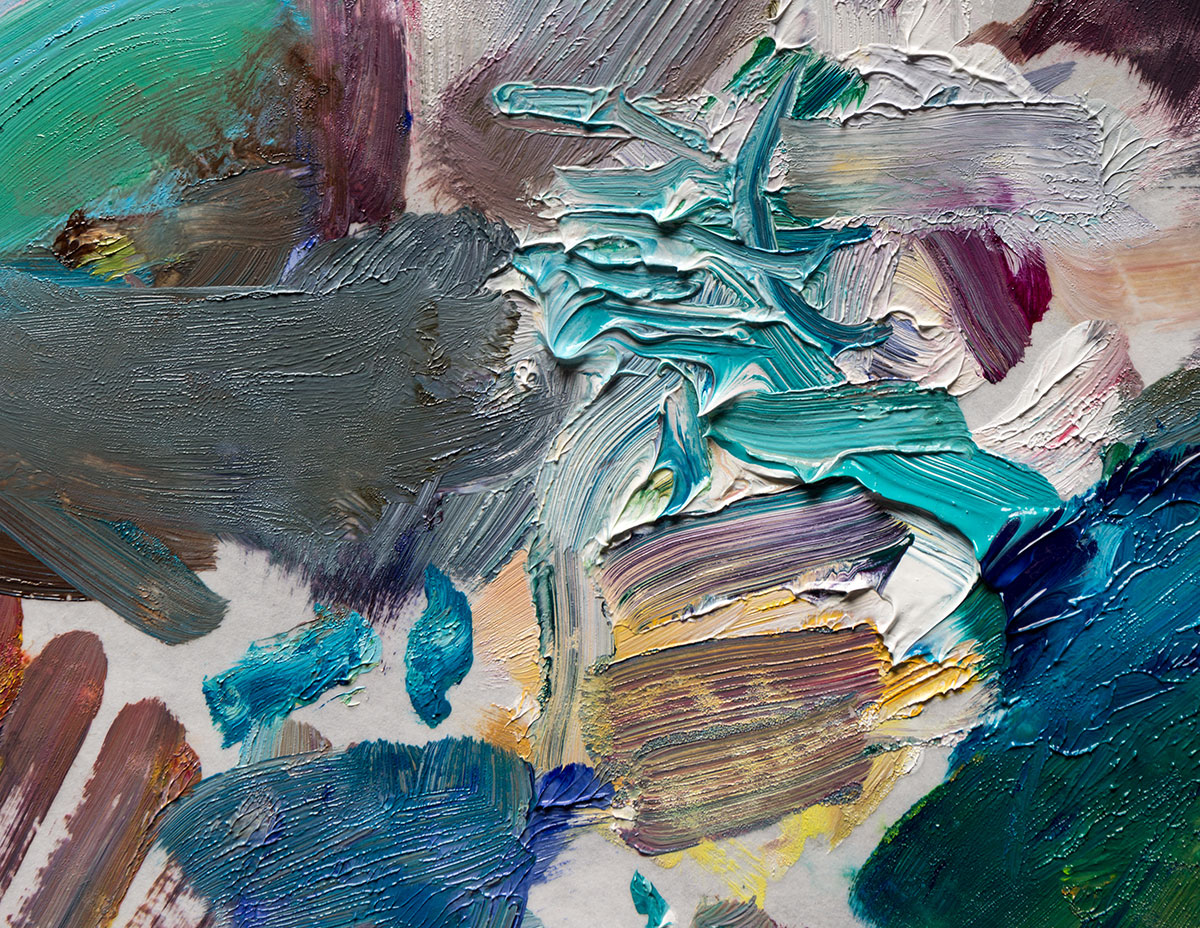
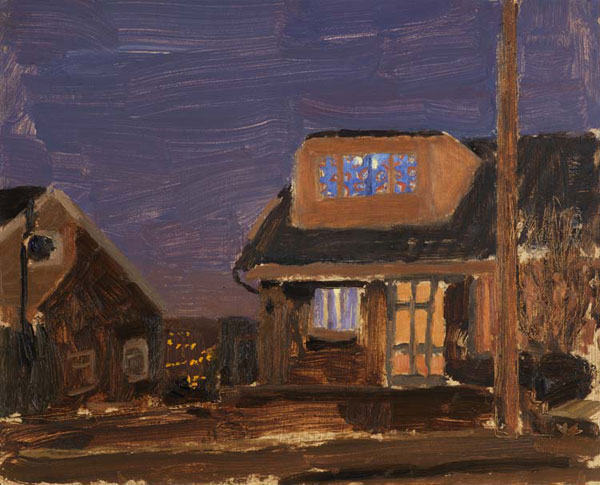
I set up a palette and painted two small pictures. I found most of the colour to be as expected, some colours are very strong like Phthalo Blue and Cadmium Yellow Deep and the rest have a very good pigment load. It took very little colour to make a glaze with the walnut oil, this paint stretches far. I tried the Fast Drying White but it didn’t dry as quickly as alkyd, it might be similar to the Gamblin Fast Dry White that only dries one day faster than the regular slow drying white. One of my usual favourite colours is Terre Vert, I find its neutral temperature, weak tinting and transparent nature very useful for gently toning down sharp reds, but in M. Graham it is not a natural Terre Vert, but is made of Iron Oxide and a green – it is disappointing, not useful to me.
The texture of most of the colours is fairly creamy but after a bit of time on the palette the thin layer left on the palette can get a bit pasty and needs a thinner. I used Lukas Medium One for the test paintings, the M. Graham Walnut Oil to make glazes for the mixing charts, the M. Graham Walnut Alkyd to speed up drying on the big colour chart.

Colour Mixing with M. Graham Oil Paints

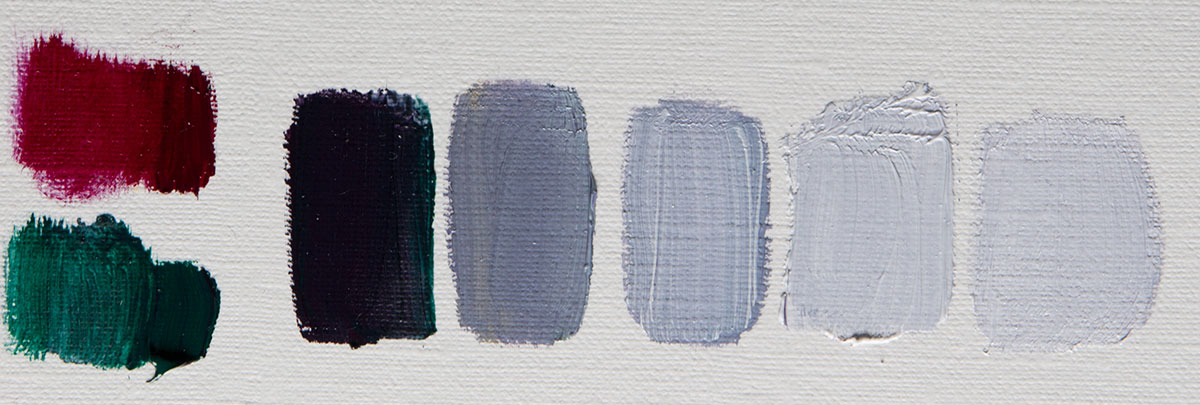
This colour mixing chart has the same colours running across the top as down the left side. This makes it a mirror image on the diagonal. Along the diagonal from upper left to lower right are the pure colours, because they are mixed with themselves from the column and themselves from the row.

left: Mineral Violet
right: Scarlet Pyrrol

left: Mineral Violet
right: Hansa Yellow
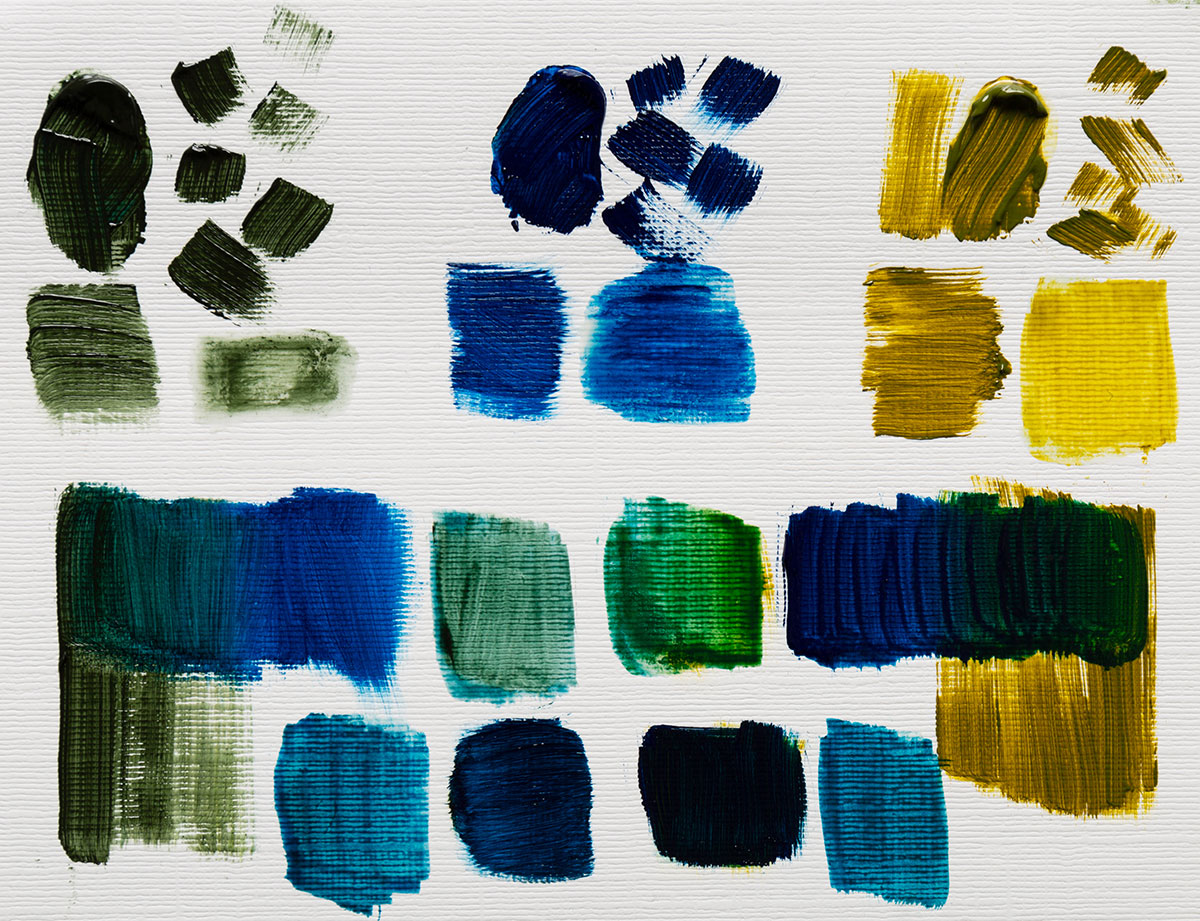
left: Terre Vert
centre: Phthalo Blue
right: Azo Green
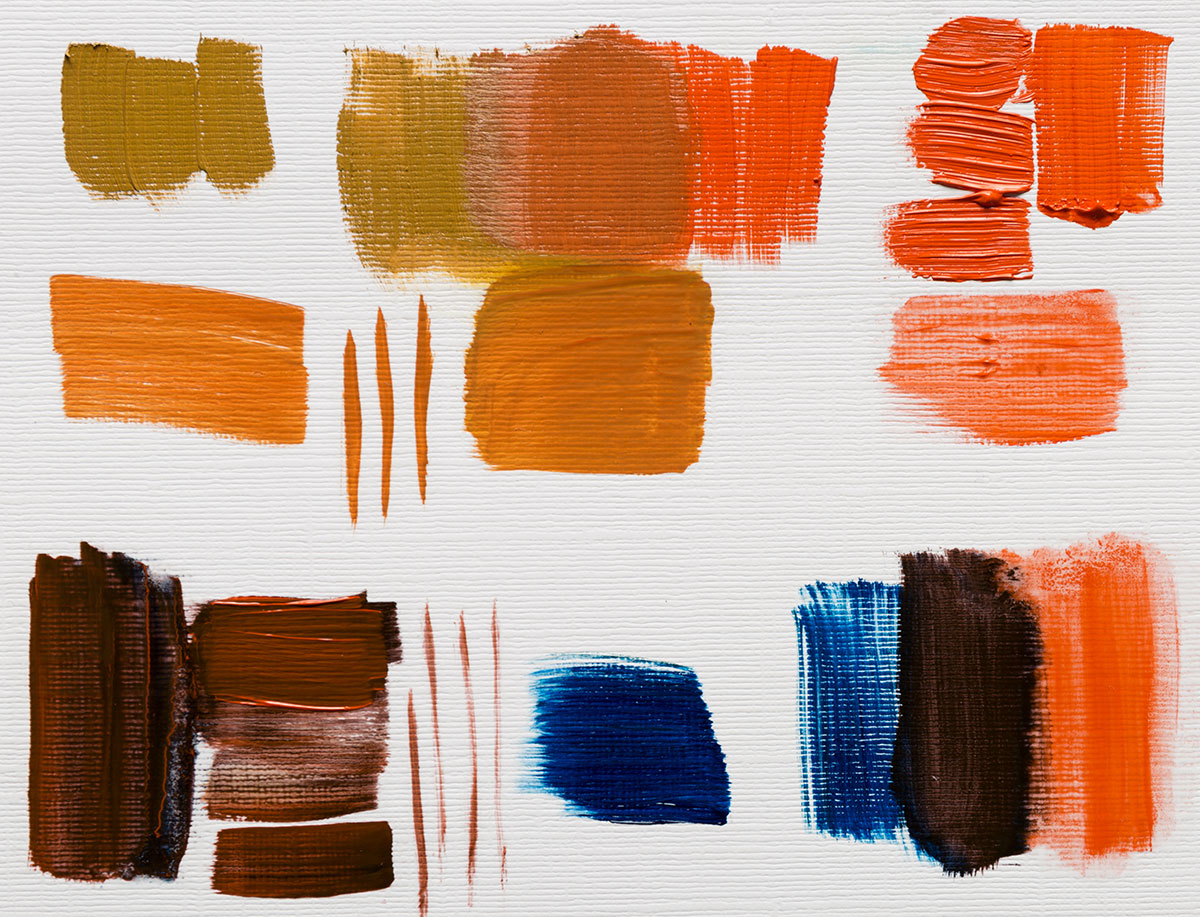
left: Yellow Ochre
right: Scarlet Pyrrol
bottom: Phthalo Blue

left: Ultramarine Violet
right: Hansa Yellow
(I love the blue-grey or green-grey glaze these make).
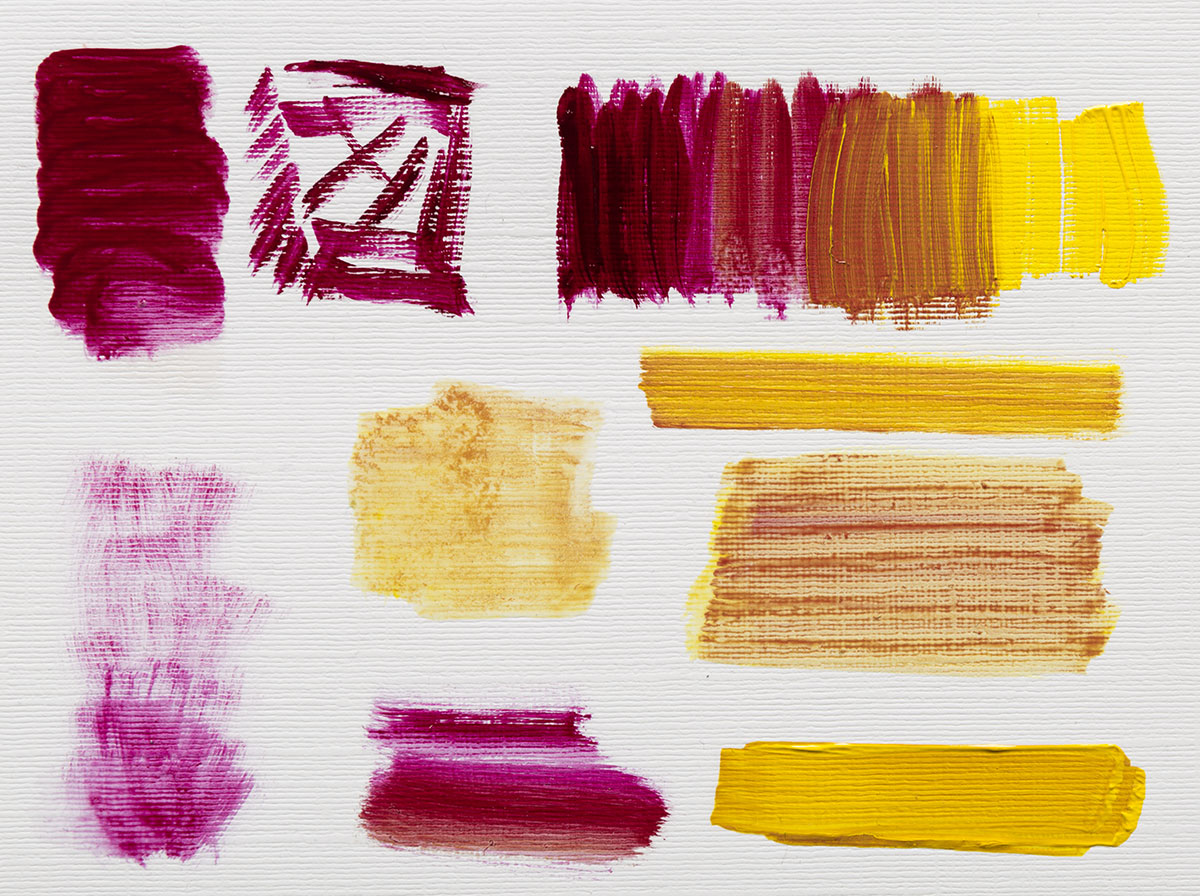
left: Quinacridone Violet
right: Hansa Yellow
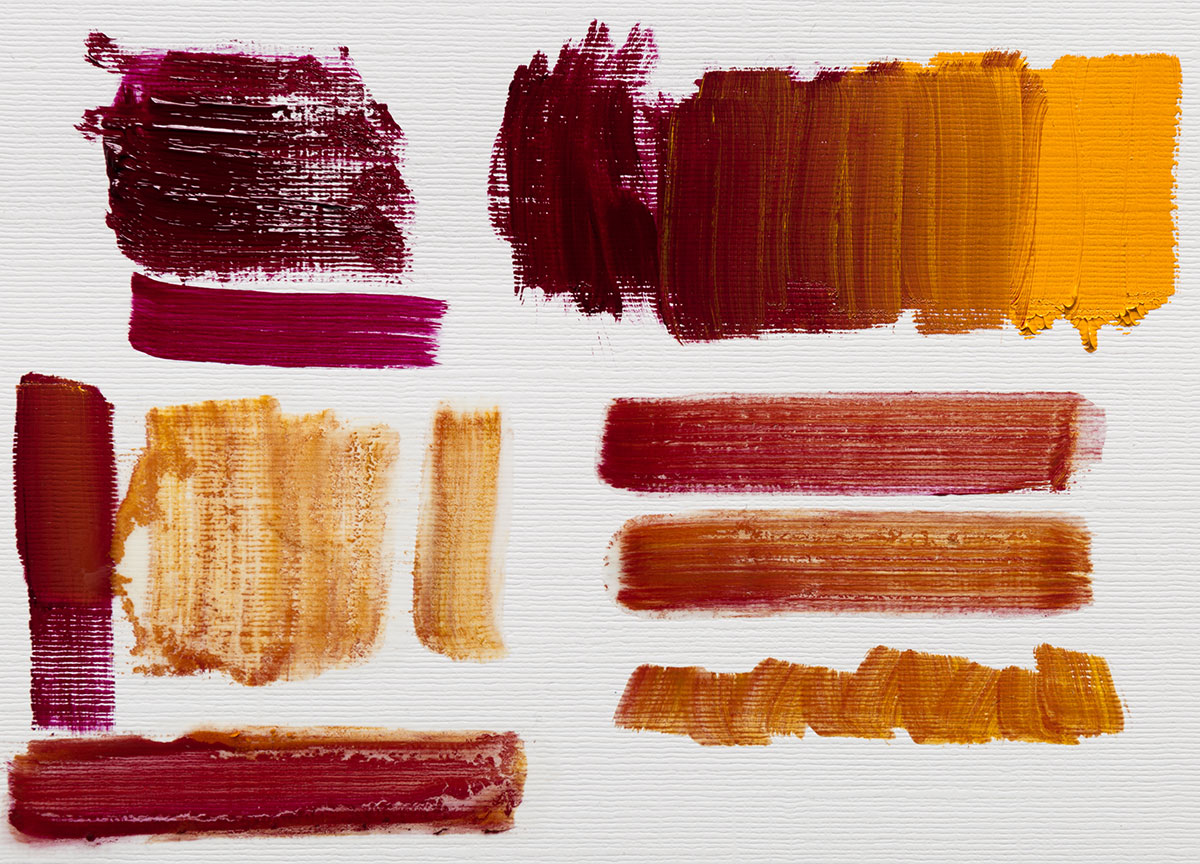
left: Quinacridone Violet
right: Cadmium Yellow Deep

left: Phthalo Blue
right: Yellow Ochre
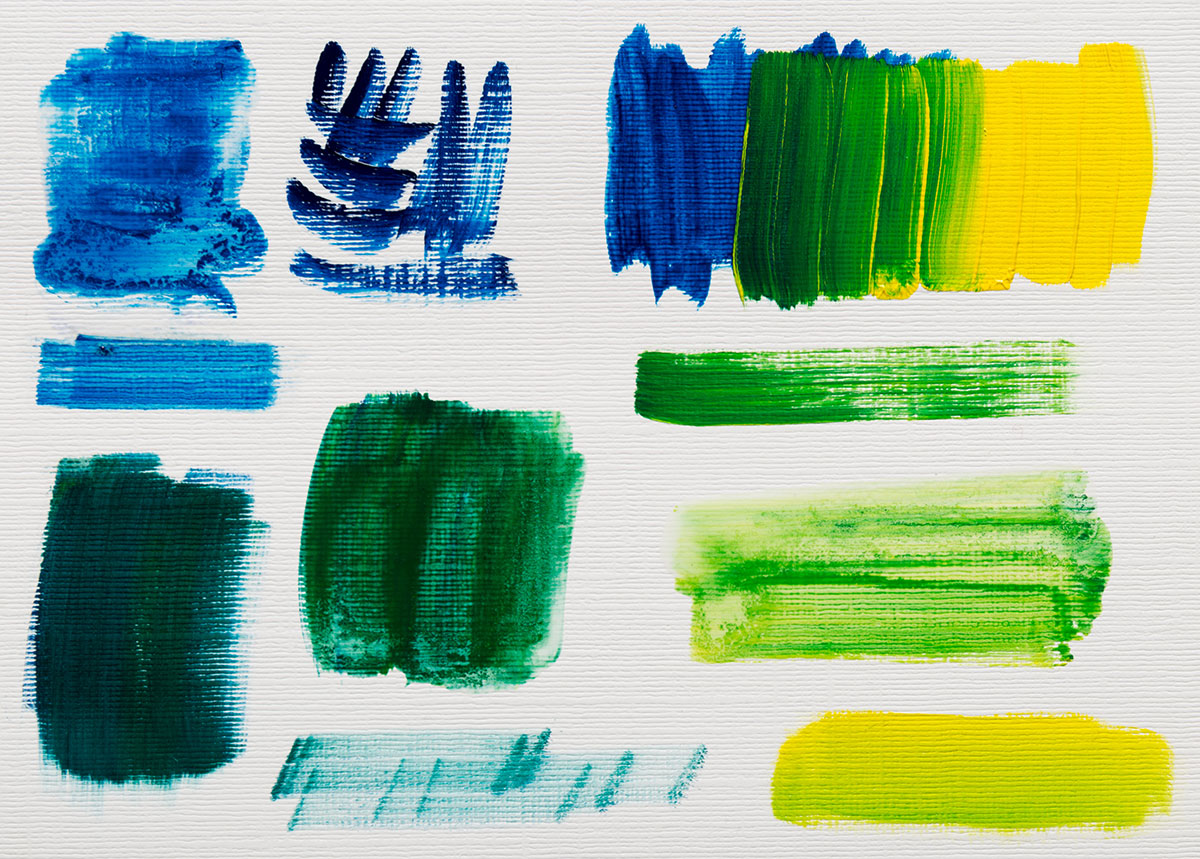
left: Phthalo Blue
right: Hansa Yellow
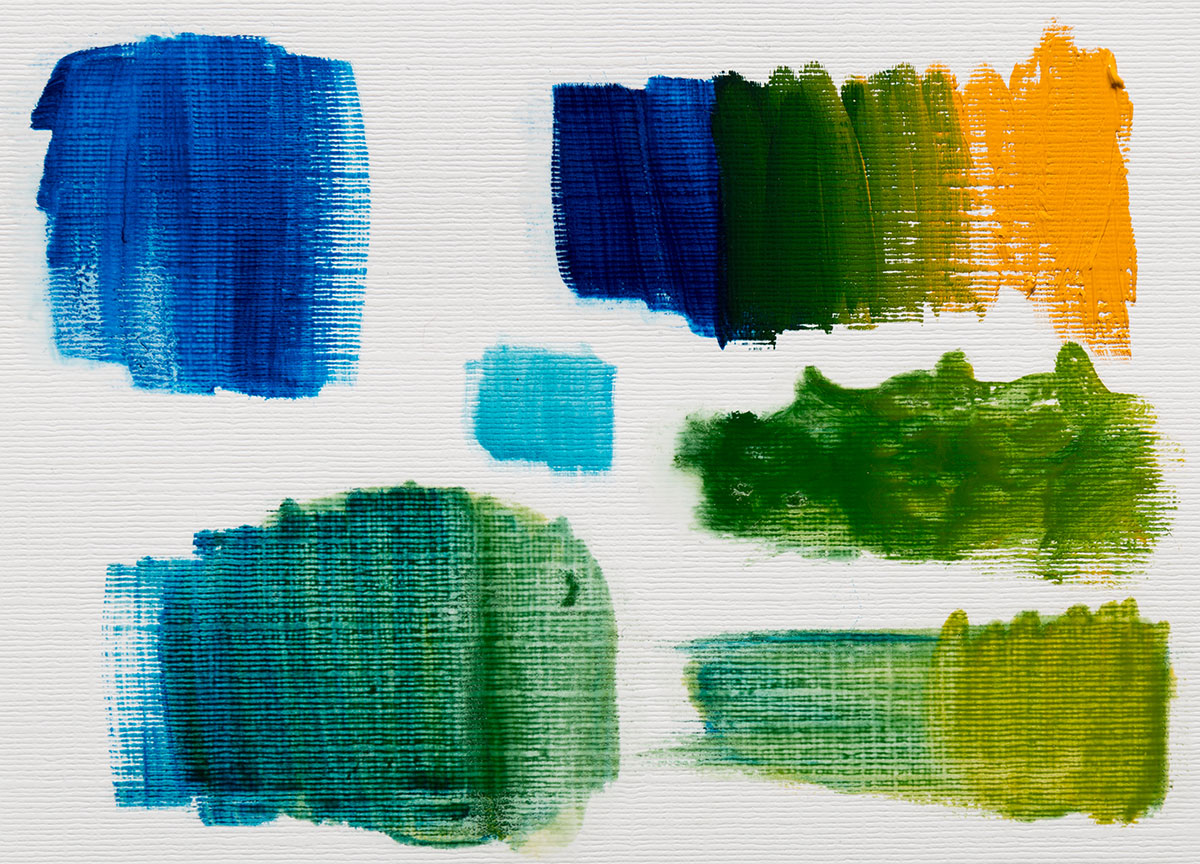
left: Phthalo Blue
right: Cadmium Yellow Deep
M. Graham Oil Paints and Mediums at Jackson’s Art
Click on the underlined link to go to the current offers on M. Graham Oil Paints and Mediums on the Jackson’s Art Supplies website.
Postage on orders shipped standard to mainland UK addresses is free for orders of £39.
The colour mixing swatches were done on Georgian Oil Painting Paper.



6 thoughts on “M. Graham Oil Colours – Made with Walnut Oil”
Of I painted the undershirts with walnut oil then let it
dry. Can I proceed to paint with walnut aloud up to the
end?
Thank you.
Hi Melanie
You can paint both the underpainting and the rest of the painting with walnut-based oil colour and walnut oil mediums.
Can I use walnut oil to oil out a painting before i varnish?
Hi Pamela
Yes, you can oil out with walnut oil.
Hi. I use Winsor Newton and Rembrandt oil colors in my palette.
Can I add M. Graham to this palette or do I need to use only M.
Graham oils alone as one palette because they have Walnut oil in
them. Want to add Phylocyanine Green and Transparent Yellow
Oxide to start.
Hi Mary
There is no problem with using a combination of drying oils in painting. Good brands of oil paint use different oils throughout their range. Blockx uses linseed oil for the earth colours that wouldn’t change much if they were to yellow and poppyseed oil for it’s blues and light colours. All the colours in their range can be mixed together. Lots of brands use linseed oil for most of their range but safflower oil for their whites. Some artists make oil painting mediums mixing walnut and linseed oil.
So you are fine to mix and match.
Comments are closed.