Irish artist, Éoin Francis McCormack’s show Born In Time in New York shows a combination of his striking, visceral, abstract oil paintings with his screen prints which capture his signature marks and colours. His practice focuses intensely on both the physical labour that goes into making large scale abstracts and the emotive response these produce. Éoin’s work demonstrates a gorgeous fascination with materials, work and transformative effects.

Oil and Spray paint on Canvas, 230 x 150cm
Tegen: When talking about your work you focus on the concept of making sure you’re a unique painter, and to this end (partly I assume) have developed a signature language of dots, borders and colours (which we’ll come on to a bit later). What with this distinctive voice are you trying to portray or want to portray?
Eóin: I see it as a striving to be unique. Yes, there are people who use dots and a similar palette but I think with time your (the artist’s) hand begins to show in the work. From years of repetition, and honing of any craft, you eventually see your signature gestures or language. When I’m asked what I’m trying to portray, or what the work means, I always bring it back to the work, it’s quite self-referential, I mean it is about painting. It’s about making work that is challenging to look at. It’s about the very action of painting. It’s about the dance I undertake time and again with the canvas. It’s about the battle with the tools and brushes and the symbiotic relationship I have developed over time with colour.
It’s a strange thing, I spent my life to this point learning how to make my own paintings and now I am able to, how to push that.

screen print from Damn Fine Print
Tegen: The hypnotic dots are one of your signature elements. These consist of a mixture of hand painted and ‘found dots’ (taken from objects you see or find, such as rubber mats and carpet underlays etc). When did you start working with them and what captured you about them? Is it the dizzying compositional effect they have on the eye of the viewer or is there something else that keeps you obsessed with them?
Eóin: The dots started as an accident in my studio in Edinburgh. I was advised in my years previous to gather stuff and just keep it lying around, which I still do. So one of the pieces of junk I had lying around was a scrap of a yoga mat, or some such thing. Anyway, the upshot was an inky piece of paper fell from my workbench onto the floor and the yoga mat scrap. I picked up the piece of paper and there were my dots printed on the paper from the relief in the mat. I think it really important to have stuff just lying around, I always find a use for it.
The dots have since developed and I see them everywhere. I was recently making prints and saw that the floor mat I was standing on had amazing dots punched through it, so this was the basis of my recent screen prints. As I say I see them everywhere now it’s become an obsession in a way. I enjoy the monotony of the hand draw dots I create too, they are contradicting in that they show the hand but they are also uniform. I like the variation in dots, the tone and optical twists one can create.

Tegen: Much of your work is distinctly painterly, from your wide sweeping marks and shapes to your obsessive controlled detail. After your residency with Damn Fine Print you discussed working in screen-printing in tandem with your painting process to explore and widen both avenues. Since you included in your latest show in New York a special edition print (which was created with Limerick’s Parallel Editions printmakers) ‘Born in Time’, do you feel you’ll continue to work in print for the coming years? Additionally, does your production of print have anything to do with increasing the accessibility of art to everyone and opening collecting up to the younger generations who want to collect and support upcoming and emerging artists?
Eóin: Yes screen printing is part of my practice now and will continue to be. I enjoy working on both at once and seeing the relationship between them tighten. I learned a lot from Damn Fine Print and Parallel Editions. Yes, it’s crazy at the moment the amount of kids who are buying prints — it’s wonderful. It’s like going and buying a record that’s why I enjoy the limited edition prints, it adds to the collector aspect. My work is all about accessibility it’s for everyone so by making prints I feel it has brought the work to a larger audience. Of course, I have always used printing techniques in my Dot Paintings.

Oil on Canvas, 213 x 152 cm
Tegen: Several of your interviews and talks reference interdisciplinary communication between the art forms as a massive resource and inspiration (spoken word artists, musicians etc), and many of the names of your work humorously reference songs or musicians. How do you feel this, and the fact you play music yourself, informs, if it does at all, your work and effects the current visual art scene in general?
Eóin: Yes, I think interdisciplinary communication in the arts has always been important. I listen to a lot of music of all genres and a lot of BBC Radio 6 Music while working in the studio, even the odd podcast — I enjoy Irishman Abroad or anything from Headstuff. I like naming paintings but am very aware one can kill the viewer with kindness, that is one can give away too much. I let the viewer figure out the piece for themselves; I don’t want to spoil them. I am constantly asked what artists inspire me, I think inspiration is overrated. It’s about work, I’m far too obsessed with myself to look at what other lunatics do in their studios. I get far more excited by the outdoors or my chickens or putting up a shelf or cutting down a tree. I also like playing with fire. I like work: be it music, sculpture, pots, stained glass, stuff I don’t make myself, I get weird when I look at painting.
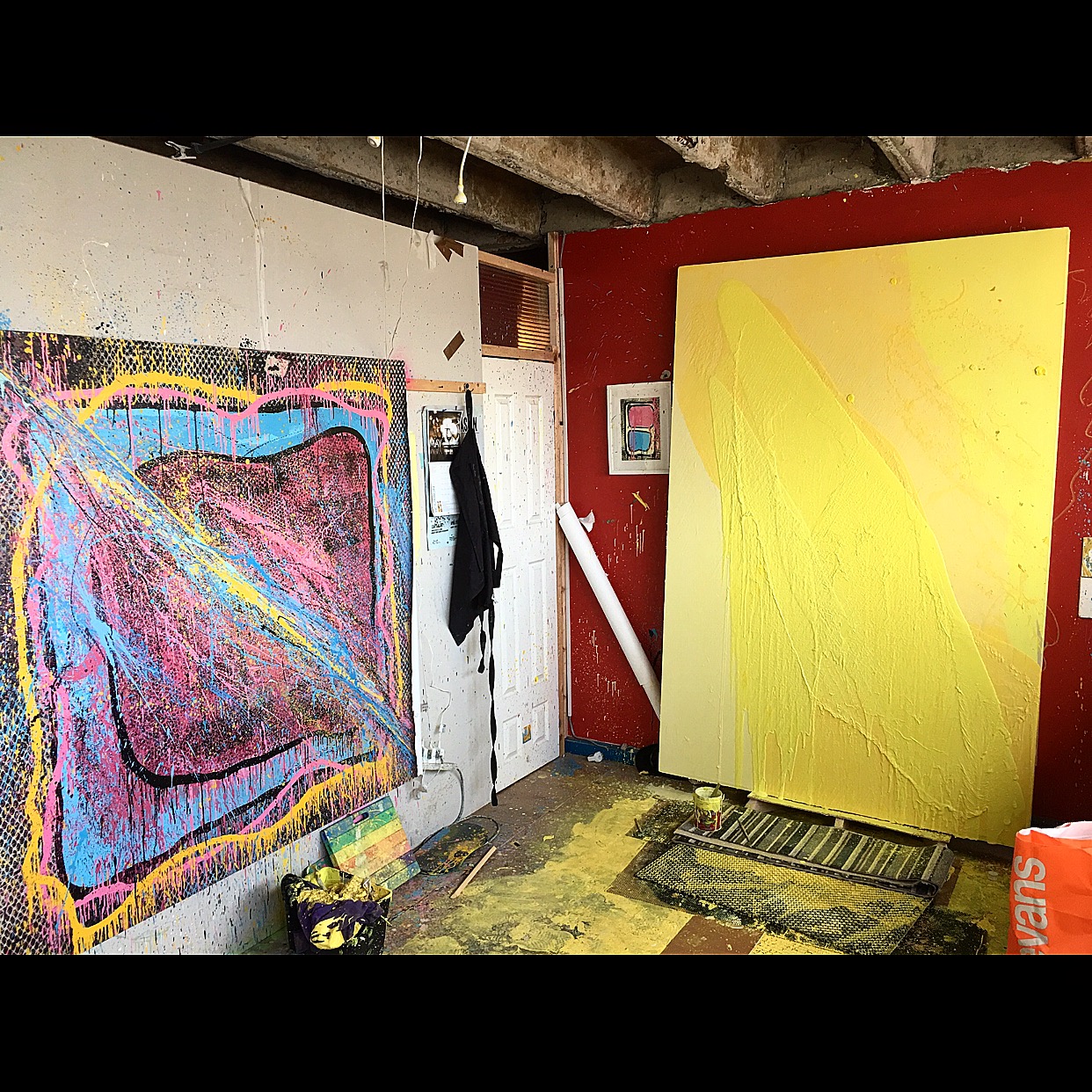
Tegen: Similarly, you talk about the importance of artist-led galleries, studios and spaces. As being a full-time artist is becoming increasingly hard for many, how would you like to see the support structure grow and what do you think needs to change in general? What would be your ideal studio set-up?
Eóin: Artist-led spaces and galleries are important as I feel the power needs to be rebalanced between the artist and gallerists/curator. As a full-time artist and someone who makes a living from this line of work, I have sold 99% of my paintings myself via social media or exhibitions I have organised myself. I spend a lot of time contacting companies directly who I think might like to purchase some work. The gallery thing hasn’t been for me as of yet, I do believe there is a place for my work within the gallery scene but I am so busy at the moment it isn’t something I worry about. My ideal studio setup is simple really I need space, warmth and light and walls.

Oil on Canvas, 200 x 115cm
Tegen: As an art suppliers, we’d love to ask you about the materials you use in general. You’ve made your own paint and canvases for years now, could you take us through your process of selection and give us some insight into why you choose the pigments you do, why beeswax has attracted you as a binder for oil paint instead of alternatives… and the one we really have to know how does incorporating industrial metal paint into traditional oil painting work?
Eóin: This is the part that excites me most the work, the materials, the craft, the smelly stuff, the mess. It all starts with the timber. I get it in a lumber yard nearby, I walk it up the market street on my shoulder avoiding people as I go. It starts off as a 12 foot length. With my crop saw I bring them down to a size of 8 x 5 foot generally for my stretcher, using timber quadrants to bring the canvas away from the stretcher. Using my grandfather’s old Arrow staple gun I attach the raw 10oz canvas to the stretcher. I have recently started wearing gloves and using canvas pliers, there’s less blood on the canvas that way I find.
Next, I prep the synthetic rabbit skin glue and size the canvas. 24 hours later I give it a quick prime and leave it another 24 hours to dry. So I use a lot of dry pigments which I did with beeswax and a few other bits and pieces (top secret). The reason for the beeswax is basically a simple trial and error situation. I used lots of different things and I found it works best, I also like to harp bark to tradition whenever possible.
I like the juxtaposition of the old and new, with traditional paint canvas and stretchers, stuff like that, but I think the paintings themselves are very much of now. The industrial metal paint started about 5 years ago, again as an experiment. I acquired a large amount of the white metal paint and started thinking of ways to use it. Without giving too must away, I add loads of driers and unrefined linseed oil to said paint and add my pre-made coloured paint to it. This crazy comical reaction happens which results in my signature sagging look.
This is where the excitement lies for me, in the experimentation followed by the perfection. So now the painting can begin. I see the painting as a performance, wrestling with an enormous canvas. Yes, the end goal is important but the process is maybe even more important. I would also like to add at this point I do use oil paint from the tube and spray paint for certain things.
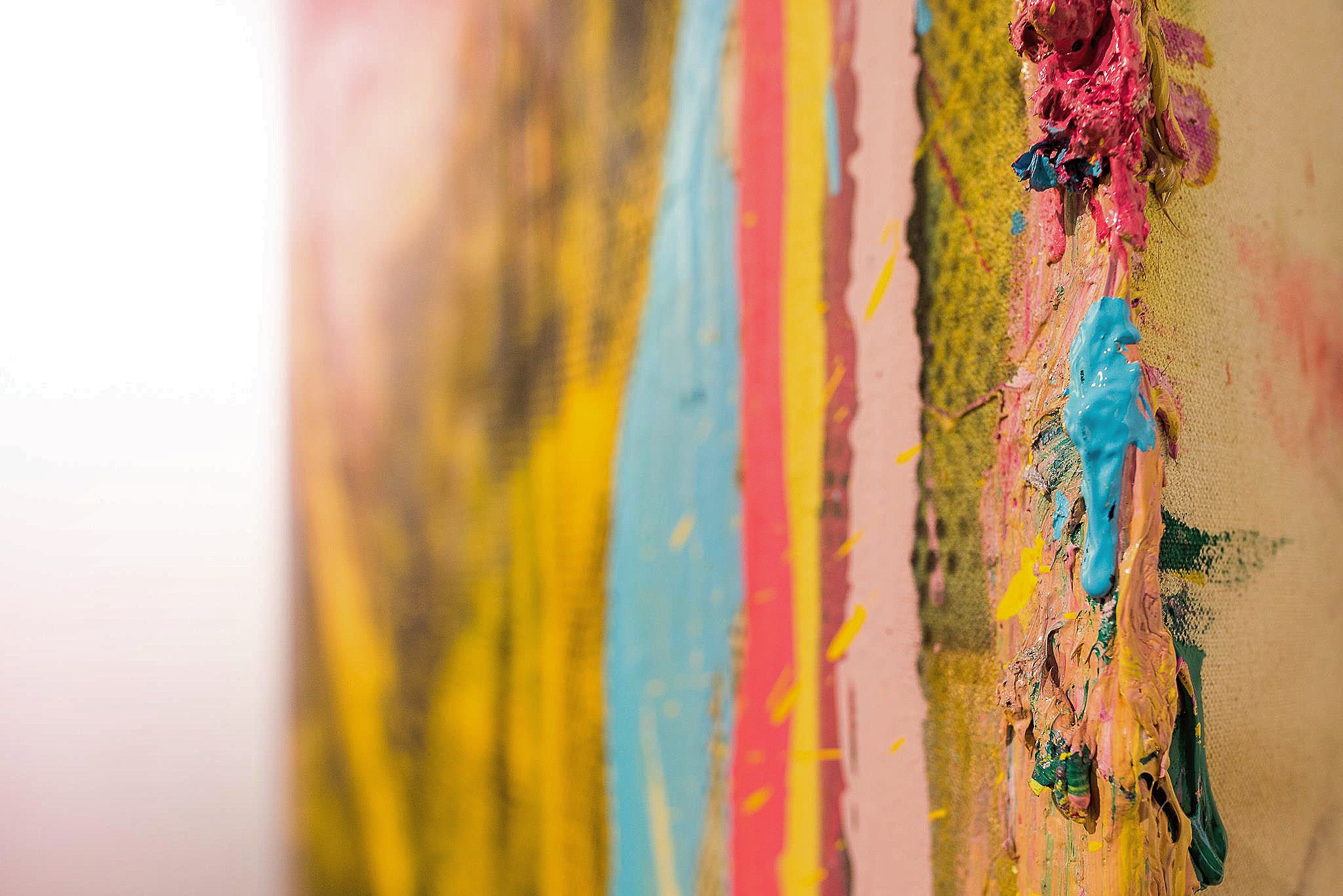
Tegen: A lot of your work involves contradiction and balance, making it both distinctive and visceral. Since you use little to no preparatory sketches and allow for ‘happy accidents’ during parts of the painting process, could you take us through how you actualise your layered pieces and any tricks you use to maintain cohesion when you’re working with detailed, complex patterns such as your dots and borders alongside your large textured kinetic forms?
Eóin: Yes, contradiction and balance. Firstly to reference the sketches, I don’t do sketches in the sense that I’m sitting with notepad in hand, which of course sometimes I do, but I mostly make lists; I sketch in a way that I play with materials and see how they behave and learn from that process. So I am very much involved in the process of sketching but no I’m not always fully aware, nor would I want to be, of the finished outcome of the piece before I start.
As for ‘happy accidents’ I’m not sure I may have called them that at some point but it’s far more controlled than that, I have been making paintings for a long time and I know how the paint is going to behave. As you say, there are many layers so patience is required, time to dry etc. The large textured works are very complex and are really about getting your paint mix correct and choosing ‘good’ colour. Also, you need to be an expert in making stretchers that can take weight and abuse, and after they have been abused look perfect. With most of the Dot Paintings, they are made using a mixture of painting and printing techniques, the dots being made by either stencil or a kind of stamp or monoprint; it keeps my practice fresh when I work this way.

Tegen: Your practice places a heavy emphasis on the artist as a physical worker, with a strong routine, a lot of time spent in the studio and a practice that you’ve curated to include physical, mundane and painstaking tasks. Why do you think this concept of art as labour, in particular physical labour is important, and except for giving you meditative time to think and consider your final pieces and work, what does it bring to your work?
Eóin: Well in a way I have sought this kind of work out but really painting is just that. It is physical work that requires a strong routine. I think for me it’s as simple as getting home in the evening and feeling I’ve done an honest day’s work, really that’s it. If I come home and I’m tired and head to toe in paint, I, at the very least, think today was worth it.

Tegen: Another aspect that’s interesting in your work, and practice, is the balance between ‘gentle painting’ and the expectations placed on male (and masculine) painters. Could you explain how you negotiate this contradiction and do you feel there are any artists who you take guidance from?
Eóin: The beautiful thing about painting is you can hang a painting on a wall and you don’t necessarily know whether it’s is a male or female that’s made it. I paint delicately and use what some might see as a feminine palette, this is not something I concern myself with for a second. I am a man who paints. But this is not how I want my work to be thought of.
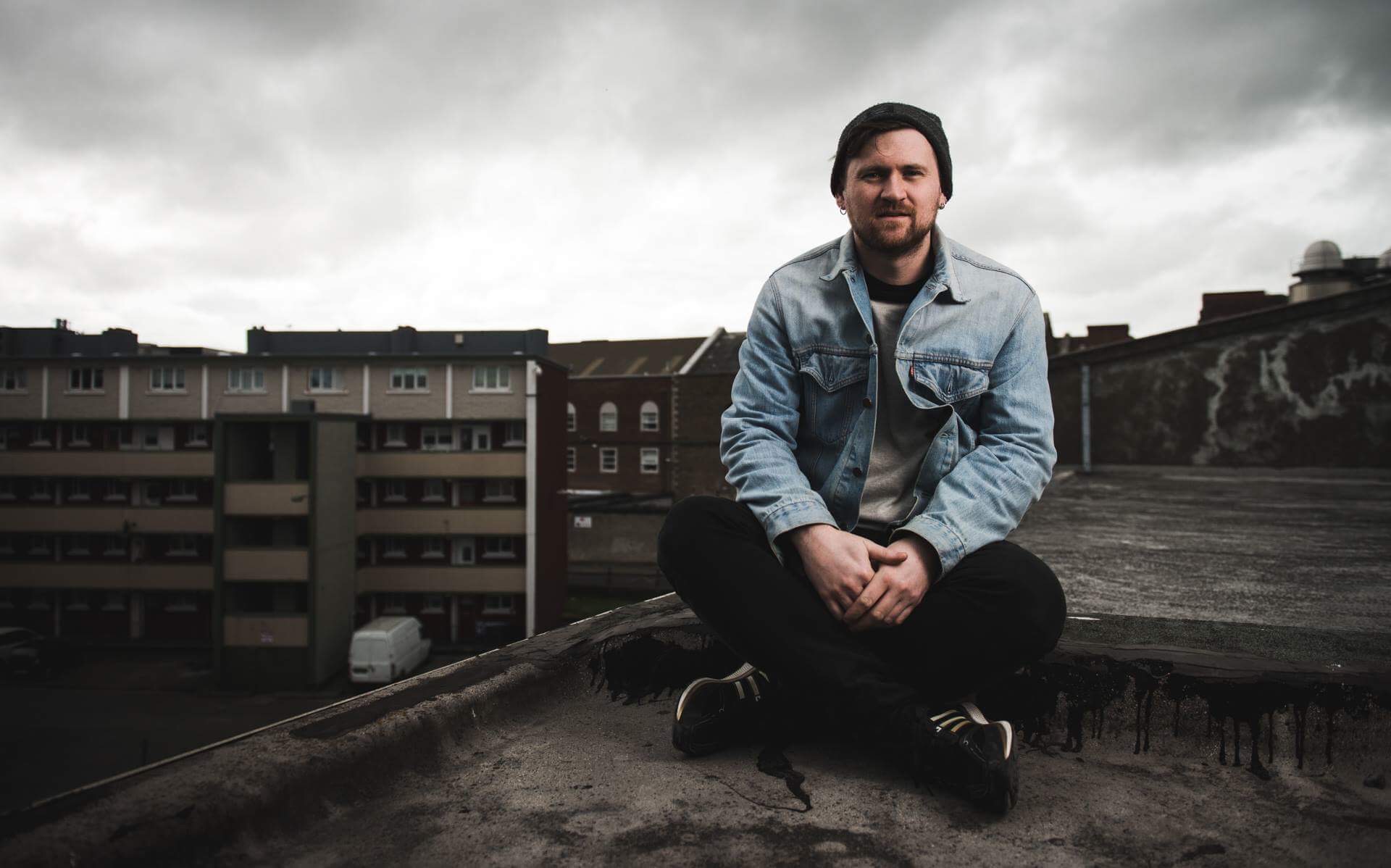
Tegen: In your artist statement you say that ‘I am interested in the time spent by the viewer, in front of the canvas; I wonder what they think, and if they consider their time spent as worthwhile.’ What response do you feel is a worthwhile one from the viewer and do you have a method or have you ever recorded your audience’s response?
Eóin: It’s just a hope, I don’t investigate or record. In the Rothko Chapel about 10 years ago I felt something different than I ever did before, it was then I knew painting could lift a person, it could enhance a person, make them feel, colours could evoke emotion. Pigment on a canvas in abstract form can make one weep. So when I say I’m ‘interested’ it’s that, it’s the wondering are they feeling more.
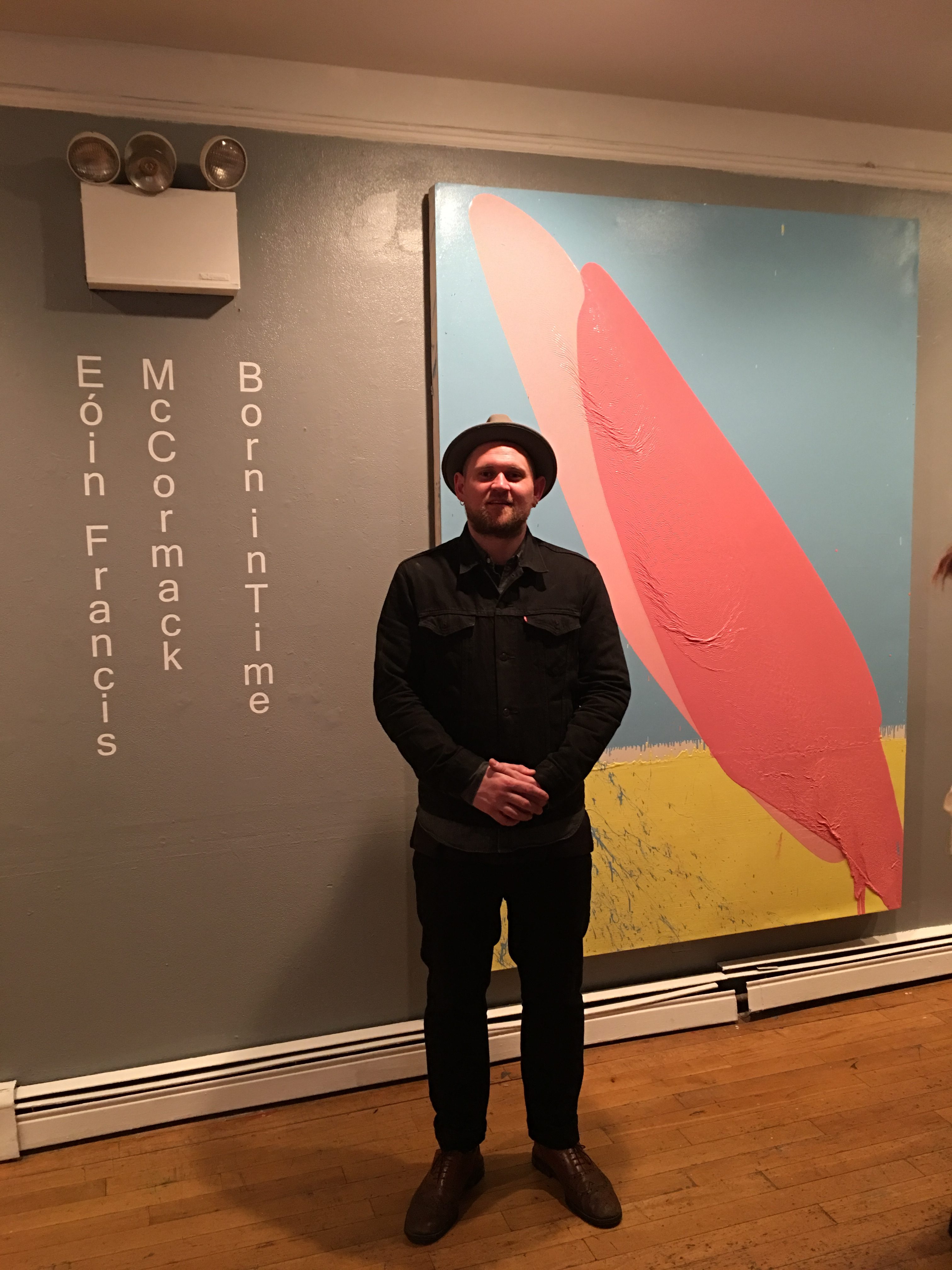
Tegen: ‘Born in Time’ partially represents a change in circumstances and a development of your career and life, what are you working on right now? And what do you think we can expect to be seeing from you in the future?
Eóin: Well Born in Time will run until the 29th June 2018 in the Irish Arts Centre in Hells Kitchen New York. I have just released a new print of the same name Born in Time. Then we are having a baby at the end of July 2018 and then I have a solo show opening in the Luan Gallery in Ireland on the 4th of August 2018. I’d like to make a movie and write a book in the next few years. It’s been the craziest, busiest year of my life but amazing.

Tegen: Where online or in the flesh can we view more of your work?
Eóin: So my work can be seen on my website www.eoinfrancismccormack.irish where you can get links to my social media. Damn Fine Print in-store and online. Teeling Whiskey Distillery have 2 large paintings in their collection on permanent display at their HQ in Dublin. The Irish Arts Centre, Hells Kitchen NYC.
You can find out more about Éoin Francis McCormack by watching the documentaries below:

The image featured at the top is: Eóin Francis McCormack in front of his painting Before Bordeaux, Oil on Canvas, 200 x 115cm.