



We were intrigued when reading Thomas Friedman’s review of Sennelier Oil Pastels on jacksonsart.com about his techniques using pastels, so we asked him if he’d like to explain further. Friedman unusually uses soft and oil pastels together along with a drying oil: ‘these are terrific as they are soft and cover the watercolour paper I use for most pastel work handily. The colours are true and with a bit of walnut oil they make splendid washes over surfaces that have been sealed with a workable fixative. Love them.’
Blending Oil Pastels and Soft Pastels
by Thomas Friedman
In the following article, I explain how I use oil and soft pastels together to create a rich variety of tones and colour as shown in my picture, Feeding Frenzy.

There are two techniques I use regularly.
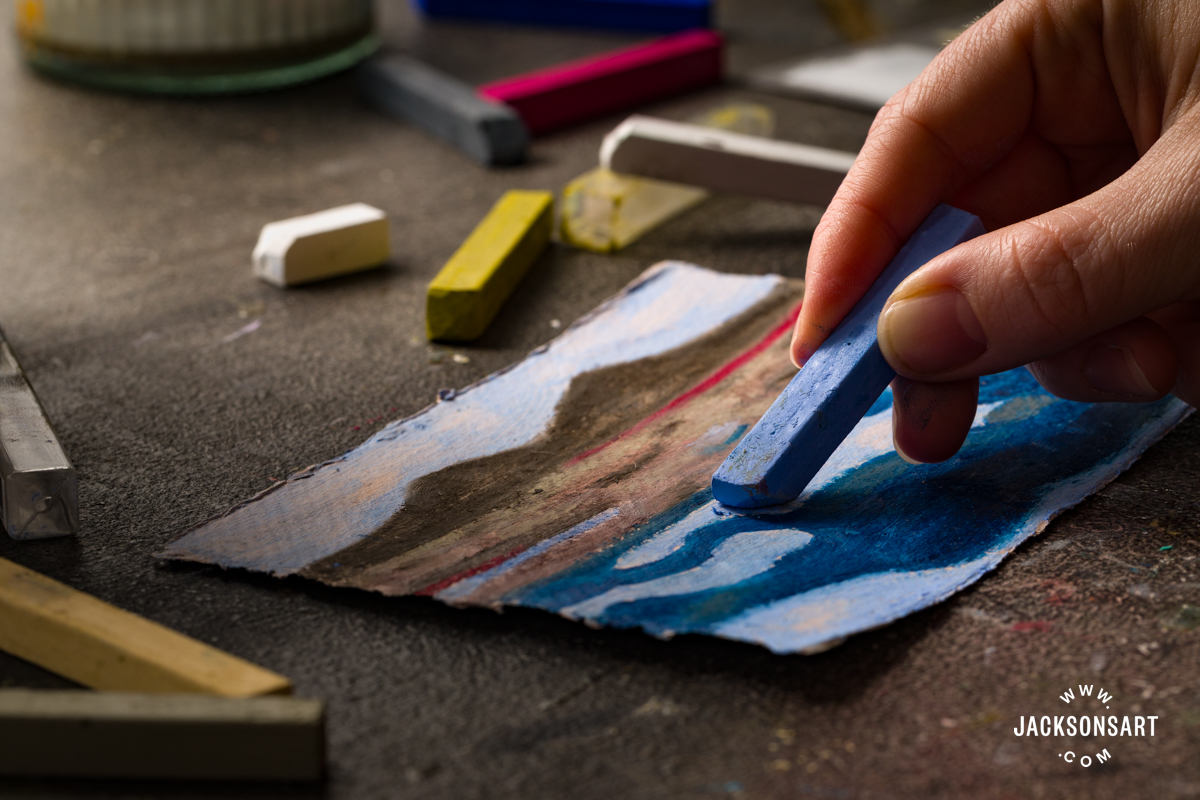
The first is to create a durable undercoat of oil pastels over which I add layers of soft and/or oil pastels. This can easily be scraped to reveal the colours or partially covered to create interesting effects.
Why use oil pastels here rather than watercolours?
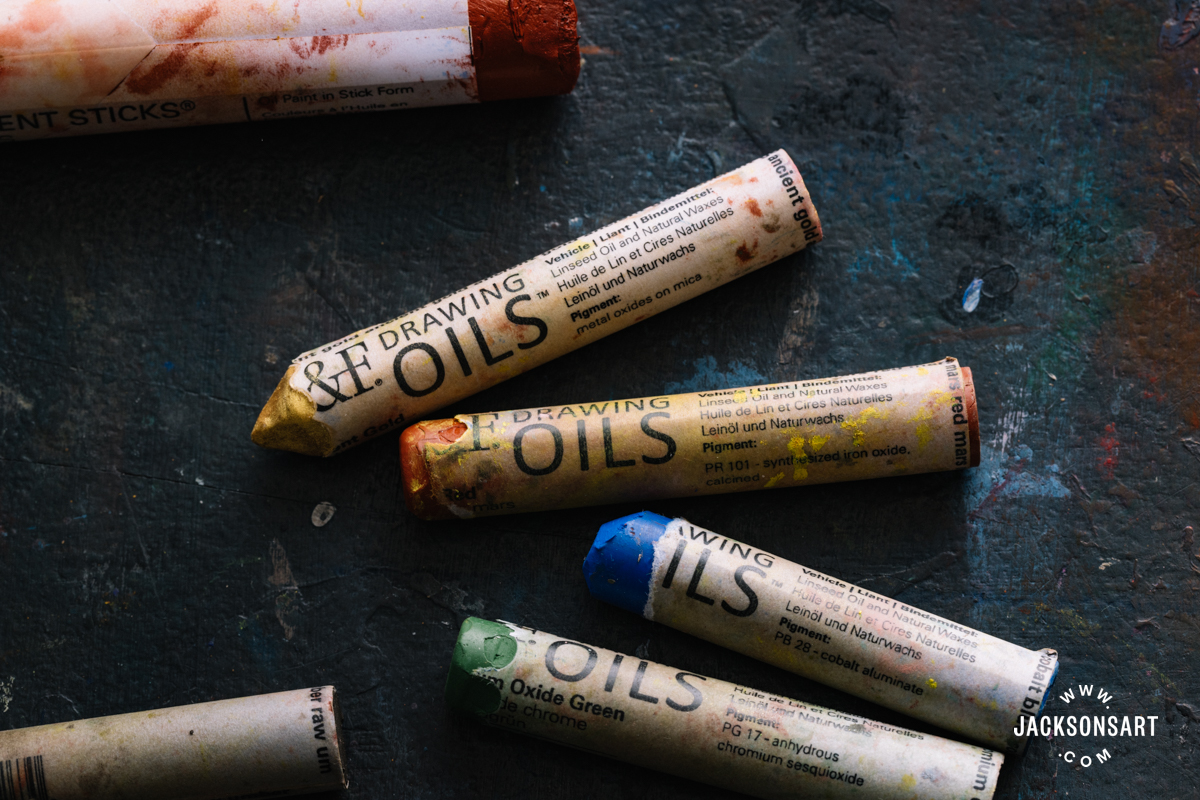
I’ve found that applying a heavily pigmented oil pastel (Sennelier) mixed with an alkyd walnut oil provides me with a more durable base of colour than watercolours (I’ve found it is best to avoid a watercolour base when one desires to scrape or otherwise add and remove layers of additional soft or oil pastels.)

As can be seen in the pictures provided, I start with 140 lb watercolor paper (Canson XL) and then apply a light layer of the oil pastels in various colours (see above) to which I add walnut alkyd oil (M Graham) using a very stiff paste brush to spread the walnut oil (see below).

The oil enables me to thinly spread the oil pastels varying the colour and the tone while preserving the bite in the paper for later applications of soft and oil pastels.

When I’ve finished the undercoating, I spray the entire paper surface with a workable fixative (Krylon) and set it aside for several hours.

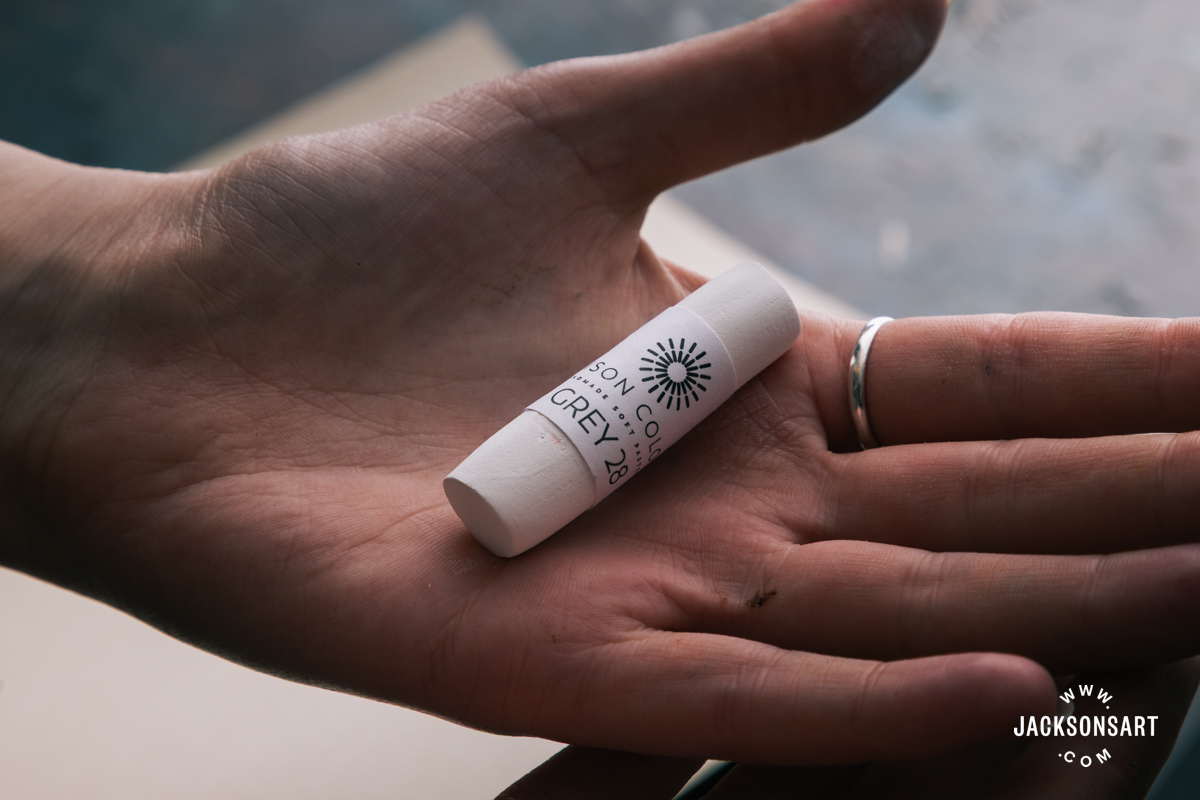
After the fixative dries, I work with soft pastels (here I used Jackson’s initially for broad coverage and then worked the finer parts with the softer Sennelier and Unison sticks. Finally, I worked again with oil pastels to give parts of the picture a gloss (or as some might say immediacy).
As can be seen, part of the work involved scraping, here into the soft covering the base oil pastels and a later application of oil pastels.

An example of oils showing through beneath the soft pastel is the pink (oil) covered with grey, white and green soft pastels.

I’ve heard some comments to the effect that you can’t apply oil pastels over soft pastels, but is that correct?
No. But what must be remembered is that the oil pastel will likely remove the soft pastel colour underneath where it is applied. It should be done carefully, and you will need a heavy paper towel to continually rub the pulled soft pastel from the oil pastel stick.
What it enables you to do is add some bold sheen to the soft pastels, make use of golds, silvers and other metal colours that are much more vivid in oil pastel colours, as well as creating effects such as smears that don’t blend which is what often happens when using only soft pastels.
These techniques are excellent for more modern work, but frankly, I’ve not found them particularly effective in more traditional representational work. I’ve taken the opportunity to add a couple of the works I’ve done recently using these techniques.
About Thomas Friedman, Tallahassee, Florida, USA

My art ranges from landscape and still life to wild modern pieces which enable me to stretch myself, concentrating solely on composition, tone and colour. I feel my best works often are the result of weeks of germination before I ever lift a brush, pen or pastel stick. I work in oils, pastels and watercolours.
I really don’t know why, but as I work, I contemplate issues that face each of us, ecological, social or political, and either directly or indirectly, they are almost always reflected in my work.
My landscapes tend to be bright, bursting with colour whereas my still lifes are often brooding and pensive. I create contemporary pieces stressing composition and movement and try to retain just enough visual clues and objects to appeal to most audiences.
I’ve shown at the Florida State University Museum of Fine Arts, The Foster-Tanner Museum at Florida A & M University, the Florida State Capital Gallery, Tallahassee City Hall, Goodwood Museum and Gardens, the Gadsden Arts Center & Museum and at other venues throughout the Northern Florida-South Georgia region.
My work is displayed in private collections along the East Coast ranging from the New York City area to Florida.
I can be contacted at my email address [email protected].


6 thoughts on “Can You Use Oil Pastels and Soft Pastels Together?”
Thank you! I love using oil and
softpastels together. It’s amazing what
kind of effects you can create – depth with
layers upon layers, and then using an
Xacto knife to cut through, as well as
graphite and colored pencils.
Thanks Mindy, that sounds really inspiring!
Yes, it is possible to combined
both medium. Their so nice to
used and applied on abstract
paintings as well.
Thanks for your thoughts, Christopher!
Thanks Thomas for the valuable info. I often
get asked this question when doing demos
using oil pastels, which I love. I will mention
your name as my source next time. Love
your abstract work by the way.
Thanks for your feedback Peri! Nice to hear from you.
Comments are closed.