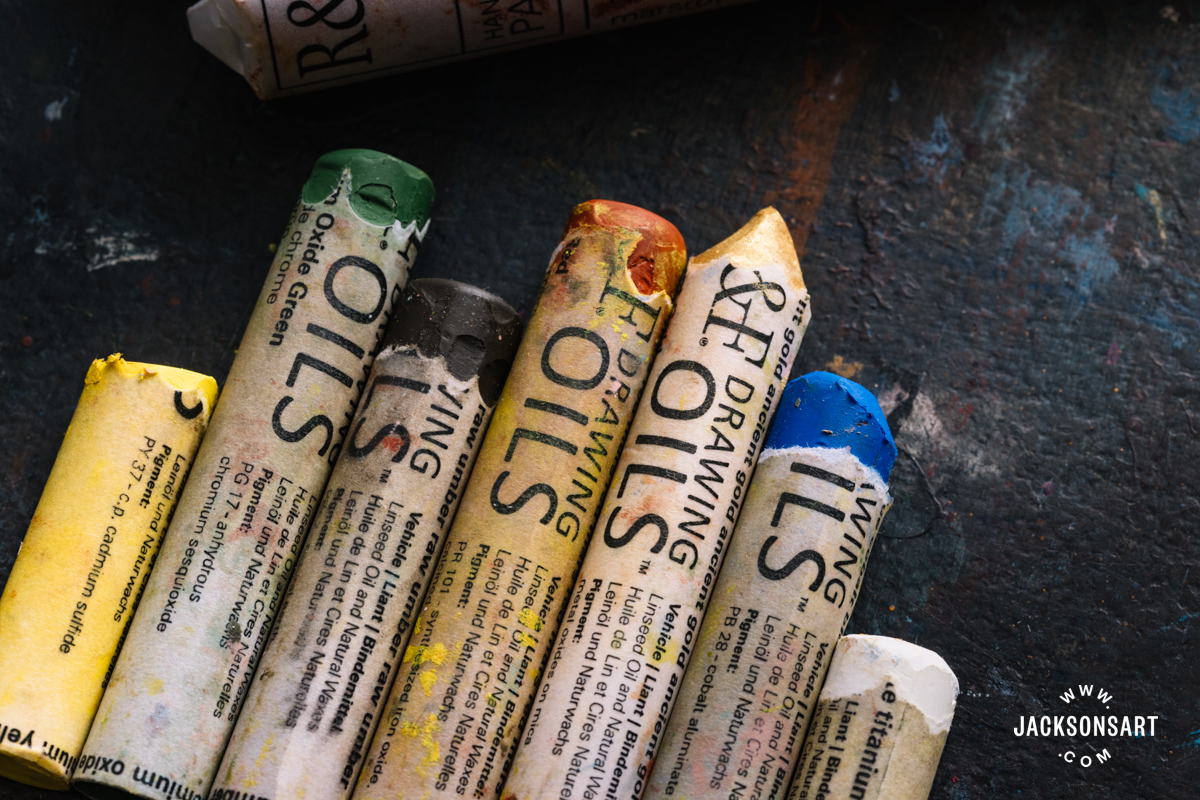
R&F Drawing Oils were introduced earlier this year, becoming the third handmade solid paint from the New York-based paintmakers, alongside their Encaustic and Pigment Stick colours. The range currently includes 40 colours and occupies an intriguing space between an oil stick and an oil pastel. Drawing Oils can be used on paper like an oil pastel, but their formulation of pigment, natural wax, and linseed oil allows them to oxidise, forming a permanent paint film, which standard oil pastels do not. This makes them suitable for finished, archival artwork without the need for fixative, varnish, or glazing. For this review, I tested the Introductory Set of 12ml R&F Drawing Oils, as well as Ancient Gold, on Jackson’s Watercolour Paper Block, Jackson’s Pastel Paper Pad and Jackson’s Canvas Board. I explored how they can be applied and considered their use as a stand-alone material, within oil painting, and in mixed media.
Between Pastel and Paint: Testing R&F Drawing Oils
How R&F Drawing Oils Compare With Oil Pastels And Paint Sticks
I began by comparing the R&F Drawing Oils (Mars Red, Cadmium Yellow Light, and Raw Umber) with the R&F Pigment Sticks (Mars Red and Mars Yellow Light) and Sennelier (Light English Red) and Caran d’Ache (Gold Ochre) oil pastels to see how they applied to the Jackson’s Canvas Board, how they mixed, and how well they layered.
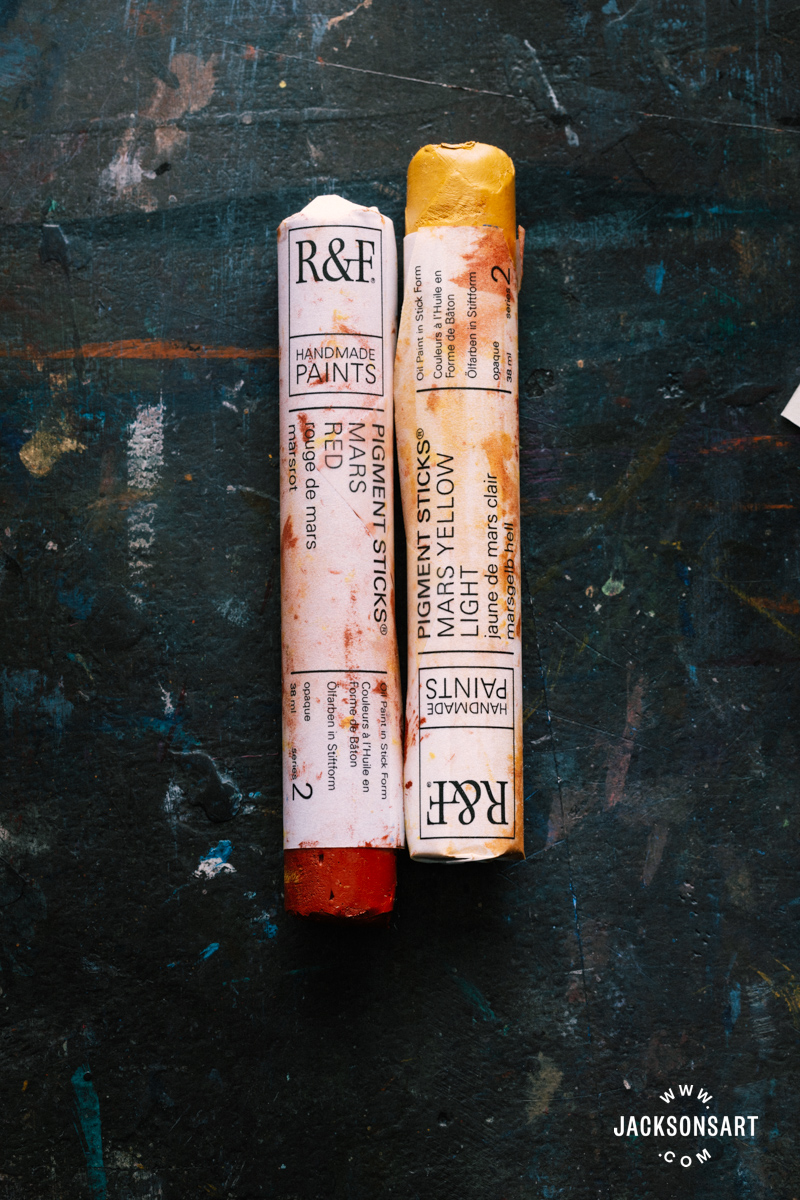
The Pigment Stick was glossy and applied with minimal pressure, forming a consistent paint film; it blended easily and produced a solid line. The Drawing Oil required more pressure for full coverage but produced a uniform satin finish and a more controlled line. Oil pastel needed the most pressure, produced a matt finish, and applied to the canvas texture with noticeable drag.
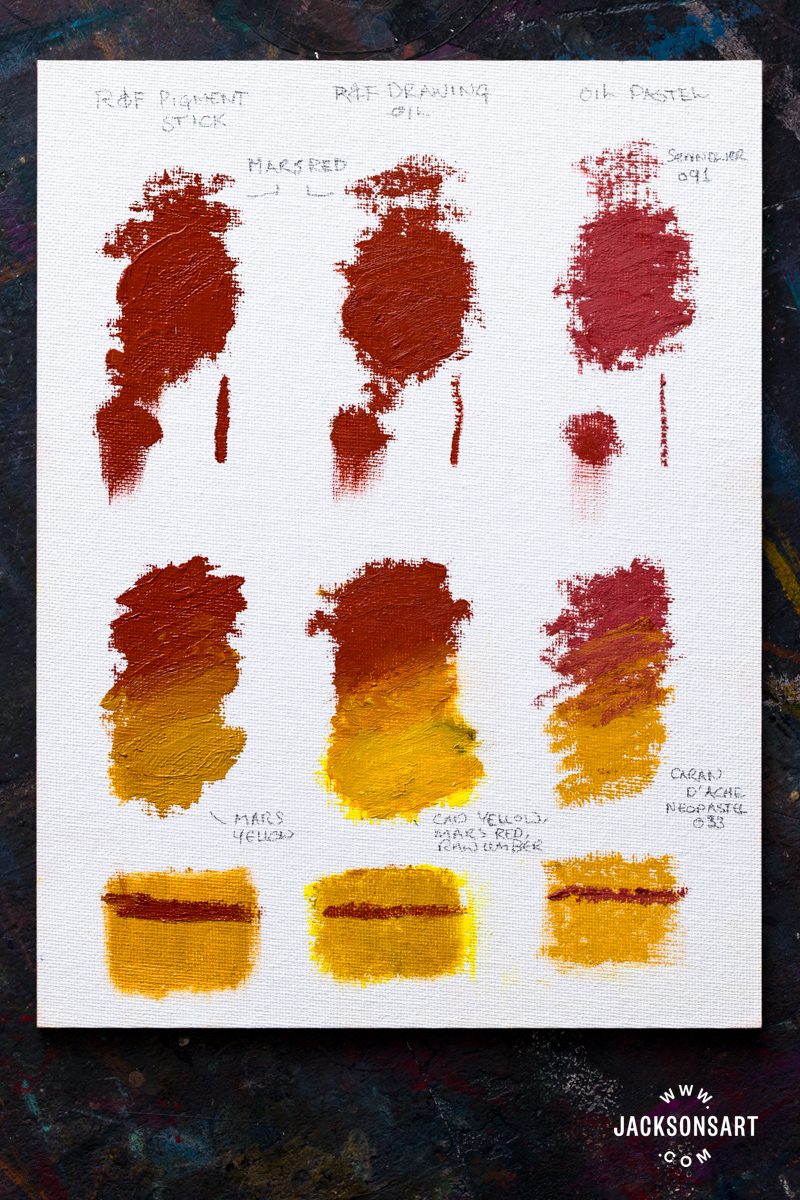
R&F Drawing Oils seem to land in a Goldilocks zone many artists will be excited about – combining the immediacy of oil pastel painting with the permanence of oil paint. R&F Drawing Oils are waxier, firmer, and smaller than an oil stick and oilier, softer, and larger than an oil pastel.
Using R&F Drawing Oils on Different Surfaces
R&F recommends that Drawing Oils can be used on paper for practice and sketchbook work, but finished work should be made on a properly prepared surface, suitable for oil. Their wax content helps the paint remain flexible enough for paper, but the linseed oil will eventually migrate into lightly sized paper, causing deterioration.
They performed very nicely on canvas board, in massed colour, surface mixing, and in fine drawn lines. I also tried them on Jackson’s Pastel Paper Pad and Jackson’s Cold Pressed Watercolour Paper.
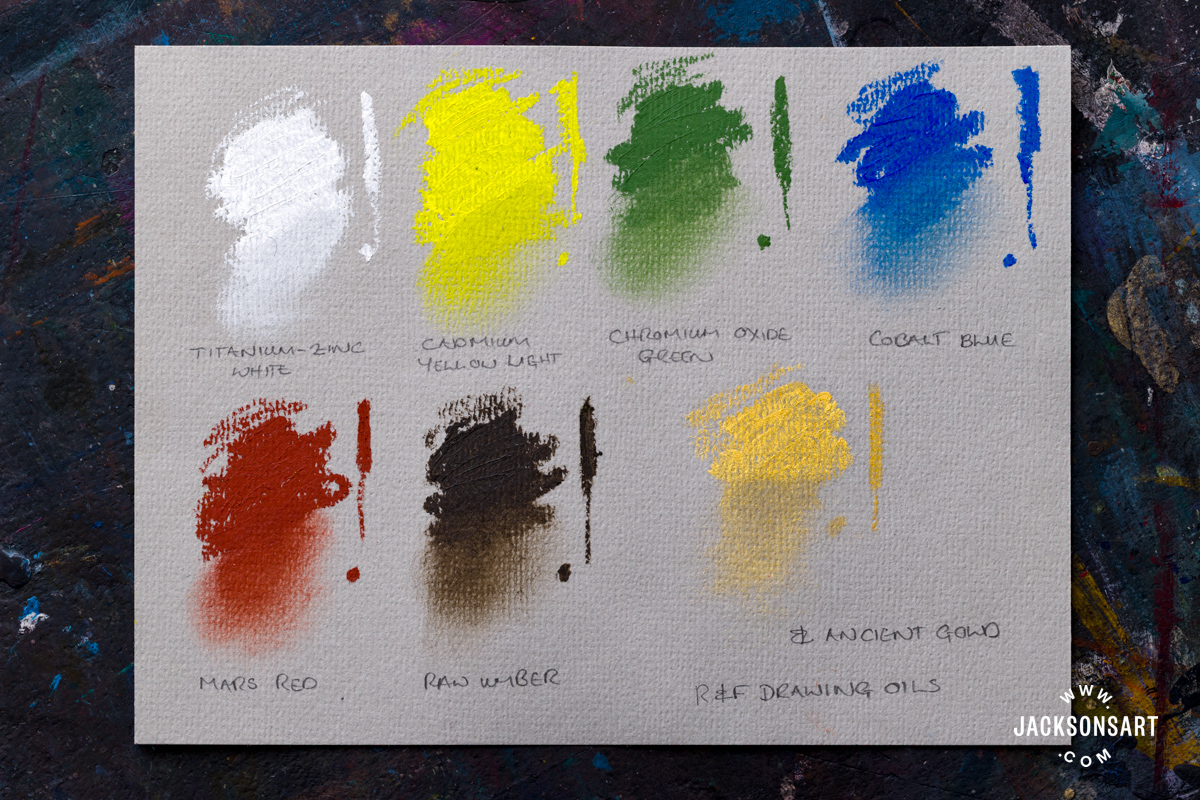
A mid-toned paper from the Jackson’s Pastel Paper pad showcased both light and dark colours well. With a light touch, the paper’s texture and colour remain visible, and application is very smooth. High coverage can be achieved without creating excessive texture. I used a dry brush at the bottom of each swatch to achieve a lighter, even layer that still shows the surface texture. I did notice signs of oil absorption on the back of the paper, supporting the advice to use prepared surfaces for finished work. There was no halo on the surface – a translucent stain that can appear around oil colour on an unprimed, absorbent surface – so the appearance was unaffected.
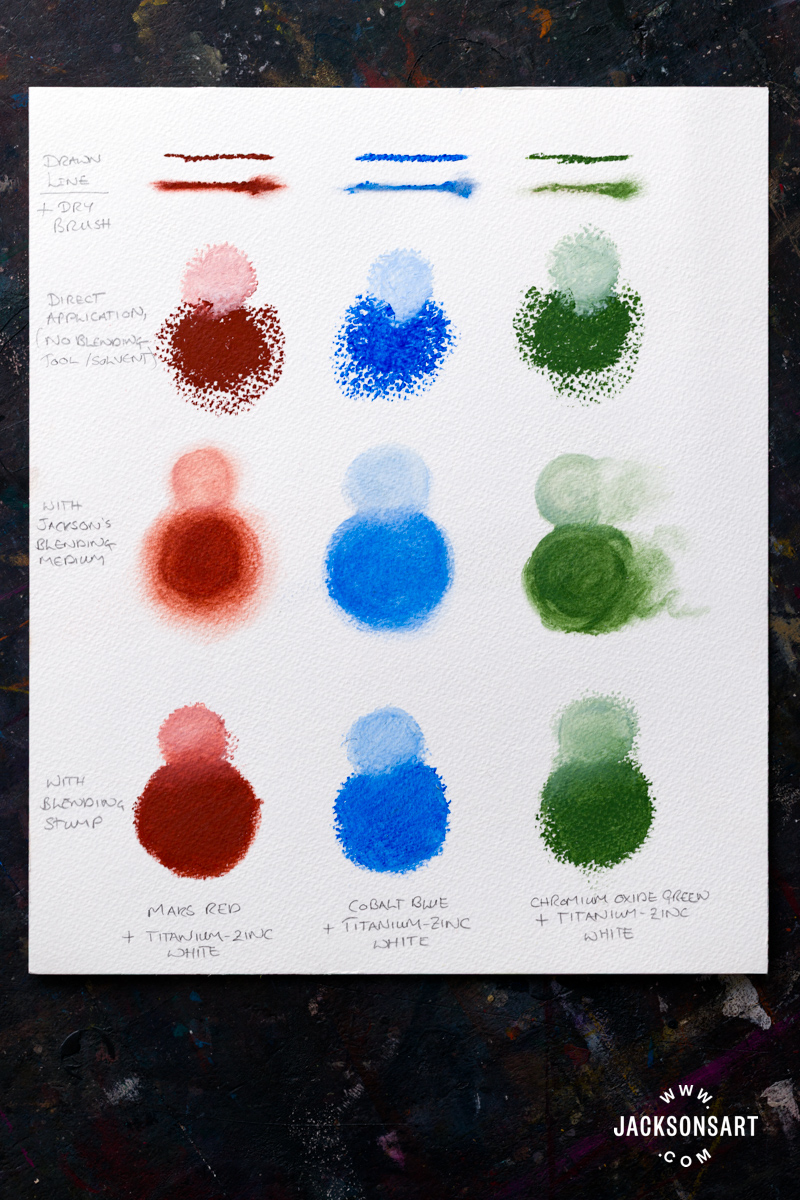
On the Jackson’s Watercolour Pad, the R&F Drawing Oils deposited colour easily on the cold pressed paper texture. Light application leaves crayon-like marks; pressing down or repeated passes create a dense layer. Colour mixing on the surface was effective and formed a light texture rather than pilling, as oil pastel sometimes does. It was easy to smooth unwanted texture with another pass of the stick or with a medium or tool. I used Jackson’s Pencil Blending Medium and a blending stump here. I saw no oil bleed-through on this heavier paper.
The Opacity and Drying Time Of R&F Drawing Oils
The R&F Drawing Oil colour chart indicates each colour’s opacity, so I compared these ratings with opacity tests on watercolour paper, working over HB pencil lines.
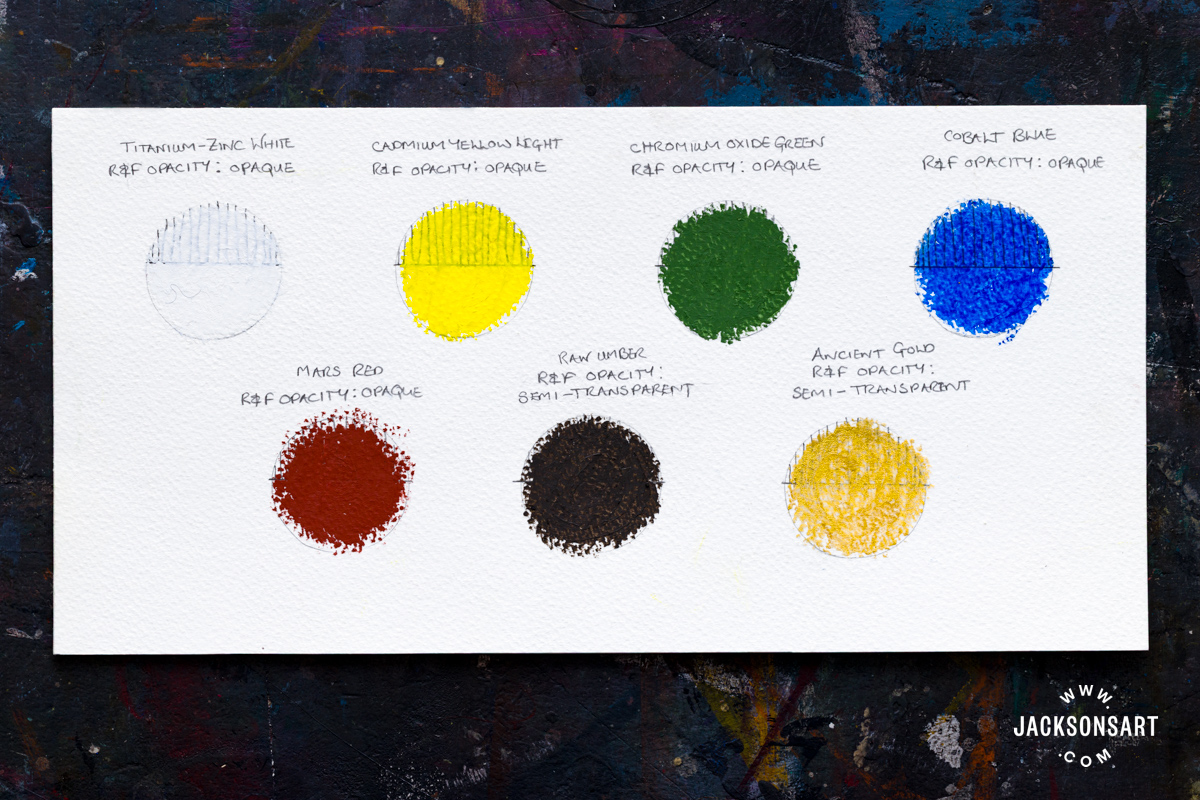
Some colours listed as opaque could be better described as semi-transparent. Titanium-Zinc White, Cadmium Yellow Light, and Cobalt Blue did not fully cover the pencil even when thickly applied. These felt more oily than the other ‘opaque’ colours, and I wondered if they may be better suited to mixing rather than overpainting. On the other hand, Raw Umber covered more than expected.
On the darkest pastel paper, Cobalt Blue popped when mixed with a little white. Titanium-Zinc White and Cadmium Yellow Light stood out much more clearly on this surface. Semi-transparent Ancient Gold appeared more opaque (and looked fantastic) on black paper.
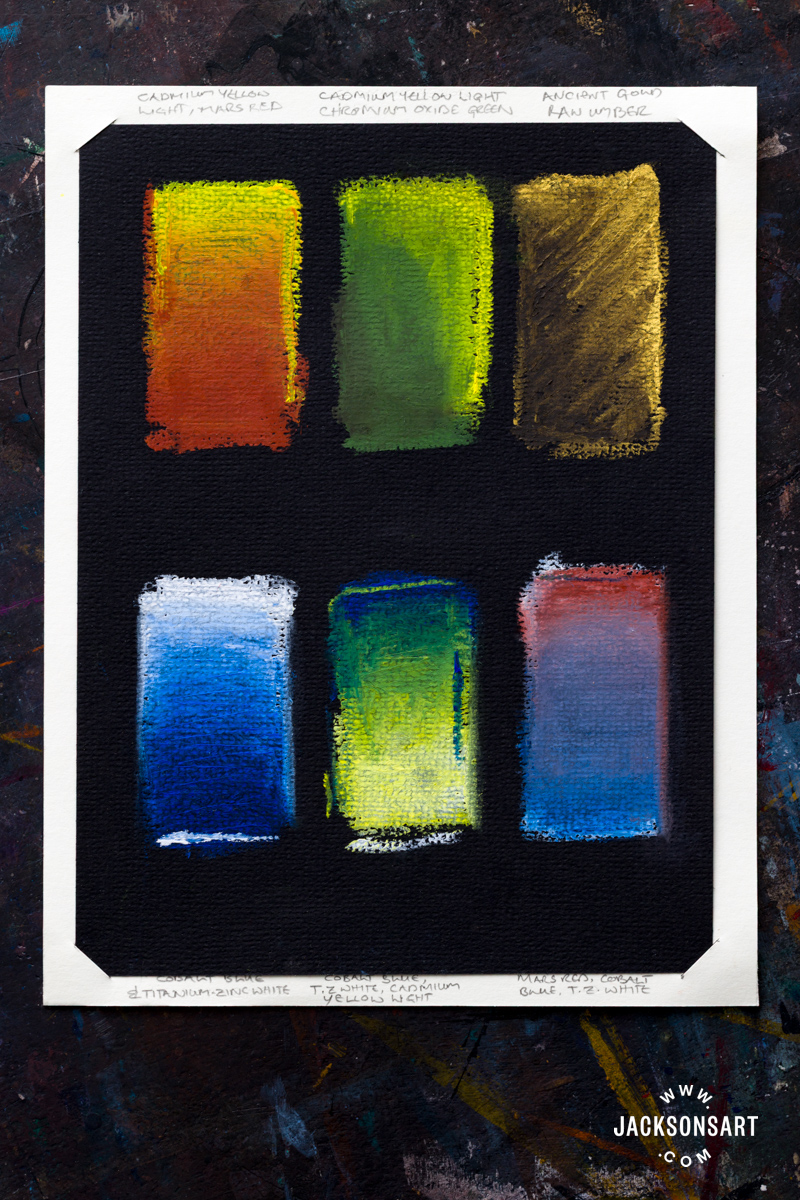
R&F also provides drying rates, which vary by colour. My studio was unusually cold and humid while I was testing these, and many swatches dried much more slowly than expected, with some thicker applications still tacky after a week. In a closed sketchbook, oil will lack airflow and dry slowly, so I’d recommend using glassine to reduce smudging and oil transfer on fresh drawings.
Blending And Layering The R&F Drawing Oils
Pastel painting often invites rapid, intuitive colour changes, and working with R&F Drawing Oils is no exception. I recommend having a rag and scrap paper to hand; I found myself cleaning colour from the ends of my Drawing Oils frequently. Like oil bars, R&F Drawing Oils form a skin when dry, and I occasionally found flakes of dried paint film in my work where I hadn’t been so careful to wipe the edges clean.
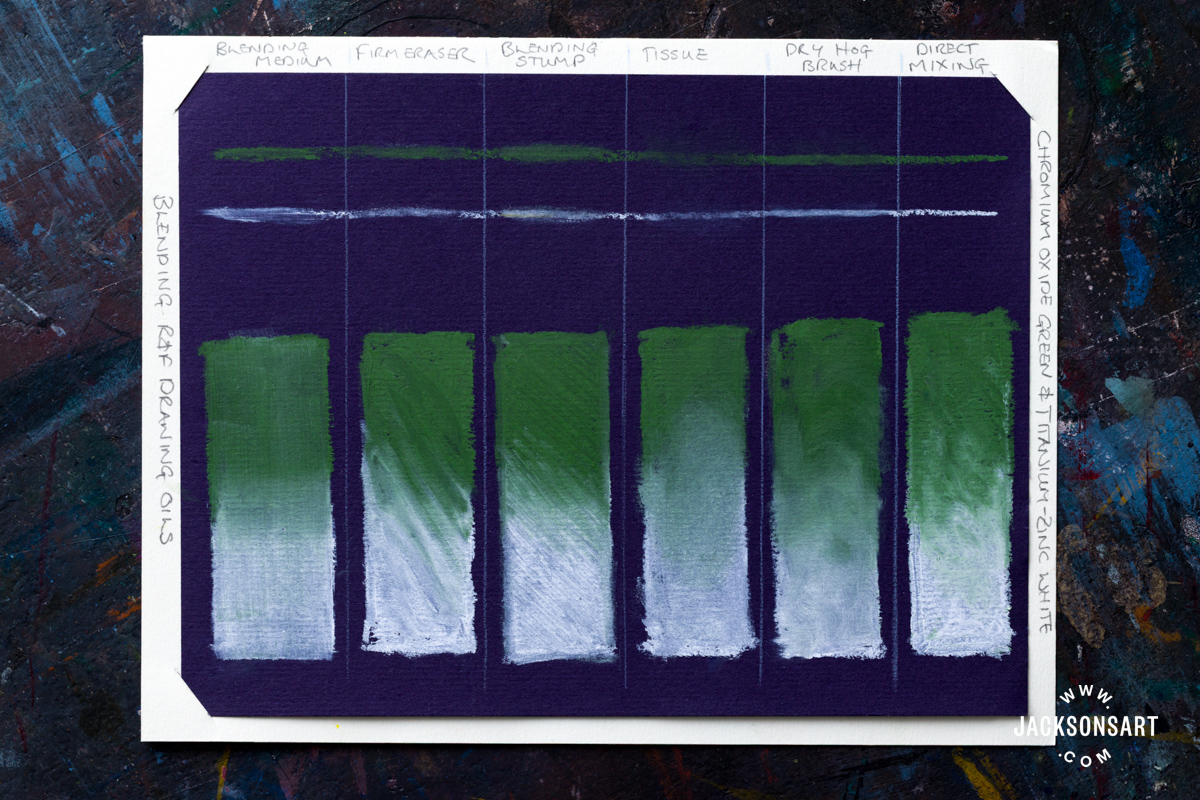
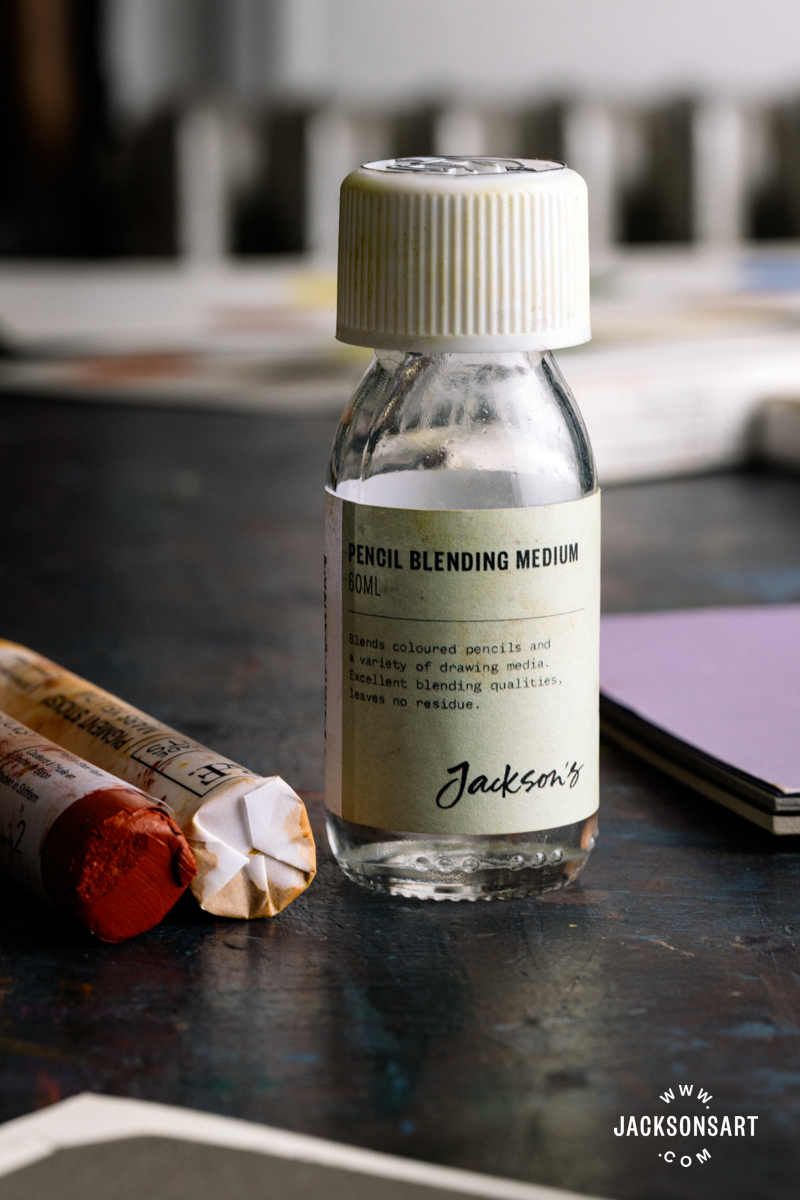
On pastel paper, I tested various blending techniques. I recommend experimenting with all of these to see what works well. I particularly liked the even blend achieved with the Pencil Blending Medium and the polish and mark-making of the blending stump. R&F suggests a firm eraser can be used for reductive drawing; although results may vary, it can create soft, smeared effects that some artists may find useful in their textural vocabulary.
Exploring Mixed Media Techniques With R&F Drawing Oils
Drawing Oils integrate naturally into an oil painting system and can be used alongside tube oils or applied over dry oil or acrylic paintings. (Acrylic should not be applied over the oils, as this causes structural and drying problems.)
Combining Drawing Oils with coloured pencils, with a light wash over a sketch or etching into an oil paint film, would be an interesting way to add texture and detail to a sketch.
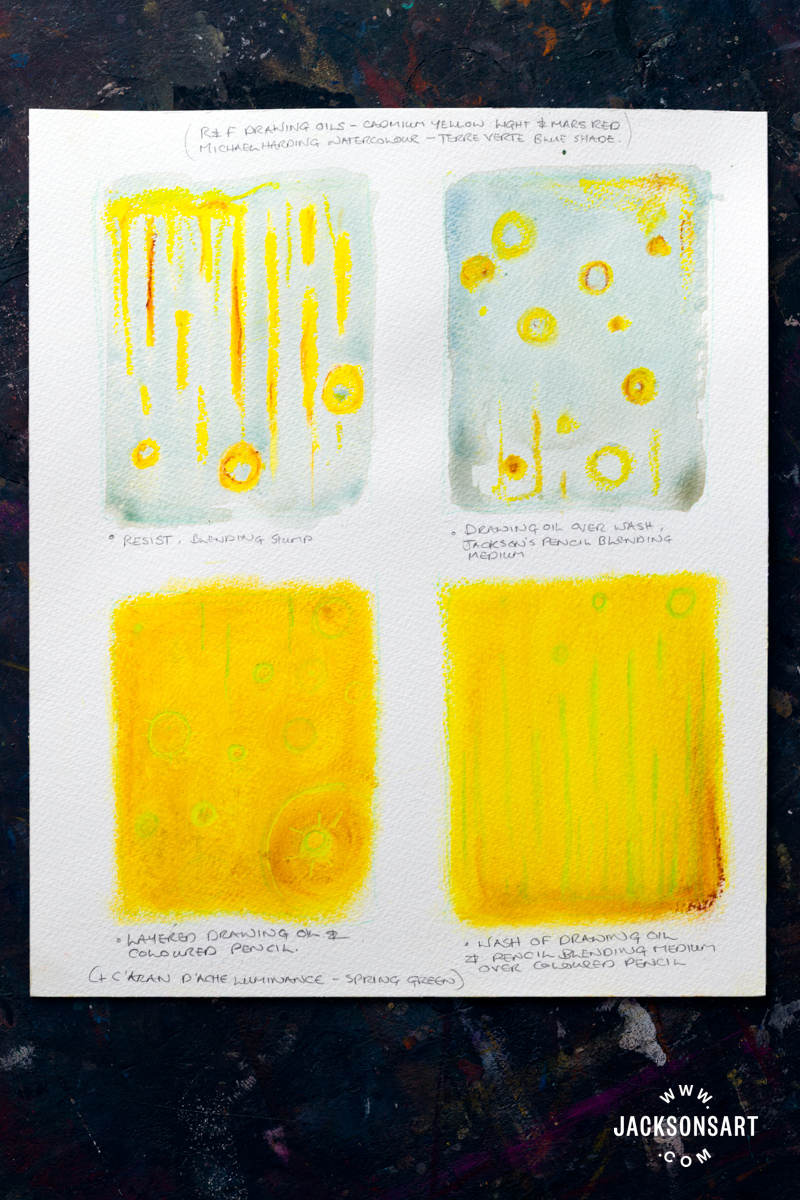
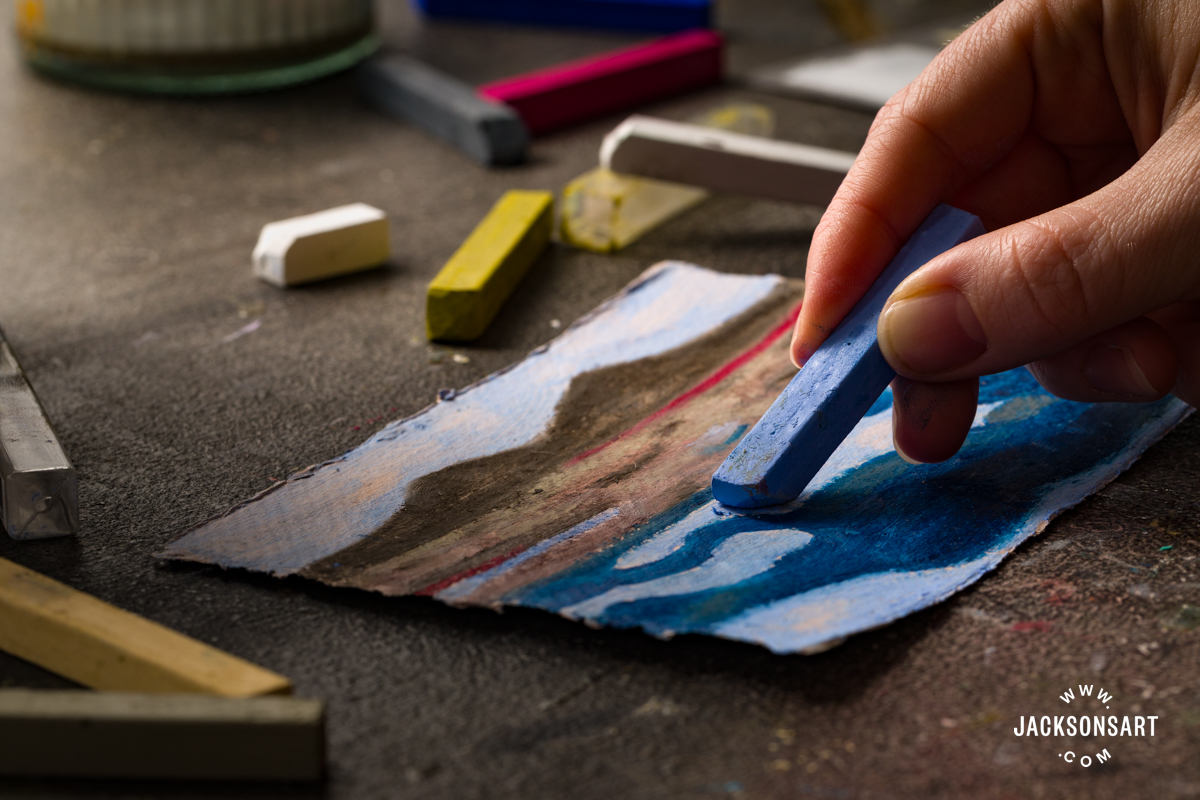
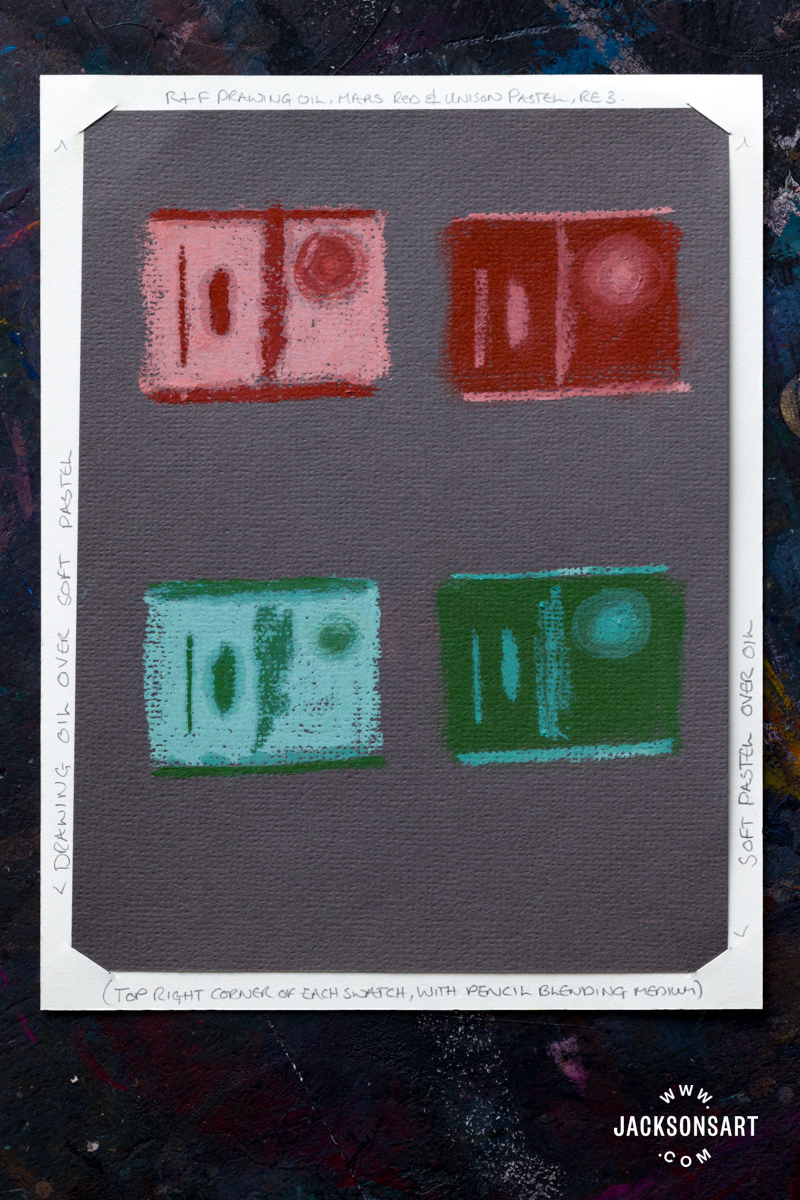
They combine quite beautifully with soft pastel. In this test, I used Unison Soft Pastels and tried layering over and under the Drawing Oil. Sketching over the soft pastel was smooth and effective; there was much more resistance using the soft pastel over oil. The contrasting texture of oil against the dry, matt colour is striking.
The Portability Of R&F Drawing Oils
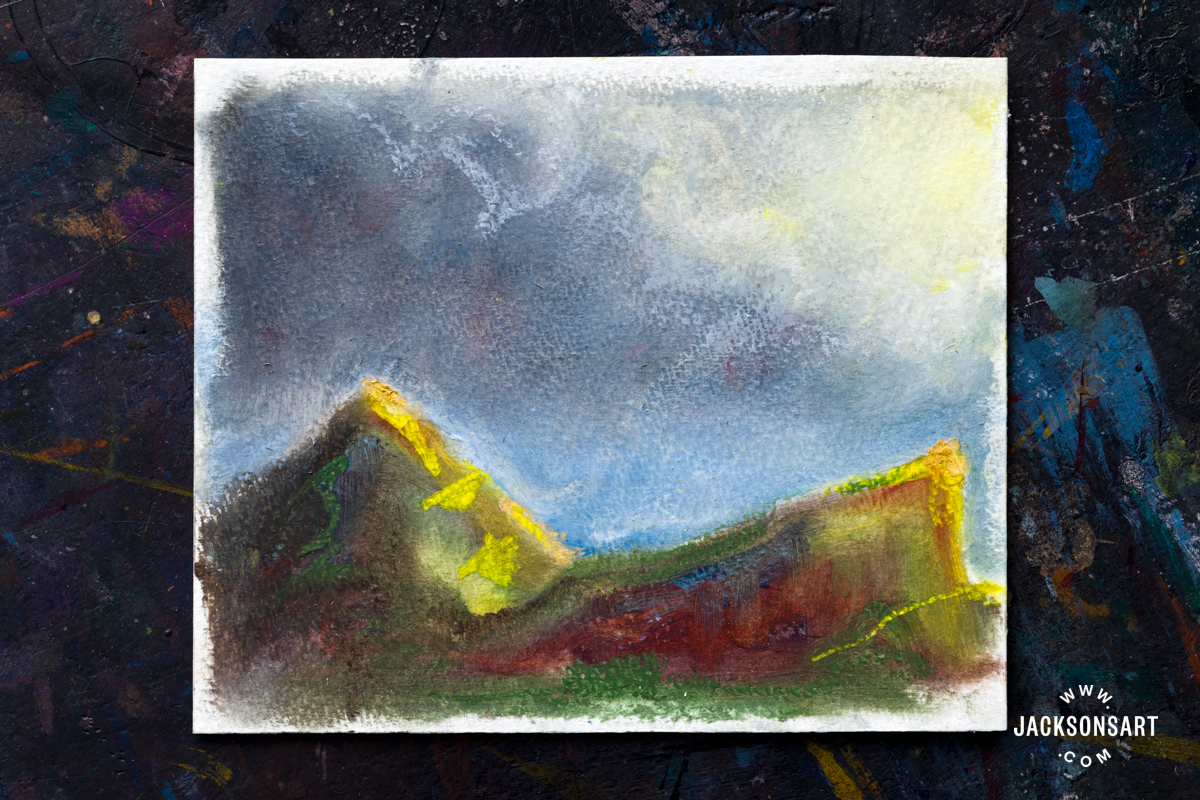
I set up near my studio and made a landscape study on watercolour paper, blending with a dry brush and Pencil Blending Medium. Alternating drawing and blending achieved variations in opacity, areas of fused colour and a stable surface for sharper lines. The Drawing Oils felt comparable to oil pastel, but more refined; I didn’t reach a point of product overload, which I’ve experienced with layering oil pastel, although I came close in some areas.
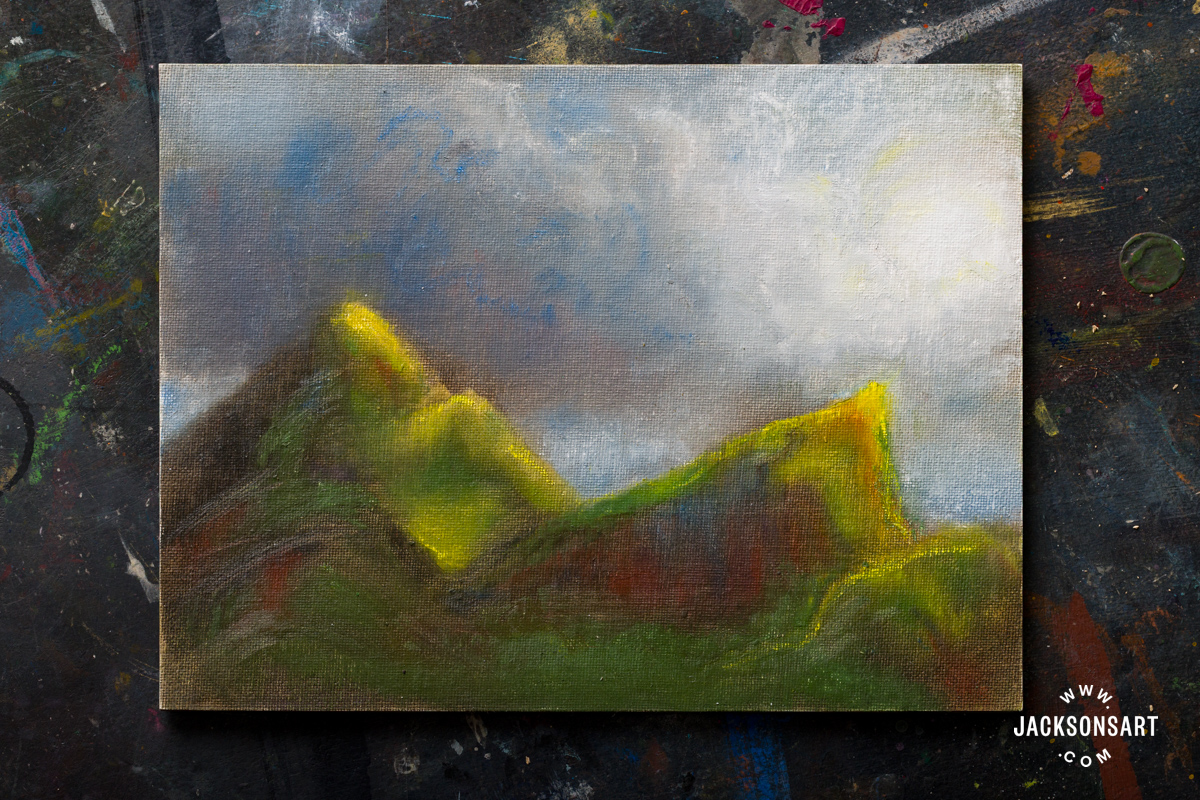
Translating this into a finished painting on canvas board, I found the painting experience quite different. While the watercolour paper held on to colour, allowing colour building and mixing, the canvas board had more resistance. Underpainting was a delight, with colour readily moving and lifting with manipulation. Drawing into the surface worked nicely to a point; however, I found that some colours (Cobalt Blue and Cadmium Yellow Light) would cut right back to the surface rather than readily mixing with the colour already there. I used drawing on the surface a lot to place colour and build deliberate marks and texture, but I also reached more frequently for a range of brushes and introduced some oil painting medium and solvent.
The versatility to transition between drawn lines and painterly marks makes R&F Drawing Oils well-suited to capturing a scene in the moment. That they have the capacity to cure, making them suitable for a more developed painting, means they will no doubt be an elevating addition to the toolkit of many artists who paint en plein air or who like to travel with colour.
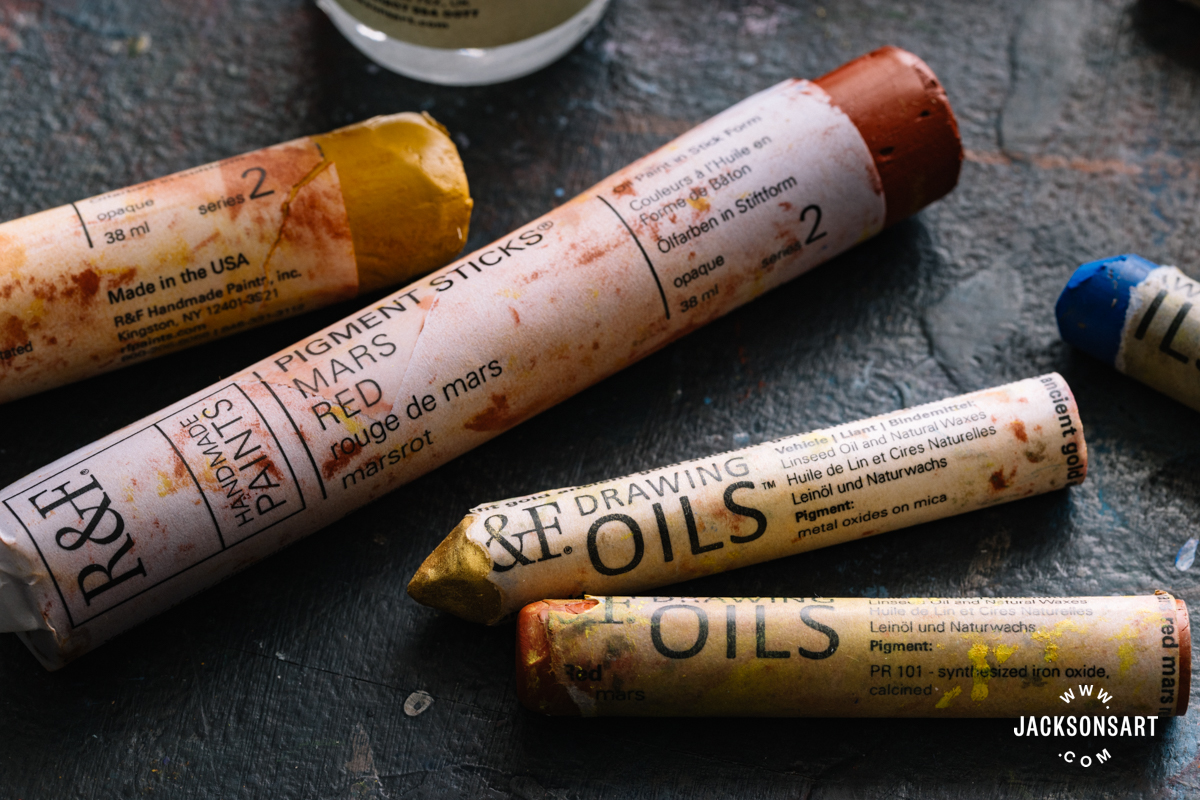
R&F Drawing Oils come with a few considerations – mainly drying time and surface choice. However, these are typical of most media, especially oil-based materials. Their advantages far outweigh their limitations. They truly bridge a gap; a portable, hand-held paint with the immediacy and control of a pastel and the permanence of traditional oil paint.
Artists with a wide range of styles and practices will enjoy their versatility. Whether you want to paint on your travels, incorporate drawn marks into your paintings, introduce oil more easily into mixed media work, or simply enjoy a direct, tactile way of applying colour, R&F Drawing Oils could be a very inspiring material to explore.
Further Reading
Blending Techniques in Oil, Acrylic, Pencil, Pastel, Charcoal, Watercolour, and Ink
Review of Jackson’s Pencil Blending Medium
Can you use Oil Pastels and Soft Pastels Together?