



Following on from our post explaining the different types of Golden acrylic mediums available, we decided to take a closer look at their plain acrylic gel mediums. Gel mediums are used mainly to increase the body of acrylic paint, so you can make a more textural piece. Because body is a very important characteristic, we wanted to demonstrate the rate of shrinkage for the five different types of Golden acrylic gels.

Golden Plain Gels
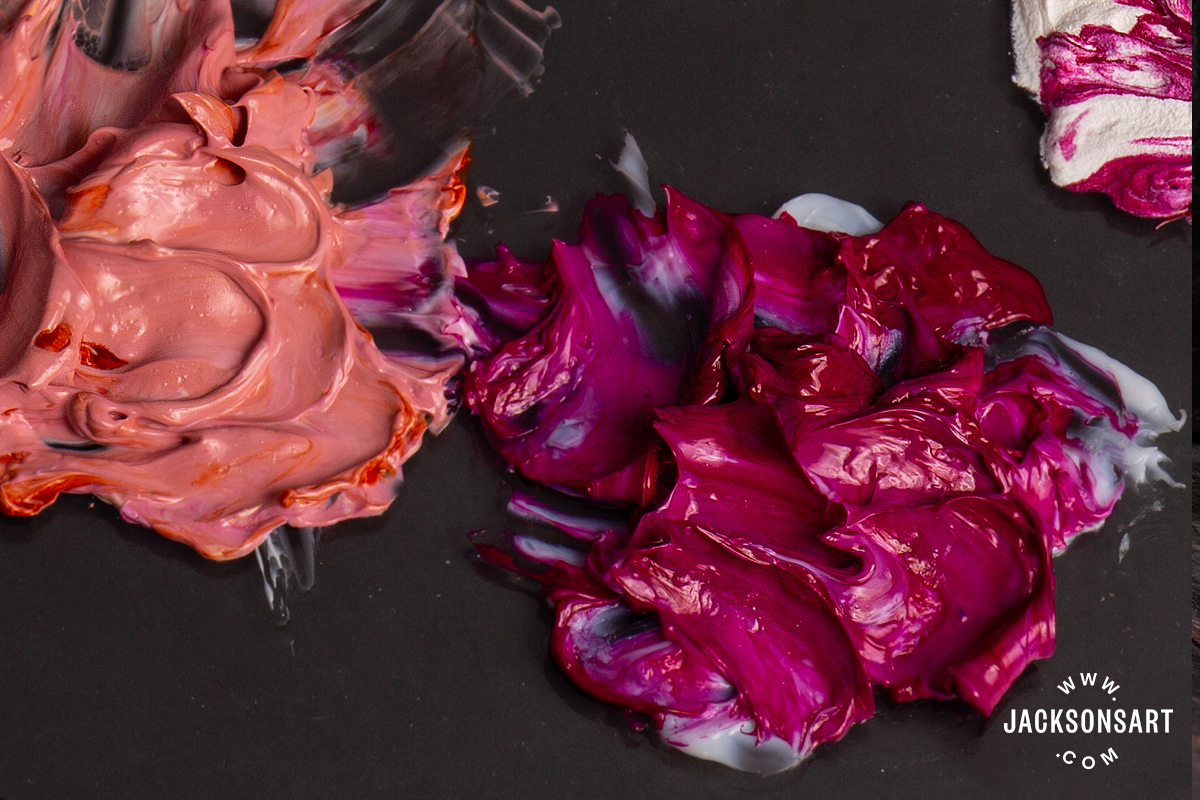
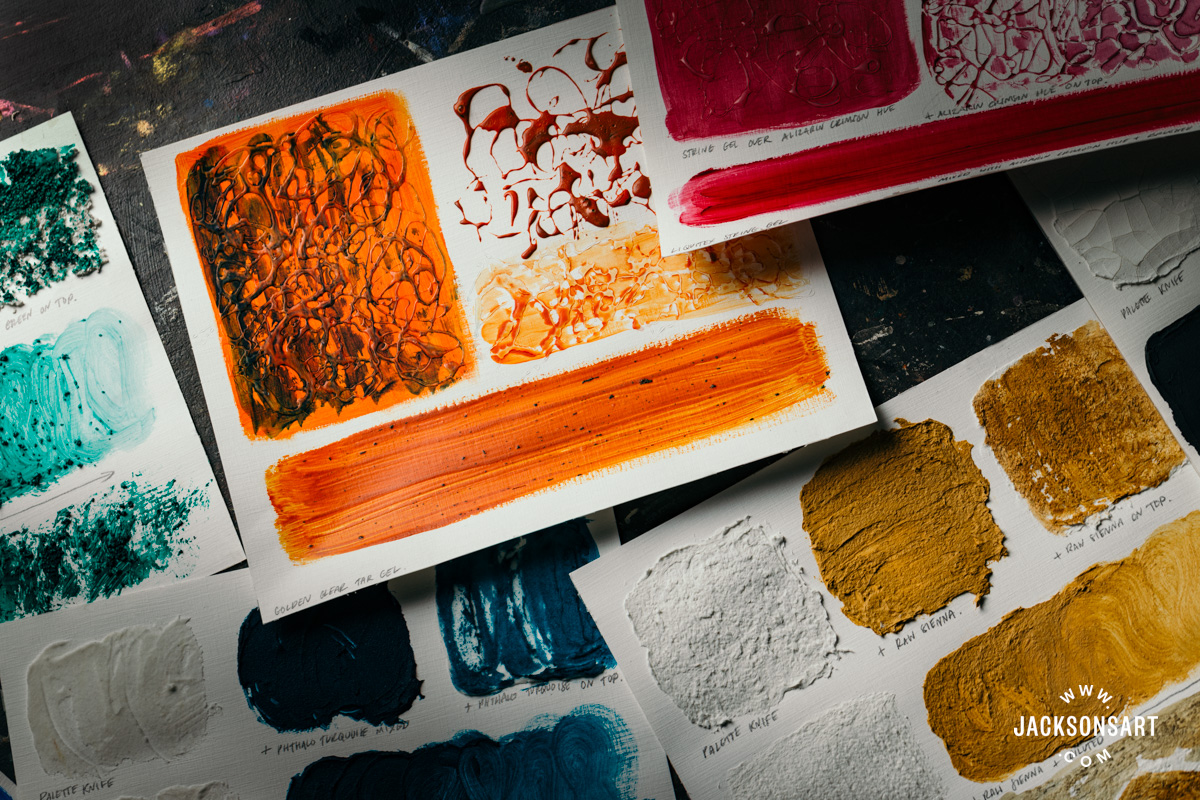
Plain gels are used to thicken paint, create structure and for impasto techniques that rely on brush marks and peaks being held. They are also used to create thick lens like glazes, as you can see in the swatch above. They are designed to be less likely to crack, also known as crazing, during the course of drying, something that can happen with thick applications of acrylic.
All acrylic based paints and mediums will shrink as they dry because they dry through a process of evaporation and the water content makes up some of the body. Acrylic gel mediums are designed to have less shrinkage than normal acrylic paint, even heavy body paint, however, they do still shrink. This is something that is worth considering when making a painting, as it will affect your finished piece. Each medium will shrink to a different percentage and will level (lose its peaks and heights) to an extent, the following tests show you the amount of levelling and shrinkage you can expect from each medium.
Golden has five consistencies of acrylic gel medium available, from Extra Heavy, which is the thickest, through to Soft, which is slightly less thick than Golden’s Heavy Body Acrylic. It is worth noting Golden’s Regular Acrylic Gel has the same viscosity as their Heavy Body Acrylic Paint but when used thickly is less likely to crack and is meant to have less shrinkage which is why it is useful for extending heavy body acrylic paint while using impasto techniques.
Qualities of the Five Different Consistencies


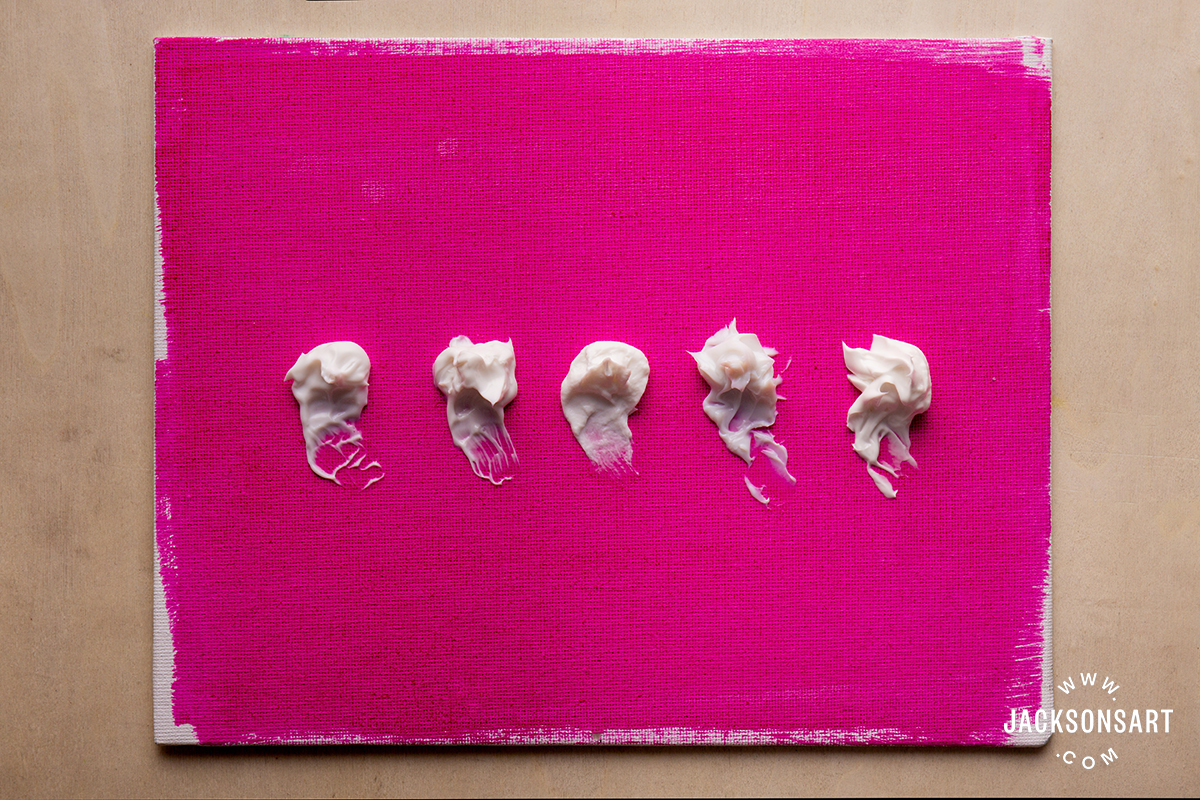
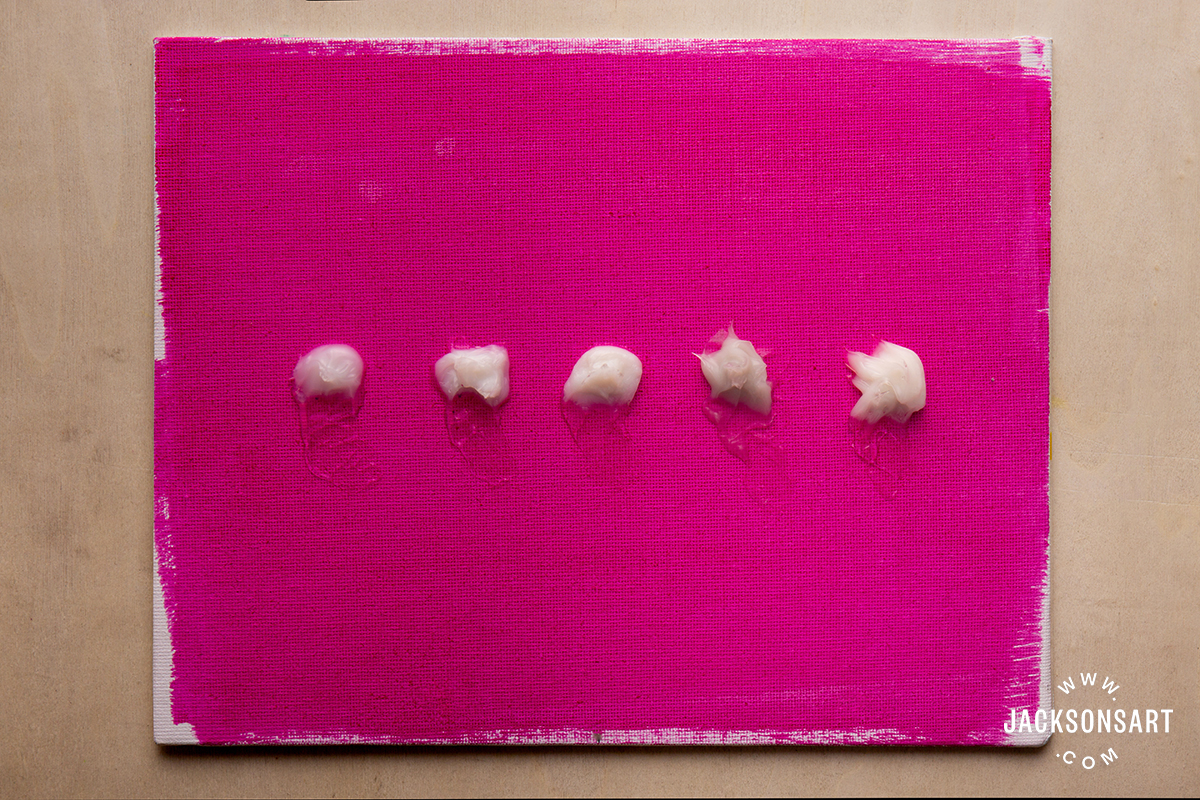
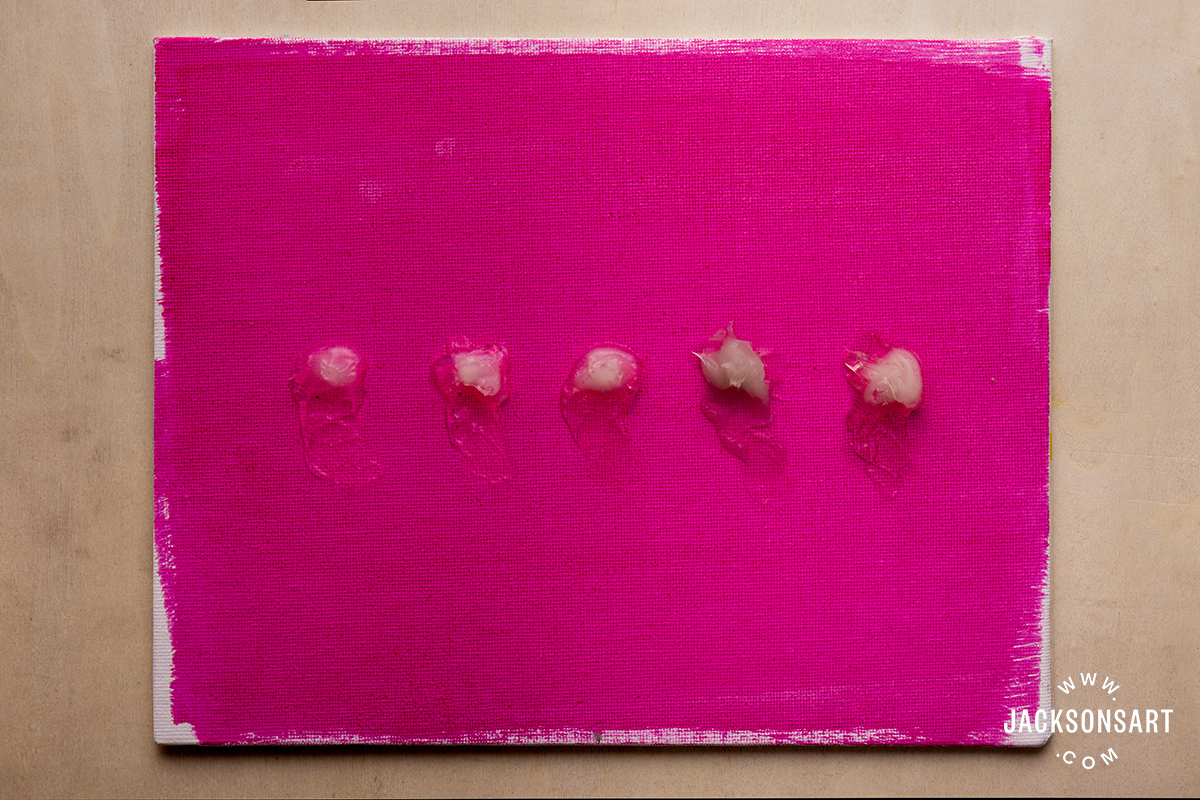
In each image the acrylic gel mediums are arranged from the thinnest to the thickest: Soft, Regular, Heavy, Extra Heavy and High Solid. These tests were conducted over a week during which the temperature stayed around 22 Degrees.
Golden Plain Gels Straight From The Tubs

When the acrylic gel mediums were first scooped from the tub I could achieve a similar level of height with all of them and they each were able to keep at least one pointy tip. The Extra Heavy Gel (second in from the right) was able to maintain the most height and the marks in the Soft Gel (first from the left) were the least well defined and softest. The High Solid Gel kept very crisp edges to all the marks made in it which I wasn’t expecting, as I thought the acrylic solids, it contains, might affect it’s handling.
Golden Plain Gels Shrinkage After Two Days

After two days, the difference between the different gel mediums was really noticeable. All of them looked like they had deflated and the Soft Gel really did not have much height anymore. The level of shrinkage, during this time, also emphasised the difference they had between their heights to begin with, so now you could easily guess which consistency was which. The thinner ends of the blobs had cured and gone completely clear and they were starting to go translucent as their edges began to dry. All of their peaks had also softened slightly.
Golden Plain Gels After a Week

After a week, the Soft Gel had cured the most going nearly completely clear. There wasn’t as much height difference between the Regular Gel and the Heavy Gel, but the Extra Heavy was still distinctively higher and had retained crisper marks. What really came across was the lack of shrinkage, comparatively, of the High Solid Gel. This was by far the highest and held the most distinctive sharp peaks, however, it had cured the least.

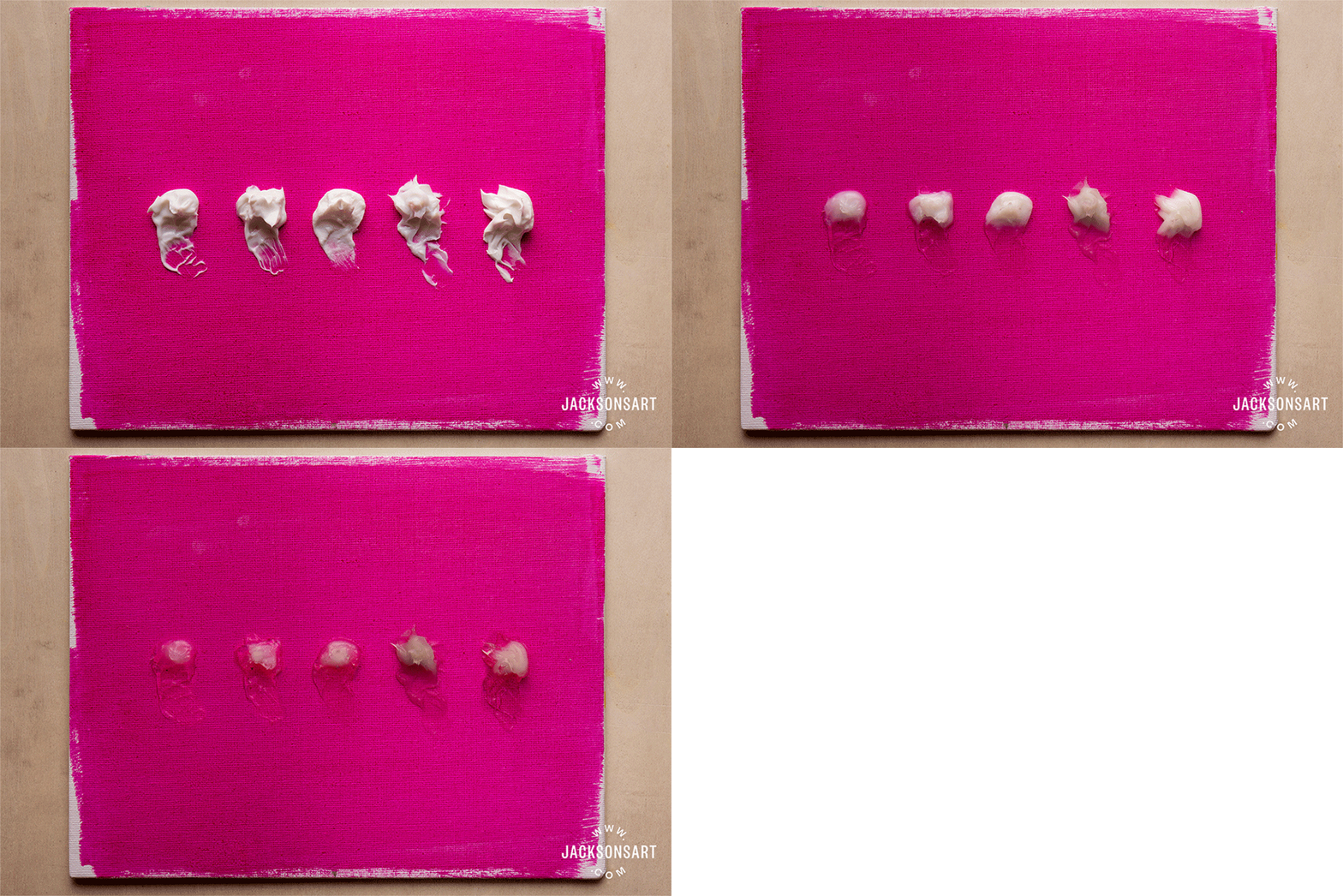
This GIF goes through, in chronological order, the photos of the mediums. This demonstrates visually the shrinkage you can expect. I would estimate the percentage of the shrinkage at about 45% for the Soft Gel and around 20% for the High Solid Gel, with the ones in the middle shrinking by about 30%.
You can view all our available Golden Acrylic Gel Mediums here.
If you’d like to read about the qualities of all the different Golden Acrylic Mediums this article explains the properties of each type.


4 thoughts on “Golden Acrylic Gel Mediums Shrinkage Test”
I saw the video on why oil paints are so
expensive. I really enjoyed it. Your
breakdown of how the final product is
determined by the pigment to oil ratio,
the fact that each color has is own ratio
and pigment grind size, was fascinating
to me. I always wondered how oils were
made, and more so after seeing a big
Van Gogh exhibit in Houston. Some of
the paintings still gleamed so
beautifully, that I marveled at them
knowing them to be so old, and
wondered how long an oil painting could
look that way. I also wondered if the
paintings had be restored. Thanks for
informing me and for giving me the
basic understanding of how the quality
ooil paint affects its longevity.
Hi David, thank you so much for sharing this feedback with me. I’m so glad you found the video helpful, it’s the best thing to hear we’re explaining things that readers find useful and in a way that is understandable.
I am an oil painter. I found two jars, 1 of
Global Pro impasto medium and another of
Pro gel medium. I don’t use acrylic at all but
wondered if I can use this as a ground. I’ve
made my own canvas boards and gessoed
them and they’re very rough so spreading
this medium on thinly makes for a much
smoother painting surface. Once it’s dry is it
ok to use oil paint over? I feel sure it should
be fine. Thanks
Hi Alex,
I’m not sure what products you are referring to but if these are acrylic mediums, it will be fine to apply them to an acrylic gessoed board prior to painting with oils. If the gesso is a traditional rabbit skin glue gesso then it may not be suitable. Allow your surface to dry fully before getting started with the oil paints.
Many thanks
Lisa
Comments are closed.