Using masking fluid in a watercolour painting allows you to protect areas of the paper, in order to keep stark highlights and fiddly details. Choosing a masking fluid that works with your style and that will not damage your paper or leave gummy marks is incredibly important. Botanical artist, Sandrine Maugy explains in this review of Schmincke Masking Fluid how it handles when used for detailed illustrations.
The Suitability of Schmincke Blue Masking Fluid for Stamens
by Sandrine Maugy

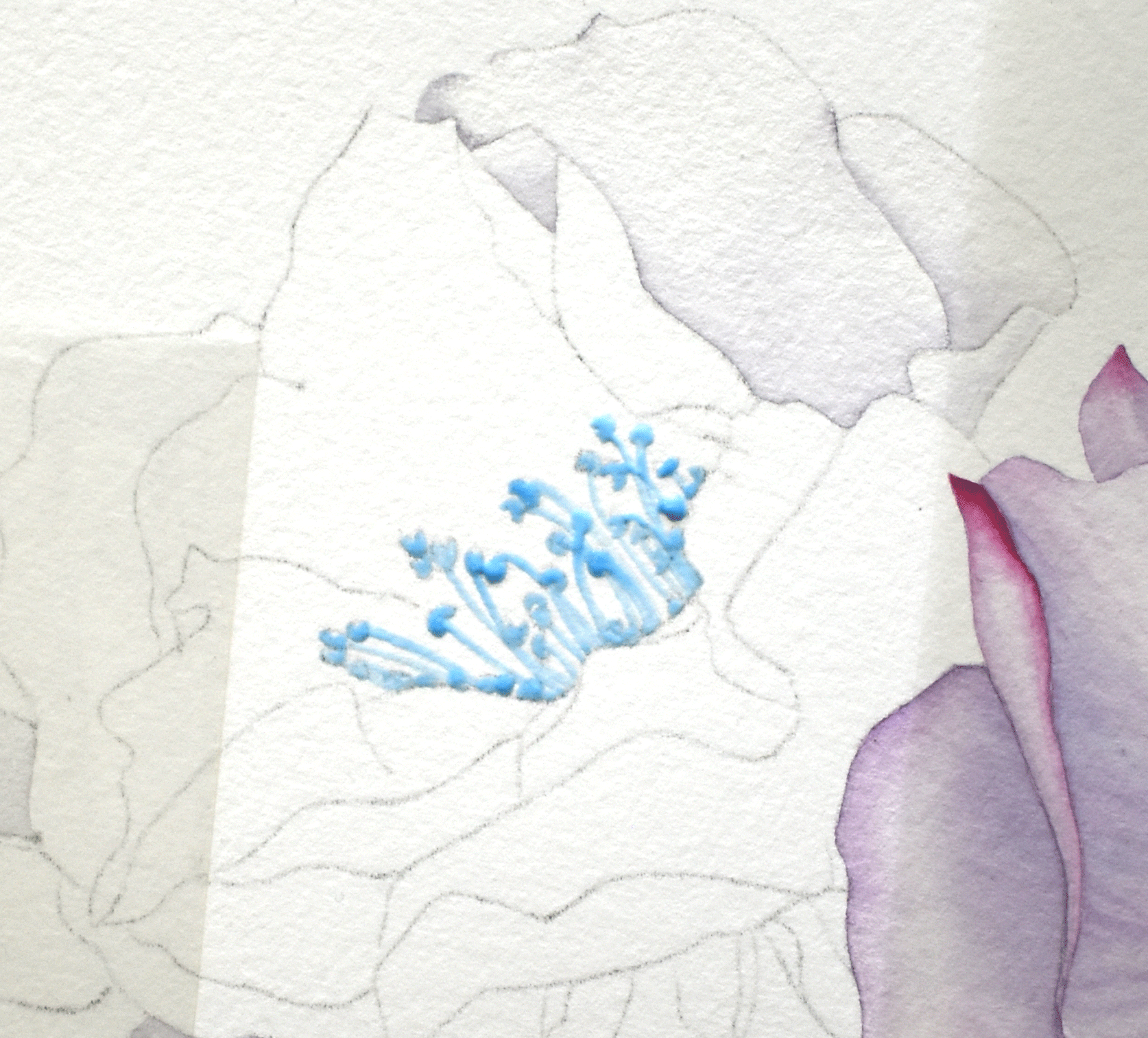
Stamens can be too fiddly to paint around. Using masking fluid is sometimes a better option for producing fine, delicate lines. For this rose, I chose the Schmincke blue masking fluid. It is a removable masking fluid rather than a permanent one, which was essential for this purpose, as I needed to paint over the masked area once the petals were finished.

Application
I like the level of fluidity of this masking fluid: too runny and it would be harder to keep the accuracy required for the longer lines, too thick and it would be more difficult to keep the details sharp. The medium fluidity level means that this masking fluid is too thick to be applied with a ruling pen. However, it works well with a 4/0 synthetic paintbrush.
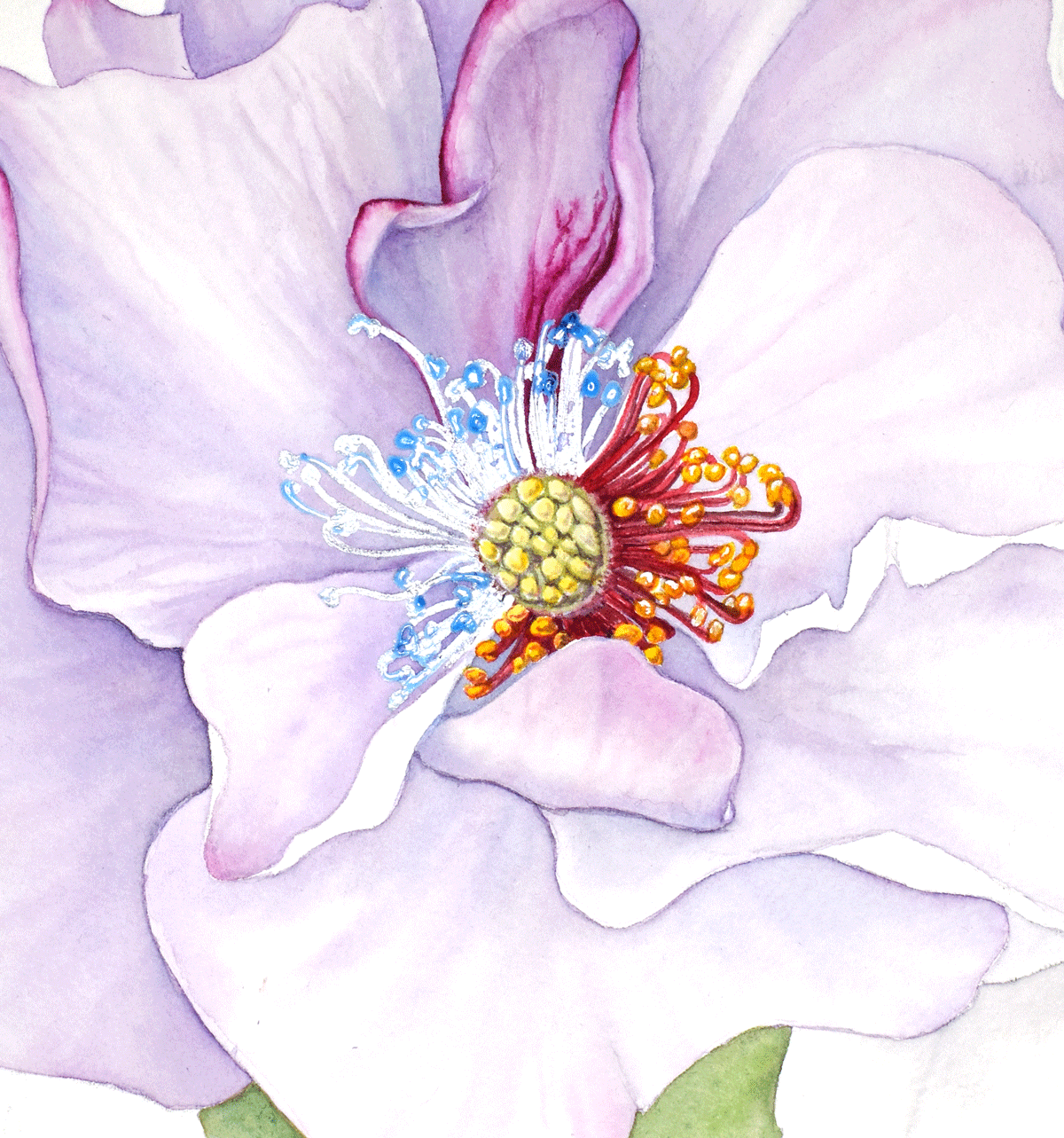
I also like the fact that this masking fluid is coloured. Clear masking fluid can be confusing when used on a cluster of details such as these stamen. Here I could see clearly the bits I had already masked and what was left to do.
Removal
The Schmincke masking fluid dries quite quickly although the drying time does depend on how thickly it is applied. An hour should be enough before it is safe to paint over.

After I finished painting the petals on all the areas surrounding the masking fluid, I left it overnight before the removal. My paper was 640 gms and I painted wet-in-wet so it got soaked through. I needed to wait until it was thoroughly dried before removing the masking fluid, otherwise, I might have done some damage to the paper fibres.
Again, the blueness helps at the removal stage. It means that there is no unnecessary rubbing on large areas and that you can be certain that none is left behind.
Painting over
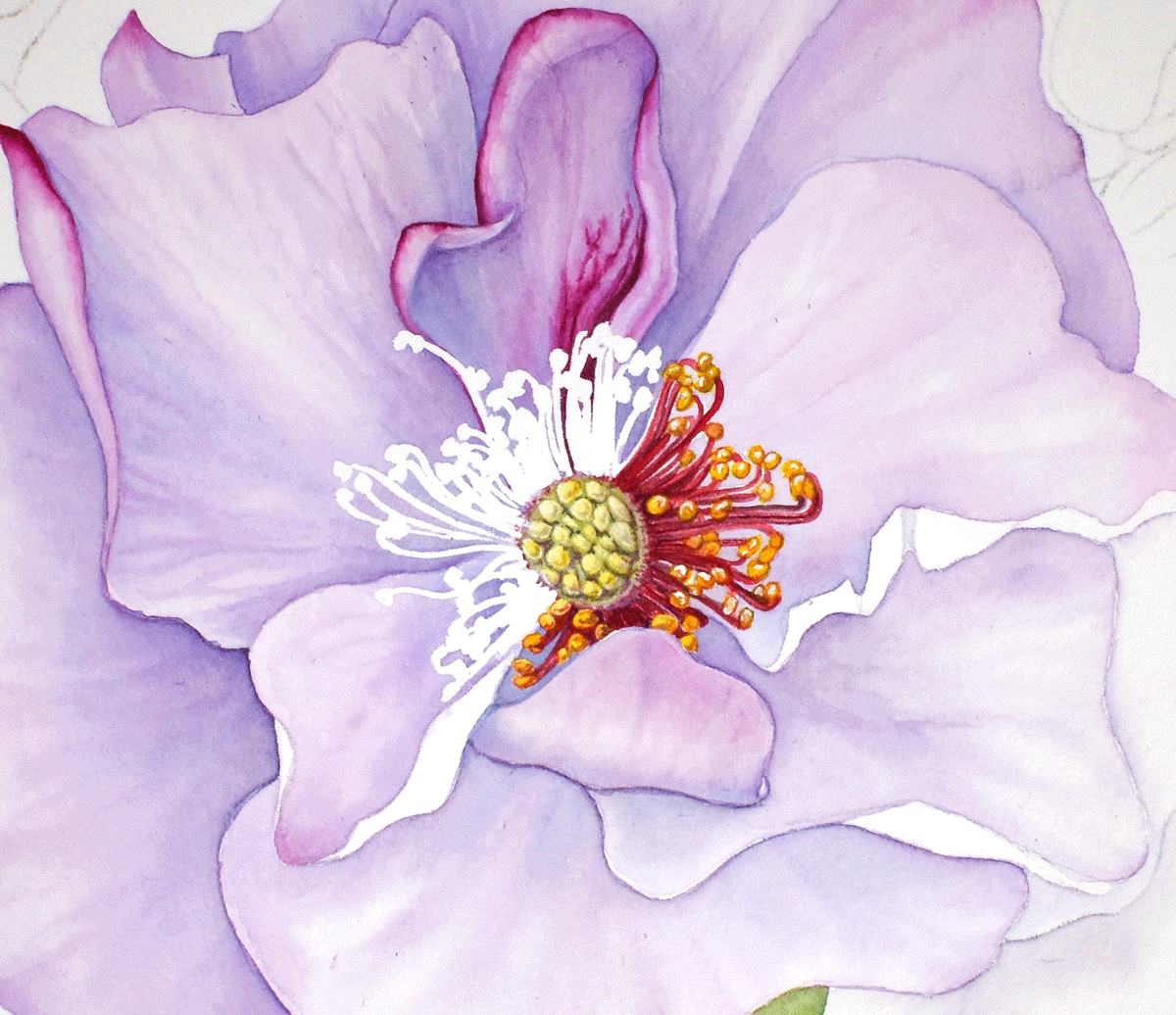
If the masking fluid hasn’t been left any longer than necessary and the paper is completely dry before removal, the Schmincke masking fluid is very gentle on the fibres and the paper should be undamaged and smooth enough to paint the small details that were masked.
Conclusion
The Schmincke blue masking fluid is easy to use and the colour makes it easier to work through the whole process. I find the fluidity is just the right level for this type of project and the paper is left undamaged.

You can see Sandrine’s video review of the Masking Fluid on her Youtube channel below:
Sandrine Maugy
Sandrine Maugy is a well known botanical painter and a regular contributor of articles to the Artists & Illustrators Magazine, she has also published a beautifully illustrated Botanical Painting book on advanced colour-mixing theory and painting wet-in-wet when watercolour painting. She runs a very informative blog and a YouTube channel which is worth regularly checking for new advice and tips.
Visit her website and her Instagram @sandrinemaugy to see more of her work and find out about her practice.