David Micheaud was shortlisted in Jackson’s Open Painting Prize 2019 for his work S&S Thermostat. This painting, like many of his works, harnesses light and colour to lead the viewer to contemplate the overlooked everyday objects that surround us. We spoke to David about inquisitiveness, his expansive use of oil colour and referencing the old masters in a different light.
Above image: Green Light, 2019, David Micheaud, Oil on board, 30 x 40 cm
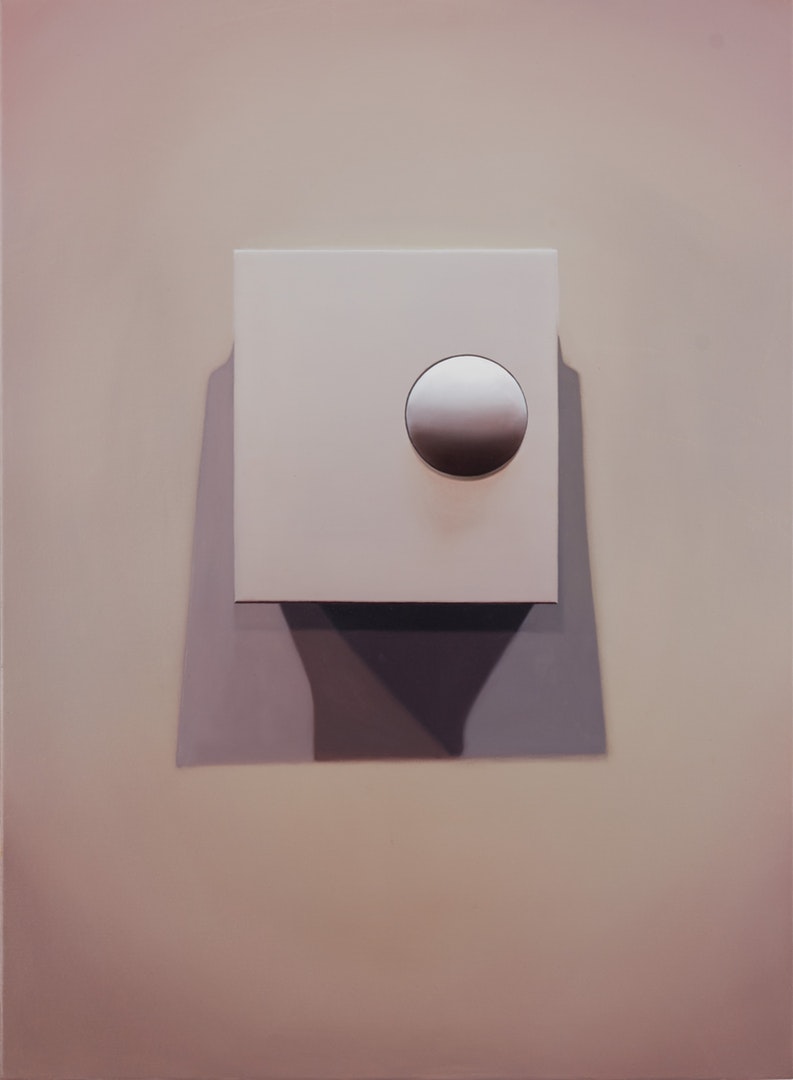
David Micheaud
Oil on canvas, 76 x 56 cm
Clare: Can you tell us a bit about your background/education?
David: I was born and raised in St. Albans and did a Foundation at the University of Hertfordshire in 1999-2000. I then went on to study Fine Art at University of the Arts Bournemouth. I came to London in 2004 after graduating and have kept up a studio practice along with consistently showing work in London. I also work as an art technician, installing work in galleries, offices and private homes. Having the studio and working in the art world has meant building up a good group of friends and supporters alike; helping me to focus and expand my practice over the last 15 years.
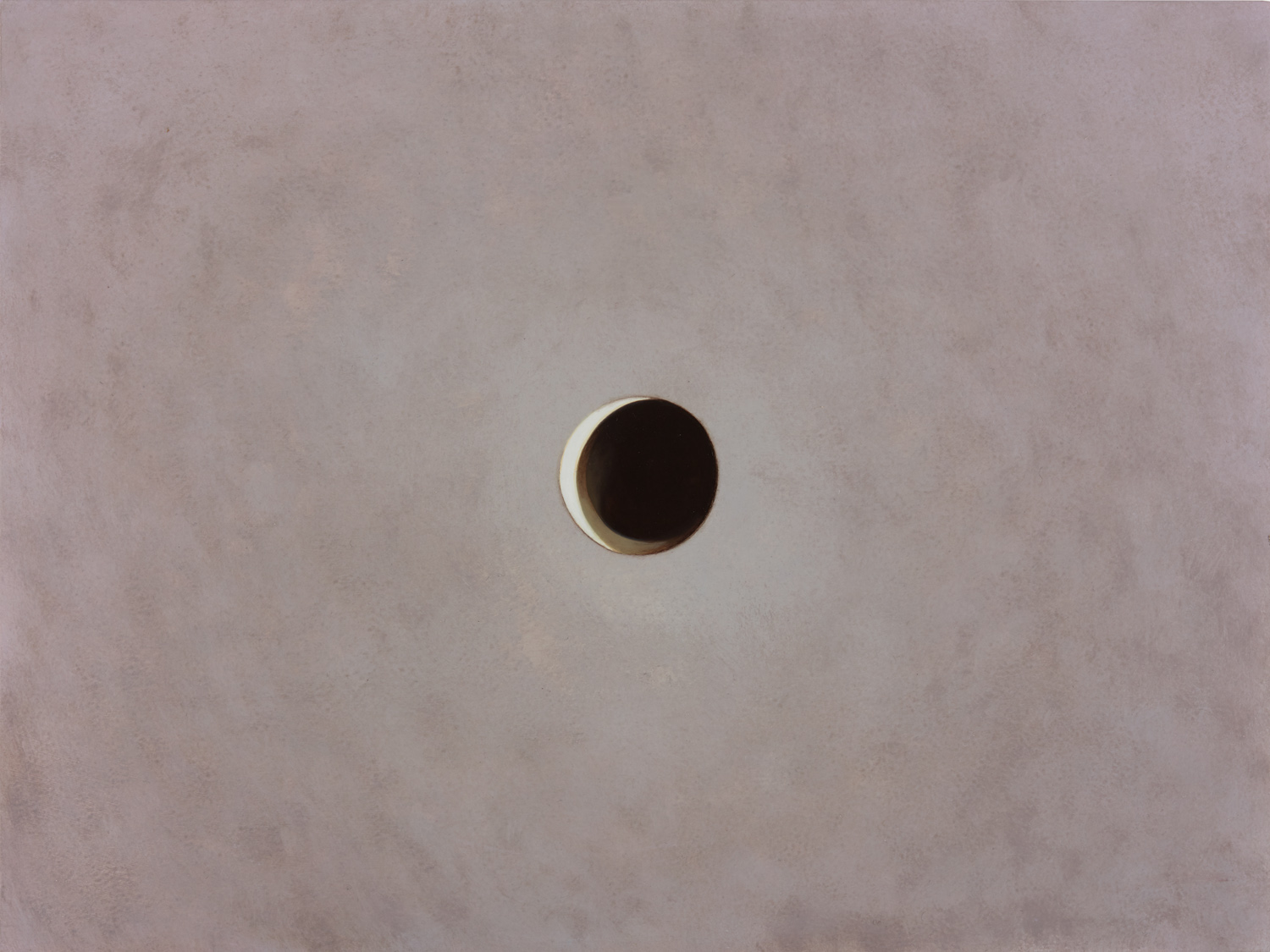
David Micheaud
Oil on board, 30 x 40 cm
Clare: How would you describe your practice?
David: My practice is an investigation in paint of ‘the inbetween’. I look for pauses in space and time for quiet contemplation; a chance in the day to re-evaluate our surroundings. I enjoy questioning the systems that make up our way of life and try to present it back in a way that allows the viewer to do the same.
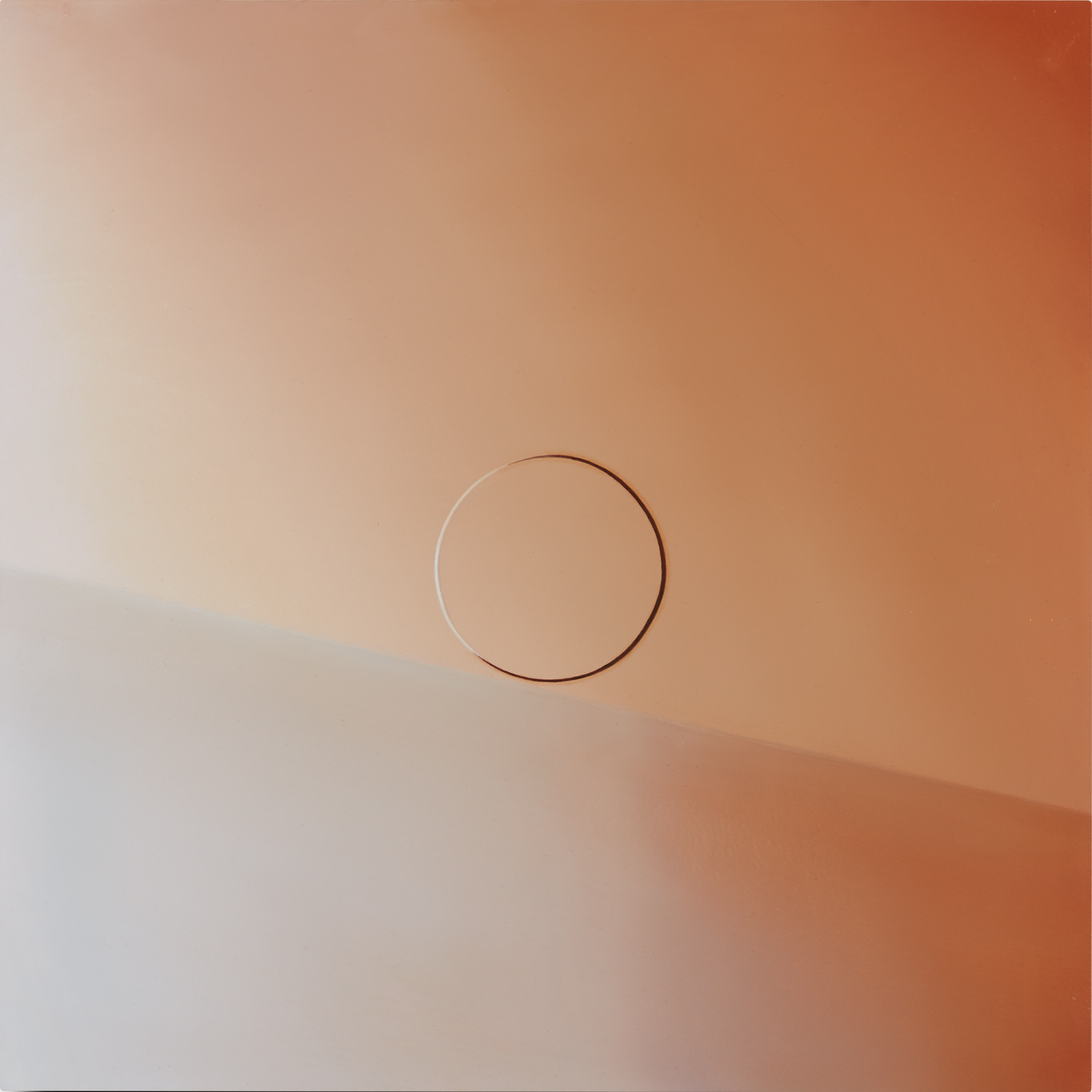
David Micheaud
Oil on board, 40 x 40 cm
Clare: While at first, your paintings appear to be very clean and simple, there are complex visual techniques at work, making them very emotive. Can you talk about how you use perspective and scale in your paintings?
David: I like to play with scale and perspective to obfuscate what is in front of you. This breaks down any boundaries or preconceptions that can be had. Figures aren’t used as they immediately bring scale and give context to the viewer rather than allowing them to create their own narrative. There is a mystery which can’t be solved but whilst trying to get there, all these other memories and feelings are sieved through in order to try and understand what is being presented. Whilst doing this the painting becomes personal, a relationship is created from a reference in memory; possibly forgotten. The use of perspective comes into play and draws you in to create depth with a reference to the real. The painting brings you to an uninhabited void that is rendered pointlessly precise to encourage the inquisitive nature of the viewer, whilst having no intention of releasing more information. The searching for reference and meaning is the desired journey; the destination then becomes irrelevant.
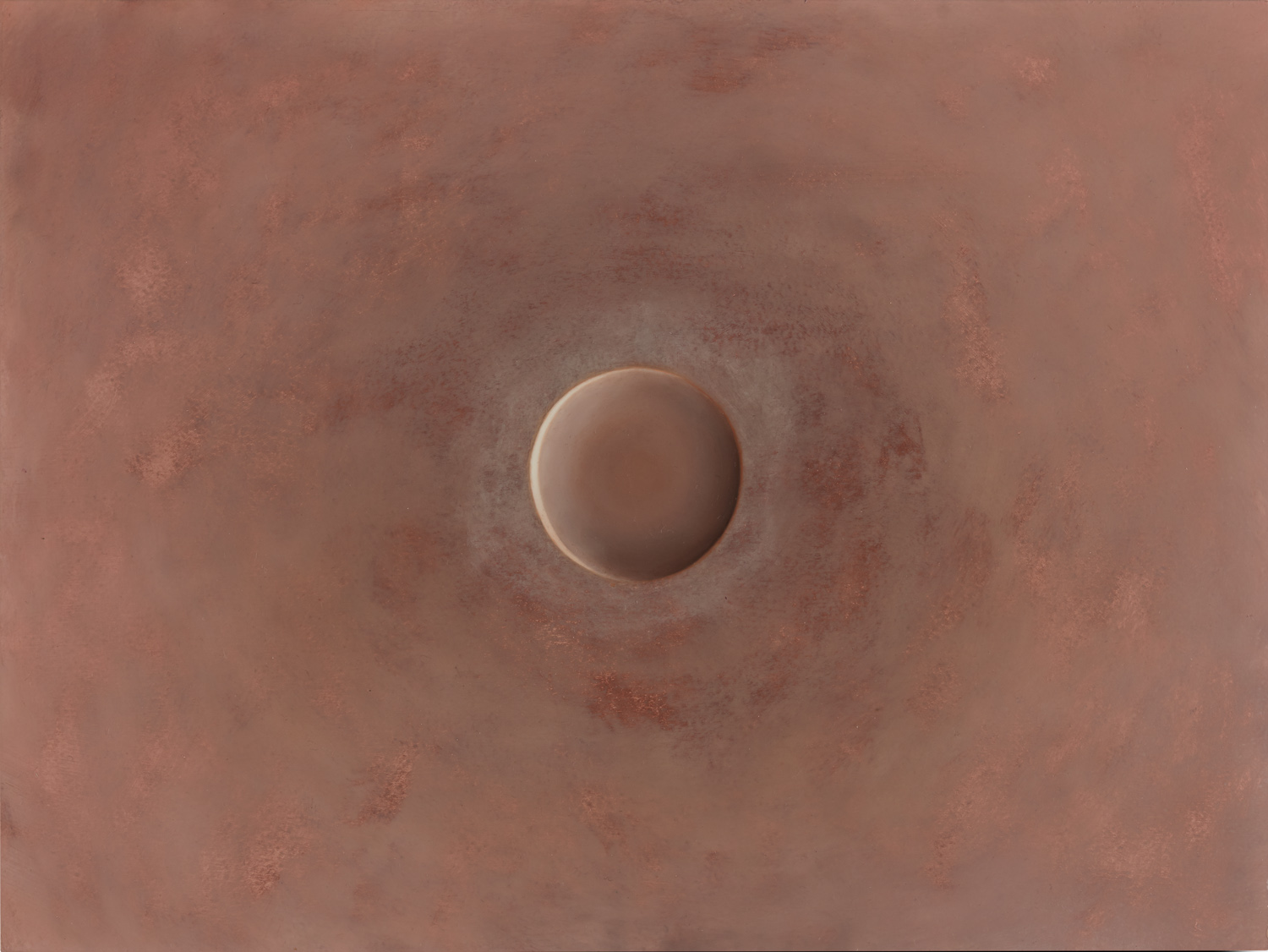
David Micheaud
Oil on board, 30 x 40 cm
Clare: Can you discuss your incredible use of colour and how you set up your palette?
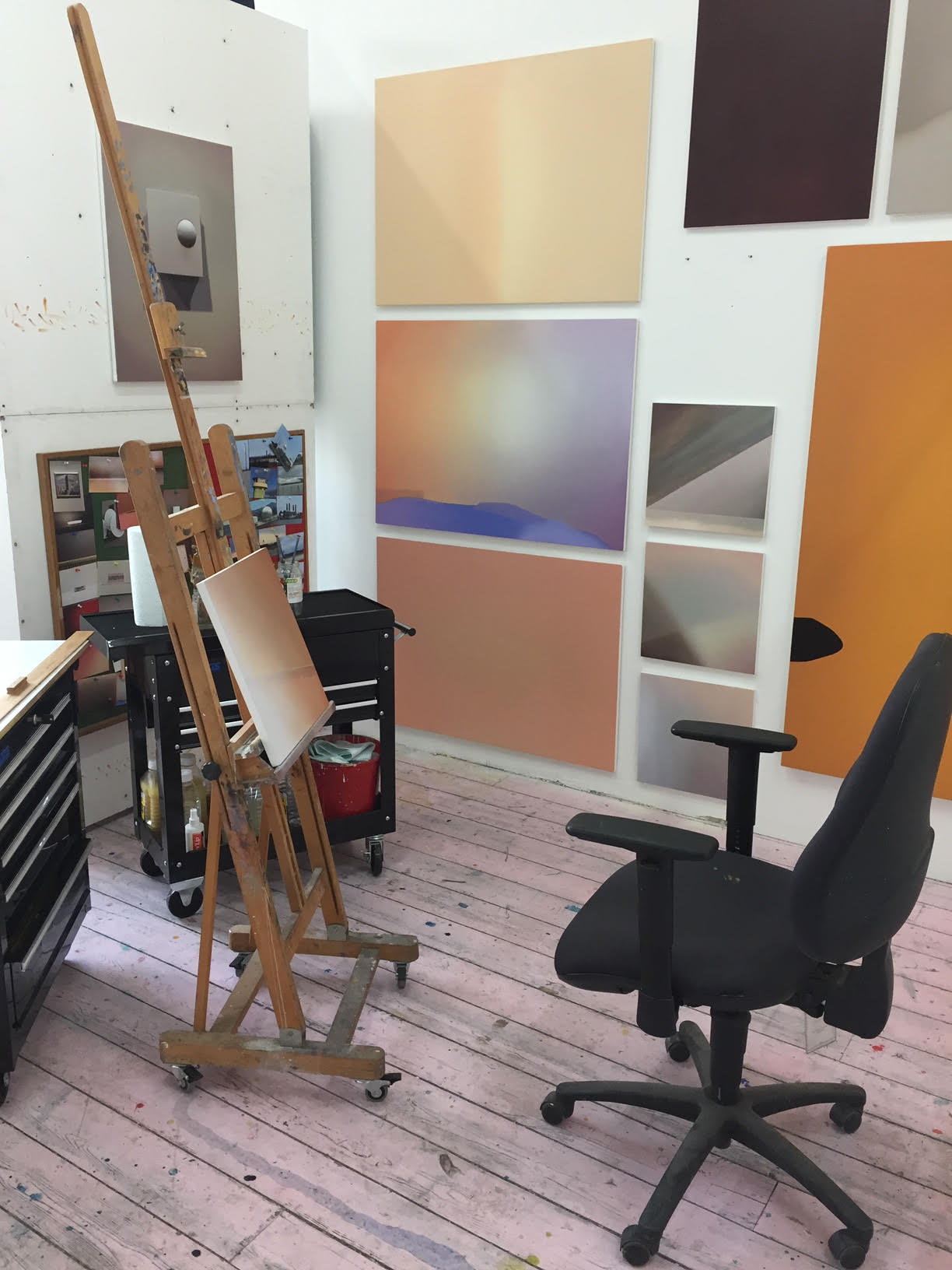
David: I remember moving to London wanting to change from acrylic to oil as I wanted to get into the history and tradition of painting in oils. I went out and bought pretty cheap tubes of all the primaries and print primaries, plus black and white as I figured I could make all the colours I needed and couldn’t afford many. From there I learned how to mix pretty much every shade I needed to and improved my understanding of the medium. Over time, I’ve gradually built up a larger collection of colour, reading about what other artists use or just chatting to fellow painters. I must admit it’s still a bit trial and error with mixing, looking at what I have and trying a bit of this a bit of that until it’s right. It is all just practice practice practice! The more you do it, the more instinctive it becomes. At the moment, I’m really enjoying a range of purples and violets I have. I’m also using soft pinks and titanium yellow a lot along with a range of browns. I have completely ditched black as I find it to be too harsh and makes everything look cartoonish. If its not working on the canvas its off down the art shop to stare at tubes of paint and find something I can use. I paint in very thin layers so the colour is built up slowly and can be adjusted as the layers go on the canvas. I buy the more expensive oils now and the difference in strength of pigment is staggering, they are so vibrant which is really satisfying!
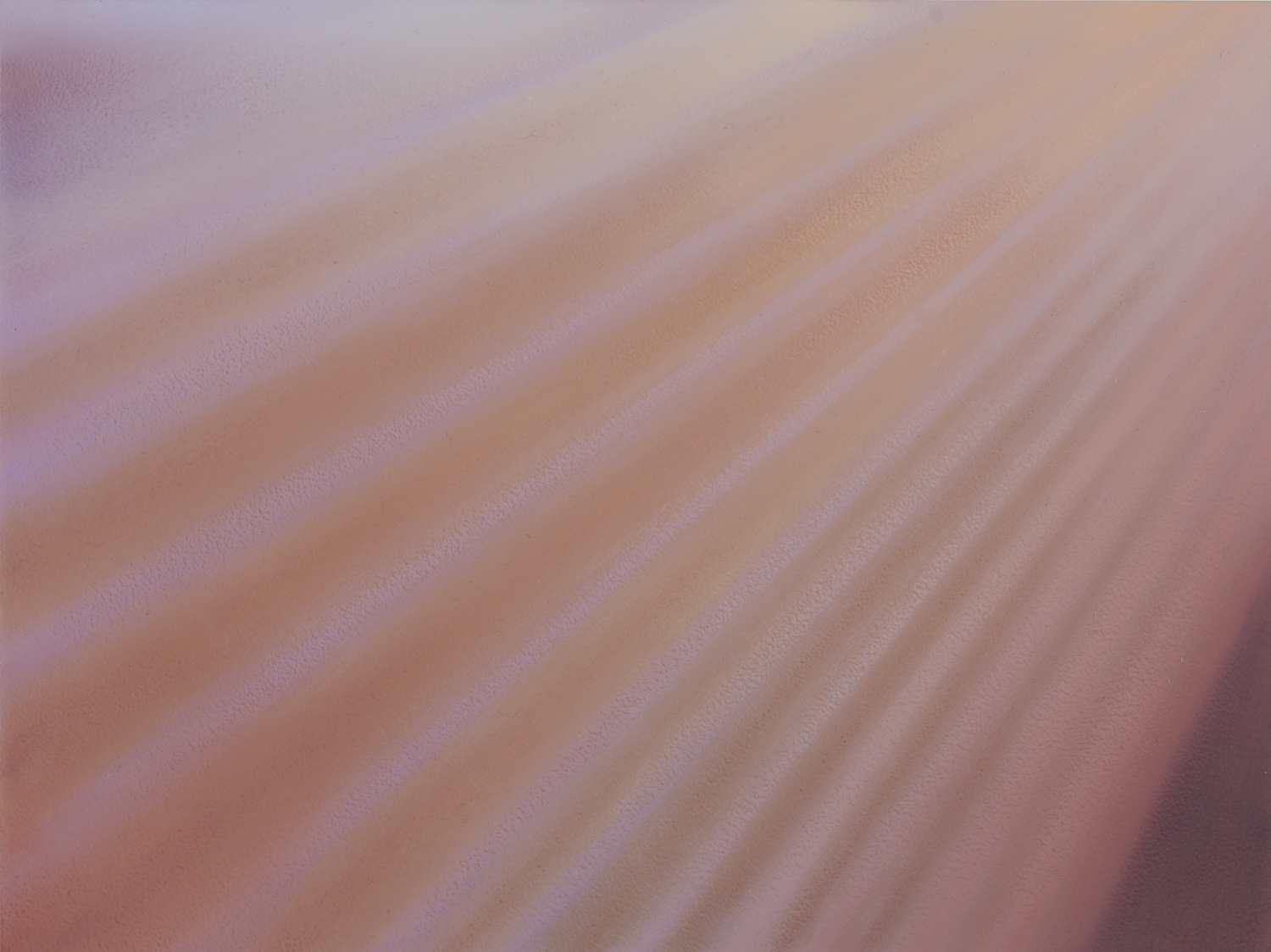
David Micheaud
Oil on board, 30 x 40 cm
Clare: You have these slowly transitioning colours across the expanse of your canvases. What kind of brushes, tools or techniques do you employ to create these blends?
David: I often get asked if a use an airbrush and I don’t, it’s all genuine brushwork. The consistency of the paint is quite key, being thin enough to blend but thick enough not to drip. I went through a lot of brushes testing all the natural hairs when starting out, asking for recommendations at art shops or from other painters. These were often soft sable to eliminate brush marks. I tend to use soft acrylic brushes now and they are better for the animals too. I have large flat brushes for most of the blending starting at about 15cm and going all the way down to 3mm for tiny areas of blending. I first mix the paint on my palette and apply quite messily to the canvas, creating blocks of colour which gradually change across the canvas. From there, I work the paint backwards and forwards with the large flat brushes until everything is blended, which is essentially a process of removing most of the paint applied; changing brushes for cleaner ones until everything is flat and as one. There is a lot of guesswork when first applying the paint, you need to figure out how much to apply and how far it will move once blended in, although this can be changed over time by using a layering process.
Clare: What is it about an everyday object, shape or composition that you see, that informs your decision to create a painting of it?
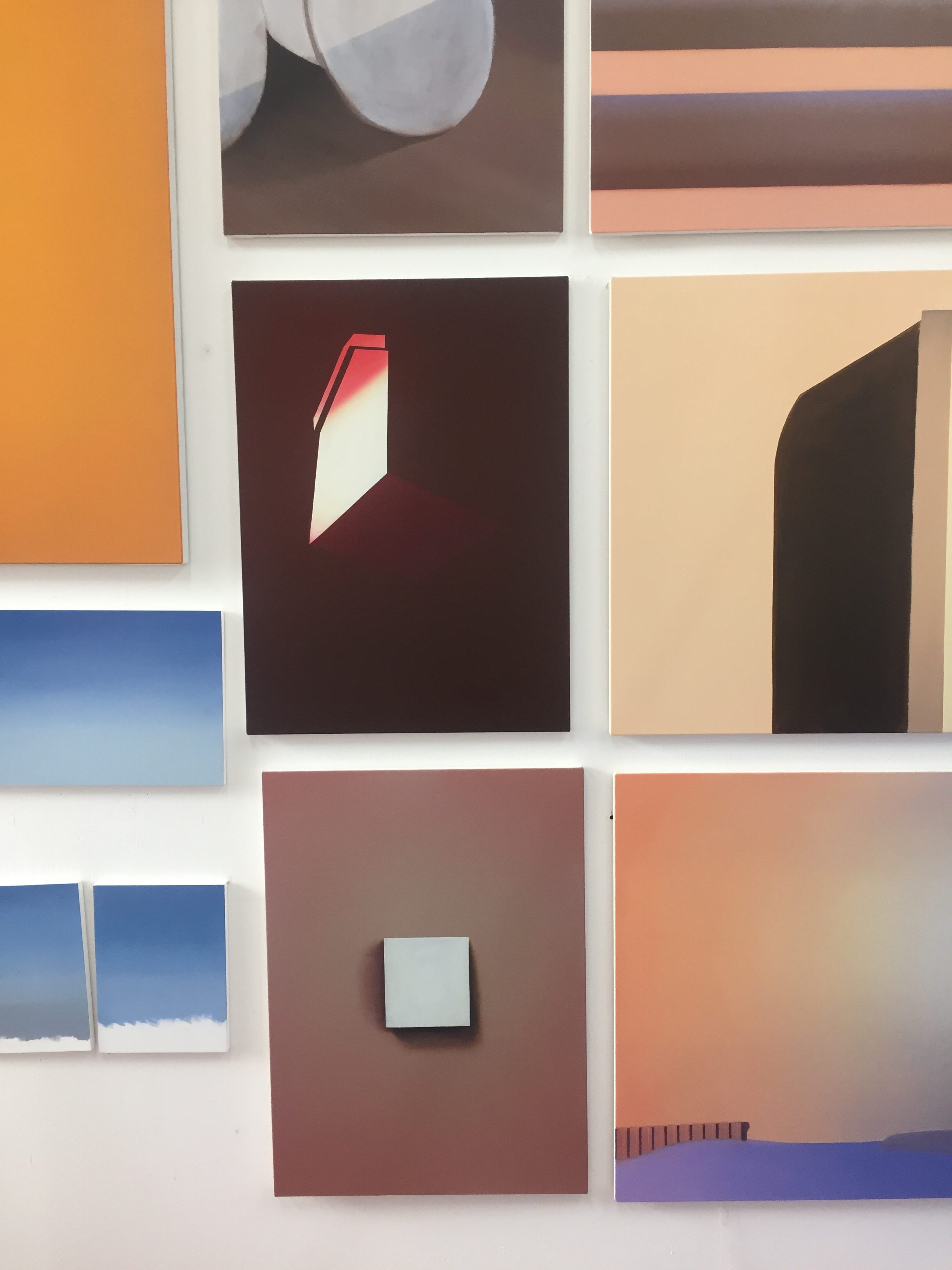
David: I’m constantly photographing and printing images. They go up on a wall and there’s this process of having them around for a while then making connections with other work or previous work. Often, I print a set of images at a time or for a specific show. All the things I paint are personal spaces and objects that I interact with regularly. There is a story to each one creating a meandering journey connecting disparate points in time. The images I am drawn to capture are also a highlight of the unseen or unappreciated things that are passed by or ignored. I try to bring them to life and labour over them, giving them a platform of appreciation. Sometimes, it’s just the sumptuous feeling of light. Angles are manipulated to view things from a fresh and new perspective. There’s quite often references to art history with a twist, such as raking light from a Caravaggio over a light switch, the soft yellow light in a Turner hitting a concrete balustrade, John Martin’s apocalyptic vision in a toaster or the sublime of a Casper David Fredrich portrayed with a socked foot.
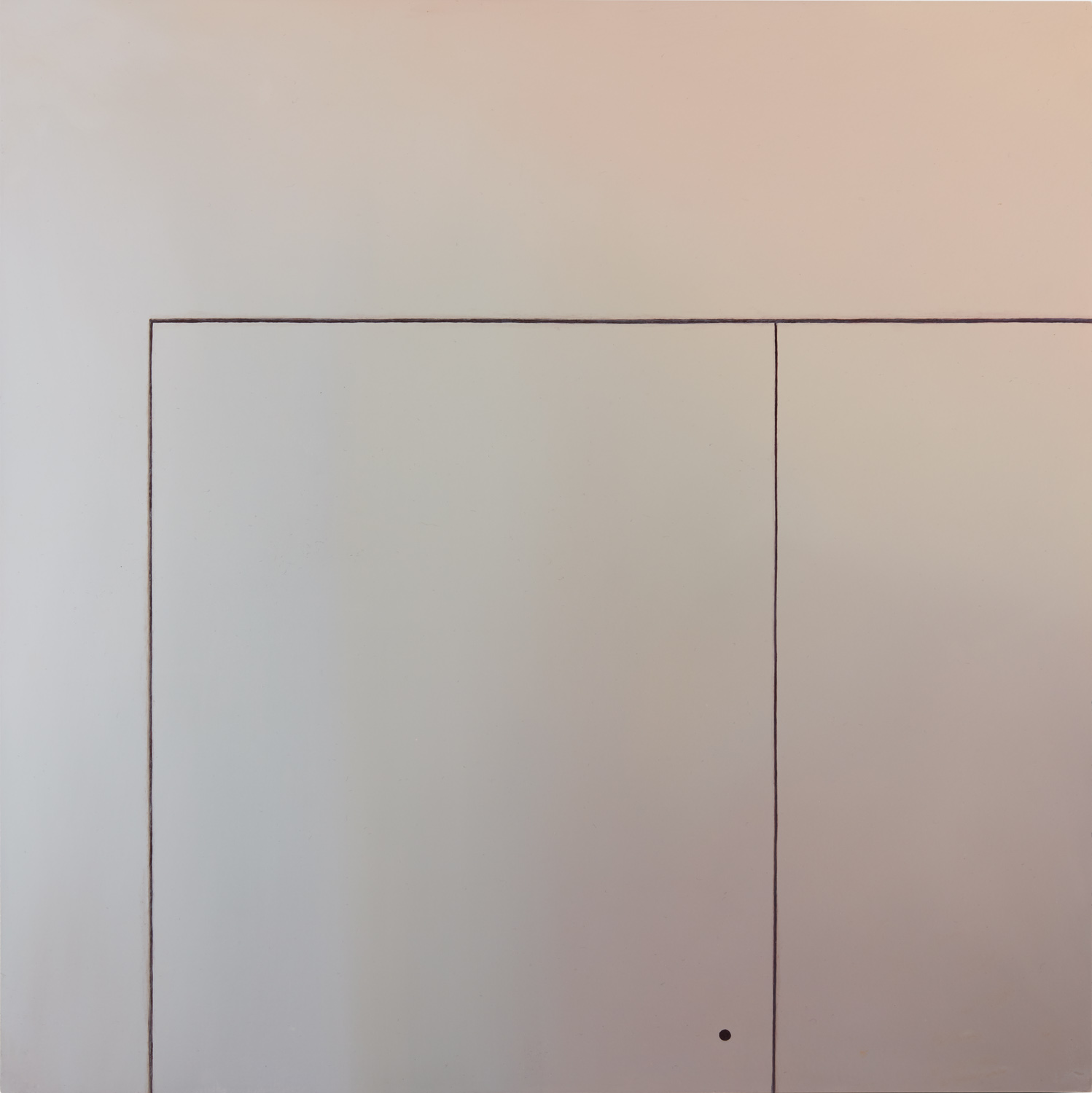
David Micheaud
Oil on board, 40 x 40 cm
Clare: Do you maintain a practice of traditional sketching for your reference imagery? If so, how often and what kind of materials do you use?
David: I would love to say I sketch and always felt like you had to as a painter. The camera has always been my preferred tool in place of sketching, the things I wanted to capture were subtle colours and light and photography feels like the right way to record these images. I get them printed in the thousands and they are my sketchbook.
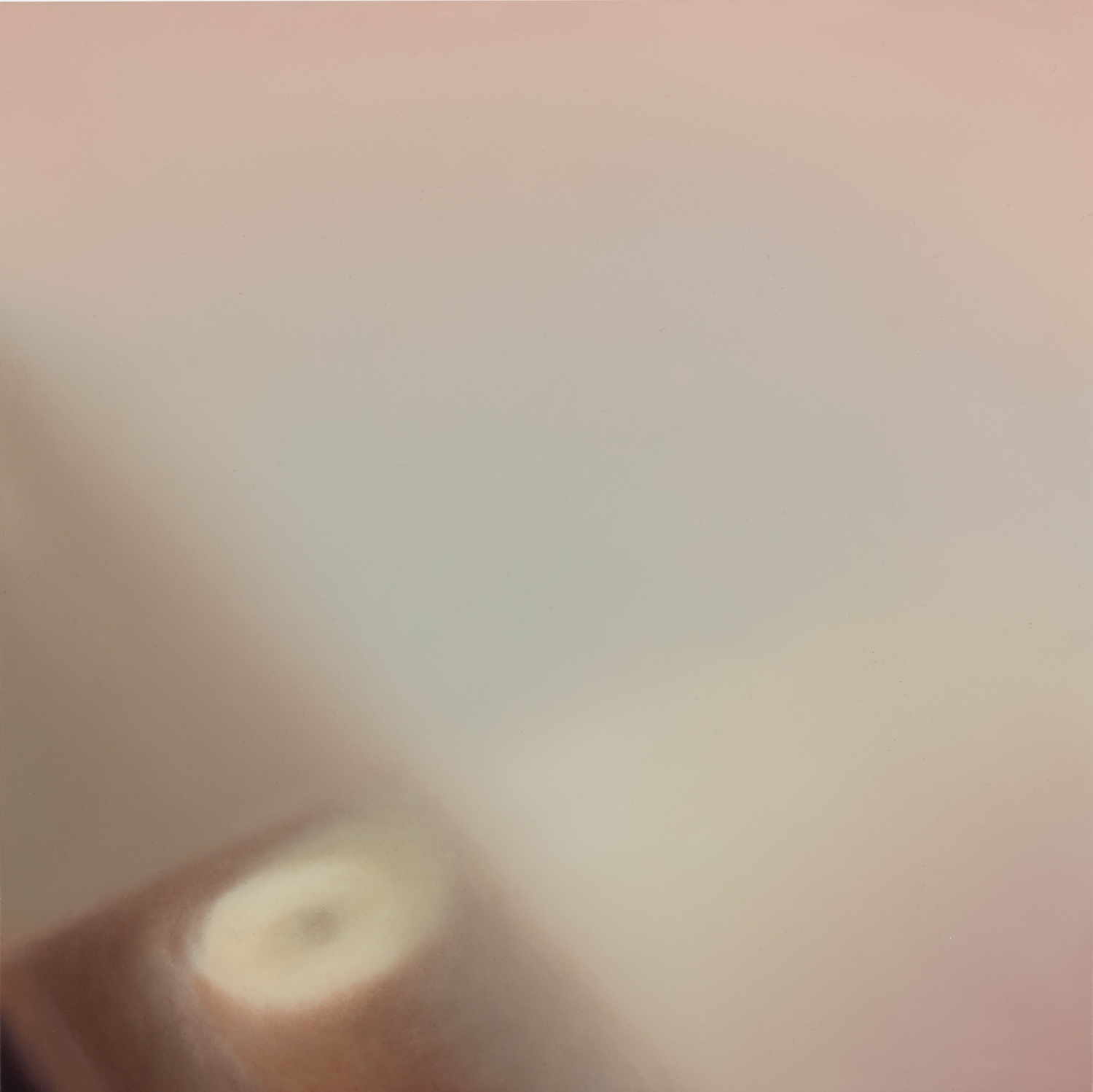
David Micheaud
Oil on board, 40 x 40 cm
Clare: What are your most important artist’s tools? Do you have any favourites?
David: I intentionally keep things incredibly simple, so I don’t have to think about anything other than the image, I just paint and think about the surface.
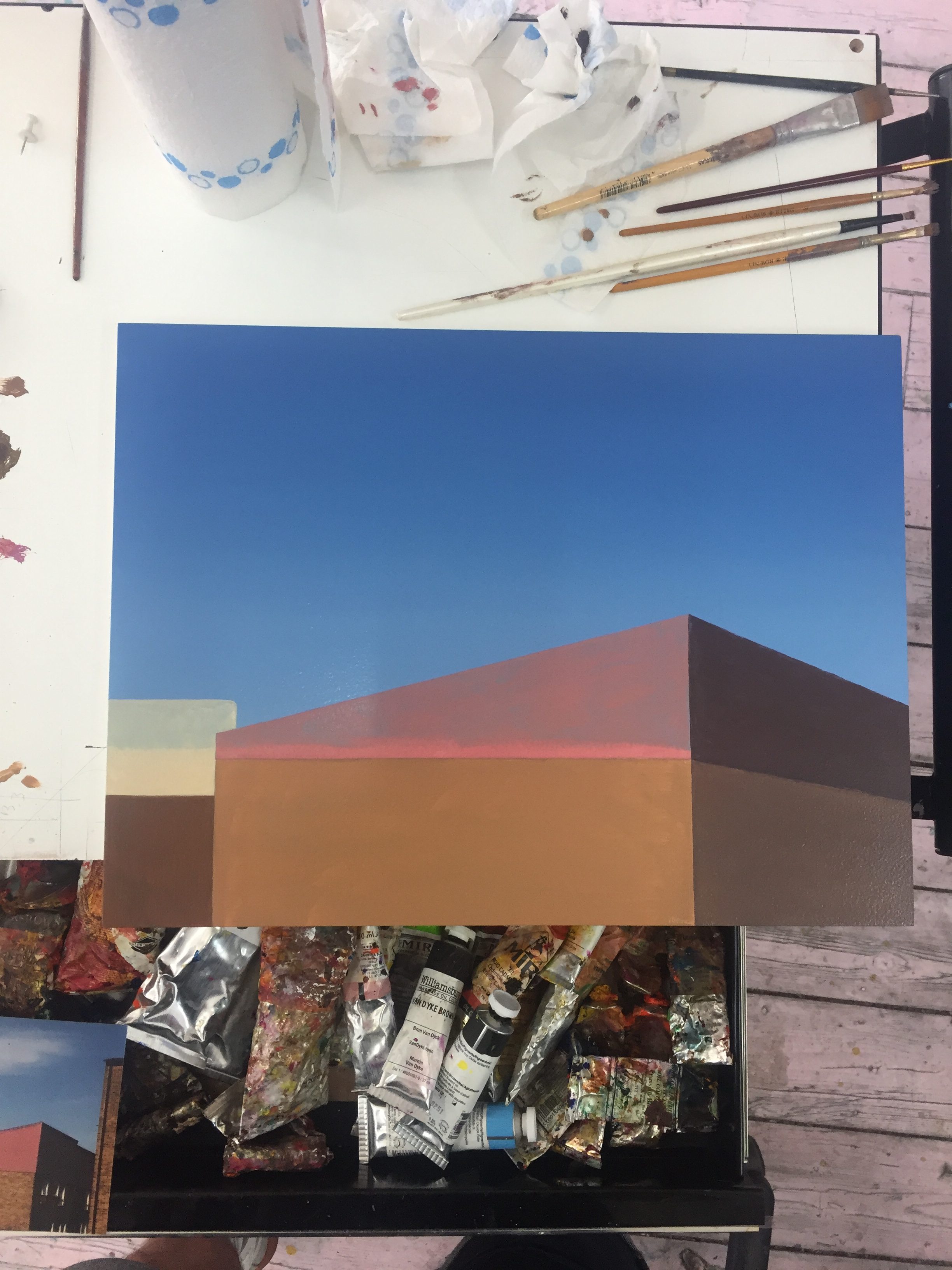
Oil on board, 30 x 40 cm 2019
Clare: What makes a good day in the studio for you?
David: I have about sixteen paintings on the go at the moment, so a good day is to get in the studio in the morning and get a layer on as many paintings until the end of the day. I work in rotation adding a layer at a time and then leaving them to dry. Ideally, there are no disruptions. There’s always deskwork and admin to do so a clear and quiet day in the studio is what I strive for the most.
Clare: What are your art influences? Who are your favourite contemporary or artists?
David: Early on as a teenager I had Edward Hopper’s, Nighthawks, on my wall and the melancholy isolation in that painting really spoke to me for some reason. I found the tone and the light fascinating. I also found it quite nostalgic which I didn’t want to recreate so by A levels I was onto Patrick Caulfield and felt he had this modern use of colour and line which I copied or interpreted. At University there was a large painting in the library, of a waiting room with a TV monitor by Paul Winstanley. Again this had a melancholy feel, an empty non-space painted in beautiful detail under artificial light. Hammershoi, for the captivating use of sunlight streaming through large windows. Gerhard Richter’s obscured landscapes in fog captivated me for a while and I always enjoy Vija Celmins everyday objects from her studio or intricate drawings of space and the sea. Hiroshi Sugimoto’s large photographs of horizon lines are fascinating and the instinctive calmness that the horizon generates. James Turrell’s use of light in architectural spaces is also captivating and calming, creating spaces for contemplation without overly drawing attention to the creases or lines in the space. Charles Sheeler’s factories I have a fascination with and have often painted towers and power stations, observing the way light hits surfaces and creates shape and depth with an imposing eerie presence.
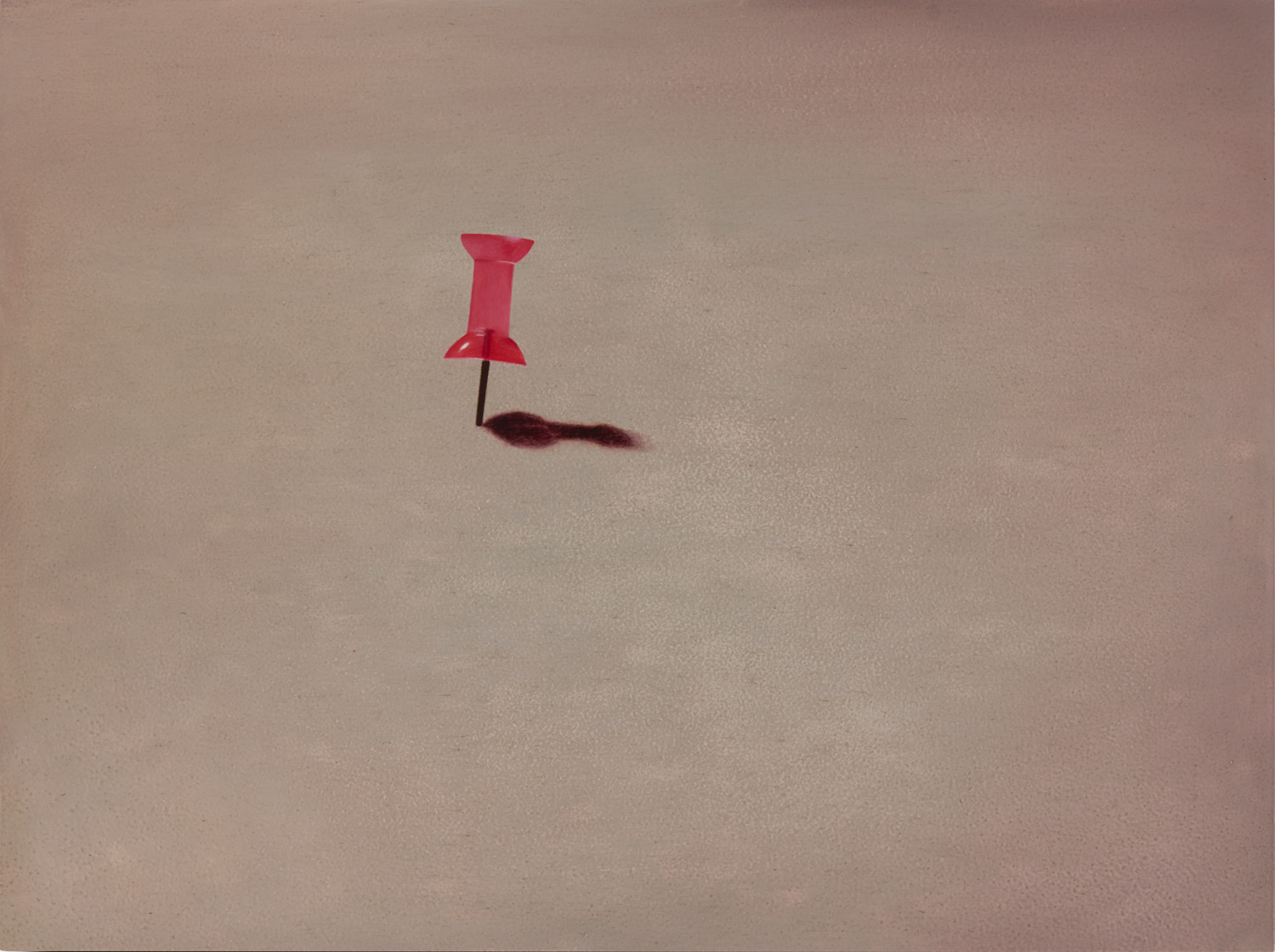
David Micheaud
Oil on board, 30 x 40 cm
Clare: In the studio – music, audiobook, podcast, Radio 4 or silence?
David: I’ve always got the radio on but also barely listen to it! Once I’m painting and focused its background noise; podcasts aren’t great as I don’t listen intently. Generally I go for Radio 4 in the morning for news and 6 Music in the afternoon to lighten the mood. I can’t handle anything with adverts as the jingles stick in my head! I still know the tune to an electrical retailer who went into administration in 2001.
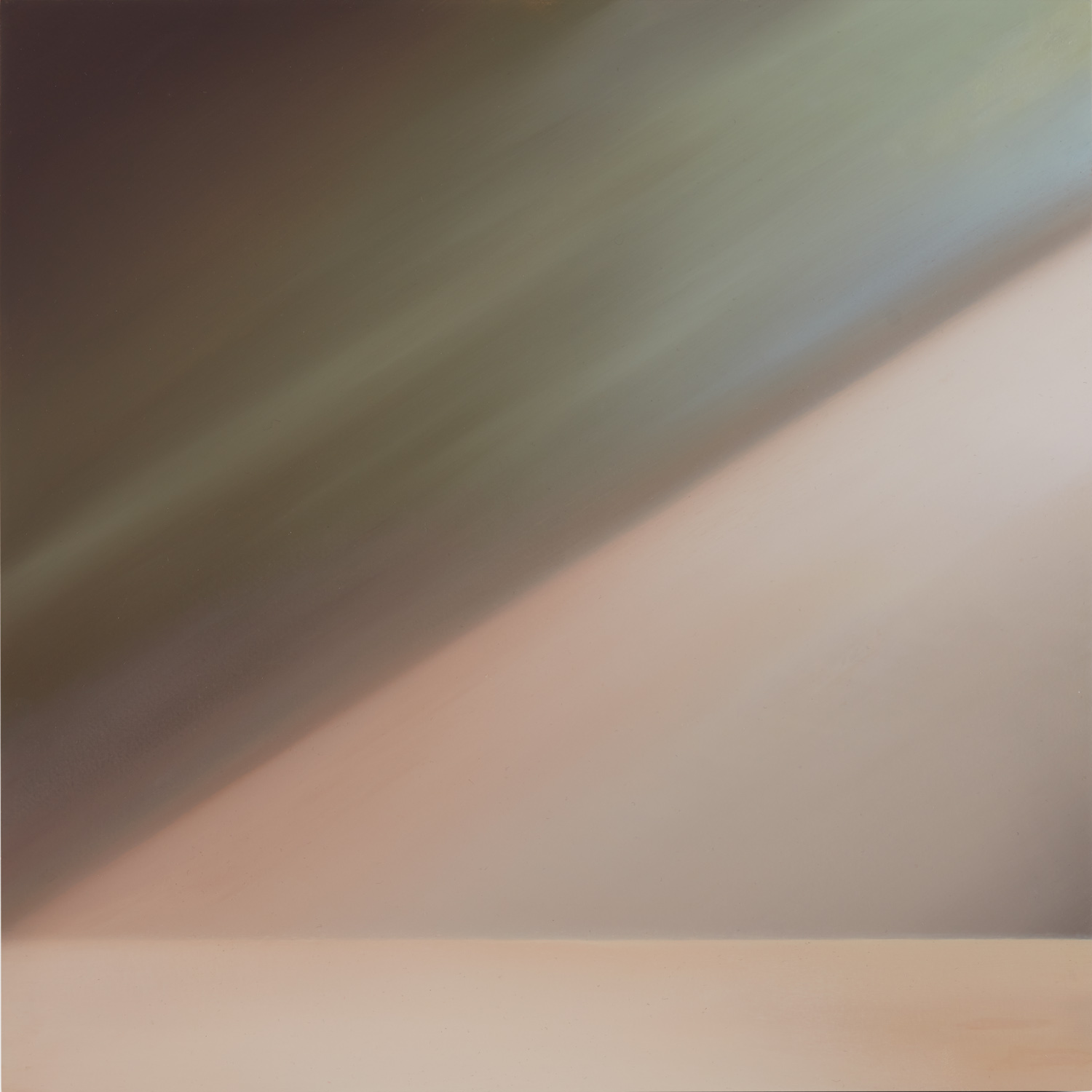
David Micheaud
Oil on board, 40 x 40 cm
Clare: What is coming up next for you and where can we see more of your art in the flesh or online?
David: I have a piece going into Southwark Park Gallery for the annual Bermondsey Arts Group members show opening on the 6th of October. Another piece is going into a group show at Simmons & Simmons; a law firm with substantial art collection and rotating biannual exhibitions. They’re based in the city near Moorgate and I’ll be showing alongside Paul Winstanley, Mike Silva and Margerita Gluzberg – also opening early October. I’m also working on ten new paintings for a solo show at Luna Elaine an artist run space in Bermondsey which opens towards the end of October. Follow me on Instagram @davidmicheaud or or send me an email at [email protected] to receive the details for my next openings or to check out new works.