



Tom Climent was shortlisted for the Jackson’s Painting Prize this year with his painting, Sundial. In this oil and plaster work, a multitude of colourful shapes form a geometric structure, faceted by light and weighted with shadow. In this interview, Tom discusses his studio practice over two decades, some of his fascinating makeshift brushes and the journey from one painting to the next.
Above image: Crown, 2020, Tom Climent, Oil, plaster & sand on canvas, 213 x 183 cm
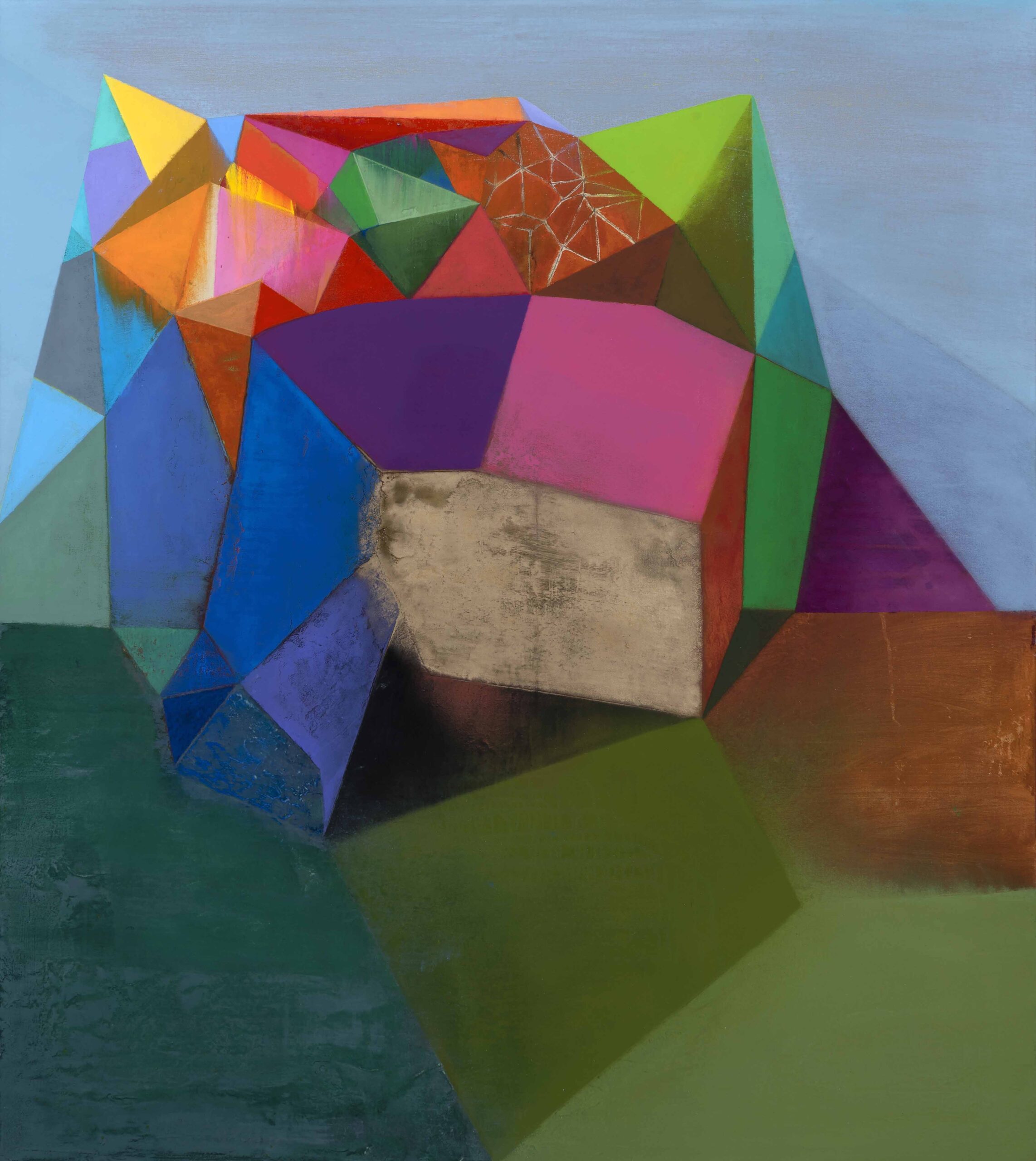
Tom Climent
Oil & plaster on canvas, 137 x 122 cm
Clare: Can you tell us a little bit about your artistic background/education?
Tom: I loved science and art when I was in school. When I left, I initially chose to study engineering. At the same time I started doing night classes in painting at the Crawford College of Art & Design in Cork. I stayed doing the night classes for four years while I was studying engineering and then enrolled full time in the Crawford College of Art & Design in 1991. I finished my degree there in 1995. Then, I got a studio in the city where I’ve been working for the last 25 years.
A few years ago, in 2009 I decided to go back to college to do a research Masters. I felt that I was missing that critical input that you get by being in college. I wanted to challenge myself and be challenged by others. I wanted to investigate the ways I had of seeing and thinking about my work. Sculpture was a new direction I wanted to explore, and I also wanted to try and engage more with current art practices. I found the experience of it quite hard for the first year, I hadn’t realised that by having worked on my own for so long how difficult and uncomfortable it would be to have other people involved in my own creative process. By the second year though I felt much more involved with it. I took a space in the National Sculpture Factory in Cork, this was a great experience and really contributed to the work I ended up doing for my end of year exhibition. I saw the MA as a separate project with a start and a finish, although I really see the influence of the work I did then coming through in the current series of paintings I’m working on.
I found early on in my career and especially while at college, you’re constantly searching for a way and a means to express yourself. There are so many influences and opinions, from artists whose work you admire, the tutors there, your own fellow students. It’s a time where you start to make decisions as to what you’ll take on board and what you feel doesn’t work for you. I think by nature I’m quite unsure. I found that by being challenged and encouraged, it helped me develop a means of problem solving in a visual way. There were times back then where I would get quite stuck but the tools I learned, to move beyond a certain limit, were probably the most valuable I learned as an artist.
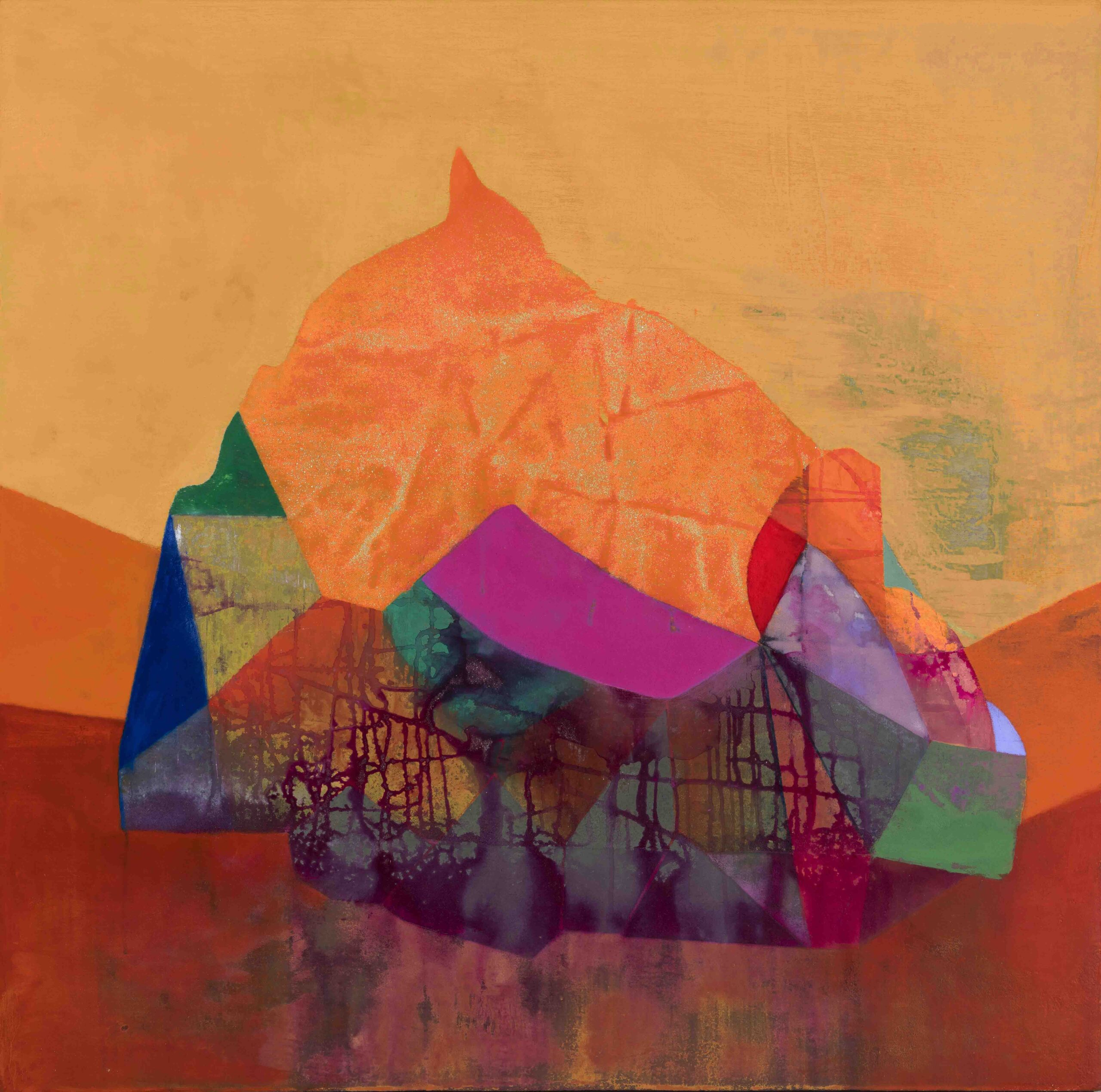
Tom Climent
Oil, plaster & sand on canvas, 110 x 110 cm
Clare: How would you describe your practice?
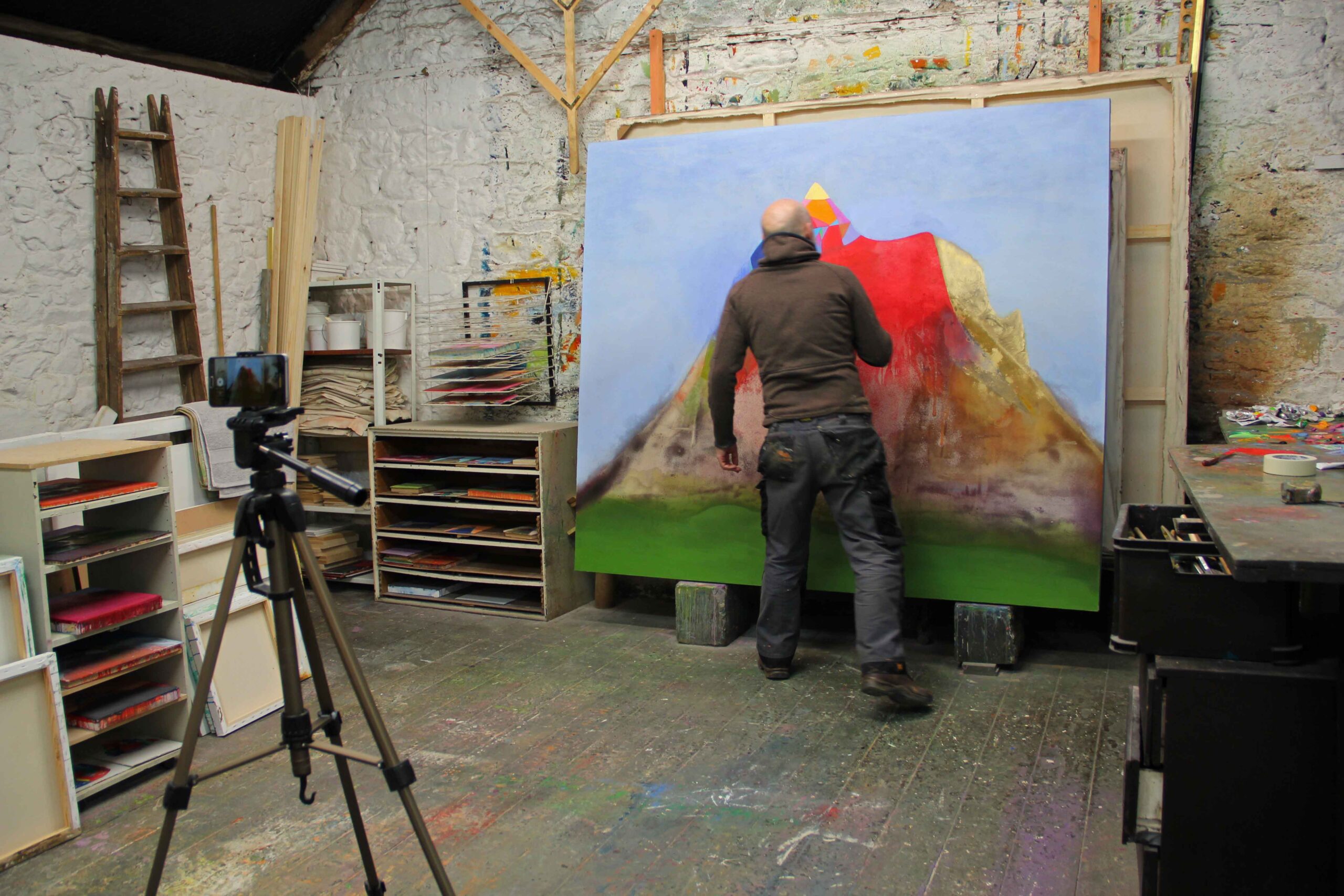
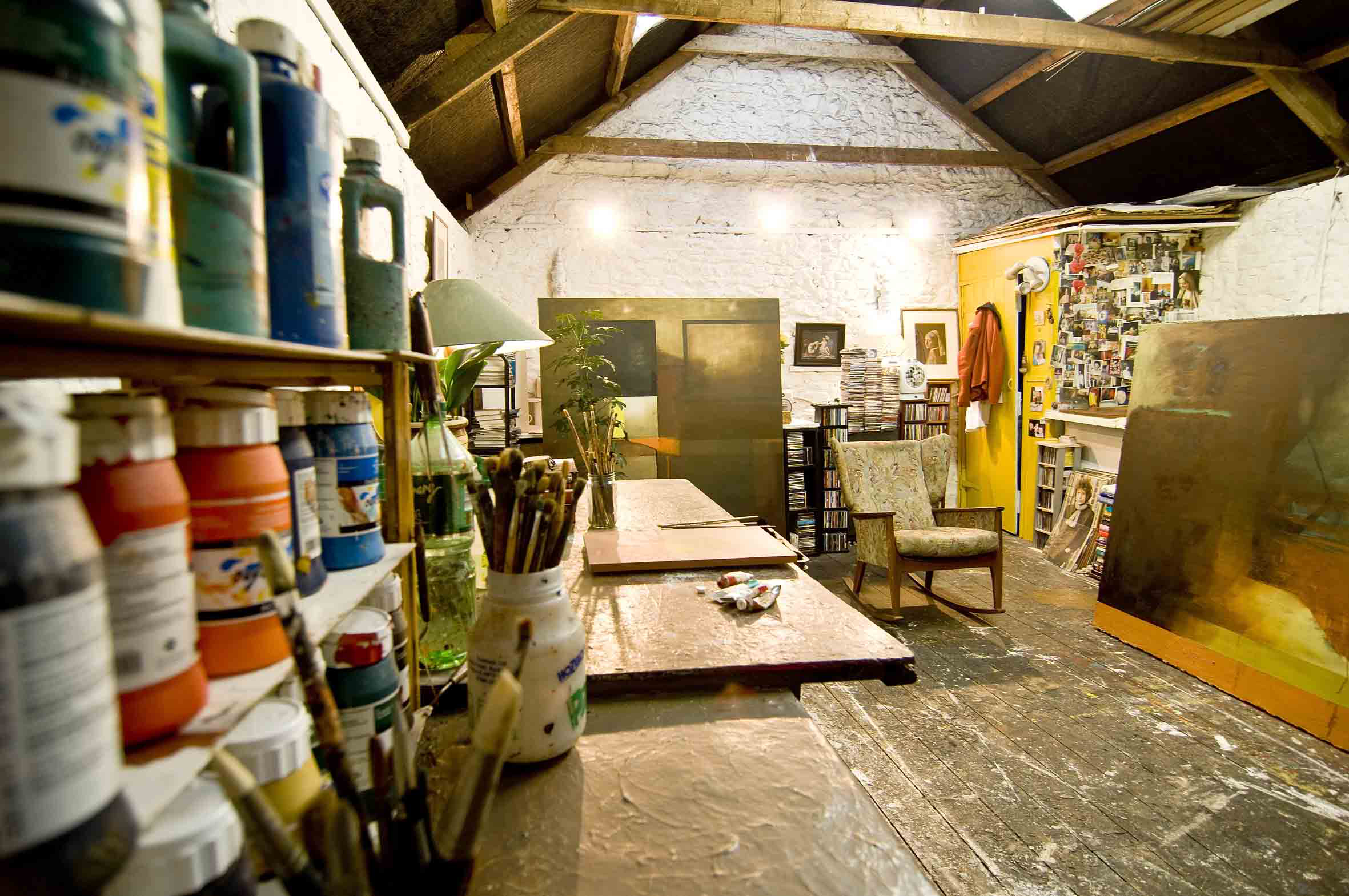
Tom: I’ve always wanted to be a full time artist and I’ve been lucky in that I’ve been able to work at it full time since I left college. I probably wasn’t that disciplined at the start but over the years it’s become my working day to go to the studio. I usually go in most days, I work on lots of different paintings at the same time of varying sizes. Usually I work on smaller ones for a few weeks and then switch to the larger works for a period of time.
When I start a painting I first paint the whole surface one colour, this becomes as in music, the key note of the painting. With my current work, I’ve been using abstract geometric shapes and structures, almost like grids, to provide a foundation for the paint. I then start to shape them into something more recognisable, I don’t think the work I do is wholly abstract. I want there to be some way into them, some element or narrative that the viewer can relate to. I think all the work I’ve done has existed on this border line between abstraction and representation. I hope that the paintings are open enough that people can attach their own experiences and history to them.
I paint both upright and flat on the floor. When working flat I apply layers of very transparent paint with turpentine, the accidents and chance elements of this process guide the painting forward. The shapes and narrative that come out of the combination of structure and chance determine what the painting will be.
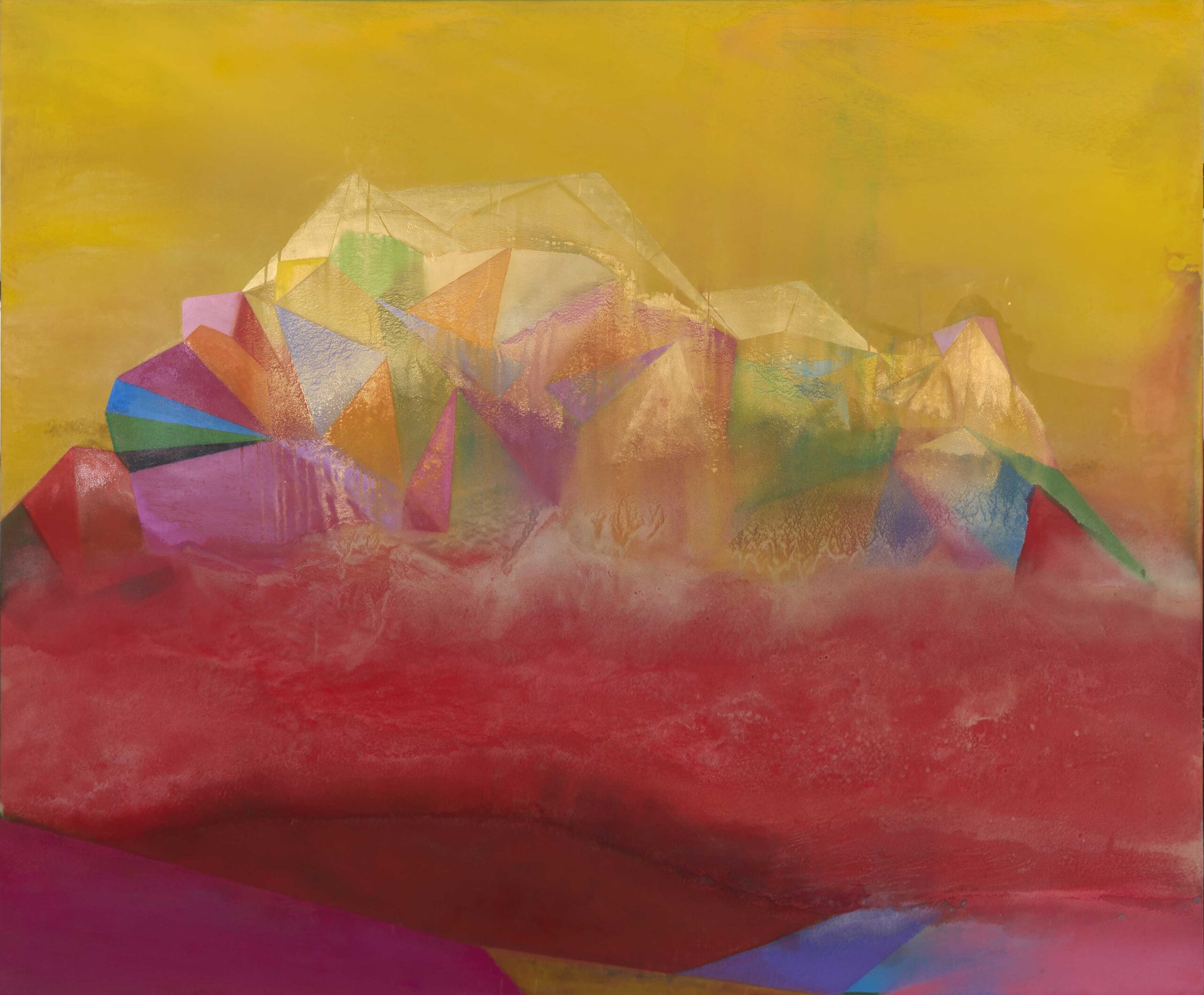
Tom Climent
Oil, plaster & sand on canvas, 183 x 153 cm
I don’t work from drawings or sketches, I start each piece I suppose with a rough idea, but I don’t have a definite end result in mind. I want it to reveal itself to me. Each painting is part of whatever series I’m working on at a particular time. In that way the previous pieces I’ve done are almost like sketches for the newer work. I hope as the series progresses, the work will get stronger. I usually go back then and rework some of the earlier paintings. Each one is like a step on a path, by retracing your steps you make the path stronger and clearer.
This reworking or going back into the paintings has become an integral part of my process. I allow elements of the older “version” to still be visible or part of the new finished painting. It’s almost like putting two transparent images over each other and seeing what the resulting combination suggests.
For me, painting is trying to find a balance between being unselfconscious, allowing the work to be formed and also making critical judgements about what work you want to make. It’s a process of doing the work and then reflecting on that work, seeing what has comes out of a period of painting and then deciding on why certain paintings I feel are more successful than others. These paintings then become almost like signposts in the road ahead. They guide the series of work forward.
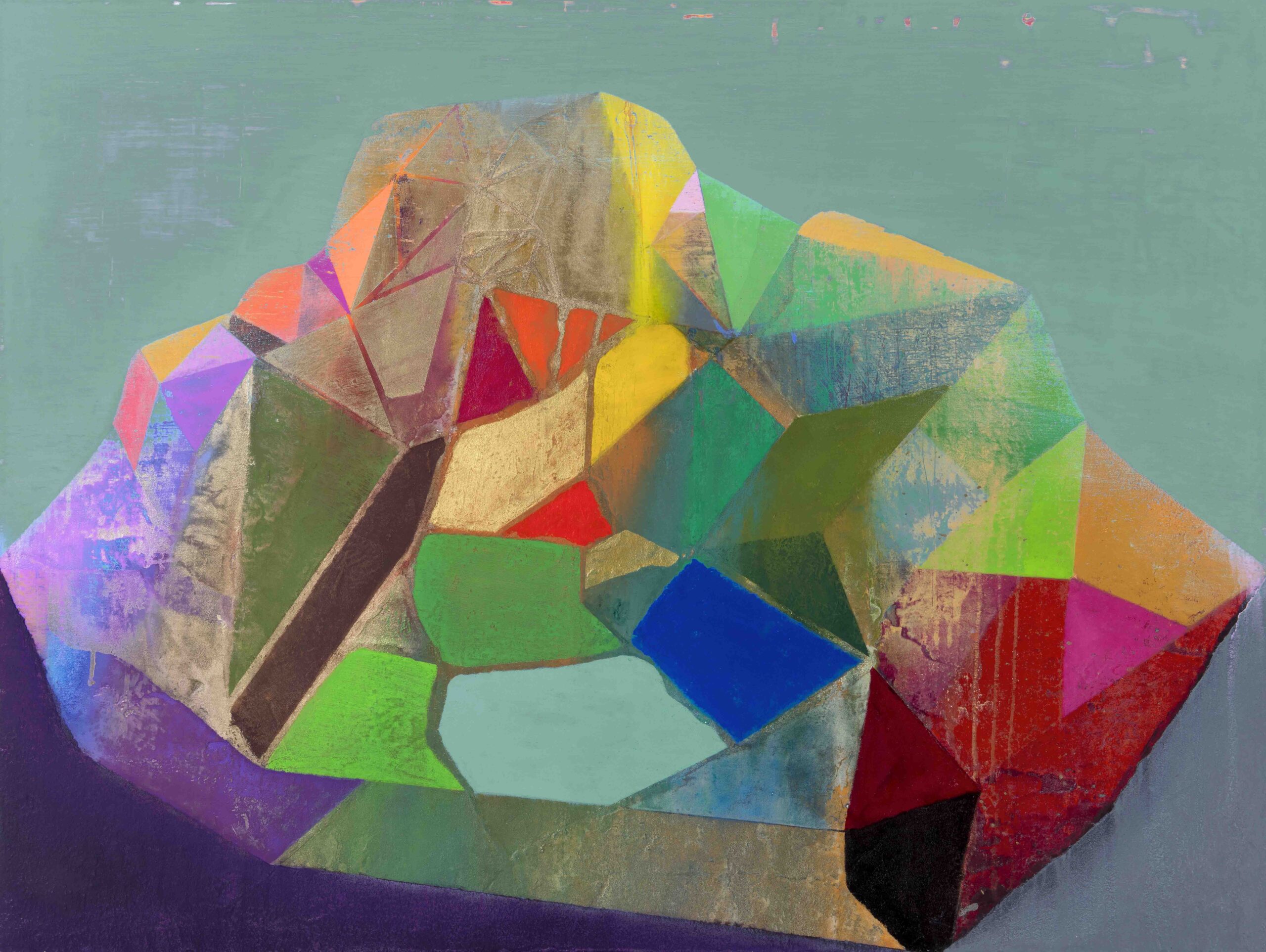
Tom Climent
Oil & plaster on board, 100 x 75 cm
Clare: Where does a painting begin for you? Can you describe your process?
Tom: All my work is painted in my studio where I’ve been based for the last 25 years. I don’t work from sketches. Over time I’ve developed a routine and a method to enter into a painting. The work gets changed quite a lot as I go. In a way, each layer is like a sketch and eventually they evolve into a complete piece. I allow places I’ve been, experiences I have and images I see, to find their way into the work. It’s about being guided, of opening up a creative space and allowing what comes through to be manifest in the work.
It takes a while to find my way into a series of paintings, but eventually one or two will start to make sense and be closer to what I feel I’m trying to do. These almost become like markers, they become the first templates and a reference point for the work as it moves forward. I suppose then over time the work takes on a life of its own, and moves forward under its own weight.
I suppose a lot of my current work is about searching for something, for some place. Valleys, mountains and fields seen from above are all elements in them. I think as well, this idea of a journey, of searching for something, for me relates to the act of painting itself. Painting is the means by which I search. The paintings themselves are the by-products of this search.
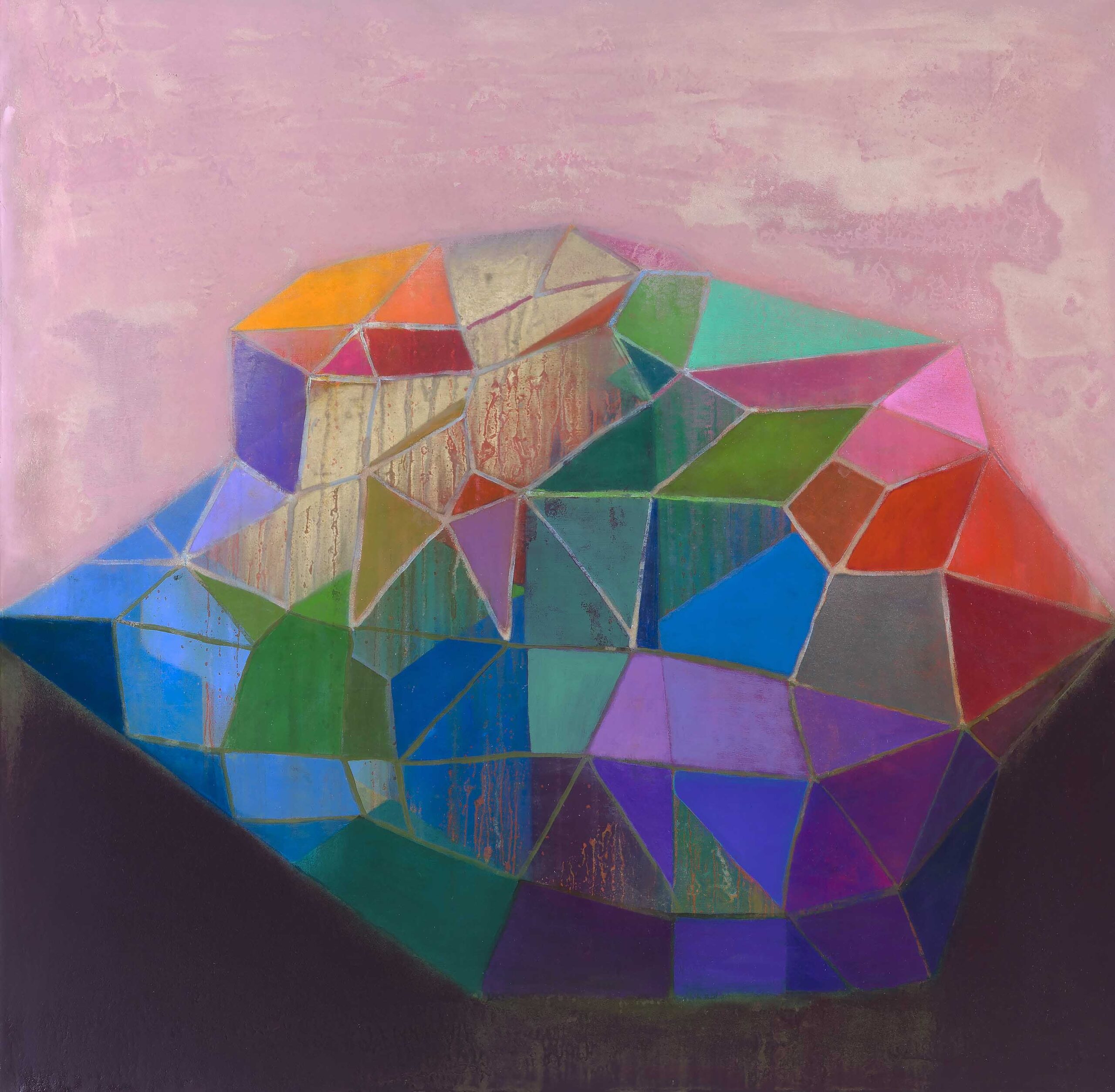
Tom Climent
Oil, plaster & sand on canvas, 92 x 92 cm
Clare: Can you tell us about your approach to colour and how you go about selecting your palette?
Tom: It’s quite intuitive, my approach to colour. I’ve always wanted to use colour and to try and understand how to use it. It’s only by trying to and not being afraid of it that you’ll really learn about it. My attachment to particular colours changes over time as well. Some colours are stronger in different series’ I make. Years ago I used quite a lot of dark areas in my work, as a means to make the colours around them seem bright, almost like chiaroscuro. Over the years though I tried to use colour in its pure sense. A lot of the work over the last 10 years or so, has been influenced by light and the colour spectrum. In that when light passes through a prism it breaks up into the colours of the spectrum. The geometric shapes I use in my work I imagine operate like this prism. They reflect and refract light back into the viewers space. In my current work I probably use a broad range of colours. I’ve become tuned I suppose to how they interact with each other.
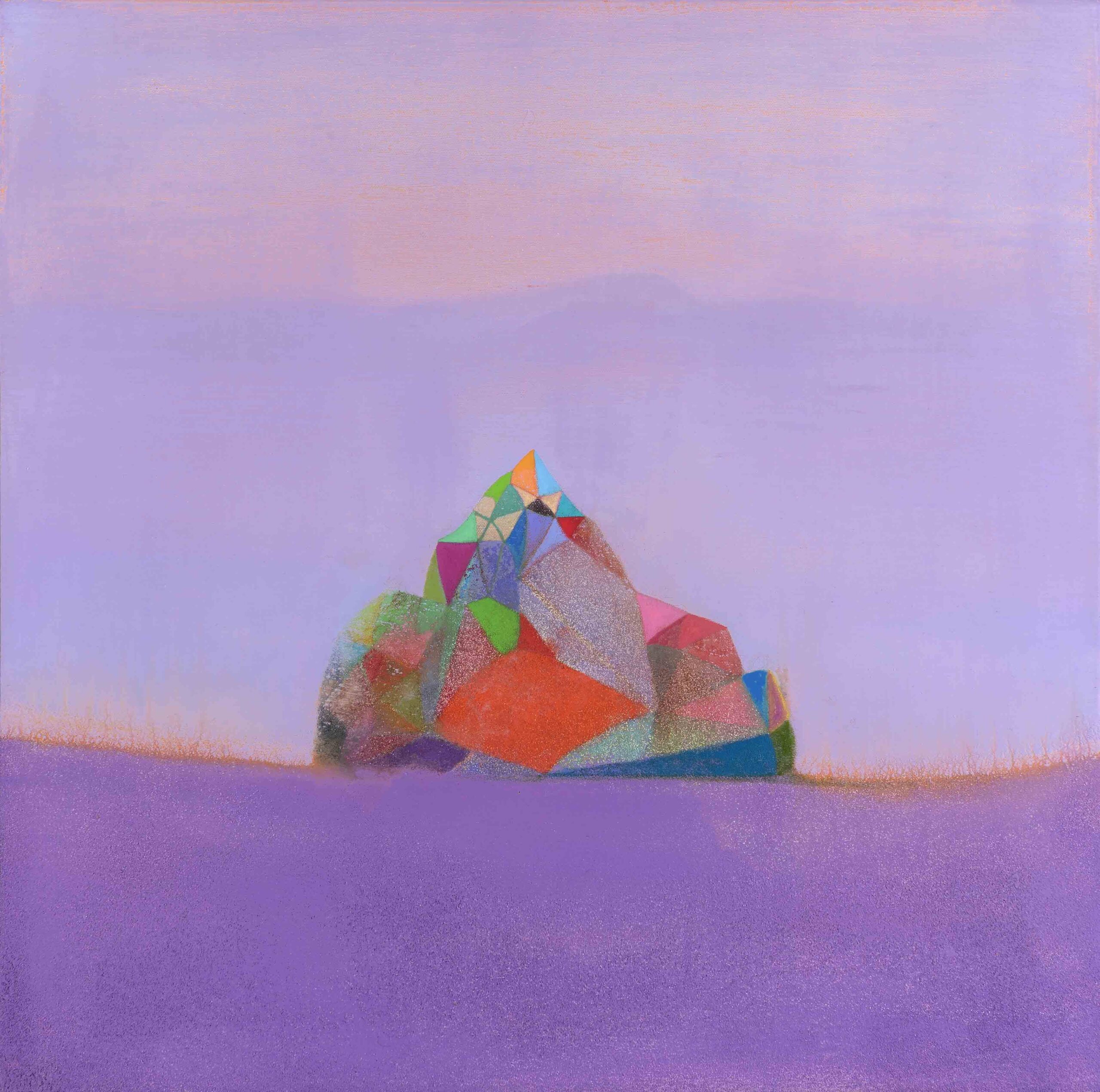
Tom Climent
Oil, plaster & sand on canvas, 60 x 60 cm
Clare: How did you come to use sand and plaster in your work? How do these materials react with oil paint and what other mediums do you use?
Tom: I’ve always used some form of texture in my work, from silicone glue to expanding foam and concrete. I’ve been using plaster for about 10 years now and sand maybe over the last five. I wanted to give a sense of the painting of having come from the ground, of being built up. I’ve always wanted the surfaces of my paintings to be interesting to look at, to convey the processes of their making. I allow chance and accidents to be visible in conjuction with more structured shaped elements. The textures I use work really well with oil paint. I dilute the paint a lot when working on the textured sections, it soaks and bleeds into them, making interesting organic surfaces.
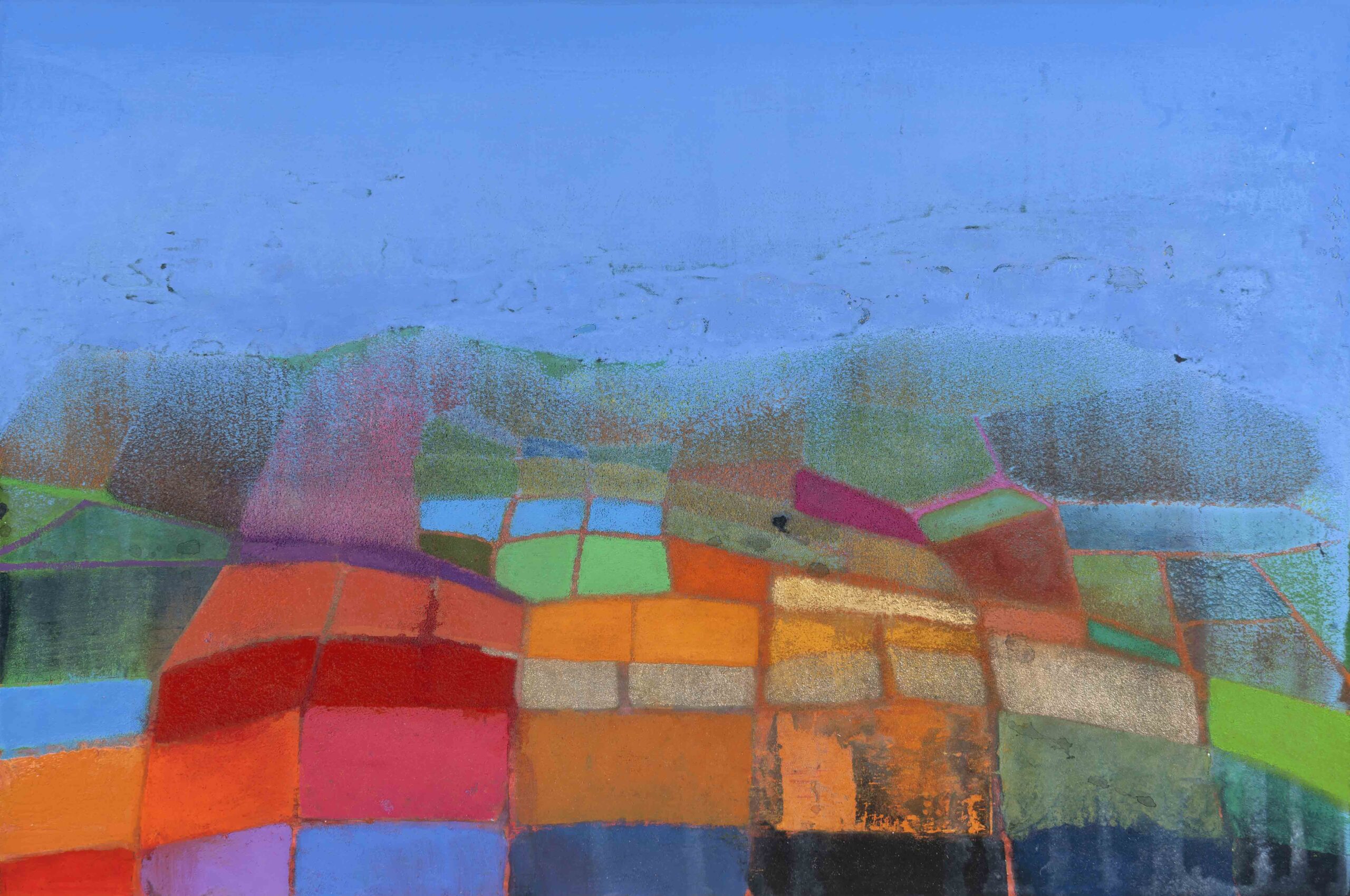
Tom Climent
Oil, plaster & sand on board, 45 x 30 cm
Clare: In your studio photos it looks like you film yourself working. Is that correct? Why do you do this? Do you publish the videos anywhere or are they a personal reference of your progress with a painting?
Tom: It actually isn’t important to my practice that I film myself. I’ve only done it recently as a means to publicise an exhibition I’ll have coming up. I suppose I wanted to give people an insight into my studio and where the paintings come from and their making. It’s something I like to see when other artists post images and videos of their studio and their processes there. Social media has been great I think for artists to connect with people, to share their work and to let them know where it can be seen.

Clare: What are your most important artist’s tools? Do you have any favourites?
Tom: I mostly use quite traditional tools like brushes and palette knives. Over the years on different series’ of paintings I’ve used squeegees, not so much though in my current work. I recently got a large screen printing squeegee blade which has been great for dragging paint over a large surface. It’ll hopefully lead to new ways of applying paint. Years ago I got a large paint brush made using the draught excluder for a barn door. It works great on large paintings where you want to apply paint over the whole surface in one swoop.
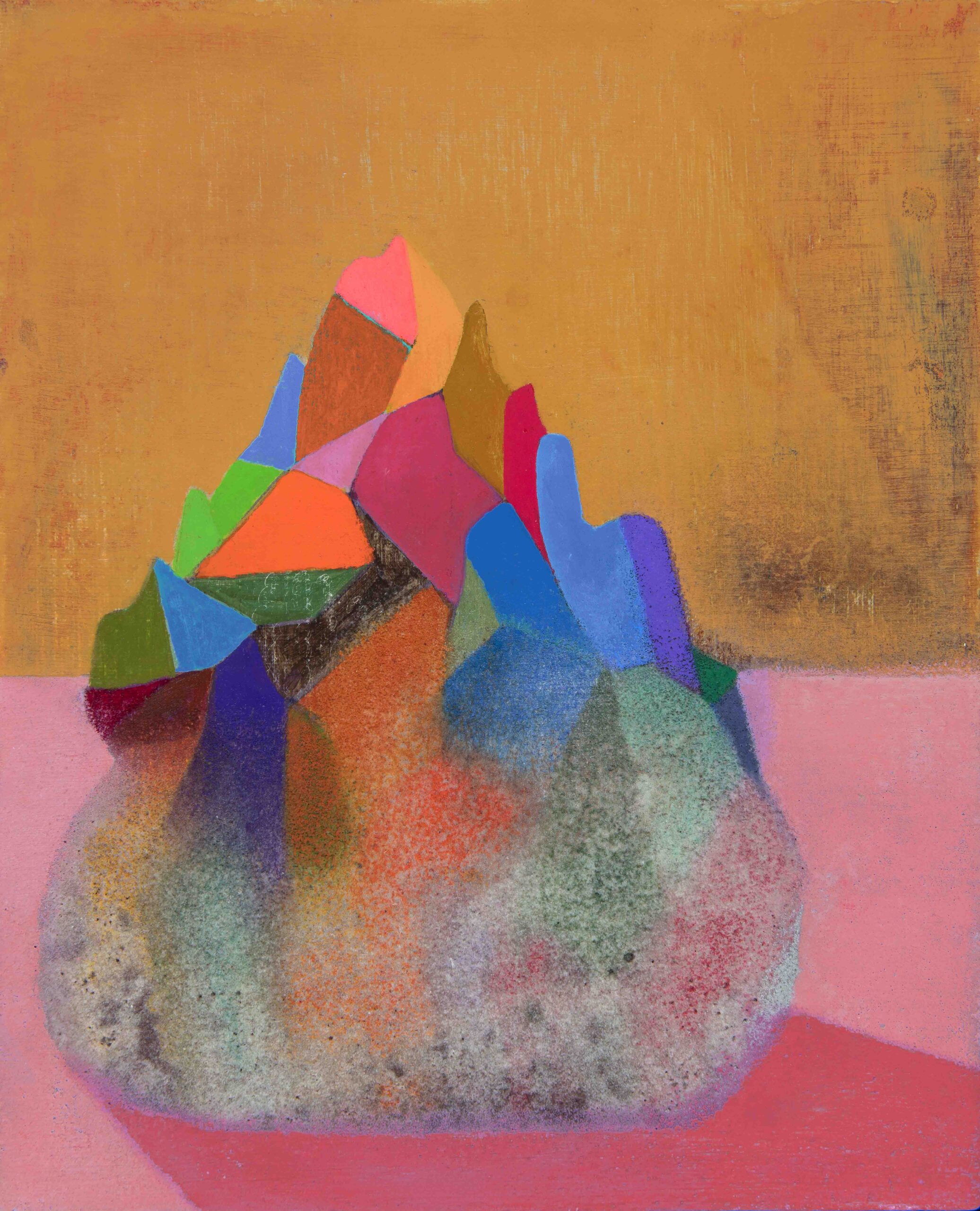
Tom ClimentOil, plaster & sand on board, 27 x 22 cm
Clare: How have the events of the last couple of months affected your practice?
Tom: I’ve been lucky in that I don’t share my studio, so I’ve been able to keep working during most of the lockdown. I’ve found it quite intense really, to be able to focus solely on my work without any other distractions, it’s definitely been a productive time.

Clare: What makes a good day in the studio for you?
Tom: I try and not get too attached to the highs and lows of being in the studio. Mostly painting for me is a series of frustrations and then a breakthrough. There are days I enjoy being in the studio and times I don’t. I work full time at painting, thankfully, so like all work there are good days and bad. I suppose a good day is when I feel I’ve finished a painting that I’m happy to exhibit. I usually work on a painting until I think it’s finished and then put it away for a few weeks and look at it again. There is always more work to do. One important lesson I’ve learned over the years is not to be afraid to ruin a painting by working into it. It’s the only way you’ll be able to move a painting and your practice forward.
Clare: What are your art influences? Who are your favourite contemporary or historical artists and why?
Tom: I started getting interested in art and artists when I was around 15 or so. It all started with Matisse, I saw a painting of his (Portrait with a green stripe ) and I knew I wanted to be a painter. The work I looked at back then was from the turn of the last century: Impressionism, Post-Impressionism, Cubism, Fauvism and Expressionism. Painters I loved were Matisse, Vuillard, Bonnard, Gauguin, Cezanne, Picasso, Kandinsky and Paul Klee as well. It’s where my work has come from and what it is grounded in.
When I started in art college the art I looked at then was more contemporary. I remember the artists that I was interested in were Frank Auerbach, Lucien Freud and Francis Bacon, and later on the Abstract Expressionists like Jackson Pollock, De Kooning, Robert Motherwell and Morris Louis. I came across a painting by Helen Frankenthaler in my fourth year. She used a painting by Manet as reference point. When you saw her own piece next to the Manet painting you could see the similarities but yet her own one was totally abstract in nature. She used the mood, colours and broad structure of the Manet painting as a guide for her own painting. I started using other artists work like Velazquez, Rembrandt, Caravaggio and Vermeer as a starting point in my own work then. They were generally abstract in nature but had the colouring and atmosphere of the original paintings they came from. I used the original paintings as jumping off points, I would allow the paint to flow in an intuitive way but I still had the reference of the original to anchor it and provide a loose structure if the painting got away from me.
Another painter was Cy Twombly that I really admired around this time, the looseness of his painting, his use of drips and areas of impasto paint were influences on how I painted. The Irish painter Patrick Graham was someone I really admired as well. I suppose the broadness of his work, his ambition, the way he handles paint were all things I aspired to back then. One of my favourite contemporary artists is Peter Doig, I love both his use of paint and the almost magic realism he brings to his work. This idea of magic and art is one I hold on to. Painting can be like alchemy then.
There was very much, when I was starting off, a search and a desire to paint like other artists. Now however the works themselves become almost self-generating. Each one and each series following on and reacting to the last one. In some ways I work quite isolated now, though I use social media and a lot of art that I see, I come across this way from what other artists post. It’s become a great tool to view art and exhibitions. I also travel every so often to Dublin and London to visit shows. I suppose I try almost not to hold a definite end result when I’m painting. I trust that the artists I come across and exhibitions I visit that resonate with me will influence the work I make in a natural unconscious way.
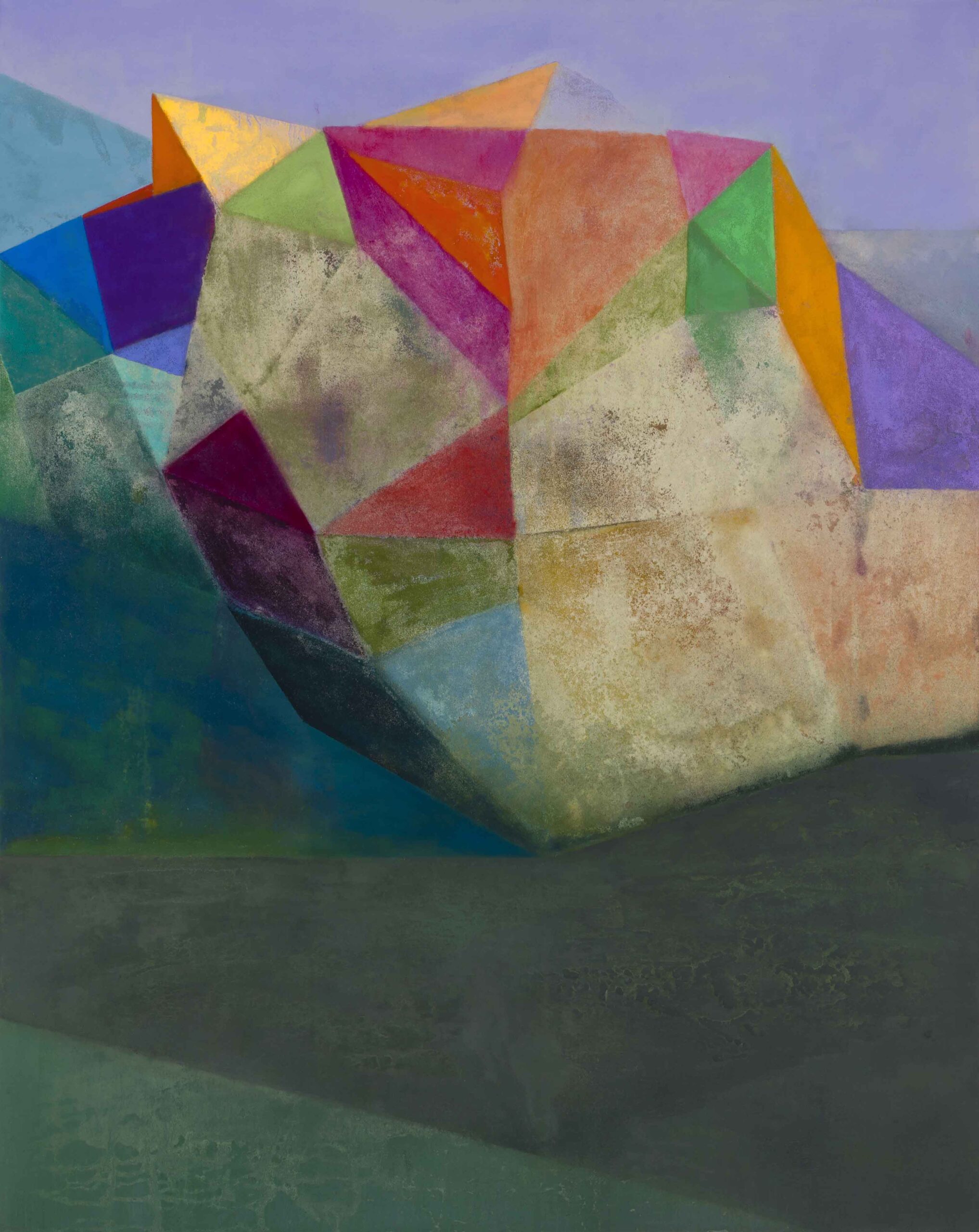
Tom Climent
Oil, plaster & sand on canvas, 153 x 122 cm
Clare: What is coming up next for you and where can we see more of your art in the flesh or online?
Tom: I’ve an exhibition on at the moment with Solomon Fine Art in Dublin. It runs until the 25th of July. It was supposed to happen at the end of April but of course couldn’t. It’s been great now to get the chance to show this new body of work.
I’m also on Instagram: @tomcliment
Facebook: Tom Climent Studio
Twitter: @tomcliment
Website: www.tomcliment.com
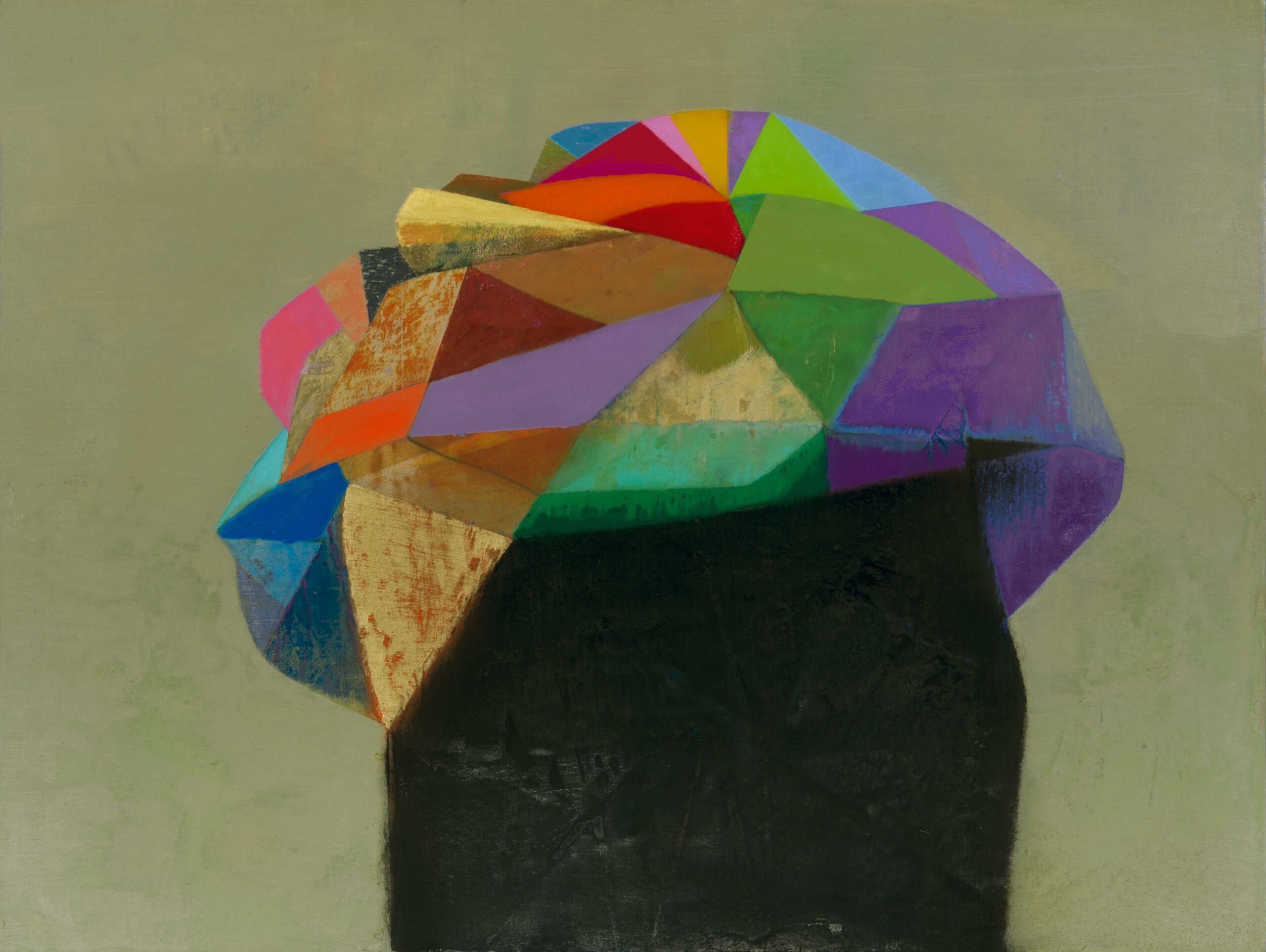
Tom Climent
Oil & plaster on board, 60 x 46 cm
Sign up to our competition newsletter and receive the latest updates about
Jackson’s Painting Prize.
Jackson’s Painting Prize.


2 thoughts on “Tom Climent: Chance Elements”
Interesting amazing colour and form !
Interesting article.
Comments are closed.