



Paper is one of humanity’s most important inventions, helping to document and preserve information for thousands of years. Ahead of the release of our Paper Guide, read our article on the history of paper from 3100 B.C. to the present.
Featured Image: Illustration demonstrating an early method of papermaking – bamboo was treated and boiled to make a pulp, and then a fine screen was dipped in the mixture. A thin layer of fibres would cling to the screen, which would then be pressed and dried.
The History of Paper
In China, papermaking is taught as one of their ‘Four Great Inventions’, along with printing, gunpowder, and the compass. While paper has been instrumental in keeping records of history, the history of paper itself is unclear. Nobody knows the exact origins of paper, however, we do have artefacts that point to its early inception.

Circa 3100 B.C.
The first known use of Papyrus, from which we get the modern word ‘paper’, is documented in Egypt during the First Dynasty. Papyrus is made from the pith of the Papyrus plant, known to grow on the marshy areas near the river Nile. It was also used to make items such as reed boats, mats, rope, sandals, and baskets.
Whereas papyrus is a lamination (layering) of natural plant fibres, paper is manufactured from fibres whose properties have been changed by maceration (soaking in water). Papyrus is known to have been used as a writing surface until around 1100 A.D.

200 – 101 B.C.
Before the use of paper became widespread in the country, writers used bamboo or pieces of silk. Silk was lightweight and convenient, but expensive. Bamboo was cheap and readily available, but heavy to store and transport. Paper was both cheaper than silk and more practical than bamboo. The Chinese were the first to have a rudimentary papermaking process. This practice is thought to have begun around this time. The first papers were used to pack delicate bronze mirrors.

105 A.D.
A eunuch in the Han Court named Cai Lun improved and standardised paper production by using inexpensive materials.
201 – 300 A.D.
Papermaking is introduced to Vietnam.
300 A.D.
Paper began to be used as a writing surface in China.
300 – 650 A.D.
Paper was introduced to Korea in around 350. A papermaking process was developed that produced glossy white paper, which was often sent to China as a tribute and gift for the knowledge they contributed to Korea’s papermaking expertise. Korean paper at this time garnered a reputation for being particularly well suited to painting and calligraphy.
In 610, the Korean Buddhist priest Doncho brought the Chinese method of making ink and paper to Japan. The Prince Regent Shotoku of Japan found the paper was too fragile, and so introduced kozo and hemp fibres to the paper pulp, which made the paper stronger. Today, Japanese papers known as washi are used internationally, in particular for relief printmaking. Many of these papers still use the same kozo and hemp fibres that date back to this time.
In around 620, block printing on paper began in China, which drastically increased the demand for paper. Paper was also manufactured into hats, clothes, stiffened for armour, and thinned for windows, screens, books, maps, and money. At this time, the beginning of the Tang Dynasty, fine paper was made from straw of rice and bark of wingceltis at Xuancheng. This is the earliest known production of what we call rice paper, although, at the time, silk paper was more popular for writing on.
In 751 A.D. at the Battle of Talas, it is claimed that two Chinese papermakers were imprisoned in Samarkand. There they shared their knowledge of how to make paper, thus introducing papermaking to Central Asia. However, historians dispute this as possible fiction, and there is archaeological evidence of paper existing in Samarkand before the battle.

© 2018 AFP
The relative economy of paper compared to vellum meant that libraries of the Islamic world were vast. Islamic calligraphers wrote with bamboo quills on plant fibre paper, smoothed over with chalk and wheat starch.
Circa 750 A.D.
From Central Asia, the Islamic civilisation spread papermaking practices, using hemp, flax, cotton, old rags, and rope, to the Middle- East. This knowledge reached Europe a few centuries later, before spreading to other parts of the world. The word ‘ream’ also came from this time, derived from the Arabic word ‘rizma’, meaning ‘bundle’.

1200s.
Papermaking by hand arrived in Europe. Prior to this, artists and writers would use parchment (or vellum), a surface made of processed animal skin that looks and feels like paper.
Because paper was introduced to the West through the city of Baghdad, it was first called ‘bagdatikos’.
New European papers were made from fibrous materials – old fishing nets, fabric bags, clothes, and rags. Italy invested the most within the industry and implemented improvements to develop its technique.
In the second half of the 13th century, the Fabriano paper mill was founded in a small town in the Marche region, producing linen and hemp papers. The mill mechanised rag grinding by using hydraulic hammer mills, significantly reducing the time it took to produce pulp.
When coated with gelatine size these papers resembled the vellum often used for writing manuscripts. Left unsized, it was ideal for printing copperplate engravings.
In 1282 the first watermarks were used in Italian paper manufacture.
1483.
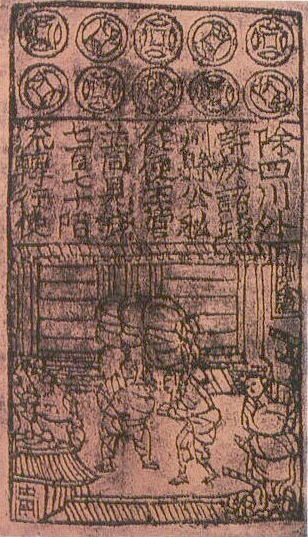
Spain became the first European country to produce paper money.
1492.
Arches began producing paper. They provided most of the paper used in France up to the late 1700s.
In addition to fine art paper, Arches also produced paper that was used in documents and currency throughout France and during the French Revolution.
1636.
Linen and cotton rags imported by papermills were blamed for the spread of the plague in England.
1690.
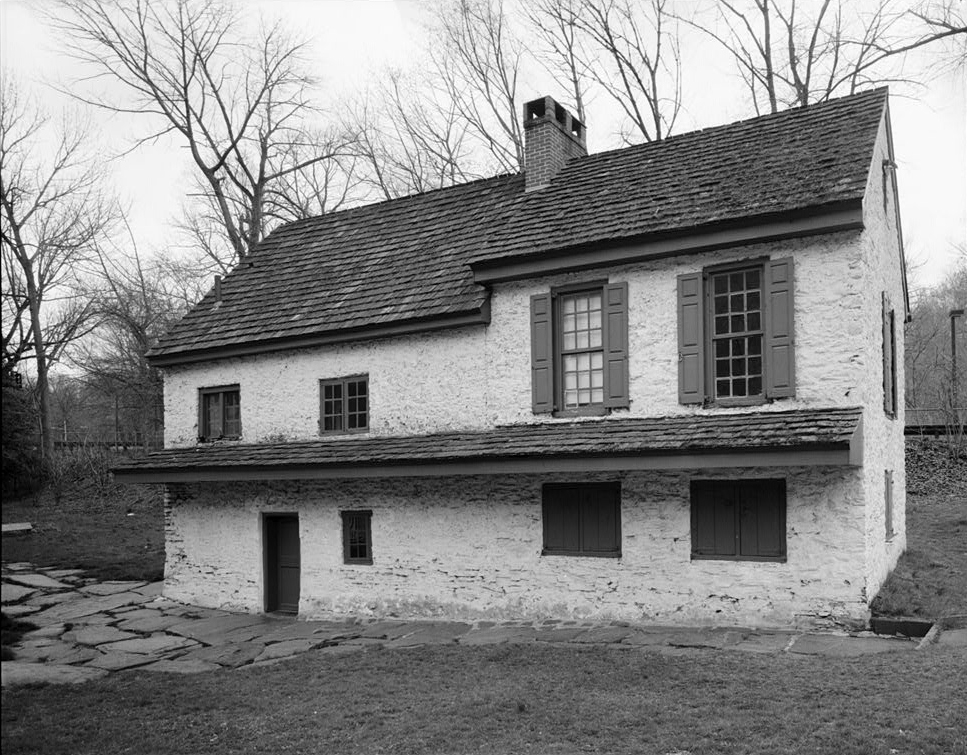
The first American paper mill was established near Philadelphia by William Rittenhouse. The manufacture of paper is now one of America’s biggest industries – there are hundreds of mills in operation, producing millions of tonnes of paper each year.
Newspapers started appearing in the late 1600s and early 1700s. Increased demand for paper in general stretched the supply of rags until the shortage became so severe that there were rag wars during the mid-1700s, and nations passed laws forbidding rags to be taken out of the country.
1700-1800s.
In the late eighteenth to nineteenth century, industrialisation greatly reduced the cost of manufacturing paper. The bleaching characteristics of chlorine were discovered, and at the end of the eighteenth century this knowledge was used to bleach cotton, the raw material for paper.
1744.
A process for removing printing inks from recycled paper, known as de-inking, was invented by German jurist Justus Claproth.
1750s.
James Whatman invented wove paper at Turkey Mill, in Maidstone, Kent. His initial explorations into wove paper were carried out with printer William Baskerville in 1754. Prior to this development, all machine made paper was ‘laid’. Wove paper was a much smoother than laid papers, on which pigments tended to pool in the ridges of the texture.
Wove paper sheets were formed against a woven mesh material, which did away with the prominent uniform lines found in laid papers. Consequently, the quality of printed work, and the scope for what could be printed, increased significantly.
As well as wove paper benefitting the print industry, it was also an exciting development for watercolour artists, including J. M. W. Turner. This was because it was surface sized with gelatine, made with hoofs and bones, making it incredibly strong and absorbent, and sufficiently robust to take wiping, scratching, and scraping. Such subtractive techniques were not previously possible for watercolourists, and Turner became a master of working in such a way.
Other notable artists who favoured working with Whatman paper include John Sell Cotman, William Blake, and Thomas Gainsborough.
1789.
Nicolas-Louis Robert of France conceptualised the first machine to produce paper in continuous sheets. The French Revolution put his idea on hold, and he eventually gave his plans to his brother-in-law in England, where the machine was finally completed and patented by Henry and Sealy Fourdrinier, in 1806.
The Fourdrinier is still used to make paper to this day. As an aside, Nicolas-Louis Robert also launched the first hydrogen balloon, and in 1783 ascended in a gondola with his brother, carried by his discovery.
1800s.
Steam-driven papermaking machines were developed, decreasing the cost of production of paper. At this time papermills were exploring the possibility of using wood to make paper. In 1801, Matthias Koops wrote and published the book Historical Account of the Substances Which Have Been Used to Describe Events, and to Convey Ideas, from the Earliest Date, to the Invention of Paper. The book was printed on paper made from wood shavings, not pulped, but glued together. However, despite receiving funding from the Royal family, his book proved prohibitively expensive to make and he soon went bankrupt.
1844.
Canadian inventor Charles Fenerty and German F. G. Keller independently developed processes for pulping wood fibres. The introduction of wood pulp meant that paper production was no longer wholly dependent on recycled materials from ragpickers. By the end of the 19th century, most papers were made from wood pulp, with the exception of cotton artist papers.
1863.
The first newspaper printed on groundwood paper was created. It was made from coniferous trees, using mechanically ground pulp. Such paper is low cost and non-archival, and is still used in newspaper production today.
1950s.
Acid-free wood-based paper was developed. Prior to this, wood papers deteriorated quickly because of the alum in the pulp, slowly turning paper to ash. Many books and newspapers perished from this time, creating holes in our history. Important documents had to be printed on expensive rag paper. With the advent of acid-free wood paper came a lower-cost means of producing books and documents, as well as artist papers. Paper that has not been de-acidified is still used to make most paperback books and newspapers.
1953 – 1956.
Four competing paper mills: Arches, Johannot, Marais, and Rives, merged. They formed the French papermaking group, Arjomari (the name is formed from the first two letters of each of the merging companies).
1968.
Arjomari merged with fellow French paper producer Prioux-Dufournier, changing its name to Arjomari-Prioux.
By the end of the 1980s, Arjomari-Prioux was one of Europe’s top five paper producers. In 1991, Arjomari-Prioux merged with UK company Wiggins Teape Appleton (a company that had comprised previously of bought companies, including the Buckland Mill in Dover and Appleton papers in the US) to form Arjowiggins Appleton. Today Arjowiggins Appleton is one of the world’s leading producers of paper products.
2006.
The Blue Rigi: Lake of Lucerne, Sunrise by J. M. W. Turner was sold at auction for £5.8m, and remains to this day to be the most expensive work on paper. It is painted on Whatman paper made at Turkey Mill, with watercolour, bodycolour, pen, and brown ink, heightened with white chalk and with scratching out.
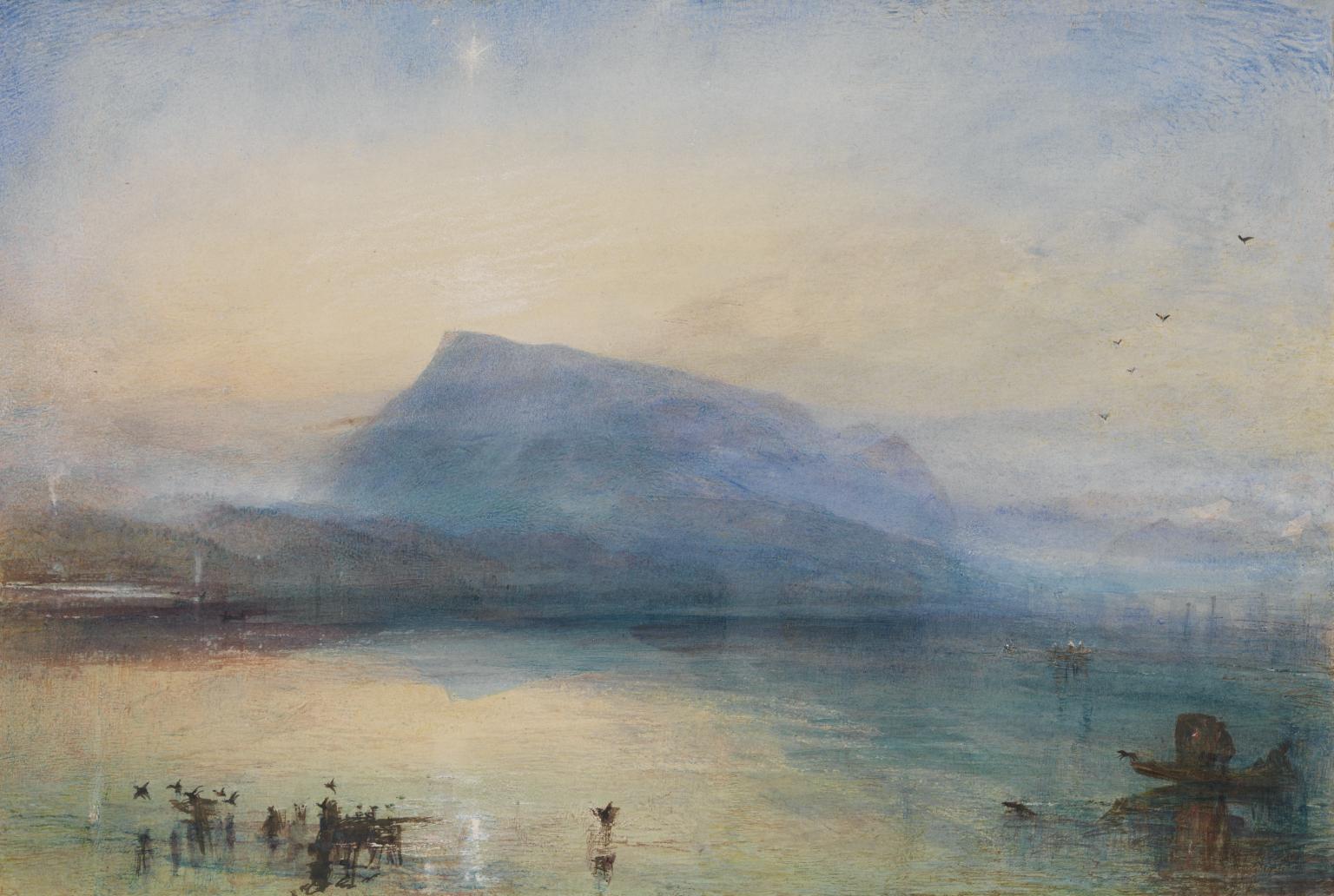
Joseph Mallord William Turner
Copyright: Photo (c) Tate
Although Whatman watercolour paper is no longer available, St Cuthbert’s Mill in Somerset today produces Millford paper, which is specifically designed to replicate the unique characteristics of Whatman paper.
We’re proud to present our Paper Guide, a studio companion for artists working in a variety of mediums.

Over 122 pages, our Paper Guide includes the history of paper, the materials and methods used for making it and how these affect its properties, a glossary of paper terms, and in-depth advice to help you choose the very best paper for your painting, drawing, or printmaking.
Printed in the UK on G.F Smith Max, an FSC® certified paper from responsible sources.


3 thoughts on “The History of Paper”
Fascinating article!
A good read, learned a lot.
What an eye opener, many thanks to those
who researched and published this article!
Comments are closed.