



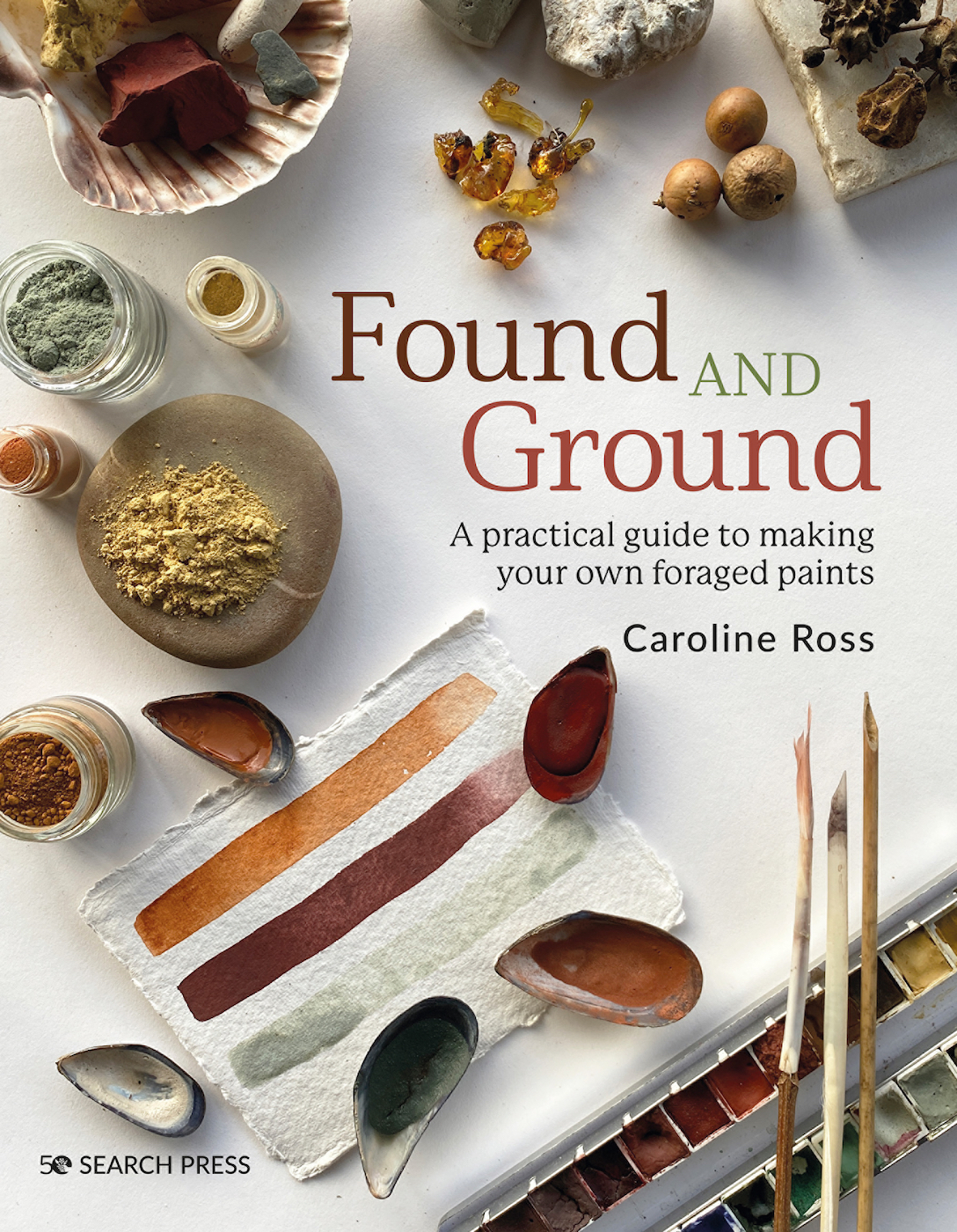
Learn how to make your own watercolour medium from foraged tree gums, from the book Found and Ground: A Practical Guide to Making Your Own Foraged Paints. Throughout the book, author and artist Caroline Ross explains every stage of making your own foraged paint – from all aspects of foraging for natural materials to the techniques needed to refine them into beautiful pigments and paints.
Create Your Own Watercolour Medium
Text by Caroline Ross
Photographs by Search Press
Years ago, while studying traditional art materials with Daniel Chatto on his course The Stuff of Painting and Drawing, I heard him mention in passing that cherry tree gum had been used historically as a paint binder in place of gum arabic. This piqued my interest as a forager and an artist as I searched for natural art materials and media to replace synthetic products in my art practice.
The techniques used to make watercolour medium are simple, and will be familiar from making your paints. Once you’ve gathered even a teaspoonful of gum, you’ve got enough to make some medium. Unless you are going to use all your medium while it is fresh (within a day or two), you just need to store it in the fridge.
Foraged Tree Gums
Authentic gum arabic comes from Senegal, where it is harvested from acacia trees. Some other acacias, as well as fruit trees of the Prunus and Eucalyptus genera, sometimes exude a sticky gum from fissures in their bark. This gum can be collected without harming the tree at all if you follow some simple guidelines: gather where it is abundant, and take only what is on the surface of the bark, never cutting into or picking at the bark itself.
Suitable trees include cherries, plums, gages, damsons, and various acacias. Cherry tree gum produces a light, gel-like medium with a matt finish, whereas the more traditional gum arabic from acacia gives a honey-like consistency that binds pigment well and gives a little sheen to the paint finish.
The gum is softer after rain, when it can be scooped off with fingers or a spoon. In dry weather it will dry solid, and you’ll need a knife to remove it. Carry it home in a tub or plastic bag, then allow it to dry thoroughly before storing it. It lasts indefinitely if kept in a paper bag or cardboard box.
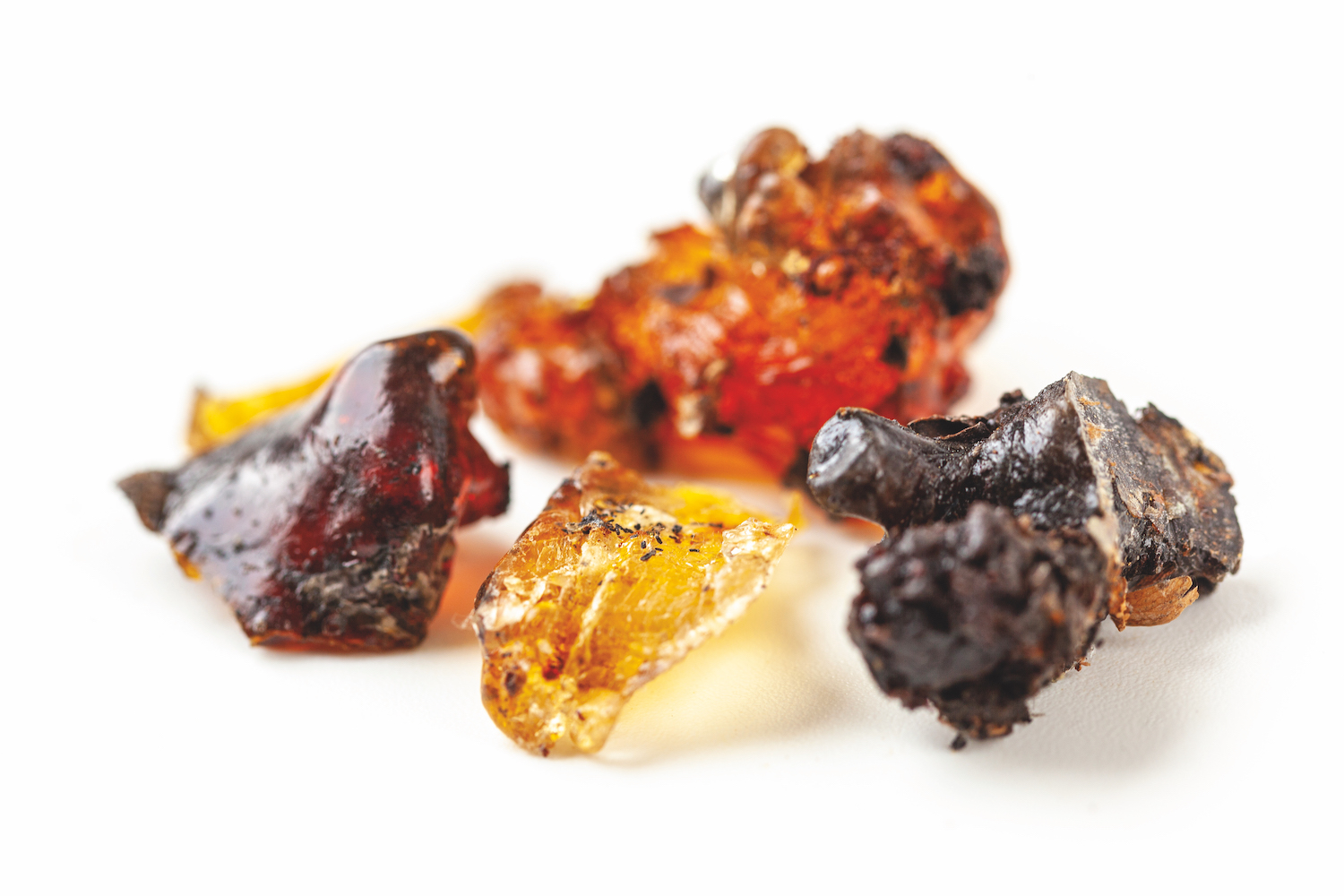
In the spring, as the sap rises, the gum can be a clear, pale yellow, or even colourless. This a real find, as the absence of a yellow tinge means the gum can be used to make white, mauve, and blue paints, where a yellower or amber-coloured binder would muddy the tones with the complementary colour. You may also find clear droplets of gum like little teardrops exuding from fruits in the summer, caused by wasps piercing their skin. These too can be gathered to make binder for the very finest pale blues.
In late summer and autumn, the gum can become darker in tone – amber, deep brown, or even almost black. It picks up specks of bark and tannins from the wood as it passes through, and these give the gum its colour.
All colours of gum are useful, and once dry, it’s worth grading them into separate shades for different uses. It is possible to use the paler second and third flushes of gel from the cherry tree gum to make watercolour medium, however dark your lumps of fruit tree treasure.
You Will Need:
- Solid dry tree gum – either bought lump gum arabic; foraged cherry tree gum; acacia or eucalyptus tree gum; or other non-coniferous tree gum
- Water
- Pestle and mortar
- Glass jar
- Spoon
- Mesh bag
- Saucepan
- Tea strainer
- Container
- Honey
Method for Making Your Own Watercolour Medium
I’m using cherry tree gum here, but you can use whatever bought or foraged gum you have. The medium produced from cherry tree gum will not be as sticky or as glossy as gum arabic, so be prepared to add up to a quarter more medium to your paints to adjust the honey/sugar ratio until you get it just right for your needs. Alternatively, paint a top layer of the medium over your work to add shine, if needed.
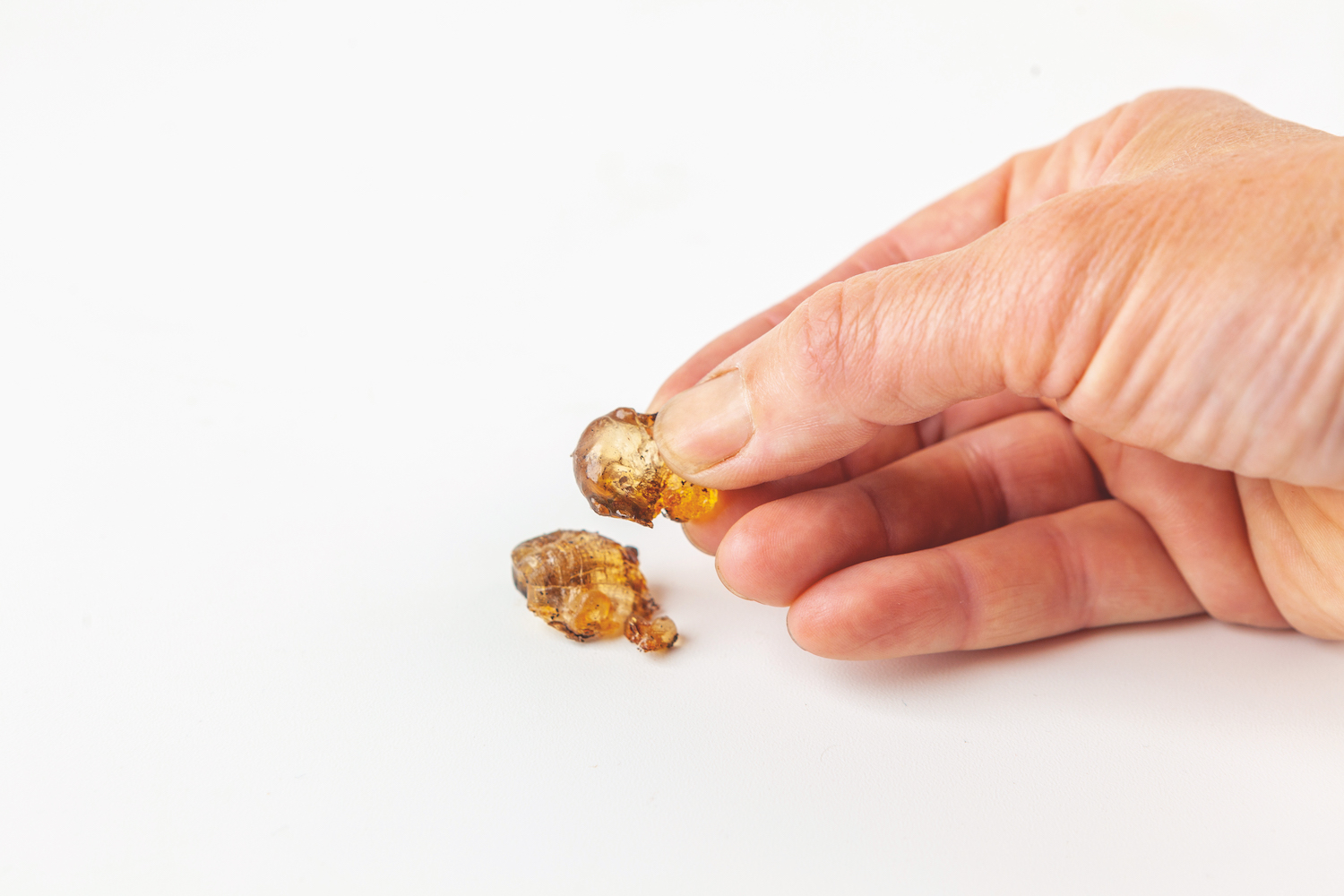
1 Start with half a teaspoon or so of dried gum.
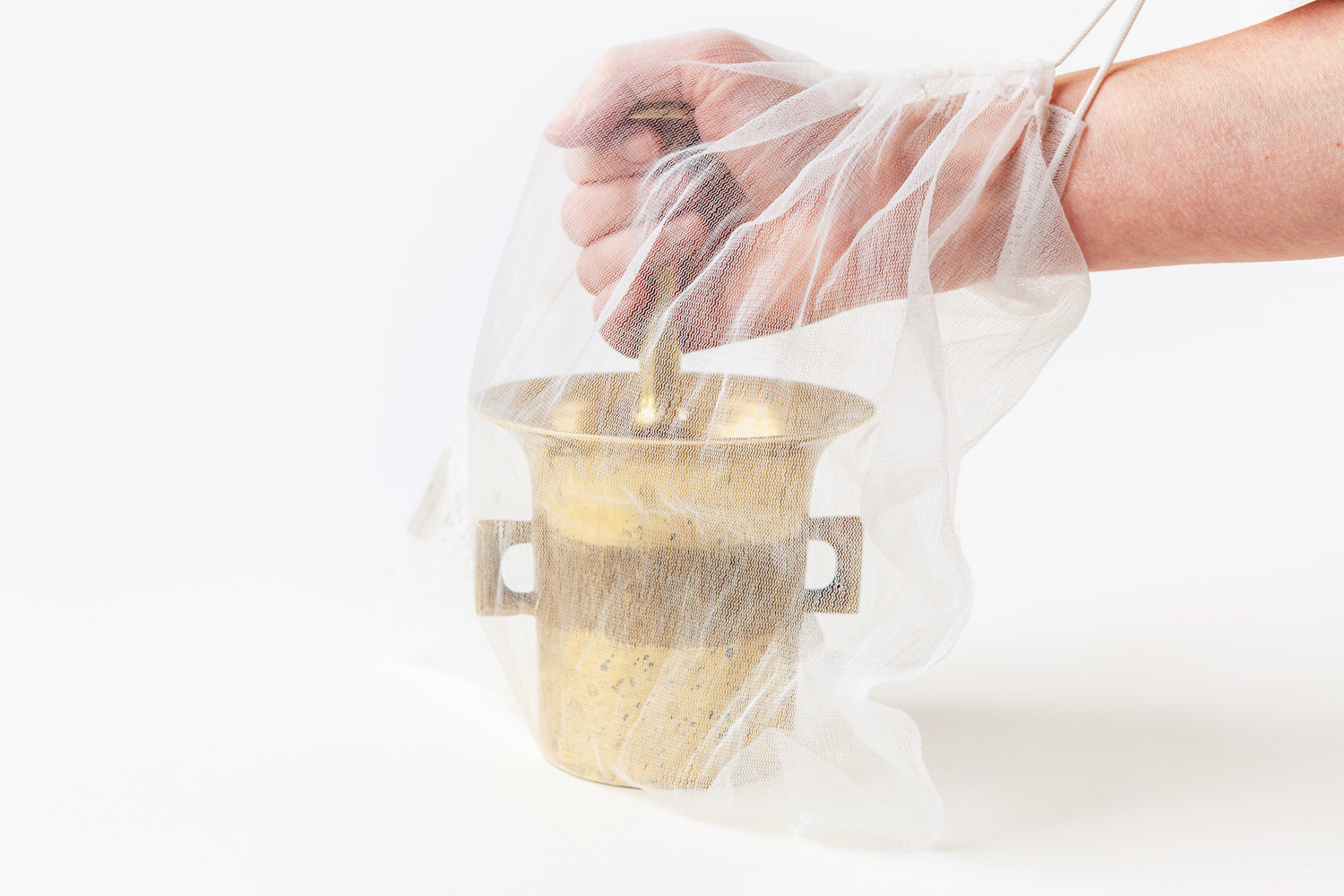
2 Using a brass pestle and mortar within a mesh bag (this prevents fragments flying out), break up the pieces until they are like sand.
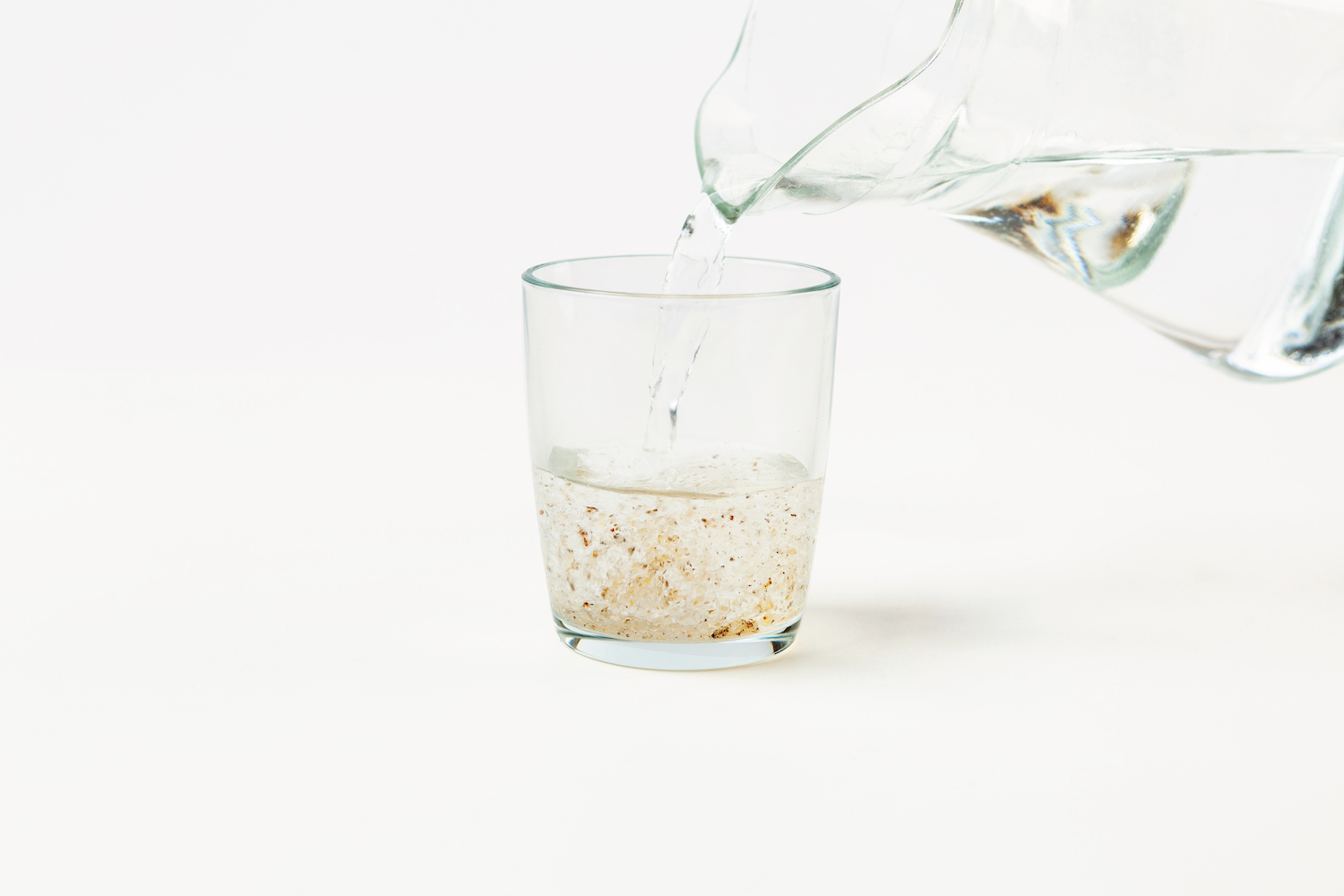
3 Put the smashed gum into a jar and half fill it with water. Stir and leave overnight.
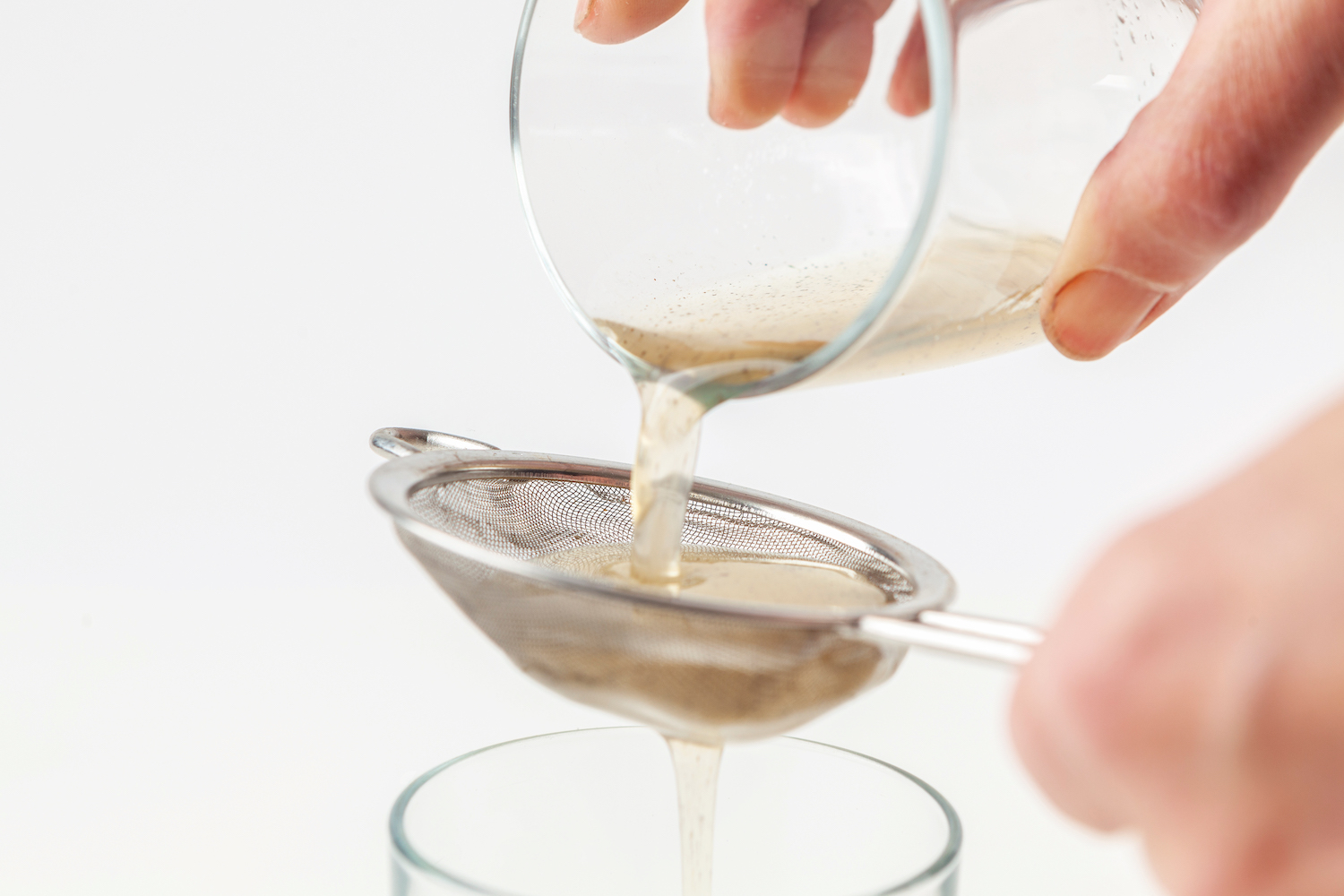
4 In the morning, you’ll find the gum has turned into a gel or has begun to dissolve. Pour this into a saucepan and warm it on a low heat for half an hour or so, until the gel is the consistency of runny honey (you can add more water if there is not enough for it to be stirred easily). When it has cooled a little, place a tea strainer over a container and pour the gel through. The little flecks of bark and other detritus should be left behind in the strainer, you can just wash these away.
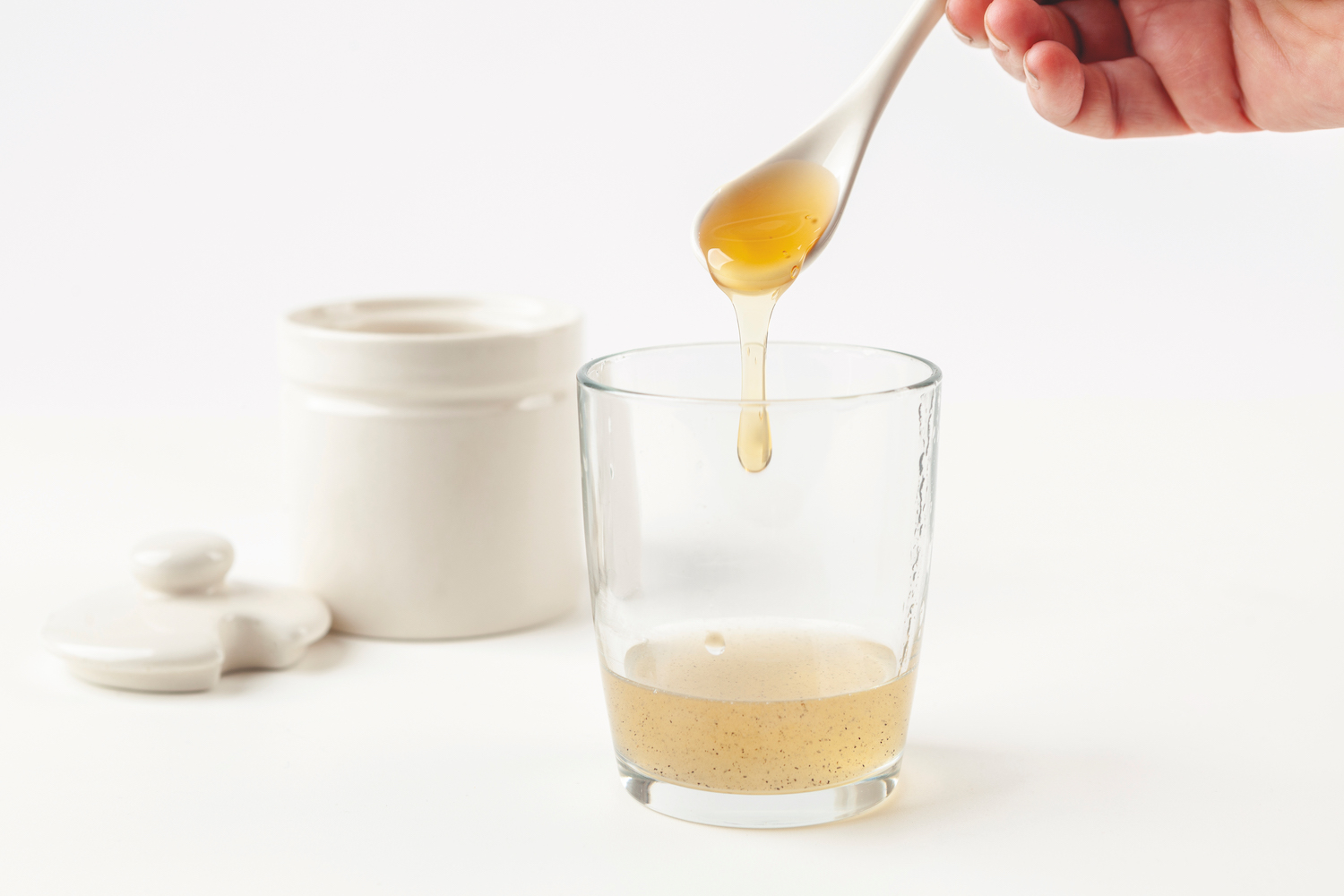
5 Add a rewetting agent such as honey (vegans can use glycerine or powdered sugar dissolved in a little warm water). You need approximately one-part runny honey to nine parts gel. Stir the mixture well.
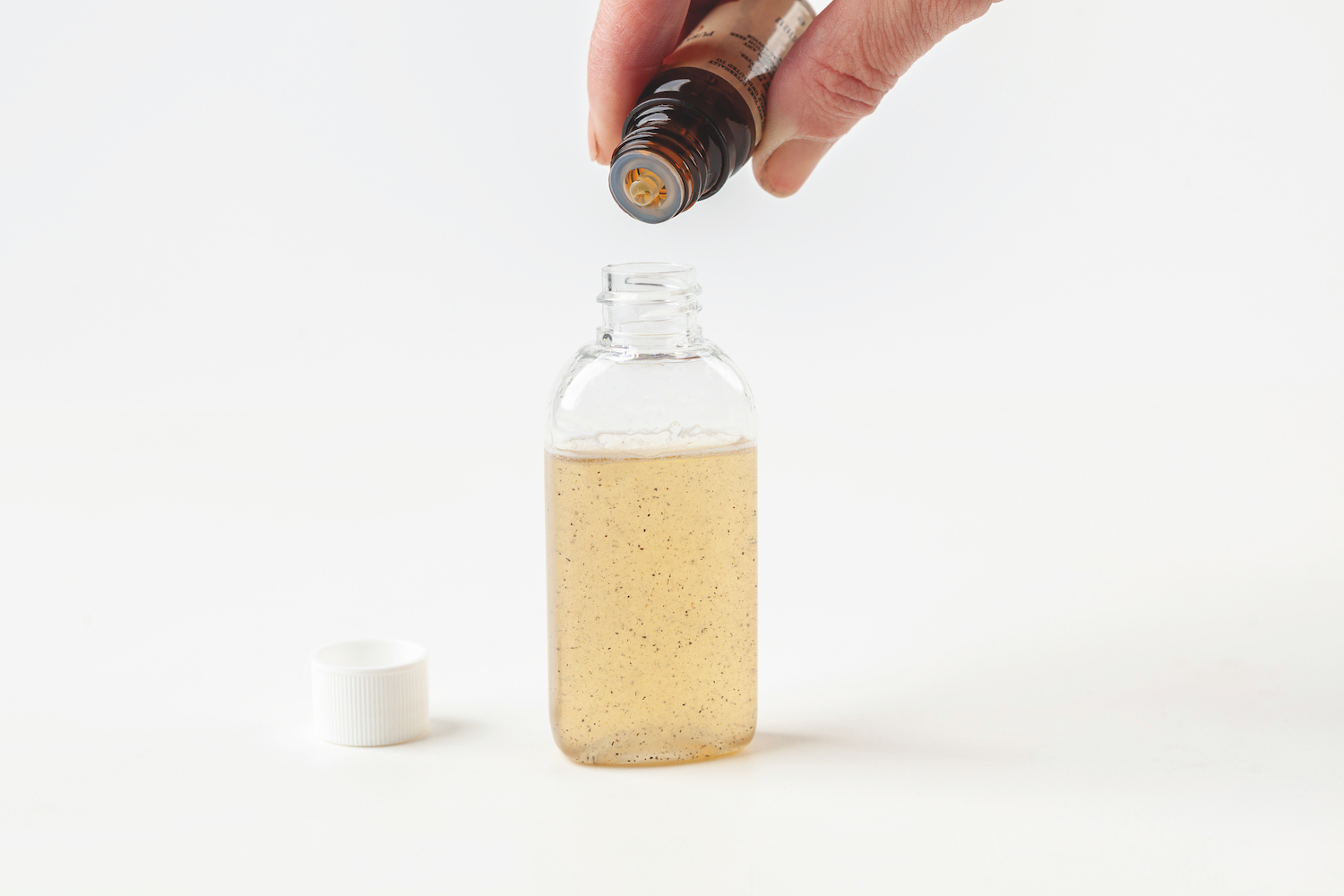
6 Decant the mixture into a spotlessly clean jar. I like to sieve it again through a finer mesh strainer into the jar at this point. This is your homemade watercolour medium, which you can use in the same way as you would shop-bought medium, or one you have made yourself with liquid or powdered gum arabic.
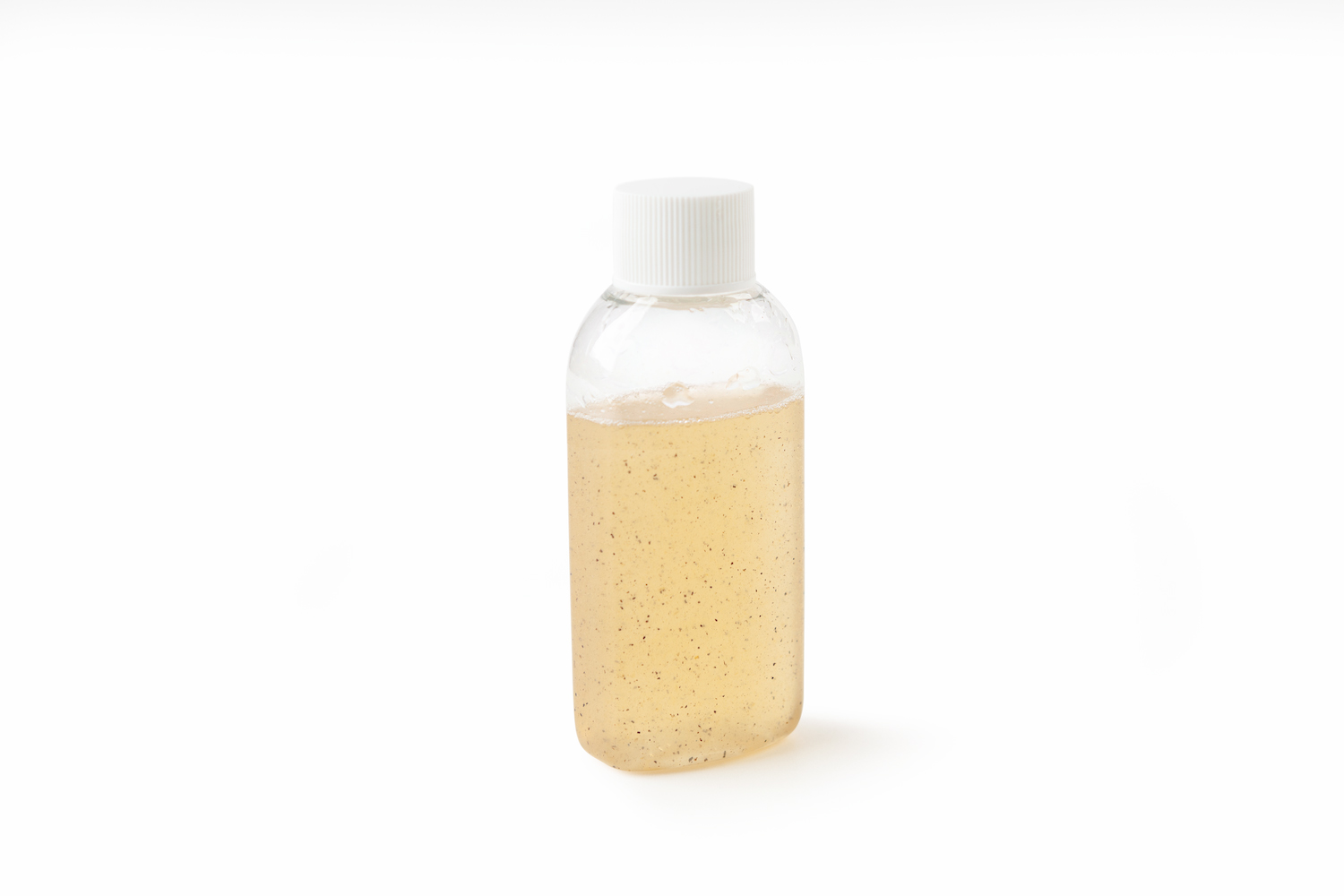
The Finished Watercolour Medium
Once you’ve filled your vessel, label it well with the ingredients you used and the date you made it. It will look and smell delicious, so I always suggest adding a ‘Do Not Eat!’ label before putting it in the fridge.
Keeping Things Clean
Some artists add a drop of anti-fungal essential oil to the medium, which also has the benefit of smelling lovely. I leave out this step and instead use spotless bottles and jars which I store in the fridge, with equally good results.
Additional Batches With Prunus Gum
When processing foraged gum, there will probably be some lumpy gum gel left in the strainer after step 4. This can be reused. Just return it to the saucepan, add a cupful of hot or just-boiled water, and repeat the cooking, cooling, and straining processes. You can do this up to two times. Each batch will be a little paler. You can either add them all together or keep them graded for different colour paint making. They are not as adhesive as the first medium but produce a very matt binder.
About Caroline Ross
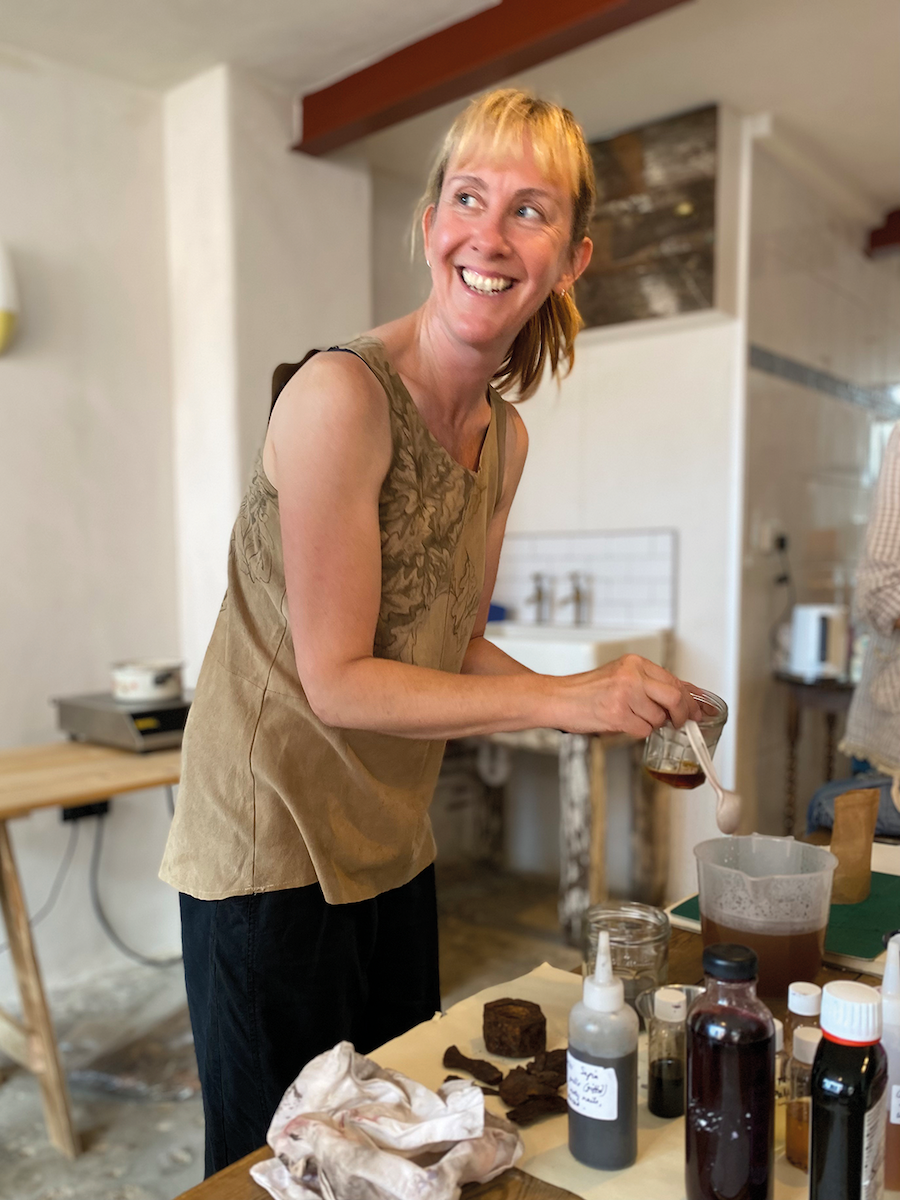
I am an artist and writer living by the sea in Bournemouth. My debut book ‘Found and Ground: A Practical Guide to Making your own Foraged Paints’ was published by Search Press in June 2023. Using what nature provides and repurposing what humans discard are a large part of my practice. After the rooks have feasted on the riverbank, the empty mussel shells become paint palettes. The seasonally moulted flight feathers of local swans and geese become quill pens and brushes. Waste deer skins (from animals shot for food and forest regeneration) provide parchment and hides to paint on. Chalk dug out from their setts by badgers is left in piles in the woods I frequent, where I gather it and take it home to make gouache. I make paints from foraged earth pigments from around the UK, and make art tools and inks from natural, wild, and found materials such as oak galls, rusty nails, elderberries, bay leaves, and cherry tree gum. The natural fluctuations of skins on which I draw, and the botanical ink stains or ochre washes with which I make prepared grounds on paper, all suggest forms with which I work.
I teach workshops on many aspects of art, as well as how to make many wild-crafted art materials. My drawings, paintings, and illustrations can be found in books, online periodicals, and private collections. I am a regular contributor and member of the Dark Mountain Project and have had many pieces published in their books since 2015. I am also a member of the Wilderness Art Collective.
Follow Found and Ground on Instagram
Visit the Found and Ground website
Text © Caroline Ross
Photographs © Search Press
Further Reading
Making Handmade Watercolours With Jackson’s Artist Pigments
Your Comprehensive Guide to Watercolour Mediums
The Relationship Between the Artist and Their Materials
Making Natural Ink: the Process and Recipe for Yellow Ink
Shop Found and Ground: A Practical Guide to Making Your Own Foraged Paints on jacksonsart.com


1 thought on “Make Your Own Watercolour Medium From Foraged Tree Gums”
I got your book for Christmas. I’ve been
making paints with earths and various
ground up bricks, and am going to have a go
at making my own mediums this spring.
Really inspiring book 🙂
Comments are closed.