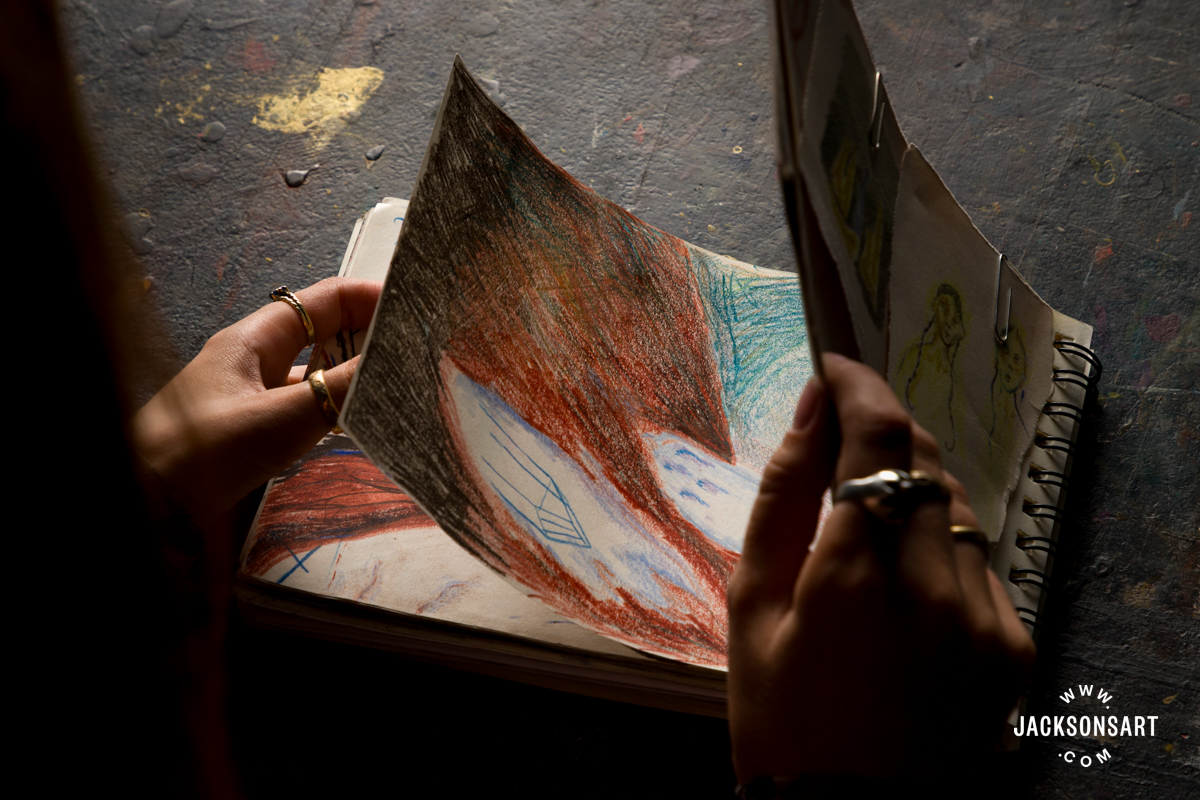
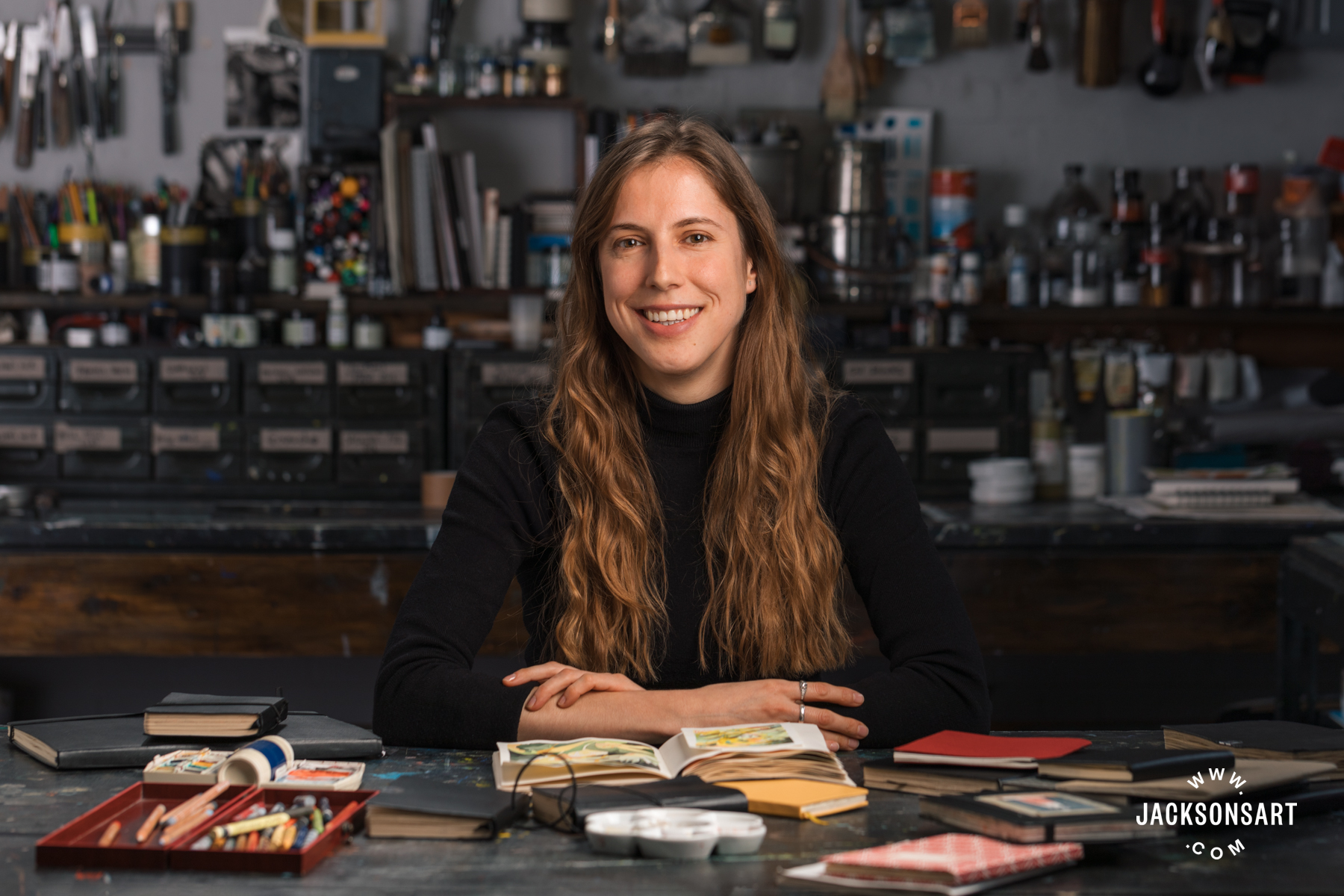
Luisa Rivera is a London-based artist and illustrator, originally from Chile. Working between painting and illustration using water-based media on paper, she naturally gravitates towards a regular sketchbook practice where the parameters between these disciplines can be removed. Here, she shares her personal approach to her sketchbook practice.
Luisa Rivera Takes Us Through Her Sketchbook Practice
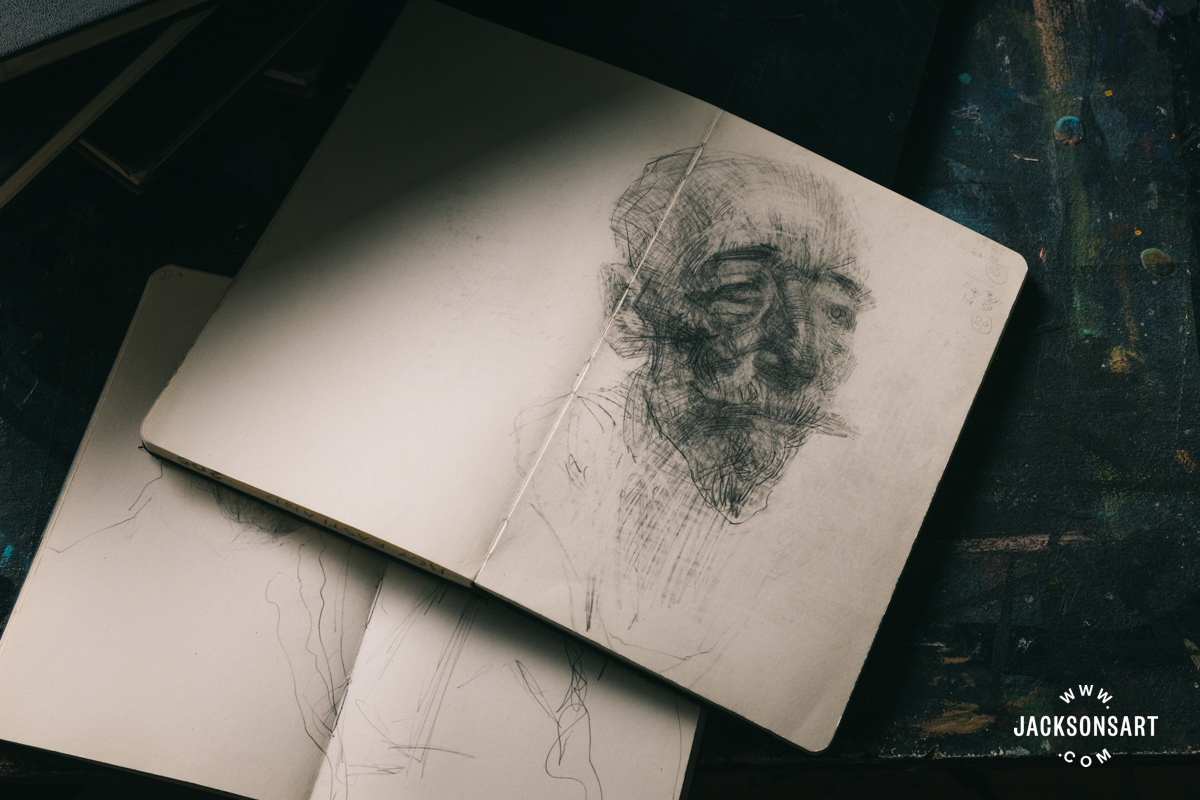
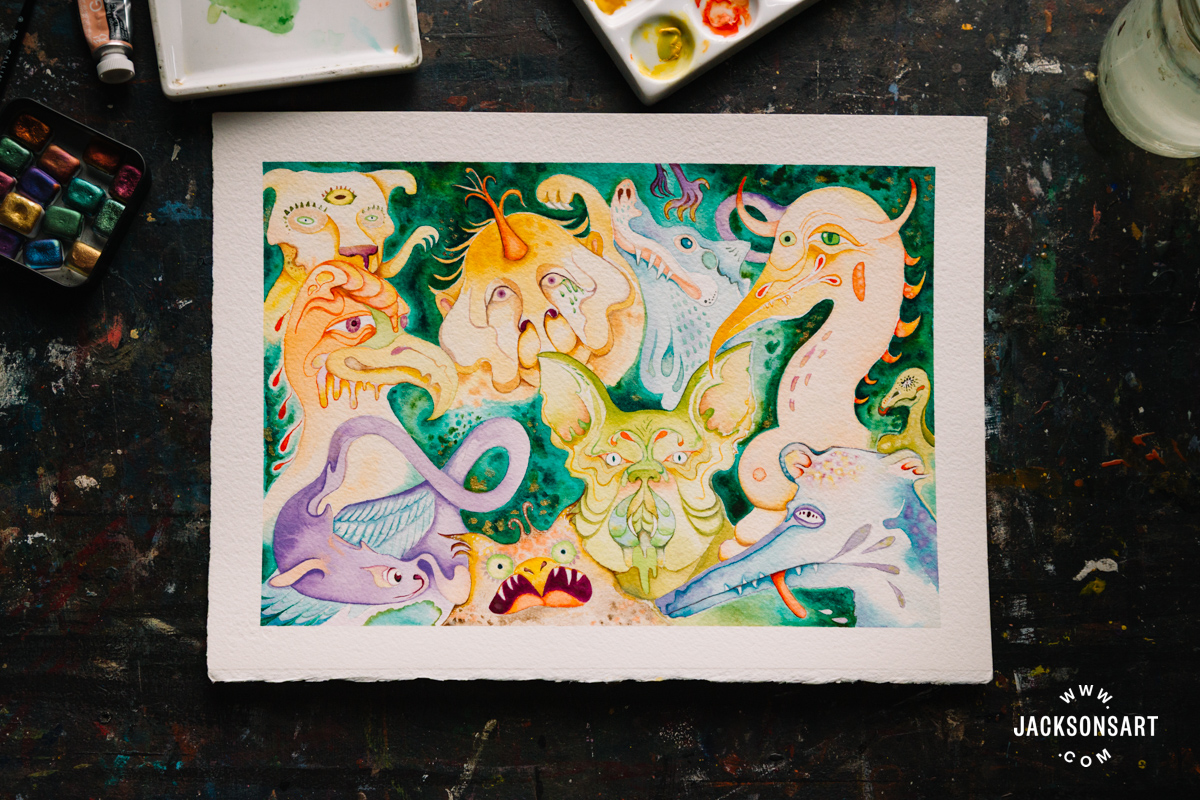
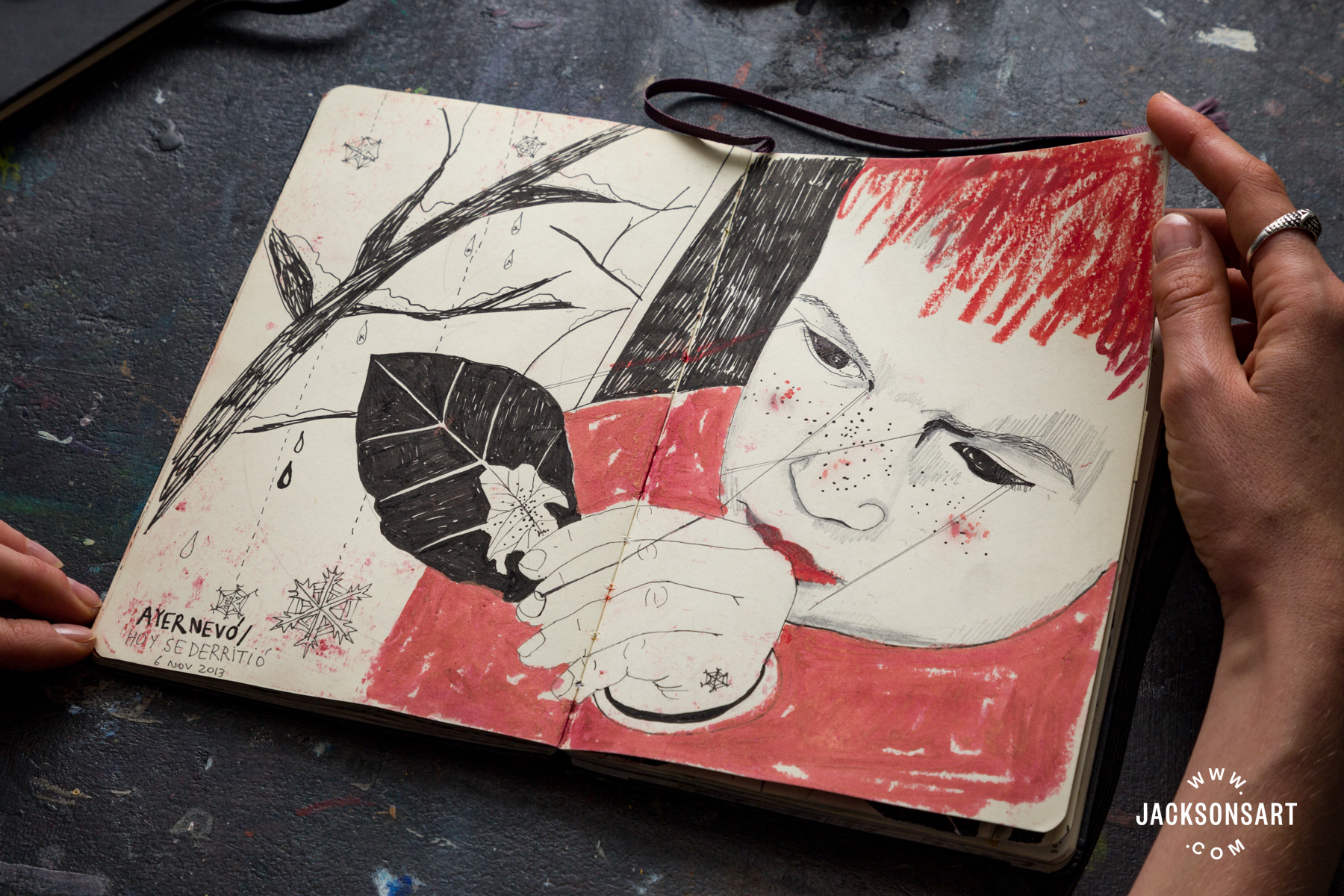
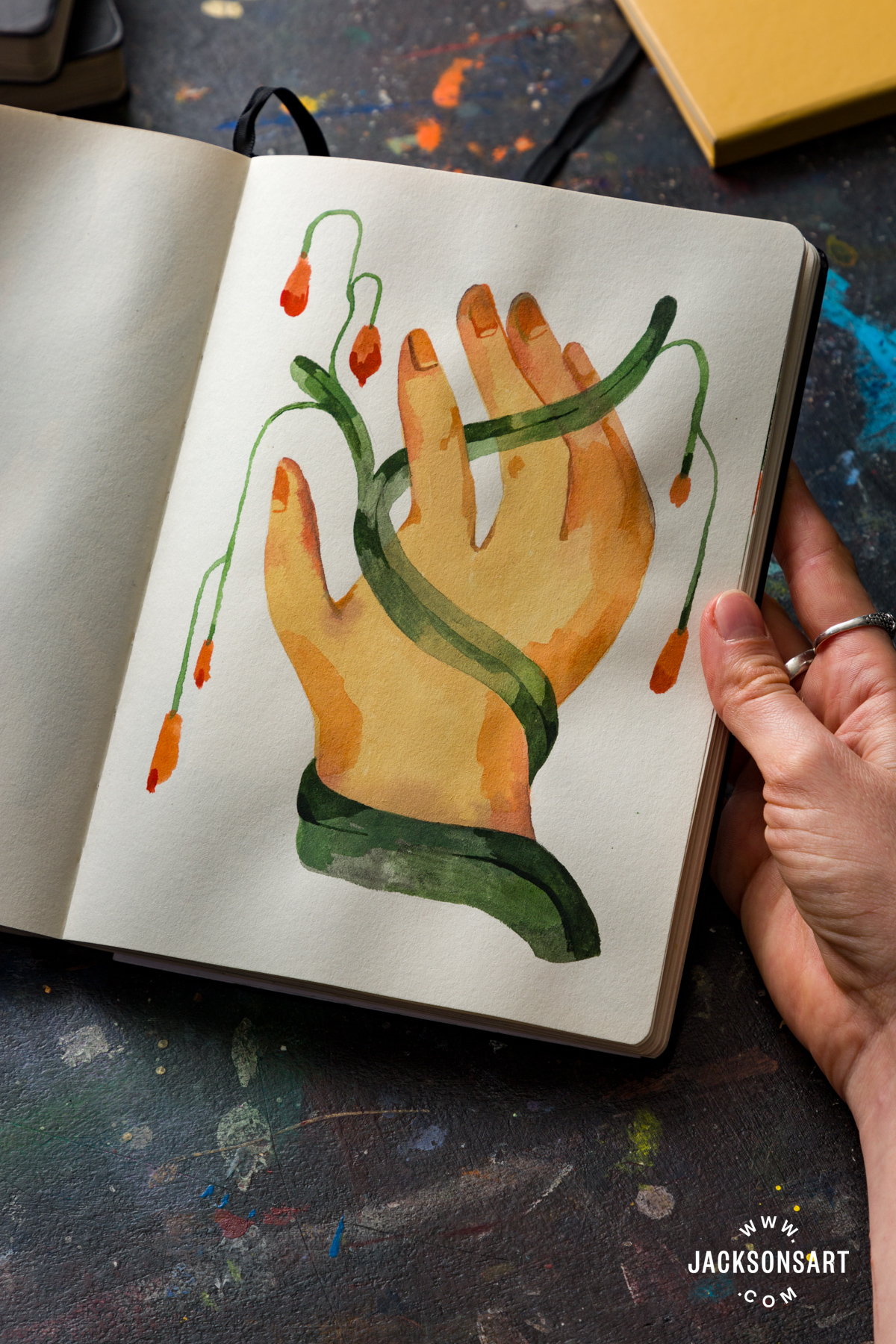
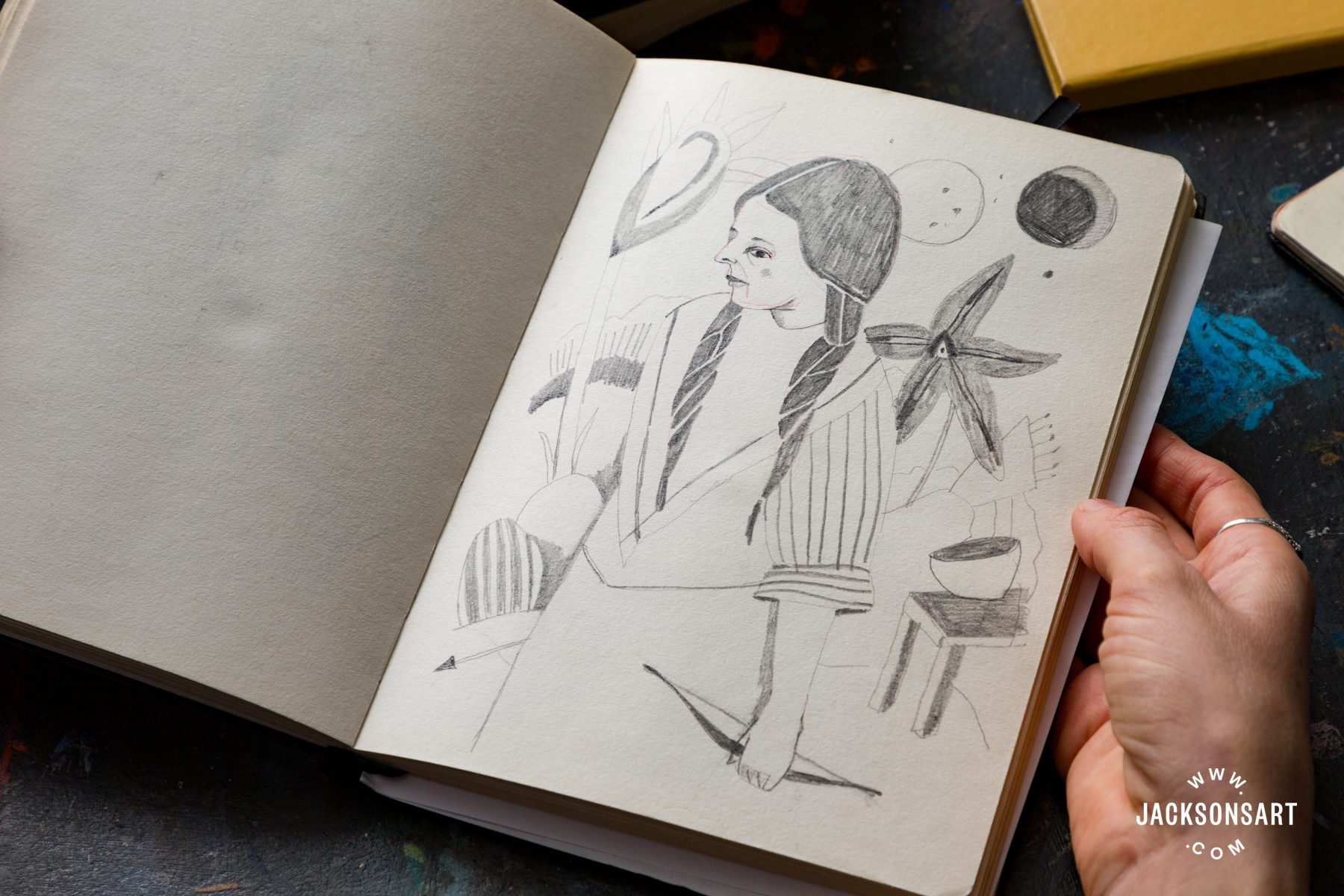
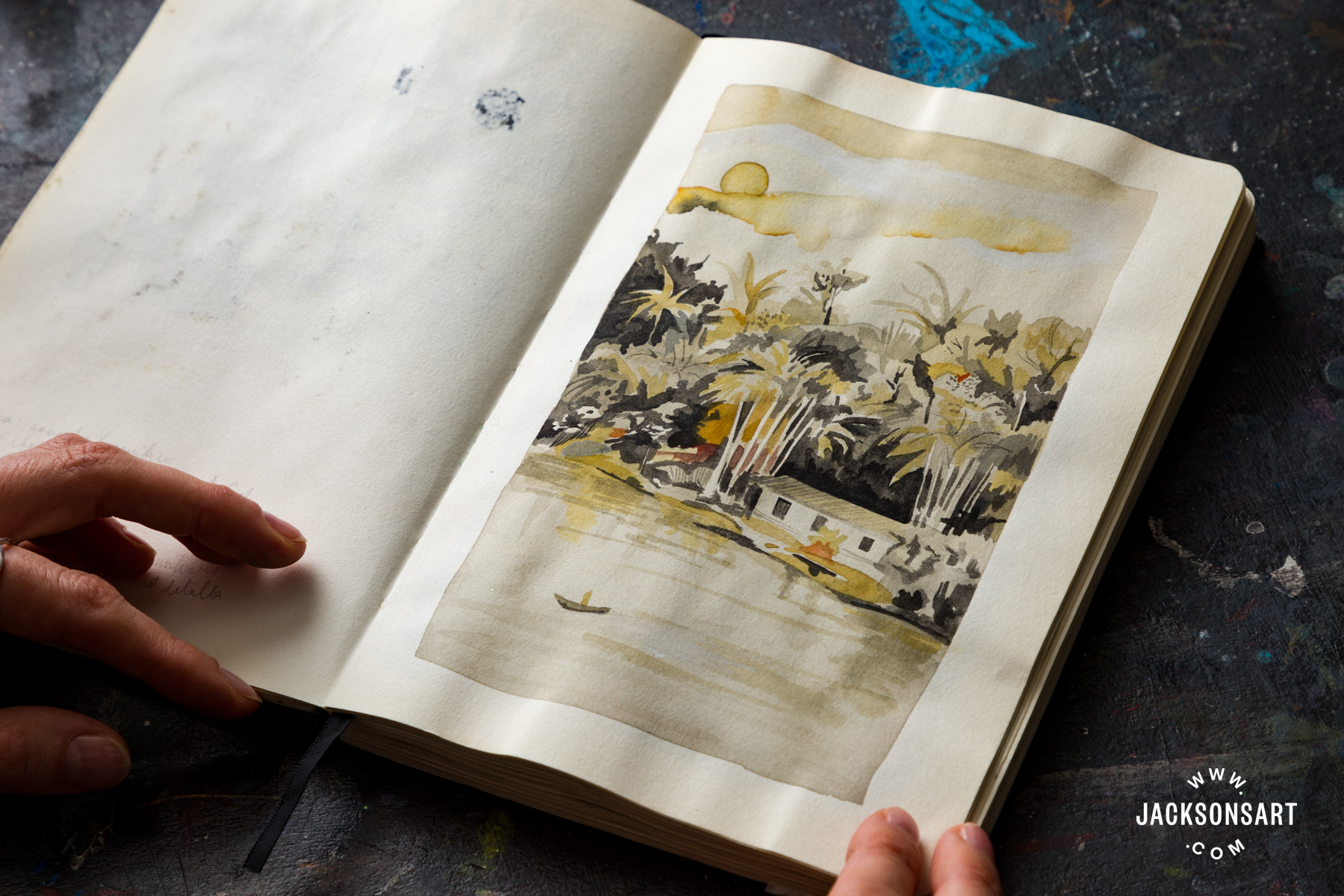
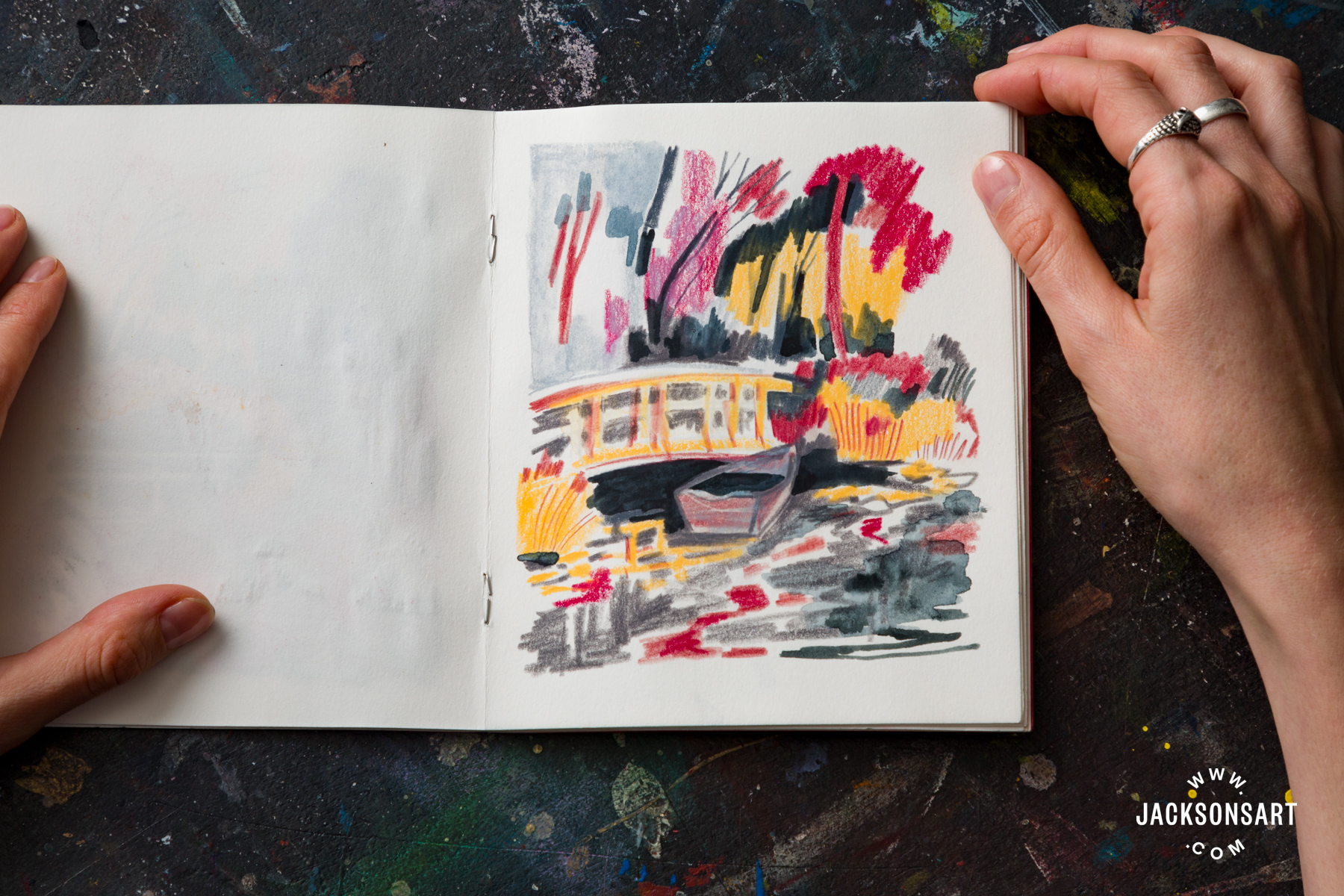
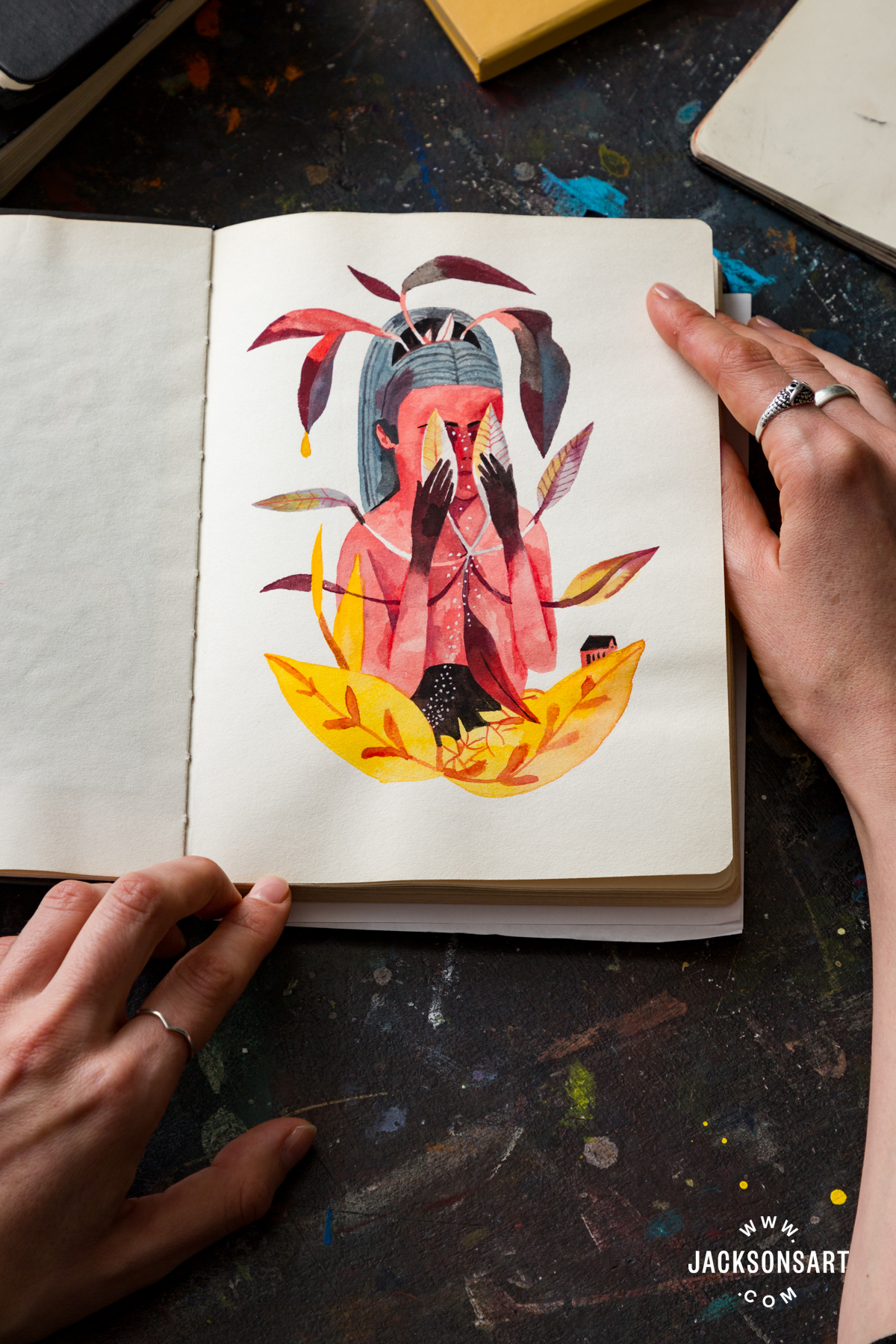
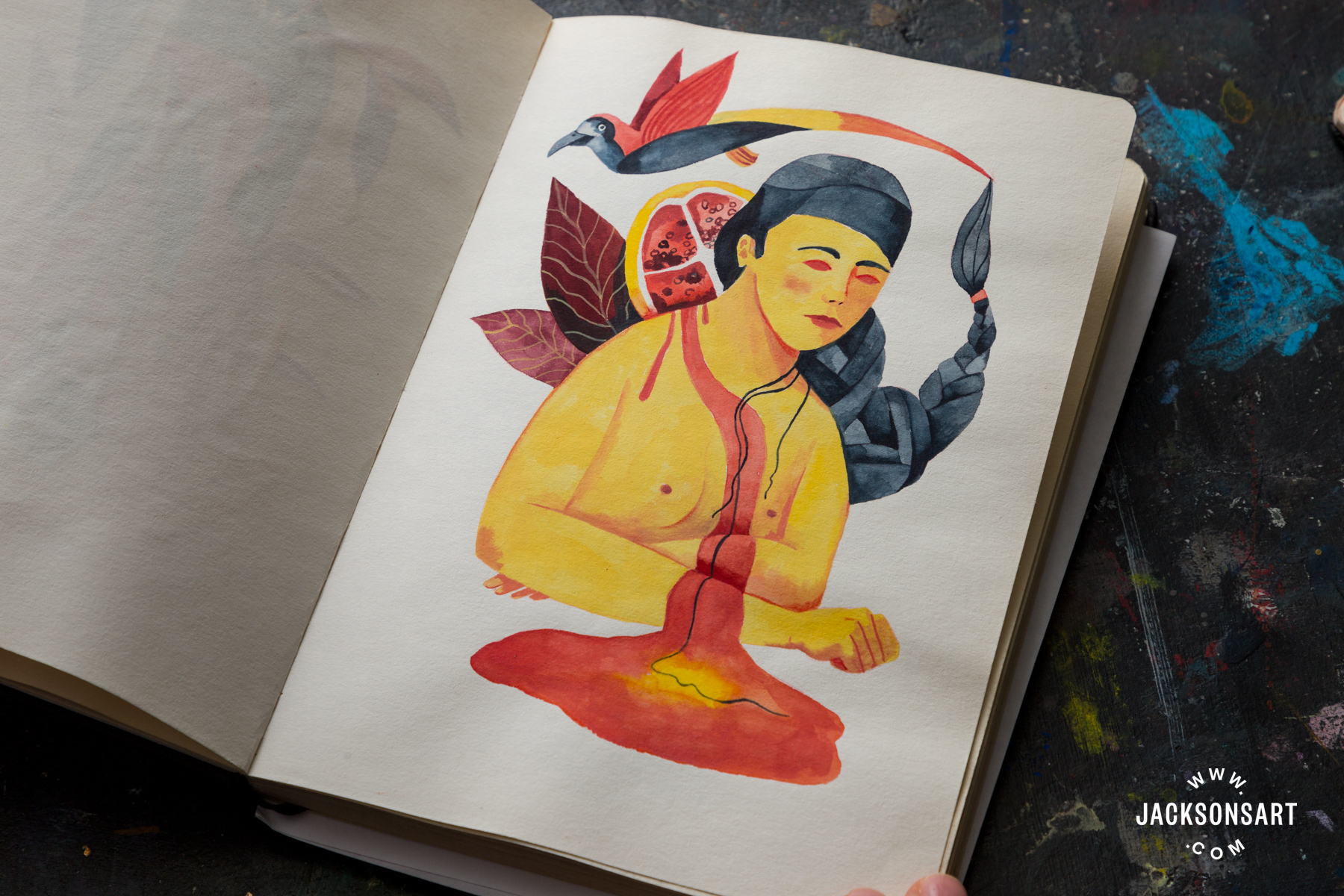
For many years, my practice has been focused on the relationship we have with the environment, so I create narratives that are inhabited predominantly by women and natural elements. The work that you find in my sketchbook is also inspired by this and I see it coming through each page in two different ways: on the one hand, I document the world around me, especially when I visit new places. I enjoy making nature studies and then I reflect on them with additional interpretations. On the other hand, I use the sketchbook to document my internal process and journey, resulting in images that resonate more with surrealism than the immediate context that surrounds me.
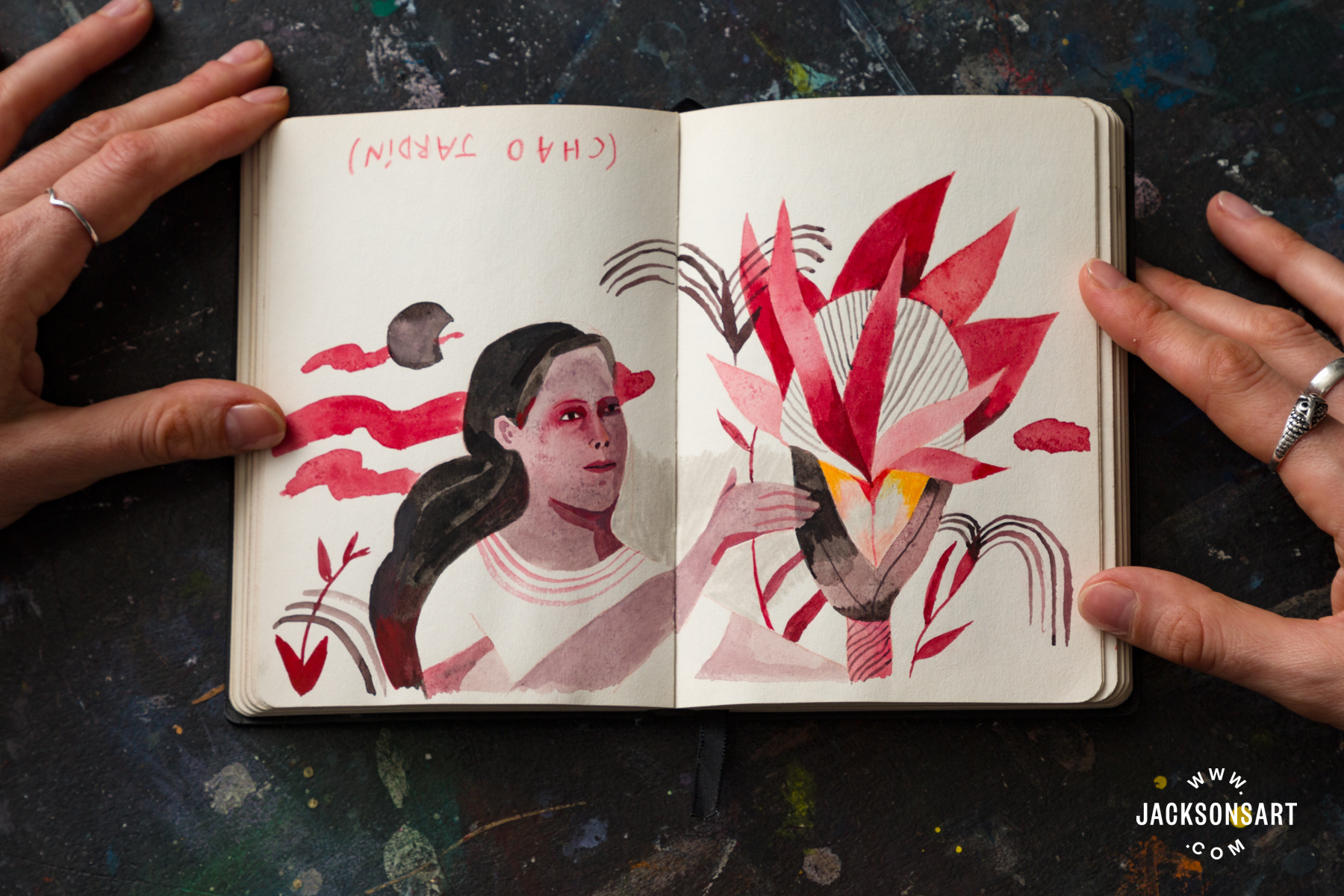
I feel that sketchbooks are a very intimate and honest way to discover what drives a particular artist to make work. For me, it’s a moment of looseness where I don’t feel constrained or compelled to label my work in any way. This is liberating, especially because my practice moves between painting and illustration — in theory both areas could be complementary, but in reality their contexts are different. In the sketchbook all those boundaries are erased and it becomes a space to create narratives that are inspired by storytelling, myths, and my personal memory.
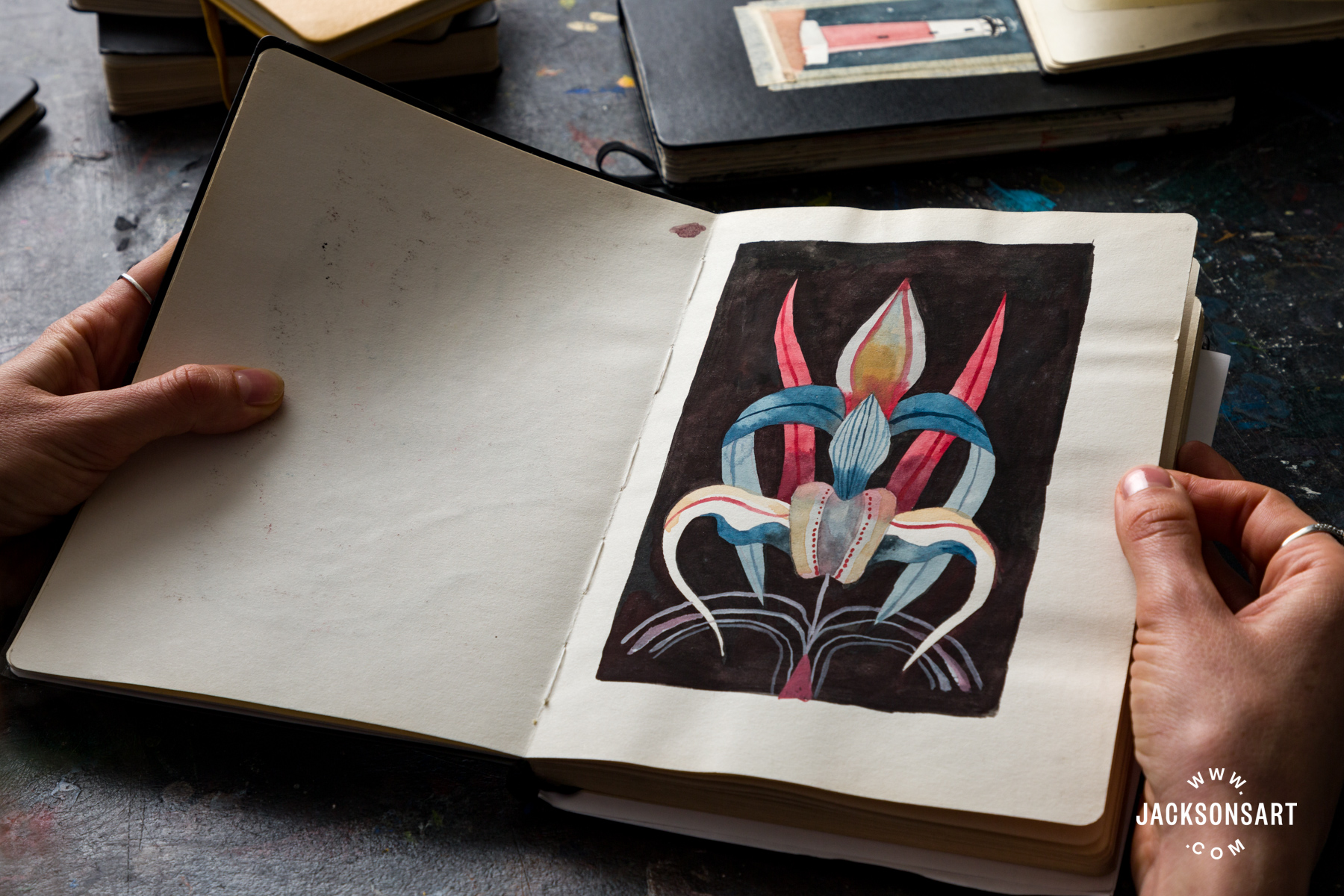
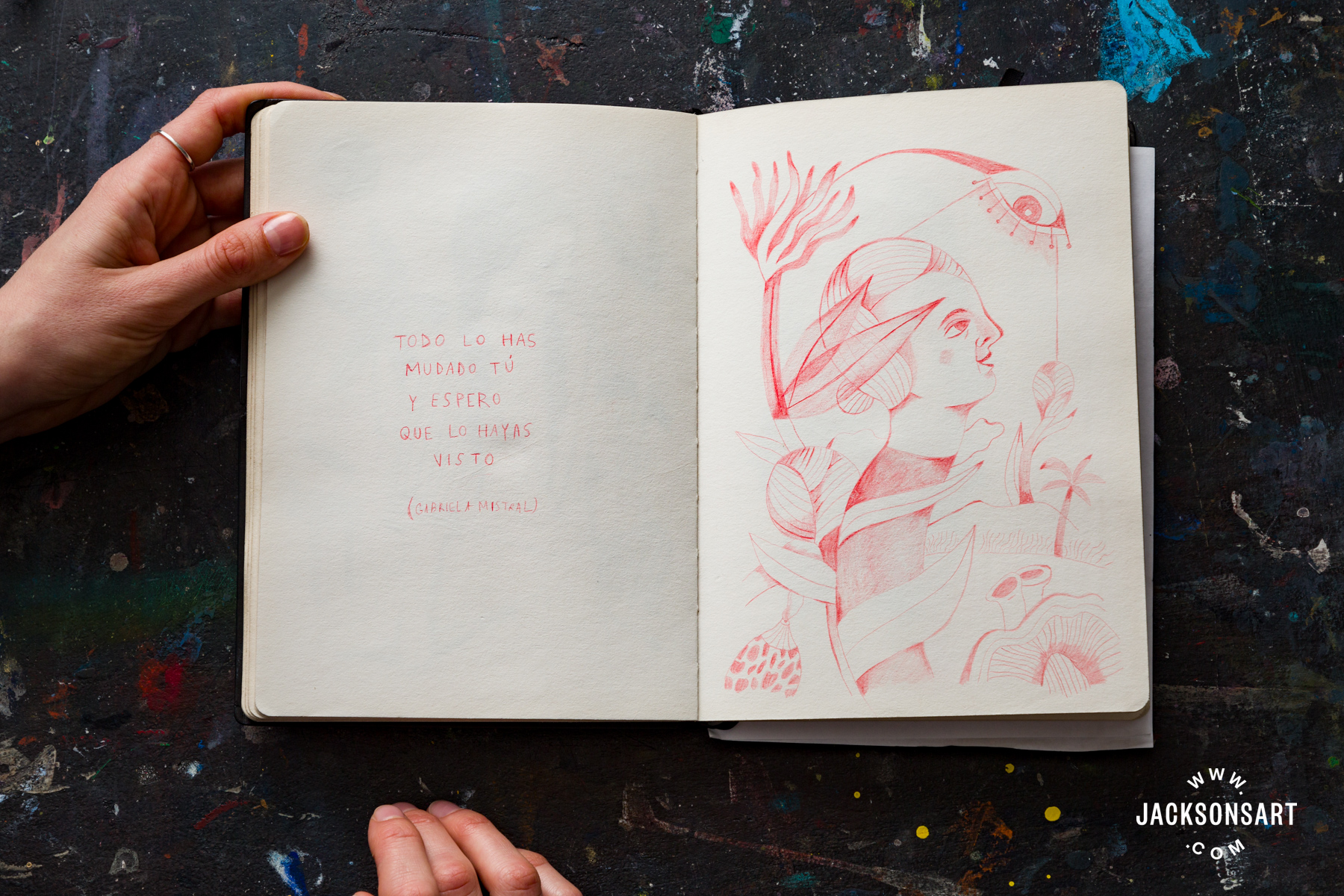
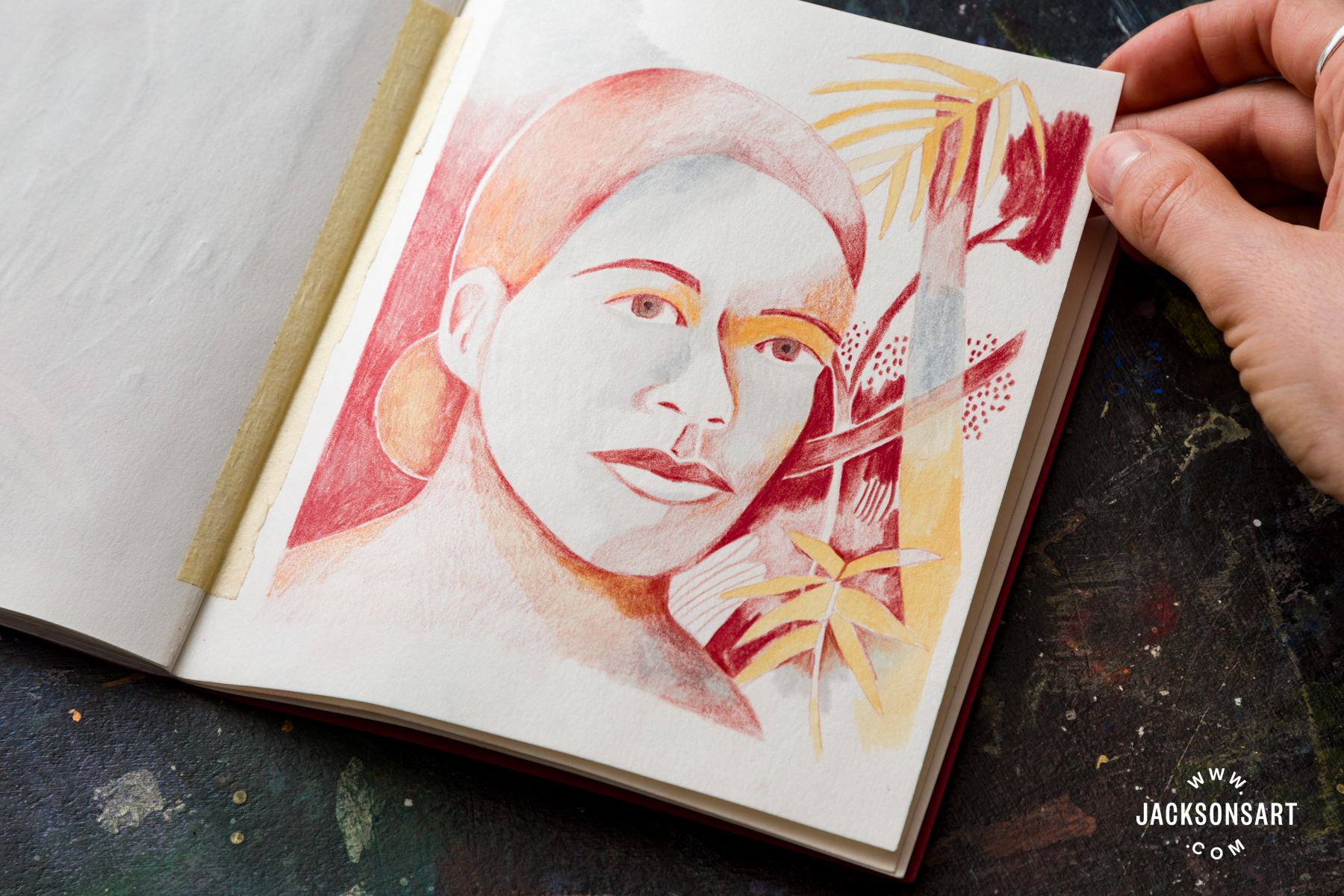
The materials that I use the most in my sketchbooks are water-based media, like watercolour paints or gouache. It’s a way to further explore the technique that I normally bring to my practice, but with a bit more freedom and curiosity than what I allow myself in a finished painting. I also experiment with other materials, like coloured pencils or crayons, and I’ve tried other techniques like collage and paper cut outs, which I don’t usually incorporate in my work, but it’s a chance to explore and discover something new.
Choosing a Sketchbook
For sketchbooks, I prefer neutral covers, although I’m not as picky about this as I am with the paper inside, which must be soft and sturdy enough to hold watercolour paint. I wouldn’t normally go below 180 gsm in terms of the weight of the paper, but I’ve found great options with thinner paper, so it also depends on the manufacturer.
I have brands of sketchbooks that I have gone back to, like Talens, Seawhite, and Moleskine, but I also like the surprise factor. That is, I allow myself to fall in love with a new sketchbook spotted in an art supply store when I’m around London or travelling to a new place. I’ve noticed that A5 is a good size for everyday use — I can carry it easily in my bag and if I open it flat and draw or paint across the gutter I have an A4 surface available. Also, A5 is a size that reminds me that I’m working on a different, more personal format, compared to my finished work.
A sketchbook is a space that I’m not required to share with others, almost like a journal, so it’s possible to feel comfortable and free. On the one hand, it shouldn’t be too expensive or precious because I need to know that it’s ok to make a mess, to start a drawing more than once, to rip a page out, or leave something incomplete and move on to something else. But on the other hand, I need a surface that allows me to paint with watercolours in a way that feels similar to the papers that I use in my finished work which are normally expensive, high-quality cotton papers. Therefore, combining both is always a challenge and only a few sketchbooks have passed the test.
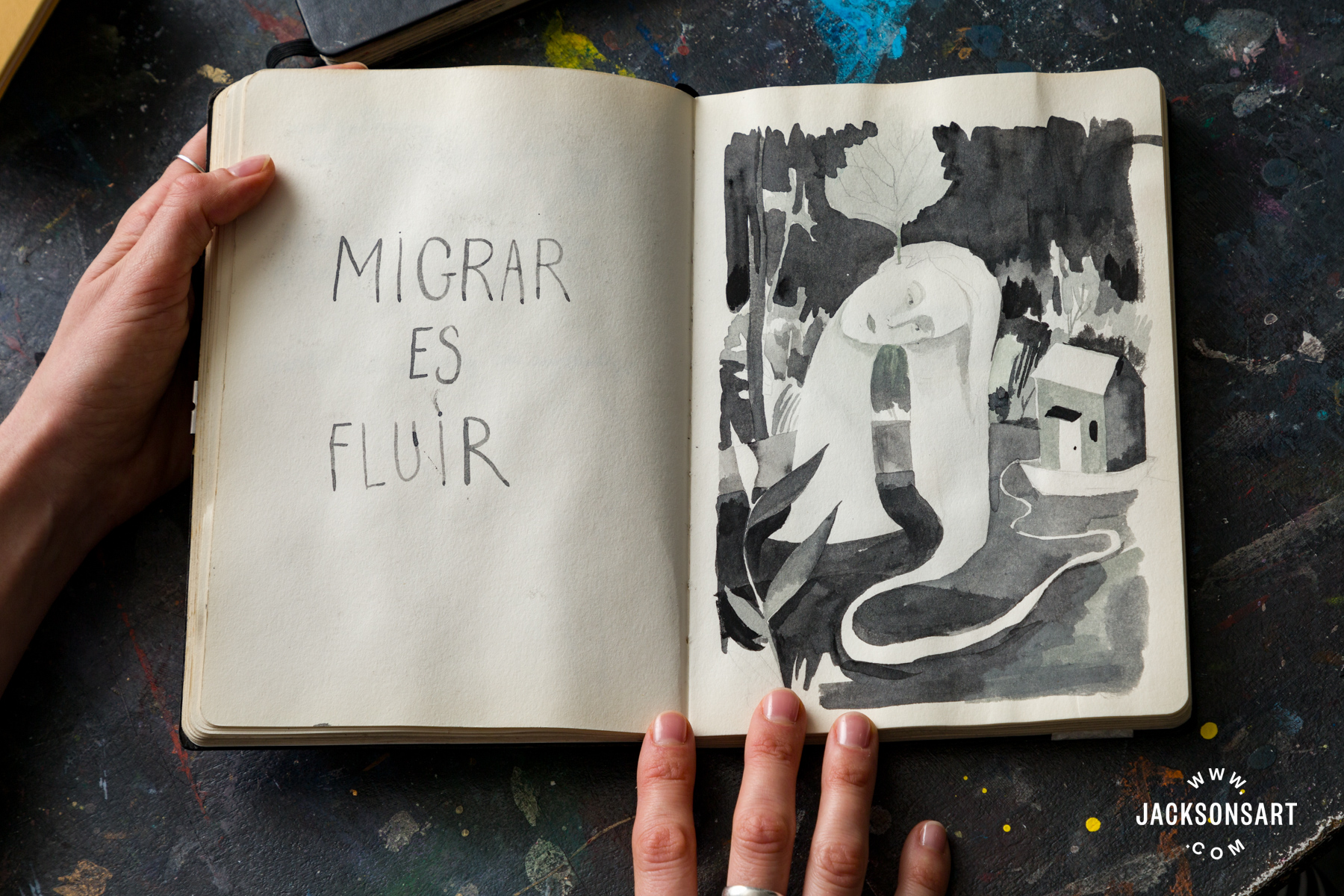
An Evolving Relationship With Sketchbooks
My relationship with sketchbooks has changed in the past years, both in the frequency and the type of use I give them. The blank pages are essentially a space for thinking out loud, so there are times where I need it more than others. When I was younger I used to combine drawings with writing, which happens less now. At other times, I’ve used sketchbooks purely for processing ideas through small scribbles or rough drafts. I don’t share these pages that much because they don’t make a lot of sense outside of my head but they have been important in my practice and that’s why I’ve kept them.
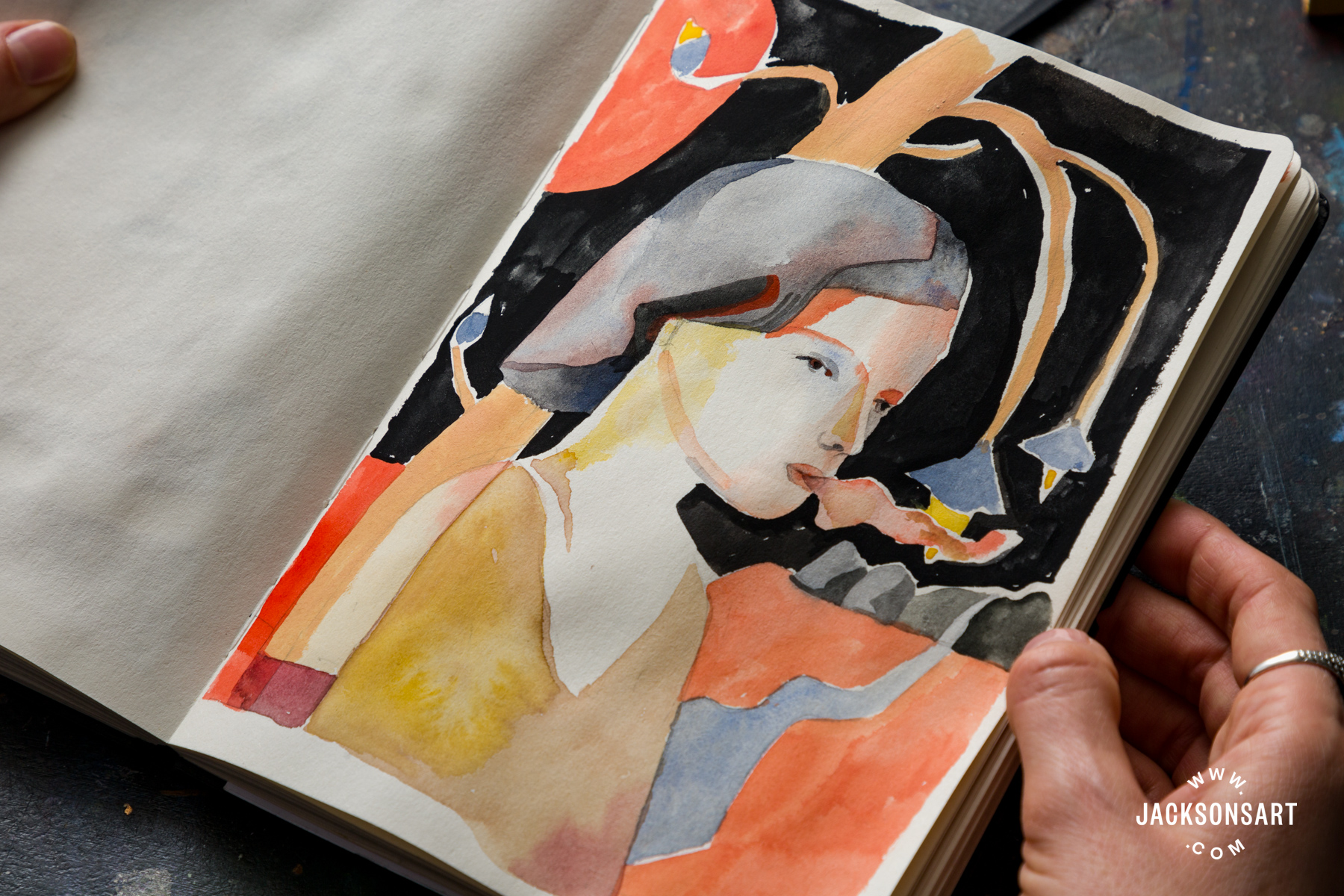
However, there are moments when sketchbooks become even more relevant than the finished work that I’m creating at that same time. This normally happens when I’m going through something personal but it’s still too raw to process in a finished piece of work. That’s the perfect time for me to open up a sketchbook because I develop a more consistent habit, spending quality time on its pages.
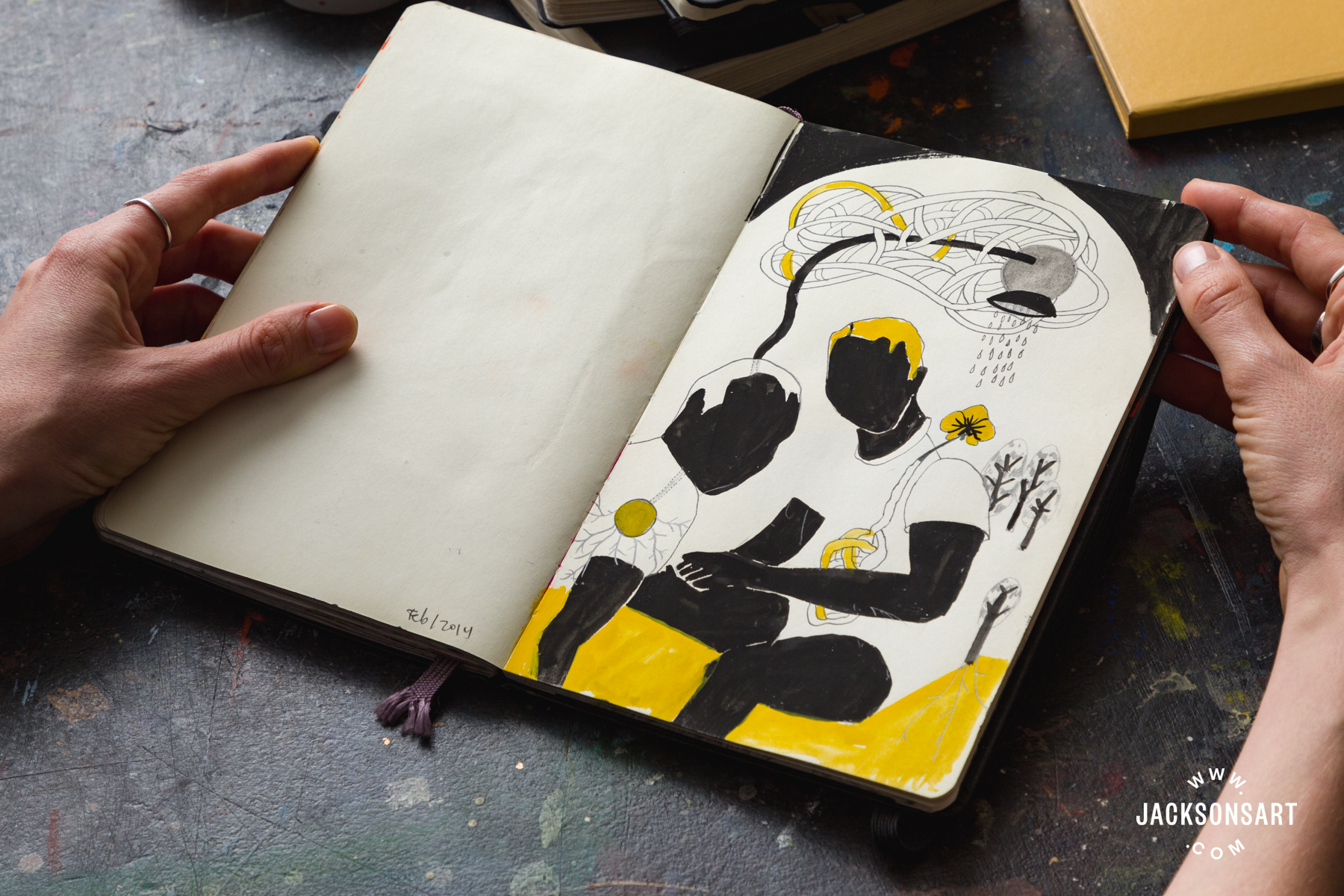
Many ideas that emerge from that process end up translated into my finished work, sometimes even years after I’ve created the sketchbook entry. I love when this happens because it shows that the work is alive and that some images take longer than others to be ready.
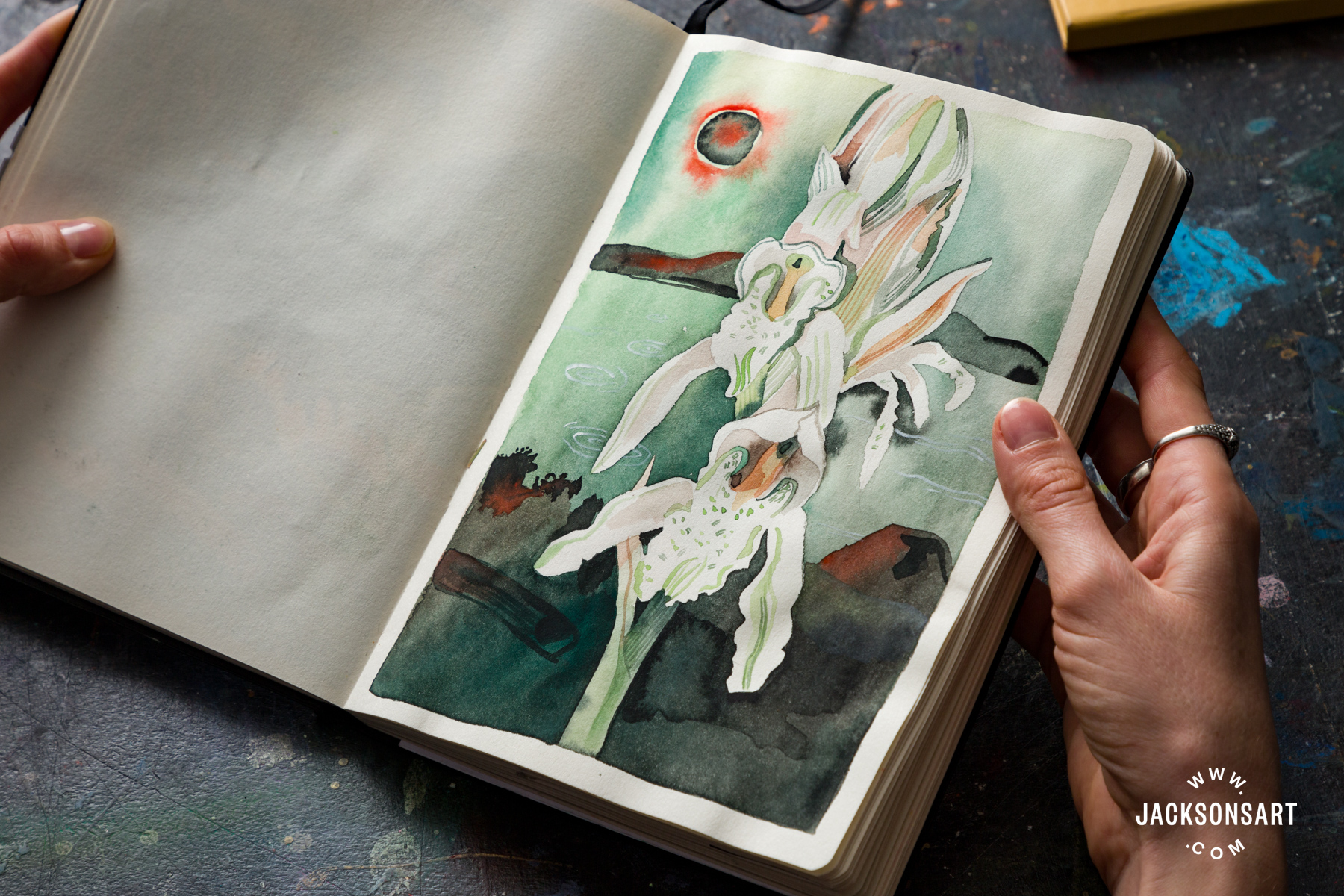
In other cases, revisiting a sketchbook has also helped me to overcome a creative block because it gives me the inspiration that was missing. That’s why I would encourage everyone to use a sketchbook — it doesn’t matter if you are an established artist or you are starting out, because it will benefit your overall practice and I think it’s a beautiful way to document a creative journey. My advice for other artists wanting to make the most of sketchbooks would be to find a good fit, because the whole idea is that you need to feel comfortable working within its pages.
Materials
The materials that I normally use in my sketchbook are Winsor & Newton watercolour and gouache paints, which I normally use in larger paintings, but also Faber-Castell Polychromos and Caran d’Ache Luminance Colour Pencils. Lately, I’ve also incorporated Caran d’Ache Neocolor II Artists’ Watercolour Crayons because they have a bold and vibrant mark that’s completely different from the way I use watercolours. For that same reason I struggle when I use them, it’s like my brain is wired differently but there is something in the material that pulls me in. I still don’t feel comfortable enough to bring the crayons into my finished work, but the sketchbook is precisely for that: experimentation and discovery.
About Luisa Rivera
Luisa Rivera is a London-based artist originally from Chile. She works primarily on paper with water-based media and draws on storytelling to create narratives that are inhabited predominantly by women and natural elements. After completing her Fine Arts degree in Santiago, Chile, she obtained a Fulbright scholarship in 2013 to pursue her Master of Fine Arts at Minneapolis College of Art and Design (MCAD). Her recent group exhibitions include In Between/ness (2024, Somers Gallery, London), Tart Factory (2023, Tart Gallery, London), Rituals (2023, Lea Bridge Library Pavilion, London). As part of her practice, Rivera also works in illustration and bookmaking. She has illustrated books by authors such as Gabriel García Márquez (Penguin Random House Spain), Rubén Darío, Horacio Quiroga (Alma Editorial), María Luisa Bombal (Liberalia Ediciones), among others. Rivera is also developing work to promote ecology and sustainability with publications that include National Geographic, Savanna Books, Yale Environment 360, and Resurgence Trust.
Further Reading
Tips for Painting While Travelling
A Guide to Drawing in Galleries and Museums
Inside the Sketchbook of Louise Reynolds
Preparing a Watercolour Gouache Palette for Painting on Location
Shop Sketchbooks on jacksonsart.com