



Alexander Stanton is a sketchbook artist and freelance illustrator based in Derbyshire in the UK. His sketchbook practice underpins the wider variety of work he makes which includes illustration, storyboarding, album covers, and logos. Here, Alex explains his structured experiments with his sketchbooks, improving his draughtsmanship, and communicating with his subconscious through drawing.

Alexander Stanton Takes Us Through His Sketchbook Practice
I feel it’s important to be open to those subtle ideas that come to you. This is why I don’t like to define what a sketchbook is and isn’t for myself, and would sooner be guided more by mood and inspiration in order to make room for changes in style, theme or direction.
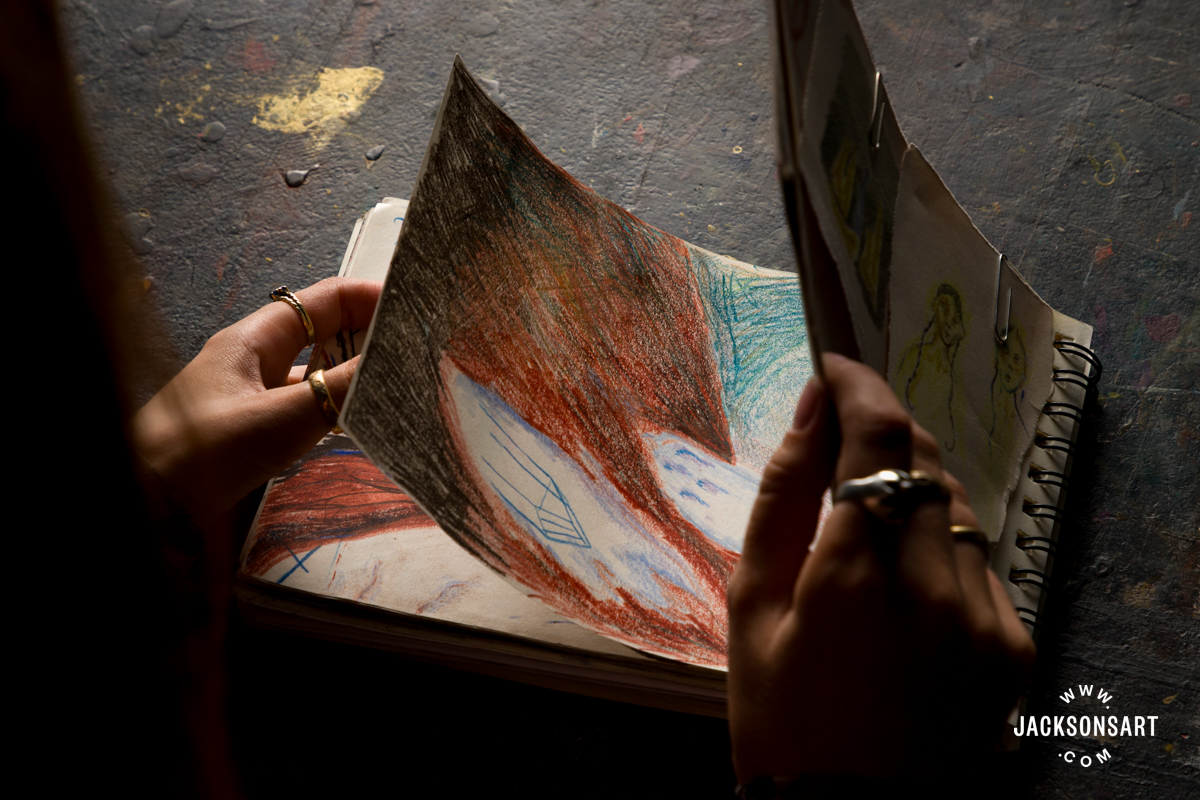
For example, at the beginning of the year, I felt the need for structure in my approach, so I separated my studies and general practice from my more imaginative work by running two or more sketchbooks at a time. I was precise about what I chose to put inside them too, creating targets and lists that would force me out of my usual comfort zone.


Now I’m moving into a phase that merges everything I do. Juxtaposing not only the work that I draw with reference but also the more imaginative and more scribbly nature. I still have a list but it’s far more vague to allow more room for play and experimentation.

For me, drawing is just another frame through which to view the world. Making connections of form – through shape, everything is related. The branch of a tree, the fingers of your hand, the pipework in your wall are just variants of cylinders. The rest is just detail, which you can choose to include or omit.

When it comes to studying, I don’t approach subjects like anatomy and perspective in a traditional way. God knows I’ve tried, but the sense of discovery that comes with figuring things out by myself feels so much more rewarding to me than being given the answers. Plus, I learn best practically, through mistakes and being observant. I don’t know much terminology, and I’m okay not knowing.

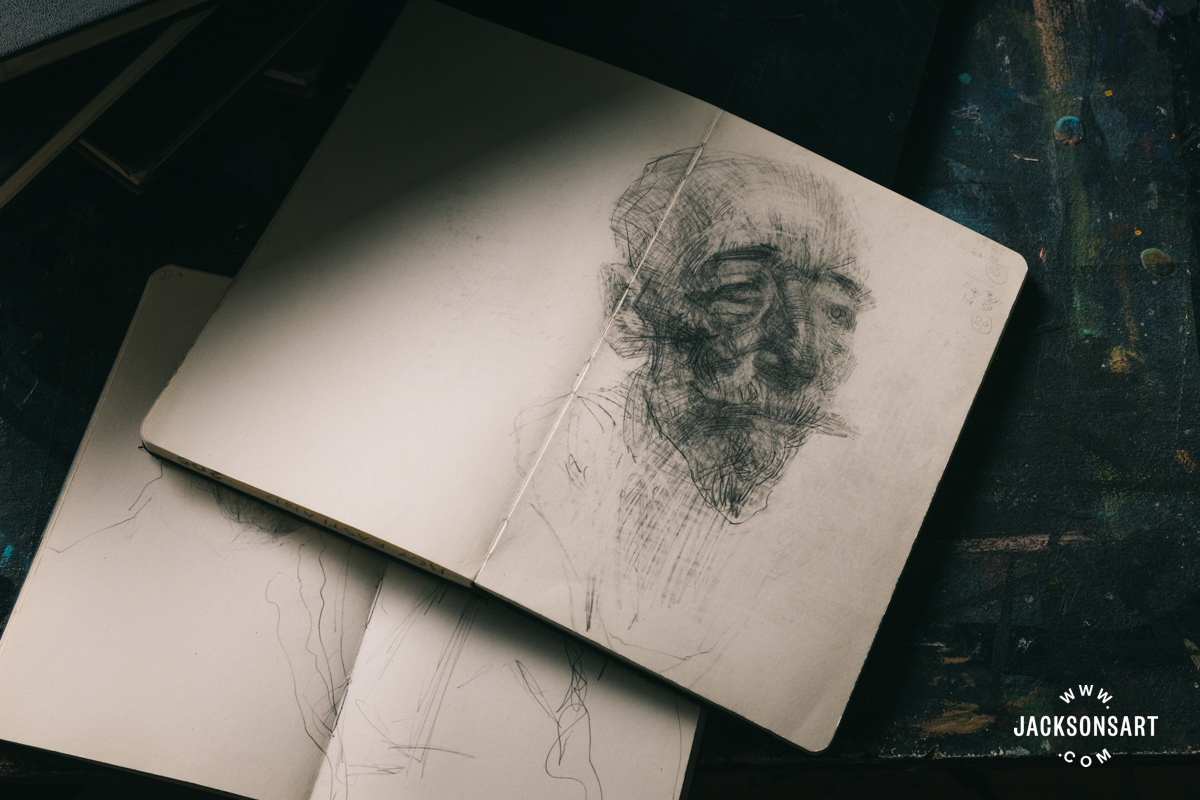
My aim is always to become more articulate with my draughtsmanship and build up my visual library, alongside being able to communicate better with my subconscious through the character and automatic drawing I do. Those are the things that excite me and that I get the most enjoyment from. It’s growth, not perfection I’m searching for. Exploration is key.

Tools – Keeping it Simple
I like to keep my choices limited and simple for sketchbook work.
My go-to pen is either a Uni-ball Signo DX 0.38 or Pilot G-Tec C4 Microtip Rollerball Pen, and I typically lean towards MUJI notebooks because a.) they’re affordable and b.) they’re a handy size to throw into my bag and store around the house. I do occasionally use A4 Moleskine Sketchbook, but sparingly due to how quickly I get through them.

As important as materials are, I don’t feel like I need to explore outside of my usual selection very often. They are far from perfect, but by learning something’s limits you create a better relationship with it. All I need is whatever is at hand. A cheap biro and some printer paper have done me fine. For me, it’s process over result.

Finished Work
I used to worry that all I did was sketch in a sketchbook; and that I should be creating more meaningful or exciting finished work. Now I see that my sketchbooks are my finished work and since coming to this realisation I have started to be more thoughtful about what I choose to litter the pages with.

Up until recently, I would source images online to study. Pinterest and figure drawing sites like Croquis Cafe were my bread and butter (especially during the pandemic), and as great as those resources are, I look back at my drawings from that time and I feel they have no real sense of identity or weight outside of style.

The drive to broaden my knowledge and technique had pushed me away from myself, so I felt I needed to get back to something more personal.
Now, when it comes to references and study, I only use what I source myself. I take photos of the places I visit and scroll through old photos to gather what I can to take inspiration and knowledge from, and I use my own body to study gesture and anatomy.

That may seem a little narcissistic to the observer, but I see it as taking responsibility for my own work. I’m incredibly camera shy, but through drawing, I have learned to see myself and my body in a different light. I wouldn’t say that it’s given me the confidence to become a life model or anything, but I judge myself with less scrutiny. After all, I’m just a bunch of shapes like everyone else. I suppose, in a roundabout way, it also means that I am not objectifying anyone other than myself now. I realise that life models get paid, and they’re happy to be the muses that they are, but there is a lot of disconnect there for me, especially when these models are just images on a screen.

It’s all about intention at the end of the day. I don’t feel like I have much to say about the world, but I can document my own experiences and try to figure out what that all means. Looking out as well as in – using a sketchbook as a mirror.

Making the Most of Your Sketchbook
Just go in with an open mind. Sketchbooks are whatever you want them to be, so don’t be put off by the blank page or your expectations. They are space to explore and be vulnerable so approach them as such. Many will try and tell you what a sketchbook should be, but that’s for you to decide, so don’t be put off by anyone who tells you otherwise.

If you want to make something clean and close to perfection, go for it. Likewise, if you’d like to throw everything at it and then throw it on the fire, that’s also cool. Find what you want to do and forge your own path, regardless of what the experts say (including me). At the end of the day you don’t have to share your art with anyone, so do it for yourself first.

Lastly, mistakes are often in contrast through social media’s picture-perfect gaze, but they are essential to practice and process. This is why I believe physical sketchbooks are the best tool to come to terms with your limits and grow out of them. Don’t be afraid of them, just fill them up and move on to the next one and you’ll soon come to realise that every stroke is important because it leads you somewhere new.


Materials
Uni-ball Signo DX 0.38
Pilot G-Tec C4 Microtip Rollerball Pens
Pentel Fude Brush Pen
Pentel Pocket Brush Pen
Pentel Sign Pen Artist
Bic Biro
Sakura Pigma Micron Pens
Lamy Safari Fountain Pen
Winsor & Newton Black Indian Ink
Muji B5 Notebook
A4 Moleskine Sketchbook

About Alexander Stanton
Alexander Stanton is a sketchbook artist and freelance illustrator based in Derbyshire. Despite being an avid doodler since childhood, they only began to take it seriously later in life, choosing a trial and error approach to learning over more traditional means. Common themes include nature and the human form alongside more improvised imaginative sketching. On top of various commission and commercial projects, they also have an artist book and graphic novel in the works.
Further Reading
A Guide to Drawing in Galleries and Museums
How to Prepare for Your First Life Drawing Class
A Guide to Dip Pens and Drawing Ink
Rosie Phillips: Connecting Through Portraiture
Shop Sketchbooks on jacksonsart.com
6 thoughts on “Inside the Sketchbook of Alexander Stanton”
Best “artist sketchbook article” yet!!
Fantastic, inspiring. Shared it with several
other artists I know. Thank you Very much!
Thanks for sharing Joanne!
I enjoyed this very much. I liked the attitude
and the freedom it gives the artist to “just
create”. Thank you.
Yes! Just create! Couldn’t agree more. Thanks for sharing Diana, glad you enjoyed Alex’s feature.
I always love these articles! Amazes me
that an artist with such talent, still has
vulnerabilities and how brave they are
for sharing that with us.
Great to hear! Thanks for sharing Karen.
Comments are closed.