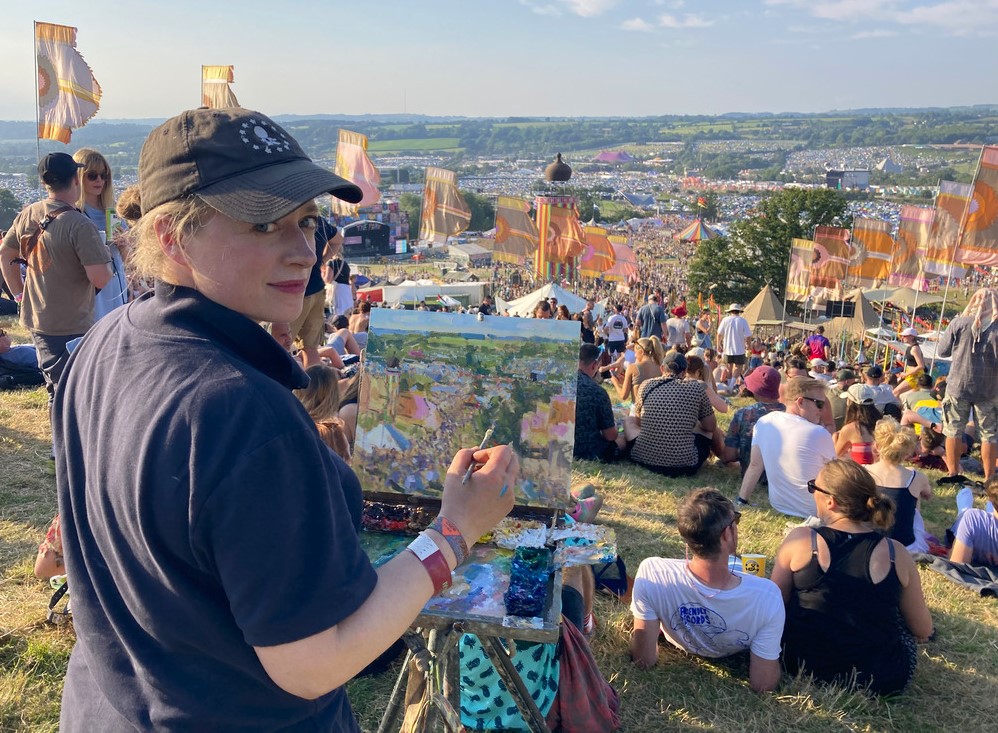
Plein Air painter Valérie Pirlot is known for her dynamic and expressive landscapes. An associate member of the Royal Institute of Oil Painters, member of Bath Society of Artists, and founding member of the British Plein Air Painters group, she was invited to be one of four official artists at the Glastonbury Festival three years ago and has returned to paint at the event every year since then. In this conversation with Lisa Takahashi, Valérie shares her experience of painting at Glastonbury Festival, emphasising that a great painting can only be painted if you have a real urge to paint the subject.
Plein Air Painting at Glastonbury Festival
Lisa: Hi Valérie, how are you doing? It’s the Wednesday after Glastonbury Festival, you must be exhausted! Thanks so much for agreeing to meet for this chat to talk through your experience of painting at the festival.
Valérie: It’s good for me to chat now, while I can still remember everything. It’s the first time I’m in the studio since the festival. It’s good to get back into the zone. I need to work on finishing some of the paintings and do a few extra, so I need to get back on the saddle!
Lisa: Do you actually camp there for the whole festival?
Valérie: I live a 40-minute drive away from Glastonbury, so I drove there on Monday, Tuesday, and Wednesday, and then on Friday I went with my husband and we stayed to camp until Sunday. I couldn’t be away for a whole week as I have other life responsibilities, so I had a break on Thursday, and then went back on Friday, Saturday, and Sunday – the main days of the festival when all the bands are playing and so on.
It’s a privilege, you know. I’m chuffed that the organisers of Glastonbury were happy for me to be there to paint. But I suppose the way I see it is that for them, it’s probably quite moving to see the festival through the painter’s eye, and it brings something also to the public, because I do have lots of interaction with the public while I am painting. And there were quite a few people that came to me that remembered me from last year – one person came up to me and showed me a photo they took of me last year, excited to see me painting again.
Lisa: Yes, definitely. It’s a completely different situation, but recently I painted at a wedding and a lot of the guests may not have been particularly interested in art but they were so excited that it wasn’t just a photographer recording the day, but a painter too, recording in a different way.
Valérie: Exactly. You’re bringing extra entertainment. So they get two things. They get the painting and they get the entertainment.
Lisa: OK, I know you have limited time so I’ll start with my official questions! How do you prepare? What do you take with you? How do you know what colours to take, for example?
Valérie: OK, colours, it’s easy because I always use the same colours. I use Artisan water-mixable oils, and my colours are:
- Permanent Rose
- Cadmium Red Hue
- Burnt Sienna
- Burnt Umber
- Raw Sienna
- Yellow Ochre
- Cadmium Yellow Pale Hue
- Naples Yellow Hue
- Titanium White
- Cerulean Blue Hue
- French Ultramarine
- Lemon Yellow
- Phthalo Green (Yellow Shade)
- Cobalt Blue Hue
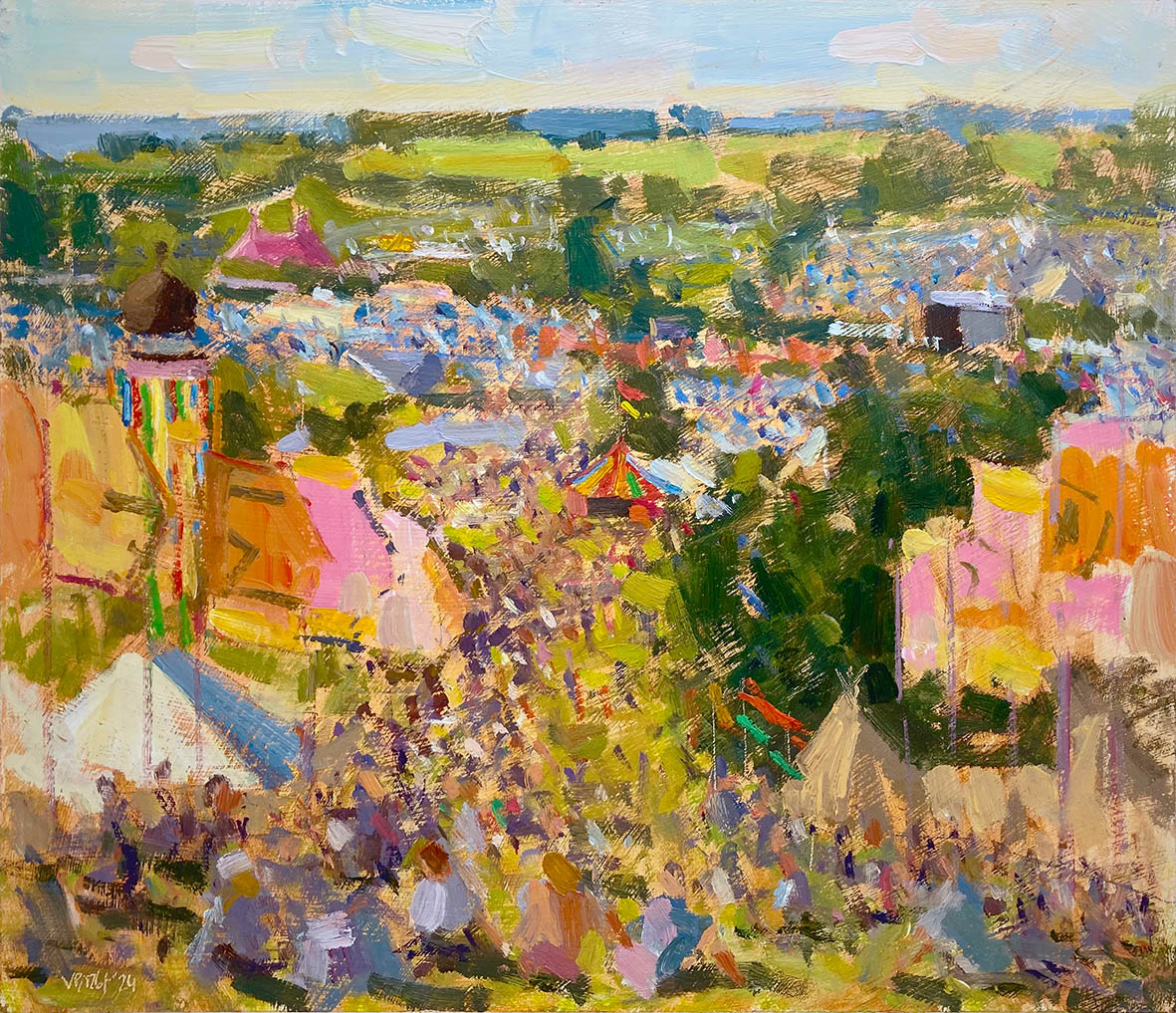
Valérie Pirlot
Oil on panel, 30.5 x 35.5 cm | 12 x 14 in
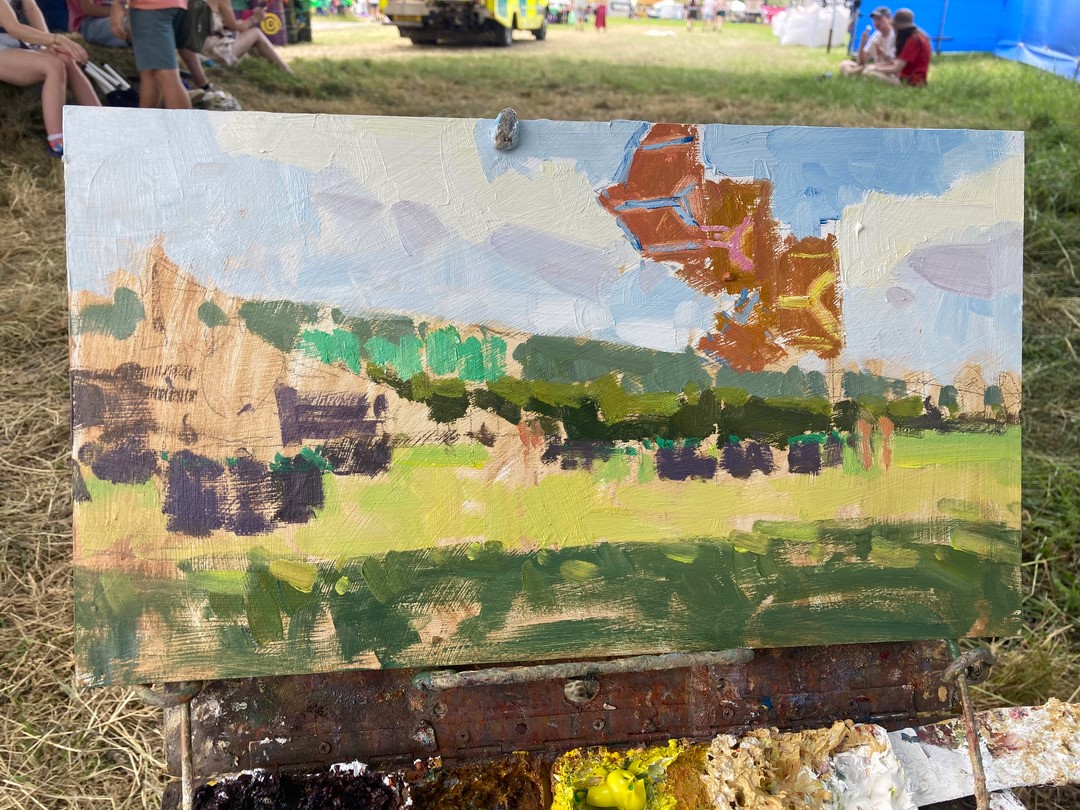
I’m not one of those painters who thinks ‘Today is a primary palette day’ or ‘Today I’m going to use the Zorn palette’. I squeeze out the same colours because they’re my friends, I know them. It’s limited…ish! All the materials I work with are on my website. I’ve been using the same colours for about 10 years and I would never use anything new. The only colour added for Glastonbury is orange because I would normally mix an orange from yellow and red, but at Glastonbury, I use more colours straight from the tube. You need the extra vibrancy for the flags and painted bins and so on. Same for Phthalo Green – I don’t use it much at all, as I tend to mix greens, but at Glastonbury, it has the time of its life as I need that bright green to add to all the colours you see on site!
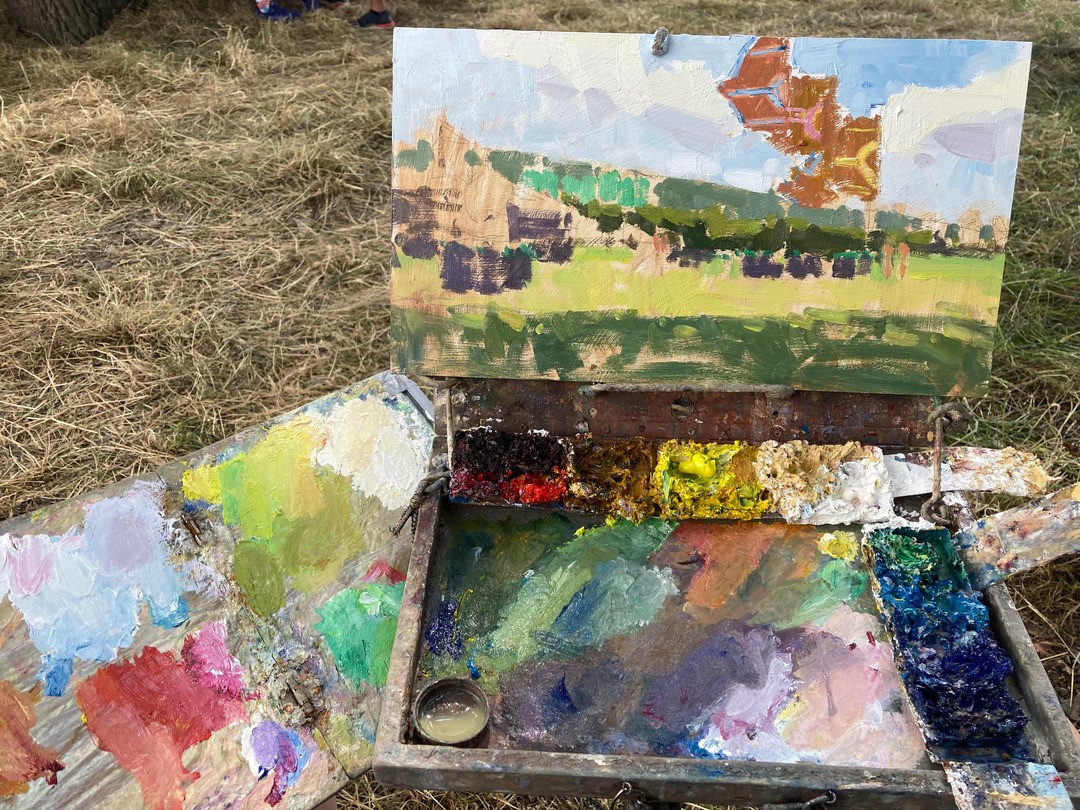
The other additional material is extra mixing space. I use a pochade box normally, and the middle area is where I mix my colours. But I took a foldable extra palette to Glastonbury so that I could keep my bright colours as clean as possible. That extra palette was essential because it allowed me to work quickly. Time is of the essence.
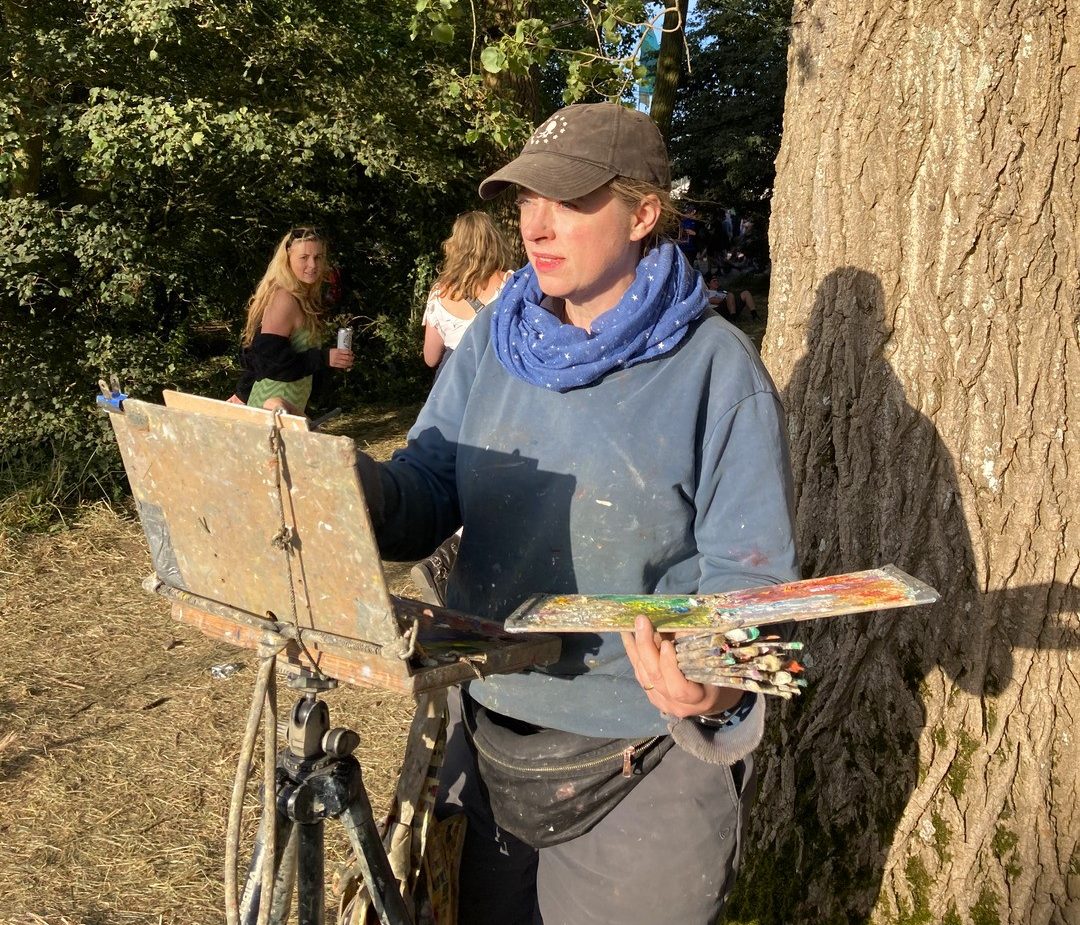
I also took a few more brushes than usual because I don’t like to keep wiping brushes while I paint. I needed a few more smaller brushes especially, so you can add the necessary fine details. My kit for Glasto was less compact, but I found it easier bringing the extra kit as I was more prepared and I could just get on with the painting.
Lisa: Do you hold the extra palette while you work? And how do you manage all the brushes?
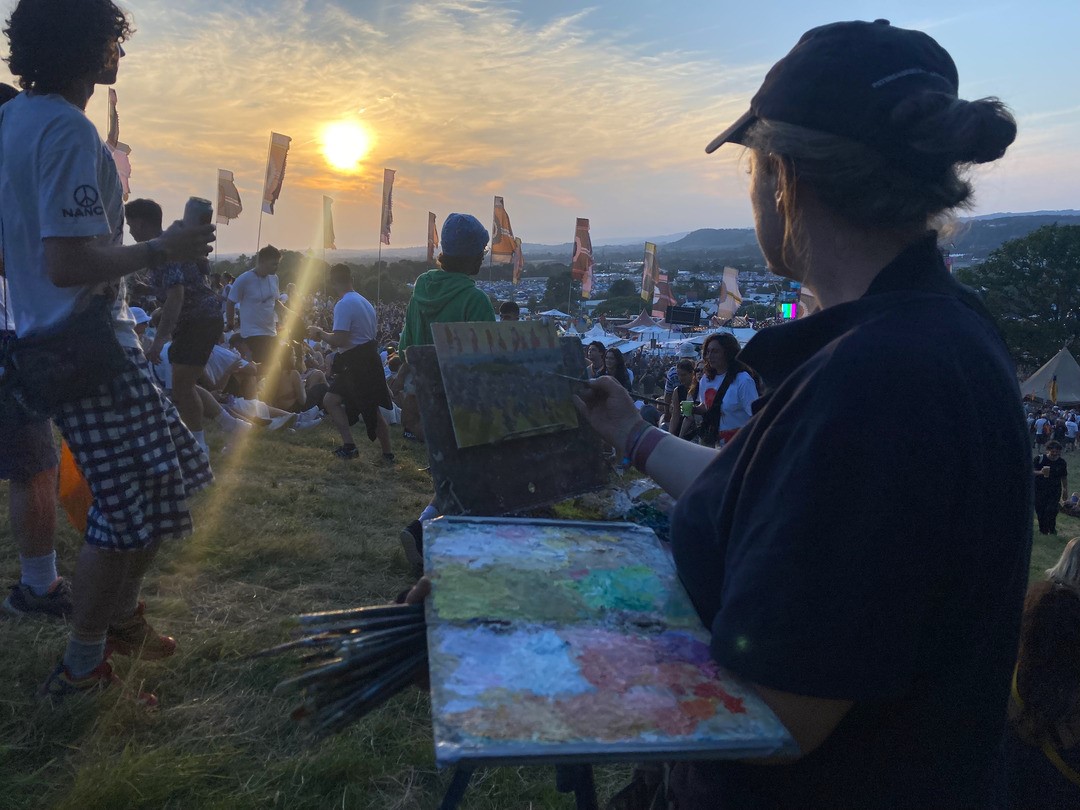
Valérie: Yes, I just rest the palette on my arm, and I hold all my brushes in one hand. People always laugh because I’ve got loads of brushes, but I just don’t like wiping them because I know I’m going to use that colour again later. I tend to have one colour per brush. It means that if I want to retouch something, I will have the brush still partly loaded with the right colour in my hand somewhere! I found working like this helps my speed. I’m not constantly cleaning and wiping brushes while I work.
Lisa: And what about your panels, do you prepare them in any particular way?
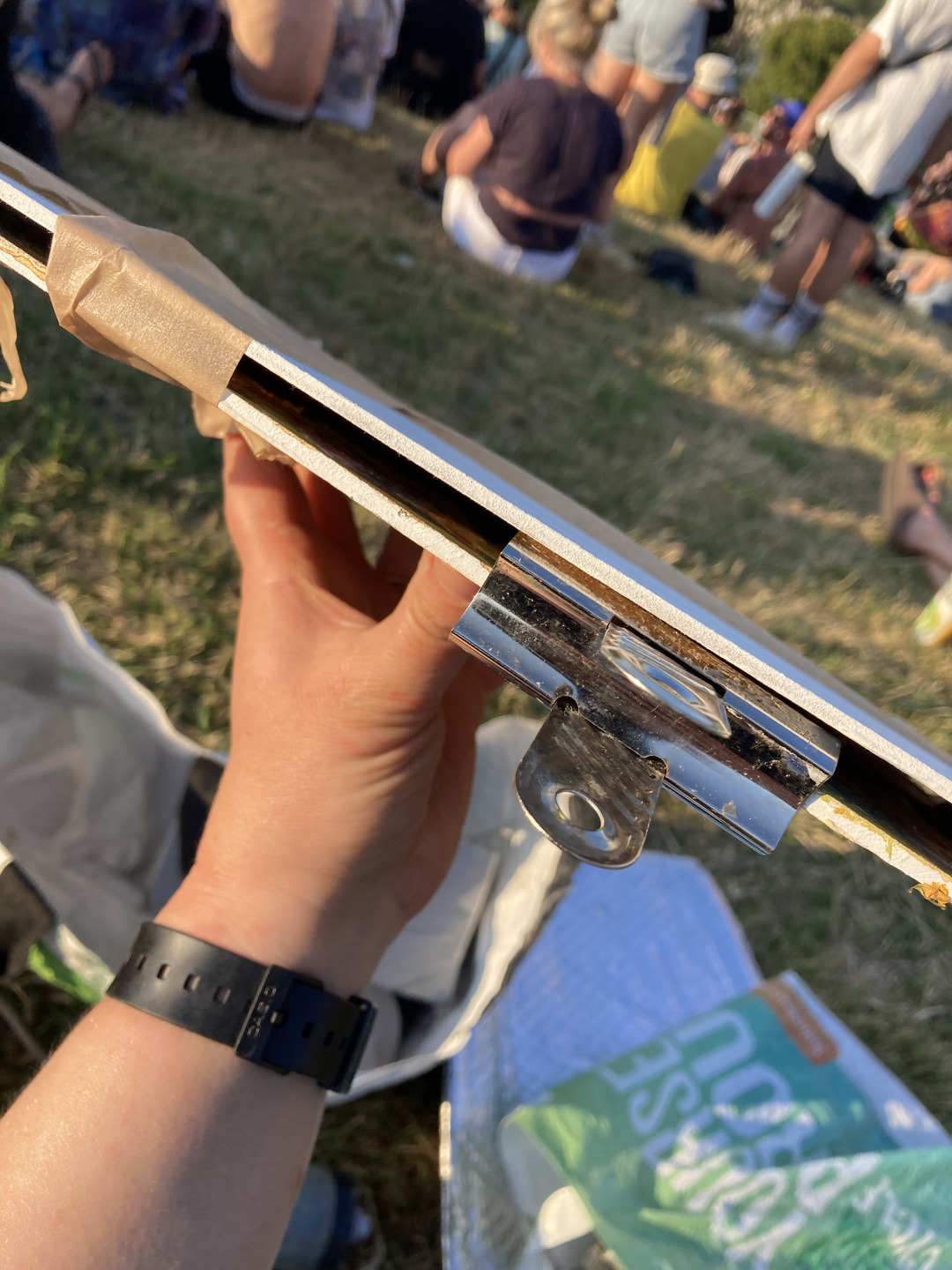
Valérie: So here, I really should say to the reader, don’t do what I do! I always get a little bit of FOMO when it comes to boards of different sizes because I’m very particular about the size I want to work at. I see a scene and think ‘This is definitely an 8 x 10. It can’t be more, it can’t be less’. I’m always obsessed about getting the exact board that’s got my vision. See here in the corner of my studio, these are all my boards, about 100 of them. They’re all different sizes because I want to be ready. The problem is that I think I have about 20 different sizes, and I definitely don’t want to get to the festival and feel inspired to paint a particular size painting and not have that size board with me. So I took loads of each size with me. I kept them wherever there was space – in the tent, in the car, in my bag! I think I had about 40 boards with me for Glastonbury. Most painters would think ‘OK I’ll do 4 or 5 paintings maximum today’, and bring 5 boards, but not me! I take many more just in case and I pay the price by carrying a lot of extra weight. But that’s what works for me because I would hate not having what I need. But my advice to anyone else would be if you can try to just take a few, that would be more sensible!
Lisa: So what other essentials will be in your kit?
Valérie: Lots of layers in case you get cold, and food. I like to be prepared for all events. I checked the weather every day. I had sun cream, I had layers, I had food. I just don’t like to run out of anything and feel uncomfortable because I think it’s hard enough to paint even when you feel you have everything prepared. I recommend bringing a portable chair, to give you a break from being on your feet all day. All the conditions must be right for me to do the best painting I can. The luggage is heavy but that’s a price I’m willing to pay.
Lisa: Yes I can imagine, and I guess there’s nowhere to store your stuff while you’re out and about painting…
Valérie: No, but I need to have everything with me anyway because I never know when I’m going to find a good spot to paint. I’m just walking around and stopping randomly. I keep excess panels in the tent but I’m carrying everything else. I also built myself this wet panel carrier, which I used a lot at Glastonbury. It’s a weird size of panel, 6.5 x 8 inches, which I find the perfect size in a lot of situations. So this carrier will hold a handful of paintings which helps hugely. Again, it’s extra weight, but I carry everything I want. I could be out all day without returning to the tent and paint whenever inspiration struck.
Lisa: So how do you carry all this stuff? Is it in a backpack or a trolley or…
Valérie: Yep, both backpack, trolley, and more! I have a computer laptop bag over my shoulder where I keep my unpainted panels. And then I usually have two hands free. One is for my big boards and one is usually for my easel.
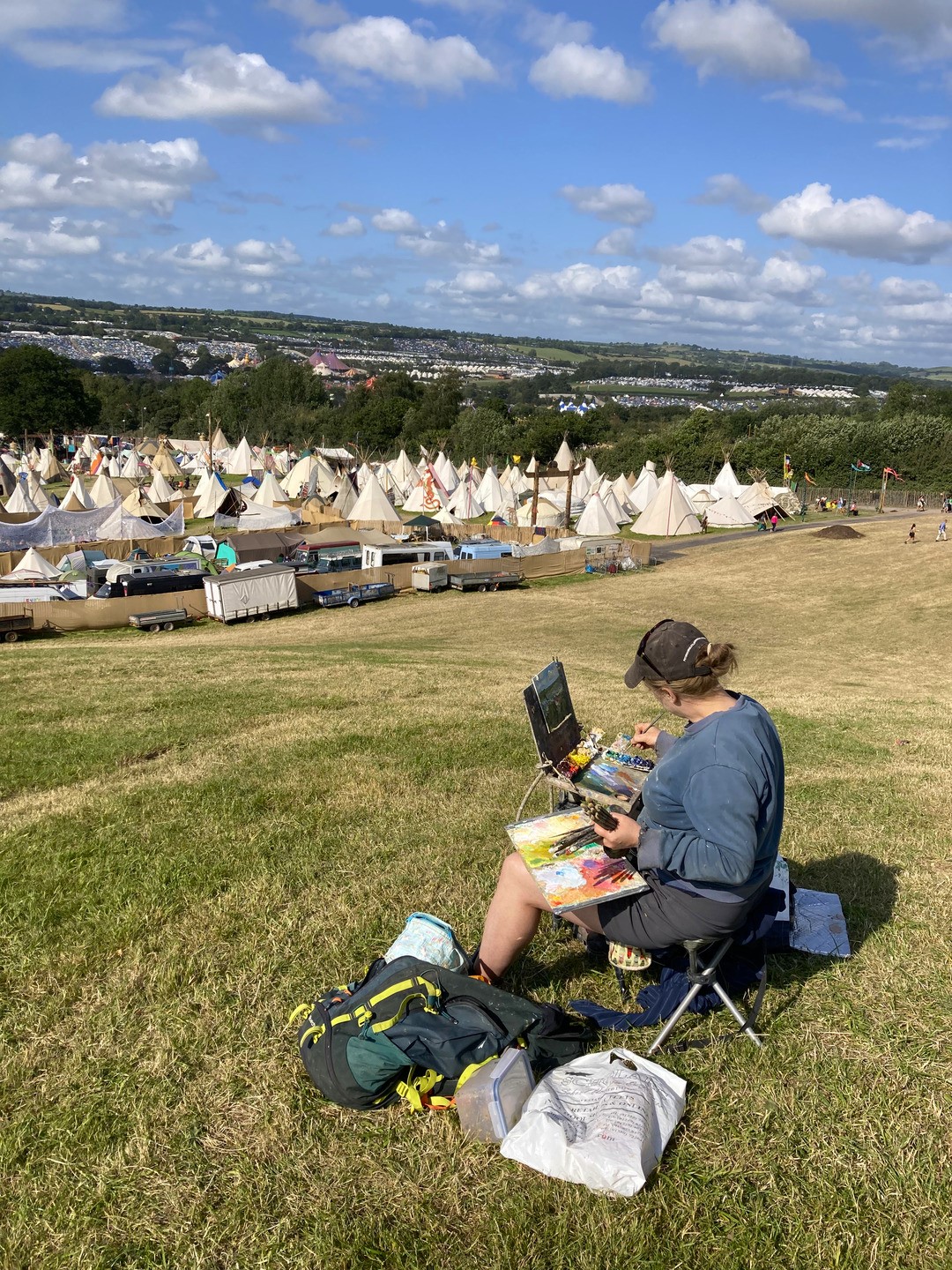
Lisa: You must be so fit! I’ve been to Glastonbury a few times and I get exhausted from all the walking, and I’m not carrying anything.
Valérie: That’s why it was nice on that last day I decided not to paint because I knew it wouldn’t be as sunny, and I was tired, and I painted loads, and I wanted to enjoy a little bit of the music. It was so nice walking freely! The answer is no, I’m not fit at all. But it’s when you get in the zone of it, you don’t feel the aches and pains, you just get on with it. If I had been carrying groceries or my kid’s toys I would have felt the load more! I was in work mode and obviously I walked a lot, but I stopped to paint so it’s not like I was walking non-stop.
Lisa: Can I just go back to the panels, do you prime them? Do you have a ground or anything that you put on them?
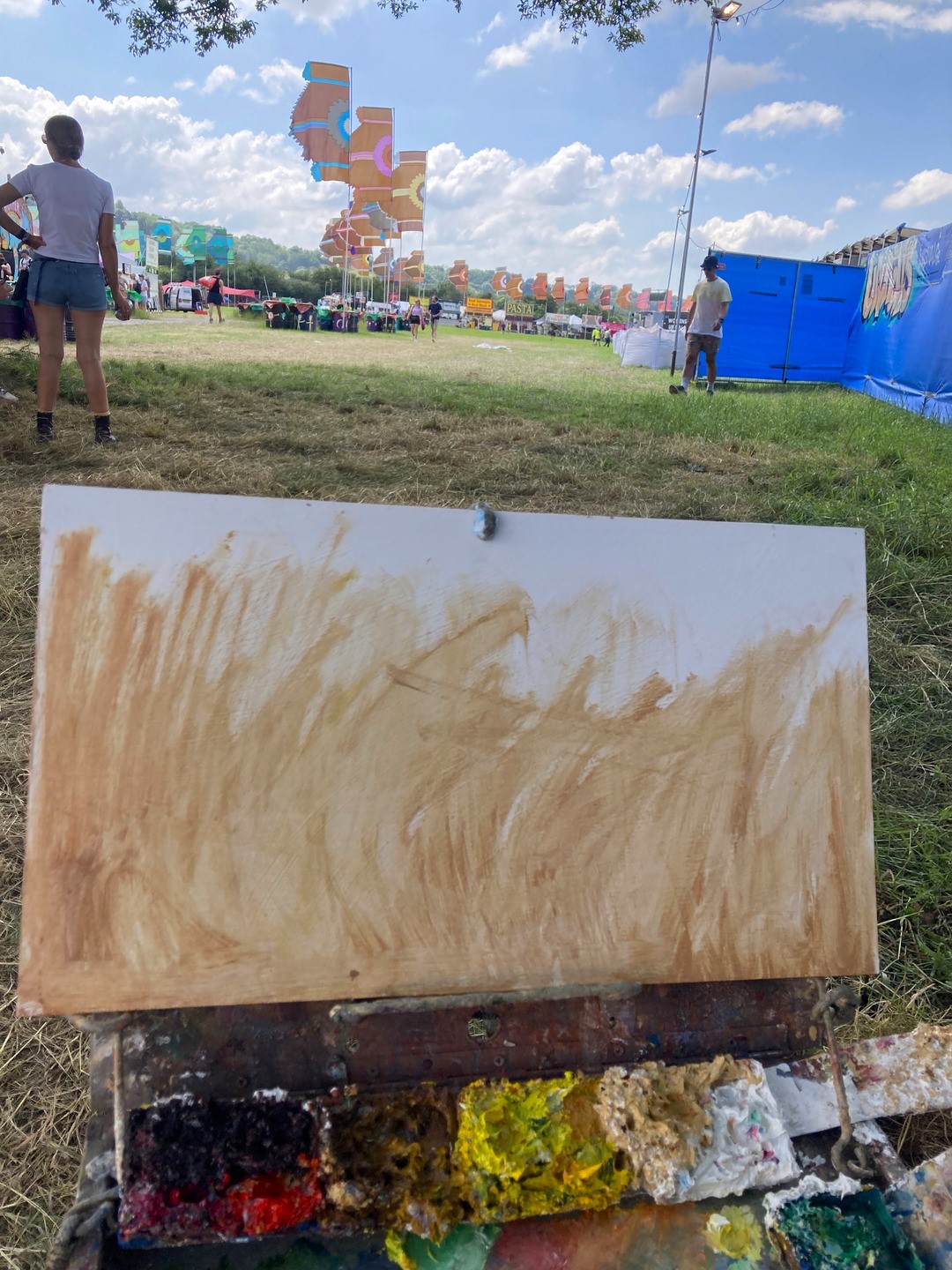
Valérie: These are MDF boards that I get cut by my framer, they’re 3 mm thick, as 2 mm is too flimsy. I prime them myself with three coats of acrylic Gesso. I love the Michael Harding one, it’s not too absorbent. Sometimes some surfaces, especially when you buy pre-made canvas boards, are really absorbent and soak up all the shine and you end up with something that looks very chalky. The Michael Harding primer keeps the paint looking nice and oily. I don’t put any tint on it until I get to the place where I’m painting and then I will apply a thin layer of colour on the surface before I start the painting. I use water-mixable oils and it takes two seconds to put a tint on it and it dries in one minute. I like to decide the colour at that moment because it depends entirely on the subject. If it’s sunny or cloudy, or what the subject is. So I make the decision on the spot, whether the tint is going to be orange, pink, brown, or grey; it depends on the mood and what effect I want to achieve on the top.
Lisa: Ah, so you use water-mixable for the actual painting as well?
Valérie: Yeah, everything. I’ve been using water-mixable oils for over 10 years now. I used traditional oils right up until I became pregnant with my first child. I had to work on a big commission and I was a bit worried about being with paint and solvent fumes. I looked it up and I realised that I could use water-mixable oils and I wouldn’t need to work with turps. I think it took me three sessions to get used to them. At first, I thought it was a bit weird and then I was won over and now to be honest, I can’t remember what it’s like to use normal oil. I know people who try it sometimes feel they’re a bit sticky or whatever. But for me, it can do everything I want it to do. And I only use water, I know there are lots of mediums you can use with it, but I love simplicity and I love not having to make too many decisions. And I think when you’ve got medium, you can get a little bit stuck about how much medium and when to use it. Do I want this shiny or matt? It just works with how I work, to use a little water and that’s it. I put a very small amount of water in the lid of a plastic milk bottle and that’s enough water for a whole painting. I don’t even use all of it. Most of the painting is done with pure paint, but it helps to have a little moisture on your brush to mix the colours. If I were working on a larger work over several sessions, then I imagine I might use some medium, but at the moment, I always work in one session. I might make a few finishing tweaks, but nothing more.
This way of work is great when you’re at a festival of course. There’s no need for solvent or mediums, I literally have my water bottle, pour a little bit in the milk bottle lid, and I’m ready to paint!
Lisa: I’m sure it’s on your website, but what brands of paint do you like, is it Artisan?
Valérie: Yeah, Winsor & Newton Artisan. I find them great. They don’t smell too much, and you can let the paintings dry in the house. I clean my brushes with soap and water…. I haven’t yet cleaned my brushes after Glastonbury! I’m really bad with my brushes, but somehow they forgive me.
Lisa: When you start a painting Alla Prima, do you draw the composition in pencil or do you go straight in with oils?
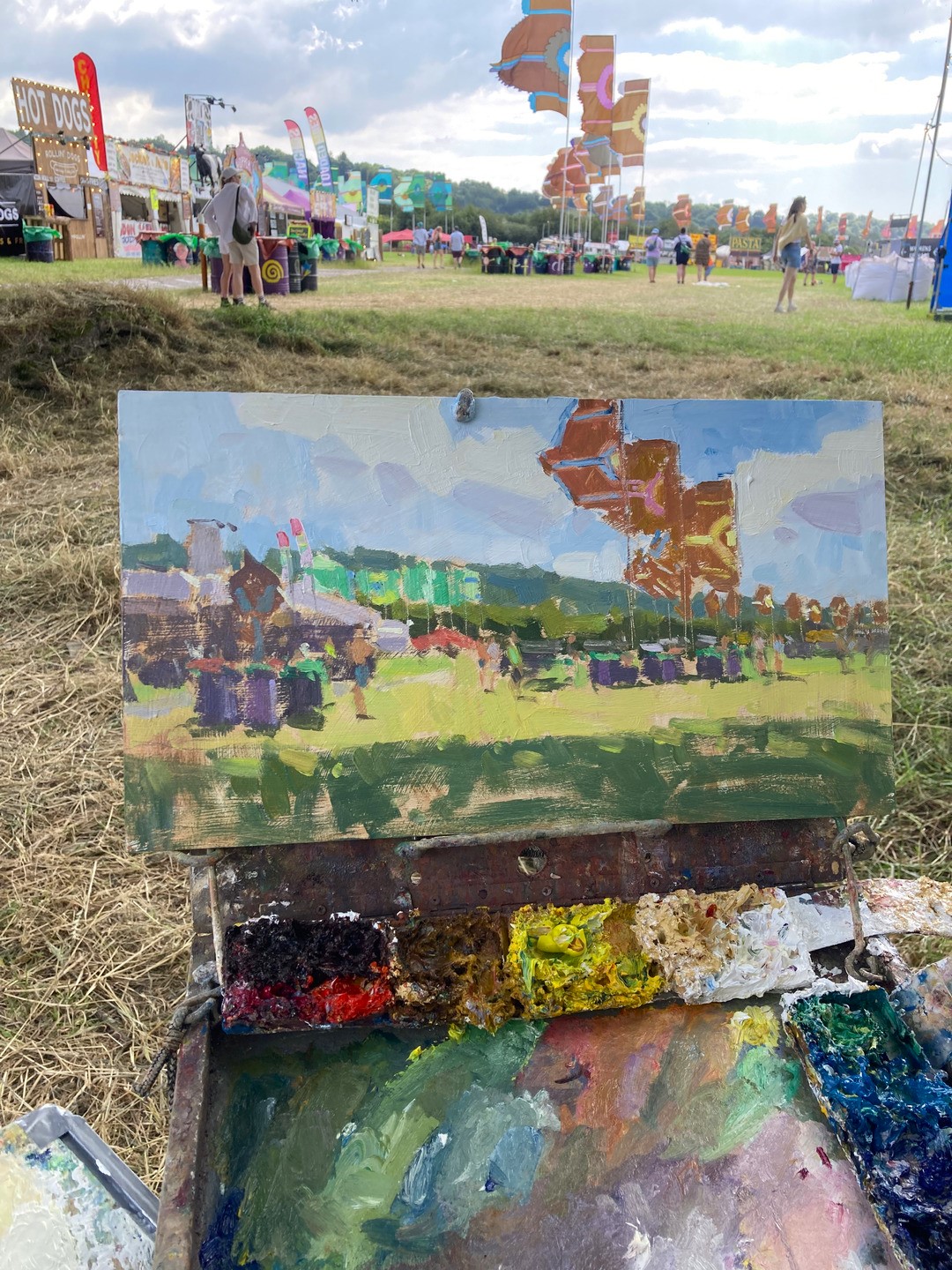
Valérie: It depends. Sometimes it’s a pencil and sometimes I start with a brush, a little bit of a neutral colour. But I literally put down four lines, or thereabouts. Just enough to help me get the whole composition on the panel. If I’m painting at Glastonbury, I might have the tip of a tent, the horizon, where the people stand, and a tree there. And then I know I’ve got everything in place, and within that, I can figure out the rest myself. But I’m not sure you can even call that a drawing. It’s just a scribble, a starting point, and you probably wouldn’t know what it is of.
Lisa: Would you say you always stay true to life in your paintings? Or would you move forms in order to make a pleasing composition?
Valérie: I stay true to life, but every now and then I might enhance or alter something. So if there’s something that bothers me, like a pillar, road sign, or something that doesn’t serve the composition, then I won’t include it. I wouldn’t start moving things about, as in moving a tree from the right to the left, but I would be prepared to omit small elements that aren’t helping the painting, for sure. It’s a bit like writing a book or movie. You have to select what you’re going to say. It’s still your side of the story and it’s still a reflection of the truth. I stay true to what I feel and what I see. I wouldn’t paint sunshine on a cloudy day just because it would make my painting better, because that’s not the mood, you know what I mean?
Lisa: That’s really interesting. I think personally, I find that’s the hardest thing, to be able to stick to your convictions and say, right, this painting is about this. And in order to communicate that, I only need to put certain elements in and leave out what doesn’t serve to communicate that concept.
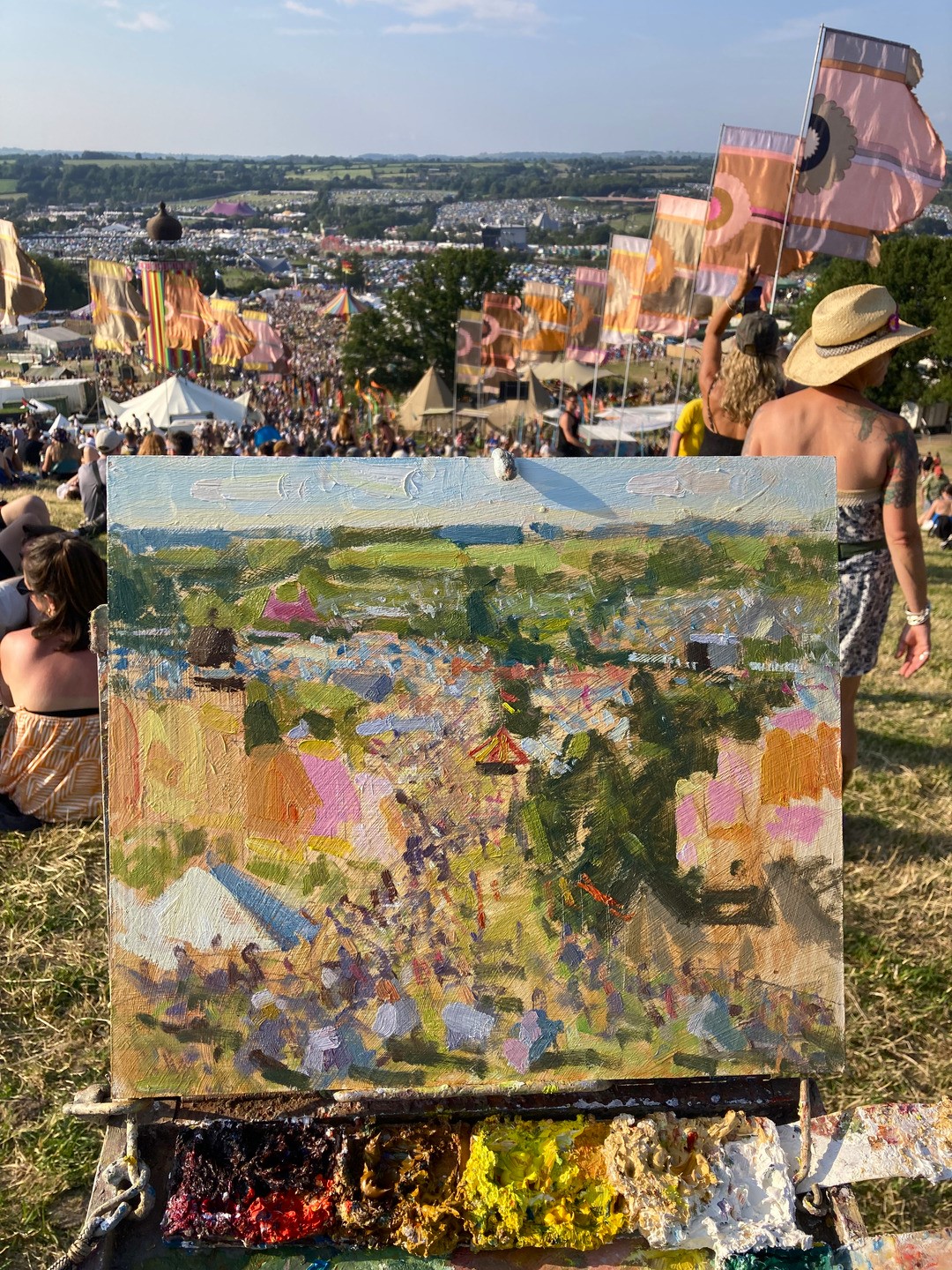
Valérie: Exactly. And I think that’s quite important. Personally, I like to have a strong feeling before I start painting, knowing what the painting is about and what excites me about the subject. It’s always different. And so there could be 1000 different paintings of the same thing depending on how I feel in the space. And sometimes it’s like, wow, this is about the light going against the people, this is what I’m going to focus on. It’s not about the tent on the right or something. And another day I might walk past the same scene and fall in love with the tent and make a painting about that. It’s all about following your feelings and going with the strongest feelings you have when you decide you want to make a painting. The stronger the feeling I’ve got at the start, the better the painting is. My worst paintings are the ones when I didn’t really have a strong idea about what I wanted to express. Maybe it was a nice view, but I thought, let’s just give it a try and see what happened. But then it didn’t work because I didn’t have the passion to lead the painting in any direction. Painting at Glastonbury is so great because there are subjects everywhere. I just need to tune in and choose the subjects that give me the most inspiration.
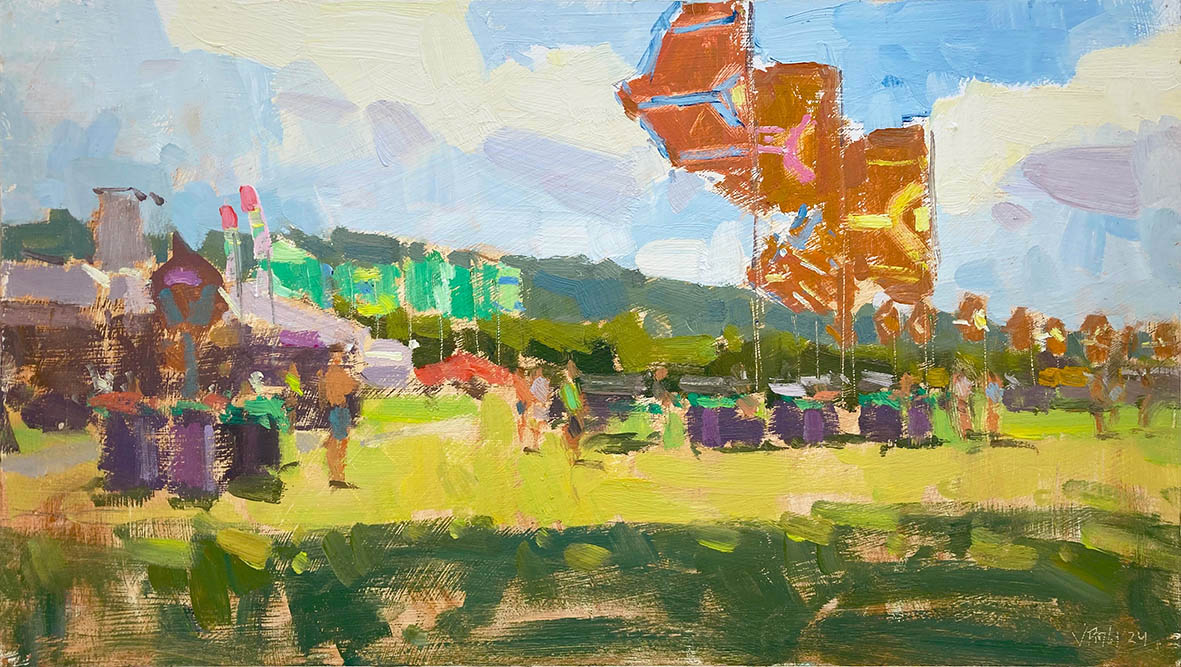
Valérie Pirlot
Oil on panel, 23 x 41 cm | 9 x 16 in
Lisa: Are there ever any times when you start a painting like that and you think, ‘Oh, I’m curious about this subject, but I’m not sure what the concept is’. But then it reveals itself later on in the painting process and you have a realisation, ‘Oh, this is what this painting is about!’ In other words, does the act of painting ever help you to realise what it is that you find inspiring about the subject?
Valérie: Probably never. And I know a lot of painters who love the unknown and they get into something and see where it takes them. I’m very much more in need of a vision, I need a strong feeling. And I did abandon one painting in Glastonbury when it was a nice view and I could see there were nice shapes and all that. But I wasn’t feeling like, ‘Ohh, it’s about this. It’s about that light’. I didn’t have that spark. It was just something nice that you could take a photo of. So I started to paint and then realised I wasn’t feeling it, and I wiped it off. I turned around and found something that grabbed me far more strongly. That’s why I have to be really careful about finding a subject I want to paint because I need to feel excited about it. And that’s why I don’t take on many commissions. If someone sends me a picture of their house or something, I often have to say ‘I’m sorry, but I’m not excited about it. Inspiration is when I see how the light falls onto the subject at that specific moment, how I feel at that moment, and how suddenly everything aligns.
Lisa: When you’re at Glastonbury, I imagine you’re getting more and more tired each day. So does it get harder to find inspiration as the festival goes on?
Valérie: It changes a lot because, for example, on Monday and Tuesday it’s just the traders and the place is very green. You can see the structure of the site very clearly, without too many people. It’s very, very cool to see Glastonbury that way when it’s quite relaxed and people like to stop and chat. And then on Wednesday, you’ve got all the ticket holders arriving and a real energy develops. I like to go up to the top of the hill by The Park stage, as many other people do to watch the sunset. Because there isn’t much music to watch on the Wednesday, people just sit on that hill and chat and it’s a lovely community feel. So I think I get the energy from the people at that point as well. It’s not just about the place. Wednesday was so different from the first two days. I skipped Thursday because I needed a rest before returning for the weekend. Painting on Thursday can be a bit overwhleming as it is a very busy day, with more people arriving, but the proper gigs haven’t started yet. All the pathways are very busy and it’s not always easy to find a good spot to put the easel. I loved painting Friday and Saturday and did live painting during some concerts (Keane and Dua Lipa). By Sunday I decided to stop because I felt I didn’t have much more to say. I was tired, and it was a bit cloudy, which was fortunate because it gave me a bit of an excuse to take a break and enjoy the festival for one day without the need to carry a lot of heavy painting equipment.
You’ll see across all the paintings I made there’s a real variety of atmospheres and compositions, some are more of the crowd, while others might be of flags, structures, and so on. I like to have a bit of everything. I always feel like when I paint, it’s because I’ve got something to say. And once I’ve said it I’ve got it off my chest, there’s a feeling of, ‘Oh, now it’s out, I can relax’. I won’t relax until I’ve said it all. There are so many different aspects to Glastonbury, it is a painter’s paradise really.
If it were just one stage I would just run out of inspiration, I couldn’t paint for a whole week. But at the same time, I couldn’t paint for more than a week at Glastonbury, because it would be too tiring.
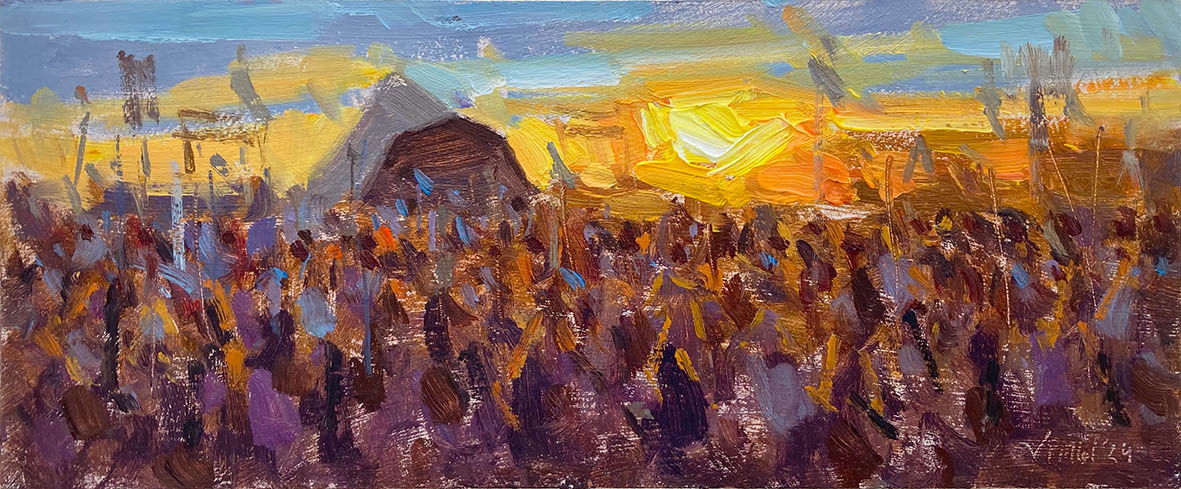
Valérie Pirlot
Oil on panel, 10 x 25.5 cm | 4 x 10 in
Lisa: Where was your favourite place to paint at Glastonbury?
Valérie: This is a very good question! I suppose I have two favourite places that I’ve painted in the last two years, and I would keep going back. One is the top the hill above The Park, which I mentioned already. That’s the one where you can almost see the whole site and where people gather for sunset. It’s a very special place, calm and beautiful. It’s nice to know that I’ve got that place to go to if I get overwhelmed, although you have to work for it – it’s a really steep hill, so it’s quite a walk with the stuff. Then there’s the West Holts area. West Holts feels like a friendly place and there are amazing flags. So I tend to hang out around there a lot, and there are good food options there too!
I also really like the woodland archway that leads to Avalon, and the healing fields. I’m less keen on Arcadia, it just doesn’t speak to me as much. I love the shape of the Pyramid Stage and how it catches the light, and you have a fantastic view beyond, of Glastonbury Tor. It’s not just the shapes that appeal, but the whole atmosphere. It’s like when you go anywhere that makes you feel good, you may not know why you feel good, you just do. That feeling contributes to your creativity and gets you going.
Lisa: Was there any particular painting that you were happy with from the weekend that you thought, oh, this is the one that I’m most proud of?
Valérie: I get really excited when I do them and I usually like them very much for like five minutes and then I move on to the next thing. This is my least favourite stage. I’m going to have to reassess them, do a few tweaks, and photograph them. Then if it was up to me, I’d love to just move on and paint something else. But actually, there are still things I haven’t finished painting that I’m going to do from photographs, like the Coldplay concert, which I’m very excited about because that’s one thing I haven’t expressed in paint yet. When I have got something to say I really want to say it. But as soon as I’ve said it, the admin takes over, and in my head I’m ready to paint the next painting and move on. Looking at them all now, I’m not too precious about any of them, nor am I unhappy. They all say something about the experience of being there.
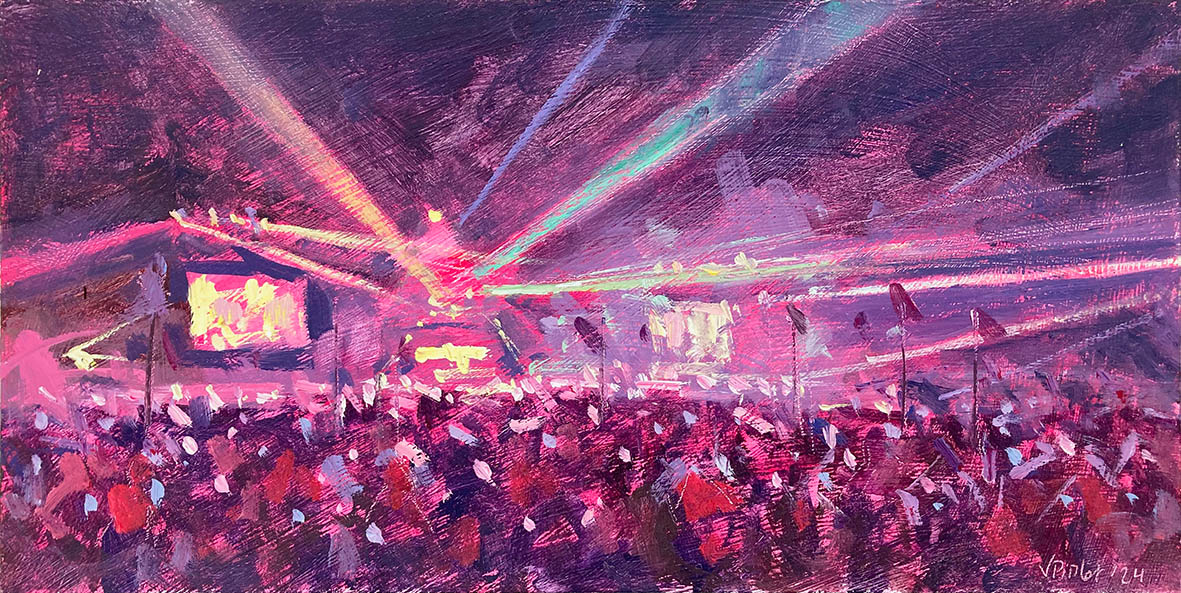
Valérie Pirlot
Oil on panel, 15 x 31 cm | 6 x 12 in
Lisa: I guess how you feel about them will change as time goes on as well. Maybe your perception will shift a little bit depending on what people say, or just your memory of painting in that particular place.
Valérie: Not really. I like to move on. I don’t like to reflect too much. That’s why I’m grateful when I sell my paintings. They go off and start a new life with someone else. I always want to play with the next thing. I don’t take a lot of time assessing what works, what doesn’t, because I’m always wrong as well. The painting I really love that I did might be the thing that gets the least likes on Instagram, and the painting I almost didn’t show to anyone ends up becoming the most popular. All I know is that for me, the most successful paintings come when I have the inspiration. And if the inspiration isn’t there, I will wipe the painting away. I don’t want to go home with a painting that I don’t feel good about because looking at it will give me a bad feeling.
Lisa: You mentioned the Coldplay set; are there any paintings that you’re going to paint entirely from photos?
Valérie: Yes, I wanted to enjoy the set as part of the crowd and not as an observer. The light was always changing so it would have been very difficult to paint from observation anyway. I took lots of pictures and I’m quite excited to do a few to capture the different light effects, especially with the coloured light wristbands they gave out. And there are a few others, such as on Wednesday night, I walked back to the car and saw a beautiful night scene. I don’t know how many more I will paint, maybe four or five. There are just a few more things I’d like to express, and then I can move on.
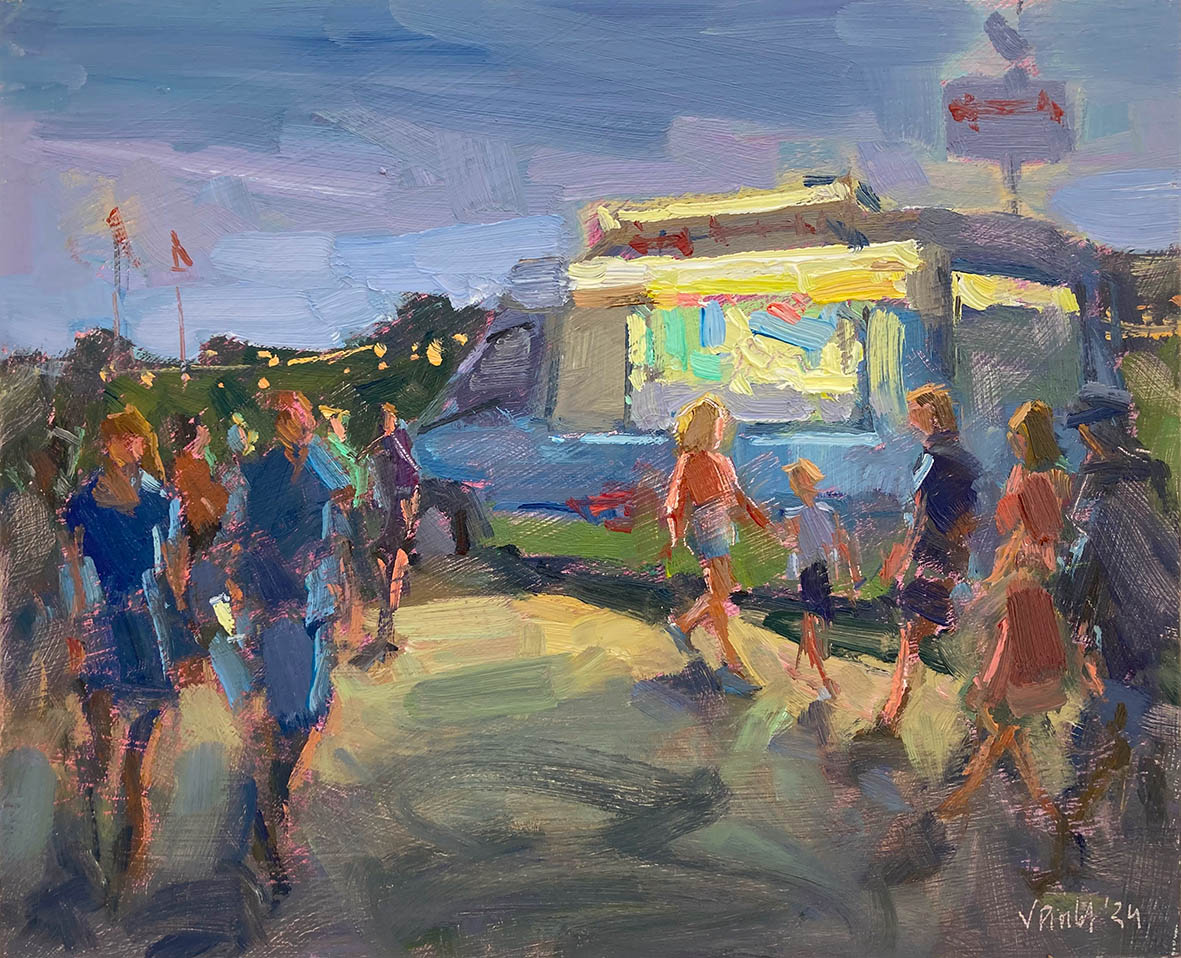
Valérie Pirlot
Oil on panel, 21 x 26 cm | 8 x 10 in
Lisa: I imagine you get a lot of people coming up to you saying ‘Wow, that’s amazing!’, or tapping your shoulder and wanting to take photos of you and talking to you. And does that stop your flow at all? Do you find it difficult?
Valérie: No it doesn’t bother me. I think the Glastonbury crowd is probably the easiest to deal with because they usually don’t stick around because they’re on their way somewhere, so they tend not to stop for very long. I find it much harder to paint in the centre of actual cities. People are more at ease to stop for longer, and you feel a bit more observed. At Glastonbury, the atmosphere is so hyped, and you get people running past shouting ‘Great painting!’ and disappearing. It gives me energy, and it makes me feel part of something, it’s really nice. What I do, though, is that I’ll make sure when I talk to people, I keep painting and working while chatting so I can’t look at them while we talk. If I stop painting then I lose the flow. I sometimes tell them I can chat, but I can’t stop for a conversation because I’m painting. And they completely understand. Passers-by can be really helpful too; when people stop to take pictures, I often ask them ‘Will you take one for me as well?’ Then I give them my phone and get some images I can put on my website or social media. Sometimes I get them to change the angle even, haha! It has to be Insta-worthy!
So the answer is no, it doesn’t bother me. But I could only take that for a week. I couldn’t do that every day of the year. It is lovely and it gives you a boost because people are so nice and in a good mood. It’s not a moment of fame as such, but it’s a moment where I feel appreciated. I get lots of lovely feedback and it fuels me because when you’re back in the studio, you’re back on your own and you don’t get that interaction.
Lisa: So do you have any advice you would give to someone painting at a festival?
Valérie: Use your energy wisely because it takes a lot of energy and time to get anything done. For example, on Wednesday, I left the house at 9 am, but by the time I got there, through the traffic, and found somewhere to paint, had food and so on, it was 2 pm, and there was a lot less time to paint than I had anticipated. I had to choose wisely what I was going to paint that day. Obviously, you don’t want to put pressure on yourself. My point is, don’t waste time doing something you feel half-hearted about. Go with the flow of your energy and choose what you want to do. Follow your voice and your heart. Be open-minded about what it can be, but be switched on. Sometimes you’ll be surprised about what you find inspiring. Sometimes you could walk for an hour and not find anything. And sometimes you’re just setting off, and you find inspiration, and it’s OK to stop and say to yourself ‘Right, I want to paint this’. Inspiration is unpredictable, and there’s no wrong or right answer, just a feeling that is personal to you.
Also, carry less boards than me!
Finally, I think it’s really important to try to be a little bit organised about your comfort. Go to the loo, apply sun cream, and make sure you have a snack available, so when you paint, you feel you’re in the best condition possible. Avoid painting in the strong sun on a hot day because it’s not wise, be sensible. A week is long, so how can I make this the most enjoyable, the most comfortable experience possible? And use your energy wisely because you have to spend a lot of it not painting, but just moving about. And so that’s that. Really tune into your inspiration, which is not easy, but it gets easier with experience.
The three main challenges are getting used to interacting with people, carrying the right equipment, and following your artistic voice. You really need those three things to work well in order to make a painting. But I think it all comes with practice. I don’t think I could have done this 10 years ago. But now I feel confident enough with my material, with my practicalities, and with my vision. But I recommend to anybody, start on a smaller scale, perhaps for the first time just take a sketchbook, then get more ambitious the next time.
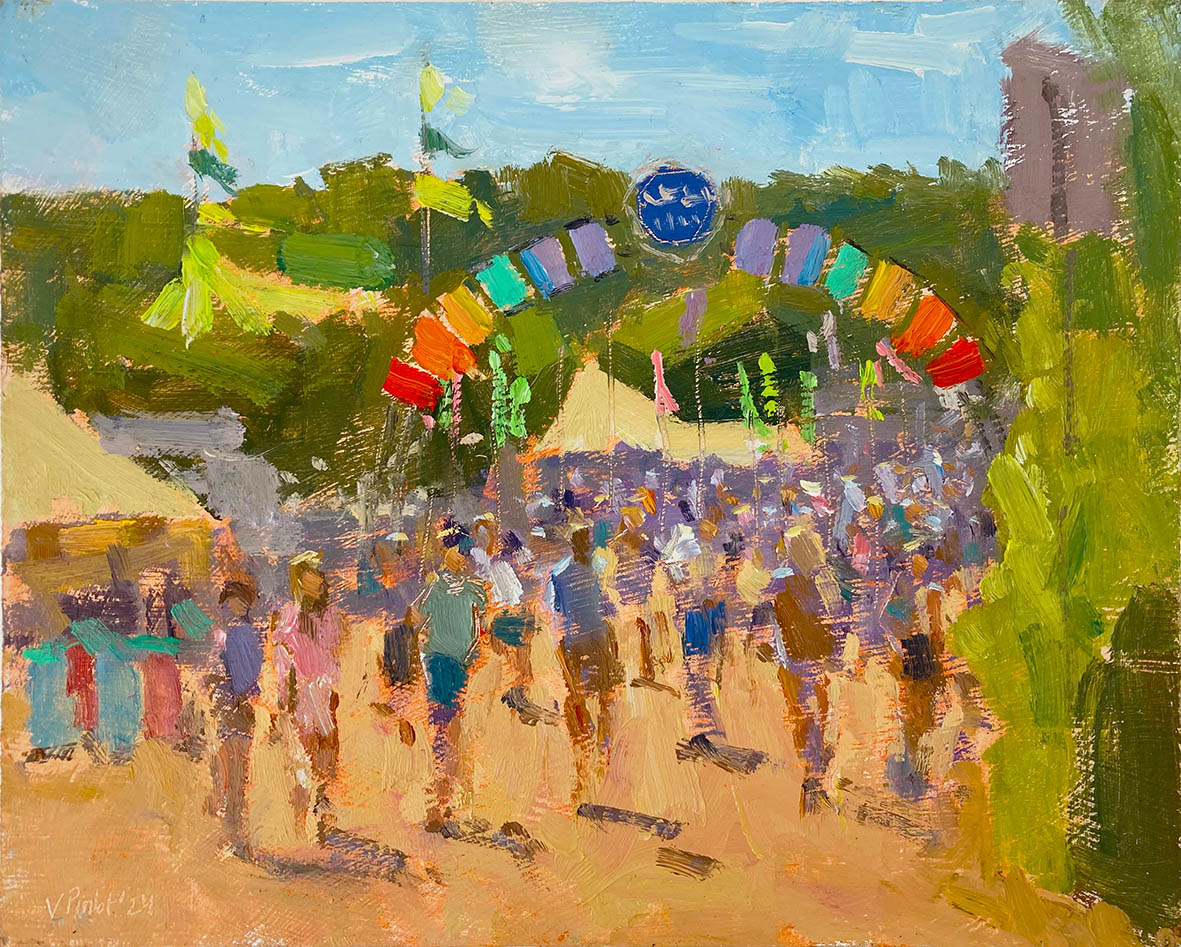
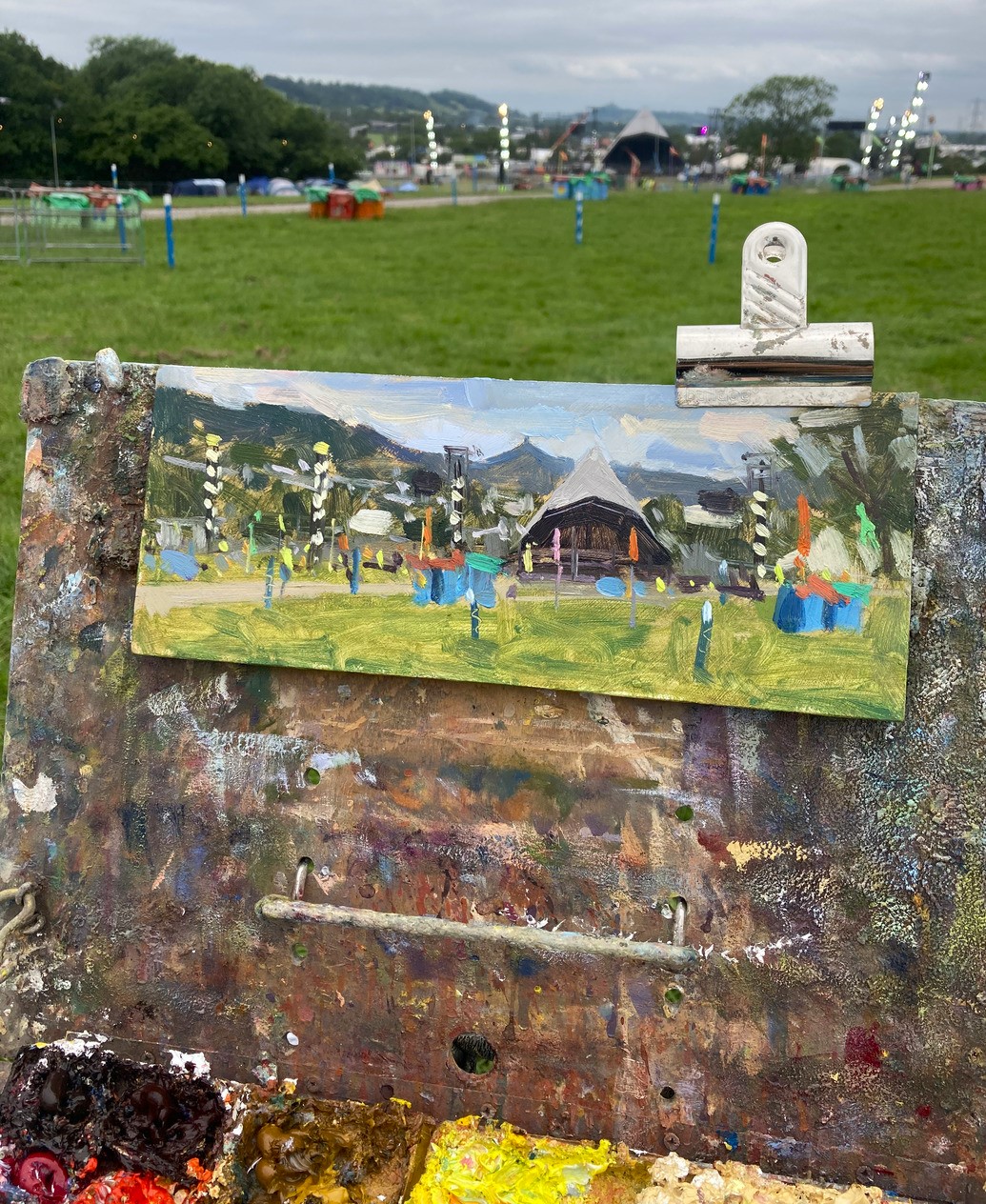
Valérie Pirlot
Oil on panel, 21 x 26 cm | 8 x 10 in
Usually, my best paintings can come out of being slightly out of my comfort zone. So for example, I painted live at the circus, which is a little bit mad because, you know, everything was moving. And I’ve been to parties, probably as you did with the wedding, and I imagine you get a thrill, you get a buzz out of doing something that you think, ‘Oh, what am I going to do?’ And so I think when those moments happen, you tap into something that you just didn’t know you had, and sometimes you create something surprisingly good. I mean, it’s still important to have that vision. It’s a matter of solving the problem of how you tackle the subject to create the result you have in your mind’s eye. Sometimes you have to go a little bit deeper. And I get much more pleasure from that challenge, and usually a better result than doing something too comfortably at home. I love painting both en plein air and in the studio, but I couldn’t be exclusively a studio painter, because I would miss that kind of excitement. En plein air, you’re forced to make quick decisions and sometimes you surprise yourself. It brings the best out of your artistic abilities. So I like to seek out difficult situations for this reason!
For me, Glastonbury is still challenging. So I still love doing it. But if one day I feel like ‘Oh, I said it all now’, then I would stop, like anything else, you know? That’s why I like to keep changing the subject all the time. I love to get stuck into a series, so I might do a series of interiors, then a series of flowers, and then I’ll do people for a bit, and I get really excited about it. And then like at some point I realise I said everything I wanted to say, and I move on to the next project. I love getting excited and you need that flame. I can’t imagine producing a good painting if I’m not excited about it.
Paintings from the Glastonbury Festival collection are available for purchase on Valérie’s website
Further Reading
A Guide to Mediums for Water-Mixable Oil Paint
Water-Mixable Oils: Vibrant Colours, Easy-cleanup and They Needn’t Be Sticky
Monotype Printmaking for Beginners
Tips for Creating Strong Composition and Illusory Depth
Shop Water-Mixable Oil on jacksonsart.com