



In this article, I explain the scumbling technique, by looking at examples by the Masters, Romanticists, and Impressionists, and considering the emotive effect of its application. I then demonstrate how to add scumbling to paintings of fabric, clouds, and a portrait, to give examples of its potential. Articles in the Painting Techniques series define the meaning and context of art making processes and give practical tutorials on how to work with them.

Scumbling Techniques for Painting
Definition
Scumbling is the application of paint with a dry brush and a loose hand, to create an opaque, inconsistent, broken layer on top of a painted surface for added texture and depth. It is usually of a lighter colour than the one below, to create dimension. The word comes from the 17th Century word ‘scum’ which meant ‘to skim’– just as the surface is lightly skimmed with the brush.
Effect
By scumbling the surface of a painting, you create appealing complexity through optical mixing and texture since the painting below remains semi-visible. The immediate rough texture is ideal for representing the natural world, such as cresting waves, wispy clouds, or thick grasses, and is also seen in portraiture and abstraction. By varying the strokes it creates a more convincing illusionary effect, since creating a regular pattern may come across as manufactured. This technique has a vigorous appearance, giving paintings vitality. For example, a tight flat painting may benefit from some scumbling, to give it a new lease of life through spontaneous mark-making. In this way, scumbling can also be used to make finishing touches to a painting, such as to soften the transition between colours, or to add textural interest to an empty space.
History
We can trace scumbling back to the 16th century, with early examples from painters like Titian and Tintoretto. In this example of Doge Andrea Gritti by Titian, he has used scumbling across the fabric, especially in the highlights over his red shirt, which enhances the grandiosity of his outfit, and gives it movement.
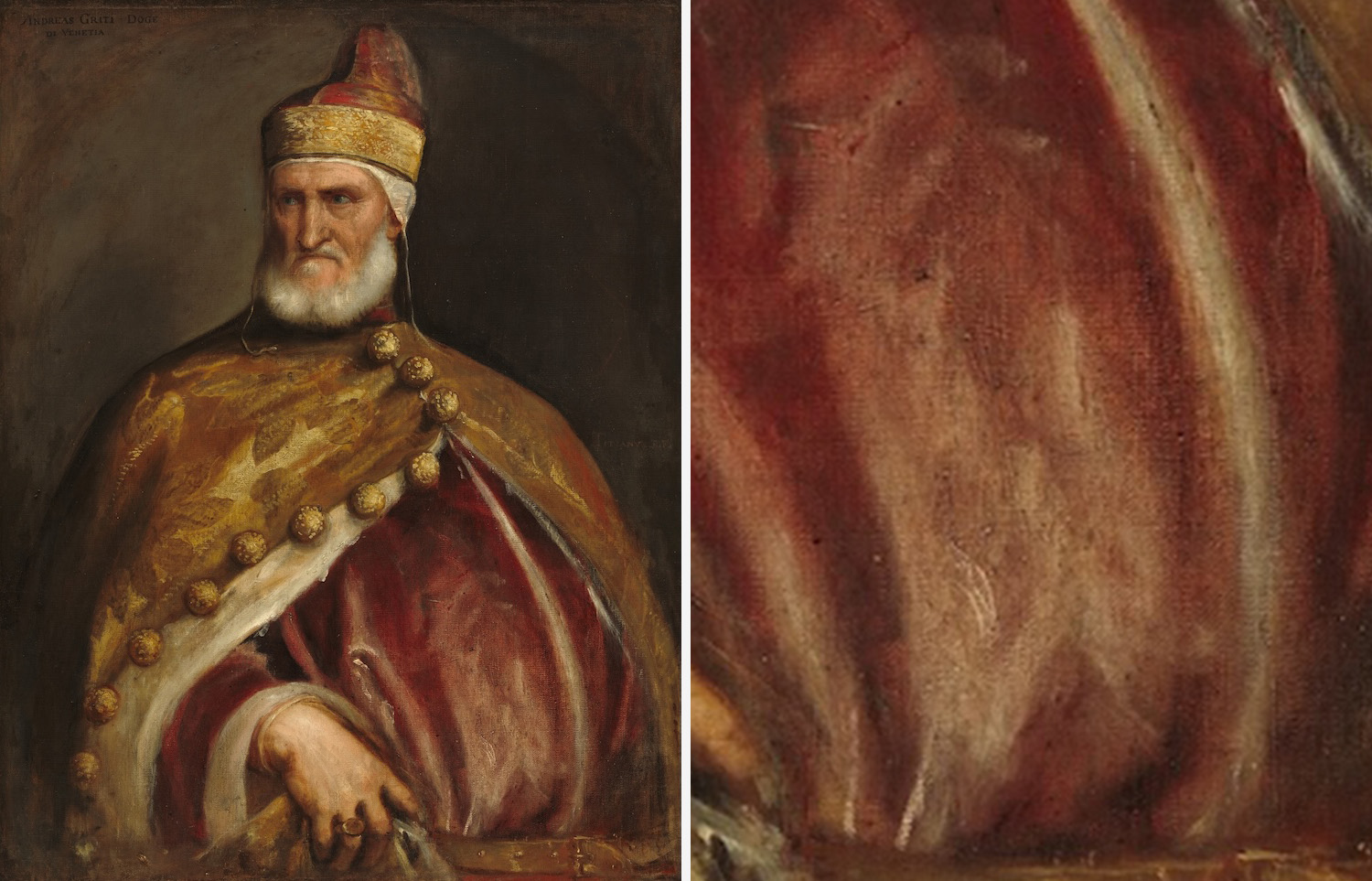
Titian
Oil on canvas, 133.6 x 103.2 cm | 52.59 x 40.6 in
National Gallery of Art
Rembrandt often used scumbling to enhance the luminosity and texture of his portraits, making the finish of his sitters appear diffused or misty. Later, the Romanticist painters created notable examples of scumbling, such as in landscapes by Turner and Constable. They both made use of dynamic skies in their works, with scumbling playing a key role in capturing that effect. In Venice, from the Porch of Madonna della Salute, Turner has used scumbling for the white clouds over blue skies to create this optimistic mood, where we can imagine his brush lightly skimming the surface. To a different effect, in The White Horse by Constable, he has also scumbled clouds over a blue sky, but the intense swiped and dabbed layers of greys and pinks make the effect of scumbling in this sky appear heavier, and more somber.
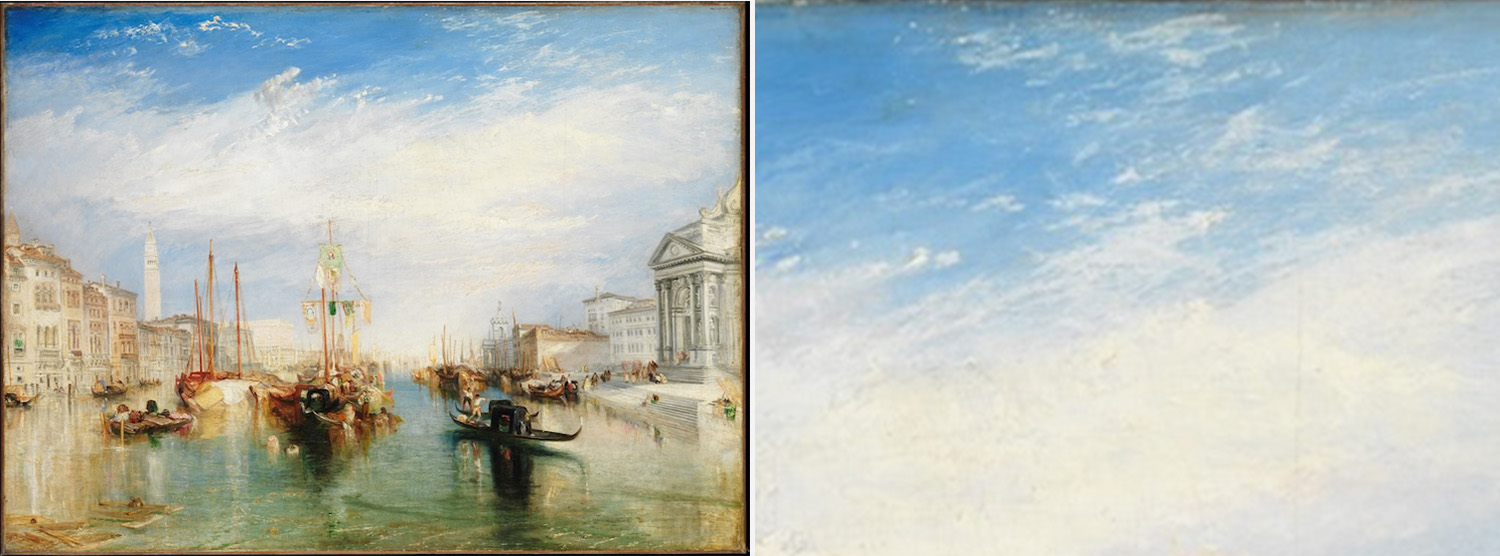
JMW Turner
Oil on canvas, 91.4 x 122.2 cm | 35.9 x 48.1 in
The MET Museum
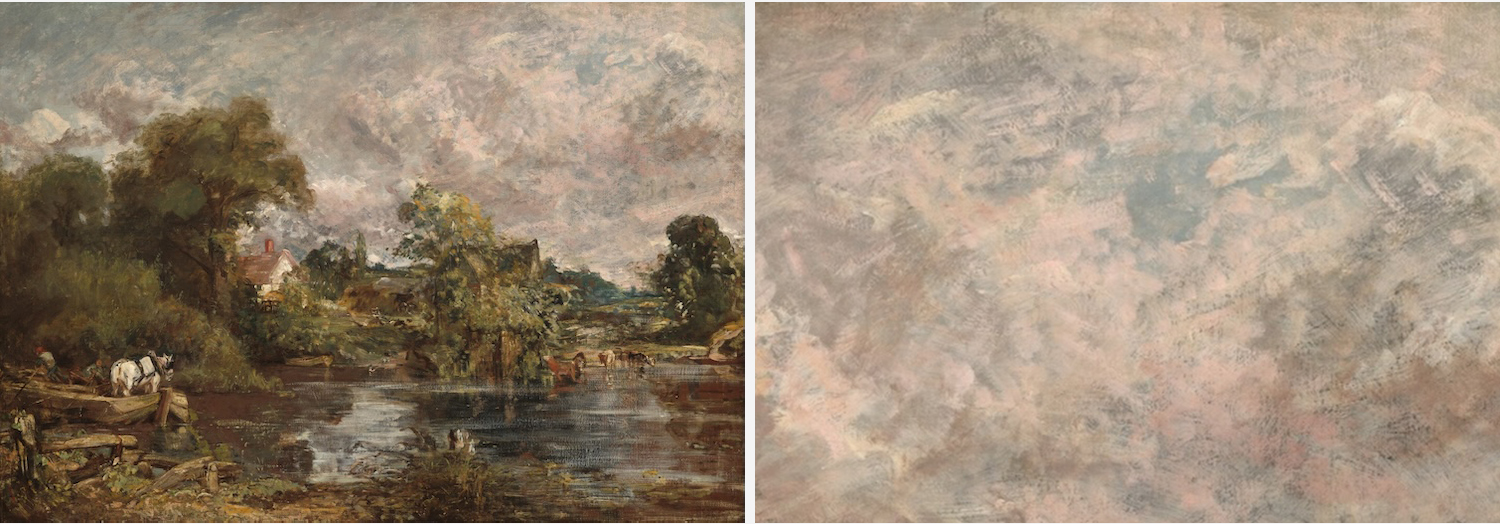
John Constable
Oil on canvas, 127 x 138 cm | 50 x 54.3 in
National Gallery of Art
The Impressionist movement also produced numerous examples of scumbling, such as the shimmering waters of Monet, and seen in tender portraits by Mary Cassatt. In her painting The Loge, layers of scumbling populate the entire work, giving it a shifting, living feeling that enhances the feeling of anticipation or withheld energy in her sitters, full of optical mixing and quick mark-making.
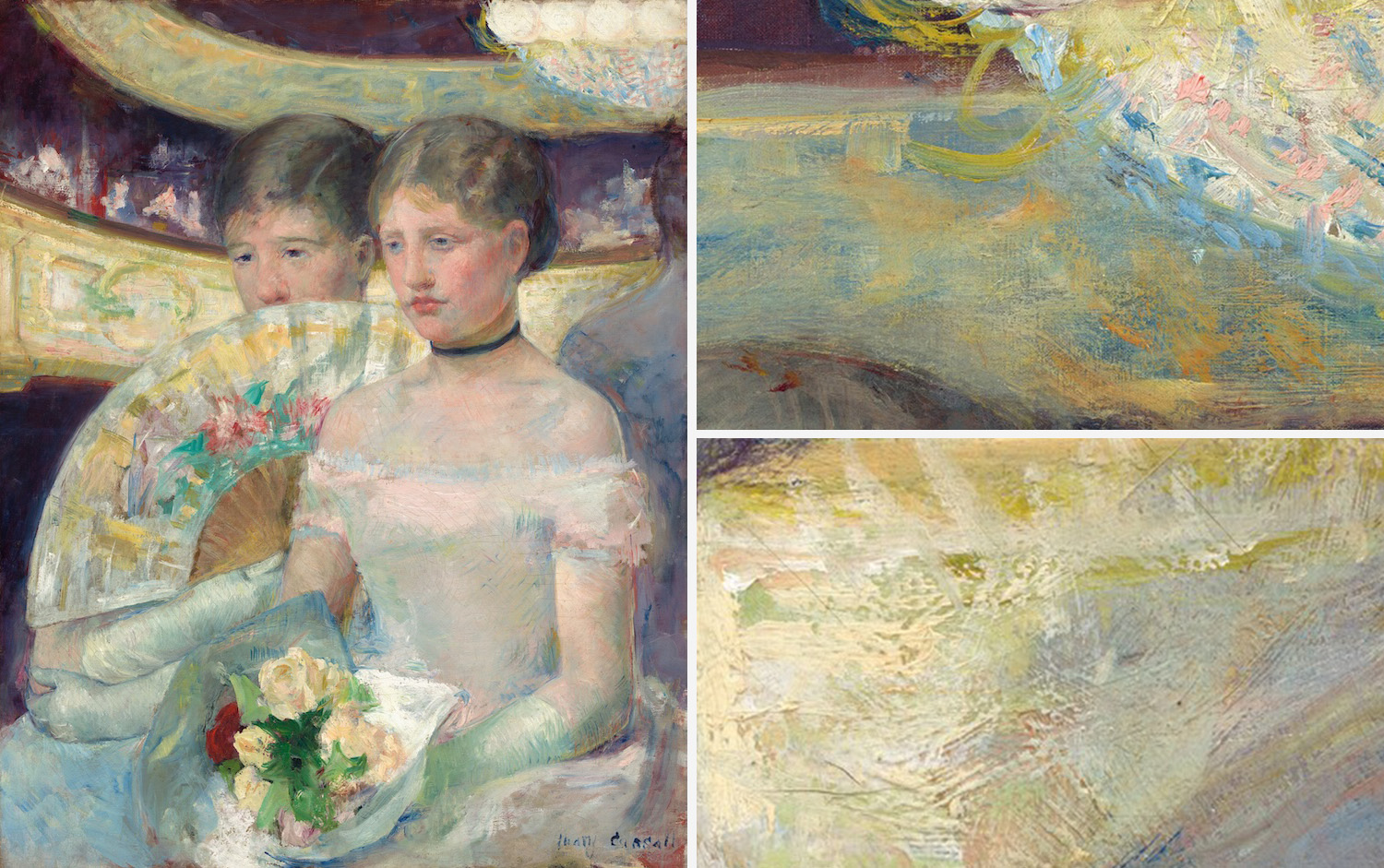
Mary Cassatt
Oil on canvas, 79.8 x 63.8 cm | 31 7/16 x 25 1/8 in
National Gallery of Art
Demonstrations
Since scumbling requires painting on top of a dry layer of paint, I prepared the paintings I have added scumbling to in advance. Here you can clearly see the before and after effect that scumbling has had on the work, hopefully giving them each new dimension and interest. For each demonstration, I have painted with Jackson’s Professional Oil Paints on a Jackson’s Oil Colour Block 12 x 16 in.

Fabric
For my first example, I wanted to use scumbling to enhance the sheen of some fabric, such as in Doge Andrea Gritti by Titian. My base painting is a simple study of some draped satin, lit by a lamp, in a mixture of Quinacridone Magenta and Ultramarine Violet. For my scumbling effect, I used a dry brush with undiluted oil paint in a mixture of Cadmium Yellow Deep and Titanium White. Following the contours of the drapery, I picked out the highlights with a very light touch, drifting the brush across them.

Clouds
Next, I wanted to try painting clouds, inspired by examples from Turner and Constable’s paintings. I prepared a simple blue gradient for my base layer with King’s Blue Deep and Titanium White and added the scumbling with a mixture of Titanium White, Burnt Umber and Indigo. Scumbling these various tones together has given the clouds a sense of movement and body.


Portraits
For my last demonstration, I wanted to add scumbling to a portrait inspired by Mary Cassatt. My light underpainting is painted in Kings Blue Deep, Burnt Sienna, and Titanium White. This time I built the scumbling up in a couple of layers, unlike the previous two examples which just have one. I wanted to show the effect that building up the scumbling effect has in diffusing colour and creating the illusion of subtle movement. My palette for this more complex example was Cadmium Red Genuine, Burnt Umber, Titanium White, Cadmium Yellow Deep, Indigo, Alizarin Crimson and Prussian Blue.


Tips:
Only use undiluted paint, straight from the tube with a dry brush for this technique. If you have a wet brush, the dry, broken quality of the surface will be very difficult to achieve since it will smooth out the paint.
Scumbling is similar to dry brushing, but with much more paint on the brush and far less pressure. You should be skimming over the surface with the paint to pick up random texture, not rubbing it in.
Further Reading
Creating Oil Paintings That Stand the Test of Time
Contemporary Impressionism: Techniques and Materials
Recreating the Colour Palette of John Constable
The Secrets of Making Jackson’s Professional Oil Paint
Shop Art Materials on jacksonsart.com


6 thoughts on “Scumbling Techniques for Painting”
Very interesting, thanks!
Love the effect of scumbling! I’m a plein air
acrylic painter and find it’s very easy to do
with acrylic and makes good use of my old
funky bristle brushes 🙂
Thanks so much! I learned a lot.
As a beginner this interesting article is
inspiring my thoughts on using scumbling in
a painting I am doing at the moment. Thank
you.
I have so misunderstood scumbling from
inadequate explanations. I thought
scumbing was applying paint and then
rubbing it back!!! No wonder I have been
confused. Thank you. I get it now.
Excellent article.
Thank you.
Comments are closed.