According to the Oxford English Dictionary, a side hustle is “a piece of work or a job that you get paid for doing in addition to doing your main job”, but to some, it’s much more than that.
For creatives, being able to monetise their skill means that they can have a financial independence away from ‘pay the bills’ work through their passion.
We surveyed 2,000 UK based adults to find out how many people across the country have a side hustle, what skills they are monetising, where they live, and what their motivations are. The results showed that three in five UK adults (61%) either already have or are considering a secondary income.
The Most Popular Side Hustles
When we investigated the most popular ways Brits look for a secondary income, our study revealed that half of the top 10 most popular side hustles are rooted in creative skills, highlighting the huge wealth of those with artistic talent across the country.
The UK’s 10 Most Popular Side Hustles:
1. Reselling clothes (27%)
2. Selling handcrafted goods (24%)
3. Pet walking / sitting (17%)
4. Tutoring (17%)
5. Social media / content creation (15%)
6. Selling photography (14%)
7. Selling artwork or prints (12%)
8. DIY services such as cleaning, landscaping or home repairs (11%)
9. Graphic Design (10%)
10. Drop shipping (8%)
Who Are the Top Side Hustlers?
Millennials (25 – 34-year-olds) are the most ambitious, with 37% actively pursuing a secondary source of income. This is closely followed by Gen Z (18 – 24-year-olds) as the second most hustle-inspired age group, with 21% having a side hustle.
Over half (58%) of over-65s say they have no interest in a side hustle, the highest of any group.
Interestingly, the top three motivators for having a side hustle are the same for all age groups.
What Are the Main Motivators?
In a bid to uncover why so many people are interested in side hustles, we asked them what their main motivators are.
1. To live bigger and better. To earn extra money for disposable income for luxuries such as holidays, clothes, self-care, eating out, entertainment or experiences. Just under half (43%) say this is their main motivator.
2. To keep up with the rising cost of living. To earn extra money for living expenses such as bills, rent or mortgage. Almost 1 in 3 (30%) of adults are taking up side hustles for this reason.
3. To embrace their inner creativity. For fun and enjoyment. Nearly 1 in 8 (12%) are seeking side hustles for ways to have fun and be creative.
The UK’s Side Hustle Hotspots
To dive into how the data varied regionally, we looked at the cities with the highest percentage of people who are already actively running a side hustle.
Birmingham – 33%
The most popular side hustle here is pet walking / sitting.
Bristol – 29%
The most popular side hustle here is reselling clothes.
London – 28%
The most popular side hustle here is reselling clothes.
Manchester – 25%
The most popular side hustle here is reselling clothes.
Southampton – 25%
The most popular side hustle here is surveys/mystery shopper.
Nottingham – 23%
The most popular side hustle here is reselling clothes.
Sheffield – 23%
The most popular side hustle here is surveys/mystery shopper.
Glasgow – 21%
The most popular side hustle here is selling handcrafted goods.
Cardiff – 20%
The most popular side hustle here is a tie with pet walking / sitting and reselling clothes.
Liverpool – 17%
The most popular side hustle here is reselling clothes.
What we found regionally…
Inspired areas: People are considering taking up a new side hustle most in: Glasgow – 44%, London – 43%, Southampton – 41%, Leeds – 40%, and Newcastle – 39%.
The Welsh capital is also the capital of luxury: Over half (56%) of Cardiff creatives are hustling to fund luxuries (holidays, clothes, eating out) – the highest area in the UK.
Working harder to get by in Birmingham: Over a third (37%) of those from Birmingham say their main motivation is to pay for basic living costs – the highest nationally.
The Enjoyment Economy: Belfast stands out for joy-driven side hustles with 12% stating fun and enjoyment is their motivation for a side hustle.
Case Study
We spoke to pet portraitist Gina Flynn, aged 33 from Manchester, who said it changed her life when she decided to pursue her painting passion.
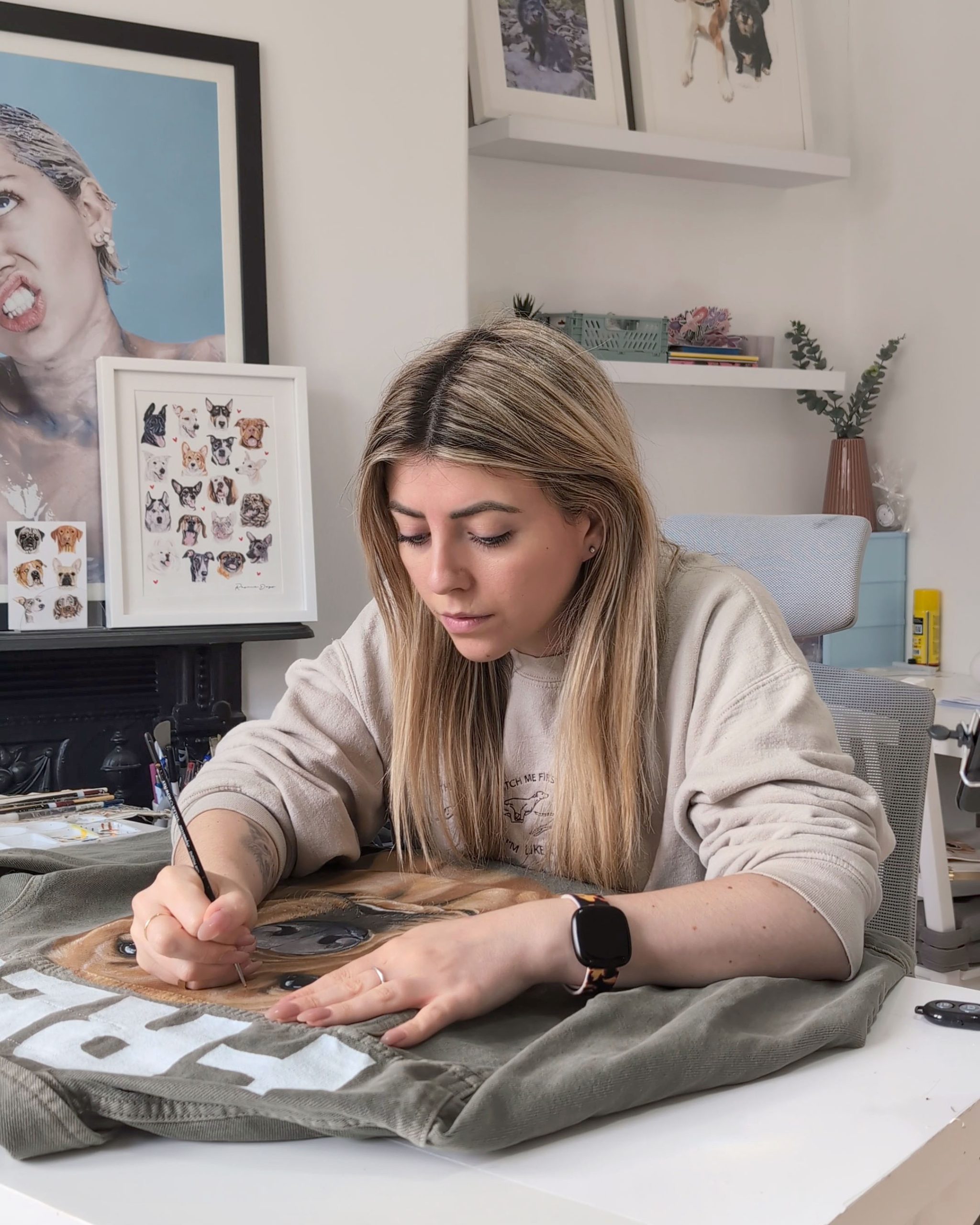
“I was relocating at the time and planned on starting my business as a side hustle, I was going to get a local part-time job. I started on Etsy as it had very low start up fees and at the time I was the only person selling painted jackets like mine so I thought it would help to have an existing customer base. I found out pretty quickly that I was gaining a lot of organic traffic.
I started in February 2019 and by July 2019 I made £4,000, at the time I only had 2 products which was insane. It was then that I realised, I could probably make this my full-time job. That was one of my best months on Etsy as now my income is split across Etsy, my website and in-person events. I usually earn more August – October than the rest of the year combined as it is the lead up to Christmas.
I’ve never liked working in an office or having such a rigid 9-5 schedule. I wanted to spend more time with my dogs and be able to do different things every day. I tend to spend the days doing my own thing and I work in the evenings, which I love and I’m much more productive that way round. I’m also now able to volunteer one morning a week at a local dog rescue which I love. It’s my favourite part of the week and I would never have that opportunity if I was working full-time for an employer.”
Tips on How To Get Started With an Artistic Side Hustle
1. Reconnect with your childhood creativity
The best ideas often come from what we loved doing before life got busy.
Think back to what sparked joy in the classroom or on rainy afternoons. Were you the one building things, doodling in the margins, making up new ideas with friends, or always covered in glue and glitter? Those instincts can point to creative side hustles worth exploring now, from crafting, to illustration, to product design.
2. Start with what you already have
Not all side hustles require a big upfront spend. While some creative ventures need materials and equipment, others can begin with what you already have at home. Whether it’s a half-used set of paints, a camera gathering dust or a cupboard of crafting supplies, look around before you invest. Starting small makes the process more sustainable. Considering what you already have is a good way to narrow down your options.
3. Be realistic with your time and commitment
Opt for something that you genuinely enjoy, and the money will be a secondary bonus. If you stretch yourself too thin on time or energy, then you’ll quickly become drained and lose motivation. Some side hustles require a bigger time investment before the financial reward is felt. Handmade products or commissions, for example, often take longer than expected to produce, so pick something that complements your schedule.
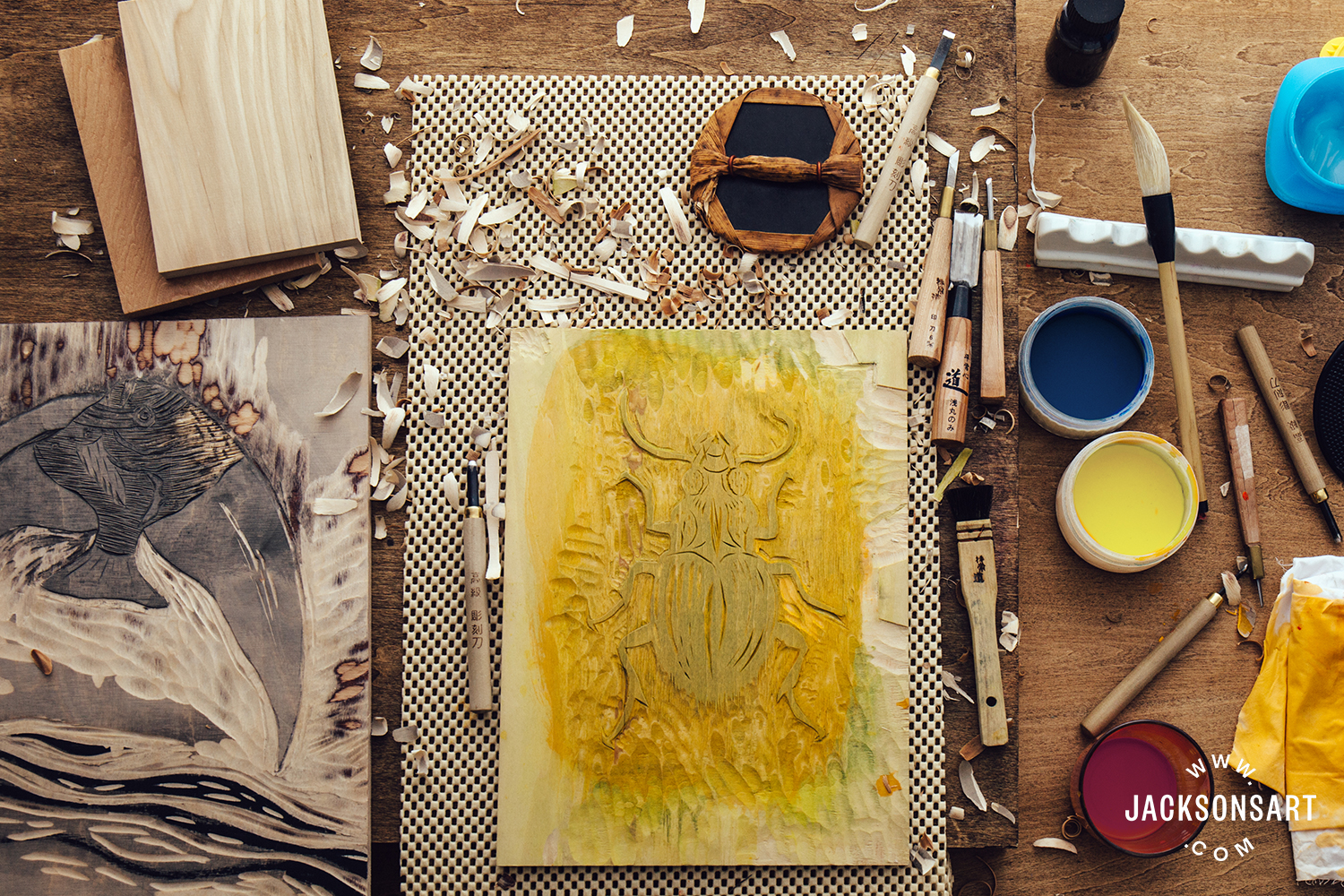
Not Sure What To Try? Consider Printmaking
As the seventh most popular side hustle, printmaking can be a lucrative business. It doesn’t require huge investment however, it does require knowledge and skill.
There are several printmaking techniques, some beginner friendly, others more complex. Here’s a few popular types suitable for beginners:
Screen printing is one of the easiest ways of printmaking. It is often used for graphic design but can also be used to quickly mass produce poster prints, T-shirts, tote bags, and more. The process involves using a mesh screen over the desired surface, and ink is pushed through the mesh of the screen to deposit a thin layer of colour.
Because of its easy method, this way is recommended for first timers.
Woodcut printing is a traditional printmaking technique where an artist carves an image into the surface of a wood block, leaving the raised (uncarved) areas to hold the ink. Ink is rolled onto the raised surface, and then paper is pressed onto the block to transfer the image.
Being one of the oldest forms of printmaking, there are two main approaches to woodcut printmaking. One is thought of as being in the Western tradition, and the other in the Eastern tradition.
A similar technique to woodcut printing, linocut printing involves cutting away from a block of lino, and inking and printing the uncut areas. When you place your carved and inked up block face-down on the desired material, the printed image will appear as a mirror image of how you have carved your block. Areas you have cut away will remain plain.
The best and most common material for linocut printing is paper and cardstock however, there are some fabrics such as cotton, canvas or linen that can work well.
Further Reading
Expert Advice on Representing Your Art Independently
How to Create the Best Digital Photographs of Your Artwork
A Guide to Linocut Printmaking
Shop Art Materials on jacksonsart.com