




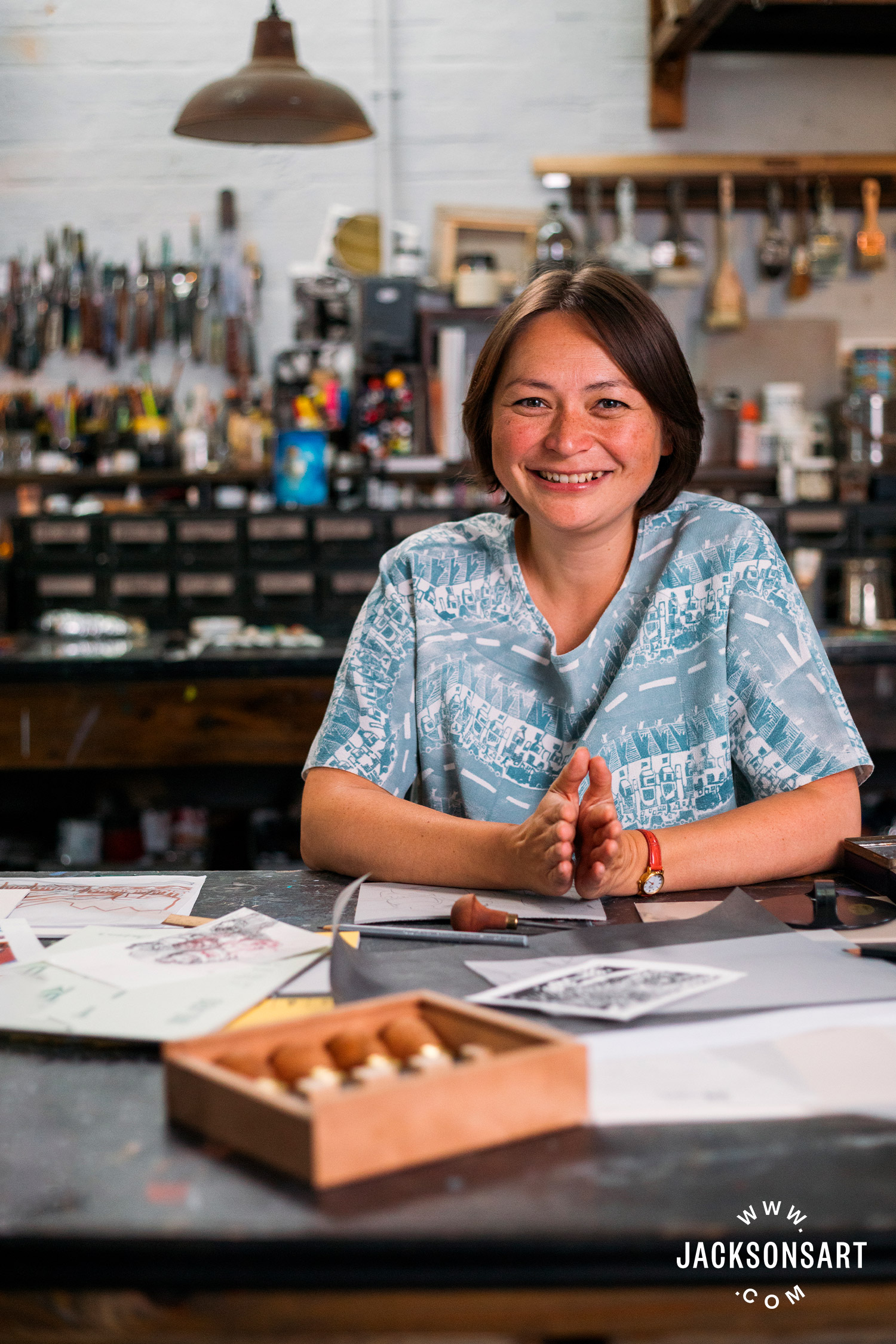
Linocut printmaking is a relief print process that involves carving into a block of linoleum using purpose-made gouges. Linoleum is a pliable material made from cork dust and linseed oil. Once the block is carved, ink is applied to the uncut, raised surface, and pressure is used to transfer the image onto paper. What is cut away appears as an uninked space in your printed image. It is often considered easier than woodcut, as the lack of grain in the linoleum allows for greater precision and freedom when creating intricate details or bold cuts in any direction.
The appeal of linocut is multifaceted. It’s relatively easy to carve and many find the cutting process to be meditative. It’s also highly versatile, allowing for a wide range of styles and approaches to image-making. Additionally, a single block can produce a large number of prints, making it efficient for larger editions. What makes linocut particularly accessible is that you don’t need a printing press or harsh chemicals to get started, making it ideal for home studios. This film provides an overview of everything you need to begin, covering essential tools and materials, effective cutting techniques, and the basics of inking and printing.
A Guide to Linocut Printmaking
Contents
0:00 Introduction
0:51 Introduction to linocut and the reduction linocut method
2:06 What is the multi-block linocut printmaking process?
3:12 The history of linocut printmaking
5:30 What tools and materials do you need?
10:07 How to start a linocut: transferring a drawing to lino
20:52 How to ink up and print a linocut
28:40 What is the difference between water-based and oil-based ink?
30:05 What is the rainbow roll technique?
34:56 Why should you use oil-based ink?
39:38 What is registration?
43:13 How do I make a reduction linocut print?
47:34 Other registration methods for linocut printmaking
55:11 Cleaning up water-based inks
58:22 Cleaning up oil-based inks
1hr:46 Summary: why you should try linocut
Further Reading
Monotype Printmaking for Beginners
How to Make a Wood Engraving Sampler
In Conversation With David Valliere From Speedball
Everything You Need to Know About Printmaking Paper
Shop Linocut Printmaking on jacksonsart.com



15 thoughts on “Film: A Guide to Linocut Printmaking”
Could you tell us the specific numbers of the
cutting tools you used
Hi James,
I used the small u, medium u and clearing tool mentioned by Colin Blanchard in this article here: https://www.jacksonsart.com/blog/2019/12/04/best-pfeil-tools-for-linocutting-colin-blanchard/
I think you can get by with 3 tools, but Colin’s selection of 5 is really all any linocut printmaker needs, in our opinion!
Thanks so much
Lisa
Thanks Liza I feel like giving it a go!
That’s great Nigel, yes give it a go! I hope you enjoy it.
This was so helpful. Beautifully presented in
a no fuss way and covering the basics in
such a way that any beginner should be
happy to give it a go. I do relief lino printing
but you can always learn some new tips from
the experts. Thank you so much
Thank you so much Liz, that’s exactly what I hoped this film would do. I hope lots of people give it a go – maybe aiming to make a printed Christmas card this year is a nice attainable goal!
Thank you Lisa
You gave us a comprehensive guide
I can’t wait to get started
Margo
Great to read your comment Margo, thank you and enjoy!
What a lovely film about linocut and
beautifully presented by you Lisa.
That was such a wonderful video. I’ve never
experimented with using oil paints but I love
the idea. Which Schmincke block printing
medium were you using in the video that you
said was “almost identical to extender” that
you could add to the oil paint? Thanks again.
Hi Travis,
Thank you so much! It’s full name is Schmincke Print Medium for Relief / Intaglio. The link to it is here: https://www.jacksonsart.com/schmincke-relief-and-intaglio-printing-medium-120ml
All the best
Lisa
Thank you. A definitive guide, I’d say. I’ll be
taking up linocut soon!
Fabulous, thank you Sarah!
Thanks so much, Lisa. This was better than
some online classes that I’ve paid to watch!
I’ve replayed several sections so far and I’m
pretty sure I’ll come back for a refresher in
the future 🙂
Hi June, thank you so much, that’s lovely to hear!
Comments are closed.