



Whether you love or loathe them, artist commissions are a useful offering to consider. So it’s worth getting comfortable with how best to approach them. In this article, I will offer advice on deciding which commissions are right for you, managing communication with clients, expectations, and revisions. We will also look at the paperwork and payment so you feel protected.

Expert Advice on Handling Artists’ Commissions
Deciding When an Artists’ Commission is Right For You
Like most decisions we have discussed in our Expert Advice Series on the Blog, identifying your intentions is a great place to start. Are commissions supplementary or integral to your practice? Is it a money maker or a portfolio piece? The ‘why’ matters because it can help you prioritise and map out how much time to allocate to commissions throughout the year. Artist commissions can be time heavy due to the level of client communication so I recommend creating an annual pie chart to help you manage your capacity. Once your desired quota of commissions has been reached you can start a waiting list.
Then there is the content. Is the client asking you to create something akin to your current body of work, or are you having to dig back into an older style? Are they asking you to include specific elements, mediums or references? It’s useful to set the boundaries of what you offer as a commission and make it clear – either on your website or in early written communication.
Things to watch out for – if it’s for a company or brand, consider the affiliation. Does your practice align with their values? If a client is asking you to ‘copy’ a sold piece, be mindful of how it might affect the collector of the original. Make sure that it is a ‘variation on a theme’ and that no two originals are the same.
Managing Communication and Expectations with Clients
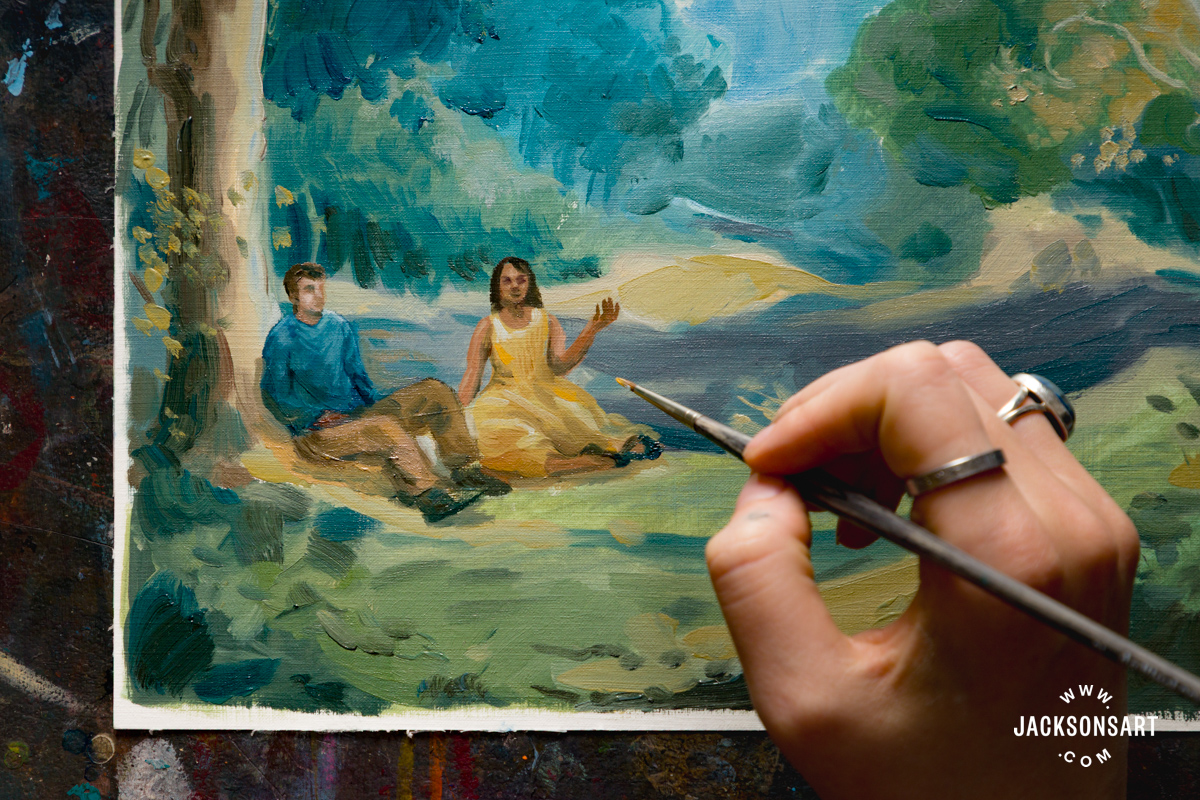
This is where it can get blurry. The clearer you can be at the beginning, the better. Before you engage with your client, send them a form asking them to mark the elements they would like some control over: eg. size, medium, palette, style, subject matter. This helps the client focus on what they want and makes it much clearer for you. You can add a logistics section for timeline and delivery, as this may affect the price and your availability.
This is your foundation for a conversation to discuss what’s possible and iron out the details. It’s also a good moment to share your preferred method of communication, as well as the frequency. Are you offering periodic check-ins? If so, you can schedule these in at the beginning. This will avoid you being hassled and puts some healthy accountability in place. After this, you can follow up with a Process Agreement, which we will cover in more detail later on in the article, and a quote. Generally I suggest artists add 10 – 30% on top of the price they would charge for a non-commissioned piece of similar nature and size. This is your service fee to cover the extra work involved, but present it as one total figure – people don’t love add-ons.
The hardest part to navigate is the potential dissonance between how you and the client envisage the finished piece. We all picture things differently. In my experience, the most successful artist commissions are those where the artist has more creative control. It will always feel more authentic, so try to encourage this where possible. The less constricted you feel, the better. I once managed a commission where the client was very particular. The artist got disgruntled and said – “ Do they want to come and hold the paintbrush themselves?!”
Should I Offer Revisions for Artists’ Commissions?
While there is no right or wrong, I believe some flexibility is usually useful for both parties. If it’s an interior designer, commissioning a site specific piece, some level of collaboration comes with the territory. You have control over when those revisions take place and how many you offer. As the artist, you will intimately know the stage of the process at which you’re able to make adjustments. Work out what these are and weave them into your Process Agreement. It might suit you to send early studies to be tweaked and then signed off. Or you may prefer a check in close to finishing. I would avoid showing them the ‘messy middle phase’. You may well see the potential but some clients are unable to make the leap to visualise the finished piece. If you are working with an intermediary like an art consultant, you can confide in them to check you’re on track as they will act as a buffer.
The graphic design world has a useful term for this that artists can adopt: review rounds. You could build one or two review rounds into your timeline. Remember to state the level of changes possible at any given stage. Eg. palette tweaks or compositional changes.
If the artist commission is based on your current practice, some artists like to do two or three pieces and let the client choose. I would only do this if you think you could realistically sell the pieces not selected. This is usually not an option for personal portraits.
Approaching Paperwork and Payment
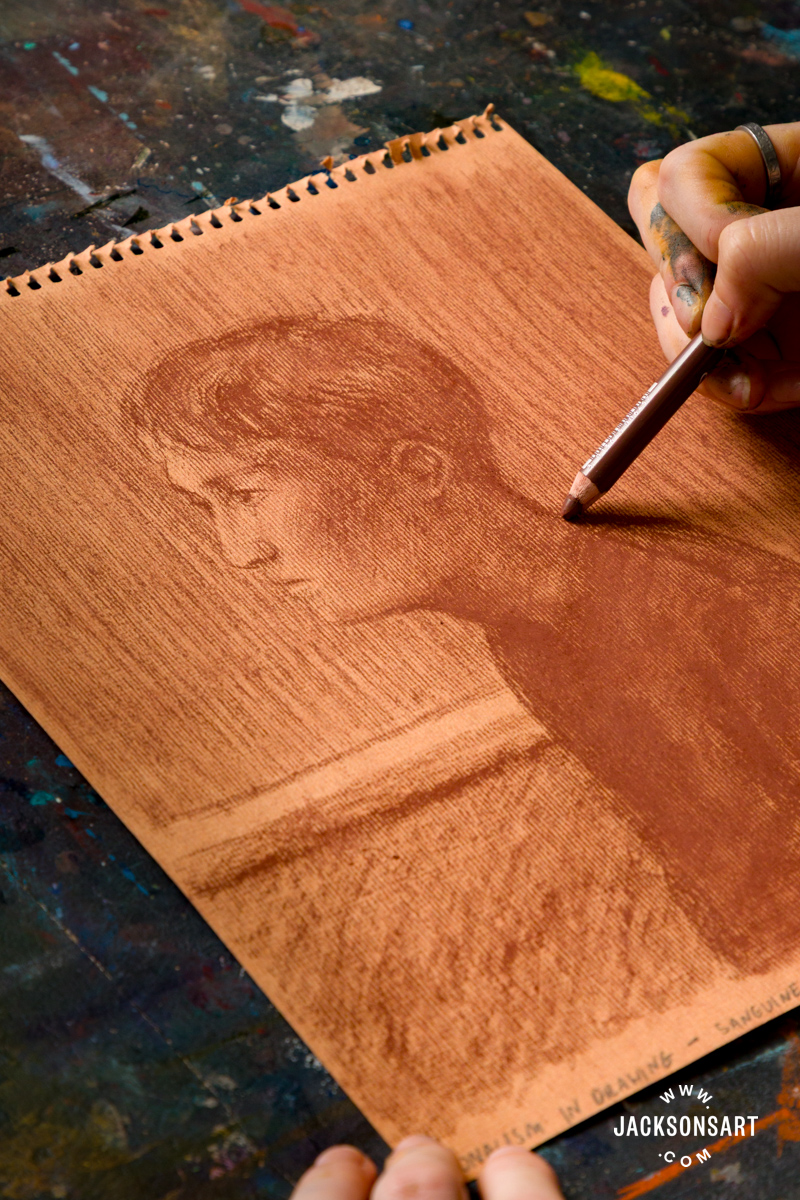
My main piece of advice for artists is to ask for a non-refundable 50% deposit of the agreed commission fee in advance. Before ordering materials or starting any working drawings. No exceptions. Clients can be non-committal, so you need the financial guarantee first.
Then, I suggest drawing up your Process Agreement. A simple document that lays out the steps and ‘what’s included’. This can be in the form of an email to be agreed by the client in writing or a separate document to be signed.
Clearly state what the artist commission will entail based on the clients requirements.
Also include a timeline, complete with key dates for payment, check-ins and review rounds. It may all seem a bit ‘official’, and you may deem it unnecessary if the commission is for a friend. Though that’s where it can get the most sticky. Artist commissions can take months and memory can have a mind of its own. Think of this agreement as a record. You can adjust the tone of voice to suit you.
Lastly, request the balance to be paid on delivery. I’ve never personally known a commission not to be paid for at this stage but, worst case scenario, you are protected with your 50% deposit. That’s what you would receive if a gallery sold it, and in many cases you could sell it again!
It sounds like a lot of hoops to jump through but it’s really worth it to empower yourself. Artist commissions are transactional so get yourself prepared and then you can enjoy doing the work with clear boundaries.
Expert Coaching Webinars With Claudia Kennaugh
Over the past few months, we asked the Jackson’s community what they wanted to know most about building a career in art. Based on your responses, we’ve created six webinars in collaboration with Claudia to explore these key topics. Each session is packed with valuable insights to help you grow and succeed as an artist, plus a live Q&A where you can ask your own questions.
Upcoming Webinars
Putting on Exhibitions: 24th June
Self-representing Your Art: 26th August
Social Media and Websites: 28th October
Making Reproductions of Your Work: 16th December
Further Reading
Licensing and Copyright: What Every Selling Artist Needs to Know
Expert Advice on Selling Your Artwork
Expert Advice on Pricing Your Artwork
How to Varnish a Painting in Oil, Water-Mixable Oil or Acrylic
Shop Art Materials on jacksonsart.com





1 thought on “Expert Advice on Handling Artists’ Commissions”
I have just read the first article on Expert advice on commissions very informative Many Thanks
Comments are closed.