



Managing your art career alongside a day job is a juggling act, but I believe there are plenty of benefits within those boundaries. In this article, we’re going to explore those hidden bonuses, along with how to find your rhythm, avoid burnout, and, most importantly, how to practise patience.
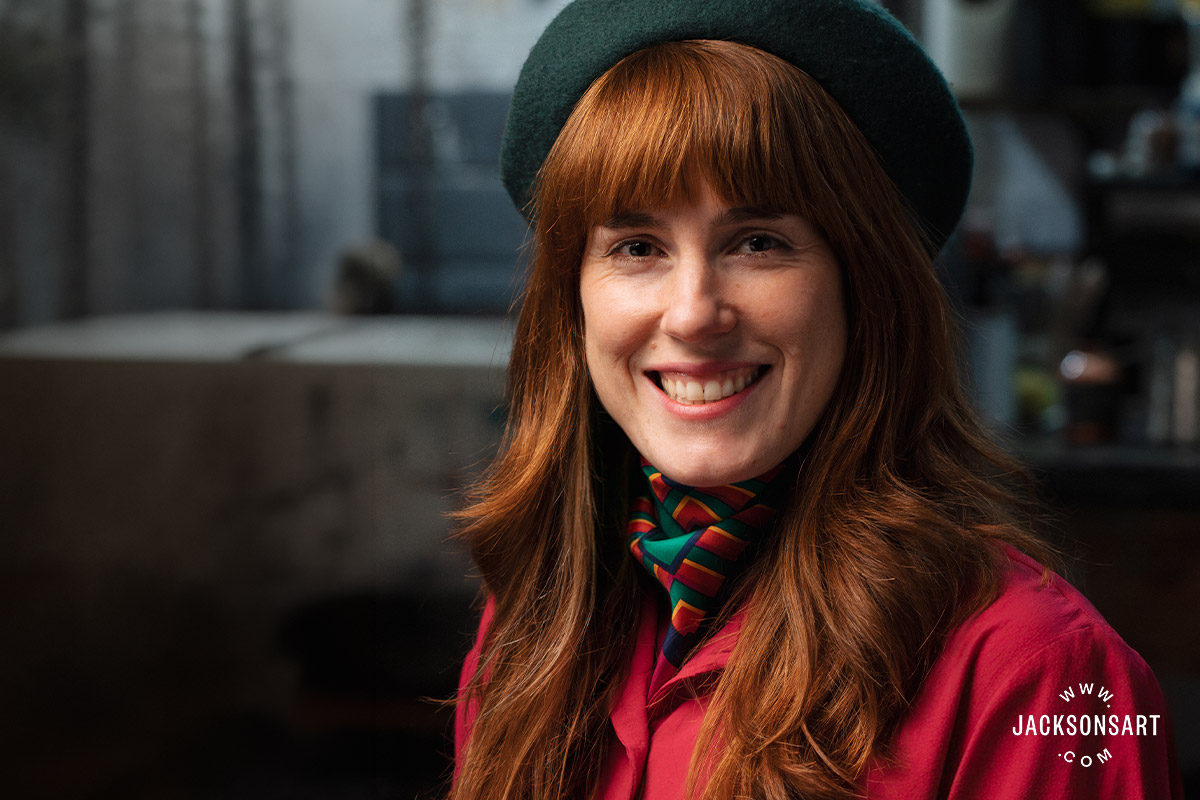
Claudia Kennaugh on Managing Your Art Career Alongside a Day Job
Embracing the Benefits
We hear a lot about the limitations of having a day job, but less about the creative liberation it can give you. The freedom for your practice to evolve and develop organically. Removing the pressure for your work to put food on the table can be highly liberating. I learnt this the hard way in my life as a musician, and I see it in many of the artists I coach. Work that isn’t expected to make money often feels more authentic.
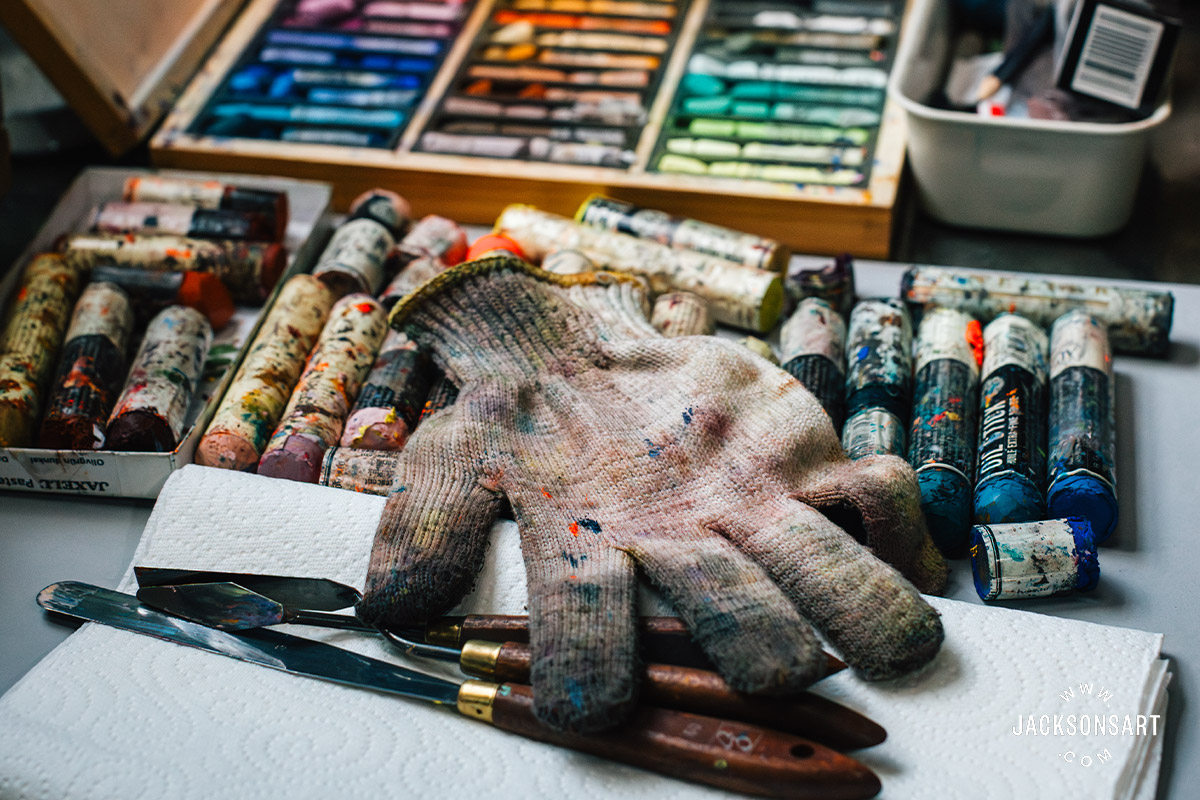
My advice to artists is to embrace this freedom and work with it. Knowing that you can afford better materials, or save up for a self-curated exhibition or art fair, can ease some of the pressure. Financial stress can squash creativity, so give yourself some room.
There is a stigma around being a ‘full-time artist’. It’s a dusty trope that can make people feel inferior if they also work a side job. The fact is, all artists are full-time. There is no choice but to be an artist if you are one. It’s just a matter of whether you make all of your income from it – and that tends to fluctuate month by month. Most of the artists I work with have at least one other source of income. So let that inner critic have a day off and allow yourself the support that you and your practice need to thrive.
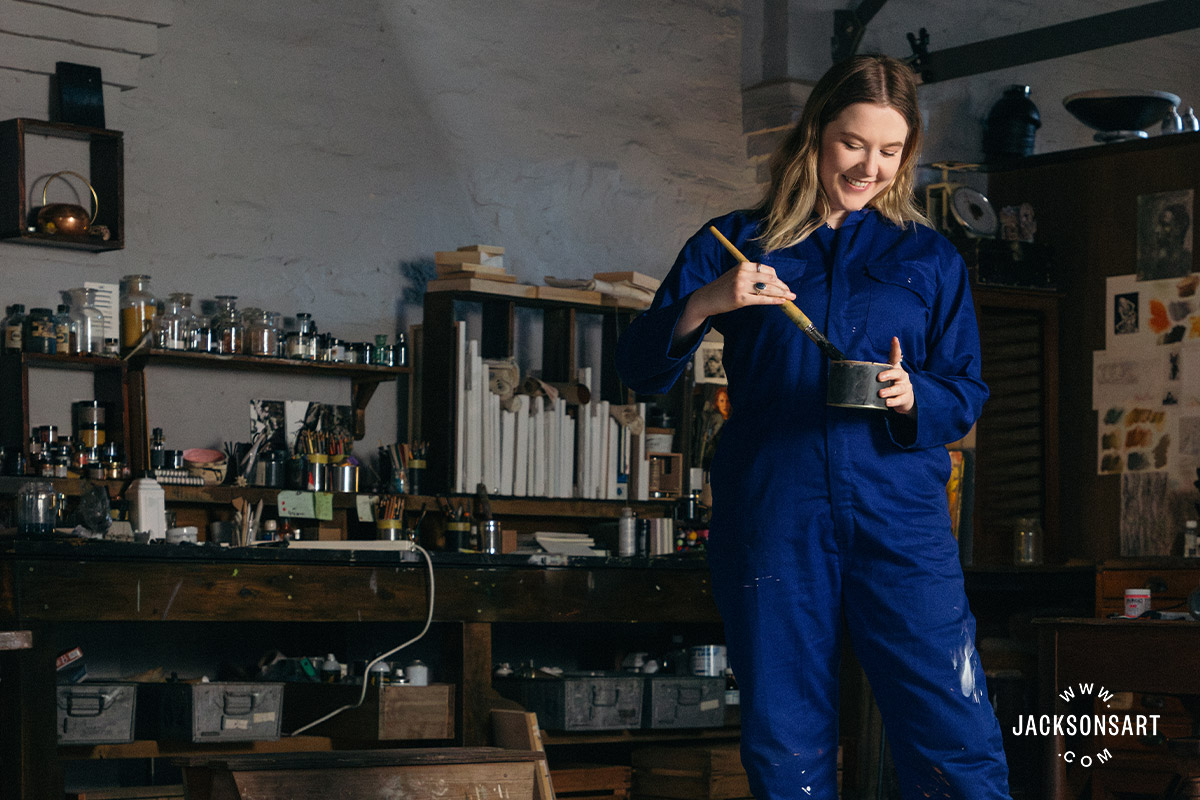
Finding Your Rhythm
We all have a different work flow. The writer Elizabeth Gilbert refers to our ‘Golden Hour’. This is the time of day when we are at our most focused and creative. She urges us to find out what that is and protect it. That hour is for your practice; everyone else gets second best. For me, it’s often the first thing in the morning, before I have opened emails and become full of the demands of the day. For others, it might be the last thing at night, when the kids have gone to bed. There is something about our connection to the subconscious and the dream world that can make these polar ends of the day especially fruitful for creativity.
If your only available time is in the middle of the day, you could start with a meditation or some breathwork to shift your state of being. Have a think about what the golden time is for you. And, if you’re able to choose your shifts or work schedule around it, that’s a good place to start.
We all have a different process. Are you someone who needs time to ease into your practice, or are you able to get down to it fairly quickly? Having all the time in the world can be deactivating for some – perhaps stifled by too much choice. Whereas pockets of time and limited resources can concentrate the mind. If you need more of a transition, then it is wise to block off longer periods of time for your practice. For example, if you work part-time, I would suggest grouping your practice days together so that you have a run of two days, rather than single days that can feel a bit fragmented.
I spoke to an artist recently who said she needs to take a walk to transition from her role as a mother to that of an artist. This is her ‘way into art’. Artists are not robots; we need to set up the conditions for creativity. What might these be for you?
Avoiding Burnout
If you’re thinking, great, but how do I juggle all of this without collapsing? My advice for artists is to get organised. Roughly block out the number of days required to make work, prepare for exhibitions and open calls, or host an open studio. Everyone has a different capacity, so be realistic with yourself and don’t over-commit. Think carefully about how many weekends or holiday days this will take up and ensure that you have enough time to enjoy the other parts of your life. These are also vital for growing your ideas, concepts, and visual inventory.
Rather than trying to do it all, all the time, another option for managing your art career is to save the majority of your practice days for a couple of residencies per year. Knowing that this time is carved out can help you feel motivated. It also releases the pressure of having to squeeze your making time around a full-time job. You may find yourself musing on ideas and gathering inspiration long before you even arrive. The anticipation itself can become a catalyst, even if, in the meantime, you only have short windows for quick studies or sketches. You might have extra funding from your job to pay for residencies, or you could create your own self-directed one. If you’re able to dedicate holiday time to your practice, it further reinforces the idea that this is something you choose to do, rather than something you have to do. Although, as we know, art chooses us!
Be Patient
Managing your art career alongside a day job is a slower process, but good things come to those who wait. And, if you’re not pursuing your practice for money, then really, what is the rush? I know that a big part of it is getting the work out there to be seen. But wouldn’t you rather have grounded, authentic work that has strong roots rather than flimsy work that doesn’t have a future? Your practice needs that foundation to be able to build a stable art career. I’ve seen that patience pay off for many artists, who are eventually able to reduce their day-job hours – or leave altogether – once their artwork sales become more reliable.
You might like to make a 3-5 year plan so that you can gradually work towards the milestones you aspire to. Work from this to see what is feasible in the units of time you have. If you need to extend the time it takes to reach your aspirations, then allow yourself to. In that respect, you are your own ‘boss’, so try not to create stress where there doesn’t need to be any.
And if all you have are small windows of time in the evenings and odd weekends, it will take even longer, but it is still worth it. Creativity thrives on limitations. I’ve seen artists discover an entirely new medium due to logistics. One of my mentees said that the largest size she works on is 50 x 70 cm, as that’s all she can fit on her kitchen table. Another artist reminded me of how embroidery was such a popular medium for mother artists due to the fact that it can be picked up and put down easily. Think about how your choice of medium makes the most of your precious time. Use it as a creative prompt. What can you make in an hour? Challenge yourself and keep returning. This may not be the moment for embarking on a journey in oil paints, but that’s okay.
So while it may seem at times like you’re being held back, your practice can be propelled forward as a result of managing your art career alongside a day job. Try to work with what you have, rather than against it, and allow the work to become what it’s destined to be.
Expert Coaching Webinars With Claudia Kennaugh
Over the past few months, we asked the Jackson’s community what they wanted to know most about building a career in art. Based on your responses, we’ve created six webinars in collaboration with Claudia to explore these key topics. Each session is packed with valuable insights to help you grow and succeed as an artist, plus a live Q&A where you can ask your own questions.
Upcoming Webinars
Putting on Exhibitions: 24th June
Self-representing Your Art: 26th August
Social Media and Websites: 28th October
Making Reproductions of Your Work: 16th December
Further Reading
Expert Advice on Handling Artists’ Commissions
How Creatives Are Monetising Their Talents with Side Hustles
A Directory of Open Calls for Artists
Licensing and Copyright: What Every Selling Artist Needs to Know
Shop Art Materials on jacksonsart.com



2 thoughts on “Expert Advice on Managing Your Art Career Alongside a Day Job”
Brilliant article and so lovely to find you on here!
Thank you so much for this
Comments are closed.