



Cai Arfon Bellis is a London-based artist – he takes his sketchbooks to gigs, raves and other events, documenting these lively, high-energy happenings as they take place. These visual recordings become artifacts in their own right, and are eventually translated into Cai’s bigger works. In this article, he describes capturing these frenetic environments, the assertiveness of working in pen, and how sketchbooks underpin everything he makes.
I tend to have one main focused sketchbook that I work in, alongside several others that I reserve for specific purposes. I keep books for travelling abroad, for festivals such as Glastonbury, and for any rave flyer design work I take on. Each has a clearly defined role.
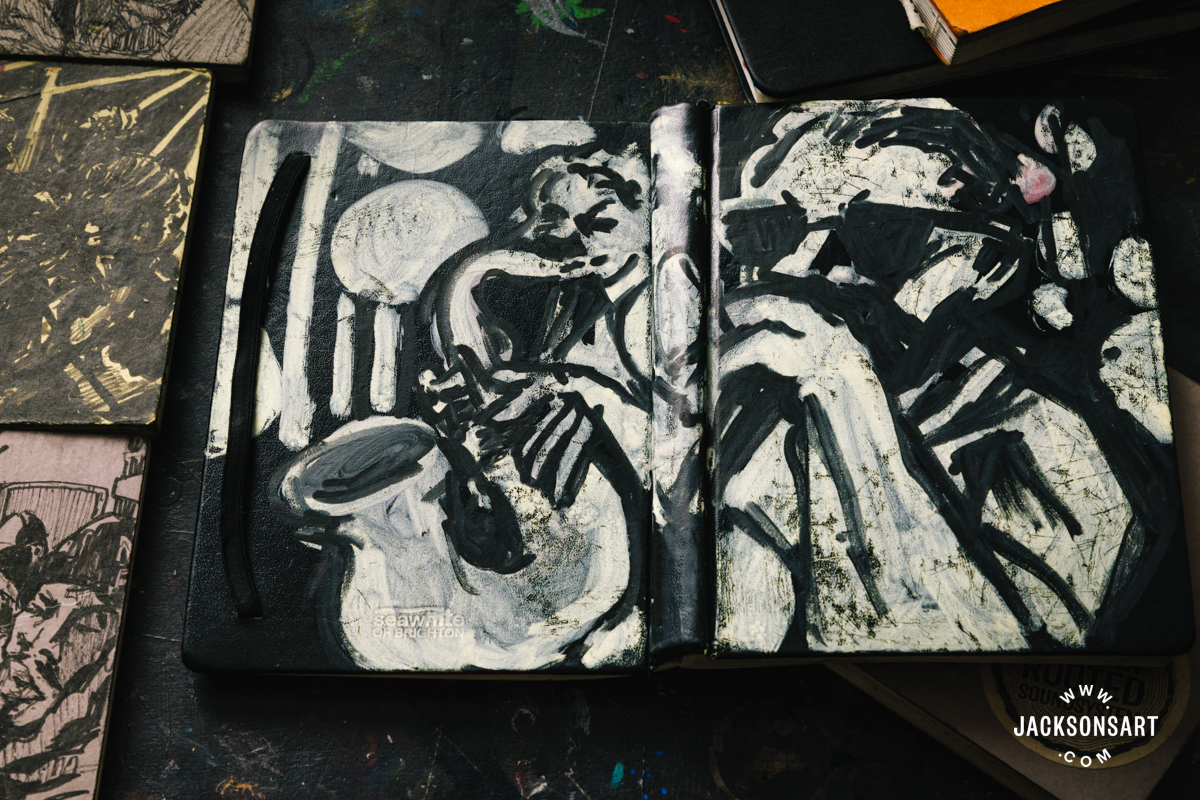
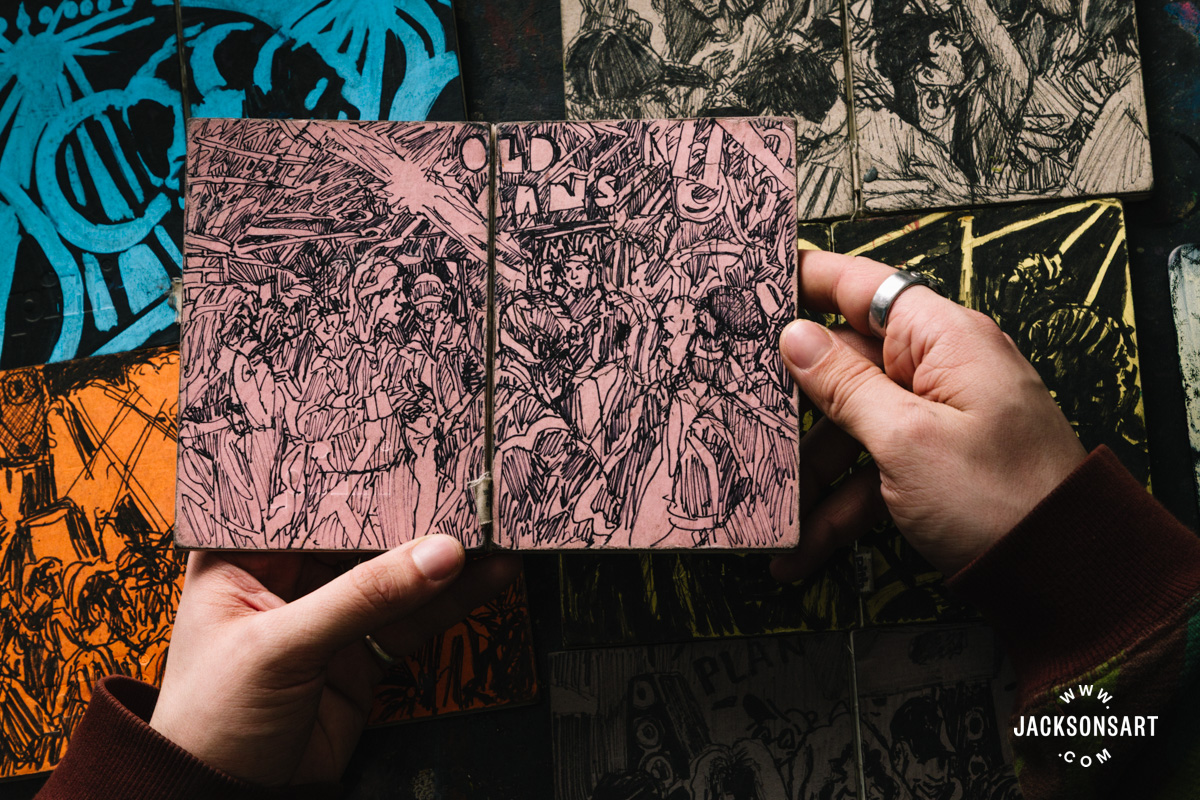
Most of my work, however, happens in a single main sketchbook that I carry to clubs and raves. These books serve as time stamps, usually covering a period of one to three months. At the end of that time, I sign them off with a drawing on the cover depicting the final event. It has become a way to honour them as artefacts, and a practical way of identifying them, especially as they build up and I move through the range of colours that Pith provides.
My sketchbooks function purely as a form of documentation. I largely work outside of them in the rest of my practice. But these books, these snapshots of time and place, are the genesis of everything that follows.
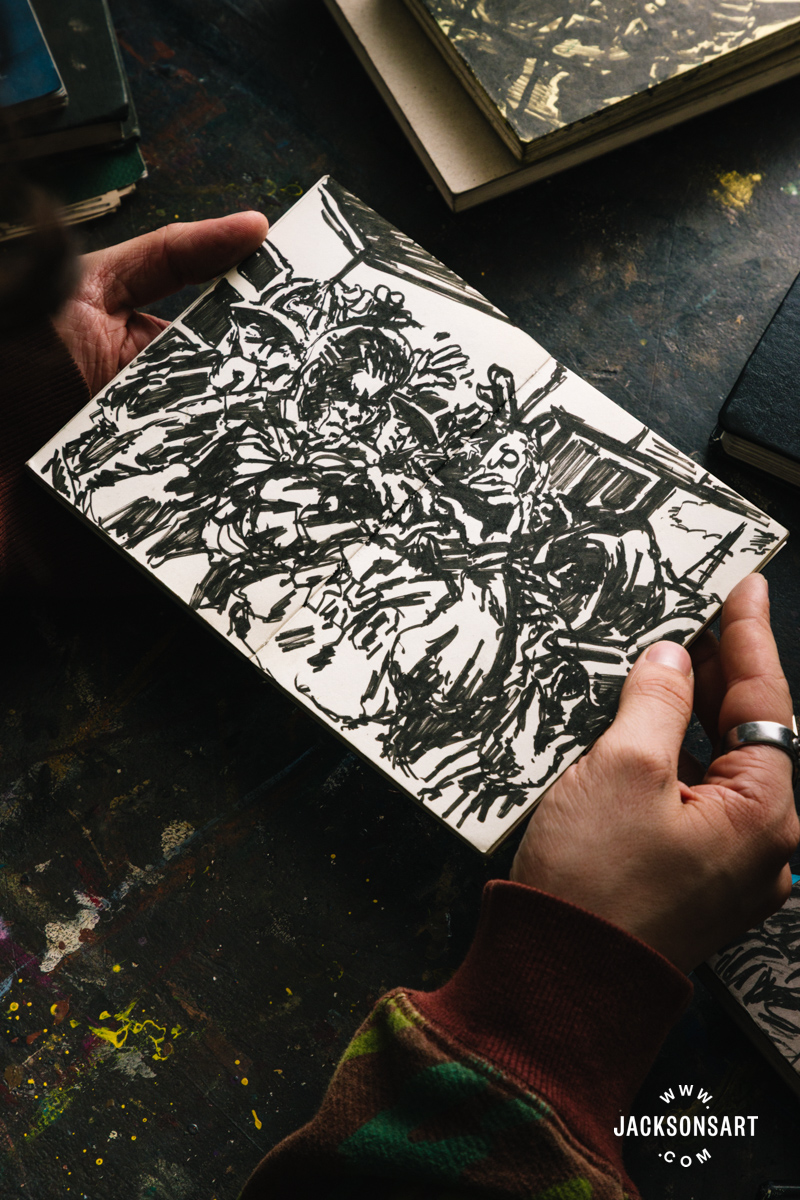
What I value most about my practice is the ability to capture the people and environments I care about while being present within them. The sketchbook keeps my practice consistent, even when I am away from the studio and without access to the scale or materials it provides. I never stop drawing, and I never stop documenting. It is a way of embedding the act of making into daily life.
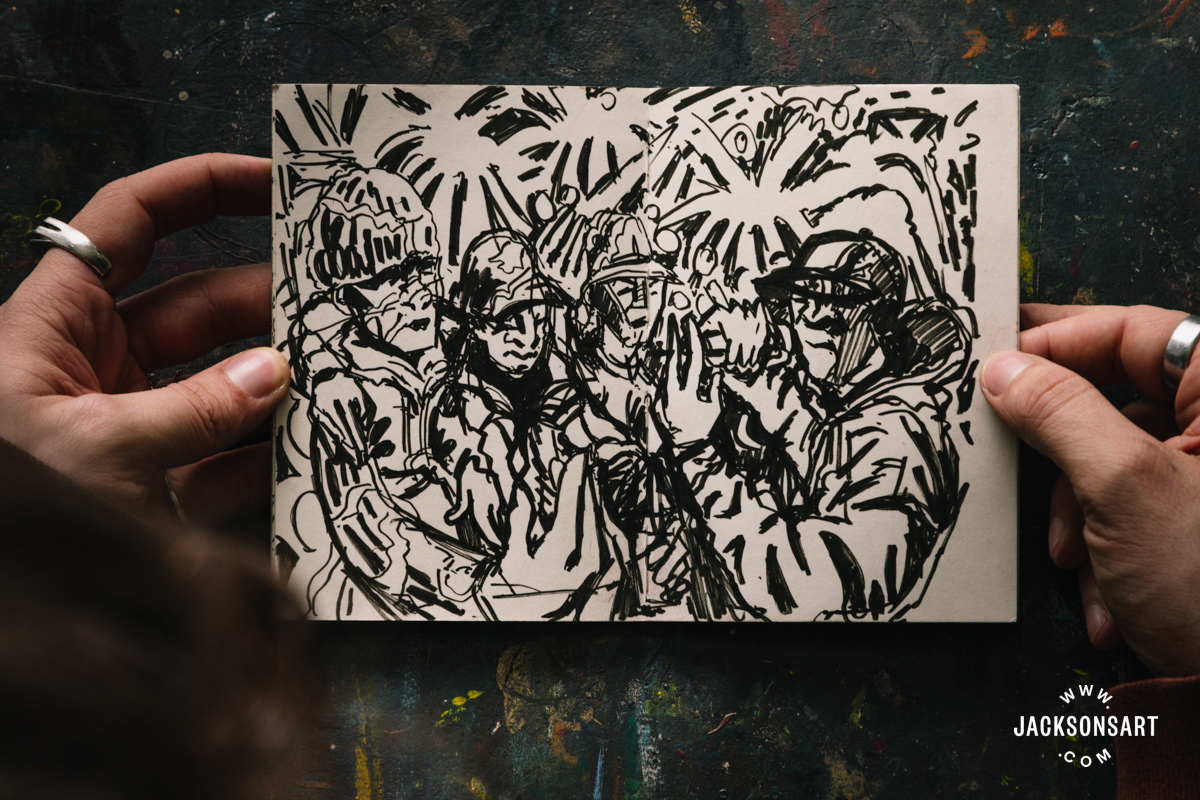
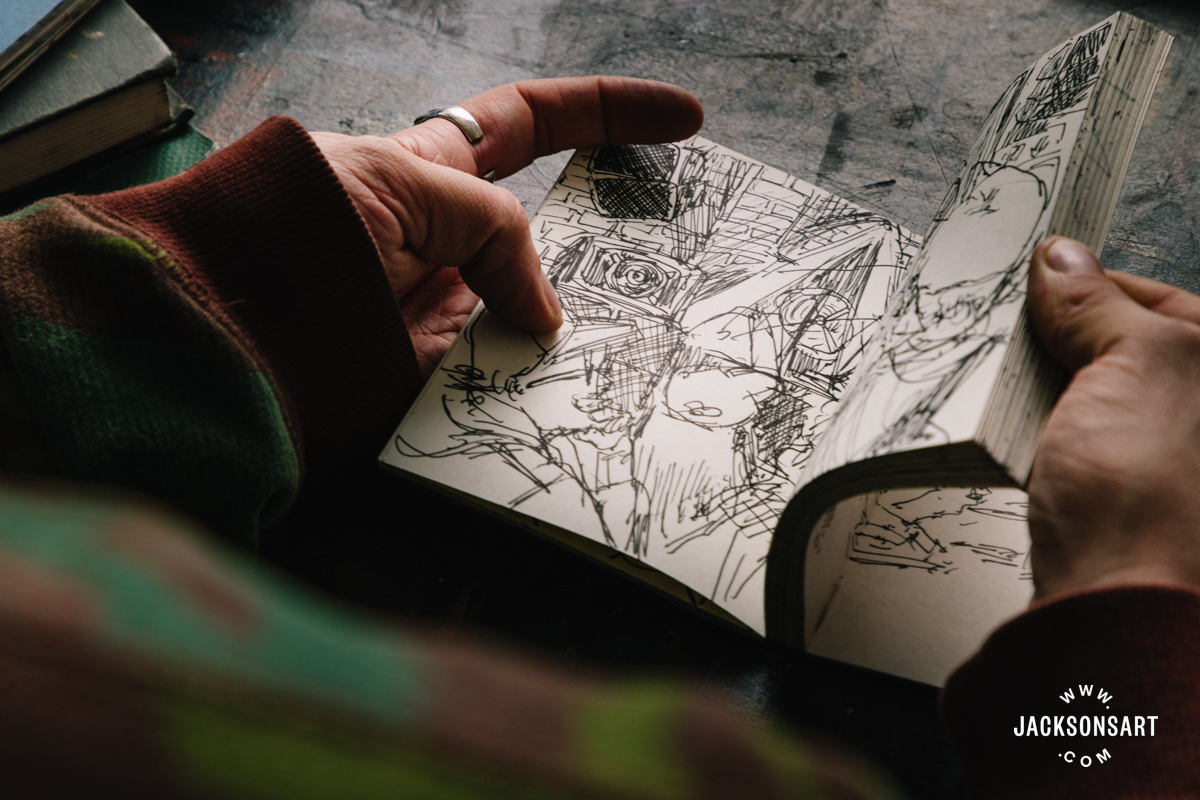
I work almost exclusively in Pith sketchbooks, particularly the Kabuso, which is the perfect, pocketable size for my particular sketchbook practice. Because of the nature of my work, I am often drawing from within very frenetic, crowded environments, so the process must remain as unobstructed as possible. The binding in Pith sketchbooks folds completely flat, and the paper is ultra smooth, which allows me to stay responsive and present in the moment.
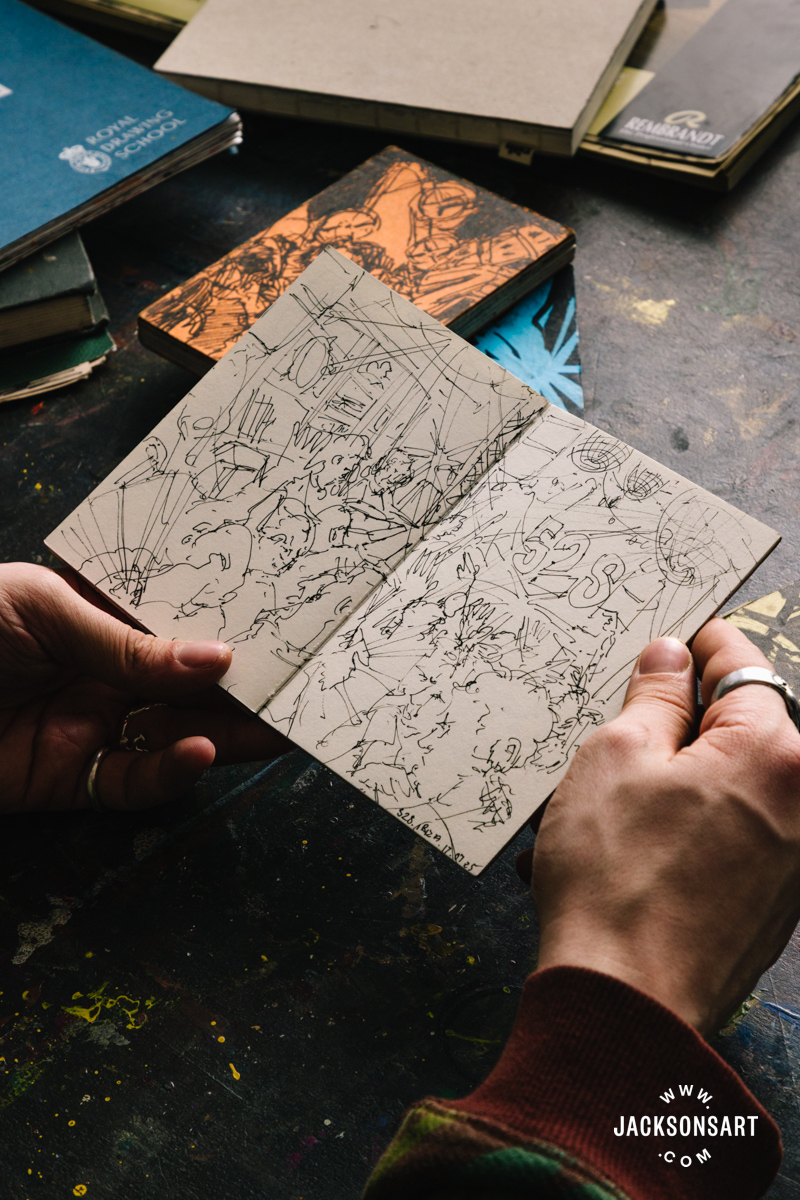
For this same reason, I use 0.5 pigment markers, always fresh. Anything less consistent provides a distraction to the process. I’ve usually got a large stockpile of half-used pens that no longer make the cut for working on site, reserved for less immediate work in the studio.
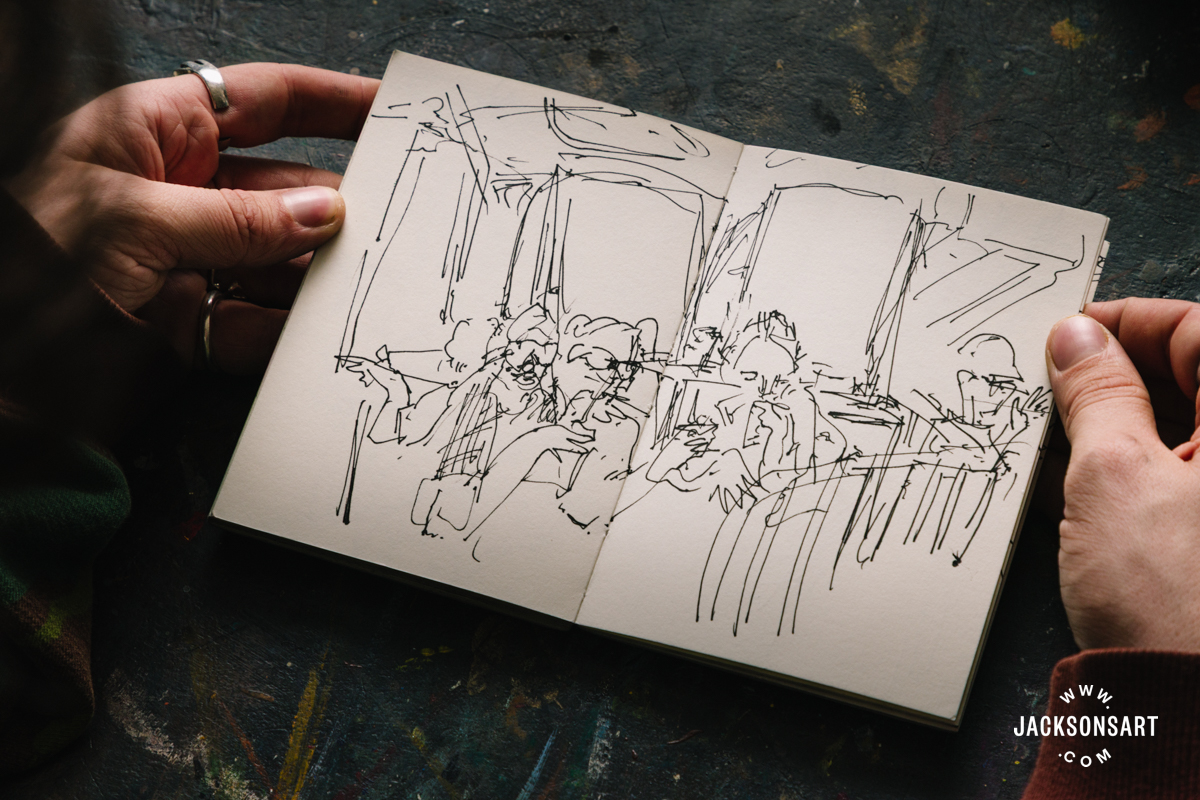
I’m a big fan of the Sakura Pigma Micron for its smooth, reliable flow. Working in pen forces a level of commitment. Each line must be made with confidence, which suits the intuitive and reactive nature of my drawings.
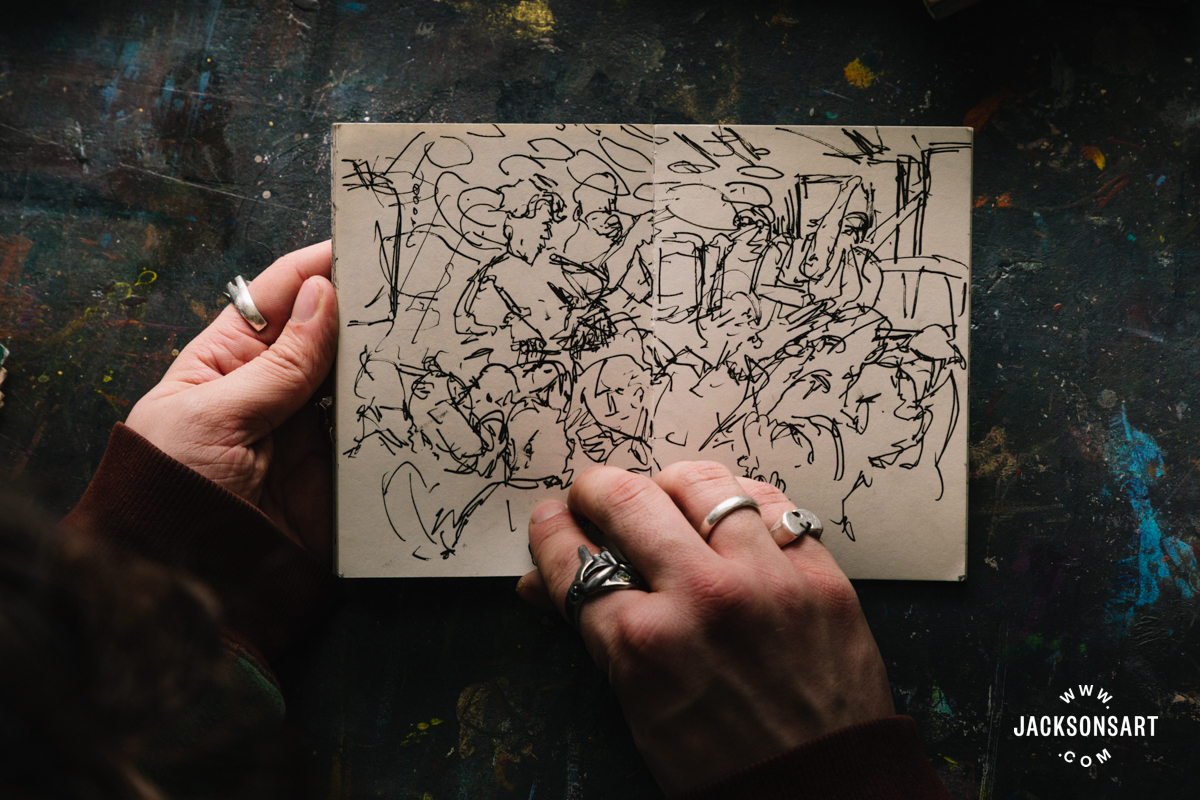
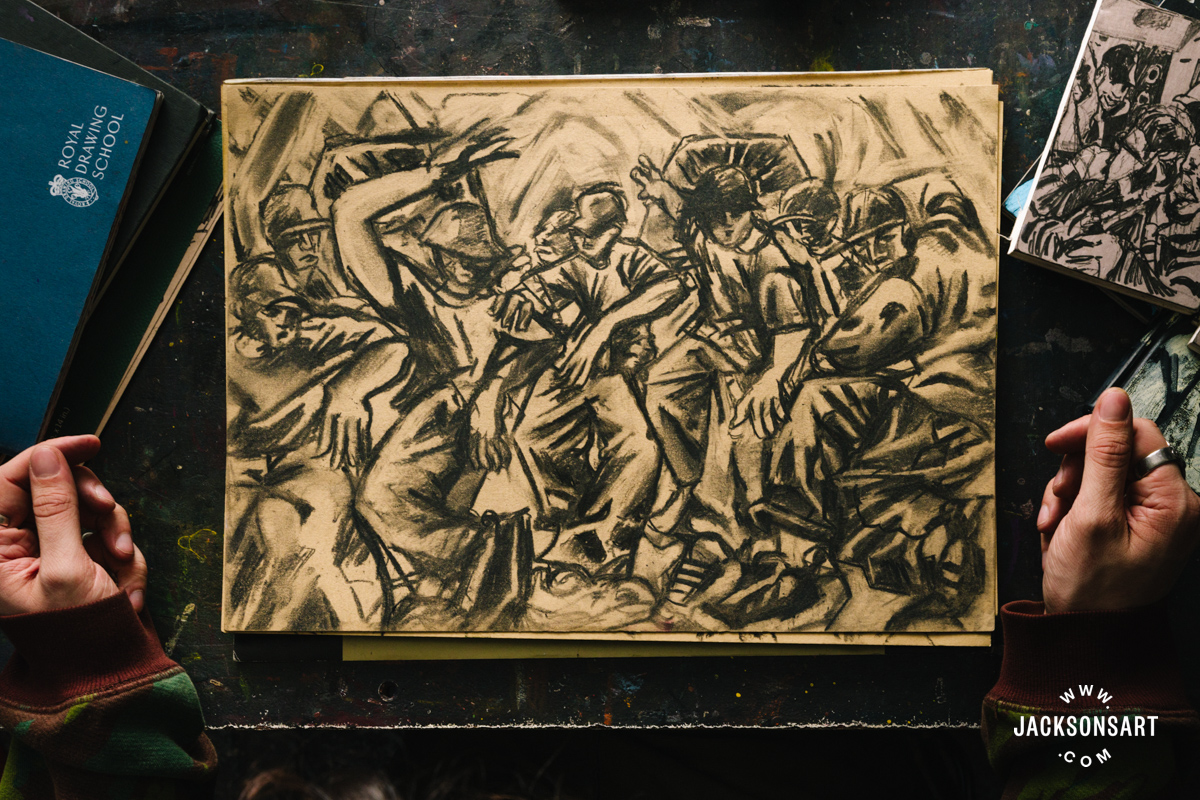
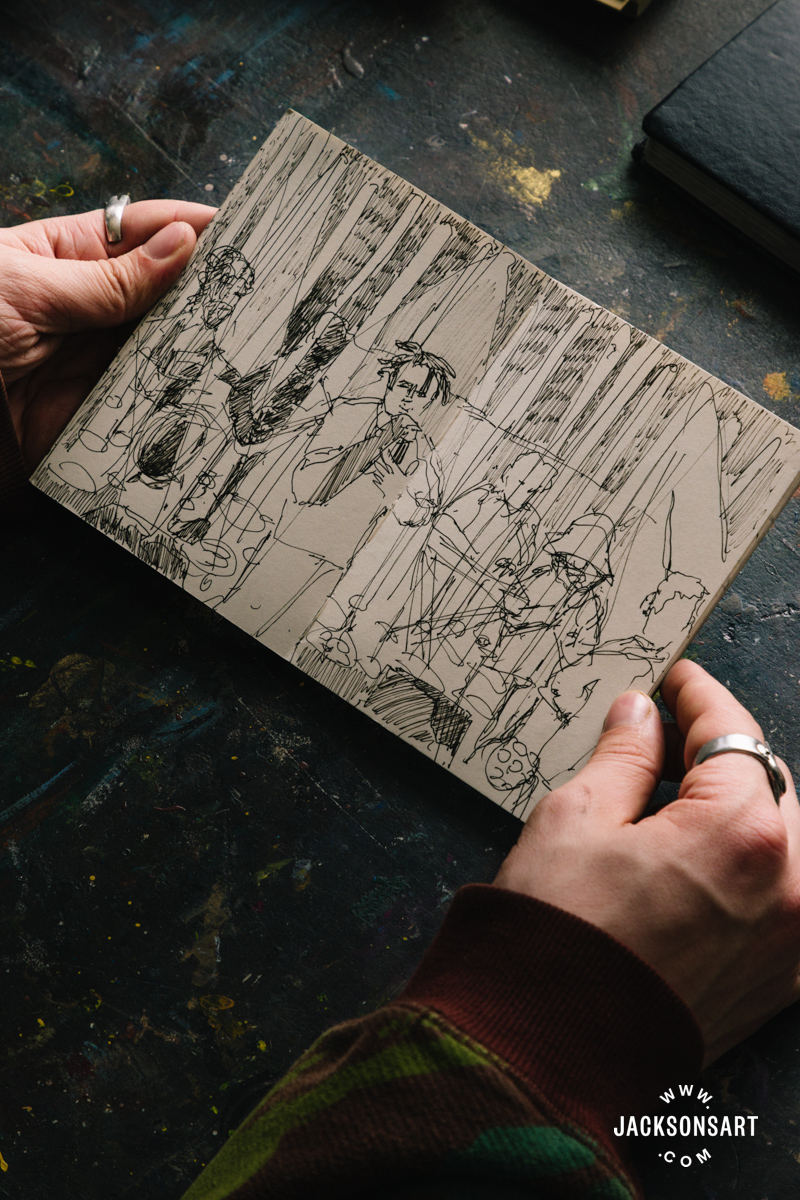
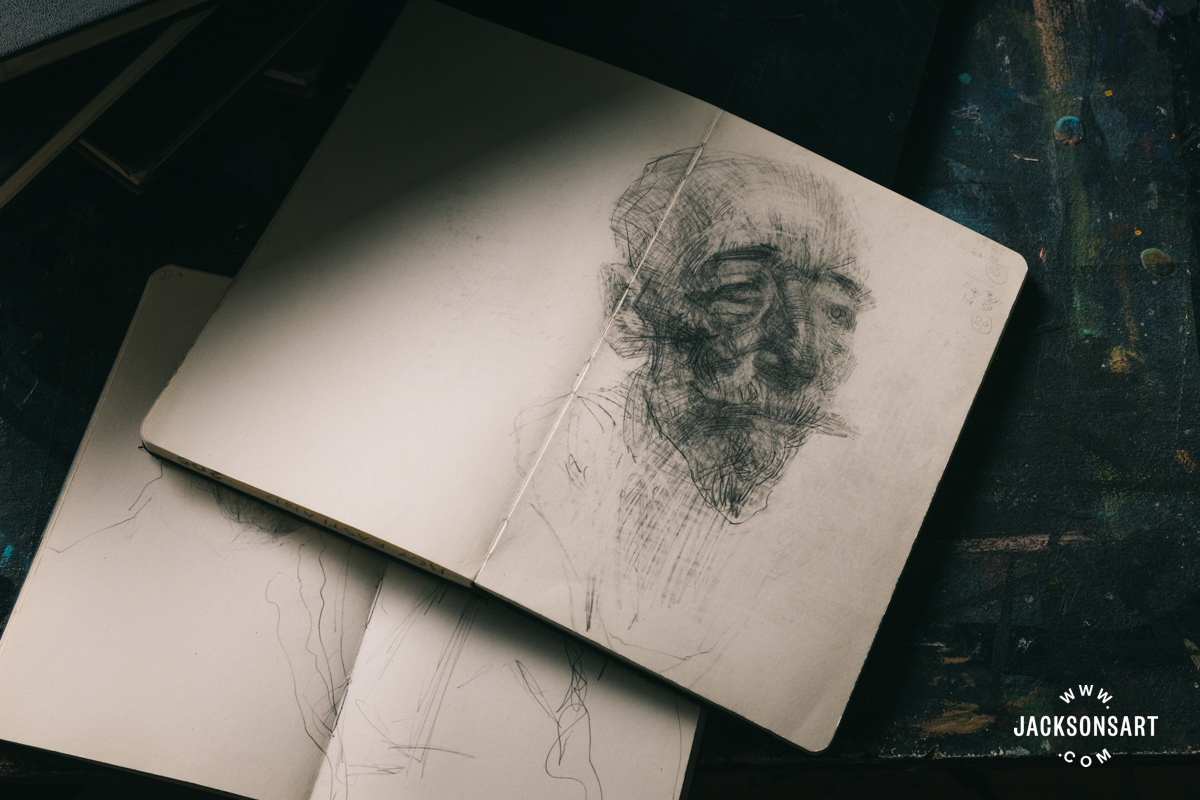
Outside of the sketchbook, I work primarily in charcoal. Initially, that might seem like a strange combination, but the immediacy of pen leaves space for interpretation; its direct mark-making captures the rhythm and the movement of the scene but not much tonal detail. I can then resolve this through the movement and materiality of charcoal and paint in the final works.
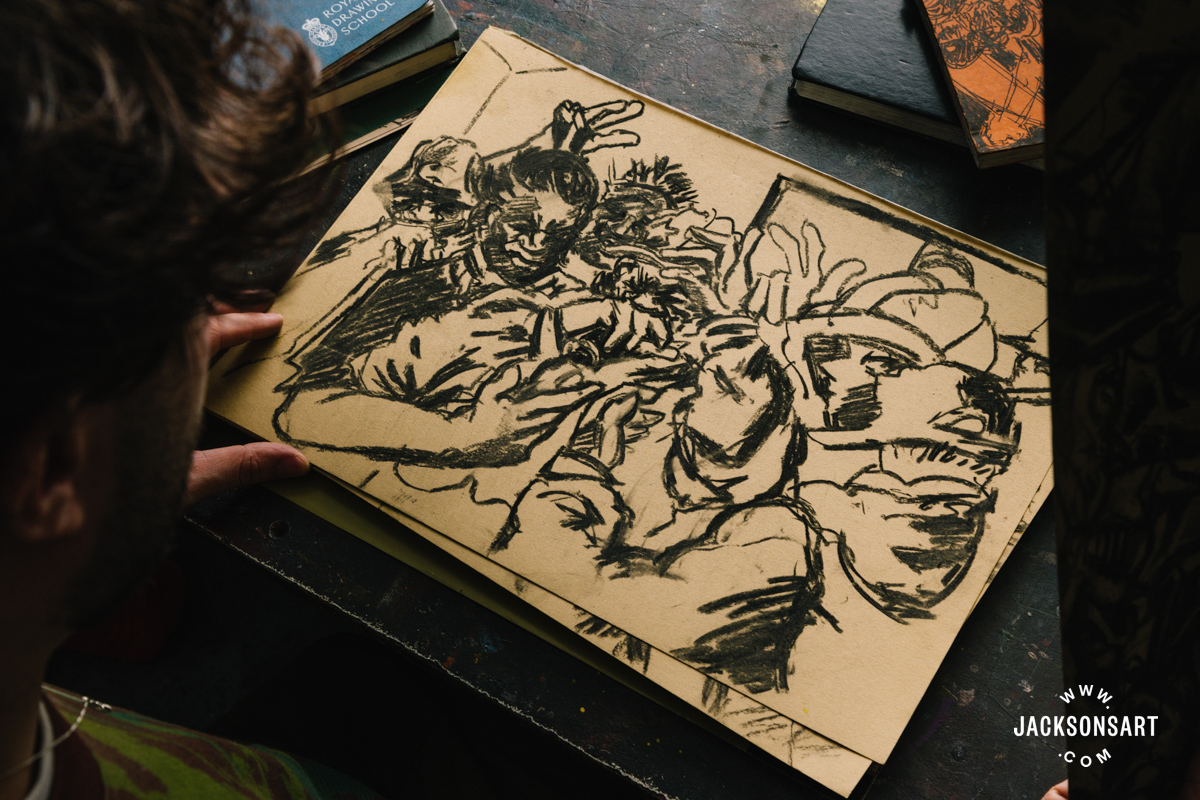
Consistency is essential. I need to trust both the surface and the medium so I can respond to constantly shifting environments, often with little to no visibility, as much of the process relies on instinct.
Early on, I experimented with a wide range of materials, formats and scales, but they introduced problems. Larger books slowed me down and disrupted the immediacy of observation, often forcing me to rely on memory. Whereas other types of sketchbooks led to practical issues, such as smudging or forms getting lost in the spine. Pen’s nibs that were too small would get lost on the page and struggle to fill the space, and nibs that were too big would remove a lot of the expression of the mark-making.
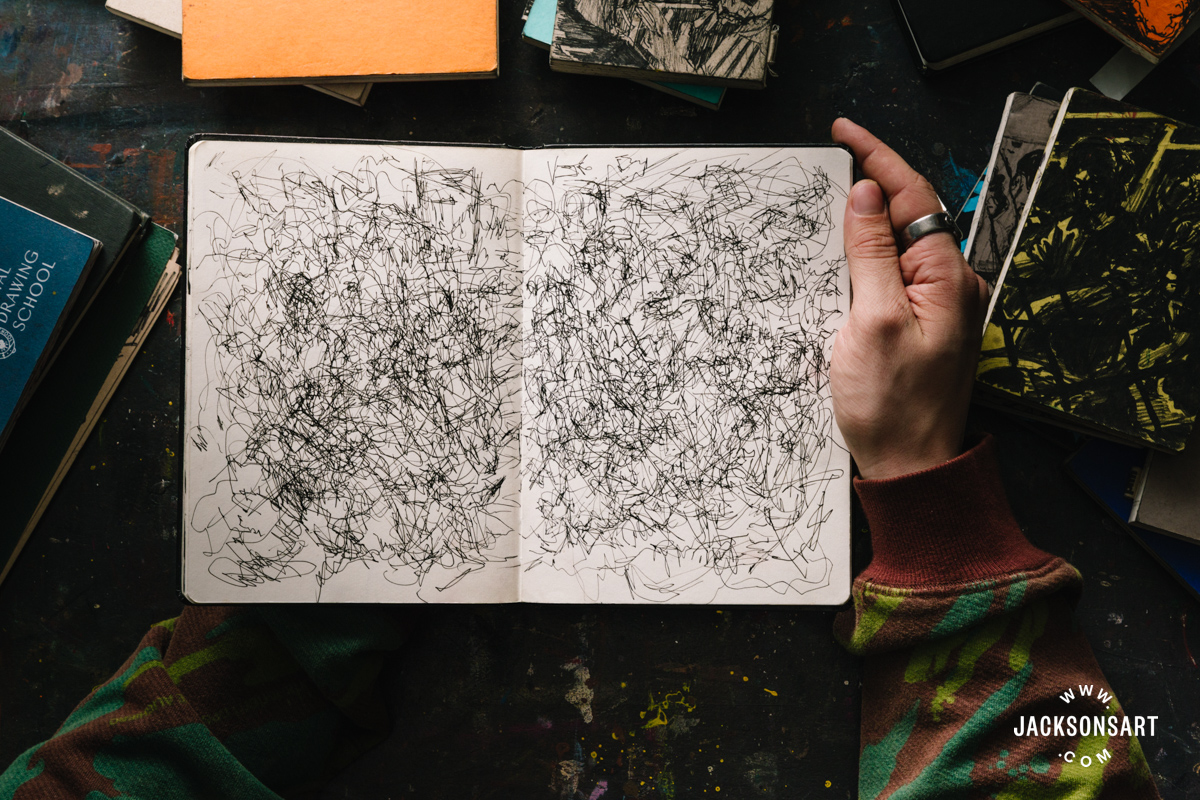
The combination I have settled on allows me to work quickly across the full page, simplifying complex movement in real time. The smaller scale of the Kabuso also keeps the process discreet, which is invaluable to my process.
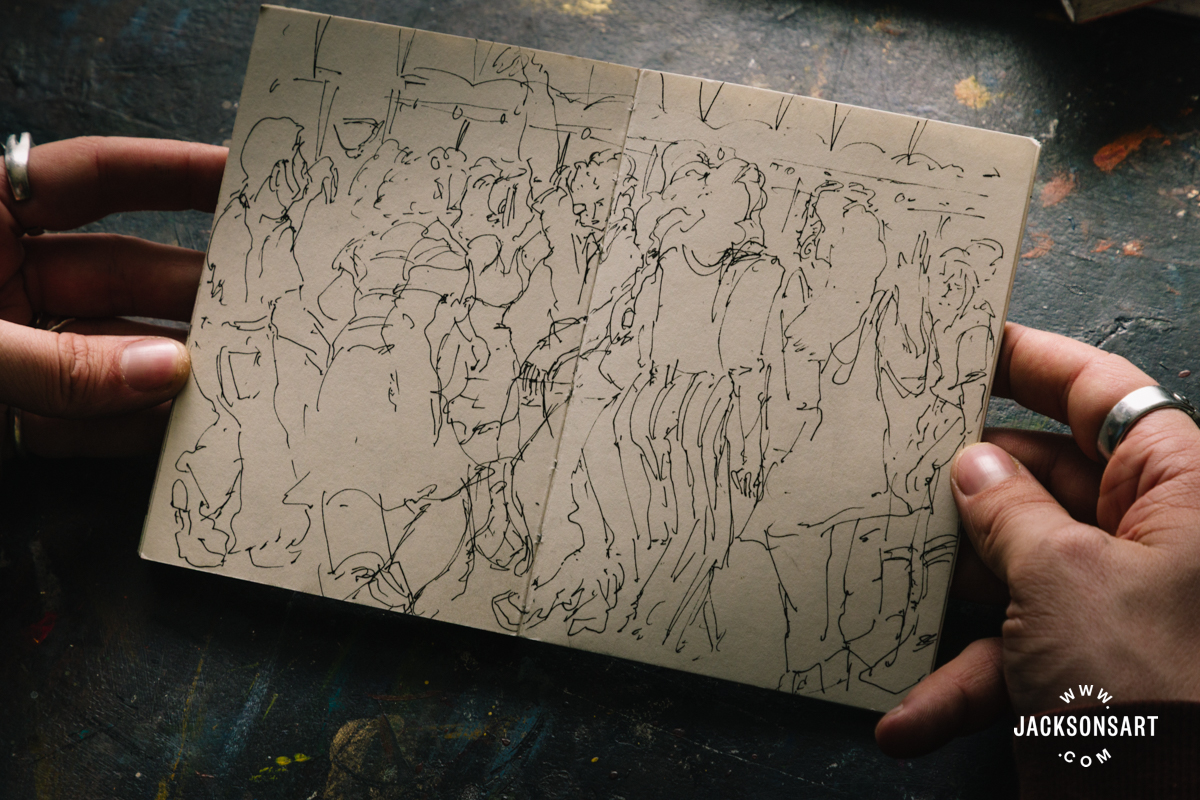
Drawing offers a level of subtlety that photography cannot. Cameras have become an ever-present part of daily life, and people are increasingly aware of them. In many of the spaces I work in, cameras are discouraged or outright banned. Drawing allows me to document these environments while observing people at rest, without the feeling of being observed altering their behaviour.
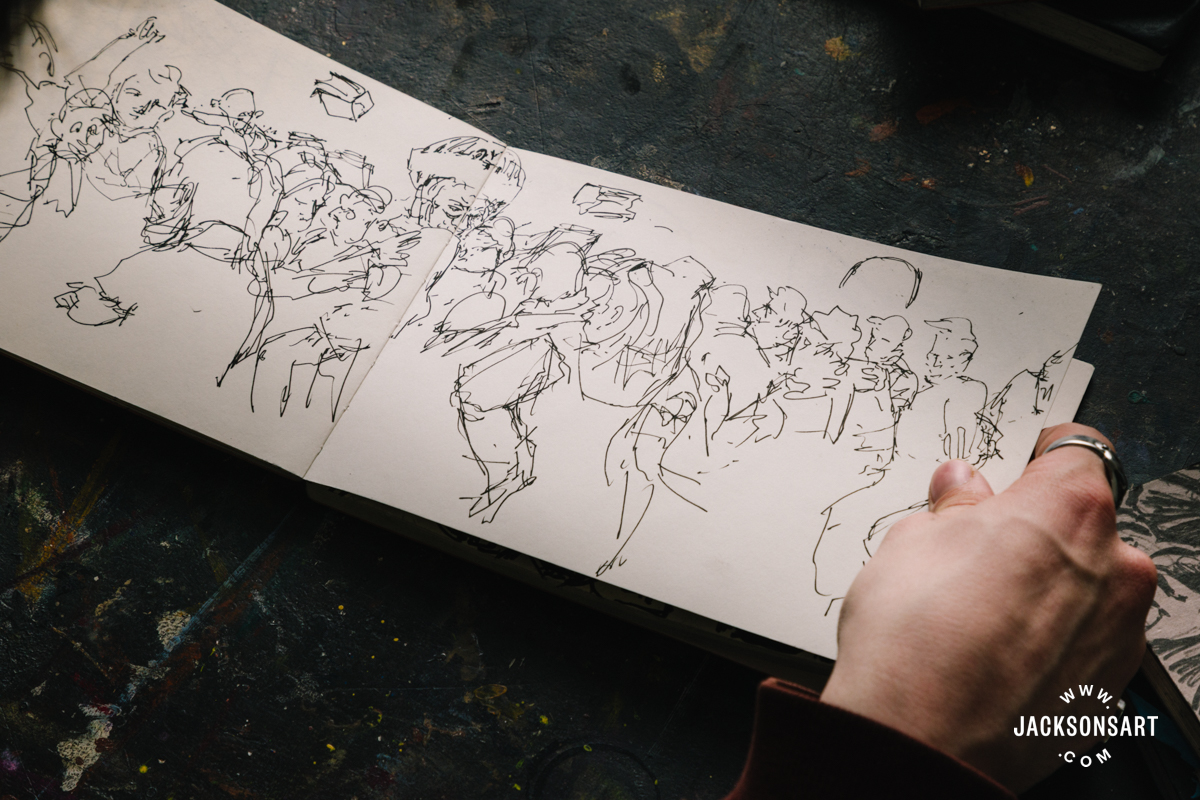
My sketchbooks are the starting point for everything I make. From small watercolours to large oil paintings, all of it is inspired by the onsite observational drawing I make within them.
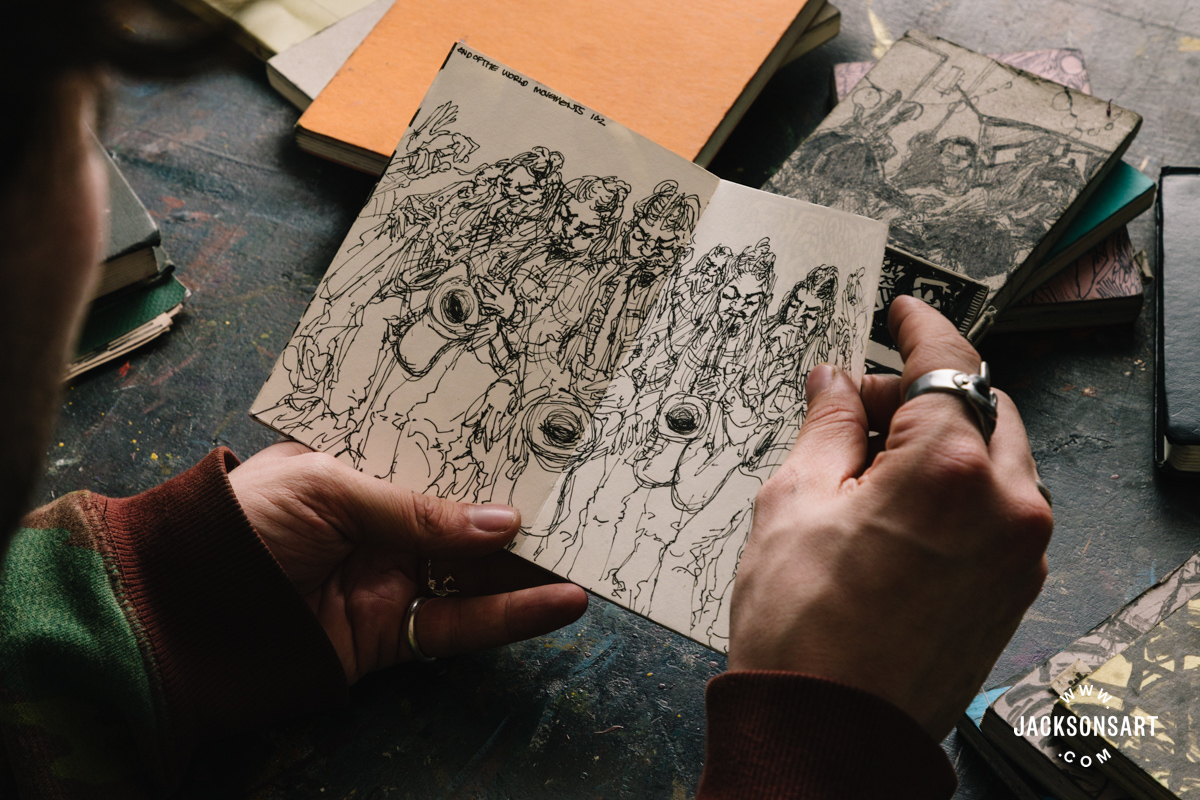
I used to work from photographs and video, particularly during lockdown when we weren’t allowed out of the house, let alone to party with 300+ strangers in a dark room somewhere in south London. Over time, though, I became frustrated with how static that process felt. The work had lost its sense of movement and energy.
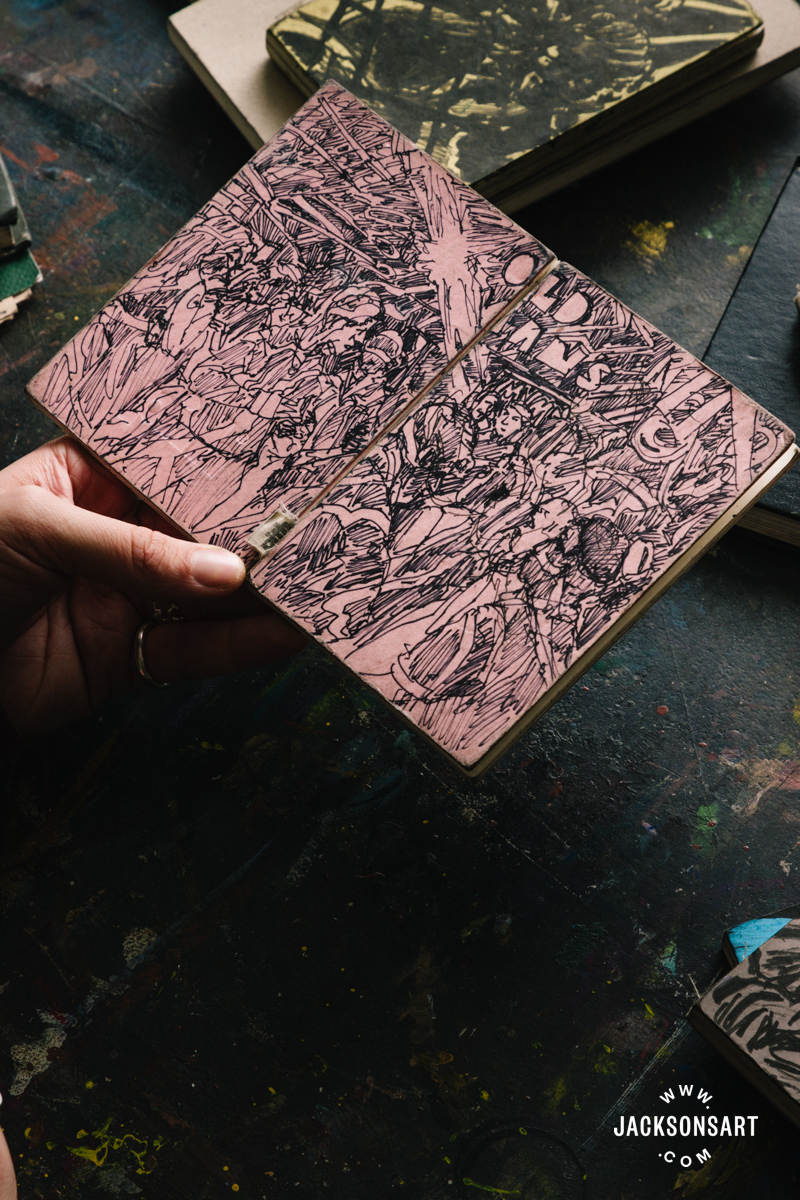
After restrictions were lifted and we were blessed with the joy of human contact again, my work became exclusively based on my sketchbook practice. Returning to drawing on-site shifted everything. The interpretive nature of the sketchbook drawings introduced rhythm, expression and immediacy back into my work, allowing it to capture not just how these dances looked, but how they felt.
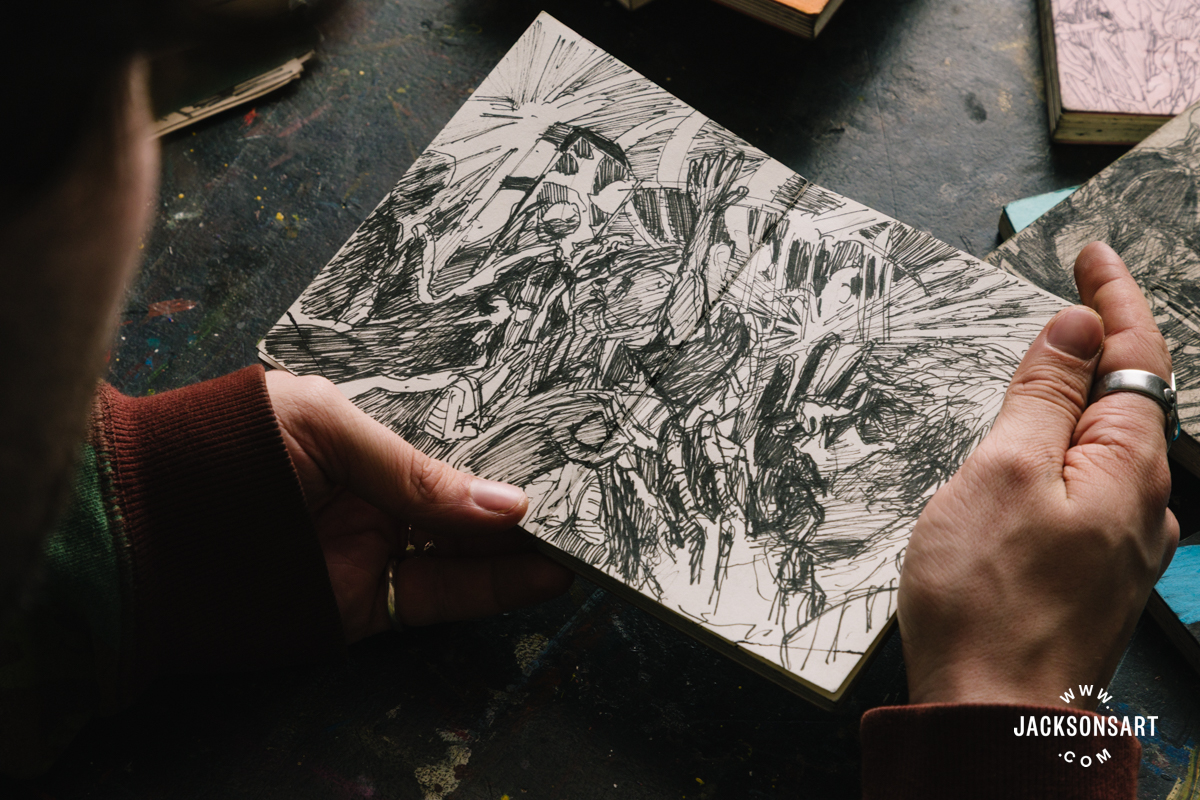
Each sketchbook acts as a record of a period and place. Each drawing is hyper-specific. I can flip to almost any page and recall exactly where I was and what I was capturing.
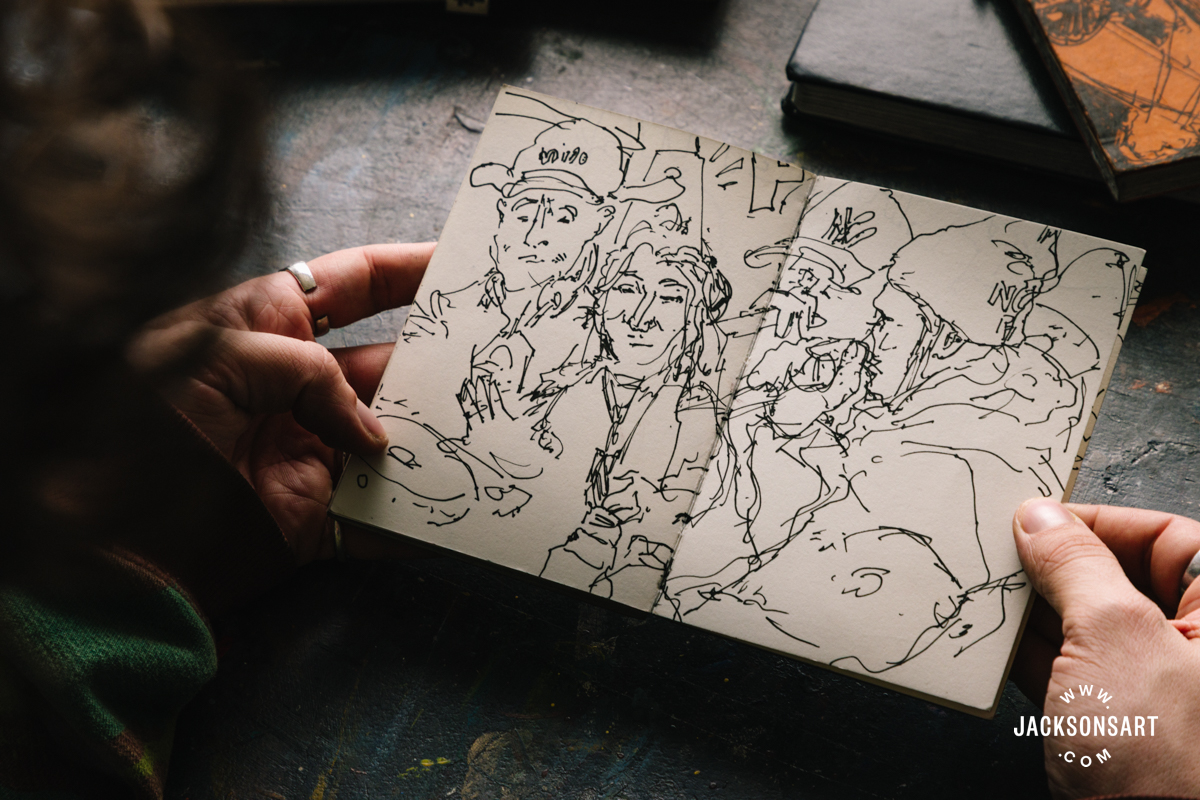
My finished works, however, move away from that specificity. They are not tied to a single moment but instead function as curated compositions. I think of them as lineups, built to distil the atmosphere of a subculture or scene.
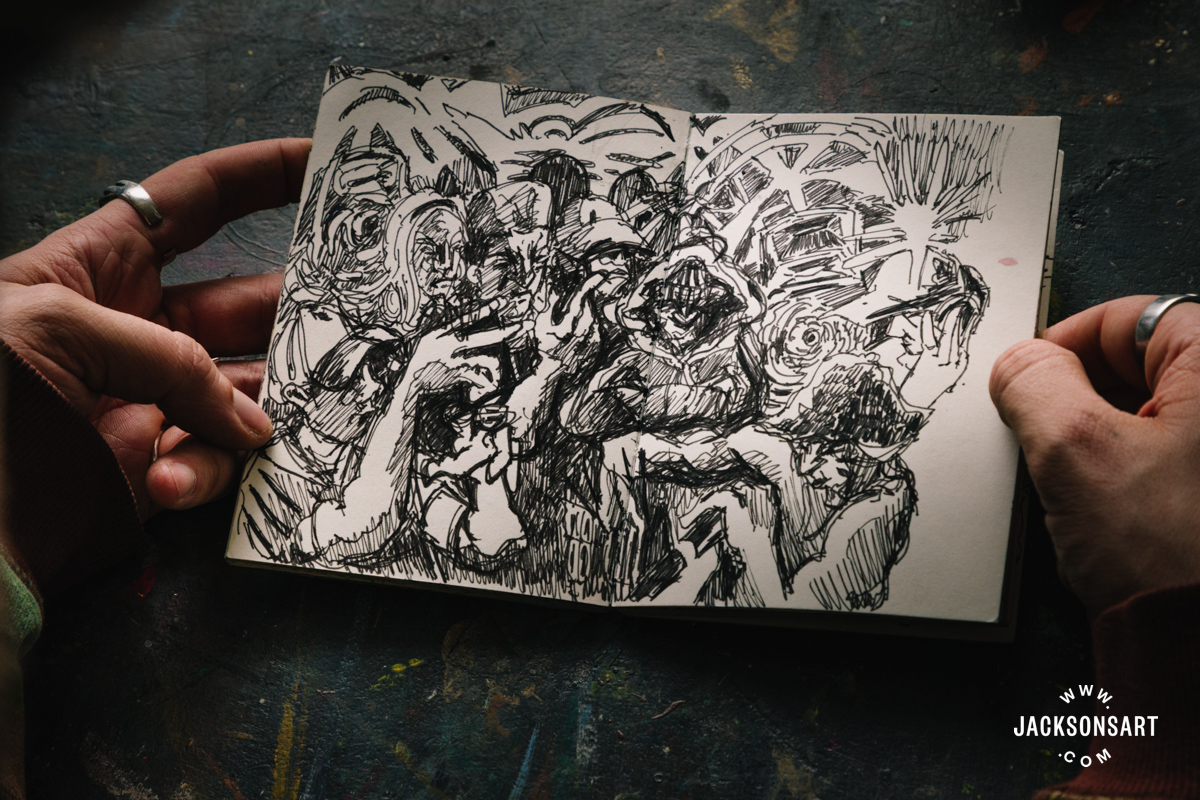
In the studio, my finished works begin with a process of selecting and arranging pages from across multiple sketchbooks. These remain visible on my studio walls at all times, ever shifting and creating an evolving archive of references from over the years that inform each new piece.
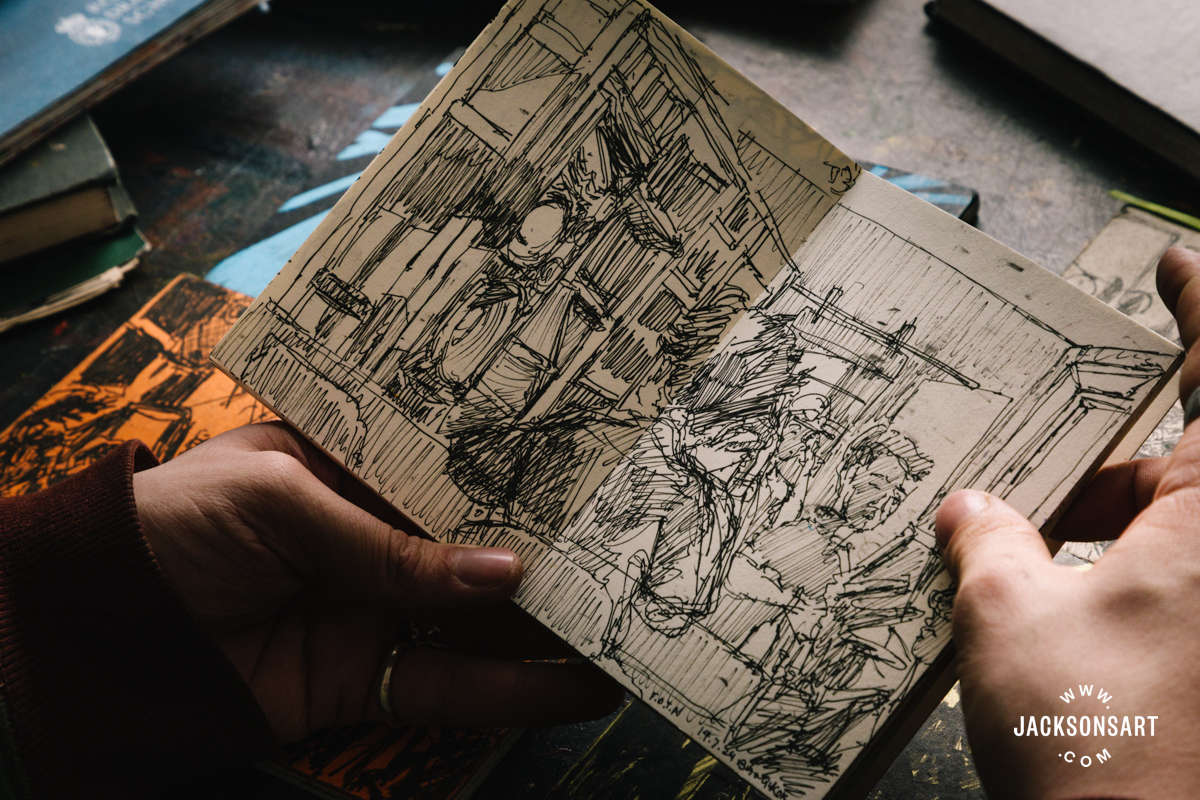
My sketchbook work underpins everything I make. It is where my practice begins, and where its energy is held. It allows me to remain engaged, responsive and consistent, regardless of any external context that may restrict my studio practice.
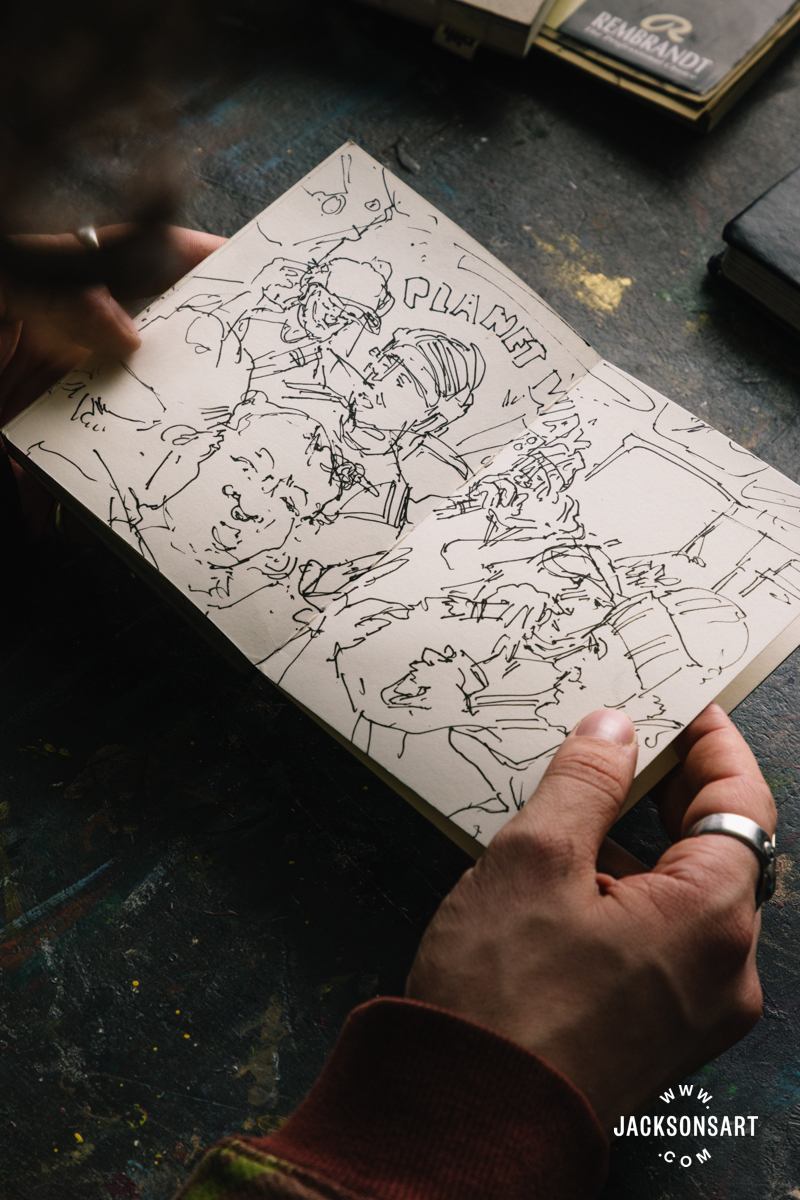
I often tell the students I teach that sketchbooks are a tool within your extended creative arsenal, and the way they enter your practice will be entirely unique to you. There is no single correct approach.
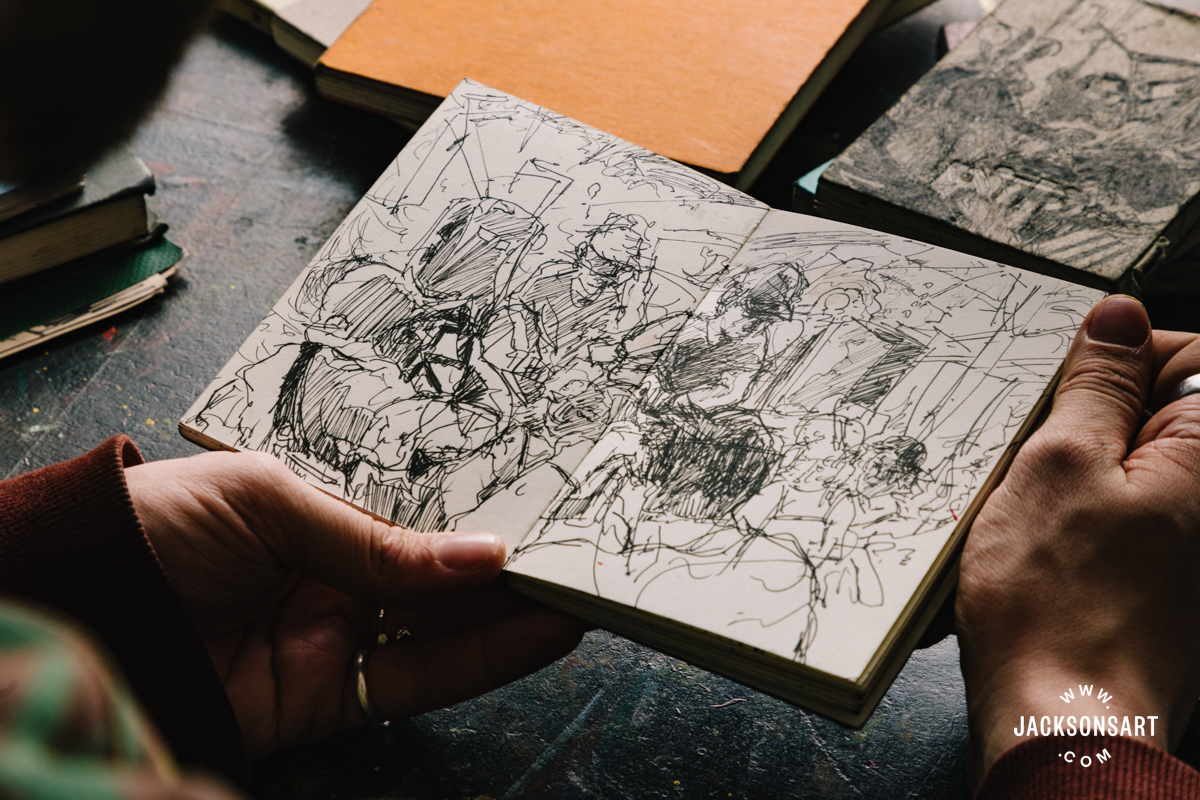
I was initially resistant to using them myself. I recently reconnected with a former art teacher who, upon discovering my sketchbook practice, was shocked. She reminded me how utterly allergic I was to it at the beginning of my artistic journey. So completely against the concept, in fact, that I was allowed to submit my coursework as a wall display of loose works made over the course of my studies.
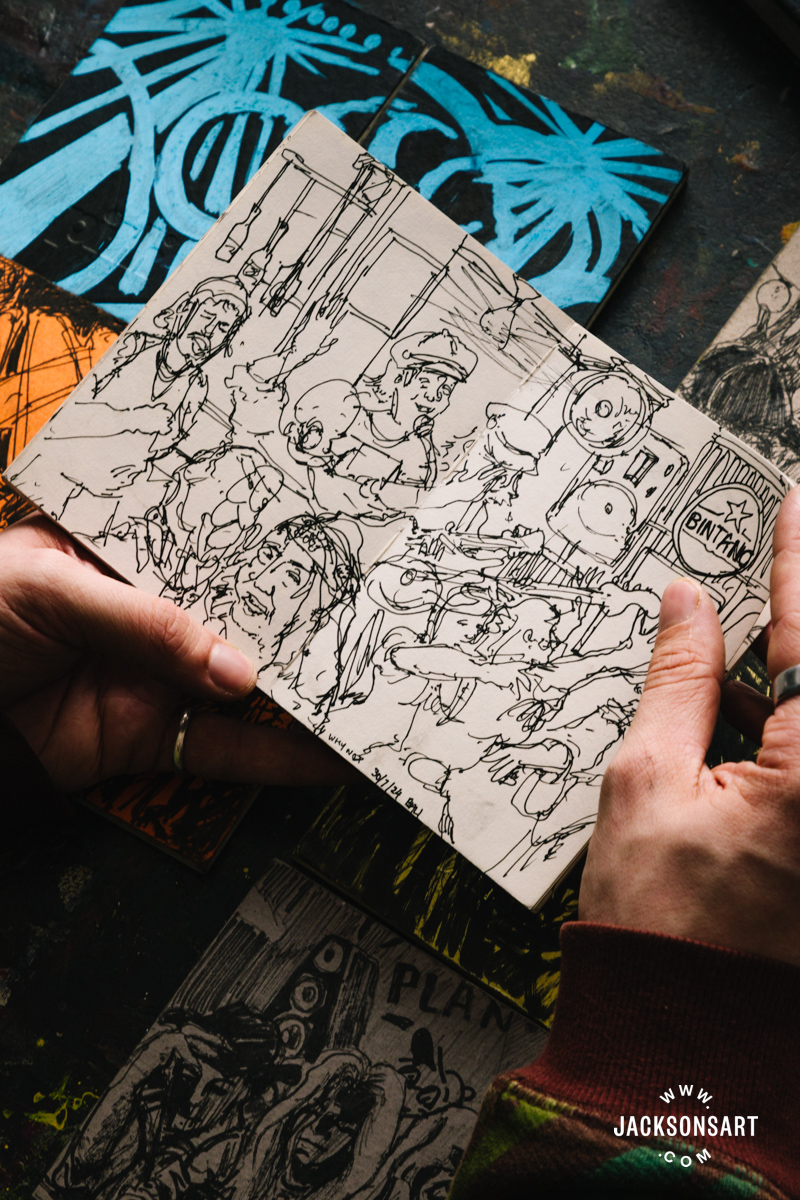
I mention this because the sketchbook can feel daunting. It is a personal process, something you have to arrive at in your own way. There is no right path, and no formula to follow, despite what may be instilled in us early on.
I preferred working loosely and avoided the format altogether. That only shifted over time, through experience.
The important thing is to allow the sketchbook to remain a space without pressure. It should be somewhere to experiment, test ideas and fail. Once it becomes something you are afraid to get wrong, it stops being useful.
Materials
Rotring Tikky Graphic Fineliner Pens
Pentel Sign Pen
About Cai Arfon Bellis
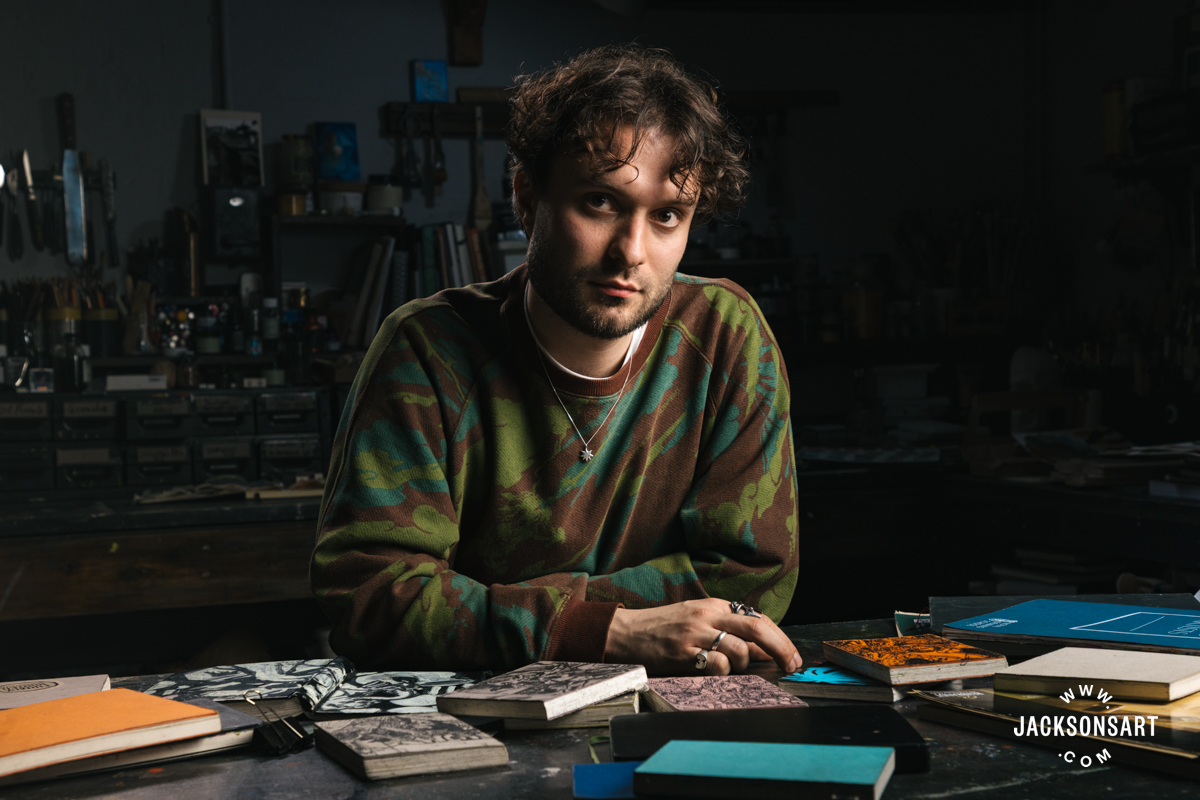
Cai Arfon Bellis is a South London–based painter whose work reflects the city’s underground music scene, emphasising the importance of community spaces and shared experiences. Cai graduated from the Slade School of Art in 2019. Following this, he took part in the Drawing Year 2022 at the Royal Drawing School, where he was selected as one of the New Contemporaries 2023. His work is held in a number of public and private collections, including the Government Art Collection and the Royal Collection.
Further Reading
Developing a Daily Drawing Practice with the Royal Drawing School
Frances Ives Tests Pith Sketchbooks
Inside the Sketchbook of Billy Bagilhole
Expert Advice on Articulating Your Art Practice
Shop Sketchbooks on jacksonsart.com
4 thoughts on “Inside the Sketchbook of Cai Arfon Bellis”
thanks for this- Cai expertly catches and holds a very dynamic scene- like a modern day Toulouse-Lautrec
Thank you TJ, that’s a great comparison. Like Toulouse-Lautrec, Cai captures the dynamic energy of the city by observing its nightlife and revellers.
I’m too old to know anything of the current music scene but Cai’s sketches seem to vibrate with heat and energy. Cai’s description about sketchbook use was clear and inspirational. Very interesting post. Incidentally, I thought the first sketch shown could almost have been a battle scene.
Hi Dawn,
Thank you, what an interesting interpretation – the energy of the crowd does bear similarities to a battle.
We’re glad you enjoyed the article!
Comments are closed.