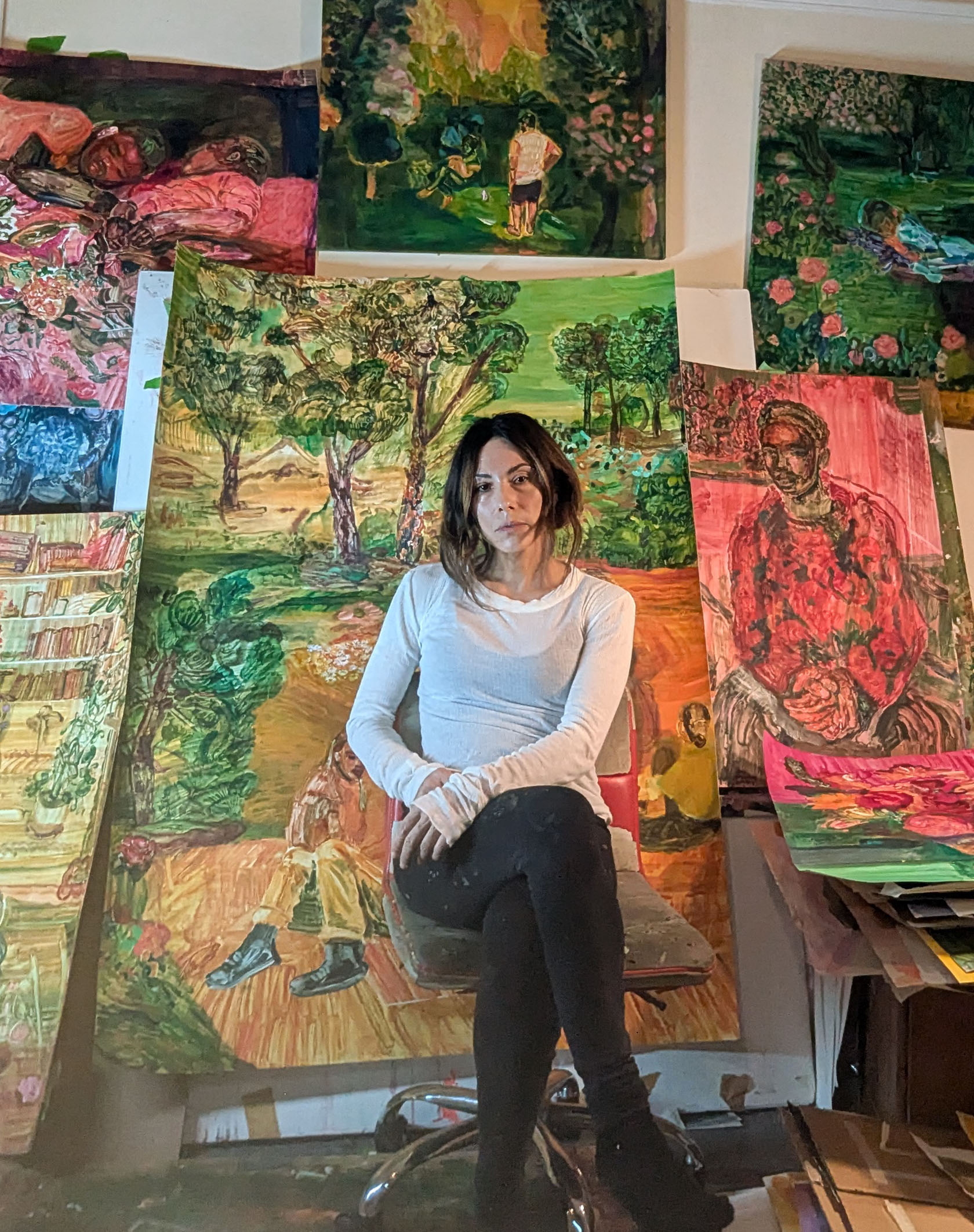
Allan J Robertson won a Jackson’s Choice Award in Jackson’s Art Prize this year with his work End of the Day. In this interview, he discusses his process of building up ideas in layers, exploring overlooked landscapes, and creating work that invites interpretation rather than fixed meaning.
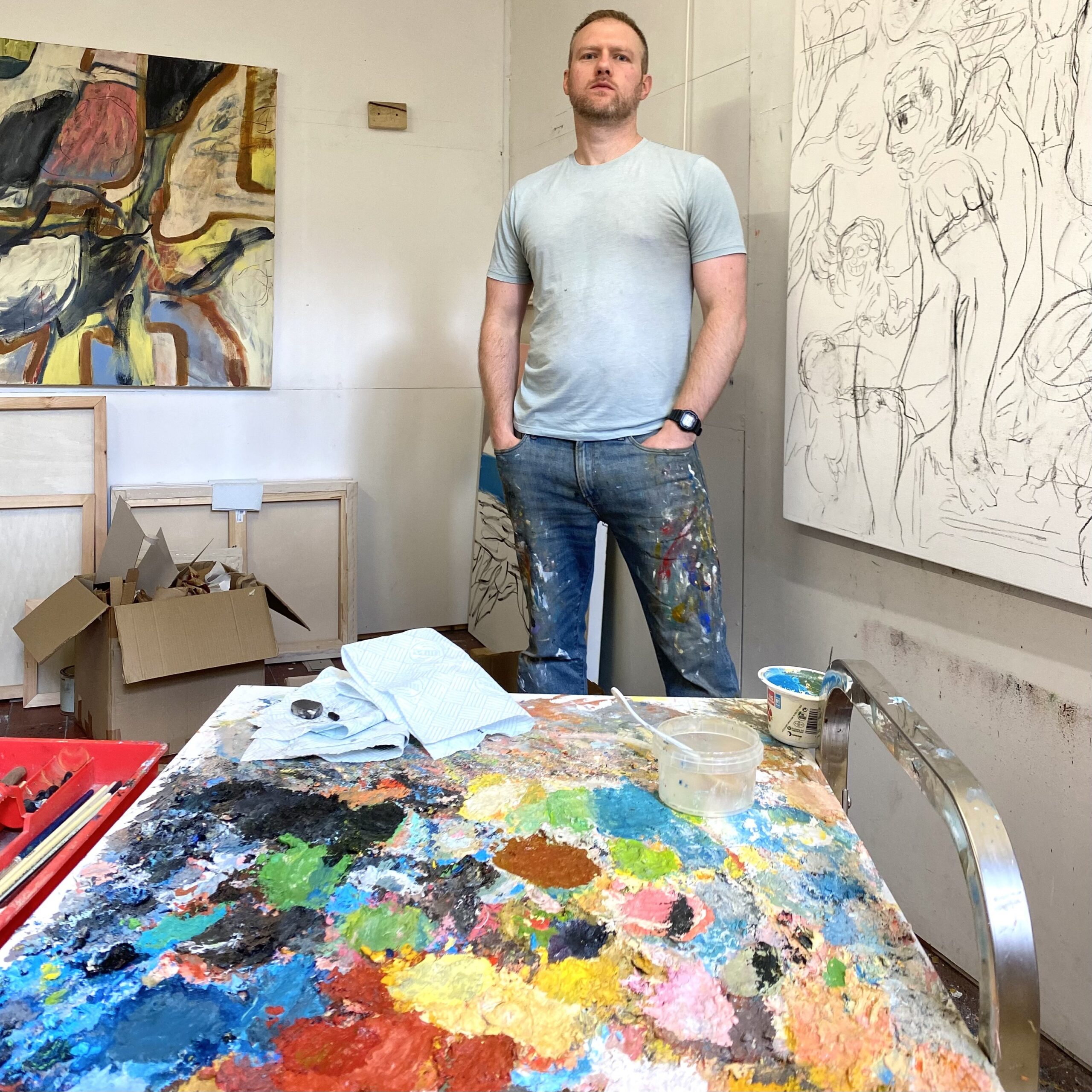
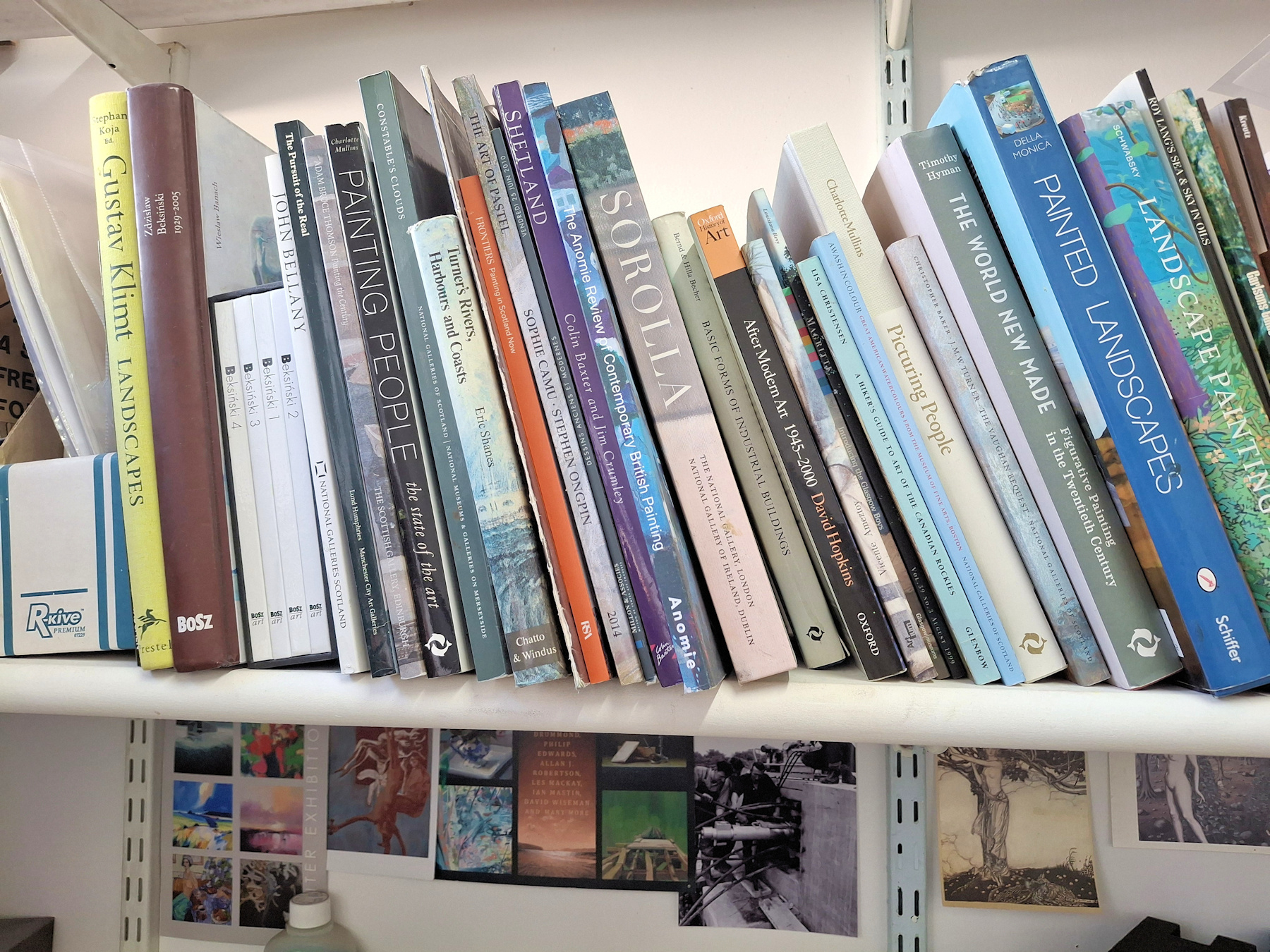
Above image: Allan J Robertson in his studio in Leith, Edinburgh
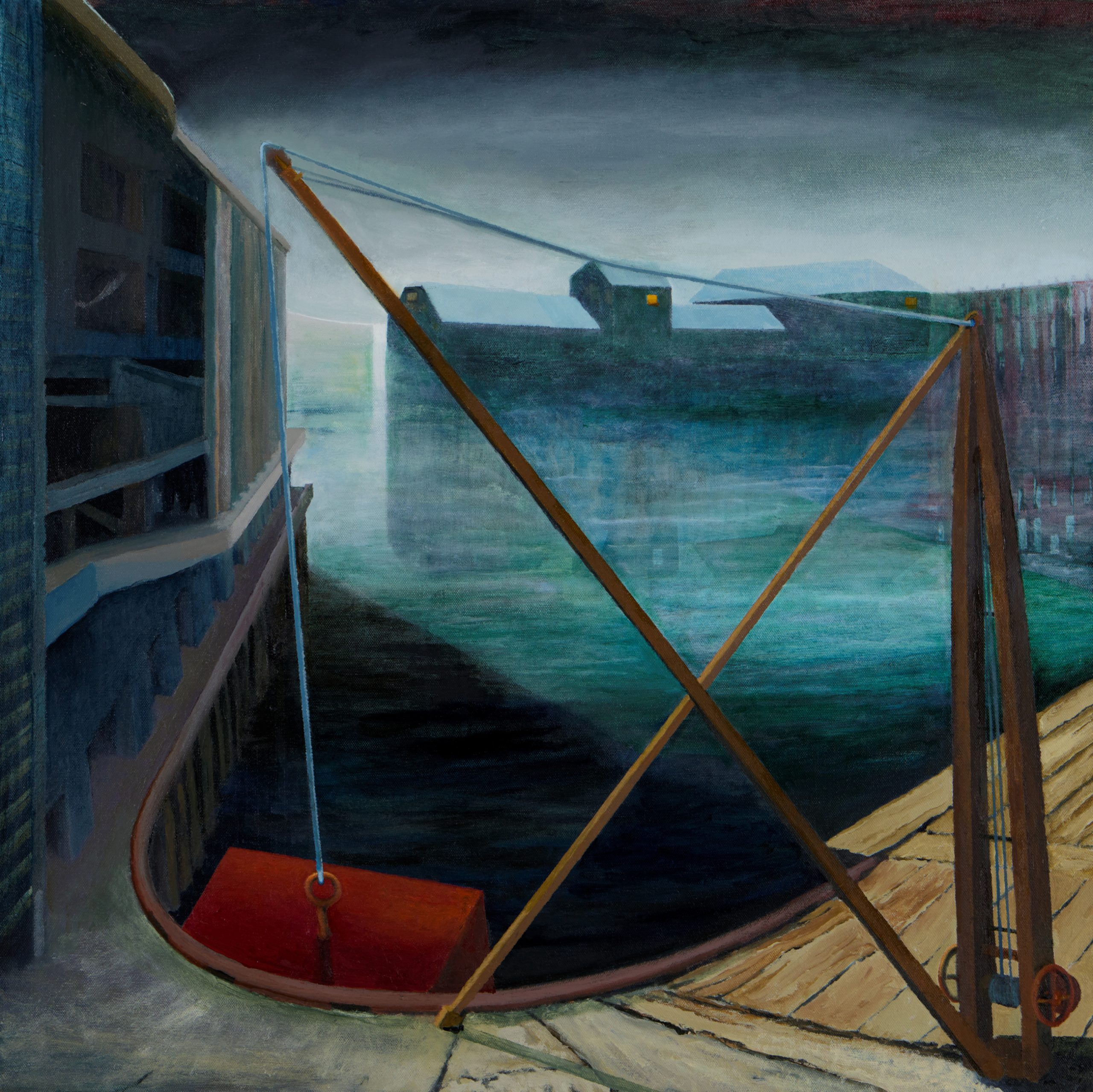
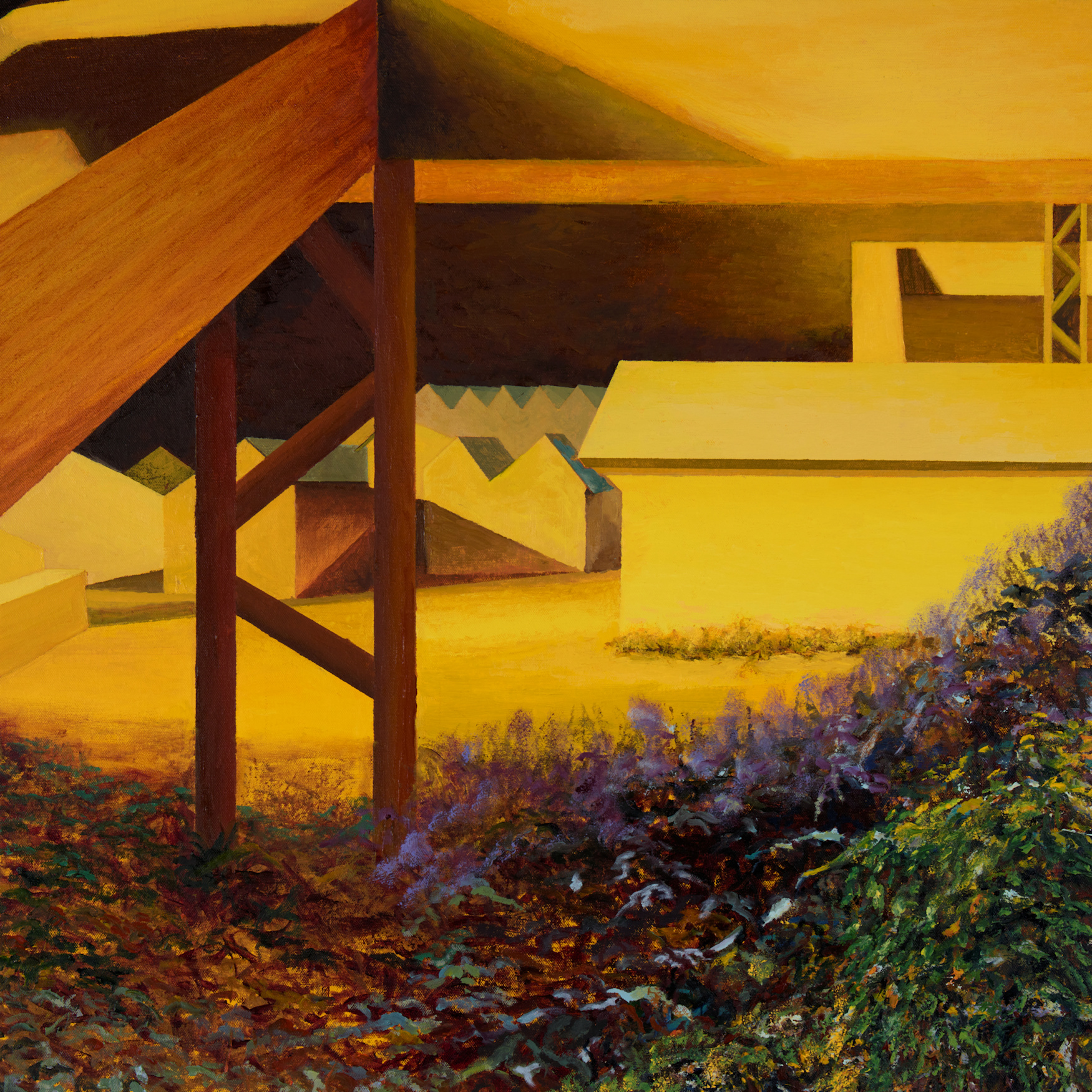
Allan J Robertson
Oil on canvas, 70 x 70 cm | 27.5 x 27.5 in
Josephine: Could you share the story of how you became an artist and tell us more about your artistic background?
Allan: Art has been a central part of my life from an early age. Some of my earliest memories, around the age of three or four, are of colouring and drawing cars and fish, exploring colour, form, and three-dimensional shapes. At school, I was happiest in art class, and although I initially followed a different career path due to not having the required exam results for art college, art remained a constant thread throughout my life.
Over the years, I joined numerous art courses and evening classes. In my early fifties, I decided to finally follow my dream. Encouraged by a night-class tutor, I applied to art college, completing an Art Foundation Course at Leith School of Art before going on to study at Edinburgh College of Art, where I graduated with a BA (Hons) in Painting and Drawing. I now work full-time from my Edinburgh-based studio and regularly take part in group exhibitions across the country – one of the best decisions I’ve made in my life.
Josephine: What does a typical working day in the studio look like for you? Do you have any important routines or rituals?
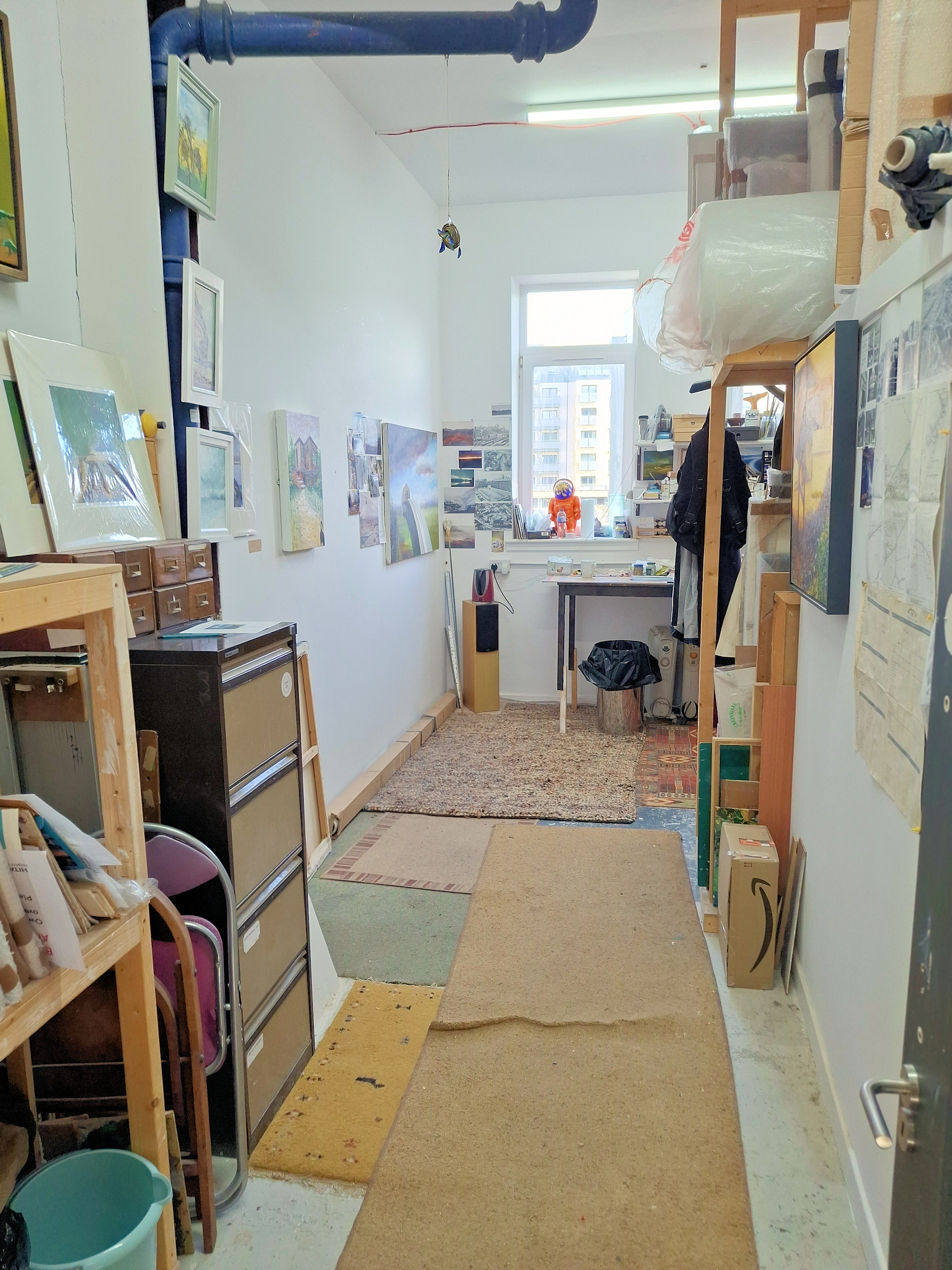
Allan: I start around 8:30 am and make a cup of tea while checking emails on my phone. I put the radio on and listen to what is happening in the world, then look at what I was working on in the studio the day before, or the last time I was in. The previous day may have been spent collecting research or visiting a gallery or exhibition, but if I’ve been painting, I clean my palette, keeping any mixed colours from the day before. I also empty the small pots of dirty turpentine and replace them with fresh turps. I gather rags for cleaning brushes and for use while painting.
As I do this, I’m contemplating the work I’m about to start, looking at it from different angles and judging which part of the painting to begin on that morning. I consider what colours I should mix, or whether I need to remove paint from areas that aren’t working. At the beginning, this morning preparation may take longer than the day before, especially if I decide to remove paint and rework sections. Once the paint is mixed and everything is ready, then I begin.
I’ll work for several hours without realising the time. I love the absorption of working and creating, and becoming immersed in the piece. And I work at my own pace. When I was at college, I remember that some people could create their work very quickly. I think I’ve actually slowed down over the years, but that may reflect that I want to create better work, putting more feeling into each piece.
Josephine: Which materials or tools could you not live without?
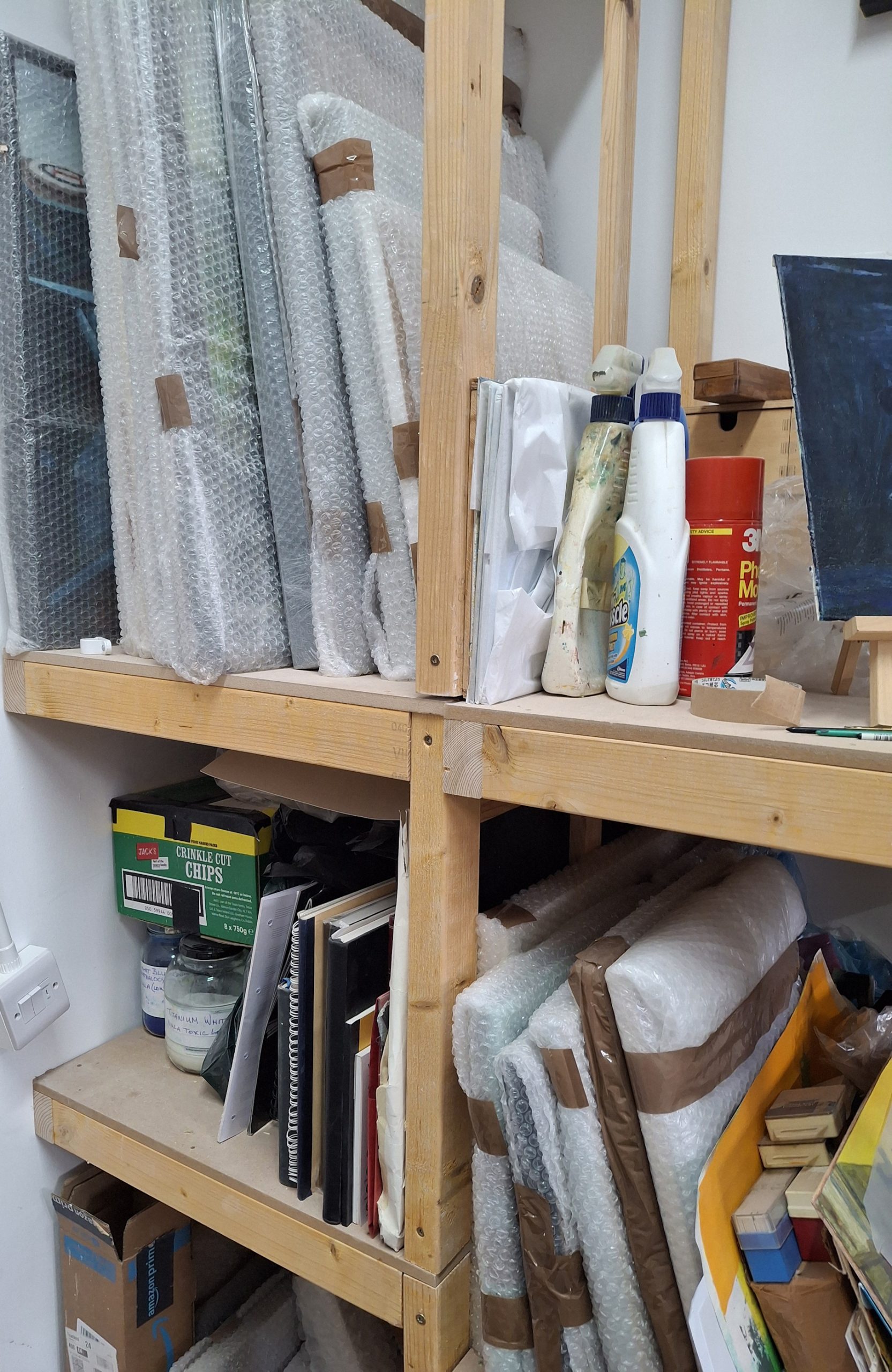
Allan: I use good-quality oil paints and brushes. Over the years, I’ve found it’s better to work with reliable materials, as this saves a lot of heartache and time. I mainly work on stretched canvas, though I’ve also used wood, plywood, and hardboard, all primed with at least four coats of primer or gesso.
I prefer oil paints from brands including Michael Harding, Old Holland, Winsor & Newton, the Winton range, and Jackson’s Artist range. I’ve tried a number of other brands over the years, but I always come back to these. I use Jackson’s Shiro brushes, in a range of long-handle sizes, and Pro Arte Sterling Long, also in various sizes. I’ve used many different makes over the years, but these are the ones I consistently return to. I find that I work better with long-handled brushes.
I also like to have three palette knives, sizes 103 to 105, as well as unstretched canvas, stretchers, a staple gun, and staples to hand. The whites I mainly use are Jackson’s Titanium White, Michael Harding Lead White Alternative, and Jackson’s Zinc White.
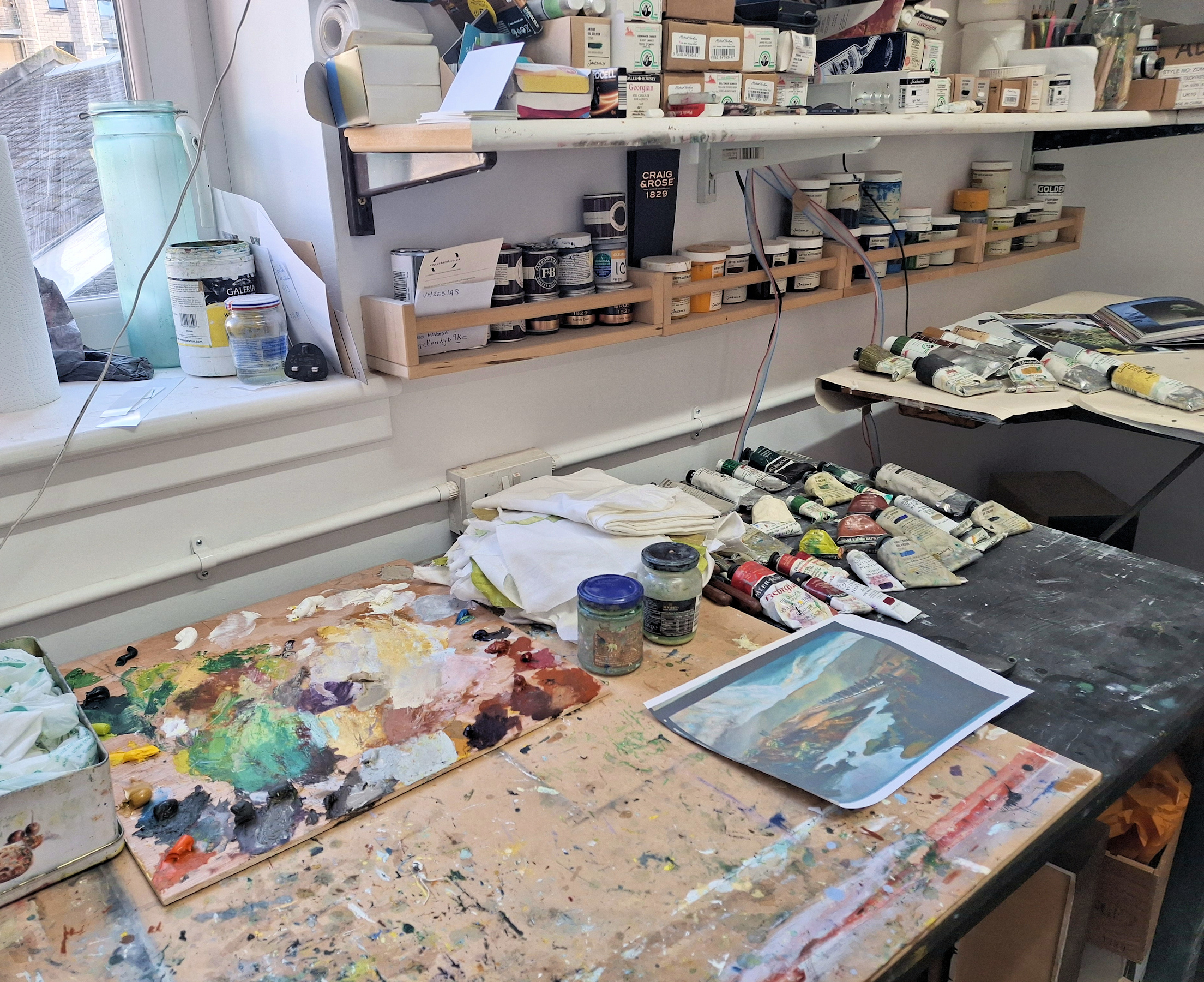
Josephine: Do you work from a reference? Tell us more about your process.
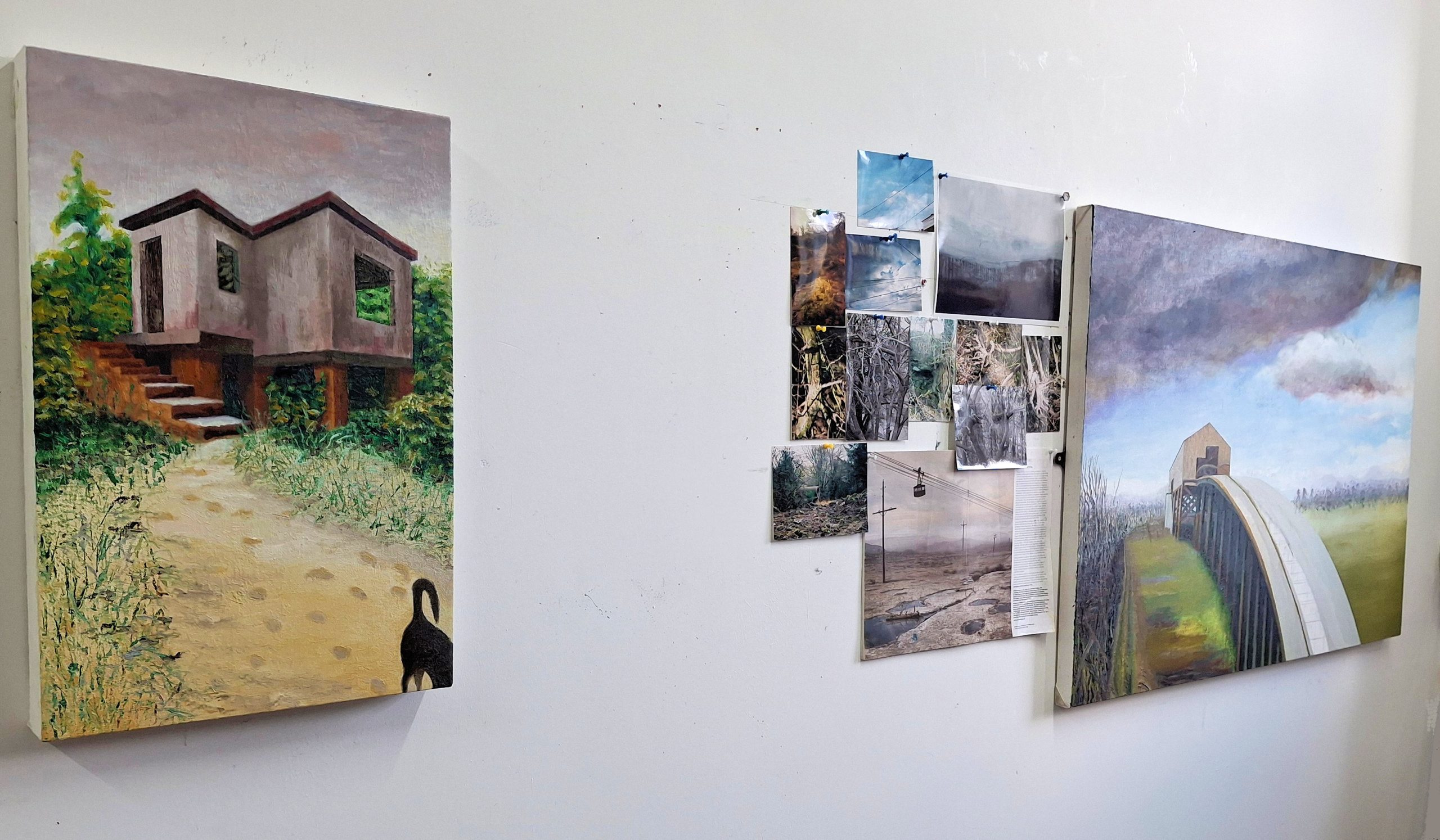
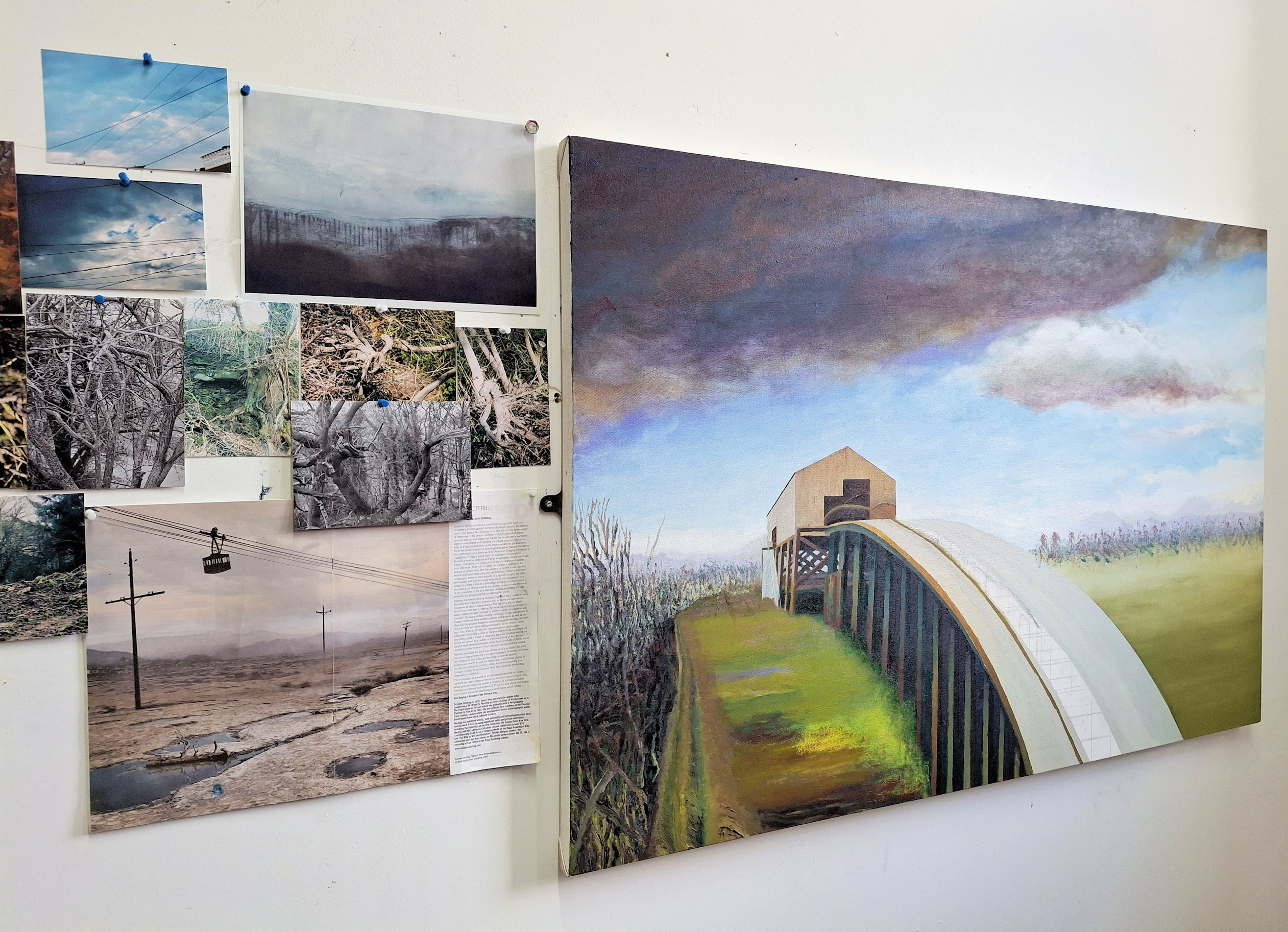
Allan: I work from photographs and sketches, building up my ideas in layers. Starting with a subject such as a building, I then add different elements to the landscape or image, sometimes rotating the elevation or viewing it from above. I cut out and collage ideas before working out the final image, and I often change the image or painting before it’s finished. At times, I’ll leave a piece halfway through and return to it months later. I’ve even abandoned pieces for over a year, coming back to them with fresh eyes and new ideas. I usually work on two paintings at a time; I’ll start one, get about a quarter of the way through it, then begin the other. Typically, they share the same theme.
I’ll also change the atmosphere of the original image, adding a disquieting sky and pushing the composition so it feels slightly out of kilter. I want people to explore the image and look at it differently. At first, it appears to be a pleasant scene, but as you spend time with it, it begins to read differently – there is more to engage with and more to process.
Josephine: Do you regularly draw or keep a sketchbook? If so, how does this inform your work?
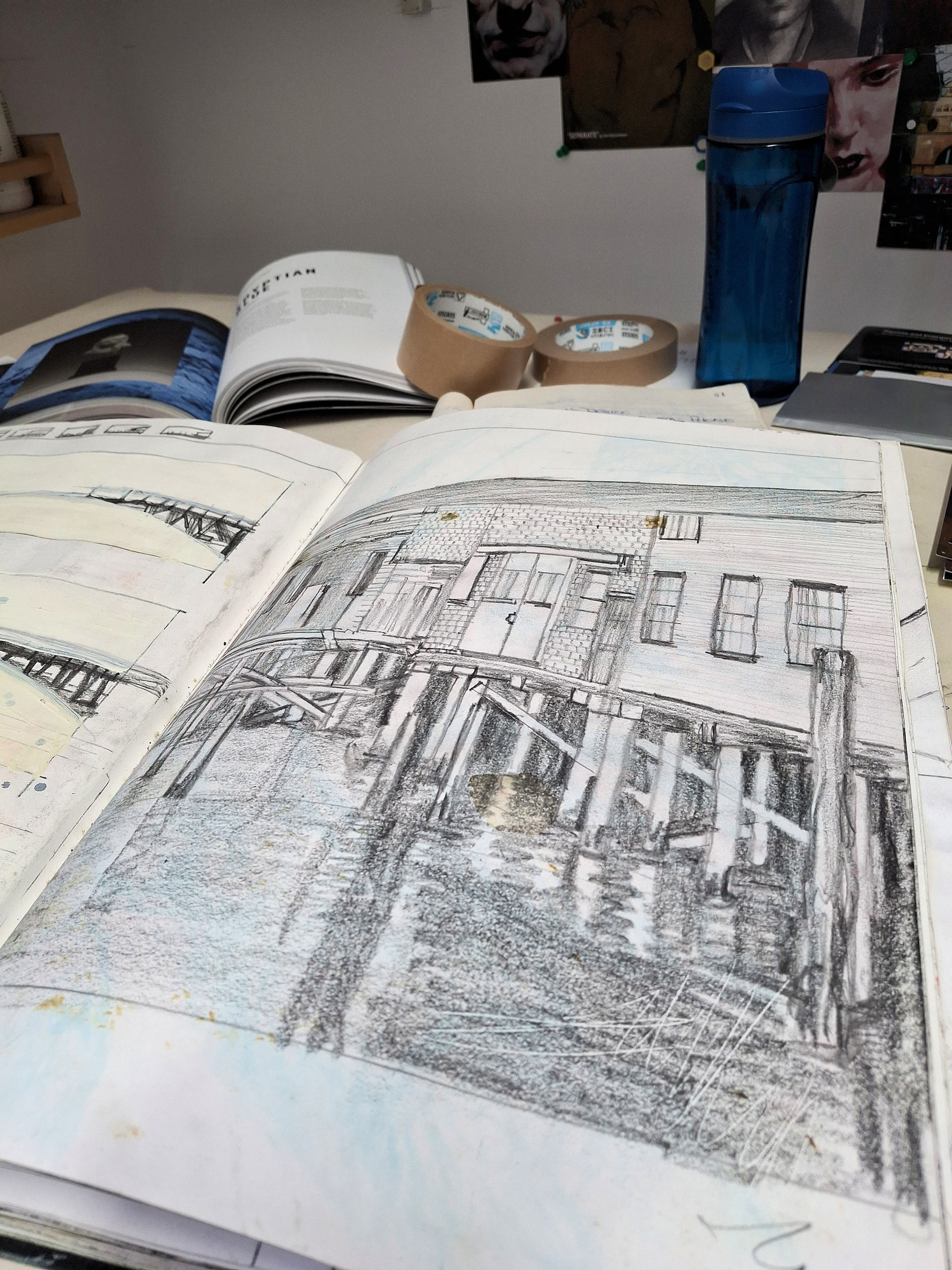
Allan: I used to draw a lot when I was at college, particularly at Leith School of Art. Drawing was very much encouraged there, and I understand the reasoning behind it – it helps develop hand-eye coordination and strengthens the connection between the brain and the hand. But I draw less now, though I know I should do more. My sketchbooks function more as idea books – working books filled with photographs and pieces of paper stuck between the pages. I also have research stored on hard drives that I can refer back to, as well as a filing cabinet containing physical photographs, loose sketches, and ideas I’ve collected over the years.
Josephine: Have you ever had a period of stagnation in creativity? If so, what helped you overcome it?
Allan: I find that one of the best ways to work through this period is by visiting galleries and seeing exhibitions. Looking at other people’s work, even when it has little connection to my own, can still provide the shift in thinking, the inspiration, or quiet nudge needed to become motivated again. I also spend time in the countryside and by the sea, taking in different landscapes and atmospheres. Simply walking and observing helps reset my thinking. Many walks in and around the city can be reached by car or public transport, and these journeys offer as much inspiration as the destination itself.
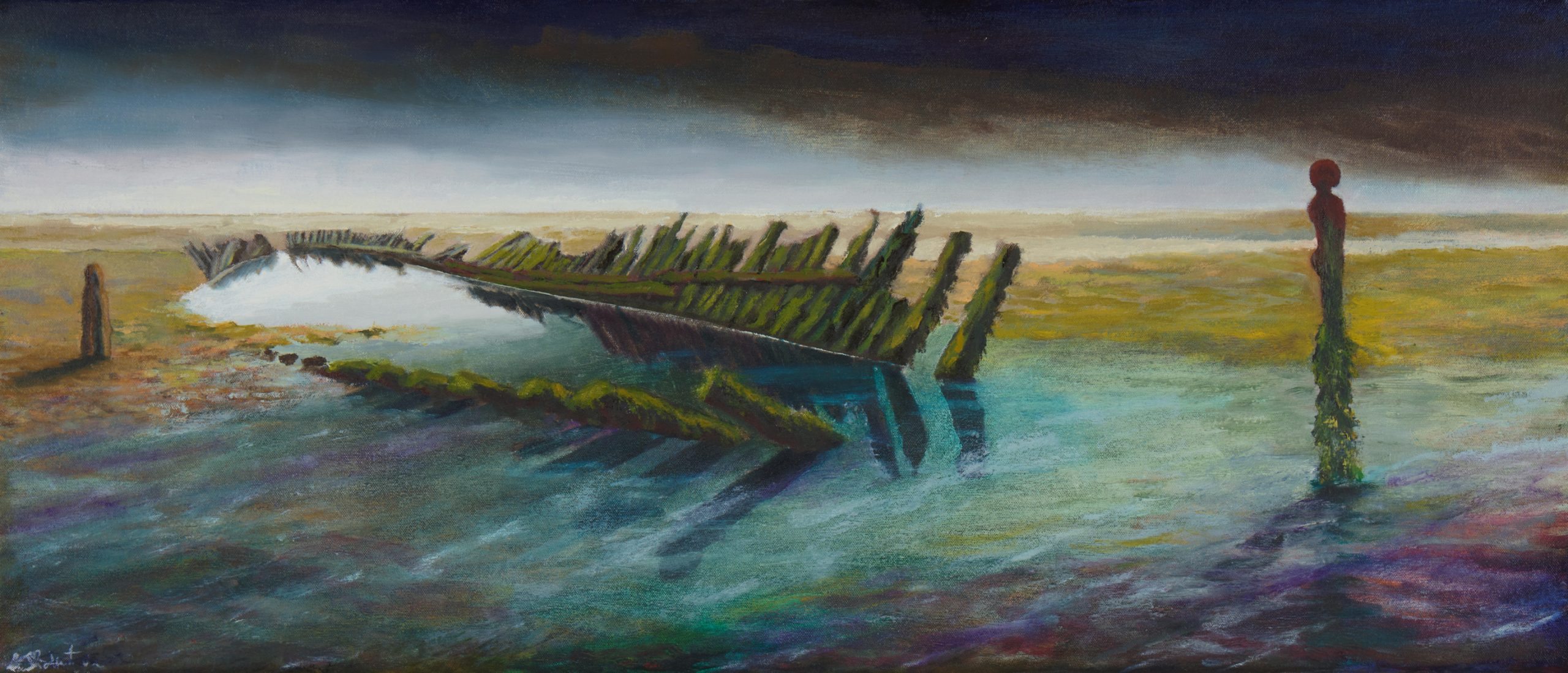
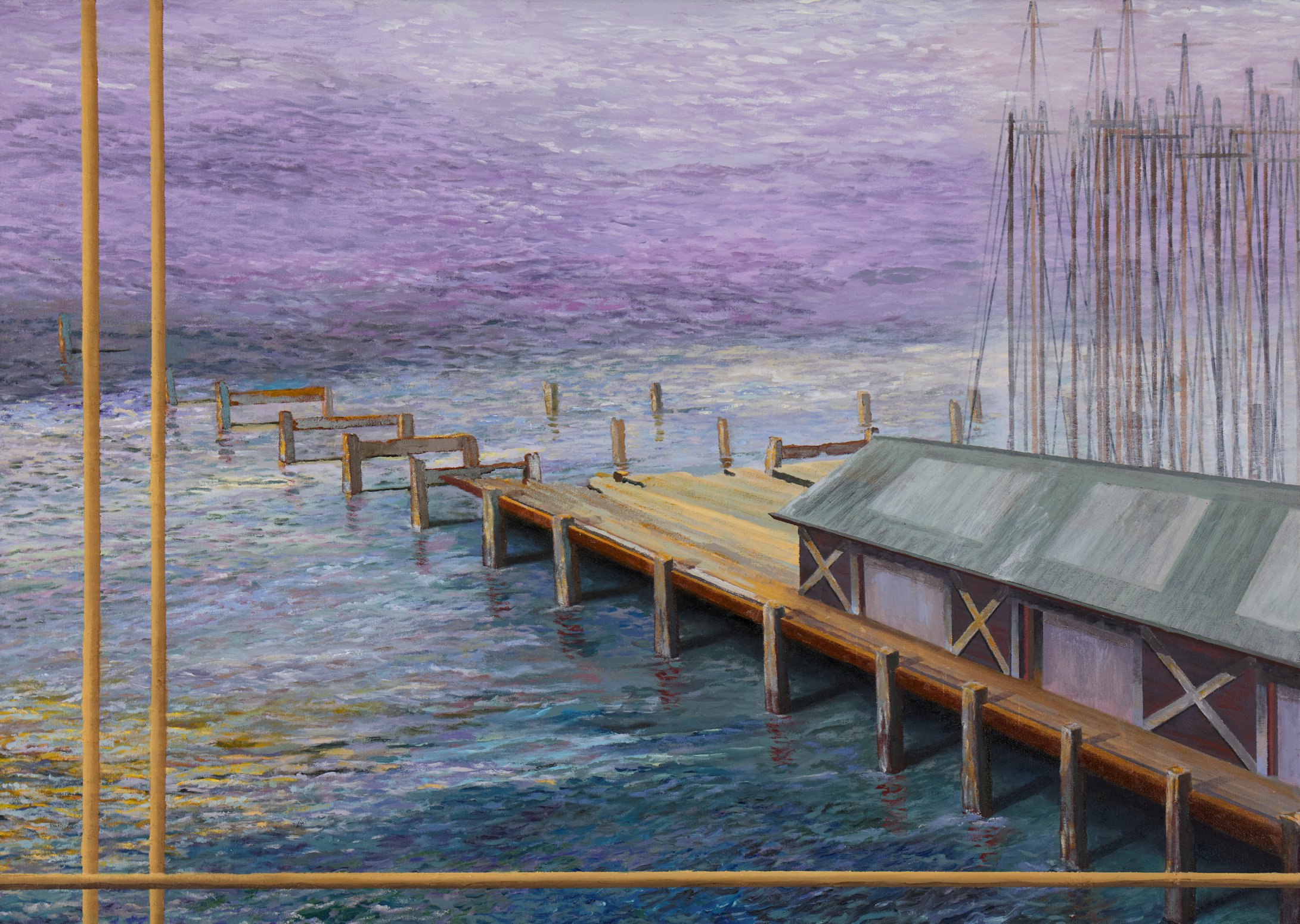
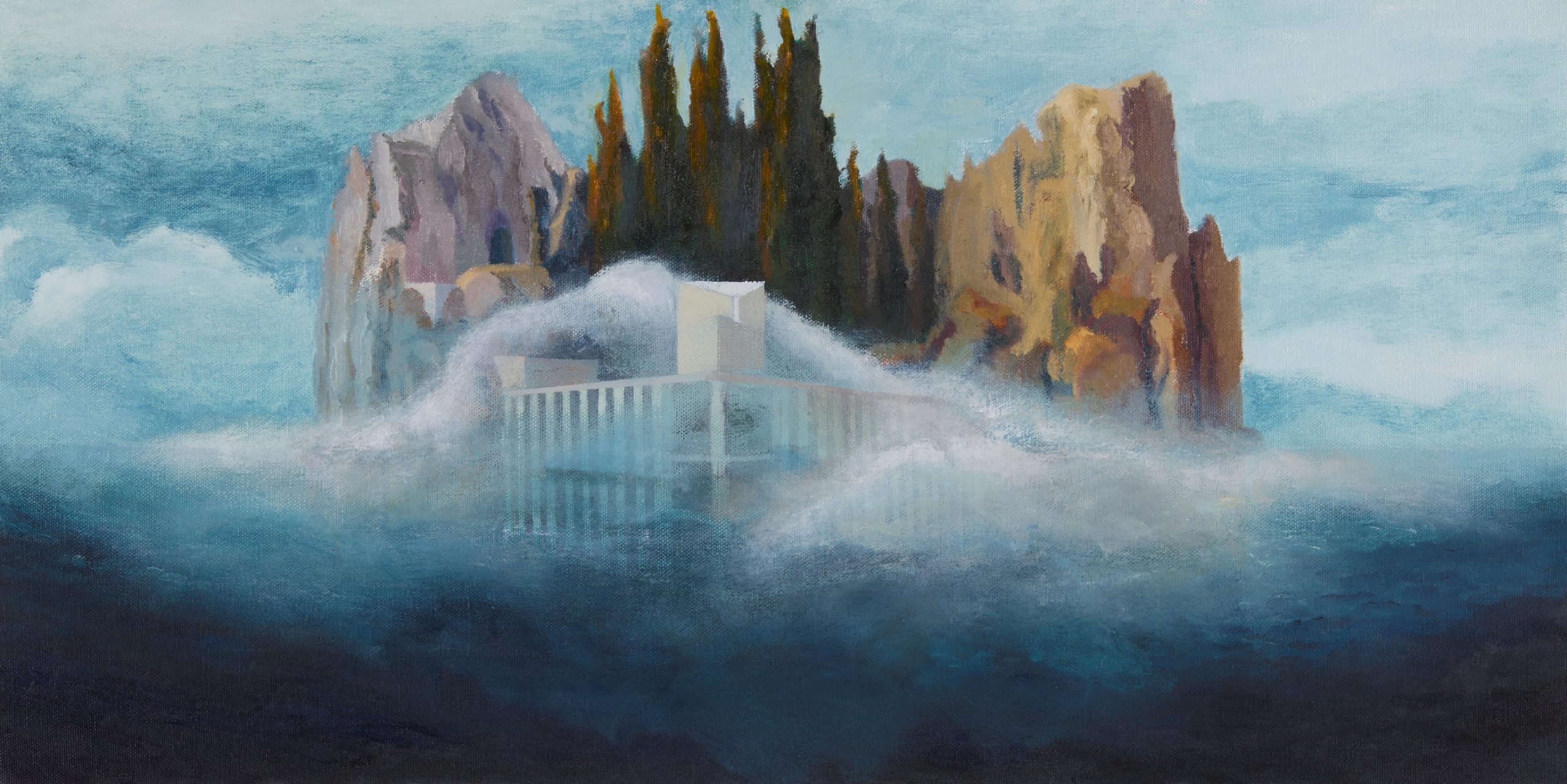
Allan J Robertson
Oil on canvas, 30 x 70 cm I 11.82 x 27.56 in
Josephine: Are there any specific artists or mentors who have inspired you?
Allan: I do have a few, and these do change over the years. Here are just some of them: Andrew Wyeth, James Abbott McNeill Whistler, Edward Hopper, Joaquín Sorolla, Peter Doig, Anselm Kiefer, Stefan Peters, and Ben Sledsens.
Josephine: What were you thinking about or exploring at the time you made End of the Day? What inspired it, and how did it come to be?
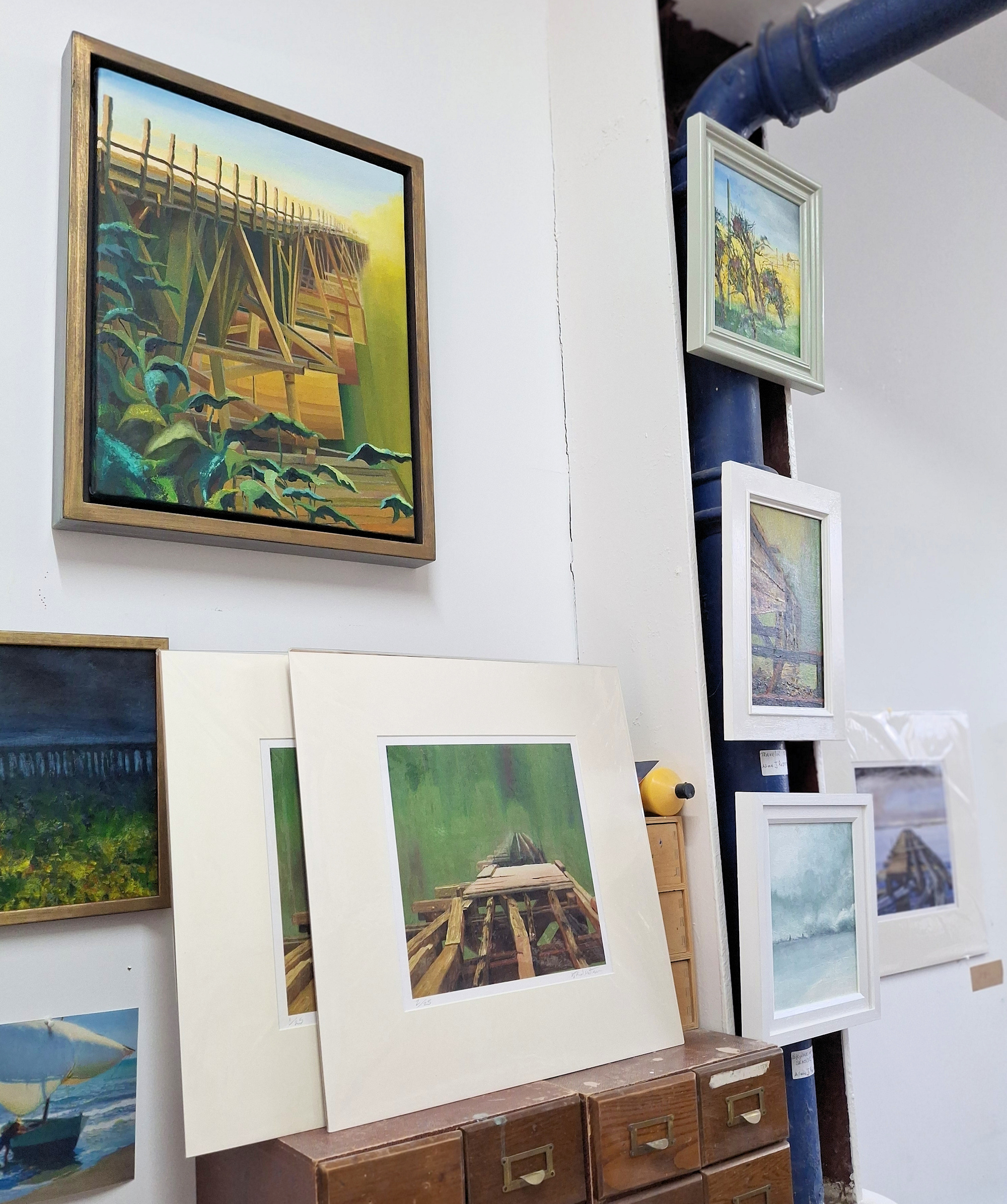
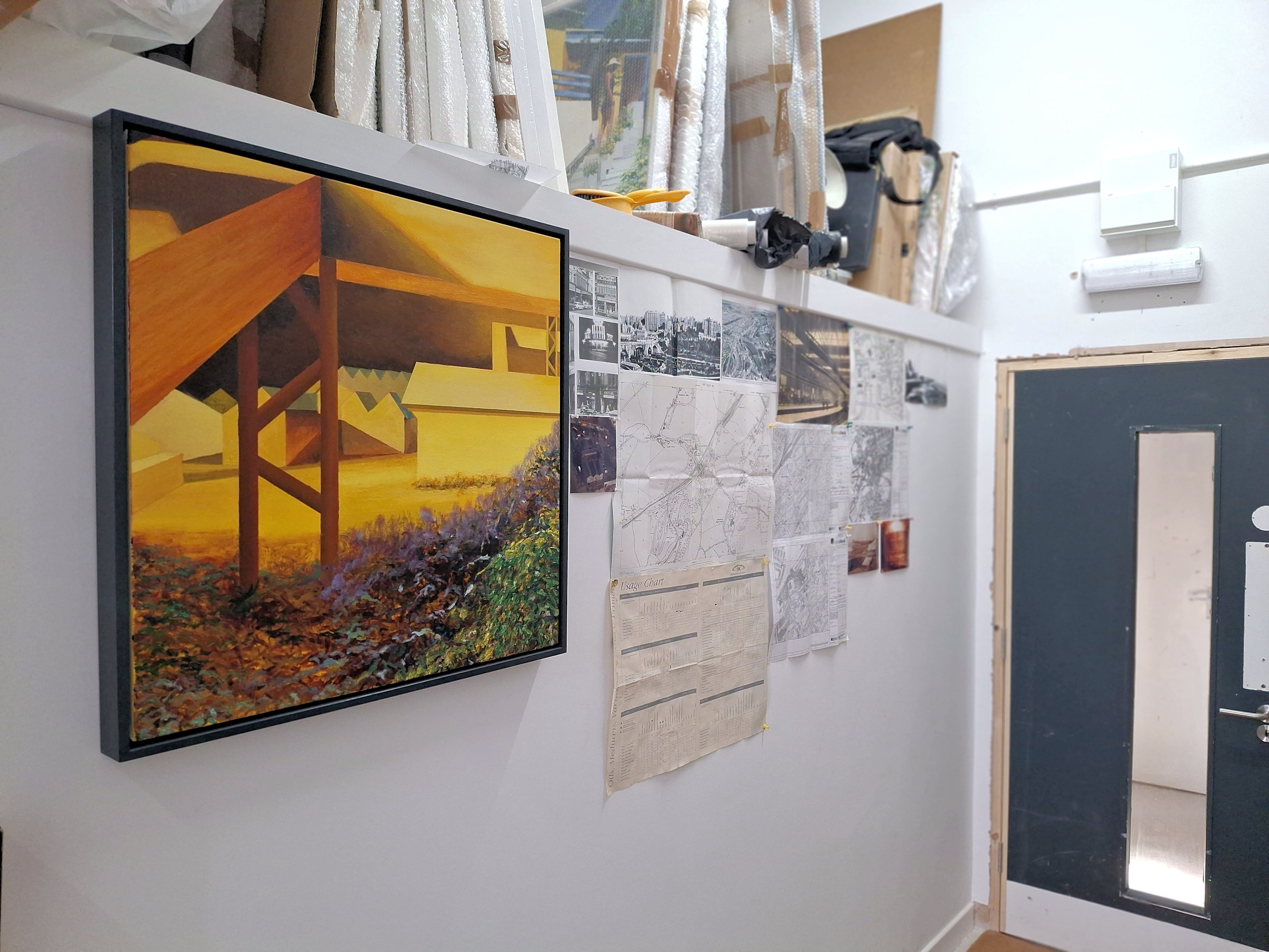
Allan: My interest lies in exploring architectural structures and the foreshore, particularly those uneasy areas on the edge of the built environment. I’m drawn to places where civilization and nature meet, and where the lines between order and disorder, past and present, start to blur. These are often overlooked landscapes, where signs of industry and urban decay sit alongside the rural.
Our old harbours and docks now sit largely idle. Places that were once centres of industry and trade have fallen quiet. The great fishing fleets that once lined the east coast of Scotland and ran down through the east coast of England have vanished, along with the fishing grounds they depended on. Along the west coast, many harbours have slowly declined and disappeared.
In the painting, the evening light reflects this sense of ending. The large building in the background is an empty storehouse. A single light glows in an upper window – someone might be waiting, or working late. The wharves and quays press in towards the viewer as they look across the docks, caught between sunset and moonrise.
In the foreground is an old derrick, once used to lift cargo or fish from boats. It’s under strain as it raises a dark red box, or possibly lowers it. It’s unclear which way it’s moving, and that uncertainty is part of the image.
Allan J Robertson
Oil on canvas, 76 x 107 cm I 29.92 x 42.13 in
Josephine: What made you submit this piece to Jackson’s Art Prize?
Allan: I felt the Jackson’s Art Prize was a strong platform for getting my work in front of a wider audience. And I liked the fact that the judges came from a broad range of backgrounds and disciplines; some come from the wider creative industries, as curators, board members, or collectors, which adds another perspective to the judging.
Josephine: Tell us more about the location featured in End of the Day, do you have a personal connection to the coastal industry?
Allan: I was born in Edinburgh, not far from the sea, by the Firth of Forth, where the North Sea cuts into the land. As a child, I lived for a couple of years in the fishing village of Port Seton, further down the coast. In the 1960s, I saw many fishing trawlers there, although these fishing villages were already in decline.
I remember the boats returning and unloading their catch: the wooden boxes stacked on the quayside, the stones slippery and wet underfoot. By that time, derricks were used on the boats to swing the catch ashore. I used to draw pictures of the boats in the harbour. I also remember drawing a fishing trawler on the slipway.
Josephine: The red weight dragging on the end of the fragile pulley over dark water suggests a way of life at risk of snapping off and sinking into history – could you tell us more about the intention behind it?
Allan: In the foreground, there is an old derrick used for lifting cargo or catch from a ship, trawler, or boat below. It strains under the effort of raising a dark red weight. It could be moving up or being lowered, we don’t know.
The light is ghostly and hard to read. The dark red object suggests the beating heart or soul of the industry itself. Is this the end, or are we witnessing the possibility of a new beginning? I prefer to leave that question open to the viewer. I want them to decide how they read the painting and what story they take from it. I try to create images that invite interpretation rather than provide a fixed meaning.
Allan J Robertson
Oil on canvas, 70 x 70 cm I 27.56 x 27.56 in
Josephine: Are there any new techniques or ideas you’re excited to explore using the materials from your prize?
Allan: There are a number of paintings I want to get on with, but I’ve held off buying good‑quality canvas for now. I already have several stretchers made up, as I usually stretch and prime my own canvases. I’ll be stocking up on good‑quality paints and primer, and I need turpentine, a fast‑drying alkyd oil medium, and brushes. I’ll take my time and think carefully about how best to use the money, exploring my ideas as I go.
Josephine: How did it feel to move through the stages of the competition and win a Jackson’s Choice Award?
Allan: At first, it felt quite daunting. When I realised how many works had been entered, over 16,000, I was a bit worried that it would be easy for my work to be overlooked.
Getting through to the first round, to the Extended Longlist, with two pieces was really encouraging, especially given the high standard of work. I was very pleased about having one piece reach the Longlist. Although looking back through all the other pieces at that stage was probably not the best idea! Reaching the Shortlist after that felt fantastic.
The next step was to ask people to vote for me. People started to take notice of the exhibition and began to root for me, which was really encouraging. When it came down to the final awards, it became nerve‑racking. I was selected on the second‑to‑last day for the Jackson’s Choice Award, alongside four other artists. I’m still over the moon about being picked.
Allan J Robertson
Oil on canvas, 31 x 61 cm I 12.21 x 24.41 in
Josephine: What’s coming up next for you?
Allan: For now, I’m concentrating on getting back into the studio and carrying on with the work. The experience of the prize has given me a real boost, and I want to channel that energy into developing the ideas I’m already exploring. I’m continuing to work on paintings that look at coastal and industrial landscapes, and I’m taking time to push the work further, both visually and conceptually. At this stage, it’s about staying focused, making strong work, and seeing where that leads next.
Further Reading
Meet Eleanor Johnson, Winner of Jackson’s Art Prize 2025
Jackson’s Art Prize 2025 Exhibition at Affordable Art Fair
How We Collaborate With Artists
Expert Advice on Making Your Way as an Artist
Shop Oil Painting on jacksonsart.com