



Welcome to the first article in our Expert Advice for Artists series, kicking off with tips on how to start making your way as an artist. The art world can be daunting so we’re going to take it one step at a time: from finding your artistic voice, questioning the kind of artist you want to be, to the power of the part-time job, organisation, online presence and opportunities, building a community, and working towards your first show.
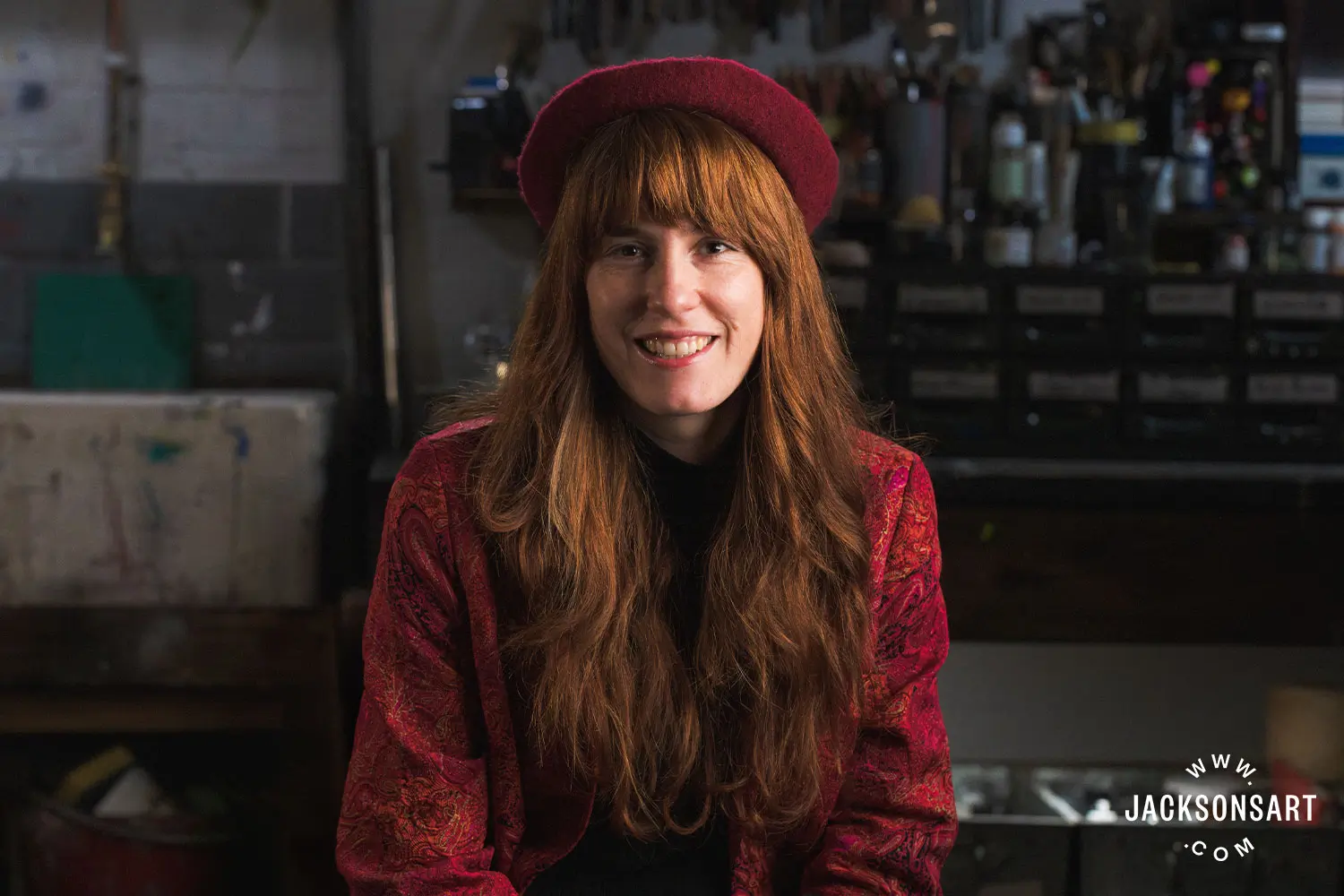
Expert Advice on Making Your Way as an Artist
Find Your Artistic Voice
The first and most important thing when becoming an artist is to find your voice. Often artists want to rush into galleries and exhibitions when they are still in the exploration and experimentation phase of their practice. If you have a patchwork selection of half-finished series in varying subjects or mediums then chances are you need more time to develop. Commercial galleries need to work with artists they can rely on to produce consistent work. Similarly, collectors need the confidence that an artist is more than a one-hit-wonder. Artists need roots, a foundation. So keep finding the edges of your medium, subject matter, and format until your work has arrived at a stable position. Make work without the pressure of it having to ‘sell’ or suit anyone in particular. That way it will be authentically, recognisably you, and you’ll have a much stronger base to develop from.
What Kind of Artist Do I Want to Be?
Ask yourself, do I even want to be a commercial artist in the traditional sense of selling directly to collectors or in galleries? Or would my work be suited to being reproduced digitally via licensing or publishing deals? Or perhaps you would like to work on community engagement projects or public art? The vision of how your work is positioned in the world is really key. It will help you narrow down the options, making it clearer which steps to take. Then you can start to research those avenues and visualise the specific, realistic, places where you would like your work to be shown, sold, or experienced.
Get Another Job
I often quote Elizabeth Gilbert in Big Magic, a brilliant book about creativity. She counters the myth that artists should be starving to make good work. It can be risky at the beginning to make your art the sole breadwinner. This can stifle the work and change the course of it just to make ends meet. The sole purpose of making art should not be ‘to sell’. Whilst you’re discovering your voice it needs to be unburdened by the financial fear in order to reach its potential. Play the long game and don’t expect a full-time living from art the minute you start sharing your work on Instagram. Consider the type of job and hours carefully to preserve energy for your main purpose of becoming a professional artist. Even if a full-time job is necessary at the start, the art will find time to be made. You can pepper away then consider booking a residency as a holiday to get some proper flow.
Get Organised and Online
Once your practice is in a stable position and you’ve completed a cohesive body of work you need to get organised! A helpful exercise is to build a website as it acts as a to-do list for everything you need to get started as an artist. Start by photographing the work, writing titles, documenting the dimensions, and a suitable price for each piece (more on that in the next article). It’s really affirming, or enlightening, to see how the pieces look together on a page. Next is to write an artist statement, and biography/CV, and have a studio shot of you and/or your work. You can also set up a business Instagram page and start populating the grid with single images of your newly photographed work. Clean and tidy like a catalogue.

Find Your Community
No artist is an island and we rely on fellow artists, curators, and representatives as supporters and collaborators. And you don’t need to have gone to art school to build your own network. Start by signing up to the newsletter for a bunch of galleries and artists you like and go to openings and talks. Art fairs are a great resource too, as you can discover lots of galleries/artists in one go and dip a more anonymous toe into the art world. Buddy up with a fellow artist for solidarity and you’ll start to see the same people. Engage in conversations, ask questions, and then follow up on Instagram/by email with a little thank you for the event or a “Nice to meet you”. This acts as a casual introduction to your work. If you’re unable to be there in person, you can often view exhibition collections online and you can send the artist/gallery feedback via social media. You can also join virtual communities such as Artquest, who have a great artist exchange programme.
Exhibitions and Opportunities
It can be a real catalyst to have something on the horizon to work towards. This could be an open house, art trail, open studio, community space pop-up, art market, or fair. You can do this on your own or in a small group to share costs and networks. This will galvanise you and the work to have a date to be ‘ready’ for. Your own launch! Invite your friends and friends of friends, as this is how you start to build an audience. It’s also a great opportunity to practice talking about your work. Maximise this by asking friends to share posts of the work on social media and join your ‘invitation list’ for events and first looks at your new work. It’s also worth applying for early stage career open calls for group shows, as long as you don’t spend a fortune on them. Check out Curator Space and a-n: The Artists Information Company to find opportunities.
So there’s plenty for you to crack on with to get started as an artist. Remember to be patient and let the work be your ultimate guide. It will tell you where it wants to be if you listen closely.
Expert Coaching Webinars With Claudia Kennaugh
Over the past few months, we asked the Jackson’s community what they wanted to know most about building a career in art. Based on your responses, we’ve created six webinars in collaboration with Claudia to explore these key topics. Each session is packed with valuable insights to help you grow and succeed as an artist, plus a live Q&A where you can ask your own questions.
Upcoming Webinars
Framing and Presentation: 29th April
Putting on Exhibitions: 24th June
Self-representing Your Art: 26th August
Social Media and Websites: 28th October
Making Reproductions of Your Work: 16th December
Further Reading
How We Collaborate With Artists
Art Fair Checklist for Artists
The Mental Health Benefits of Creating Art
Shop Art Materials on jacksonsart.com


8 thoughts on “Expert Advice on Making Your Way as an Artist”
Thank you very much Claudia for all these
information and for the precious links you
shared.
It’s such a pleasure! I’m so glad you found it helpful. Good luck,
Claudia
Thank you, Claudia, for your valuable
advice. I continue to paint for myself,
despite friends encouraging me to showcase
my work in exhibitions and media. I feel the
need to develop my own style and technique,
rather than simply copying from pictures.
You’re so welcome Jacob. Keep going,
Claudia
Thank you for this valuable advice. I have a lot of work and have had one or two local exhibitions. People often comment how varied my work is. I enjoy exploring and experiencing different mediums and don’t want to limit myself, and your advice has helped me to understand what I want. I especially winced at the “get organised” bit… so necessary! Thanks again!
I’m so delighted this has offered you some
clarity Julia!
I wish l could have read this twenty
years ago! Even though l was told by my
Tutor that my work was good enough for
the Royal Academy. I just wasn’t
confident.
Sorry to hear that Tess! It’s a shame when comments like that have a lasting impact, but keep an eye out for the rest of the articles in this series because they’re is some great advice on the way!
Comments are closed.