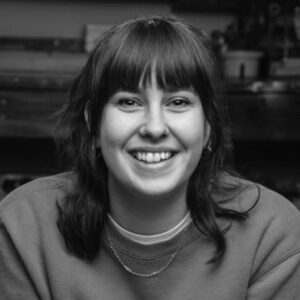
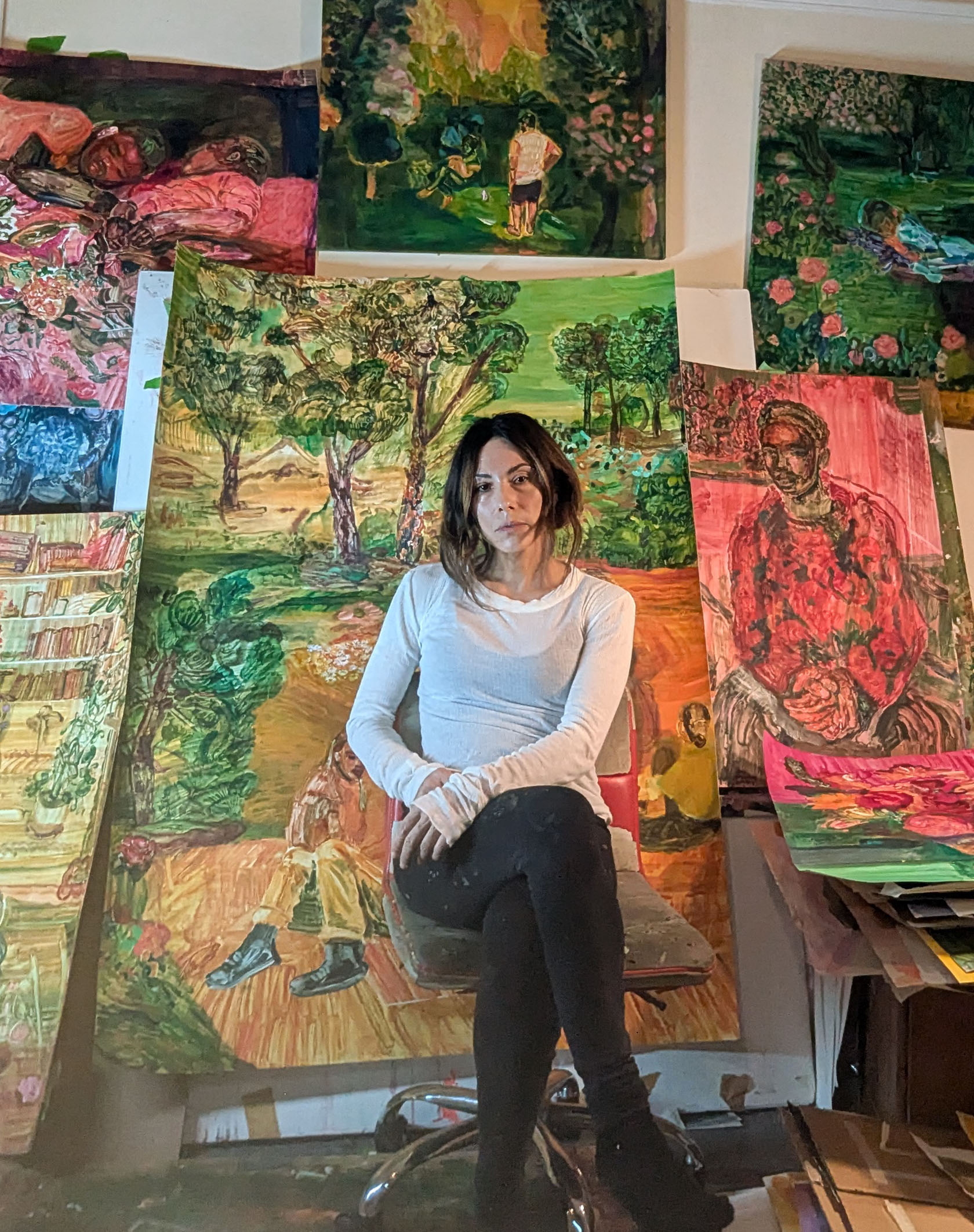
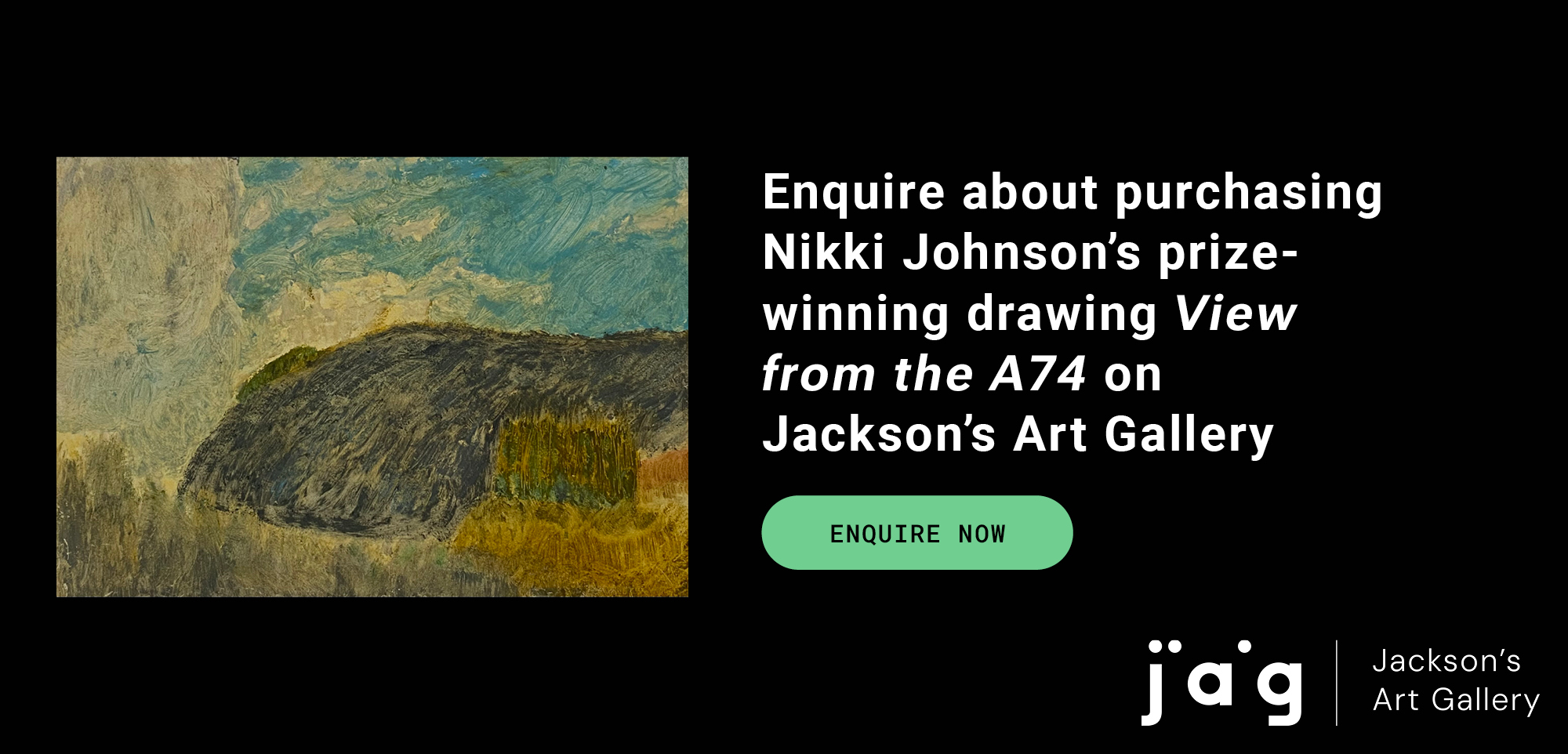
Nikki Johnson won the Pastel Award in Jackson’s Art Prize this year with her work View From the A74. In this interview, she discusses her impulse to capture inspiration in the moment, the worn-down brushes that become her favourites, and feeling the sharp absence of Scamp.
Above image: View from The Roaches, Staffordshire Moorlands, Peak District
Nikki Johnson
Oil pastels, oil sticks, and soft pastels on cardboard, 21 x 15.5 cm | 8.2 x 6.1 in
Josephine: Could you share the story of how you became an artist and tell us more about your artistic background?
Nikki: My sister and I were encouraged to draw from an early age, particularly by my maternal Grandad, who himself had kept a sketchbook, painting birds and caricatures in gouache and watercolour. I have strong memories of turning the pages over in awe. I think the encouragement was a way of keeping us occupied in a productive way.
In my early teens, I’d search through black and white portrait photography at our local library, copying portraits to improve my observational skills. The process of drawing transported me into a different space. Focused my brain, blocking out external ‘noise’. Despite not seeing eye to eye with my art teachers at school, who I found too restrictive in their approach to teaching, I never lost sight of wanting to further my art education and applied to Liverpool Polytechnic Art Foundation. After several years of receiving prescribed teaching at school, the foundation course was a revelation. A very different environment, where freedom to explore was at the core of the course. Informal and impromptu conversations with an open-door policy.
Conformity never being my strong point, I wasn’t ready to leave the creative environment of Hope Street and Hope Place, and decided to do a year of further exploration, unguided, along with my friend, Sally. We were able to continue using the studio spaces at the art school as part of an open access initiative and spent long days in the life drawing room, tagging on to any teaching sessions and lectures we could get away with!
The life room had the most tremendous light. We spent many hours drawing legendary life model, Sue Lee. Sue was a huge character on the Liverpool art scene, playing an integral part in many art students’ education, including my own. She’d enter the room with bags of art materials, books, props and treats. She’d warm us up with two-minute poses, her distinctive bleached hair piled high and thick kohl eyeliner.
From there, I travelled to Stoke to study Fine Art at Staffordshire Polytechnic, exploring a more conceptual line of enquiry in the second year of my degree. The course had changed from a predominantly painting-focused practice to more conceptually driven, under the change of fine art lecturers whose arrival coincided with mine. A shift, that whilst in hindsight has proved useful in terms of reflection and consideration of materials, resulted in me feeling disengaged with art education and my own art practice at the time. I went straight from education into what became a 20-year career at the University library, highlighting resources and collections through commissions and projects, whilst raising a family. I left the university in 2015 to return to painting and develop my practice.
Josephine: What does a typical working day in the studio look like for you? Do you have any important routines or rituals?
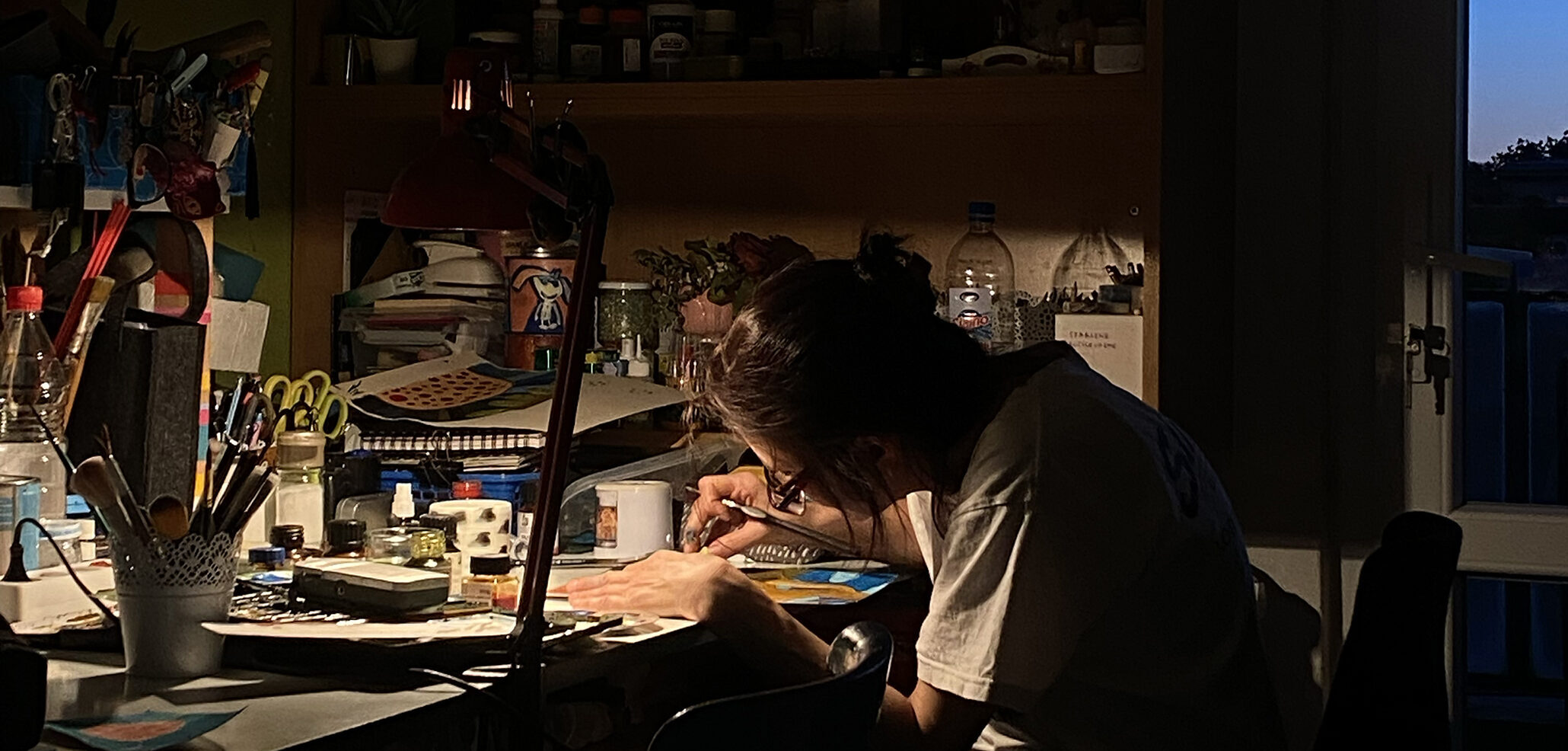
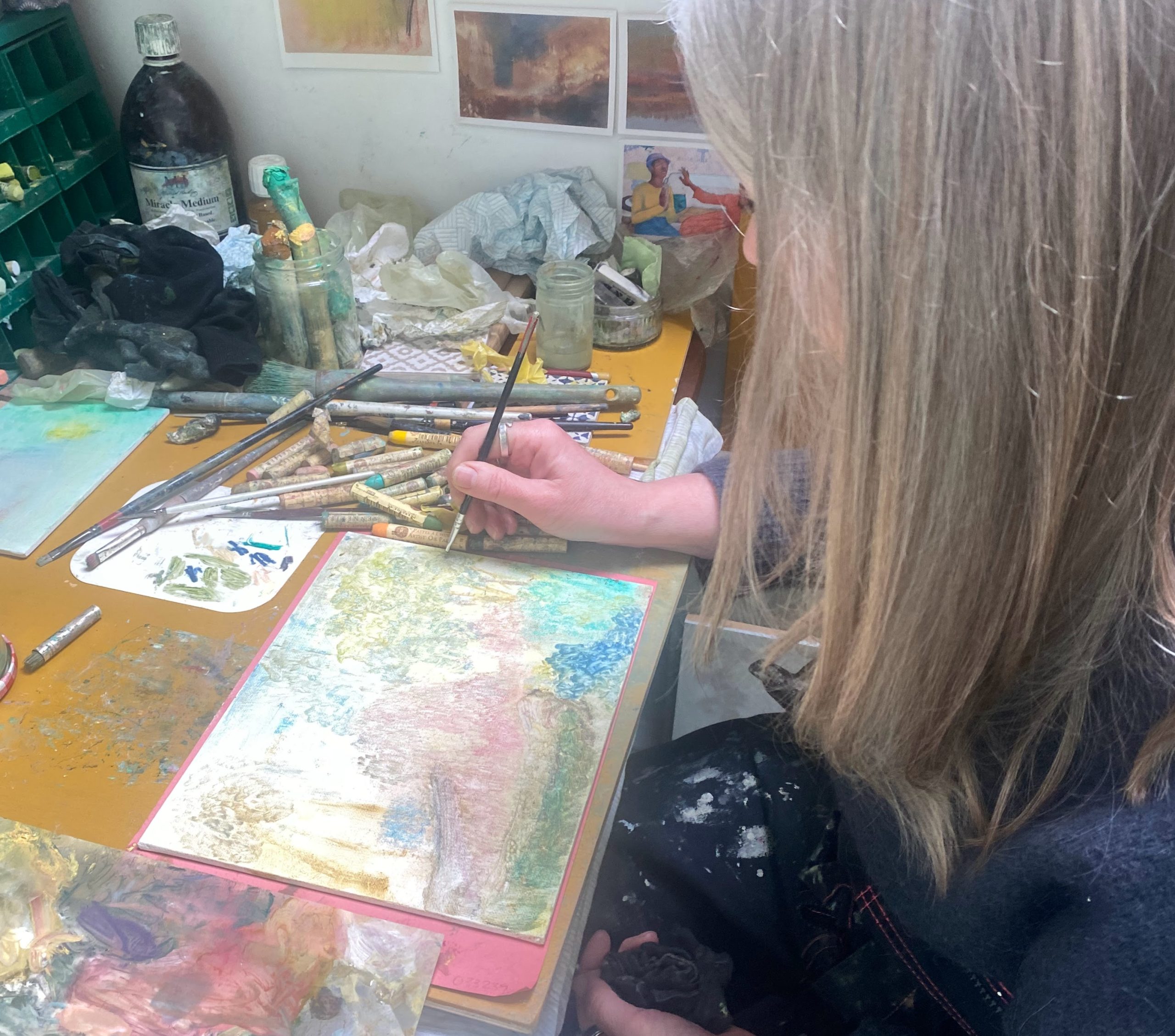
Nikki: The first thing I’ll do is reflect on the previous day’s work. I’ll spend a bit of time scribbling notes, looking through stages of the work on my phone and sometimes the odd bit of scrolling. I rarely have silence in the studio. If I feel devoid of company and want to hear voices, I’ll listen to a podcast. Other times, I’ll listen to music. Occasionally, I’ll tune into the sounds drifting through the window. It makes me feel connected to something outside of my immediate environment. A kind of grounding, maybe? When I’m looking back at a painting, I can recall the conversation or music I was listening to at the time I was making it. I like those associations.
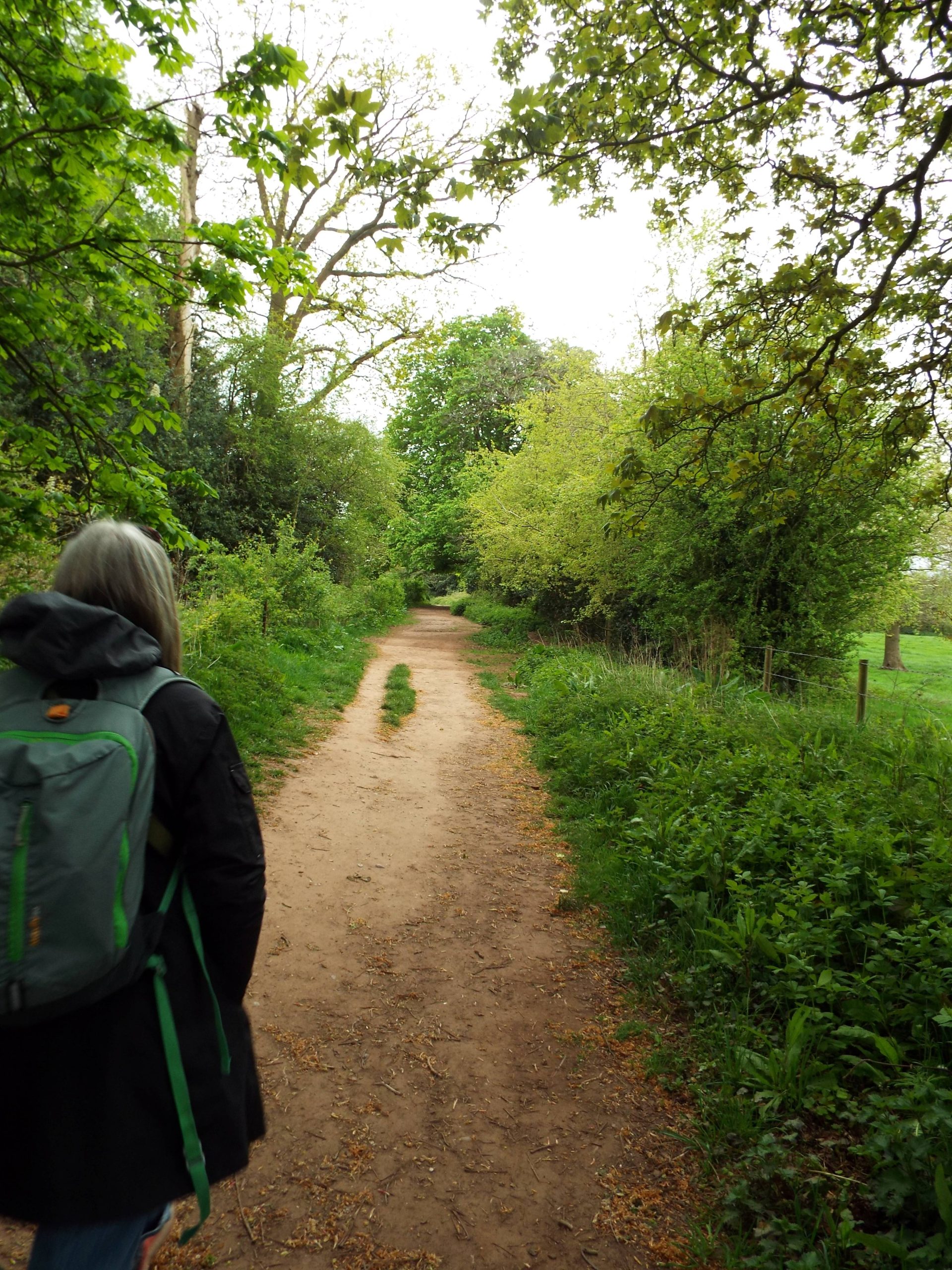
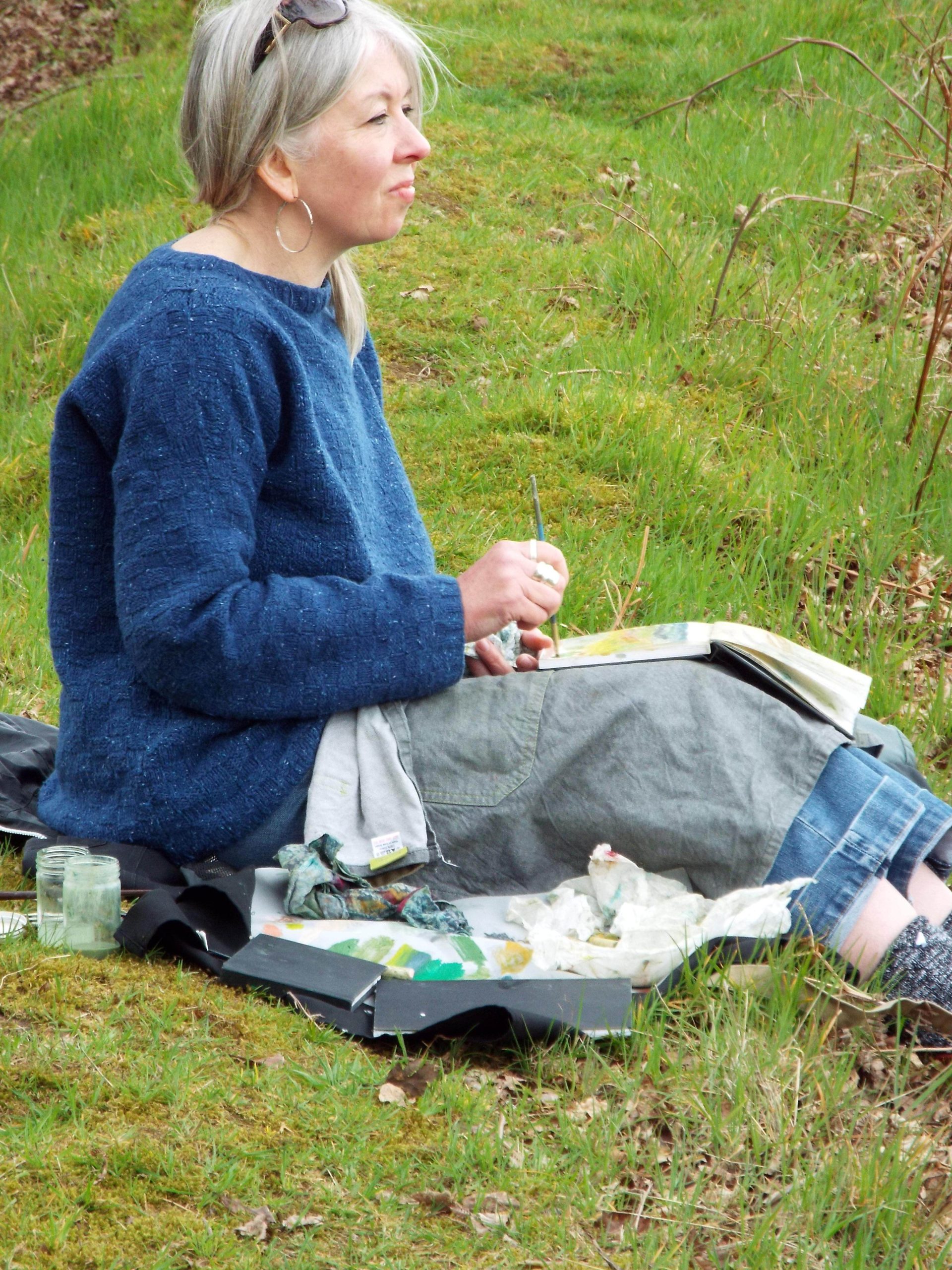
If I’m feeling particularly angsty or distracted, I’ll take myself off for a short walk or go outside to draw. It helps to free up headspace and shake off any external stress, making me more present in the studio, allowing for greater clarity. It also stops me from swiping through a painting. I usually work on several paintings at the same time, for that reason. There’s always an element of drawing, not necessarily directly related to what I’m working on at the time, but more often than not, it is. I spend probably 50% of the time looking and thinking, and the other 50% doing! Before I turn in, I think ahead of what prep I could be getting on with for the next day and review the day’s work, although that can happen at any point, and I don’t always stick to the plan.
Josephine: Which materials or tools could you not live without?
Nikki: Ack, it’s a bit of a tricky one to answer, isn’t it, when there’s so much disparity and trauma in the world, saying you can’t live without something?
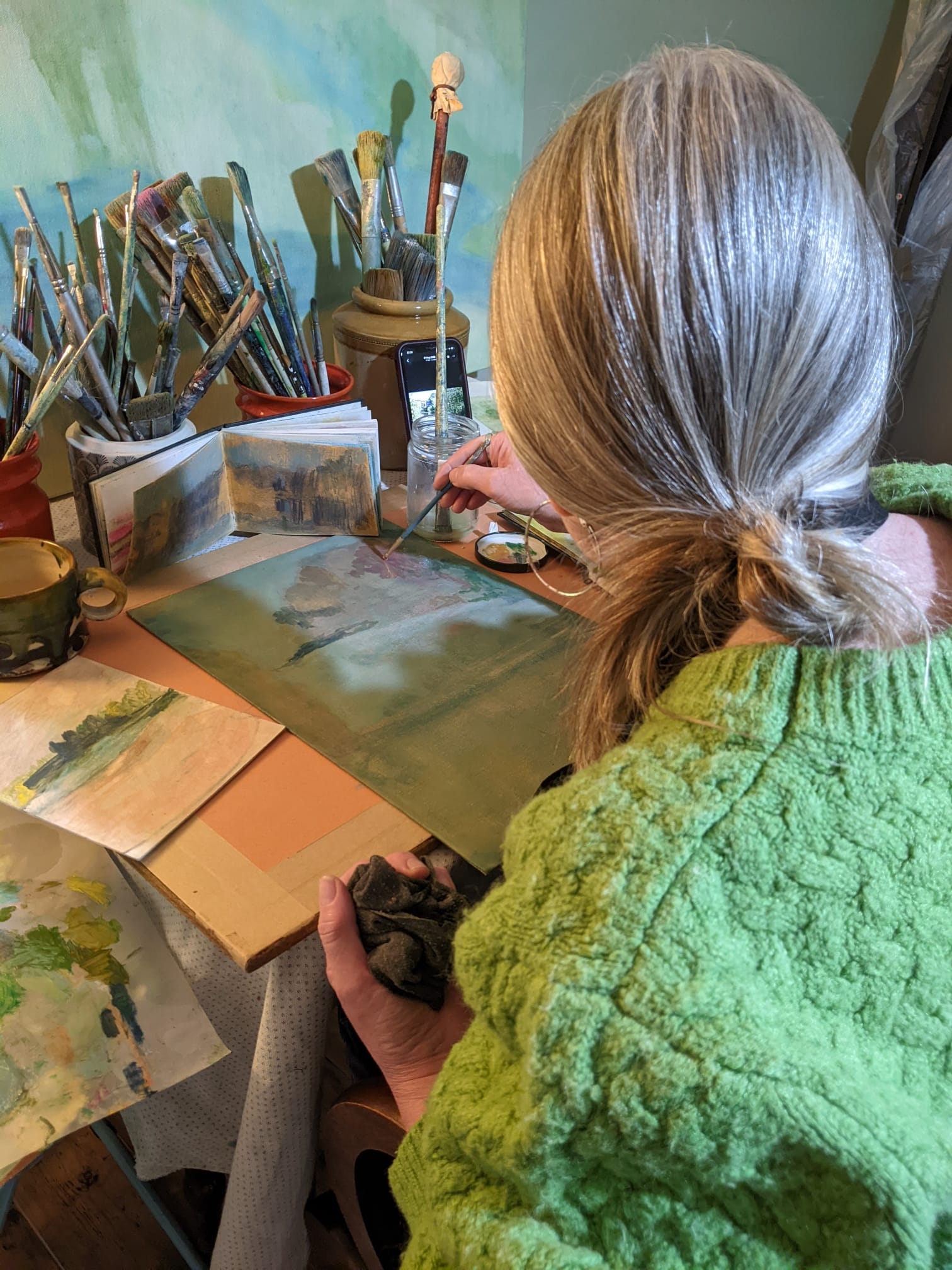
I have favourite brushes, which become favourites after they’ve worn down through lots of scrubbing back and forth, working into the paint. By the time they get to that state, I can’t remember where it originated from, and there’s an ongoing search for the next replacement. They never quite cut it until they’ve been broken in!
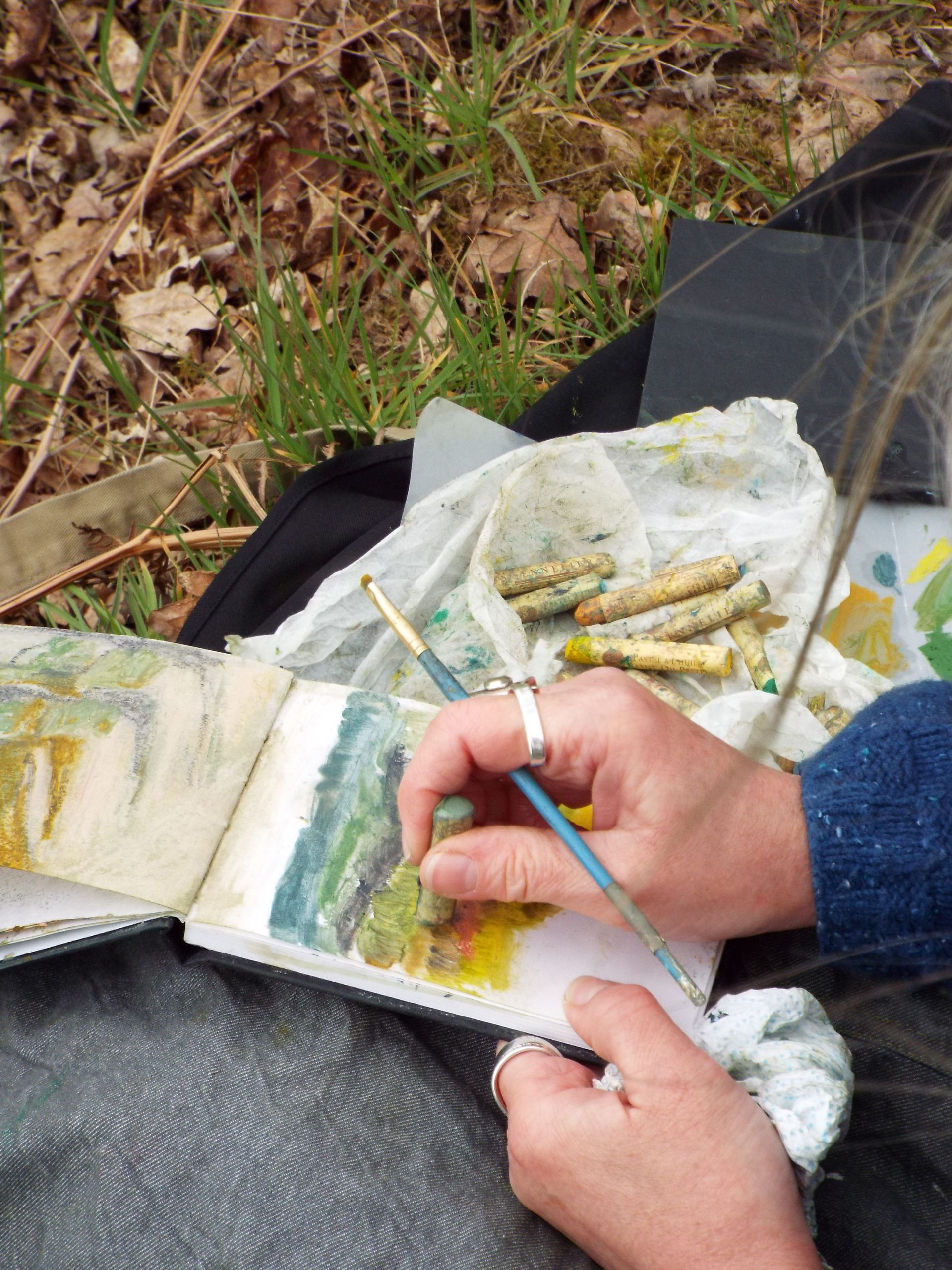
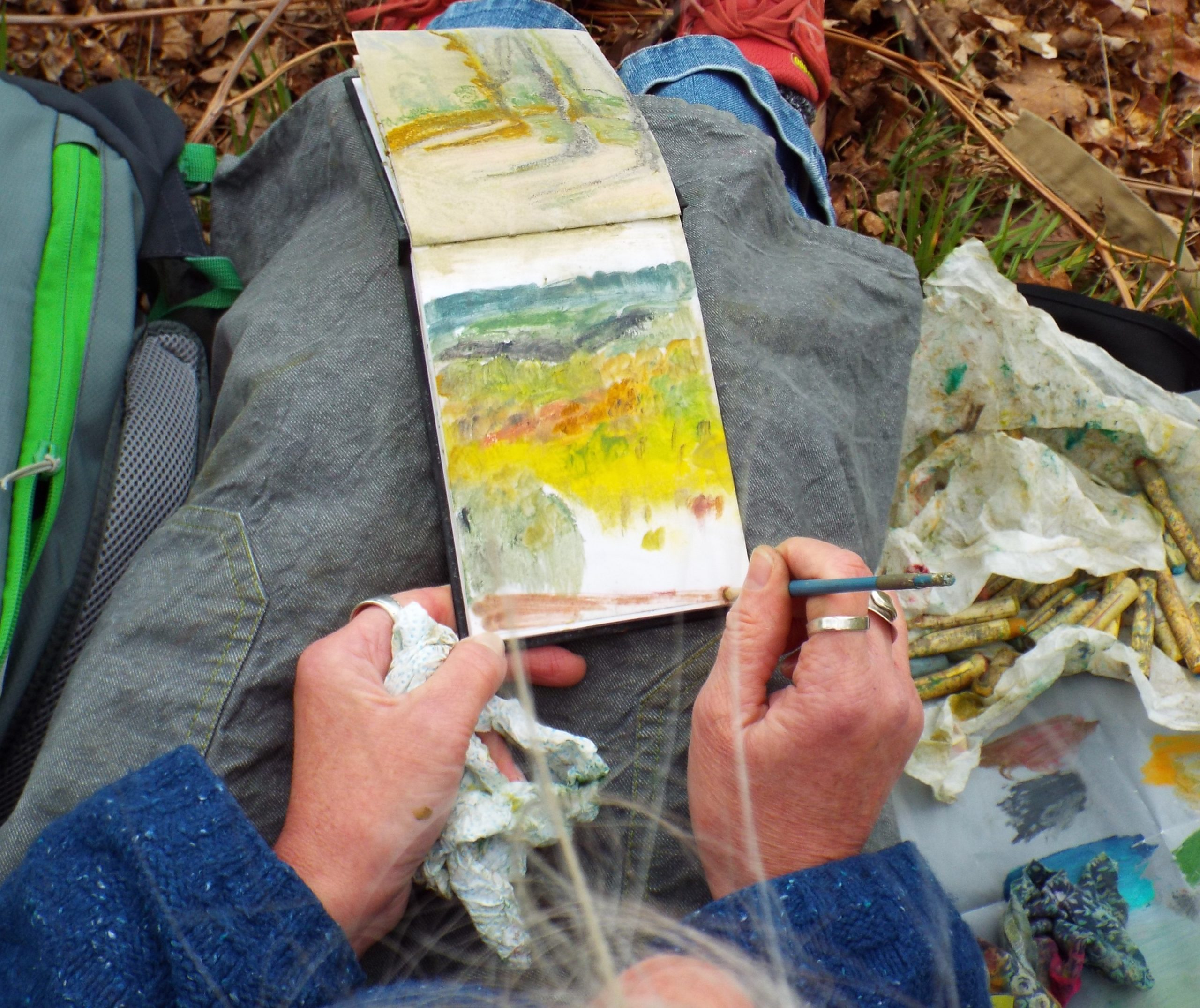
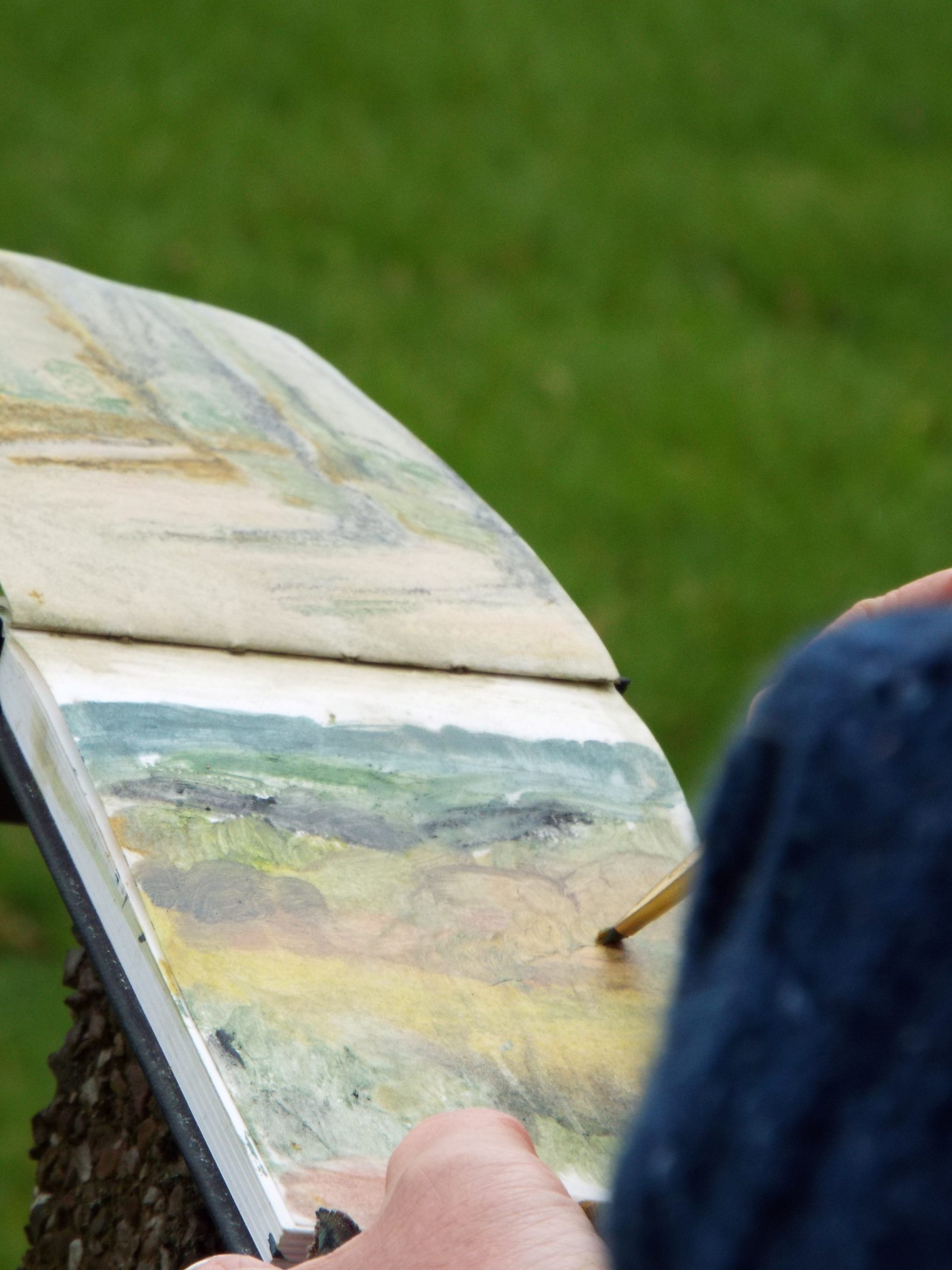
I have certain go-to materials for when I’m out and about. I like a 6B or 8B Faber-Castell pencil, putty rubber, paper stump, and some form of charcoal or conté. Other times, I’ll rely on oil pastels plus thinner, something to draw on and a couple of brushes (small stiff hog and a softer brush for a different mark), but I could live without them. I don’t like the idea of never being able to paint again, so I’d have to chuck oil paints into the ring too. As you can see, I’m finding it hard to order one thing above another. I guess my answer is, something to make marks on and with, human interaction, and a green space (although they don’t really count as tools, but are essential for me to function properly), and I’ll work the rest out. I might get frustrated, initially, but I’ll cope.
Josephine: Do you work from a reference? Tell us more about your process.
Nikki: There’s always a starting point, a prompt, even if it’s not a physical one, so I’d say yes, there’s a reference of some kind. Everything has the possibility to seep into the work because of the constant absorption of information. It’s the editing that is the challenge. Trying to understand, make it tangible and worth pursuing.
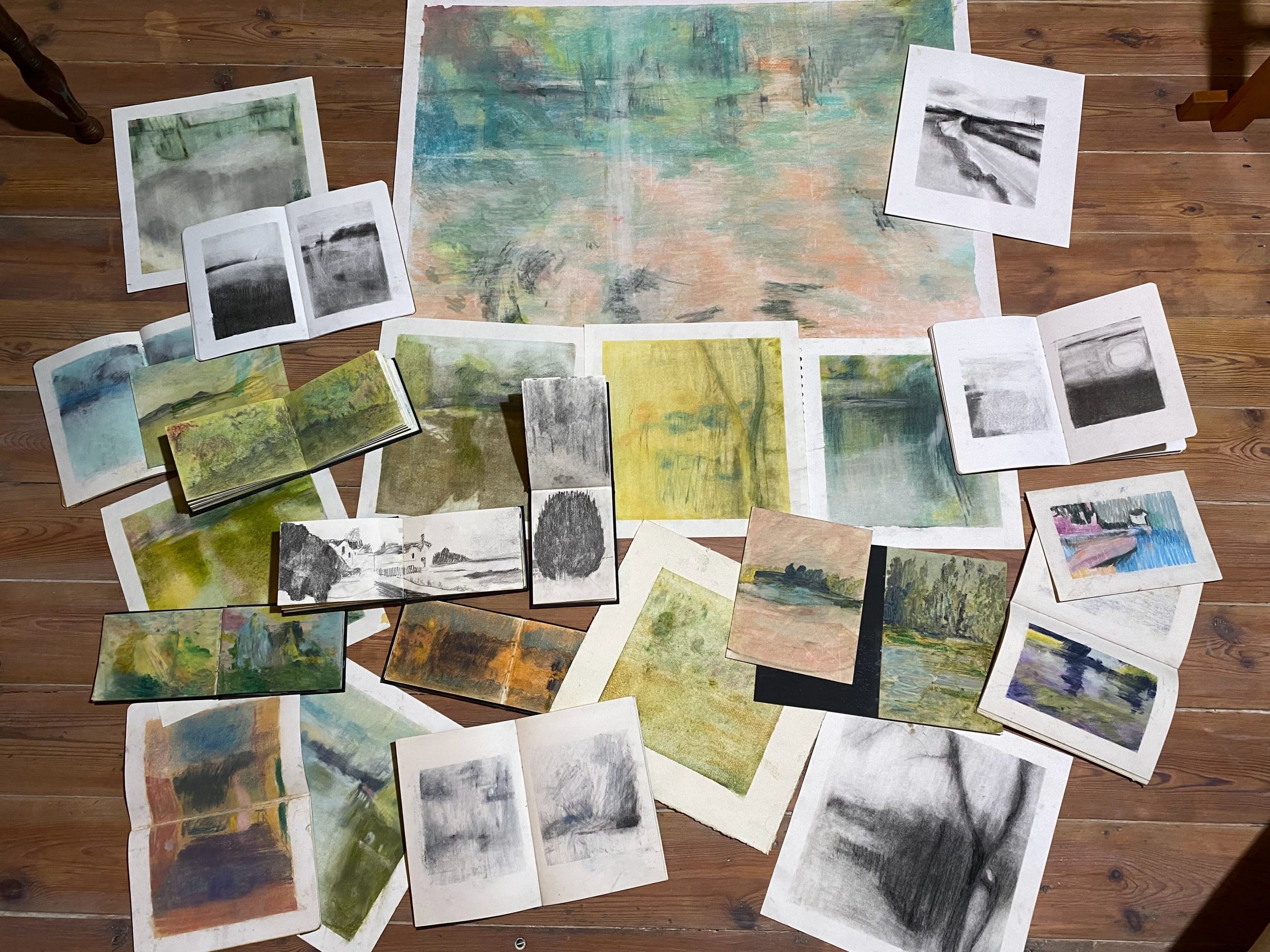
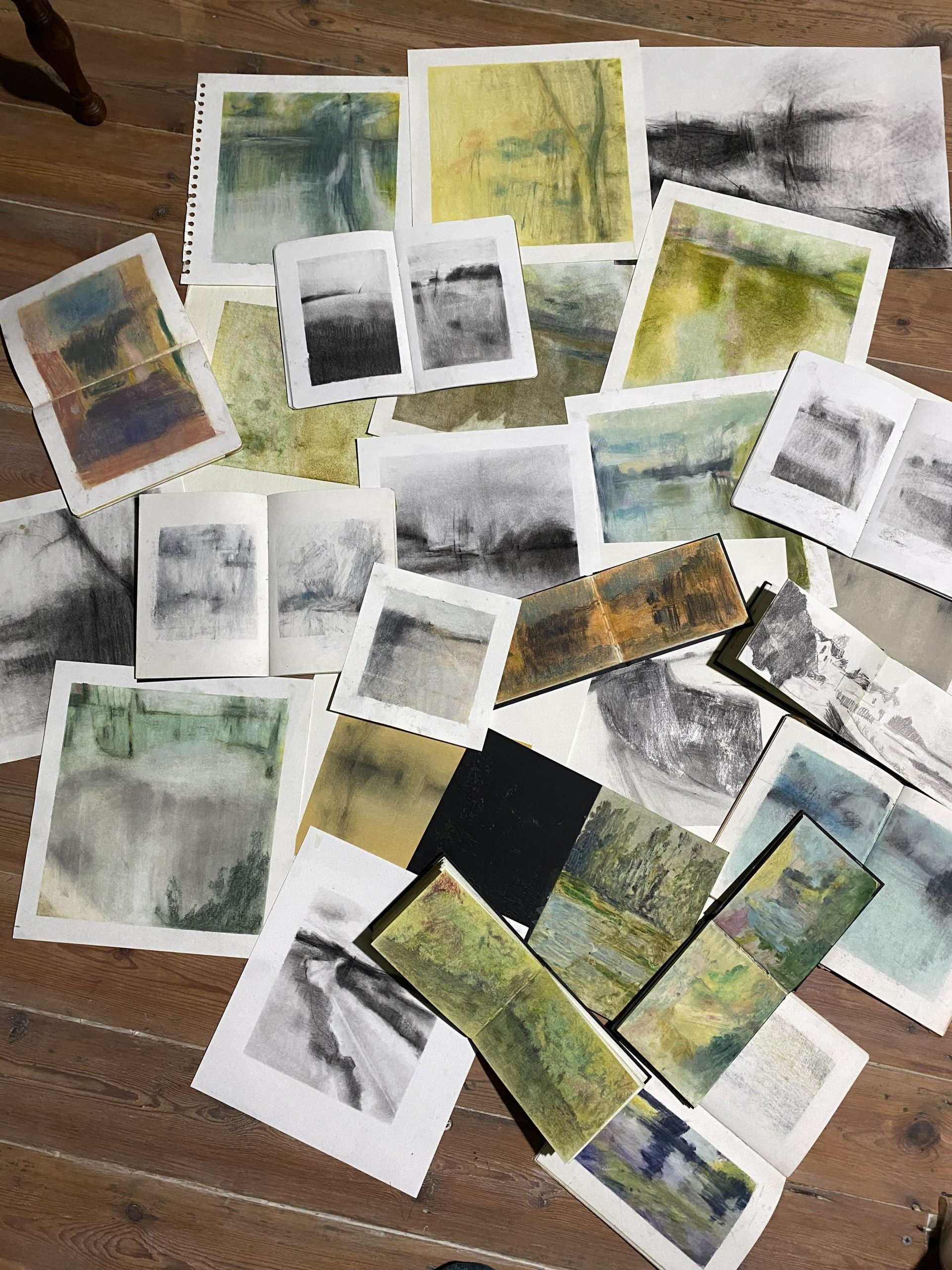
My use of resources varies from no physical reference in automatic drawing and drawing from memory (I did a small series of our dog from memory) to writing down thoughts reflecting what I’m reading or listening to and working from life. I can be quite frustrating to watch TV with if there’s a brilliant bit of cinematography, as I’ll pause or rewind and take a photo of the still, but I’d say the ones I use most frequently in the studio are drawings I’ve made in sketchbooks, or bits of paper taped to the wall, and photographs.
I use the physical act of drawing and painting as a way of gaining a deeper understanding or engaging with a feeling, so a walk or journey is most often the initial reference point and conduit to an emotional and intuitive response, in terms of subject. It’s also a way of being nearer to loved ones and embedding the memory and emotions into something that exists separately from the shared experience. I really like an early misty morning or a late-night walk too, when the light is soft and structures are less defined.
Paintings go through a process of loss and recovery. Once I’ve got the basic structure, I’ll start to work into the marks. Paint is applied then removed until something starts to give and feels right, structure gives way to something other than its original form. It does mean that a lot of paint ends up on the rag! It’s the physical act of refining the marks, which is an important part of the process. There’s no expected outcome; it’s open and fluid. I like the malleable and transformative qualities that oils (paints, pastels, and sticks) offer. Some works may come very quickly and spontaneously, others may sit for months, even years, until I know where to take them.
Josephine: Do you regularly draw or keep a sketchbook? If so, how does this inform your work?
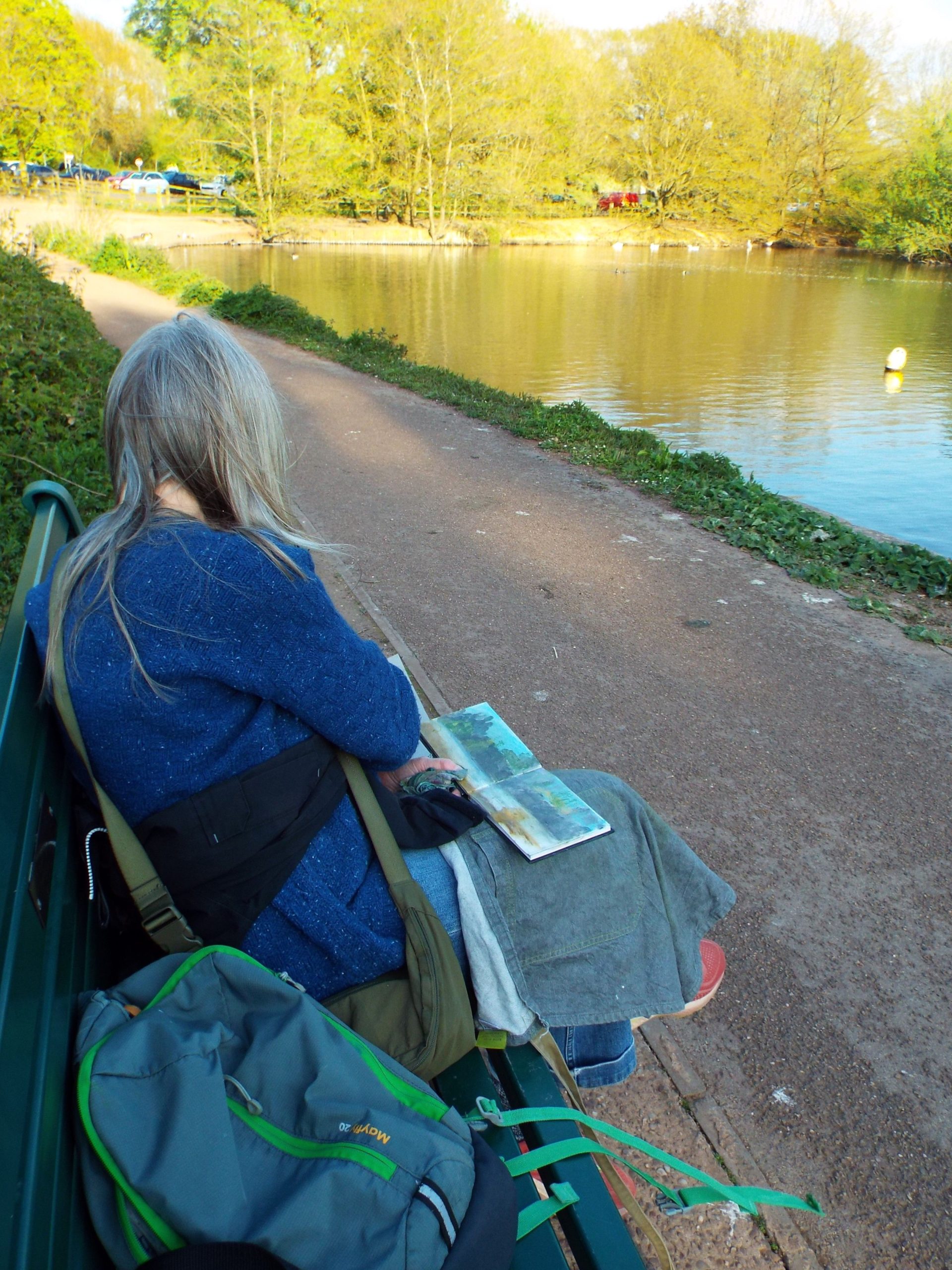
Nikki: Yes, I use sketchbooks in my daily practice and seldom leave the house without one. I use it in tandem with my phone camera. I’ll often look at a photograph thinking that it just didn’t capture that initial response on its own, in the same way as the drawing. In conjunction with the sketchbook and the shifting memory of the experience, they provide a lot of my source material. I can hold so much more in my sketchbook of what it is that stops in my tracks than I can capture in a photo. The scale, the tone, the predominant colours that I saw and felt that don’t translate in a photograph. The structure and the emotional response, the textures and movement… actually, all the things I can’t seem to capture in a photograph! I’ll tear out pages of my sketchbooks and tape them to the studio walls to refer to or just to keep in sight. Occasionally, I’ll rework them further down the line as they’ll make more sense when I’ve had time to reflect.
Josephine: Have you ever had a period of stagnation in creativity? If so, what helped you overcome it?
Nikki: I didn’t start my studio practice until 2015, but my line of work was rooted in creativity with deadlines and expectations, which has helped keep my studio practice moving.
There are times when I’m more productive than others, but I don’t stop thinking about work. If I get to a point where I don’t know where to take a painting, I’ll try and work through it on a separate surface or multiple surfaces, or I might go for a walk to get a bit of distance. Thinking of the work outside of the context of the studio can be helpful to look at it with fresh eyes. Failing that, I’ll let it sit for a while and work on something else. Working on several pieces at the same time keeps things moving. I try to keep a flexible approach and don’t place restrictions on myself. If I feel drawn to explore an urge or feel a pull towards something else, I’ll try to go with it as it helps keep things fluid. I did, however, have a point where I couldn’t work in the studio after we lost our dog, as he was my constant studio buddy. Using the oil pastels, rather than having to mix paint on a palette, was a way of getting myself back in due to its immediacy, so I didn’t have time to overthink.
Josephine: Are there any specific artists or mentors who have inspired you?
Nikki: Lots! In terms of artists, this past couple of years, I’ve been listening to art podcasts when I’m working. I’m interested in understanding other artists’ work and processes, and the connections and common values found in those discoveries with my own practice. There are many that resonate, even though the execution varies widely.
It’s the paintings that blow me away when I stand in front of them, or the exhibitions that make you feel something in your chest that have a lasting effect. When you’re left with a changed feeling. The list of people whose work brings me joy in that way is endless. It’s probably easier to narrow it down by thinking about the exhibitions.
Rose Wylie’s work has long fascinated me. Her humour and use of perspective, the recurring themes and how she captures shifting memory, reworking the same subjects with new solutions, allowing different versions to coexist. Her personality and individuality imbued in every brushstroke. There’s such a directness and honesty to her work that I really admire, and it makes me smile.
Marlene Dumas’ exhibition at Frith Street blew me away. Her ability to capture emotion in a single brushstroke. I find her work very emotionally raw. I left the exhibition with a similar feeling to how I felt after the Marina Abramovich at the RA. Both were emotionally draining and stayed with me. Peter Doig’s recent exhibition at the Serpentine was a totally unique experience. My daughter and I stayed for hours, sitting and listening to the music, whilst looking at the paintings. I sat and stood in different positions looking at the same pieces, coming back and forth, watching other people wandering around and seeing their reactions. The changes in music altering the mood and perception of the paintings.
Turner and Ivon Hitchens have been constants since my student days at Liverpool. Joan Eardley, Carole Gibbons, Roy Oxlade, Ken Kiff, Chantal Joffe, Carole Gibbons, Monet, Bonnard, Vanessa Bell, Christopher Le Brun, Ensor, Munch, Morandi’s landscapes, Milton Avery, Lois Dodd all come to mind, but that’s just a snapshot.
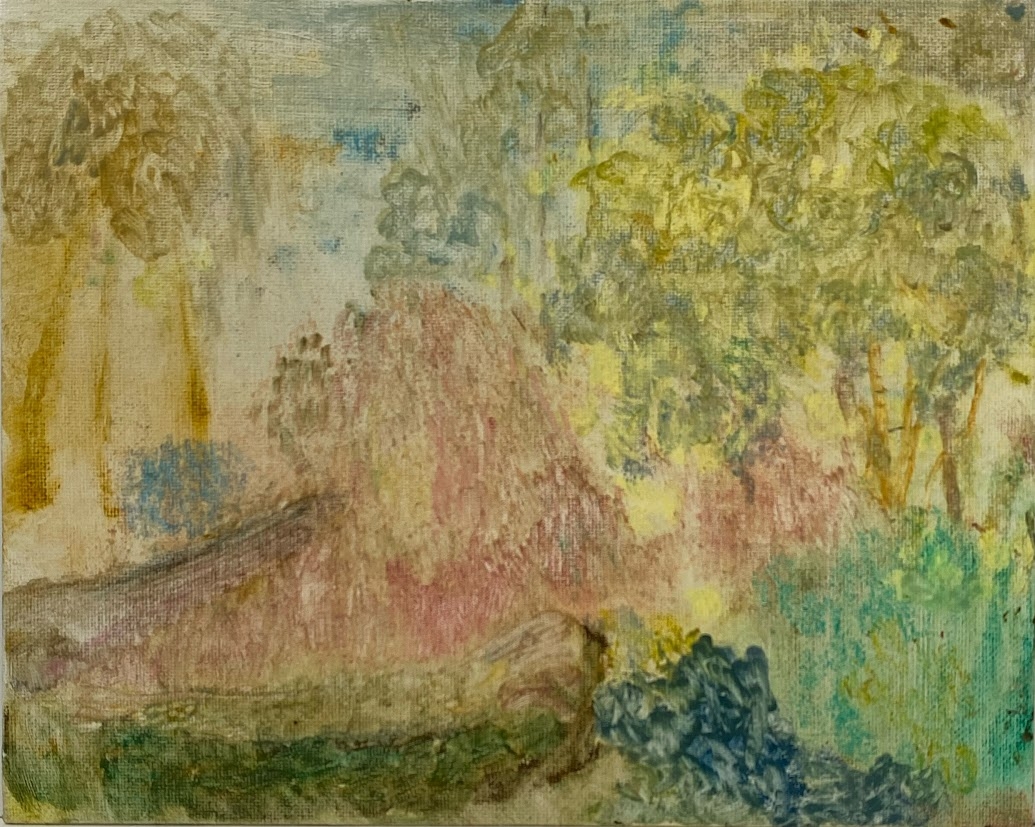
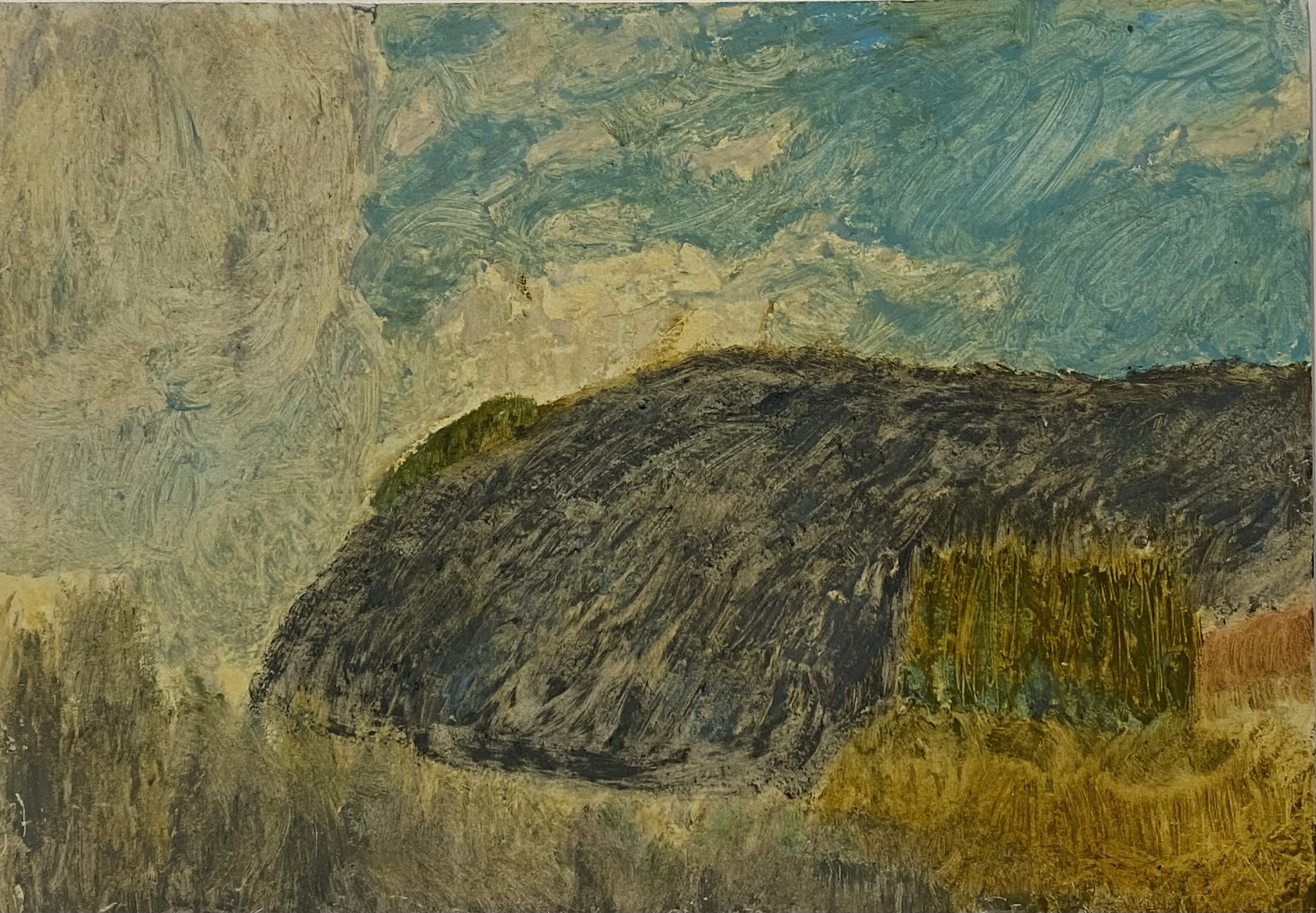
Nikki Johnson
Oil pastel and oil stick on canvas board, 20 x 25.5 cm | 8 x 10 in
Josephine: What were you thinking about or exploring at the time you made View From the A74? What inspired it, and how did it come to be?
Nikki: I was finding it difficult to work in the studio after our dog, Scamp, died. I understood his dependency on me, but I hadn’t anticipated my dependency on this demanding, scruffy little terrier, and the impact his death would have. I felt his absence most in the studio. I’d walk in, then immediately be overcome and walk out again. On this occasion, I stayed and looked through the holiday photographs from a family trip to Edinburgh the month before. The photo I homed in on was taken from the car window whilst travelling up on the A74. There were several moments on the journey that I had the urge to record, which reflected the emotions we were feeling after his death.
I picked up a piece of board and began using some Sennelier oil pastels and oil sticks I’d bought a few weeks earlier, with no expectations. I’d chosen them for their immediacy; for working quickly and getting initial responses down, without having to spend time mixing oil paint. I paint into them with thinner (Michael Harding Miracle Medium) and move the pastel around in a similar way to oils. I was working fast to avoid overthinking, trying to capture the essence of the moment I wanted to record.
Josephine: What made you submit this piece to Jackson’s Art Prize?
Nikki: View From the A74 was the piece that carried the most emotion, which came through in the brushstrokes. It was raw and immediate. It was a breakthrough piece for me and the first in the series. Not in the sense that I hadn’t painted in that way before, but because I was using a different medium as a way of getting back to myself and directing my thoughts and emotions back into my work. It marked a point in time, a challenge with a solution.
Josephine: There’s a beautifully delicate balance between abstraction and depiction in your work. How do you know when a piece is finished?
Nikki: I often don’t know at first. I get to a balance point. Work on it further and risk overworking, or leaving it and it not quite working. That’s when I walk away and let it sit. If it niggles at me when I look at it, but I don’t know where to take it, it’s not finished and I need to rework it. I like the paintings to be left with a bit of ambiguity; I don’t want the work to be too defined, but there’s a balance. It’s that point where I can scan the painting and rest on certain areas and suggest additional marks, but by adding them, it will lose the ambiguity, and the balance of the painting will be thrown off, and the painting loses possibility. That’s when it’s finished.
Josephine: Have you run into any challenges while working in pastel, and how have you resolved them?
Nikki: I’d started using oil pastels for their immediacy and getting initial responses down using colour. I found the marks too definite and cumbersome with no subtlety. I’m used to layering and lifting, and I want to see marks that are less defined and ambiguous. I started working into the marks with a thinner (Michael Harding Miracle Medium). I wanted softer tones, so I scribbled the pastel and sticks onto a piece of Perspex and mixed in some of the Miracle Medium to create a palette, so in effect, I ended up using them in the way I use oil paints.
Josephine: Are there any new techniques or ideas you’re excited to explore using the materials from your prize?
Nikki: It is a child in a sweetshop moment. I was emailed the link to the catalogue last week and I had a quick scroll straight away. I’m giving myself time for the excitement to subside so I can think practically and not be too impulsive. I’ve been wanting to explore raw pigments and binders, so they’ll be on the list along with tempera paint. I’m looking forward to trying out Sennelier’s Green for Oil Thinner to see how that compares to the Michael Harding Miracle Medium I’ve been using. I’ll also be goldilocksing the perfect replacement brush. The stiffest and stumpiest with the right amount of bristles.
Josephine: How did it feel to move through the stages of the competition and win the Pastel Award?
Nikki: My initial reaction was a little out of body, and I was quite stunned. There were some incredible works on the Extended Longlist and Longlist, and to be selected from 16,280 international submissions feels slightly surreal. A strange buzz, mixed with imposter syndrome. You release this little piece out into the world and feel quite exposed. It’s just you in the studio going through this process, which can be quite isolating and personal, and when it finds a wider audience, it’s quite unsettling, but also a bit of an adrenaline rush. I think it’s important not to compare your work to others, to trust in your process and be true to yourself, but the acknowledgement and the realisation that your work has resonated in such a way is an undeniably special moment. I was thrilled to be shortlisted, once I got over the initial shock!
Josephine: What’s coming up next for you?
Nikki: We’ve just moved house, so I’ll be concentrating on getting the new studio up and running over the next few weeks. And I’ll be continuing to explore the Peak District, which is on the doorstep, to see what emerges. I have a few large paintings that I started at the same time last year, which relate to each other. I’ve left them sitting in limbo as I couldn’t see where to take them. I knew they weren’t finished, and they contained areas that I really liked, but they were taking me in another direction and away from their original source. I wasn’t at the right stage to move with it, but I knew I didn’t want to erase those new elements. I’ve been thinking about them a lot lately, so that’s where my mind is focused in terms of the studio.
I’d like to explore more opportunities too, particularly residencies, to see what impact they might have on my practice. I’ve been spending a lot of time alone in the studio over the last couple of years and have missed the stimulation and the value that conversations with other artists have on my creative practice, so I’m aiming on resetting that balance. I’ll also be planning and running more workshops and looking to book a few myself!
Further Reading
Meet Eleanor Johnson, Winner of Jackson’s Art Prize 2025
Jackson’s Art Prize 2025 Exhibition at Affordable Art Fair
How We Collaborate With Artists
Expert Advice on Making Your Way as an Artist
Shop Pastels on jacksonsart.com