



The sun makes life on Earth possible by providing light and warmth in a cold universe, making it a natural subject of worship and mythology for millennia. Its constant rise and fall shaped ancient beliefs about creation, the passage of time, and power – some of which endure to this day. In this article, I illuminate the symbolism of the sun across cultures, encompassing themes of invincibility, enlightenment, travel, and mortality.
The Art Through Symbols series explores the interpretation of symbols throughout art history – whether cultural, religious, folkloric, or personal. Each article analyses a selection of artworks before offering an art-making tutorial inspired by the symbol for you to try.
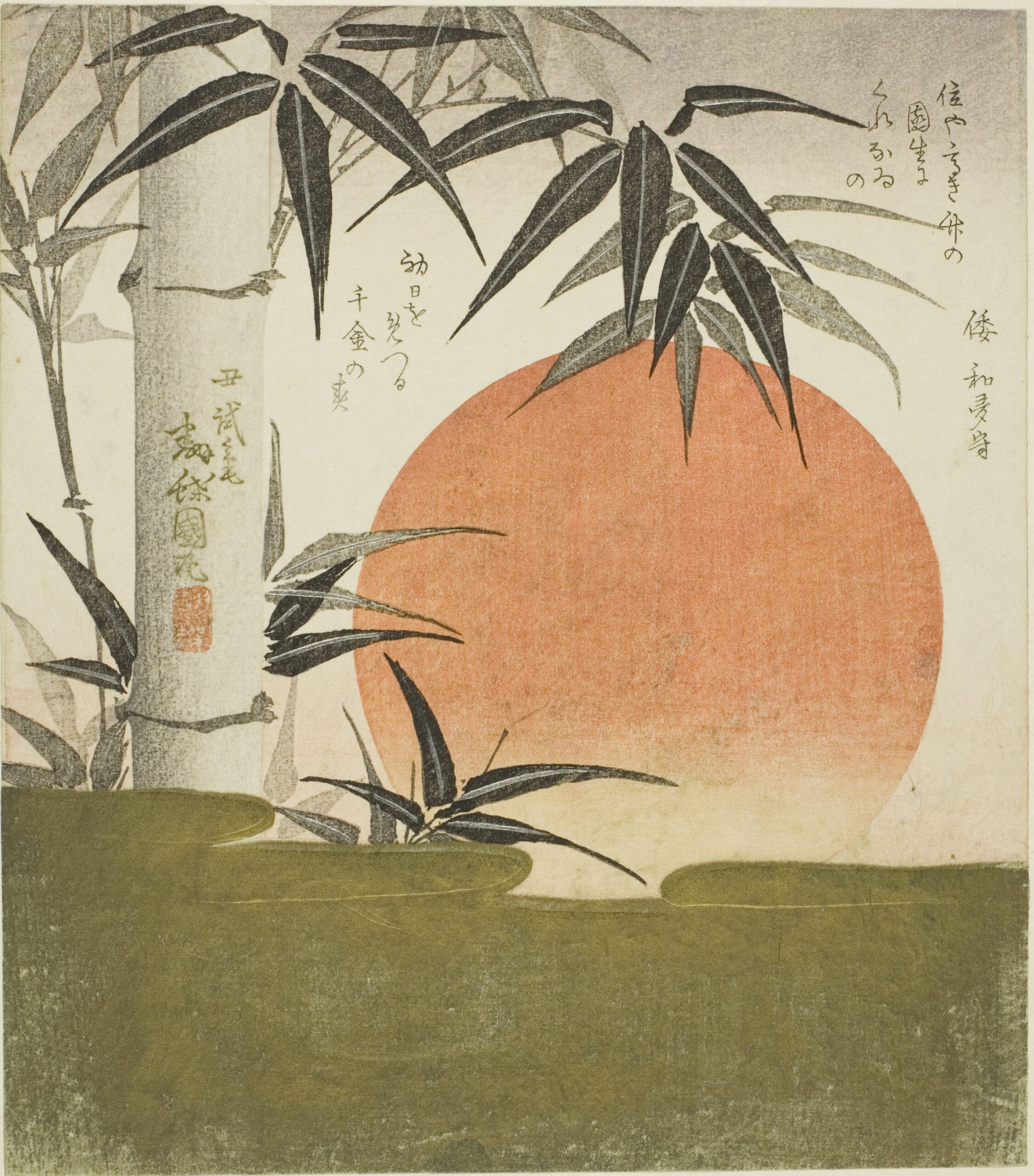
Utagawa Kunimaru
Colour woodblock print, 22 x 19.7 cm | 8.7 x 7.8 in
Art Institute of Chicago
‘Light is not so much something that reveals, as it is itself the revelation.’
–James Turrell
Interpreting The Sun
From the earliest human societies, the sun has been a subject of mythology and worship because of the innate recognition that we need it to survive. Before we could ever conceive of a solar system, our distant ancestors tracked and praised the sun for its gift of light and warmth. There is a primal aspect to the symbolism of the sun, rooted deep in our survival instincts and our desire to understand the world around us.
There are countless artworks set outdoors and cast in daylight, where the sun serves as an essential lighting condition. Yet, the symbolism of the sun throughout art history is far richer and deeper than just the simple presence of daylight hours. For this article, I have focused on artworks in which the sun embodies distinct characteristics of its own.
The emotive effect of the sun doesn’t just rely on the time of day, but the perceived harshness of the light. For the Impressionists, the midday sun meant bathing everyday people and landscapes in celebratory colour and texture. Yet, the high sun can also feel exposing or uncomfortable, like in People in the Sun by Edward Hopper. For some artists, sunset embodies introspection on mortality and the passage of time, while others present it as an awe-inspiring spectacle, like in Red Sunset by Arkhyp Kuindzhi. In this sense, the sun is an incredibly versatile symbol – taking on characteristics projected by individual artists and their subjects.
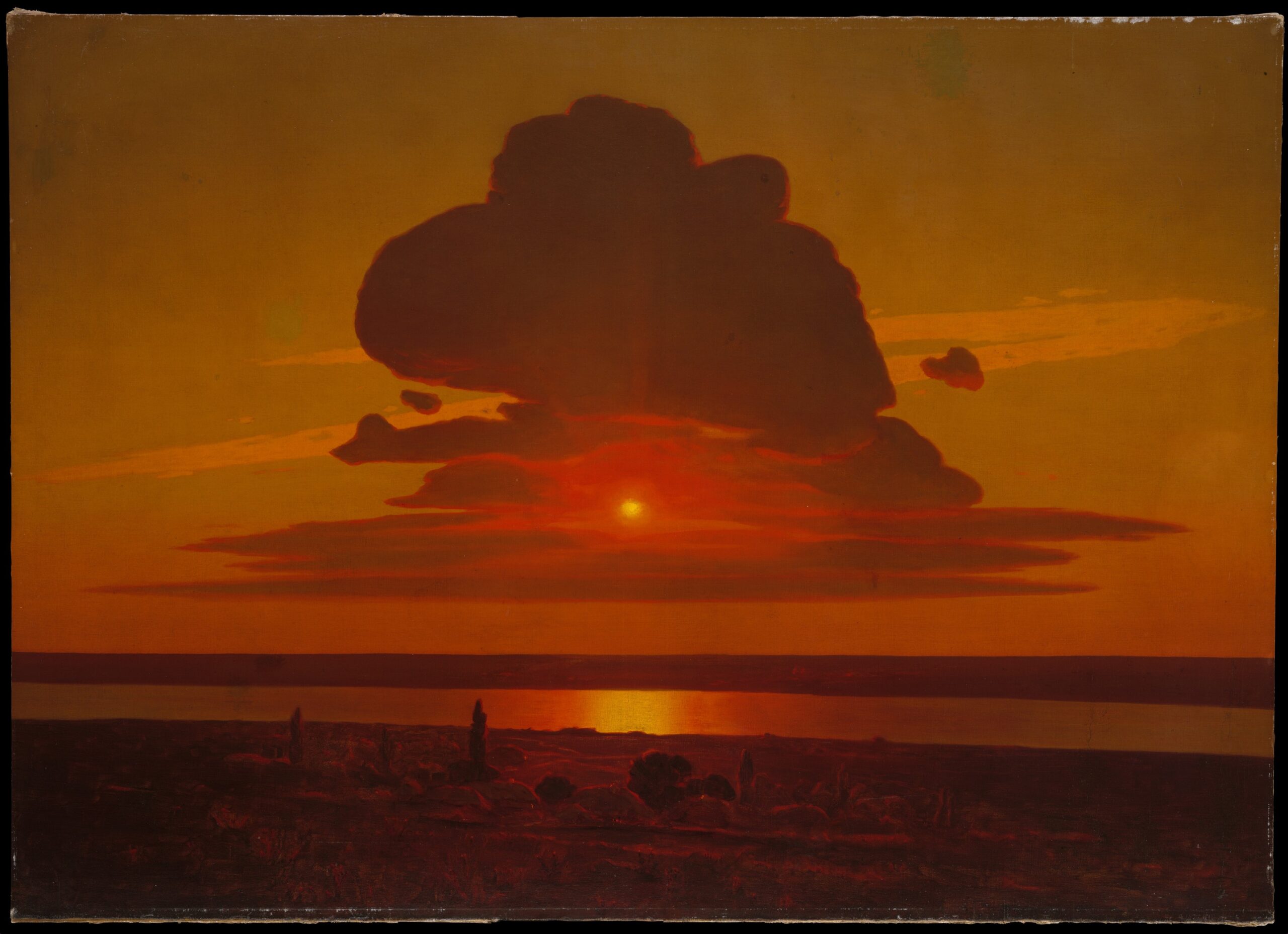
Arkhyp Kuindzi
Oil on canvas, 134.6 x 188 cm | 53 x 74 in
The Metropolitan Museum of Art
In contemporary art, capturing the sun has been a prevailing thread in works by installation artists. This includes Olafur Eliasson, with his monumental installation The Weather Project at Tate Modern, where a massive simulated sun bathed viewers in orange, hazy light. James Turrell’s installations emphasise and capture natural and artificial light to give viewers a heightened visual experience. This includes his famous Skyscape series, where the sky is viewed through architectural chambers, making its light and colour a living canvas. It mesmerises the viewer with emphasised sunlight, allowing for introspection, and unifying enjoyment in pure phenomena.
Creation, Destruction, and Sacrifice
The Aztecs believed in the creation myth known as The Legend of the Fifth Sun, in which the Earth had been created and destroyed four times in a cyclical process, making our world the fifth iteration. To prevent the gods from eliminating and remaking it once again, they practised tlazcaltiliztli, meaning ‘nourishing the fire and sun with blood’. This involved offering ritual sacrifices to the sun, providing it with the nourishment needed to endure and maintain balance among the gods. It was believed that abandoning this sacrificial practice would plunge the world into darkness before triggering a cataclysmic earthquake.
In The Legend of the Fifth Sun, different gods became the sun in each new version of the world. Our fifth sun is Huītzilōpōchtli, who conquers his sister Coyolxāuhqui, the moon, in battle each day at dawn.
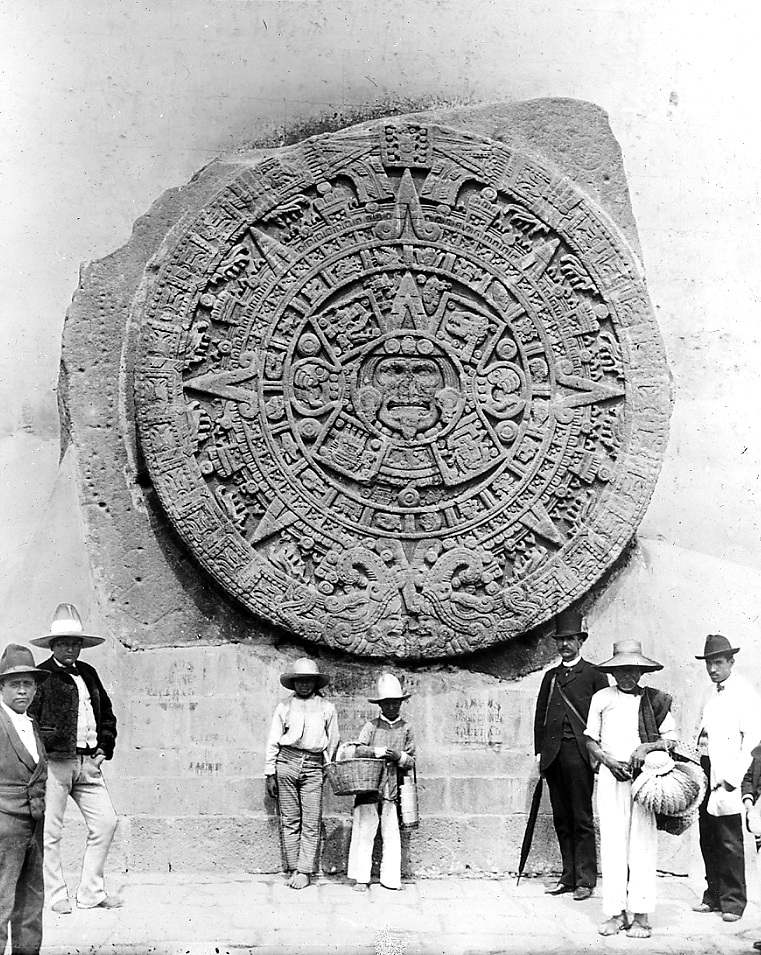
El Zócalo, Mexico City
Sculpture carved from basalt, 358 x 358 x 98 cm | 141 x 141 x 38.6 in
New York State Archives
The Aztec Sun Stone is the most famed work of Mexica sculpture, carved under the rule of Moctezuma II between 1502 and 1520. During his reign, the Aztec empire was at its largest, and he was emperor when Europeans first made contact with the Mesoamerican peoples. The stone is carved from basalt from the Xitle volcano. Its concentric rings record the Aztec solar calendar and visually chart the events of the Five Suns. Aside from documenting their mythology and the passage of time, this sculpture of the sun served as a monumental symbol of their beliefs in power, ritual, and rebirth. It also acted as a display of authority – to intimidate anyone who might challenge the Aztec ruler’s ability to maintain order over the population.
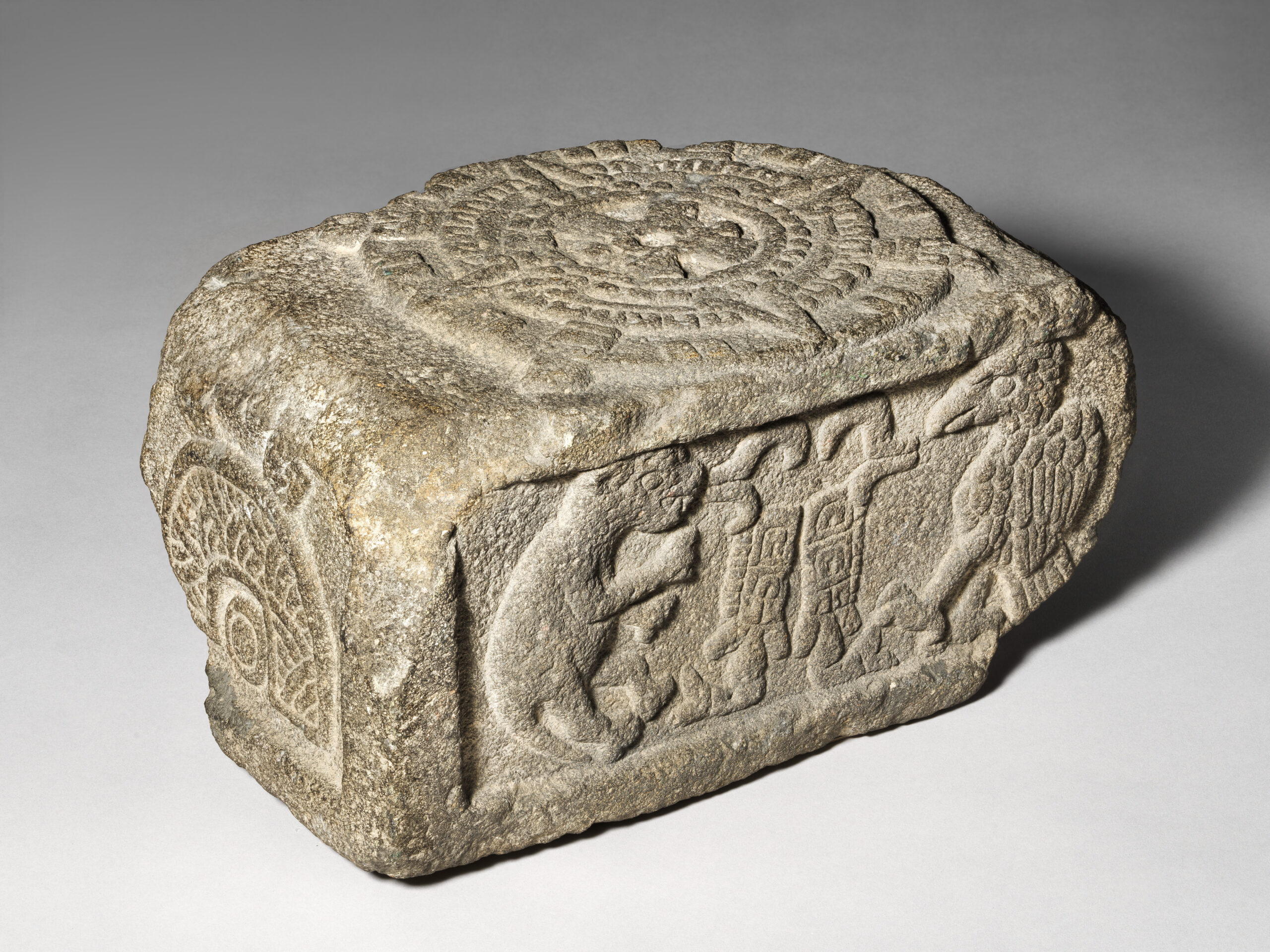
Mexico Nahua artist(s)
Stone sculpture, 17.1 x 34.3 x 22.2 cm | 6.7 x 13.5 x 8.7 in
The Metropolitan Museum of Art
Travel
Cultures and religions around the world have interpreted the movement of the sun as vehicular. Among many examples, the Ancient Egyptian sun god Ra made his passage across the sky in a boat, while the Greek Helios and the Hindu Surya drove the sun in chariots. Collectively, these mythologies establish the sun as an international symbol of travel, journeys, and the promise of return. In ancient civilisations, the chariot was a vehicle for warriors and rulers, and in agricultural societies, animal-drawn vehicles and boats were essential for sustenance.
The recurring use of chariots, carriages, and boats to transport the sun presented the gods of each culture as active participants in daily life: working, reliable, and ever-present. In Sunrise on a Pastoral Landscape, we see Apollo driving his sun chariot across the sky in a cluster of goddesses and buoyant clouds, skimming close to the people minding their sheep below. Beyond explaining the cosmic movement of the sun across the sky in earthly terms, the sun, in correlation to vehicles, made the intangible feel within reach.
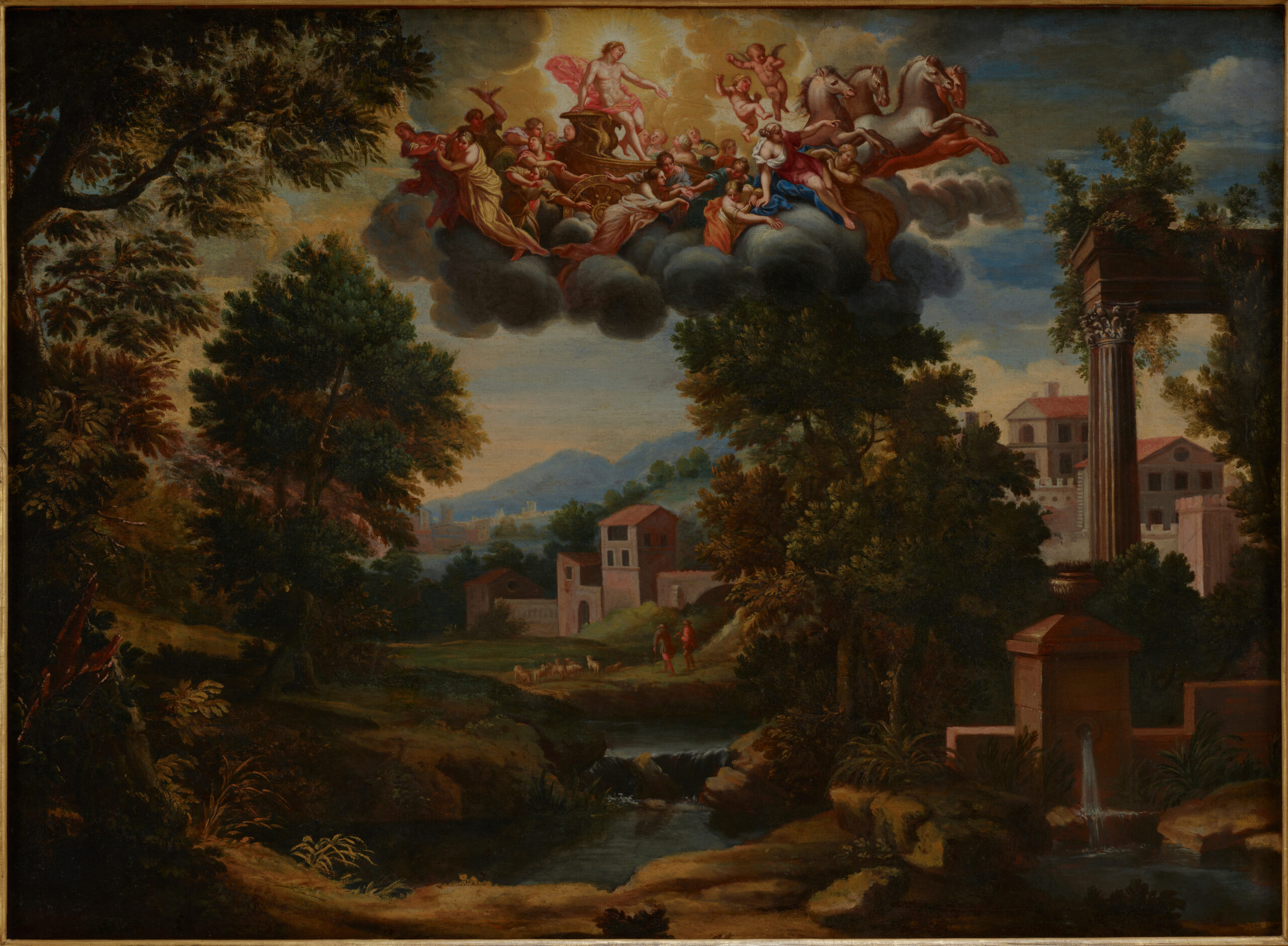
Attributed to Giovanni Francesco Grimaldi
Oil on canvas, 134.6 x 167.6 cm | 53 x 66 in
Minneapolis Institute of Art
Invincibility and Justice
Sol was the Roman personification of the sun, assimilating characteristics from other solar gods and cultures, including Syrian, Mithraic, and Greek sun deities. The title Sol Invictus, meaning ‘the invincible or unconquered sun’, replaced Sol Indiges, an early minor version of the Roman god. In AD 274, the emperor Aurelian utilised Sol Invictus as a unifying figure for the Romans by proclaiming him the chief god of the Empire. Iconography was distributed on coinage and sculpture, presenting Sol with the sun crowning his head, and making him a subject of worship. His popularity only began to be challenged when Emperor Constantine legalised Christianity, which was previously a persecuted religion, and began the shift toward this new monotheistic religion in Roman culture.
Theologians debate the extent of Sol Invictus’s influence on the acceptance of this new monotheism. They point to similarities such as his crown of the sun and the Holy halo, depictions of the body radiating with light, and a belief in their unconquerable power.
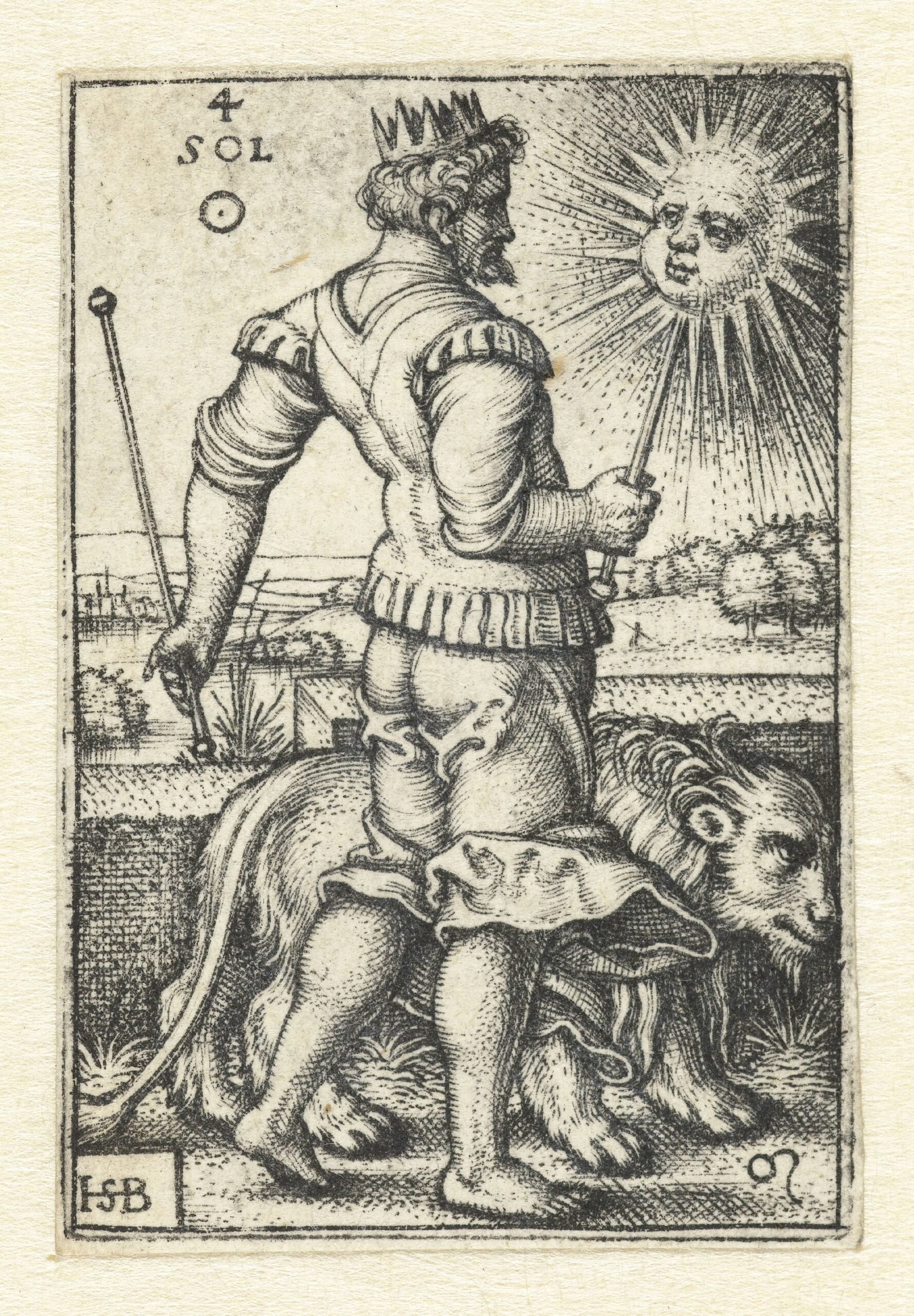
Hans Sebald Beham
Engraving, 4.4 x 3 cm | 1.7 x 1.2 in
Rijksmuseum
Depictions of Sol had a revival in early-Renaissance artworks, rooted in Humanism and renewed interest in the ideas of classical antiquity. In Humanist thought, the sun represented supreme intellect and justice. In printed depictions of Sol from this era, he’s often depicted gazing at a scepter or staff that holds the sun, or presented with the scales of justice. Rather than the initial iteration of Sol as a symbol for invincibility, this later version became one of virtue.
Leisure and Liberation
The Impressionists relished capturing the shifting qualities of light and colour en plein air, making their work visually and conceptually inseparable from the illumination of the sun. In their paintings, the sun became a symbol of modernity and artistic liberation, reflecting their break with tradition through outdoor painting.
Renoir was one of the founding members of Impressionism, alongside his artistic companion Monet, after their work was rejected by the Salon in the early 1870s. Many of his works capture dappled light, cast over people at leisure – dining, drinking, flirting, and relaxing in the sun. These fleeting moments of pleasure are captured in simultaneously fleeting daylight hours – correlating the sun with the transitory nature of human joy. In Lunch at the Restaurant Fournaise (The Rowers’ Lunch), sunlight glows on the river behind the trio of diners who relax together in the blue flecked shade.
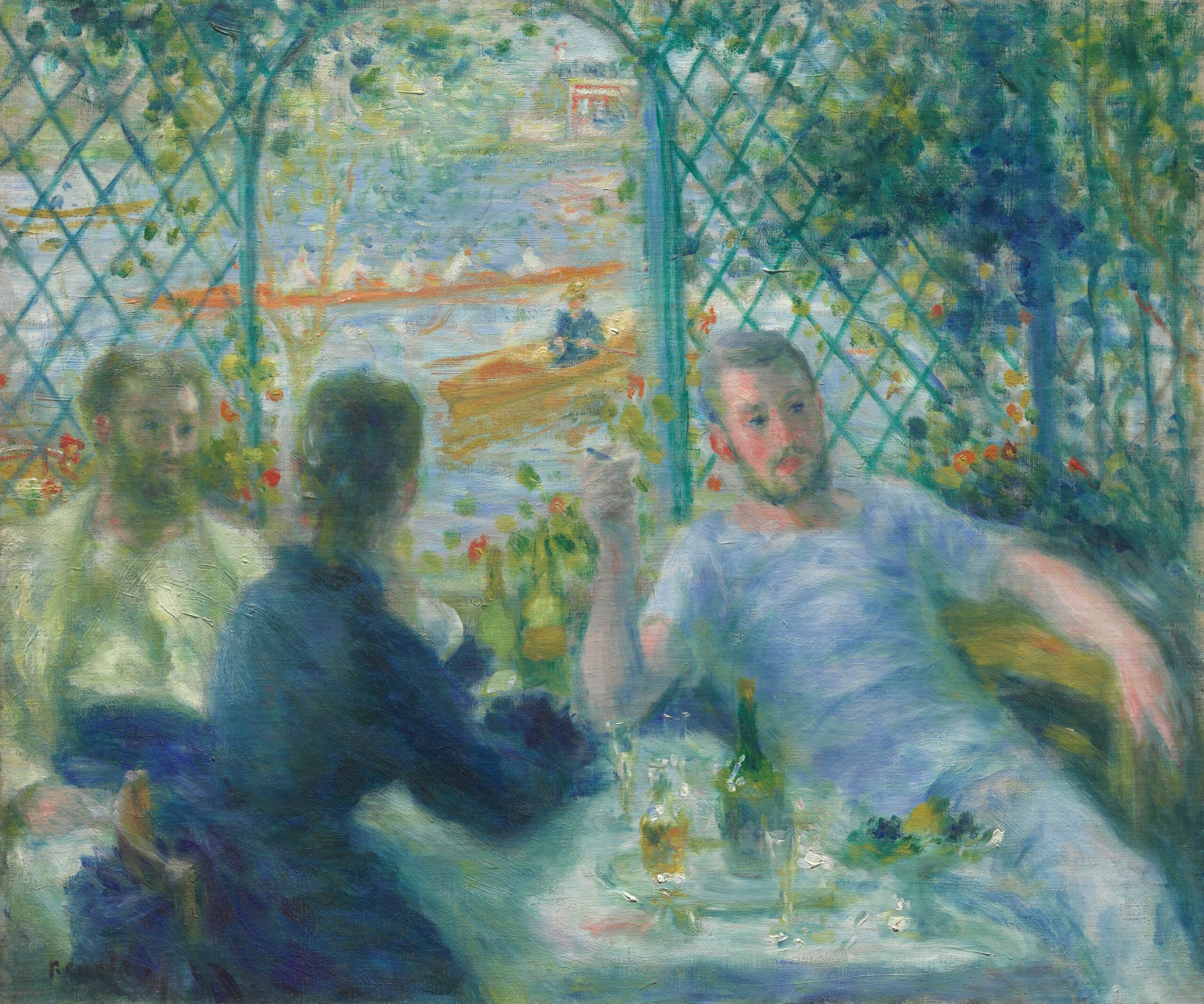
Pierre-Auguste Renoir
Oil on canvas, 55 x 65.9 cm | 21.7 x 26 in
Art Institute of Chicago
Englightenment
Edvard Munch created a series of paintings to decorate the University of Oslo’s Aula, which present the sun as a symbol of enlightenment through knowledge and a force of creative inspiration. The central painting in the hall is The Sun, pictured below, and ten other paintings radiate outward from it. To the left, men and women raise their arms outstretched towards the dazzling light, and on the right, cherubic figures burst from it. The paintings that stretch further outward around the hall see figures thriving in the landscape, all cast in sunlight.
Munch wrote about the series, ‘I wanted the decorations to form a complete and independent world of ideas, and I wanted their visual expression to be both distinctively Norwegian and universally human.’ The amplified light casts the sun as a symbol of the overwhelming power of knowledge, and the light brought to humanity by discovery. This is seen in the inclusion of figures with science beakers in one of the canvases, breaching new ground in its glow.
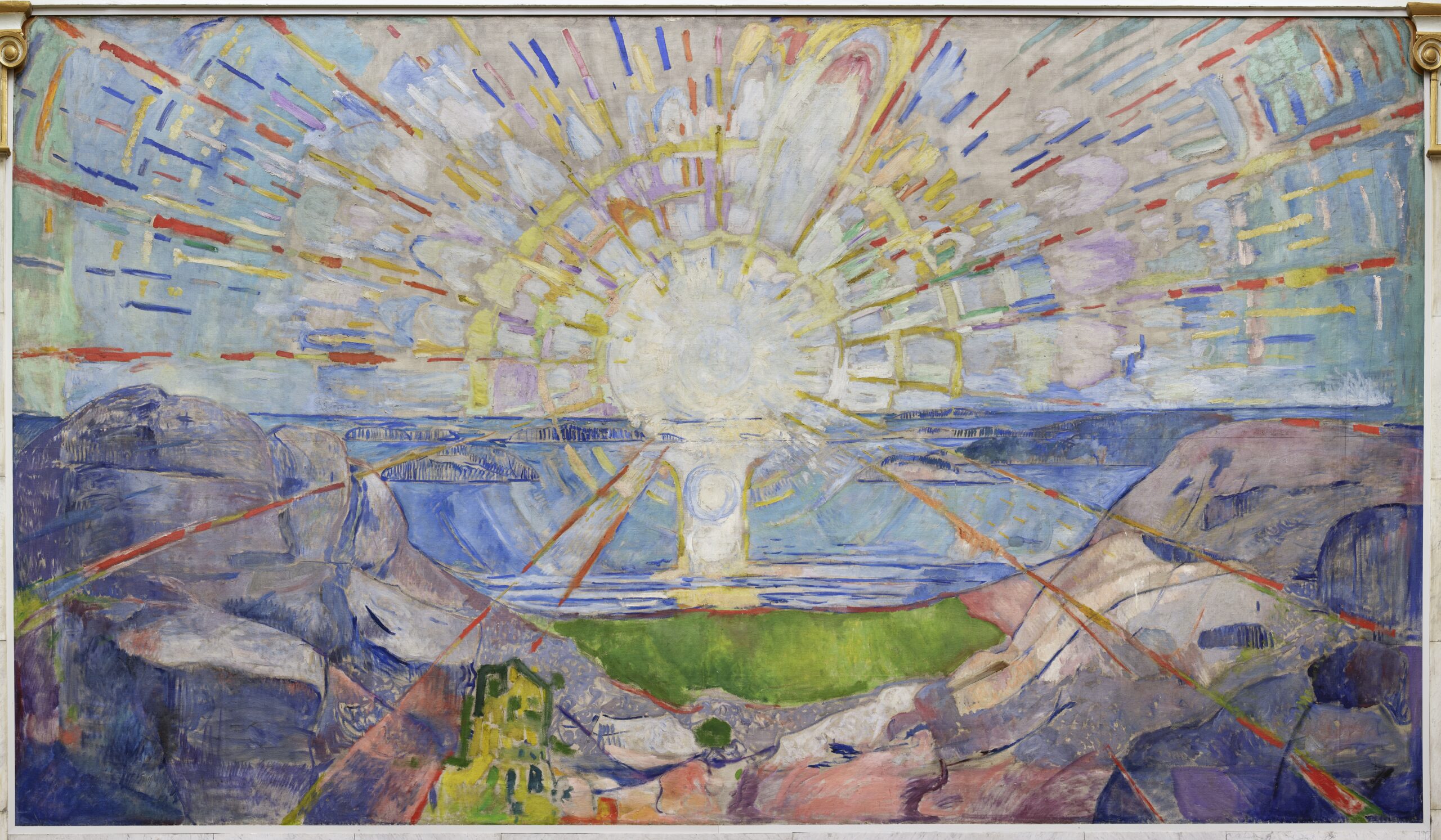
Edvard Munch
Oil on Canvas, 455 x 780 cm | 179 x 307 in
University of Oslo
Fear and Mortality
Artworks of the setting sun are often tinged with the bittersweet reminder of our mortality. In Christian painting, the sunset was aligned with Jesus’ mortality, since the Bible described that the world was cast into supernatural darkness for three hours when he died. This dramatic blackening of the sun is depicted in The Crucifixion by Bartolomé Estebán Murillo, where it recedes in the landscape, allowing the cool light of the moon to begin to break through over Christ’s head. Having the influence to blacken the sun – our constant companion in the universe – is both a symbol of the inconceivable power of God, and a powerful symbol for mourning. Other Christian associations with Jesus and the sun are made in the Bible, including a description of God’s power stating that, ‘the sun of righteousness shall rise’ (Malachi 4:2), and Christ’s triumph over darkness as ‘the light of the world’ (John).
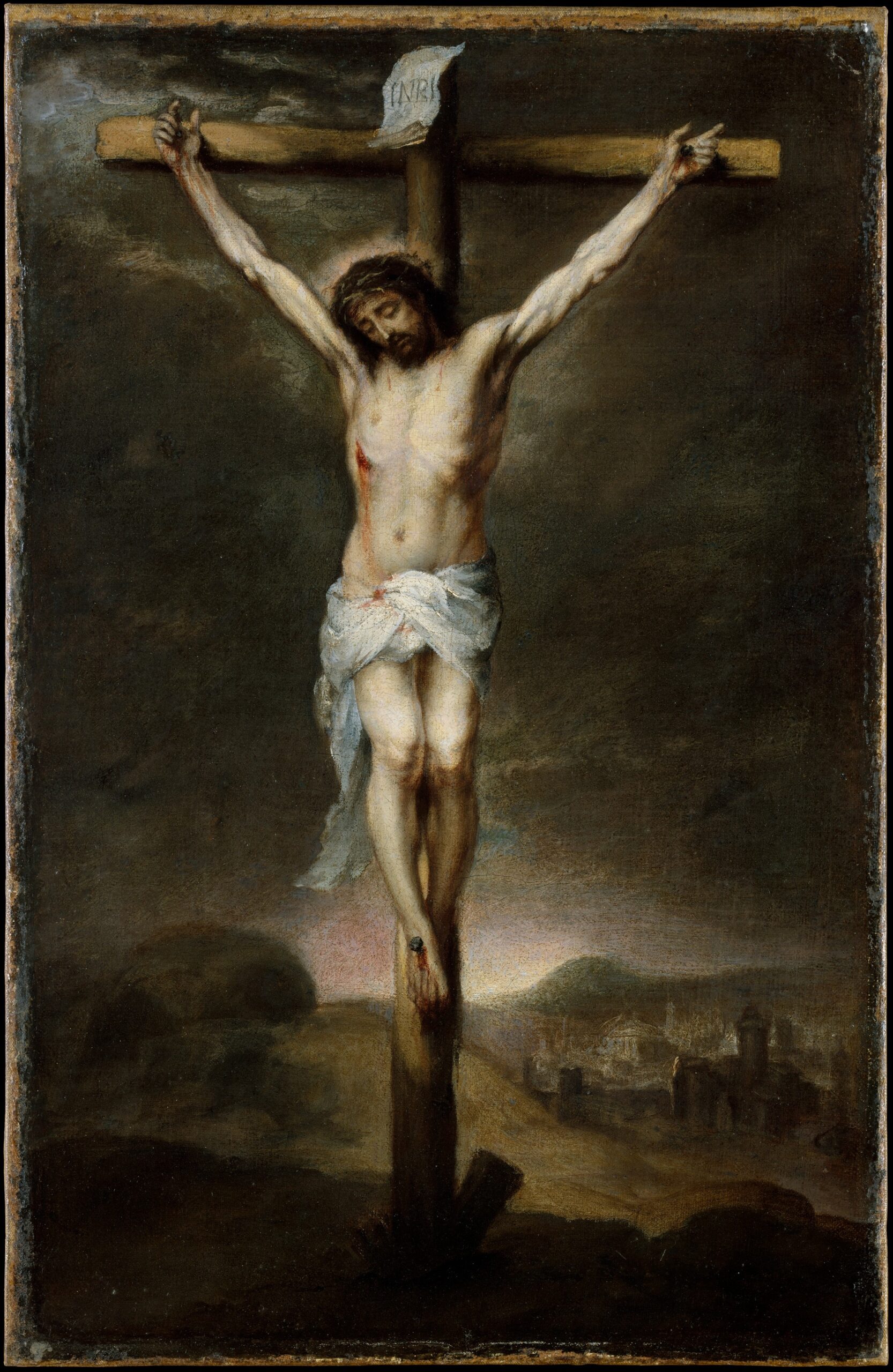
Bartolomé Estebán Murillo
Oil on canvas, 50.8 x 33 cm | 20 x 13 in
The Metropolitan Museum of Art
The influence of these associations of the sun with mortality has undeniably been influential in European painting. For example, this quality is brought to The Forest in Winter at Sunset by Theodore Rousseau, where we are positioned amongst a thicket of trees, with only minutes of light left around us. Despite its melancholy and depth, the work was considered unfinished, and accounts describe how his peers, including Millet, had urged him to complete it. The Tonalist palette incites a feeling of innate primal fear of the unknown, as the darkness encroaches amongst the tangle of trees.
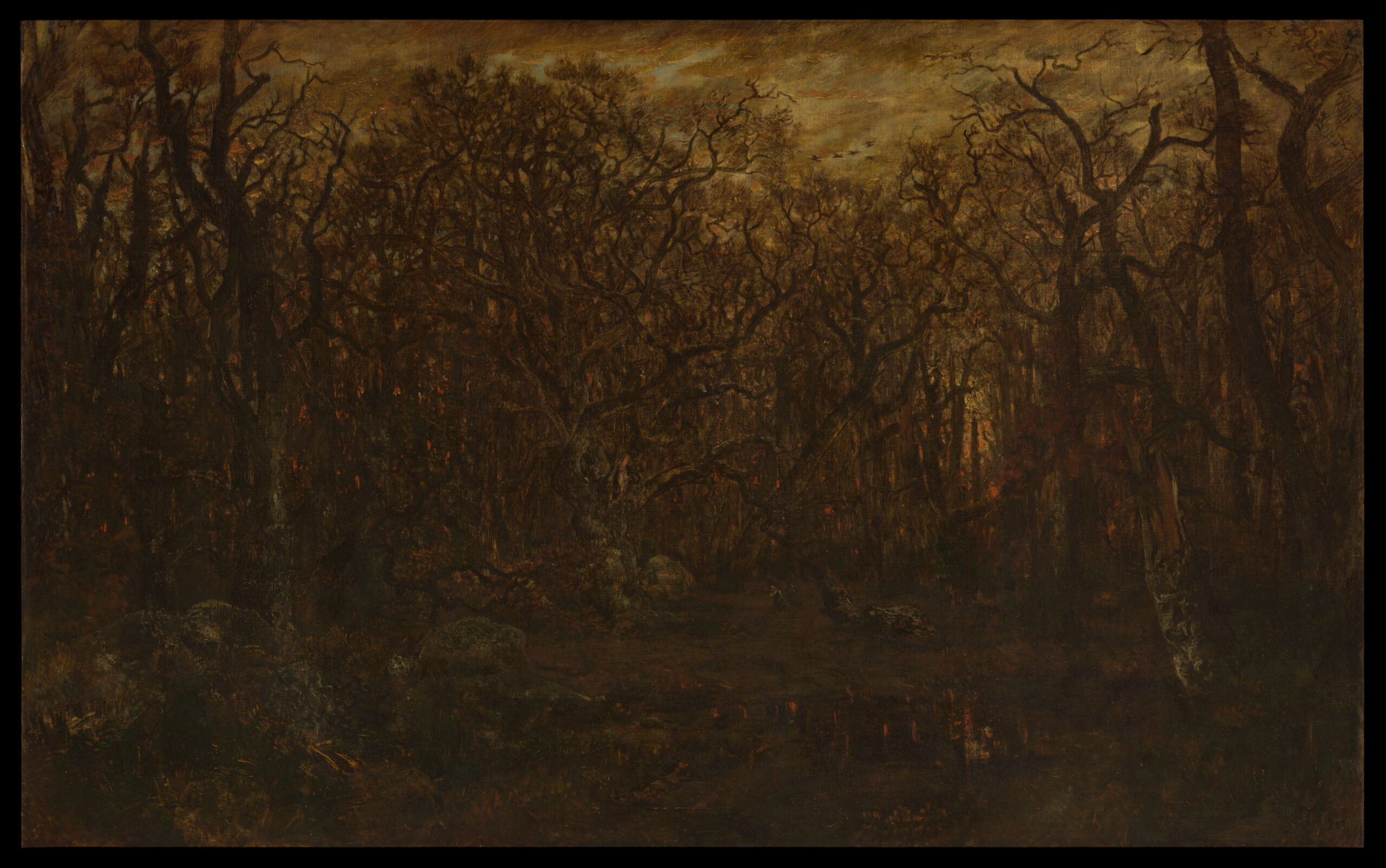
Theodore Rousseau
Oil on canvas, 162.6 x 260 cm | 64 x 102.4 in
The Metropolitan Museum of Art
Order Over Chaos
The sun is woven into Japan’s cultural identity. The Japanese name for Japan – 日本, Nihon or Nippon – means ‘origin of the sun’. This description derives from Japan’s Eastern position relative to China, also traditionally described as the Land of the Rising Sun. The flag of Japan was designed in reference to this phrase, with the red sun surrounded by white.
In Shinto mythology, Amaterasu is the goddess of the sun, whose stories are some of the most famed of the religion. In one tale, her brother Susanoo – god of seas and storms, accidentally killed a weaver, so Amaterasu retreated to a cave in shame. She sealed herself inside with a heavenly rock, taking the light of the sun away from the world. The other gods hatched an enticing plan to break her free by having a raucous party with music outside the cave. Amaterasu wondered why they would be so jubilant in her absence, and was told that another god greater than her had appeared. She opened the cave door to take a look, but a mirror was held in front of her. Believing it was another god, she approached. She was pulled free and the sun was restored – depicted in artworks bursting from the cave in a wave of light.
After she stepped out of the cave, a seal was applied to ensure that the light of the sun could never retreat from the world again. In this myth, the return of the sun symbolises the triumph of order over chaos.
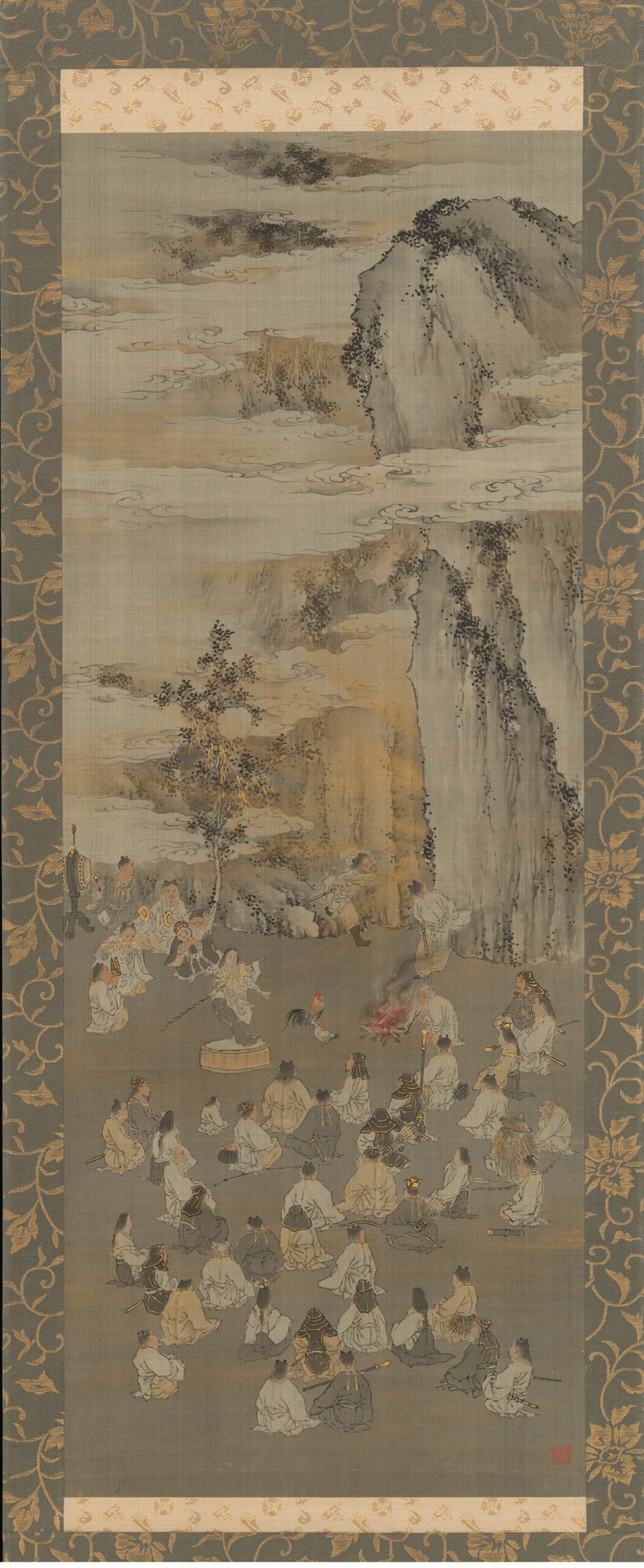
Kōno Bairei
Hanging scroll with ink, colour and gold on silk, 71 x 27 cm | 28 x 10.6 in
The Metropolitan Museum of Art
The Sun – Art Prompt
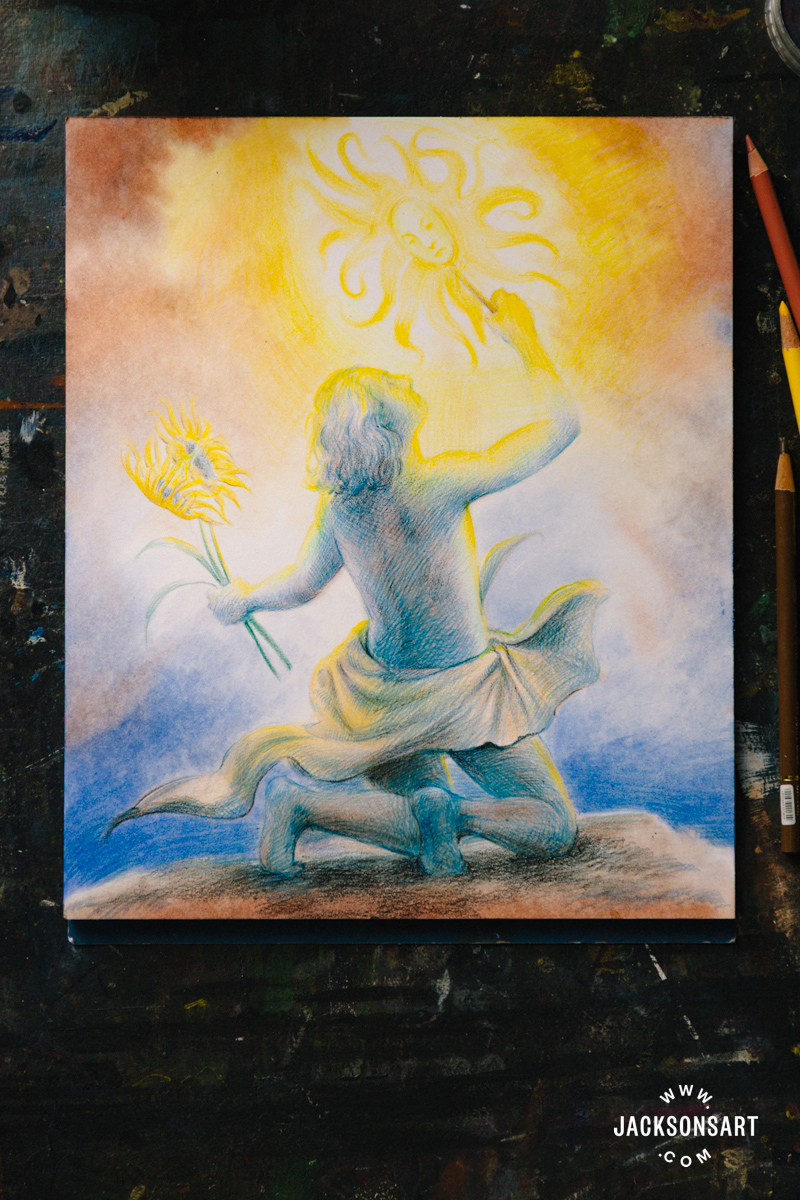
For my artwork example, I was inspired by depictions of Sol in early Renaissance prints, and the emotive power of heightened colour in the sun’s light, captured by Renoir and Munch. I drew my own Sol figure, using the following mixed media drawing materials.
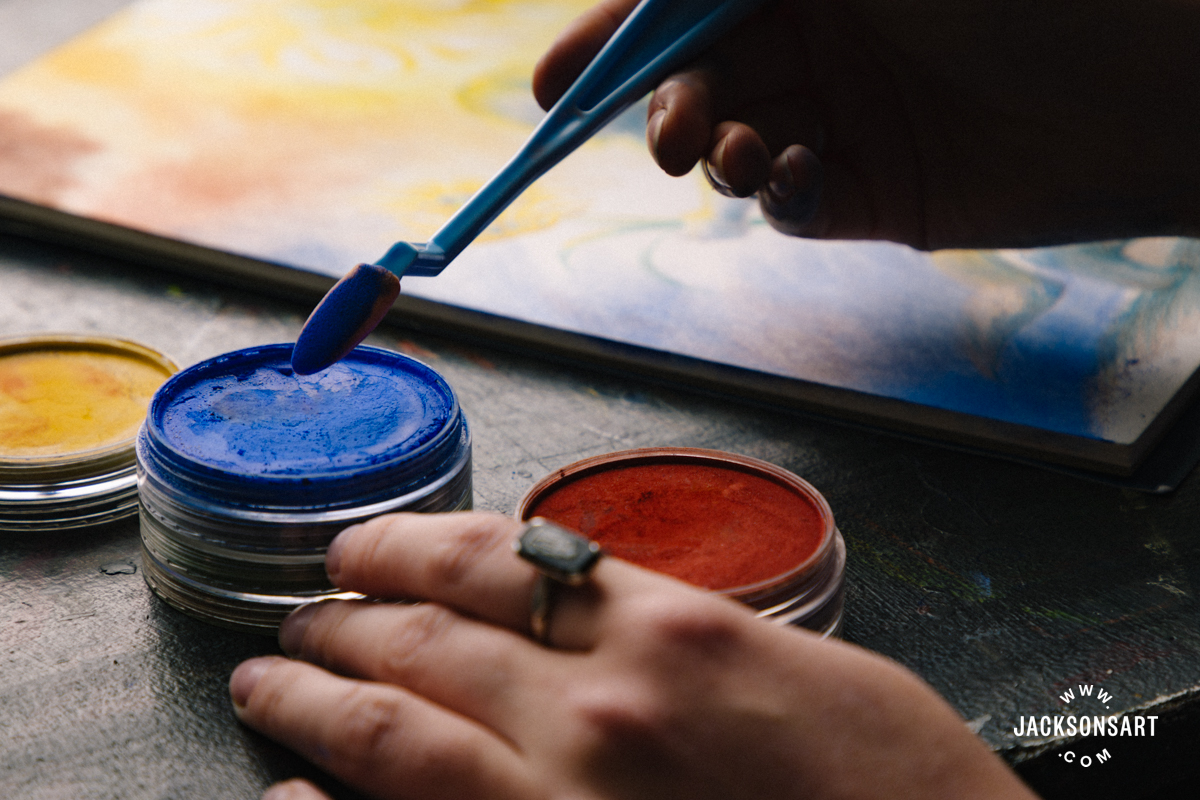
For this art prompt you’ll need:
A selection of coloured pencils, I used:
Lyra Rembrandt Aquarell Watersoluble Pencil in Lemon Cadmium
Holbein Artists’ Coloured Pencils in Dandelion, Cinnamon, Burnt Umber, Apricot , and Smoke Blue
Faber-Castell Albrecht Dürer Watercolour Pencils in Light Phthalo Green, and Hookers Green
Stablio All Surface Pencil in Black
Caran d’Ache Museum Aquarelle Pencil in Permanent Blue
Derwent Procolour Pencil in Middle Ultramarine
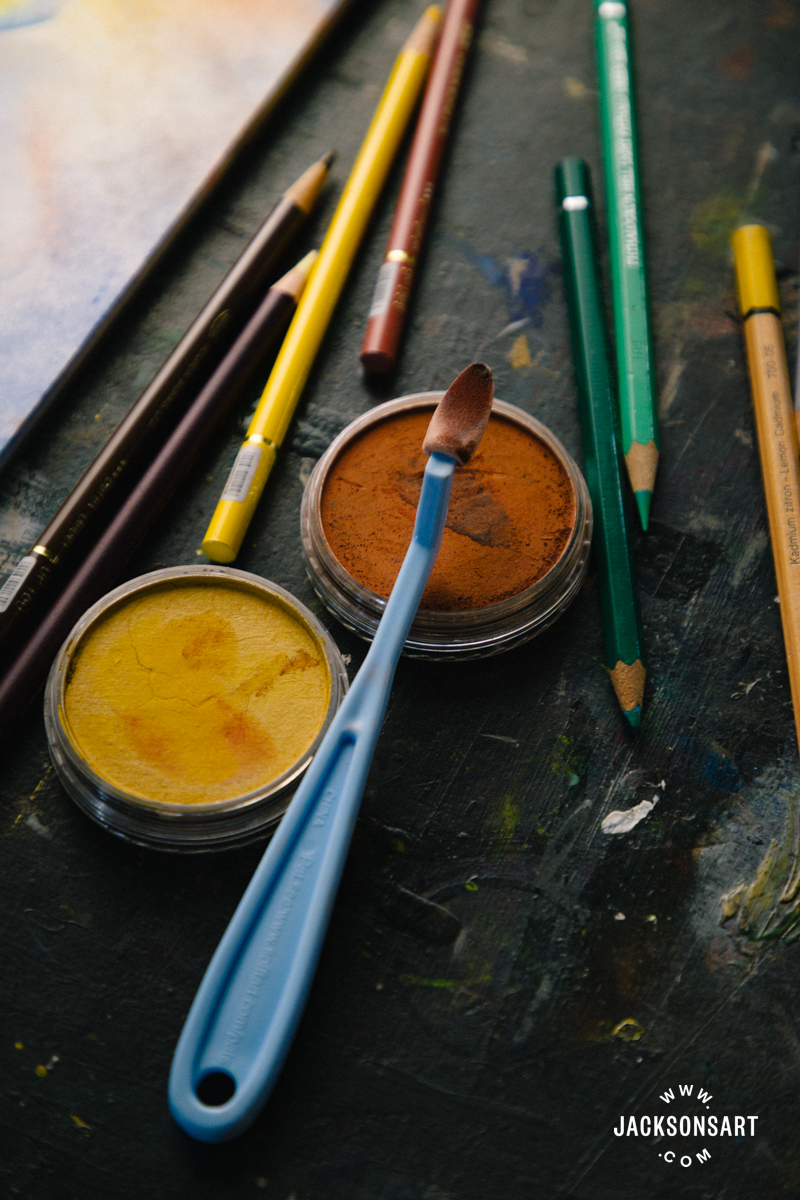
A selection of PanPastels, I used Titanium White, Ultramarine Blue, Yellow Ochre, and Red Iron Oxide
Jackson’s Hot Pressed Watercolour Paper Block 10 x 12 in
Royal Talens Concentrated Fixative
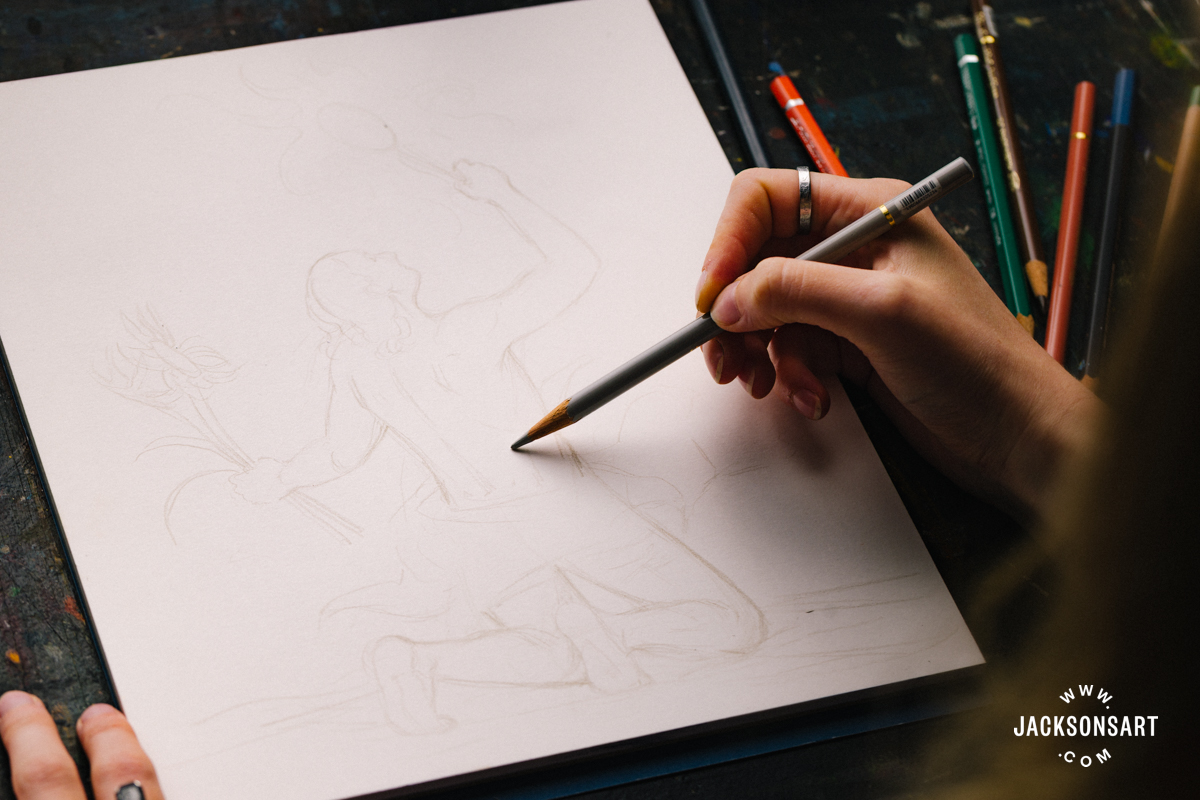
To begin my Sol drawing, I lightly sketched out my figure in a dynamic pose, holding the staff with the sun on the end in an outstretched arm and sunflowers in the other, kneeling on a hilltop.
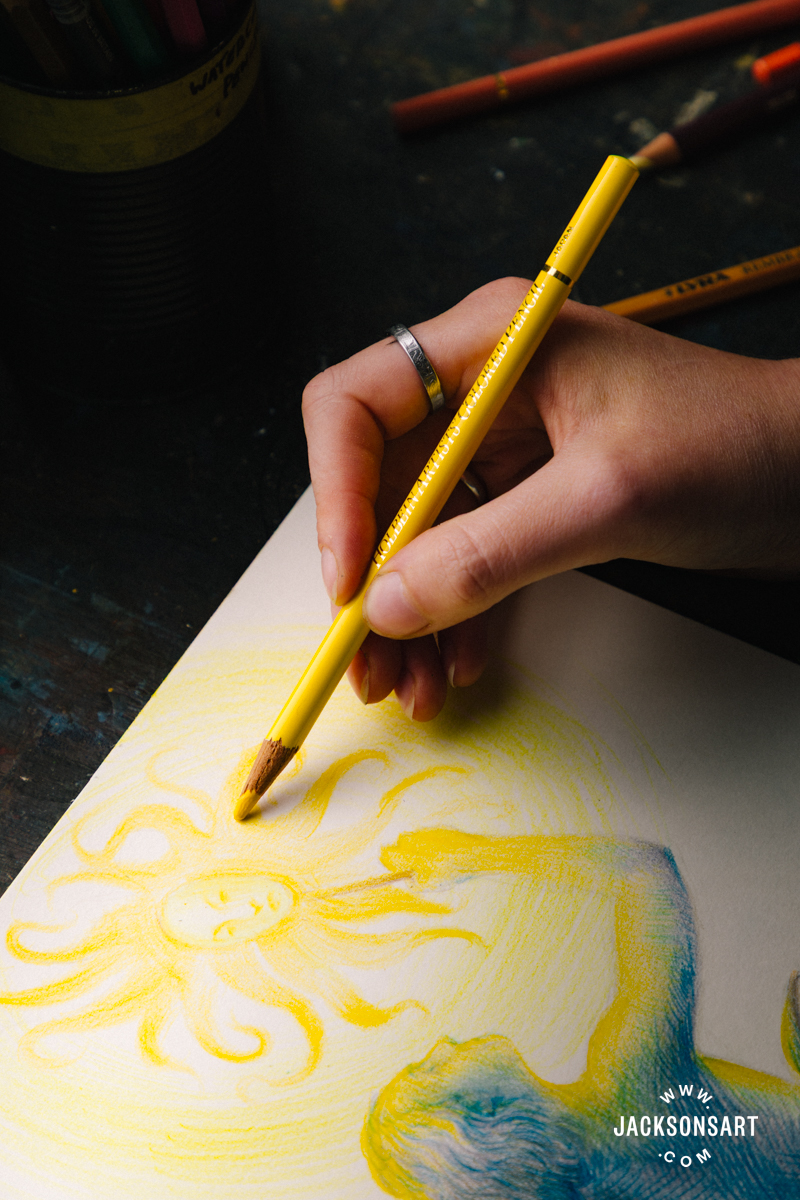
Next, I built up layers of colour with my selection of pencils. I began with the yellows and oranges of the light radiating from the sun, so that these areas of colour wouldn’t be covered or muddied later by the other pencils.
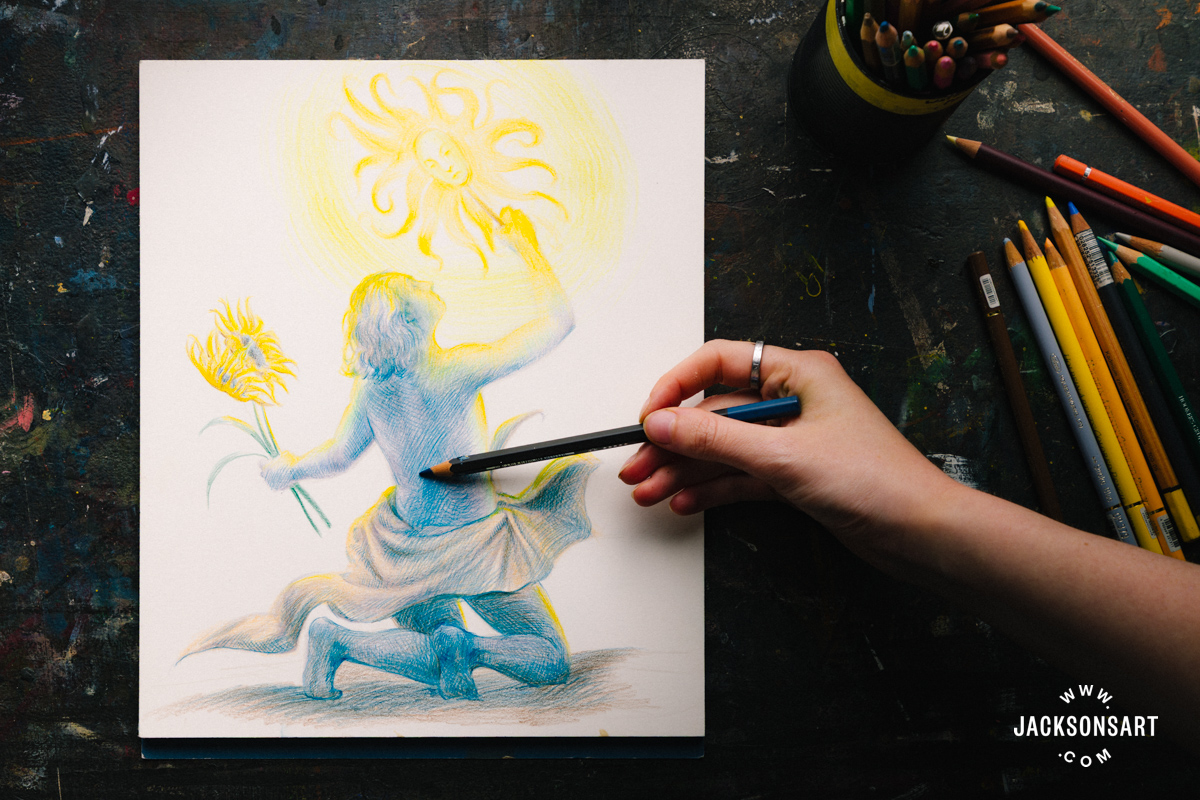
Once I’d built up my coloured pencil drawing, I began adding the sky and ground beneath the figure with PanPastels. I used the Sofft tools to methodically apply the pastel in round motions to form the clouds. And I used swiping motions to add flat colour and bursts of sunlight. I used the bigger sponges to buff and blend the colours.
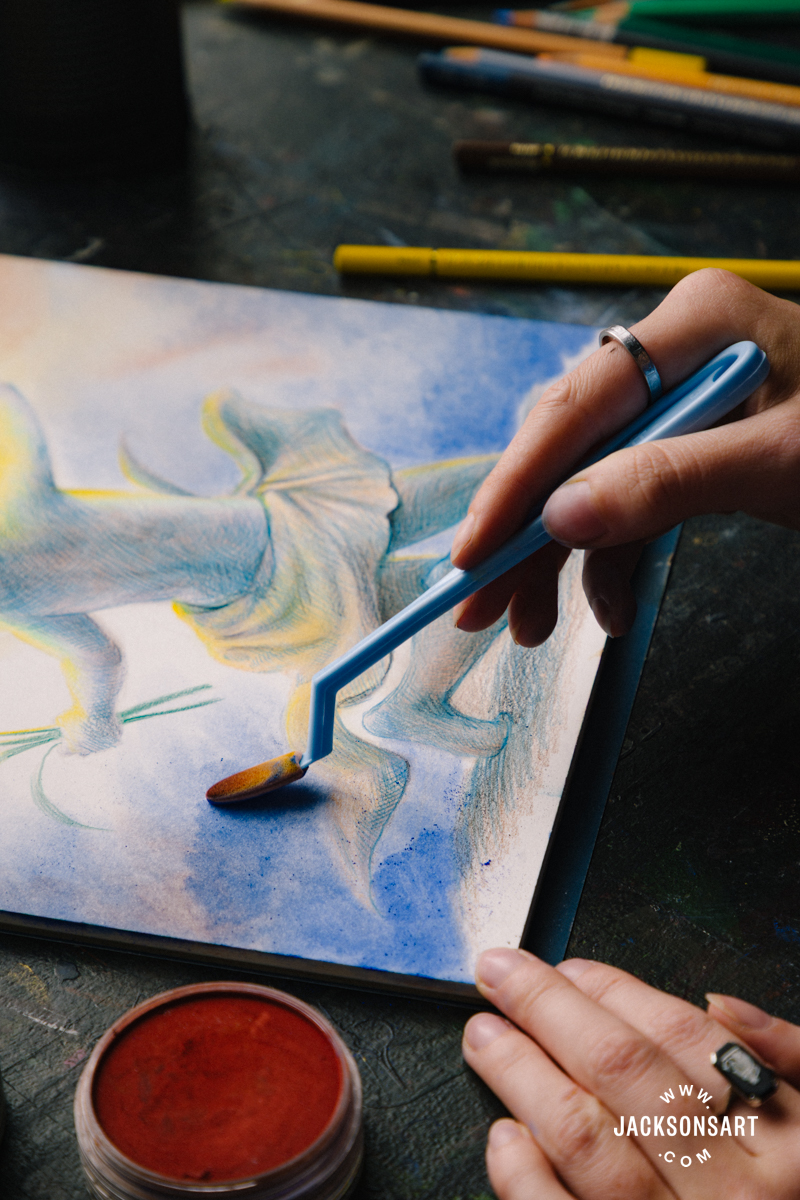
To complete my drawing, I deepened tones in areas of shadow on his back, legs, and the fabric using a Stabilo All Surface Pencil in black, which applies very well over previous layers of coloured pencil.
Further Reading
Painting with Sunshine: Van Gogh’s Yellows
Film: A Guide to Plein Air Painting
Recreating the Colour Palette of Edvard Munch
Shop Art Materials on jacksonsart.com


4 thoughts on “Art Through Symbols: The Sun”
Excelente!
Thank you Estela!
Thoroughly enjoyed this article, fabulous breadth and I learned a lot, it was really interesting and what a beautiful piece of art to finish on. Bravo.
Thanks for the lovely comment Christine, glad you enjoyed this one!
Comments are closed.