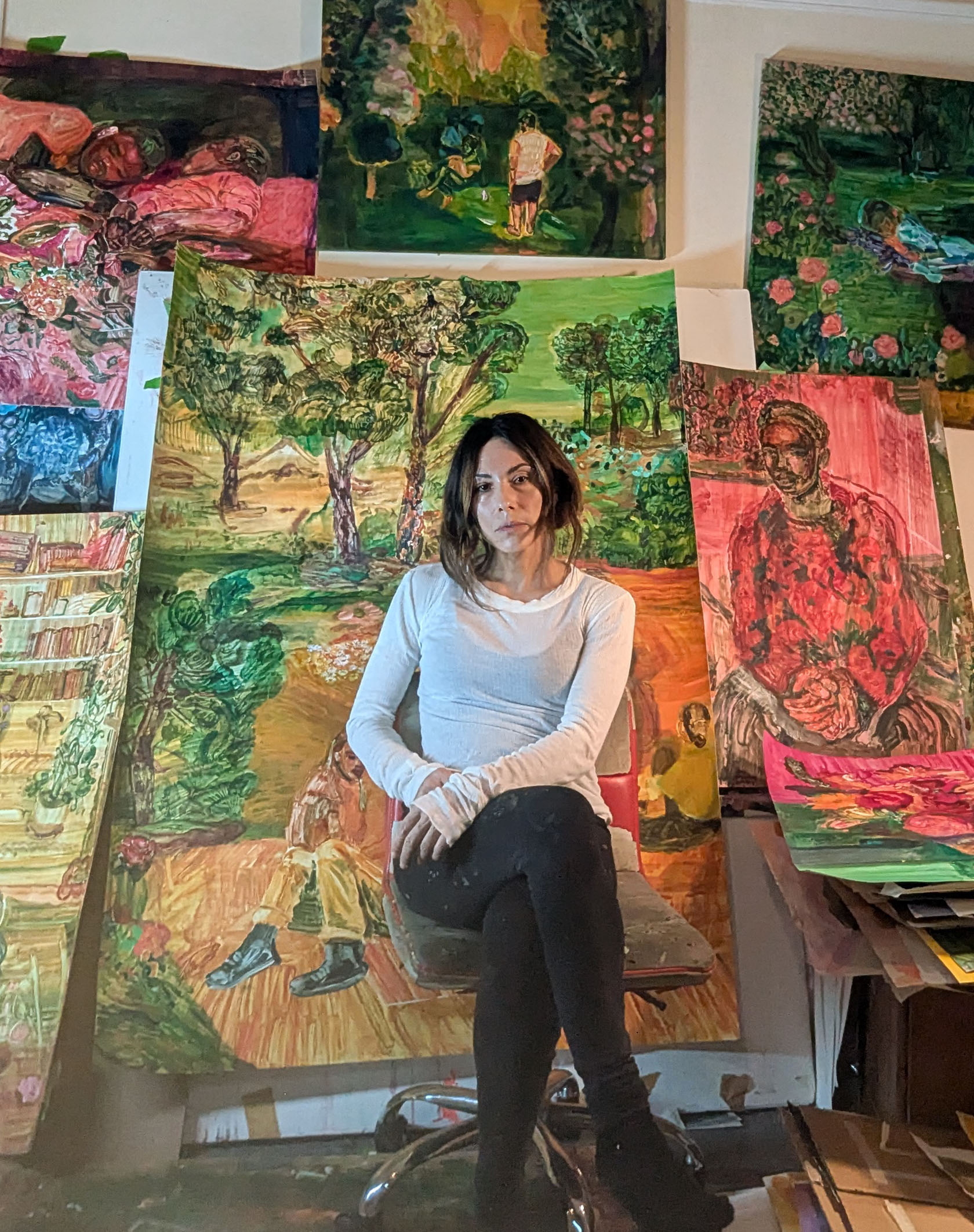
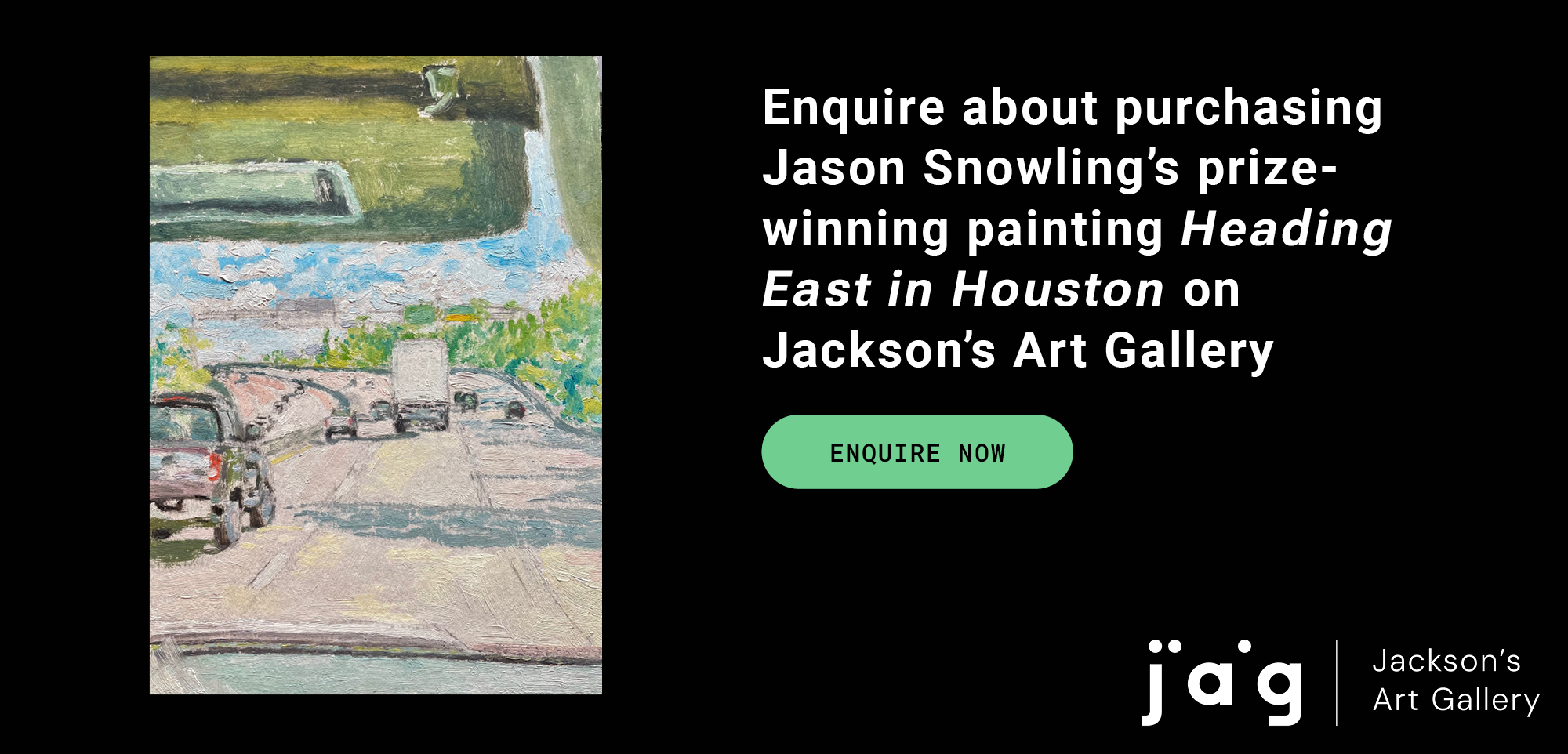
Jason Snowling won the Amateur Award in Jackson’s Art Prize this year with his work Heading East in Houston. In this interview, he discusses working from holiday pictures and selfies, the briefcase of paints he swaps out for his WFH setup, and shelving paintings before coming back to them with fresh eyes.
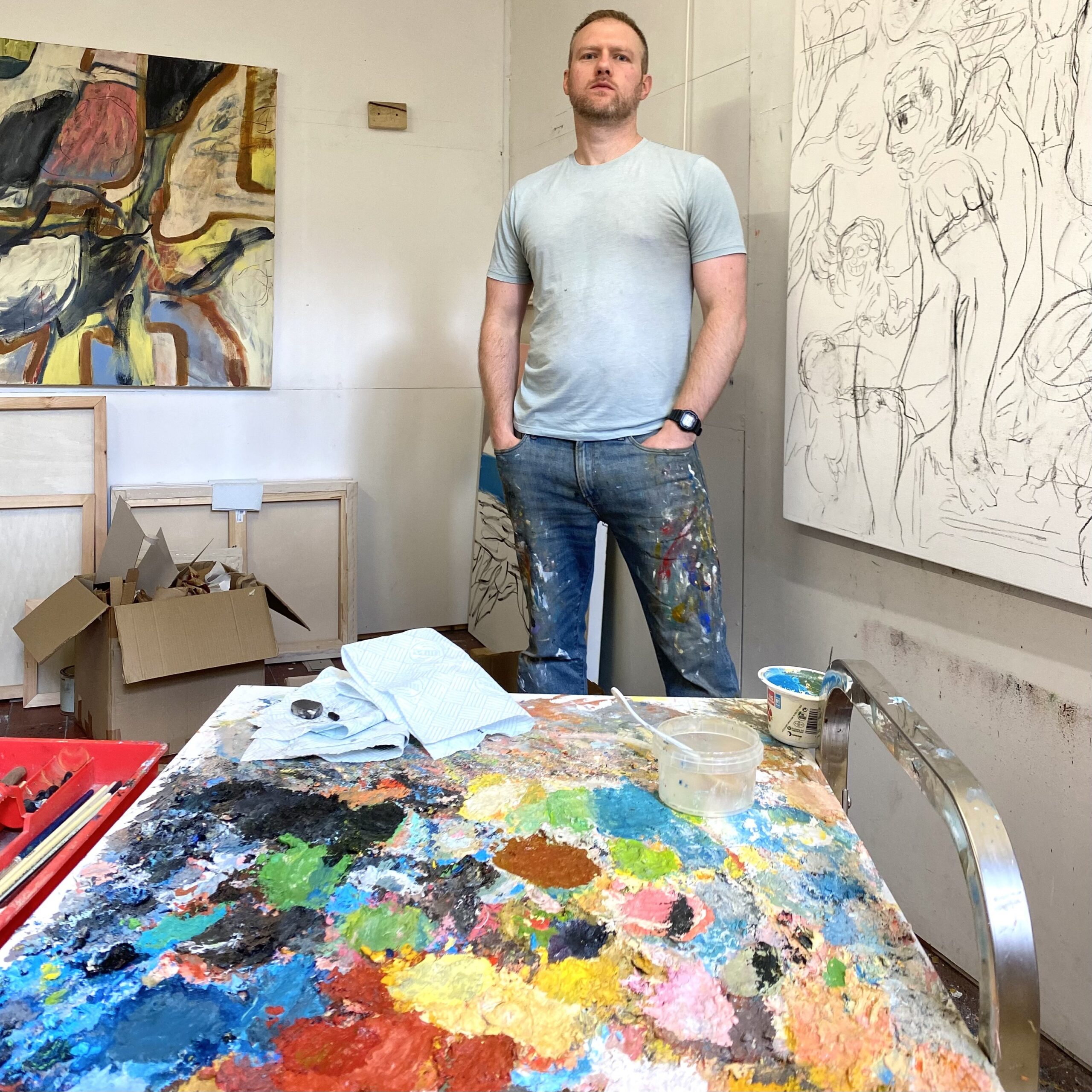
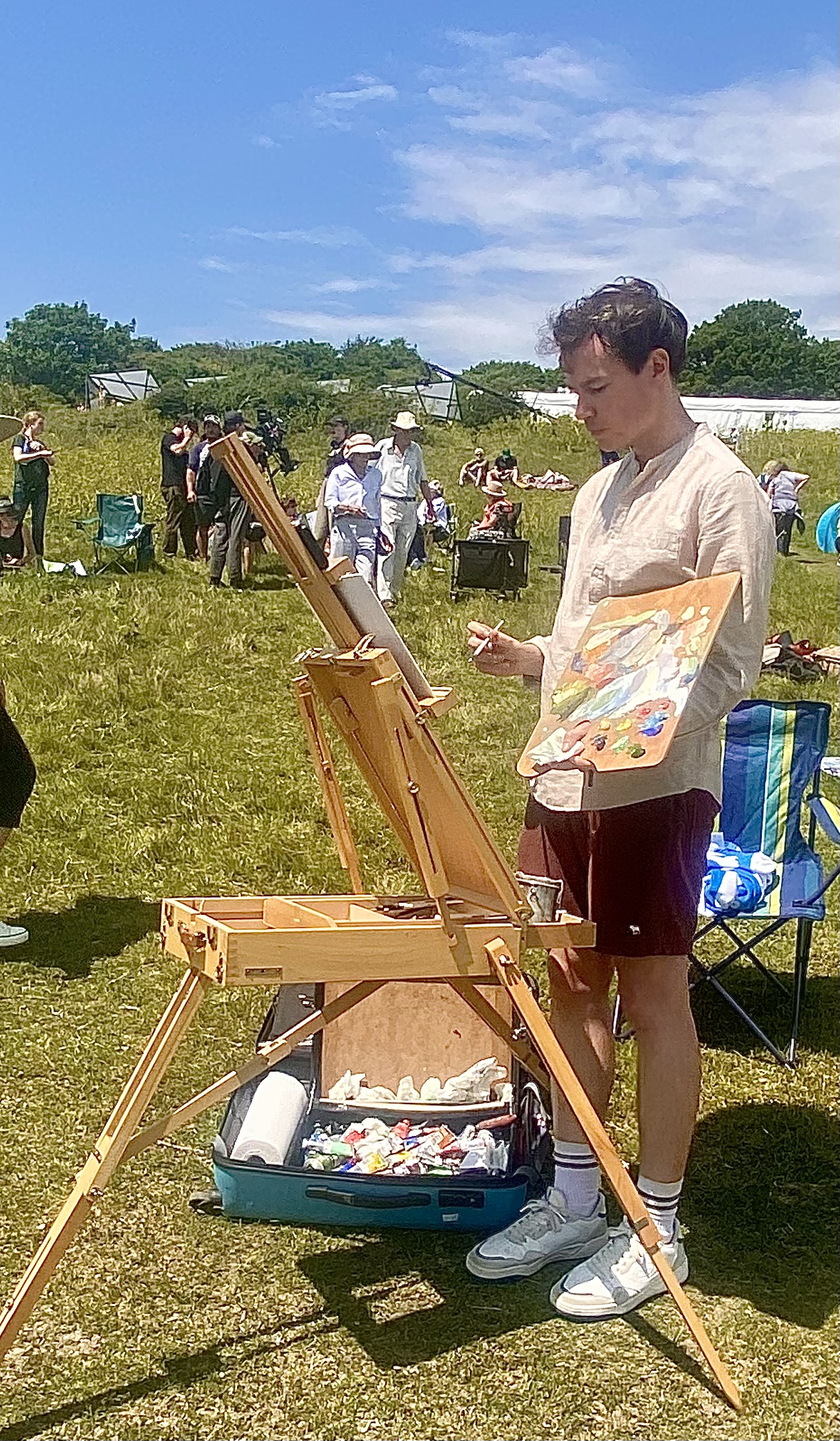
Above image: Jason plein air painting

Jason Snowling
Oil and pencil on cardboard, 21 x 14.9 cm | 8.2 x 5.8 in
Josephine: Could you share the story of how you became an artist and tell us more about your artistic background?
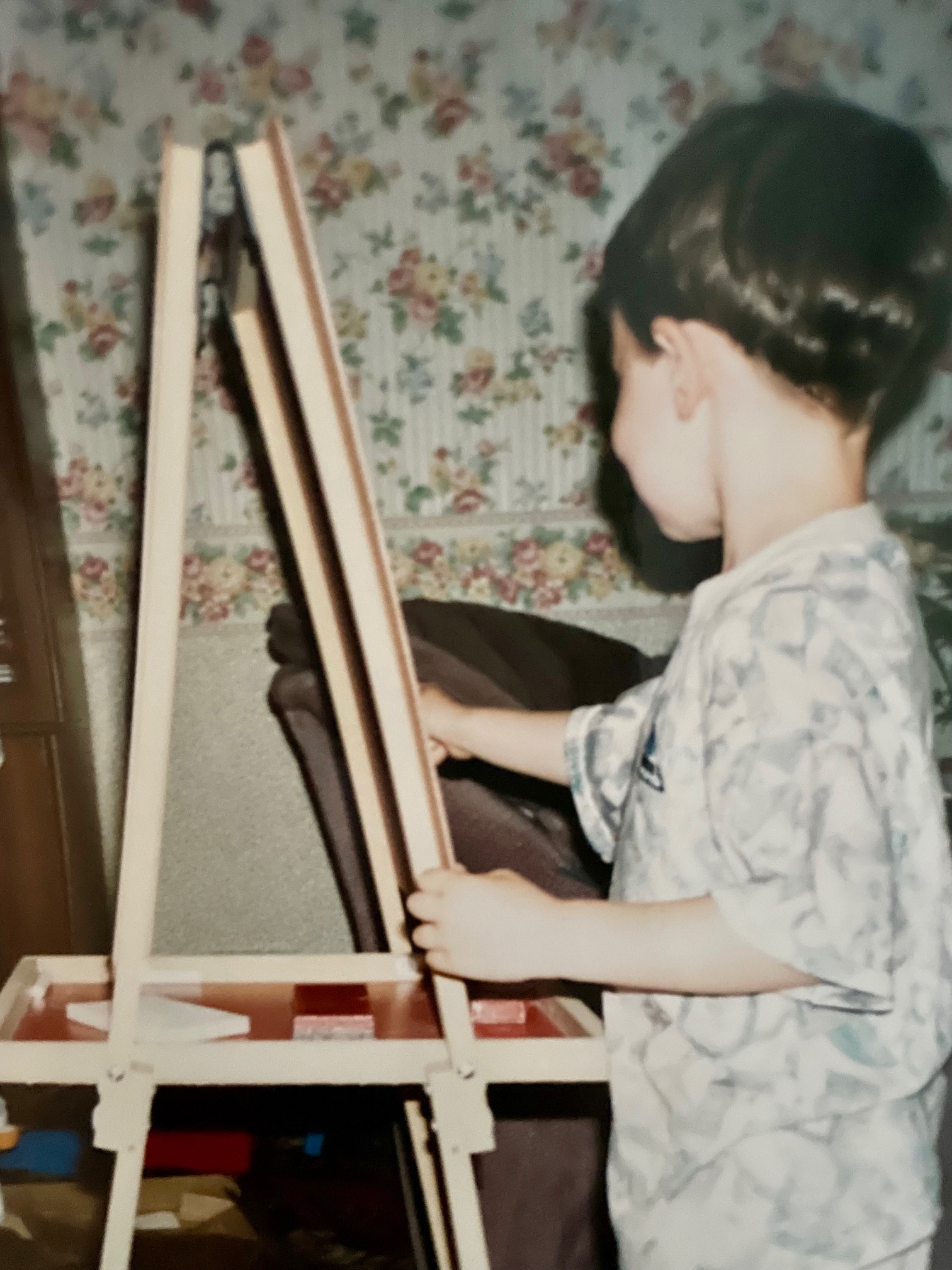
Jason: I have loved drawing ever since I was a child. I was no prodigy, but it always felt natural to me, and I can’t imagine my life without it. Painting, however, is something I’ve had to work a little harder to love! After a failed attempt at using oil paints in my early twenties (with many brushes ruined), I tried again in my mid-twenties and haven’t looked back since. The goal for me has always been to feel as comfortable with the brush in my hand as the pencil, and I feel this is beginning to happen. Over the last couple of years, I’ve felt a lot more confident and happy with my paintings, which led me to enter this competition.
Josephine: What does a typical working day in the studio look like for you? Do you have any important routines or rituals?
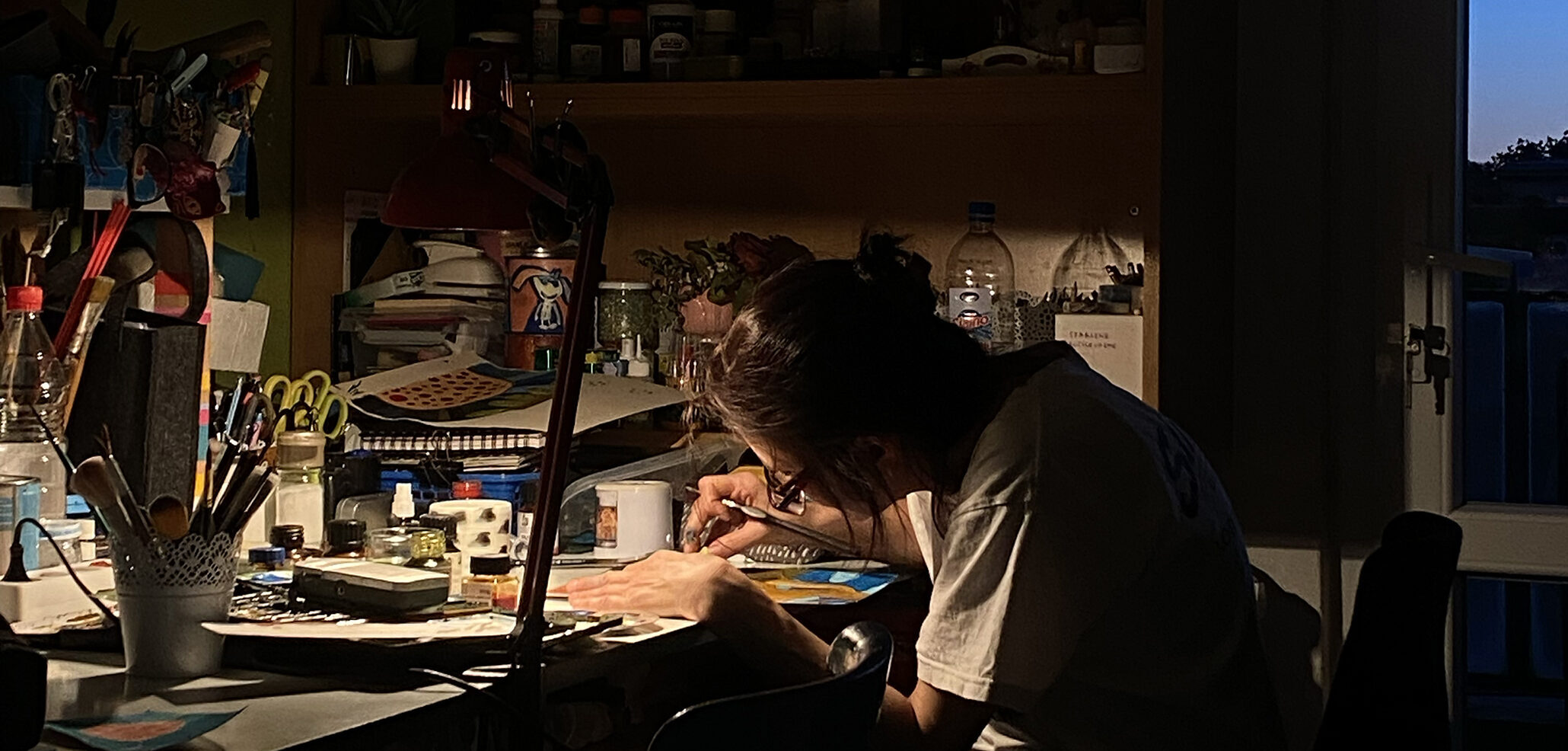
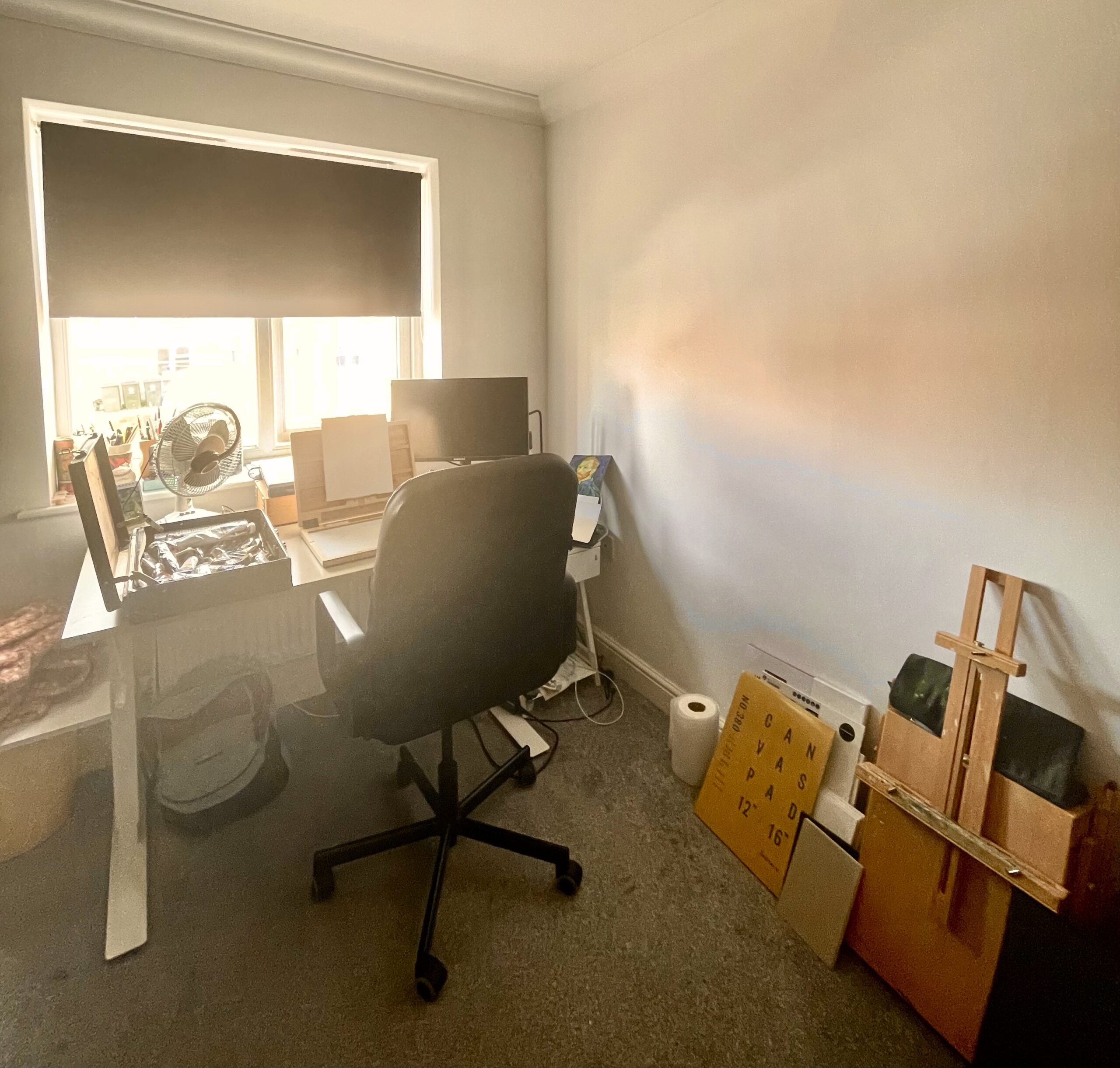
Jason: As I work full-time from home, my studio is more of an office, which has been gradually taken over with art stuff. Unfortunately, I don’t get as much time to paint as I would like, so I paint mostly on weekends. I like to paint for a good few hours, and I try to finish a painting in one or two sittings as my style is quite loose and sketch-like. Too much time can be the enemy sometimes. After I’m done, I clean my work desk and put my laptop back, ready for Monday!
Josephine: Which materials or tools could you not live without?
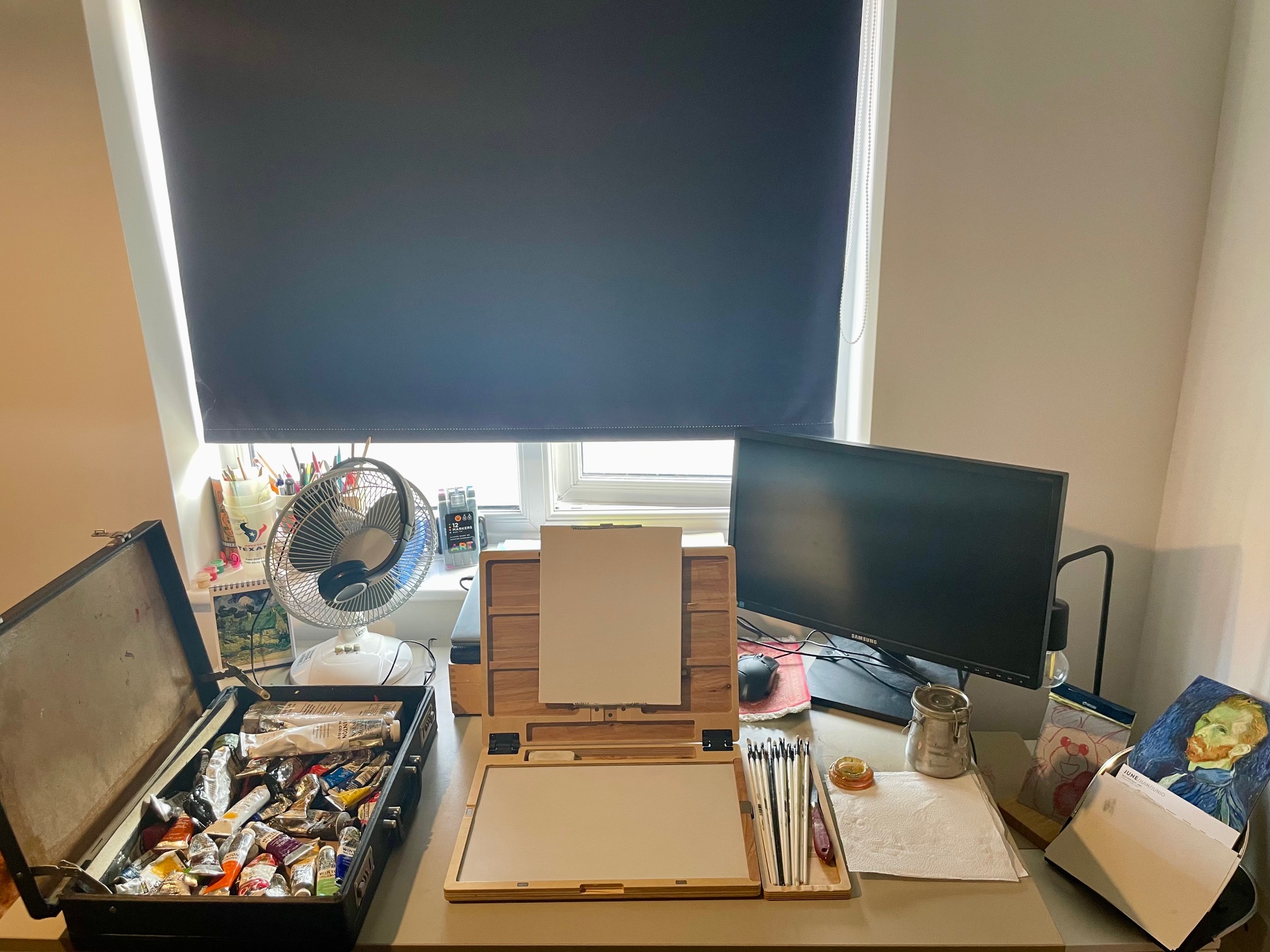
Jason: I’ve been painting on fairly small canvases over the past couple of years, so I tend to use smaller-sized brushes – filbert is my go-to, although flat has entered the fray recently.
Gamblin Gamsol has been a revelation. As mentioned above, I had a failed attempt at painting earlier in life after not putting in any research for the materials needed for oil painting. So to have something that thins and removes paint is wonderful.
I do have a regular easel which I use sometimes, but this year I’ve been using the New Wave u.go Anywhere Pochade Box. The built-in palette is handy and it’s easy to plonk on my desk and begin painting – I definitely prefer using this laptop than my work laptop!
I’m not sure why, but I keep all my paints in a briefcase. I guess I thought it would be a temporary thing, but now I can’t imagine storing them anywhere else.
Josephine: Do you work from a reference? Tell us more about your process.
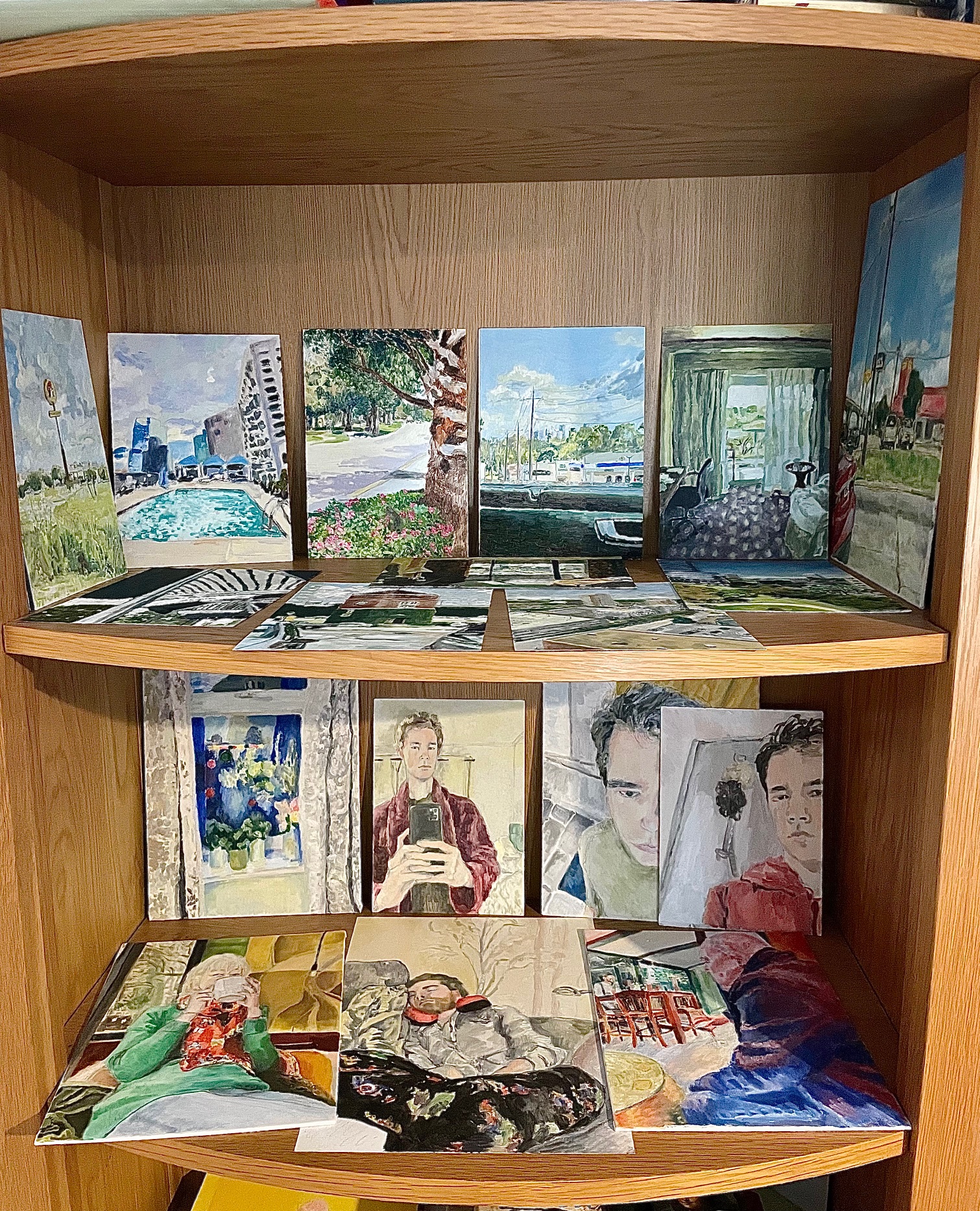
Jason: I mainly work from photos I take on my phone. I view my paintings as journal entries, so I mostly paint places that I’ve been or the people dearest to me. Every few months, I go back to self-portraits – I have an album of selfies on my phone, which makes me look very vain, but they’re just photos of me around the house, as that’s where I spend a lot of my time.
The process of deciding when to take a photo is quite instinctive and random. From sneaking a photo of a family member when they’re not looking, or noticing something in a landscape that looks fun to paint. Often, I’ll take a selfie because I might be wearing something in a nice colour and then I find a place in the house with a complementary colour to stand. Or I might just think my hair looks nice and needs to be documented in paint form.
If I think too much about composition, tone, etc., before I’ve started painting, it’s easy for the painting to feel too neat and predictable. I’m more interested in painting in ways not seen before. More often than not, my paintings take about five hours to complete, but sometimes I like to take an A5-sized card and paint a complete portrait within 30 minutes. I’ve found that painting quickly and spontaneously can be useful, as sometimes the best passages of paint are made without thinking.
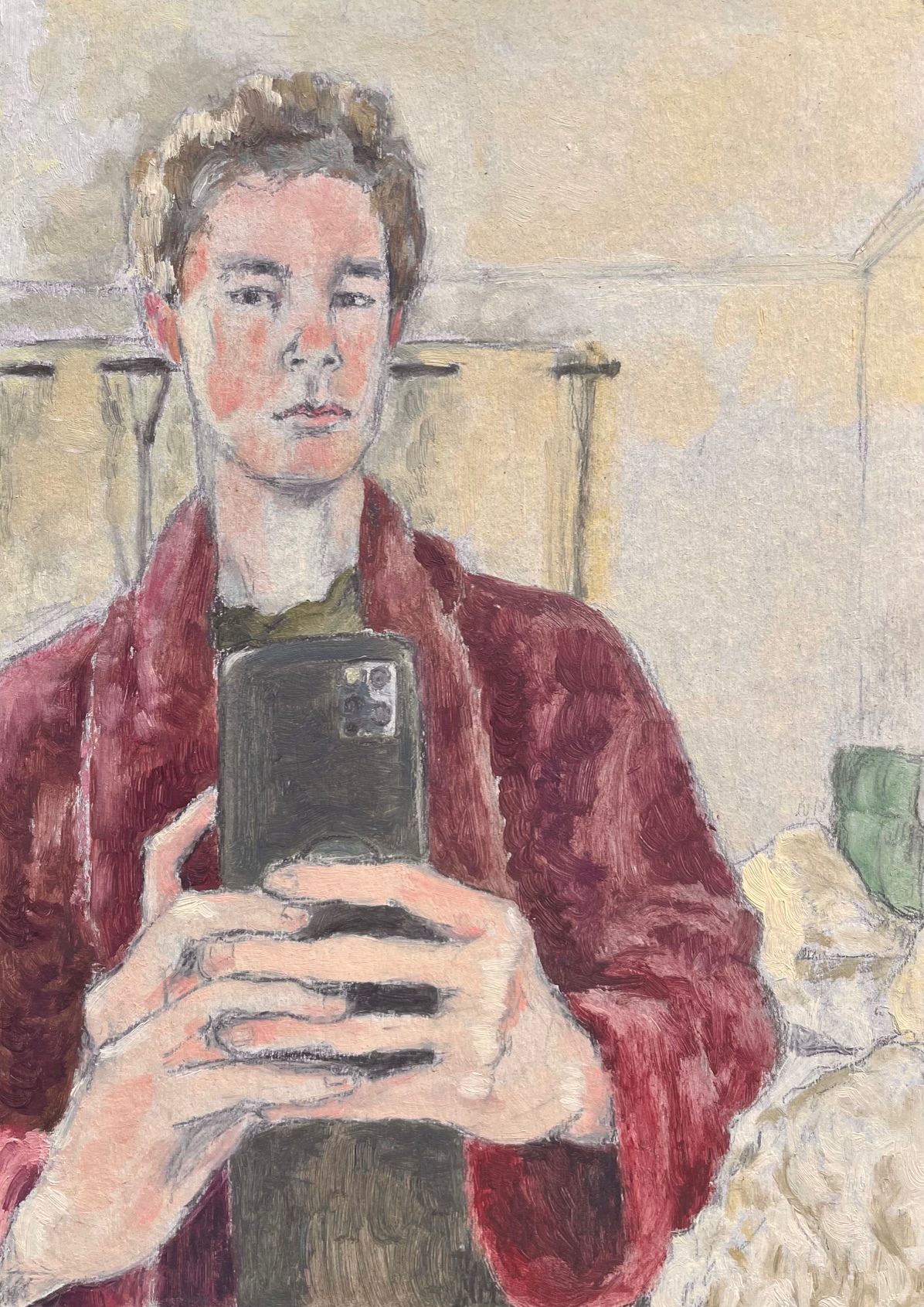
Jason Snowling
Oil on card, 14.8 × 21 cm | 5.8 × 8.2 in
Josephine: Do you regularly draw or keep a sketchbook? If so, how does this inform your work?
Jason: I draw most days – mainly quick sketches or doodles of people. I always do an underdrawing in pencil before painting, so drawing regularly can be useful, especially for portraiture.
I’m trying to be looser with my drawings these days. When I was younger, it was all about improving and producing detailed/accurate work, but now I try to be freer and less exact, which I find more enjoyable. Currently, I’m drawing on scrap pieces of paper rather than a sketchbook after being inspired by Matisse’s portrait drawings with minimal, fluid lines. The distilling of form is something I’m trying to bring into my own work, as I can sometimes get bogged down in the details.
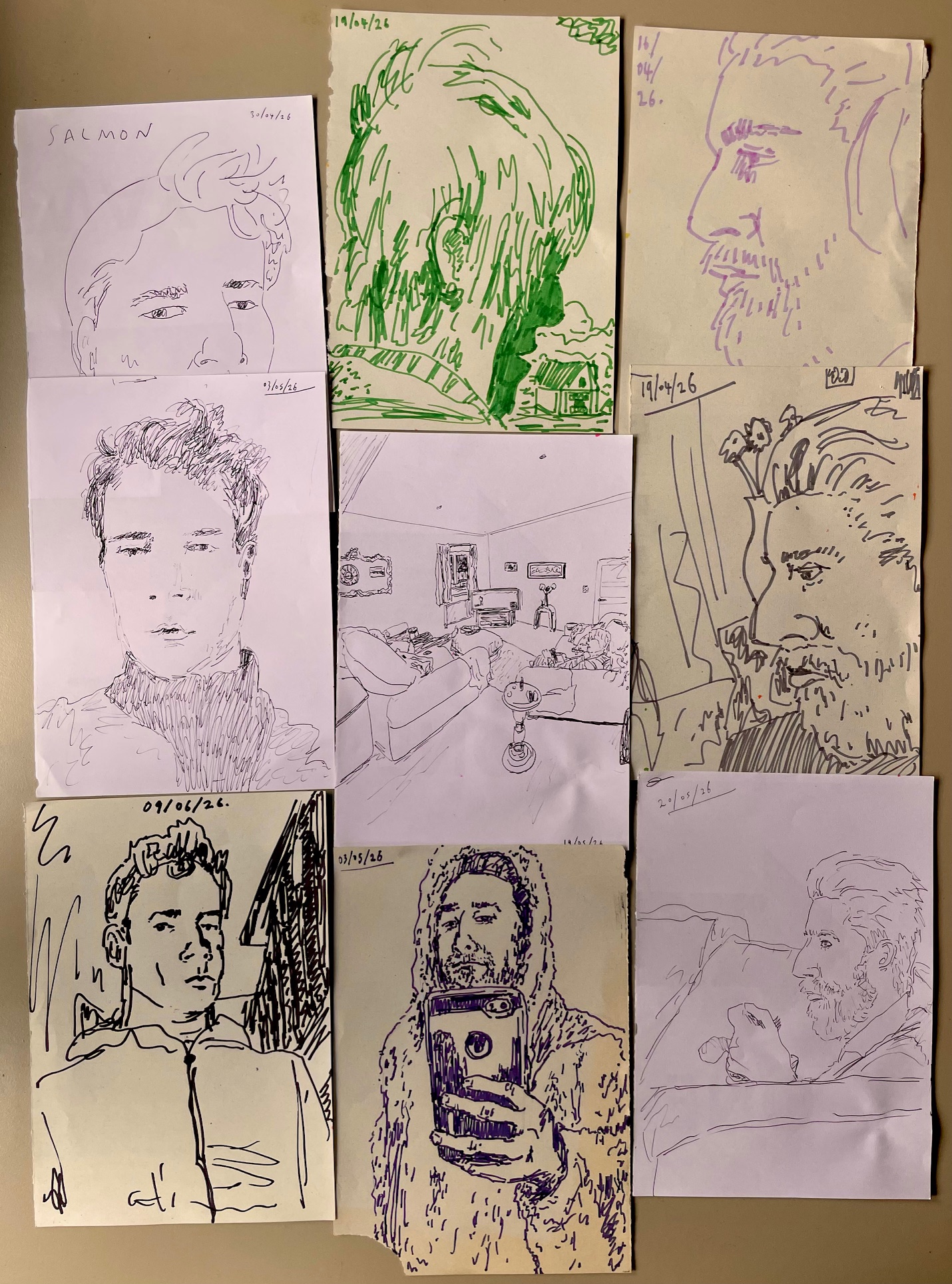
Josephine: Have you ever had a period of stagnation in creativity? If so, what helped you overcome it?
Jason: I think my longest periods of stagnation have come from being unsure of how I want to paint. I don’t tend to struggle too much with what I want to paint. But I suppose the one benefit of not being able to paint every day is that when I get round to it, I have many photos on my phone to choose from.
But it took a long while to find a way to enjoy painting and to feel like I was on the ‘right path’. Not realising at the time that feeling like I was on the wrong path actually meant I was on the right one. The more experience I gained, the more I found out what I do and don’t like doing, experimenting with different styles, thickness of paint, mediums, etc. What got me through was to keep painting even if I was unsure what I was doing. Also, being curious and looking for inspiration from others. Instagram has been a surprisingly big help as the algorithm has helped me find artists who have led me in new directions.
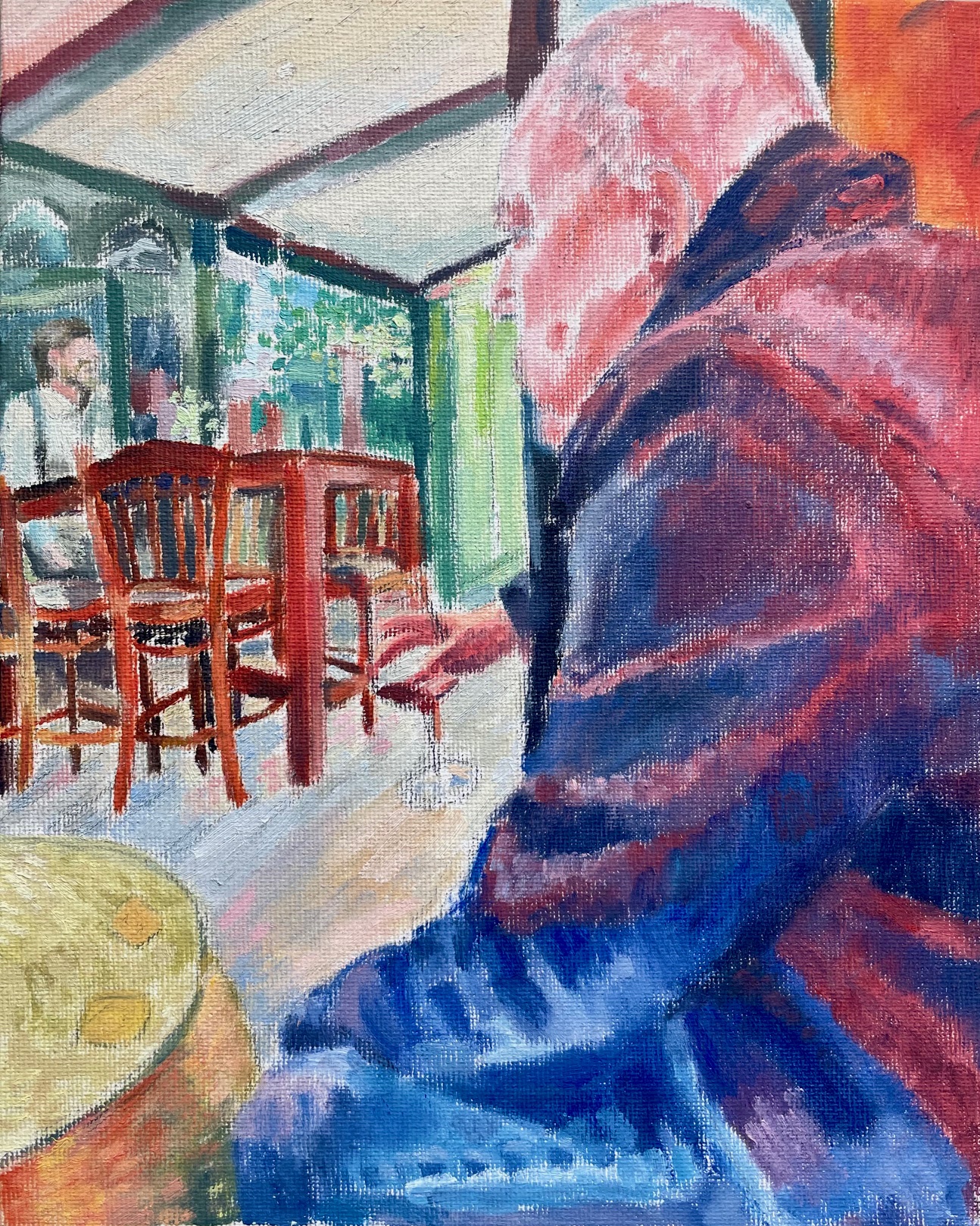
Jason Snowling
Oil on card, 20.4 × 25.4 cm | 8 × 10 in
Josephine: Are there any specific artists or mentors who have inspired you?
Jason: I first started painting with a palette knife, as using something with a metal end felt similar to using a pen/pencil, but I always knew I wanted to turn to the brush. I just needed a way that felt exciting, and it was seeing Claude Monet’s work that provided this. The way he used the paint and how he captured light is what first inspired me to pick up the brush.
Following that, Vincent Van Gogh became a major inspiration with his use of colour and impasto technique. I knew I was always going to veer away, but I’ve found it hugely beneficial to practise in the styles of other painters, as so much can be learned through the process. Over recent years, I’ve been heavily inspired by Henri Matisse and his expressive, emotive paintings. There are a few more artists I have been inspired by, but Van Gogh and Matisse are my big two. The ability to take a vase of sunflowers or an open window, pass it through that artist filter and create something everlasting will always be inspiring to me.
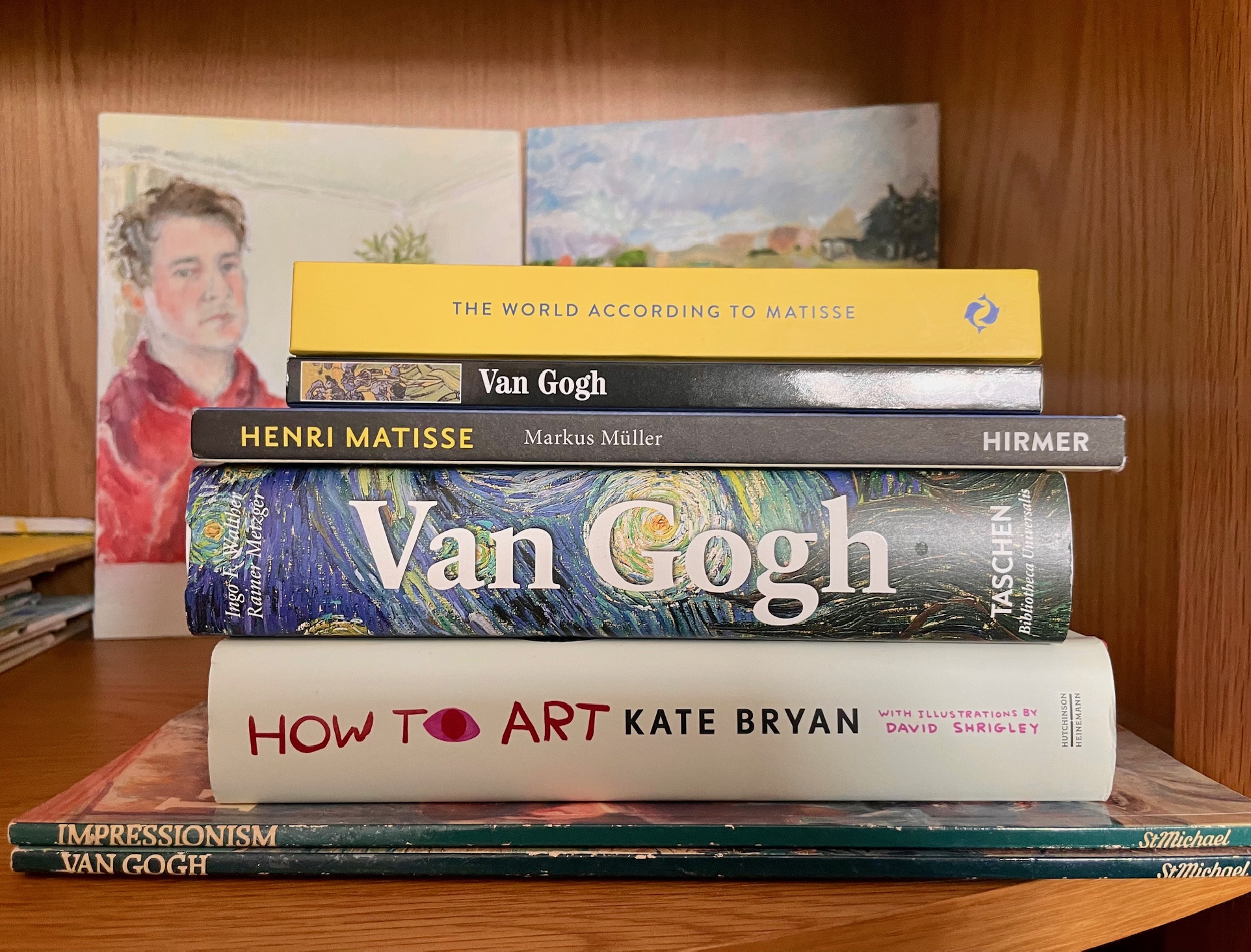
Josephine: What were you thinking about or exploring at the time you made Heading East in Houston? What inspired it, and how did it come to be?
Jason: This painting is part of a series of different sights in Houston, a place that holds many happy memories for me. After a trip there in 2024, I realised how much I love the look of America. So I took a few pictures and combined them with photos from previous holidays to make an album on my phone, which I am working through. For this particular piece, I wanted to capture the intense light of a typical Texan summer day and create a sense of scale on a small surface. I also saw the picture as a way to experiment with using thick and thin paint and to find harmony between detailed sections and negative space – teachings from that man, Matisse, again.
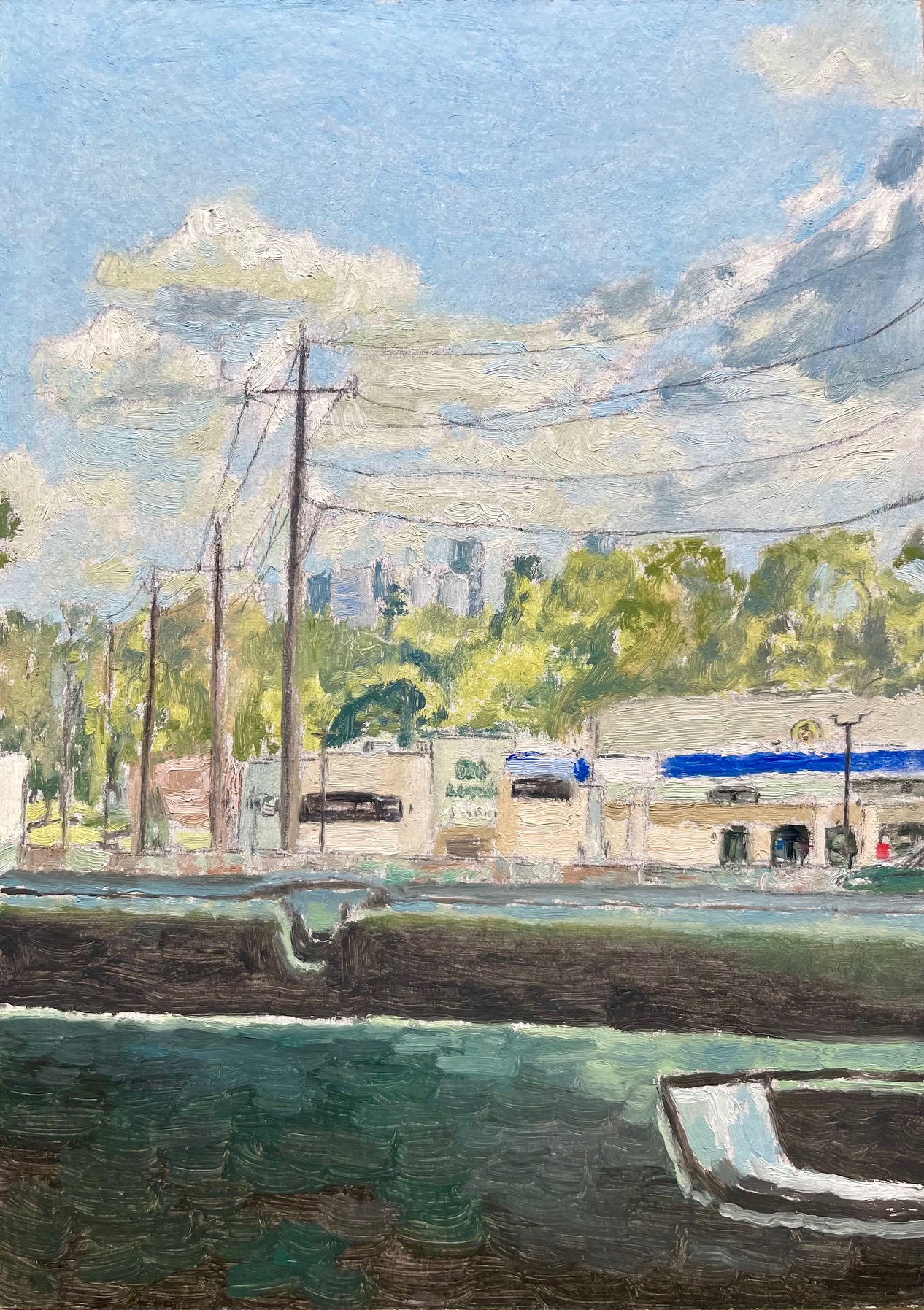
Jason Snowling
Oil on card, 14.8 × 21 cm | 5.8 × 8.2 in
Josephine: What made you submit this piece to Jackson’s Art Prize?
Jason: I’ve not been able to say this too many times over the years, but I was happy with the painting. I felt it captured the light and energy of the reference photo. And I thought it was a good representation of my current style and the techniques learnt by those who inspire me.
Over the last couple of years, I have been feeling more assured than ever with my paintings and have become confident enough to share my work on social media and enter competitions. I entered the Jackson’s Art Prize last year (with another Houston painting) and made the longlist, which I was delighted with, so the thought of going one step further was definitely a motivation for entering this year, and I’m glad I did!
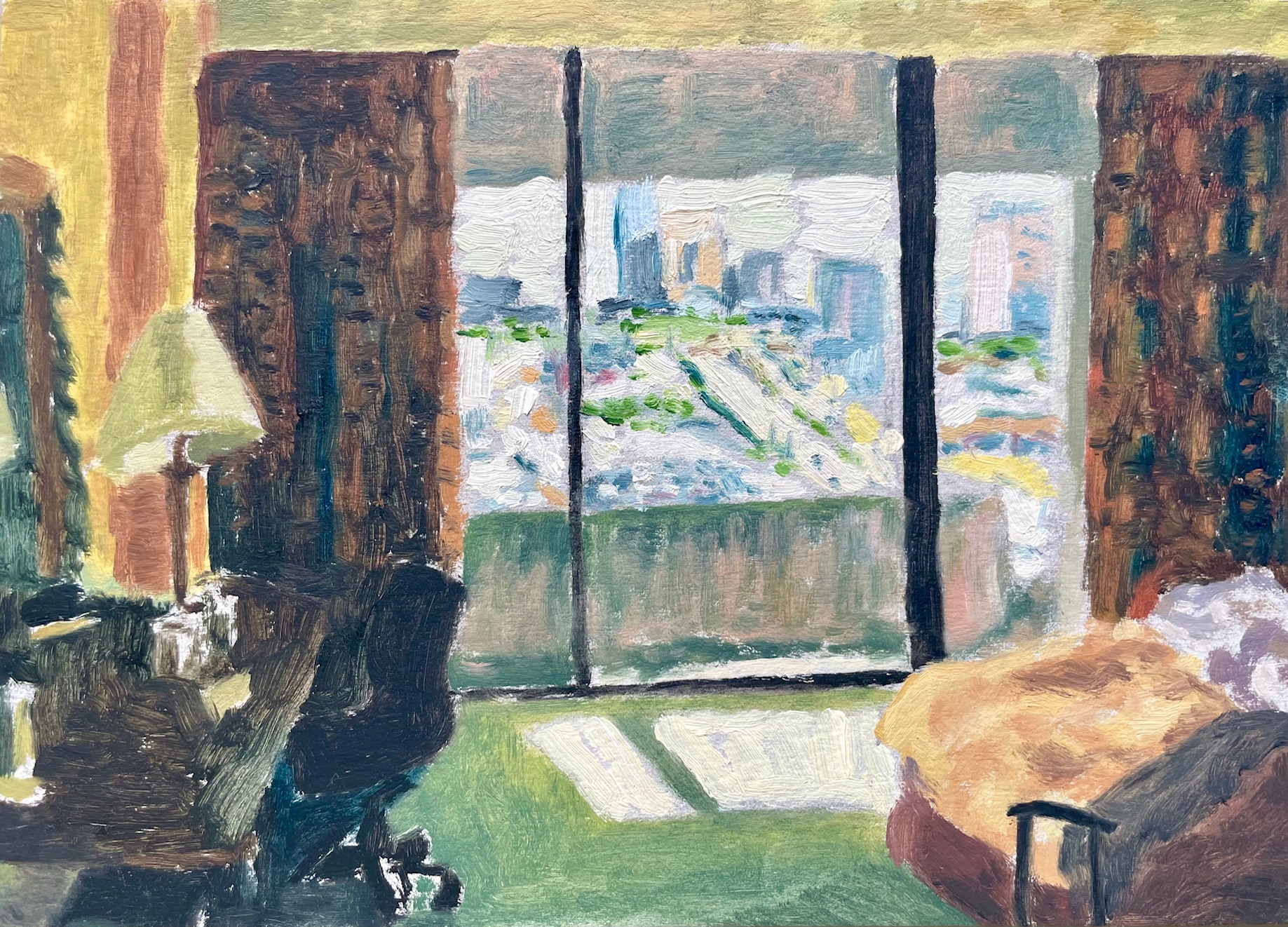
Jason Snowling
Oil on card, 21 × 14.8 cm | 8.2 × 5.8 in
Josephine: You’ve mentioned being inspired by post-impressionist painters like Van Gogh and Matisse. What is it about this movement that inspires you?
Jason: Impressionism, Post-Impressionism, and Fauvism are definitely my favourite movements. Art scene-wise, it must have been such an exciting time to live through, and it’s incredible that paintings from that long ago can still amaze, shock, and inspire as they did back then.
Regarding the paintings themselves, the thing that fascinates me most is the ability to take an often ordinary subject and make it extraordinary – whether it is reduction of form, exaggeration of colour, or wild brushwork. Also, after learning more about both artists in books and online, their strength to keep working during hard times and when others did not understand their work is hugely inspiring.
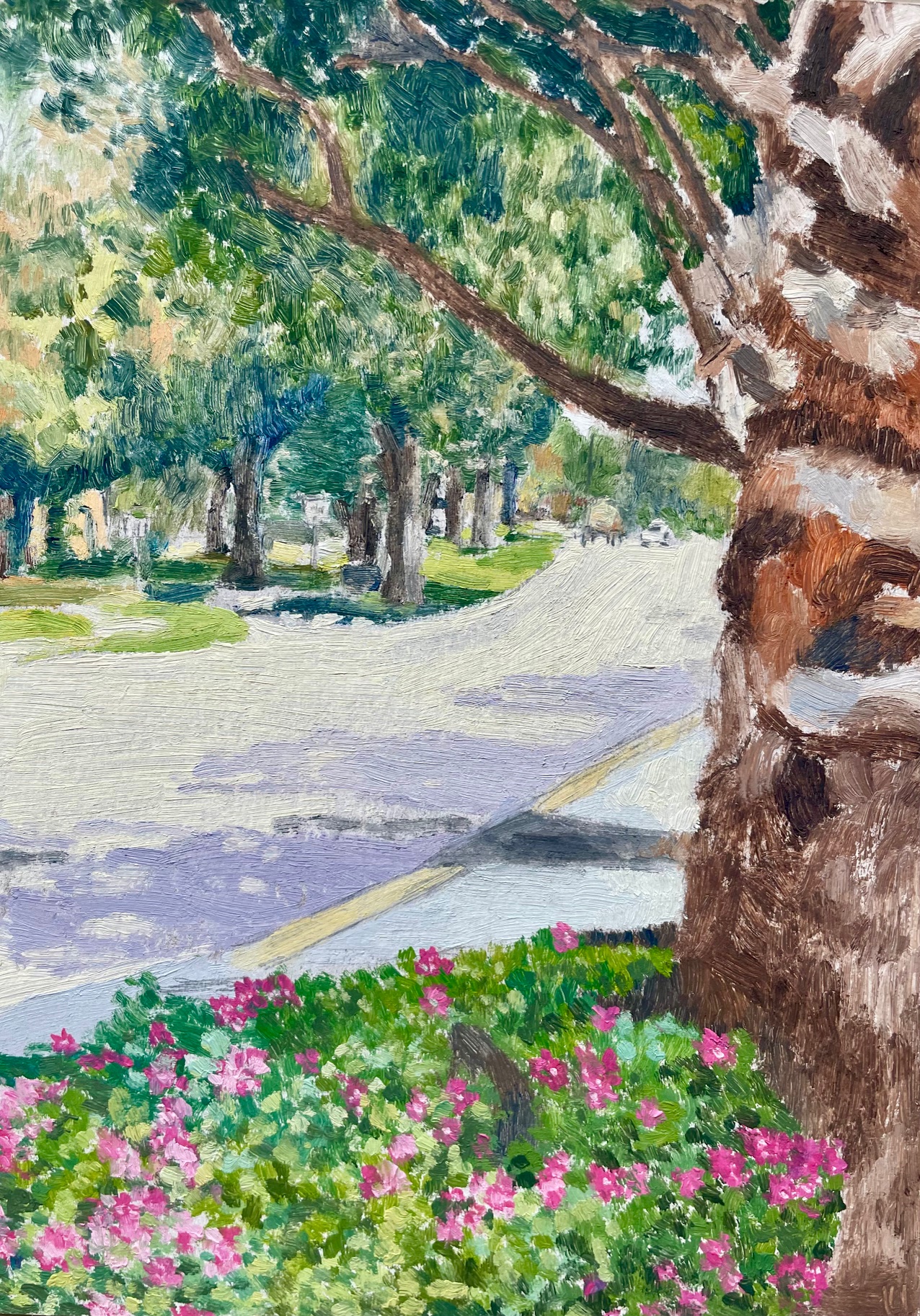
Jason Snowling
Oil on card, 14.8 × 21 cm | 5.8 × 8.2 in
Josephine: How do you know when a painting is finished?
Jason: When I’m making those small, tentative marks after a few hours of painting and the canvas is filled, alarm bells start going off in my head. It’s then that I usually stop myself and put the painting on the top of my bookshelf. I’ll then leave it for a day, maybe a week or two, before I look at it again with fresh eyes and make adjustments if needed. It’s amazing how you may think a painting is bad or unfinished whilst working on it, but the next day it magically becomes good. Of course, the opposite can also be true!
Josephine: Are there any new techniques or ideas you’re excited to explore using the materials from your prize?
Jason: Over the last couple of years, I’ve been painting on quite small and cheap surfaces, so I’ll definitely be getting a lot of bigger and less cheap canvases to experiment with. I’m not sure where all of these canvases are going to go, but I’ll cross that bridge when I come to it! I’m not 100% sure if it will impact techniques, but I’m looking forward to the challenge of using bigger brushes and having to fill more space. It will be interesting to see how the finished paintings will look compared to my smaller ones.
I may also get a tripod for my pochade box to guilt-trip myself into painting plein air more. Last year I took part as a wildcard on Landscape Artist of the Year and really enjoyed painting outdoors despite how different it felt.
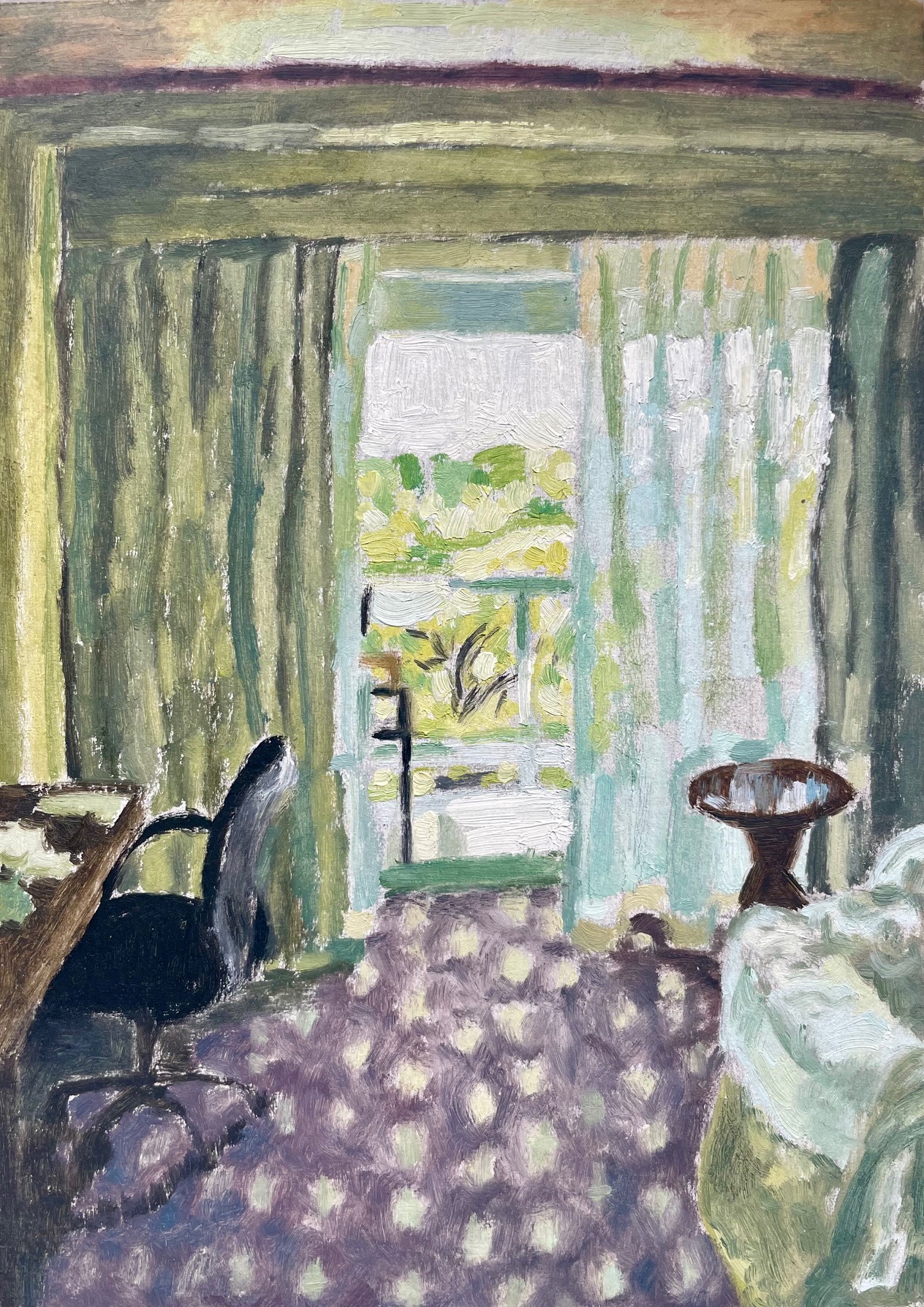
Jason Snowling
Oil on card, 14.8 × 21 cm | 5.8 × 8.2 in
Josephine: How did it feel to move through the stages of the competition and win the Amateur Award?
Jason: It was very exciting moving through the rounds, and it gave me a real boost each time I received the ‘Congratulations’ email. I’ll always remember the moment I saw the email saying I’d won, feeling shock, joy, and relief knowing there were no more rounds left! To know that actual judges liked my work enough to choose it is a huge confidence boost and lets me know I’m on the right path. Part of me was expecting an email to say there’d been a mistake, so not receiving that was lovely.
Getting to share the news with my family was also very special as they inform pretty much all of my paintings. Without them, painting wouldn’t mean nearly as much.
Josephine: What’s coming up next for you?
Jason: More painting! I’m looking forward to scaling up gradually with the new canvases and getting my work out into the world more. It’s a long shot, but one day I would love to paint full-time. I feel I have made positive steps over the last couple of years, and I want that to continue. But above all, I want to discover even more joy in painting and build a collection of work I can be proud of.
Further Reading
Jackson’s Art Prize 2026 First Prize Winner Announced
Meet Eleanor Johnson, Winner of Jackson’s Art Prize 2025
How We Collaborate With Artists
Expert Advice on Making Your Way as an Artist
Shop Oil Painting on jacksonsart.com