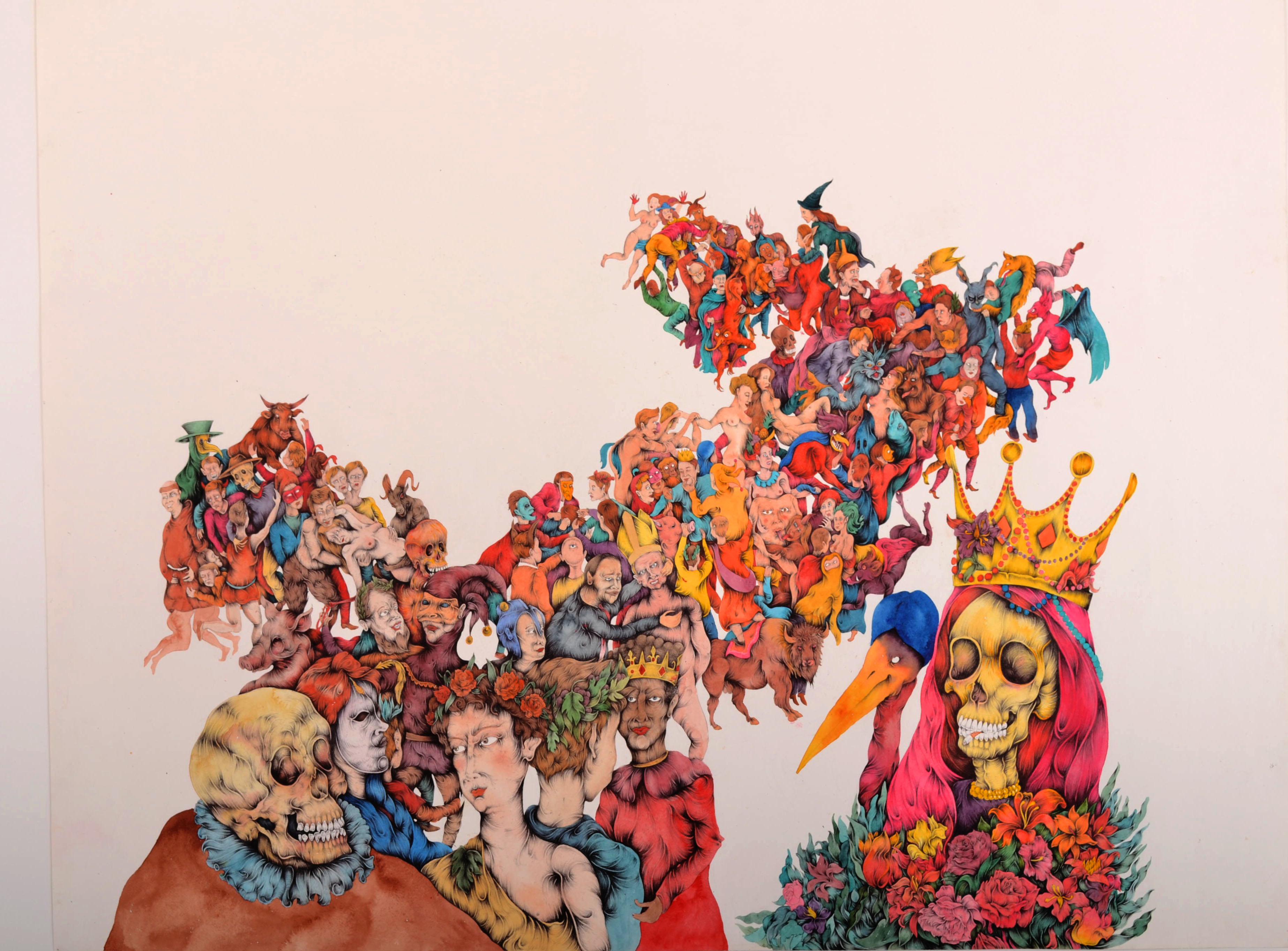
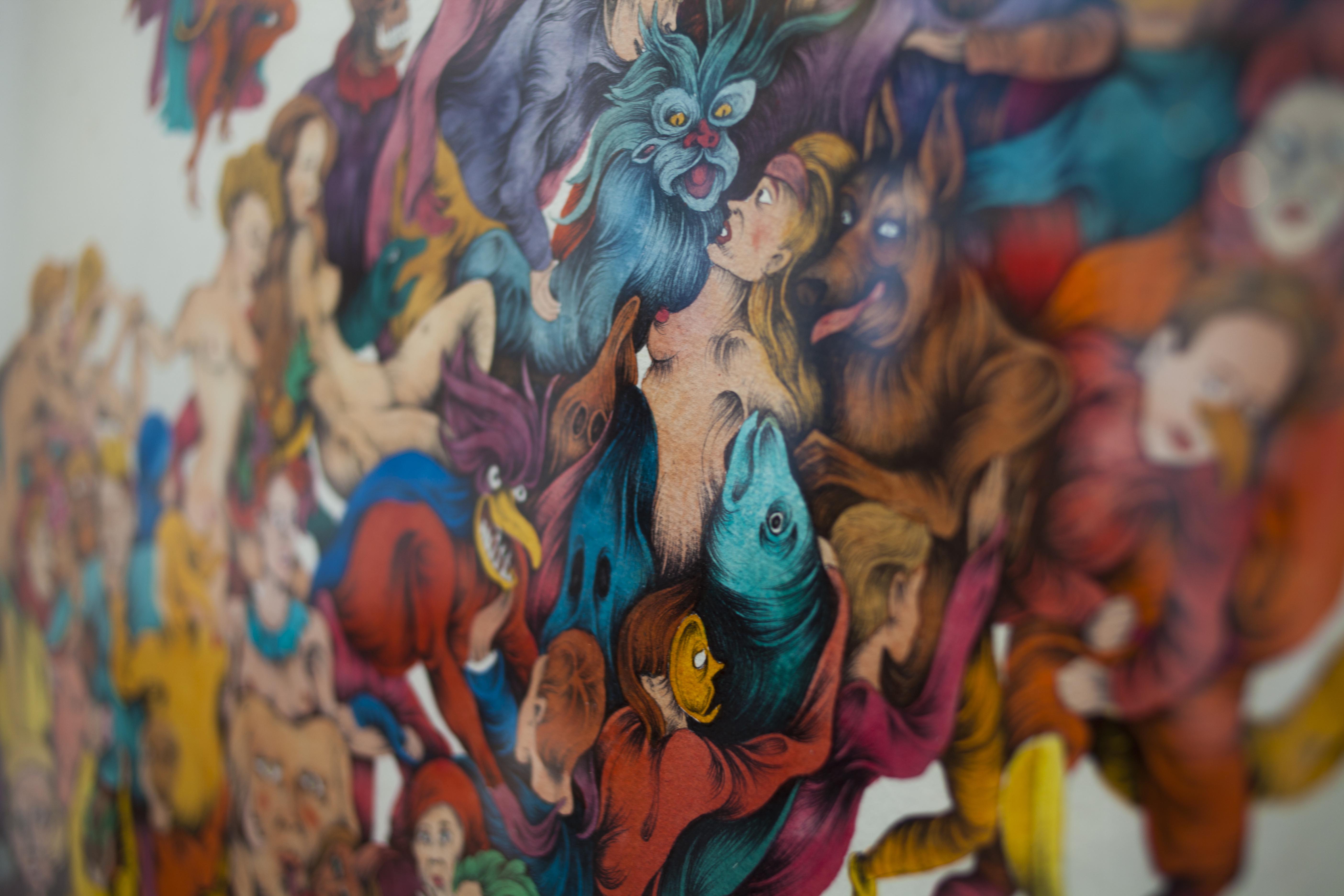
Award winning artist Amélie Barnathan challenges oppressive perceptions of women through drawing. Her complex work is spectacularly detailed and colourful; she combines her interests in the sublime, the grotesque and representations of hell to make surreal imagery with gripping narratives. Her work is soon to be shown at the Nasty Women and Creative Debuts Exhibition, opening 21st September 2017.
Could you tell us about the work you’re exhibiting in the Nasty Women Exhibition, 21st – 24th September 2017 and how you got involved?
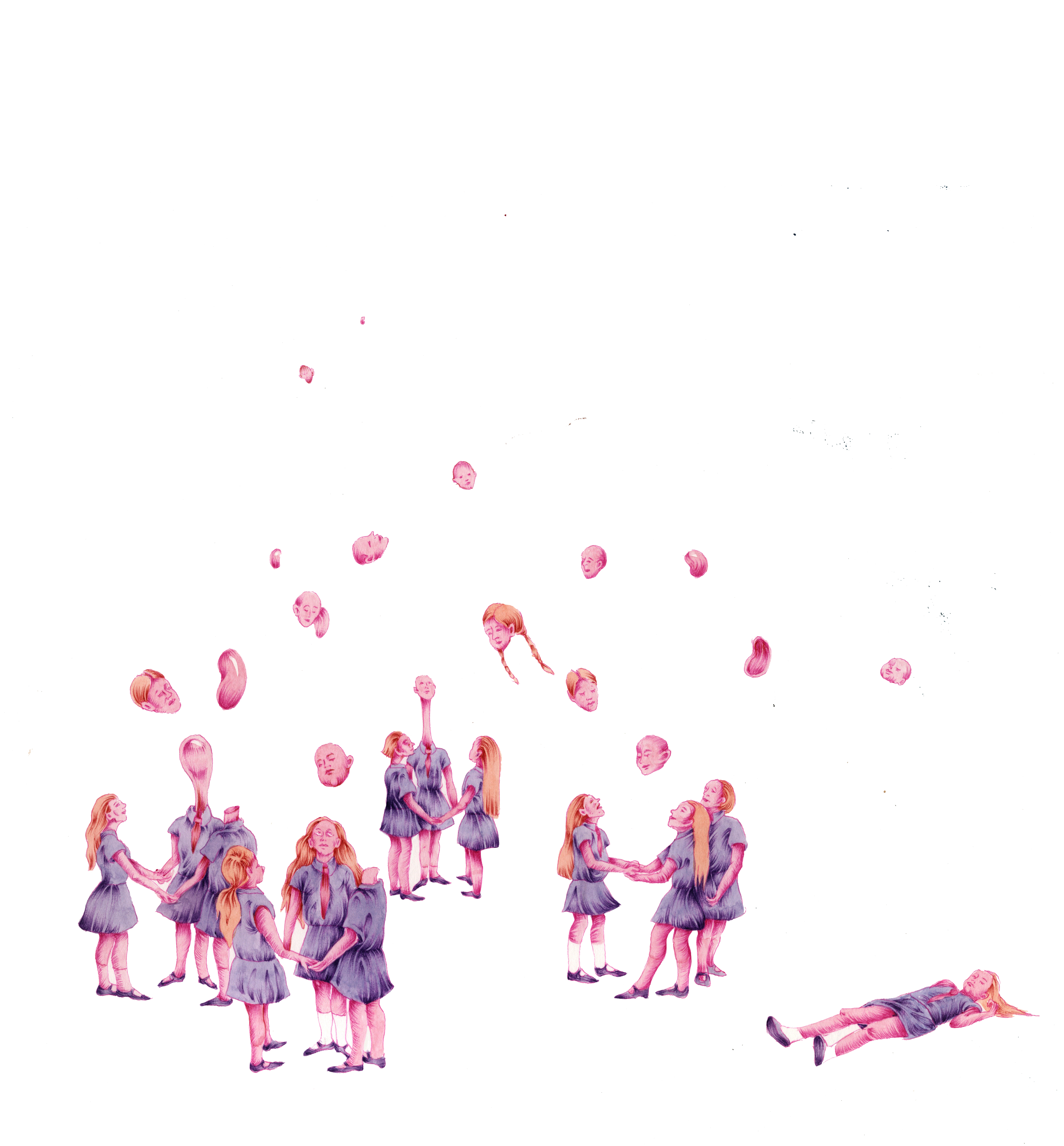
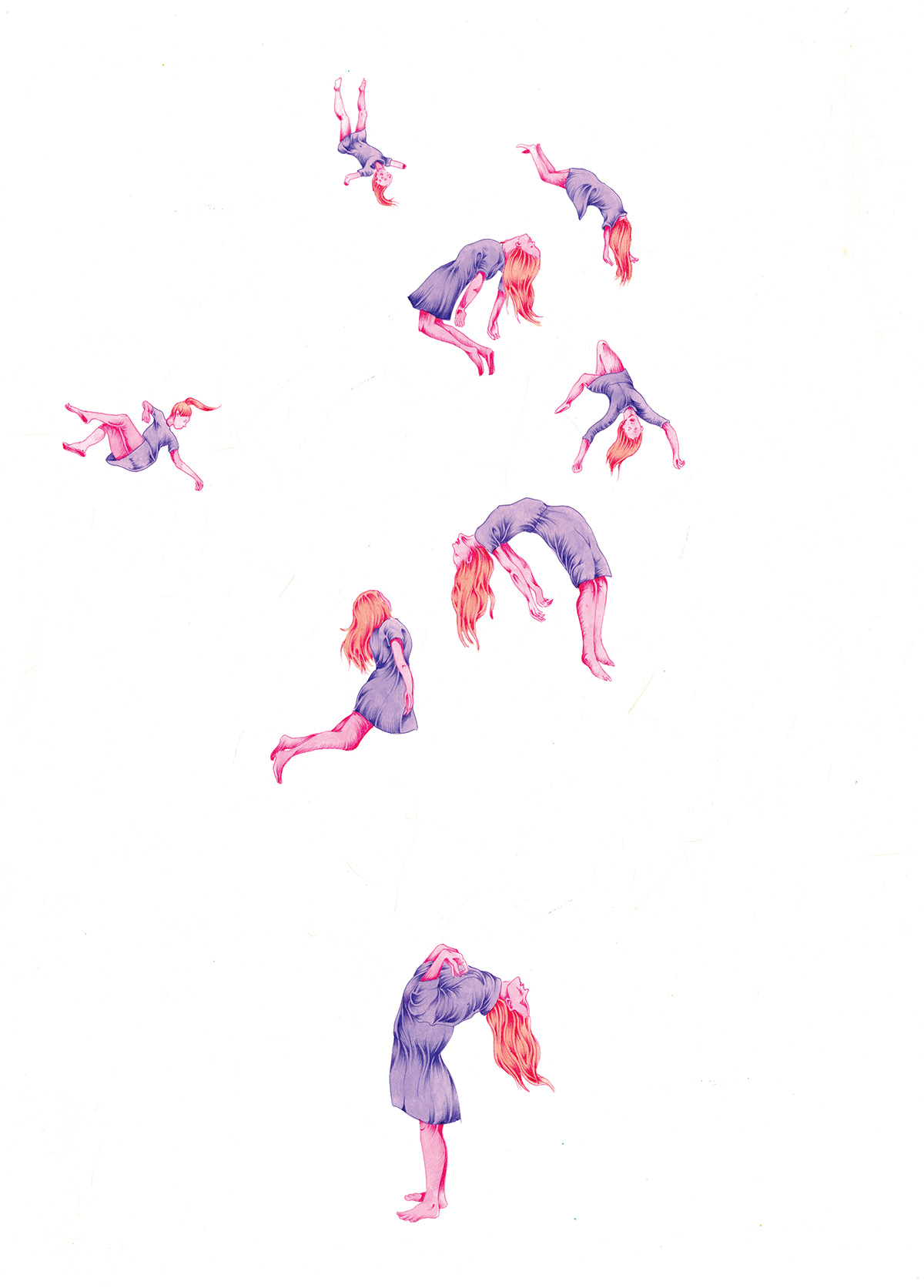
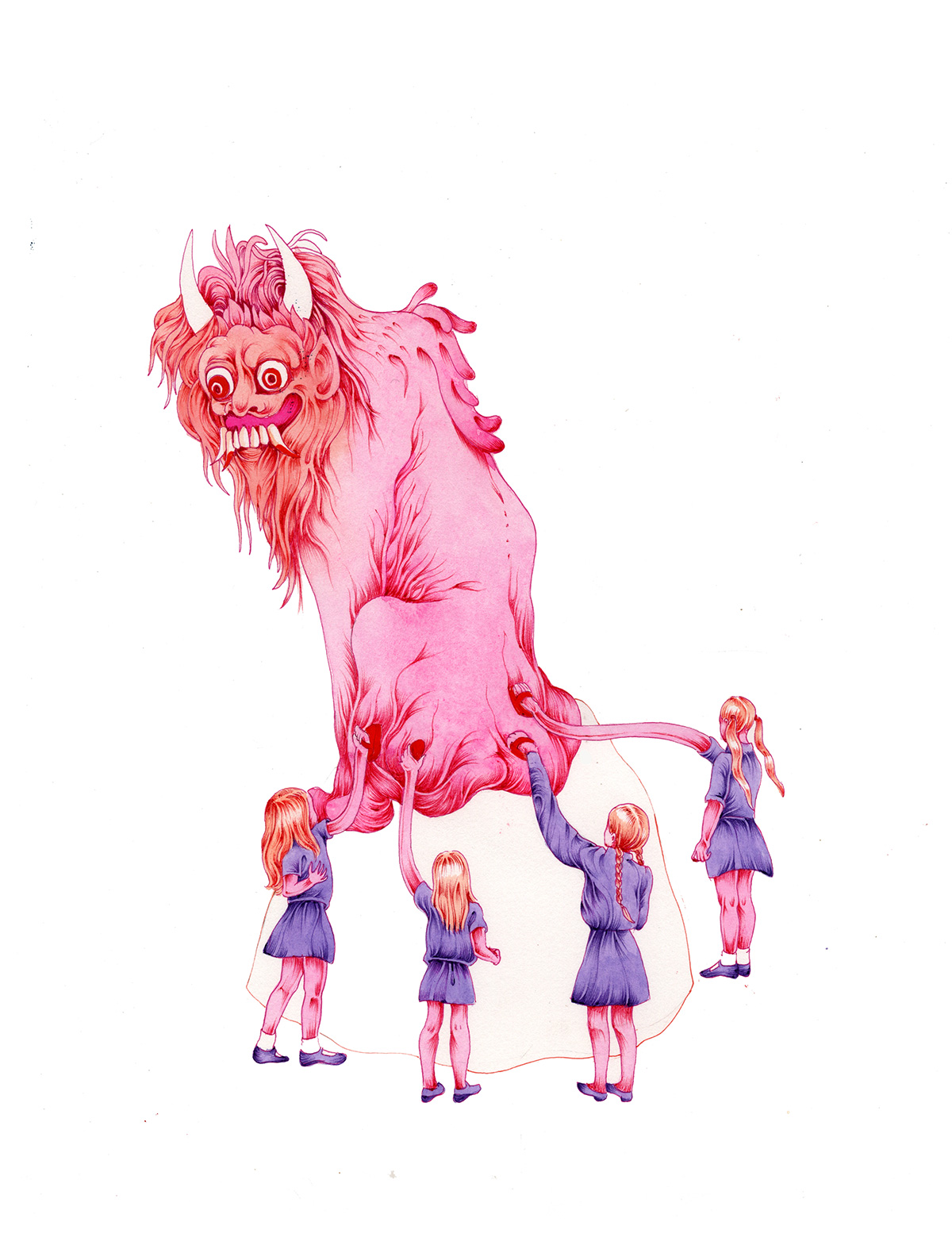
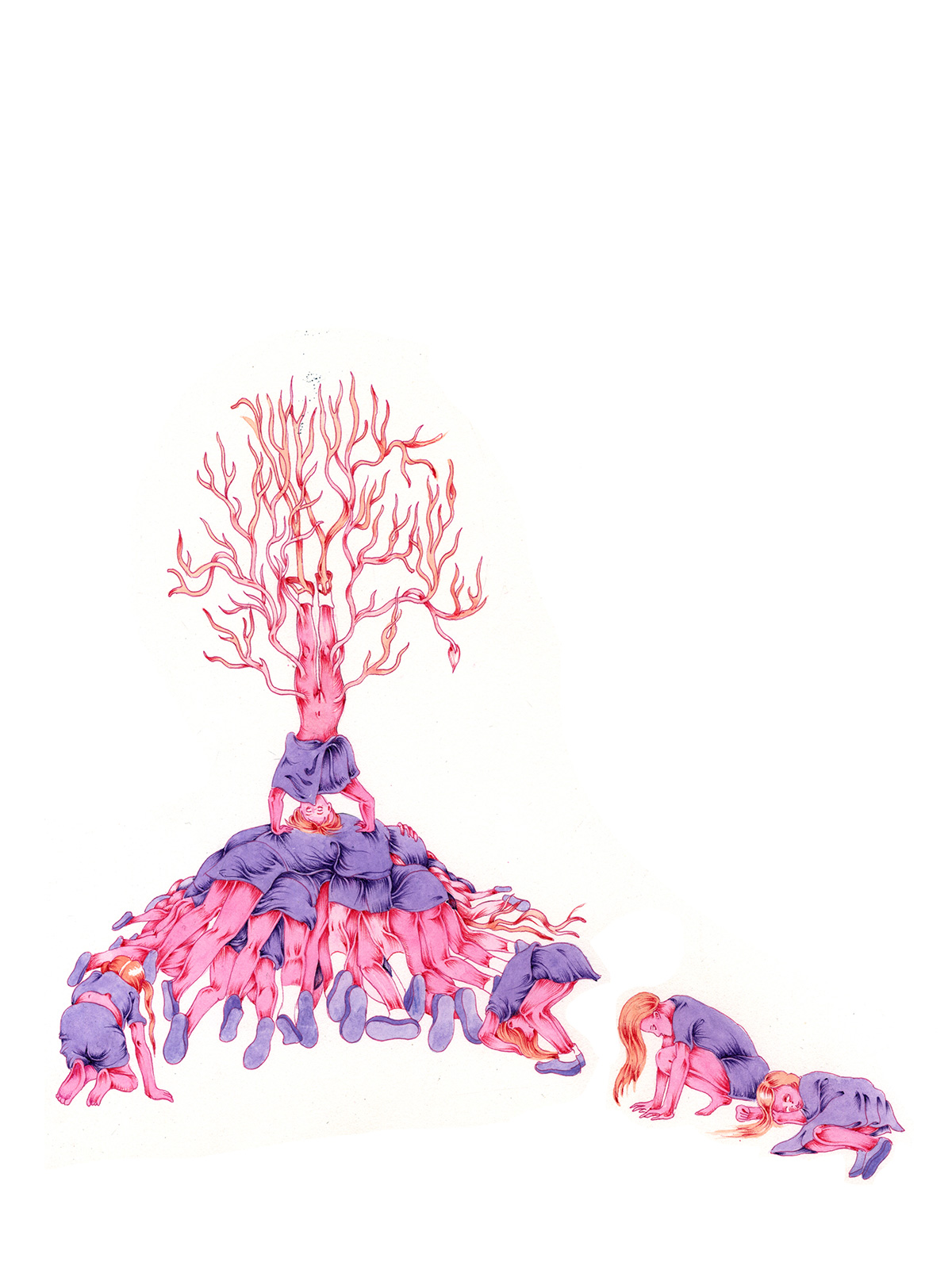
The work I’m exhibiting at Nasty Women Exhibition: London is a series of drawings I produced during the final year of my MA course at The Royal College of Art. They drawing were actually part of a larger project where I was studying, and exploring figures of possessed women and female hysteria.
I found out about the show through the open call by Creative Debuts. I wanted to exhibit as I felt the reference to Trump’s sexist slur particularly resonant in today’s climate and believe I support Nasty Women’s vision.
What caused you to start making work about female hysteria and witches?
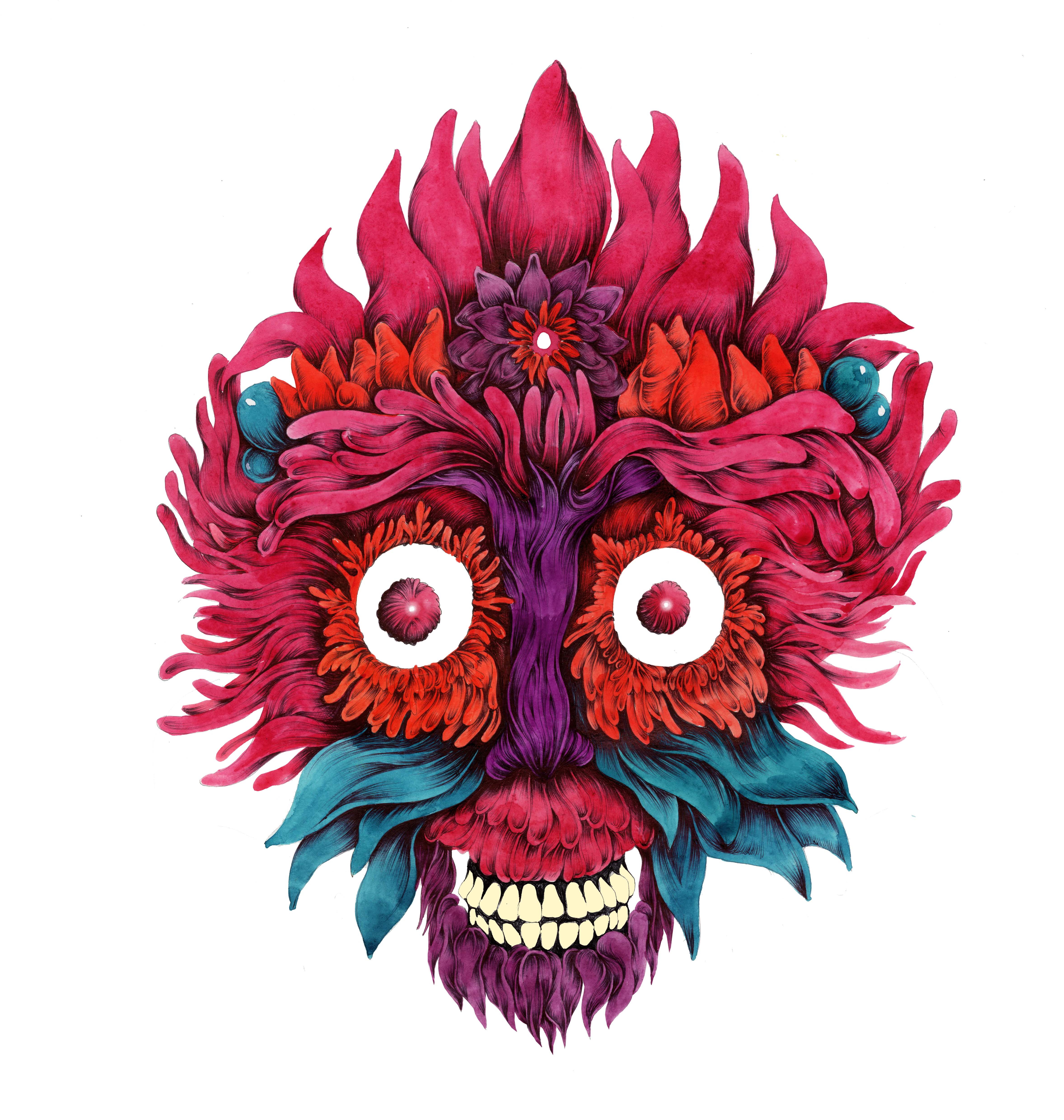
I have always been fascinated by medieval imagery and in particular purgatory and the representation of hell. I liked the way fantasy can be used to depict the unknown and fears.
I feel that women have historically often been portrayed as fallen figures, so my master I produced a paper on these fantastical ideas that society has held of ‘monstrous’ females. The figure of the witch was obviously the materialisation of these ideas, but on the other hand it’s also been a symbol for acknowledged and self-directed feminine power. The hysteria link came naturally to me. I feel it’s something that has been socially constructed and seen as a condition that existed only in women. I wanted my portrayal of women to both challenge and reflect patriarchal narratives about power.

Who do you consider to be your artistic influences?
My grandmother definitely had the largest amount of influence on me. She was a printmaker and she inspired me as both an artist and in life. She spent her whole life trying to capture the essence of her surroundings in Italy with etchings and engravings.
Other artists that inspired me include painters like Jerome Bosch, Giuseppe Arcimboldo, Egon Schiele, Chapman Brothers, and Toshio Saeki.

You mentioned in your Royal College of Art bio that you work in wide span of genres including printmaking, drawing, painting and illustration – do you find these ways of making work influence one another or are they separate practices? What attracted you to working in these different ways?
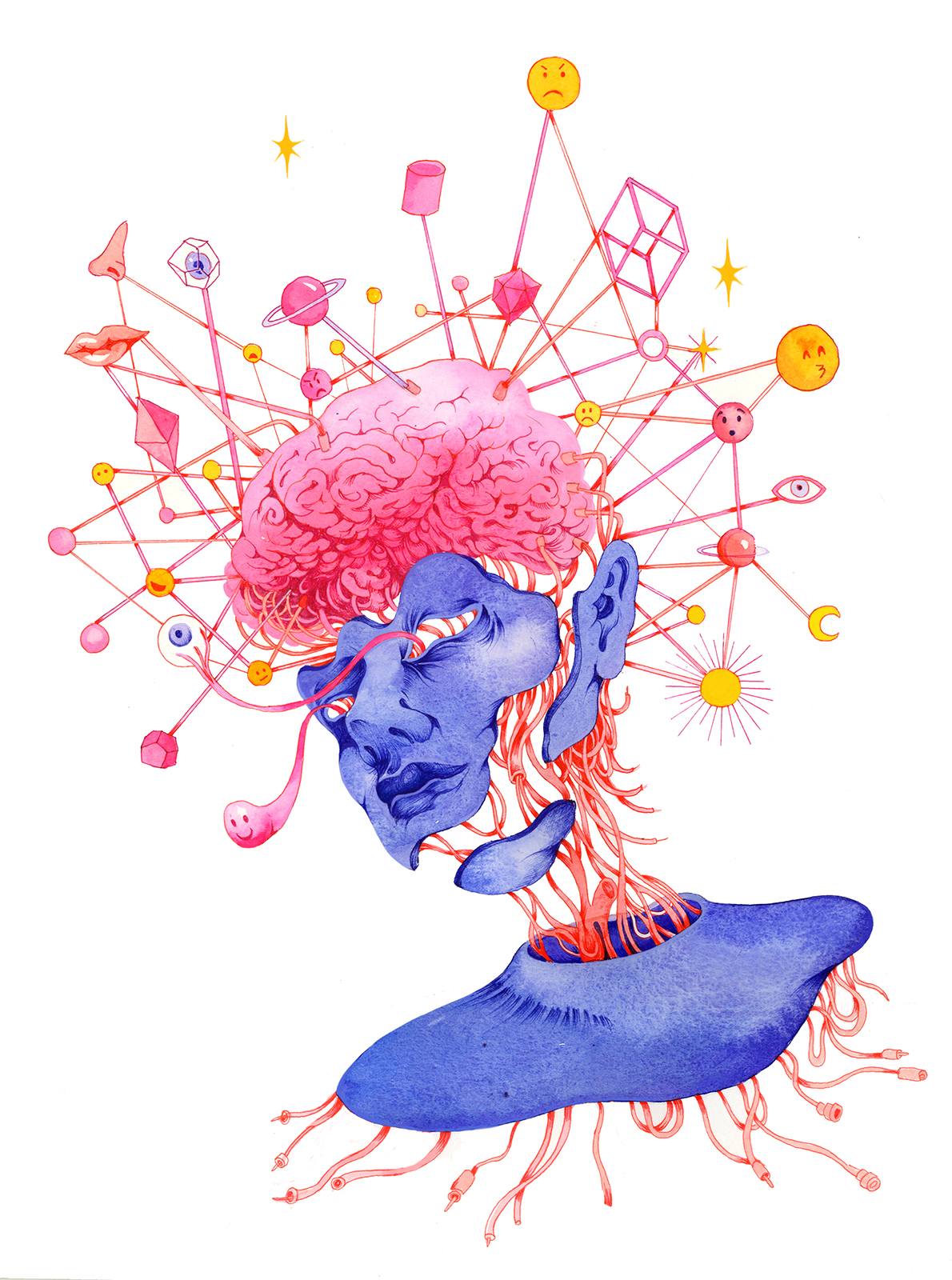
I think all these mediums come together in my work. I tend to draw out my work first as I’m attracted to making marks on paper and I feel it has a very direct and intimate relationship with the mind. I try then think of what medium would best depict my ideas and try different approaches.

All of your works are so complex and detailed – how do you come up with such beautiful compositions? Do you use photographs or reference images?
I tend to use images as references for the initial composition and layout. I also get inspiration from old illustrations, images of costumes or demons, and photographs of nature. I then like to fuse all these different elements together to create something new.
What’s a perfect day in the studio for you?
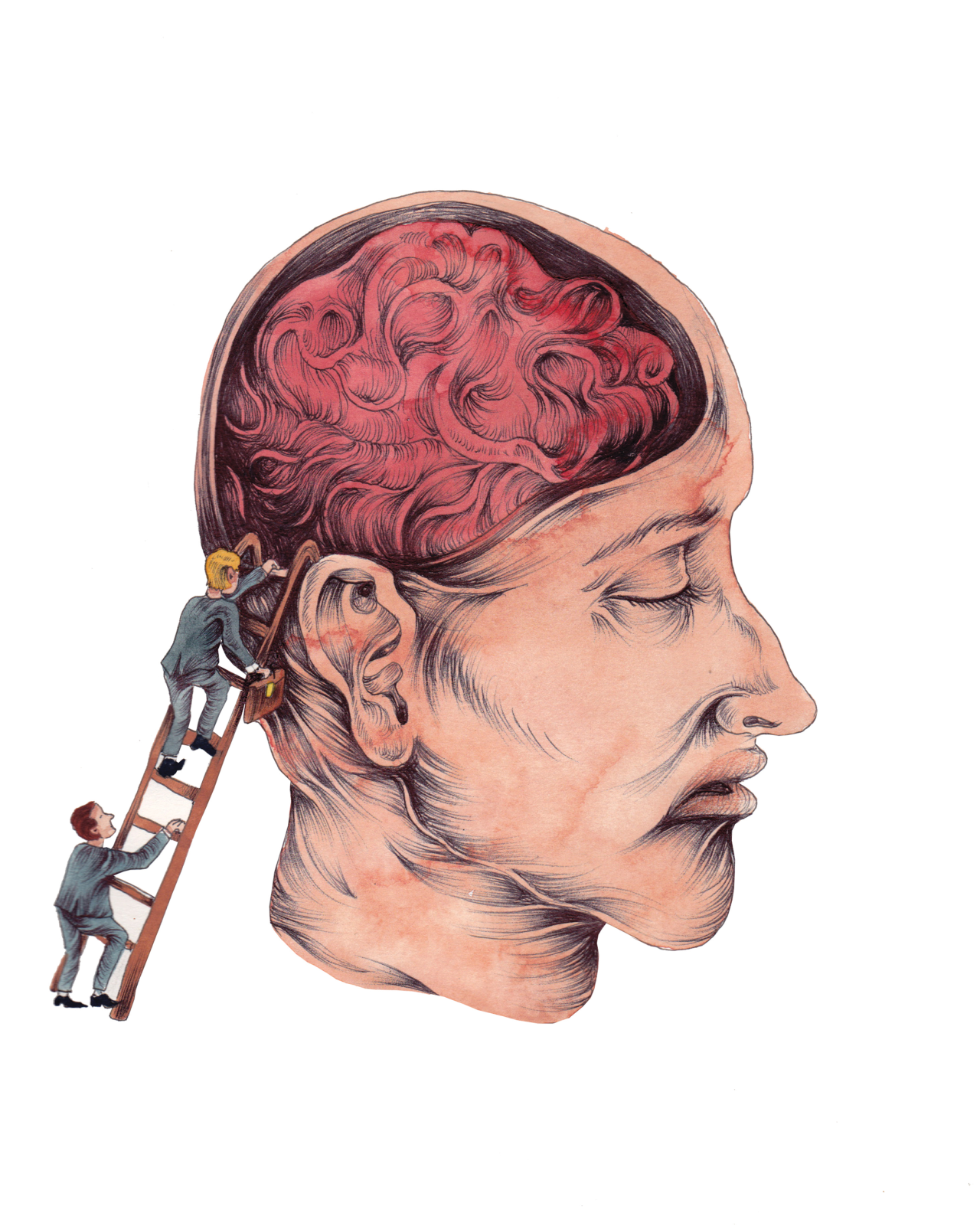
I tend to work from my studio at home so I try my best to create, be disciplined and keep a routine. It normally takes me a long time to create a rough sketch of a drawing as I always want to improve on what I have done. However, once I have a completed sketch I can start on my favourite part – putting the colours on paper! I like to first experiment with the colour palette and then the contrasts during the inking phase. I find this really satisfying and almost like a therapeutic process.
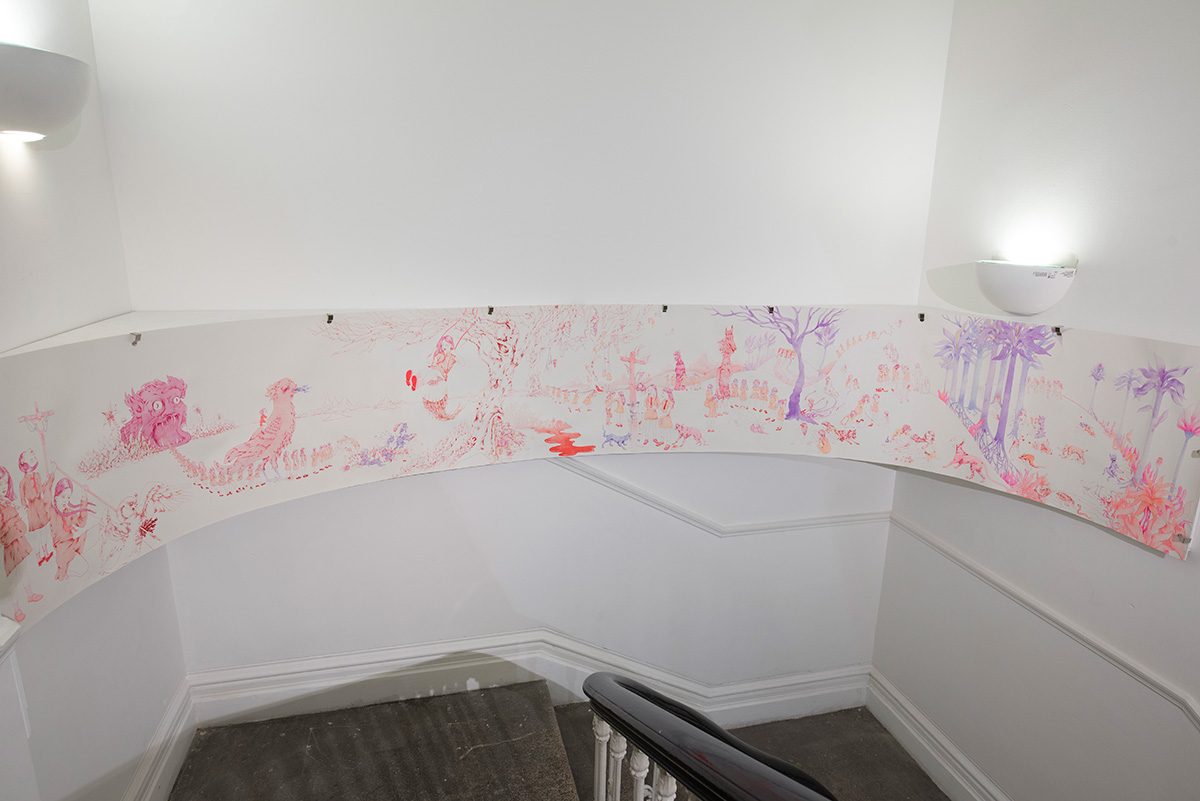
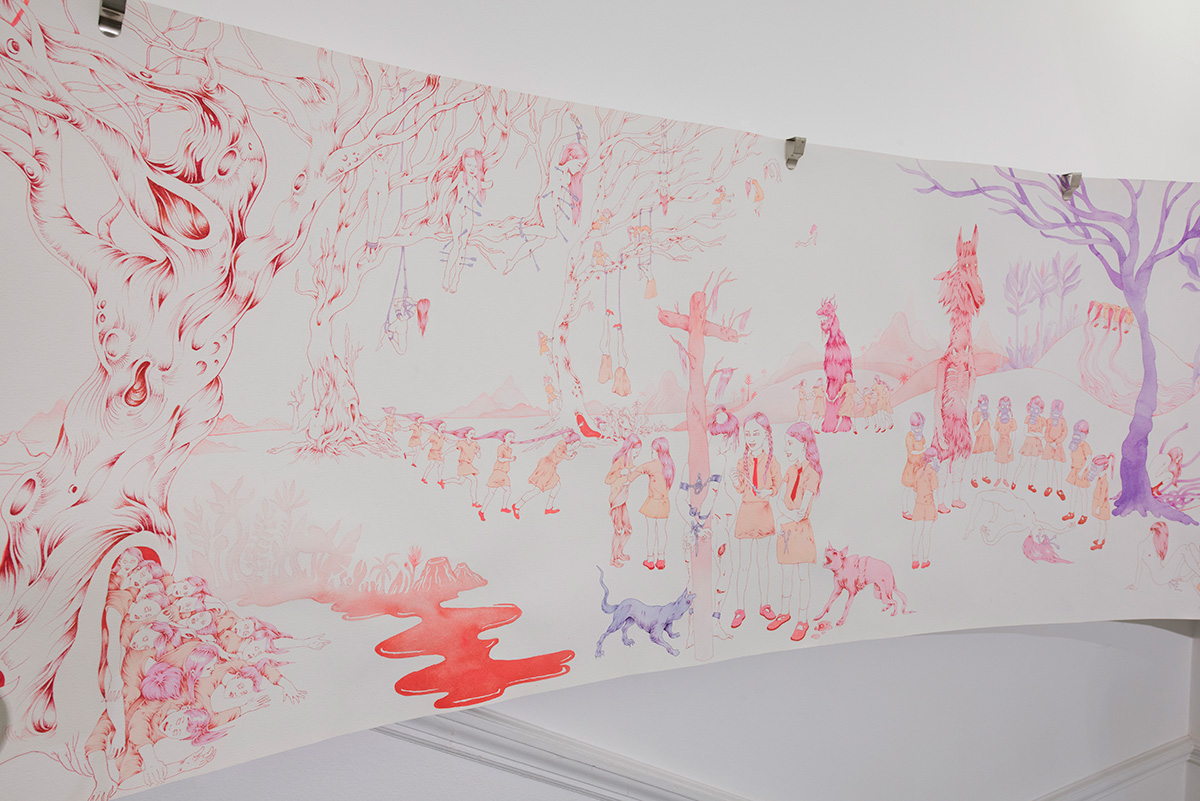
Congratulations on winning the Student Award in the Jerwood Drawing Prize in 2016! Can you tell us about your 5 metre drawing that won?
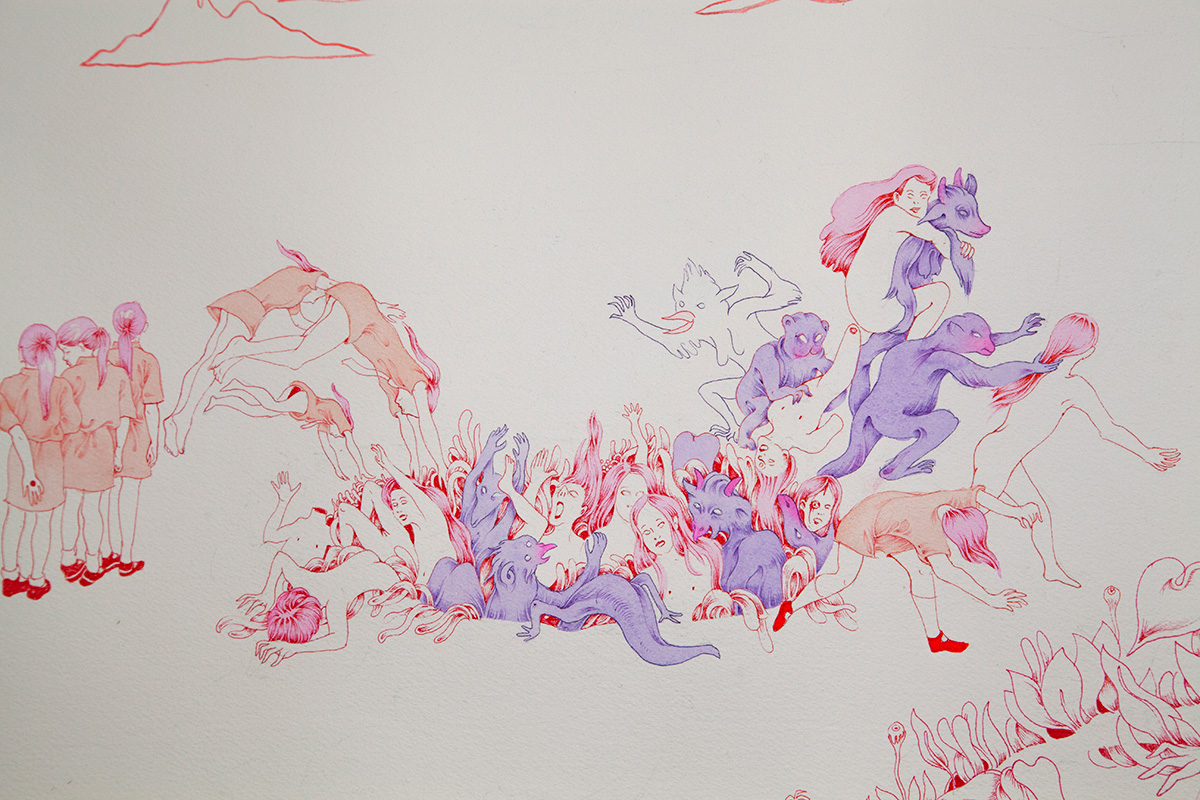
My research into the historical depictions of women such as the witch led me to discover a modern phenomenon and collective hysteria (mass psychogenic illness). In this phenomenon an increasing number of pre-teenage girls are spontaneously developing physical and emotional hysterical symptoms.
I was fascinated by how this illness has the ability to impact upon both individuals and collective female identities. I made a very large drawing with multiple narratives and scenes as I felt this was the best way to depict the complexity of this illness. I also wanted to combine this to reflect the societal pressures that create an idealised vision of femininity.
In The Frieze, I created scenes where the females’ bodies look like they have been preyed upon by evil or other obscure forces.
Where can we see more of your work, either in the flesh or online?
On 21st September, I will join 40 other artists to exhibit my work as part of Nasty Women and Creative Debuts’ exhibition in London. The money raised will go to support Rape Crisis UK and Women for Women protect women’s rights worldwide.
Otherwise you can find my work on my tumblr.
Visiting Information:
Nasty Women X Creative Debuts Private View
7pm – 11pm on 21st September 2017
74 Rivington Street
Hackney, London, UK
EC2A 3AY