




Situated on the banks of the River Axe in the southwest of England, St Cuthberts Mill has been making paper since the 1700s. St Cuthberts specialise in artist papers, making three of the most popular watercolour papers used by artists today; Bockingford, Saunders Waterford and Millford, as well as Botanical Ultra Smooth paper and Somerset printmaking paper.
Last year we visited St Cuthberts Mill to find out how their watercolour paper is made, how they test every batch by hand, and their commitment to protecting the environment.

St Cuthberts have one of only few cylinder mould machines in the world that is dedicated to making watercolour paper, and they use it to make all of their artist papers.
The cylinder mould machine combines the consistency of machine-made papers with the stability of handmade paper. Today, most paper is made on a Fourdrinier machine, a large, industrial machine designed to produce vast amounts of paper very quickly. While a Fourdrinier machine makes consistent batches of paper at high speed, the finest watercolour papers are made using a cylinder mould machine. One of the key differences is that in Fourdrinier-made paper, the paper fibres uniformly line up in the machine-direction (this is why a sheet of copier paper is easily torn in one direction, but less easily torn in the other). Cylinder mould-made paper is more similar to handmade paper in that the paper fibres have a random orientation, facing in all directions. This improves the stability of the paper and decreases the amount that it buckles when wet, making cylinder mould-made paper suitable for watercolour painting.
The Cylinder Mould Machine Process
The process of making cylinder mould-made paper has barely changed since its invention in the 19th Century. The production begins with the paper pulp. St Cuthberts’ Saunders Waterford, Millford, and Somerset papers are made using 100% cotton linters, while Bockingford is made with woodfree chemical pulp (wood-pulp with acidic ‘woody’ components, such as lignin, removed).
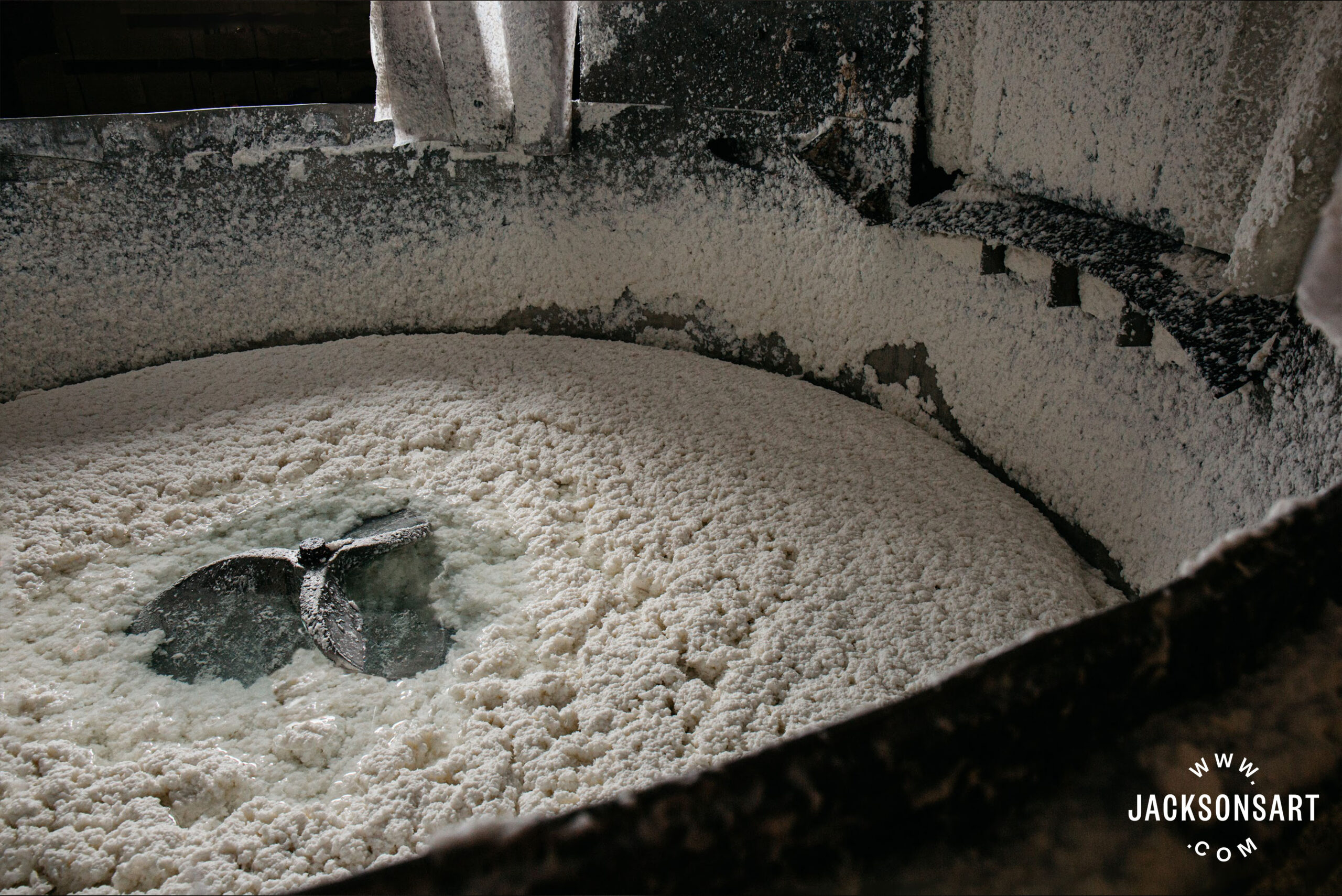
The paper pulp is picked up from the vat by a slowly rotating cylinder mould. The cylinder is covered with a wire mesh and, as it rotates, the water flows through the mesh and the pulp forms a web on the outside of the cylinder.
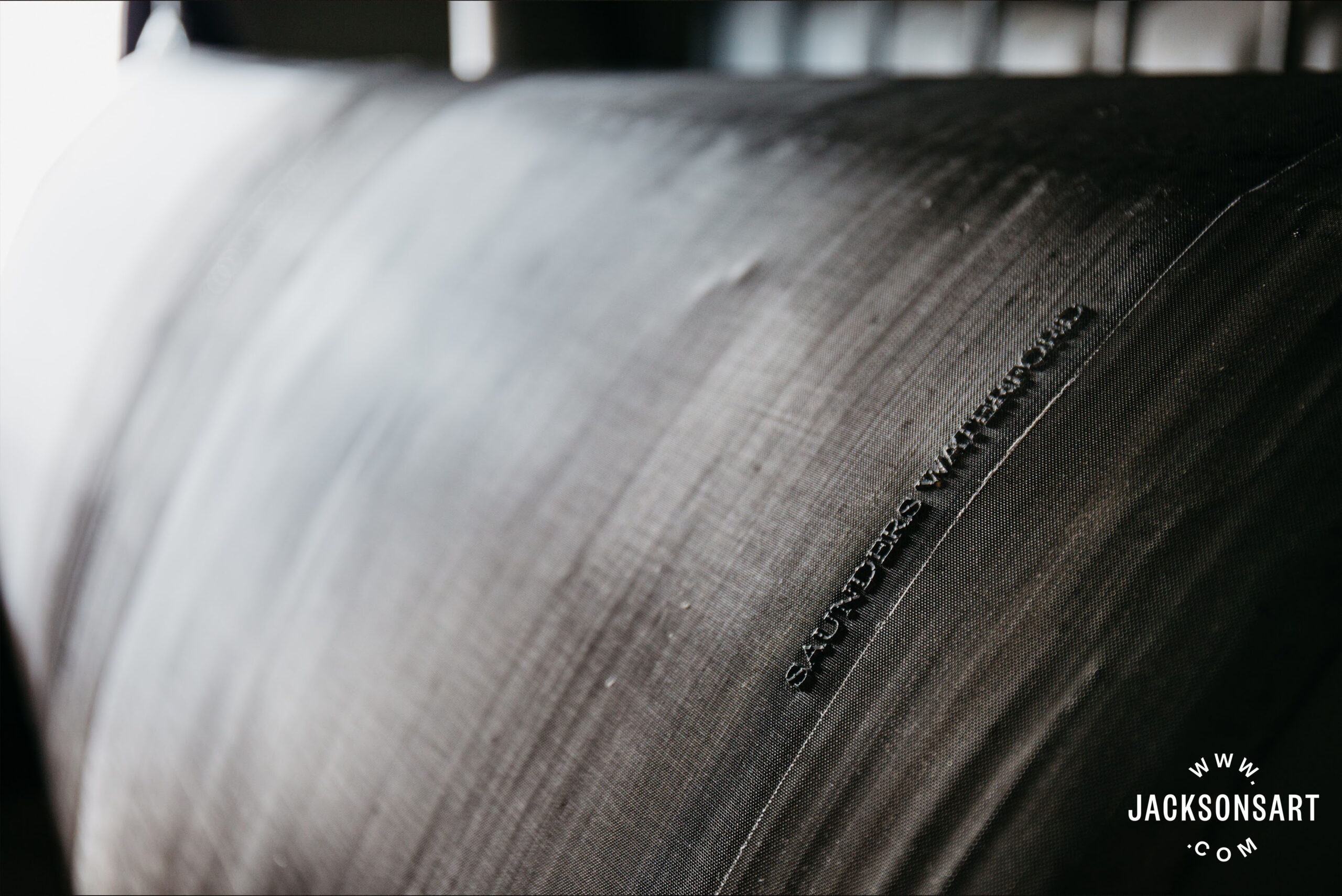
The fibrous sheet is transferred onto a continuously moving felt-lined belt and further processed through sections of the machine to dry, create texture and add external sizing, depending on the requirements of each paper.

Far from being an entirely mechanised process, the skilled papermakers at St Cuthberts need to work in tandem with the machine, making adjustments according to the natural variation in the organic materials used in the process, as well as the weight, content, and surface texture of paper that is being made. At the dry end of the cylinder mould machine, the paper is wound onto a reel and taken to their finishing department (known as ‘The Salle’). All paper is hand finished, whether it’s embossing, creating a deckle edge, counting sheets, or wrapping.
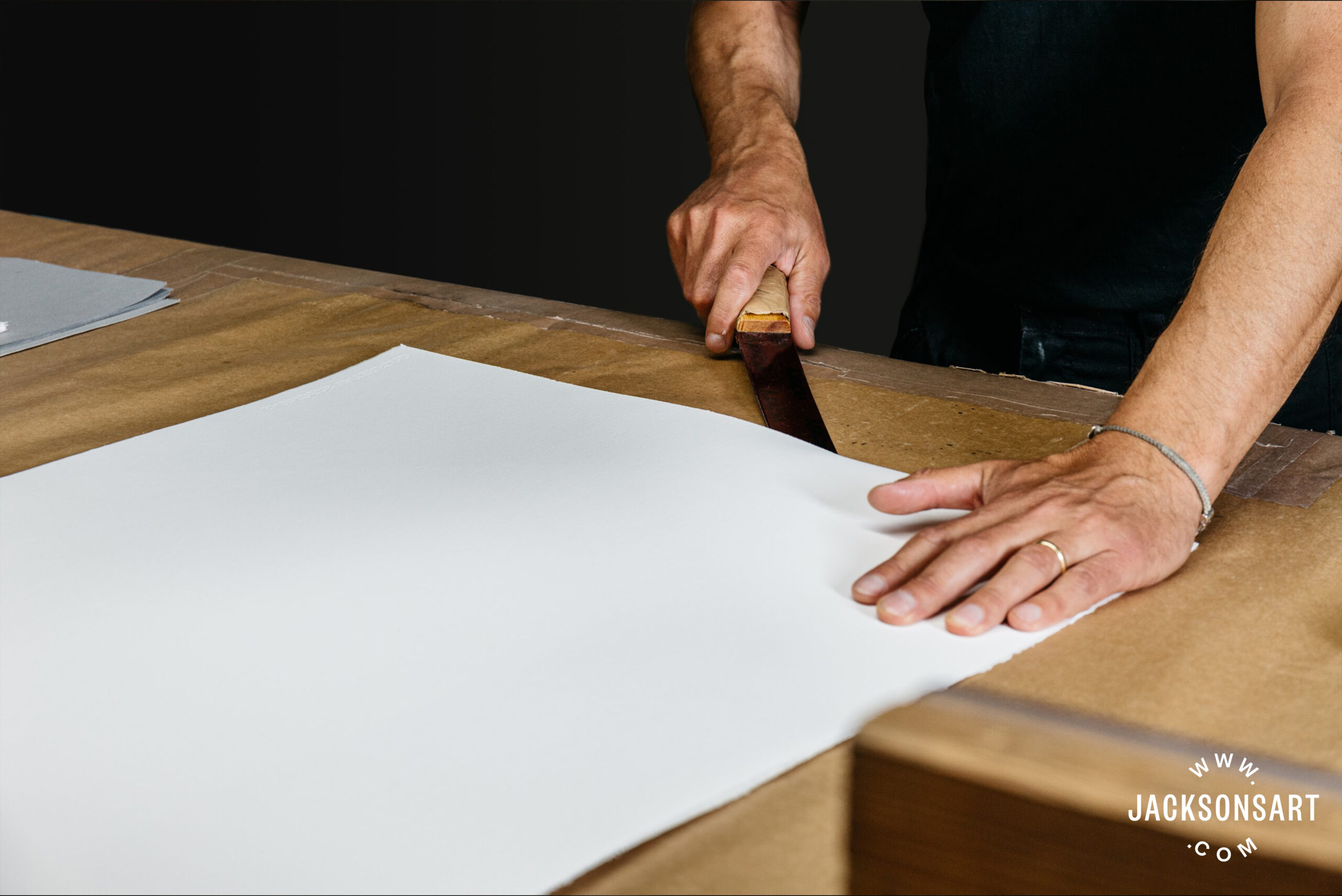
Testing by Hand
A sample from each batch is tested by hand for a number of different requirements, including weight, surface texture, porosity, wet strength, surface strength, and absorbency. Each paper has a different set of specifications which have to be taken into consideration. For example, Somerset printmaking paper is designed to be absorbent to accept layers of printmaking ink, so the results of the tests will be very different to Millford watercolour paper, which is deliberately created to have a high resistance to water.
Here are three of the many tests carried out on every batch of St Cuthberts paper:
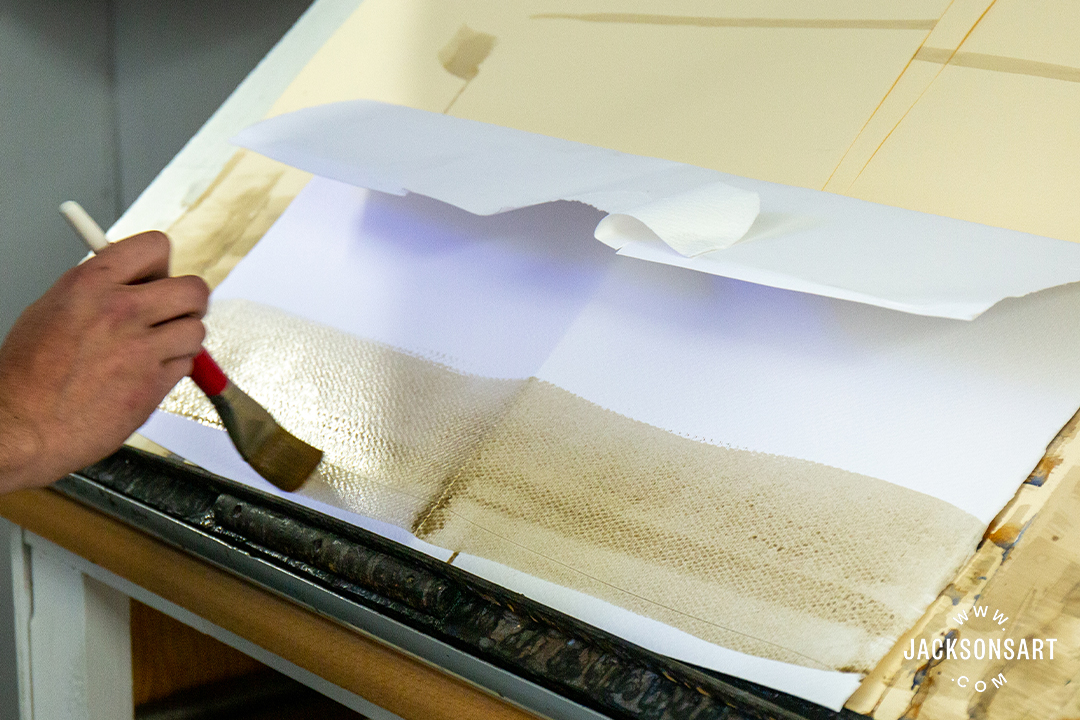
Watercolour Wash
Dilute washes of watercolour are applied to a paper sample to check for faults in the surface or sizing of the sheet, which would show up in the wash as mottling or patchiness.
Pen and Ink
Lines of ink are inspected for feathering (a sign of low sizing), or skipping (where the ink has not been absorbed fully into the sheet, forming a broken line).

Wax Pick Test
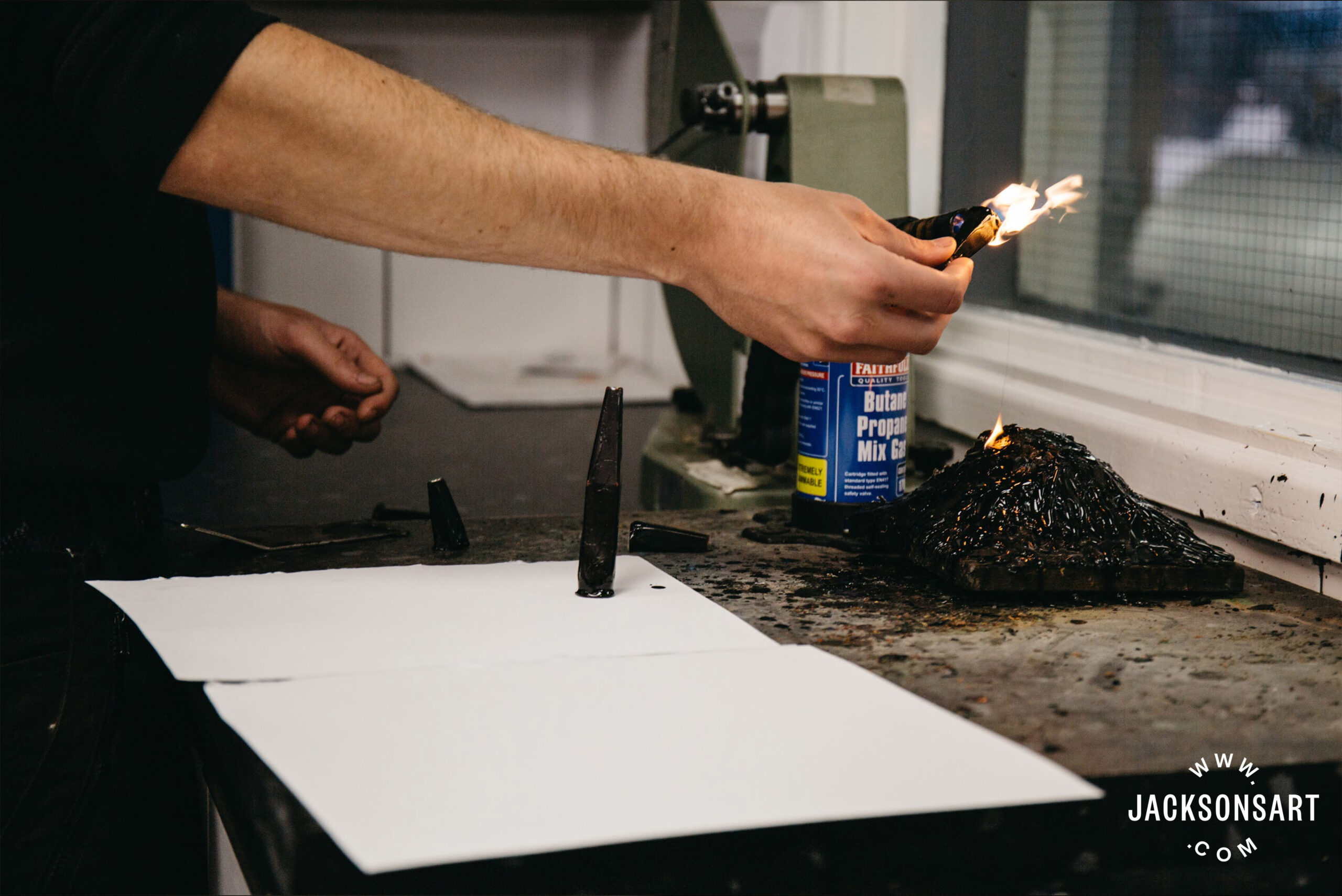
Sealing waxes of different adhesive strengths are pressed onto the paper and, once cool, pulled off to test the surface strength of the paper.
Environmental Responsibility
St Cuthberts choose their raw materials with the environment in mind. Their wood-free pulp, which is used to make their Bockingford watercolour paper, is sourced from managed forests which plant new trees to replace the ones they use. Saunders Waterford, Milford and Somerset papers are made using cotton linters, a by-product of the textile industry.
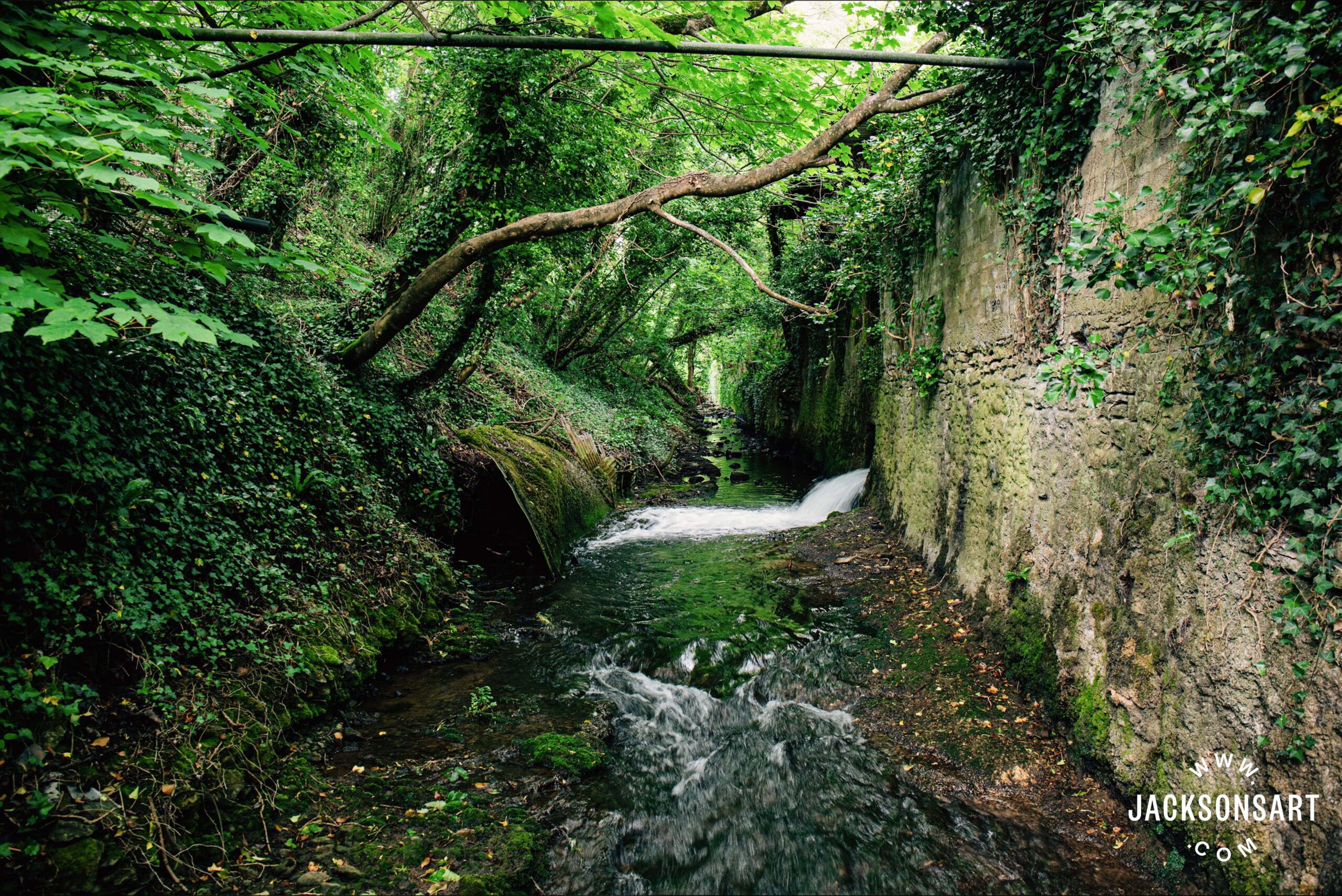
Paper making requires a supply of clean water and all paper mills are located on or near a water source. The River Axe begins in the Mendip Hills, and its waters are filtered naturally through limestone.
Maintaining the river’s cleanliness is important not only for the production of paper at St Cuthberts, but also for the biodiversity of the Somerset countryside. The River Axe and the surrounding area is home to a variety of wildlife including trout (a known sign of a healthy river), deer, rabbits, foxes, badgers, herons, woodpeckers, and kingfishers. No hazardous chemicals are released into the river, and all materials used are chosen to ensure that the mill does not harm the surrounding environment. The mill returns the water it uses to the river, free from any papermaking additives.
Watch our On Location film to see paper being made at the St Cuthberts paper mill:
Papers from St Cuthberts Mill available at Jackson’s:
- Saunders Waterford 100% Cotton Watercolour Paper
- Bockingford Watercolour Paper
- Millford 100% Cotton Watercolour Paper
- Somerset 100% Cotton Printmaking Paper
- St Cuthberts Botanical Ultra Smooth Watercolour Paper
We also offer a sample pack of Saunders Waterford, Bockingford, and Millford papers.
More Watercolour Articles on the Jackson’s Blog:
- Which Colours are on Your Palette? Five Watercolour Landscape Artists Respond
- How Da Vinci Watercolour Brushes are Made
- Black Watercolour Paper Comparison
More in our On Location Series:



19 thoughts on “On Location at St Cuthberts Paper Mill”
Really enjoyed seeing the process and
reading about my favourite paper. Thanks so
much for this great post.
So glad you enjoyed it, Cindy!
Happy memories of growing up in a paper
mill village, with my Dad being the Chief
Engineer at the mill. Often sat and picked
splatters of dried pulp off his clothes when
he came home for lunch, and the time-
expired equipment was often useful. The felt
from the rollers, when too worn to continue
using, made great underlay, or if it was good
enough, soft carpet! The stainless mesh
cylinders from the rollers were brilliant
incinerators too. Slightly sad now that
Bockingford paper is no longer made at
Bockingford though. Happy days.
That’s such a lovely memory to share, thank you Allie
So interesting! Thanks for the information
and video
Hi Evie- thank you for that …real clarity.
Can you explain a bit more about the
sizing internal and external?
Hi Frances, internal sizing is added to the pulp at the beginning of the process, and external sizing (or tub sizing) is a separate step that is added to certain watercolour papers (i.e. Saunders Waterford) which increases the surface strength of the paper, making externally sized paper best for scrubbing and lifting. I hope that helps!
Just bought some for the first time so I feel
good knowing I bought high quality,
environmentally friendly paper from such a
great company.
This is amazing, thank you for posting it, I love papers of all kind but I paint watercolors so this was particularly enjoyable for me to watch and so informative.
So glad you enjoyed it! Thank you for the comment, Marianna.
Could you tell me how the Milford and
Saunders Waterford papers differ from one
another?
Hi Sue, the main difference is that Millford is created to have a high resistance to water, so it is less absorbent than Saunders Waterford.
What a beautiful film shot at St
Cuthberts…
Thanks Frances!
Loved seeing the film of two rivers mill. I
took my calligraphy students there to
see their process. Brilliant and lovely
person running it. At bath artist
printmakers we use Somerset paper for
etching. Great films. Thank you.
My husband’s uncle grew up in Wookey, and
when he left school in 1938, his first job was
at St. Cuthbert’s Paper Works (as it was
called then). He was a junior clerk / office
boy. He wrote his memoirs, which I have
transcribed, on the backs of pieces of
wallpaper. His lengthy description of his job
is wonderful and full of detail. Do you know
who at the mill might be interested in
reading it? I feel it should be a part of the
company archives, for example.
Thank you for sharing this Kathy, that’s really incredible. You can find St Cuthbert’s contact details here, I’m sure they’d appreciate you getting in touch.
Love this article and reading the Jacksons
blog. One question? Does the internal sizing
of Millford paper contain gelatine.
Hi Rajiv
No, the paper is not sized with any gelatine.
Comments are closed.