



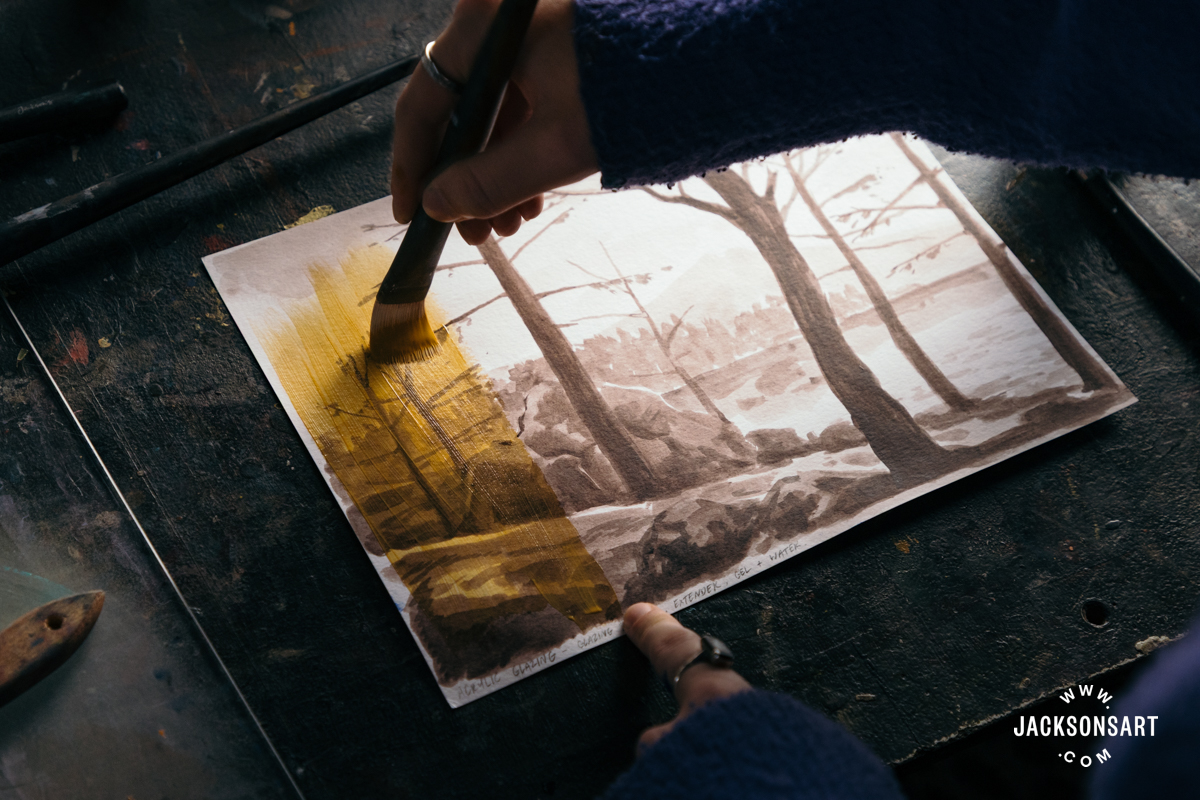
Acrylic painting papers either have an embossed texture that replicates a canvas weave, or a cold pressed surface identical to watercolour paper. The texture provides resistance, so when you drag a brush loaded with paint across its surface, the paint adheres to the texture and is held in place. This article, taken from our Paper Guide, explains everything you need to know.

Acrylic painting paper takes up less room, is lighter, and less expensive than stretched canvas. This makes it easier to store, carry and post. It is a great surface on which to experiment with techniques and produce quick sketches. It’s also possible to make notes on the reverse of each sheet.
Composition
Acrylic papers are made of woodfree cellulose paper. This is paper derived from wood that has been boiled to remove lignins, which contain acid (which if left in the pulp would cause the paper to yellow and become brittle in under UV exposure at a rapid rate). The linen texture is embossed into the surface of the paper during production. And some papers, such as Canson Figueras, then have a special coating applied to reduce absorption.
Weight
Acrylic painting papers are available at a variety of weights, ranging from 230gsm-450gsm. The lighter weight papers may become slightly wavy if thick applications of acrylic paint are applied. This can be avoided if you tape the paper to a board and keep it taped until the painting has fully dried. However none of the papers will wrinkle significantly when loaded with paint.
Colour
Papers are available in a variety of shades of white, from bright white to pale cream. Transparent colours are more reflective and may appear marginally brighter on whiter papers. While creamier papers won’t optically ‘jump’ out as much in the gaps between brushmarks.

What Papers Can I Paint on?
The short answer is that acrylic paints can be applied to any surface. The longer answer is that factors such as paper absorbency and thickness of the paint you are working with will affect how the paint dries. In order to gain a firm understanding of what happens when acrylic paint dries on paper we need to understand how it dries at all in the first place.
How Acrylics Dry
Acrylics dry when all the water content in the wet paint moves away from the paint; it either seeps into the support that the paint has been applied to, or it evaporates into the air. What remains is the acrylic polymer binder; tiny solid transparent particles that move closer together, causing the layer of paint to contract and form a solid ‘film’.
When acrylic paint moves from its wet to dry state it also changes from being watersoluble to being water-resistant. This process happens fastest at the top of the layer – where the paint can easily evaporate into the air. Next fastest is at the bottom of the layer, where the absorbency of the surface to which it has been applied pulls the water out of the paint. This explains why acrylic paint dries faster on absorbent paper. The paint between the top and bottom layers dries slowest as it is encased with no where to immediately evaporate to. This is why thick layers of paint dry slower than thin layers.
What Other Papers Can I Use?
Aside from acrylic painting papers, there are a variety of options. The most suitable of which will depend on the kind of acrylics you are working with.
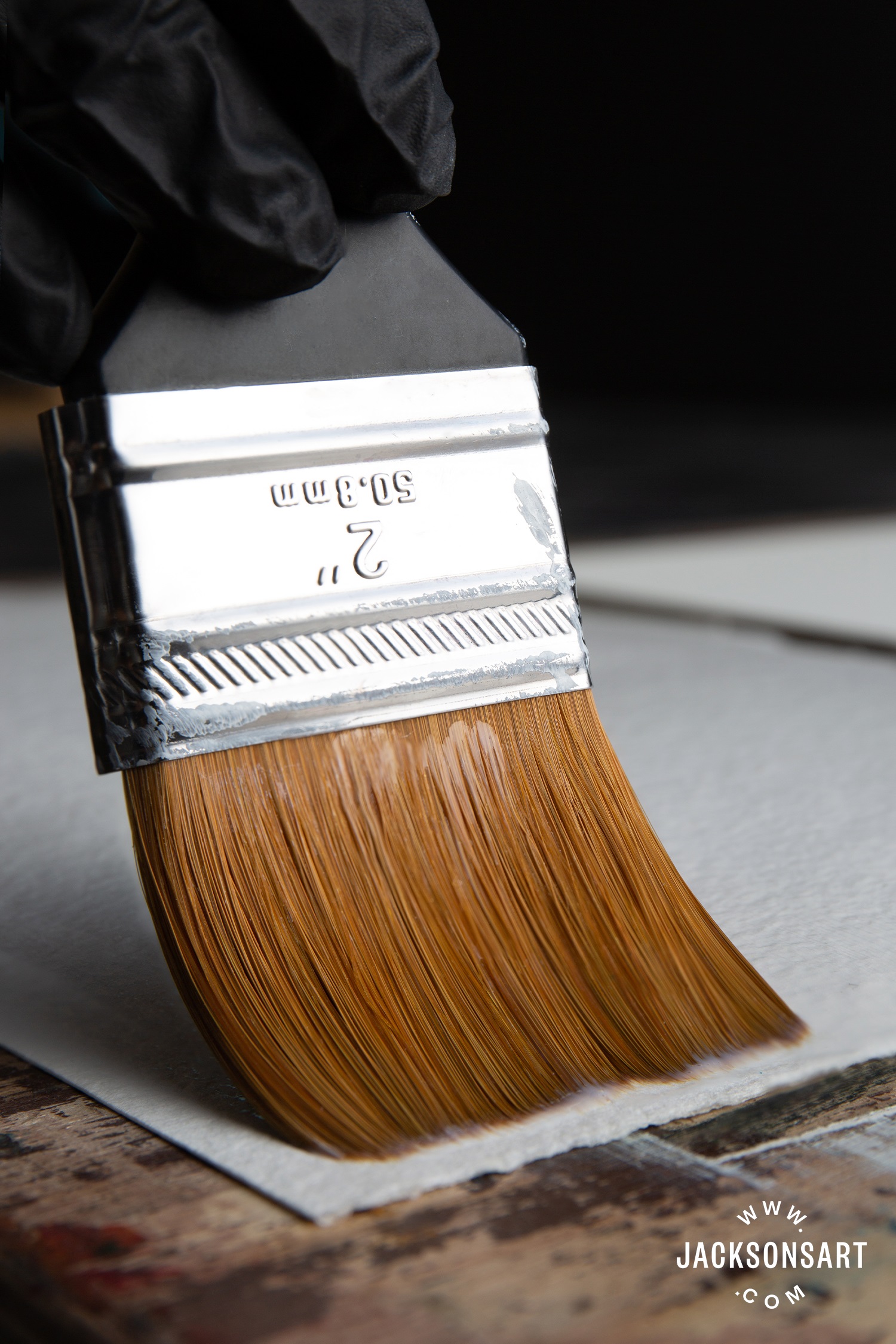
Papers that can take fluid and heavy-body acrylic paint:
Watercolour paper is made of cotton, woodfree cellulose, linen, or a mix. Linen and cotton papers are more robust – you can scrub and scratch into the surface without necessarily making a hole. Woodfree cellulose papers are less forgiving of rough treatment because they are made of shorter fibres, resulting in a comparatively less resilient paper.
Watercolour paper that is 200lb in weight or more will take a thin layer of acrylic primer without buckling. This will make the paper more robust to heavy treatment and also form a barrier over the absorbency of the paper, allowing paint to sit on its surface without sinking into the paper fibres.
Illustration board is a term used to describe two types of surface by varying paper makers. It can be a warp free surface made from watercolour paper mounted onto a rigid lightweight board, but it can also be a compressed heavyweight paper with a light texture that may buckle when saturated with heavy applications of acrylic paint. Illustration boards and watercolour paper are available in three textures – hot press (completely smooth), not surface (slight tooth) and rough (heavy tooth).

Mixed media and art board pads are heavier weight drawing papers that have additional sizing to enable them to take wet and dry media:
Yupo is a 100% polypropylene surface that will not buckle, resists tearing and is non-absorbent. Painting on this surface is a completely different experience to working on a cotton or woodfree cellulose paper. Work in wet or dry media should be given a coat of spray varnish to hold the marks in place.
Acrylic marker pen papers that will buckle if wet acrylic paint is applied:
Cartridge paper is made for drawing and is an ideal surface for acrylic marker pens. Acrylic applications on cartridge paper should be low in water content and relatively thin. Cartridge papers, made from cotton or woodfree cellulose, come in colours ranging from white to cream. They typically feature a slight texture (grain or tooth) that enhances the colour and depth of applied marks.
Bristol paper is a great surface for acrylic-based drawing. The name derives from the early days of European papermaking when mills would send their finest papers to Bristol, England to be pasted together. It is a wood cellulose, multi-ply, bright white paper glued under pressure. Bristol paper comes in smooth or vellum textures; the smooth variety is ideal for pen and ink, mechanical pencil, airbrush, and marker pens, while the vellum surface suits graphite, coloured pencil, charcoal, and pastel work.
Marker pad paper is another woodfree cellulose paper. Similarly to Bristol paper, marker pen marks appear crisp and bright on this flat white surface. It is coated to minimise bleed-through, despite being a light weight paper of only 70gsm. There are heavier papers called ‘marker pen paper’, which are better suited to layers of colour, but have very different properties to these lightweight papers.

Layout paper is even thinner, only 45 – 50gsm. It is semi-transparent and also designed to minimise bleed-through. It is the white, lightweight paper that is often used in illustration and design sketches.
Heavy use of marker pens on lightweight tracing paper may cause it to wrinkle.
Newsprint is an inexpensive wood pulp paper that contains lignins, so will yellow rapidly if exposed to UV light. It’s only suitable for quick disposable drawings.

Should I Varnish My Acrylic Painting on Paper?
Varnishing your work on paper will offer a protective coating, and help keep it safe from dust and surface damage. Some varnishes also have UV light resistors which will help to prevent colour fade. An isolation coat is recommended to be applied over the painting before varnishing— a soft gloss gel medium is ideal for this. This will allow the varnish to be removed in the future, if necessary, with no risk of damage to the painting.
Keep all work on paper flat to avoid cracking, especially varnished pieces, as they will be even less flexible.
Acrylic Painting Paper Comparison Table
Our table compares the content, texture, formats, absorption and surface strength of acrylic painting papers. Click the image below to enlarge, or download our PDF version here to print.

Shop acrylic paint at jacksonsart.com



14 thoughts on “Everything You Need to Know About Acrylic Painting Paper”
Great source of info. Thank you so
much!
A pleasure, Uravan! Glad you found it of use.
Another great tutorial. Thanks for
explaining so simply something that can
be a minefield for mistakes.
Dear Olivia, Thank you so much for your comment, much appreciated! This is definitely one of our aims with our blog articles, I know the feeling only too well of being overwhelmed by all the choice to be found among art materials!
Best wishes
Lisa
Hi, thank you for your very interesting article! The link to the table of acryliic papers is wrong, it leads to pastel papers.
(Also very interesting for me…)
Hi Ingrid,
Thank you so much for your kind comment and for pointing out the error, the link is fixed now! The page will need to be refreshed for the update to appear.
With many thanks
Lisa
Thanks! Interesting read for me as I will
soon be buying acrylic paper for painting for
the very first time.
Thanks for your comment, I’m so pleased you found this article helpful.
Best wishes
Lisa
Fascinating. A lot to take in. Will
revisit.
Thanks Kathleen!
I am looking for various colors of paper, large scale, for
acrylic paint. Do you have a suggestion?
Hi June
The usual way to get large scale paper is to buy a roll and cut off large pieces.
We don’t do and rolls of coloured paper other than black. But if you are painting in acrylic perhaps you can do a coloured wash first to give a coloured ground.
Rolls of paper at Jackson’s.
I am an aspiring artist who is sick & tired of using boards for acrylic paintings. To this end, I have purchased pads of 100 lb Strathmore Bristol paper, 140 lb Canson Watercolor paper, 184 lb Strathmore Mixed Media paper, and 185 lb Canson Montval Acrylic paper. With these options, I will never again waste time slathering boards with gesso/white house paint & wait for them to dry before I can draw and paint on them. Now I have papers which will allow me to work with my favorite mediums of acrylic paints, color pencils, and India ink.
That sounds like a great plan!
Now you can get right to the good part!
Comments are closed.