



Meg Buick is an Edinburgh-based painter and printmaker whose work explores an imagined, metaphysical landscape, informed by drawings made from life, memory, and a deep connection with the history of painting. Here, she shares her preference for materials that support a loose, painterly approach in her sketchbooks, and discusses using a wide range of mediums to intuitively layer, erase, and rework an image until it feels right.
Inside the Sketchbook of Meg Buick
I usually have a few sketchbooks going at a time that are very loosely used for different things. I also use the front and the back alternately; the front is usually for ongoing drawings, and the back is for notes, sketches for compositions, and paintings. But I hardly ever finish a sketchbook. I think it’s mainly because I eventually get fed up with the drawings, or they somehow don’t seem relevant anymore, so I start a new one.
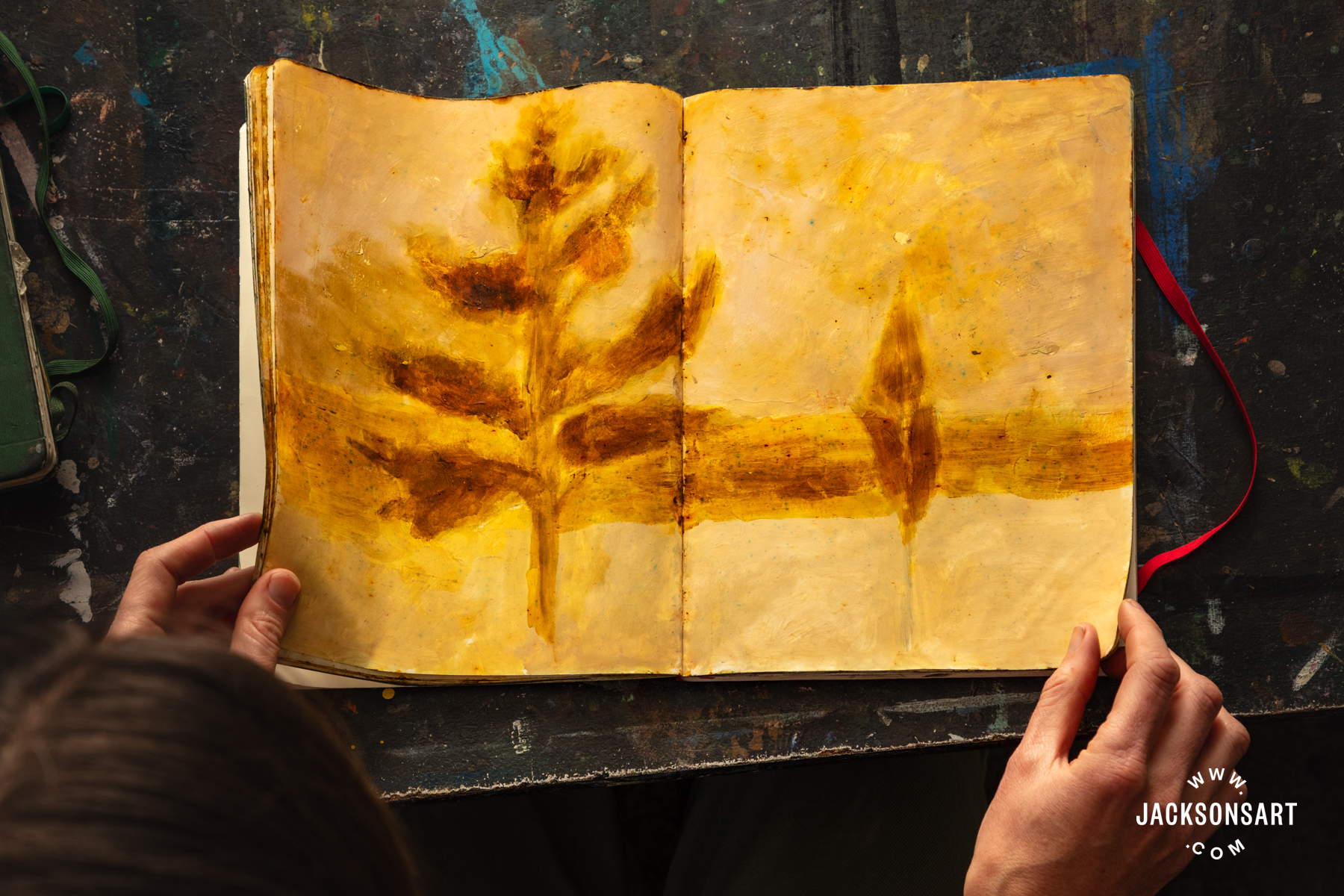
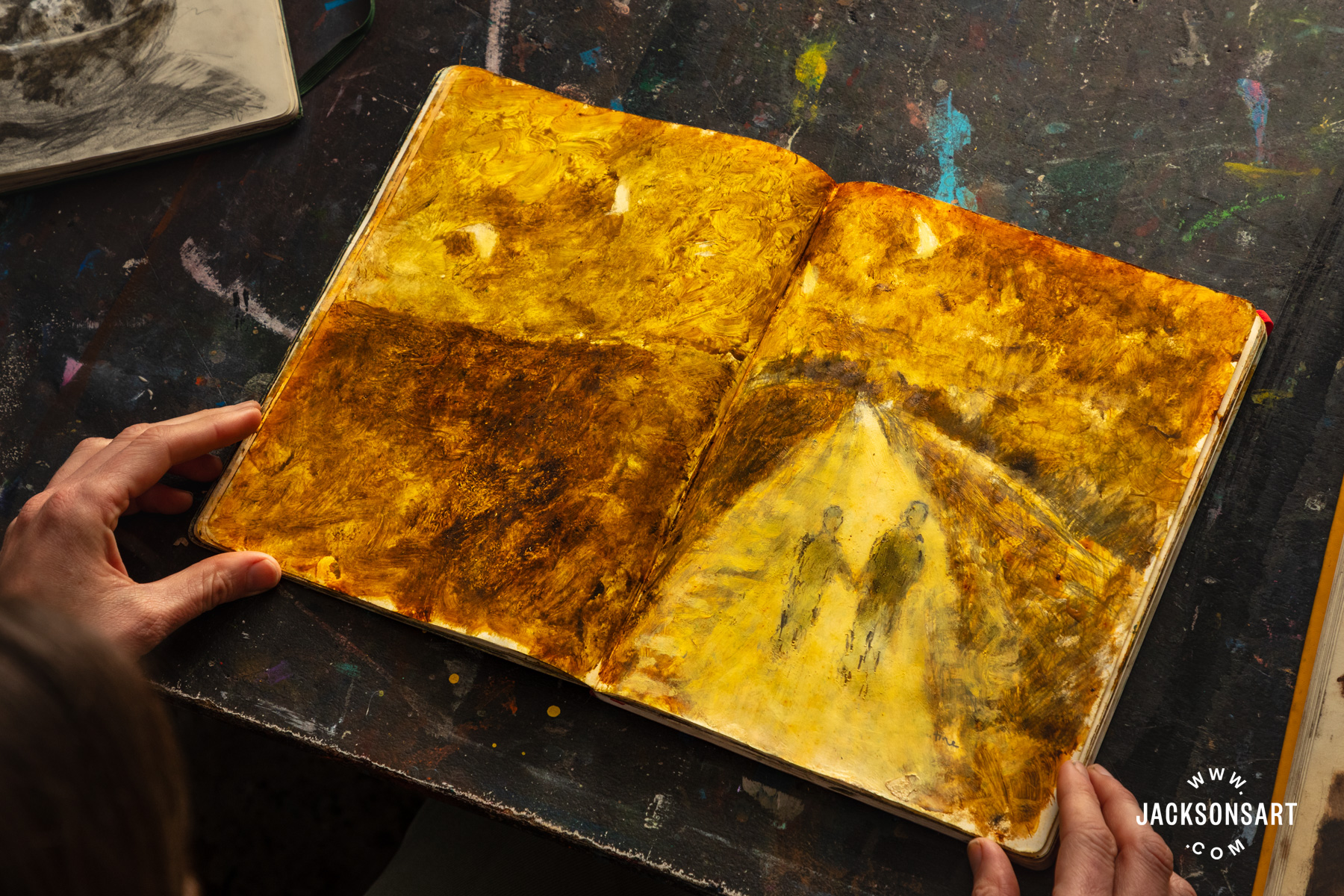
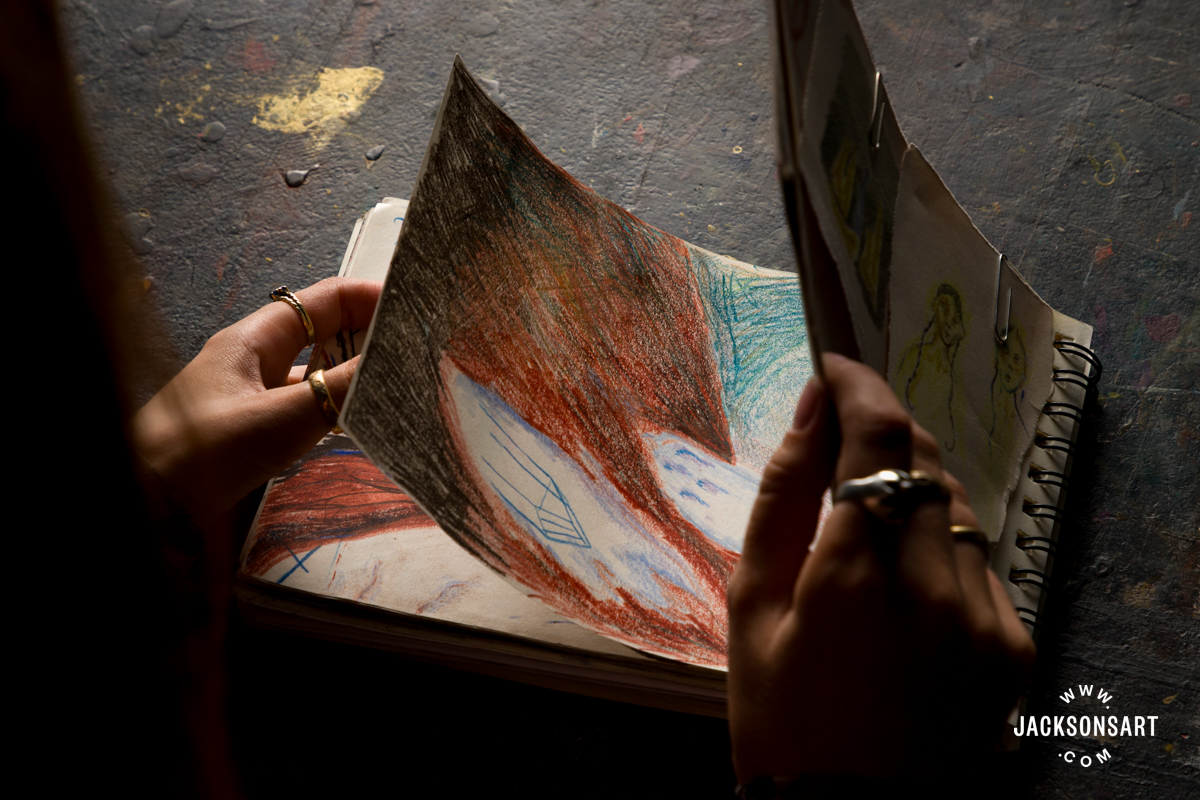
I like the idea of one sketchbook with everything in it but I don’t seem to work like that. I jump around them as my ideas jump around in the rest of my studio practice. It seems to work. Recently, I have been trying to make an entirely painted sketchbook using egg tempera and oil, because I love the idea of each page being a full bleed, full colour painting in a way that is sort of surprising and unexpected in a small, scrappy looking sketchbook.
I’m interested in ancient manuscripts, like the Voynich or Beatus manuscripts, as well as the idea of painted books – the time that went into them, the way they keep paintings stored and secret, and the mysteries surrounding their creation.
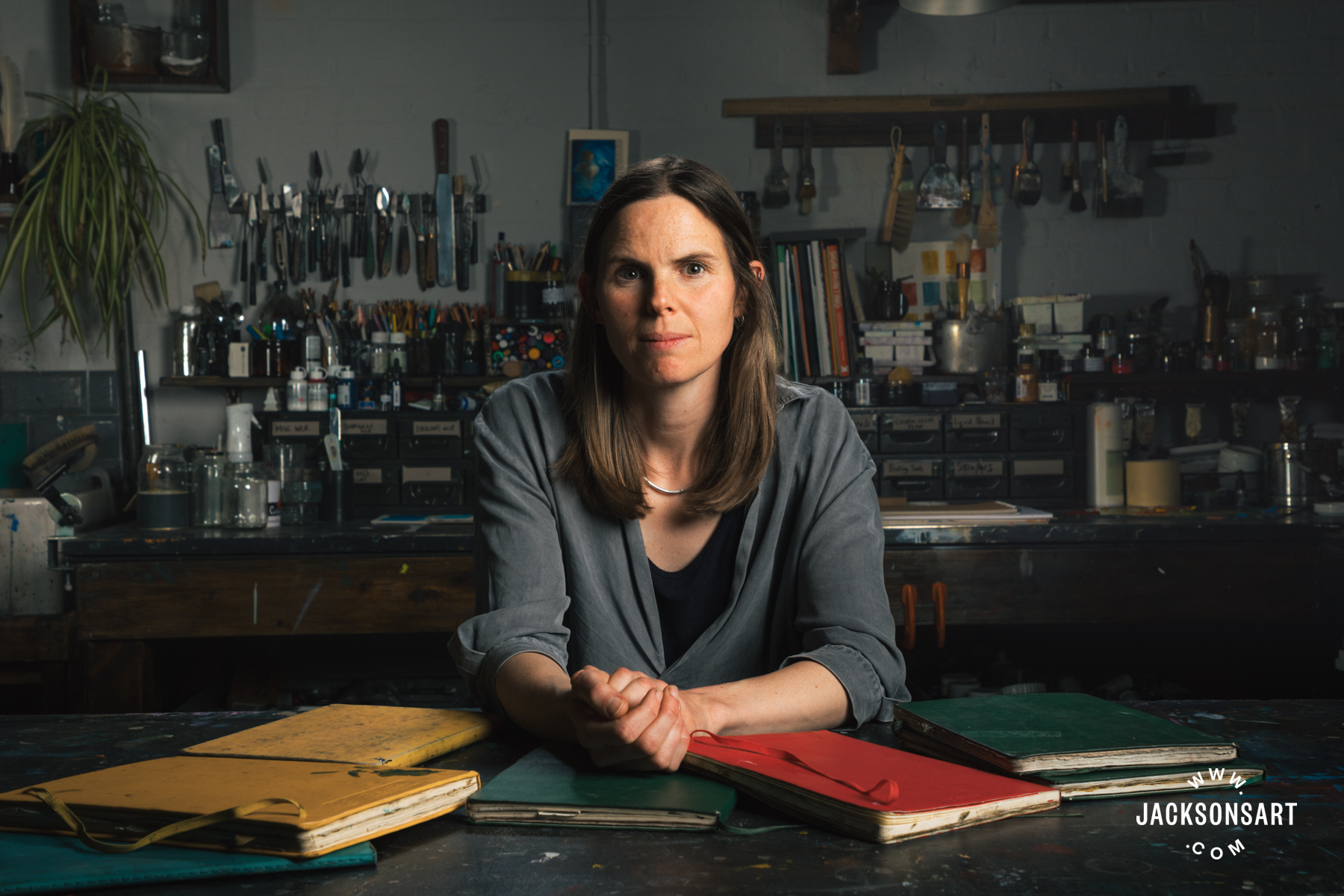
When I was doing the Drawing Year at the Royal Drawing School and was getting through so many sketchbooks, I began working in the same format (large moleskine sketchbook) and changing the colours of the covers so I could easily keep track of each one. And this is something I have continued.
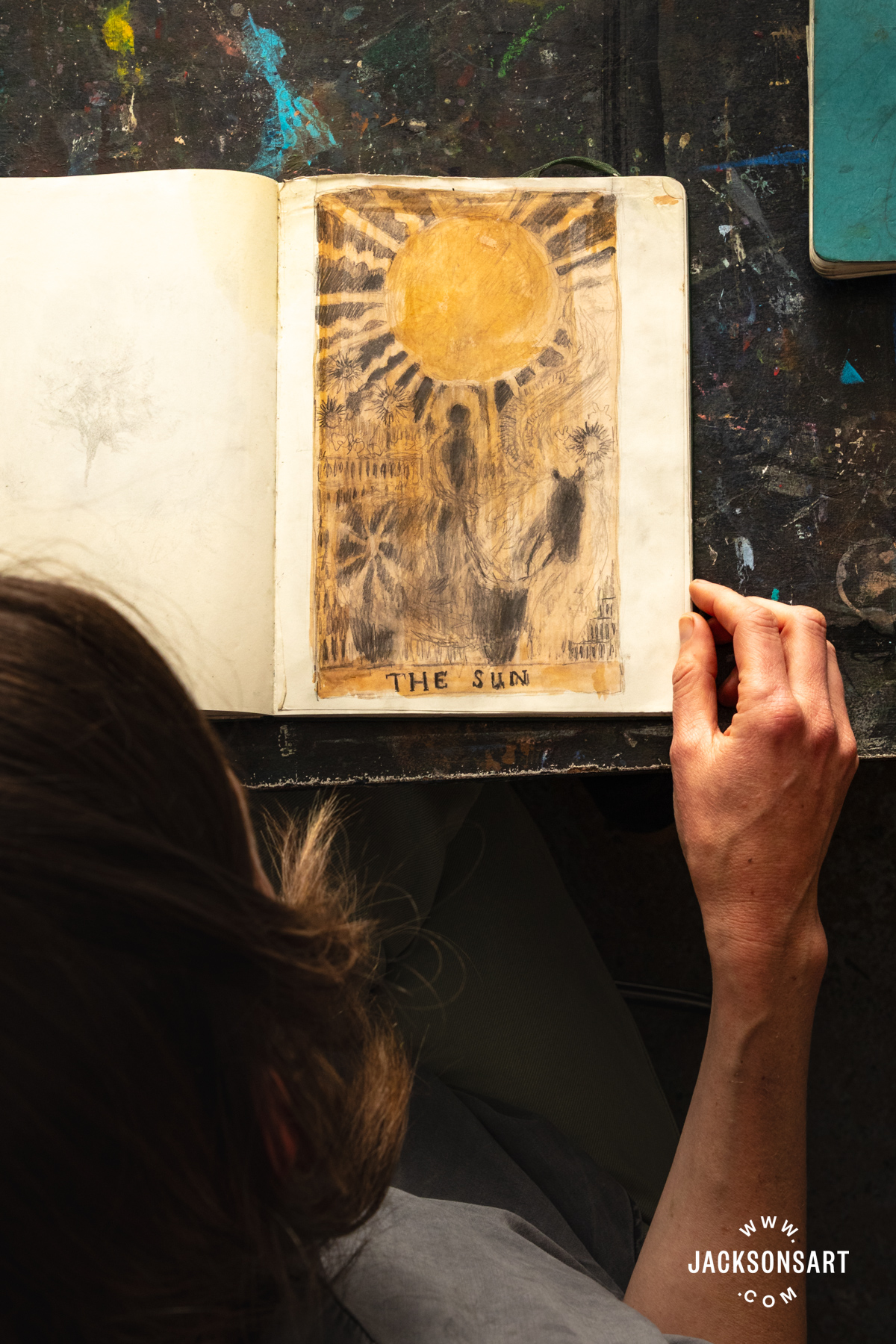
At the moment I have four:
A daily drawing sketchbook, with composition ideas and notes in the back.
A ‘painting’ sketchbook which I try to keep only painting. I keep meaning to make my own proper sketchbook for this and make it into more of an artist’s book in itself, but so far it has stayed in this format.
A sketchbook for planning drawing exercises for my online workshops, which are all about drawing with more freedom. Experimental marks, non-dominant hand, two hands at once etc. This sketchbook is often the one I like most because I put less pressure on myself to make ‘good’ drawings.
A book for gathering images that I like – printed off, photocopied, prints of my photos roughly collaged. I draw into this as well, so not quite a sketchbook, but a kind of inspiration sourcebook that I use a lot when I’m starting a painting.
I like Moleskine sketchbooks, or any sketchbook with this thin, very smooth, slightly shiny, ivory paper, and a nice matt cover with pockets. I think Seawhite does one as well which is basically the same. I can’t draw on ‘cold’ white paper at all for some reason, the paper has to be ivory/beige or warm in some way.
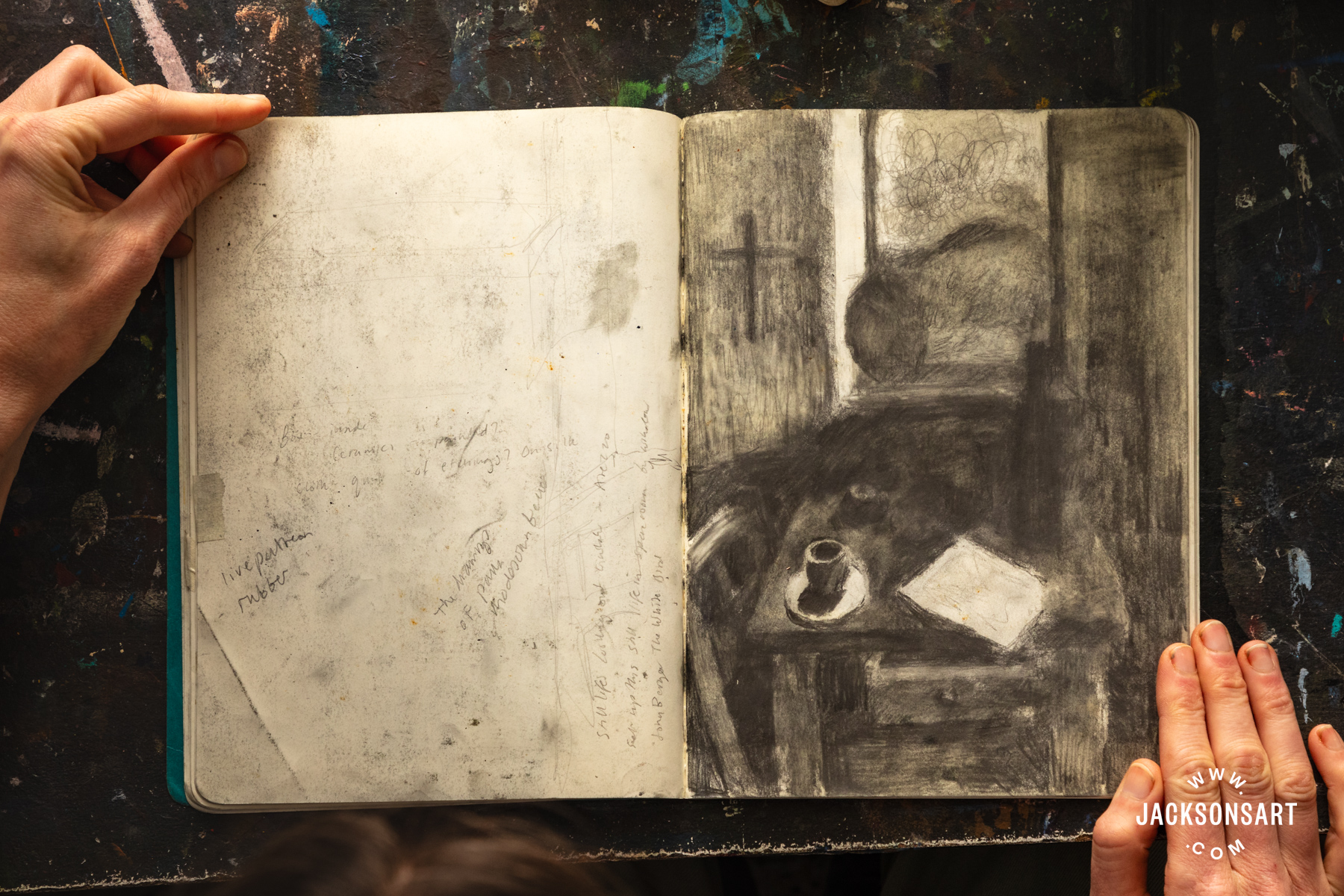
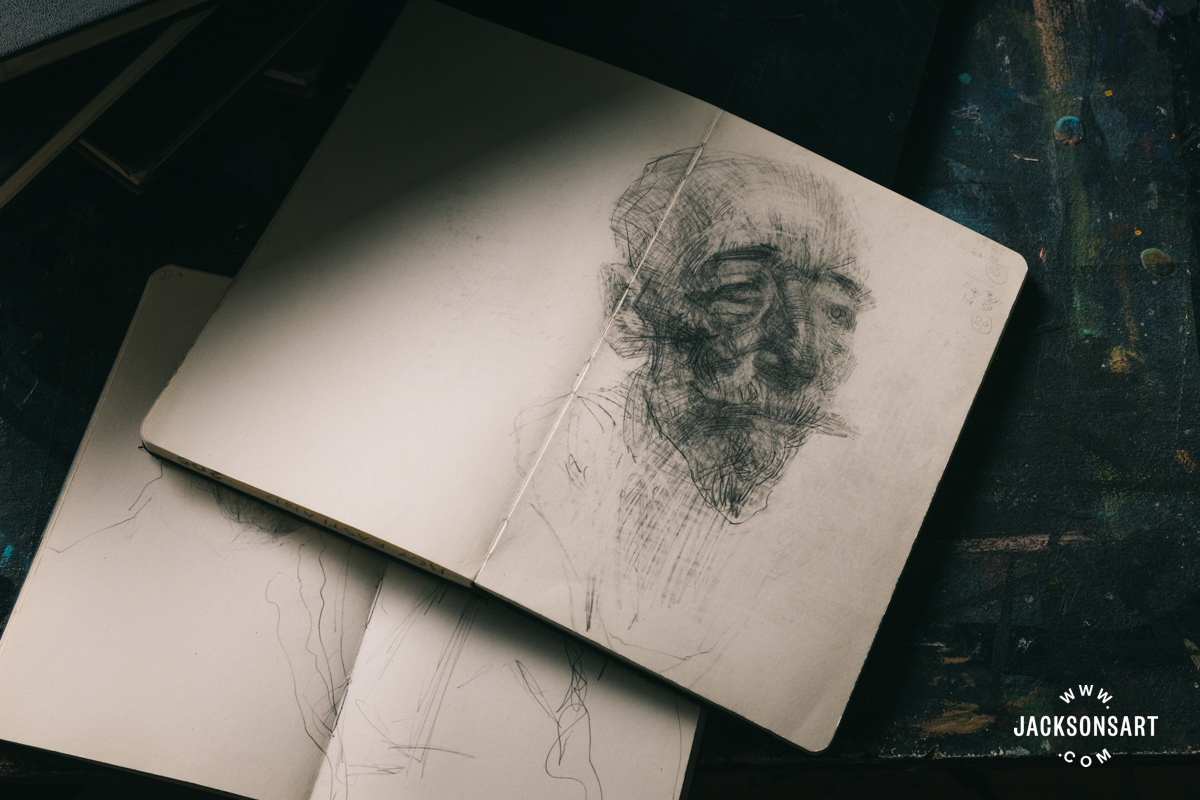
I like the smoothness of the paper, because I use the rubber a lot when I am drawing, and you can rub out very easily on smooth paper to get it almost completely back to ‘white’. People often ask why I don’t work on heavier paper sketchbooks that could better take the materials that I use (egg tempera, oil etc.). All I can say is that although it’s not very practical (and potentially comes with archival issues) there is something I really like about painting in these thin paper sketchbooks. Maybe they feel less precious than a watercolour sketchbook and I can be more scrappy in them. I also like something about the vulnerability of the paper – maybe it comes back to the association with illustrated manuscripts.
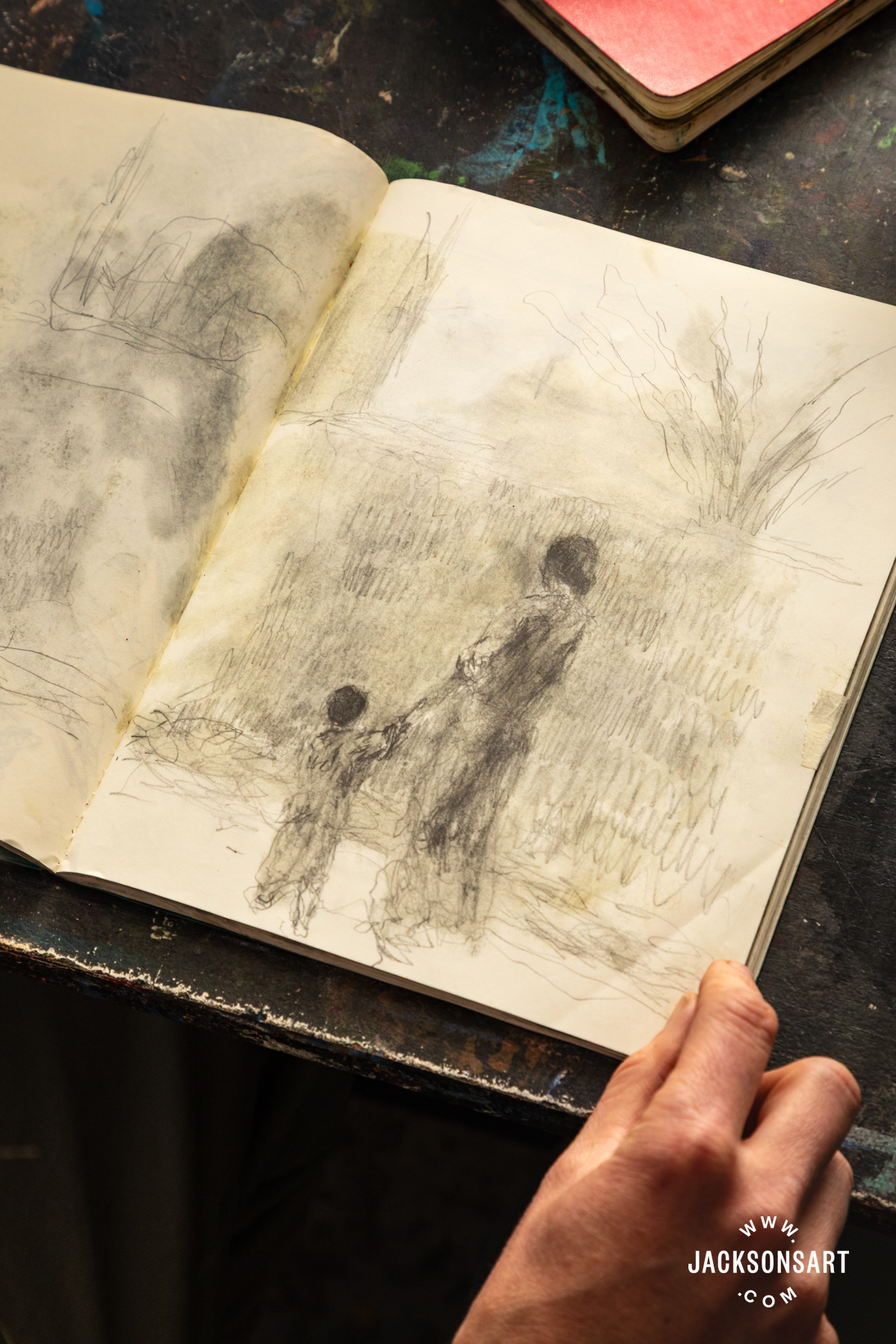
I always leave a double page in between each one if I’m painting, so that the paint doesn’t go through. Also, although I don’t like taking sketchbooks apart, I will very occasionally remove a drawing to sell it. In work outside sketchbooks, I always choose a heavy printmaking paper, so that particular choice of thin paper is connected to the book format in some way.
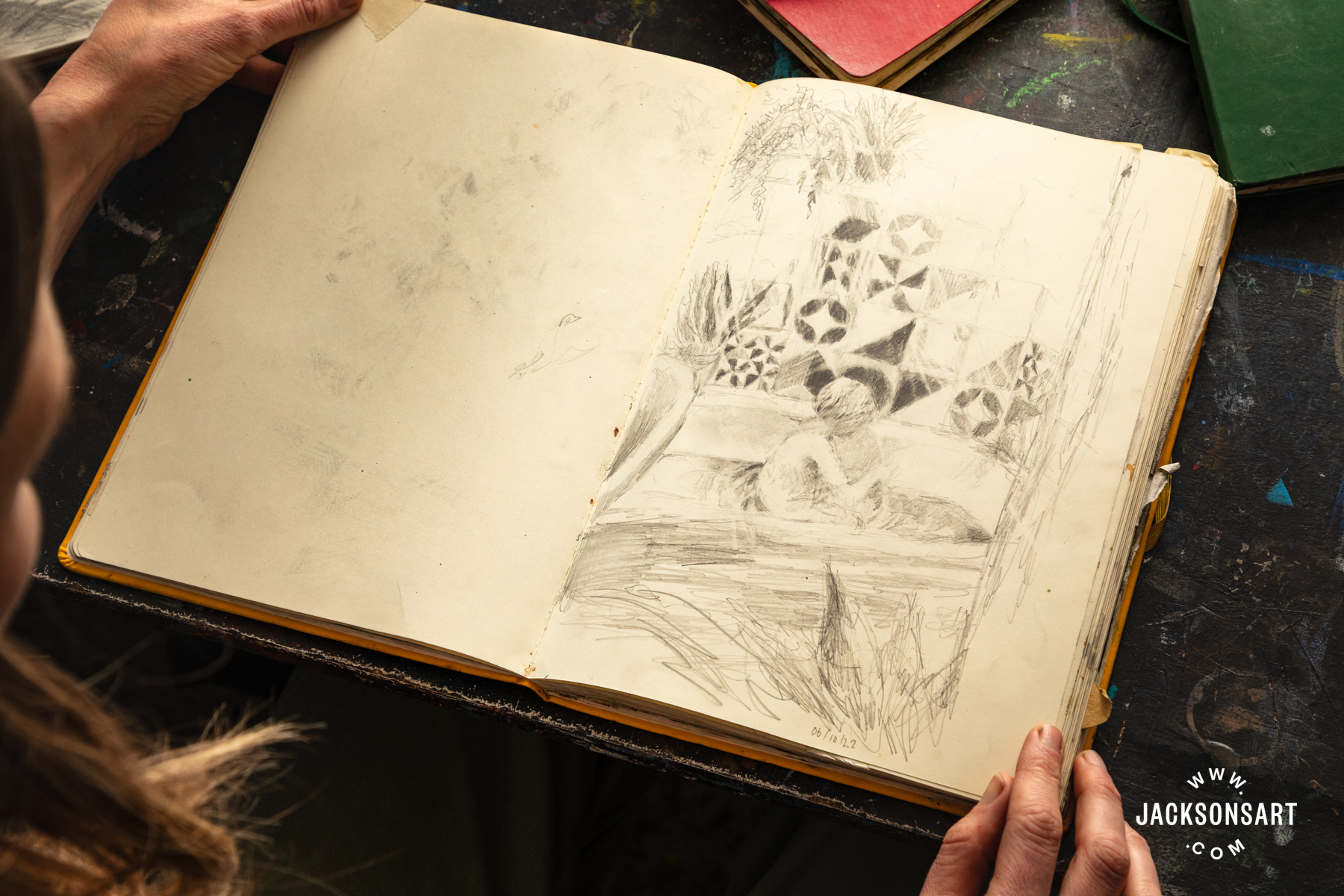
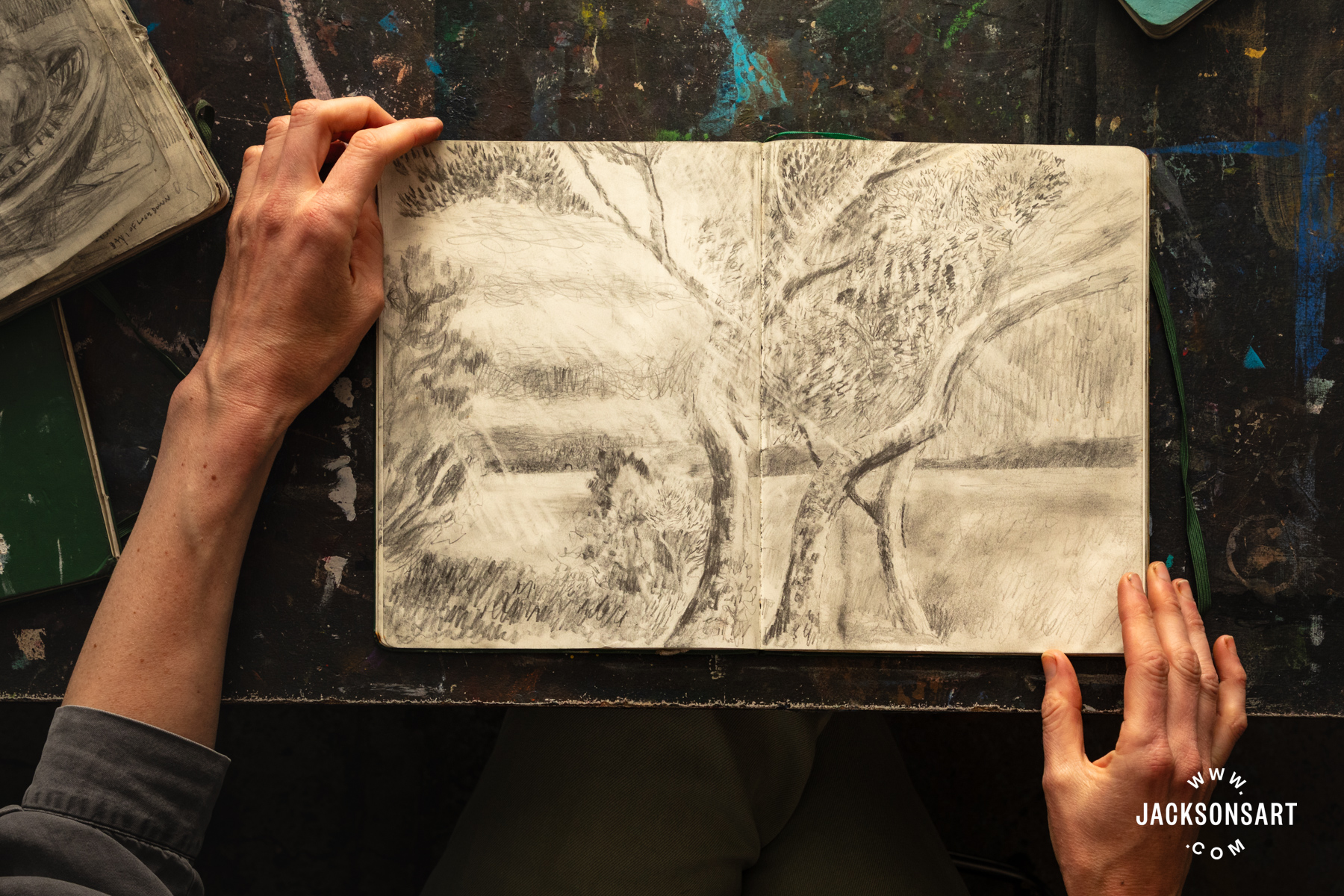
I work in many of my sketchbooks using a lot of different mediums. I never plan what materials I am going to use but let the drawing evolve. I will often start with pencil, lightly scribbling, to break down the emptiness of the page. Sometimes, I will prime some of the pages in a light colour using acrylic, shellac, or wood dye, so that I have a different ground to offset the drawing.
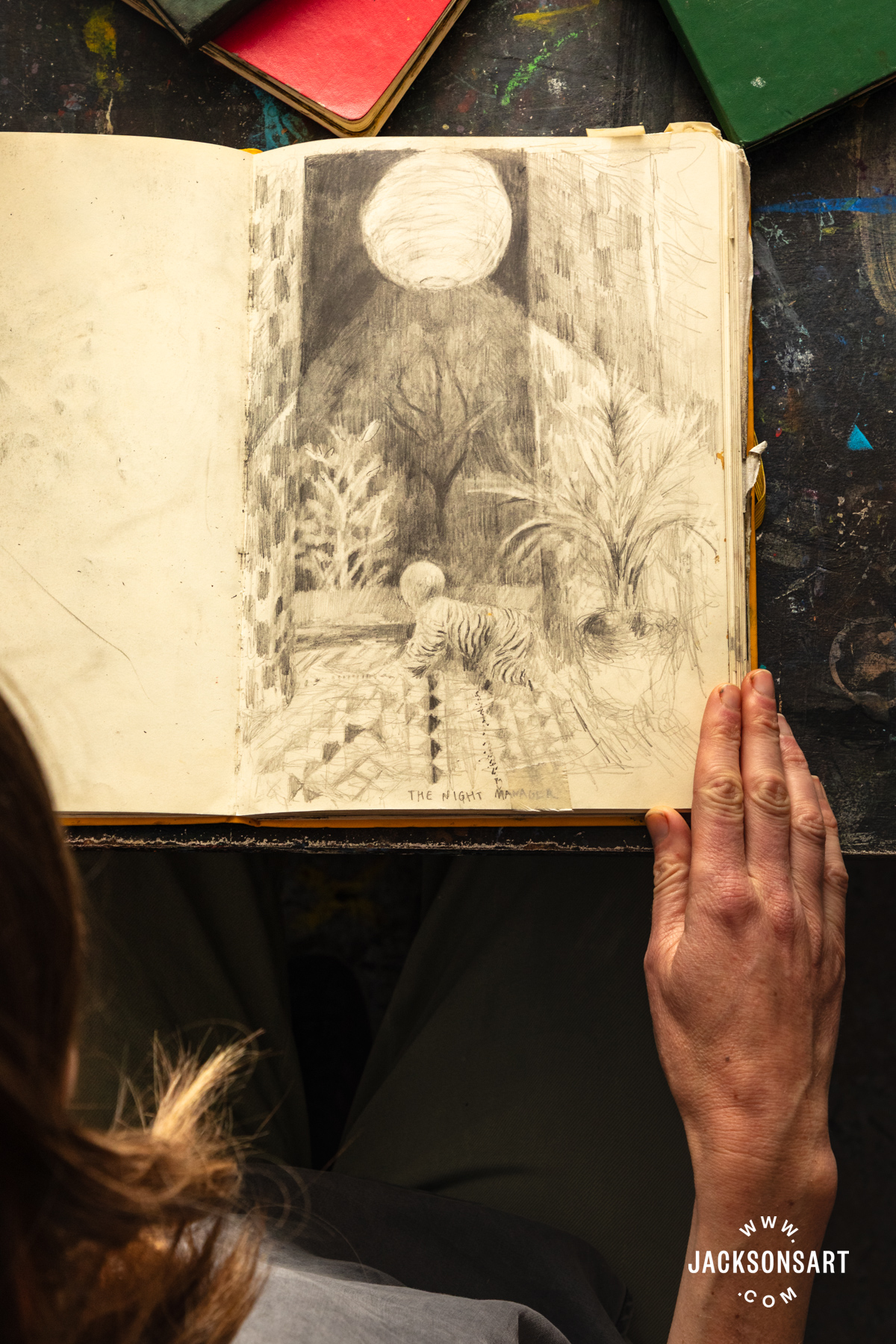
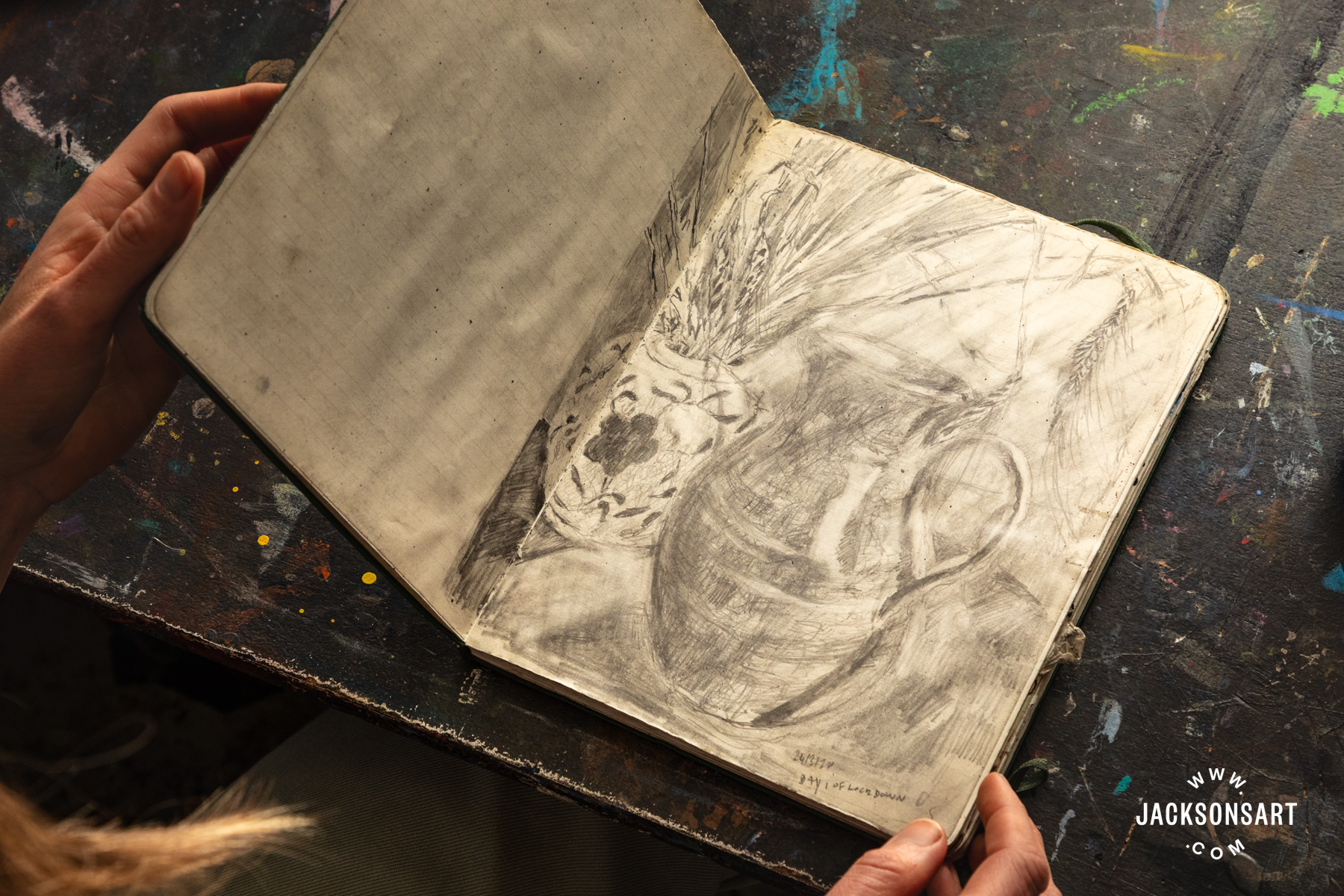
I work quite intuitively. For example, I might have a sketch of some fruit, drawn from life in pencil, and at a later stage, I will start working into this with white oil pastel, chalk, and maybe pencil again, because it needed a bit more ‘life’. I like the feeling you get when you begin to cover something up and reveal it again. In the image I’m thinking of, the bowl of fruit, I started to draw a garden around it, working from something akin to, but not quite, like ‘memory’. A visual image bank built up over many years from observational drawing and a lot of looking at imagery from art history. Drawing from this image bank always feels like an attempt to close in on something ephemeral and pin it down. This is why I think I favour materials that don’t close anything off too much and lean towards a looser, more painterly approach, like paint, graphite, and pastel. The important thing for me is, I might not necessarily like what I draw, but it doesn’t matter. It will become a battle to kind of get rid of it – painting it out, or drawing over it, until it feels right in some way.
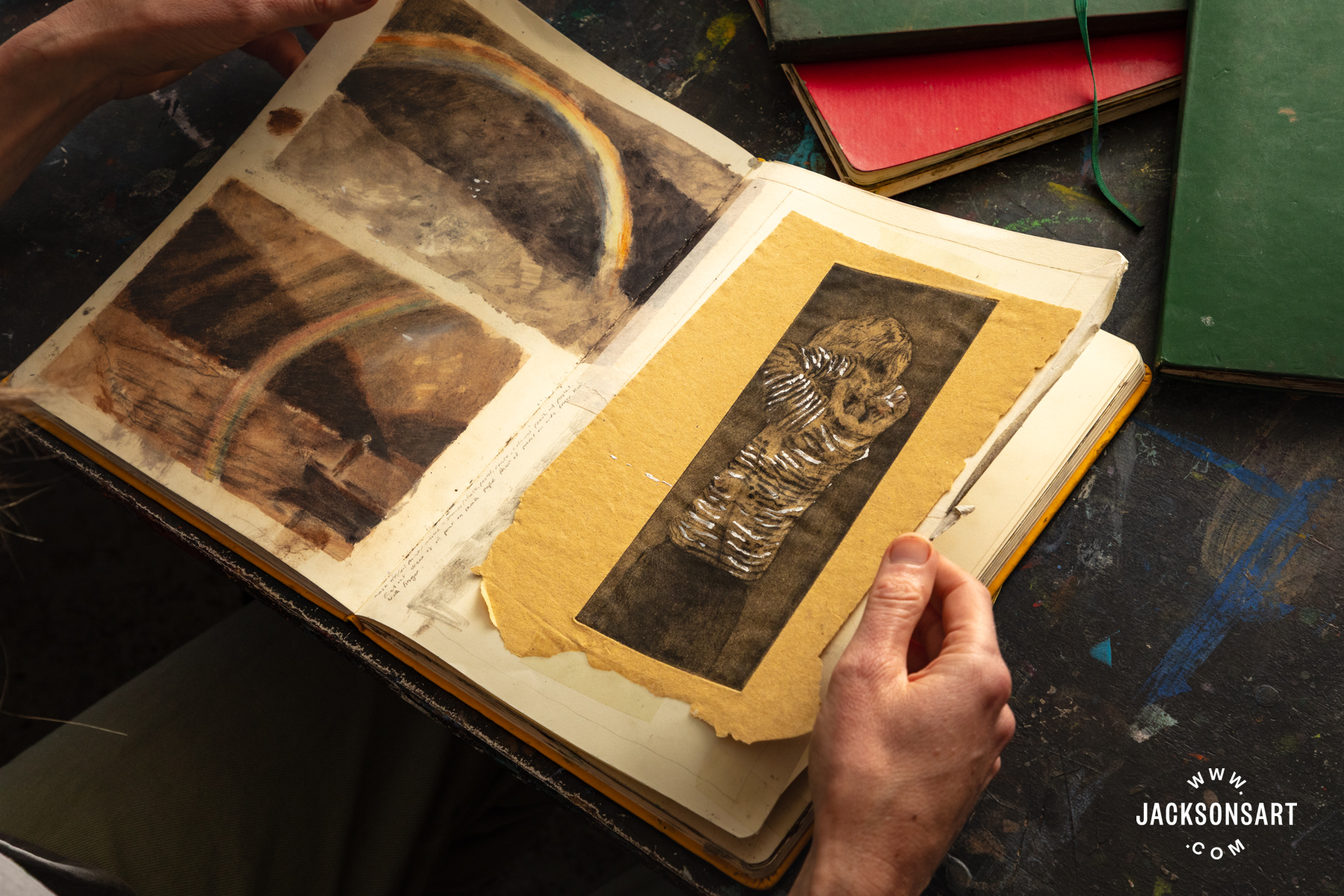
For me, that is when the drawing really starts to get interesting, because the struggle to get it ‘right’ can leave traces of doubt and ambiguity. In other words, it can become closer to the experience of life itself.
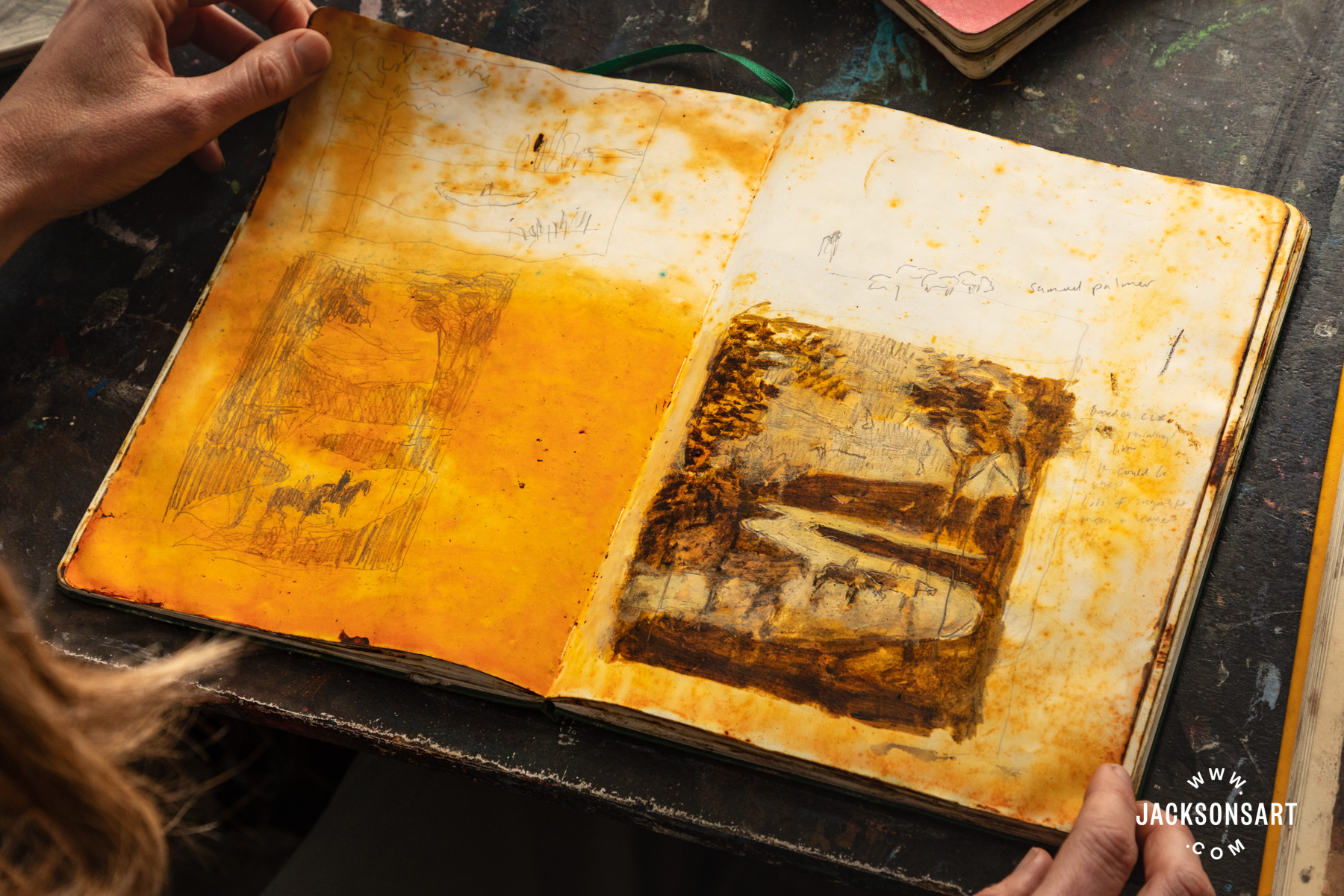
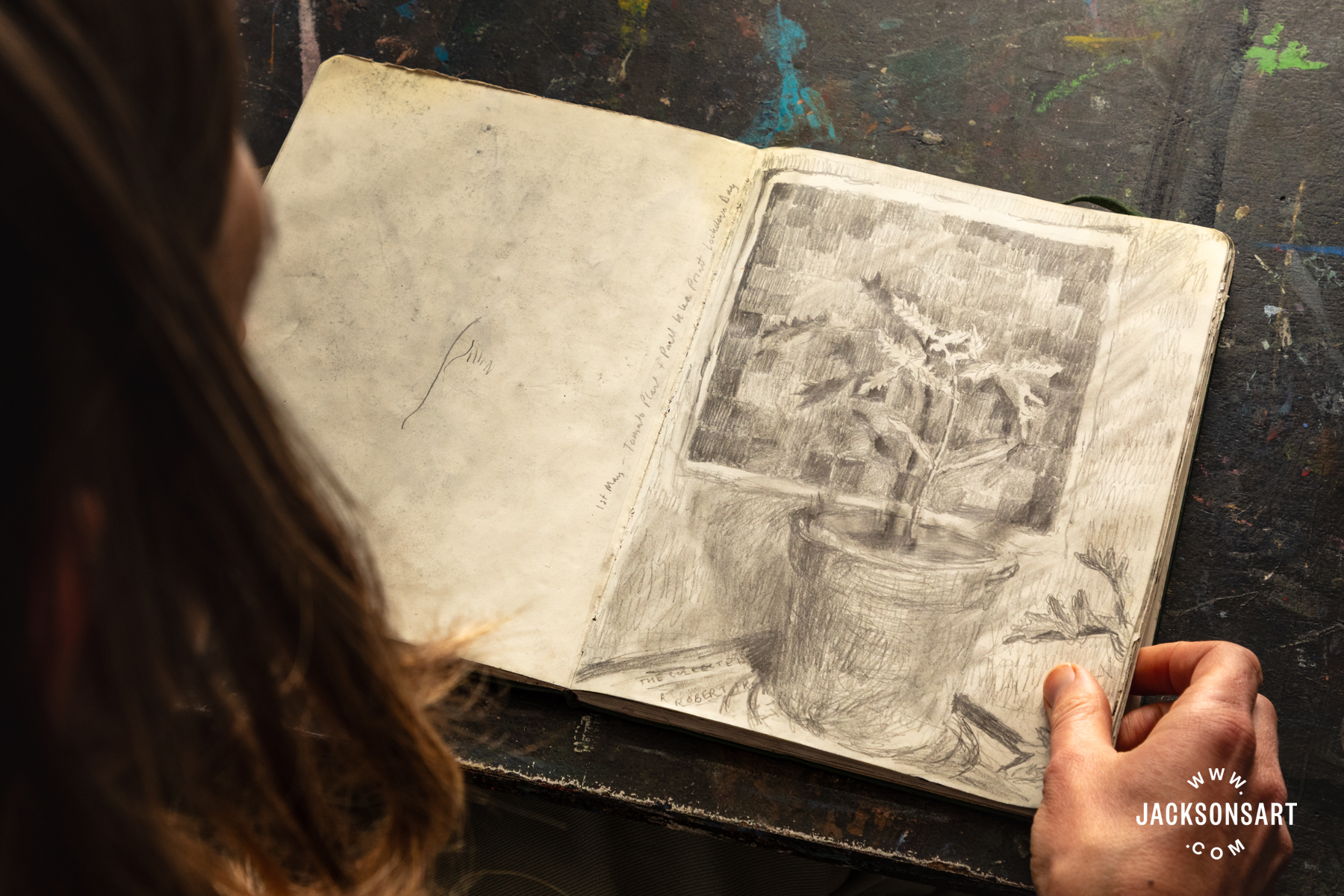
I haven’t been the sort of artist who is constantly sketching out and about for a long time, probably since the Drawing Year when that was almost inevitable. I used to think that was the correct way to use sketchbooks, and that it would eventually become natural to me. Although I do want to draw more from life (and when I do I find it incredibly grounding), I’ve accepted that in fact, that isn’t actually a part of my way of working. I use sketchbooks constantly, but more for drawing from my head, doodling compositions for paintings, making brief sketches from life and then reworking them later.
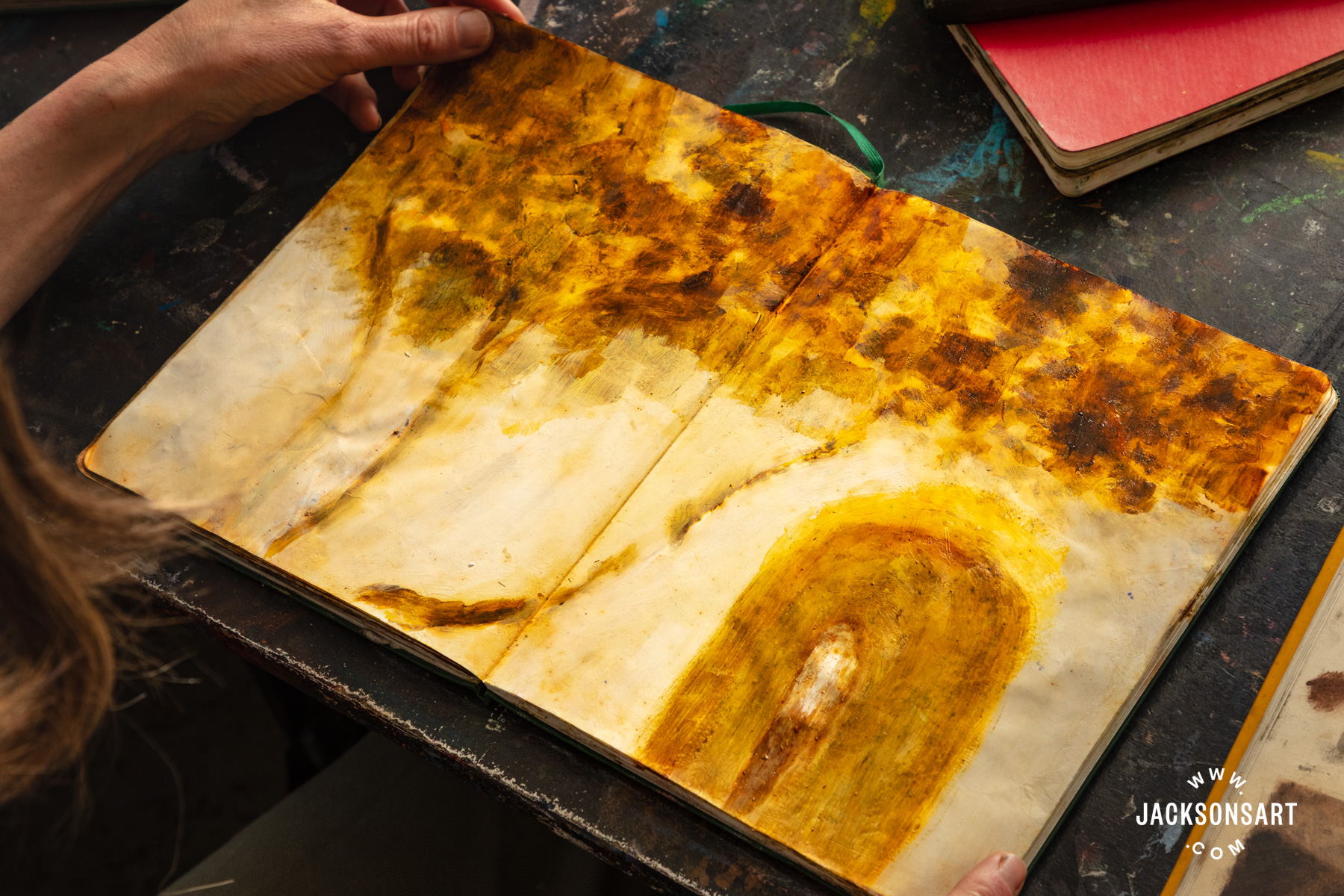
I have two young children and also teach drawing, so I inevitably have gaps where I am not able to go to the studio for a while. I feel like the sketchbooks are the physical manifestation of the creative part of my mind when I am not in the studio. A mind that is not active, but is not dormant, a mind that is sort of waiting in the wings for its turn. So I always have a sketchbook with me, even when I’m out with my kids and I know it’s very unlikely, or even impossible, that I will get to use it.
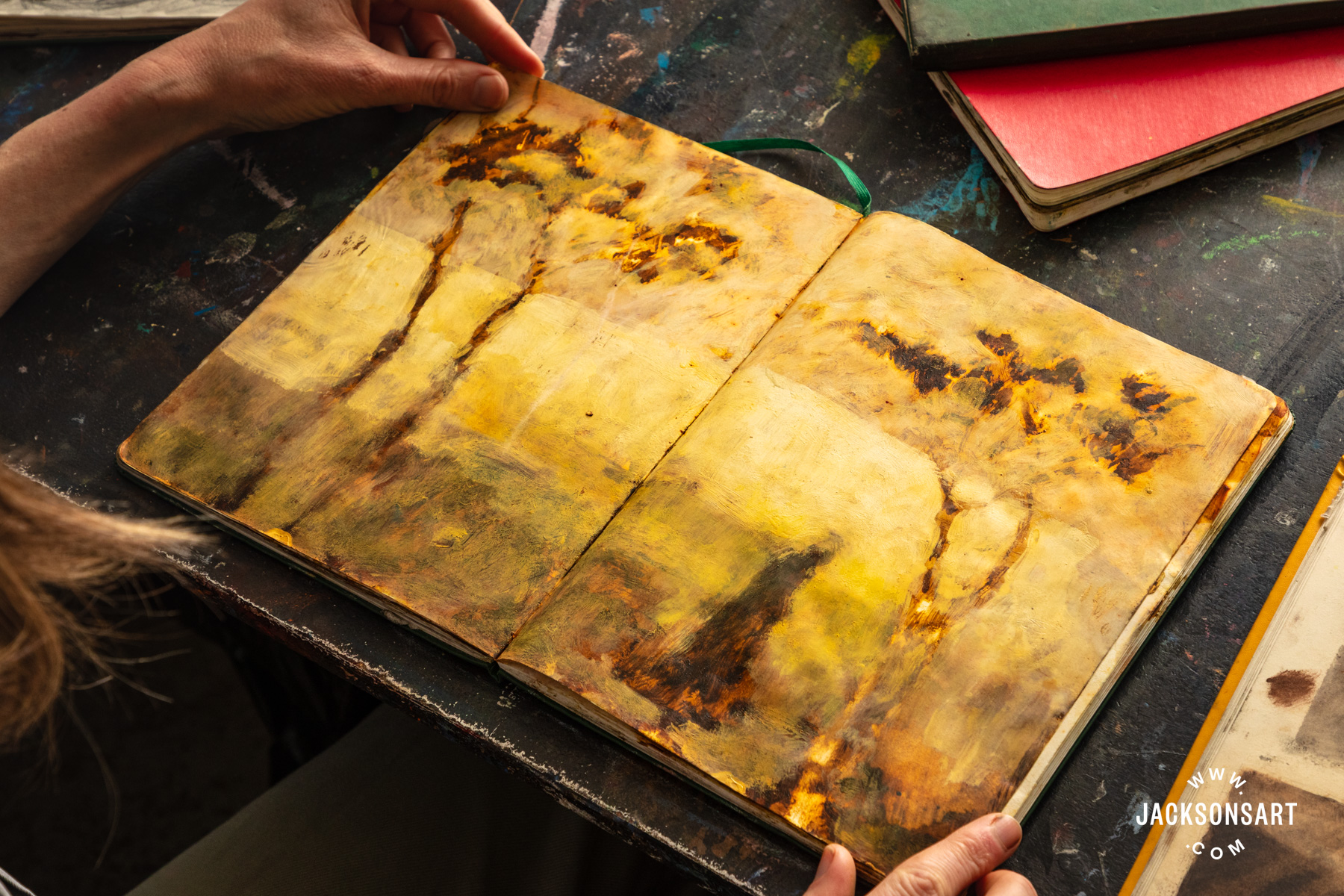
The sketchbooks are a way of keeping in touch with that part of my mind so that even if I doodle something in them, or flick through them a few times, I am keeping that mind close. This makes it easier to go back into the studio, pick up a brush, and remember what I was doing. Back in the studio, I also have all my sketchbooks with me to consult and to look through when I am trying to reconnect with what I was doing, and remind myself what I was excited about painting the last time I was in.
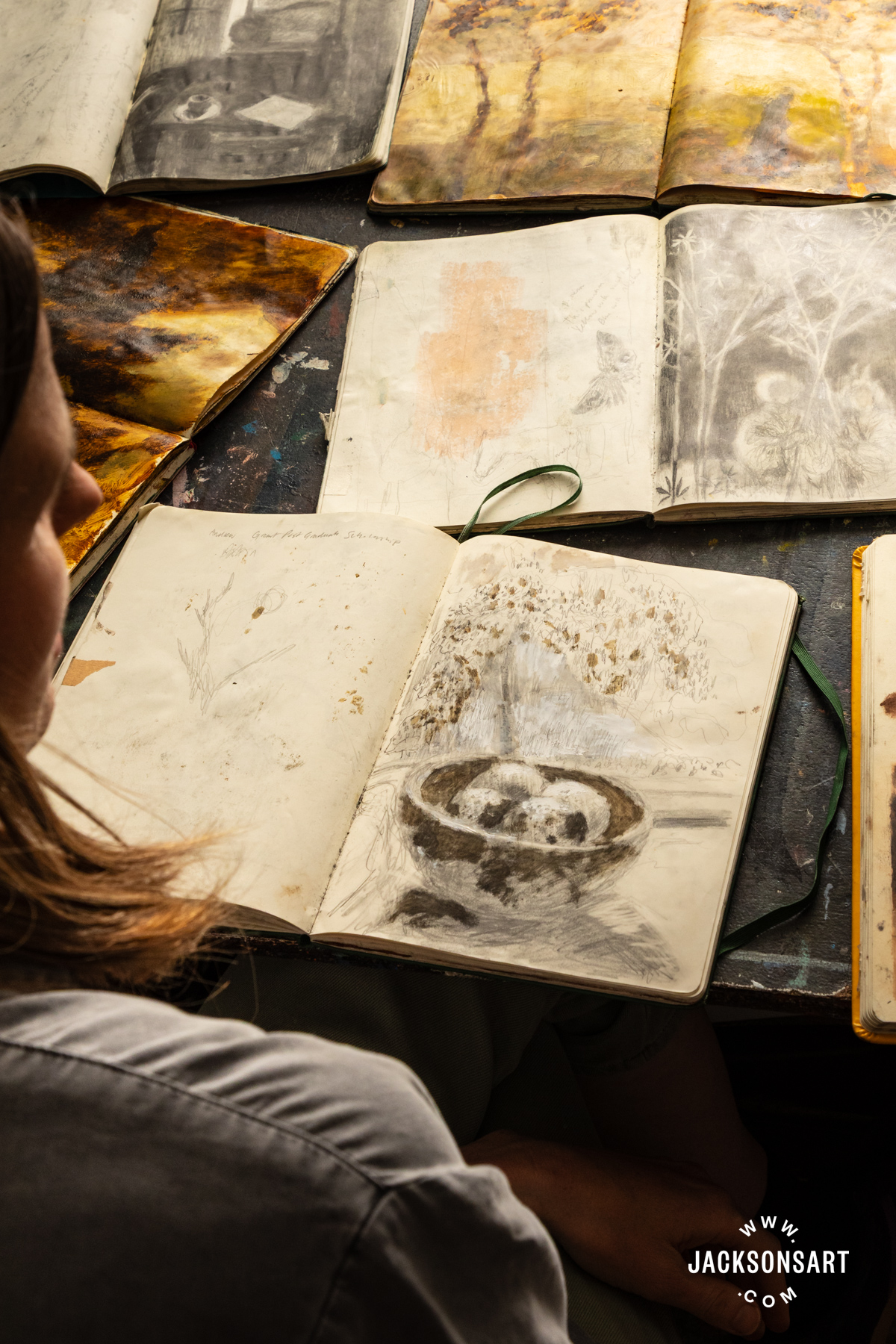
If I had any advice I would say to be bold and experimental in your sketchbooks, that’s what they’re for! Probably some advice I should take myself too. If you want to be bolder, I think it helps to embrace the idea of using a range of media in your sketchbooks and being prepared to rework until you are happy with a page.
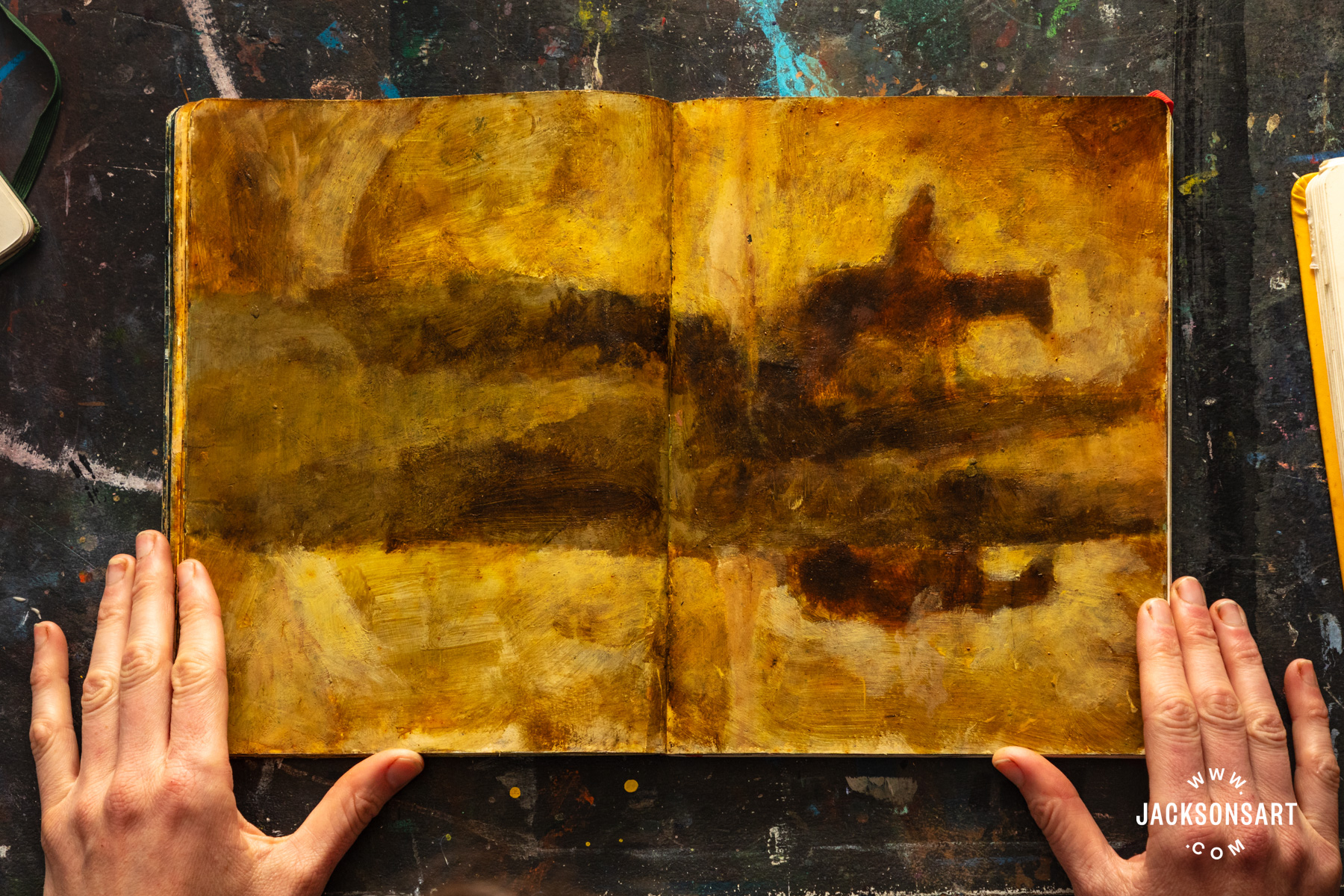
If you accept the idea of trying to cover and destroy what you have made – paint it out with white acrylic and draw back over it with charcoal, rub it out entirely and paint over the ‘remains’ of the drawing with watercolour, paint into it with oil and then wipe off with a rag, work with the marks left behind, collage over it – then you can work more freely to begin with. The first drawing is just a starting point.
Materials
Acrylic Gesso (for creating a tooth on paper)
Egg Tempera (usually just mixing egg yolk directly into watercolour or gouache from tube, but also pigment)
About Meg Buick
Meg is a Painter and Printmaker based in Edinburgh whose work explores representations of the natural world and the collective subconscious. For Meg, printmaking and painting are not separate, but two interconnected forms of image-making that inform each other. Both disciplines are deeply rooted in a daily practice of drawing from life. Her work explores an imagined, metaphysical landscape, informed by drawings made from life, memory, and a deep connection with the history of painting. Stylistic references include ancient frescos, prehistoric cave art, paintings from the early Italian Gothic and Renaissance eras, folk art, and 20th-century painting.
Meg was awarded a scholarship to study a Postgraduate in Drawing at The Royal Drawing School in 2013, and went on to be awarded various prizes and residencies – The RBA Rome Scholarship, The Richard Ford Award, and the Artist of the Day in Flowers Gallery in 2018. She is an elected member of the Royal Society of Painter Printmakers and one of her prints has been selected for the permanent print collection at the Ashmolean Museum. Her work has been selected for the Ruth Borchard Self-Portrait Prize, and most recently for an exhibition at Christie’s celebrating the legacy of Picasso.
She has also taught in various art schools and universities including the Royal Drawing School and the University of West England. She has recently been awarded funding from the Queen Elizabeth Scholarship Trust to develop her work in etching and complete an MA in Contemporary Art Practice at Edinburgh College of Art.
Further Reading
Artist Insights: Eilen Itzel Mena
Scumbling Techniques for Painting
Inside the Sketchbook of Jake Lamerton
How to Resolve a Landscape Painting Composition
Shop Sketchbooks on jacksonsart.com
2 thoughts on “Inside the Sketchbook of Meg Buick”
I absolutely love Meg’s work and have been
following her on IG for years. I use her art as
inspiration for mine and am lucky to own one
of her drawings. I love her palette, too
Delighted to read this post on sketchbooks. I was a student
of Meg’s at RWA courses and for personal tutorials when
Meg lived and worked in Bristol. I learnt a great deal about
loosening and varying my drawing from her in ways that
continue to excite me. Until working with her I used
sketchbooks erratically. Under her influence sketchbooks
are now part of my regular practice and a source of
inspiration in all the ways she describes. Our interests and
styles are very different but the ways of using sketchbooks
she recommends continue to really help me to develop and
enrich my enjoyment of making art.
Comments are closed.