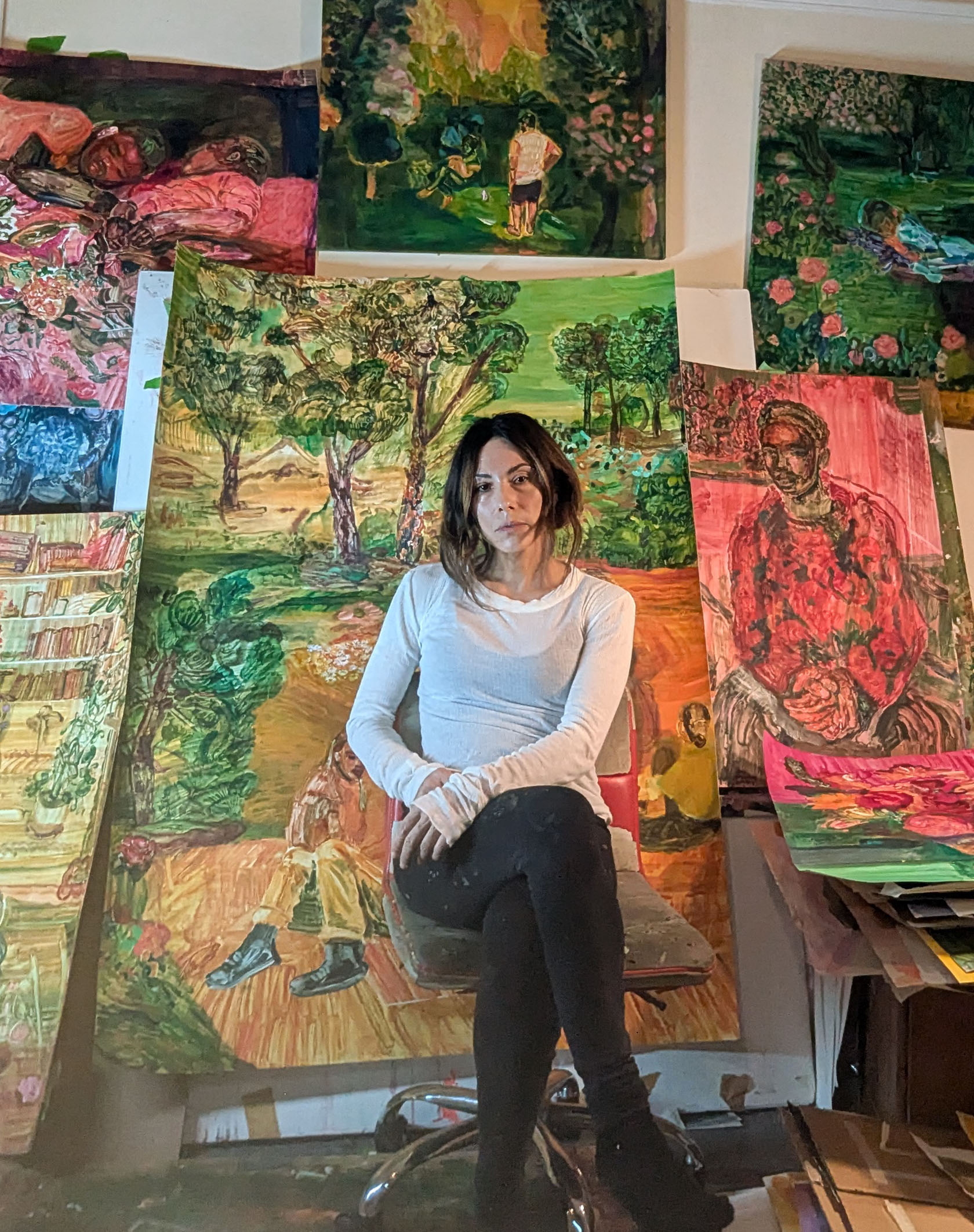
Carlotta Mazzariol won the Student Award in Jackson’s Art Prize this year with her work Once Done. In this interview, she discusses how new ideas emerge from periods of creative uncertainty, leaving behind traces of her gestural process, and gaining confidence over the course of her studies.
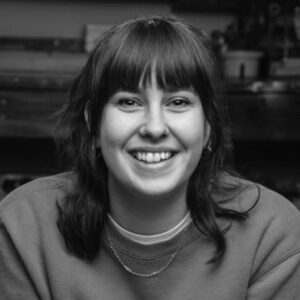
Above image: Studio portrait by Matteo de Mayda

Carlotta Mazzariol
Acrylic, oil, and oil pastel on canvas, 100 x 70 cm | 39.3 x 27.5 in
Josephine: Could you share the story of how you became an artist and tell us more about your artistic background?
Carlotta: I have always been interested in making things in one way or another. Creativity has been a natural part of my life for as long as I can remember. My parents run a printing company, so I grew up surrounded by paper, colour, and visual materials. Because of this, pursuing an artistic path felt very natural. I developed this interest through formal art education, first at an art high school and later at the Academy of Fine Arts in Venice, where I am currently completing my studies.
Josephine: What does a typical working day in the studio look like for you? Do you have any important routines or rituals?
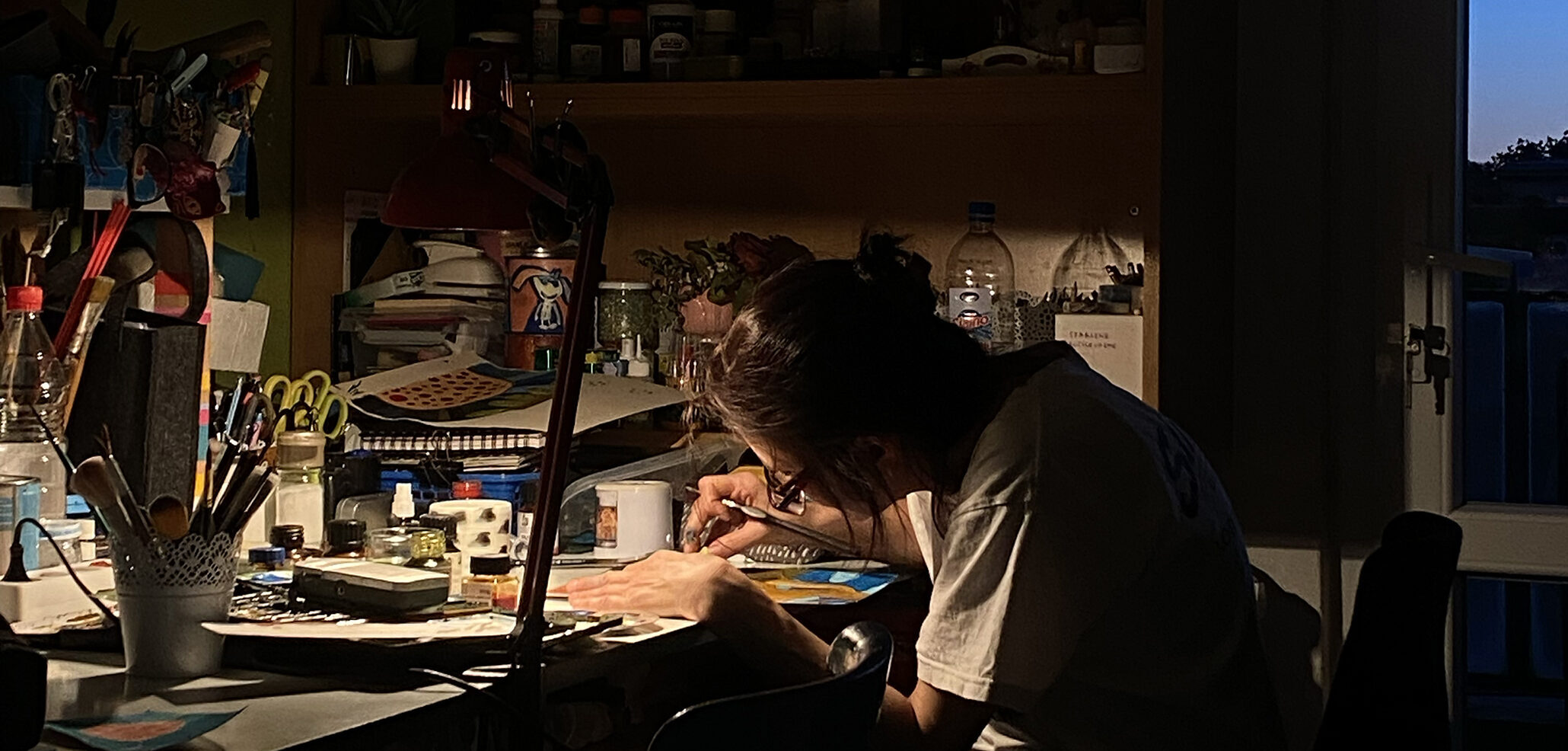
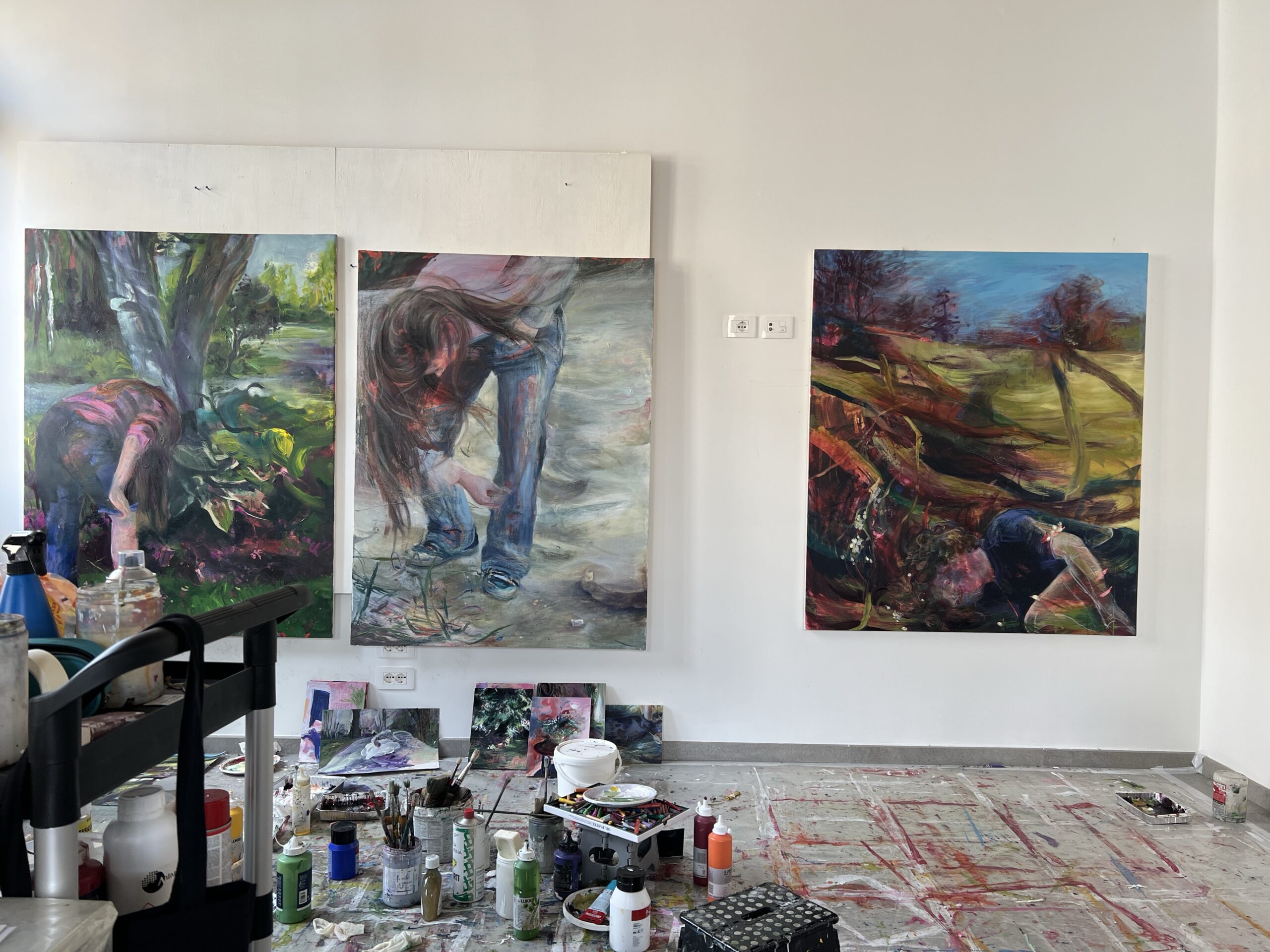
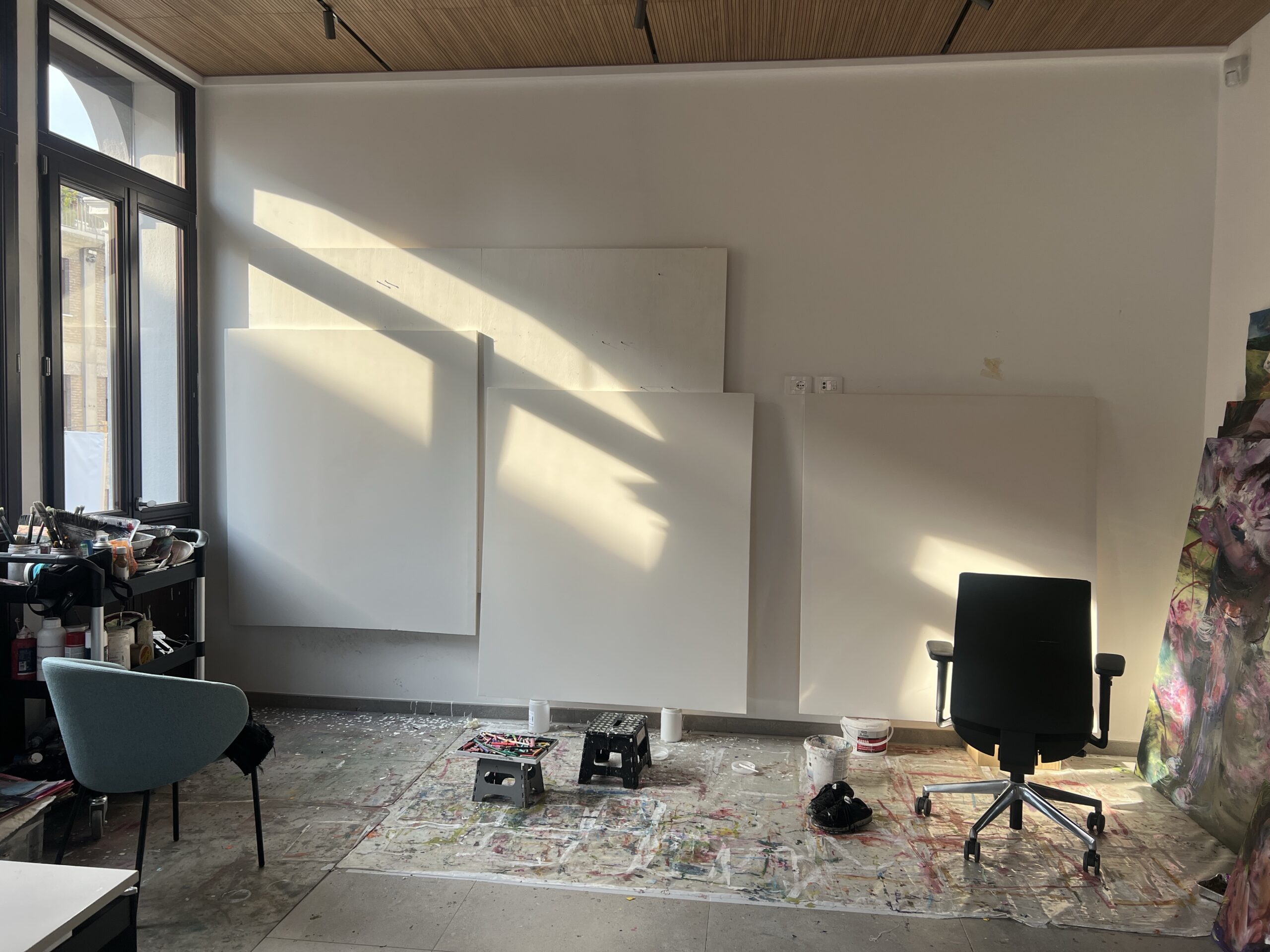
Carlotta: Every day is different. Some days are spent thinking about future works, while others are dedicated to painting. Things do not always go according to plan though, so sometimes the day becomes a mixture of ideas, experiments, and unexpected decisions. I do not have any particular rituals, I usually prefer to follow the rhythm of the work itself.
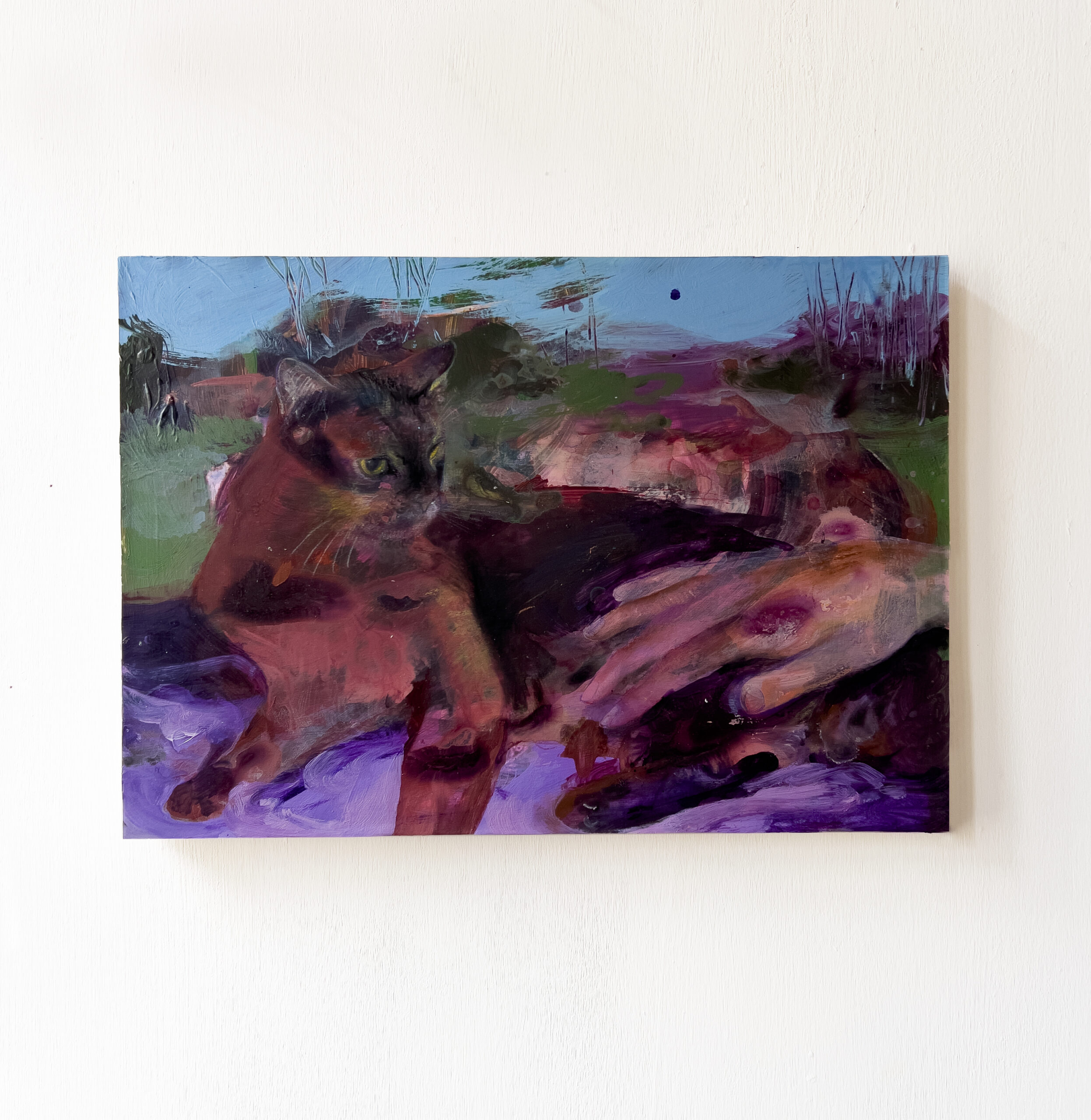
Carlotta Mazzariol
Acrylic, oil, and oil pastel on stretched paper, 35 x 50 cm | 13.7 x 19.6 in
Josephine: Which materials or tools could you not live without?
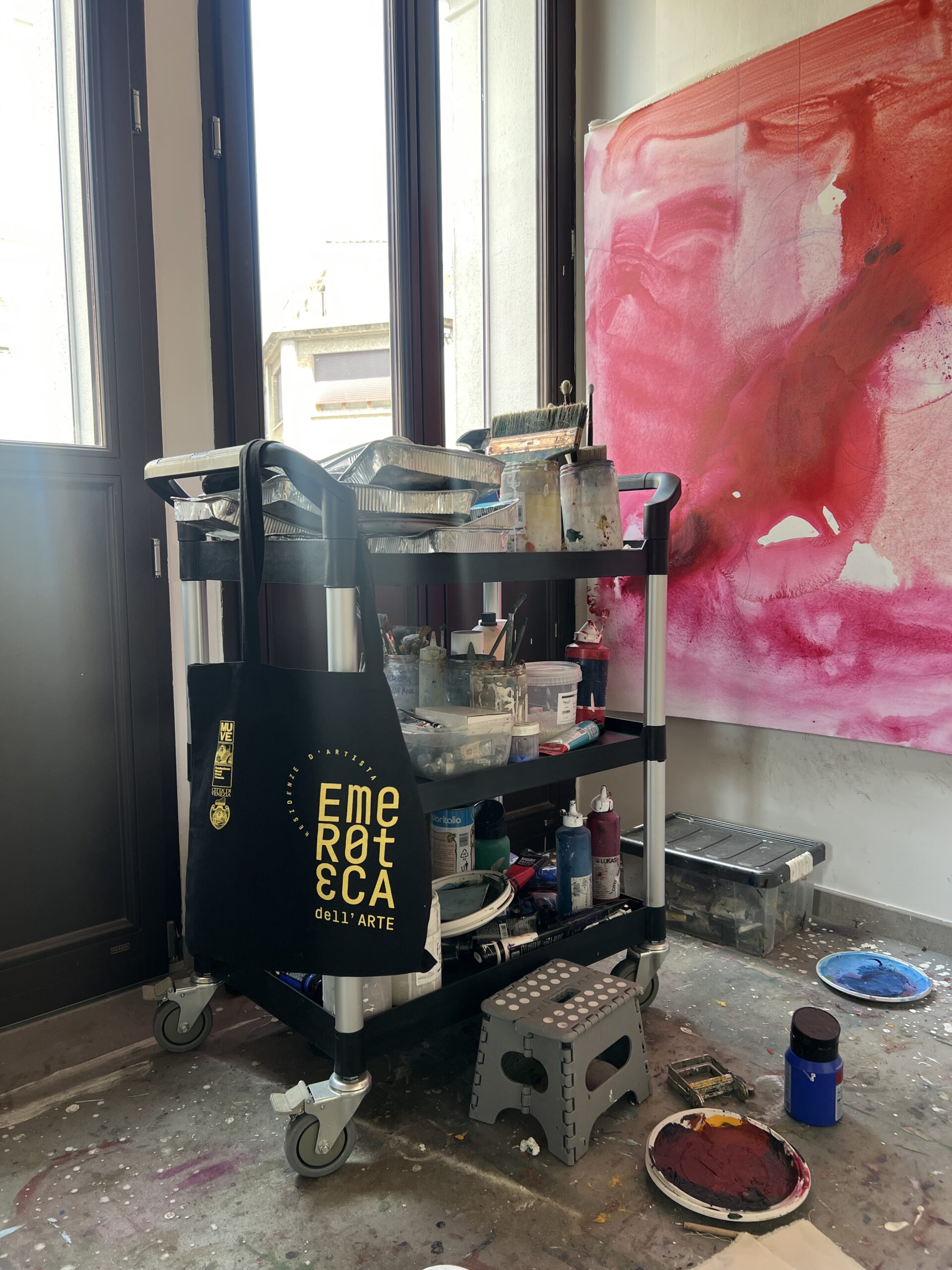
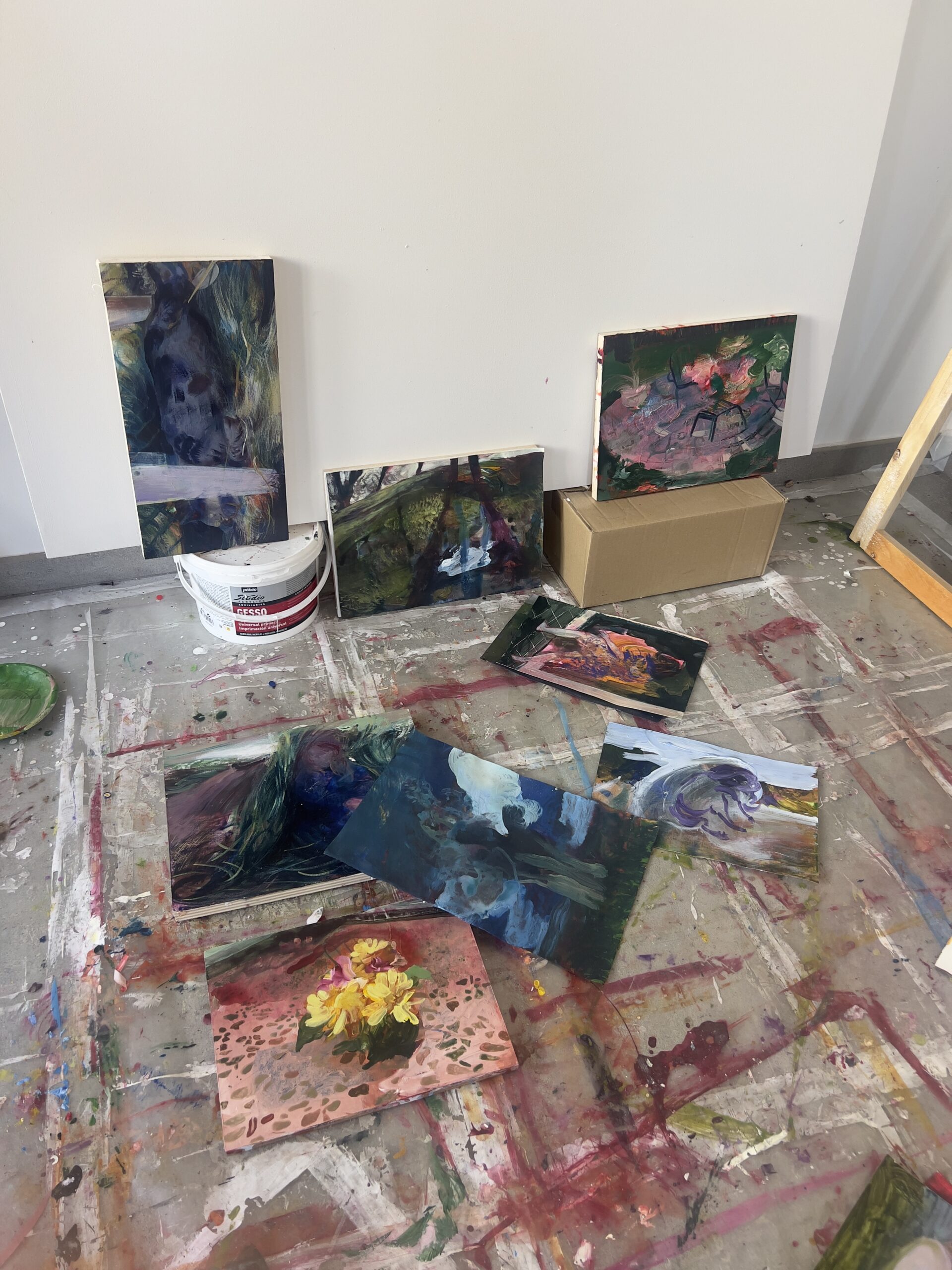
Carlotta: Definitely paper and acrylic paint. I use both extensively because they allow me to work quickly and instinctively, without overthinking the process. I particularly enjoy using Lukas Cryl Studio Acrylic Paints in 500 ml tubes because they are practical and easy to work with. I recently discovered that Jackson’s also offers paints in a similar format, which I really appreciate. I like acrylics that are fluid rather than too dense.
Paper is equally important to me. It is a simple material, but it offers so many possibilities. I enjoy building up layers of colour and marks, and I am especially interested in the textures that emerge as the acrylic dries on the surface. The paper creates a vibrant quality that plays an important role in my work.
Josephine: Do you work from a reference? Tell us more about your process.
Carlotta: I work with many different kinds of references. Some are images I find online, while others are photographs that I take myself. I often combine multiple images into collages, creating new scenes and relationships between elements. This is especially useful for larger paintings, where I prefer to have a clearer idea of the composition before I begin. For smaller works, I tend to work more spontaneously and rely more on imagination. The process feels more open and immediate, allowing me to experiment freely and follow unexpected ideas as they emerge.
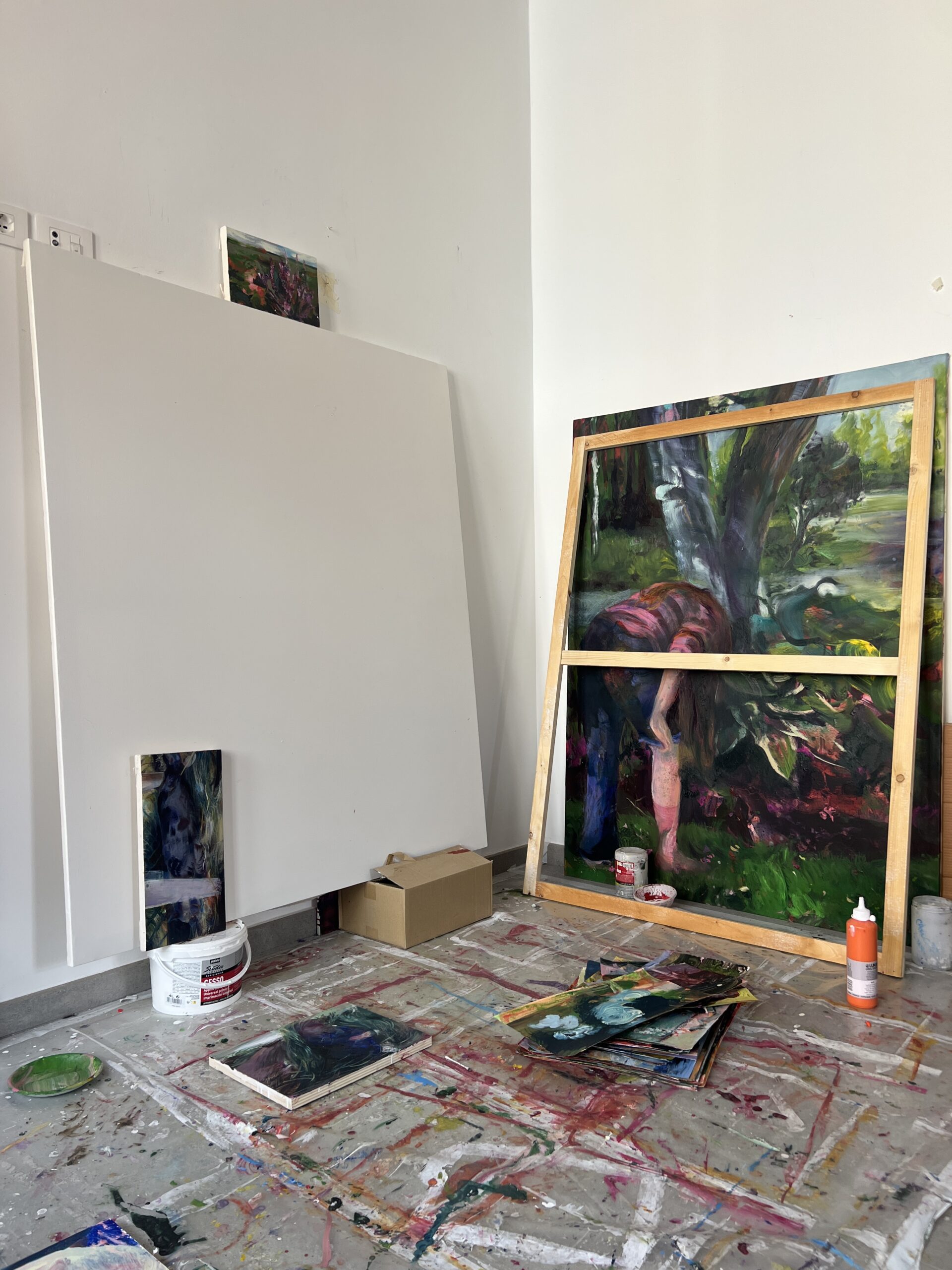
Josephine: Do you regularly draw or keep a sketchbook? If so, how does this inform your work?
Carlotta: I rarely draw in a traditional sense. Instead, I usually make quick studies with a brush and acrylic paint. They function like sketches, but the process feels faster and more instinctive. These small studies often help me test compositions, colours, and ideas before developing them further.
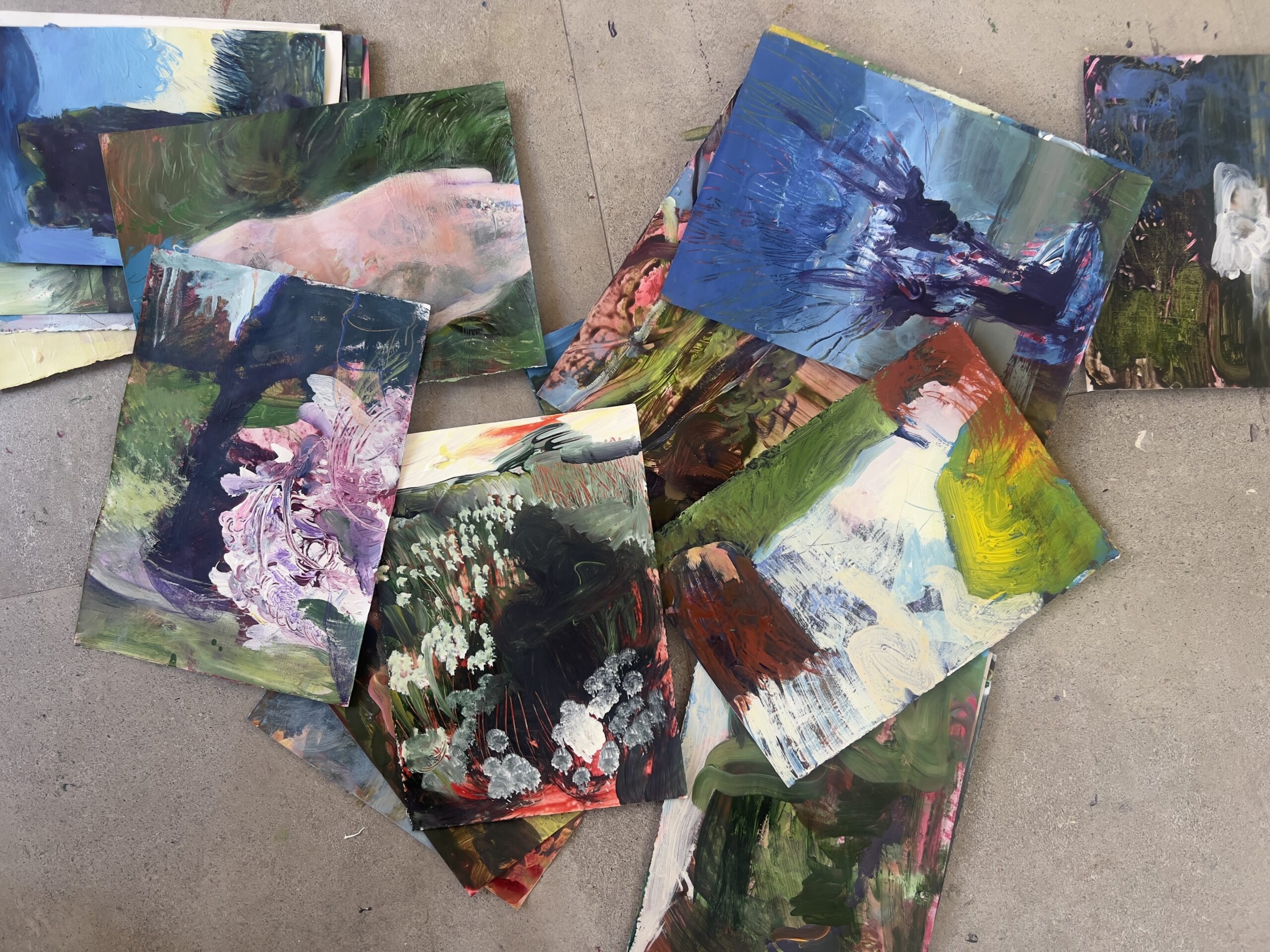
Josephine: Have you ever had a period of stagnation in creativity? If so, what helped you overcome it?
Carlotta: I think periods of uncertainty are a constant part of being an artist. There are always moments when you are not entirely sure what you are doing or where the work is leading. What helps me is simply continuing to work despite that uncertainty. Looking back, I often realise that what felt like a creative block was actually part of the process. Making art can be difficult and frustrating, but I have learned that uncertainty is not necessarily a problem. It is often where new ideas begin to emerge.
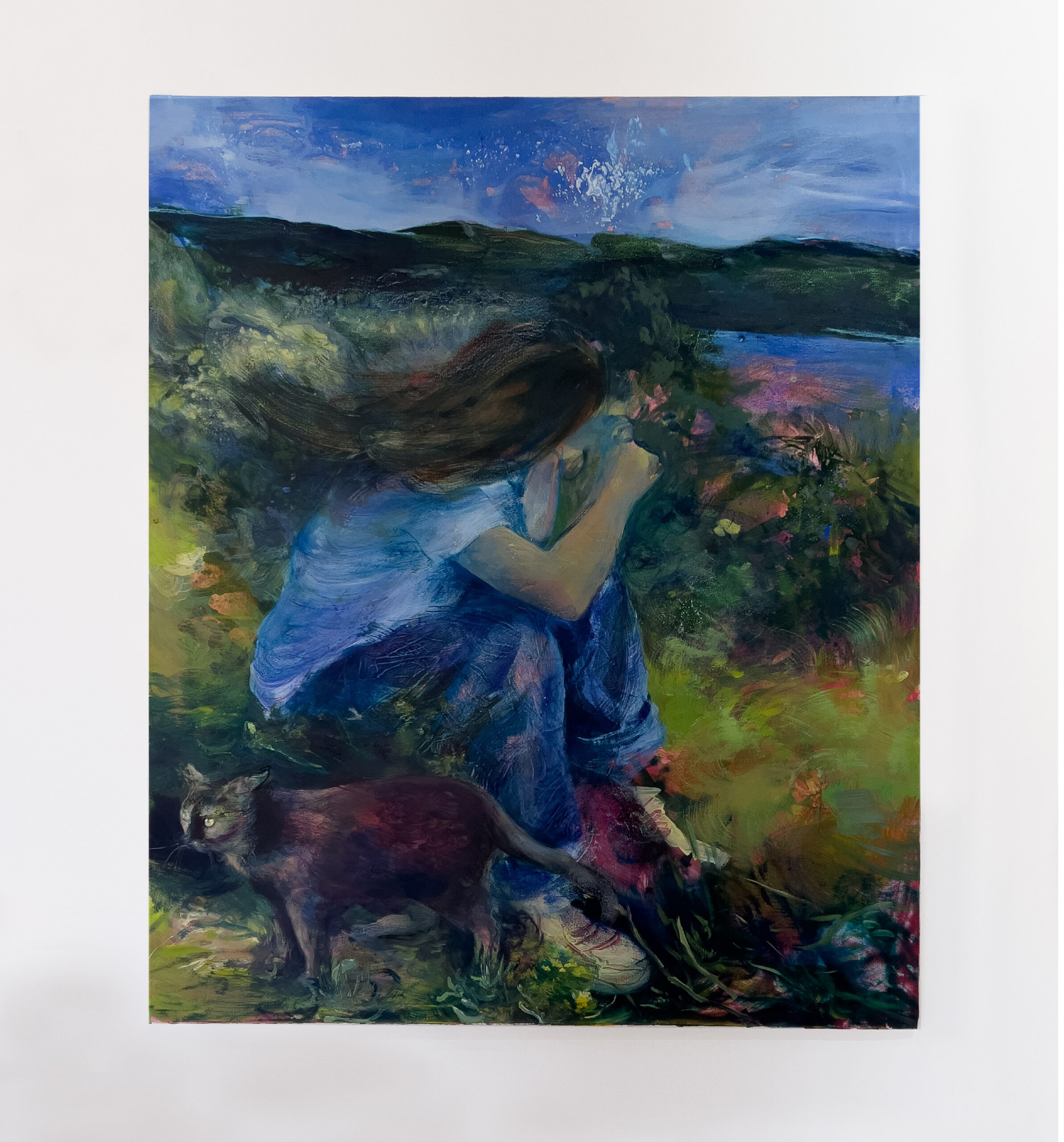
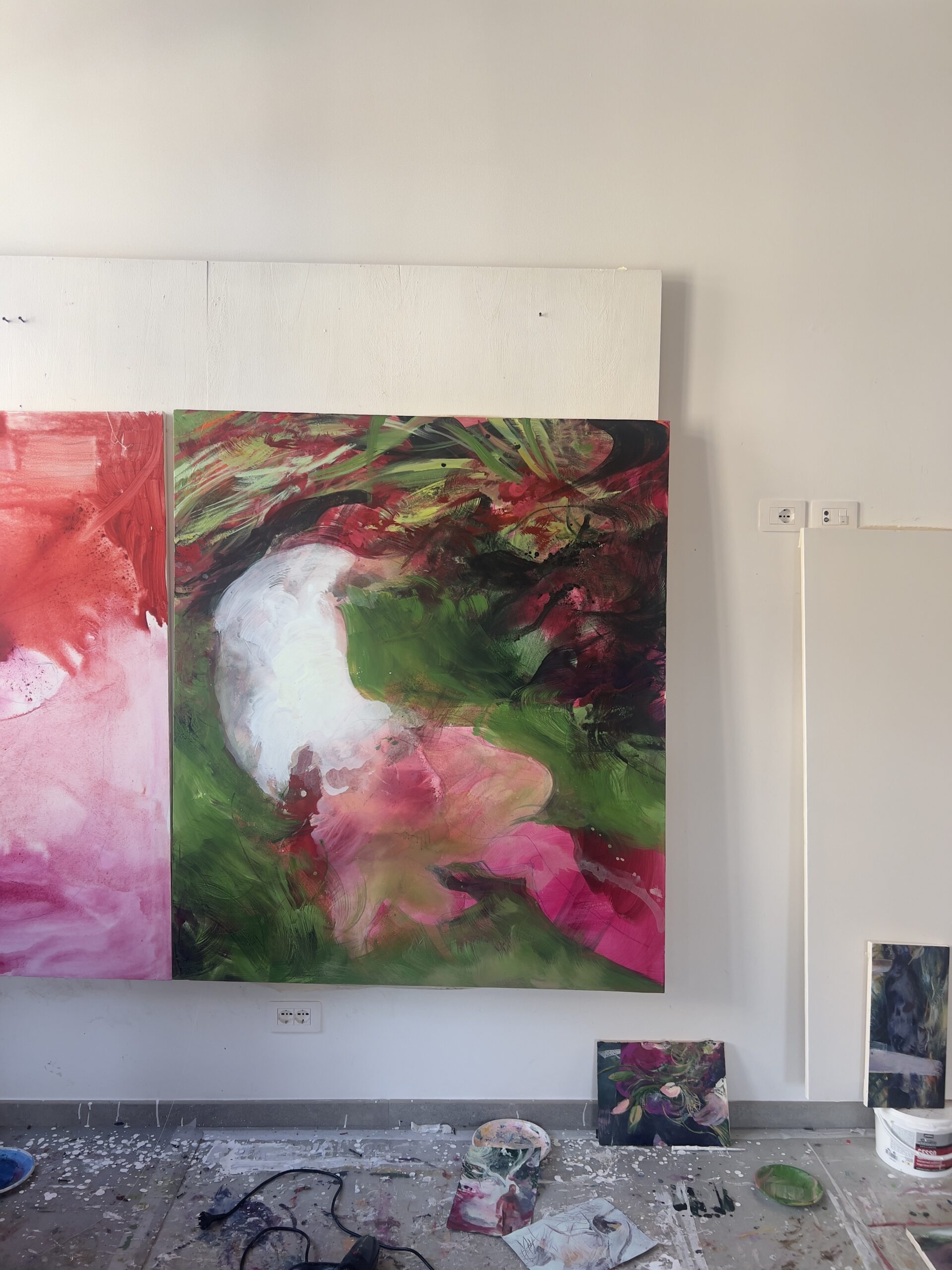
Carlotta Mazzariol
Acrylic, oil, and oil pastel on canvas,
149 x 124.5 cm | 58.6 x 49 in |
Josephine: Are there any specific artists or mentors who have inspired you?
Carlotta: I do not have a single artist that I consciously take inspiration from, but there are many artists whose work I admire and return to regularly, such as Adrian Ghenie, Sasha Gordon, Andrew Cranston, David Hockney, and Anthony Cudahy. I am also influenced by the artists around me, particularly those I have met through the Academy of Fine Arts in Venice. Working alongside other artists creates a constant exchange of ideas and perspectives that can be both inspiring and helpful.
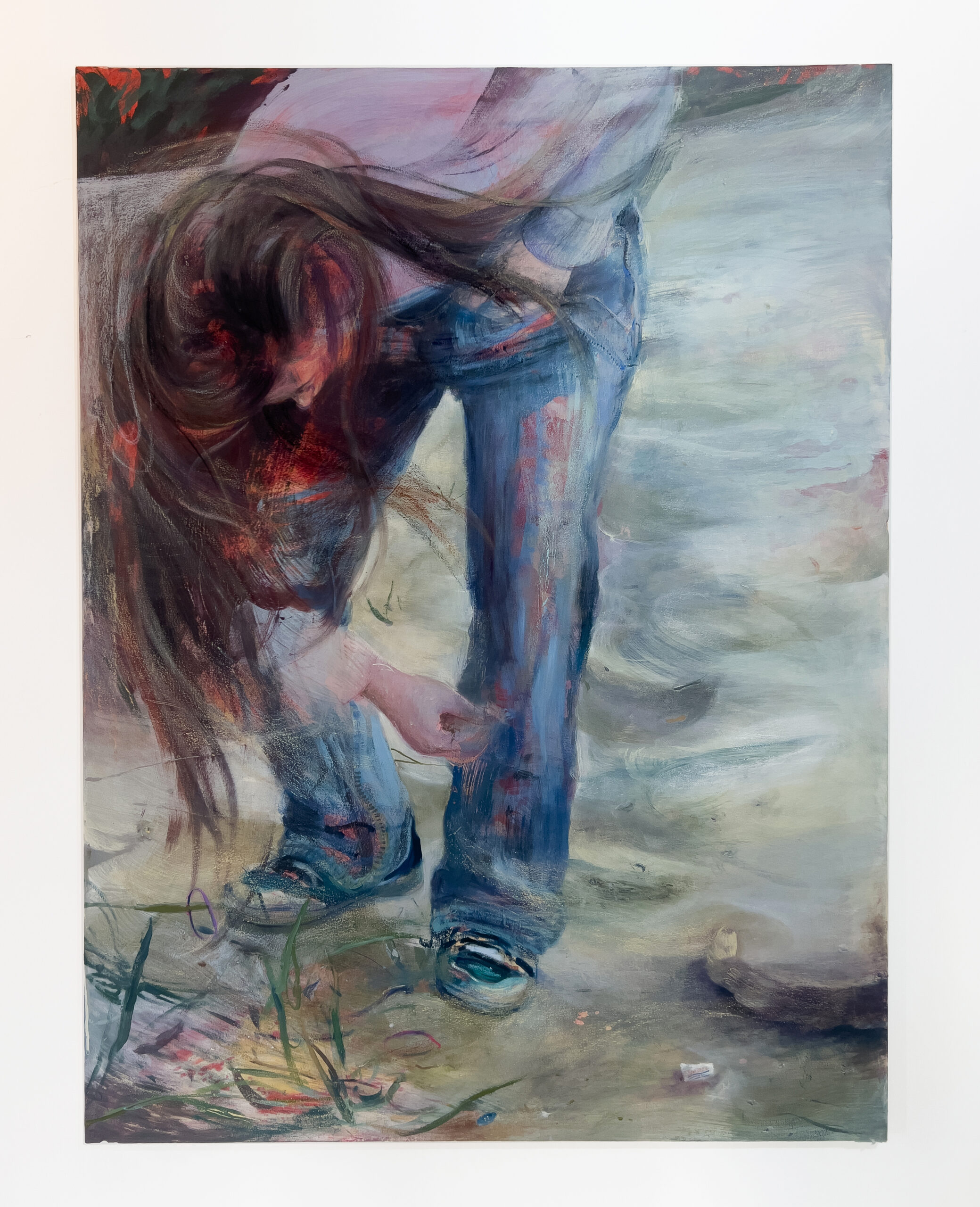
Carlotta Mazzariol
Acrylic, oil, and oil pastel on canvas, 149 x 112 cm | 58.6 x 44 in
Josephine: What were you thinking about or exploring at the time you made Once Done? What inspired it, and how did it come to be?
Carlotta: Once Done began as a moment of immediate expressive freedom. Working on paper allows me to respond quickly to an idea and paint in a more instinctive way. Rather than starting from a specific narrative, I was interested in creating an atmosphere of tension that could move through both the figures and the surrounding space. Through gestural and restless marks, I tried to build a sense of agitation that affects the entire image. The relationship between the two panels became important in this process, allowing the same emotional condition to echo across the diptych.
Josephine: What made you submit this piece to Jackson’s Art Prize?
Carlotta: I do not usually enter competitions outside Italy, but Jackson’s Art Prize felt particularly accessible and well organised. I decided to apply because it seemed like a good opportunity to do something different and to share my work with a wider audience.
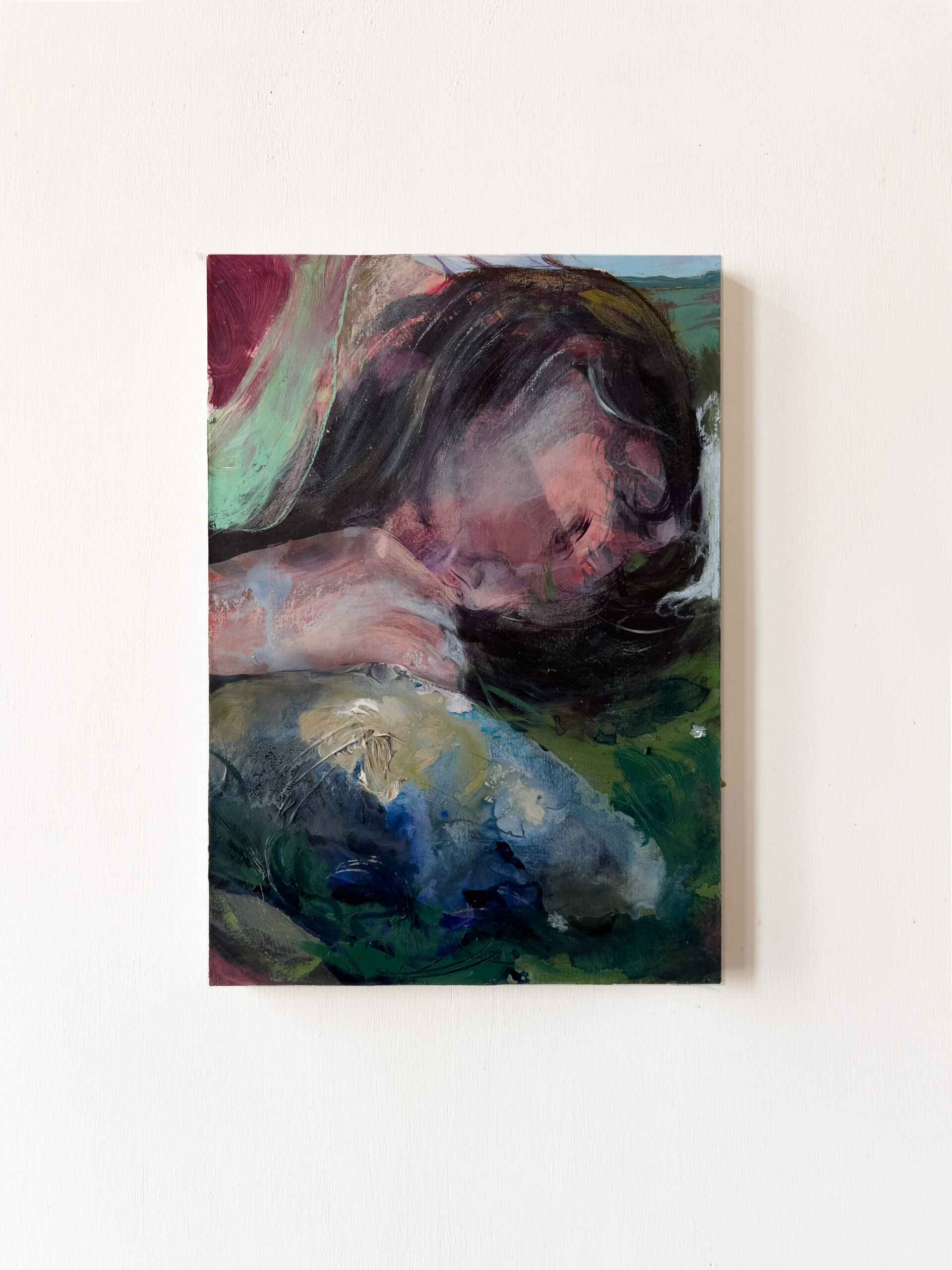
Carlotta Mazzariol
Acrylic, oil, and oil pastel on stretched paper, 49.5 x 35.5 cm | 19.4 x 13.9 in
Josephine: How do you feel your work has evolved over the course of your art education, both technically and conceptually?
Carlotta: Over the course of my studies, I think I have become more confident both technically and conceptually. Technically, I have developed a stronger understanding of colour, composition, and the relationships between different elements within a painting. I also feel more comfortable working on a larger scale and tackling more complex images. Over time, I have become increasingly interested in how an image functions and how different elements interact within it. Rather than communicating a fixed narrative, I prefer to create scenes that remain open to interpretation. Small details, unexpected elements, and subtle relationships between figures or objects have become increasingly important to me, as they can create tension, curiosity, and ambiguity within the work.
Josephine: Your work conveys such a strong sense of energy and movement – does that physicality extend into your painting process? Are there traces of your own movement embedded in the finished work?
Carlotta: Yes, I think part of the energy and movement in my work comes directly from the way I paint. I tend to work quite quickly and try not to over-control every stage of the process. Many decisions are made instinctively, and this contributes to a sense of movement that exists both in the brushwork and in the space being depicted. I like to leave certain traces of the process visible, as they contribute to the overall energy of the image. However, I do not think about gesture in an expressive or performative way; it is simply a natural consequence of how I work, and it ultimately becomes inseparable from what is being represented.
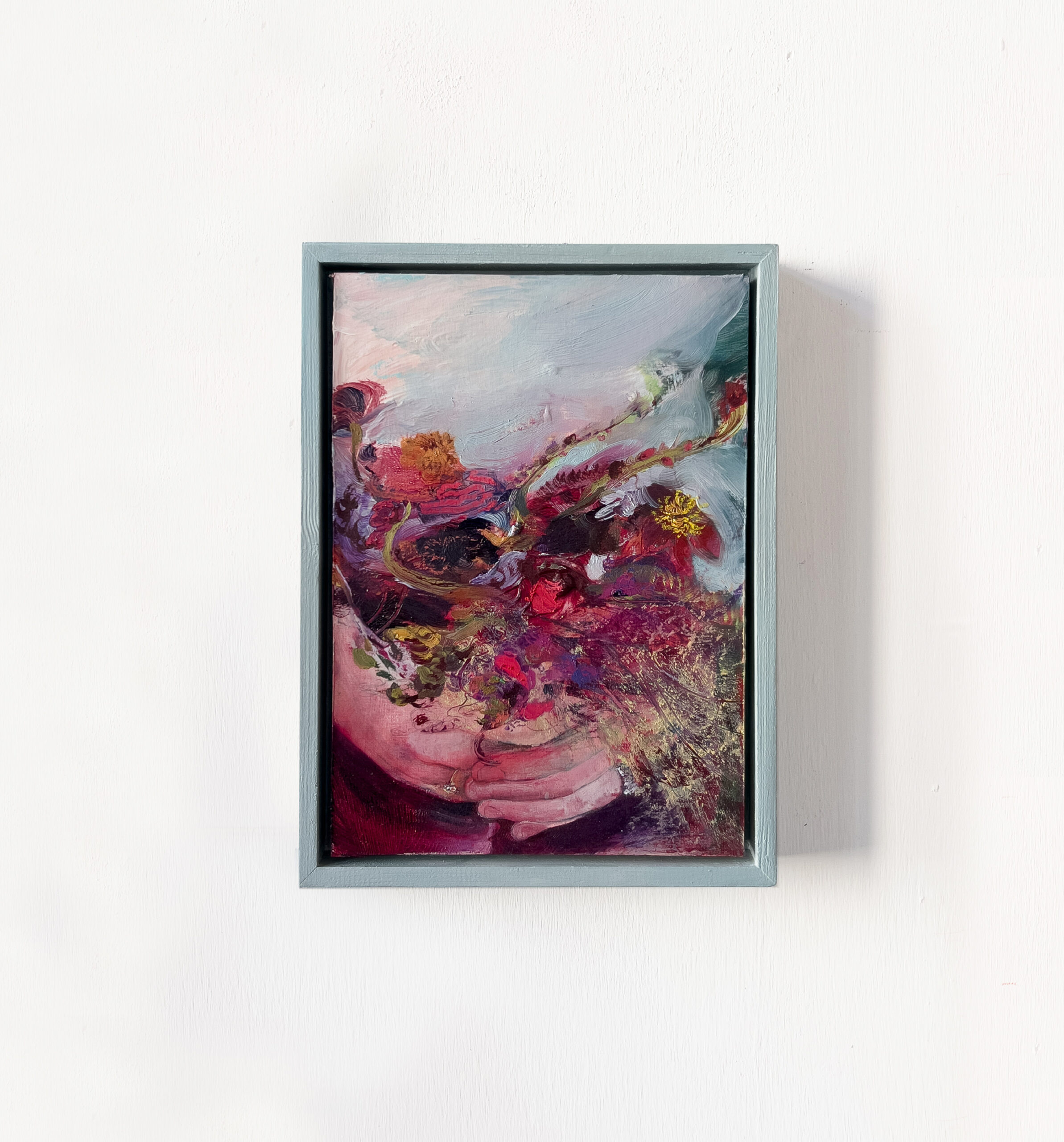
Carlotta Mazzariol
Acrylic, oil, and oil pastel on paper mounted on board 26.6 x 19 cm | 10.4 x 7.4 in
Josephine: Are there any new techniques or ideas you’re excited to explore using the materials from your prize?
Carlotta: I do not have any specific new techniques that I am planning to explore, but I already work with a variety of materials, including acrylics, oils, and oil pastels. Because of that, the prize materials will certainly be very useful and will easily find their place within my practice.
Josephine: How did it feel to move through the stages of the competition and win the Student Award?
Carlotta: It was very exciting and completely unexpected. When you apply for a competition, you never really expect to win, especially when it is an international prize. Receiving the Student Award was a wonderful surprise, and I was genuinely delighted and grateful to be recognised in this way.
Josephine: What’s coming up next for you?
Carlotta: I have several exhibitions and art fairs coming up throughout the year, so there is plenty of work ahead. At the moment I am focused on developing new paintings and spending as much time as possible in the studio. I am looking forward to seeing where the next body of work will lead.
Further Reading
Jackson’s Art Prize 2026 First Prize Winner Announced
Meet Eleanor Johnson, Winner of Jackson’s Art Prize 2025
How We Collaborate With Artists
Expert Advice on Making Your Way as an Artist
Shop Acrylic Painting on jacksonsart.com