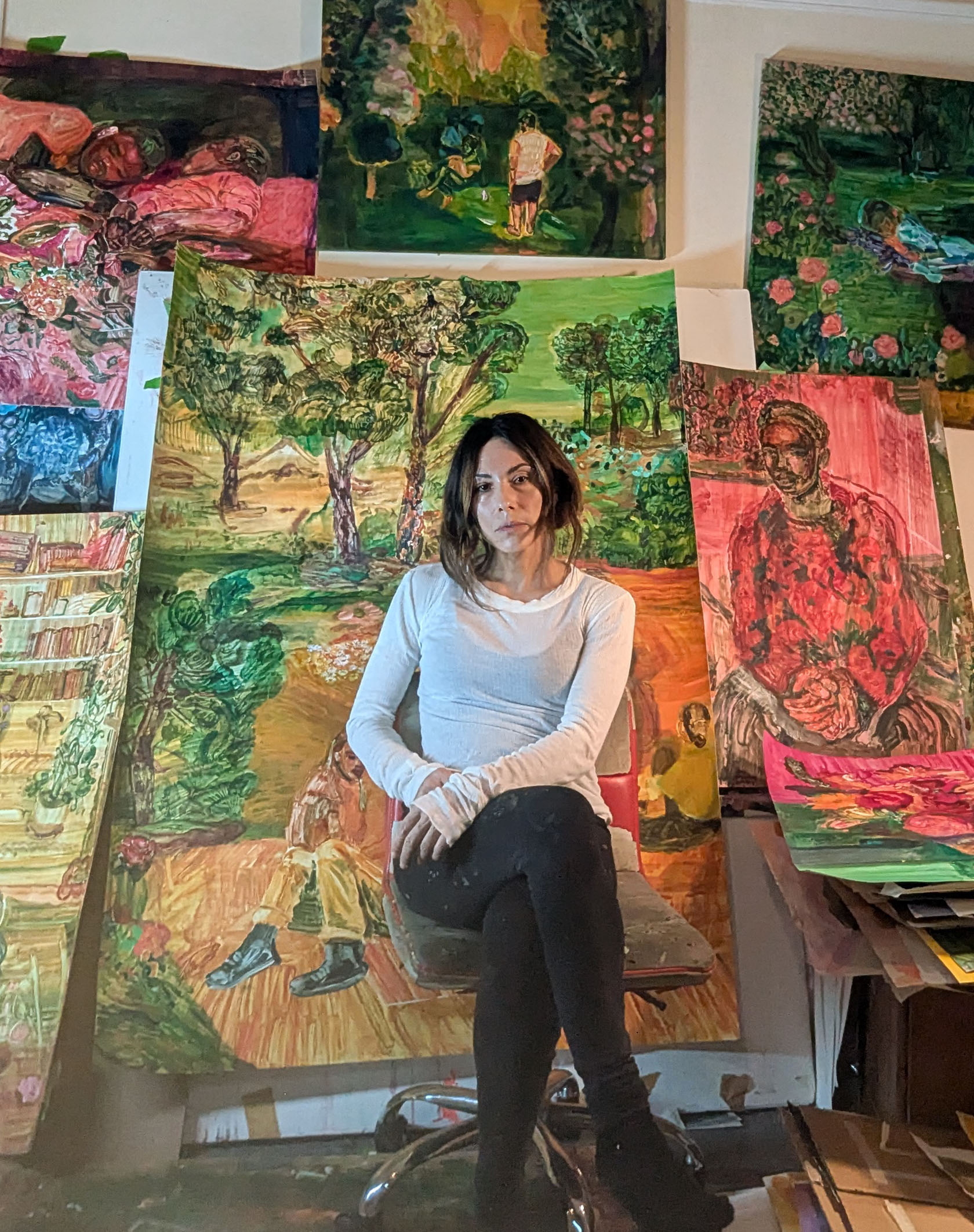
Sunkyung Baek won the People’s Choice Award in Jackson’s Art Prize this year with her work Lights on a Wet Road. In this interview, she discusses leading with atmosphere over accuracy, the book that inspired her flooding series, and the anthropomorphistic lens through which she portrays emotional events.
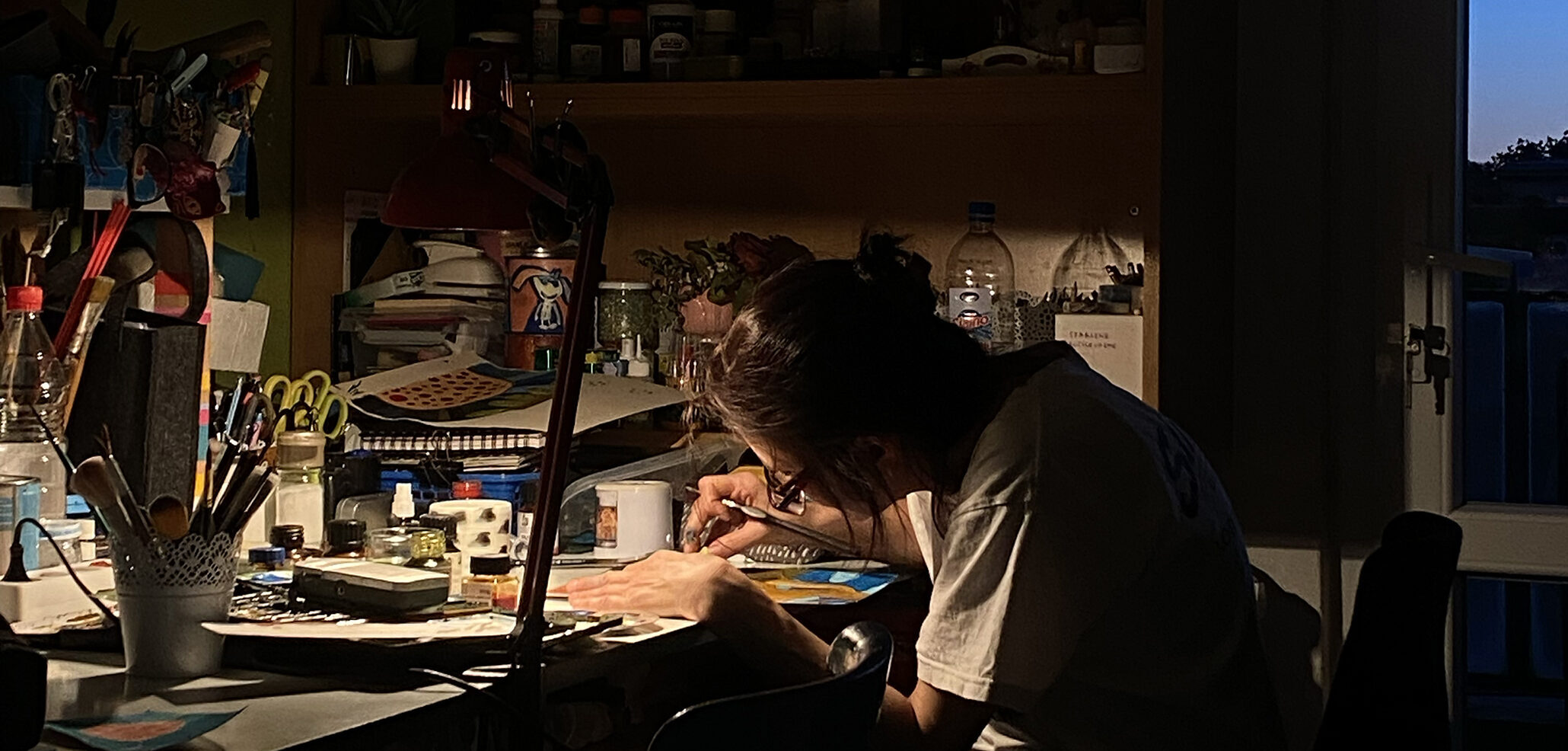
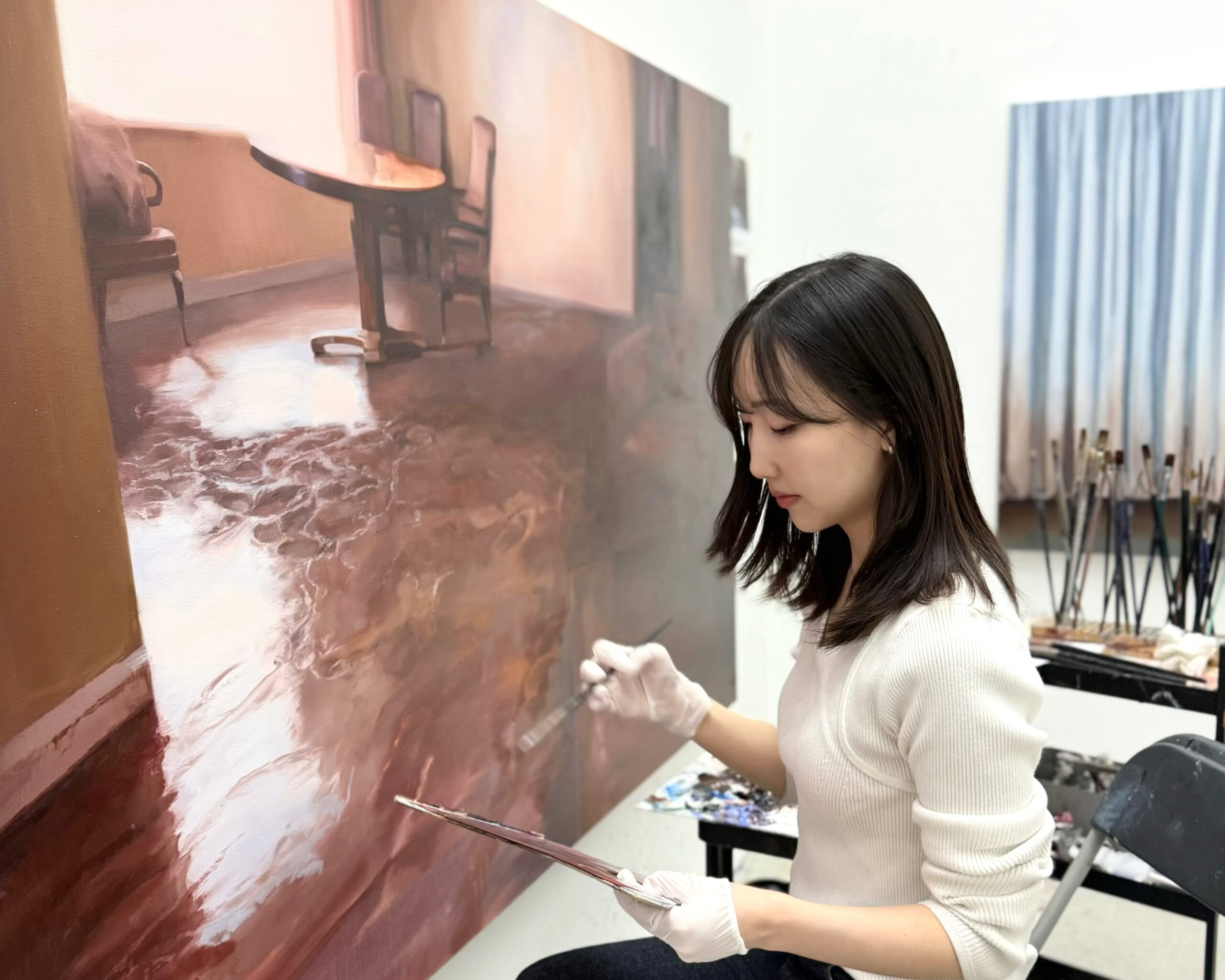
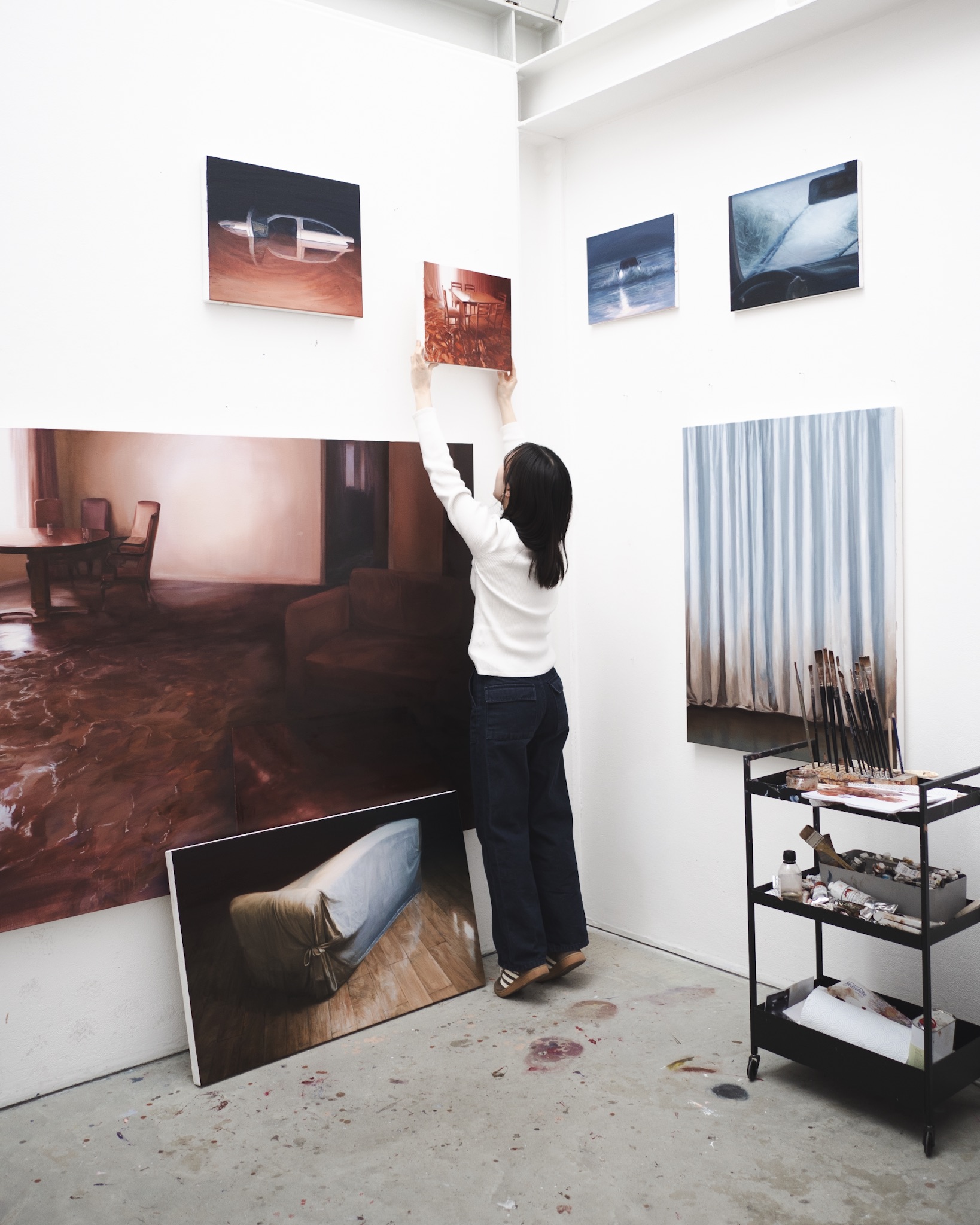
Above image: Sunkyung in her studio
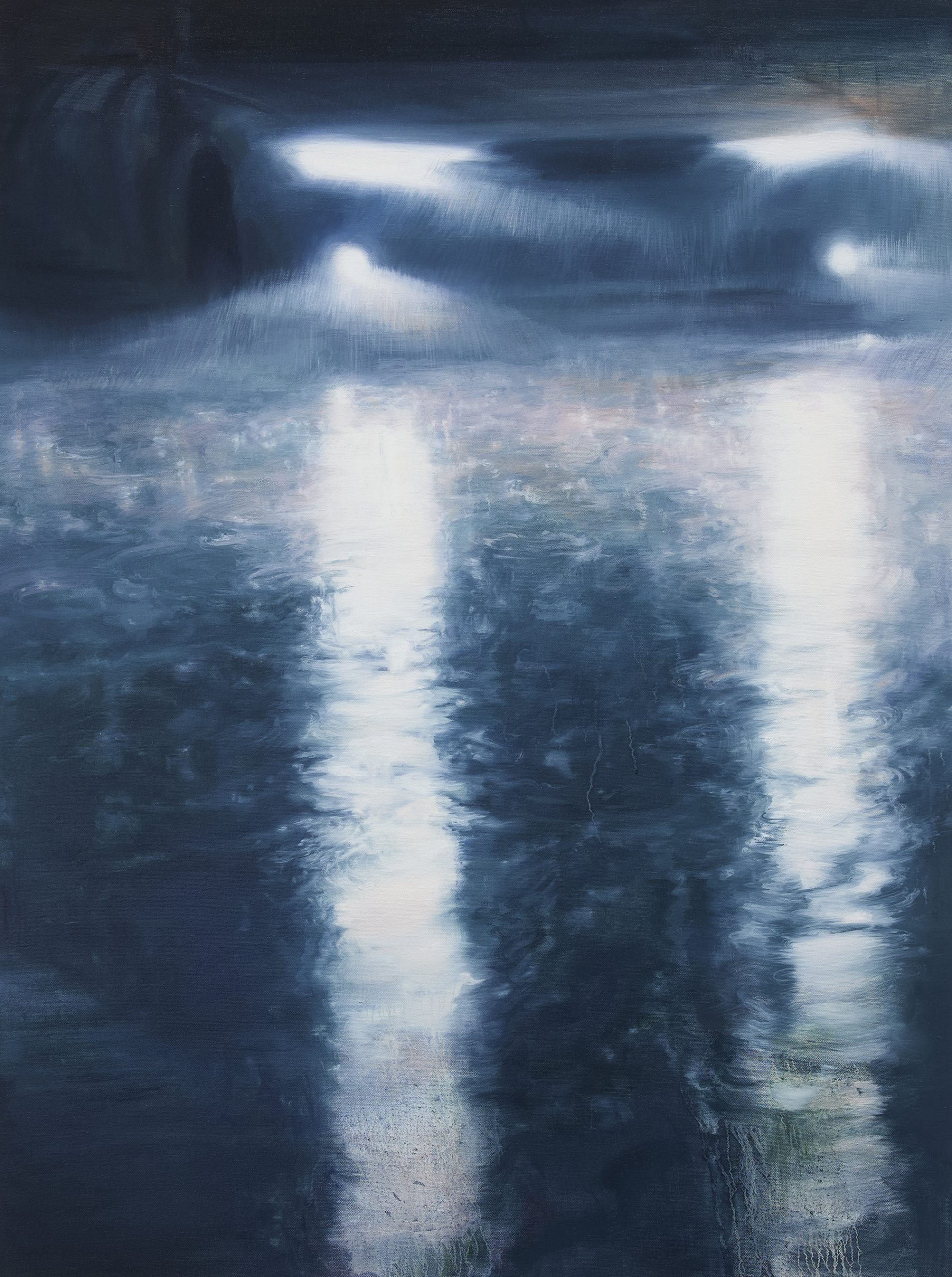
Sunkyung Baek
Oil on canvas, 100 x 75 cm | 39.3 x 29.5
Josephine: Could you share the story of how you became an artist and tell us more about your artistic background
Sunkyung: I’ve loved drawing for as long as I can remember. As a child, I spent much of my time sketching, and with encouragement from my parents, I began taking art classes more seriously. This eventually led me to attend an arts-focused high school, where I started to see art not only as something I enjoyed but as a possible path for my future.
What fascinated me most was the process of painting itself. I love every stage, from the initial sketch and colour mixing to building up layers of paint and carefully refining details. Watching an image gradually emerge through time and patience is deeply rewarding. Early on, I realised that I wanted to spend my life painting and continue experiencing that sense of engagement and discovery.
For me, the satisfaction of completing a painting is unlike anything else. Each work involves countless decisions, adjustments, and moments of uncertainty, but seeing everything come together in the end makes the process worthwhile. I completed my BA in Painting in South Korea and am currently completing my MA in Painting at the Royal College of Art in London. Alongside my studies, I have been actively participating in group exhibitions.
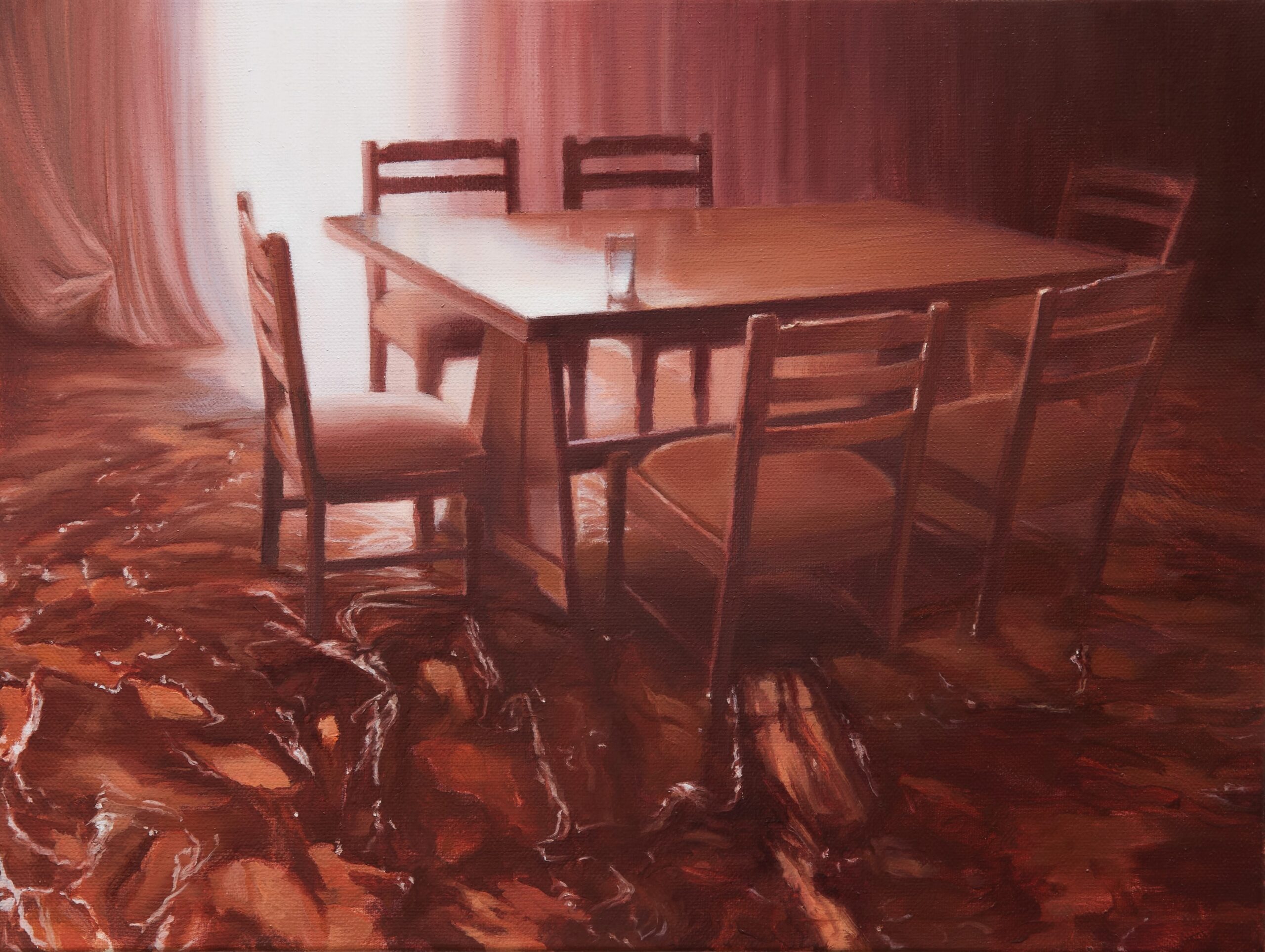
Sunkyung Baek
Oil on canvas, 30 x 40 cm | 11.8 x 15.7 in
Josephine: What does a typical working day in the studio look like for you? Do you have any important routines or rituals?
Sunkyung: I usually arrive at the studio early in the morning and spend almost the entire day there, often returning home late at night. One thing that is important to me is consistency. Rather than rushing to finish a painting as a deadline approaches, I prefer to work steadily and over long periods of time. I believe that patience and persistence are essential parts of painting.
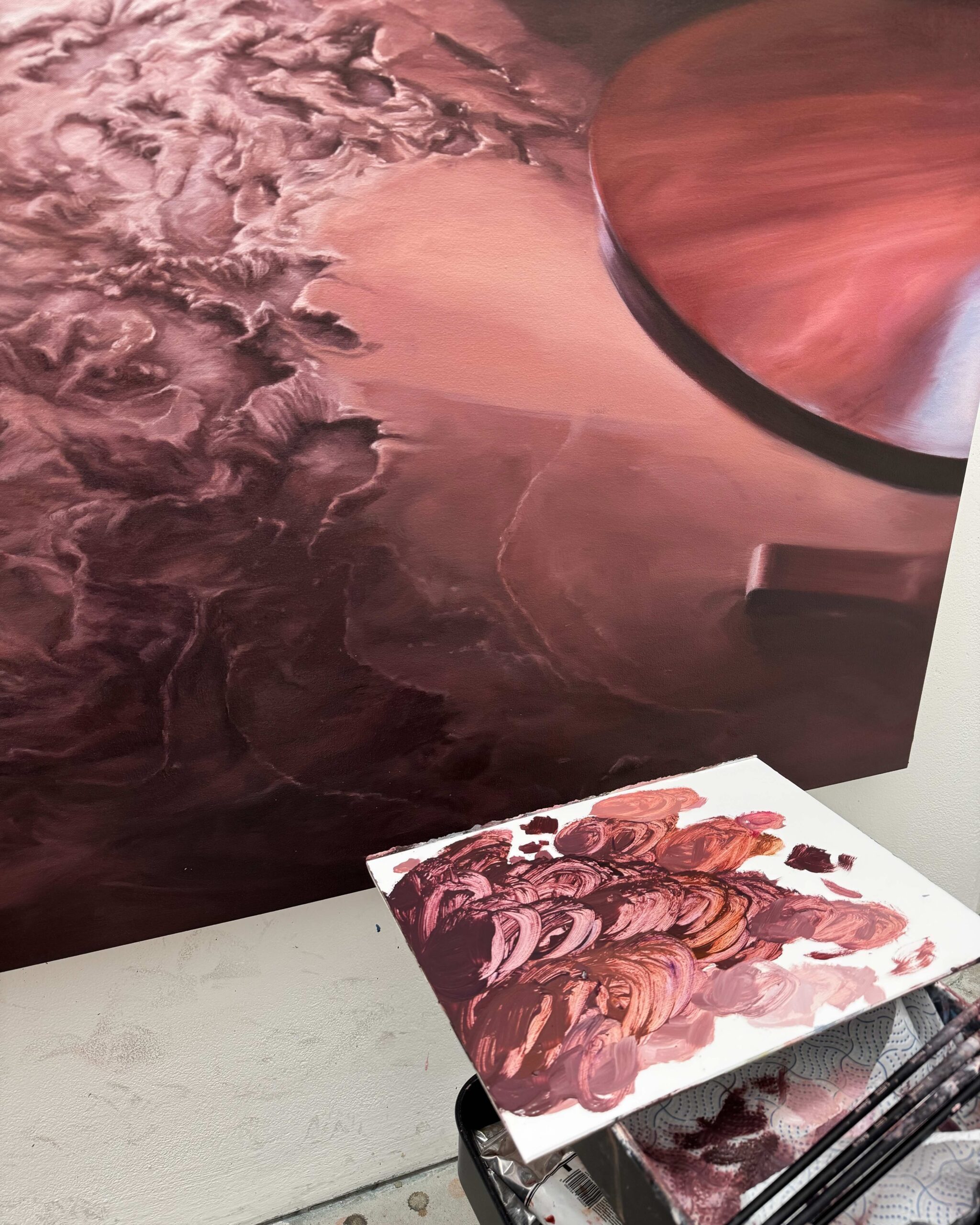
I usually begin my day with a coffee to help me focus. My work requires long periods of observation and concentration, so I like to start the day feeling alert. Once I arrive at the studio, I prepare my materials and get straight to work. Before beginning a new painting, I often spend time imagining a scene. It may start with a simple image or phrase, such as light entering a flooded room or a damp curtain moving slightly in the breeze. I then gather photographic references and develop the composition from there.
Once I begin painting, I work gradually, building up layers over time. I usually start quite loosely and become increasingly focused on detail, light, and texture as the painting develops. In many ways, my most important routine is simply showing up every day and continuing the work.
Josephine: Which materials or tools could you not live without?
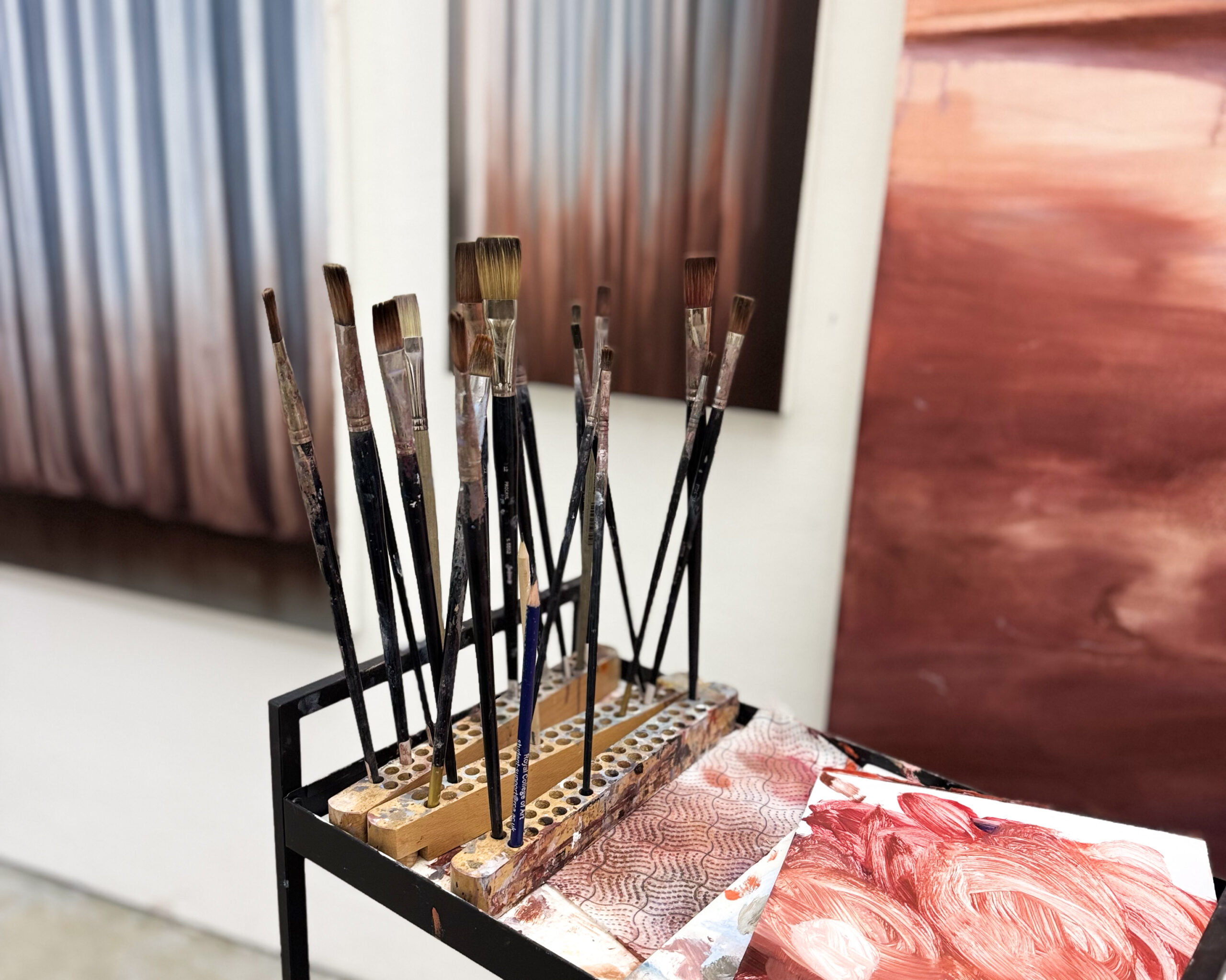
Sunkyung: One tool I couldn’t live without is my Jackson’s Procryl Long Flat Brush. As you can probably tell from my paintings, I tend to work towards smooth, carefully controlled surfaces rather than highly visible brushstrokes. Before moving to London, I was used to working with brushes from Korea, but since discovering this brush, I’ve become completely attached to it. It is perfect for creating the smooth surfaces I’m aiming for, holds its shape remarkably well, and remains reliable even after long periods of use.
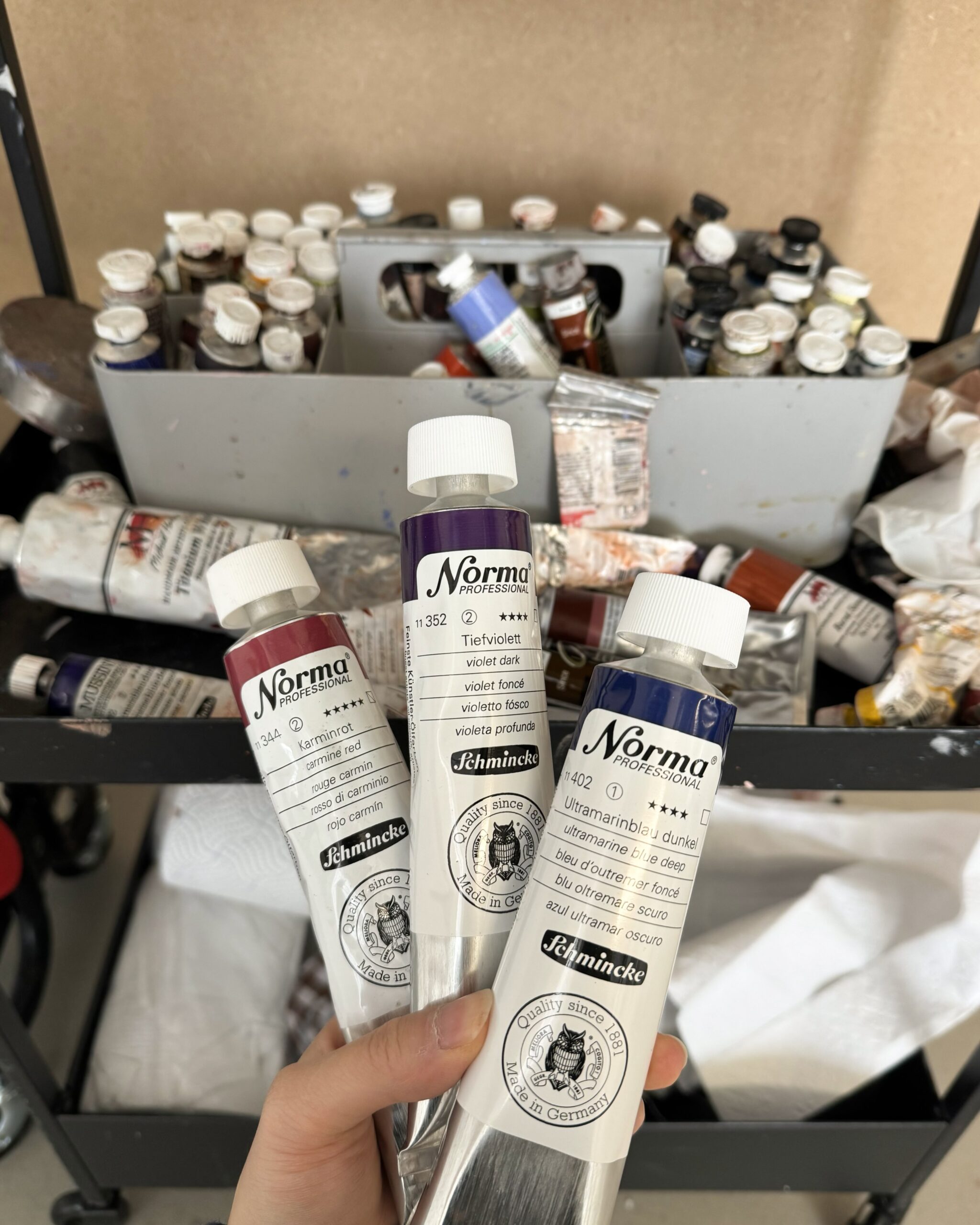
When it comes to paint, I particularly love Schmincke Norma Professional Artists’ Oil Paints and Michael Harding Oil Paints. Both have beautiful colour quality and a texture that feels just right for the way I work. They make it easier to build subtle layers and achieve the atmospheric effects I’m looking for.
There are also a few colours that I consider essential to my practice. I frequently use red-brown and grey-blue-violet tones throughout my paintings, and I have favourite versions from specific brands. In particular, I love Transparent Red Ochre by Lefranc & Bourgeois and Violet Grey by Old Holland. These colours appear repeatedly in my work and play an important role in creating the quiet, subdued atmosphere that I’m drawn to.
Josephine: Do you work from a reference? Tell us more about your process.
Sunkyung: Yes, references are an important part of my practice, but I rarely work from a single image. Instead, I collect and combine material from different sources, including my own photographs, Google searches, and news articles.
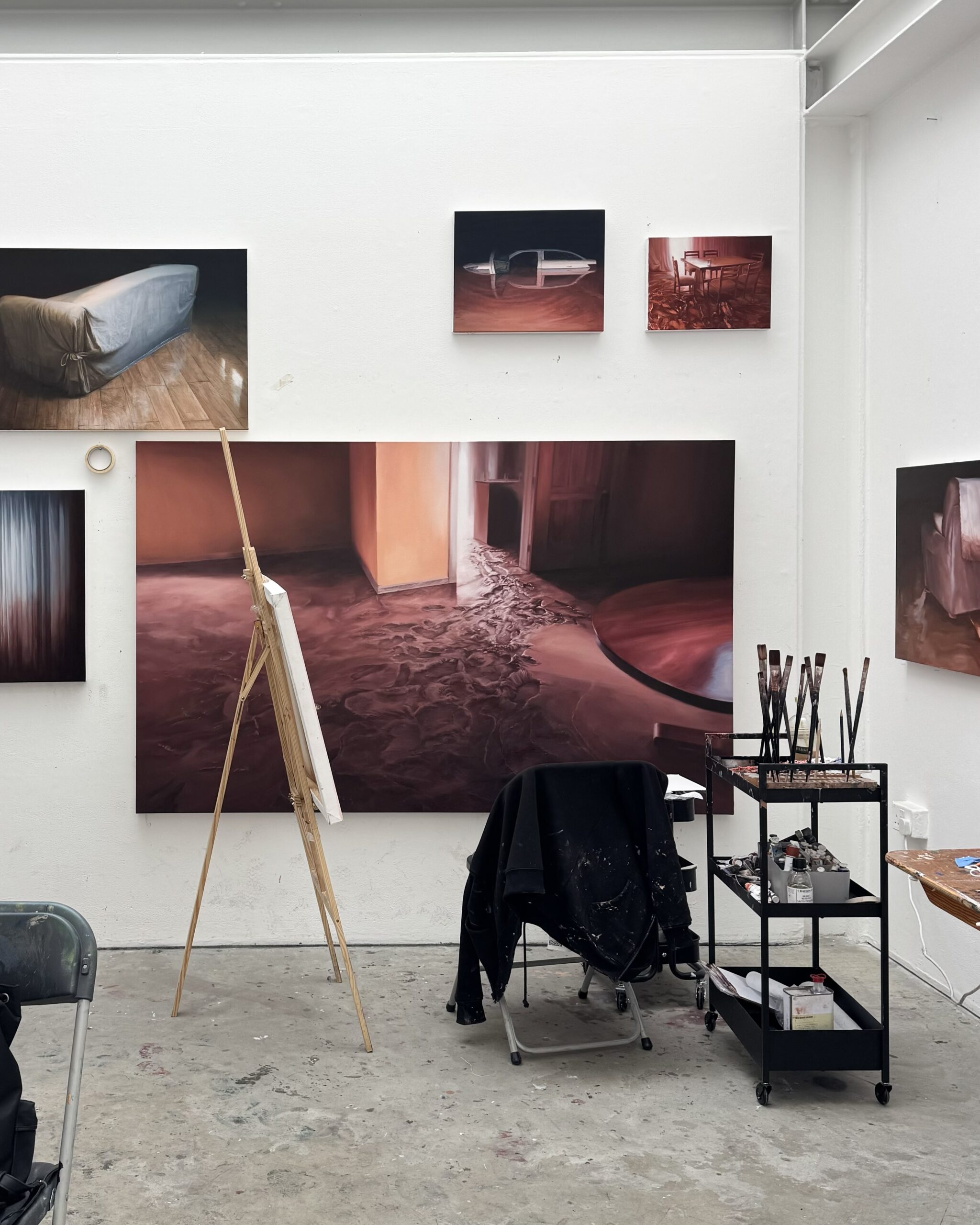
I am particularly interested in images of flooded interiors and the traces left behind by water. Rather than reproducing a photograph exactly, I use references as raw material. I often remove elements, alter spatial relationships, or combine details from multiple images to create a scene that feels both familiar and slightly unsettling.
Because my paintings explore psychological states rather than specific events, accuracy is less important to me than atmosphere. References help me build believable spaces, but the final image is always reconstructed through editing, imagination, and painting. In that sense, the paintings are not direct depictions of reality, but carefully constructed images that sit somewhere between observation and invention.
Josephine: Do you regularly draw or keep a sketchbook? If so, how does this inform your work?
Sunkyung: I do draw occasionally, but keeping a sketchbook hasn’t been a major part of my practice. My paintings usually begin with an imagined scene or a short written description rather than a drawing. From there, I move on to researching images, gathering references, and editing them digitally before starting a painting.
Josephine: Have you ever had a period of stagnation in creativity? If so, what helped you overcome it?
Sunkyung: Yes, I think I experienced a period of creative stagnation before starting my MA. I was always confident in my technical skills and ability to observe, but I realised I had not spent enough time asking myself what I truly wanted to express through painting, or what kinds of images could communicate those ideas most effectively.
To move forward, I had to look more deeply at myself and reflect on the questions that occupied my thoughts. One of the most important turning points came when I encountered Zygmunt Bauman’s book Liquid Modernity. I had long been interested in understanding the sources of anxiety in contemporary life, and Bauman’s description of modern society through the metaphor of liquidity resonated strongly with me.
The book ultimately became one of the key inspirations behind my use of flooding as a recurring motif in my work. It helped me connect personal concerns with a broader social context and gave me a clearer direction for my practice.
Whenever I feel stuck, I still return to that book. I believe that painting is deeply connected to an artist’s ideas and way of seeing the world, and sometimes a book can provide exactly the insight needed to move forward.
Josephine: Are there any specific artists or mentors who have inspired you?
Sunkyung: I wouldn’t say that there is a single artist who has had a major influence on my work, but there are several artists whose practices I return to regularly.
One of them is Vija Celmins. I’m drawn to the way she approaches subjects that might initially appear dramatic, such as disaster imagery, with restraint and precision. Rather than focusing on the event itself, her work often evokes a lingering sense of stillness, distance, and contemplation. I’m especially interested in the way her images seem suspended in time, as though they preserve the traces of a particular moment. This resonates with my own practice, as I often explore different temporal states surrounding a flood, including the moments before, during, and after the event.
Josephine: What were you thinking about or exploring at the time you made Lights on a Wet Road? What inspired it, and how did it come to be?
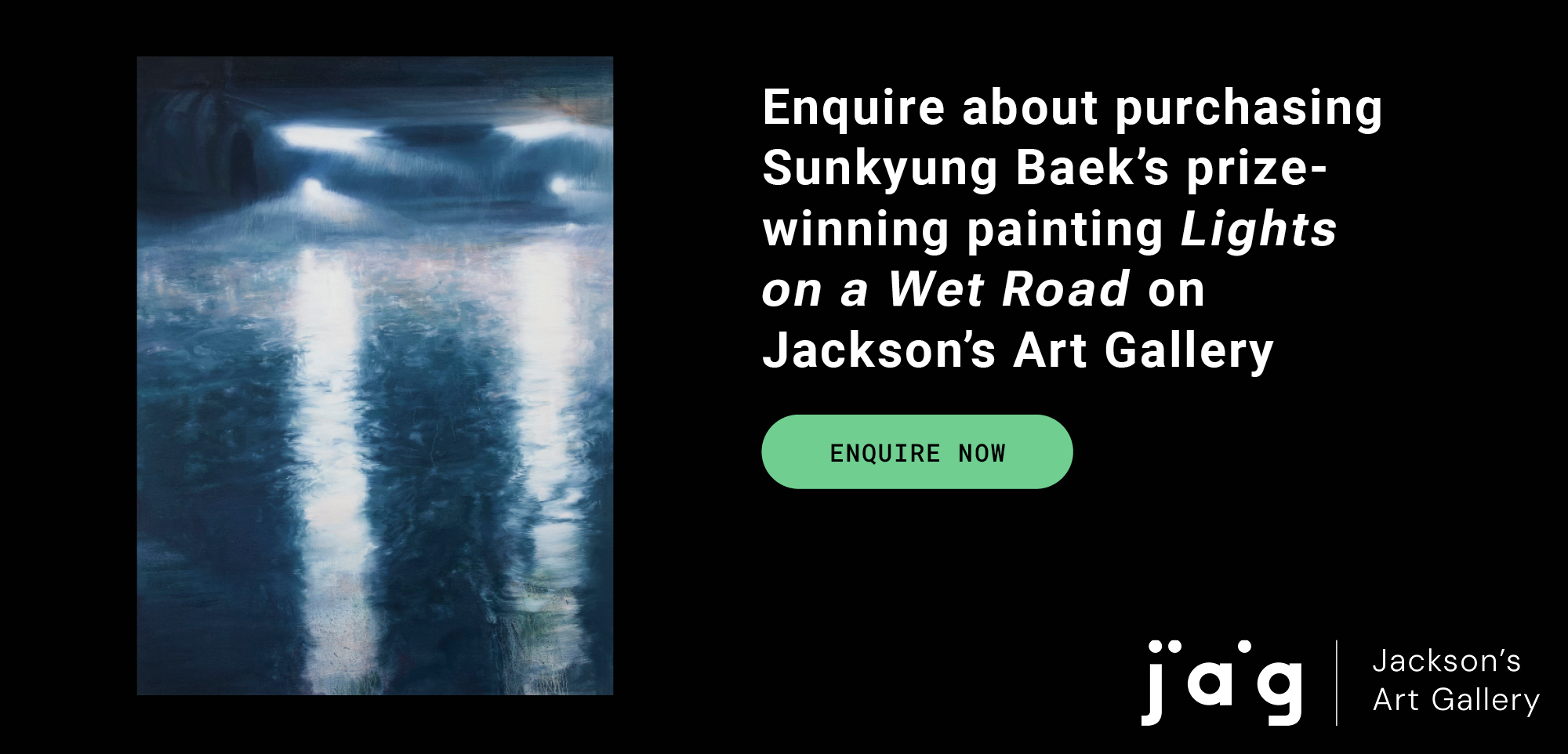
Sunkyung: When I made Lights on a Wet Road, I was interested in capturing the way headlights reflect across a wet road on a rainy night. What drew me in was the fleeting interaction between light, rain, and movement. The illuminated raindrops and damp, reflective surface create a scene that feels both familiar and subtly unstable.
At the time, I was becoming increasingly interested in how ordinary environments can reveal a more fluid and uncertain character under certain conditions. In heavy rain, the road seems to lose its solidity, taking on a more fluid and unpredictable character. I wanted to capture that transformation.
I was particularly interested in moments that only become visible through light. In the darkness, car headlights briefly reveal details that would otherwise remain hidden, creating an image that exists for only a moment before disappearing again. I wanted to preserve that fleeting moment in paint.
Josephine: What made you submit this piece to Jackson’s Art Prize?
Sunkyung: At the time, I had been focusing mainly on smaller paintings, so Lights on a Wet Road was relatively large for me. As I was gradually increasing the scale of my work, it felt like an important step in my development, and I became particularly attached to it once it was finished.
I also felt that the painting successfully captured something I was interested in: the ripples created by falling rain and the shifting reflections of light on a wet surface. Those visual qualities became an important part of the atmosphere I was trying to create.
The work is also significant because it marks the beginning of my flooded-space series. It depicts a car moving through heavy rain, just before the point of flooding. Looking back, it contains many of the ideas that would later become central to my practice.
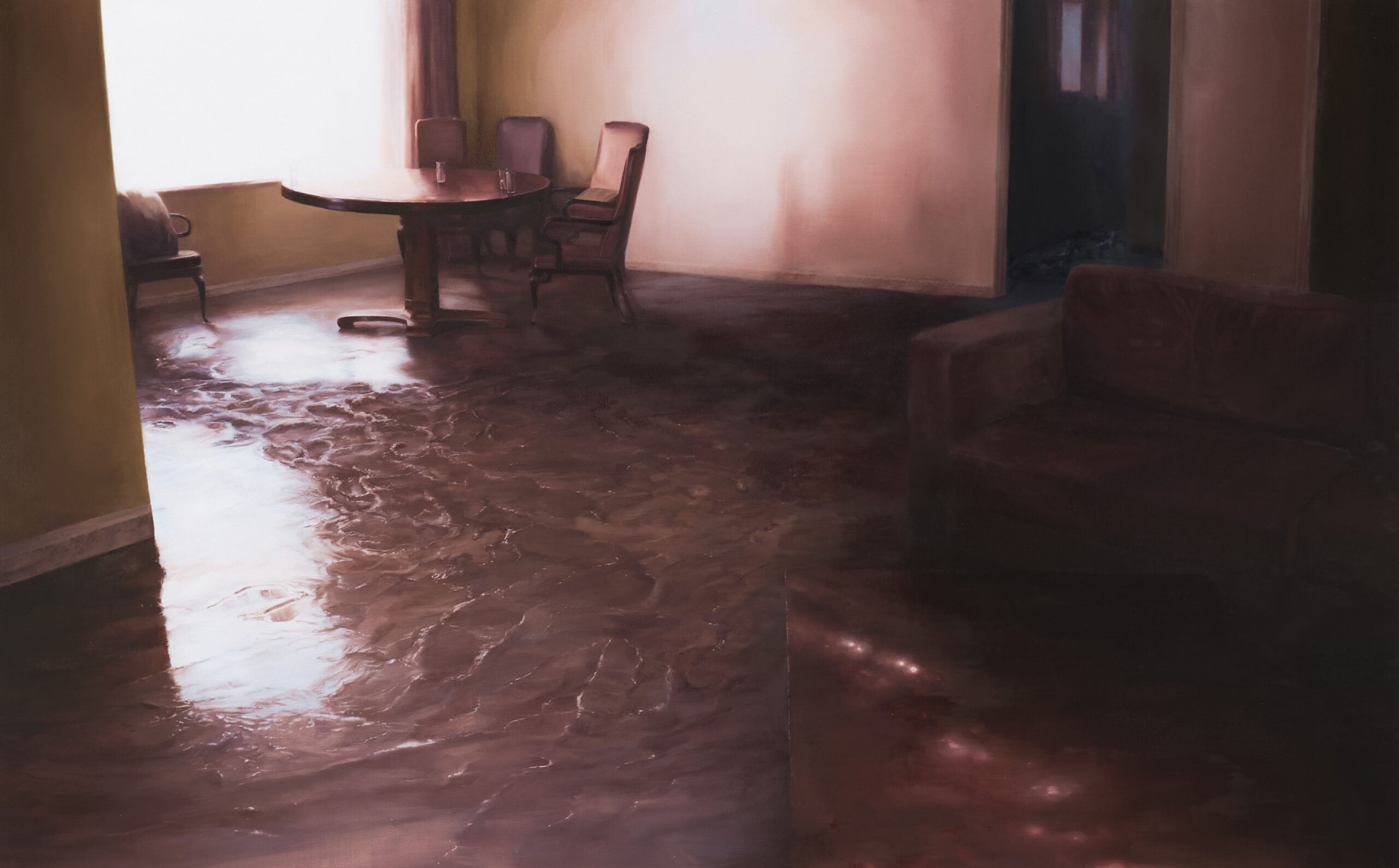
Sunkyung Baek
Oil on canvas, 125 x 200 cm | 49.2 x 78.7 in
Josephine: Your work often depicts objects and spaces shaped by humans, yet people themselves rarely appear – their presence is only ever suggested or implied. What draws you to this approach, and what role do you hope this plays in the viewer’s experience of the work?
Sunkyung: Yes, I generally prefer to suggest the presence of people through objects and traces rather than depicting them directly. I try to avoid explaining everything within a painting, because I want to leave space for the viewer to enter the image and form their own interpretations.
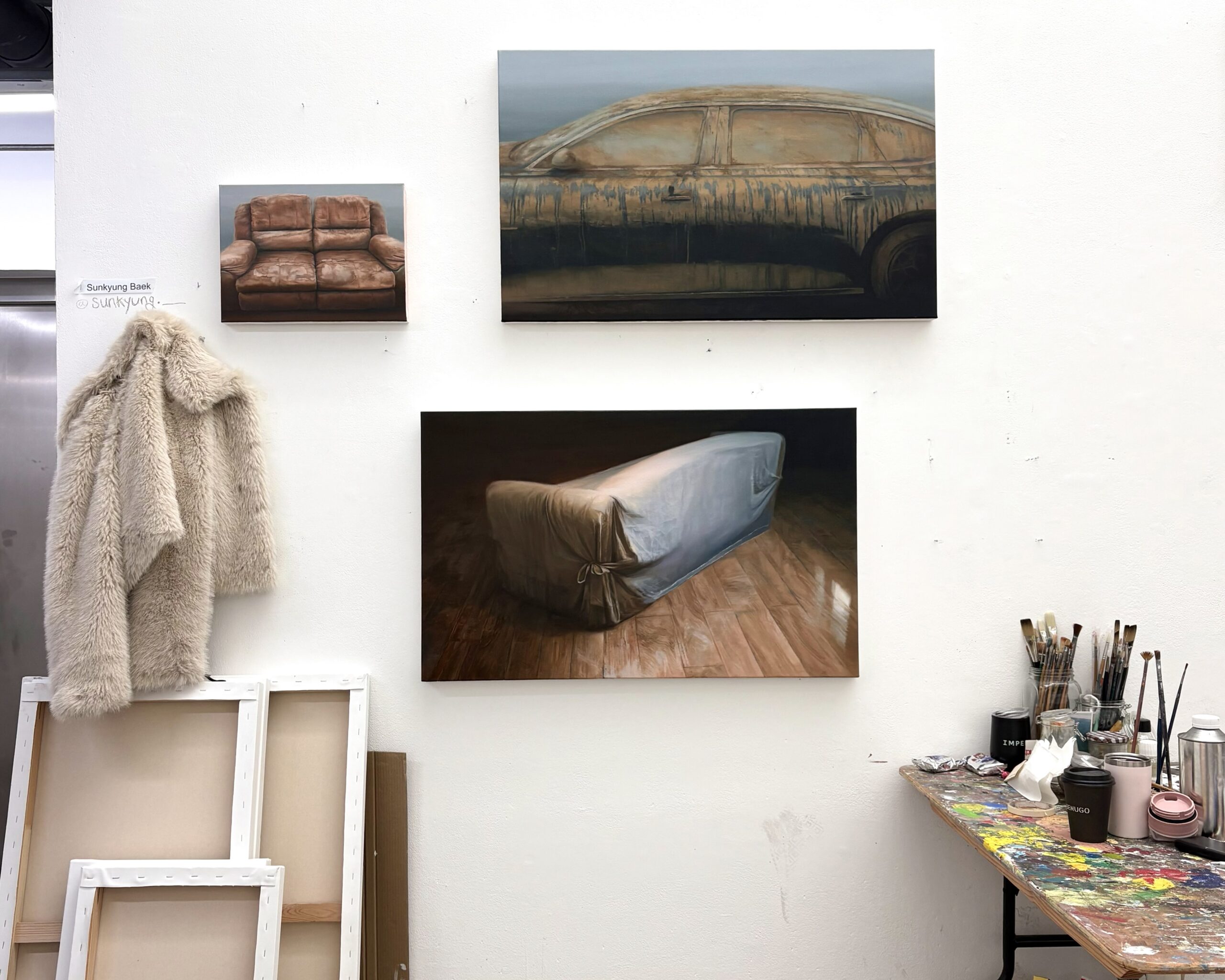
I’m interested in how ordinary objects can carry the emotional weight of an event. A flood-damaged sofa or a damaged car can sometimes seem to reflect the emotional aftermath of an event, appearing almost as weary and exhausted as a person. I also enjoy creating scenes that feel deliberately ambiguous. A flooded room might contain a table with a glass still sitting on it, prompting questions: Was someone here? Did they leave? Did they escape?
For me, that ambiguity is important. Rather than presenting a fixed narrative, I want the paintings to generate questions. Has the event already passed, or is it still unfolding? Is someone still present, or have they already gone?
I hope it encourages viewers to ask their own questions and imagine what might have happened within the space. By leaving certain things unresolved, I want to create room for people to bring their own experiences and interpretations into the work.
Josephine: Your palette is frequently centred on the cool blues of water and the earthy sepias/brown of land. What is the relationship between these colours and the themes you explore in your work?
Sunkyung: The cool blues and earthy browns that appear throughout my paintings are colours I have been drawn to for a long time. They are colours I return to instinctively and have become an important part of my visual language.
In my flood series, conveying a sense of dampness is particularly important. I’m interested in how moisture can affect the atmosphere of an entire space, subtly transforming both objects and environments. For me, cool blue tones are especially effective at conveying that feeling of wetness, humidity, and lingering moisture.
Earthy browns play a different role. They remind me of wet soil, mud, and the traces left behind when floodwater recedes. These colours help communicate the physical aftermath of flooding and the marks it leaves on a space.
What interests me most is the relationship between the two. Together, they create an atmosphere that feels cold, damp, and slightly unsettling. That combination helps me express many of the themes I explore in my work, including instability, vulnerability, and the lingering presence of an event that has already taken place.
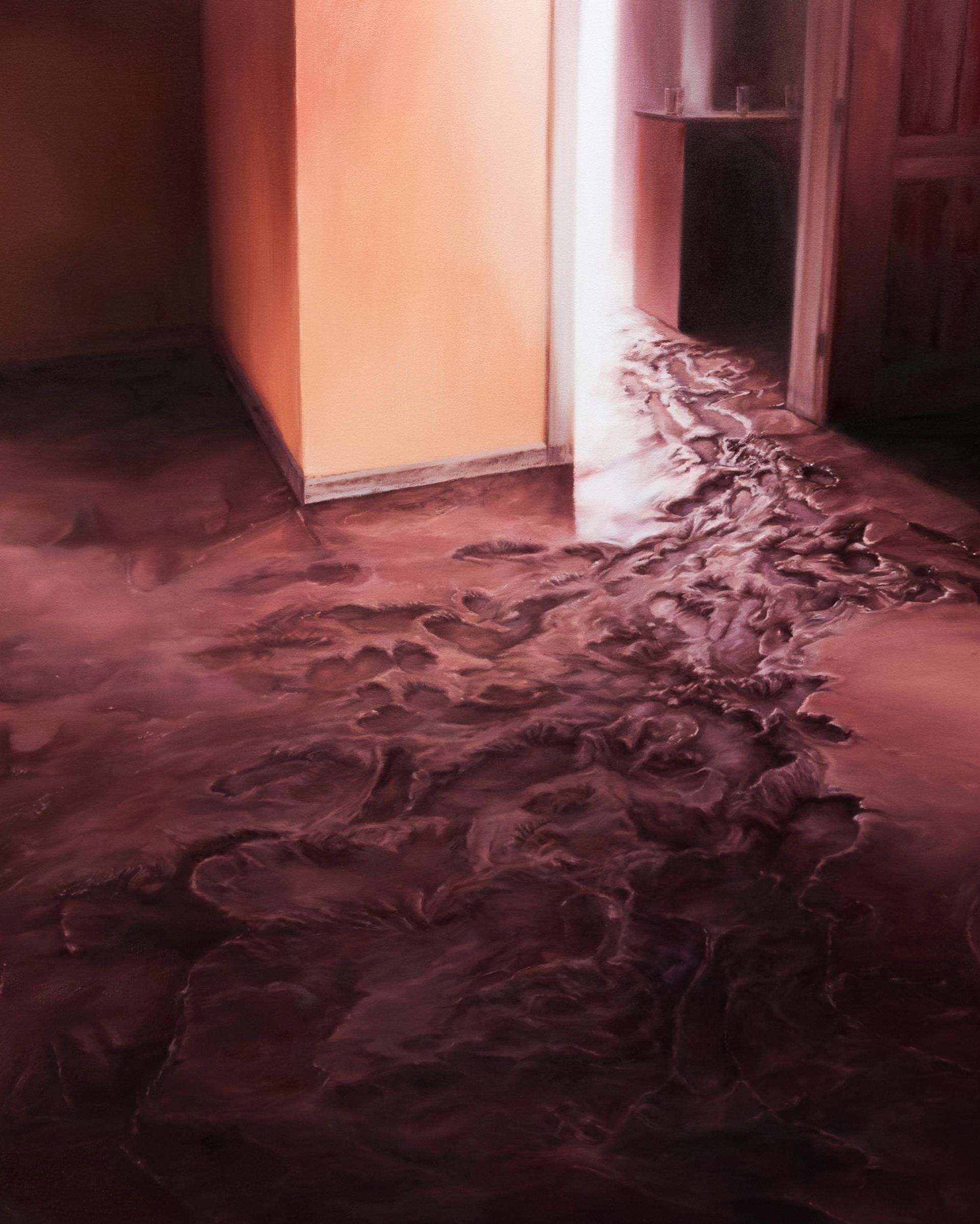
Sunkyung Baek
Oil on canvas, 125 x 200 cm | 49.2 x 78.7 in
Josephine: Are there any new techniques or ideas you’re excited to explore using the materials from your prize?
Sunkyung: One thing I’m particularly excited about is working on a larger scale. I’d like to continue increasing the size of my paintings and use the prize money to invest in larger stretched canvases. I’m interested in creating works that feel immersive, almost as if the viewer has stepped directly into a flooded space.
I appreciate the intimacy that smaller paintings can offer, but I also think scale plays an important role in how a viewer experiences a work. Large paintings can create a stronger sense of atmosphere and spatial presence, which is something I’m increasingly interested in exploring.
Large stretched canvases can be quite expensive, so having the support of the Jackson’s Art Prize gives me the freedom to work on a larger scale. I’m excited to see how that freedom might expand the possibilities within my practice.
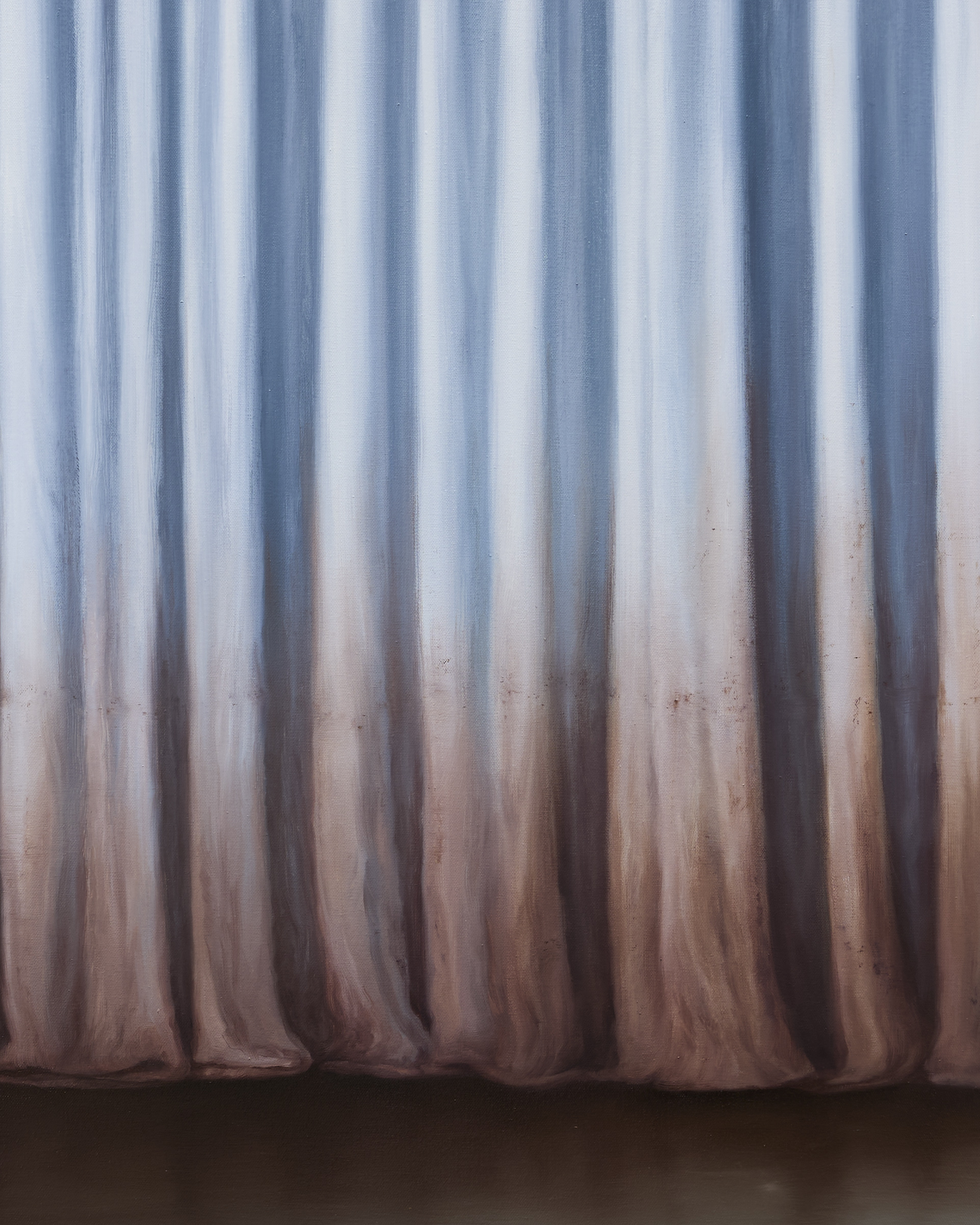
Sunkyung Baek
Oil on canvas, 100 x 75 cm | 39.3 x 29.5 in
Josephine: How did it feel to move through the stages of the competition and win the People’s Choice Award?
Sunkyung: The Jackson’s Art Prize was the first prize I applied for after moving to London. During my first months here, I was focused on settling into a new city, adapting to life at the Royal College of Art, and developing my practice, so competitions were not really on my radar.
When I finally applied, I felt that I had reached a point where I was ready to start sharing my work more widely. I submitted with a fairly relaxed attitude and without any major expectations. Moving from the longlist to the shortlist, and eventually receiving the People’s Choice Award, was completely unexpected.
Winning the award felt like an important turning point. It gave me confidence in the direction of my practice and reassurance that the ideas I have been exploring are resonating with others. As an artist, that kind of encouragement is incredibly valuable.
It was also especially meaningful because I have always been a regular Jackson’s customer. I buy most of my materials from them, so receiving the award and the prize money was a wonderful surprise. Being able to invest that support back into my practice and future work is something I’m very grateful for.
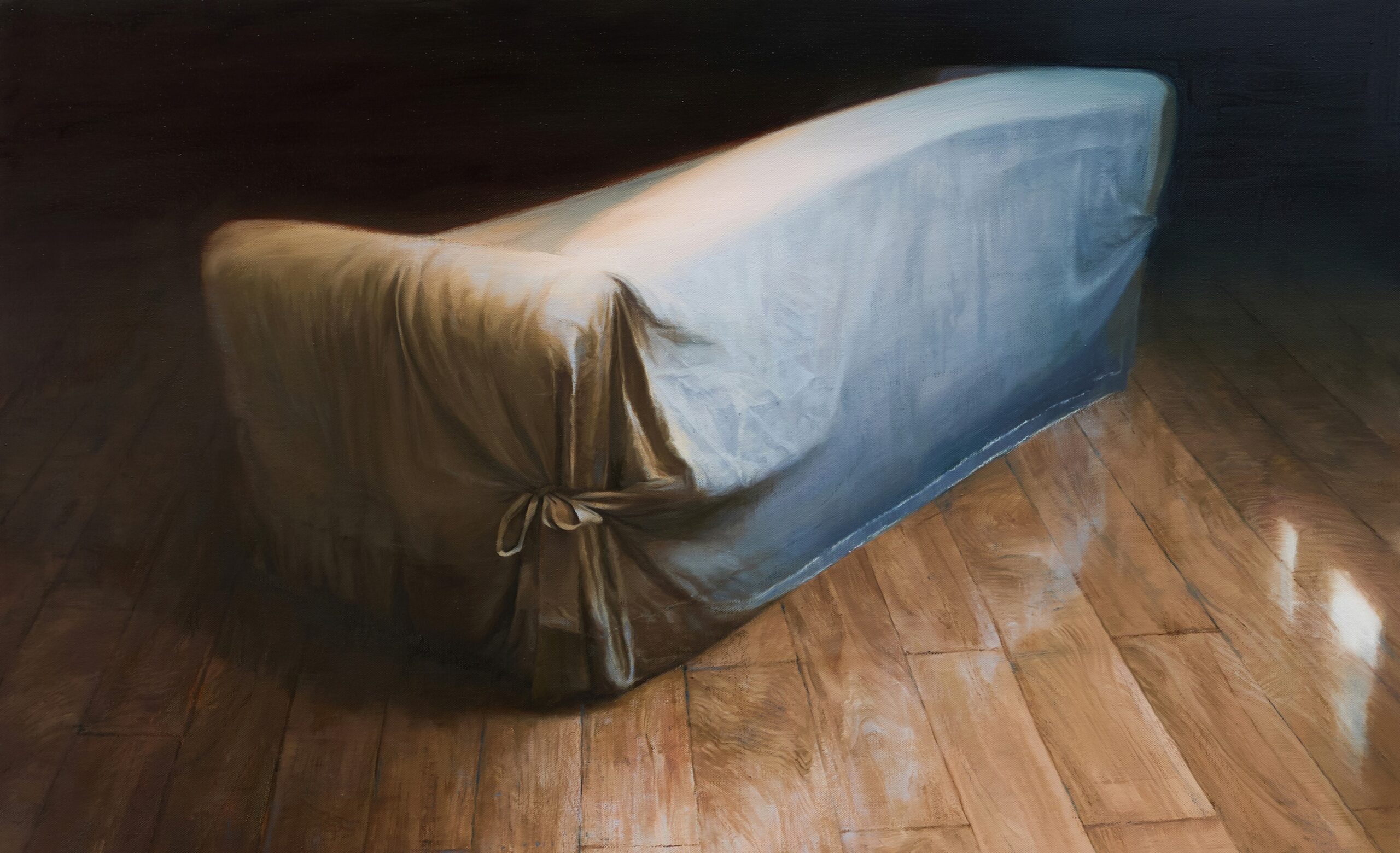
Sunkyung Baek
Oil on canvas, 60 x 97.1 cm | 23.6 x 38.2 in
Josephine: What’s coming up next for you?
Sunkyung: I’m currently approaching the completion of my MA in Painting at the Royal College of Art, and I’m in discussions with several galleries about future exhibitions in different cities.
In terms of my practice, I plan to continue developing my flood-based series. I’m interested in expanding my exploration of dampness and its psychological effects, from flooded spaces and interiors to individual objects and traces left behind by water. What interests me most is the wide spectrum of experiences that moisture can evoke, ranging from subtle unease to a stronger sense of instability and vulnerability.
Follow Sunkyung on Instagram
Visit Sunkyung’s website
Further Reading
Meet Anegla Lizon, Winner of Jackson’s Art Prize 2026
Jackson’s Art Prize 2026 First Prize Winner Announced
How We Collaborate With Artists
Expert Advice on Making Your Way as an Artist