Jackson’s Acrylic Inks are water-based with intense pigmentation, offering rich, vibrant colour for washes, glazes, pouring, brushing, airbrushing, and pen work on a wide range of surfaces. In this article, artist, illustrator, and picture book maker Sarah Dyer puts the Jackson’s Acrylic Ink range to the test, exploring its colour mixing abilities, coverage, and versatility in mixed-media applications.
The Characteristics of Jackson’s Acrylic Inks
Jackson’s Acrylic Inks come in a wide range of colours and are suitable for many types of applications. They are perfect if you are a confident artist or just starting out in your creative journey. They combine the rich pigmentation of acrylic paint with the fluidity of ink, allowing them to flow smoothly while drying quickly to a waterproof finish. You can use them to create fine lines, but also dilute them with water for washes or glazes. These high quality inks are fully compatible with all acrylic paints, including Jackson’s Studio and Professional ranges.
Jackson’s Acrylic Inks are made with acrylic resin and pigments. They have excellent lightfastness (except for the fluorescent colours, which have fugitive lightfastness). This means the colours resist fading when exposed to light, especially sunlight. Paints with high lightfastness retain their brightness and accuracy over time, which is important if you are displaying or selling artwork. Fluorescent pigments are generally not lightfast, but their vibrancy can be preserved for longer by keeping them out of direct sunlight or by protecting them with UV-resistant varnishes.
You can read more about fugitive colours and lightfastness in this blog article.
Using Jackson’s Acrylic Inks
These versatile inks can be poured, dripped, brushed, or used with paint markers, calligraphy pens, dip pens, and airbrushes. Suitable for a wide variety of surfaces, including paper, canvas, textiles, wood, metal, plastic, and ceramic, Jackson’s Acrylic Inks support a broad spectrum of creative techniques.
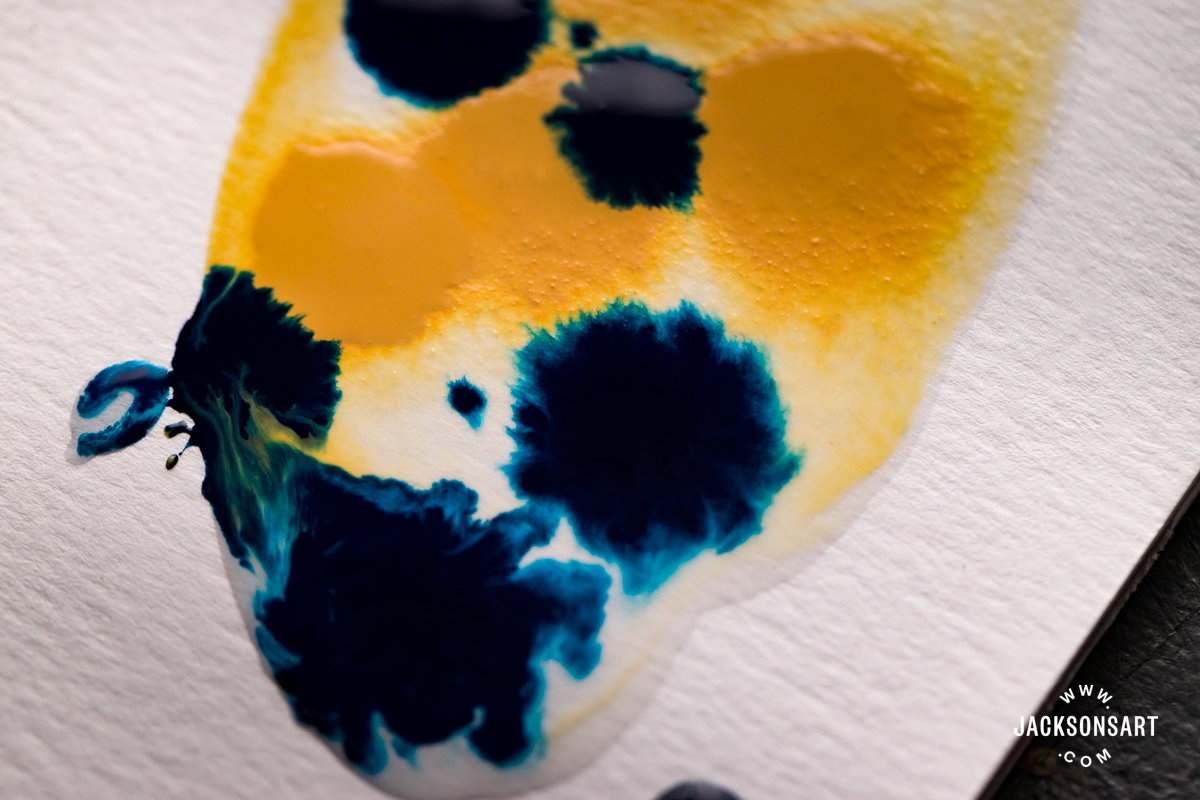
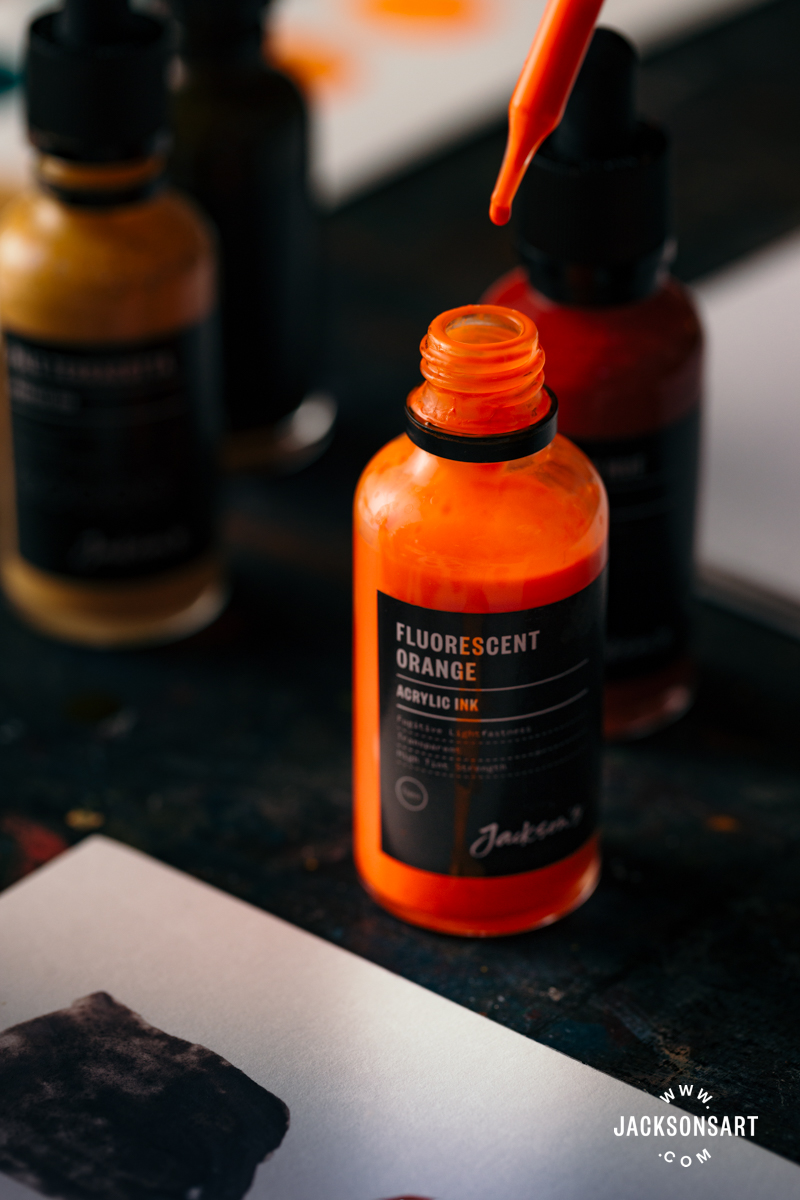
The inks are available in 50ml and 150ml bottles; the 50ml bottles include a dropper for precise applications and dripping techniques. I am testing the 50ml bottles and find the dropper to be a very handy tool. Not only for dropping ink directly, but also to keep the ink clean, and to stop me from dipping dirty brushes directly into the bottle. The dropper also means that, when mixing colours, you can be more precise about how many drops of each colour you add.
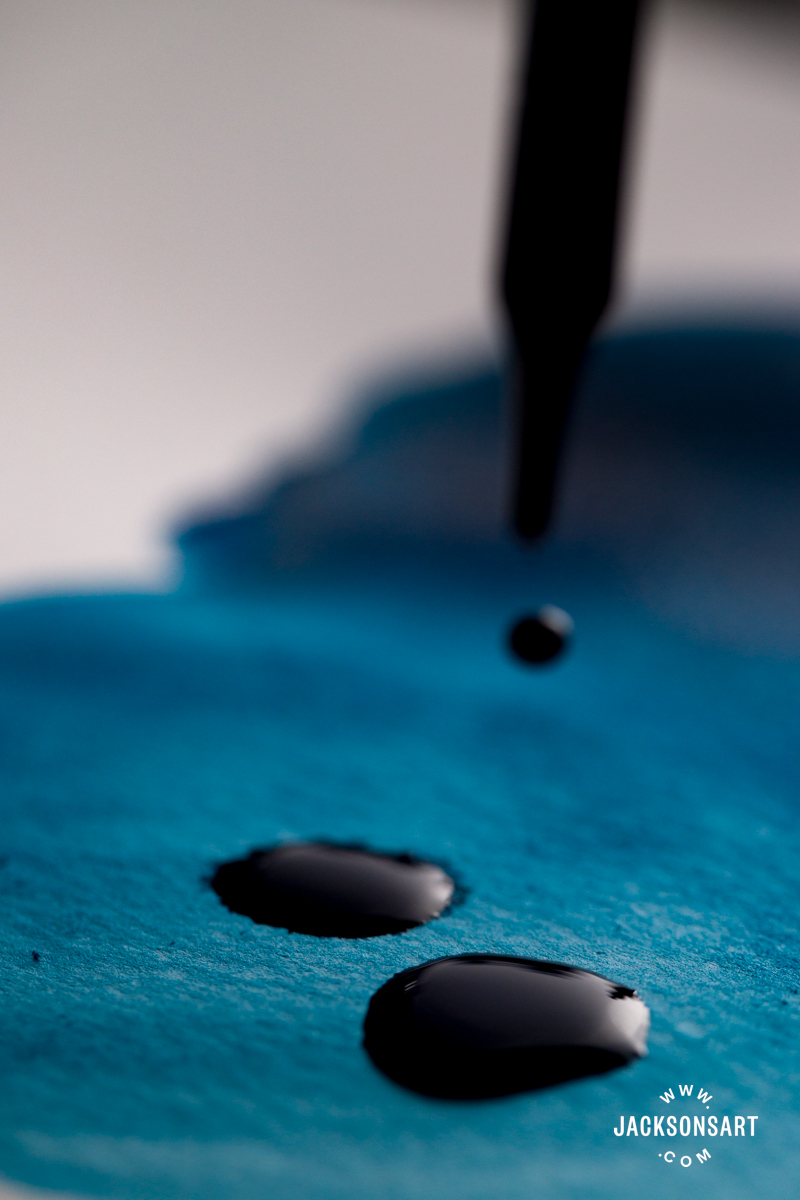
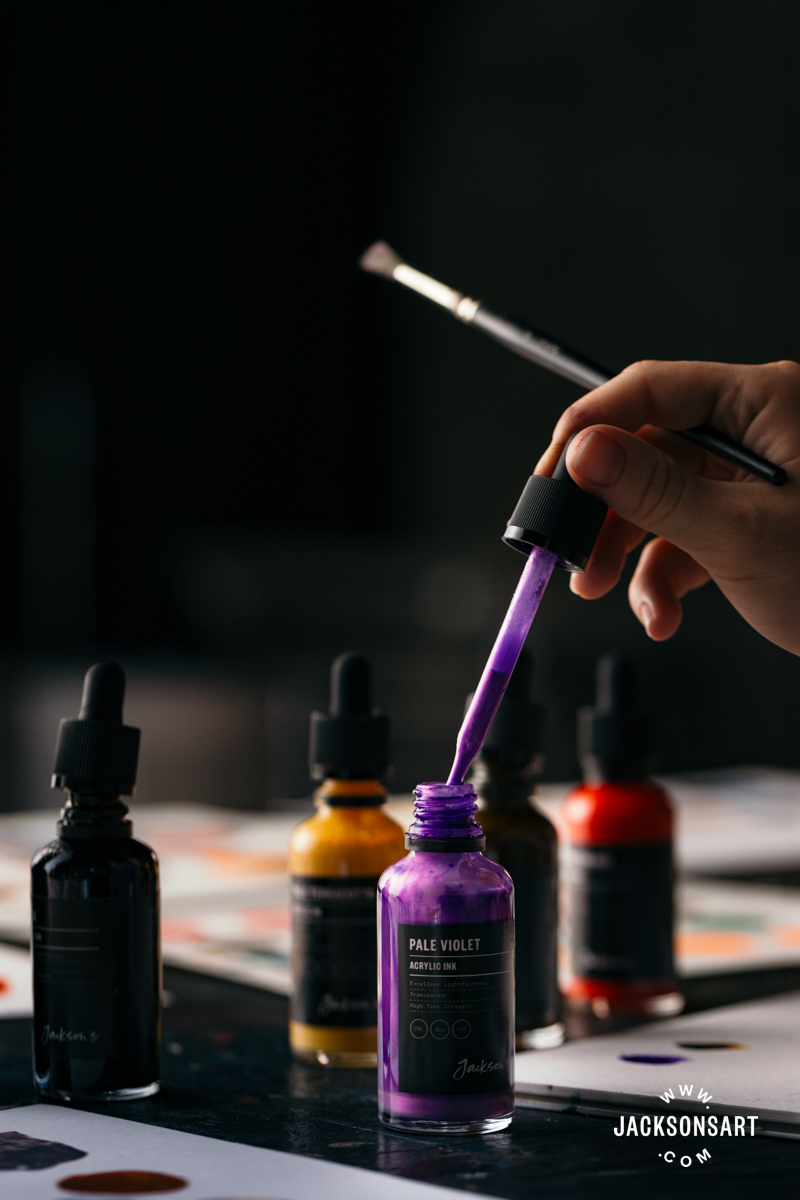
The bottle itself is glass and taller and slimmer than other acrylic inks I’ve used before. There are 41 colours, including 6 fluorescent colours, and Black, White, Gold, and Silver.
I find the safety catch of the bottles a little fiddly (you have to slightly push down and twist to open). I think it’s a small downside to them – they do not open as easily as other brands I’ve tried. Hopefully, that means they will not leak or dry up, as the seal seems very secure.
The Colours
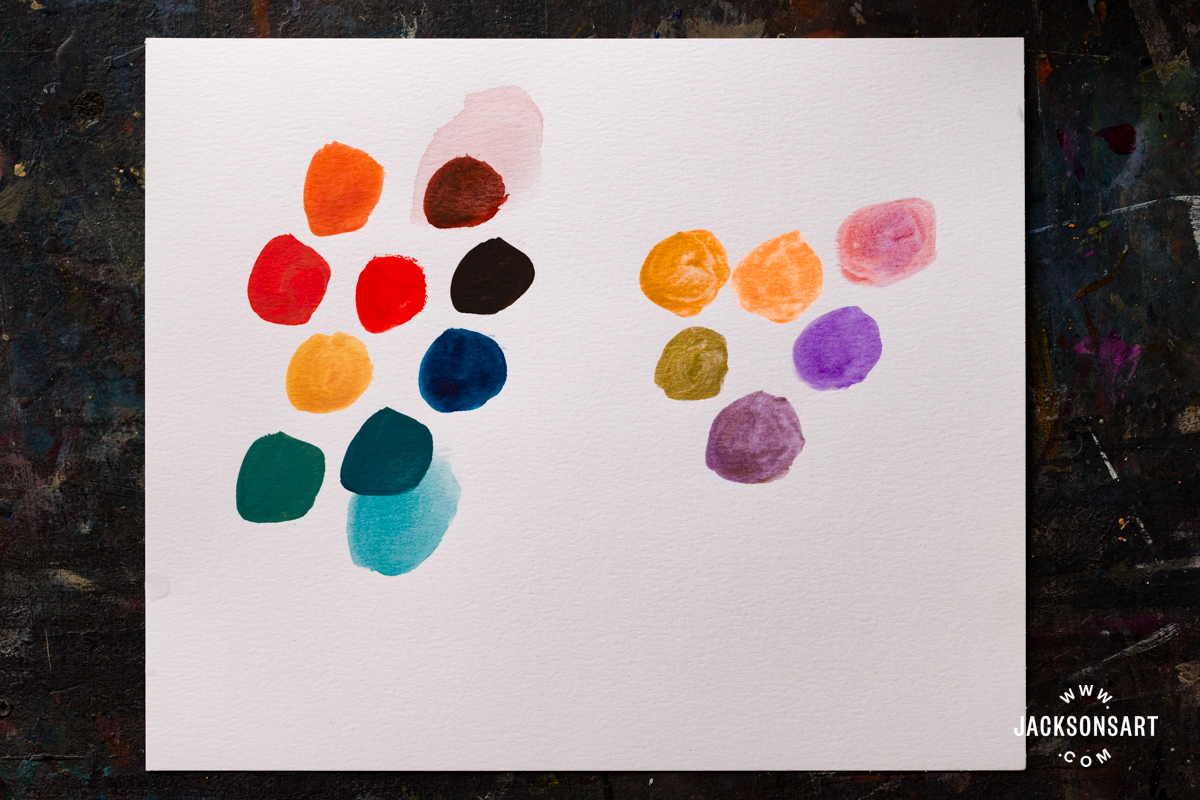
The colours I was sent to test were Black, White, Gold, Fluorescent Orange, Pale Violet, Pale Terracotta, Vermillion Hue, Burnt Umber, and Prussian Blue. Some of the inks required a quick shake as it looked like some of the pigment had separated slightly – this was most noticeable with the White and Pale Violet inks. The Gold and the Pale Violet also contain mica, so they need a shake to make sure that the metallic pigment is evenly blended through.
All the colours come in both the 50ml and the 150ml bottles.
Testing Jackson’s Acrylic Inks
I tested the acrylic inks on Jackson’s own brand of paper – a Jackson’s Watercolour Paper Block hot pressed 300gsm and a Jackson’s Acrylic Paper Block, also smooth and 290gsm. Both papers take wet media really well; the watercolour paper block is slightly smoother and more off-white than the acrylic paper block.
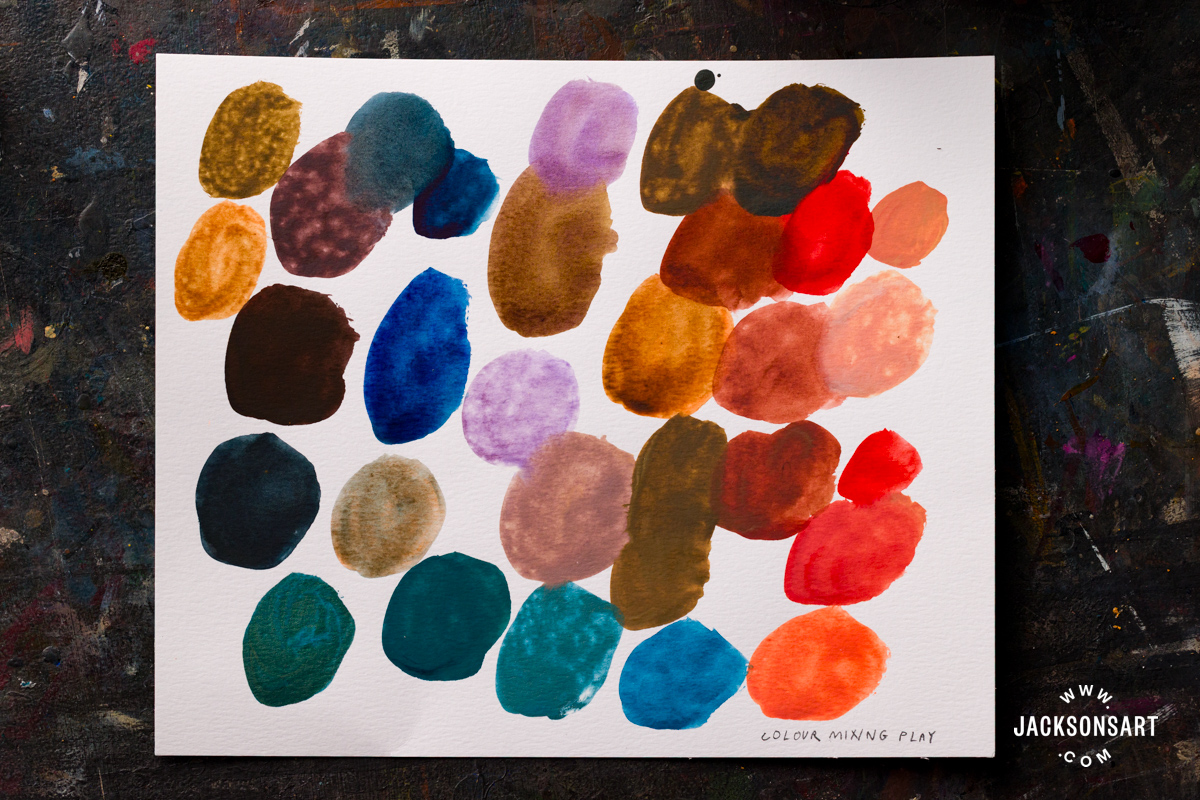
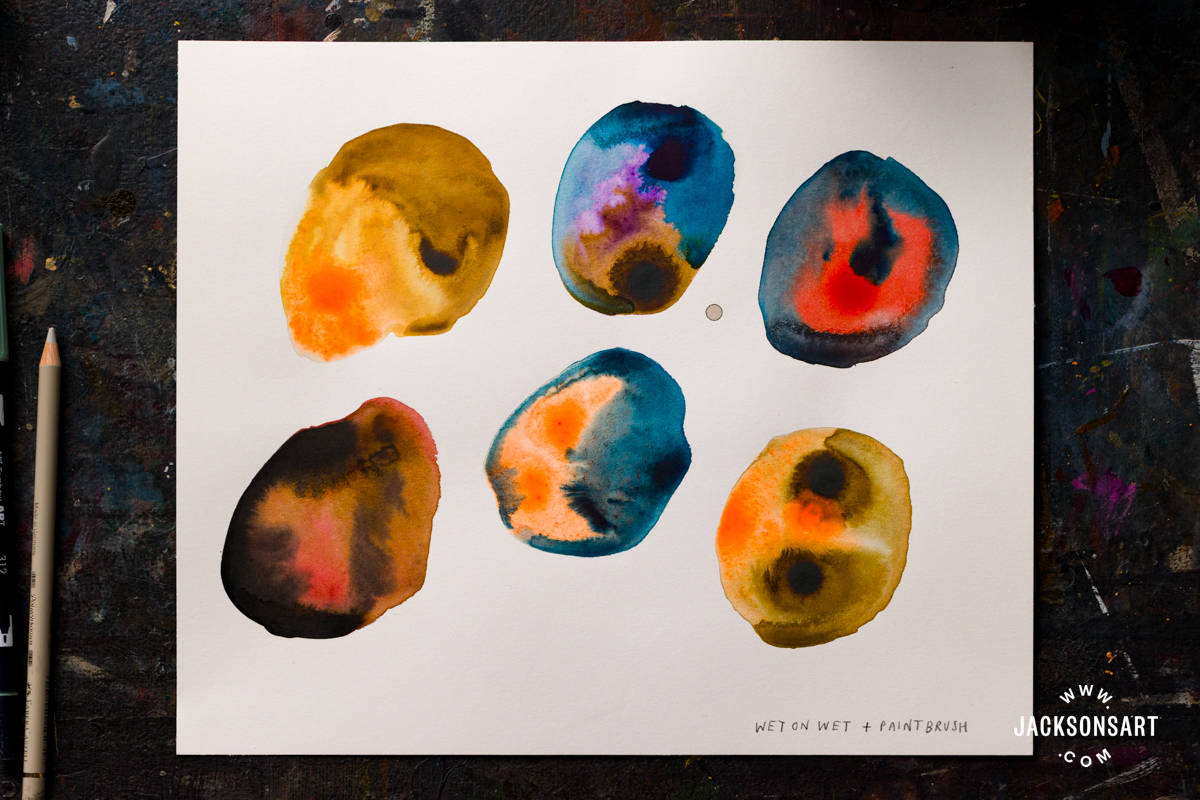
You can apply the ink directly onto the paper with the dropper, or use a small palette to mix the colours and apply the ink with a brush. I started by swatching all the colours on both papers. I added a little water to the inks to see how they looked both diluted and as solid colours. And then I mixed some colours directly onto the paper using the dropper.
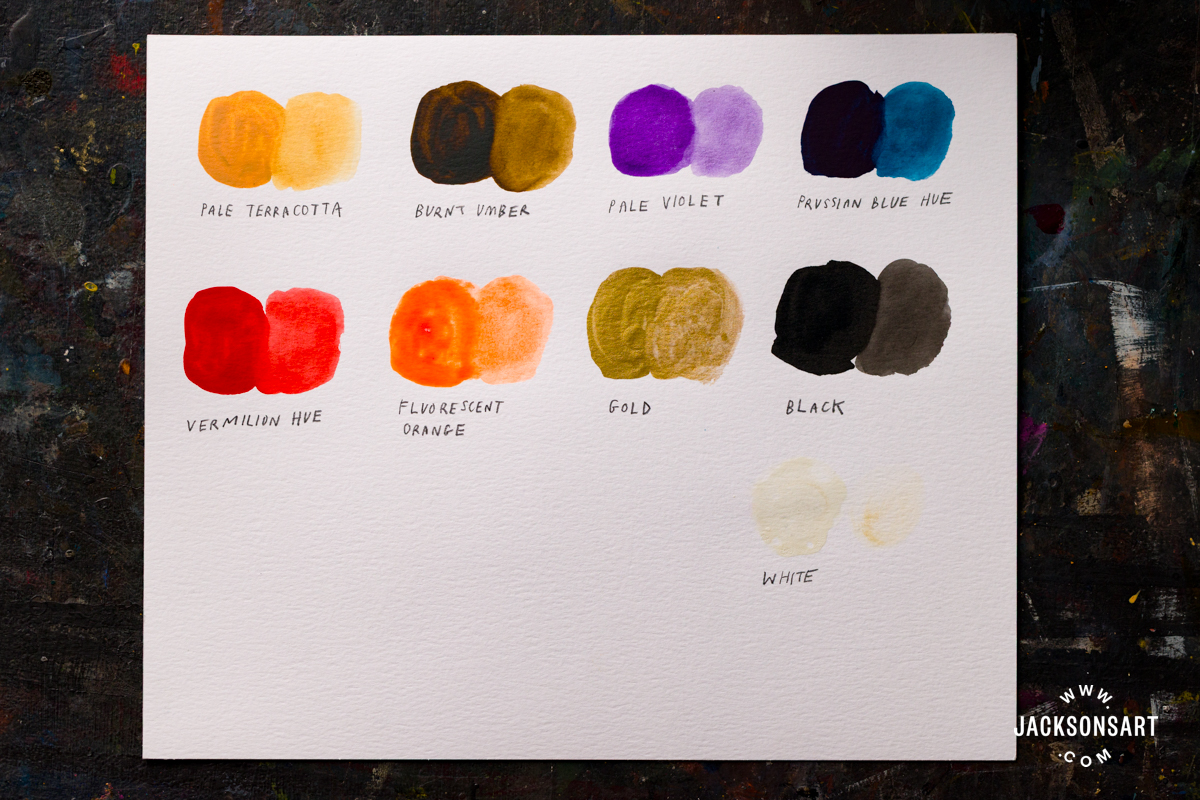
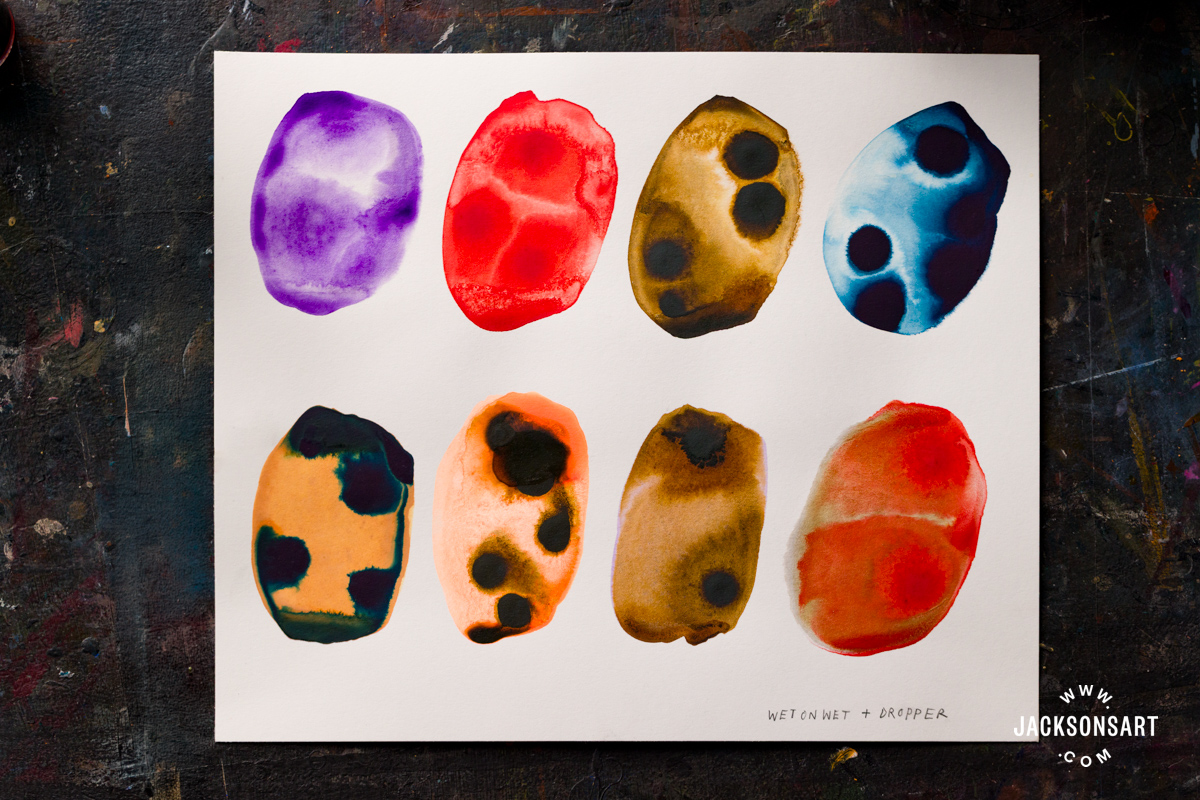
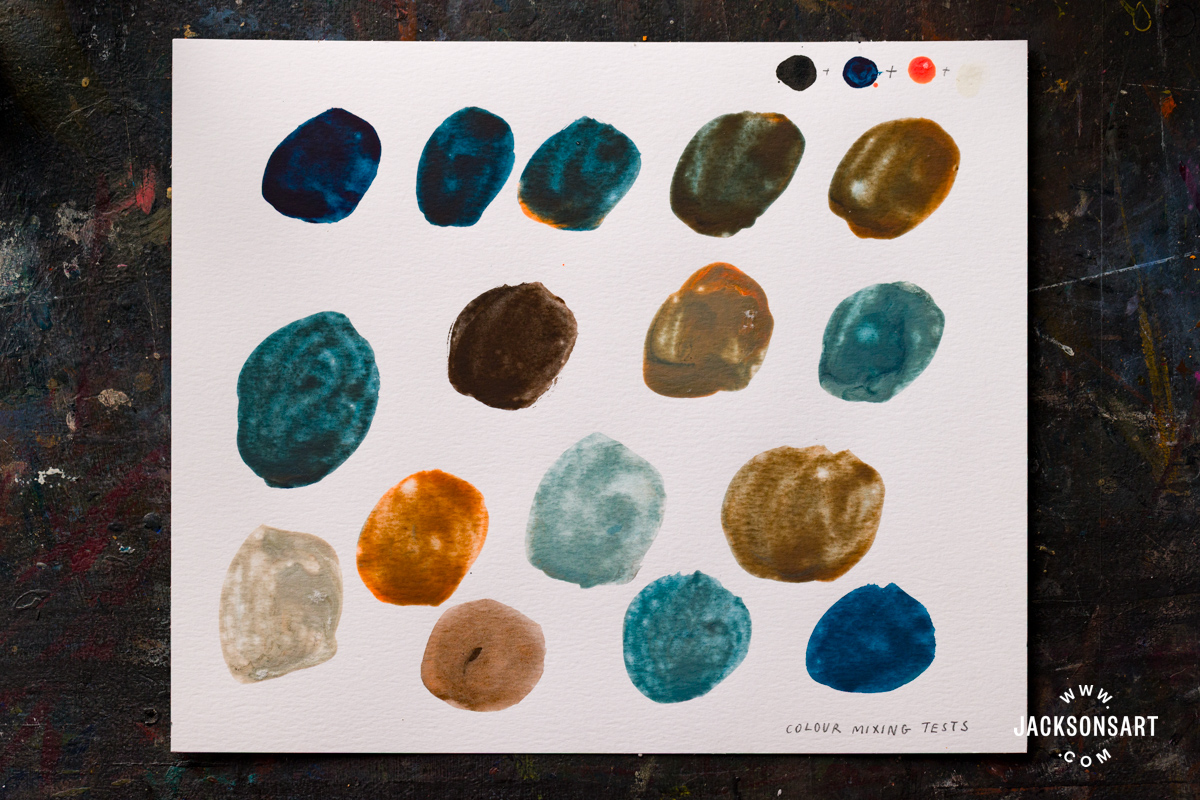
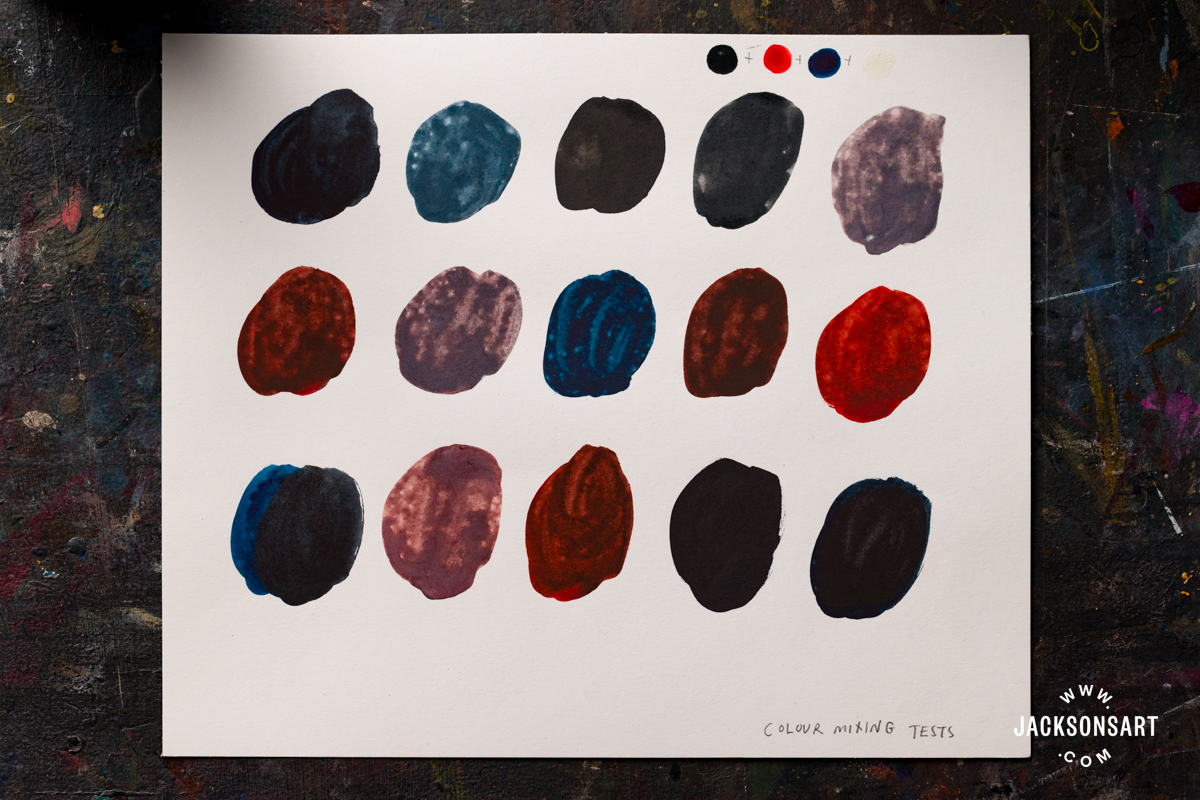
I then chose two colours from the range and mixed them using a variety of combinations, adding in the White and a little Black. I found the White took longer to dry than the other colours when applied on its own – staying tacky for a long time, and I didn’t find it to be as opaque as other inks on the market. However, it worked very well when mixed with the other coloured inks to create tints.
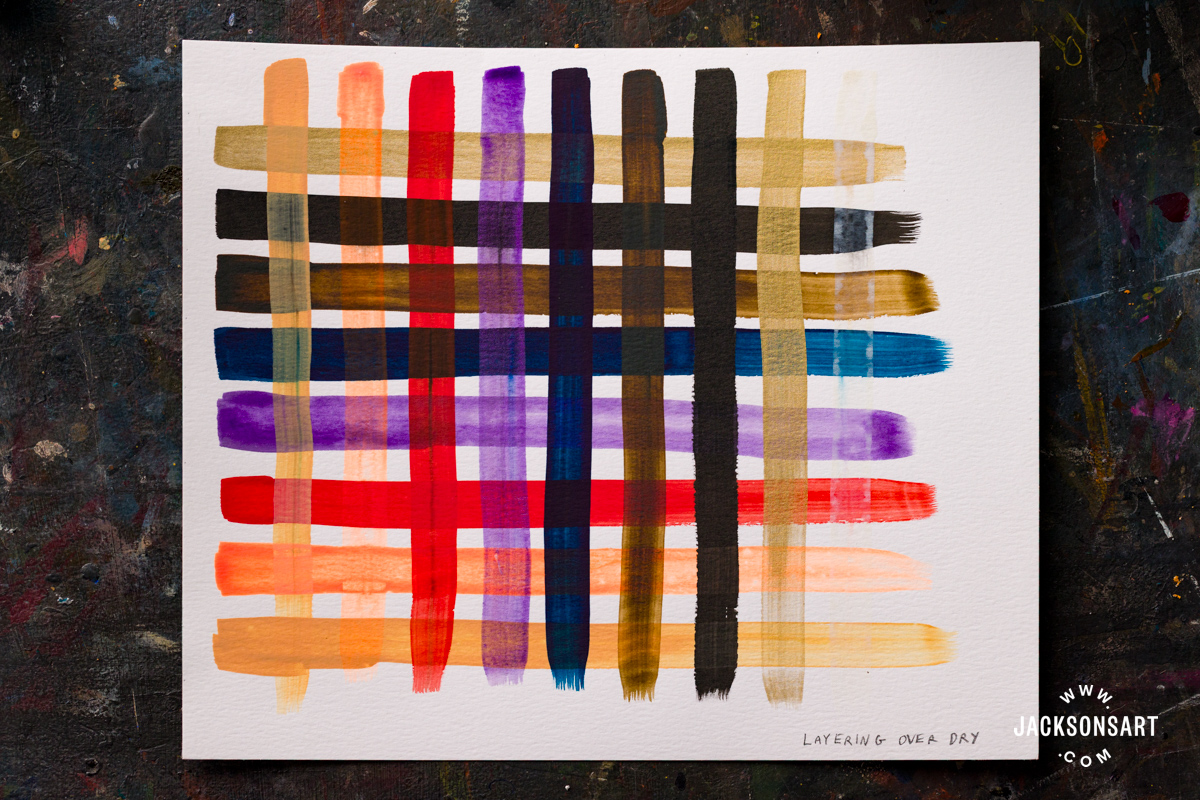
I then layered the colours over each other, dry on dry, to see what coverage they had. You can see that Fluorescent Orange and the White are not very opaque, and the darker colours show through, but the Pale Terracotta has excellent coverage. I used a Jackson’s Studio Synthetic brush for most of my testing.
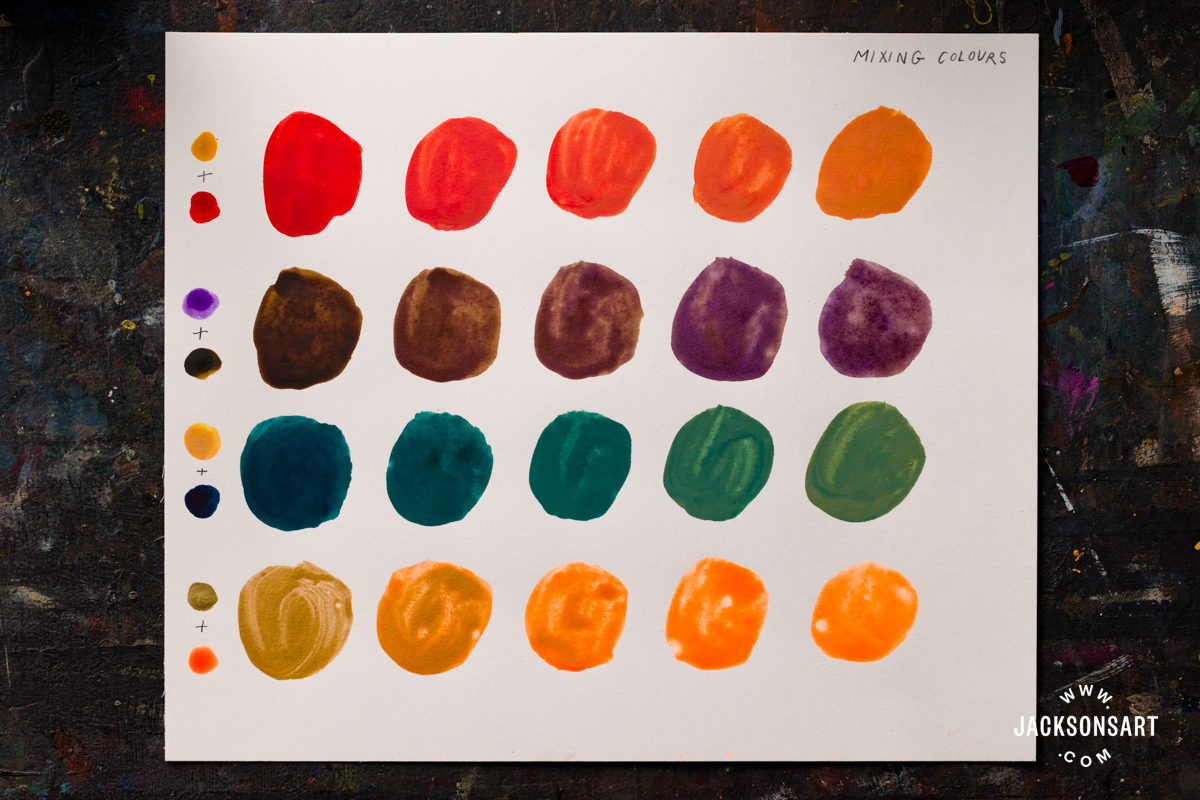
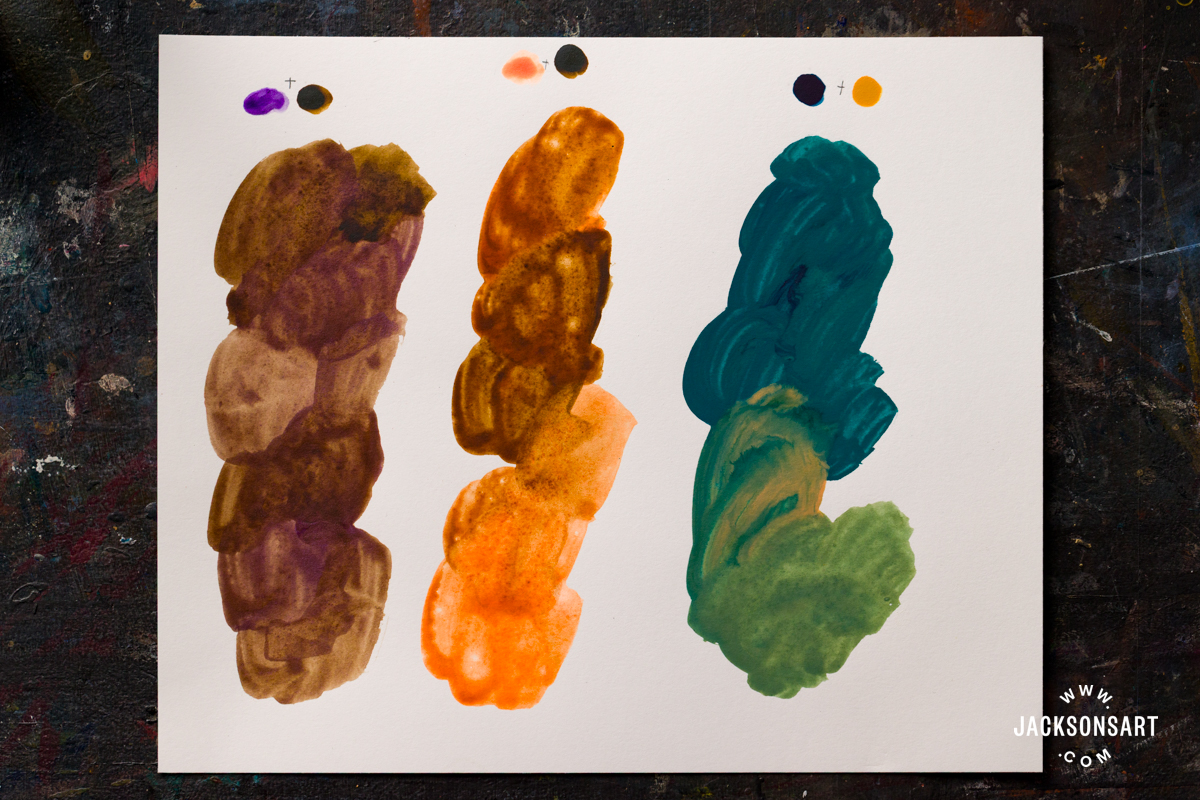
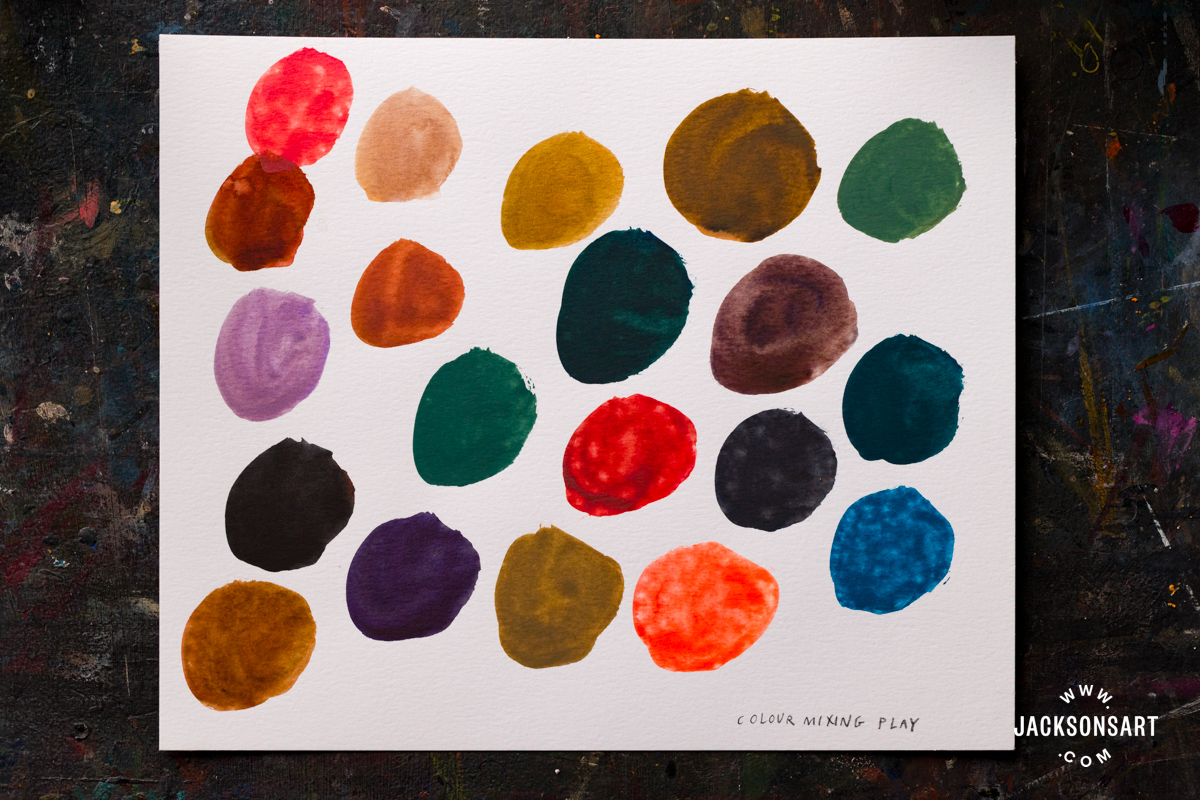
Next, I experimented with the colours by mixing them to see how well they combined with each other and to see what other colours I could make. I like to mix earthy colours with bright, vibrant colours – I find it always leads to really interesting results. The inks mix well, even the Fluorescent Orange and Gold mix in well with the more solid opaque colours.
The inks dry quickly and have a matt finish, and therefore are easy to work over with other media. I think the inks would also work well for direct pouring onto canvas or boards, as well as airbrushing, although it’s not something I tested this time.
The Black ink worked easily with a dip pen – my dip pen just fits in the neck of the bottle. It is a very dense Black and dilutes down to a pale, cold grey. I tested my line with the dip pen; it was easy to apply over dried ink as well as directly onto the paper. However, when I applied the Pale Violet ink over the top of the line, it disturbed the ink underneath, causing it to bleed into the Pale Violet. For it to be fully waterproof, it requires a much longer drying time, not just touch dry.
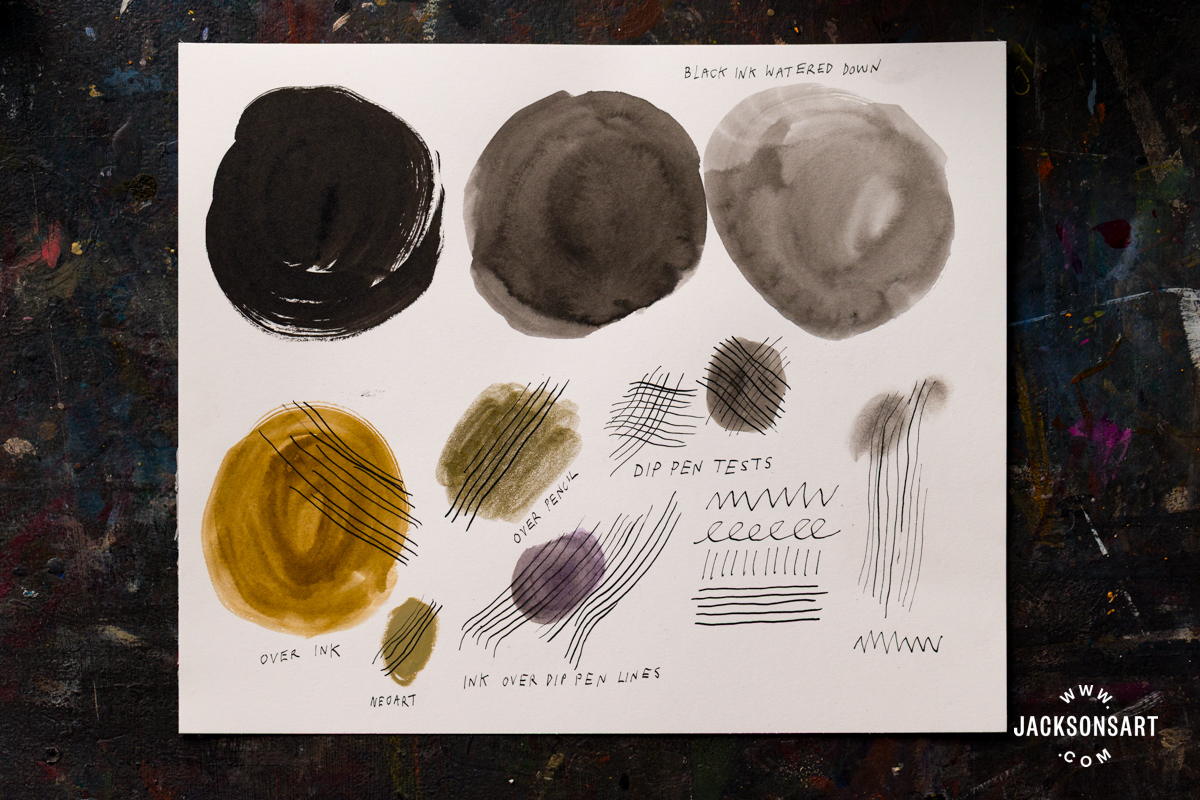
Testing the Inks with Mixed Media
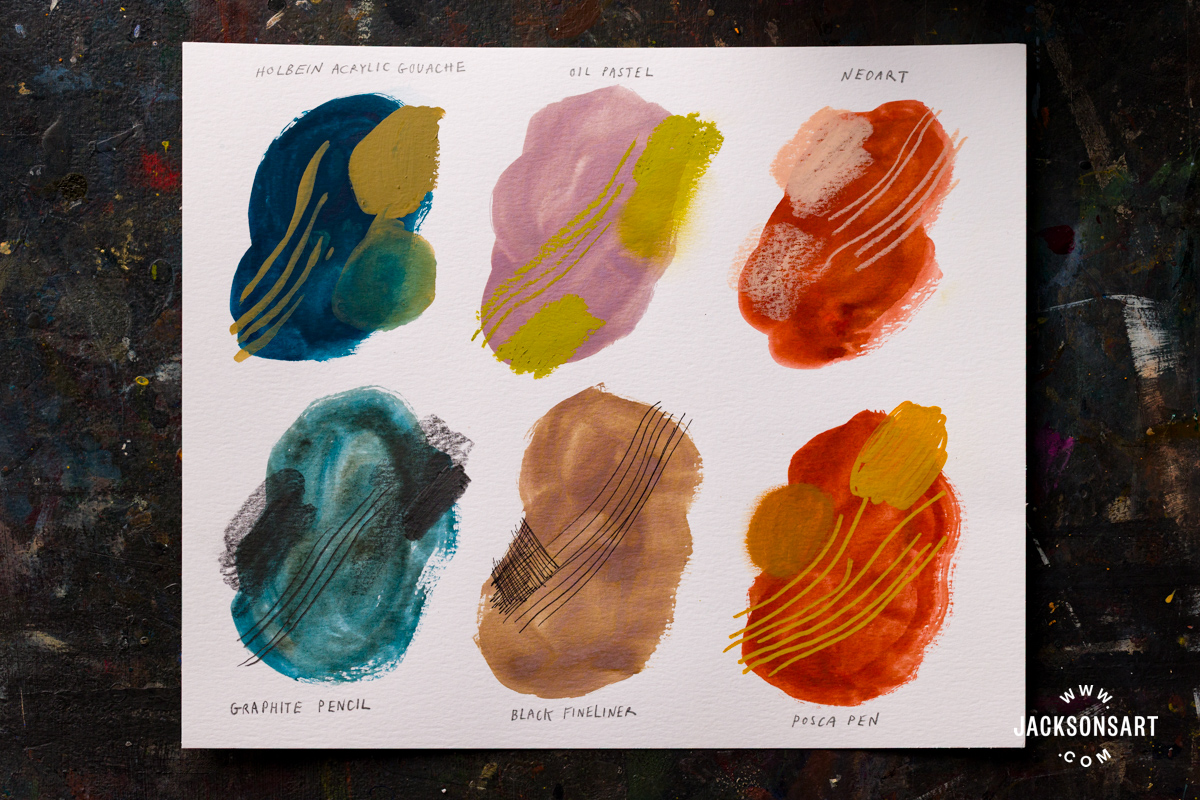
I tested other materials over the top of Jackson’s Acrylic Inks, including brush pens, pencils, oil pastels, soft pastels, and paints. I made several swatches first with the inks, mixing some colours and adding a little water. And then I allowed two hours drying time before testing the other materials on top.
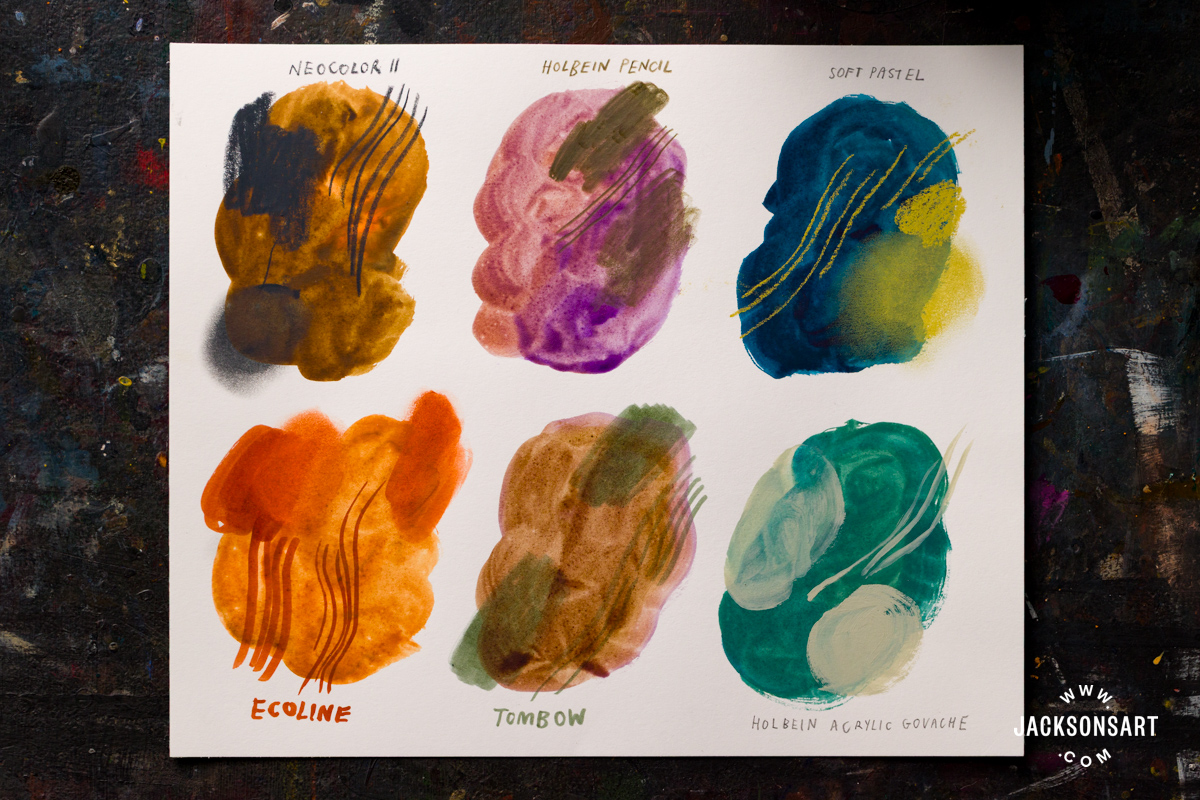
The inks were fully dry to the touch before I applied other materials. The inks do dry well and are supposed to be permanent, but when I tested other wet materials over my swatches, they did seem to disturb the colours again and bleed slightly. This was most noticeable with the Holbein acrylic gouache paint and the Posca Pen. Perhaps, if you are working with wet materials on top, the inks need a longer drying time. All the materials went over the inks really easily – they don’t have any of the resistance that sometimes I find other acrylic-based materials have.
Jackson’s Acrylic Inks would be great for anyone looking to add to a mixed media practice. They are reasonably priced compared to other acrylic inks. The bottle has a smart, sleek design that looks good. Overall, I found the colours performed well, particularly the darker shades, which seemed to have a higher pigment density and produced rich, vibrant results. The white ink was less opaque than I had expected and took a little longer to dry, although it worked much better when mixed with other colours than when used on its own. As with most inks, some colours separate slightly in the bottle, so it’s advisable to give them a good shake before use.
Further Reading
Inside the Sketchbook of Sarah Dyer
The Variation in Acrylic Paint Viscosity
Acrylic Painting for Beginners – What You Need to Get Started
Wet-on-wet Techniques for Watercolour, Gouache, and Ink
Shop Art Materials on jacksonsart.com