



Caran d’Ache is a renowned Swiss manufacturer of pencils, fine art materials, and luxury writing instruments, and has become a symbol of technical excellence, precision, reliability, and innovation. Made in workshops in Geneva since 1915, each individual material they create combines expert craftsmanship and recognised know-how. Their refinement and creativity offer artists a unique drawing, painting, and writing experience. They are a must-have for artists looking for vibrant colours, varied textures, and versatility.
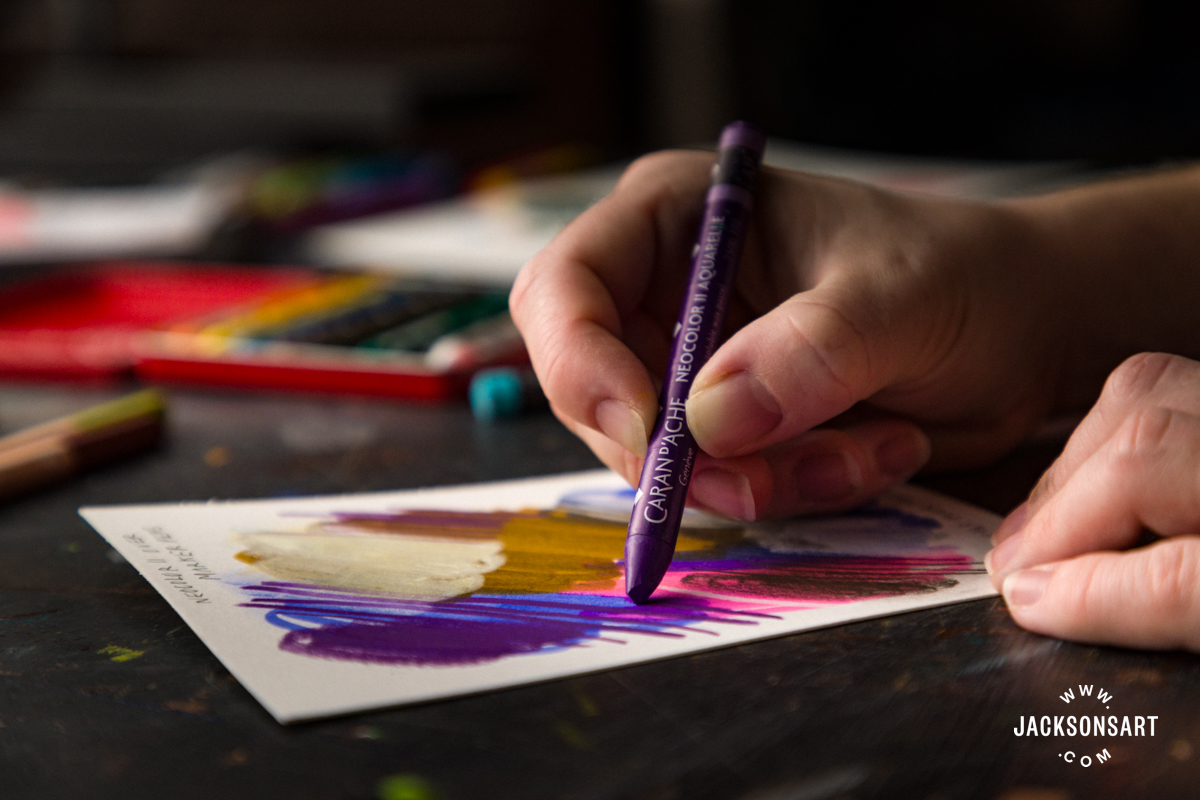
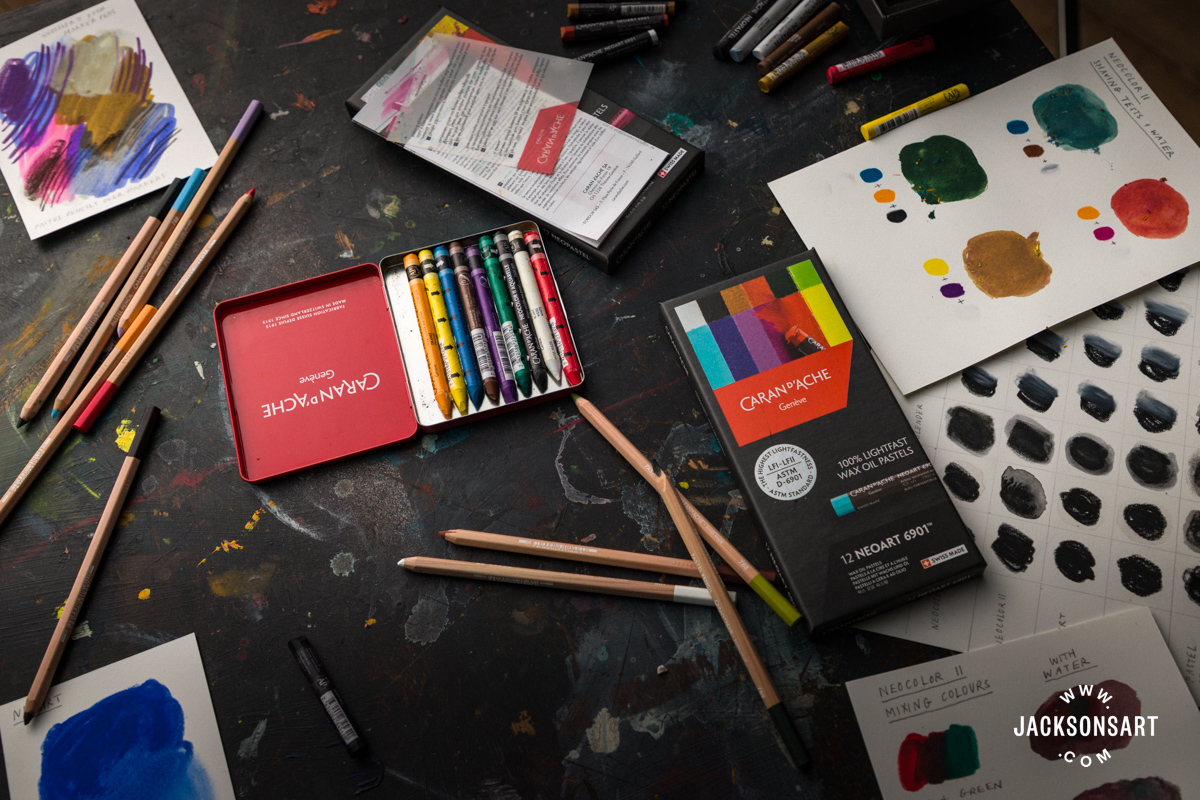
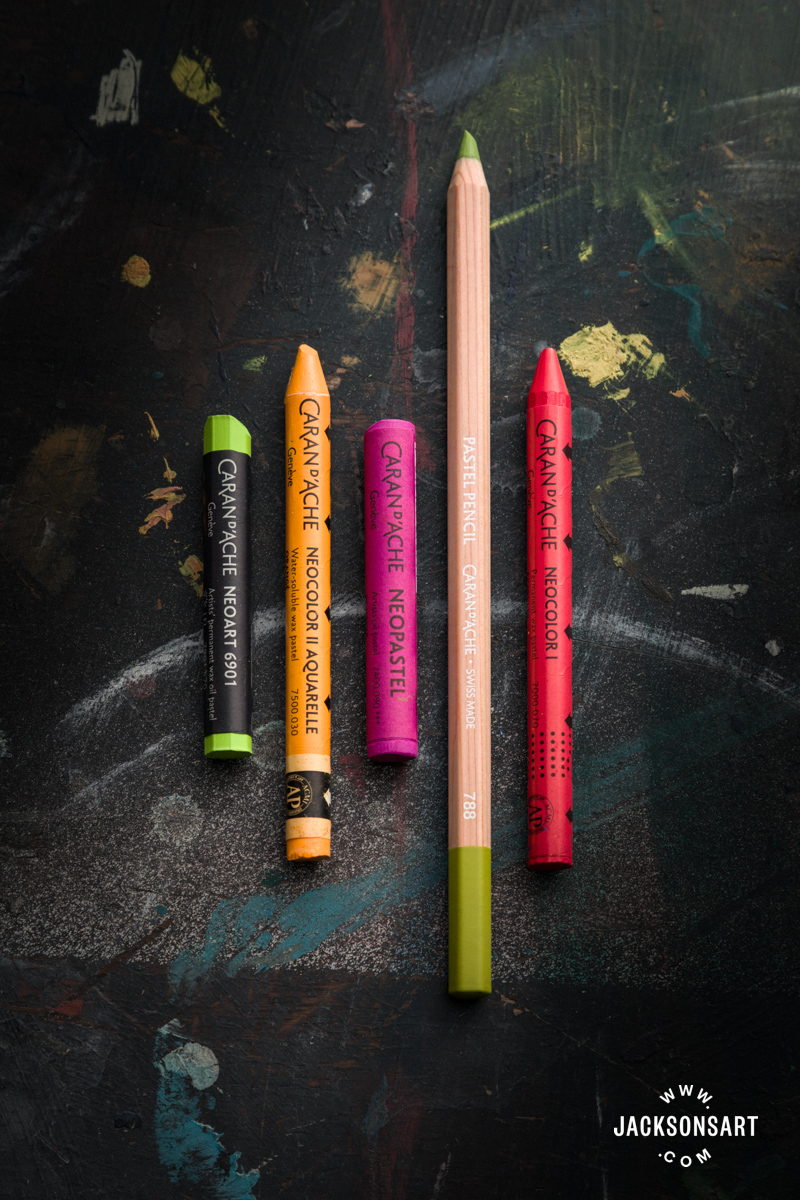
Caran d’Ache produce five pastel ranges: Neocolor I permanent wax pastels, Neocolor II watersoluble wax pastels , Neoart 6901 wax oil pastels, Neopastel Artists’ oil pastels, and Pastel Pencils. In this pastel comparison article, I’ll cover the properties of all five ranges, including their textures, water-solubility, and how they can be used. I was sent small sets containing between 10 and 12 pastels to test in each range. These sets offered the foundational colours to experiment with. With each pastel range, there are many others to buy separately, which is useful for building a balanced colour palette over time. However, these smaller sets are a useful starting point for anyone looking to explore the materials for the first time.
Neocolor I
First up, I tested the Caran d’Ache Neocolor I permanent wax pastels. The set I was sent comprises 10 Neocolor I pastels in a red metal tin. The tin is lovely and extremely useful afterwards – I have some from other colour sets and really like them for travelling and storing the pastels on my desk.
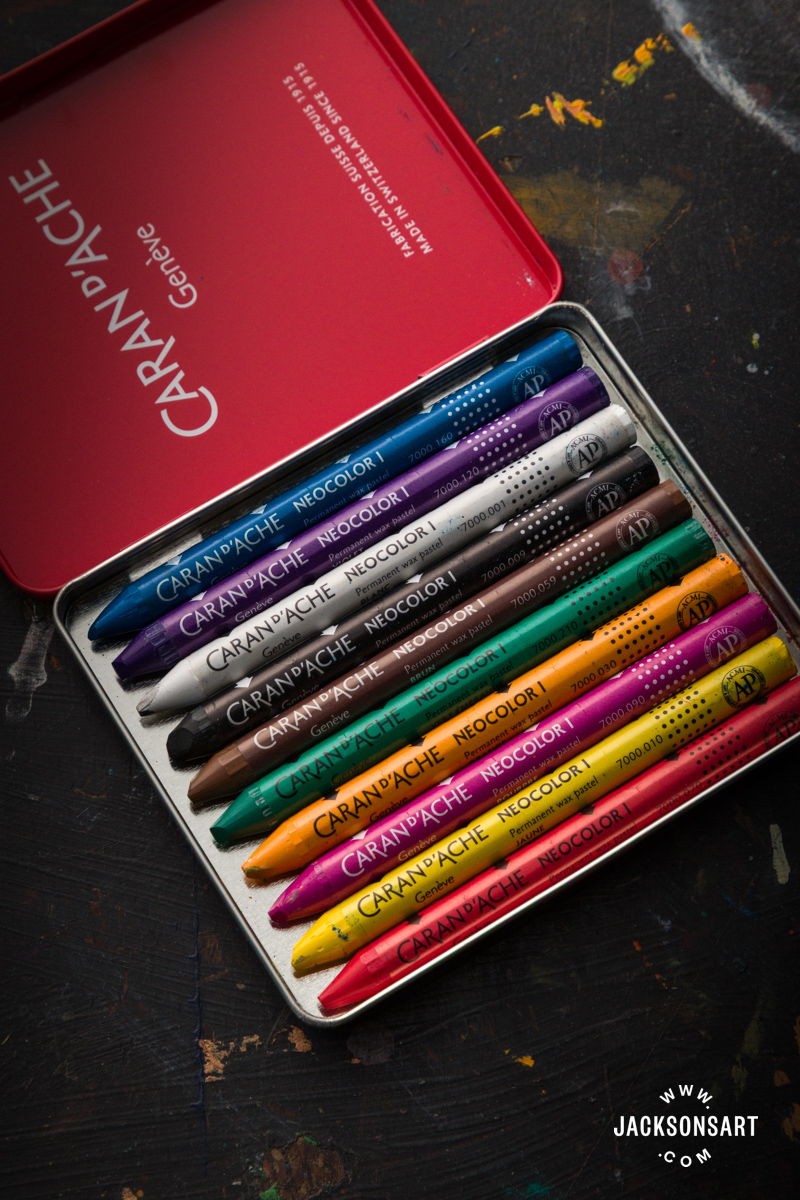
Neocolor I pastels are wax-based and water-resistant. They can be applied to a wide range of surfaces, including paper, wood, ceramic, and stone. They have excellent lightfastness and a high concentration of extra-fine pigments. There are 49 colours available, including 9 metallic colours, and they come in a variety of sets.

Neocolor I pastels are water-resistant, but can be dissolved with solvents. I used a Weber Turpenoid Natural to blend the colours. This worked especially well when I mixed the solvent into pencil shavings first.
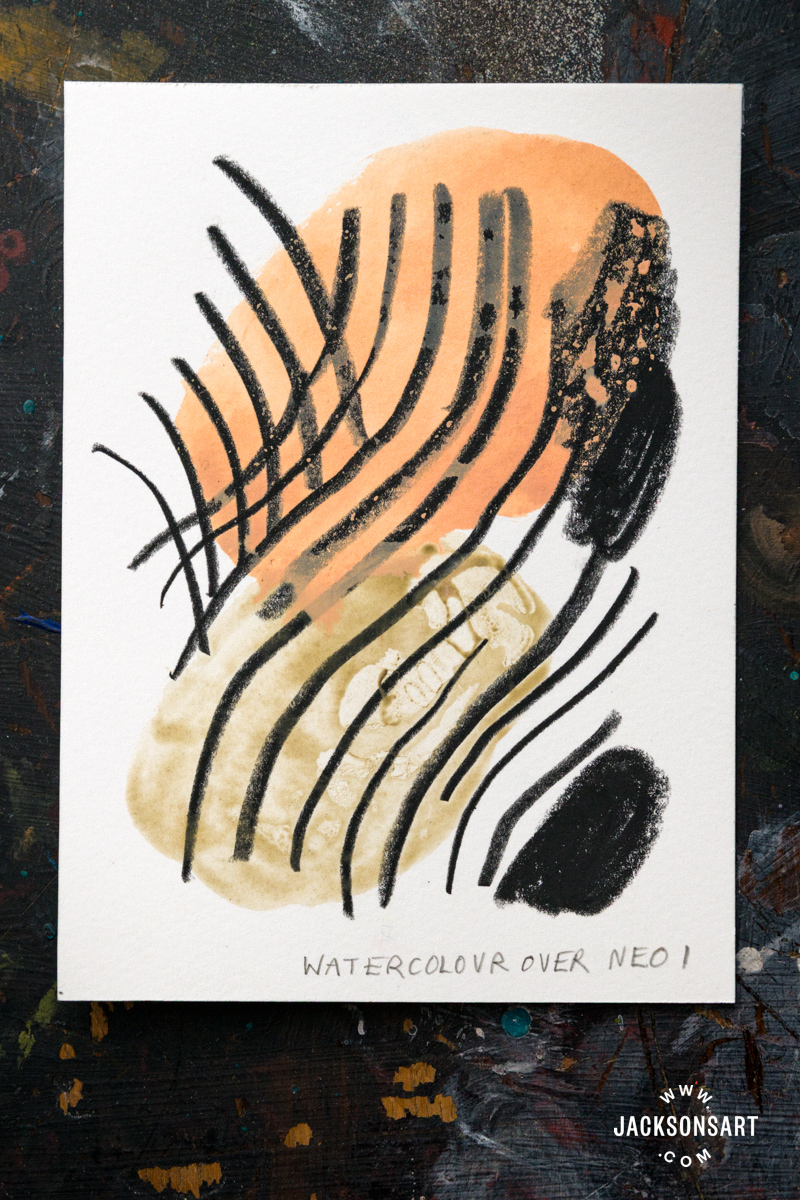
They produce a nice, bold line when used directly like a crayon. I find them particularly useful in mixed media practice, especially alongside water-based mediums such as watercolour, as the marks will not move or dissolve when watercolour is applied over them. Besides wax-resist techniques, they can also be used for other techniques, such as sgraffito. They are firmer than oil pastels and can be sharpened to a point to create finer details.
Neocolor II
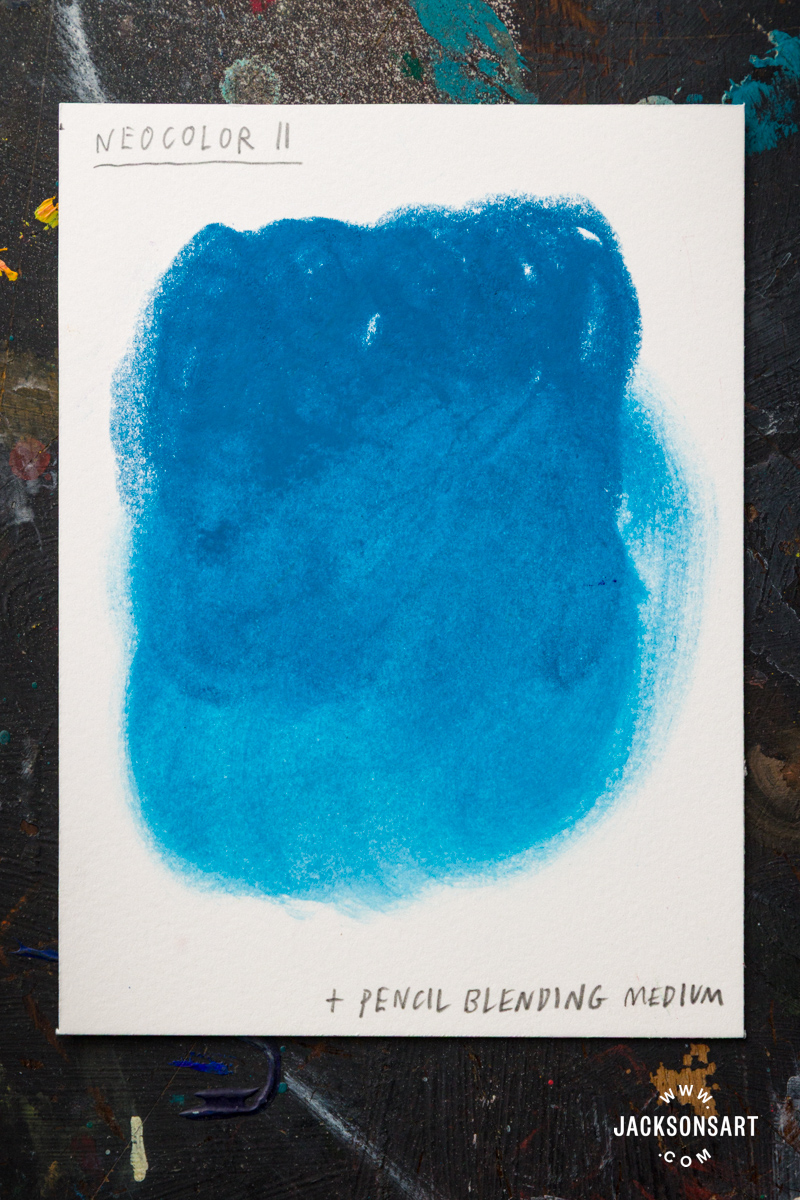
Neocolor II are similar in size and feel to the Neocolor I, but are watersoluble. They are slightly softer in feel, with a velvety texture. They offer unparalleled flexibility for both dry and wet applications – blending well with each other directly on the page and reacting quickly to water, making them easy to mix. They come in 84 single colours and 6 sets.
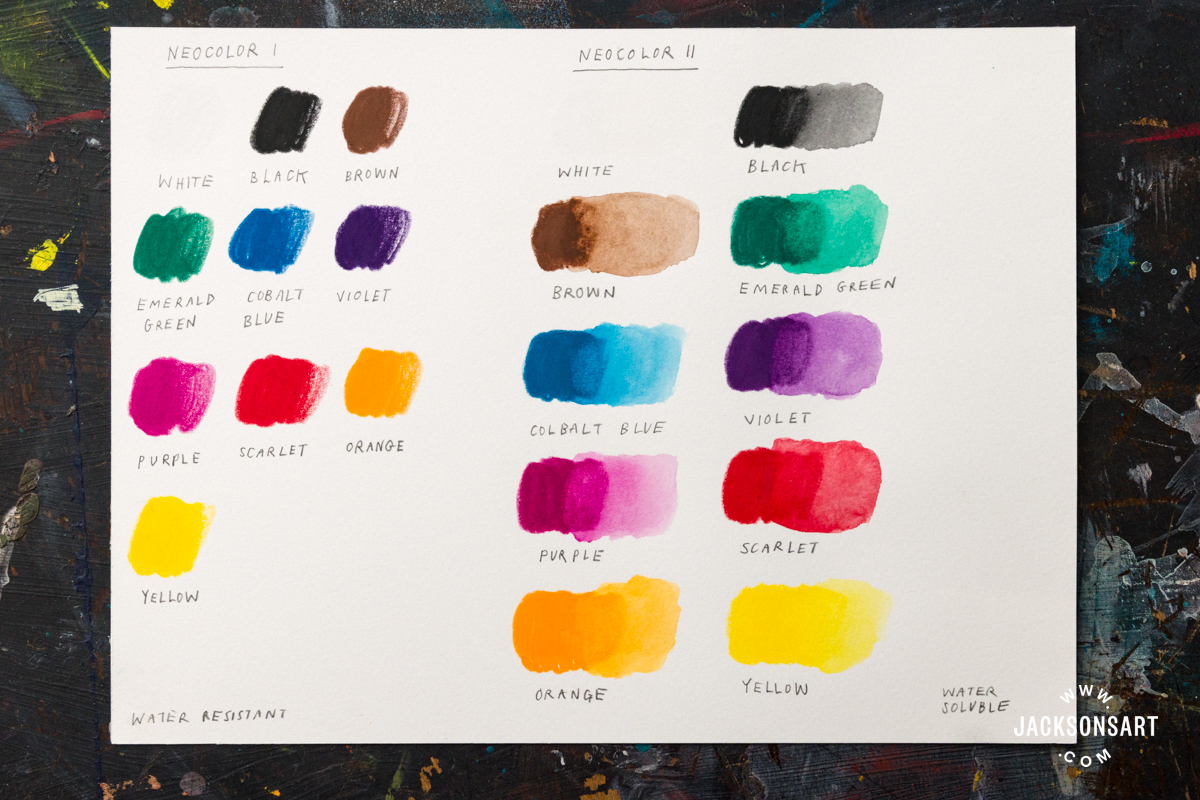
The set I was sent was also a 10 colour tin with a simple colour range. However, because they mix with water, you can make a wide range of colours from the 10. There is a warm and cool red, yellow, and Cobalt Blue, so alongside the black and white, the colour range can be mixed for more variation and tailored to your needs.
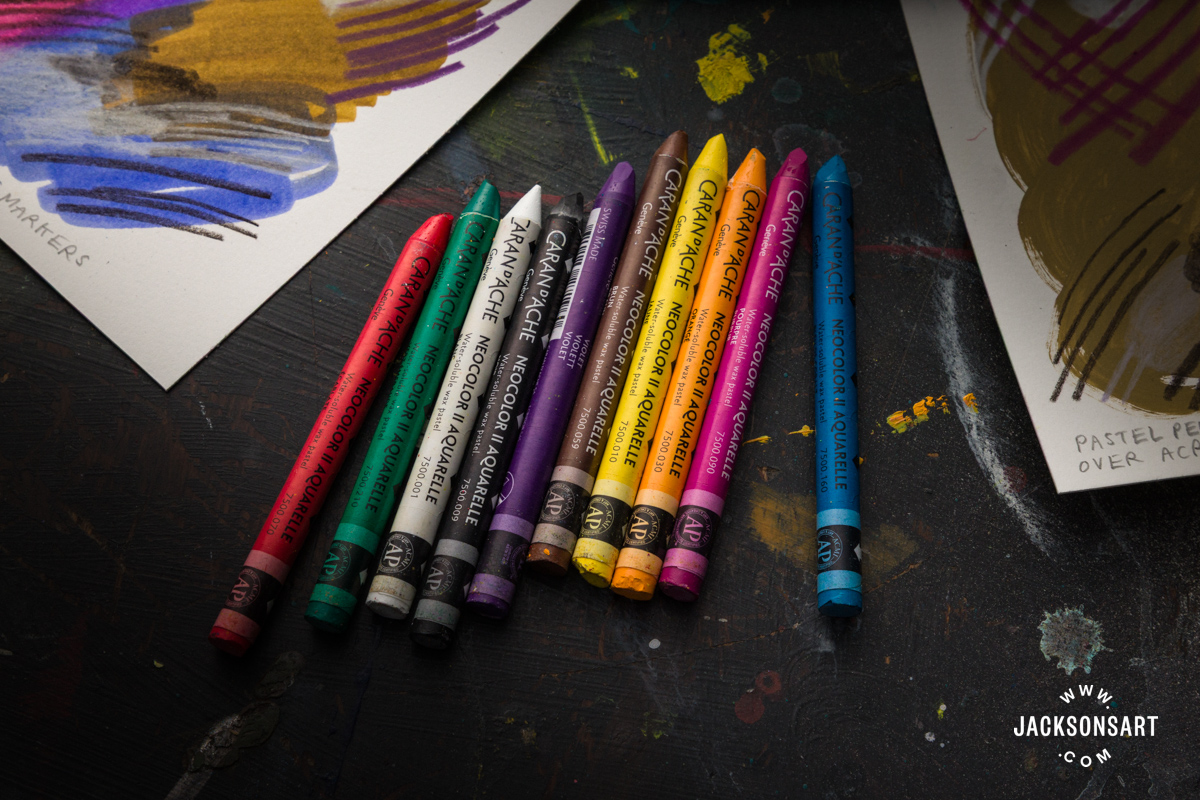
Neocolor II feel like an incredible all-rounder to me. They are easy to take out on location for en plein air drawing, deliver excellent colour payoff, and can be applied directly to the page. You can also use a wet brush to pick up colour directly from the pastel.
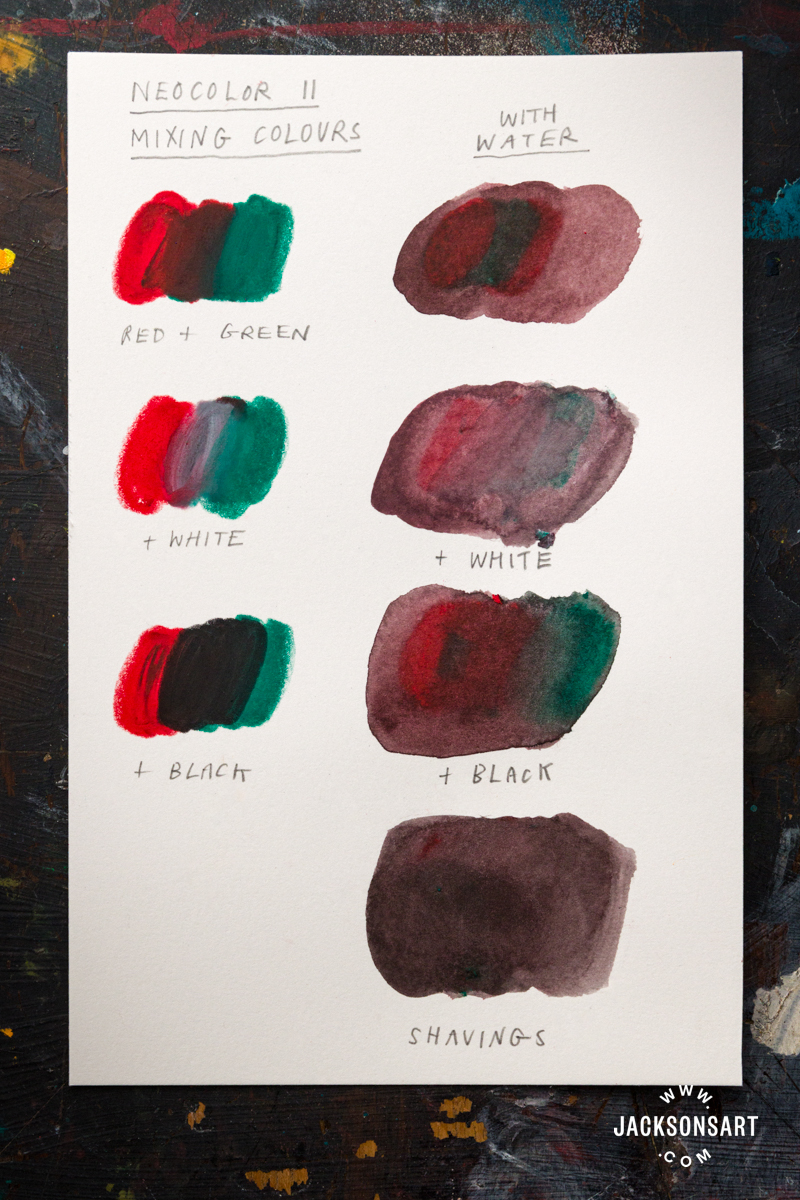
They can be used for both dry and wet techniques, combined with other media, or dipped into water to create a varied line. You can even save the shavings from sharpening and dilute them with water to make paint, making them very versatile with minimal waste! They are long-lasting, portable, and easy to travel with, as they do not shatter or crumble like soft pastels.
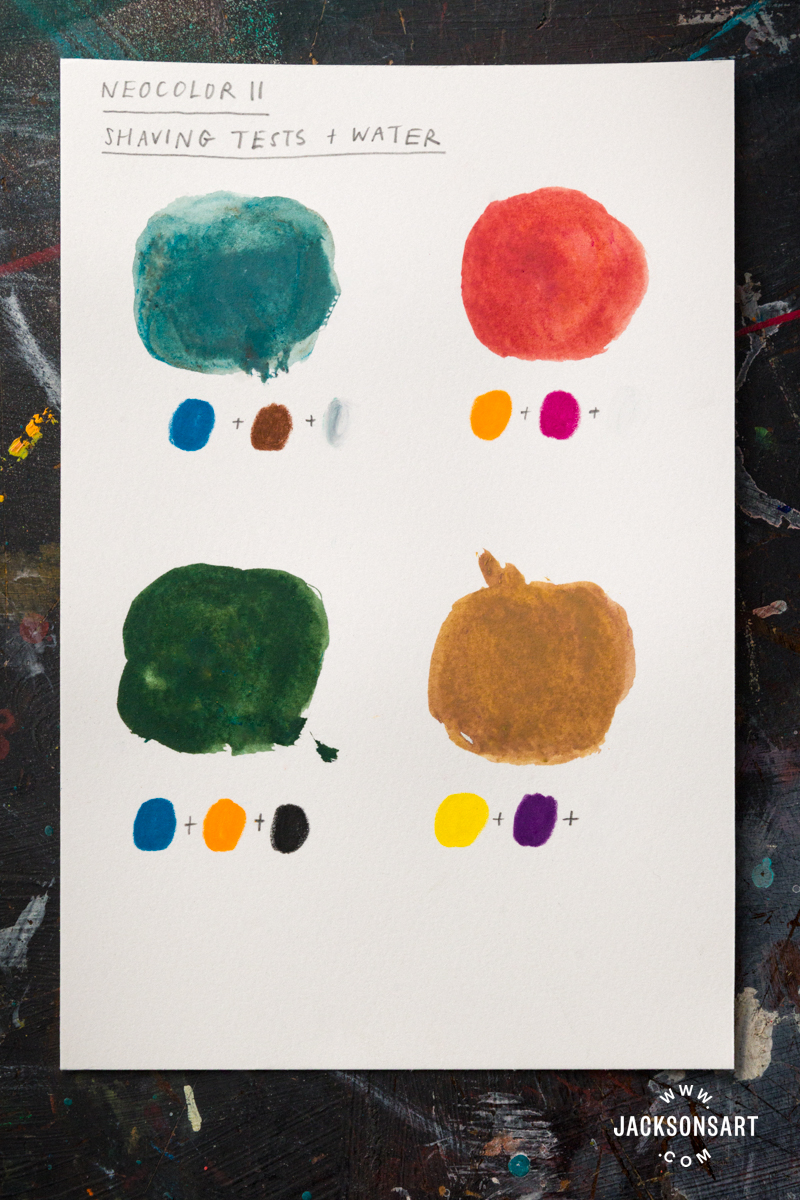
Neocolor II produce a nice line, and pressing harder or softer will create different textures in your work. They can be sharpened to a fine point to allow for more detailed mark-making. They work particularly well over paint such as acrylic, allowing artists to add finer details to their compositions.
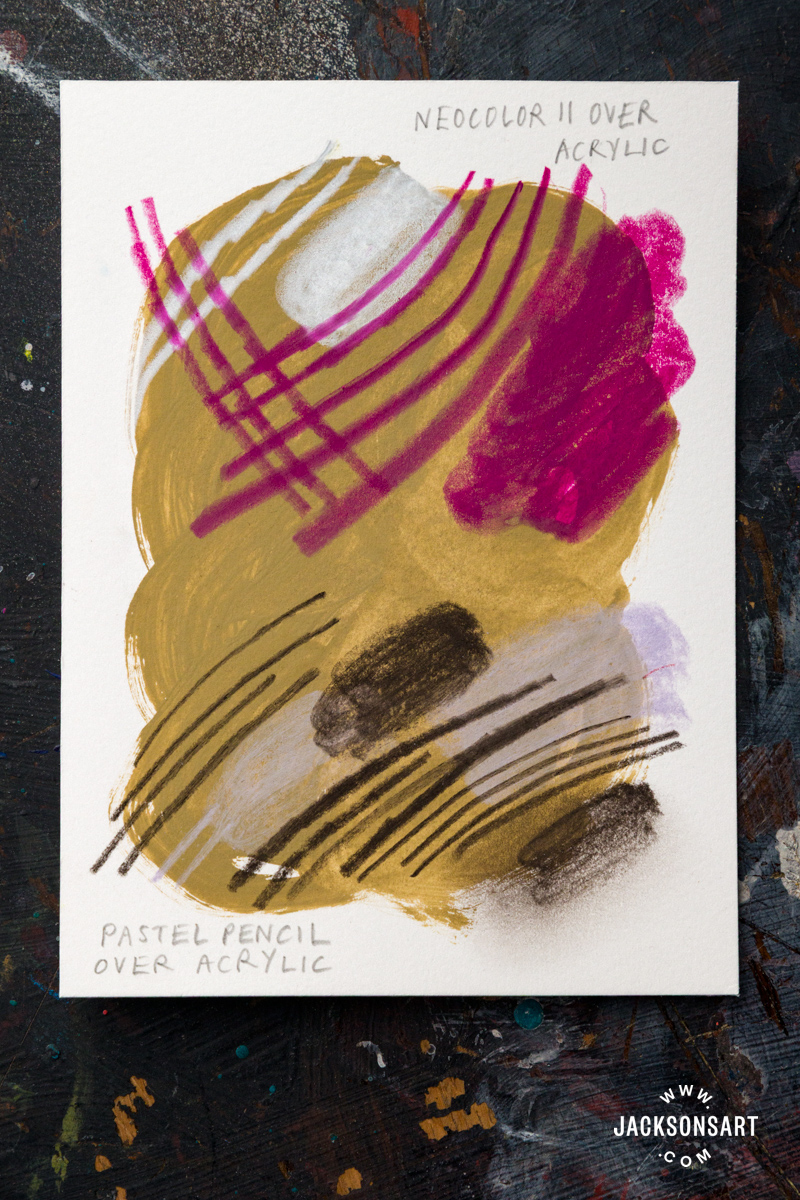
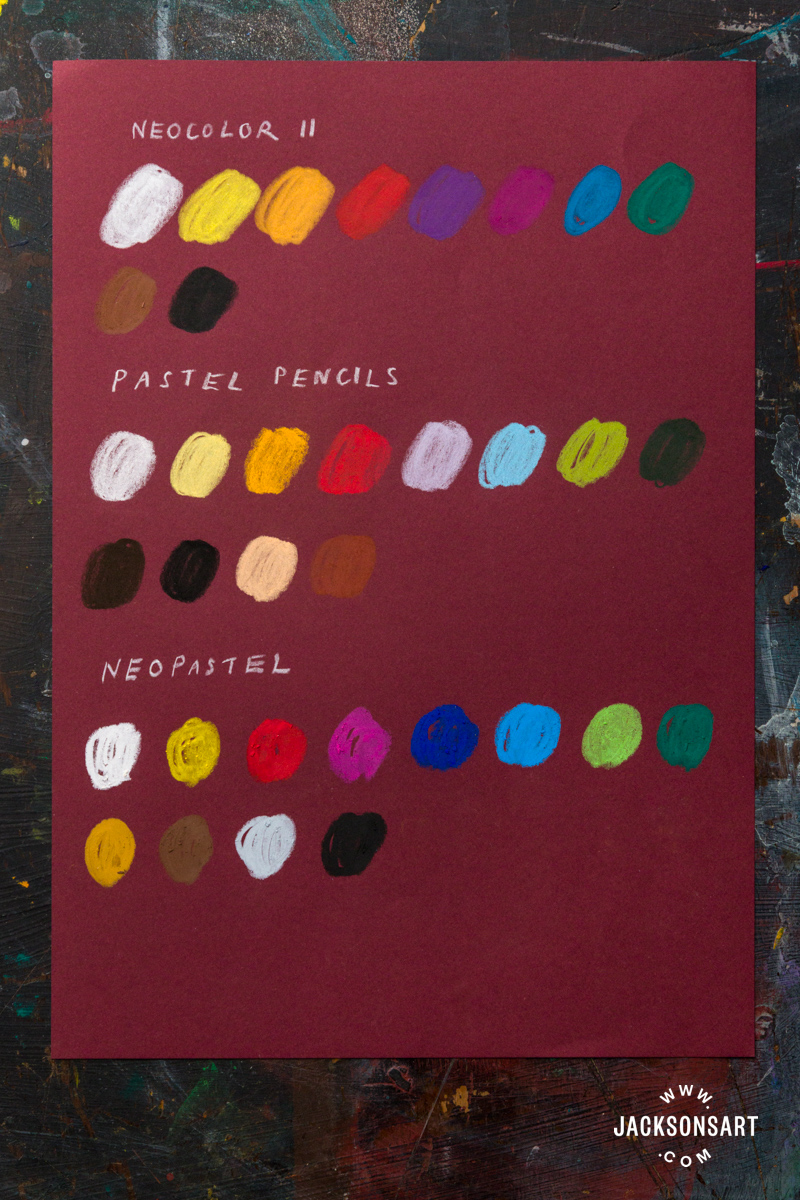
Both the Neocolor I and II work beautifully on a wide range of surfaces, including vellum, watercolour paper (both smooth and rough), and coloured or toned papers. Using different papers will produce different textures. They both work well on coloured papers – their intense pigments standing out well and creating visual interest.
One thing to note is that because both Neocolor I and II have a waxy application, working over top of them can sometimes be tricky with the wrong materials. Pens or markers applied over the top of the pastels can clog nibs or the fibres.
Neoart
Caran d’Ache Neoart 6901 wax oil pastels combine the softness of wax with the richness of oil, creating a unique texture. They also offer exceptional lightfastness, a high pigment concentration, and a smooth, expressive application on a range of artists’ surfaces. Neoart is the first wax and oil pastel range to conform to the ASTM D-6901 standard, offering exceptional colour intensity and lightfastness for up to 100 years.
The pastels have an unusual but very pleasing octagonal shape for easy handling. Aimed at professional artists, art students, and passionate creatives, Neoart pastels have a soft texture and a silky appearance. The pigment concentration feels very high – the colour lays down smoothly and evenly from the first application. They have the softness of a wax pastel, like Neocolor II, but with a slightly richer colour payoff, similar to Neopastel.
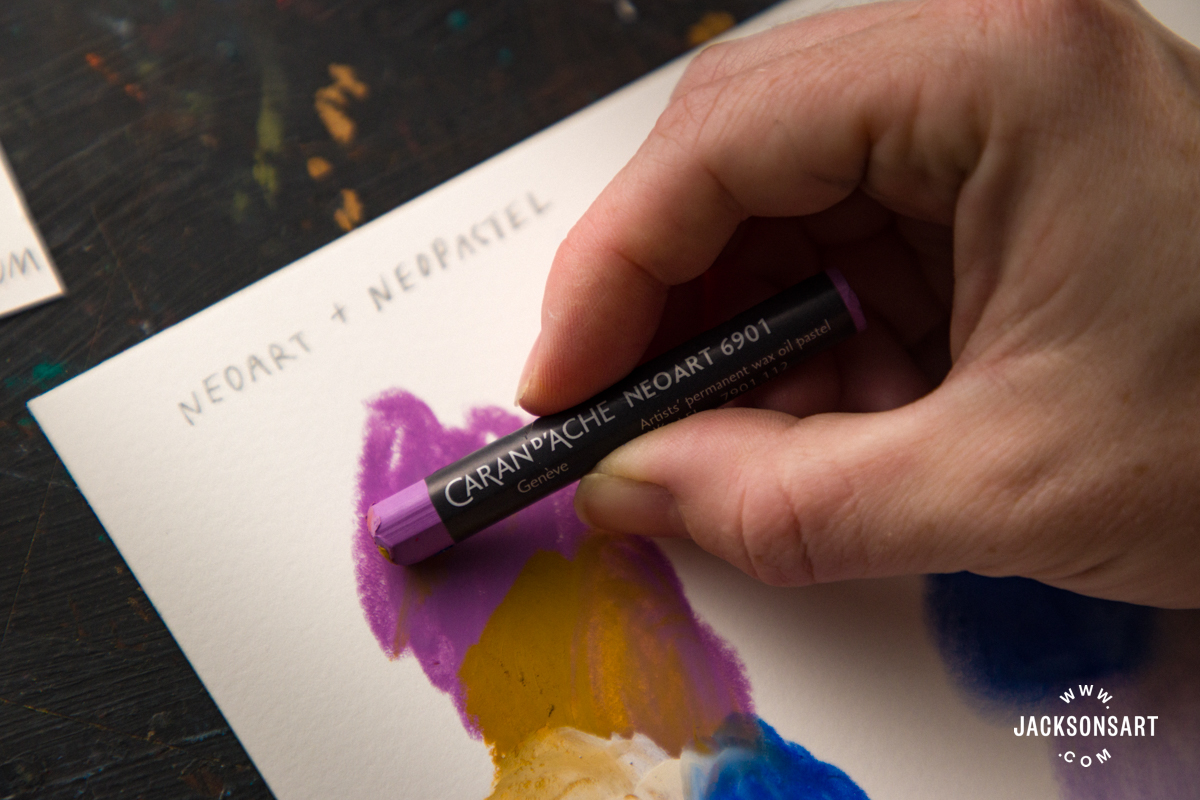
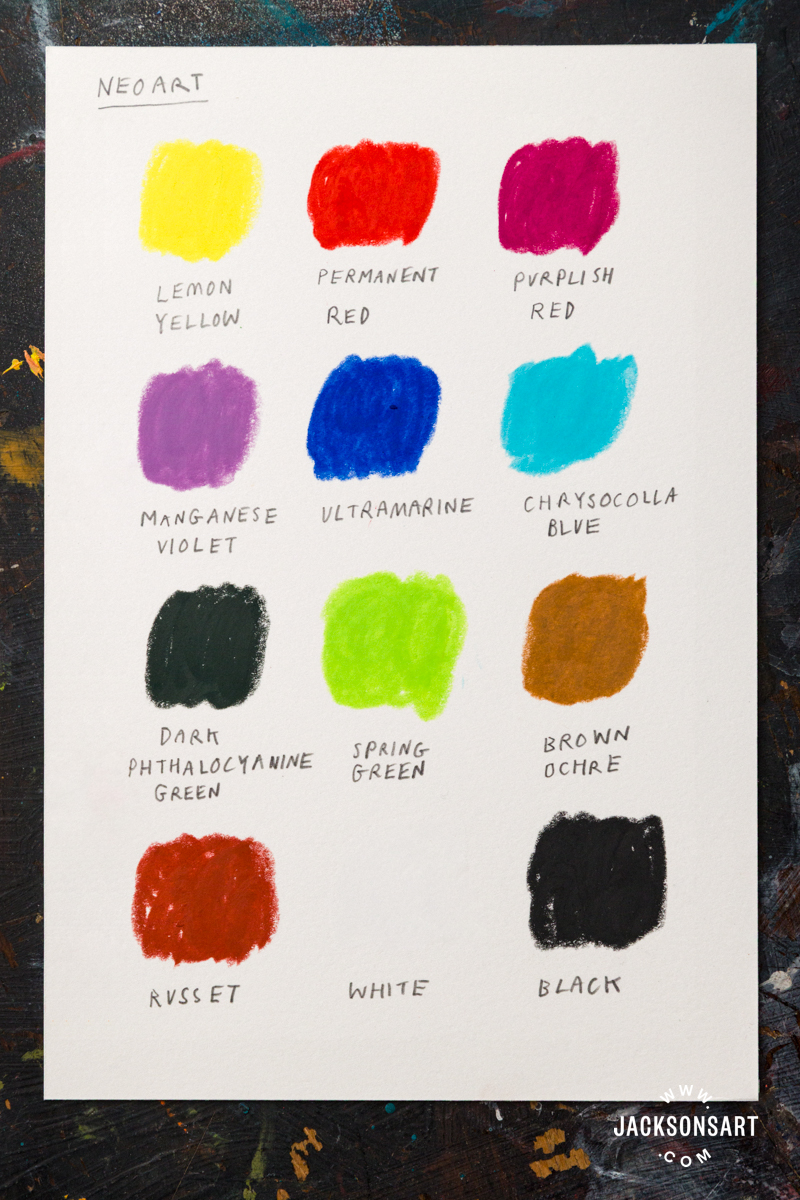
This set I tested comes in a smart cardboard storage box containing 12 colours. There are 2 other sets and 48 colours to buy individually.
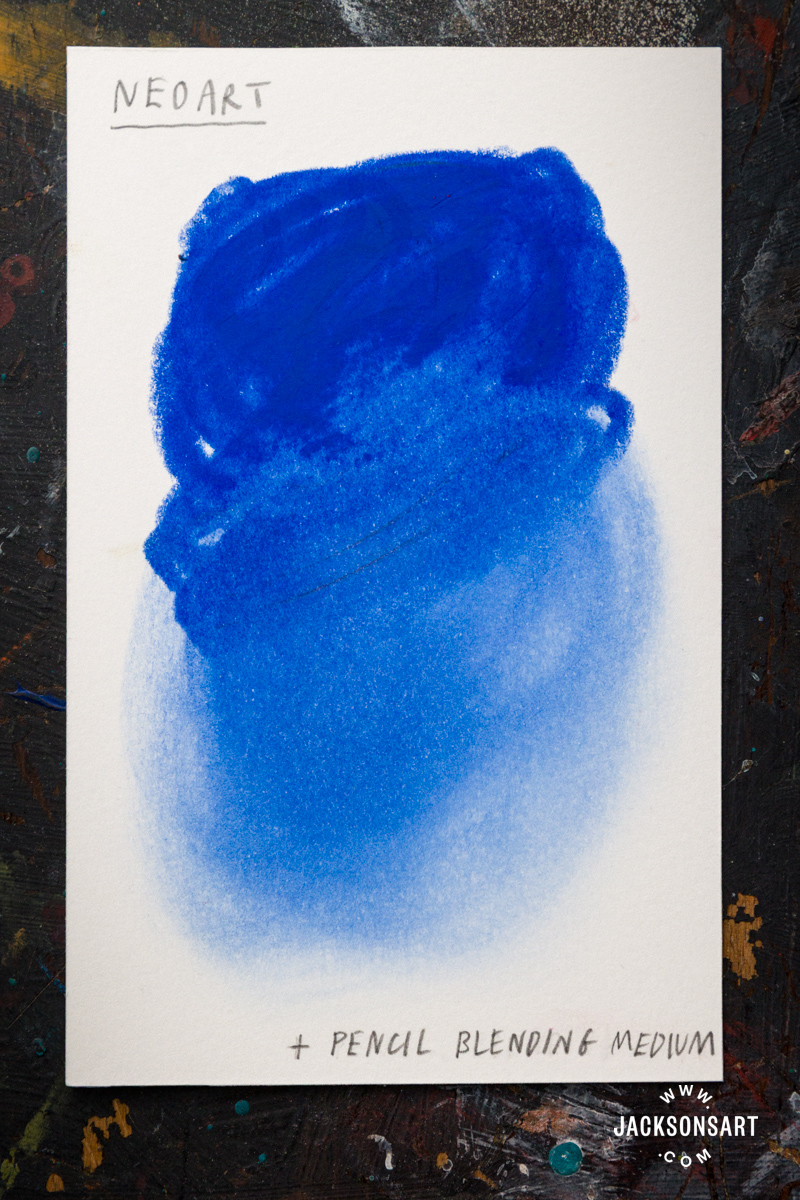
The Neoart range reflects the colours of the Caran d’Ache Luminance colour pencils, so many of your favourite colours from that range can also be found in the Neoart range. They can also be sharpened to a fine point, although you need a wider sharpener or a blade to do so – I used an oil pastel sharpener for the job. Neoart pastels are water-resistant but can be blended or thinned down with pencil blending medium or similar solvents. This allows for some interesting, soft textures alongside the solid, dense lines you can achieve by drawing with the pastels on their own.
Neopastel
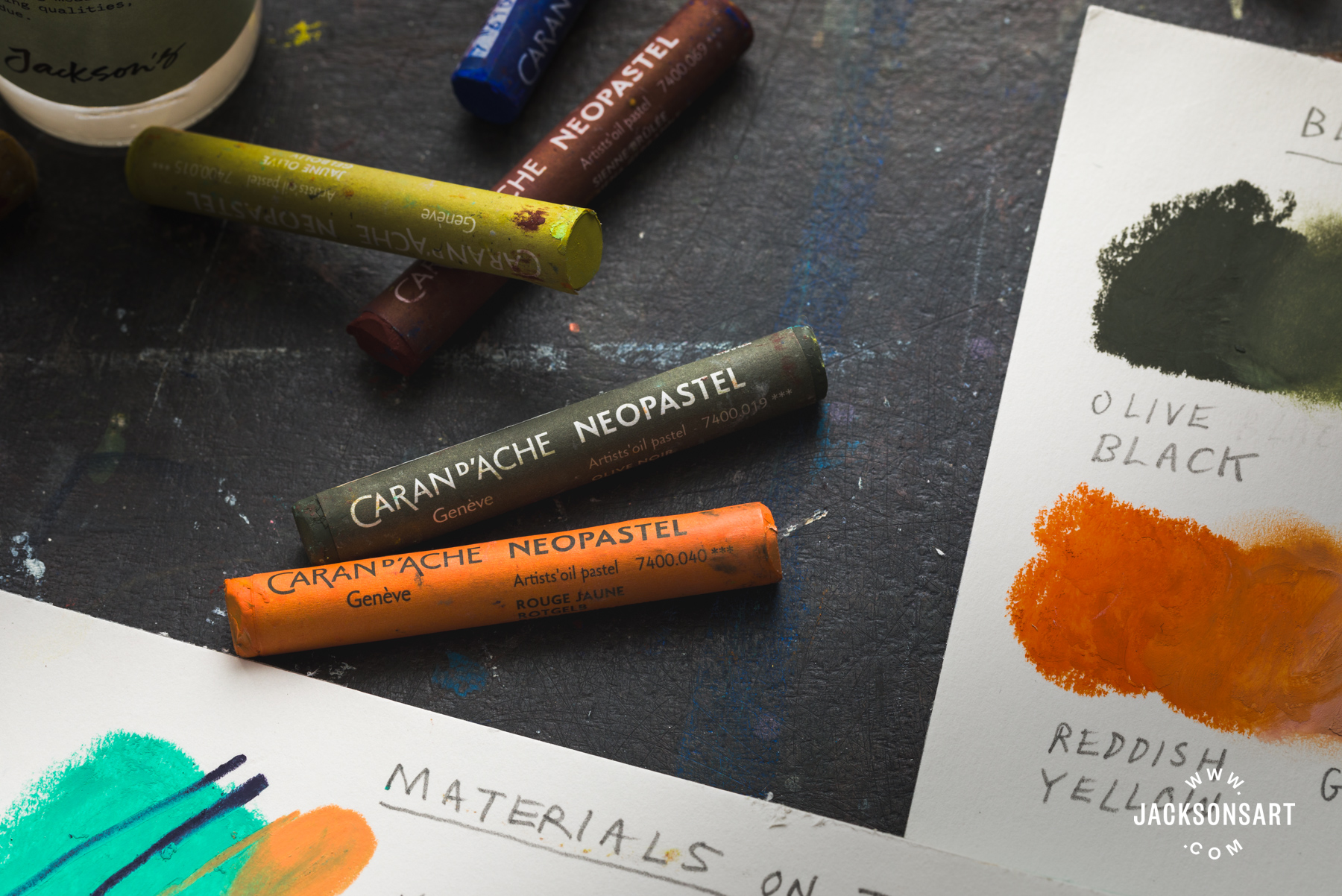
Caran d’Ache Neopastel Artists’ oil pastels are available in a huge range of colours, with 95 individual colours and 5 sets to choose from. The pastels are approximately 6.5 cm long and cylindrical in shape, providing a flat surface for broader marks as well as a sharper edge for finer details.
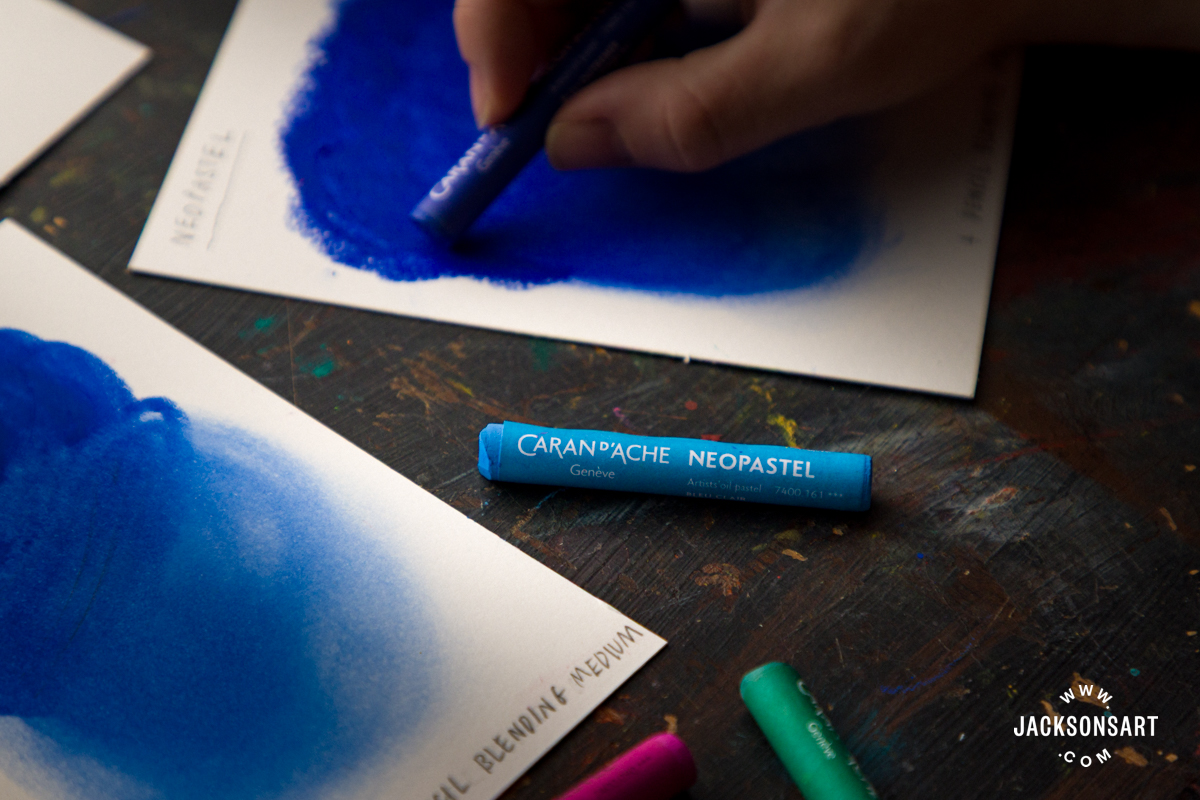
The set I tested contained 12 colours. The pastels blend well by hand, smudging easily with your fingers. They are soft, but not too soft, and can also be thinned out with a suitable solvent or pencil blending medium, making them versatile and easy to use alongside traditional oil paints.
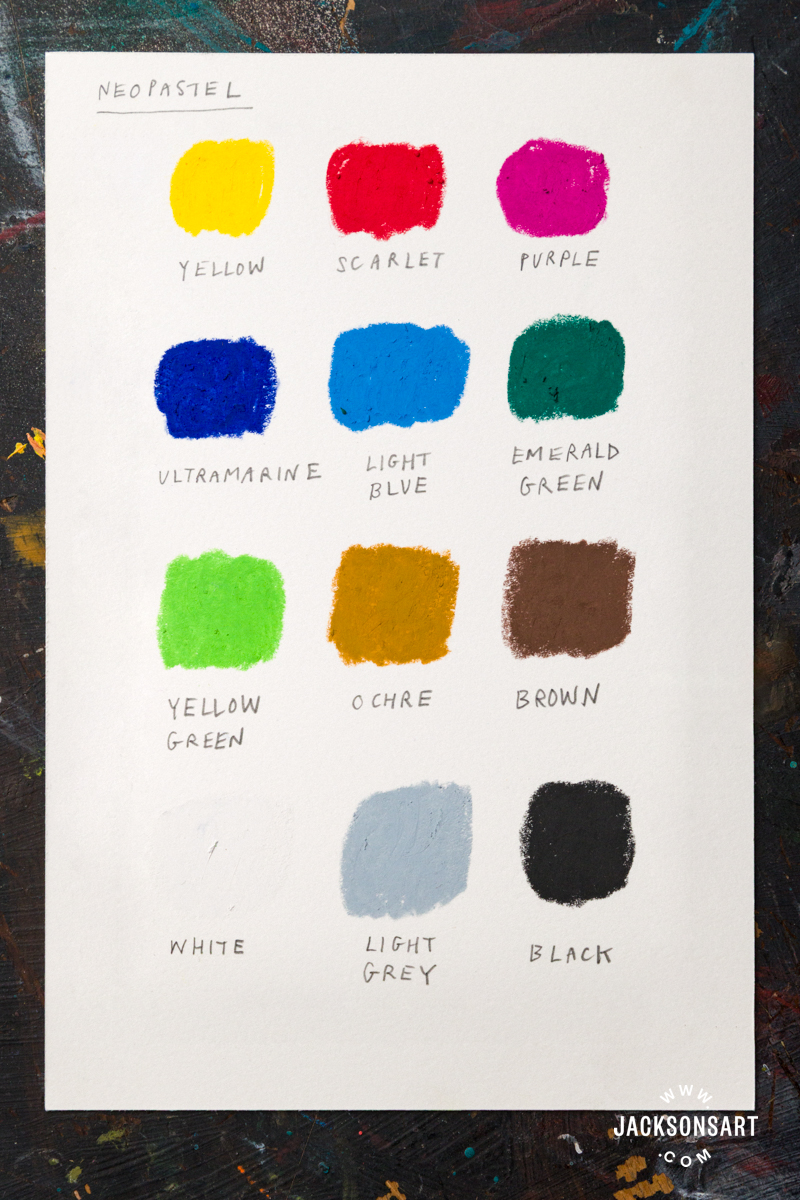
You can apply Neopastel directly to the page or, in a similar way to Neocolor II, pick up colour directly from the stick using a paintbrush dipped in solvent. Again, I was able to sharpen the Neopastels to create a point for finer detail. They offer great coverage and can be used as part of a mixed media practice.
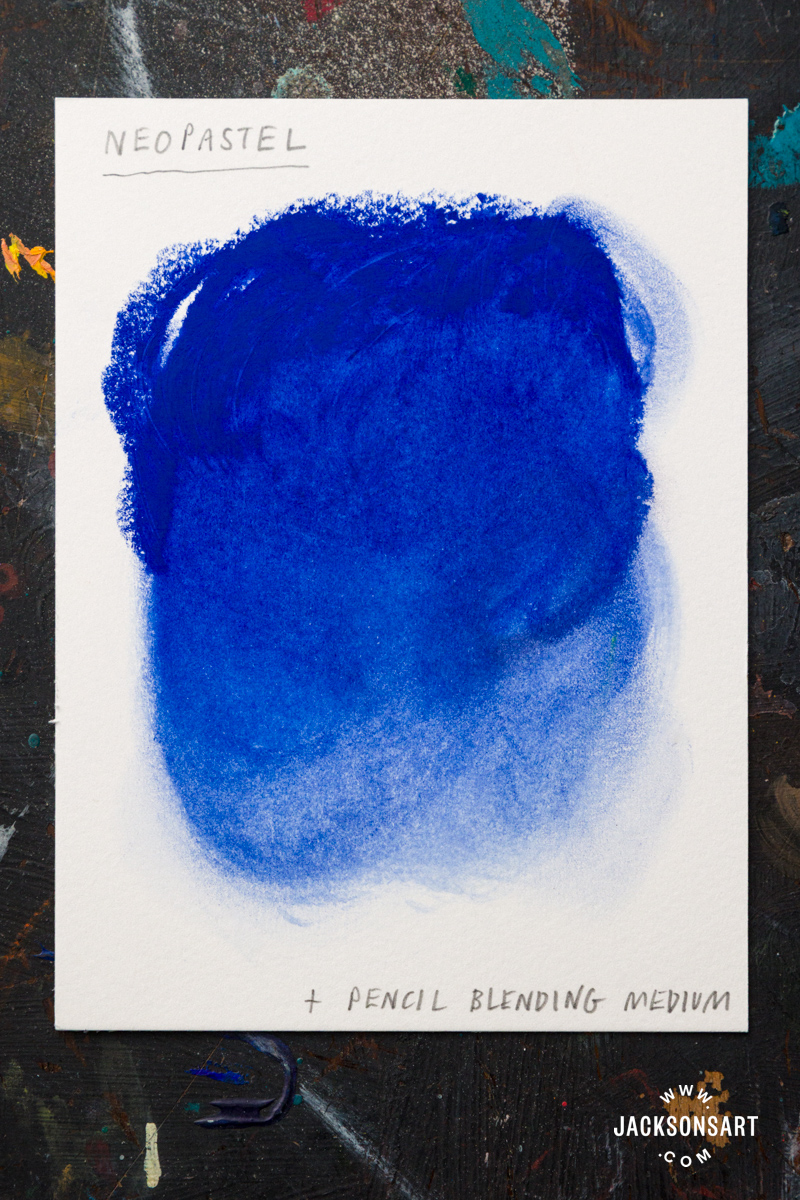
The main difference between Neoart and Neopastel is that Neopastel is a traditional oil pastel and Neoart is a oil and wax pastel hybrid. Neopastels are very rich and creamy and not powdery at all. They feel like butter and are excellent for blending. In contrast, Neoart are firmer, water-resistant wax-oil pastels, and are better suited to creating defined lines and blocking in shapes.
Pastel Pencils
Carefully selected by leading pastel artists, Caran d’Ache Pastel Pencils are designed for beginners, experienced amateurs, and professional artists alike. They can be used for preliminary sketches and detailed finishing across a wide variety of subjects.
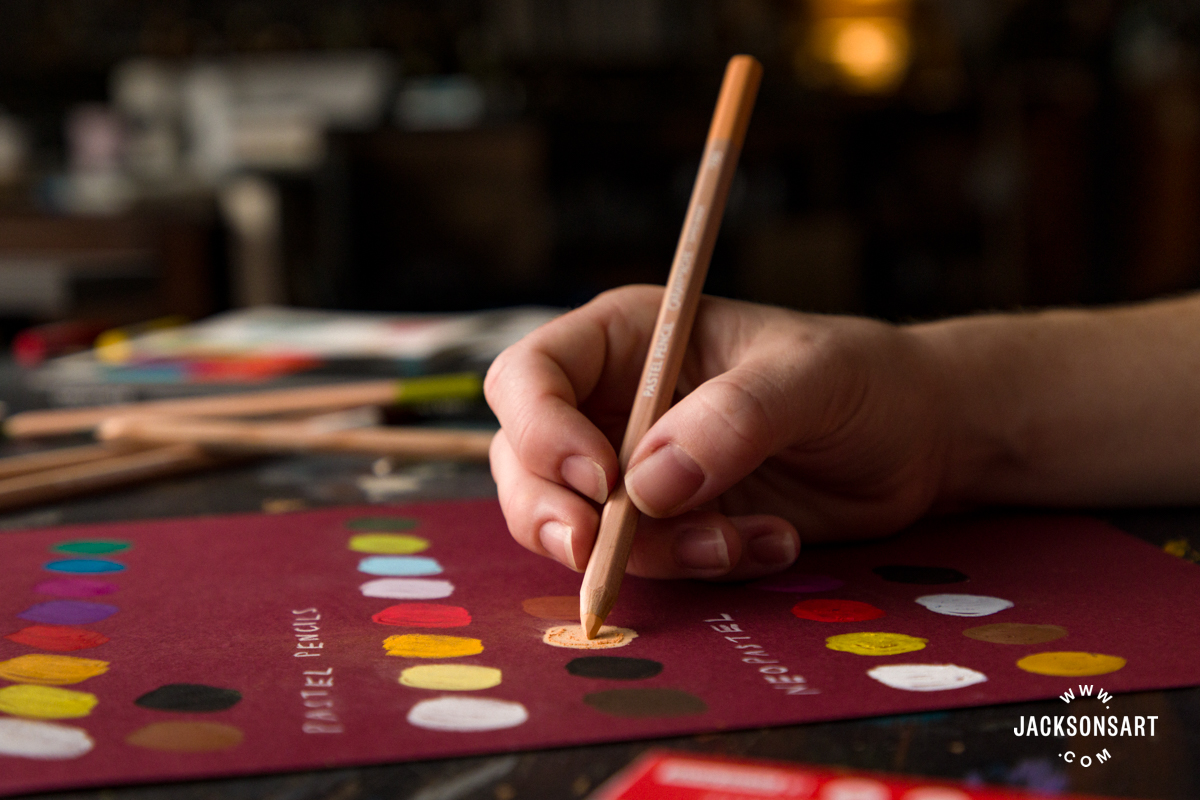
These high quality dry pastel pencils are lightfast and richly pigmented, offering smooth, creamy coverage and fine detail in a selection of vibrant colours. There are 84 individual colours and 5 sets available. They are made with cedar wood, binders, and fine pigments, and feature large 4.7 mm cores.
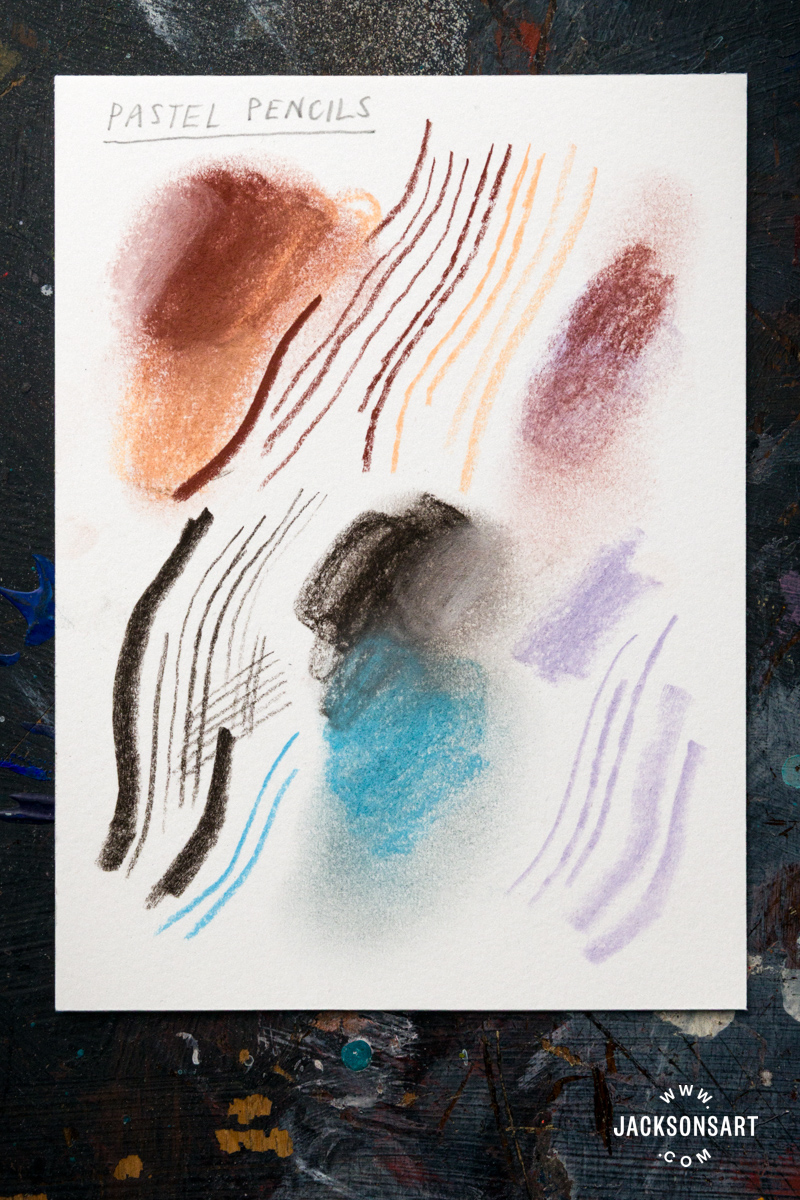
The set I tested comprised 12 pencils, with a more varied selection of colours than the previous sets, including some muted tones. As the pigment composition of each pastel colour is unique, you may notice subtle differences in texture during application. The set also includes a small piece of sandpaper, which can be used to sharpen or soften the pastel tip before drawing.
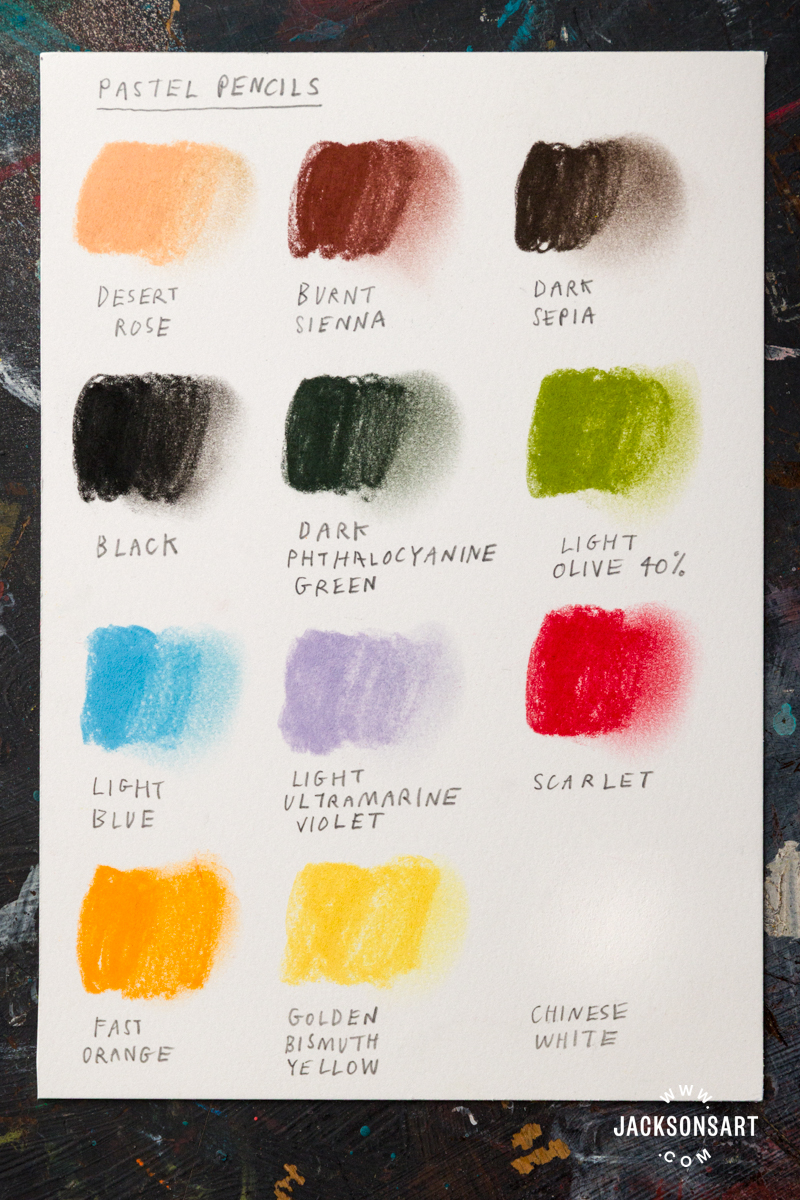
The Black and the Dark Sepia perhaps felt like the hardest of the colours, with a slightly more abrasive texture than the others. They blended well with each other and also reacted well when mixed with water to create washes of colour.
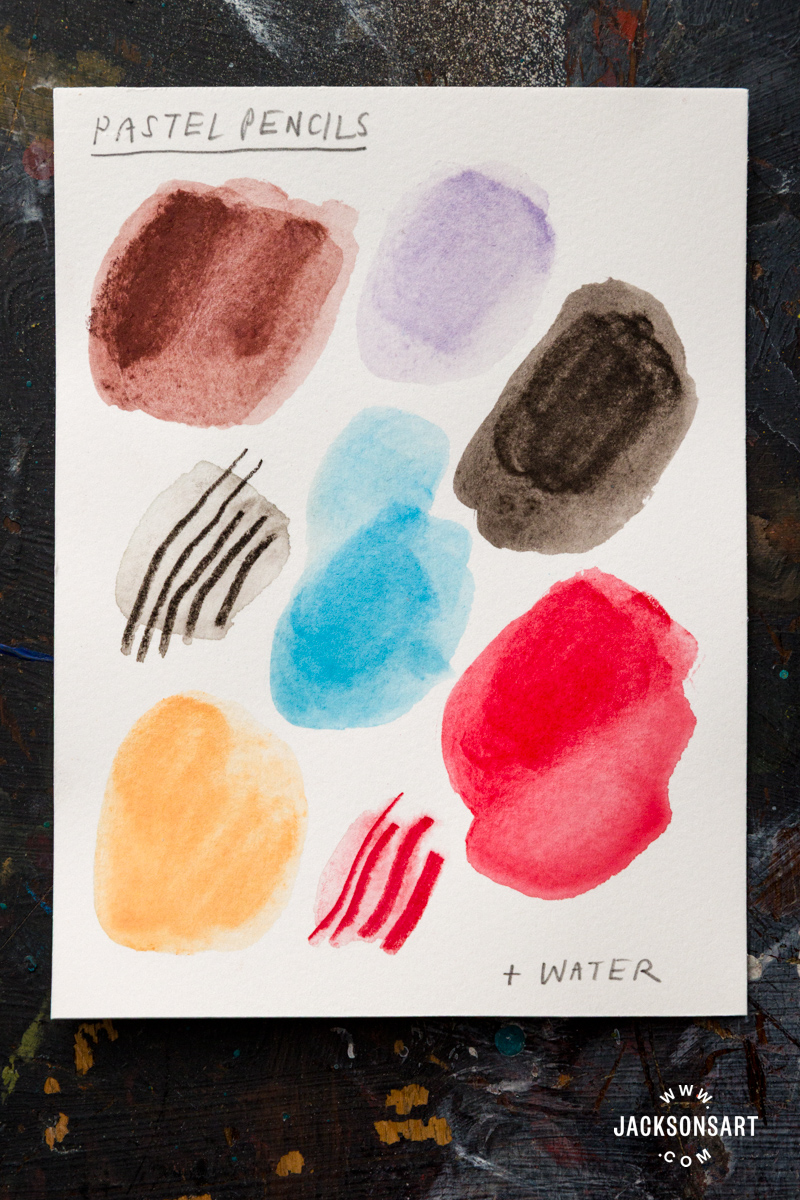
Sharpening pastel pencils can be tricky, and I found it difficult to sharpen these without my pastel sharpener. These pencils feel a little softer compared to other brands, so in the end the craft knife was the most successful option for me.
To protect pastel work on loose paper or in sketchbooks, you can leave the artwork as it is and place a sheet of archival paper over it to protect the surface. Something like Logan Wrap or acid-free tissue paper would work well. Alternatively, you can spray the page with a pastel fixative to help set the work in place and reduce smudging.
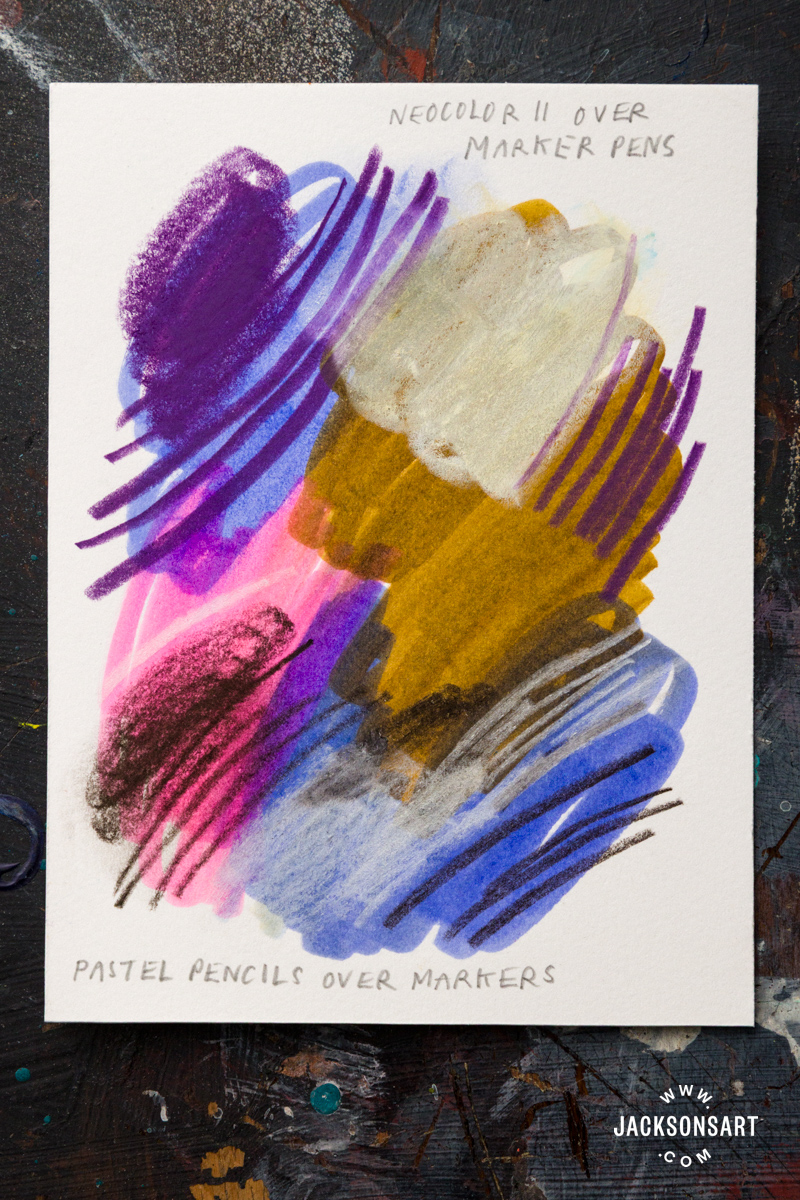
They are pleasing to use, and the colours are rich. They work well with other mediums, going over the top of watercolour or marker pens to provide added texture and line.
Comparing the Caran d’Ache Pastel Ranges
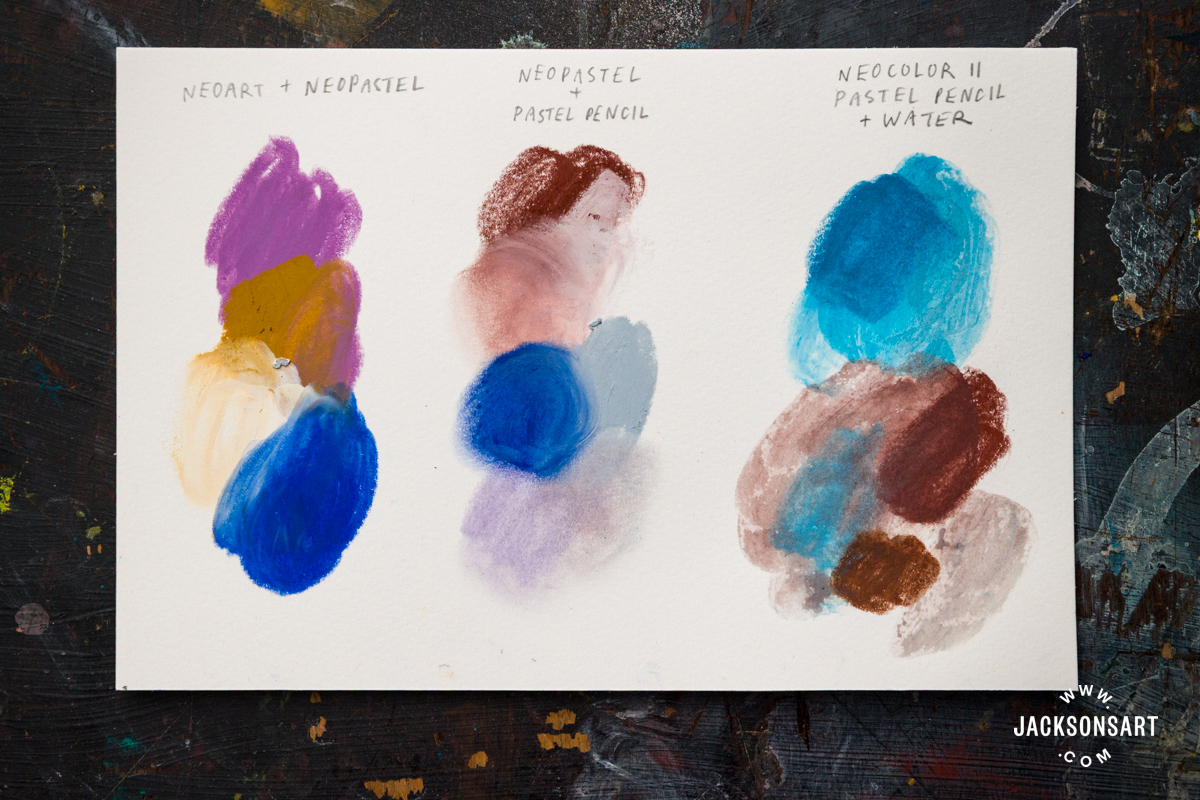

The Caran d’Ache Pastel range gives any artist a unique drawing, painting, and mark-making experience.
All the pastel lines are versatile, vibrant, and compatible with a wide range of surfaces and mixed media applications. Whether you’re layering over acrylics, experimenting with toned papers, or creating your own travel palette, these pastels are sure to inspire creativity and elevate your artistic projects.
Explore the unique qualities of each line and discover how they can transform your artwork and expand your visual voice.
Further Reading
Review of Caran d’Ache Neoart 6901 Oil Pastels
Review of Caran d’Ache Artist Neopastels for Drawing and Painting
In Conversation With Carole Hübscher and Eric Vitus, Caran d’Ache
Inside the Sketchbook of Zarina Stewart-Clark
Shop Caran d’Ache on jacksonsart.com


6 thoughts on “A Comparison of the Caran d’Ache Pastel Ranges”
I bought an extensive range of Neocolour ll pastels to draw on wax and fuse it for encaustic painting, am i using the correct wax pastel for this ?
Hello Tim,
Thanks for your comment.
You are. Wax-based pastels such as Neocolor I and Neocolor II both can we used with encaustic techniques. As Neocolor II are water-soluble, you can experiment with adjusting the marks with with water after applying them. Neocolor I will create permanent wax marks.
I hate that the white pastels weren’t tested on a buff or creme paper so that the white could be visible.
Otherwise great article.
Hi Trav,
Thank you for your comment and feedback. You make a great point and it’s certainly something we’ll consider in future.
Hi Sarah, thanks for your blog – I do enjoy Caran dAche products. My question is: I have an old box, beautifully presented, of 10 Neoart Aquarelle sticks. They must have been a present and I’ve never used them. The box says they are aquarelle wax crayons. Do you have experience of them, and are they equivalent to any Caran d’Ache product today?
Hi Hector,
Thank you for your comment. Caran d’Ache no longer produce the water-soluble Neoart range. The current Neoart 6901 range is completely water-resistent. However, we’d recommend Neocolor II as an alternative to the older product you have, these are wax-based and water-soluble.