



Artists make a great deal of effort to protect their artworks from scratches and scrapes, so they’d be forgiven for not considering these gestures to create the artworks themselves. Simply put, sgraffito is the act of scratching into the surface to add linear detail, texture, and pattern by exposing the layer below. In this article, I explore the ancient ceramic origins of the technique, then look to examples by Rembrandt, George Clausen, and Paul Klee, before demonstrating how to make your own sgraffito paintings and drawings.
Articles in the Techniques Series define the meaning and context of art making processes and give practical tutorials on how to work with them.
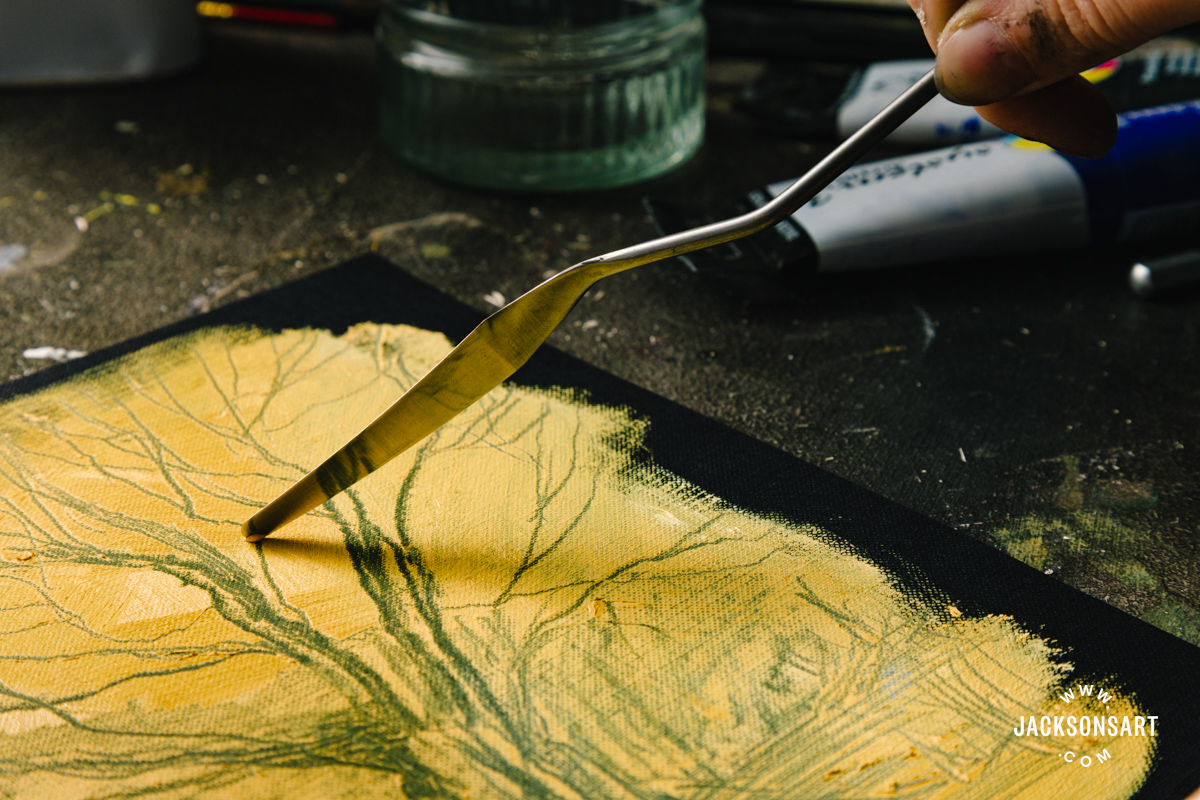
Definition: Sgraffito derives from the Italian word ‘sgraffiare’, which means “to scratch”. Across mediums, it describes artworks where the surface material has been physically scratched off to create visual effects.
Contents
What is the Effect of Sgraffito?
Demonstration of Sgraffito with Oil and Acrylic
Demonstration of Sgraffito with Oil and Soft Pastel
Demonstration of Sgraffito with Watercolour
What is the Effect of Sgraffito?
In painting, sgraffito takes on different visual connotations depending on the quality of line or stroke applied. By jaggedly scratching a surface, sgraffito can suggest violence. A broken line may imply that the artist has approached the surface of the work with aggression or speed. On the contrary, sgraffito can be soft and romantic when used to delicately pick out individual wispy hairs or foliage. The individual personality of the scratched mark is key to its visual interpretation, so it should be treated with the same emotive capabilities as the quality of brushstrokes.
Sgraffito drawings through wax or oil pastel may remind us of childhood art activities, but they have brilliant visual potential alongside their playfulness. In oil and soft pastel works, sgraffito may be used sparingly to add texture or expose light in selective areas, producing effects impossible to replicate without scratching. In illusionistic or realist works, adding sgraffito reminds the viewer of the materiality of the paint and brings the eye back to the surface.
The History of Sgraffito
The origin of sgraffito in fine art derives from thousands of years of ceramic history. Scraping designs into clay traverses global cultures and eras as an intuitive and tactile means to decorate vessels. Sgraffito was particularly refined by the artisans of Ancient Greek pottery, where a contrasting coloured ‘slip’ was applied to the surface of a pot until it had dried slightly, but remained damp and malleable enough to scrape off. This layer was then scratched away, revealing the red clay below. This technique developed into artisans carefully painting their designs onto pots before firing, instead of creating the entire design with sgraffito. Even after this advancement, sgraffito was still used to scratch linear details into designs. We can see this in the folds of fabric and the rendering of the men’s and dog’s musculature in this example of a Pelike (storage jar).
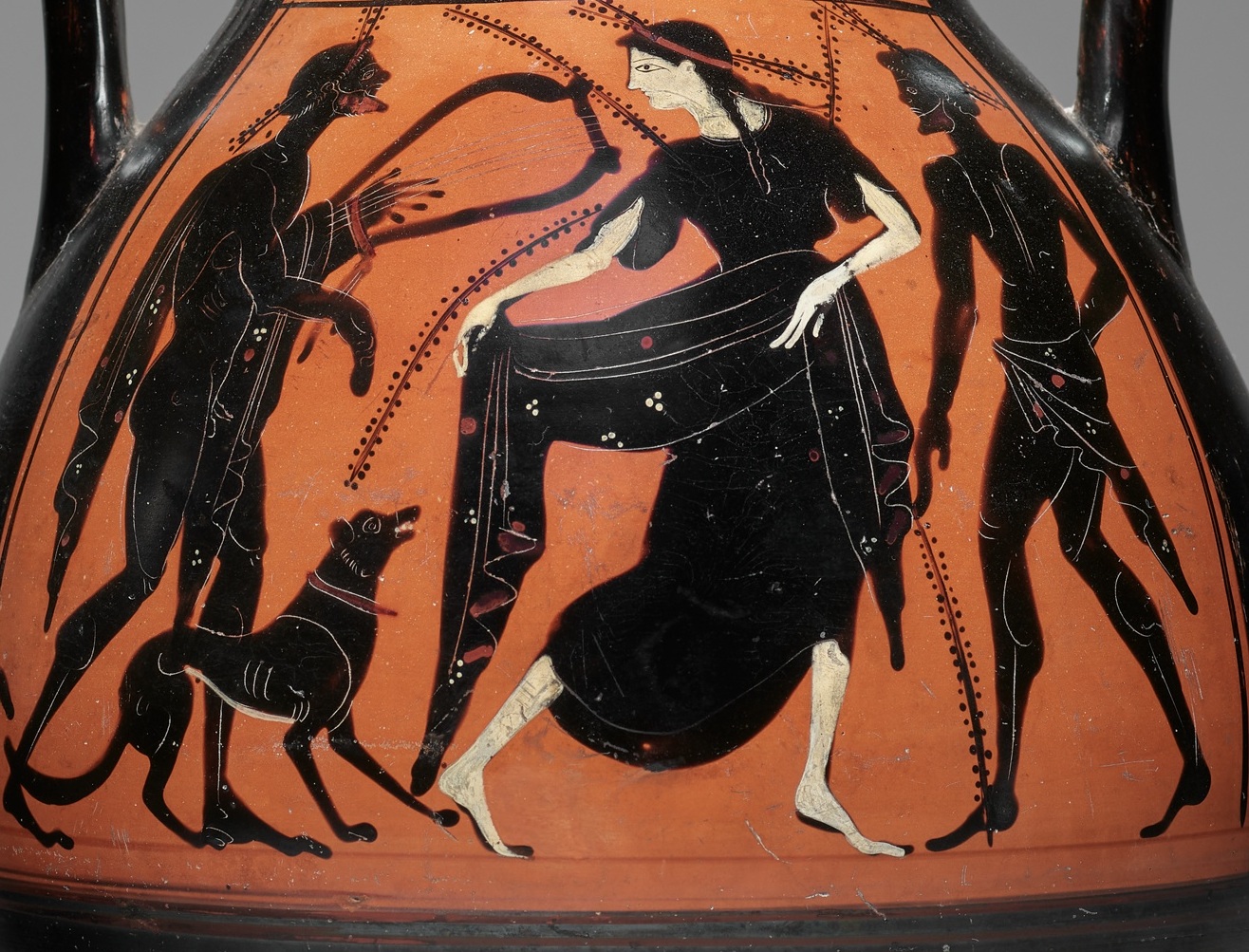
Greek, Athens
Terracotta pot, 34.9 cm | 13.7 in
Art Institute of Chicago
This same technique is seen in Byzantine pottery about 1500 years later, like in this stylised Bowl with Face. In a distant part of the world from a similar period, the technique was also used by Cizhou potters from Northern China and Mongolia to add floral decoration to their wares. With such an established global legacy, applying sgraffito to ceramics is a living discipline that’s still commonly practiced to this day.
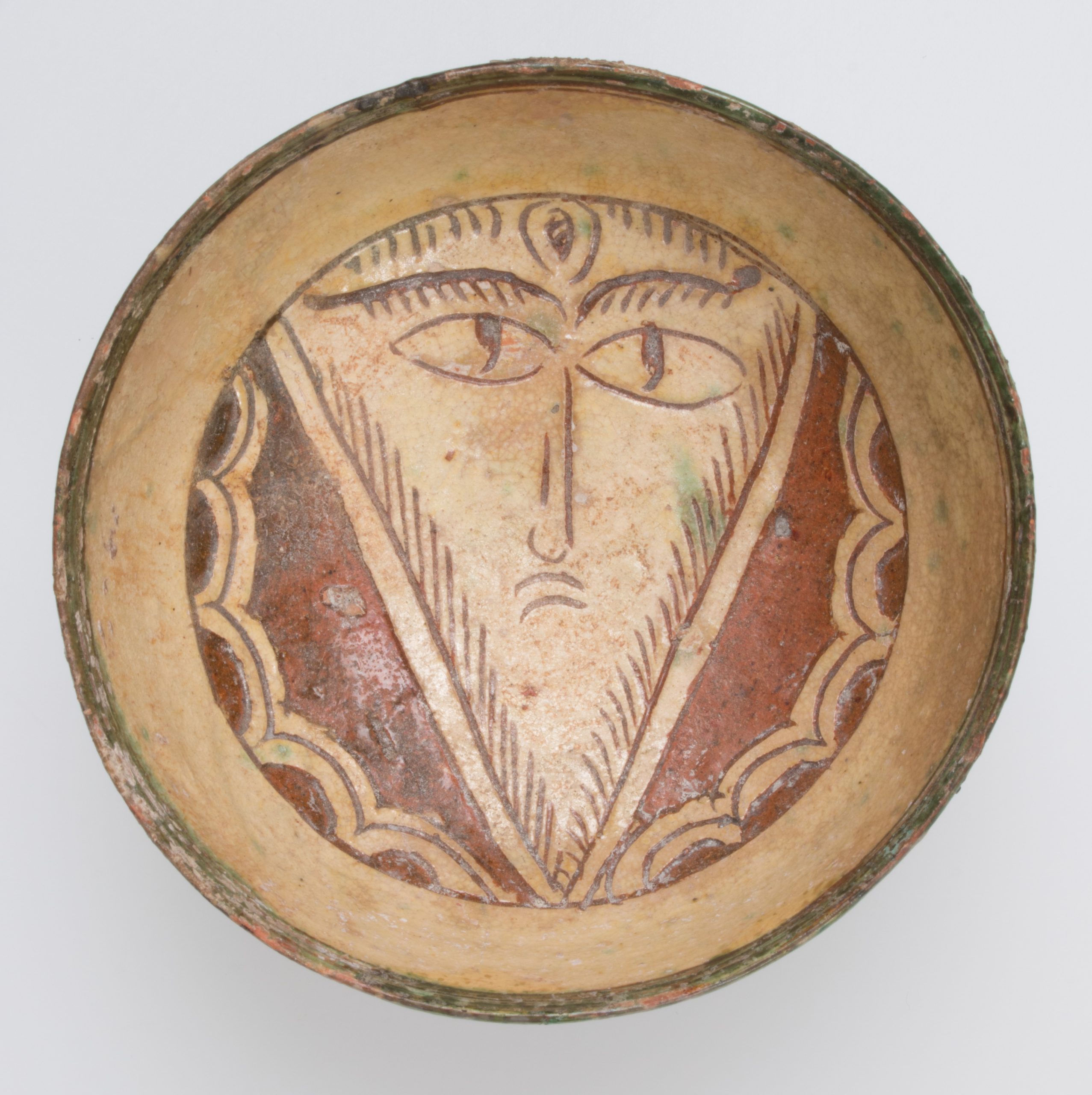
Byzantine
Glazed earthenware with sgraffito, 6.2 × 11 cm | 2.4 x 4.3 in
The Metropolitan Museum of Art
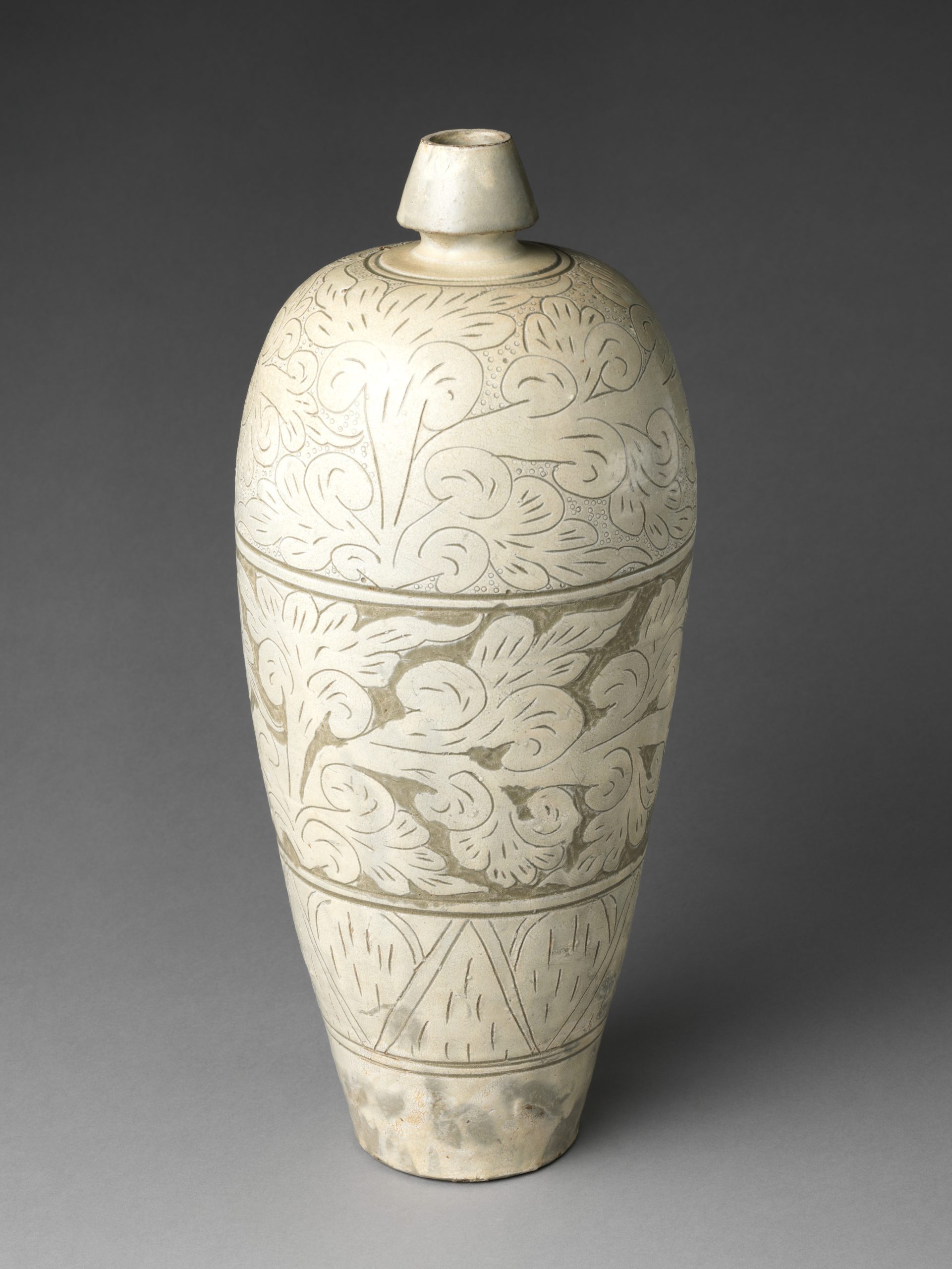
Liao Dynasty, China
Stoneware with sgraffito, 47 x 19.1 cm | 18.5 x 7.5 in
The Metropolitan Museum of Art
Sgraffito frescoes decorated the walls of Renaissance Italy, providing an alternative aesthetic finish to painted ones. Raphael’s workshops honed artisans of the technique, which can be seen surviving on buildings to this day, such as the Palazzo Bianca Cappello in Florence and Palazzo della Carovana in Pisa. The following image shows a design sheet for an ornate sgraffito fresco. The technique was spread across Northern Europe by artisans in the 16th century, so examples appear throughout the continent. Interest in the technique was later renewed by the artists of the Art Nouveau movement, whose core concerns included the elevation of craft and the value of decoration.
The Belgian artist Paul Cauchie applied over 400 sgraffito facades, including his own home, The Cauchie House in Brussels, whose huge sgraffito exterior acted as a billboard for his work.
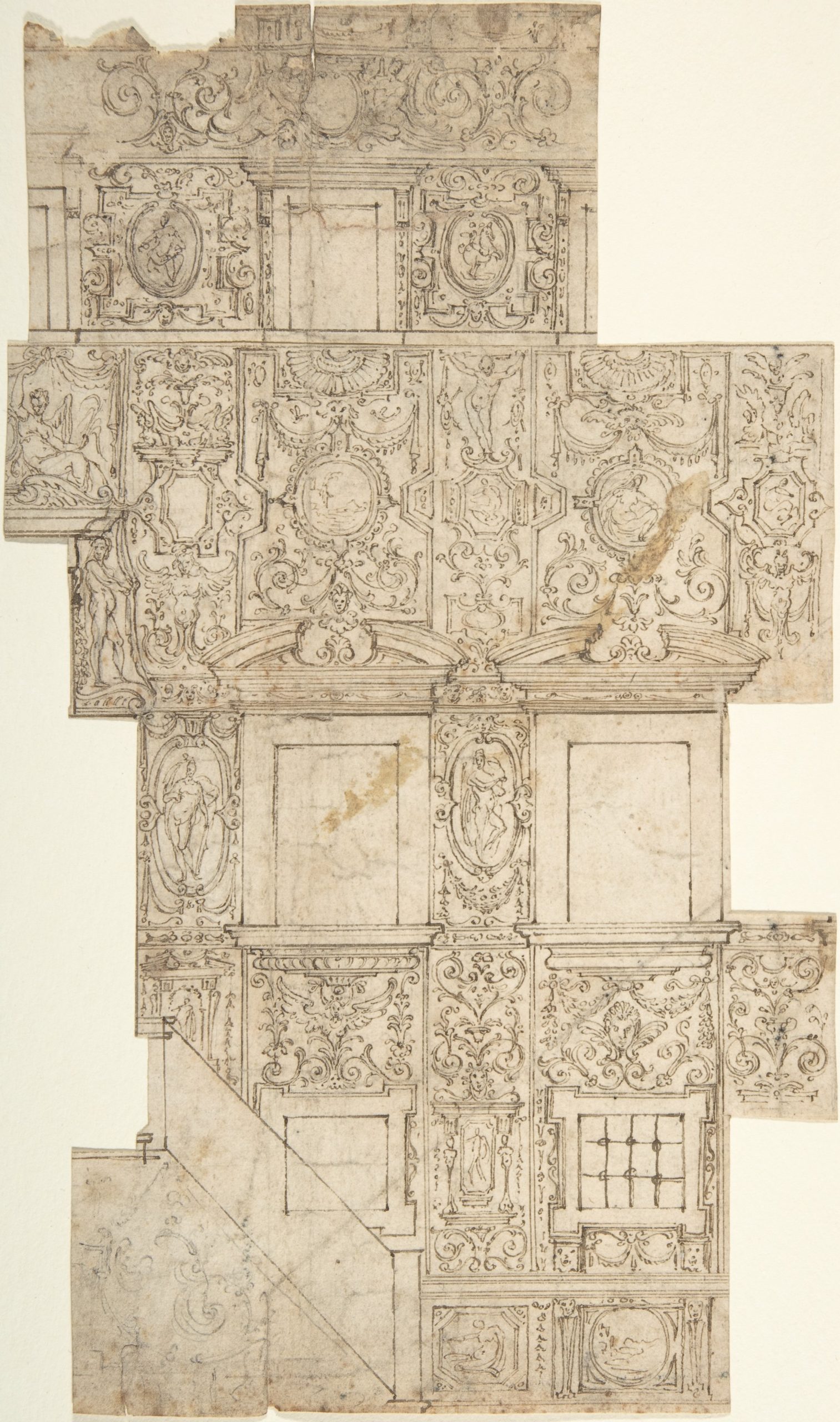
Circle of Bernardino Poccetti, Italian
Pen and brown ink over black chalk, 30.8 x 18.3 cm | 12.1 x 7.2 in
The Metropolitan Museum of Art
Sgraffito was also used for decorative layering and detail in panel paintings. In this beautiful example, The Presentation of the Virgin in the Temple by Paolo di Giovanni Fei, the child Virgin Mary is welcomed to the temple by the high priest, seen giving a sidelong glance to her parents at the side of the room, with her arms folded. The patterning on her robes, along with the priest’s, their halos, and the trim of the clothing on the others in the church, are all achieved through sgraffito. Here, a layer of egg tempera paint has been scraped away to reveal the gold gilding beneath, leaving behind rich patterns.
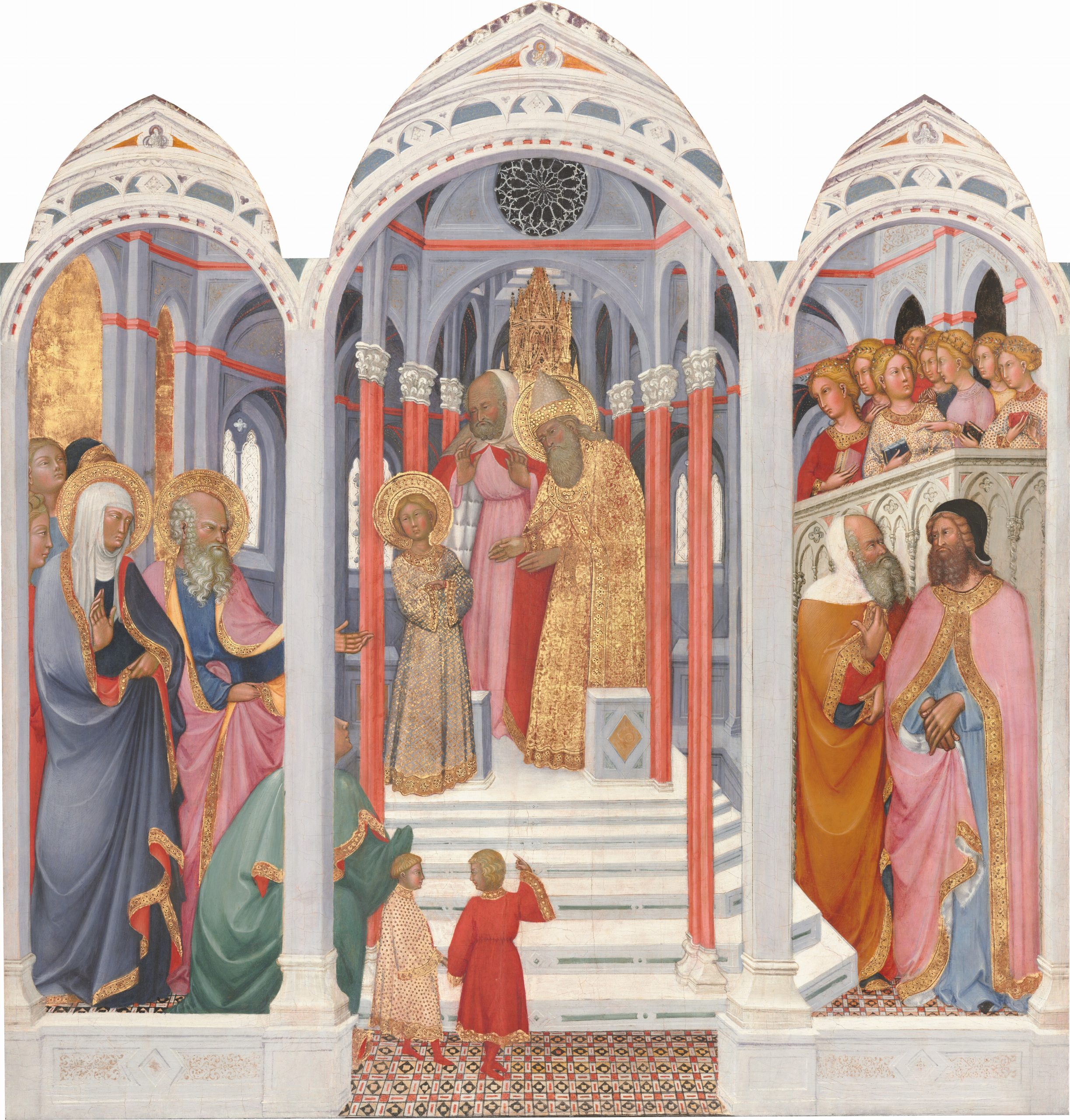
Paolo di Giovanni Fei
Tempera on wood transferred to hardboard, 146.1 × 140.3 cm | 57.5 x 55.2 in
National Gallery of Art
Sgraffito with oil paint is effective and popular since it’s so malleable when wet. It creates visual impact by exposing the ground colour and raising thick edges in impasto paintwork. Rembrandt used sgraffito throughout his career to pick out individual hairs and add physical texture to his portraits. In this Self-Portrait from his early twenties, his face is cast dramatically in shadow, obscuring his gaze from us. His curly hair twirls around his head, picked out in twisting sgraffito marks, to reveal a golden-brown ground beneath the paint layer. He used the end of his brush handles to create the effect – saving himself the time it would take to paint out individual hairs with a tiny brush.
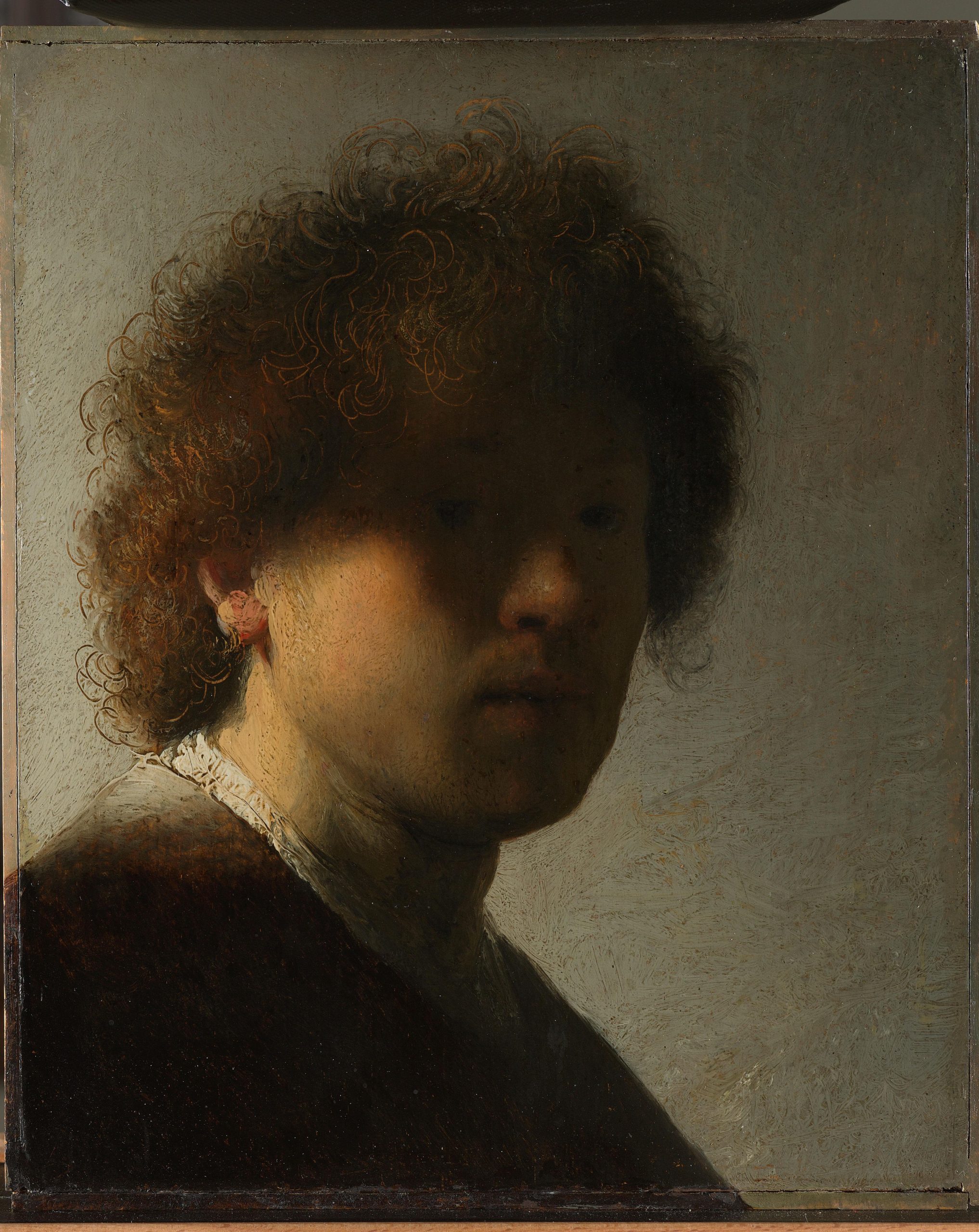
Rembrandt van Rijn
Oil on panel, 22.6 x 18.7 cm | 8.9 x 7.4 in
Rijksmuseum
Aside from hair, sgraffito is especially useful for picking out blades of grass in landscape painting. Although it’s intuitive to add sgraffito to oil paint since it’s so malleable, watercolour paintings can also be scratched. In A Boy Cutting a Stick by Sir George Clausen, we see swipes of a blade picking out thin lines of grass through the paint. This gives the landscape a sharp naturalistic effect, and provides visual contrast with the soft washes of colour. It helps us feel the crunch of his boots in the foliage and the rustle of leaves as he pulls the branch. Clausen was a British Romantic artist who specialised in rural Realism. He was influenced by the Impressionists – namely Millet for his pastoral scenes – and their handling of light. They also utilised sgraffito in their works to add necessary texture and highlights to paintings.
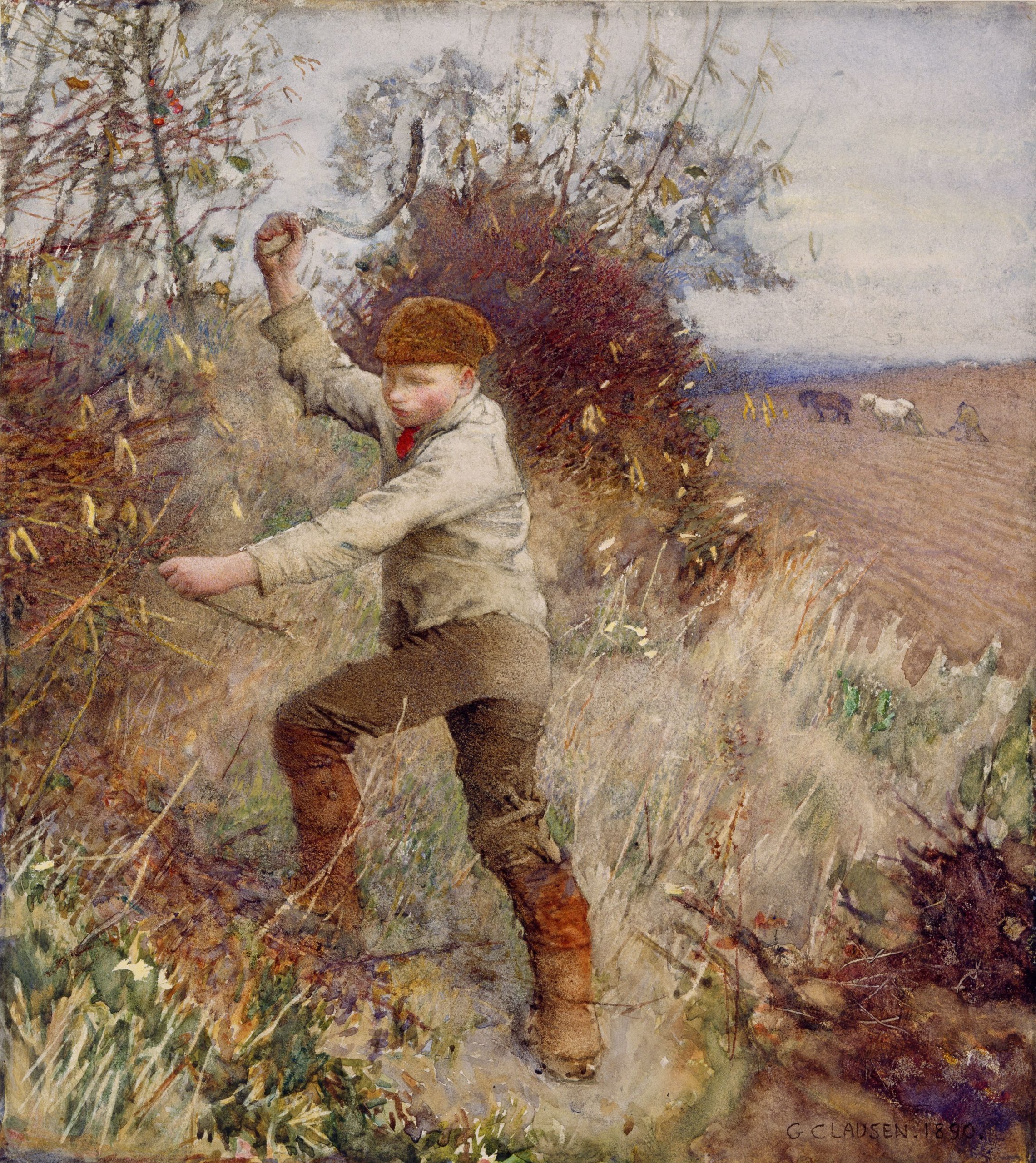
Sir George Clausen
Watercolour with scraping on paper, 38.9 x 35.3 cm | 15.3 x 13.9 in
Birmingham Museums
In the next century, sgraffito continued to maintain experimental and visual appeal for artists. Paul Klee utilised sgraffito in Fish Magic to expose a layer of bright colours beneath a black surface coat of oil paint. The depth of his scratched marks determined the resulting colour, where shallower marks exposed the underpainting colours, and deeper lines exposed the raw white ground below. We see fish shimmer to the surface, flanking a clock tower complete with flowers, vases, and mischievous figures. The work is like a playful but sophisticated interpretation of a common art activity for children, where colours on a sheet of paper are covered with wax crayon, before being scraped off to reveal the colour below. This gives the work a youthful joy amid the heavy darkness, and a reminder of time passing.
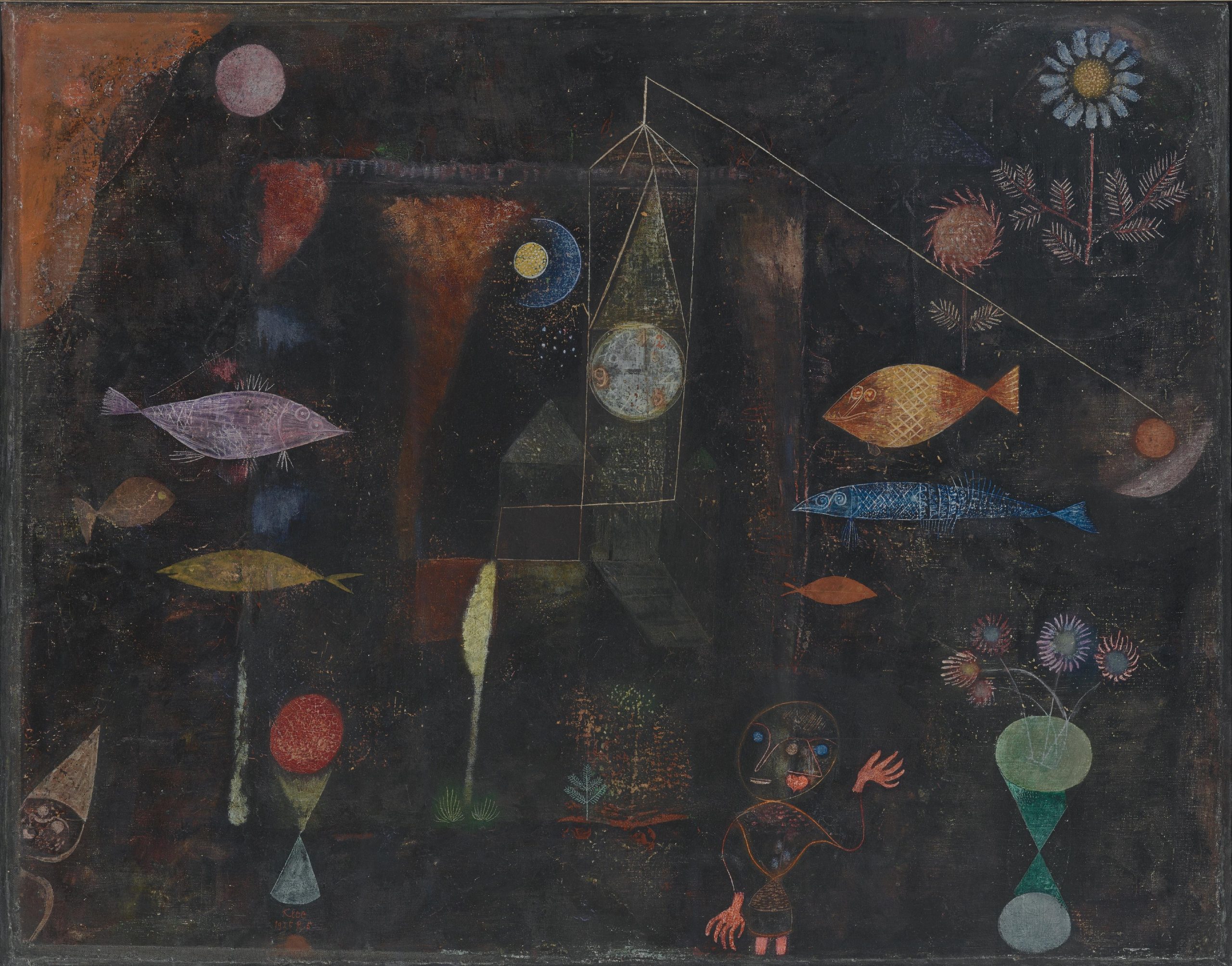
Paul Klee
Oil and watercolour on canvas on panel, 77.2 × 98.4 cm | 30.4 x 38.7 in
Philadelphia Museum of Art
Aside from forming entire artworks and patterns, sgraffito can be used sparingly to pick out decisive, minimal linework. Henri Laurens was a Cubist sculptor and illustrator, whose works reveal this crossover of disciplines. For instance, this painting, Reclining Female Nude, sees a figure blocked in with geometric angles forming her head and legs, with a portion of marble rounded smoothness across her white back. Laurens used sgraffito to carve into the paint, to create a ragged line across her shoulder and right leg. This instance of sgraffito reinforces the sense that she is carved from a block, too, leaving us with the ambiguous question of whether she’s trapped or strengthened by it.
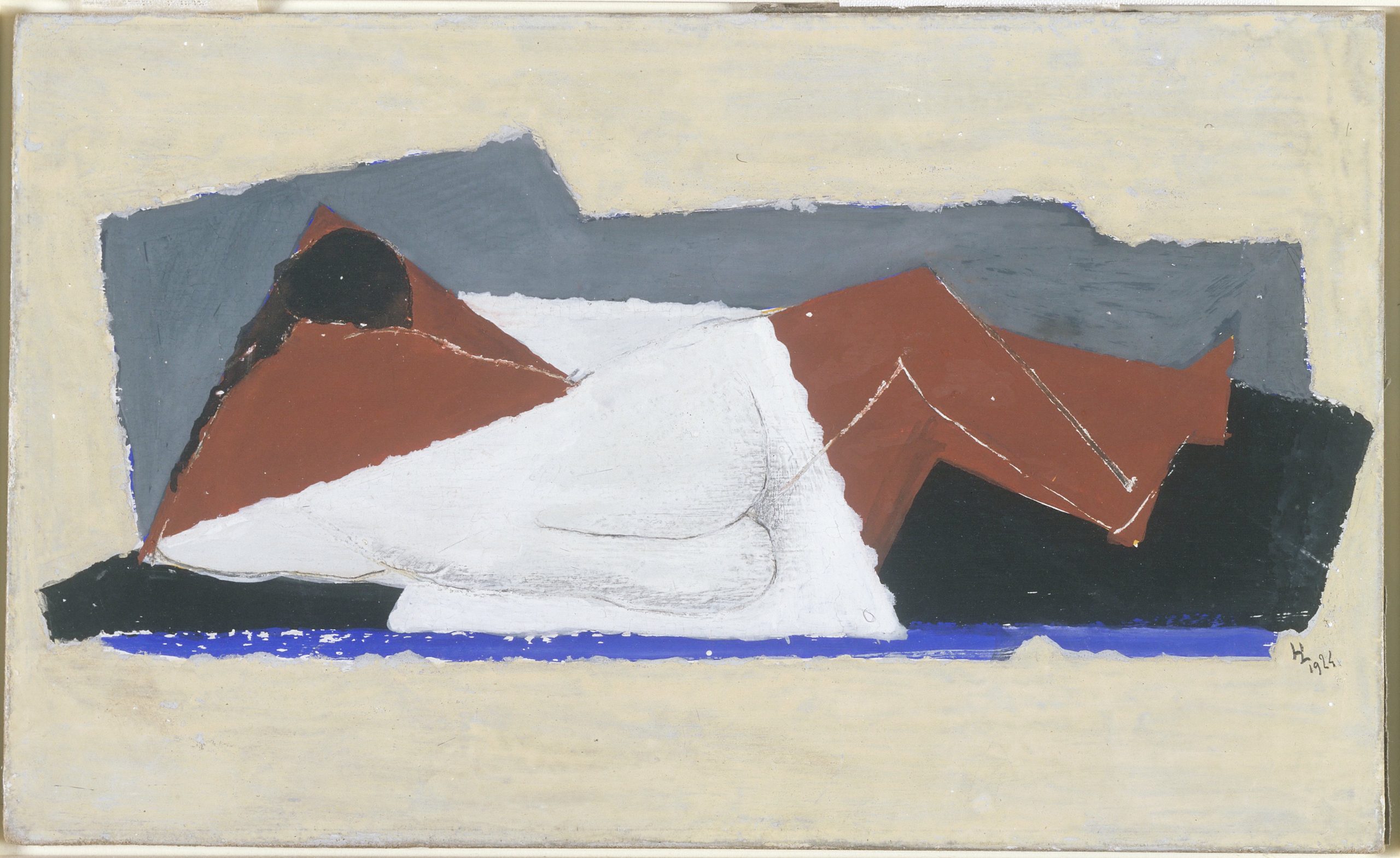
Henri LaurensGouache on white ground on board, 14.9 x 24.3 cm | 5.9 x 9.6 in
Minneapolis Institute of Art
Demonstration of Sgraffito with Oil and Acrylic
To begin my examples, I made a sgraffito mark-making example sheet. I applied a layer of Quiancridone Purple to a sheet of Jackson’s Oil Paper, before scratching at the surface with three different implements. From left to right, I used a palette knife, craft knife, and the end of a brush handle.
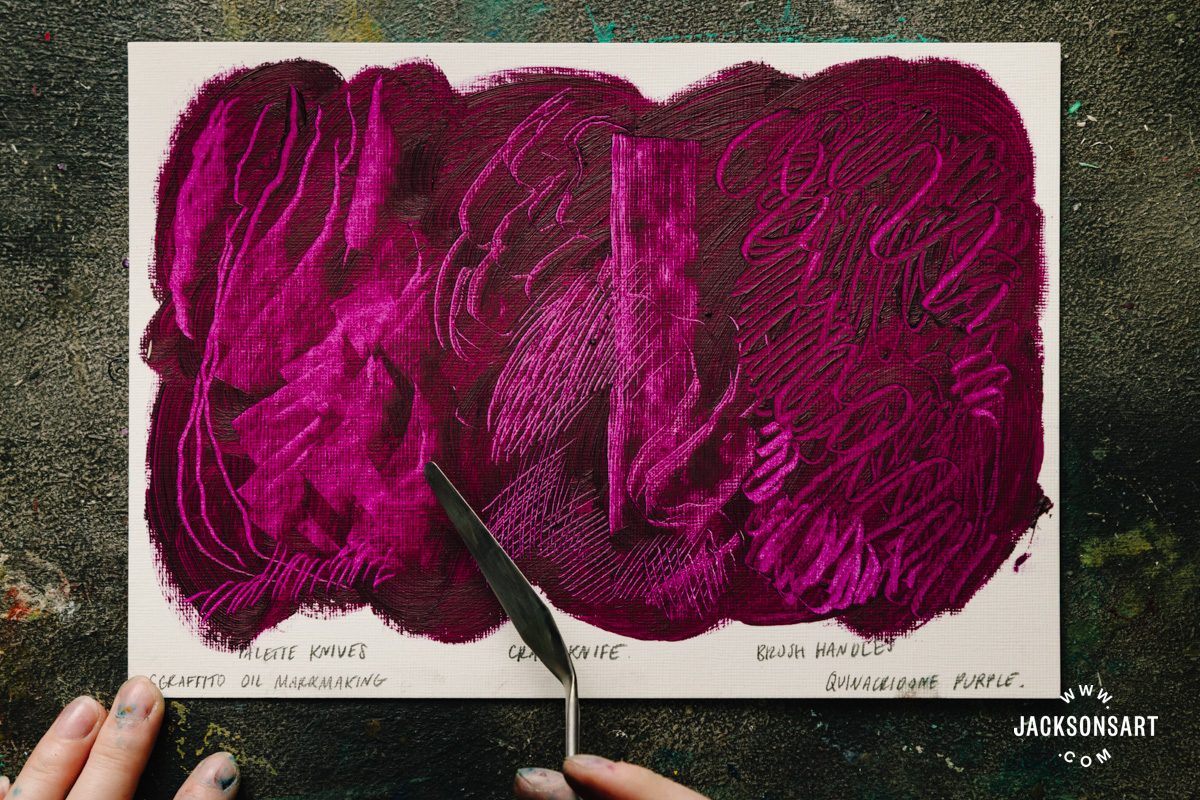
As you can see, each tool produced different qualities of line and stroke that I would intentionally choose to create my desired effect in a painting. It could be useful to make your own version of this sheet with your tools, to test how it looks and feels before applying sgraffito for the first time.
With oil and acrylic paint, one of the most effective sgraffito techniques is to apply the paint over a coloured ground or dry paint layer, which will be re-exposed by the sgraffito marks. For this example, I applied a layer of Quinacridone Gold mixed with Warm White to a sheet from a Strathmore Black Canvas Paper Pad. You could achieve the same effect by applying a ground of black gesso to canvas or oil paper.
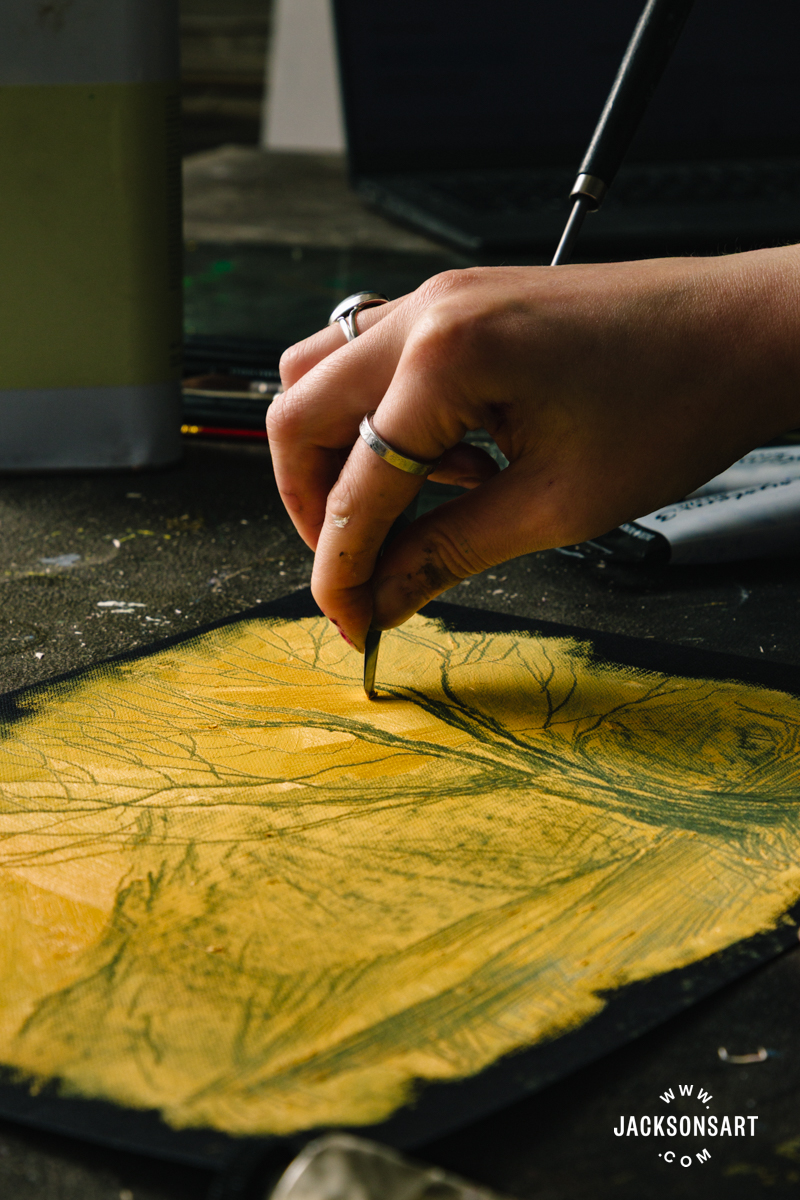
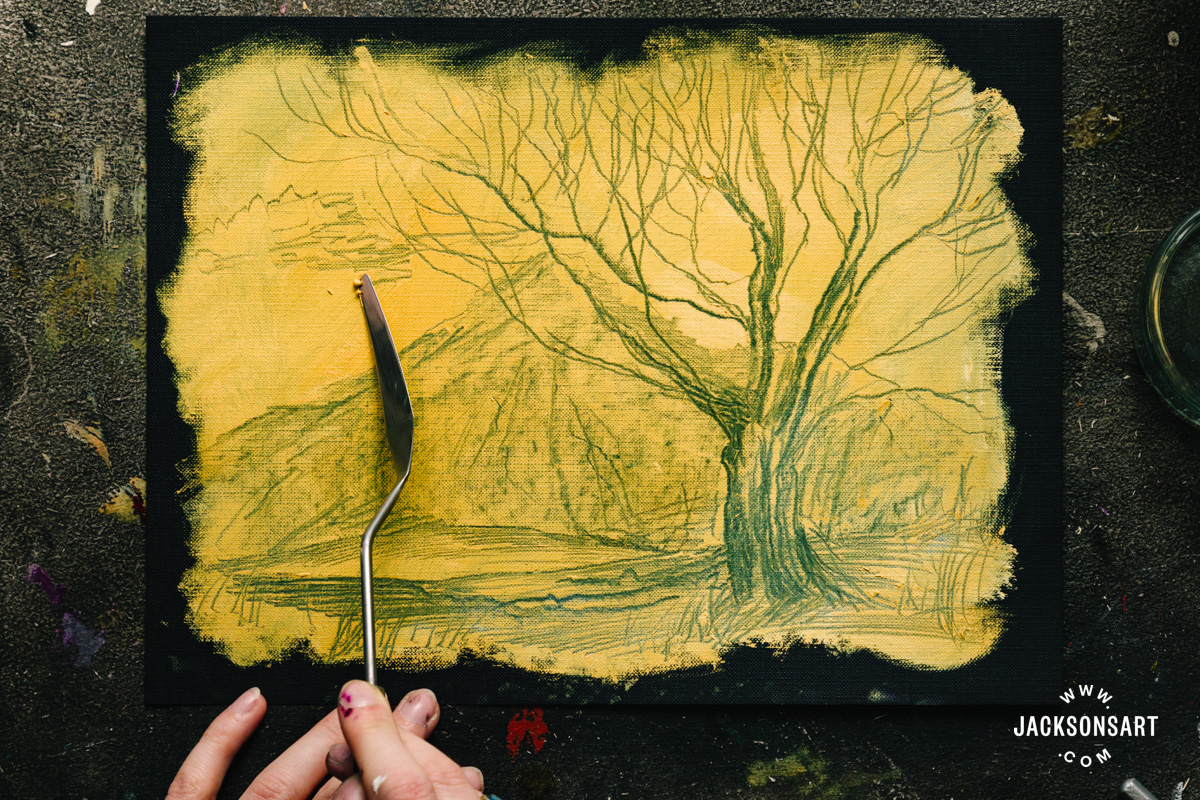
Next, I scraped at the paint layer, drawing out a tree in the foreground with mountains in the distance. These scraped lines appear somewhat like a pencil drawing through the yellow paint, and the greys they created would be useful for adding texture and depth to Tonalist paintings.
Tips: If you want to make a sgraffito painting that exposes different colours in deliberate areas like Fish Magic by Klee, make sure to take a photograph of your base layer of paint, so you can refer to the placement of the colours once they’re covered by the following sgraffito layer.
Demonstration of Sgraffito with Oil and Soft Pastel
Most people have experimented with sgraffito drawing through school art activities – by covering coloured paper or a layer of paint with crayon, and scratching it off to reveal the colours below. This is the same idea as making scraperboard drawings, except the layer of black on the top tends to be ink.
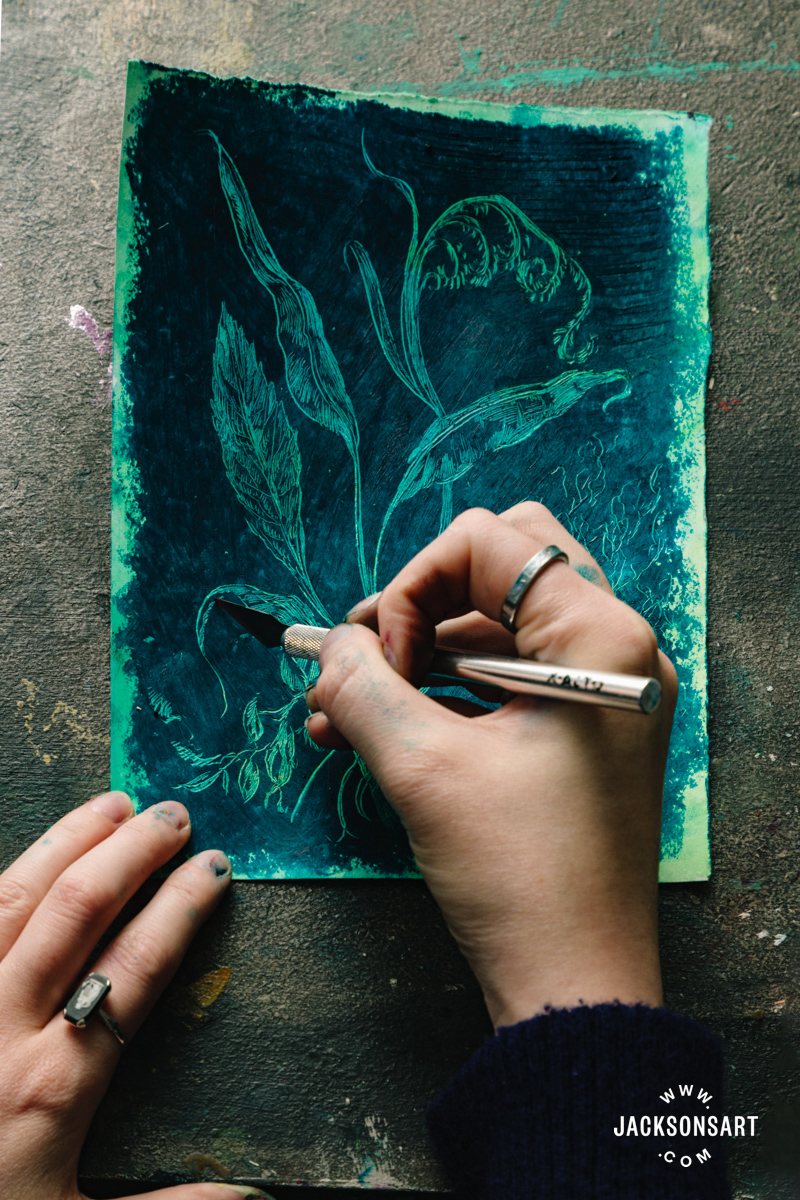
For my example, I loosely painted a sheet of watercolour paper with two gouache colours – Bamboo Green and Gardenia Yellow. Once these had fully dried down, I covered the sheet in a thick layer of Sennelier Oil Pastel in Pine Green. Using a quality oil pastel creates the perfect waxy texture for scraping, and allows you to make refined, detailed marks.
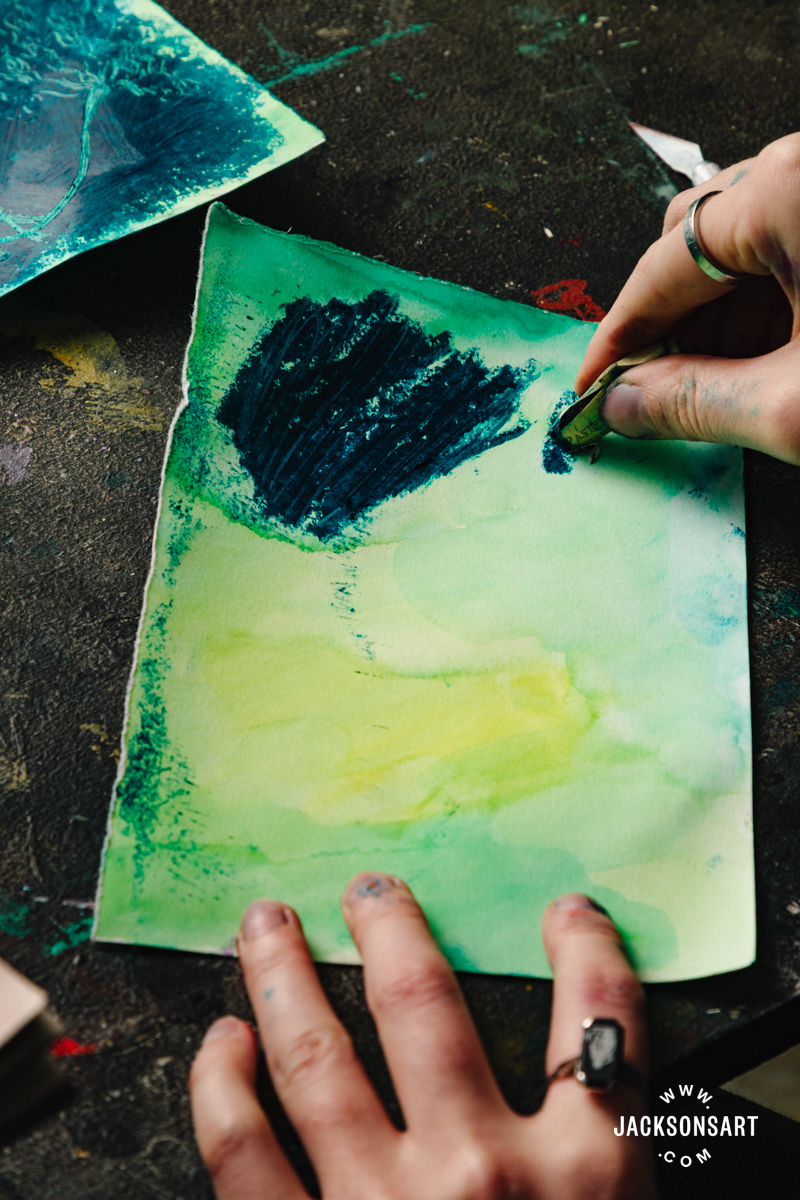
I scraped into the oil pastel with a Jakar Hobby Knife to draw a bundle of grasses. I didn’t have to apply any pressure to remove the pastel, and I made sure to wipe my tool as the pastel built up on the blade.
Next, I wanted to demonstrate applying sgraffito to a soft pastel drawing. The effect is much subtler than in oil pastel, since it’s much more difficult to fully ‘remove’, although it can still add texture and detail to thickly applied areas. I drew a portrait of a man, using Jackson’s Handmade Soft Pastels in Burnt Umber, Black, Raw Sienna, Light Terracotta, Cinnamon, Dark Lavender Blue and Dark Violet on Canson Mi-Teintes Pastel Paper.
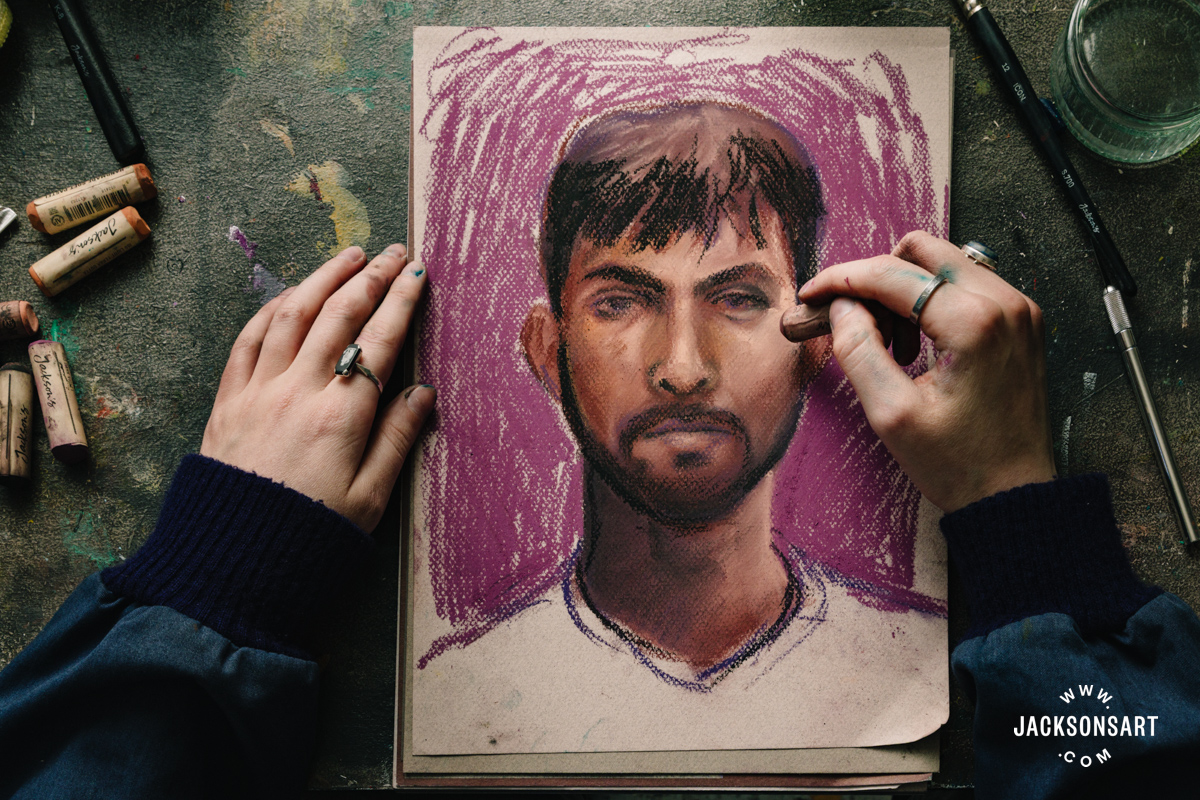
Once I’d drawn my portrait, I worked back into the surface with my Jakar Hobby Knife, making thin scrapes around the contours of his cheek, nose, and hair. When looking at the drawing close up, you can see the difference these sharp lines make to the surface quality, in contrast with the diffusion of the side without sgraffito.
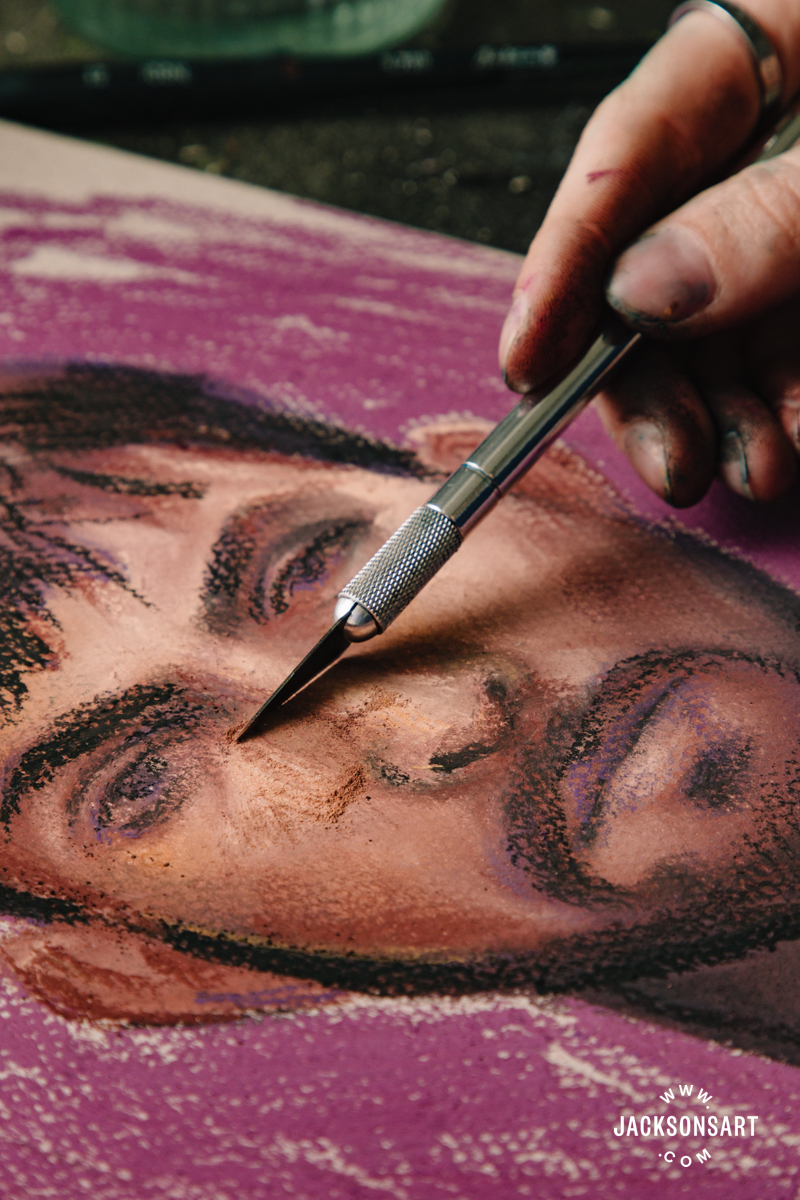
Tips: Sgraffito doesn’t have to be created with knives, palette knives, and brush handles. You might prefer using unconventional materials like twigs, feathers, wires, toothpicks, or nails.
Demonstration of Sgraffito with Watercolour
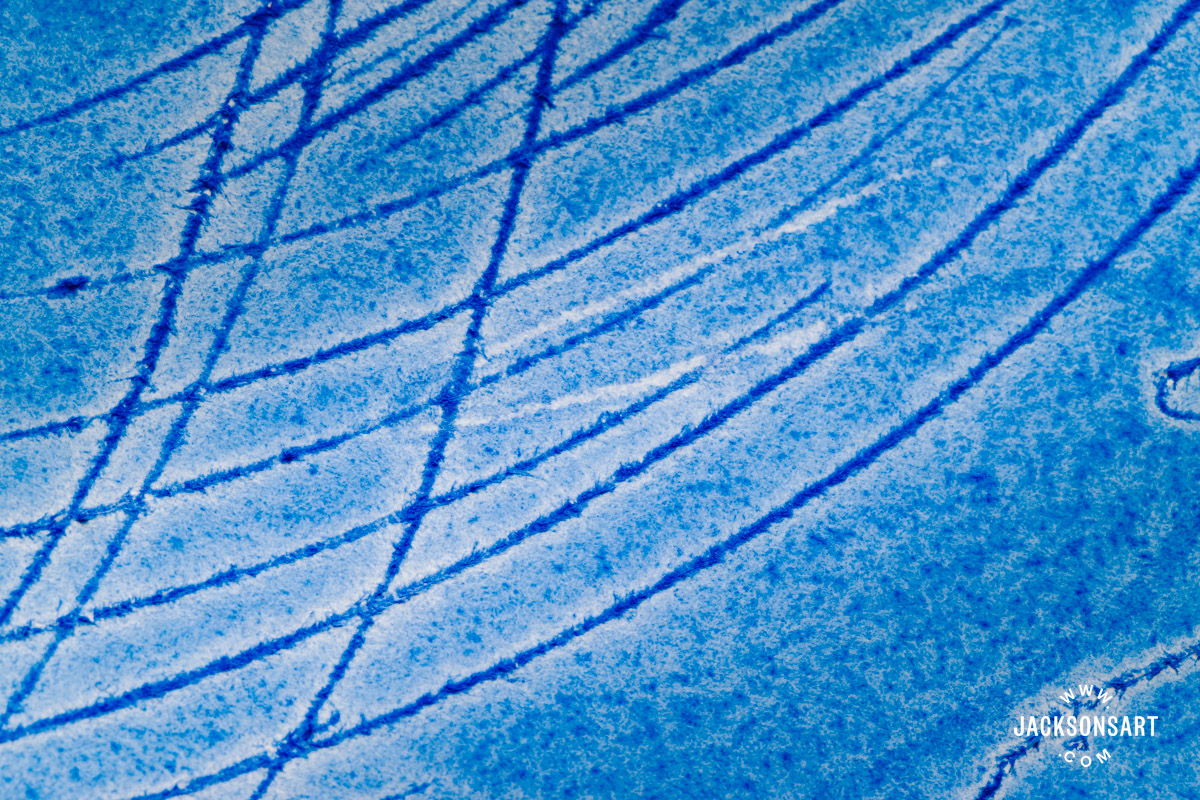
Sgraffito works slightly differently with wet and dry watercolour, each producing unique effects in your paintings. When the surface is wet and fluid, adding sgraffito lines to watercolours causes the wet paint to rush in and flood the exposed lines. Unlike sgraffito with other mediums – this wet media encourages the lines to fill up with paint after stripping it off.
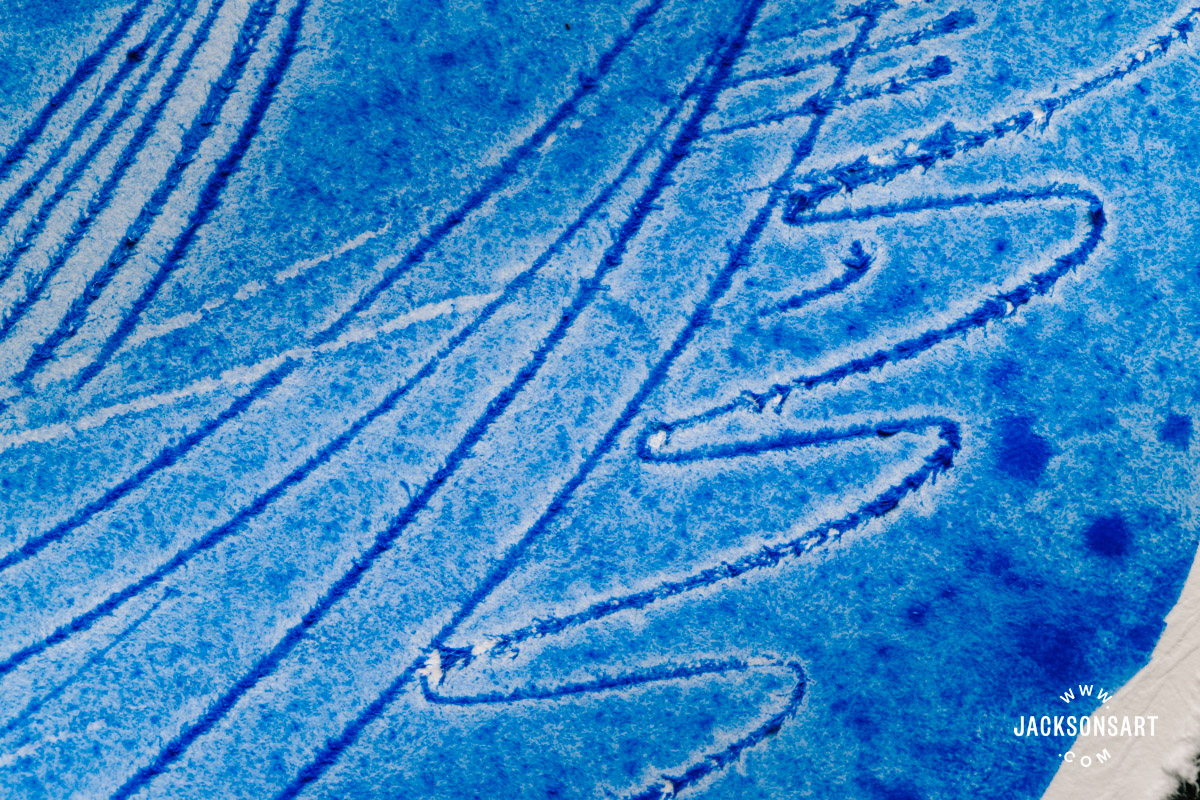
When watercolour is drying or completely dry, scratching the surface of the paper can create sharp or broken lines, which enhance the surface with white linear details. Be careful not to apply too much pressure when applying sgraffito to watercolour paintings, to avoid tearing or creating bobbling on the paper. I found that the most effective clean lines were made when the paint was still slightly damp, but not wet enough to be fluid and flow independently.
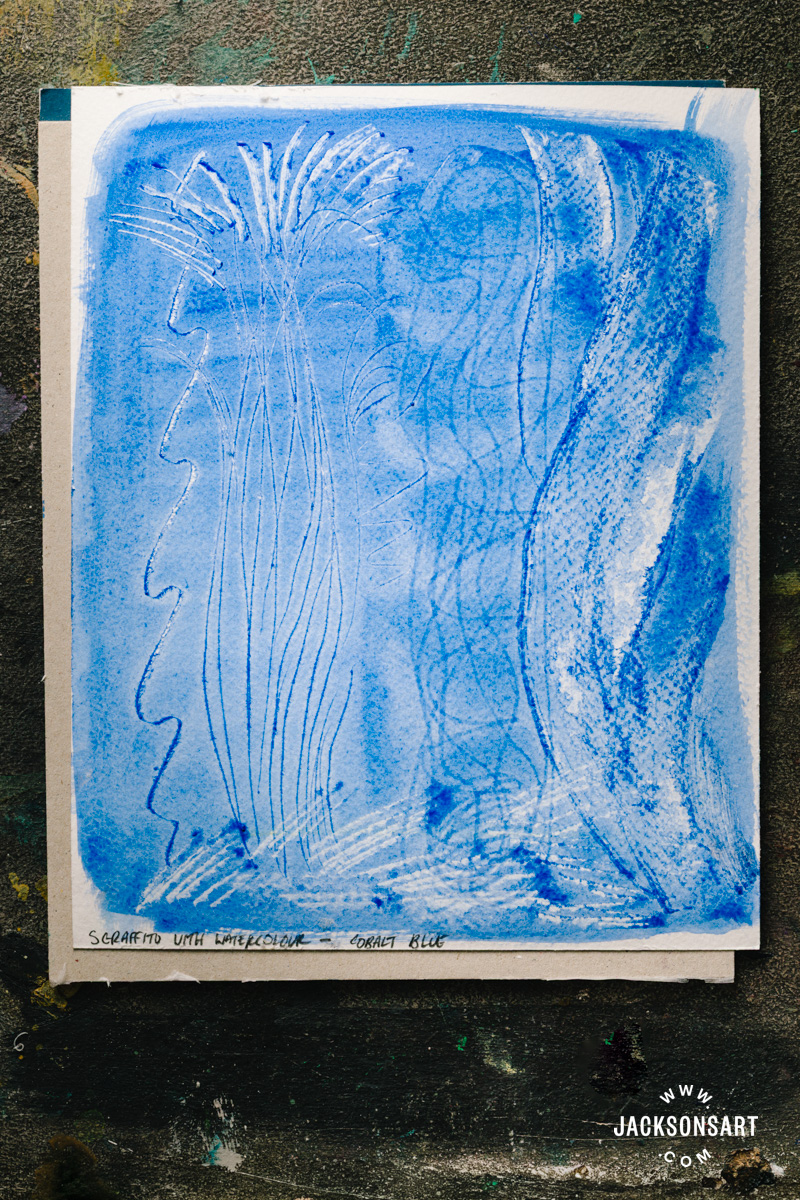
Tips: If you try sgraffito on watercolour paper that’s thin or lightweight, it’s more likely to rip or be damaged by the pressure. Try applying it to a heavier weight paper sheet over 400gsm for the best results.
Further Reading
Grattage Painting Techniques Using Found Materials
Can You Use Oil Pastels and Soft Pastels Together?
Resist Techniques for Painting, Drawing and Printmaking
Recreating Rembrandt’s Colour Palette with Modern Pigments


6 thoughts on “Sgraffito Techniques for Painting and Drawing”
Thank you, Louise, for such an interesting article. Sgraffito will be my project today when I paint.
So happy you found it interesting – hope you enjoyed trying it out!
Wonderful piece! Thank you!
Glad you enjoyed it Su!
A lovely article with a well thought out series of historical examples of sgraffito. I’ve been wanting to experiment with this technique and this article has given me the impetus to begin, thank you.
Thanks for the lovely comment, I hope your sgraffito experiments are going well!
Comments are closed.