



New painters who are just starting out in acrylics for the first time often ask for a bit of guidance when choosing materials. One of the first things to be aware of when looking at the enormous variety of art materials available is that paints, brushes and surfaces come in two qualities: student grade and artist grade. (The very top end of artist-grade is sometimes called professional grade.) This applies equally to all painting media, not just acrylics.
The difference in quality is reflected in the price. Some people recommend starting out with student grade materials because you will be doing lots of practice and not making finished proper paintings. But other people disagree. They say that better quality materials will help you improve more quickly and that learning with the proper materials is better in the long run as that is what you will be using eventually anyway. The consensus is that you should buy the best quality materials you can afford, cheap supplies are usually a false economy.
Student grade and artists’ grade, what’s the difference?
Paints
There is a big difference in the quality of the colour between artist grade paints (sometimes also called professional or extra-fine) and student grade paints. The biggest difference in quality of paint is the amount of pigment in the binder. If the paint is all binder and not much pigment (the expensive part) then it is weak. Artists’ paints are more concentrated and go further than student quality paints. Also, not all student quality paints use lightfast pigments and the colours may fade or alter over time, sometimes quite quickly, whereas all artists’ quality paints are lightfast. The student paints have fillers, imitation pigments (or mixes of pigments to imitate an expensive pigment) and less pigment so it takes more paint to cover the white of the canvas and the range of colours is usually much smaller. The artist’s colours are stronger so you can mix them with mediums and they maintain their intensity, they are purer (usually a single pigment) and more vibrant, and will mix in a more predictable way because there aren’t additives to interact with other pigments. They also often have more complete information on the label including a swatch of the paint.
Student grade paints rarely say student on the label (sometimes they might say ‘academy’ or ‘academic’). One way to tell the difference when buying paints is that the artist-quality paints will be sold by the costliness of the pigment used so there will be a series of prices for different colours of the same size. Whereas the student grade paint range by a particular manufacturer will be the same price for all the colours in a particular size. So, for example, an earth colour made of powdered dirt will be a series 1 which is cheaper than an expensive man-made chemical like a quinacridone magenta which might be a series 7 price. Another way to tell the grade of a colour is to mix it with white and see how vibrant and true the colour remains. If it becomes greyed out or loses the quality of the colour out of the tube you probably have a student grade colour.
Some artists believe that using student grade paints is a false economy because the pigment load is so weak that you often need to use much more paint. Others think that the savings more than covers the cost of having to use more paint. So the decision is up to you and the way you will be using the paint. One advantage of student grade paints, besides economy, is that they are usually safer for children because the more toxic pigments in a paint are often the most expensive as well – think cobalts and chromiums – so these are replaced with look-alike ‘hues’. A colour name with the word ‘hue’ included – like Cobalt Blue Hue – means it is a version of that colour that does not use the traditional pigment associated with that colour. It may look similar on its own but may not have the same mixing properties if you are using it to mix another colour. ‘Hues’ are generally less expensive than genuine pigments, the exception is that Golden Acrylics introduced a few years ago a range of ‘historic’ colours that are series 7, their most expensive price level. They are modern, superior, lightfast versions of traditional colours, so they chose to call them ‘hues’ as they are not the original pigment. But this is the only case where hues are not an inferior version of a colour.
I have heard that some artists, when they upgrade from student colours to artists’ colours, will use up their student colours in the underpainting or early layers of a painting. The two types are compatible in layers or mixing, so it sounds like a good way to not waste paint.
Some acrylic paints are made with an acrylic resin that is milky white when it is wet and clear when it is dry. Paint made with this type of binder will change colour as it dries because the whiteness of the binder makes the colour look more pastel and when the white goes away in the drying process the colour becomes darker. It can be hard to match the colours of a dried painting and hard to judge the values in your wet painting. This ‘colour shift’ is not a factor in determining if a paint is artists or student grade, but it is something to be aware of.
Suggestions for good quality and good value starter materials for an acrylic painter:
- AV Artists Acrylic colour is less expensive than other artists’ acrylics because we buy it directly from the manufacturer in Spain.
- Jackson’s Artist Acrylic colour is less expensive than other artists’ acrylics because it is our own brand.


We are really pleased with the quality and the price is excellent, so they really are the best of both worlds. You get artist grade paint at student prices, with the highest quality lightfast pigments at a concentrated strength and premium acrylic resin.
Brushes
With brushes it is the quality of the hairs and the structure of the brush that determines its grade. A more expensive brush will not lose its hairs as much because the hairs are longer inside the ferrule (the metal bit) and they are tied and glued, not just glued. Some may have a triple crimp in the ferrule (the metal wrap that attached the hairs to the handle) for an extra-secure fit. The type and quality of the hairs in the brush will determine the cost a great deal. The best quality sable brushes are made from a particular type of sable hair – Kolinsky Sable – that is expensive, for example.
Most acrylic painters use brushes made with synthetic filaments. The amount of water and paint the brush will hold in the hairs, the amount of spring, the softness or stiffness and the length of the handle are all things to consider when choosing a brush so that it suits the style in which you will be painting. The characteristics of synthetic hairs varies and most artists find their favourites as they continue to paint. Then when a brush is worn and needs to be replaced they buy a replacement in the brand of brush they have come to like, building up their selection of painting tools over time.
Suggestions for good quality and good value, starter materials for an acrylic painter:
-
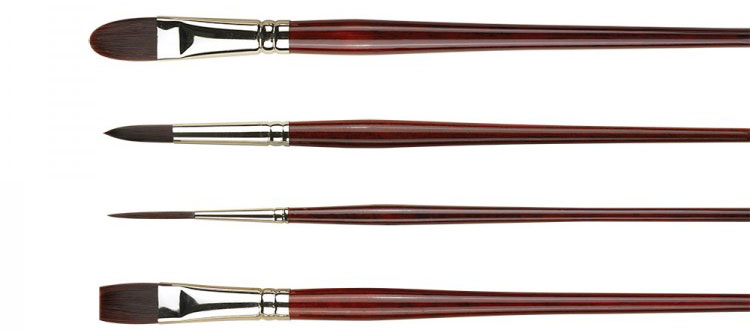
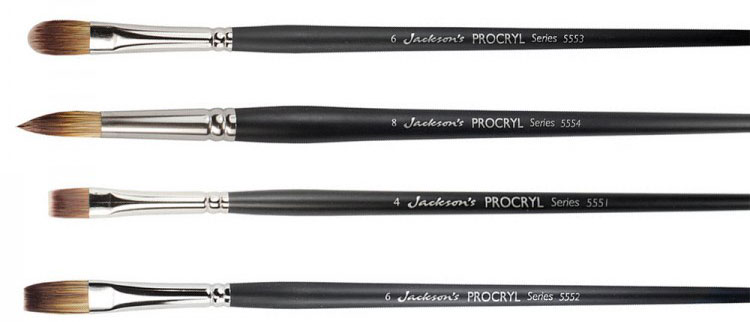
Long-handled brushes, available in four head shapes (round, filbert, short flat and long flat):
- Jackson’s Procryl Brushes are really lovely and are a good value. A selection of shapes and sizes of those would not be very expensive and will last for years. You can buy them individually or in sets.
- Pro Arte Acrylix brushes are good quality and a reasonable price.
Short-handled brushes, available in four head shapes (round, rigger, filbert and flat):
Surfaces
The surfaces you choose to paint on will depend on the style you will be painting in, as well as price and quality. Acrylic paint is very versatile and if used with a lot of water can look like watercolour so if you will be painting this way you would want to use watercolour paper for your surface. Or will you be painting with it more thickly so it will be more like oils on canvas? Perhaps you would prefer a pad of canvas-textured paper for practice because you can do many paintings and learn a lot without feeling the pressure of many canvases to buy and store afterward, though some people find the surface of the canvas-textured paper a bit slippery so you would need to try it for yourself to see if you like it.
Artists grade watercolour paper is archival, 100% cotton rag and is much more durable than non-cotton papers, and can take scrubbing of the surface without falling apart.
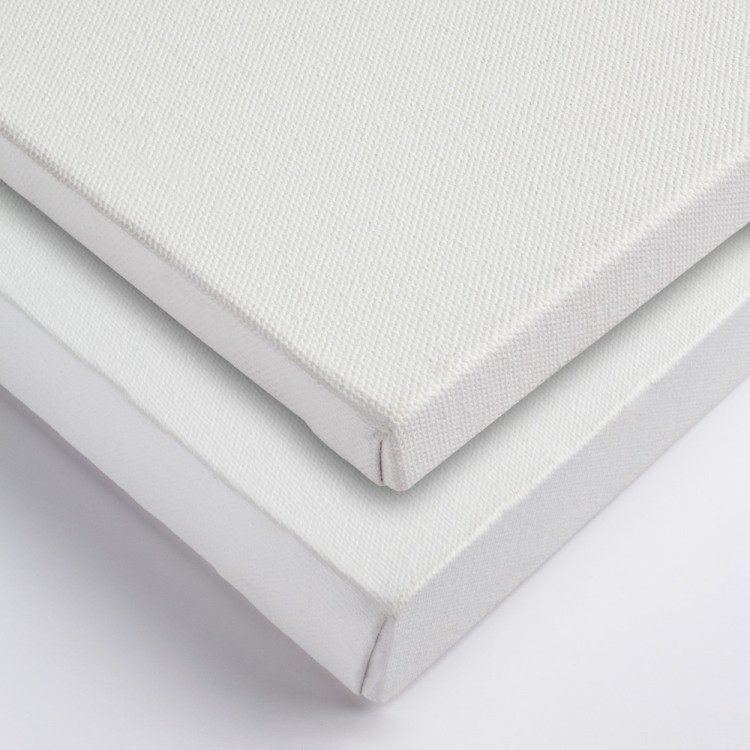
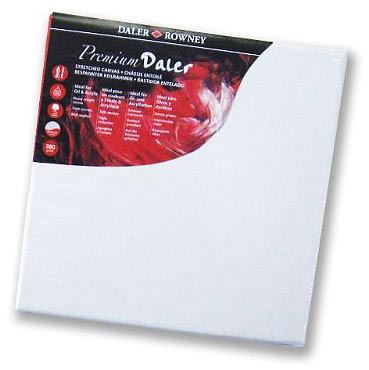
An artists’ grade ready-stretched canvas will have a thicker layer of primer, stronger canvas and harder wood for less warping and less denting of the edges when compared to a student-grade canvas.
Suggestions for good quality and good value, starter materials for an acrylic painter:
Paper
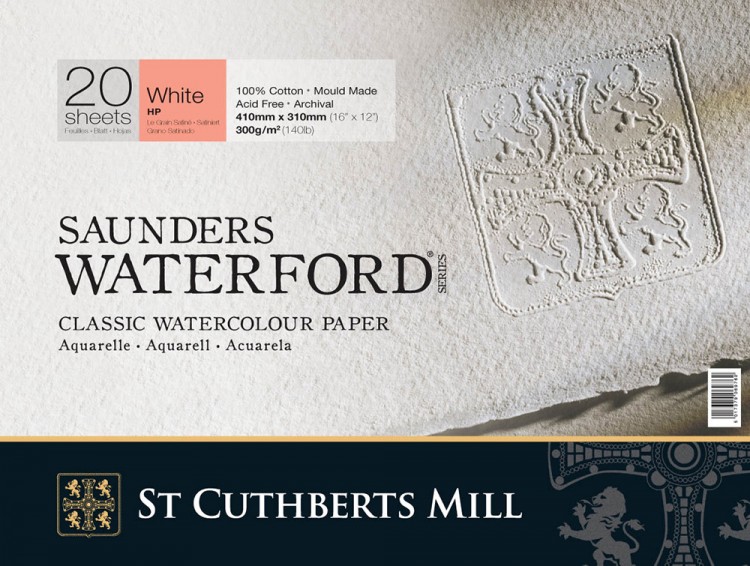
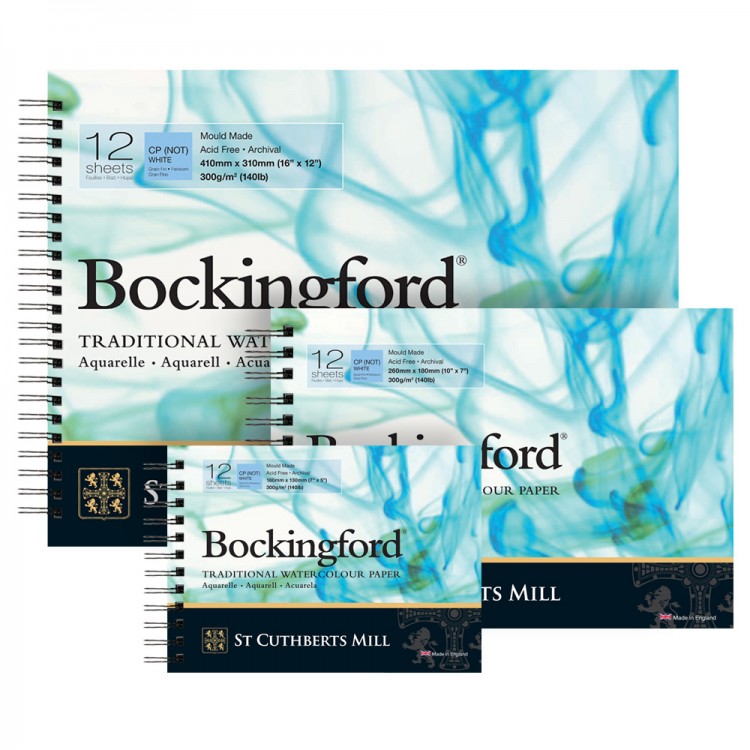
Two of the most popular watercolour papers are made by the same paper company – St Cuthberts in Somerset. They are available in sheets or pads in hot press (smooth), NOT (medium) and rough surface textures.
- Bockingford is their student-quality range.
- Saunders Waterford is their artists-quality range.
Canvas
I hope this has proven helpful if you need to kit yourself out for painting. The next instalment in this series will focus on the colours that might serve you best for your acrylic painting starter set.
Click on the underlined link to go to the Acrylic Painting Department on the Jackson’s Art Supplies website. Postage on orders shipped standard to mainland UK addresses is free for orders of £39.



6 thoughts on “Getting Started in Acrylic Painting – Student Grade vs Artists Grade”
Hi Julie,
I want to give someone some acrylics as a birthday present – they’ve been painting for a year or so, so I don’t want to give cheap student grade and insult them, but I don’t want to over-do it with top quality – any suggestions?
Hello art(ist)lover.
I think the ideal solution is our own make of acrylic: Jackson’s Artists’ Acrylic Colour. They might be just what you are after.
We are really pleased with the quality and the price is excellent, so they really are the best of both worlds. You get artist grade paint at student prices. With the highest quality lightfast pigments at a concentrated strength and premium acrylic resin I am sure your gift recipient would be happy to receive these.
If you are not a painter yourself picking a set might be confusing and I would like to recommend a selection of colours for a good starter set. If you have these 7 basic colours: a warm and cool blue, a warm and cool yellow, a warm and cool red and a white you can mix most anything you need. You can add earth tones, greens, violet and any specialist colours is you like, but you will probably want to at least start with these colours.
Phthalo Blue (Green Shade)
French Ultramarine Blue
Lemon Yellow
Cadmium Yellow Genuine
Alizarin Crimson Hue
Cadmium Red Genuine
Titanium White
I am sure your gift will be a great success and I hope the birthday boy or girl has a wonderful time painting!
—
I will be looking more deeply at selecting the colours for your palette and at colour mixing in future posts, so anyone interested should check back.
I am often asked for advice by friends on watercolour products. Having tried a number of ranges over the years, I find I really value the Winsor & Newton Artist’s watercolours for the way the different pigments all have very different ways of behaving in use. You might look at the chart and ask “Why on earth would anyone need all these different pigments, especially when so many look so similar?” The answer is that apparently similar pigments behave astonishingly differently in use.
For example, Yellow Ochre, Raw Sienna and Quindacrone Gold all look very much alike on the chart. A few moments experimenting with them is enough to show that Yellow Ochre is thick, sludgy and opaque, Raw Sienna soft, warm, natural-looking and transparent, while Quin Gold is vibrantly luminous, cold and intensely glowing. None of them will substitute for the others. Mix each with, for example, Indigo, and you will get 3 very different greens which behave completely differently as washes.
I have not found other brands to have the same flexibilty and versaltiity. Cotman colours, while good quality and perfectly suitable for teaching children, will never achieve the effects possible with their grown-up relatives.
Recently, I have been taking a friend’s children, aged 9 and 8, for the odd afternoon’s painting. At school, they seem to use crude poster paints or the even brasher powder paints which I still remember with a shudder. Discovering the richness and vibrancy of high quality pigments has been a revelation for them and has massively stimulated their creativity. The moral of this story is, do not assume that cheap chain store paints are good enough for children, and student’s watercolours adequate for the amateur. Buy student’s colours for even quite young children and they will appreciate the difference. For yourself, buy the best.
Thank you for your insight!
You have made some great observations.
It sounds like you have taken the time to really learn about your paints and it is great that you are passing your knowledge and enthusiasm on to the next generation
Pingback: Pigments and Colour Names - Jackson's Art BlogJackson's Art Blog
Pingback: Pigments and Colour Names - Jackson's Art BlogJackson's Art Blog
Comments are closed.