



It seems inevitable that some toxic substances will go down the drain when you clean your paint brushes. But there are ways to minimise the paint that you send into the water system.This will help prevent damage to aquatic life and thus the entire ecosystem.
The aim is to get your paints into solid form and dispose of them with the solid waste. First, with both oil and acrylic brushes wipe and squeeze as much paint as possible out onto paper, cloth or a board. With oil paint you can then clean the brushes in a container of linseed oil or solvent to remove more paint. A brush washer container with a lid and a perforated liner lets you reuse your solvent for a long time and the solids fall to the bottom.
With oil, acrylic and watercolour brushes the next step is to wash the brushes in soap and water This is where the problem starts. Most artists turn on the tap and start soaping and rinsing their brushes so a lot of paint goes down the drain. But you can set up a two-bucket system that will greatly reduce the amount of paint that goes down the sink.
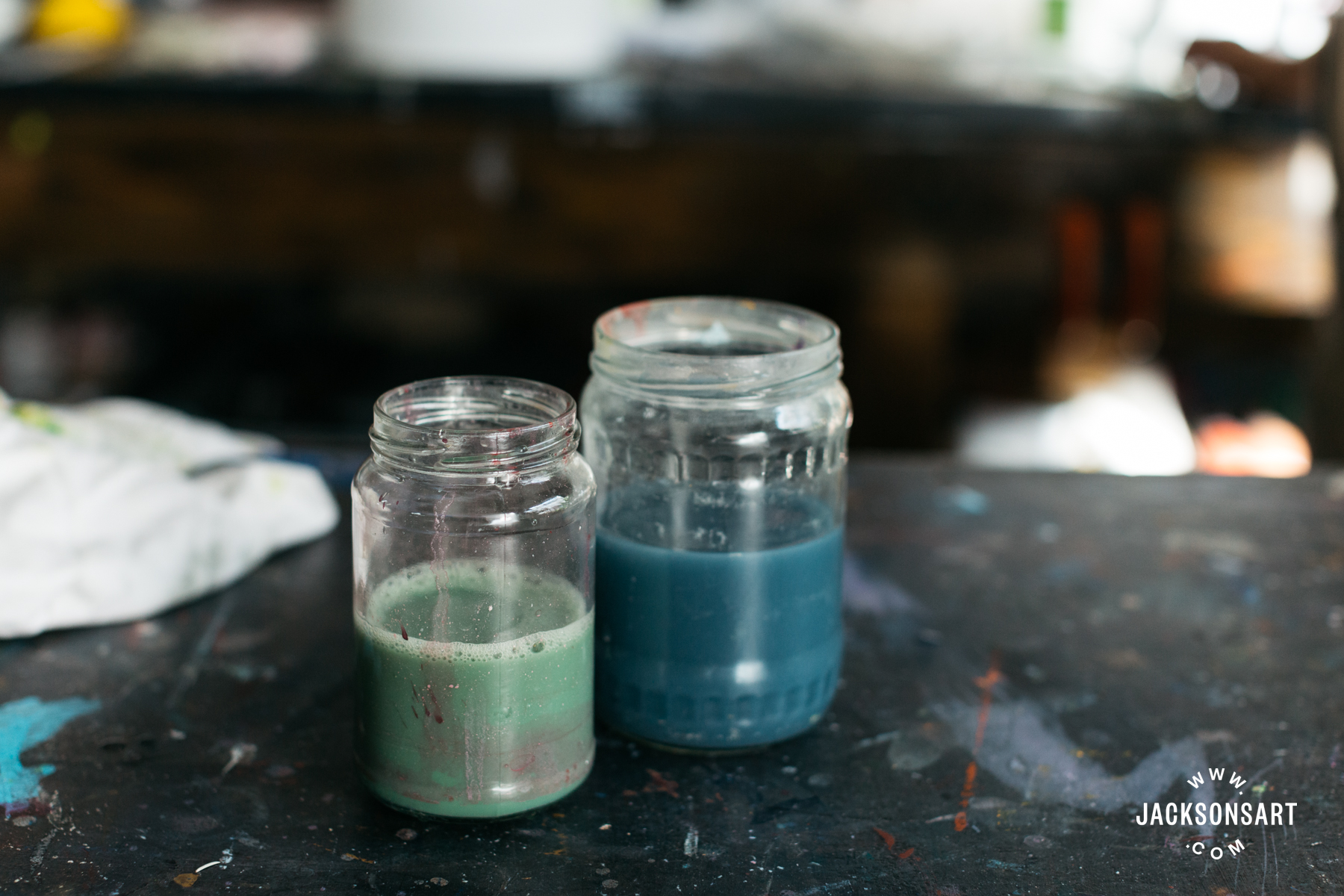
I use two 4-litre buckets that acrylic medium came in, larger buckets might be even better. If you soap and rinse your brushes in one of the buckets until they look clean you can then do a final soaping and rinsing in the sink with very little paint going down the drain. Then put a lid on your bucket and overnight the solids will settle to the bottom. You can then pour most of the water off into the second bucket and let the solids in the bottom of the first bucket dry to a crust or wipe them out with a cloth. If you have access to a grassy area that does not run-off into a stream you can pour the nearly clear water in the grass so it can be absorbed into the ground, but even if you have to put it down a drain like I have to at my studio, it will be much cleaner.
Here’s to the health of the frogs!



6 thoughts on “Less Toxic Brush Cleaning Method”
Bravo for giving this good info on being responsible. Thank you. I also suggest more eco friendly cleaning products – I am not sure if the citrus solvent zest It is any better than the normal white spirit but I use that, and also found a white spirit substitute that claims to be eco friendly and is based on non ionic surfactants (did i I get that right?) I got it in a pound shop and it works incredibly well at cleaning brushes.
Hi Sarah.
Yes, it doesn’t really take much more effort to be a bit more responsible, just a change of mind-set 🙂
Julie, i am soon to be using Davinci black
and red sable brushes and Escoda
clasicobrushes for oil and I have looked at
your cleaning process which i think is for
cleaning at the end of the session.
Mid session is it ok to use Bob Ross
odourless thinner please, if not what do
you reccomend please
Hi Tim
For mid-session cleaning, you can use solvent, yes, or linseed oil – either will work well.
I’d be interested to know what you do
with the oil paint crust that forms in the
bucket. I’m trying to work out what to do
with my paint rags/paper towels and
don’t know if envirmentally it’s safe to
put them in normal household waste or
if they need to go to hazerdous waste
disposal.
Hi Jessica
Most artists bin solid dried paint with their household waste.
A few artists have a bin set aside for anything that might contain a toxic pigment – chromium, barium, cobalt – the heavy metals mostly.
Then once a year or so they make a trip to the disposal site nearest them.
If you do not use these pigments in your studio then dried paint should be fine in the rubbish. These are also usually the most expensive pigments so using alternative colours can save you money as well.
Comments are closed.