



Derwent Drawing Pencils have a unique, creamy texture producing a rich, velvety finish. In this Artist Review of the Month, Tony Thompson shares what he loves about the Derwent Drawing Pencils Set of 24, and why he recommends them for use with both portraiture, and depicting the English landscape.

Derwent Drawing Pencils – Set of 24
by Tony Thompson
This Derwent Drawing Pencil Set offers natural colours that lend themselves beautifully to British landscape work. The colours are subtle, with names to match. In particular, I like ‘Olive Earth’, ‘Solway Blue’ and ‘Wheat’ but all the colours are useful, and not just for landscapes – they also find a place in portraiture, especially in conjunction with other Derwent and Faber-Castell Polychromos ranges.
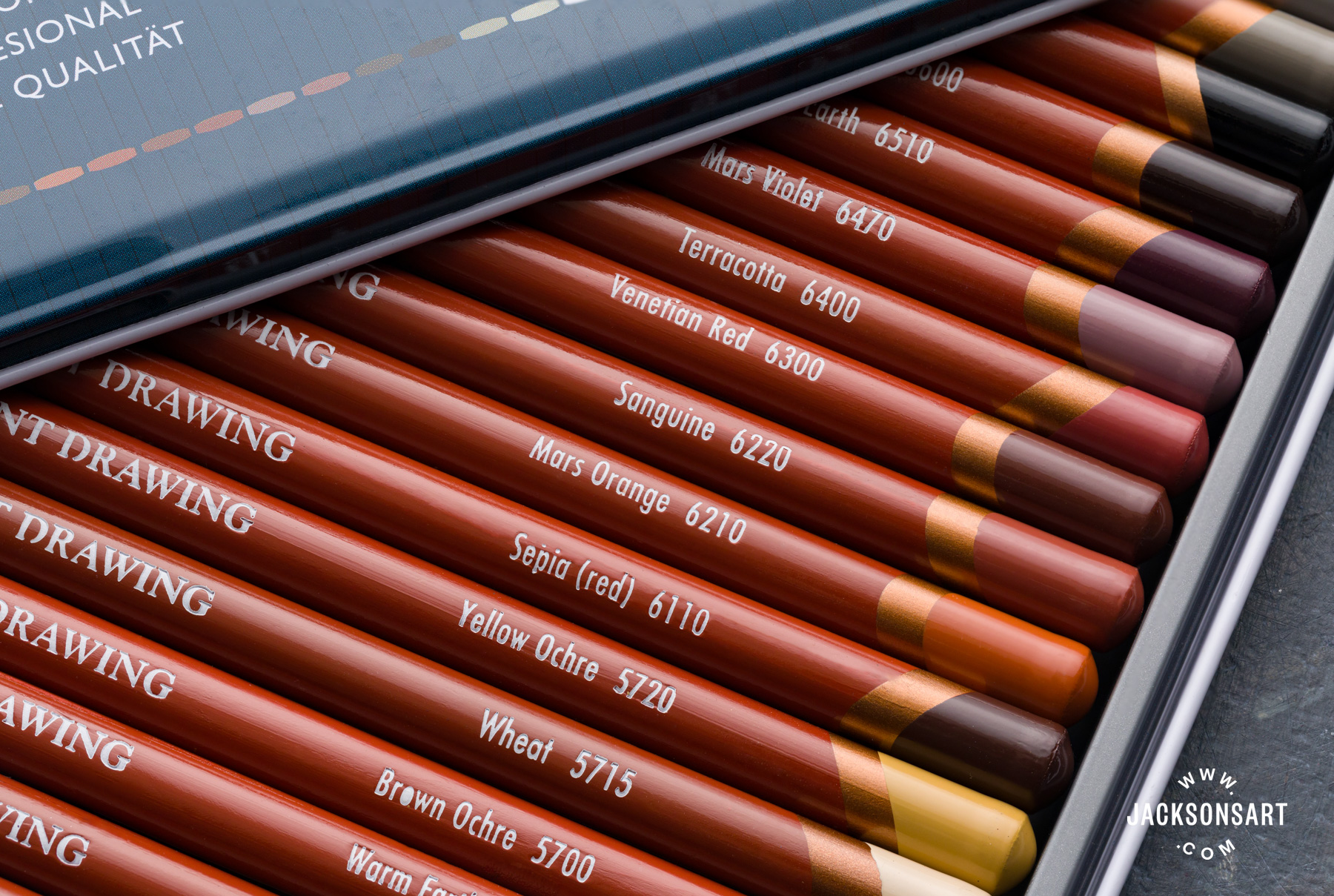
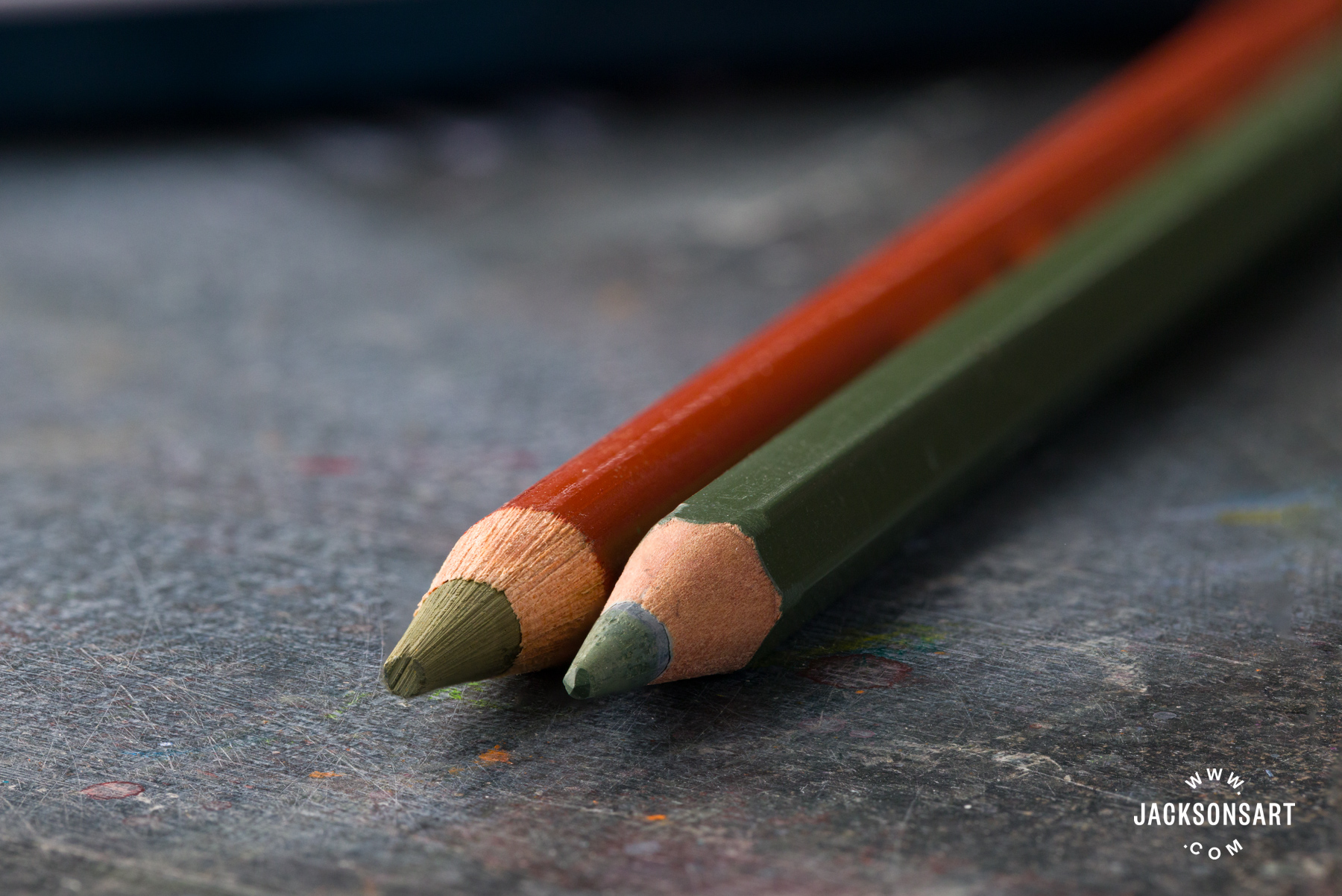
The leads are thicker than the average colour pencil and are relatively soft in application, making them very easy to use, and also very responsive to the use of solvents. It might be expected that such softness would make them prone to easy breakage or to make the pencils difficult to sharpen, but in my experience there is no problem with breakage, and sharpening is easily achieved, even to the very long fine point I can create using a hand-cranked sharpener.
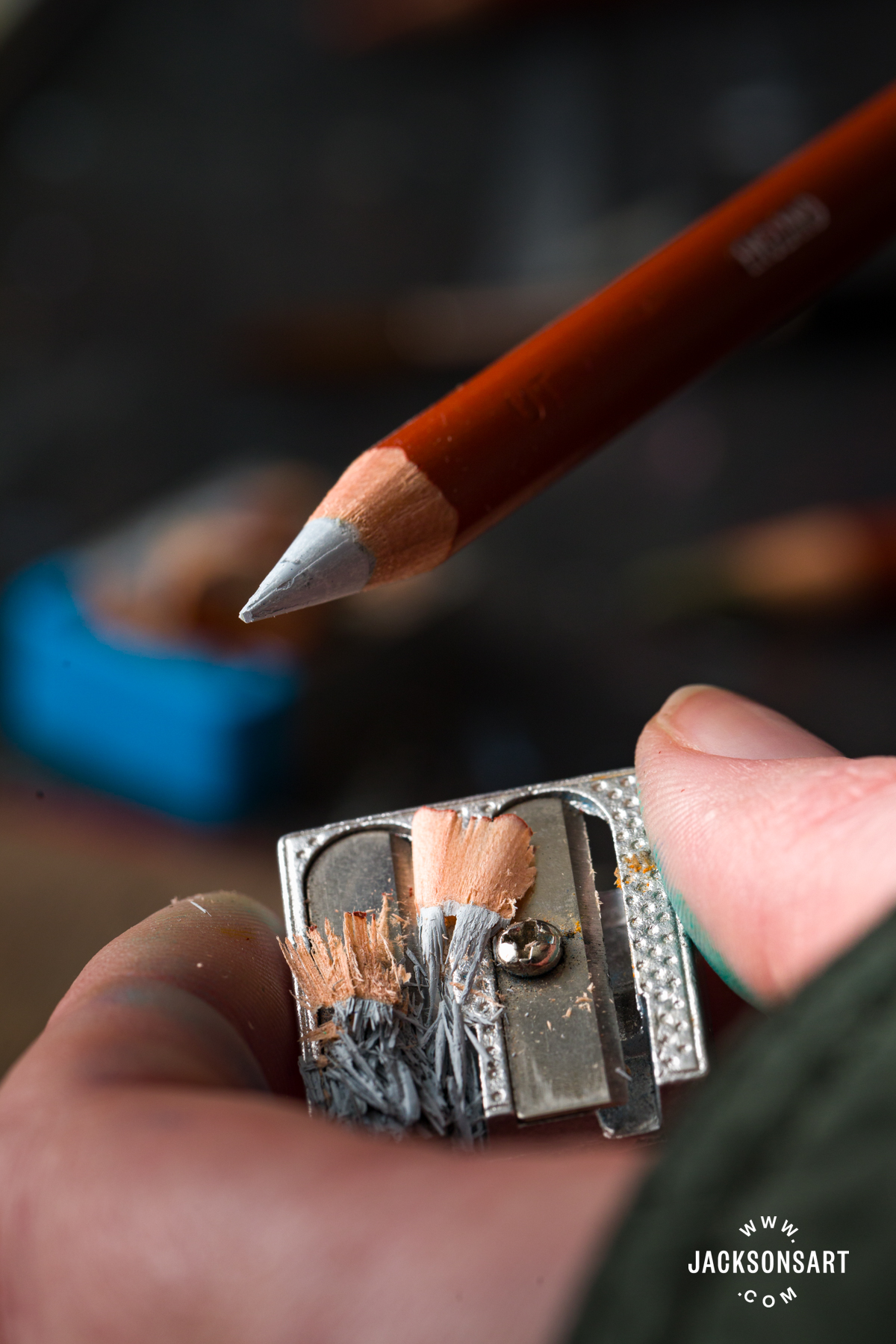
To some extent the thicker than average leads are likely to assist in breakage resistance but even so, the ability to create a long point is very useful for ‘side-on’ shading and colouring. Even after extensive use I have had no breakage problems (including the accidental dropping the odd one or two pencils on the hard floor of my home studio).
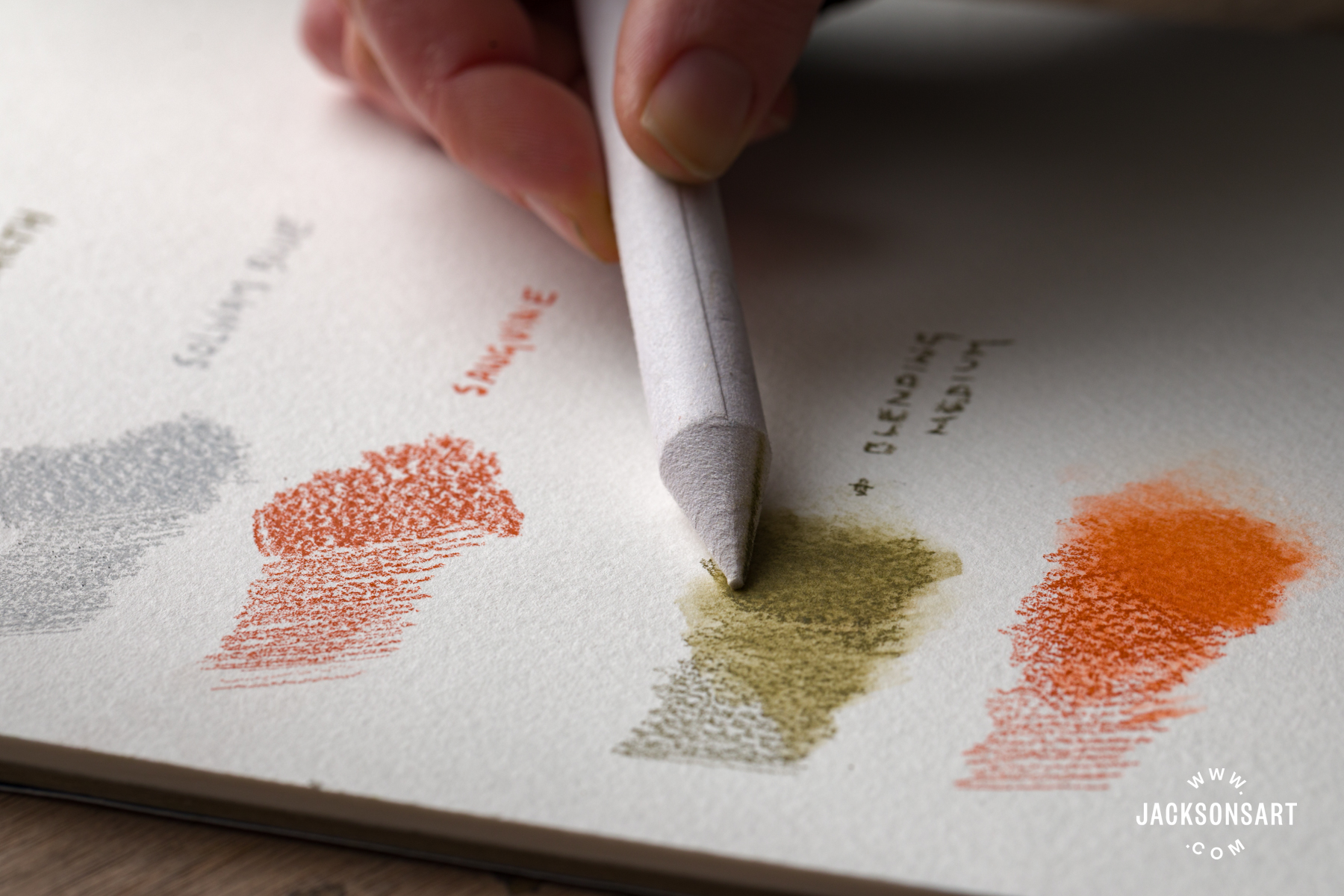
In use, the colour is smooth in application and the colours transfer readily to the paper surface. They are especially easy to spread with odourless mineral spirits as a solvent. For those not familiar with the process, the use of a solvent – applied in my case with a tortillion (paper stump) – can all but eliminate any trace of line, so careful application can produce a visually smooth result similar to watercolour.
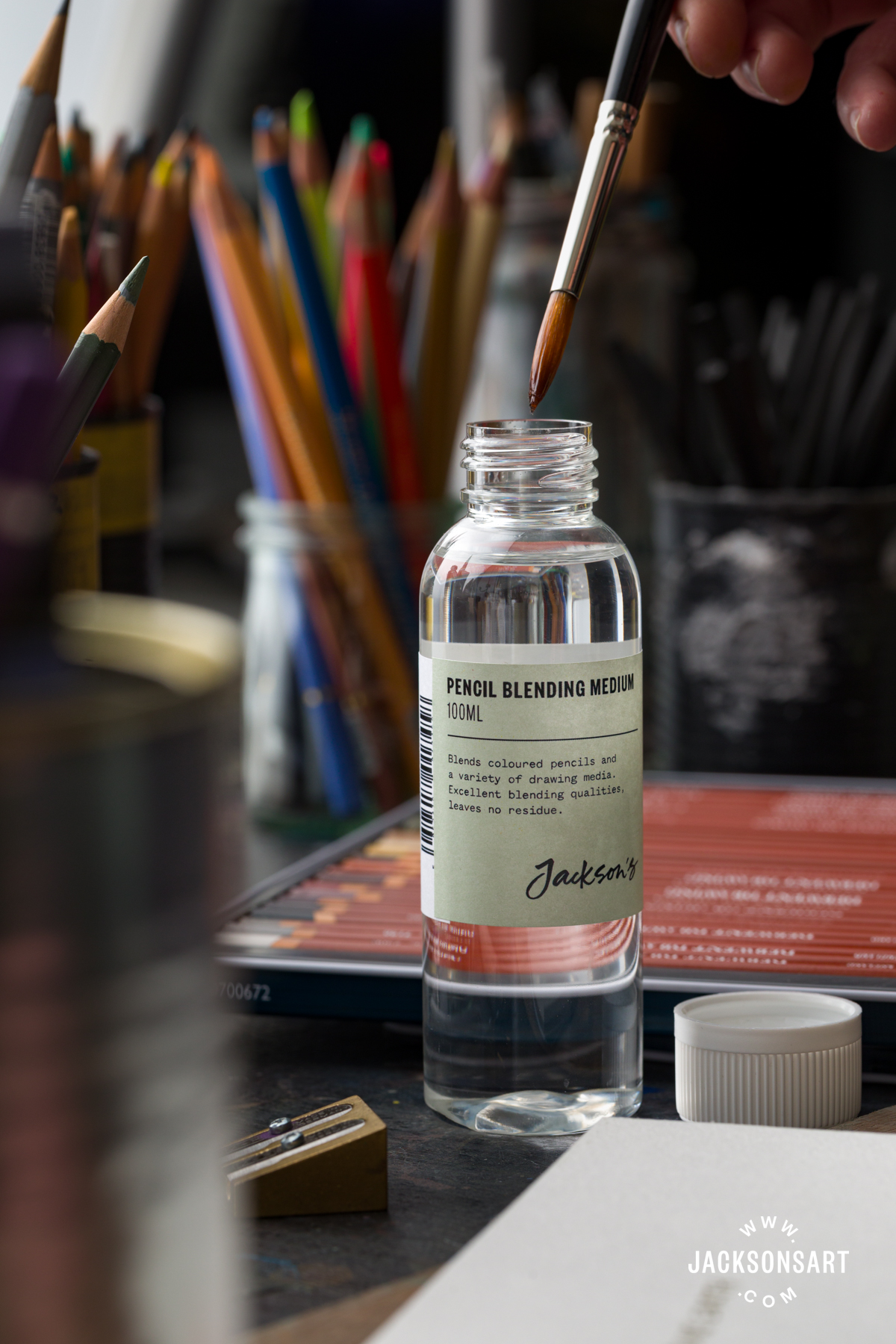
Because the colours tend toward nature, for portraiture I use them in conjunction with standard pencils, and as I have mentioned above, they blend well with Polychromos and other Derwent wax pencils. I have not attempted to mix water-soluble pencils with these but as these are not wax based, I suggest anyone who wishes to try this experiments first before committing to a full painting.
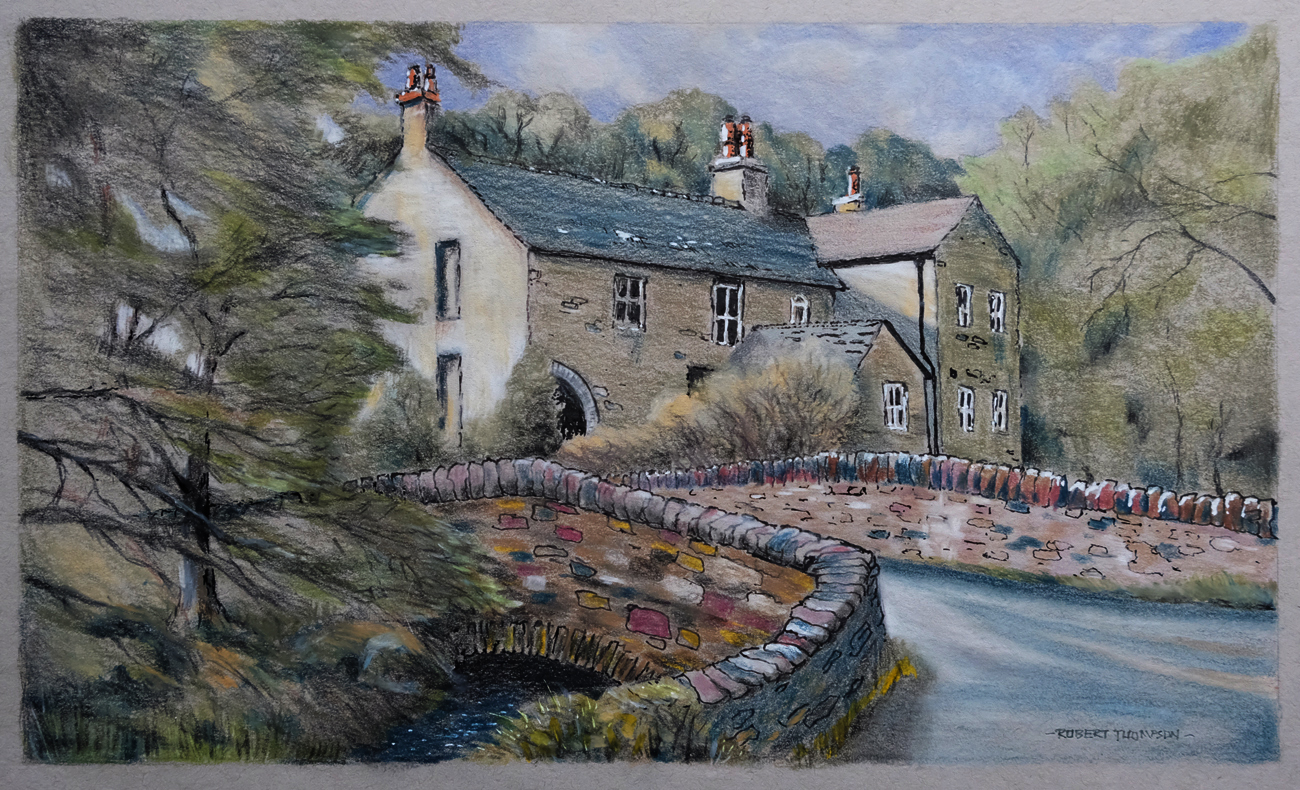
Tony Thompson
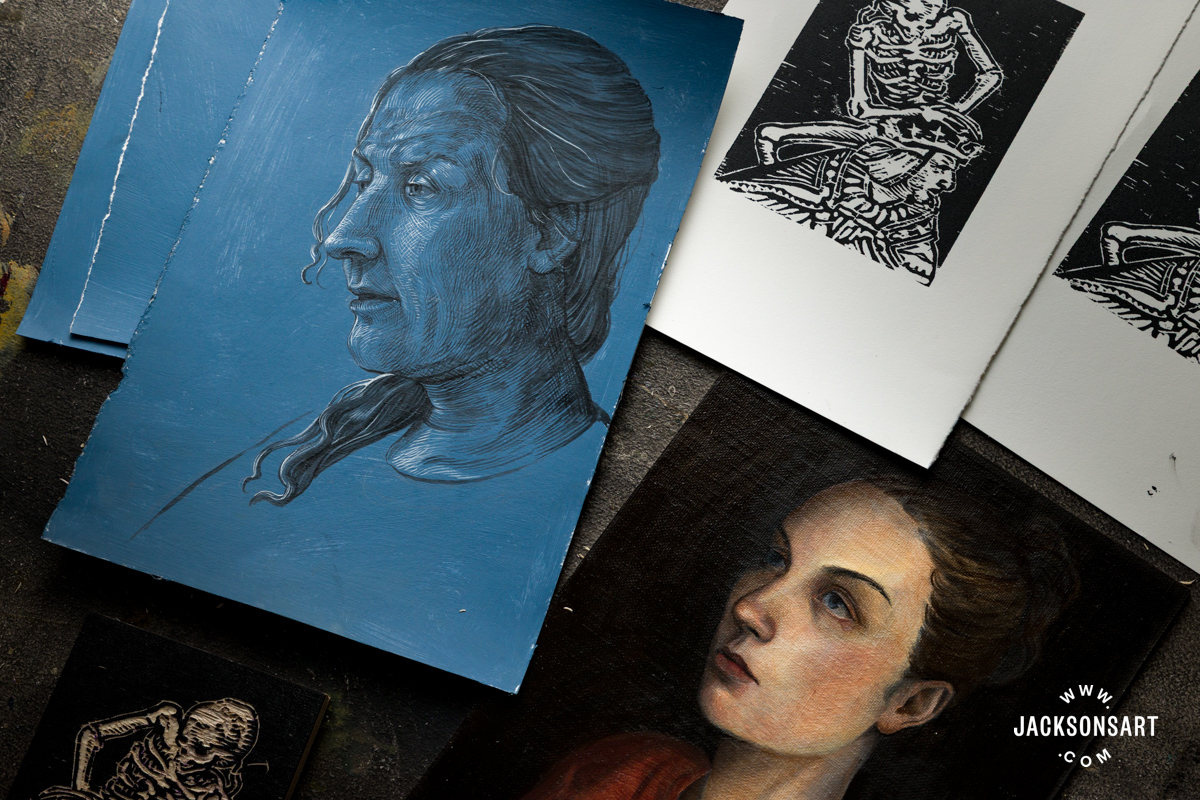
Derwent Drawing Pencils on Strathmore tinted card, 30 x 18 cm | 12 x 7 in
Price-wise, these are competitive and they offer true artist quality. Jackson’s have individual pencils for sale as well as several sets. The pencils that get the most use, in my case are Black, Yellow Ochre, Sepia and Ink Blue, which can all be replaced without the need to purchase a full box.
Do not let the title ‘Drawing pencil’ mislead you. Yes, you can draw with them, as with any pencil but their primary use is the laying down of lovely colours, more like painting in fact. I find that most paper surfaces work well with them, including hot pressed and not watercolour paper and Bristol Board.
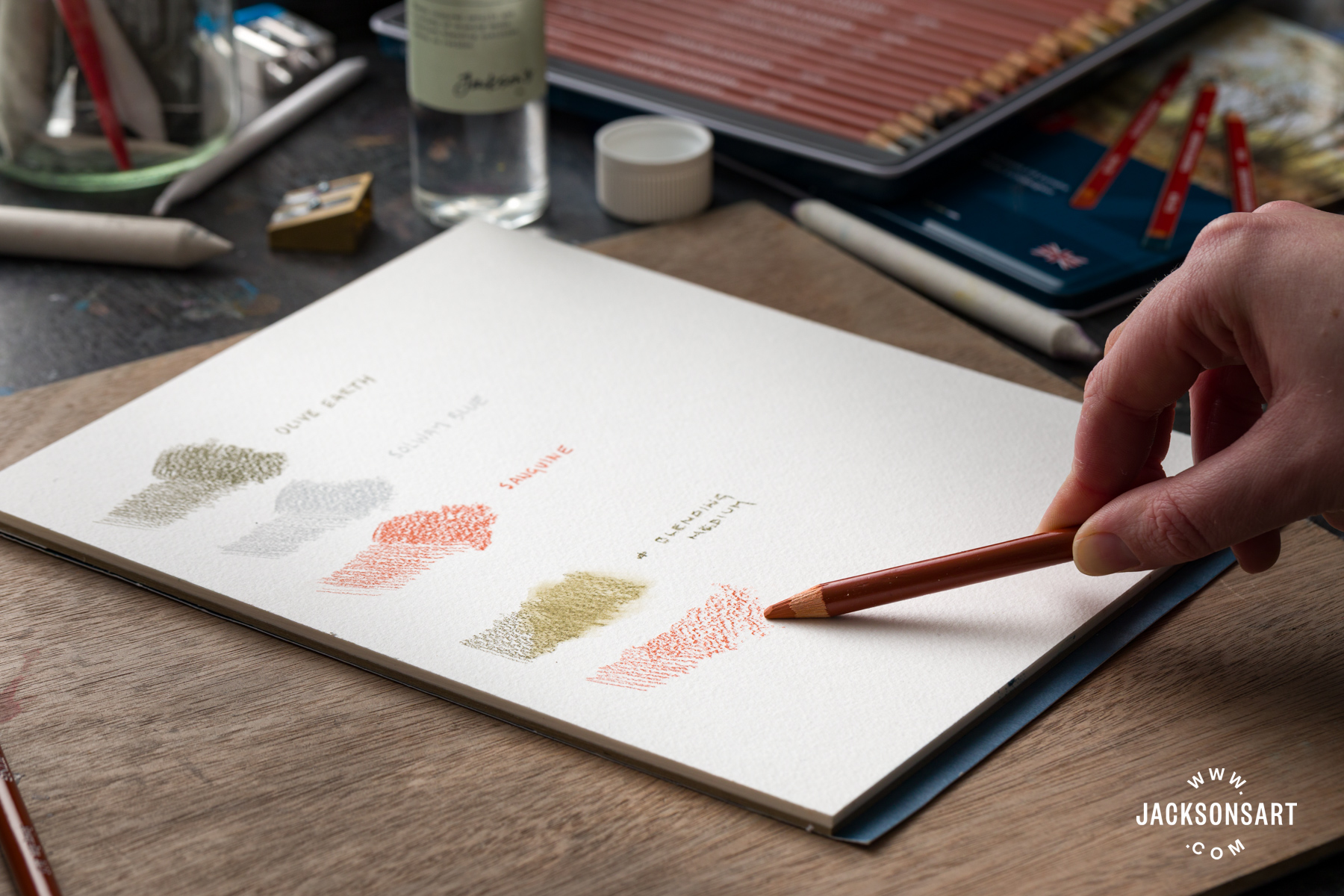
I am very pleased to recommend this innovative and excellent colour pencil range, especially for artists specialising in woodland, lakes and mountain scenes. Those who work in portraiture will also find the colours useful, particularly for hair, clothing and delicate shadows.
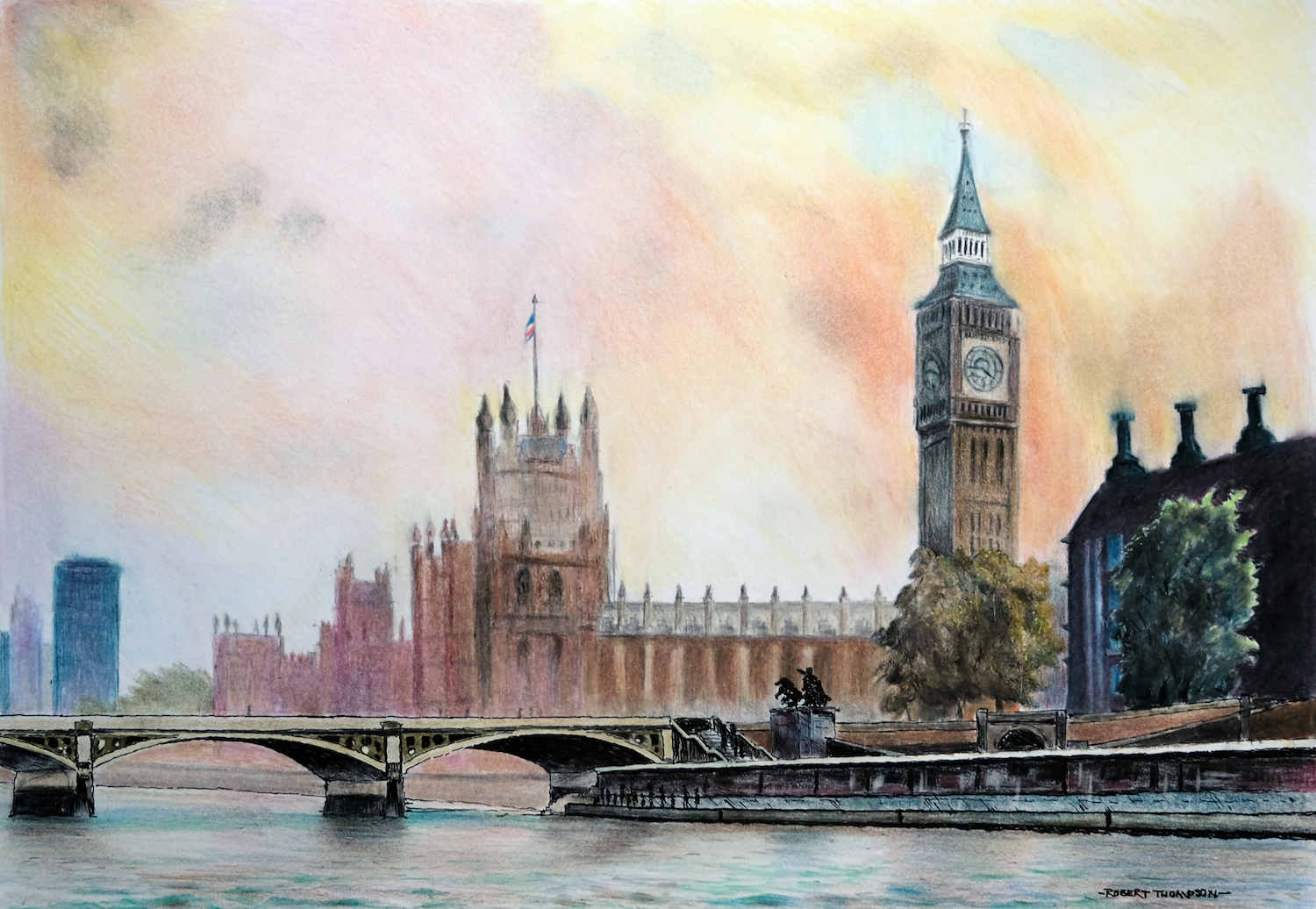
Tony Thompson
Coloured pencils including Derwent drawing pencils on Strathmore tinted card, 40 x 30 cm | 15.75 x 12 in
About Tony Thompson
Robert A. Thompson BSc. Cert. Ed. (Tony) is an artist, who from a young age, has painted the landscape, people, pets and wild life in a variety of media. He has a deep affection for the open North Yorkshire moors, countryside and coast, the North Norfolk coast, Yorkshire dales and the Lake District.
He was the Head of the Faculty of Art, Design and Technology, Beverley Grammar School teaching creative metalwork, graphics, product design, electronic product design, general product design, silversmithing and art. After retiring in 2001, he studied on the Open University and gained a BSc, continuing meanwhile to sketch and paint, mainly in watercolour, but also mixed media, pen and pastels. He has exhibited in shows in the East Riding of Yorkshire.
Further Reading
Holbein Artists’ Coloured Pencils and Meltz Pencil Blender
Inside the Sketchbook of Suzy Fasht
Shop Derwent Drawing Pencils on on jacksonsart.com


5 thoughts on “Artist Review: Derwent Drawing Pencils”
Hi Clare
What a great presentation you have made of my review. The images you placed have added interest to what might have been rather bland sentences without the supporting pictures. Well done and thanks for your interest.
BTW I have entered the competition, having received a ‘free pass’ for one painting (I entered two, under ‘Robert Thompson’). I used the voucher you sent me to buy additional Derwent drawing pencils! Once again, many thanks and a Happy New Year.
Hi Tony, that’s great you like the final article. Thanks for your work! And very best with Jackson’s Art Prize.
These are one of my favourite pencil’s the
other being Derwent Graphitint and I have
used the Derwent Drawing pencils with
Derwent graphitint pencil’s which are water
soluble with no adverse effect and they
worked well together especially as both are a
range of more muted tones which suits the
English fauna and flora
Hi Lorna, thanks for sharing!
I had not tried their drawing pencils but I will now.
I love the Derwent Inktense for the bright colours
and usability on fabrics.
Great review and good tip on difference between
watercolour pencils and wax based and use of
solvents. Thanks
Comments are closed.