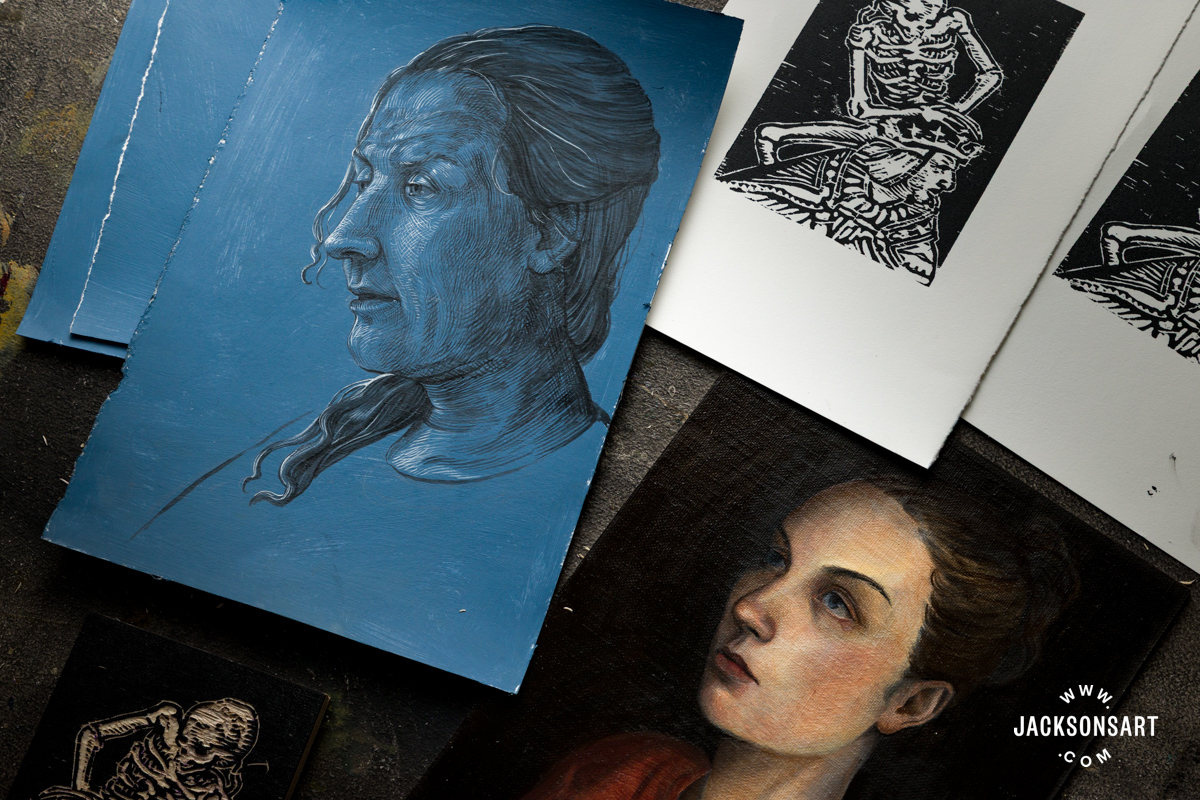
In this Artist Review of the Month, Performing Arts School technician Steve Doxsey shares how the Warm Grey range of Faber-Castell Polychromos Pencils is perfect for the detailed rendering of the tonal qualities of light. The oil-based pencils are water-resistant, smudgeproof, and have exceptional covering power, while also being able to sharpen to a very fine point for detailed work.
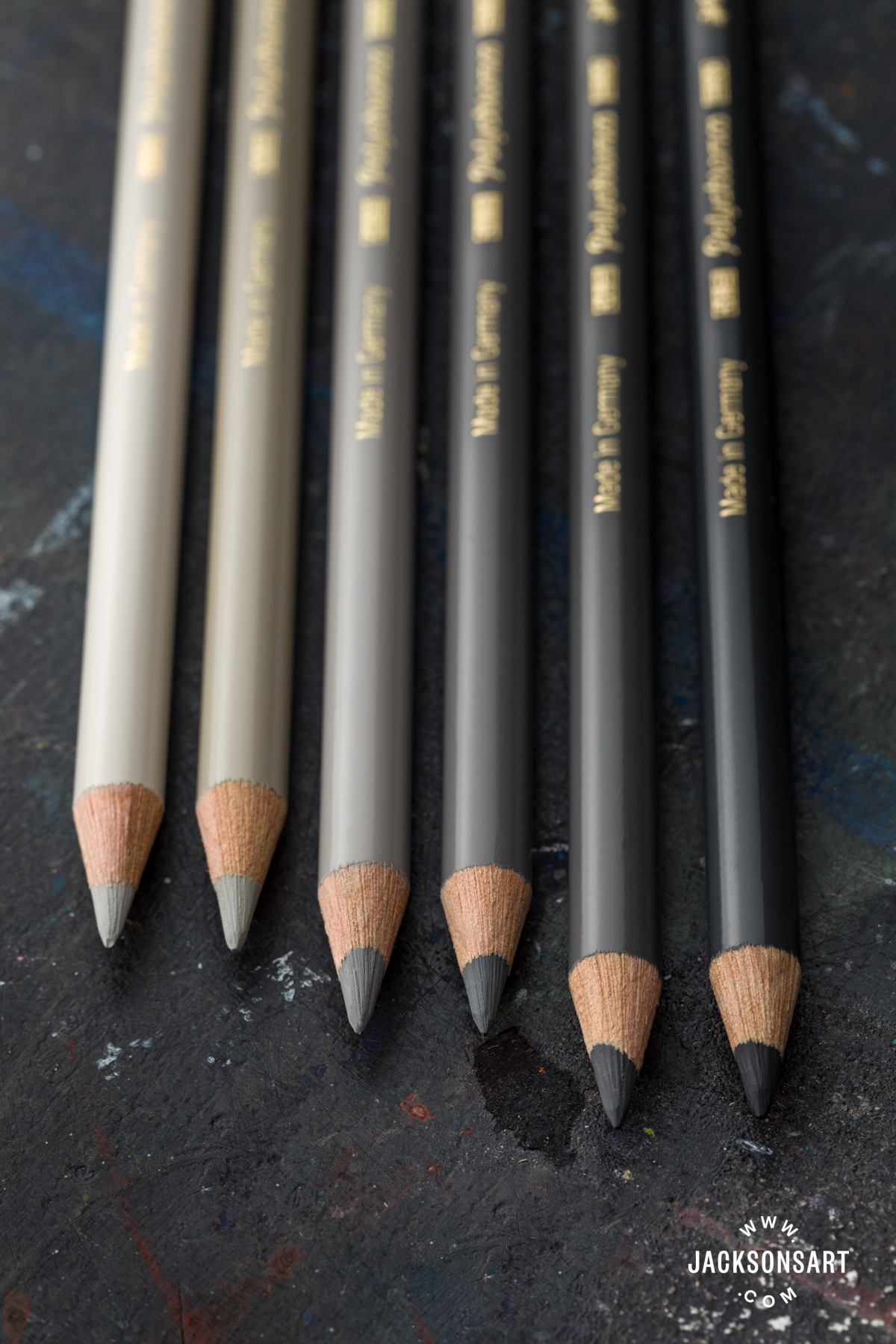
A Review of Faber-Castell Polychromos Warm Grey Pencils
by Steve Doxsey
I woke up very early one morning in a B&B room, with a high A-frame-like ceiling and thin semi-translucent blinds on the windows, one wall of which faced east and the direct light from the soon-to-rise sun and the other wall west and the tonally cooler reflected light. The effect in the room was an extraordinary range of warm and cold grey tones which played out across the various angled surfaces of the walls and ceiling spaces. In response to this I started looking for a series of grey tones to try and capture some sense of it. At irregular intervals over the succeeding months I have enthusiastically purchased various sets of alcohol markers, compressed charcoals, soft pastels, hard pastels, etc. each time hoping to find a consistent grey range that would make an effective value scale, only to be disappointed each time by their generally inconsistent and unconvincing ranges.
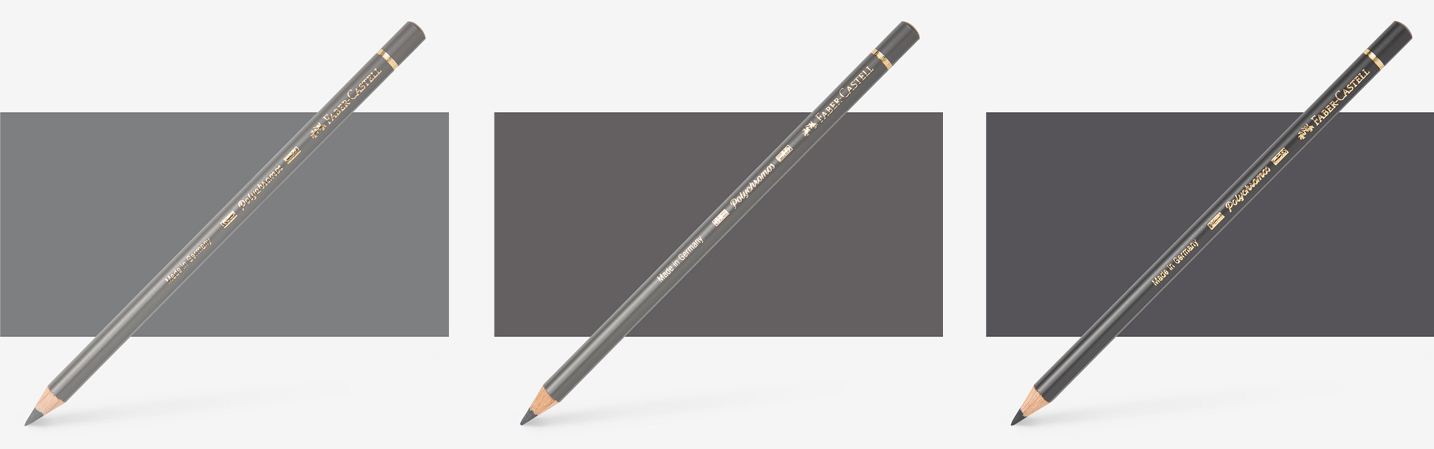
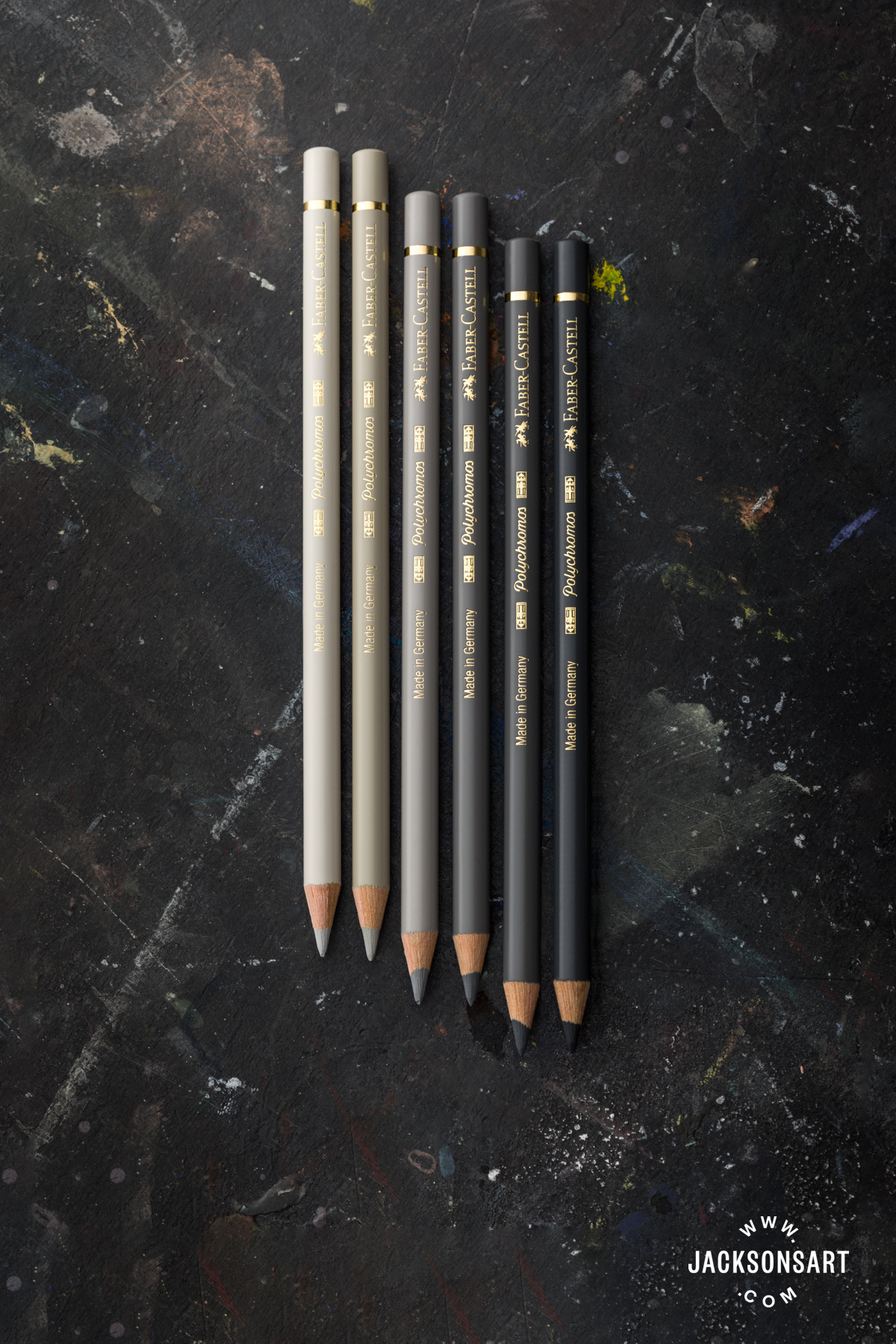
Bottom row: Warm Grey IV, Warm Grey V, Warm Grey VI
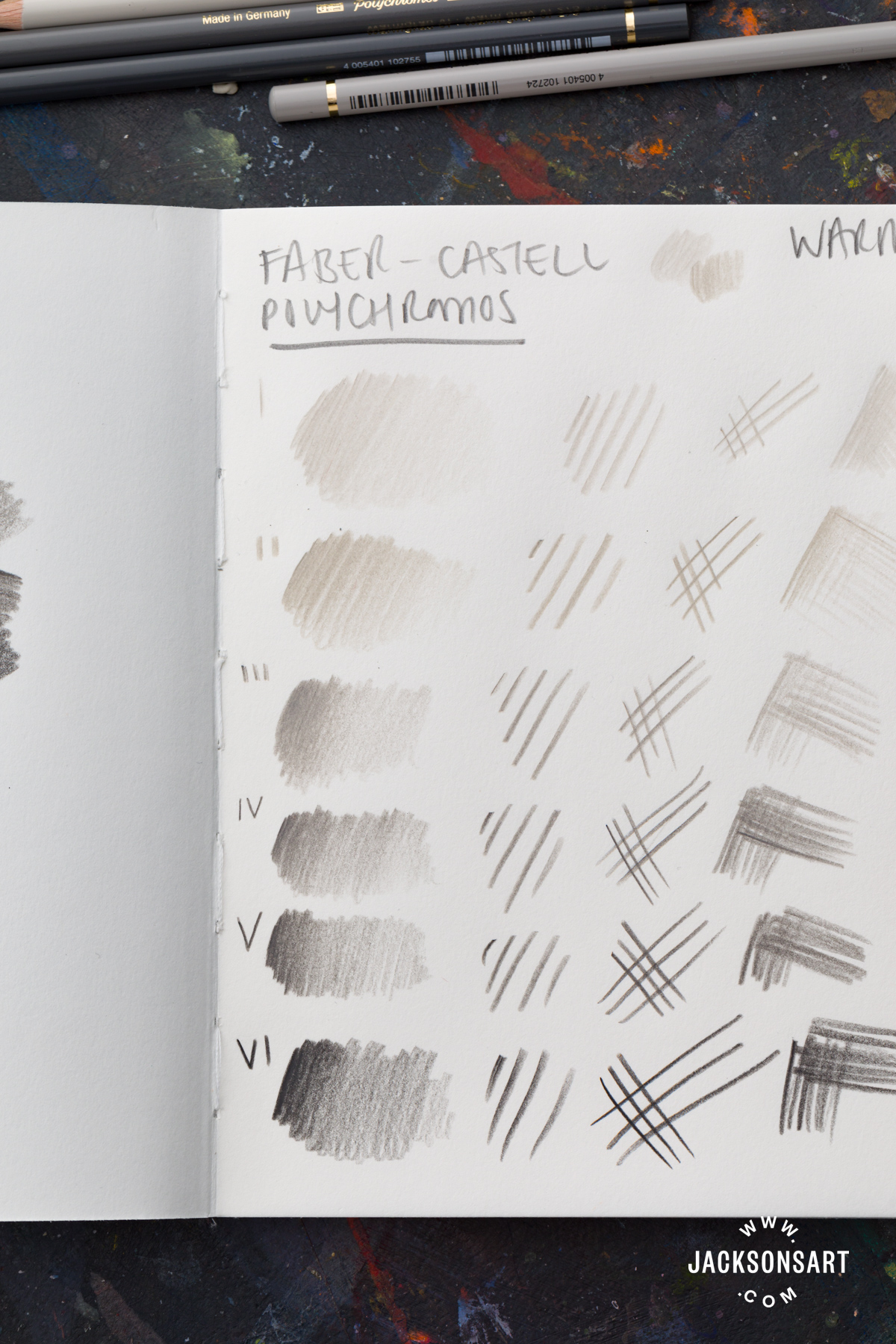
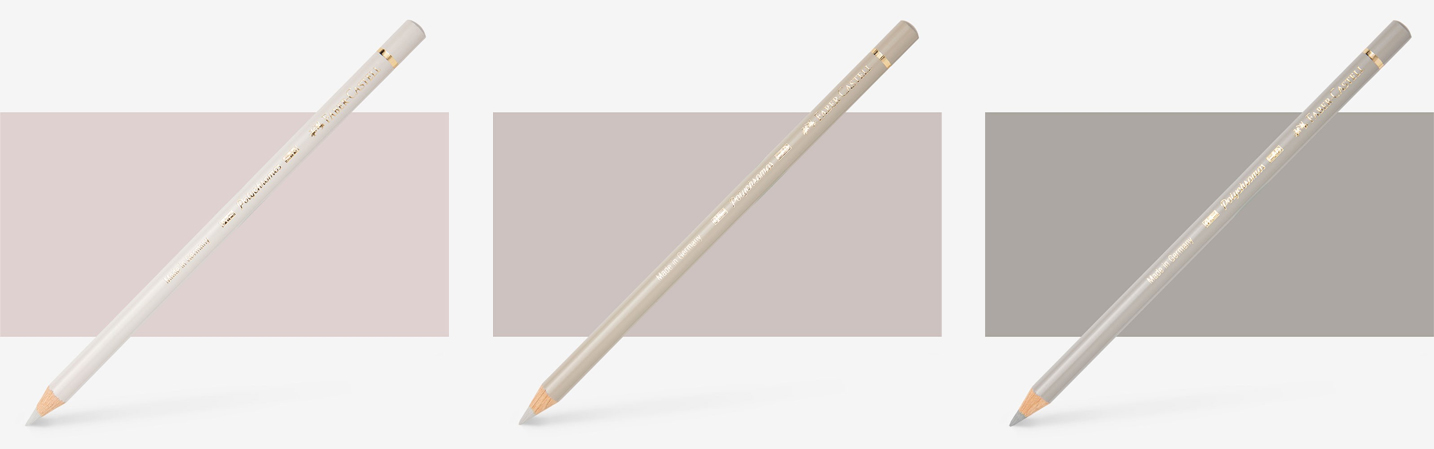
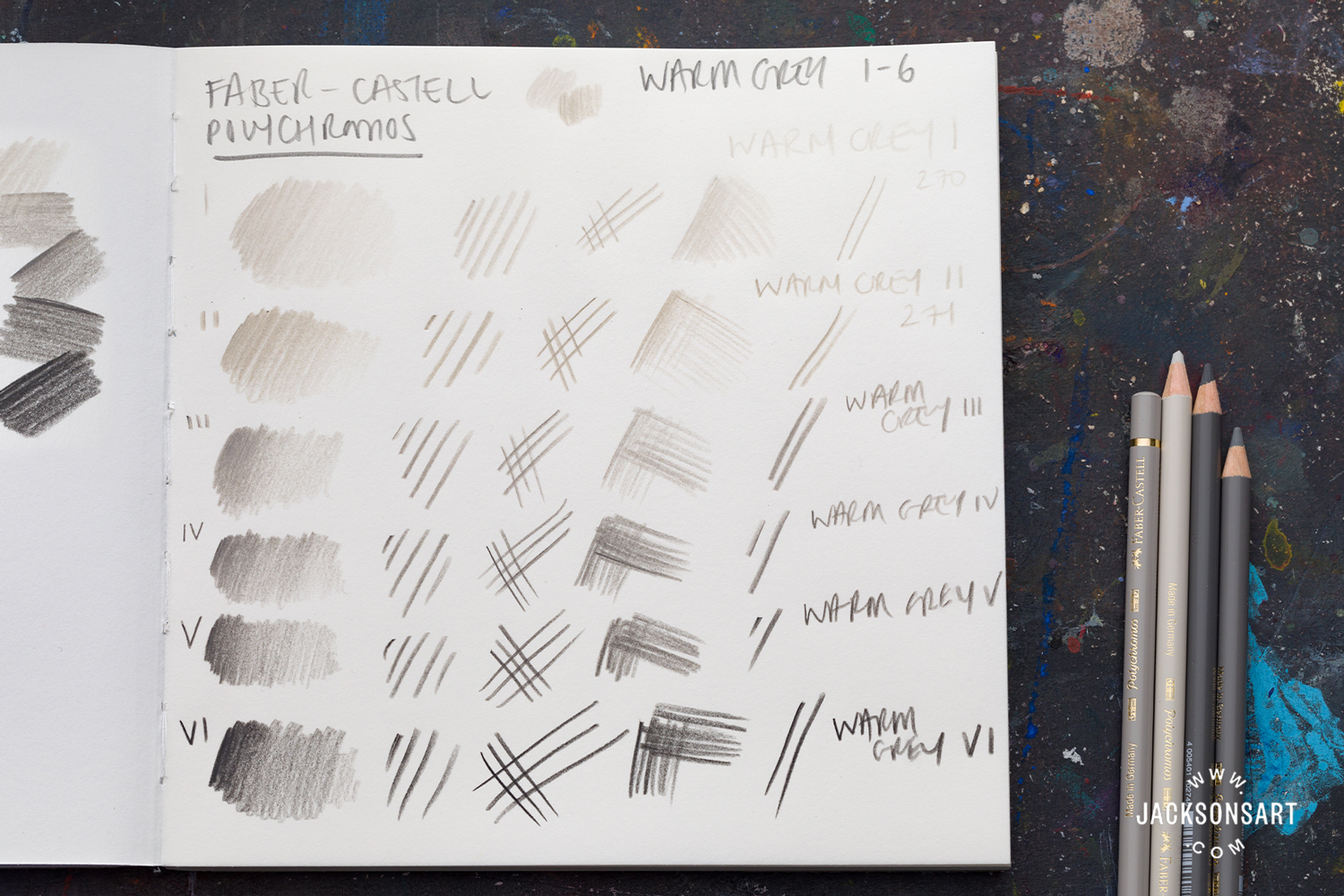
I had always rather dismissed coloured pencils as not being ‘serious’, perhaps even a bit ‘primary school’, but the Faber-Castell Polychromos Pencil range of greys looked quite good on the colour chart and turned out to be a really great product. They were the first product I’d found where the six Warm Greys (together with the White and Black) made a really convincing, even tonal range from light to dark. This consistency holds equally true for the six Cool Greys as well. Really good – and very exciting! The difference between the Cool Greys and the Warm Greys is quite subtle but clear, and they are undoubtedly grey unlike some other products where the warm greys are to my eye more like shades of purple and those of the cold greys much more akin to shades of blue (or even green at times).
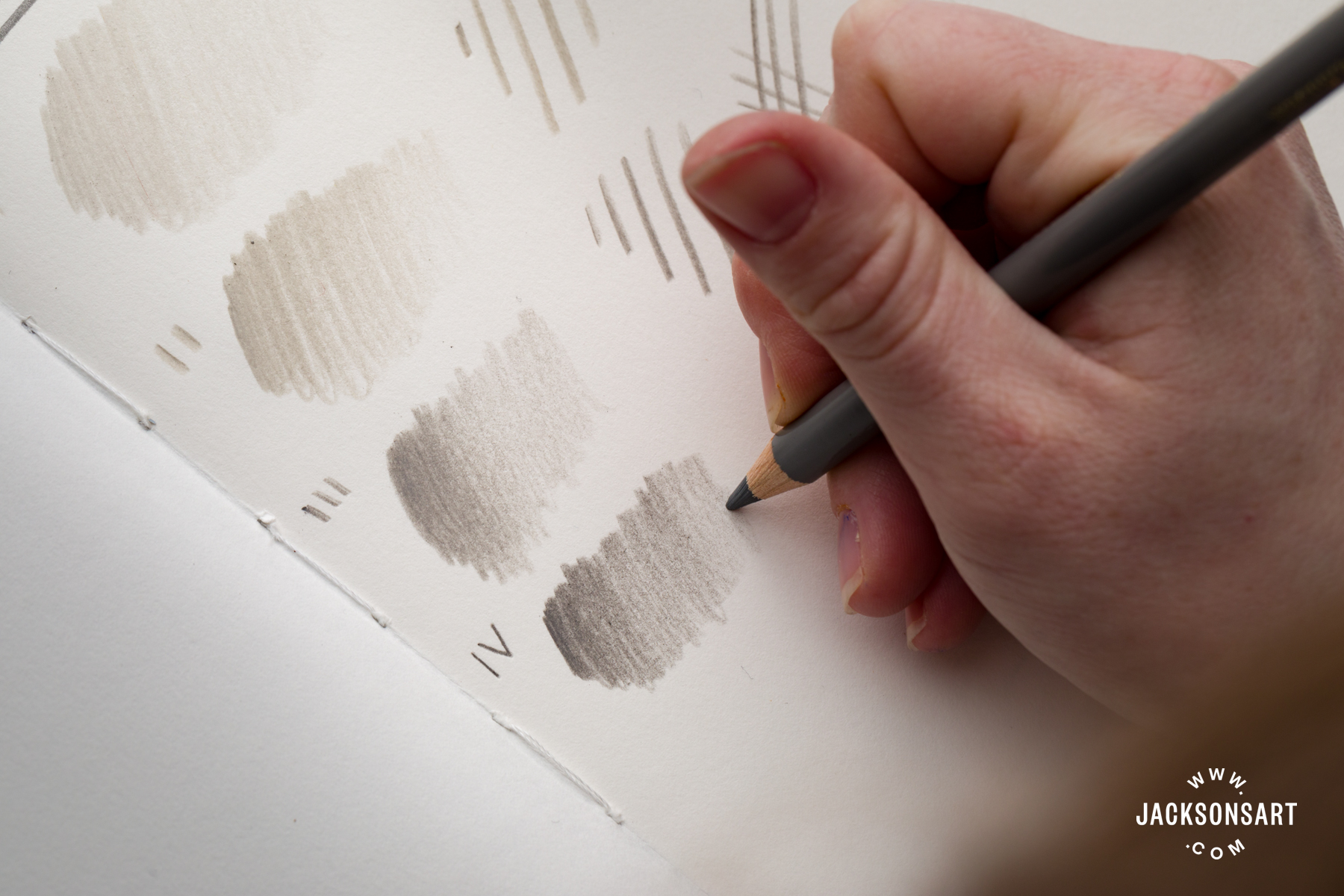
Being oil-based they are very smooth in texture and have very good opacity and even coverage. So far, I have been mainly experimenting with them on black paper, where their opacity makes them very effective for portraying light falling on surfaces within a black box space (which is the essence of most theatre lighting scenarios). For this they seem to work best on a very smooth paper which allows one to take fullest advantage of their even coverage. In work I have no hesitation in recommending them to our performing arts students who are lighting their theatre projects as they visualise and sketch out their designs, particularly when starting to investigate the way warm lights or cold ones can affect an audience’s emotional response to a particular scene or character.
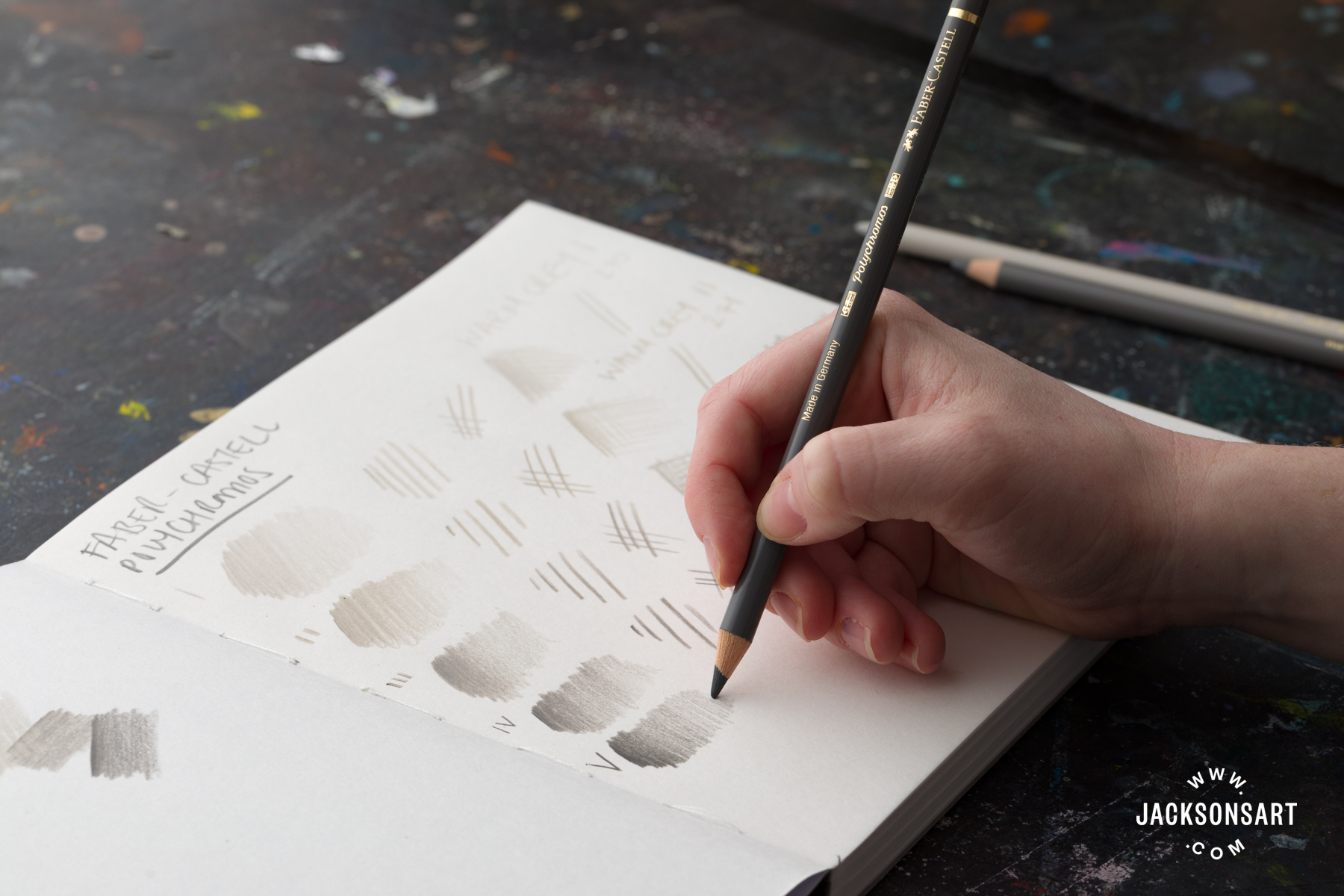
The only downside I have found with them is that they are perhaps less well suited to very quick sketches but seem to respond best to careful detailed rendering of the tones, so are probably to be kept for “best”, finished work. For quickly jotting down rough ideas, a drier, chalk or pastel-based pencil on rougher paper probably works better, but I have yet to find a range of these that has the same wide, consistent range of warm and cool greys as the Polychromos.
Their price seems very reasonable compared to other good quality coloured pencils, though for me the evenness of the value scales far outweighs any consideration of cost.
About Steve Doxsey
I work as the technician for the Performing and Visual Arts Departments of a small FE college. I have a particular interest in lighting design, mask making, and tool making. Whilst not by any stretch of the imagination an artist, I find myself increasingly using drawing as the main thinking and communicating tool in my daily work. I notice these days that whenever I’m asked a question, I immediately reach for a pencil and paper, because sooner or later the ensuing explanations and discussion will involve drawings or diagrams.
Further Reading
How to Use Watercolour Pencils
Artist Review of the Month: Derwent Drawing Pencils
Preparatory Drawing Methods for Painting
Monotype Printmaking for Beginners
Shop Faber-Castell Polychromos Pencils on jacksonsart.com