



Splattering isn’t always the result of a mistake. Artists have used splattering as a painting technique since the earliest known forms of art, appearing in prehistoric cave paintings, and used throughout the Early Renaissance, and Romantic period – long before it was popularised by the Abstract Expressionists in the 20th century. Whether paint was slapped, dripped, thrown, or blown, splattering offered a powerful means of expressing each artist’s intent. In this article, I explore this often-overlooked technique before demonstrating methods for incorporating splattering into your own paintings using oil, acrylic, watercolour, and ink.
Articles in the Techniques Series define the meaning and context of art making processes and give practical tutorials on how to work with them.
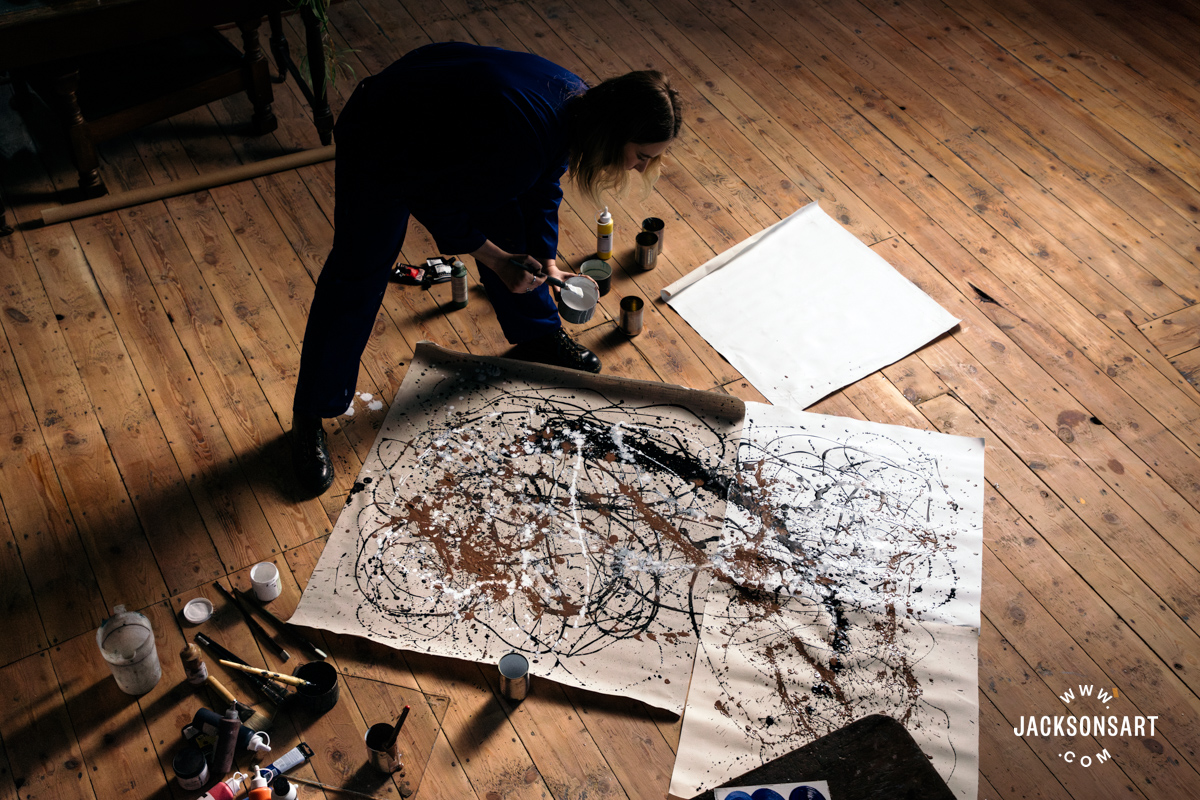
Definition: Splattering describes when paint or ink is applied to a surface by dripping, flicking, blowing, slapping, or throwing it. The impact of the paint hitting the surface makes it take on a spontaneous splattered shape, where the artist forgoes total control of the finish.
The Effect of Splattering
Splattering can be applied to a painting in either a somewhat restrained or wildly gestural way. Through practice, artists can start to predict the form of their splattered marks, depending on the fluidity of their medium, the surface it lands on, and the gesture or tool used to apply it. At times, the technique has been dismissed because of a perceived lack of control, but in practice, there is more method to the process than may initially be understood. When used in moderation, applying splattered flecks to enhance the texture of a certain area of the surface is a useful mark-making technique that would be laborious to reproduce by hand through dotting. Specific areas of splattering may draw the eye, suggesting that the artist took spontaneous risks to create visual excitement within the work.
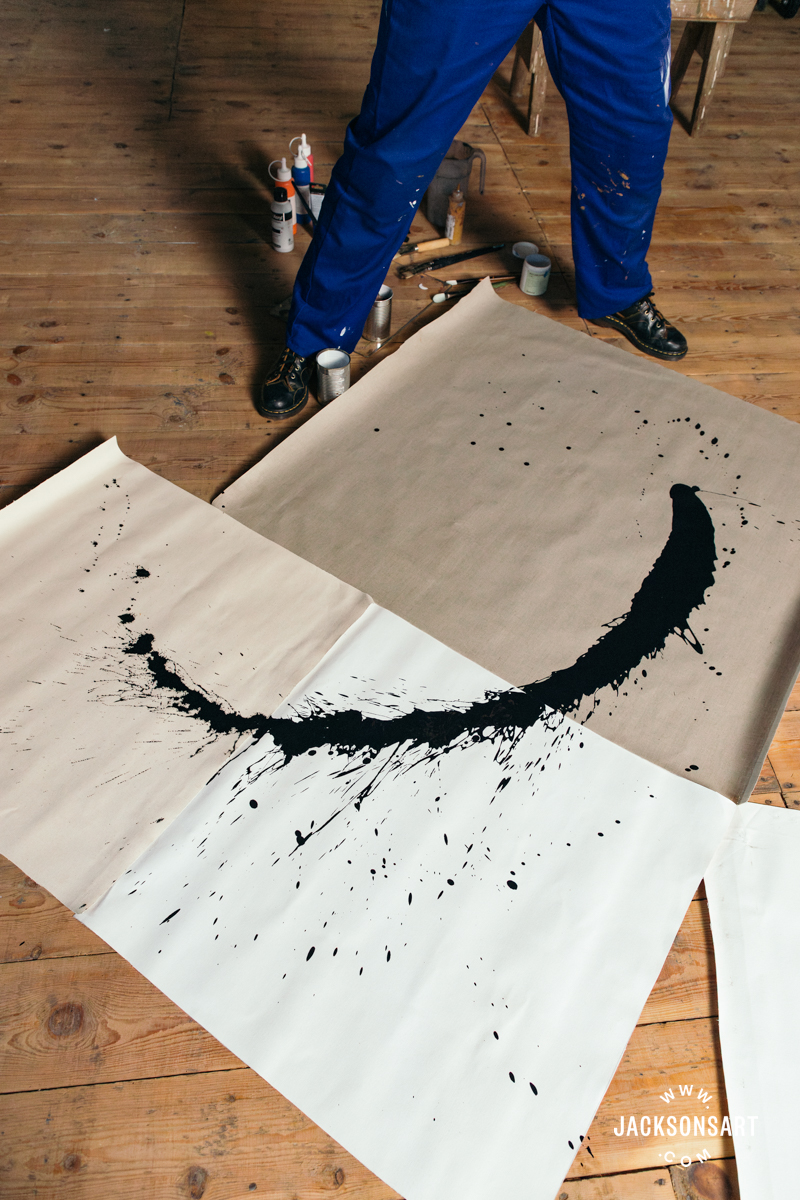
When splattering is applied thickly, covering the whole surface with unrestrained flung paint, the effect can be seen as a rejection of the traditions of painting. By foregoing the brushstroke, painting became an act or event rather than an illusory object. To our contemporary eyes, the all-over splattering technique immediately calls to mind the Abstract Expressionists, or Action Painters, most famously Jackson Pollock.
For artists who use splattering today, what was once a rejection of tradition in Pollock’s time has become an artistic tradition in itself, referencing the movement that mainly took place between the 1940s and 1960s. Splattering across the whole picture plane now generally evokes the same conceptual associations tied to Pollock. These include themes surrounding masculine outbursts and the cultural aftermath of the Second World War.
The History of Splattering
Fascinatingly, the oldest known use of splattering as a mark-making technique predates any art made by our own species. Research published in 2021 showed that the cave paintings in Cueva de Ardales in Spain were created using a splattering technique by our Neanderthal relatives 65,000 years ago. By dating and analysing the application of the red ochre pigment on the cave walls, researchers discovered that the marks could only have been achieved by throwing or blowing the pigment from their mouths. Some of the marks were applied as much as 10,000 years apart. This suggests that adding to the work was part of a ritual or spiritual practice.
Fra Angelico
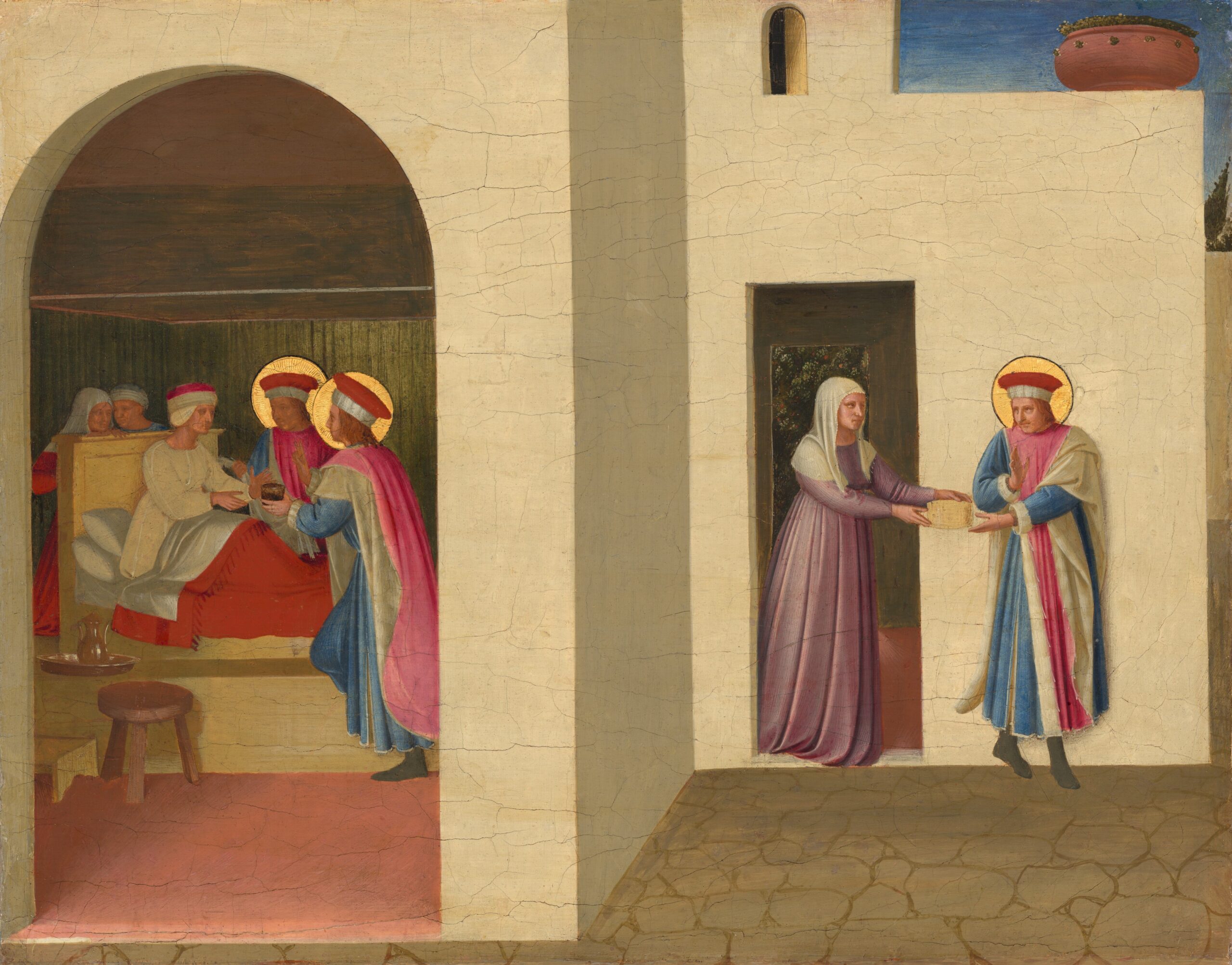
Tempera and oil on poplar panel, 36.2 x 46.3 cm | 14.25 x 18.2 in
National Gallery of Art
Jumping forward to the Early Renaissance, Fra Angelico is possibly a surprising name to hear associated with the history of splattering in painting. Known for his careful altarpieces, frescos, and private devotional paintings, he was a pioneer in depicting the physical volume of objects and using early linear perspective. In his work The Madonna of the Shadows, located in the monastery of San Marco in Florence, he painted the Sacred Conversation – the Virgin Mary with baby Jesus, surrounded by Saints. This scene appears above a trompe l’oeil of marble panels, the texture of which is rendered using a splattering technique. This is where morning prayers would take place, so as worshippers knelt on the ground, they would have looked directly at the imitation marble.
The art historian Georges Didi-Huberman noted that the marble was created by splattering paint onto a dried fresco layer. This must have been an intentional stylistic choice, since Fra Angelico knew how to paint imitation marble representationally by hand. Conceptually, he suggested that this may have been intended to represent the mysteries of God, upon which the kneeling viewer would meditate.
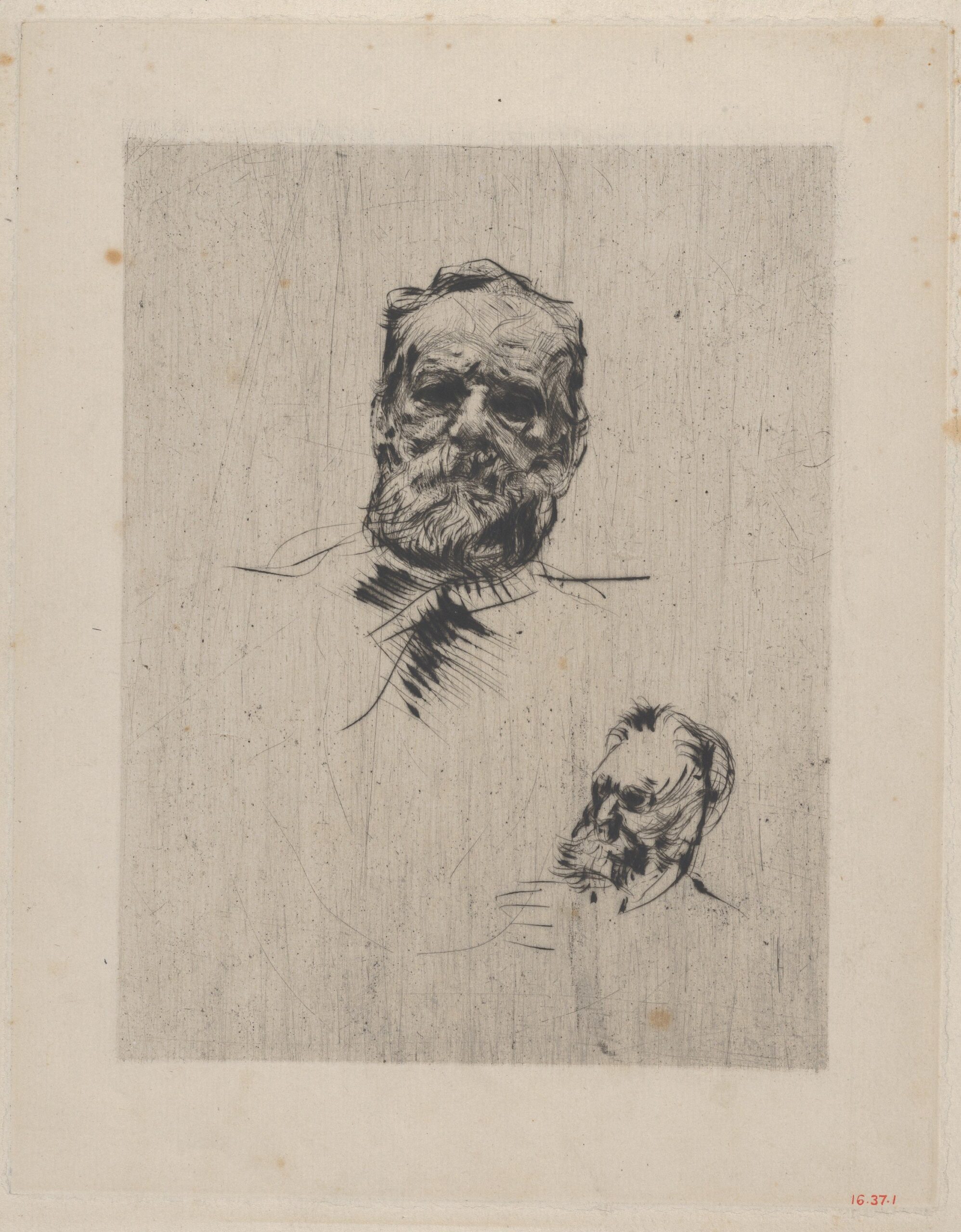
Auguste Rodin
Drypoint on laid paper, 17.6 x 13.5 cm | 6.9 x 5.3 in
The Metropolitan Museum of Art
Victor Hugo made use of splatters from the mid-1800s to enhance the character of his Gothic sketches. His contributions to politics and literature were extraordinary, with works such as Les Misérables and The Hunchback of Notre-Dame. But he was also a prolific artist who created more than 4,000 drawings in his lifetime. These works were part of a private practice through which he developed his innovative draftsmanship, later inspiring the Symbolists and Surrealists.
Before the Surrealists developed automatic drawing techniques, Hugo had already been experimenting with generating imagery through chance splatters and stains on his pages. Many of his ink drawings embraced splattering, which he layered with washes. He juxtaposed these effects against areas of representational drawing to create fantastical scenes, creatures, and characters. In his work Souvenir of a Castle in the Vosges, we see an area of ink splattered along the edge of the peak before us. This gives the sense that the climb ahead towards the castle is craggy and formidable.
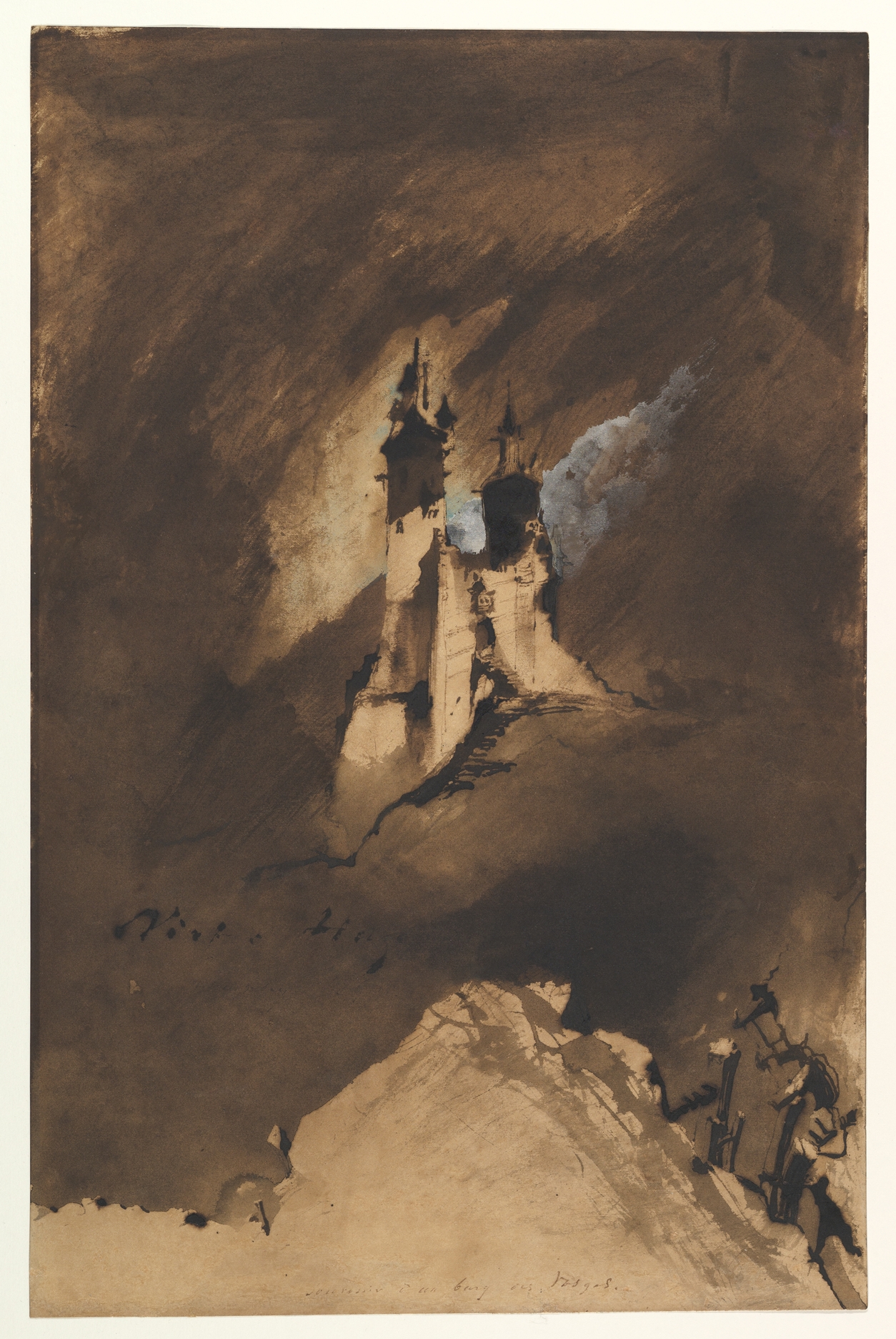
Victor Hugo
Ink and gouache on paper, 47 x 31 cm | 18.5 x 12.2 in
The Metropolitan Museum of Art
Although Jackson Pollock is the artist most associated with the splattering technique, he owes much of his innovation to the unsung pioneer of this form of mark-making, Janet Sobel. She is credited with creating the first ‘all-over’ painting. Meaning that the entire surface was treated with equal significance, without imagery or a focal point. She moved to New York in 1908, escaping the threat of the pogroms in Ukraine.
Sobel did not begin painting until the late 1930s, after years dedicated to motherhood. She started experimenting with her son’s art materials and, without formal training, was free from many artistic conventions of the time. She began creating works of pure abstraction, such as Milky Way, which is housed at MoMA. Her son was a great supporter of her practice and immediately began reaching out to influential artists and collectors in the New York art world about his mother’s work.
Janet Sobel created her first ‘all-over’ splattered painting two years before Jackson Pollock made his own. She quickly found success, exhibiting regularly and appearing in The Women in 1945, a groundbreaking exhibition featuring only women artists. The show was curated by Peggy Guggenheim, who later gave Sobel a solo exhibition.
Art critic Clement Greenberg – who coined terms associated with the Action Painters – visited the exhibition with Pollock. Greenberg later wrote:
“Pollock (and I myself) admired these pictures rather furtively… The effect – and it was the first really ‘all-over’ one that I had ever seen – was strangely pleasing. Later on, Pollock admitted that these pictures had made an impression on him.”
Concurrent with the obvious sexism of the era, they could only ‘furtively’ enjoy Sobel’s ‘strangely pleasing’ works, despite being directly inspired by them. It is incredible that the recognition she was afforded then has almost been erased from popular art history to this day.
Jackson Pollock emerged alongside the Abstract Expressionists in post-war America. They were influenced by increased contact with European artists, particularly the Surrealists, several of whom had taken refuge in America. These artists shared their ideas on ‘automatism’, which pursued a subconscious and automatic method of art-making through techniques such as frottage and grattage. In 1936, Pollock spent time working with the Mexican muralist David Alfaro Siqueiros, whom he had seen painting on the ground. Despite this clear influence, he later denied the impact of the muralists and instead suggested that he had been inspired by Navajo sand art.
In 1947, Pollock began dripping, pouring, and throwing enamel paint onto canvases laid on the ground, as seen in explosive gestural works such as Autumn Rhythm (Number 30). The lack of subject matter was jarring to viewers at the time. And his method of placing the canvas on the floor and manoeuvring around it was highly unconventional. He is recognised for developing the ‘drip technique’ and for using abstraction as a means to ‘function between the easel and the mural’.
The artist Lee Krasner was a key influence on Pollock. She introduced him to the art world, shared her extensive knowledge of art history, and created ‘all-over’ paintings at the same time. After meeting in 1941 and marrying in 1945, their lives became professionally and emotionally intertwined until Pollock died in a car crash at the age of 44. Krasner’s paintings also incorporate splattering, often following a forceful brushstroke, as seen in Polar Stampede. Similar to Sobel, Krasner faced resistance when it came to acknowledging her place in art history. Many found it difficult to accept that two of the leading figures at the cutting edge of modern art were women, and for much of her career Lee Krasner was dismissed simply as ‘Mrs. Pollock’.
Demonstrations of the Splattering Technique for Painting
Throwing, Dripping, and Flicking
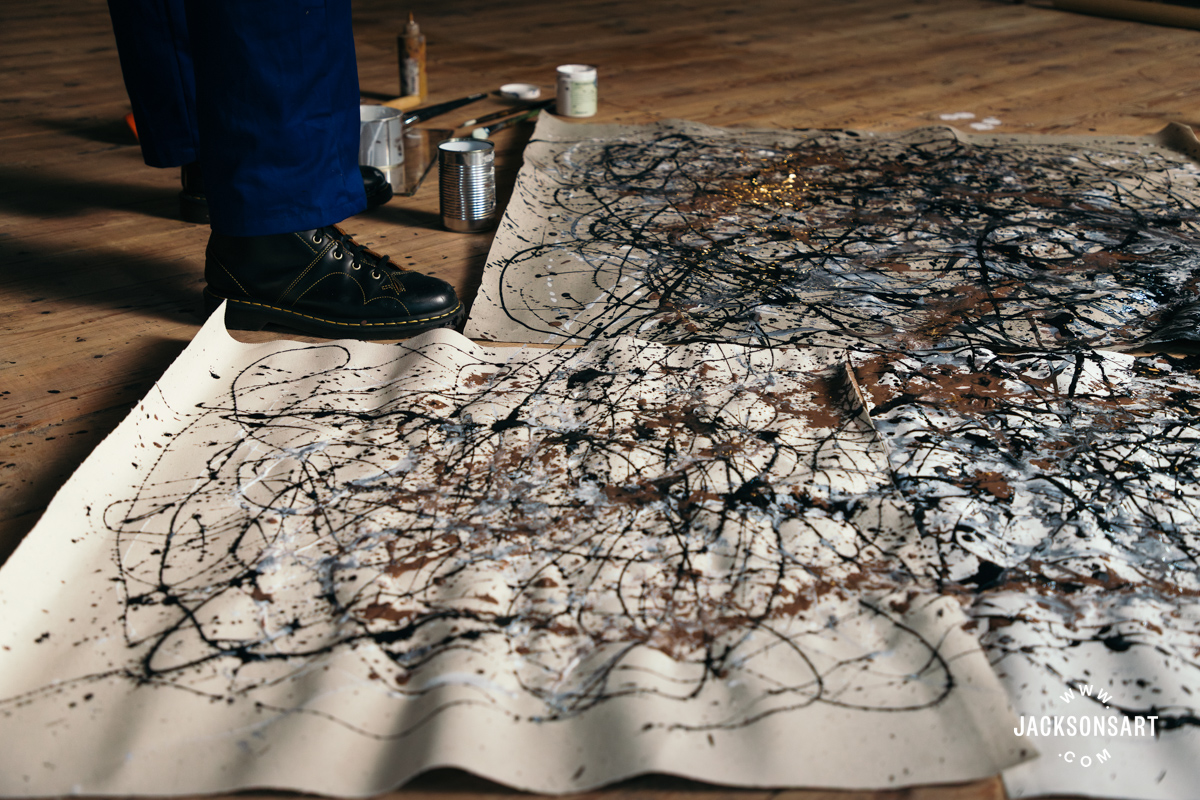
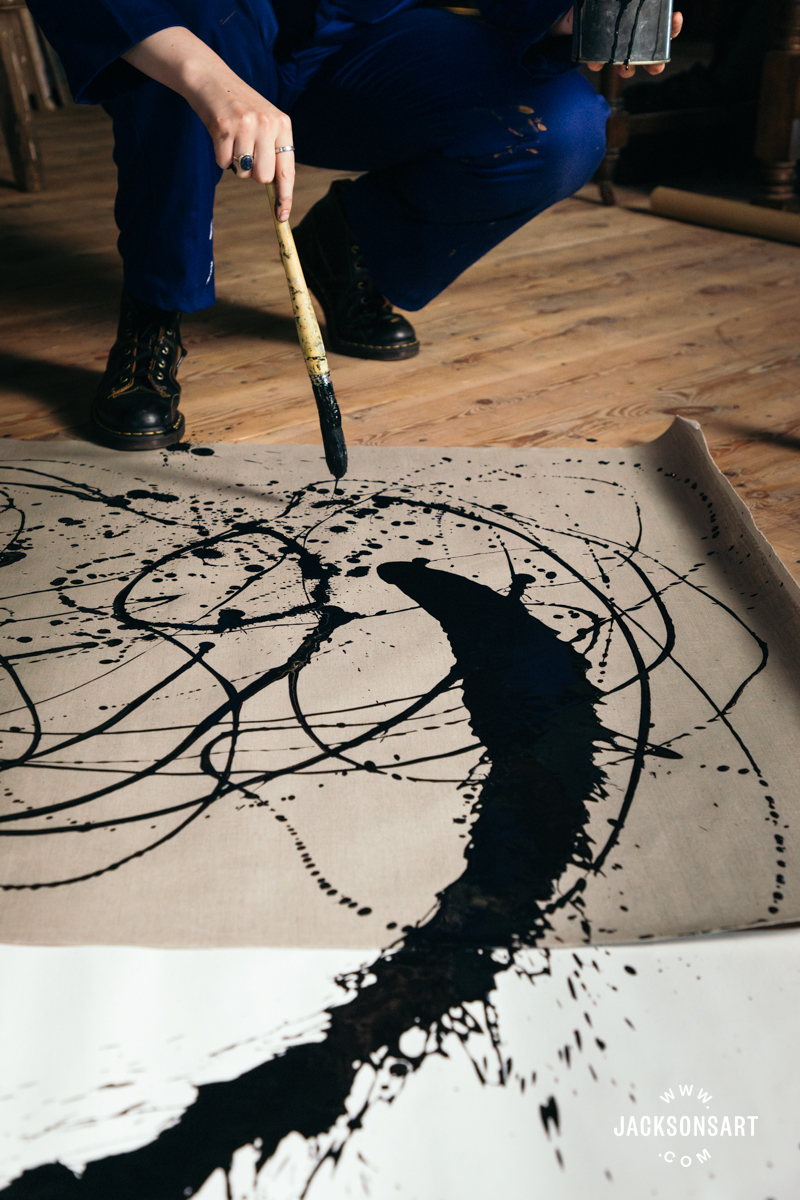
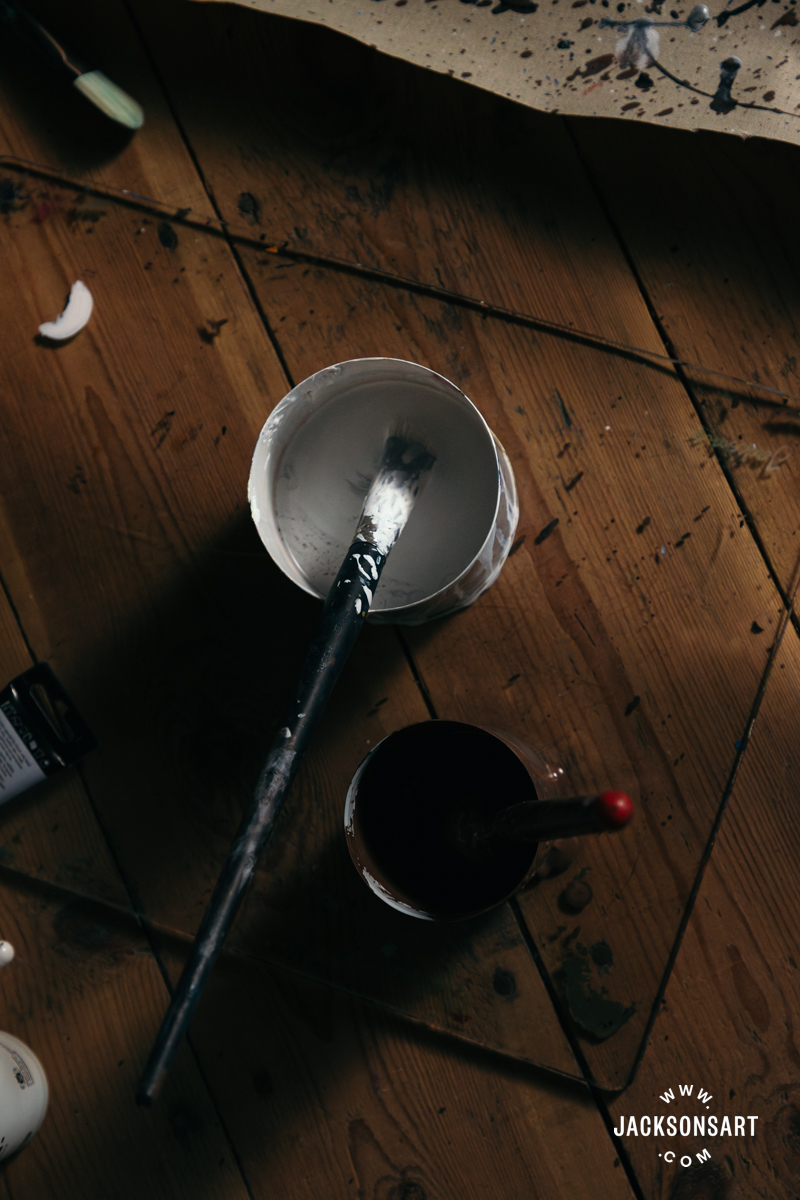
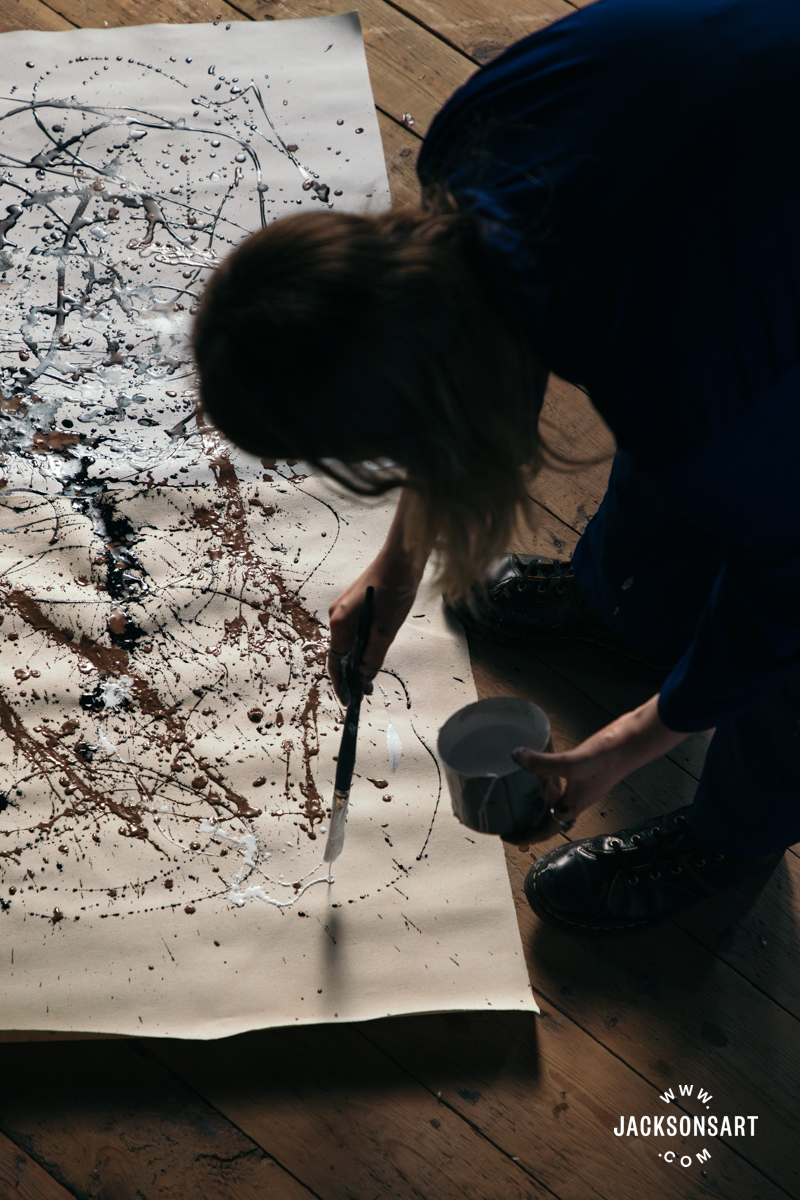
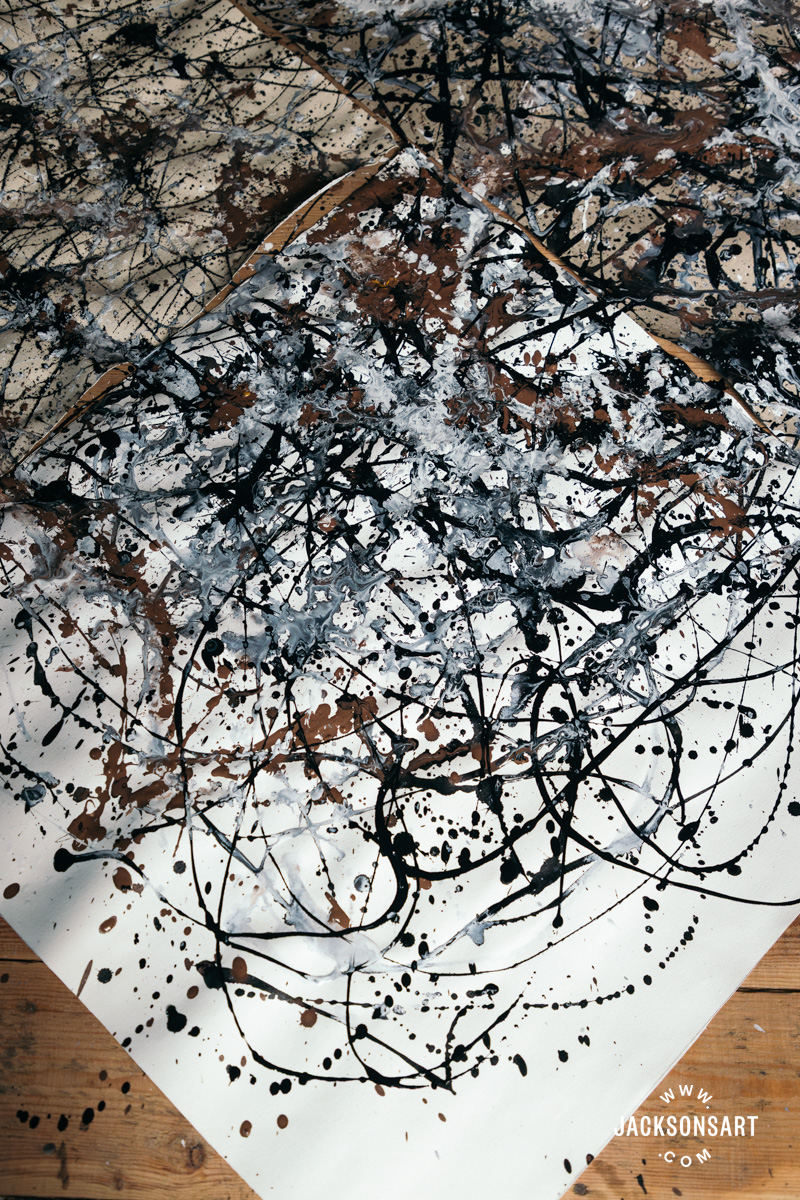
For my first demonstration of splattering, I experimented with emulating the splattering techniques of the Abstract Expressionists. Like Pollock, I laid pieces of canvas on the ground, throwing, dripping, and flicking my paint across it in gestural movements, treating the entire surface evenly. I worked with Jackson’s Studio Acrylic Paints in Mars Black, Titanium White, and Raw Umber mixed with a touch of black and white, on raw and primed canvas.
I laid my canvas on the floor and prepared my paints by mixing them with water in cans to make them fluid enough to drip across the surface. It took some experimenting to find the perfect viscosity to apply the paint in fluid lines.
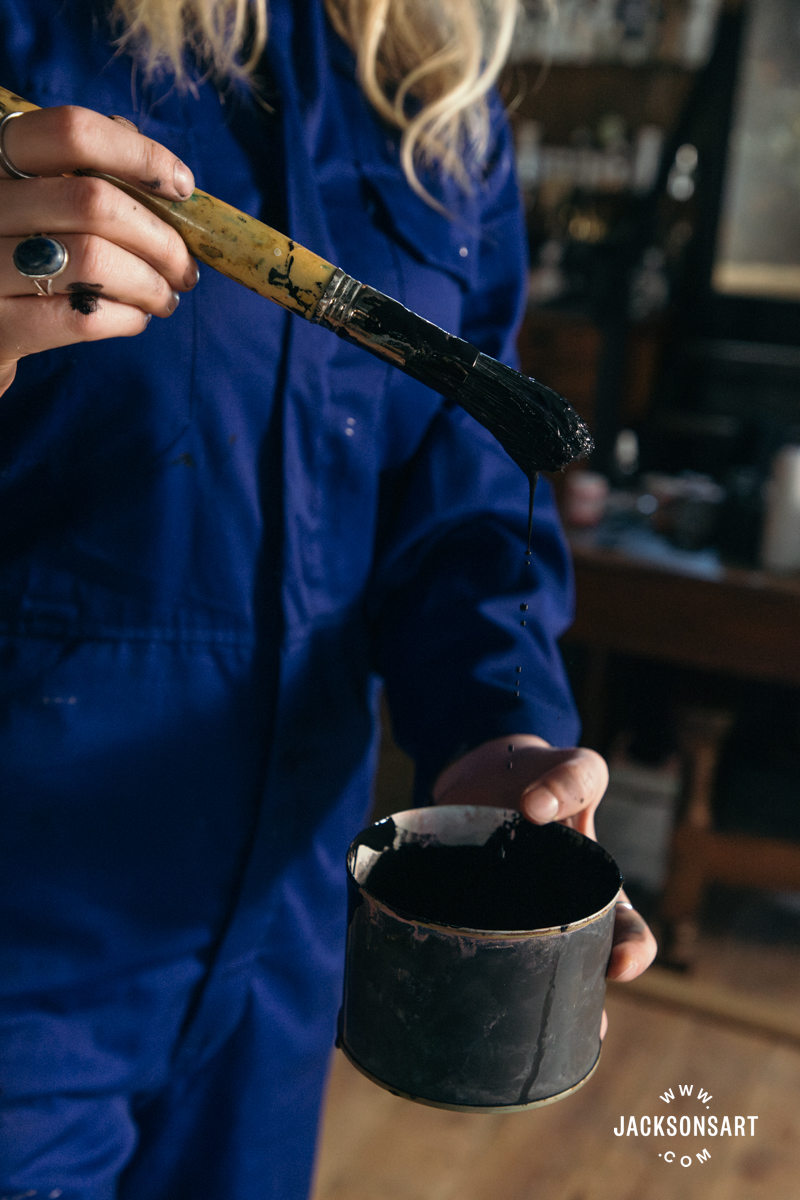
The more I painted, the more I found ways to make interesting marks. I copied Pollock by crouching over the painting and allowing the paint to drip from the saturated brush. But I also threw, flicked, and whipped the paint from the end of the brush. The process engaged my whole body, not just my painting arm.
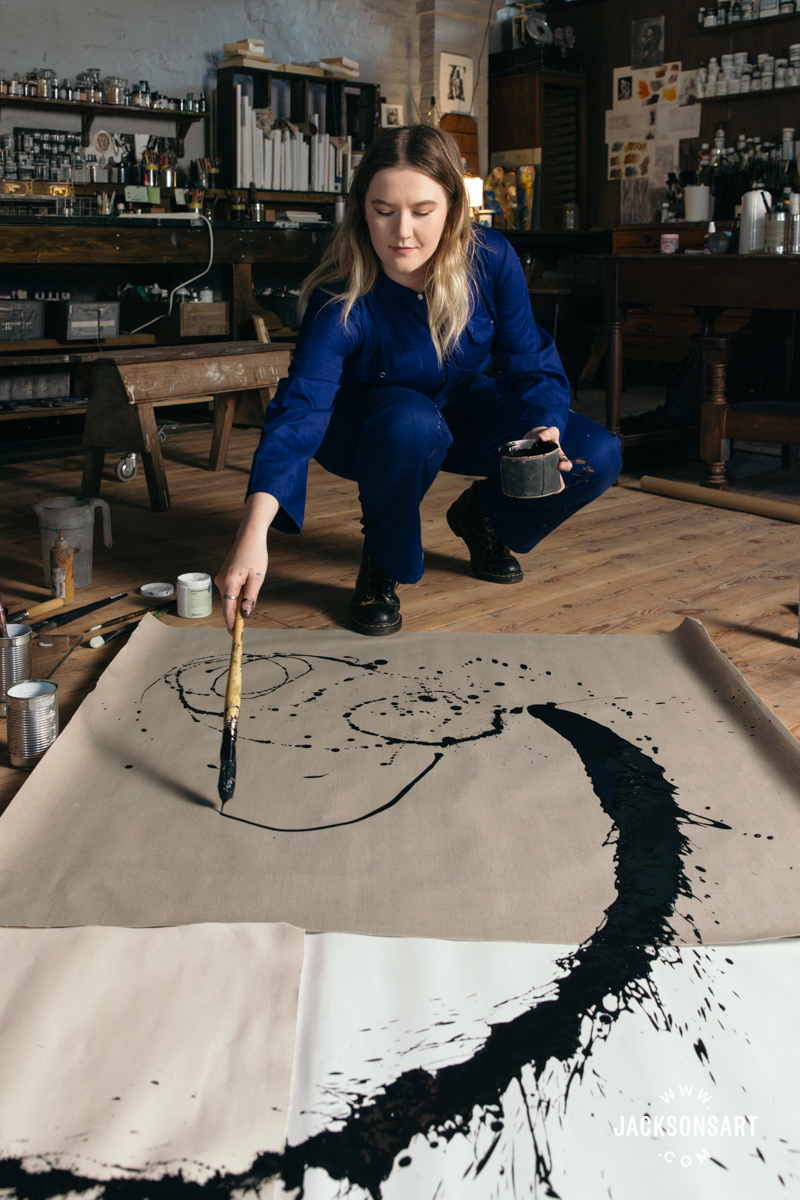
I started by applying the black paint, then added the light brown and white successively. Once I’d worked through each colour, I left the surface to dry down a bit because the surface was very wet. And then I added the finishing layer.
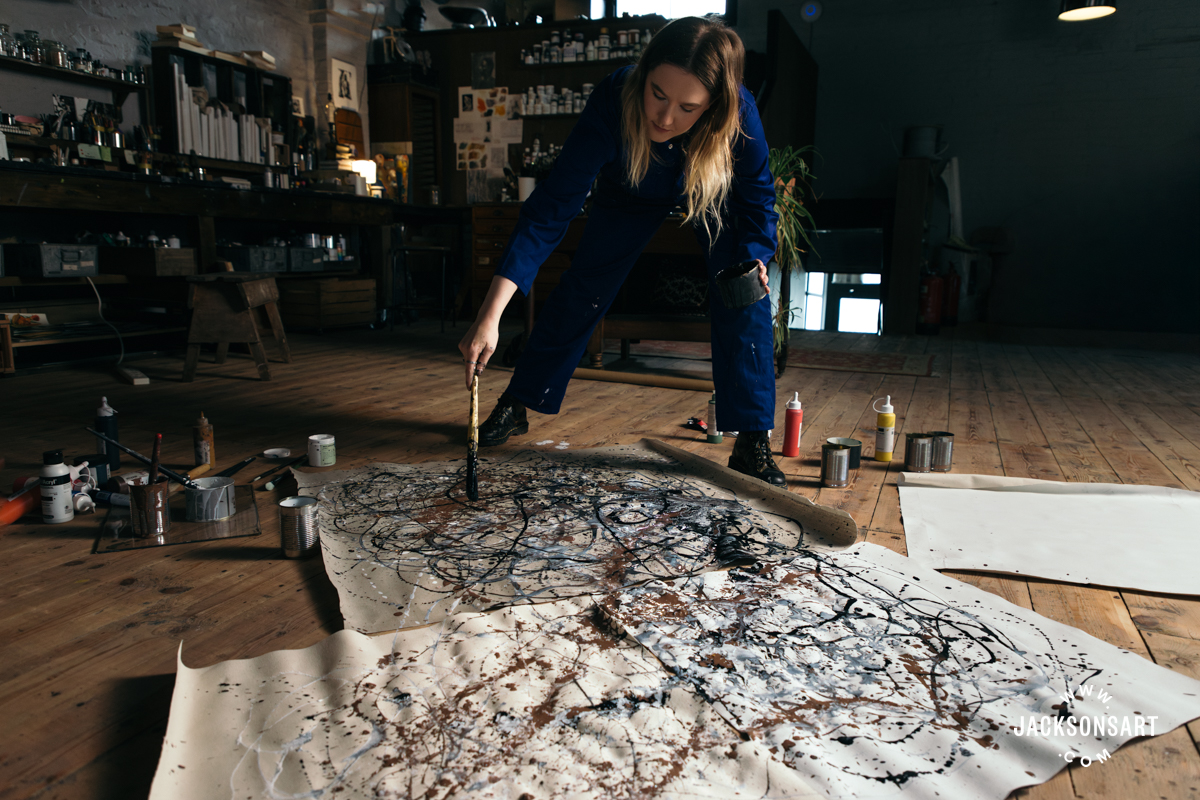
Tips: I wore overalls to experiment with this technique since it’s a really messy one. It’s best to be prepared to accidentally splatter the paint beyond your surface and protect your clothes and space properly.
If you want to preserve your splattered marks without them dripping, make sure you are able to leave your work to dry lying flat, especially when the paint is very fluid.
Blowing Through a Straw
Next, I wanted to make an example of splattering by blowing watercolour with a straw. This technique is useful if you want to have some control over the direction of your splattered marks, but still enjoy an organic finish. For this example, I worked on a sheet from a Jackson’s Watercolour Paper Block, with Jackson’s Artist Watercolour Paint in Cobalt Turquoise, and blew the paint through a paper straw.
To begin, I activated the watercolour with water on my palette to make it runny enough for the blowing to move it. But not so runny that the pigment was weak.
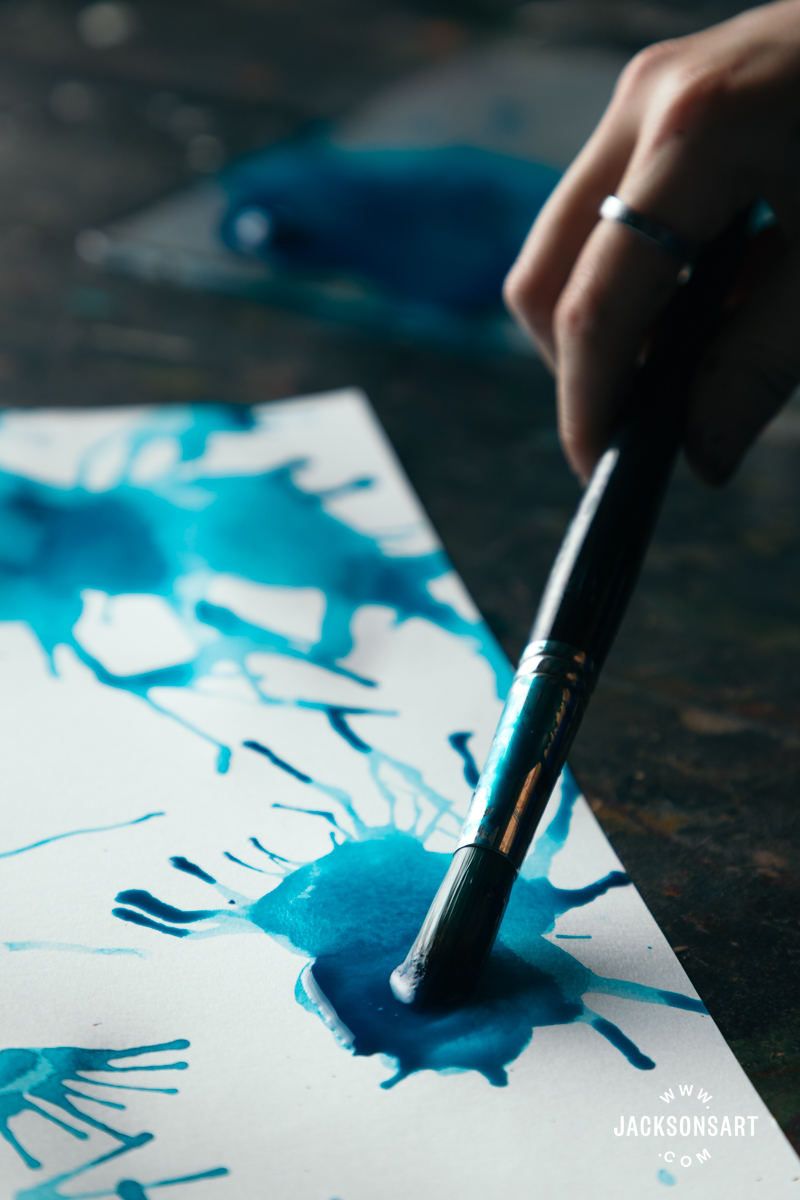
Next, I applied some landscape forms to the sheet, and blew on them through the straw whilst they remained wet. I controlled how far the bead of water travelled by how I directed the straw and how hard I blew.
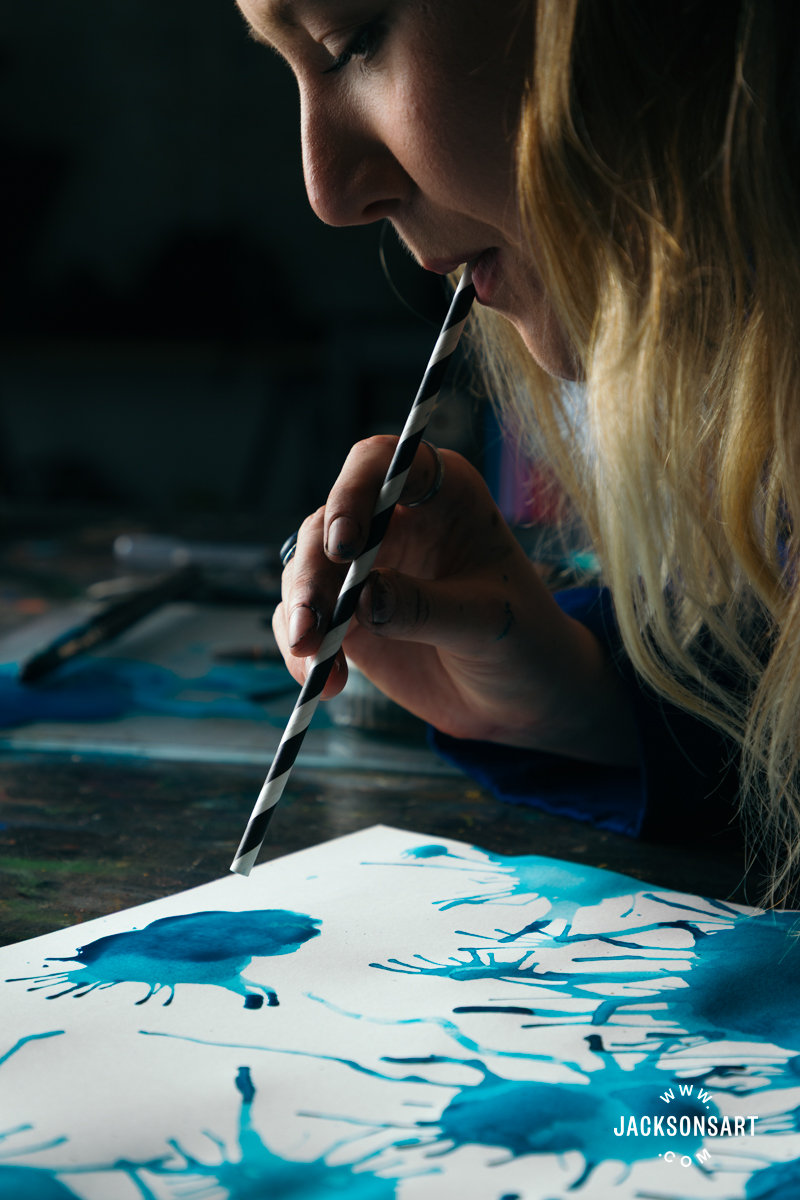
Blowing hard on one spot made the paint travel outward in a starburst shape, whereas holding the straw at an angle made the paint travel in that one direction. Altogether, the splattered straw marks created a supernatural forest, or a surreal landscape.
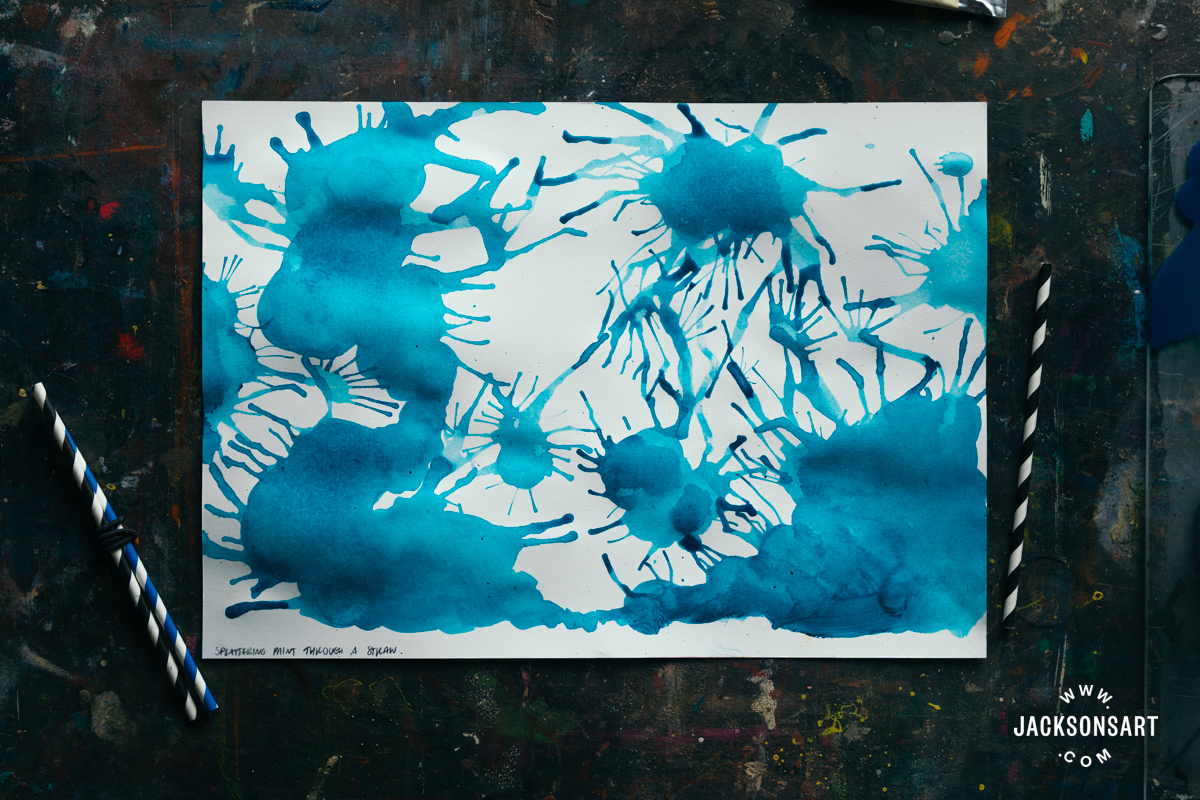
Tips: You could also recreate this technique with a hairdryer on cold, or a hand fan.
Splattering Specific Details
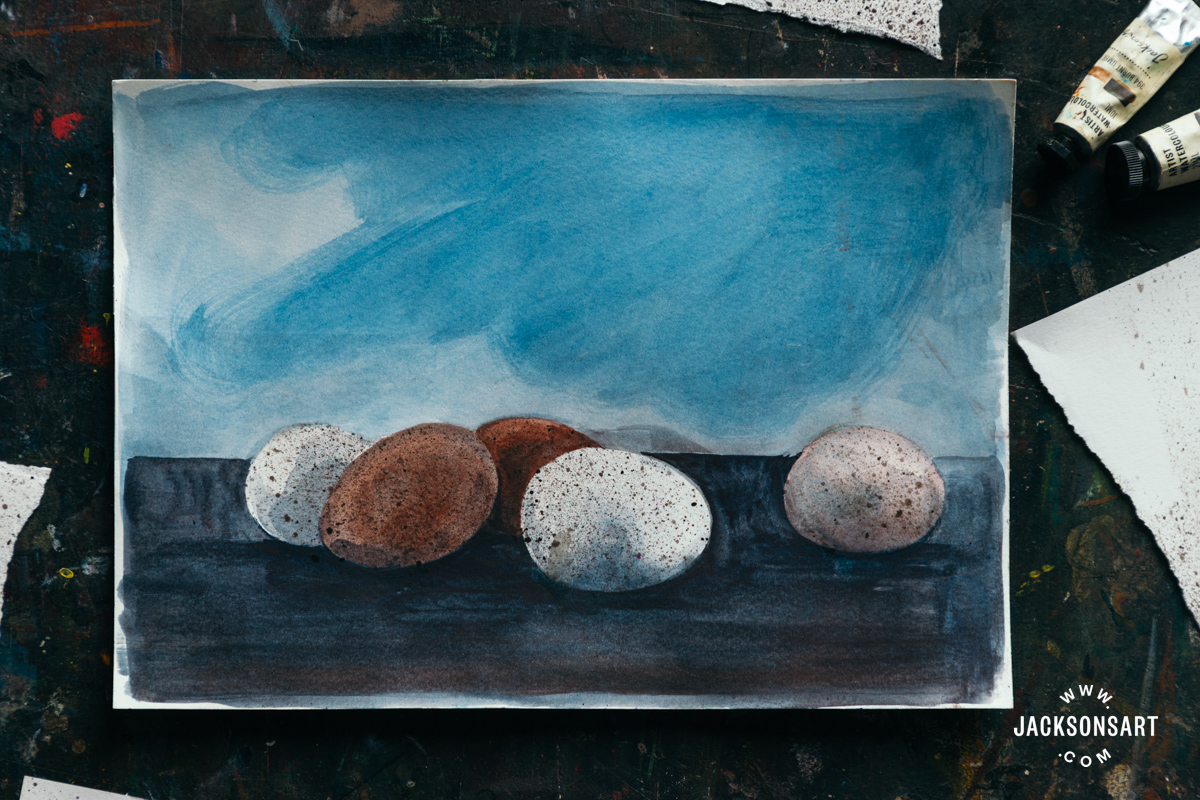
For splattering details on specific areas of a painting, you can use masking fluid, tape, or paper to cover the areas that you want to protect from the effect. For my example, I painted a simple composition of some eggs sitting on a table using Jackson’s Artists Watercolours in Venetian Red and Phthalo Blue on a sheet from a Jackson’s hot pressed watercolour block.
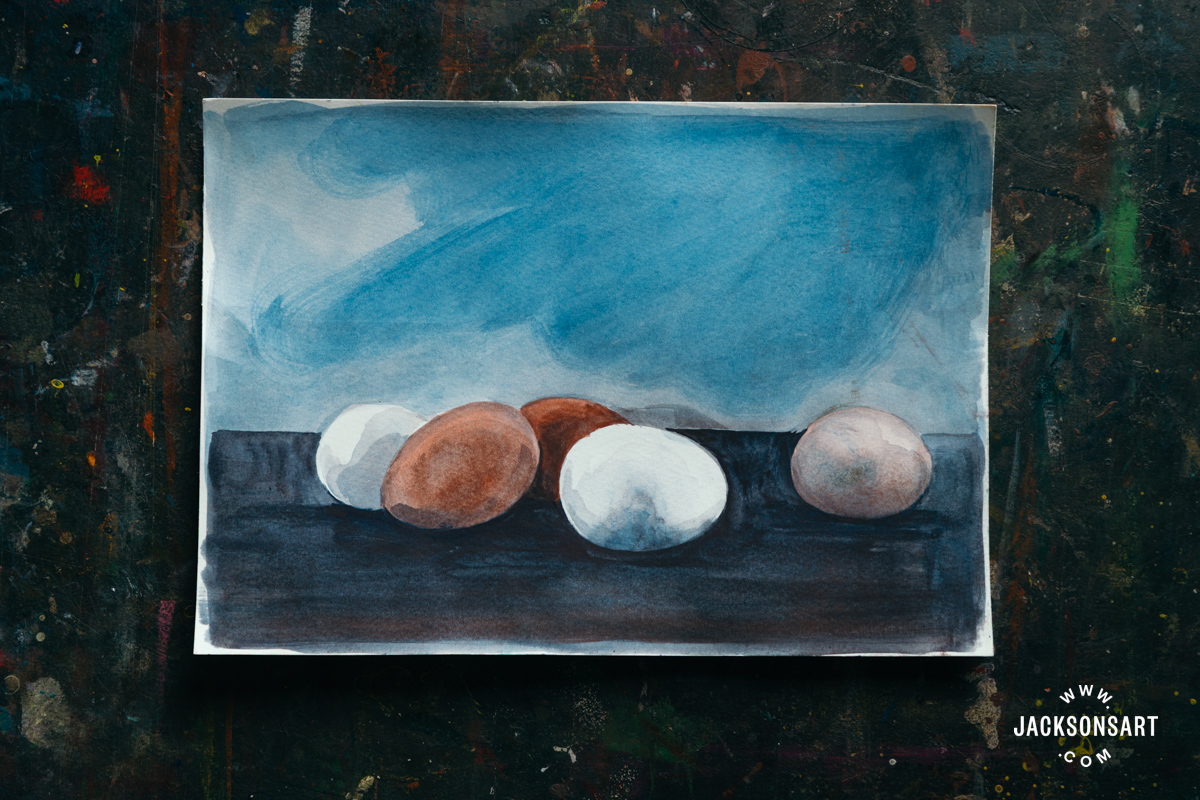
To cover the background and table in the work, I ripped up some paper and positioned the pieces around the eggs to protect them from the splattering.
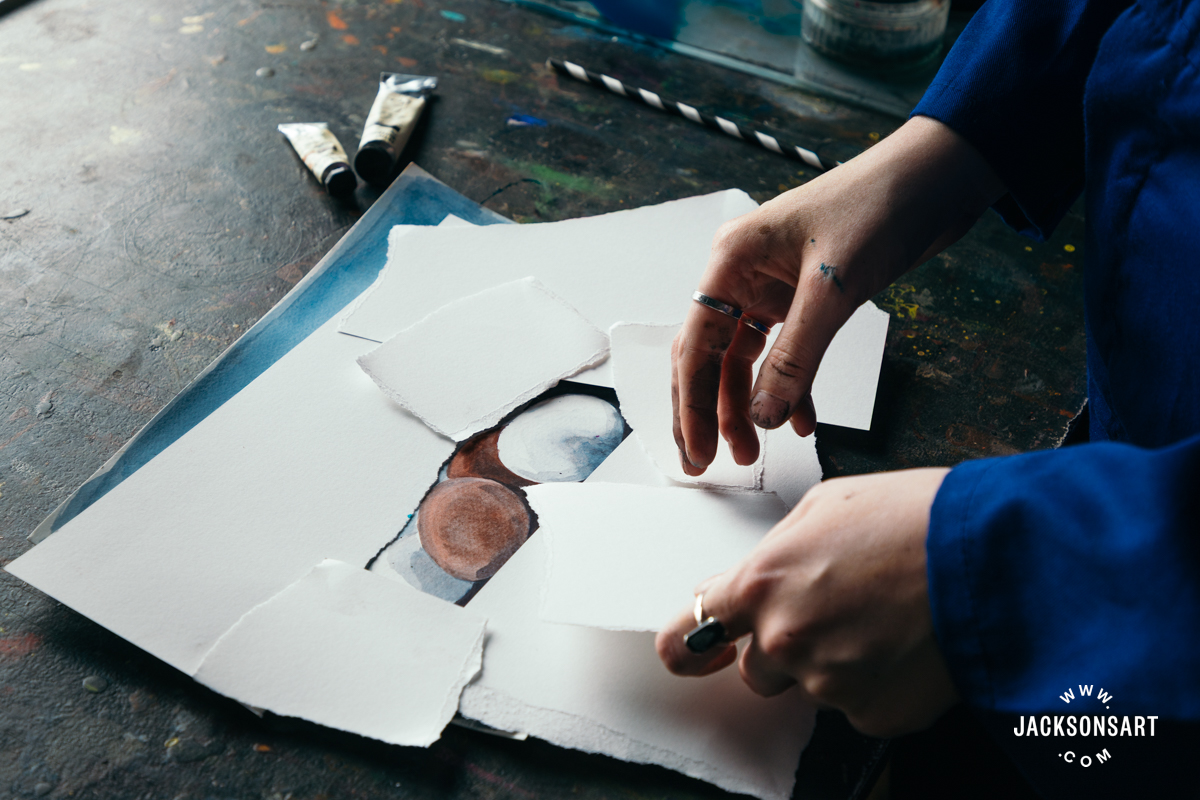
Next, I mixed up some more of my watercolours to make them fluid on the palette and saturated a stiff brush. I flicked the paint onto the surface by pulling my thumb back through the bristles of the brush, which flings specks of the paint onto the page.
In a couple of areas, I tapped the wet brush on the back of my other hand to flick the paint off the brush by force. This dropped bigger speckles of paint than flicking it with my hand.
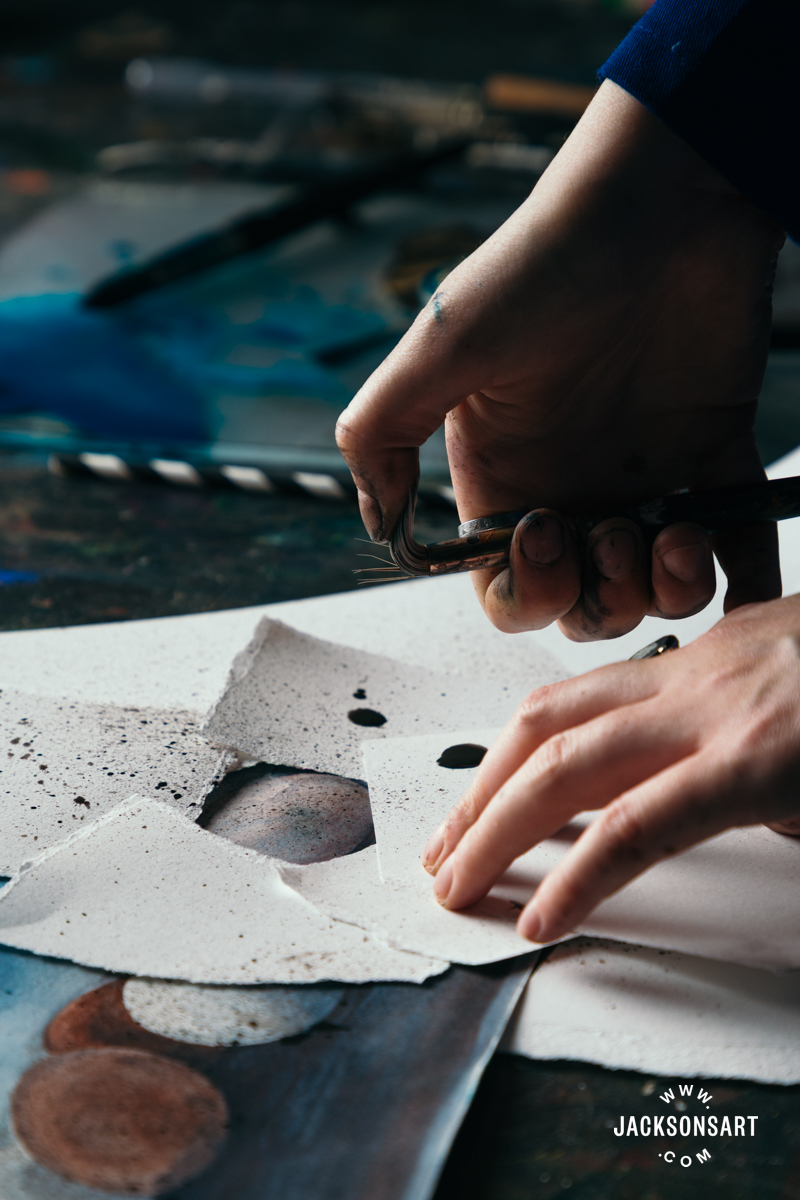
Tips: As you run your hand through the wet brush, paint will of course collect on your hand. Make sure to rinse or wipe it off as you go, so that it doesn’t accidentally drip onto your work.
If you’d like to create this effect with oil paint but don’t want to get your fingers coated in medium-diluted paint, you can drag a brush handle or palette knife across the bristles instead.
Splattering a Brushstroke with Ink
Finally, I made an example of splattering with ink. This time made by the force of the brushstroke on the page, rather than flicking the media onto the surface from above. For this example, I worked with Sennelier Indian Ink poured into Stackable Round Ceramic Palettes, applied onto a sheet from a Jackson’s Bockingford Watercolour Pad.
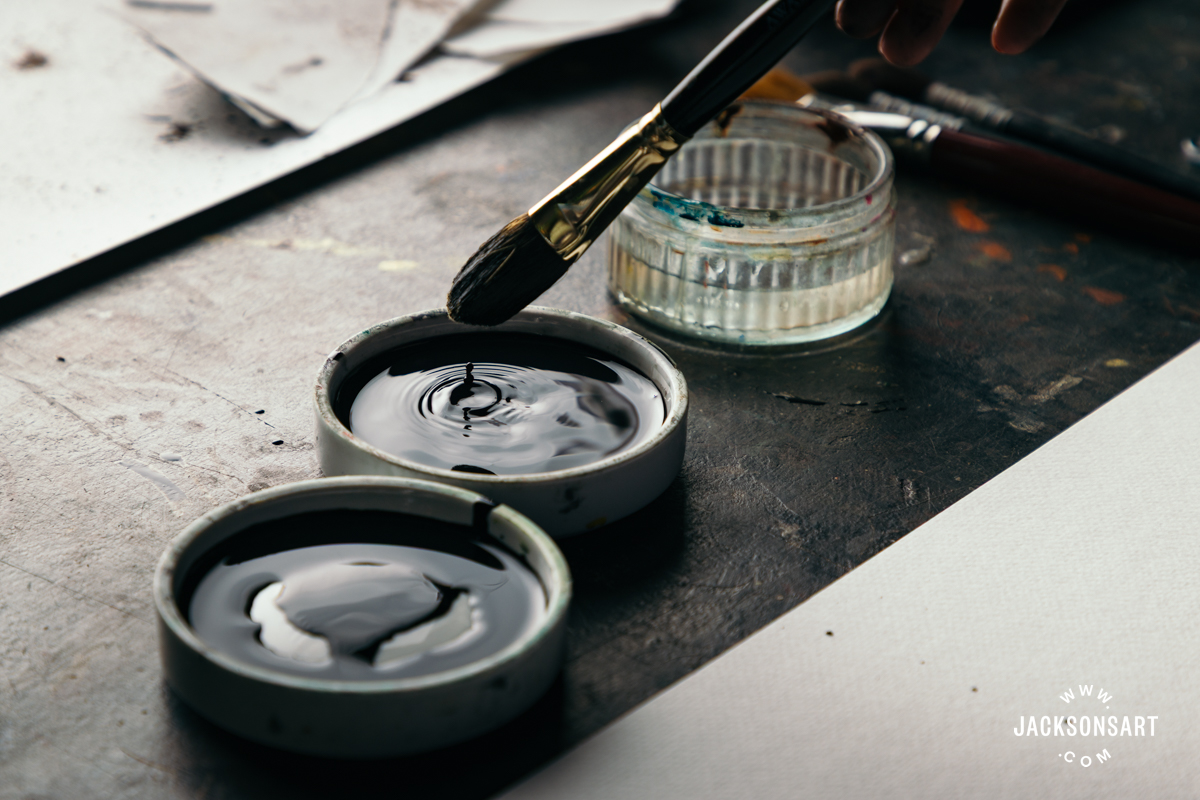
I mixed my Indian ink with some water in one of the ceramic palettes to make it more fluid and prone to splattering.
Next, I applied it to the paper with forceful brushstrokes by moving my hand quickly, applying pressure, and abruptly stopping at the end of each swipe. This caused the ink on the end of each stroke to splatter outwards from the end of my brush.
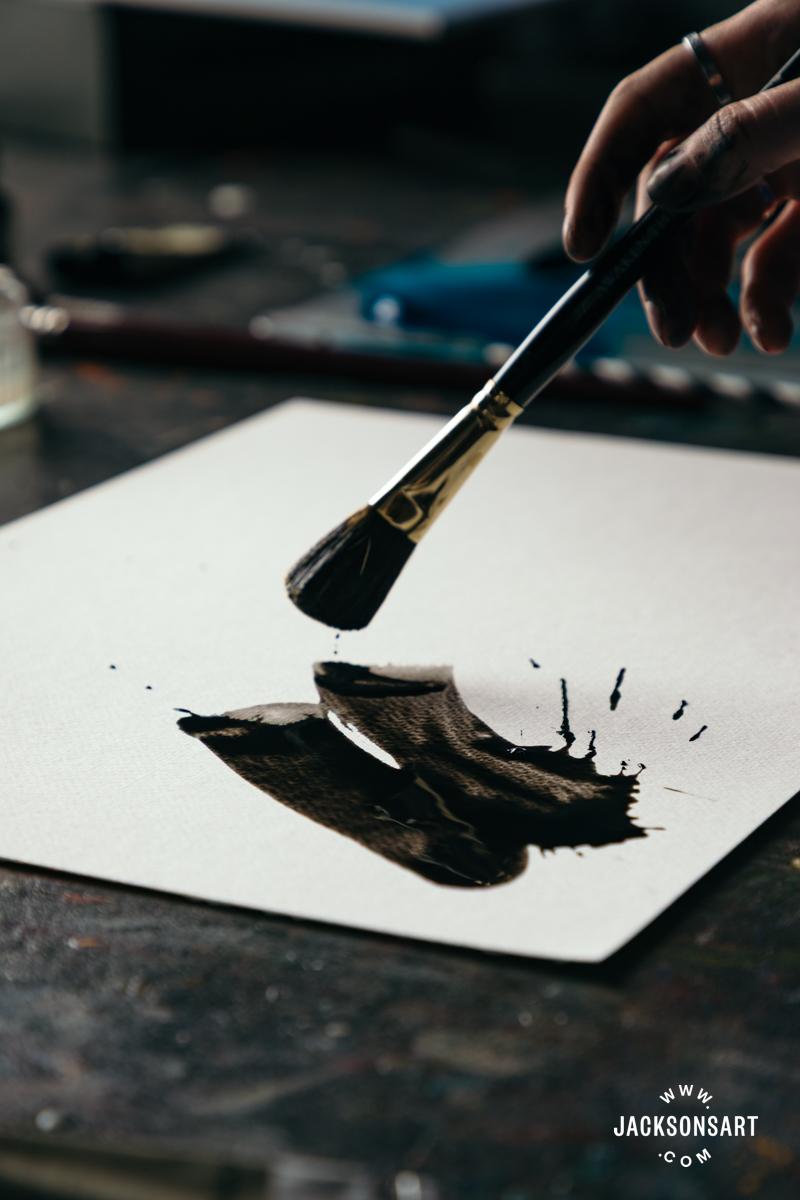
In a couple of places I hit the wet brush head against the paper. This caused the ink to splatter outwards from the point of impact.
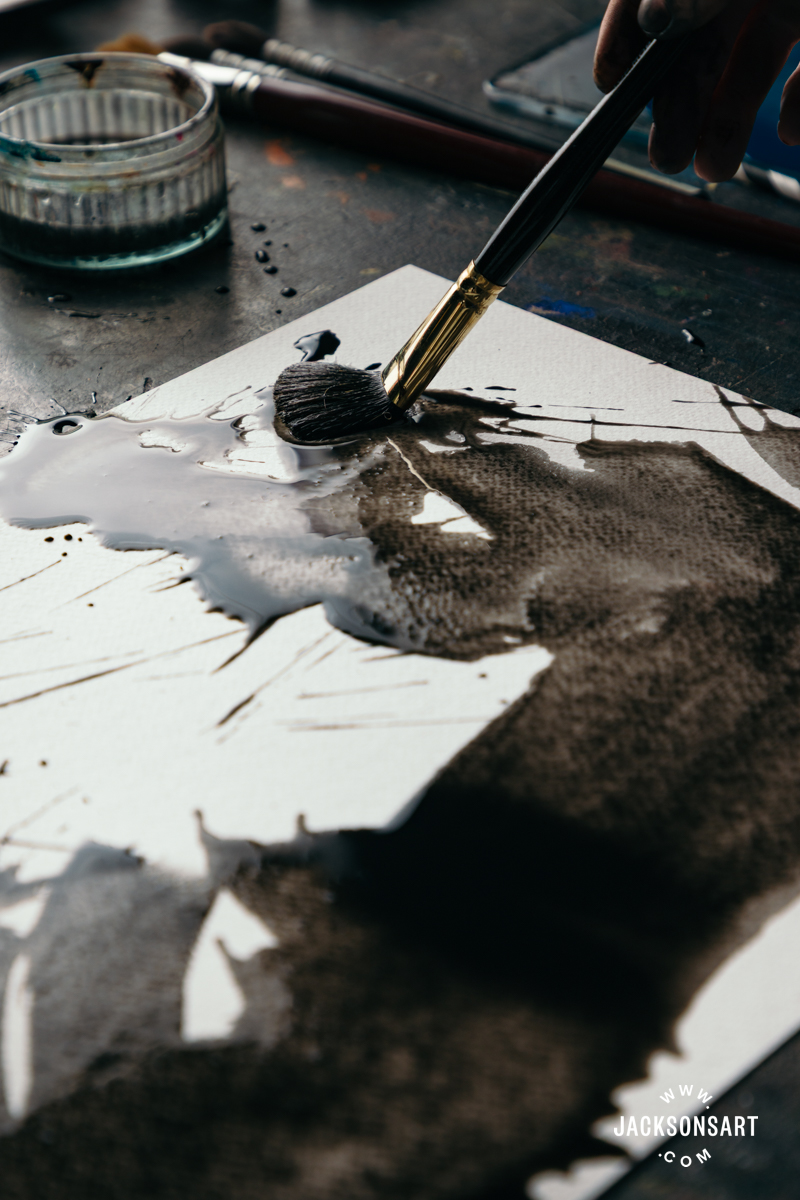
Tips: If your ink isn’t splattering easily, try working with a firmer brush. Very soft brushes might not create enough resistance against the surface of the paper to fling the paint when the movement of your hand abruptly stops or changes direction.
Further Reading
Resist Techniques for Painting, Drawing, and Printmaking
A Modern Medium: A Brief History of Acrylic Paint
The Dabbing Technique for Painting
Shop Art Materials on jacksonsart.com


6 thoughts on “The Splattering Technique for Painting”
I thoroughly enjoyed this article about spattering. I recently had a stroke, so I started to paint with my less dominant hand. I started to do a bit of spattering and work with some very wide brushes.
This gives me lots of inspiration to carry on with these techniques. Thank you very much!
Thanks for your comment Cathy, I’m glad to hear it was interesting! So sorry to hear about your health – I wish you all the best for your recovery, and hope you’re finding joy in making your paintings
Love your article. Well written, well informed. One so often reads about art from people who, although very knowledgeable, are NOT artists, that it’s refreshing to hear first hand. No academic or pseudo-philosophical articles, but a down to earth, felt from the heart take on what and how artistic practices came about. Thank you
Thanks so much Roberto! Really appreciate your comment. I agree it can be hard to find accessible writing on art from the artists perspective, that’s what makes working for Jackson’s so rewarding, because it’s full of them! I hope you enjoy the articles in our other series too
Further to my previous comment I forgot to mention that I’m a painter and work mainly in encaustic… Blowing with a hair drier or torch.. melting and letting the paint run… All part of a days work. Love your article
Interesting. Thank you.
Comments are closed.