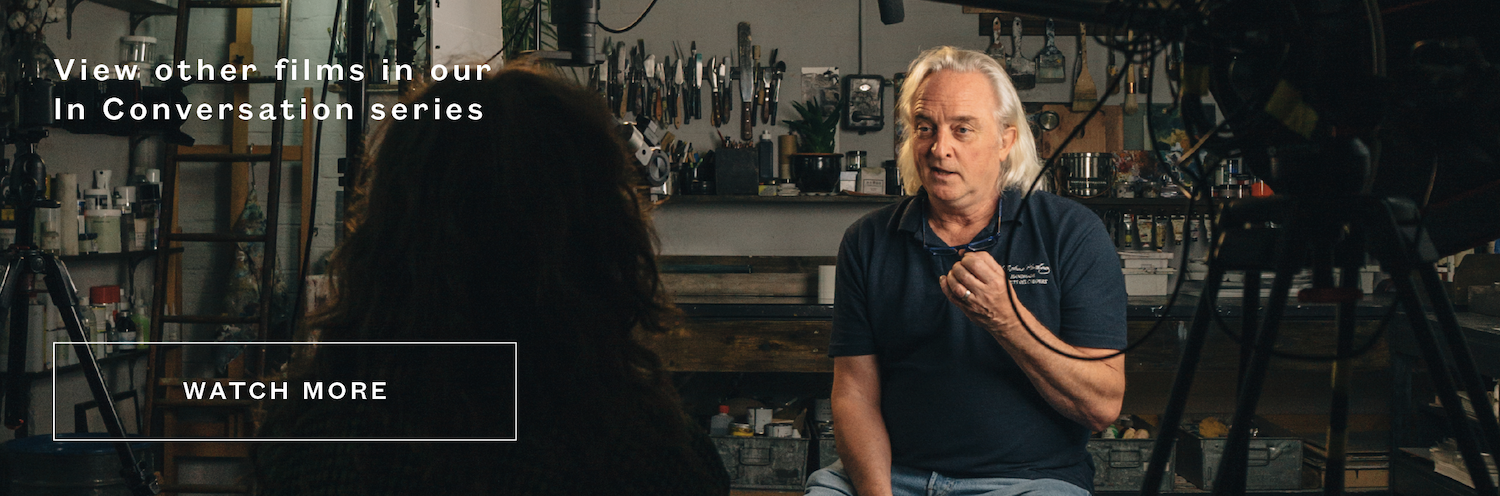
What began as an artist’s invention in a shed in Colorado, coupled with a student business project, grew into Ampersand Art Supply, a world-renowned manufacturer of premium artist panels. Ampersand is a family-run company focused on innovation and craftsmanship, who have spent more than three decades developing surfaces designed around artists’ needs. In this film, Ampersand co-founder and current CEO and President, Elaine Salazar, joins us in the Jackson’s Studio to share the story behind the company’s origins, and how their founding principles continue to shape every surface they make today.
Contents
0:00 “We really didn’t know whether artists would really take on the whole idea of panel painting seriously”
0:48 “We go back to where we started, Claybord started because there was a need that an artist had”
1:06 Introduction
1:34 The Story Behind Ampersand
4:27 “You know, I’ve always loved art; it really feeds my soul”
4:55 “While Claybord started in a shed in Southern Colorado, we actually had something that was reviving an incredible tradition.”
5:20 What Makes Ampersand Claybord Unique?
6:39 The Advantages Of Artist Panels Compared to Canvas
8:46 What Makes Ampersand Artist Panels Distinctive?
11:45 The Benefits Of Using Cradled Artist Panels
12:46 How Ampersand Has Grown Over The Years
15:10 “The unique thing about our Scratchbord is that you can actually add colour”
16:36 An Introduction To Ampersand Gessobord
17:22 An Introduction To Ampersand Aquabord
19:29 An Introduction To Ampersand Pastelbord
20:32 Creating Ampersand Encausticbord With R&F Handmade Paints
21:23 Ampersand’s Commitment to Quality, Craftsmanship, And Artist Support
22:23 How Ampersand Artist Panels Are Made
25:42 How Ampersand Tests Panels For Quality and Longevity
27:06 Behind The Scenes At Ampersand
28:51 How Ampersand Makes Artist Panels Responsibly
29:49 Expert Tips For Getting The Best From Ampersand Panels
20:33 The Secret Behind Ampersand’s Bestselling Artist Panels
31:33 Credits
In Conversation with Ampersand – Film Extract
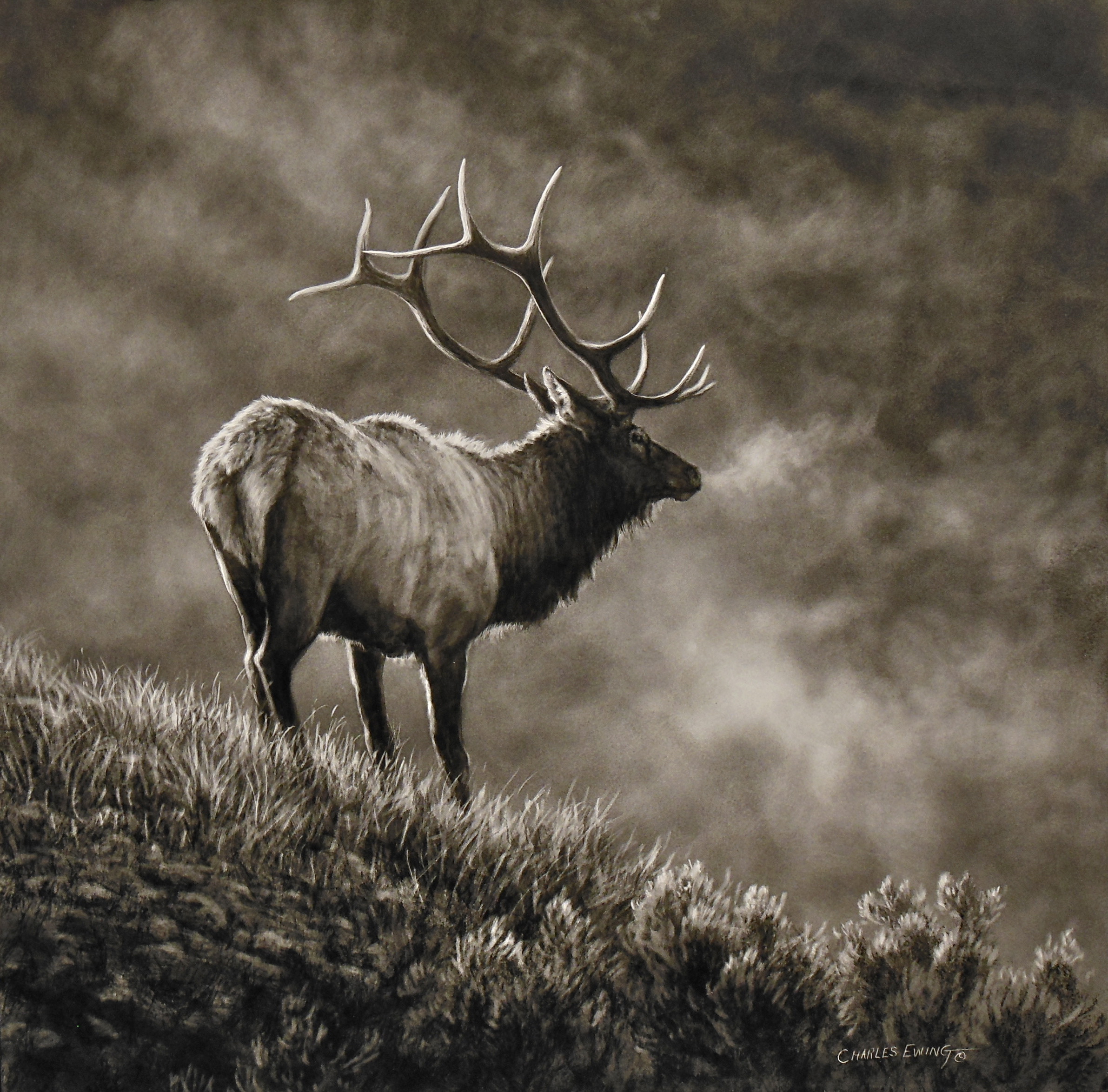
Indian Ink on Claybord, 38.1 x 50.8 cm | 15 x 20 in
Claybord was the product that marked the beginning of Ampersand. Launched in 1994, this unique coated artist panel was developed by Charles Ewing, who wanted a versatile, rigid surface that would support a wide range of media while also allowing for scratchboard and subtractive techniques.
While studying for an MBA at the University of Texas, I worked with Charles and his wife Barbara to develop a business plan around the product as part of the university’s entrepreneurship programme. Alongside three classmates, we put together a business plan for the development of Claybord. The project won first place, attracting support and the first funding to found Ampersand Art Supply and launch Claybord.
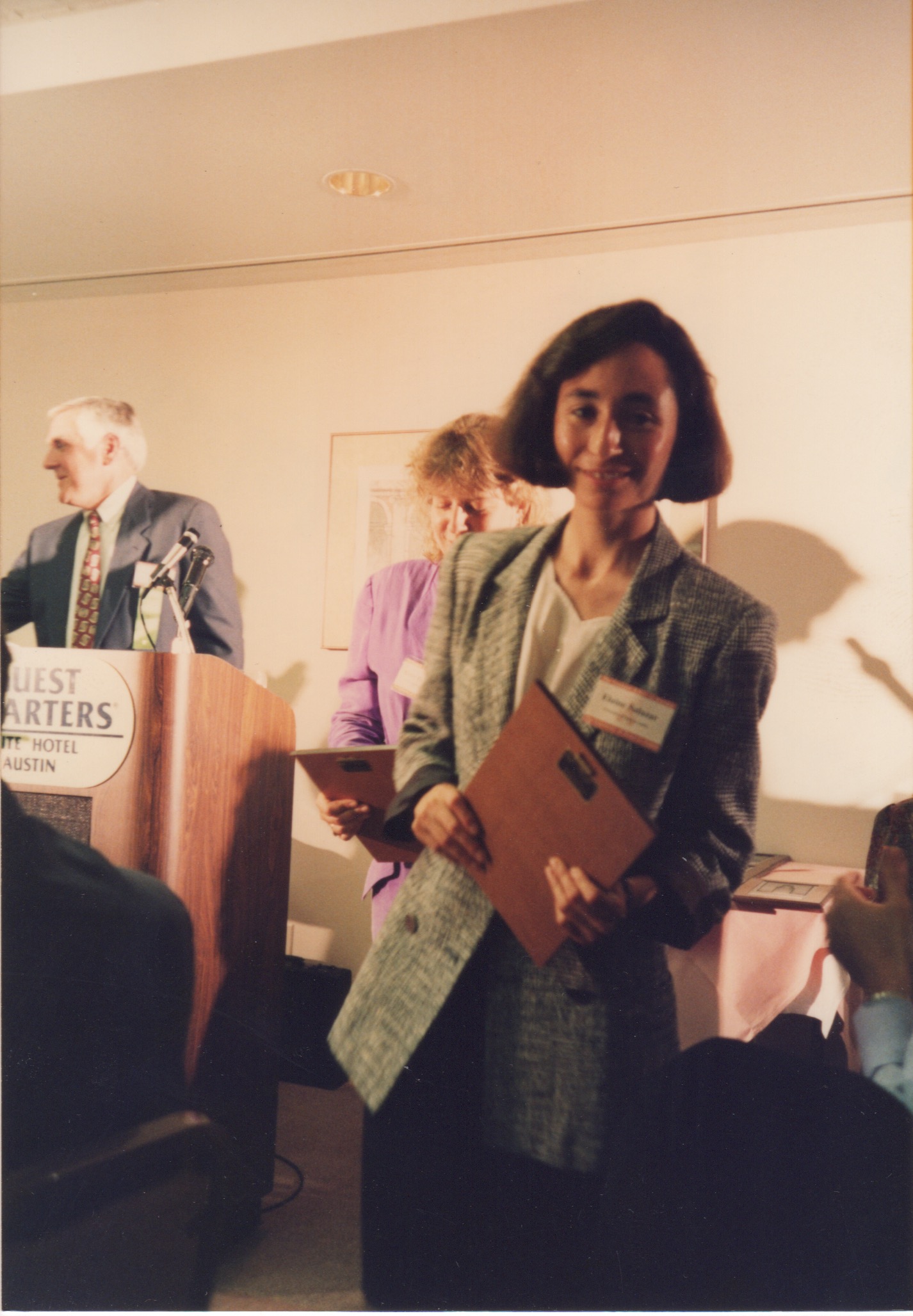
Image courtesy of Ampersand
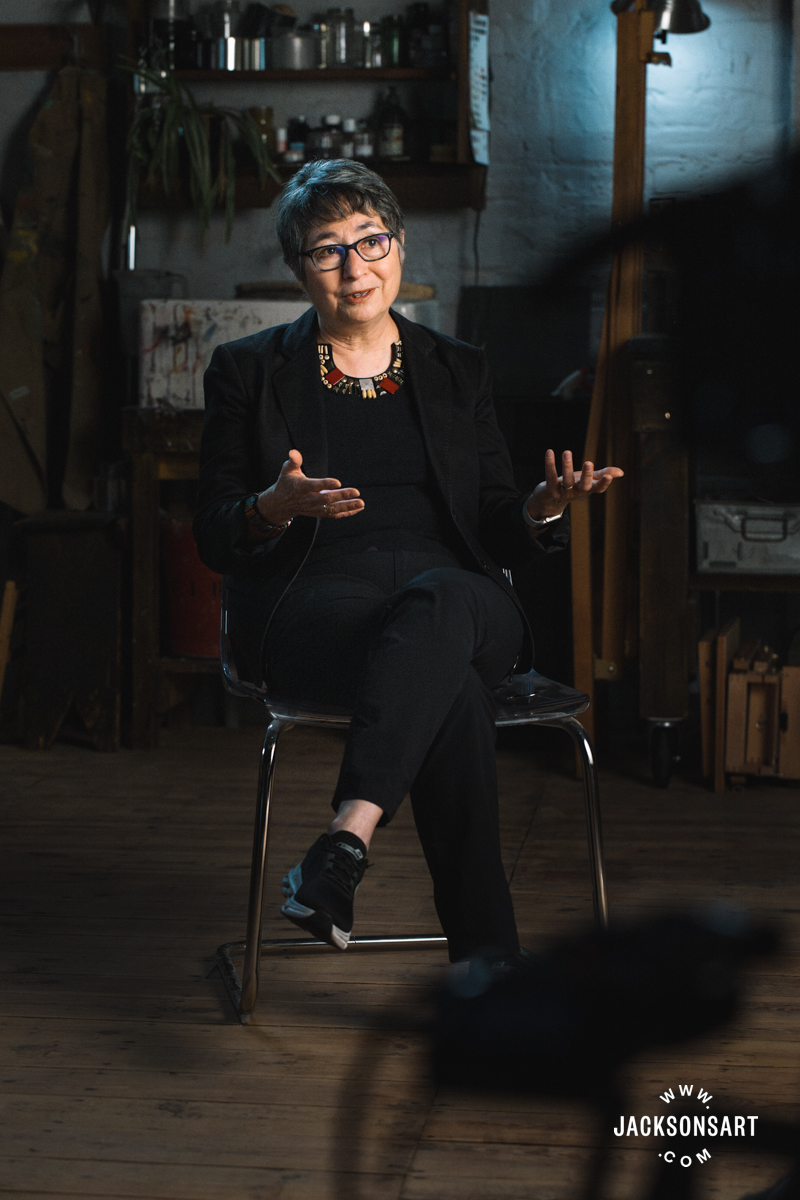
Hi, my name is Elaine Salazar. I’m one of the founders of Ampersand Art Supply. I’m currently the CEO and president of the company. And I’m here at the Jackson’s Studio to talk about the story of our company and the products we sell to artists all over the world.
In the beginning, Charles gave us a few samples, which we sent off to Pearl Paint in New York. I got a call back from Allen Shefts, who was then the CEO at Pearl Paint, and he said, ‘We’re really interested in this product.’ And he said, ‘Do you think you could produce a couple thousand pieces?’ And we were like, ‘Sure.’
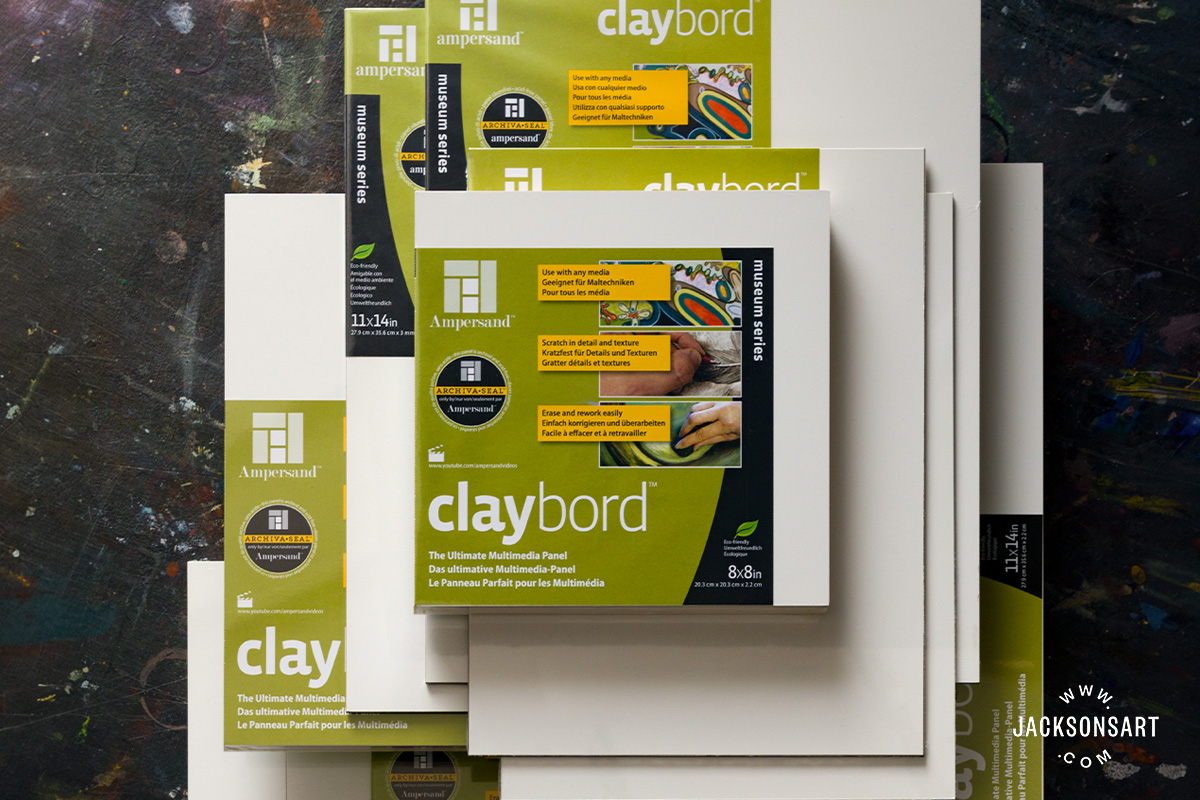
We then had to figure out how to manufacture it. The four of us were still students, literally sanding boards in the back of my partner’s living room. We had to learn quickly – understanding the manufacturing process, testing different substrates, and determining which materials would work best for the product.
Because Claybord has such a thick clay coating, we needed a very dense panel as a starting point. We tested a wide range of boards and learned how to properly seal wood, a process that became a hallmark of Ampersand and remains one of the things that sets our panels apart.
We set up our own manufacturing company right in the middle of Austin on East 4th Street. Initially, we approached various coating companies to see if they could do it for us. But when we explained the amount of coating we wanted on the board, no one was willing to touch it. None of the companies had enough conveyor systems to dry the coating on the boards. So we literally had to create our own. We ended up in an old warehouse, just 13,000 square feet, on the east side of Austin. At that time, it was basically the rundown part of Austin, Texas.
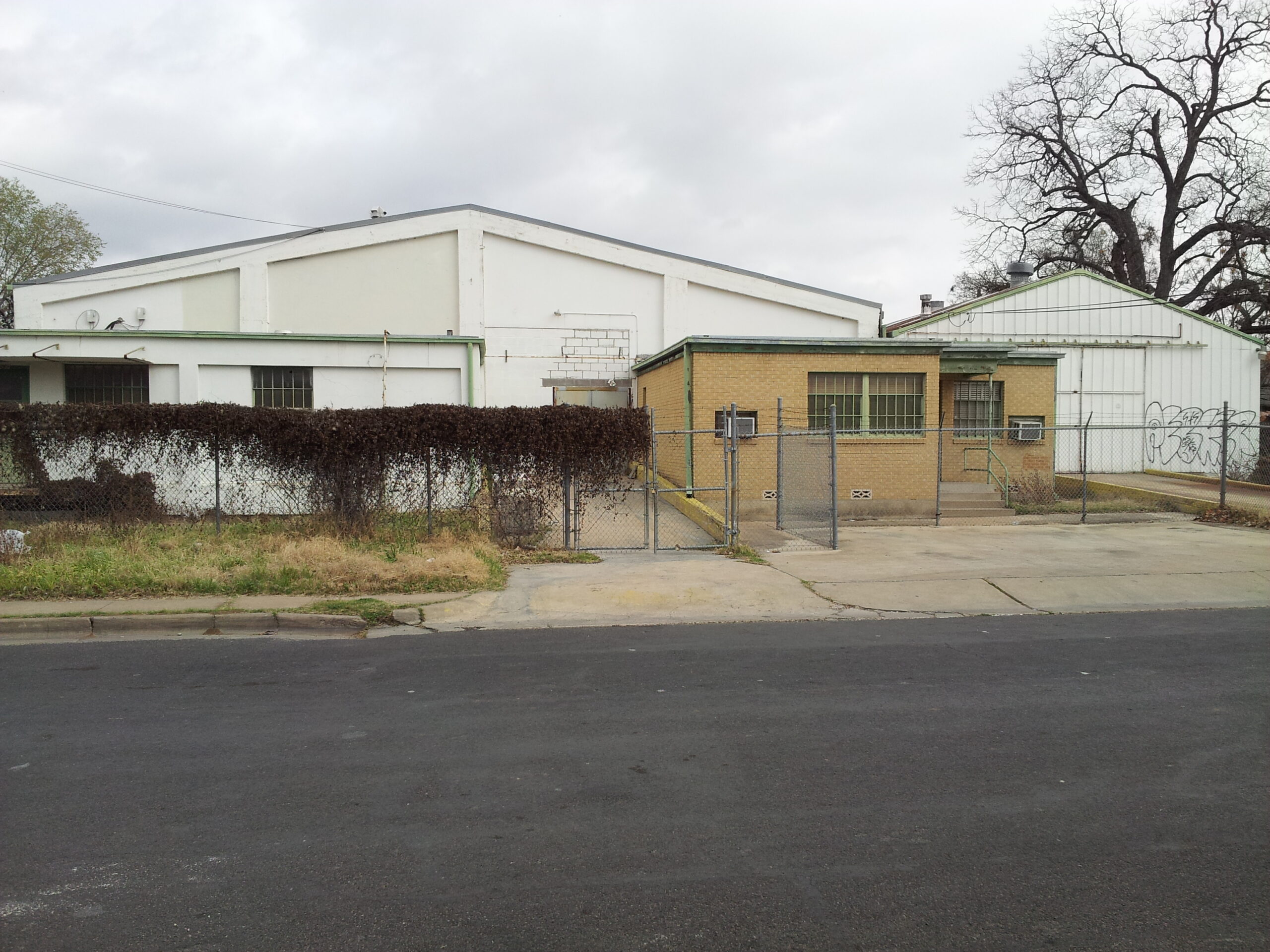
Image courtesy of Ampersand
We had to create equipment capable of applying such a thick clay coating to the board, and then figure out how to dry it properly. All of this was happening in the same space, while we were also cutting panels, routing edges, and preparing finished products for shipment. From the beginning, we wanted Claybord to feel like a professional product, so we routed every edge to make the panels easier to handle and less likely to chip or break during transit.
The biggest challenge was keeping the coating process isolated from everything else. The first time we ever produced a shipment that went out of my friend’s place, we probably lost half of it because of the dust and sawdust. So we had to toss most of it out. It was a hard lesson, but it taught us the importance of having a dedicated coating area. Along the way, we learned how to shrink-wrap and label products. As entrepreneurs just starting out, we quickly realised we couldn’t do it alone, so we reached out to people to help us bring the product to life.
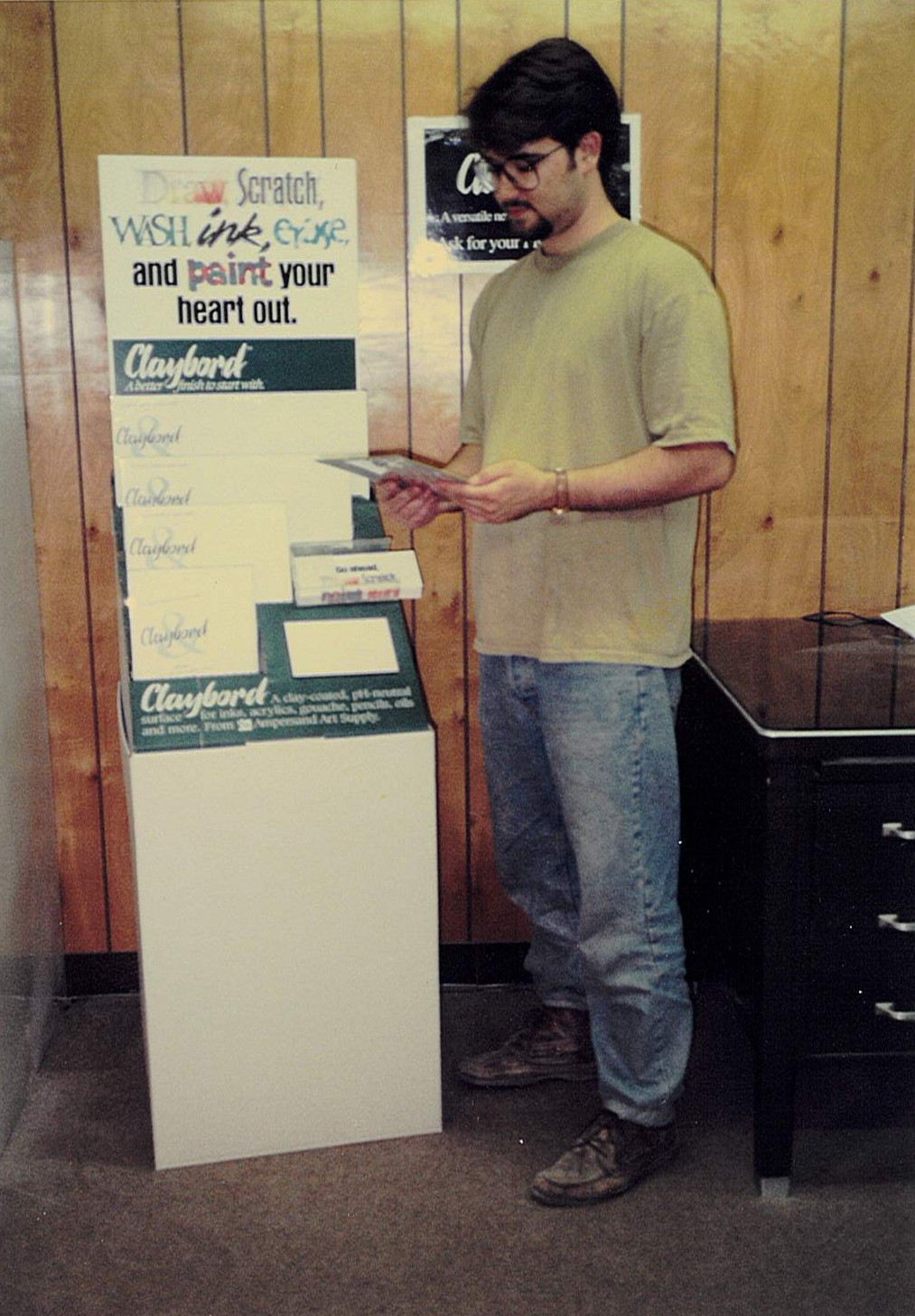
Image courtesy of Ampersand
Initially, it was really hard because the market didn’t accept the product. I would fly out to Chicago to demonstrate how to use it. The retailers would get excited. But then it just sat there. Nobody knew how to use this product. But when we demonstrated it, people bought it. That’s when we knew we had to educate the market, so we started an education program. It took some time, but one of the things that’s really unique about Ampersand is how closely we work with artists all over the country. And as more artists used the product, they started to tell us what worked for them and what didn’t.
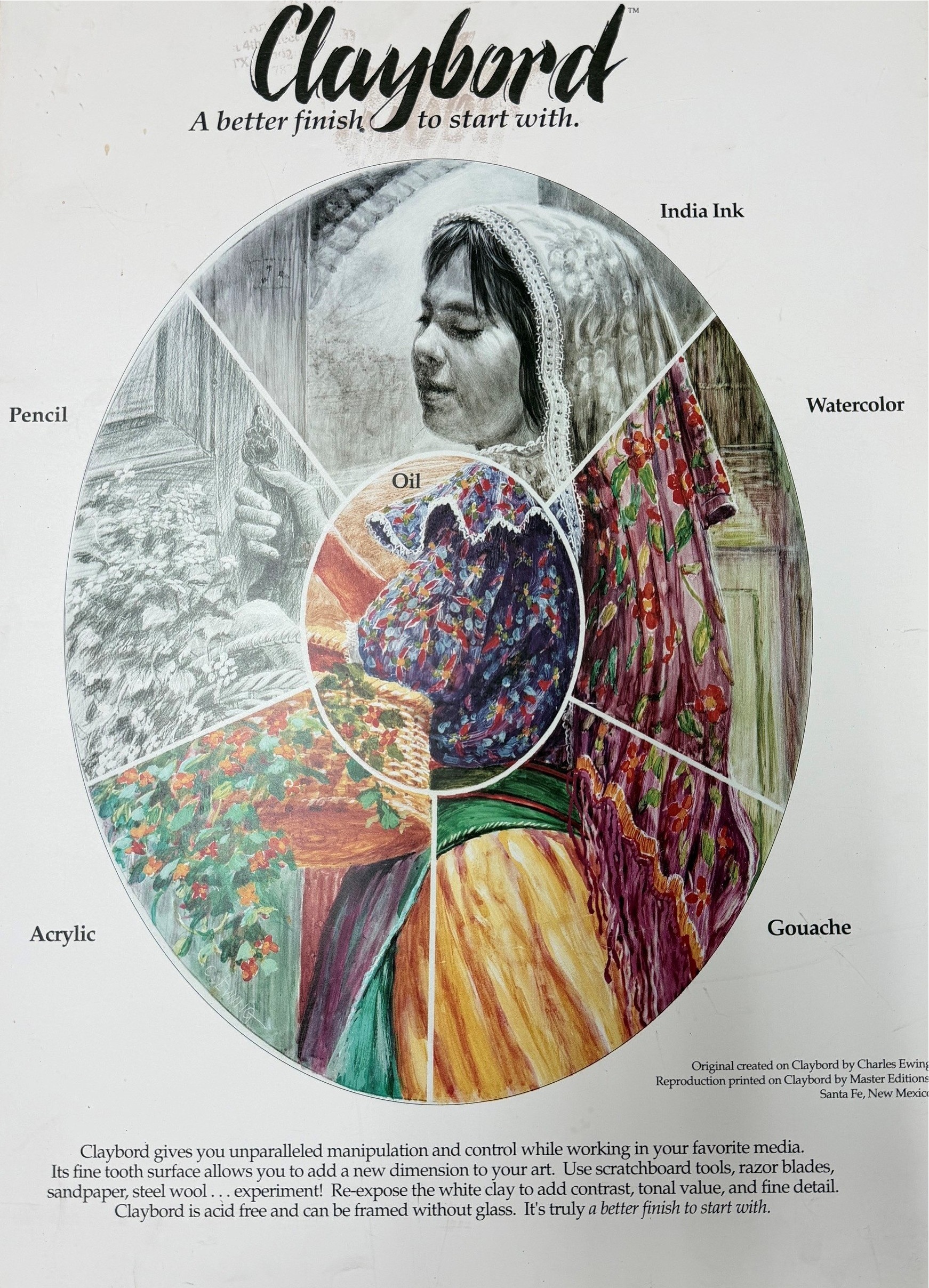
Image courtesy of Ampersand
That’s actually how we designed the rest of our product line through the years, by working directly with artists. For example, Claybord is very absorbent. It doesn’t work as well for an oil painter who really likes working on a non-absorbent ground. So that’s how Gessobord was born. And then, because Claybord is very much like hot pressed watercolour paper, rather than cold pressed, we developed Aquabord. We then developed Pastelbord for pastel artists.
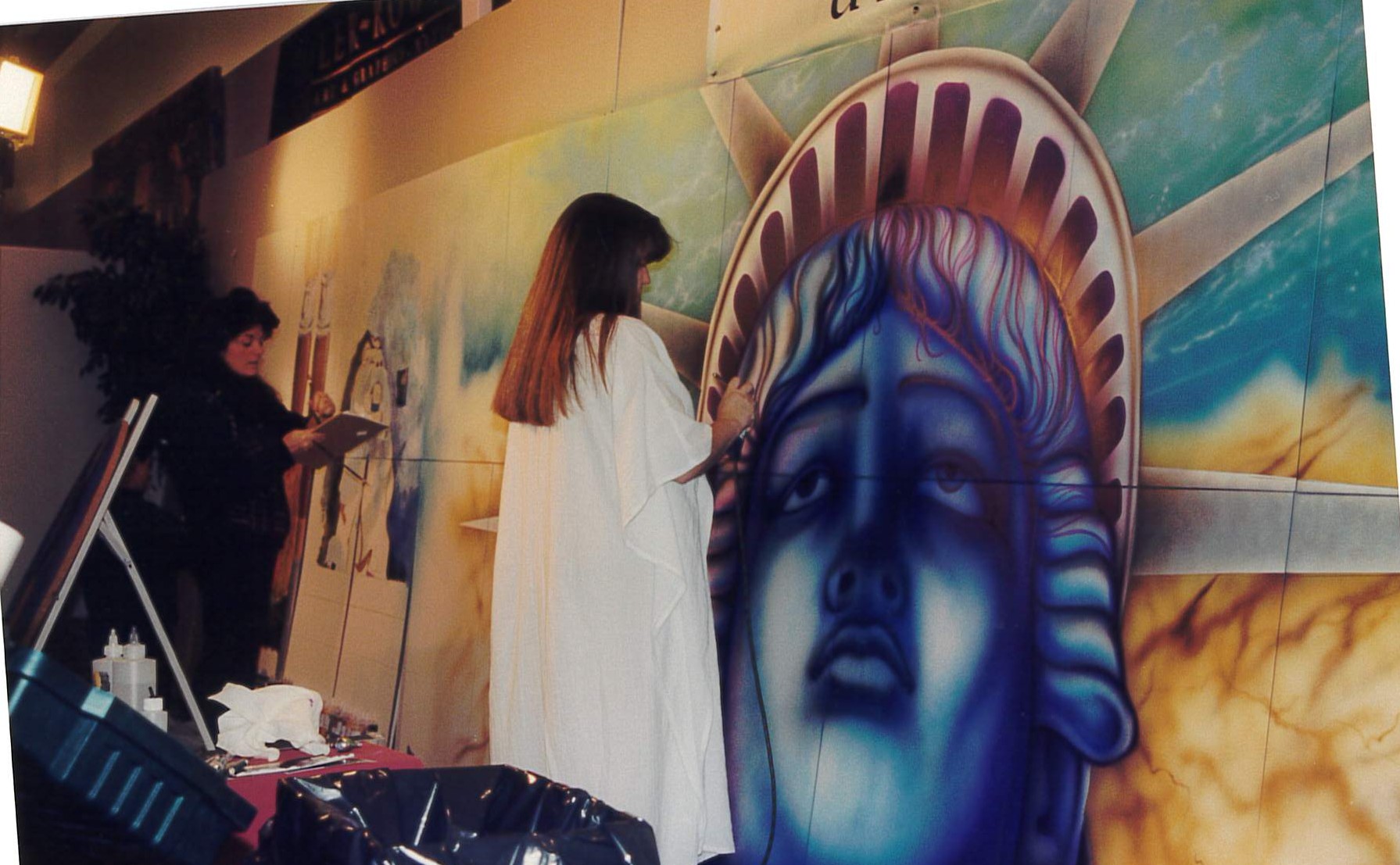
Image courtesy of Ampersand
I’ve always loved art. It really feeds my soul. While I was an undergraduate history major, I took part in a wonderful program called The Arts of London and Florence. We spent two months in London, studying artworks in person and spending time in front of paintings by artists such as Turner and Constable. We then spent two months in Florence, working in places like the Uffizi and studying the works of Raphael and other Renaissance masters. It was just incredible. And that gave me such a deep love for the Old Masters.
So, when I met Charles and his project, it just fed my soul. I then started studying the tradition of painting on panels. Raphael had all these people in his workshop creating panels for him to paint on. So, we began to understand that while Claybord started in a shed in southern Colorado, we actually had something that was reviving an incredible tradition.
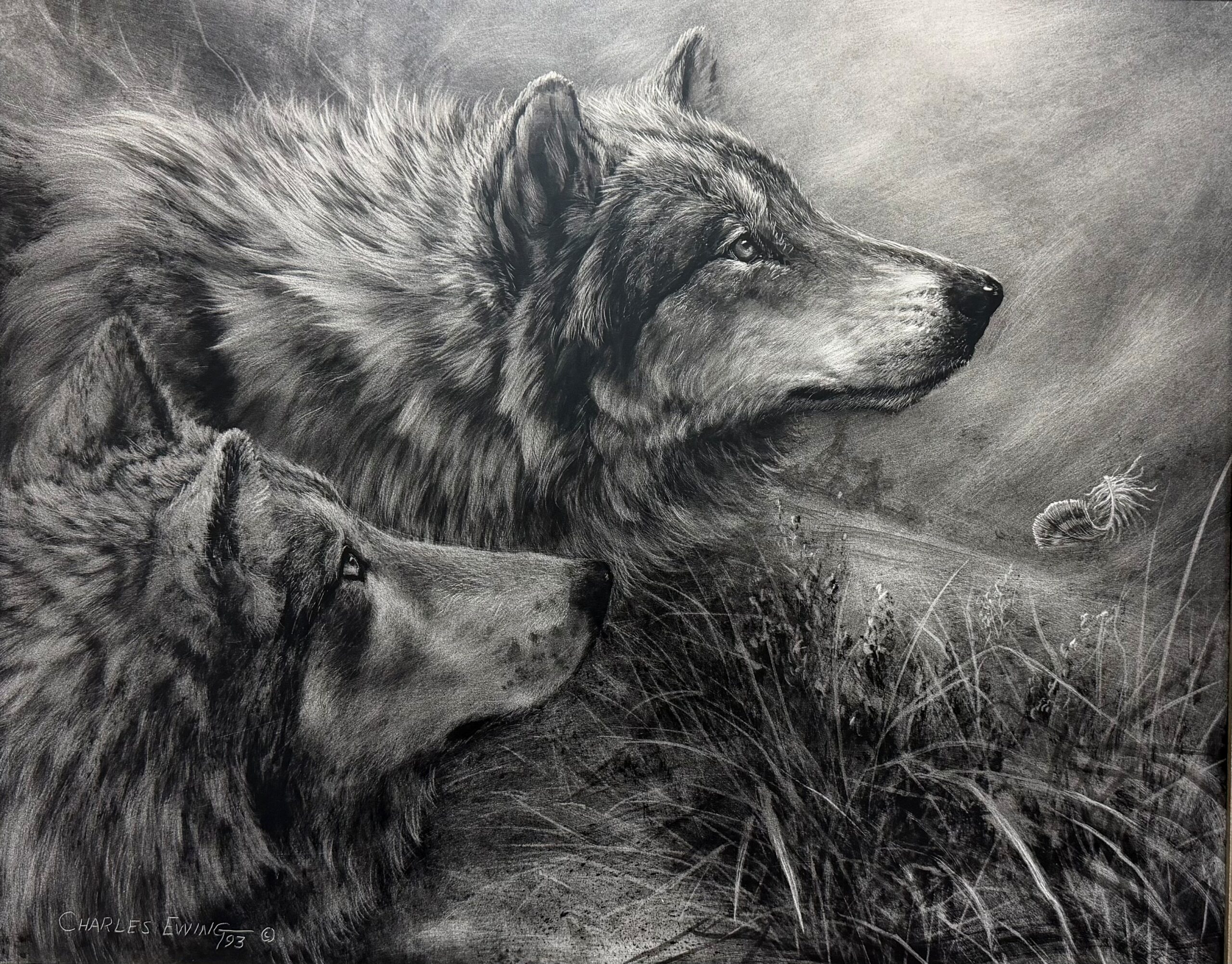
Indian Ink on Claybord, 40.6 x 50.8 cm | 16 x 20 in
One of the most important parts of Ampersand’s history is Charles himself, and the story of how and why he created Claybord. Charles is a phenomenal artist. He does a lot of portraiture. He also does a lot of wildlife work with an incredible amount of detail. But the impetus for him to create a more rigid, permanent panel for himself was when a collector brought back a piece that he had done on scratchboard. It had come apart from the backing board. And he said, ‘I’m going to try to do this. You know, I’m going to try to throw clay together and try to figure out how to do this.’ And that’s how he started.
When he created Claybord, he realised he could not only etch into the surface, but also work on it with oils, acrylics, and ink. Because he could use a lot of different media on it, he just kept using it for his work. But then his artist friends would come over and say, ‘Charlie, what are you working on?’ And he goes, ‘Oh, it’s just the stuff I’m making in the back of my garage.’ And then he’d give them a piece, and they’d come back, and they said, ‘This is really cool stuff.’
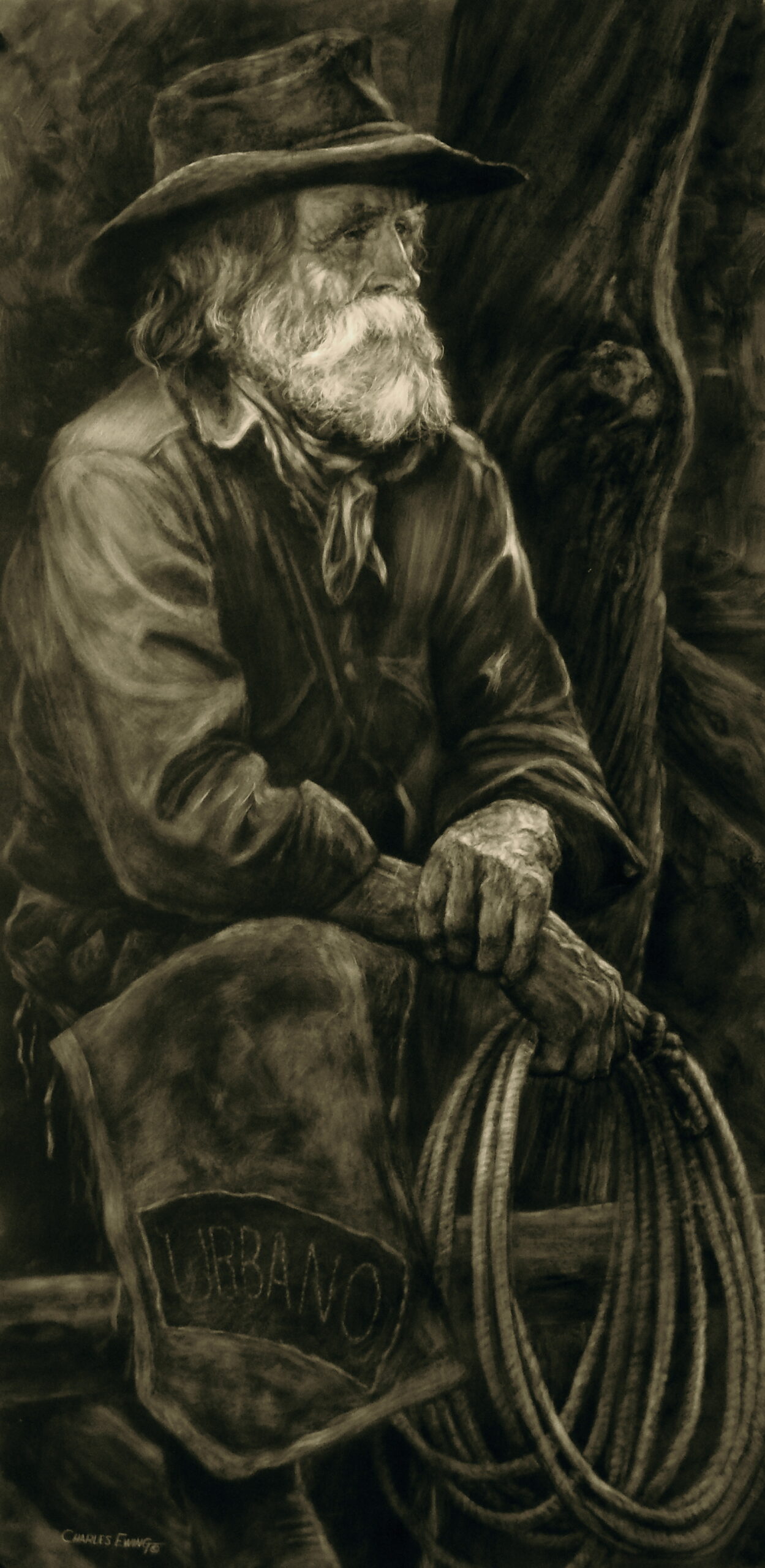
Indian ink on Claybord, 38.1 x 76.2 cm |15 x 30 in
It was really out of an artist’s need that this surface was created. And it is out of the artists’ needs that all our other surfaces have been created. So, Charles Ewing has been so instrumental; he’s part of the founding team of our company, and is a great, great artist and a great friend.
The next obvious extension was to take Claybord and then apply a coating of India ink on the surface to create Scratchbord. And that is really popular, especially with the scratchboard artists. I can still remember when the International Society of Scratchboard Artists was created. They called Ampersand, and they said, ‘Hey, would you mind sponsoring our event, our gallery event?’ What the Scratchbord did for the scratchboard artist was elevate the medium to a fine art.
We created Gessobord because sometimes oil painters found Claybord too absorbent. We worked really closely with oil painters, including Charles Ewing, to develop the right finish for that surface. If you look at the Gessobord surface, it’s smooth, but it’s got a tooth. So you can have the control, but not the weave of the canvas. It’s really a beautiful surface to paint on with oils.
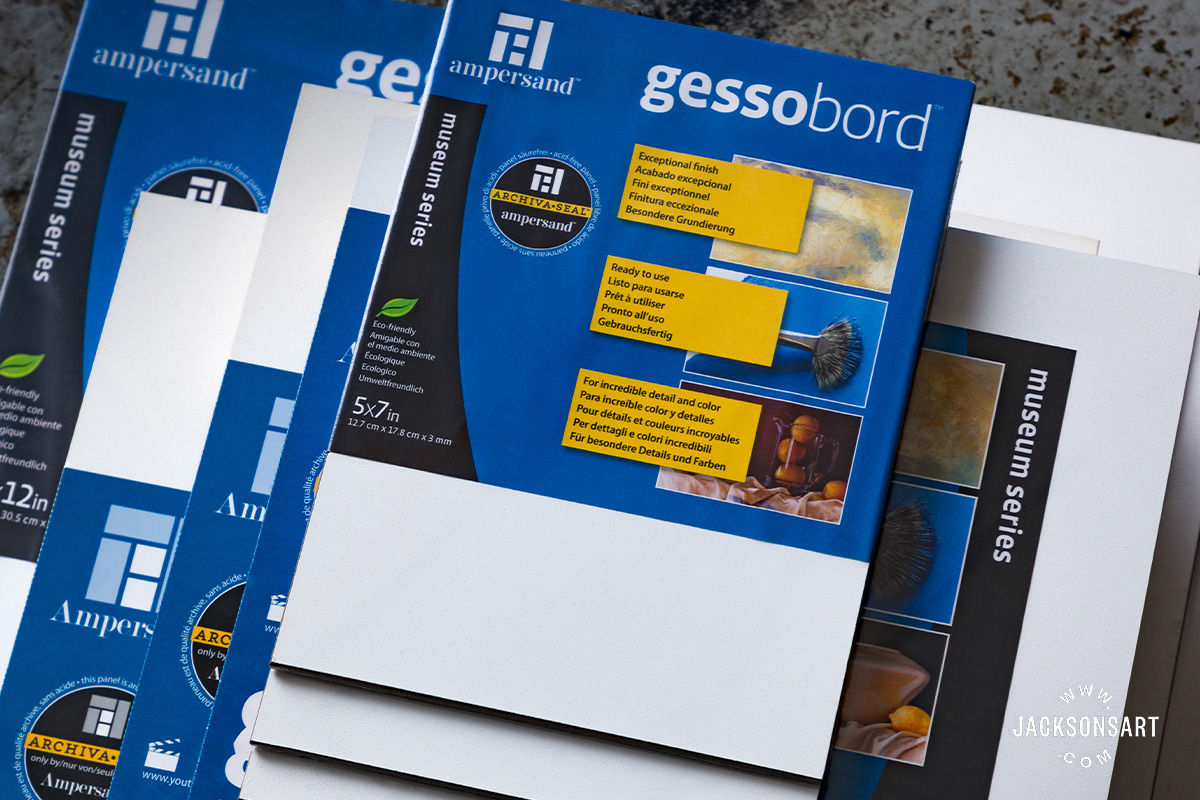
Because the surface of Claybord is like hot pressed paper, rather than cold pressed paper, we worked with artists like Karen Vernon, who helped us design Aquabord. It’s a wonderful surface to paint watercolours on. What’s interesting about Aquabord is that you don’t have to use masking fluids; you can remove pigment from the surface instead. You can layer and layer different colours, these wonderful transparent washes that you can create, but you can now seal them, and you don’t have to frame watercolours with glass. So that was revolutionary.
The permanence of artwork is at the heart of what we do, which is why the archival quality and long-term stability of our panels are so fundamental to Ampersand. We start with really good, solid materials. What’s most important to us is the permanence of the artwork created on them. We want artists who paint on an Ampersand panel to feel confident that their work will withstand the test of time. That’s why we go to great lengths, not only in selecting our materials, but also in how we prepare the surface.
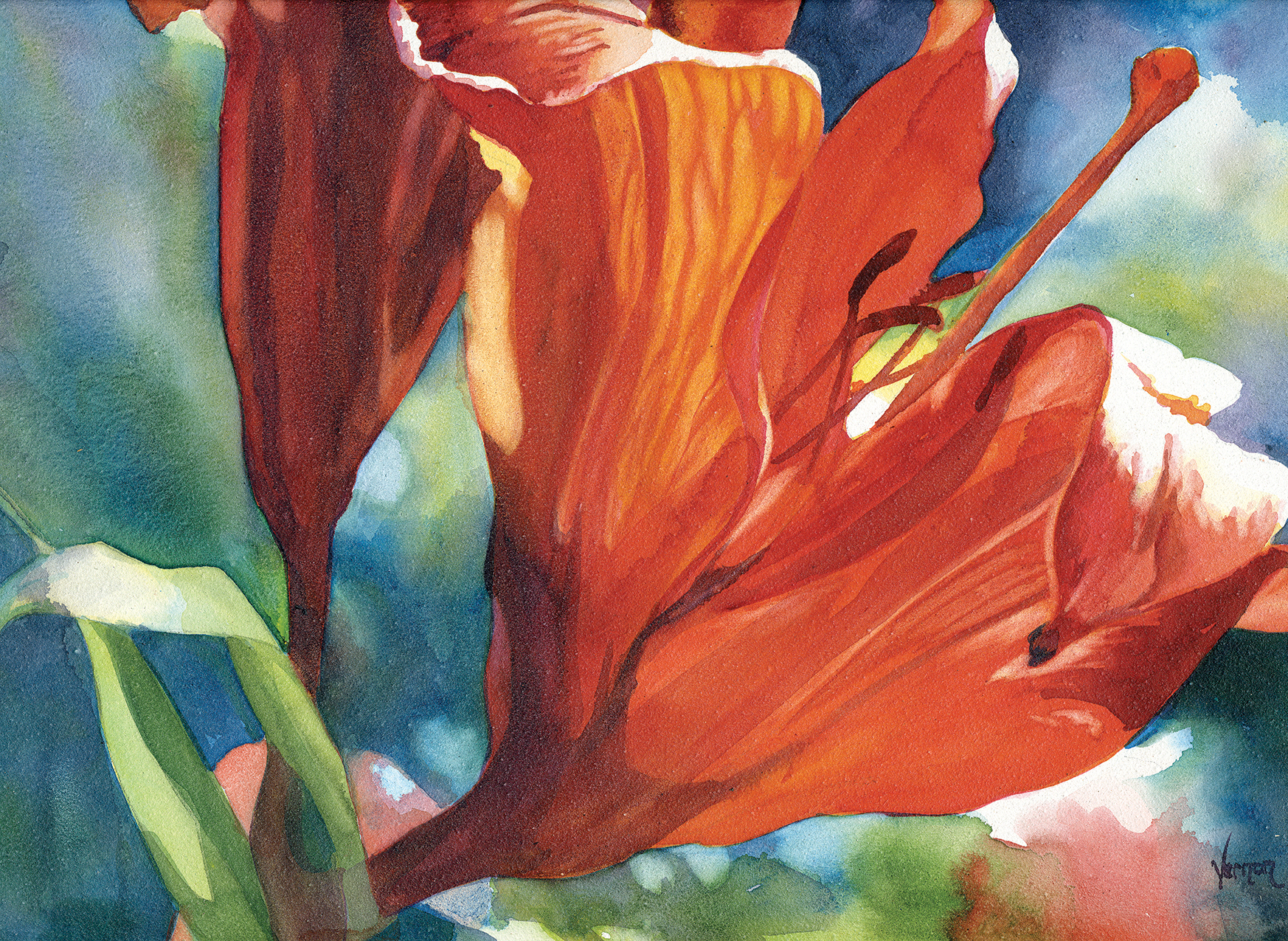
Watercolour on Aquabord, 40.6 x 50.8 cm | 16 x 20 in
The environment is really important to us. So we ensure that all our wood suppliers are FSC certified. We ensure that all our coatings and all the materials we use in our coatings are water-based. We want to make sure that there’s no toxicity going into the environment.
All of our employees have been with the company for a minimum of 15 years. They really care. When you see the process, you realise, wow, somebody is touching the board at every step. Somebody is literally taking that board off the coating line, putting it in a rack, and drying it. And then it goes to another couple of people who take it through the sander and check that every piece of the sanding process has been done correctly. The people who are making the cradle product actually check every single board before they put it on the frame, before they route the edges, before they finish it. Each board probably gets inspected four to five times for the surface quality before it gets packaged.
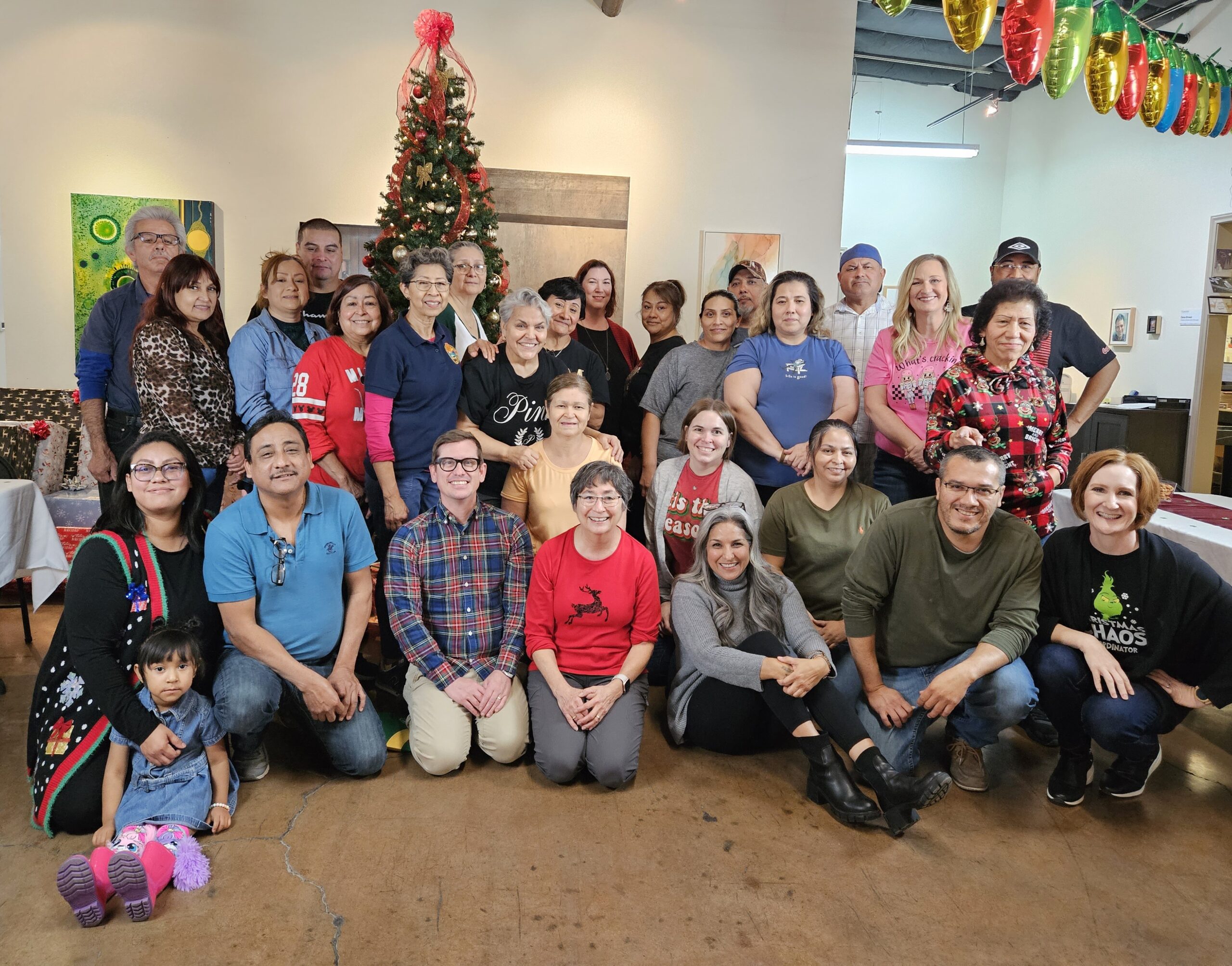
Image courtesy of Ampersand
We started in that 13,000-square-foot facility in East Austin. And in 2013, we moved into a large building out in Buda, Texas. So that’s where we are now in Buda, Texas, which is about 20 minutes south of Austin, Texas.
Ampersand is really a family-run business. We really care about the employees and their families, and we care about each other. The people who work there care deeply about each other, and we watch out for each other, and I’m very proud of every one of the members of our team. They make working there a real joy, and they like each other.
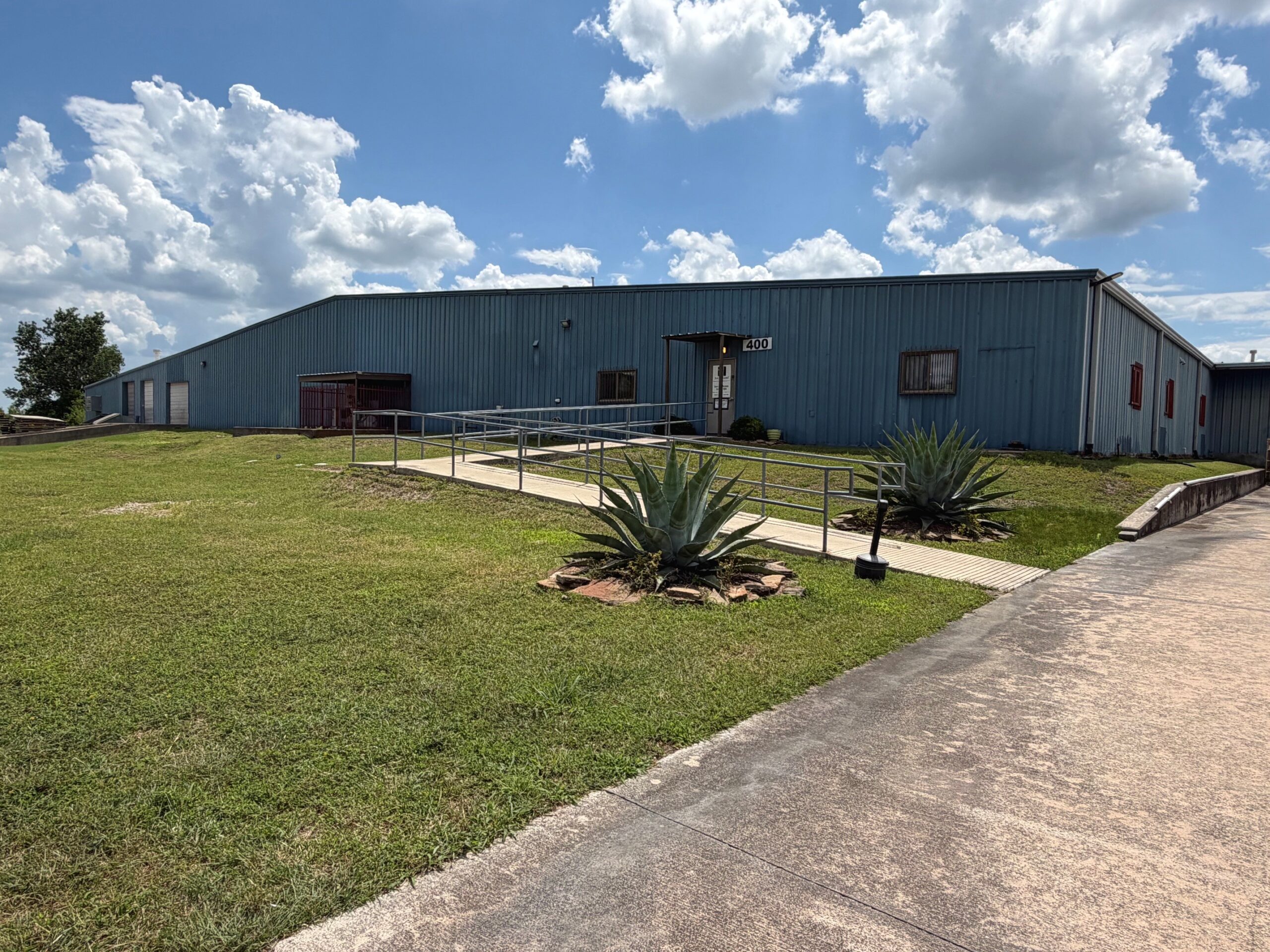
Image courtesy of Ampersand
Claybord, our first surface, has a very slick, smooth finish, and it’s made from clay. What’s wonderful about this surface is that the clay particles hold pigments at the top layer, so you can always come back to the white of the surface. You can scratch into the surface to bring light back naturally into the painting, rather than having to use masking fluid or paint. Inks and graphite also work really well on this surface.
While you can paint with oils on Claybord, it is a very absorbent surface. It’s very much like the chalk gesso that was used back in the Renaissance. It’s very absorbent, so you have to layer your oil paint in several layers. You can manipulate the surface in many, many ways using sgraffito techniques, and by erasing or reworking the surface. So that’s what’s really wonderful about the surface, but it is extremely absorbent.
Our Scratchbord is basically Claybord with a coating of India ink. It’s similar to the old scraper boards, but the difference is that it’s on a rigid archival surface. So it allows for more manipulation than the paper-based scratchboards. And the beauty of this board is that you can actually add colour. So that’s why it’s a preferred surface for professional scratchboard artists.

Drawing on Scratchbord, 22.9 x 30.5 | 9 x 12 in
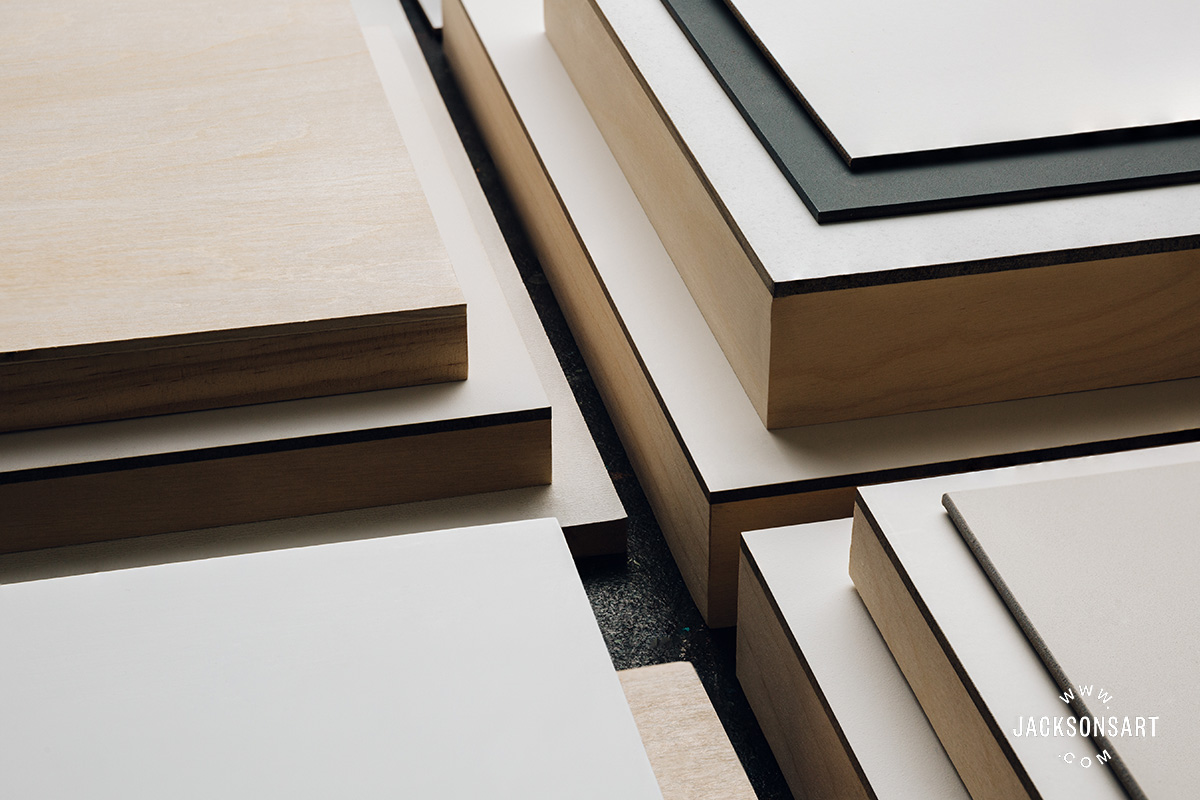
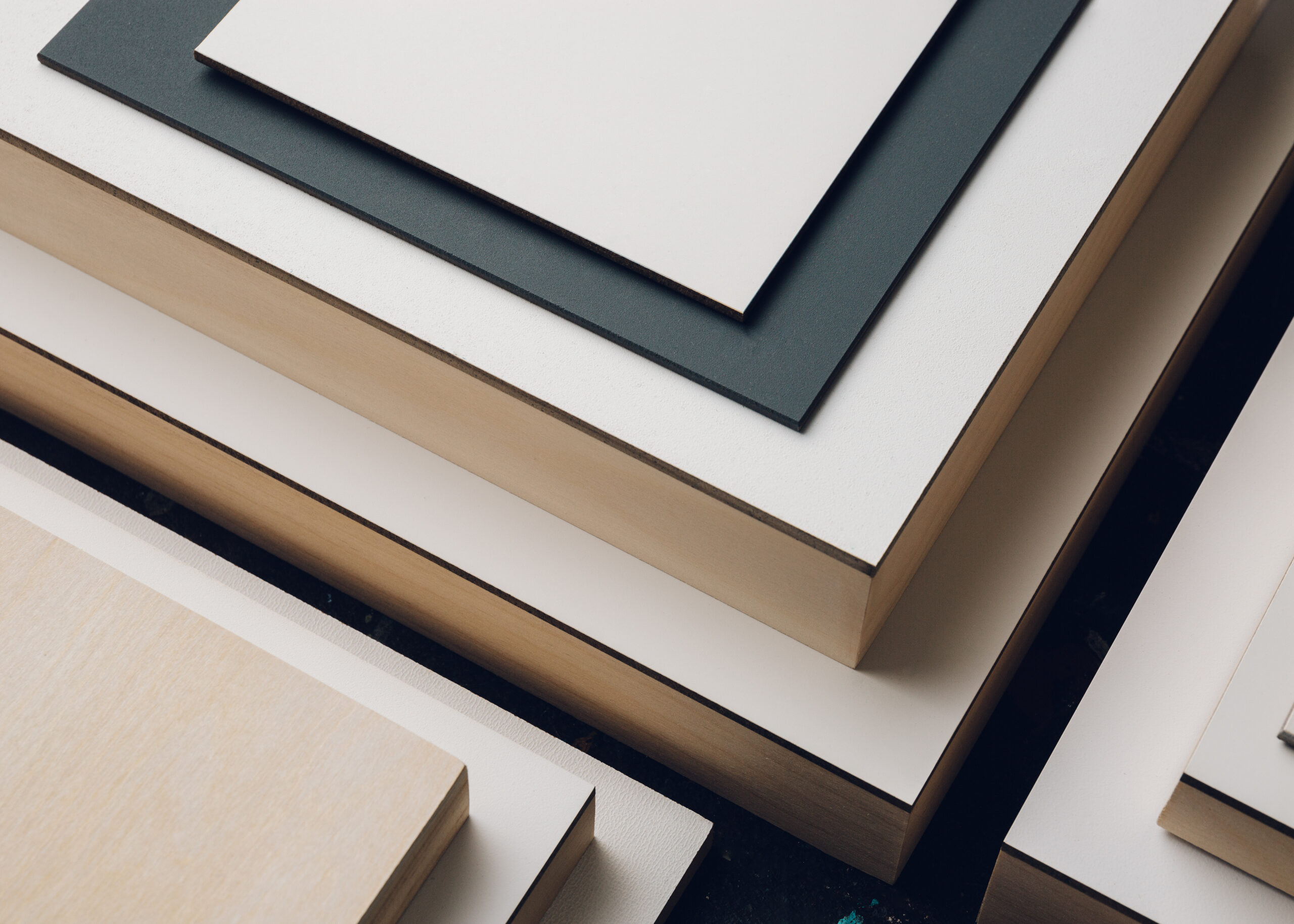
One of the things we’ve done across our panel range is offer not only flat panels but also cradled panels, available in both ¾ inch and 1.5 inch profiles. While the surface is incredibly important, so are the materials behind it. That’s why all of our cradled panels are made using 13-ply birch plywood for stability.
It was actually Ampersand that first developed cradle panels in 1996 – an artist came in and wanted us to put a frame on the back of the board. So we thought, well, that’s a nice idea, and then started researching which kind of wood to use. So we started producing these panels and called them cradle panels.
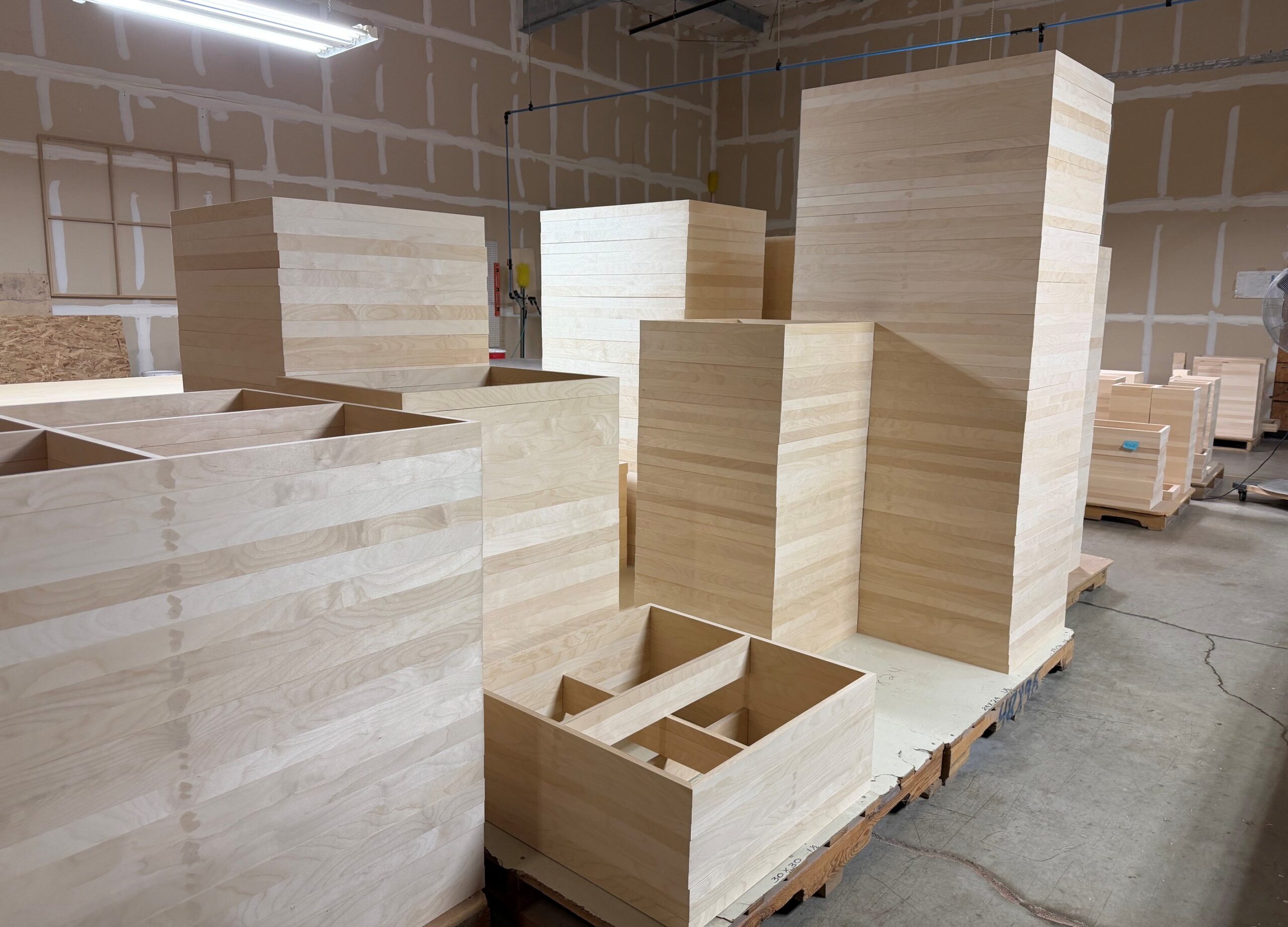
Image courtesy of Ampersand
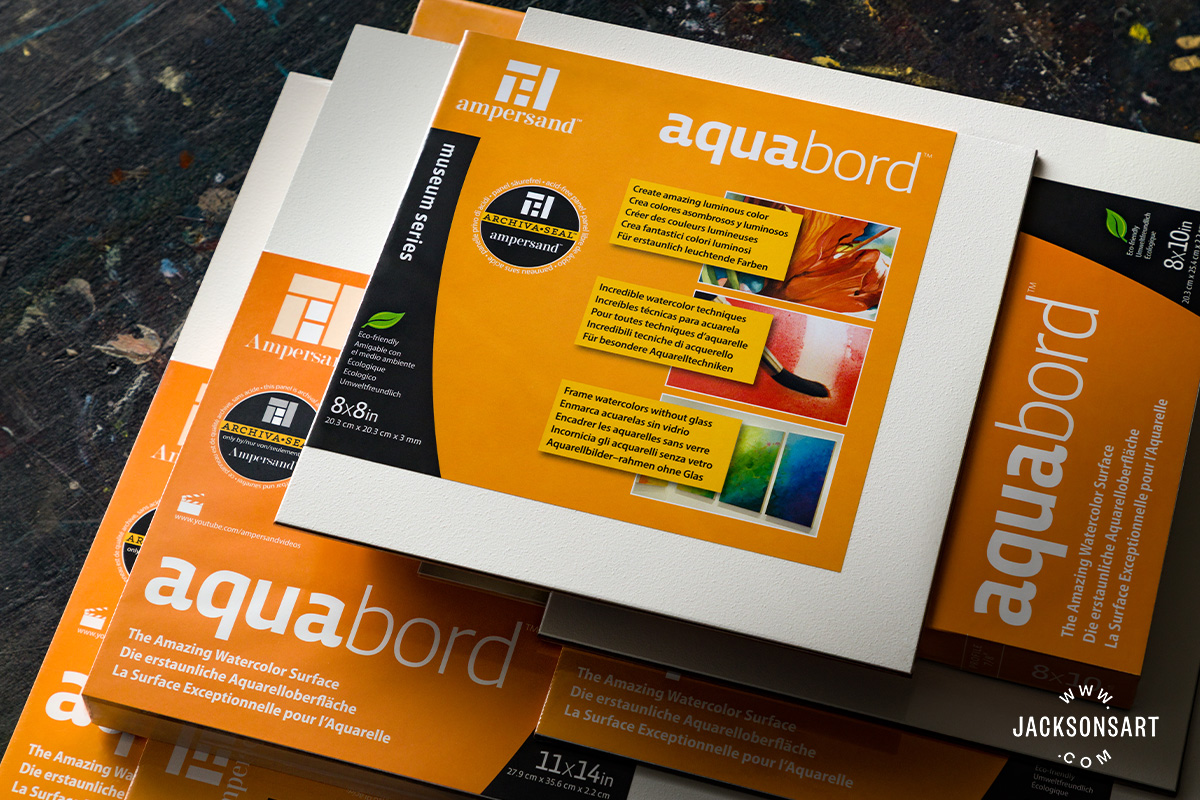
Aquabord is made with a base coating of Claybord. It’s a clay-based coating, so you can go back to white when you’re working with watercolours on this board, without needing to use masking fluids. If you look at the surface really closely, it’s got the texture of a cold pressed paper, which allows for watercolours to move fluidly through the painting. You can also work dry into dry, or wet-on-wet. You can layer and layer glazes on this board like you can’t really do on paper. Some artists would tell you that you probably need less water than you do on paper. But the beauty of the Aquabord is that you can actually seal your board with several light coats of spray varnish (or fixative). And then you don’t have to frame it under glass.
Pastelbord also has a clay base. But it has a tooth created by a process using marble dust, so that it has the ability to hold layers of pastel. You can actually take water to the board as well, so you can do an underpainting before you lay your pastels down. It works fantastically for acrylics. You can lay washes of water on it and then drop in your acrylics, and it allows for amazing, fluid, smooth transitions. So you can use more wet or dry techniques when you’re working with pastels or even your acrylics.
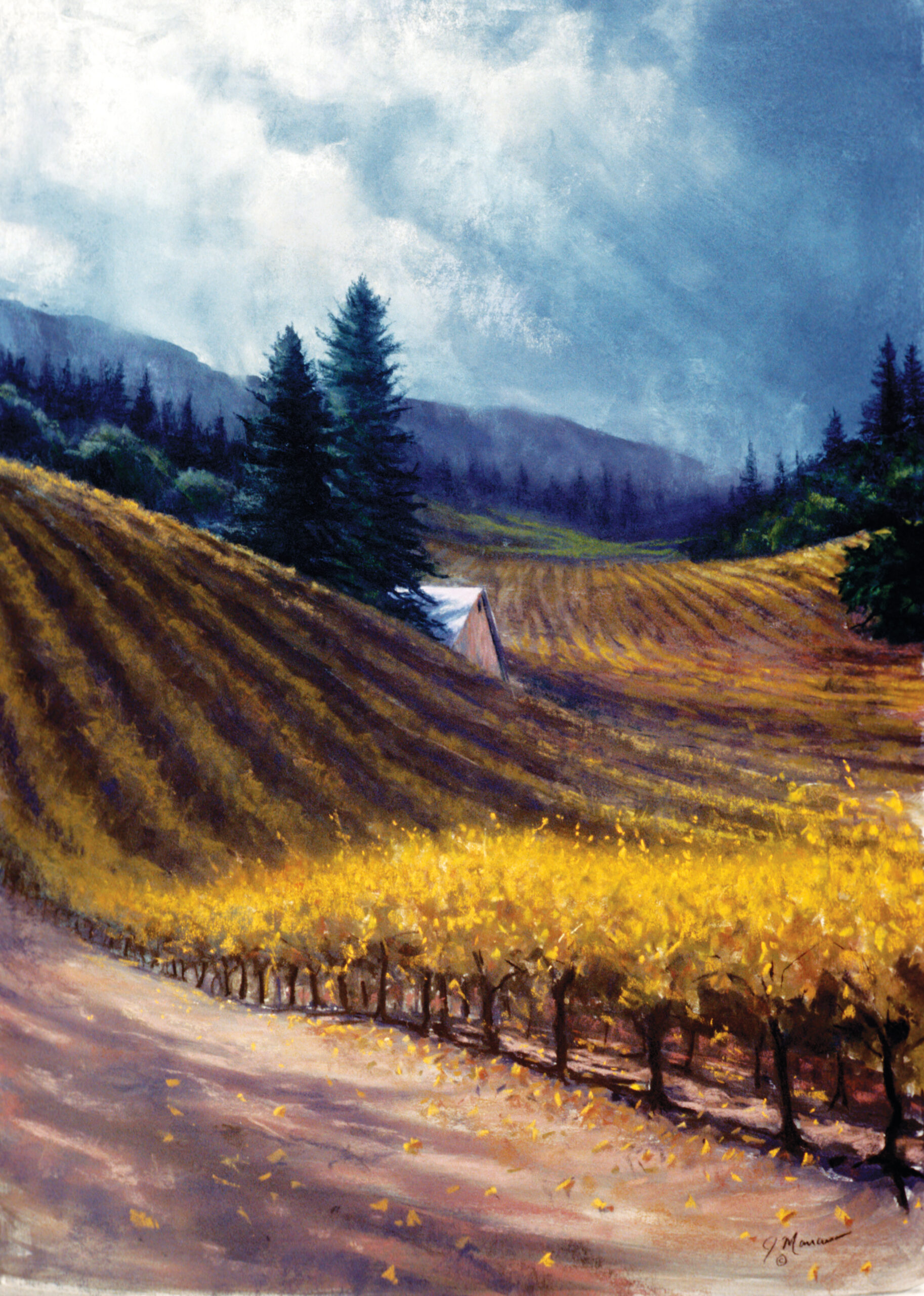
Pastel on pastelbord, 45.7 x 70 cm |18 x 24 in
Encausticbord was developed in collaboration with R&F Pigments. They came to us and said, ‘There’s really not a surface on the market that’s ideal for encaustics.’ They needed something super absorbent that can be used with lots of different mixed media. So we worked with them very closely to create something that we knew was very robust and would take a lot of heat.
If you feel the surface of Encausticbord, it’s like velvet. And it’s very absorbent. It also works wonderfully with charcoal. You can do photo transfers on this board as well as work with extreme layers of encaustics. So it’s just a really great mixed media panel. I think most encaustic painters were working on raw wood, but this really elevated the medium by giving them a well-prepared surface to paint on from the start.
There are significant advantages of working on a panel over a canvas. The first one is the colour. The colours are brighter, more luminous on a panel, because the light is reflecting off the panel; it’s not being absorbed into the surface. Another thing is the level of control you have on a panel. With canvas, there’s always some give in the surface, and that can affect how much control you have while painting. On a rigid panel, you get a much more stable surface to work on. If you’re using palette knives or applying heavy layers of paint, it’s an ideal support. It also makes detailed work easier, because the firm surface gives you greater precision and control than you typically get with canvas.
The other aspect is the archival one – the longevity of canvas compared to a rigid panel, and I’m talking about a rigid panel that’s been properly prepared. I learned a lot about the reasons for working on a panel over canvas from the late Ross Merle. He was the chief conservator at the National Gallery of Art in Washington, D.C. Paintings on rigid panels are superior to canvas for archival longevity because they don’t contract, expand, or flex, so they prevent the paint from cracking over time. Take a look at some of the early pieces from the Renaissance – the paintings on panel are just much better preserved than they are on canvas.
When we prepare the panel, we start with a very high-density fibre board. We test the board to ensure that it has a density of at least 65 pounds per square foot, and we look at the modulus of rupture (the measure of a material’s tensile strength). We look at internal bond strengths. Then we work on sealing the wood.
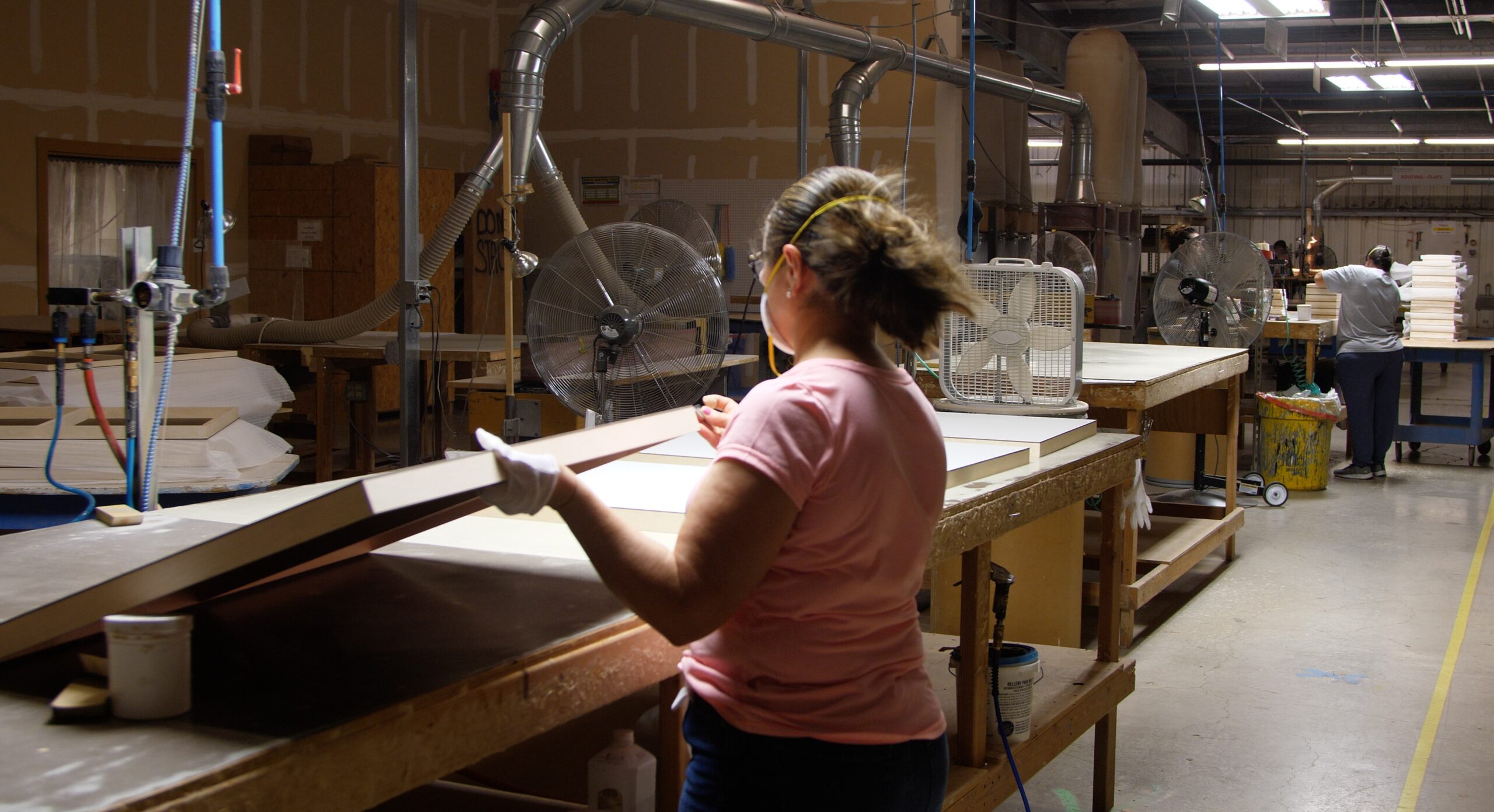
Image courtesy of Ampersand
Early on, as we were developing our surfaces, we tried to work with coating chemists to help us figure out how to seal the wood. It doesn’t matter what kind of board you’re using; you have to make sure that it is sealed. So we’ve developed a process for sealing and shutting the fibres of the board off. We basically embed fillers into the fibres of the board. So over time, the lignans, the tannins that exist in the natural fibres of wood, don’t transfer into the coatings.
Basically, we use these specialised fillers we’ve created to encapsulate the fibres in the board. This process makes the board really stiff, less accepting of moisture, and creates a barrier. So when we put the Archiva-Seal on top, which is a top coat, you get good adhesion between the top coat and the fillers.
Ampersand uses our patented Archiva-Seal to completely isolate the wood tannins and lignin from the priming and painting layers. No other panel maker is doing this. This is what we do to ensure paintings won’t yellow over time due to support-induced discolouration. And we do this before we put these wonderful grounds on the board. So an artist can be confident that they are painting on something that will last over time.
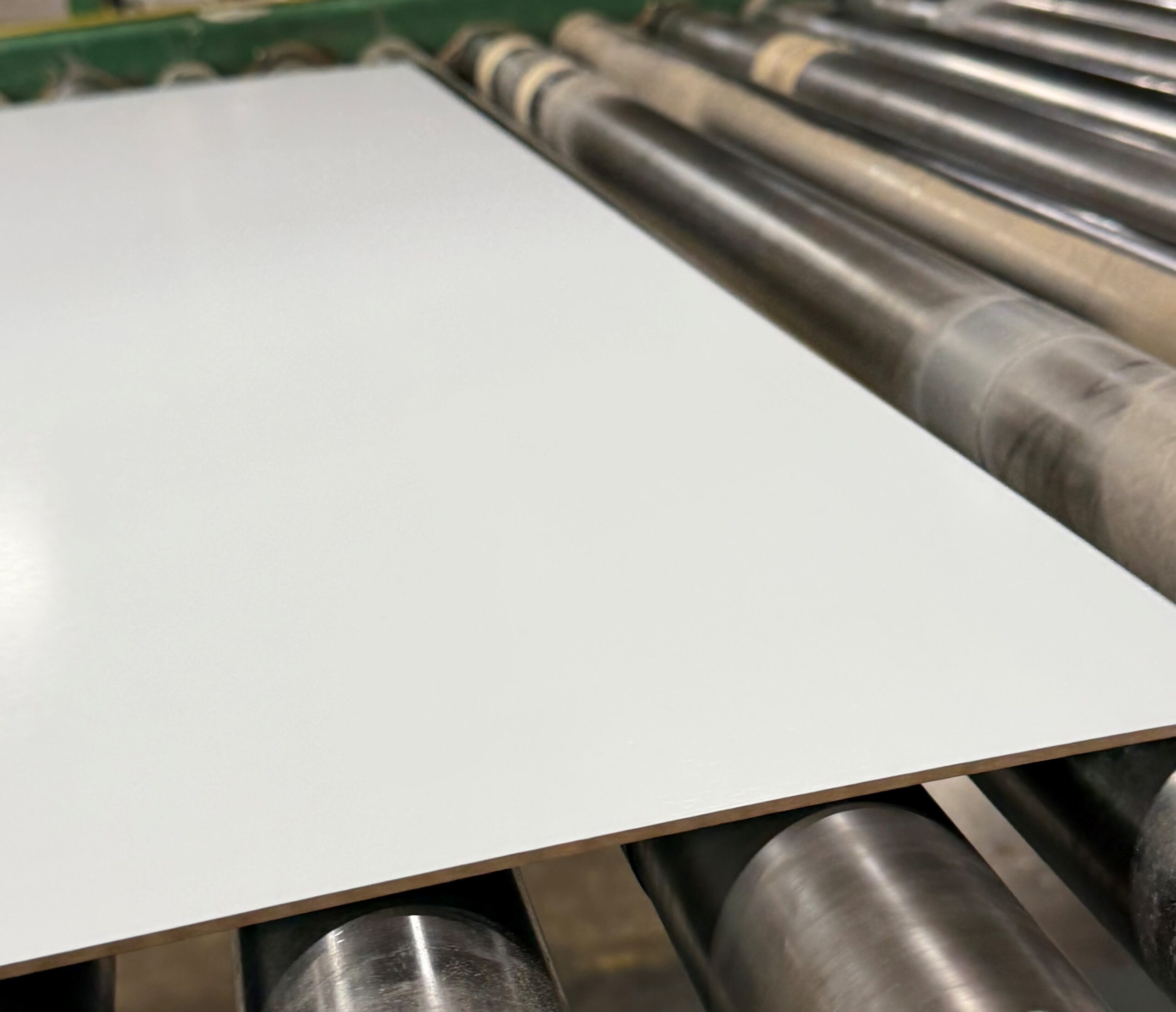
Image courtesy of Ampersand
We actually mix our own coatings at Ampersand. Each one is specially made. We’ve designed each one using raw materials that work with artist pigments. For example, with the Claybord, we have a very specialised clay with a specific particle size that allows us to remove and add the layers to cut into the surface. And then we lay that through a coating process that we’ve created at Ampersand. If, for example, we’re doing Claybord, the coating might go on the boards for at least 21 wet millimetres, which is very thick. Our Encausticbord, for example, is even thicker.
After the coating is on the boards, we let them air dry for 24 hours in a specialised dry room at high temperature. And then they come out of there the next day or so. After the boards come out of the dry room, they go through the sanding process. Each of the boards gets sanded to a specification. Claybord is designed to be super smooth, so we use a specific sanding process to achieve that finish. For Scratchbord, we use a different, finer sanding process to create a smooth surface before applying the ink layer.
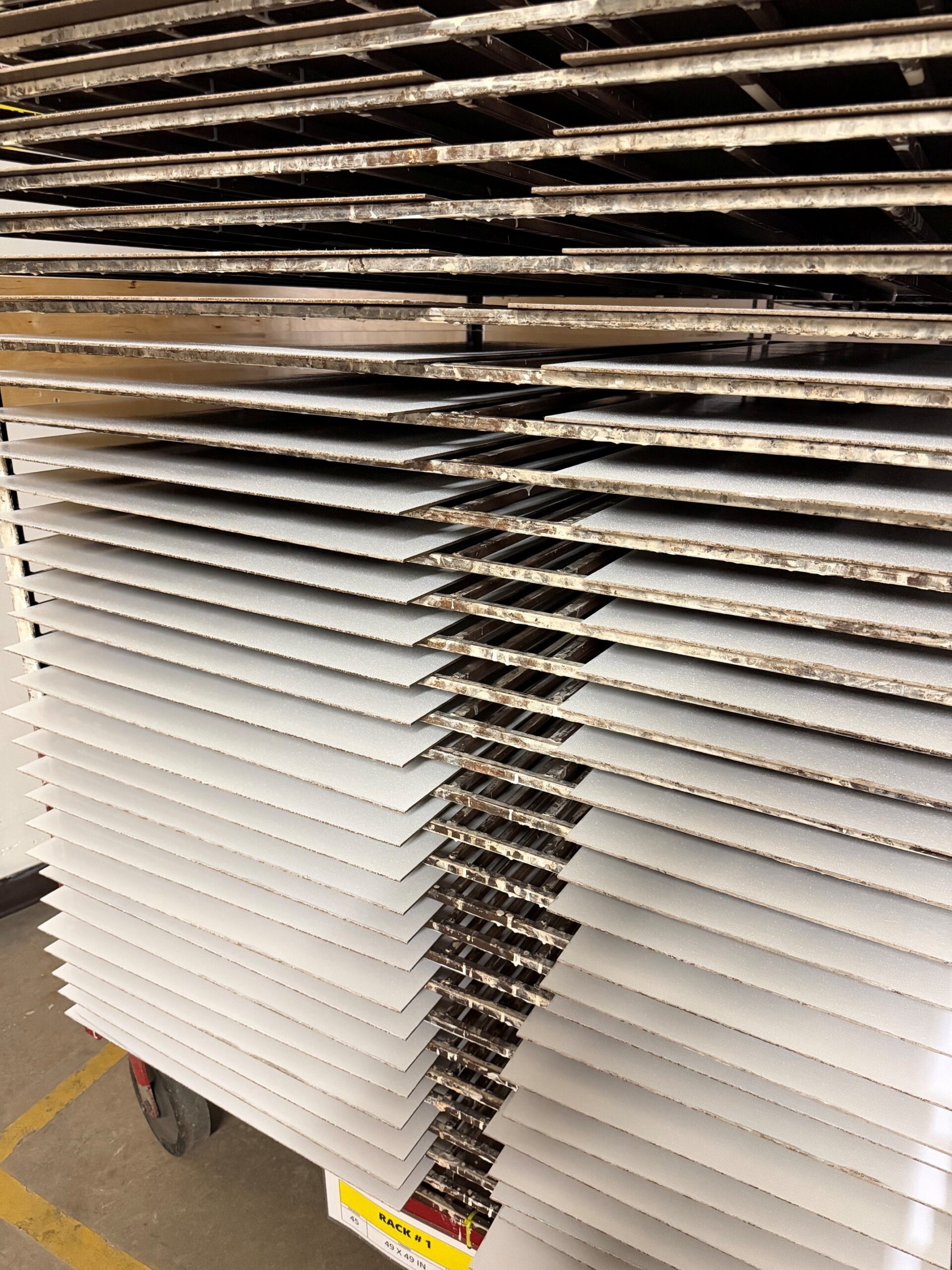
Image courtesy of Ampersand
And then the boards either go into the flat process, where we cut them and use routers to smooth the edges. The Pastelbord surface then has the marble dust finish applied to it, and the Scratchbord goes into our spraying operation to have ink applied. And then they go into packaging.
If it’s a cradled panel, it moves into a separate part of the factory where all of the cradle making takes place. The wood strips are cut, mitred, and assembled, then the panel surface is glued to the frame. From there, it passes through edge sanders and routers. It’s all very much a hand process. And then it goes back into our packaging area.
A lot of the testing that happens in Ampersand involves testing raw materials when they come into the factory. But after the boards have been coated and are ready to be processed, we do a lot of adhesion tests to make sure that we have good adhesion between the ground layer and the archival seal. That happens in every batch. We also try to ensure that the coating is actually performing the way it’s supposed to.
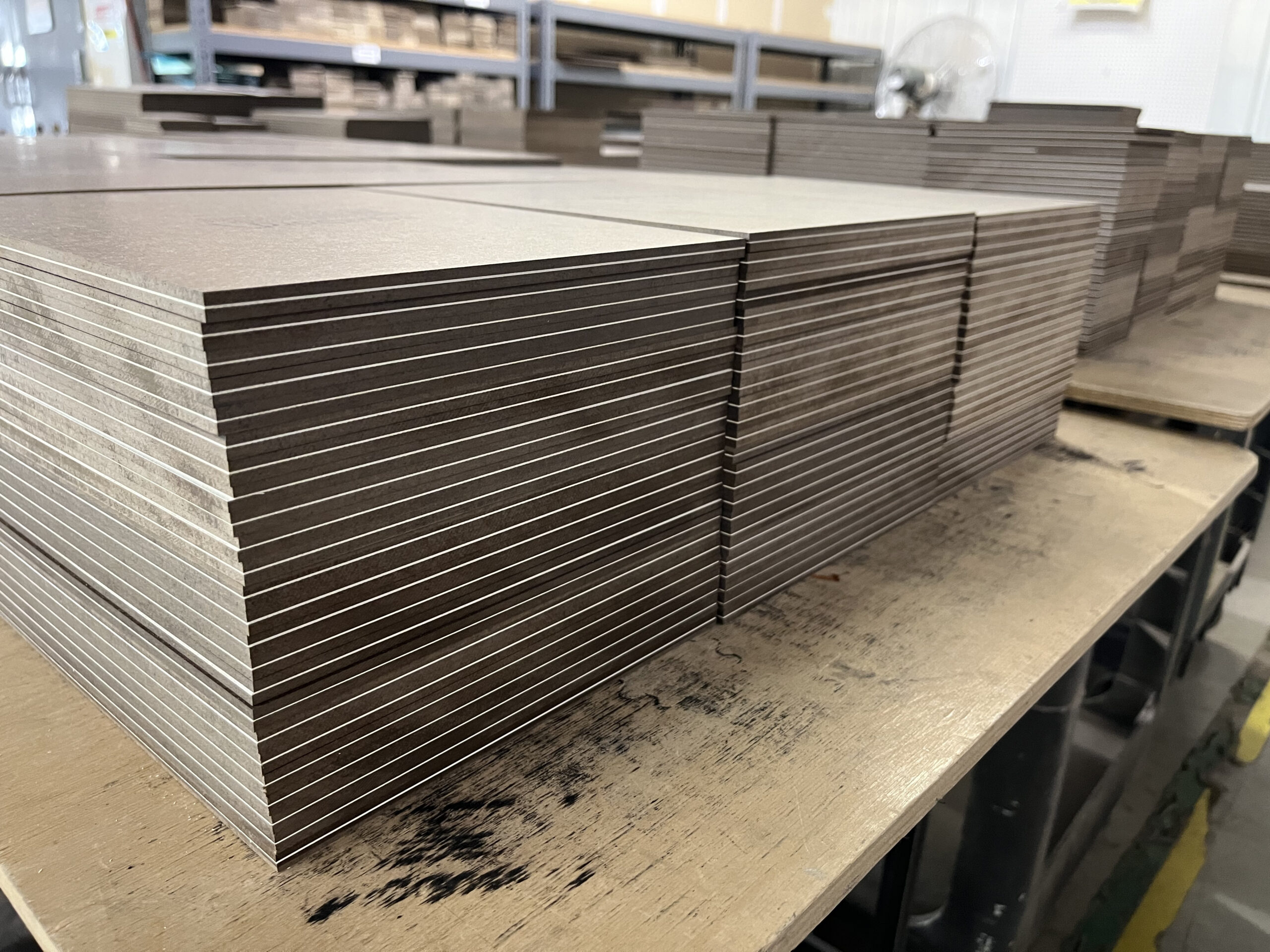
Image Courtesy of Ampersand
And our team is really excellent on the floor. They’ll see something that doesn’t look right and will bring it to our technical guy, who is also an artist. He’ll literally test an entire sheet with oil paint on Gessobord to make sure that the finish looks right. So I think it’s a combination of the knowledge and experience we’ve built up over the years, and a team that instinctively knows when something isn’t quite right.
Education is super important. We have a wonderful connection to artists all over the world, and we have an ambassador program. These ambassadors work very closely with our team at Ampersand and us to do workshops. A lot of them are influencers who are showing people all over the world how they work on our boards. We invite them to do features on our blog. We’re very active on social media, and we also do a lot of education in terms of videos on our website.
Our website is full of material for artists to really get into learning about the surfaces that we make. And it’s not just us telling you how the surface works, it’s really about artists showing you how they use the surfaces.
Further Reading
Testing Ampersand Claybord in Painting, Drawing, Printmaking, and More
Painting on Ampersand Gessobord in Oil and Acrylic
Exploring Ampersand Aquabord with Watercolour and Wet Media
How to Paint on Wooden Surfaces
Shop Ampersand on jacksonsart.com