




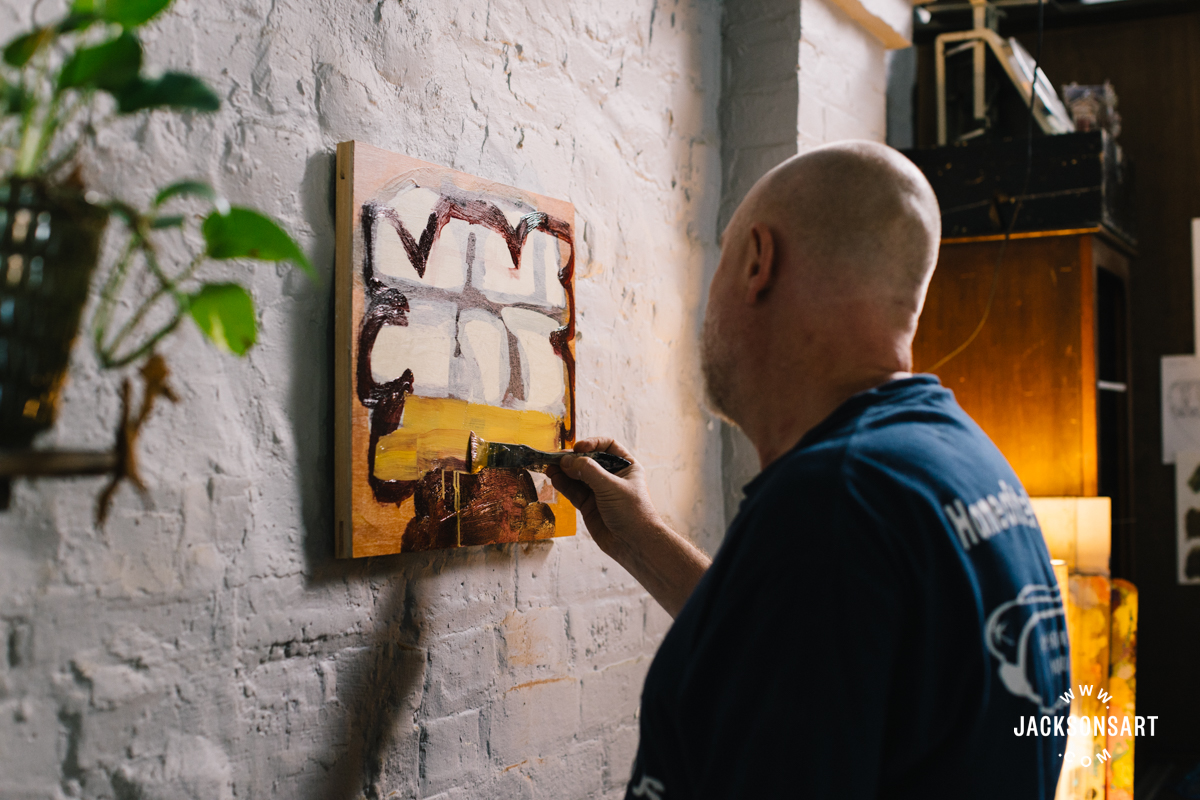
Artist Henry Ward explores shape, form, and colour through playful, intuitive compositions that blur the lines between abstraction and representation. In this film, Henry looks back at his artistic journey, from his early experiments with figurative painting at art school to his career as a teacher. He shares his fascination with the odd physics of cartoons, his love of unexpected colour combinations, and how experimenting with sculptures made from found objects and spontaneous ‘shed paintings’ brings an important playfulness to his practice.
Contents
0:00 “I don’t set out with an idea of what it is I’m going to paint.”
0:38 Introduction
0:59 “My parents would set some objects up, and we’d all do a drawing together.”
1:34 “When my brother and I both said we thought we’d like to go to art school, I think my mum, to some extent, saw that as a way of living vicariously.”
2:25 “She said, ‘If it’s not in the filing cabinet, it’s not a job’.”
3:46 “I’ve always enjoyed the kind of physics of cartoons, the oddness of cartoons.”
4:35 “I’m really interested in how painting speaks about painting – how it can be this cyclical, self-referential kind of conversation.”
5:18 “Cézanne was making paintings 150 years ago, and we still look at them, and it’s got nothing to do with apples.”
6:03 “Why on earth am I starting another painting?”
6:40 “I’m interested in the affinity I feel towards certain colours.”
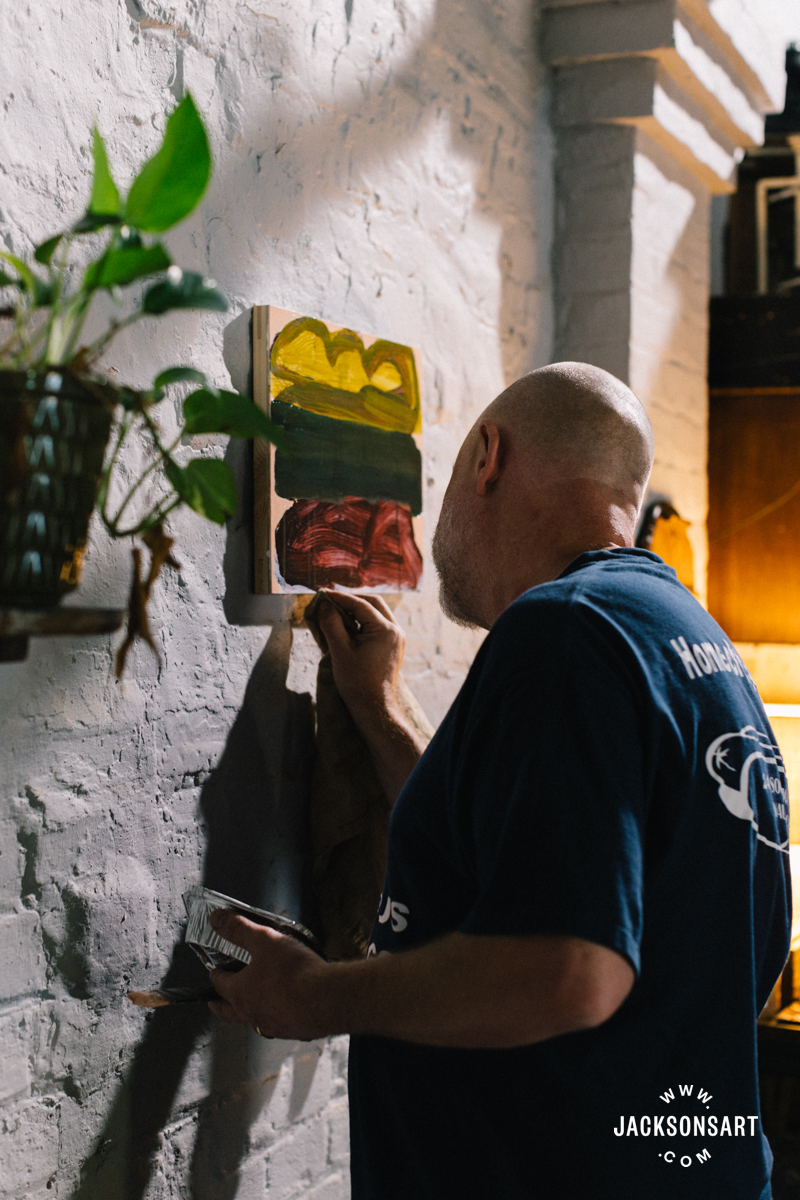
6:58 “I use takeaway trays until they’re impossible to use because they become so heavy with paint.”
8:52 “I went from being the one person who was really interested in art to suddenly being surrounded by this huge number of really interesting people who were really interested in art.”
10:23 “I don’t think you’re a printmaker, I think you’re a painter.”
12:07 “I rocked up at Winchester as this resolutely romantic, early 20th-century-inspired figurative painter, and discovered I was sitting in an absolutely painterly, abstract art school.”
13:36 “So in my third year, my work changed completely, and I started making paintings that actually looked very abstract.”
14:44 “I recognise that my paintings ostensibly appear abstract.”
16:18 “The title of a work carries huge responsibility.”
17:51 “What I love about acrylics is I can work…I can rework, I can erase.”
19:38 “Matt acrylic medium is partially responsible for giving the paint that more kind of liquidy oil consistency.”
20:07 “I was going to curate this exhibition, and that was going to be the moment when everybody was going to recognise our incredible genius in the work we were doing. And so we had this exhibition…and nothing happened.”
21:33 “I didn’t really know why I even wanted to make paintings anymore.”
22:45 “I was painting in secret, because the world had been told that I wasn’t a painter.”
23:18 “I will go through an intense period of drawing, and sometimes that’s about consciously wanting to just shift away from painting.”
24:46 “I think sometimes it’s about writing things down to try and understand what it is I’m doing.”
25:51 “I recognise that the paintings are kind of funny…that they don’t take themselves too seriously.”
27:53 “These kids were bouncing with excitement at the fact that I was in this room with these paintings and I thought…this is amazing.”
31:44 “I really like working at night, and I think there’s a liberation that happens when you know that you’re working and other people have gone to sleep.”
33:16 “I will go to the studio without necessarily knowing what it is I’m going to paint.”
35:40 “When I go into the shed to paint, I don’t reflect, think, procrastinate, plan; I just pick up a brush, mix up colour, and put something down on paper.”
36:36 “I’m really excited by making sculptures and not being a sculptor. I sort of wish I could make paintings and not be a painter.”
38:23 “This sense of being alien, of being taken outside of the routines and the expectations … and being placed somewhere else, that has really profound effects.”
41:39 “The starting point of a painting is just to confidently put something there, whether that is a shape or a gesture, or a particular colour.”
42:46 “It will come as no surprise to anybody who’s looked at even a couple of pieces of my work, that Philip Guston is a bit of an important artist for me.”
43:56 “Thinking about whether something is going wrong or whether something is going right is a bit problematic.”
45:37 “Scale is probably the thing that I’m most conscious of planning.”
47:07 “There’s a certain kind of gesture that is inevitable because of my right hand.”
47:55 “I think I’ve always painted fast, I’ve always painted a lot, I’ve always been prolific.”
49:07 “I’ve got back into bed with the painting, and it’s become another painting.”
50:08 “If you find something interesting, it’s probably interesting, so do it.”
50:48 Credits
Film Extract
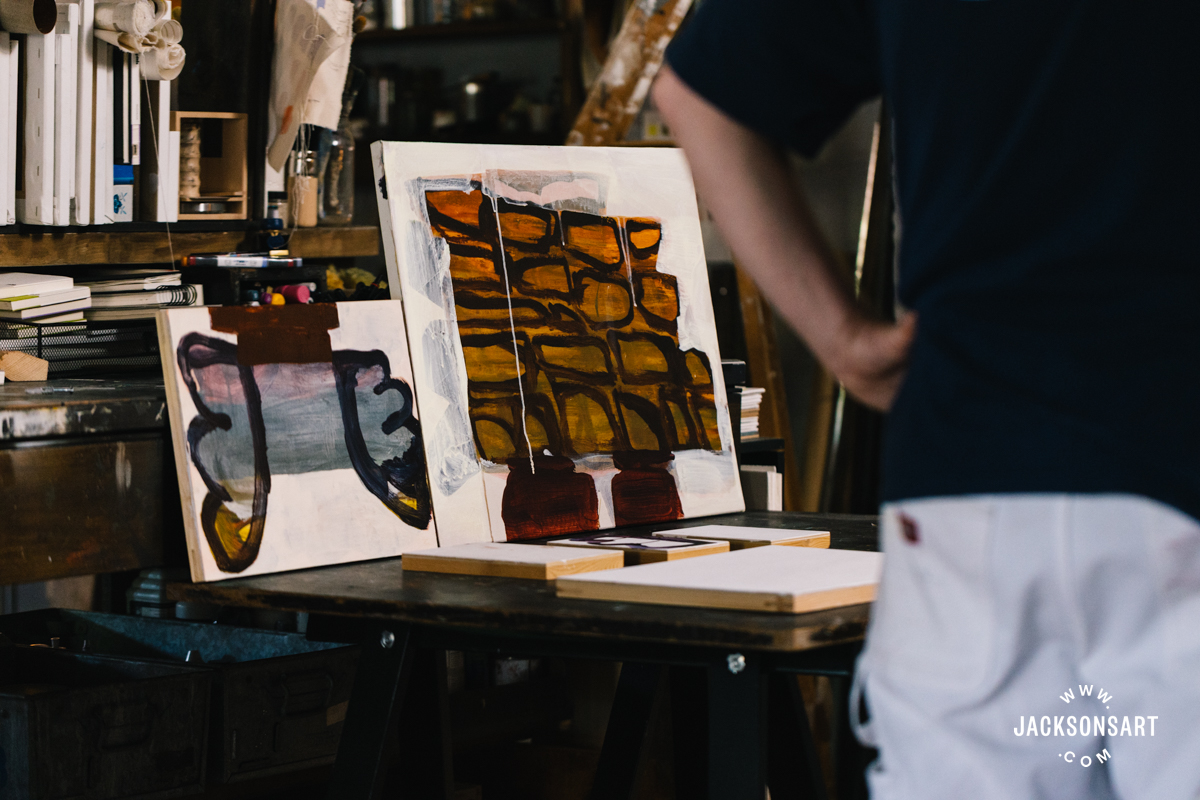
I don’t set out with an idea of what it is I’m going to paint. I’m interested in what I’m doing with the paint, how the paint behaves, what happens when I put one gesture next to another. What happens when one colour sits next to a different colour? What happens when one approach sits next to something else?
Henry Ward
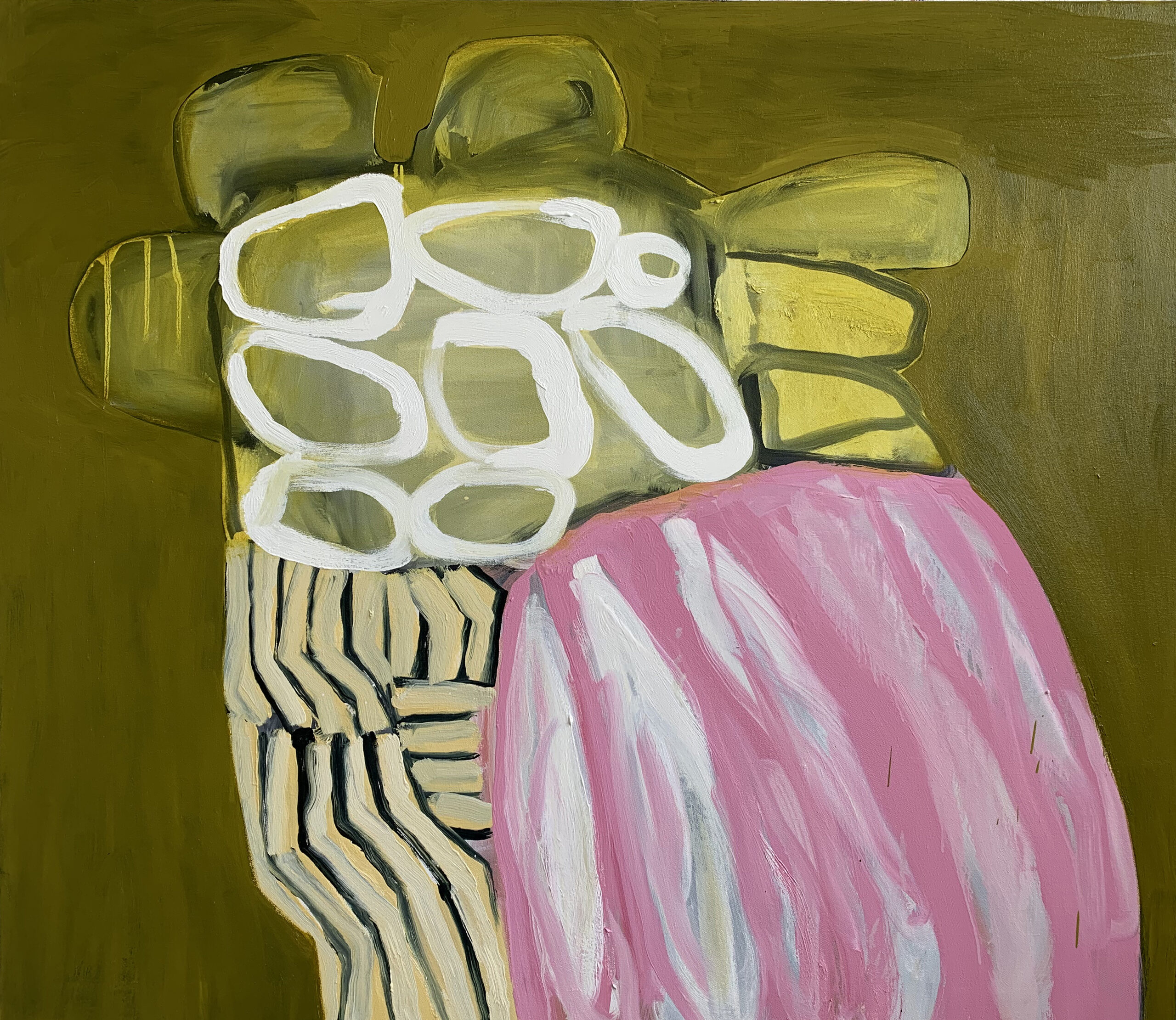
Oil on canvas, 100 x 125 cm | 39.4 x 49.2 in
I’m really interested in how painting speaks about painting. I think it’s complicated and difficult to talk about, and in some ways that’s why you paint about it rather than talk about it.
Henry Ward
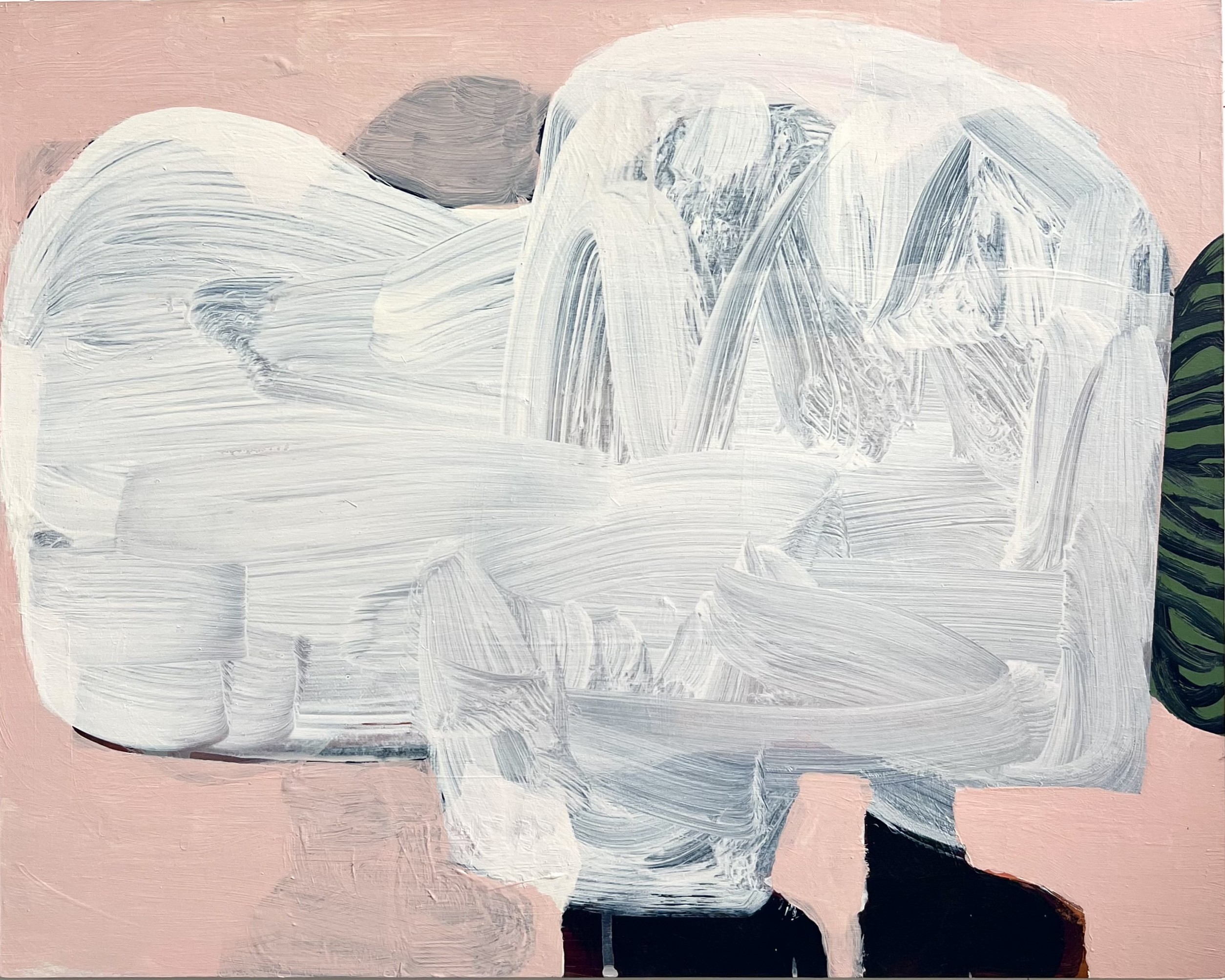
Acrylic on wood, 41 x 51 cm | 16.1 x 20 in
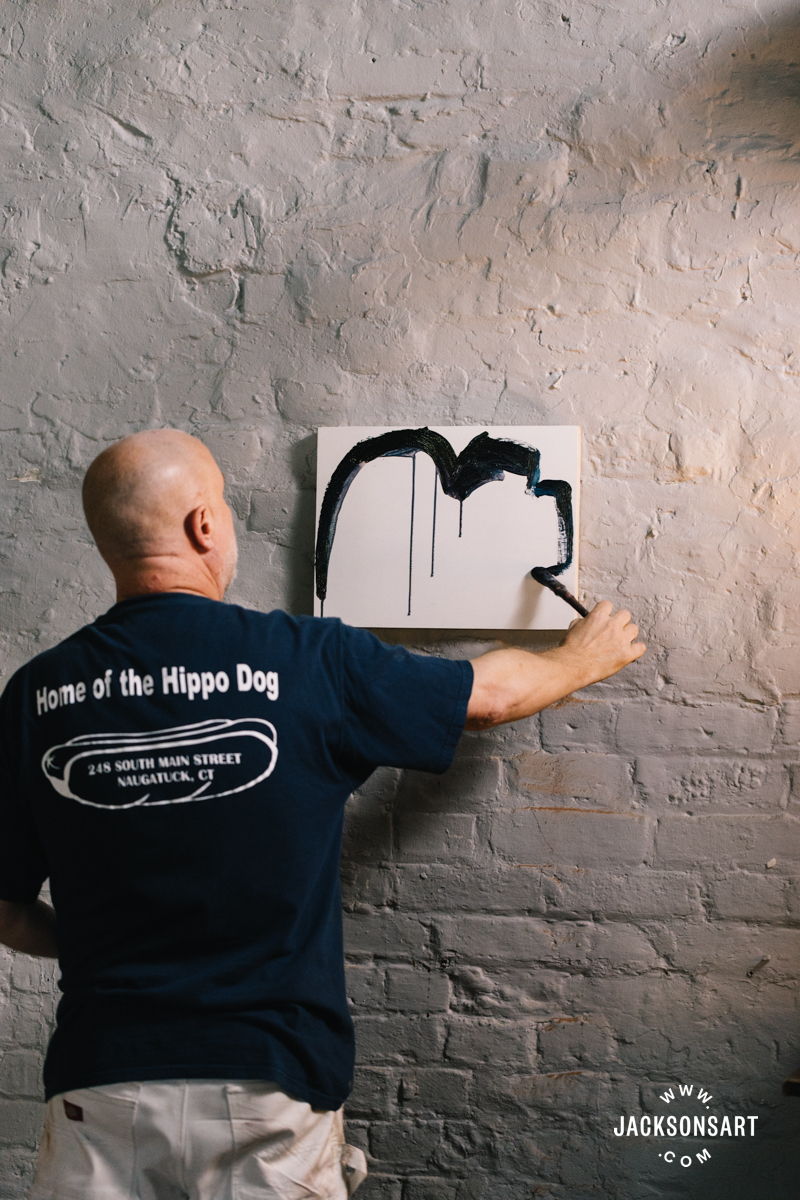
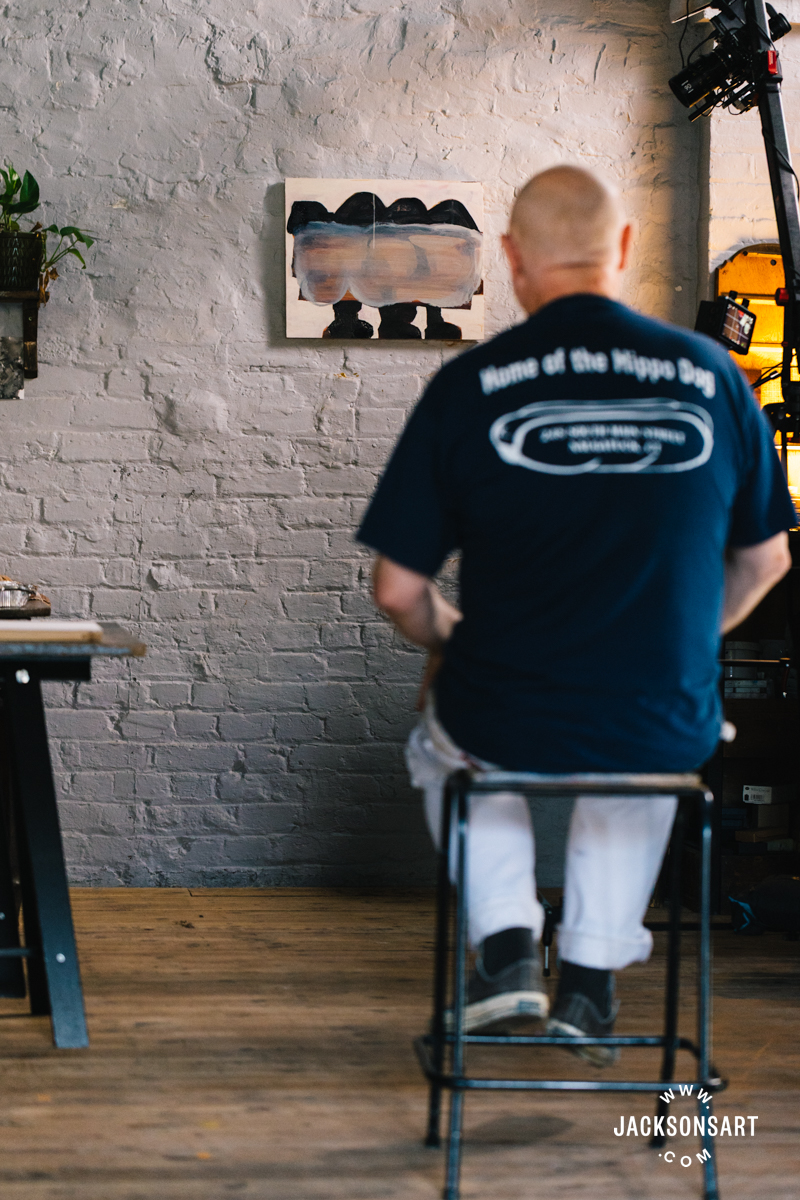
My name is Henry Ward. I’m a painter, and I’m here in the Jackson’s studio to talk about how I make paintings, why I make paintings, and what I do when I make paintings.
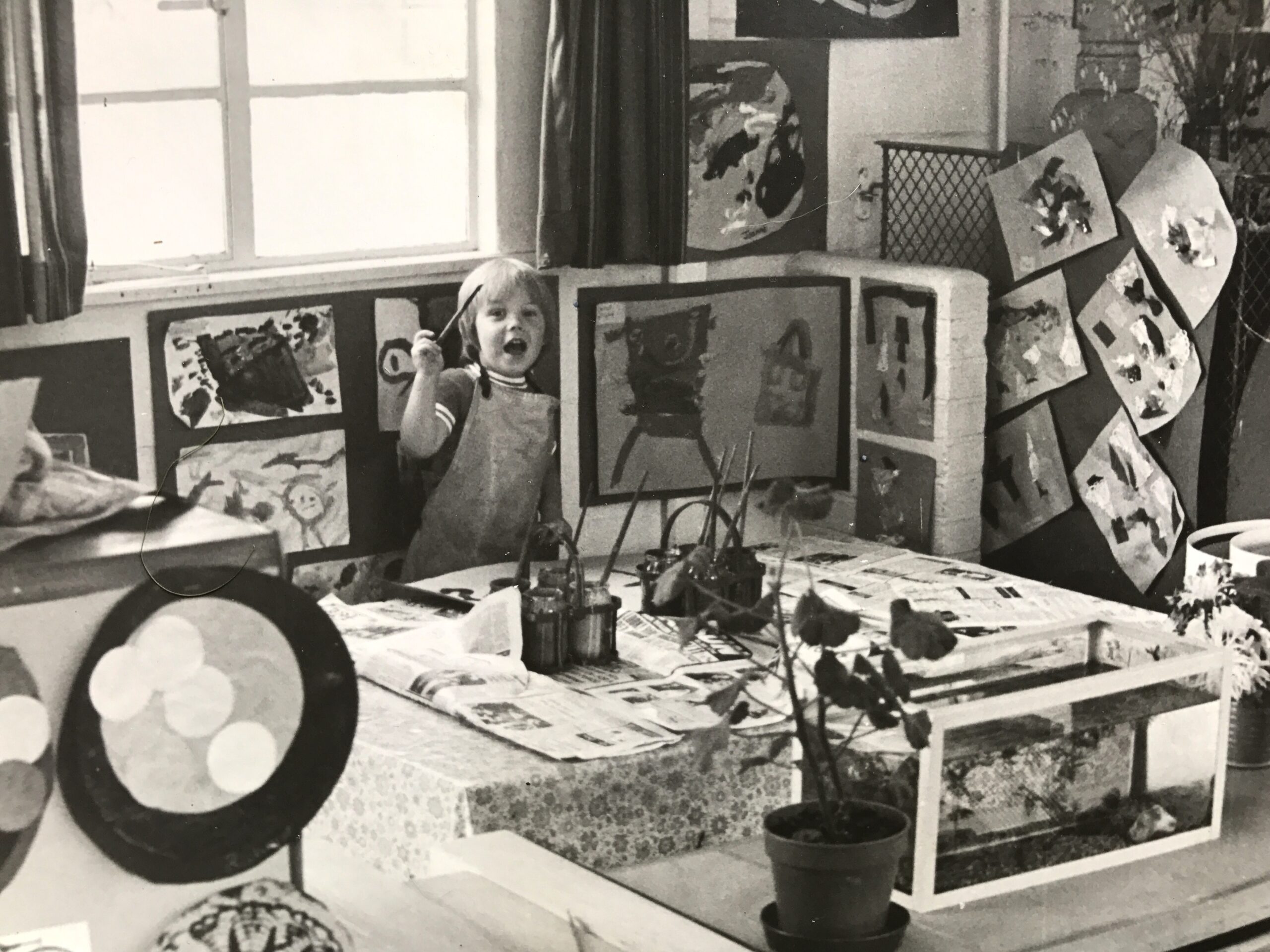
When I was growing up, art was always present. We were taken to museums and galleries, and my parents would even set up some objects, and we’d all do a drawing together. Which, looking back, I guess was quite unusual. I can remember my dad bringing back rolls of wallpaper lining paper. And my brother and I would lie on the bedroom floor and roll them out and do these amazing kind of narrative drawings from one end to the other. So there was a sense of art being something we just did.
I decided that I wanted to pursue art once I’d finished school. My mum and dad were encouraging, so from a family perspective, it didn’t feel like we were pushing against anything. The door had been unlocked and opened for us.
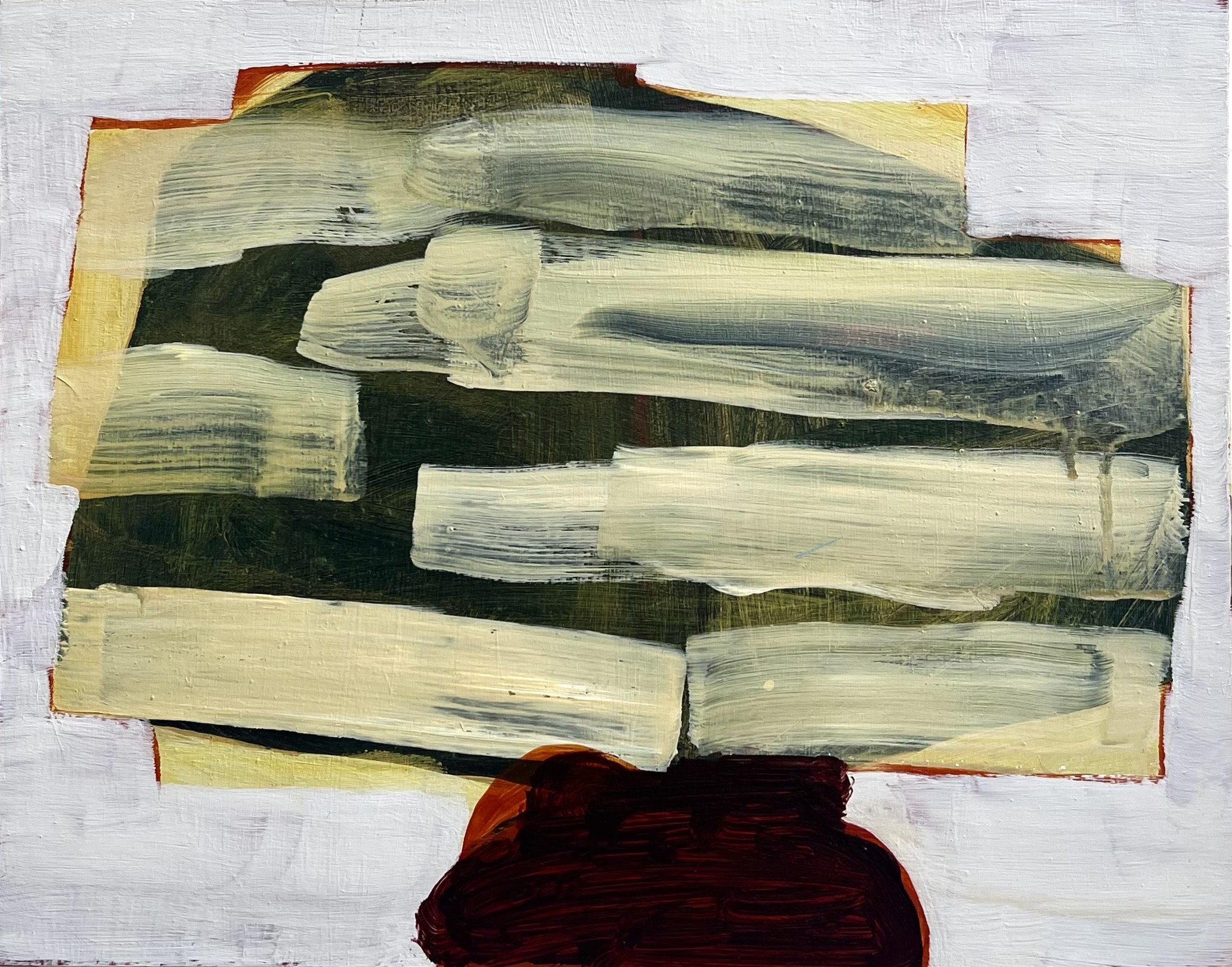
Henry Ward
Acrylic on wood, 28 x 31.5 cm | 11 x 12.4 in
I don’t have any real memory of the school being even interested in what we said we wanted to do. We all had a ten-minute appointment with the careers teacher, where we had to explain our options and why we’d chosen them. I was about 14 and knew I wanted to do something in art. We had to choose a card with a job title from an alphabetical filing cabinet, but when I looked through the A’s, there was no artist. So I went back to the careers teacher and said, ‘Oh, Artist isn’t in the filing cabinet. Somebody must have taken it out.’ She replied, ‘If it’s not in the filing cabinet, it’s not a job. So go and find a job you want to do, and you’ve got five minutes of your ten minutes left.’ I panicked and went back to the A’s. The only thing that looked even vaguely like an artist was an architect.
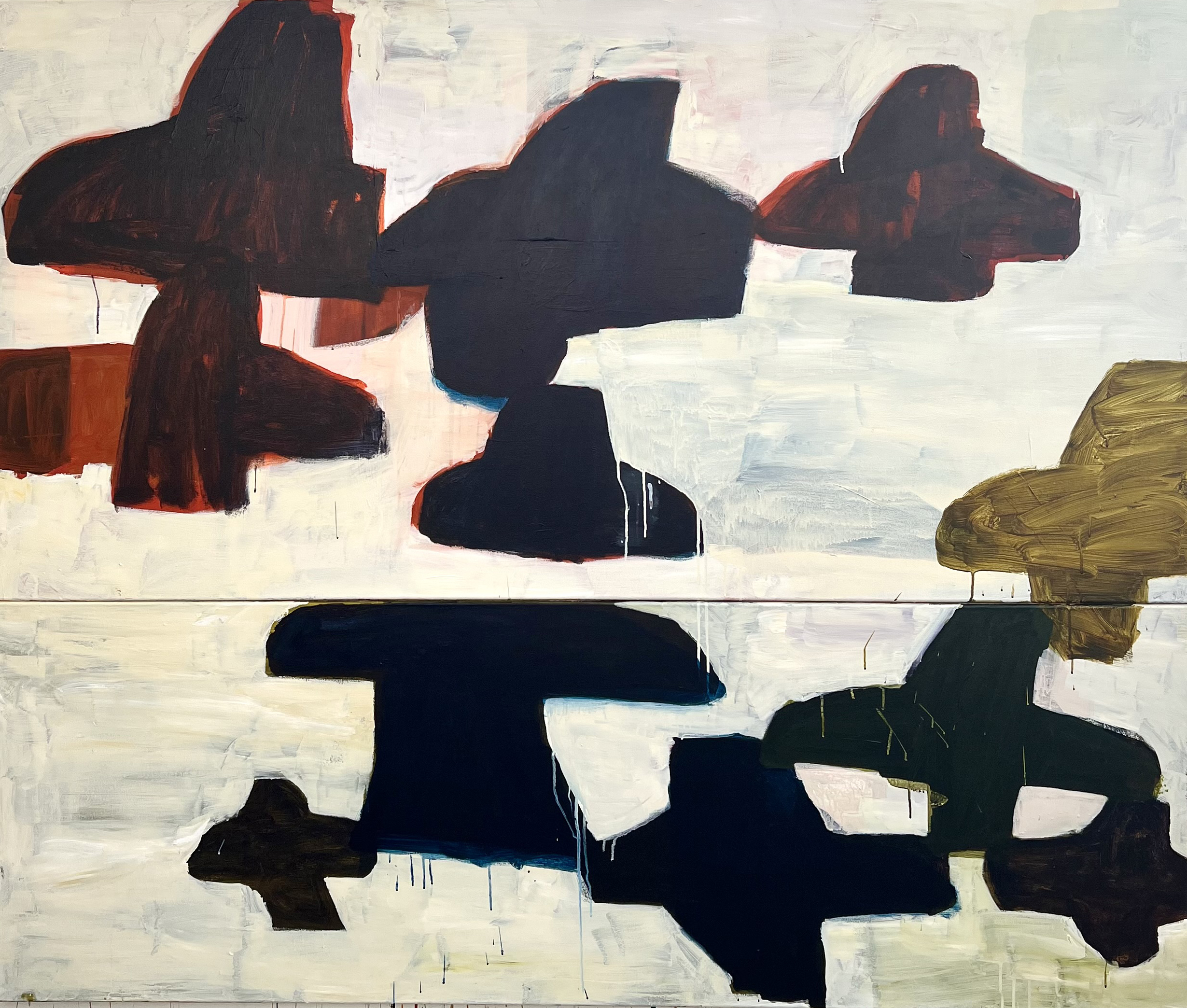
Henry Ward
Acrylic on canvas, 160 x 190 cm | 63 x 74.8 in
I don’t set out when I’m making a painting with an idea of what it is I’m going to paint. But there are things that I’ve always been drawn to and interested in.
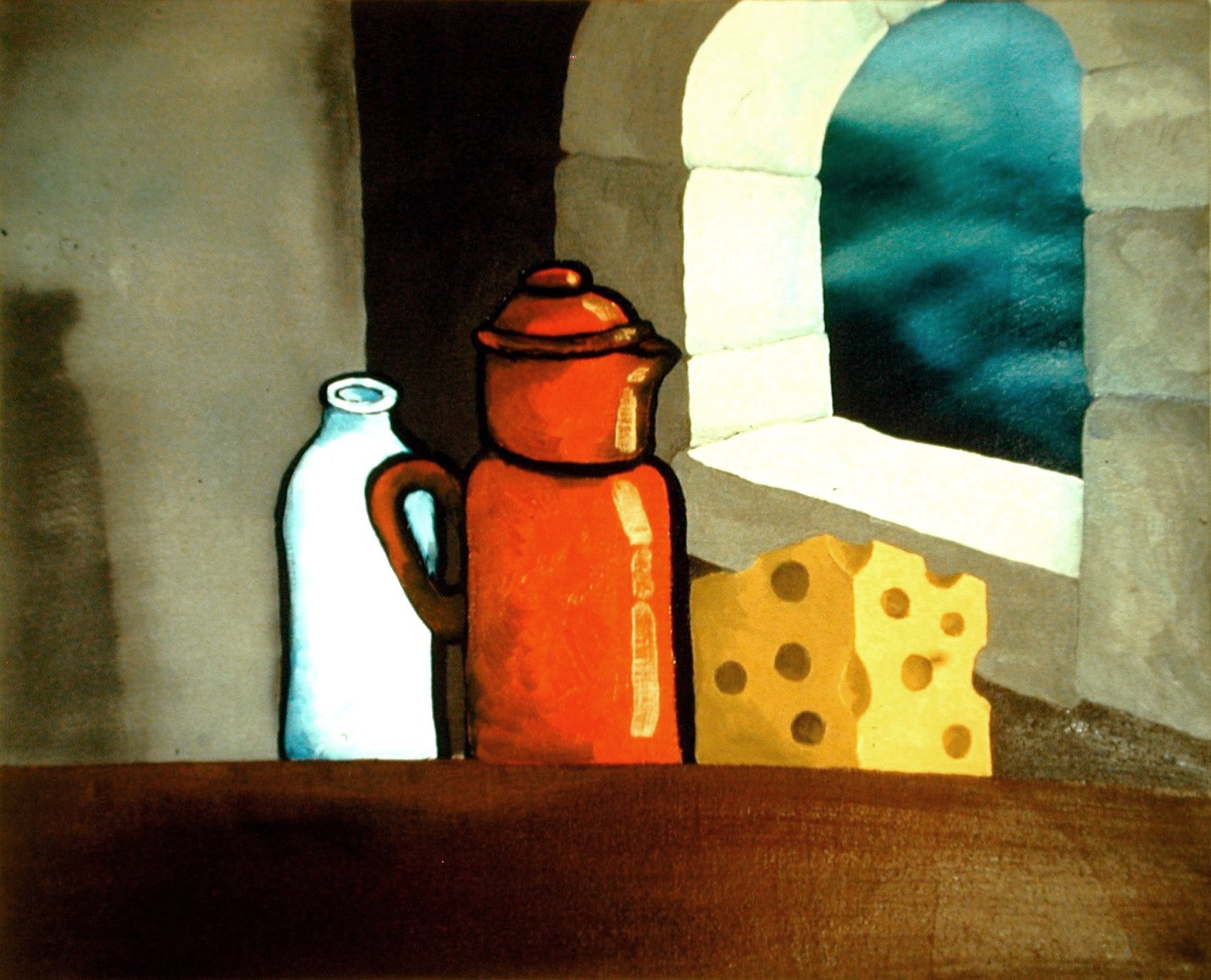
Henry Ward
Oil on canvas, 40 x 50 cm | 14.75 x 19.7 in
I’ve always enjoyed the logic and illogic of cartoons, the oddness of cartoons. As a child, I remember thinking about the repeated backdrops when one character is chasing another. The backdrop is repeated.
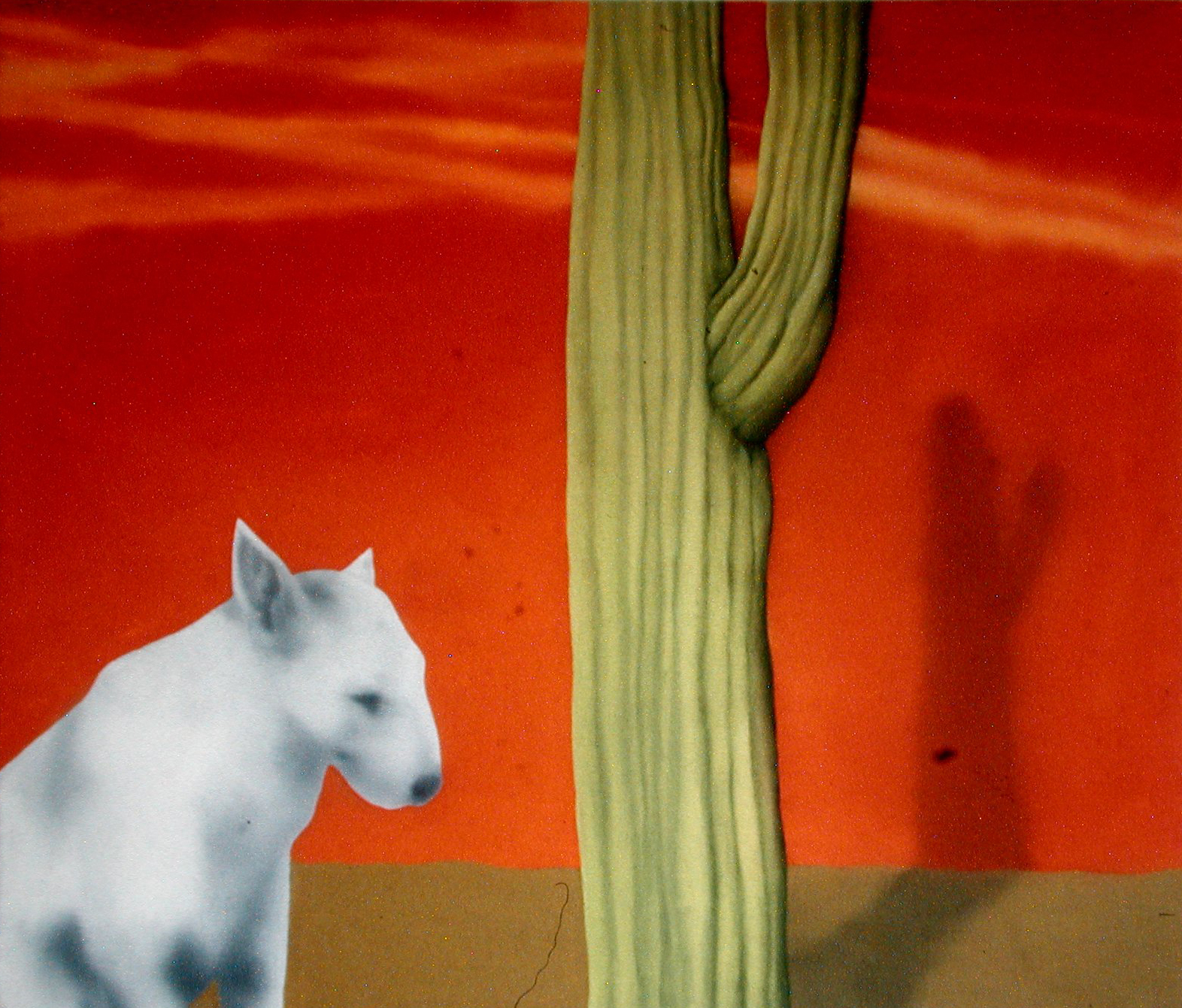
Henry Ward
Oil on canvas, 50 x 60 cm | 19.7 x 23.6 in
But increasingly, over the last 10 to 15 years, the paintings have become much more about the process of painting. So around the periphery of my sort of thinking are comic books and cartoons and cinematic references and things from the history of painting. I think the forms in the paintings nod to these references without being directly referential.
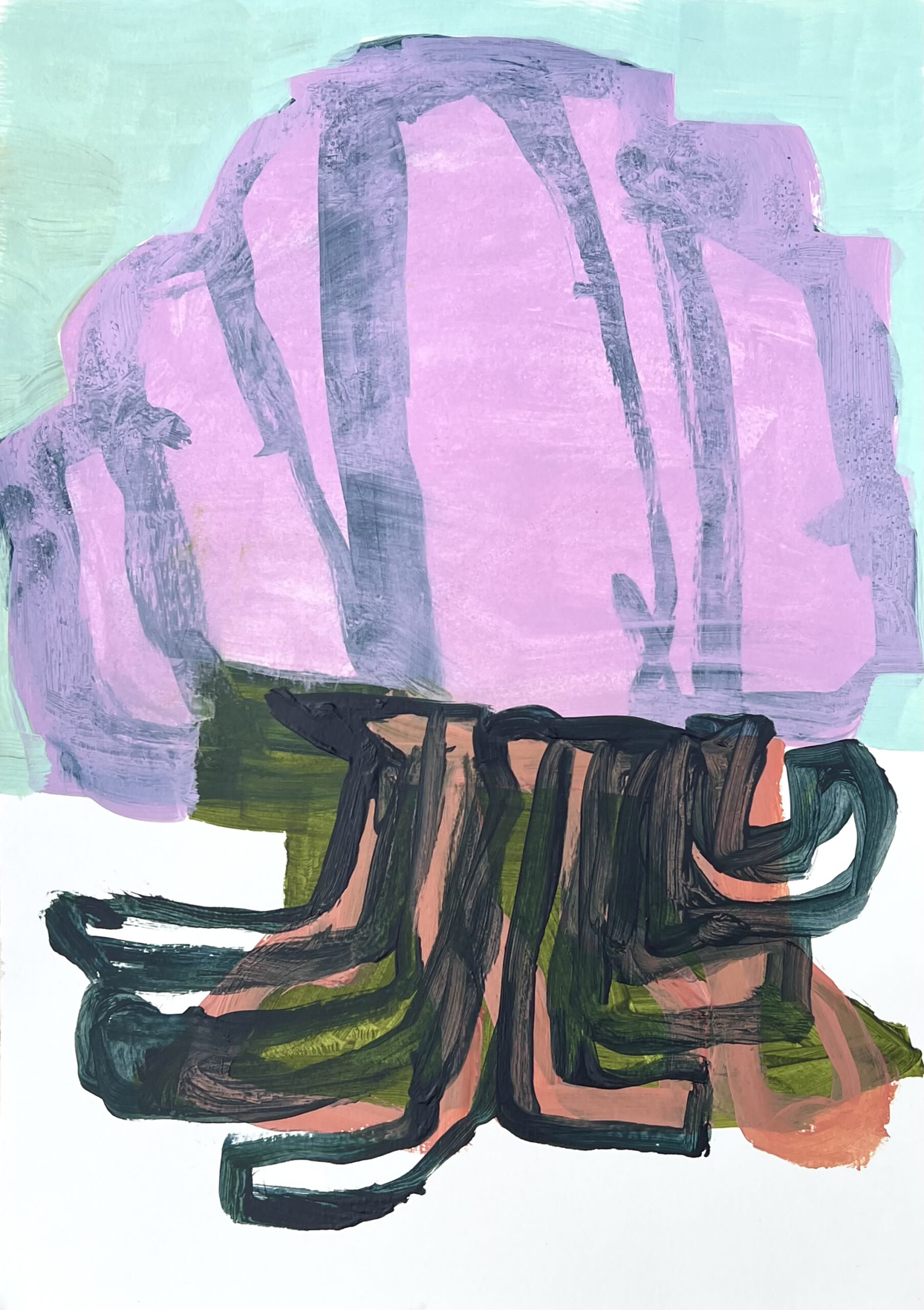
Henry Ward
Acrylic on canvas, 76 x 61 cm | 30 x 24 in
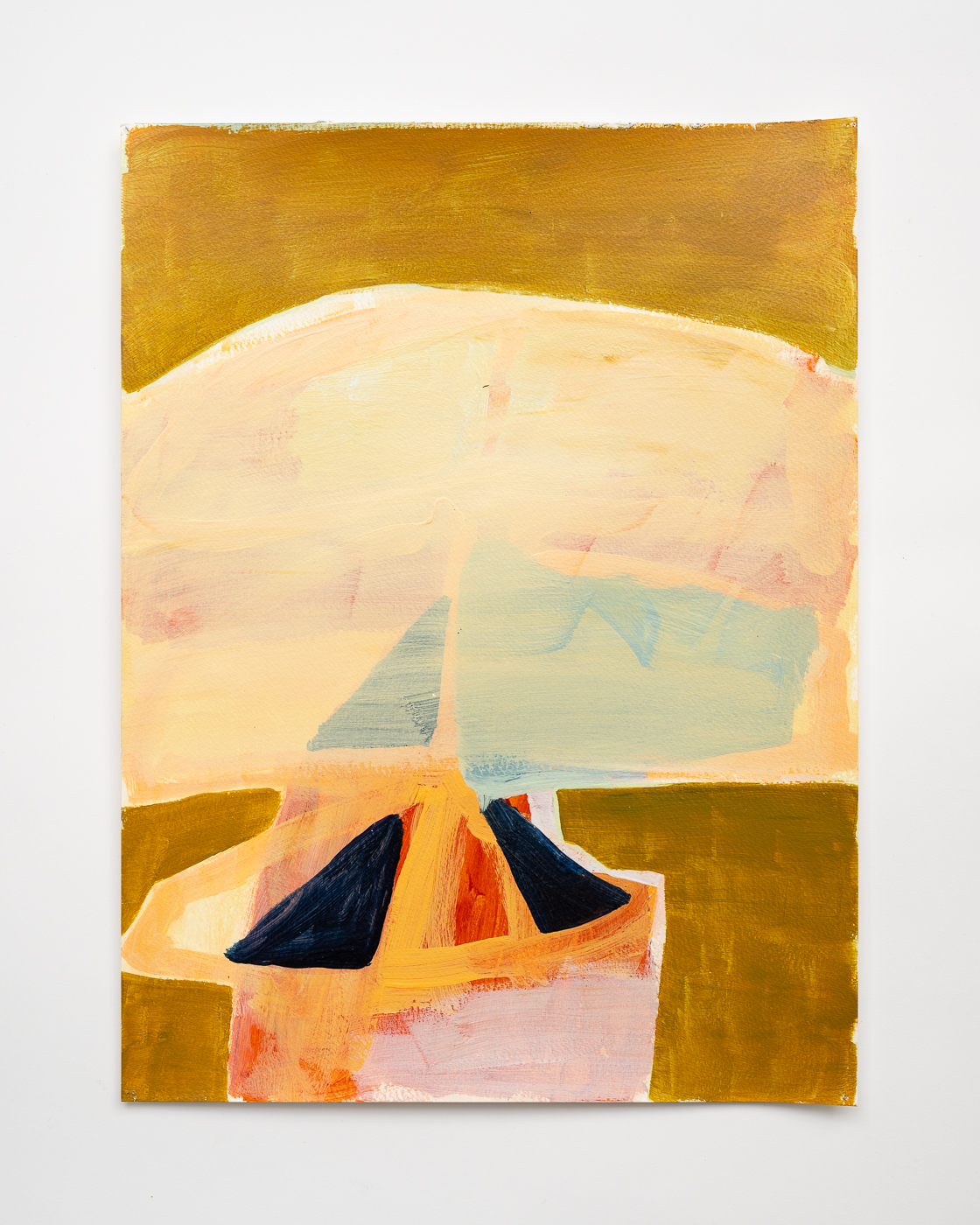
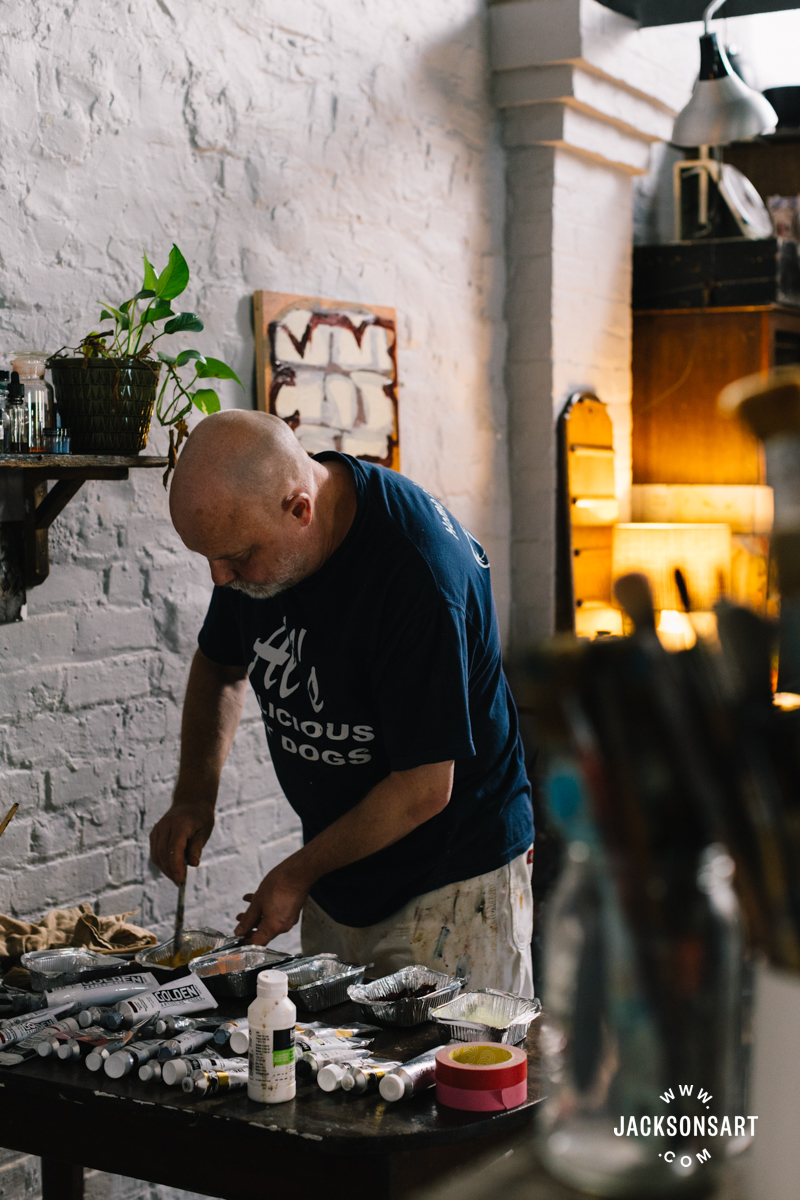
Colour is very important in my painting. I love colour. My palette is a set of takeaway trays – a dozen or so trays full of colour. I use them until they’re impossible to use. But every now and then I’ll mix a different colour in there just because I don’t want to get another tray off the shelf. And then suddenly I might have a vivid orange against the maroon, or a pale blue against a banana yellow. What happens in those trays with these little accidental combinations of colours then feeds into what I’m thinking about in the paintings.
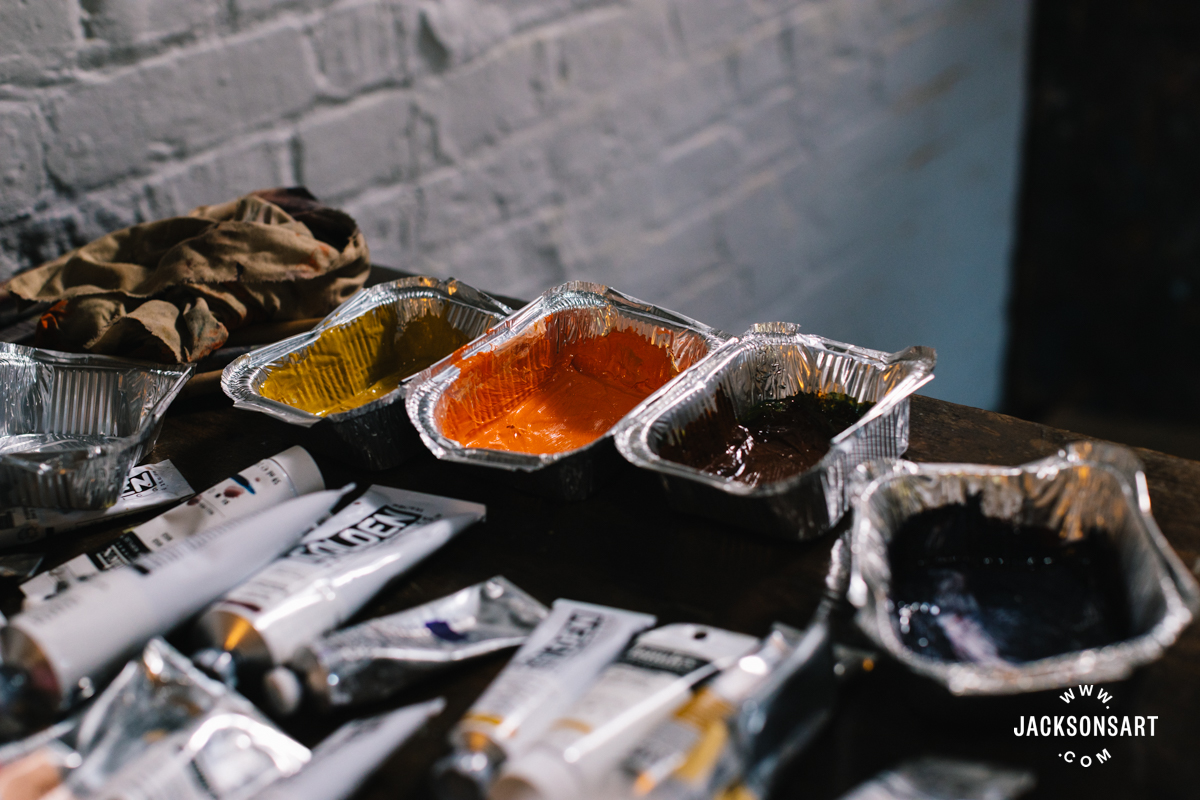
I’m really interested in what colour does when colour meets other colour. And I love it when I have a tiny glimpse of a colour that’s peeking out from behind another colour, or just the edge of something that’s been left.
Henry Ward
Acrylic on paper, 30 x 40 cm | 11.8 x 15.75 in
I very rarely use a colour straight from the tube. Almost always there’ll be a little something else in it, something that takes off the edge of the manufactured colour. But there are certain colours that I have a real affinity for – Permanent Maroon, Nickel Azo Yellow, Natural Green Earth. Prussian Blue has been my go-to for 30 years.
I had a vague idea of what art school might be, and I completely fell in love with Central Saint Martins. I guess it fulfilled the kind of romantic notion I had of what art school might be. I went from being sort of the one person who was really interested in art to suddenly being surrounded by this huge number of really interesting people who were really interested in art. Everybody’s just doing mad stuff all the time. People weren’t necessarily dancing on the tables and getting a cello out. But people were doing mad things in stairwells. You come in in the morning, there’d be somebody building something crazy up the stairwell, or somebody would be making something in a courtyard.
Henry Ward
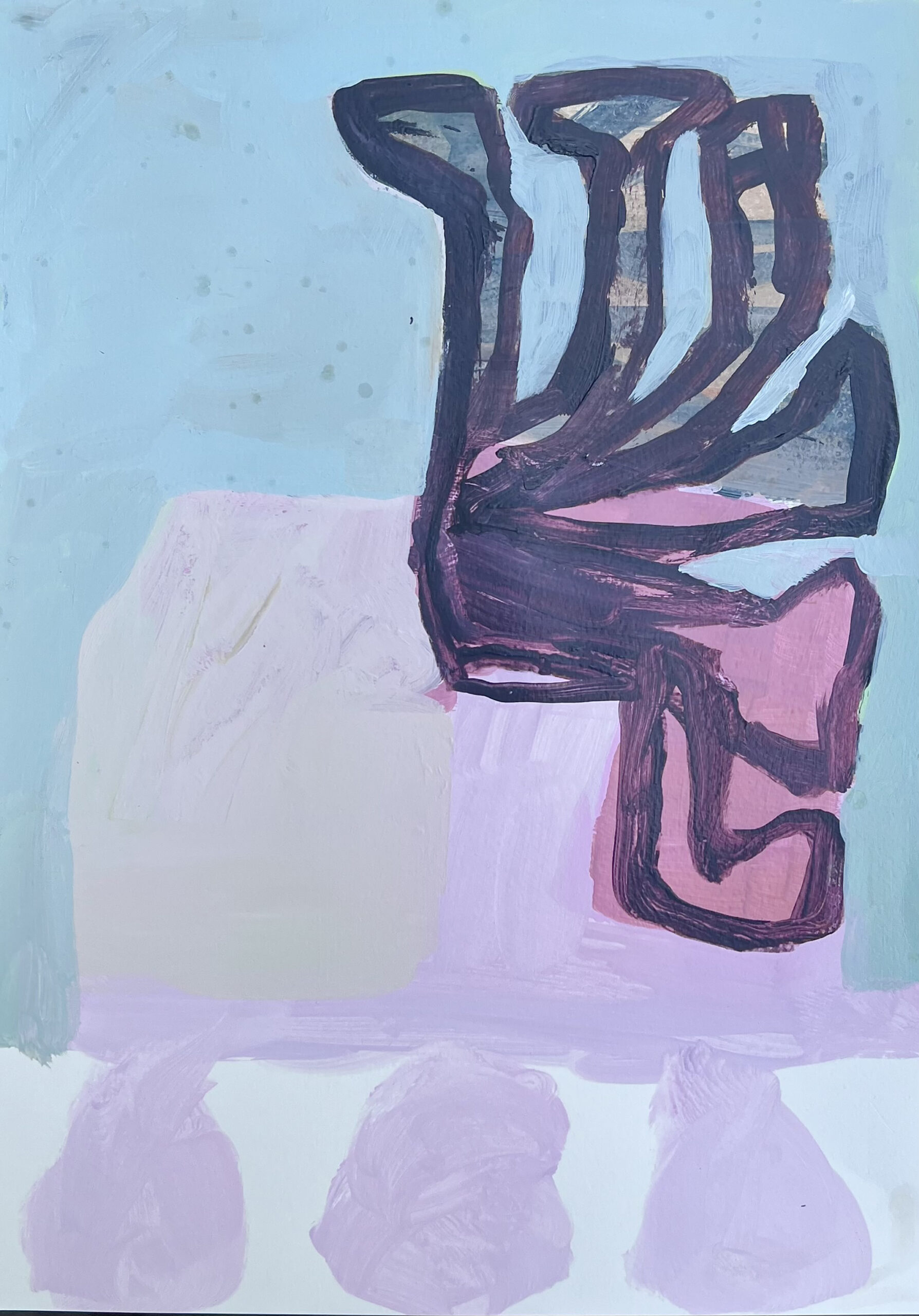
Acrylic on paper, 40 x 30 cm | 15.75 x 11.8 in
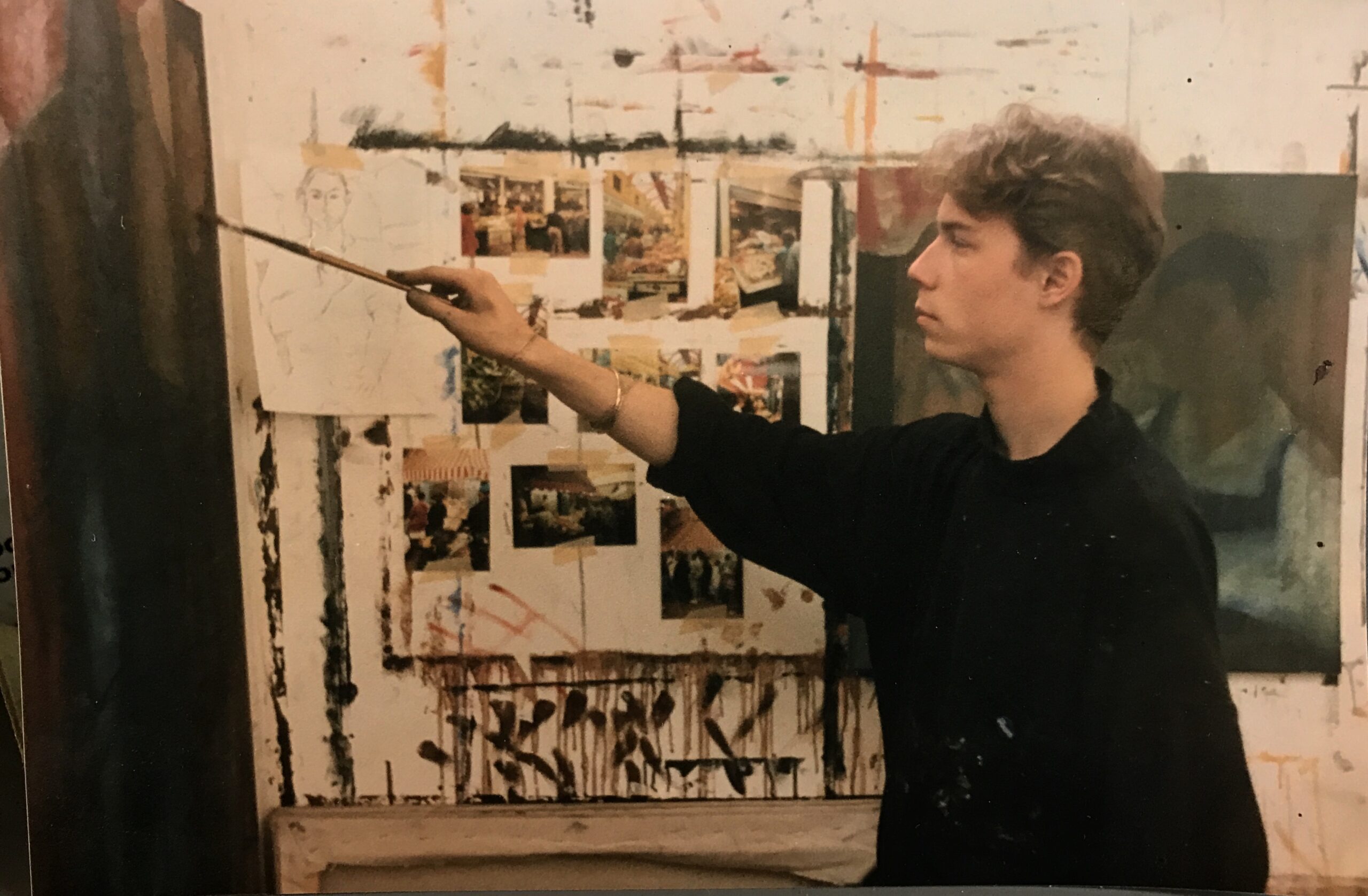
I then got into Winchester School of Art, which turned out to be the best possible place, and I think I was there at a very rich time. But what was challenging was that I rocked up as this resolutely romantic, early 20th-century-inspired figurative painter and discovered I was sitting in an absolutely painterly, abstract art school with a really strong vision about abstraction.
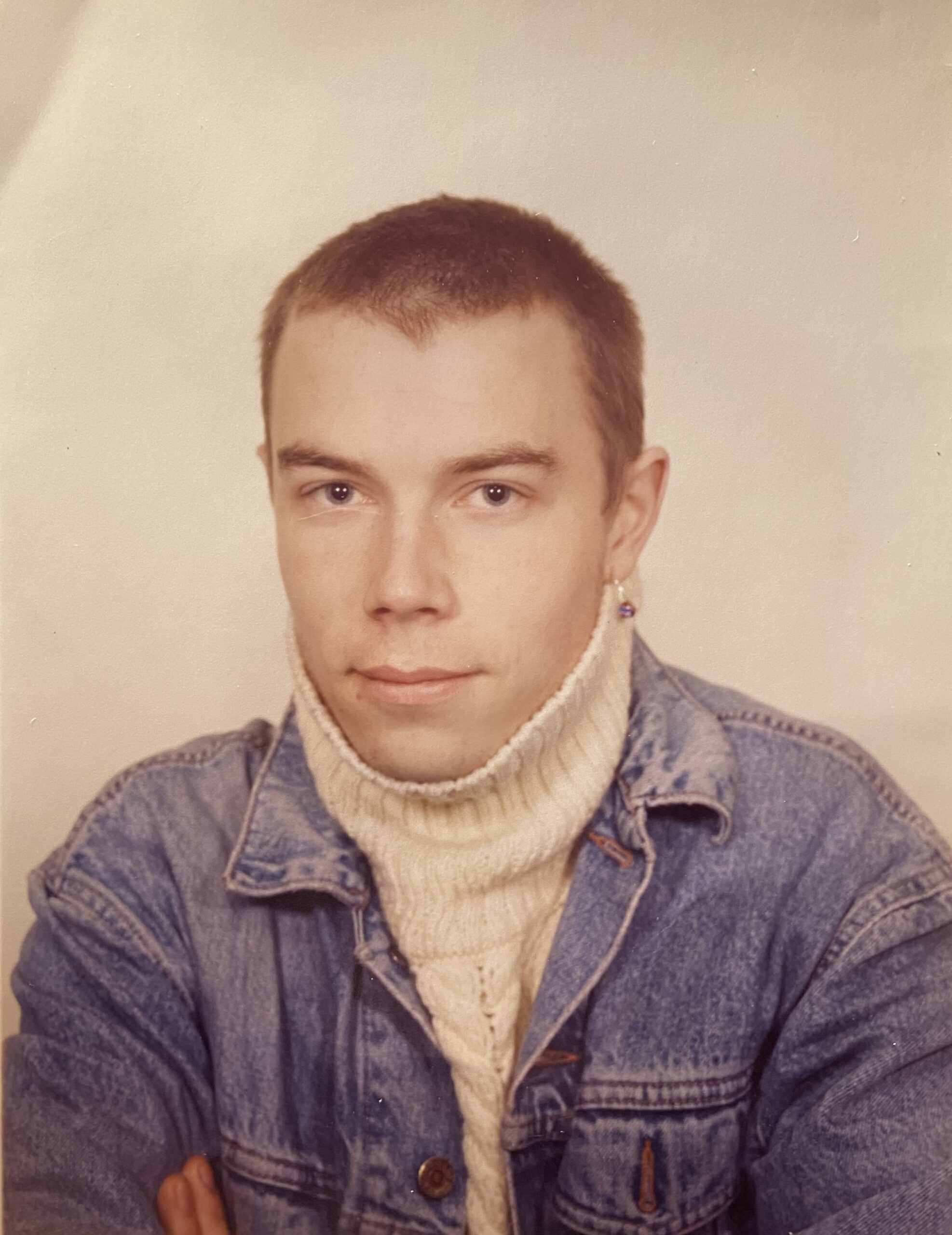
So a lot of my experience at Winchester was quite bruising in some ways. Crits were really challenging. I was a figurative painter. I would be putting figurative paintings on the wall, and a crowd would gather to basically lay into me and tell me that I was doing the wrong thing. There was a real polarisation of views. It was difficult, but I think that was also formative. I had to really think about why I wanted to paint the way that I wanted to paint and what that meant. I held on to figurative painting all the way through my first year. And for most of my second year.
In the summer between my second and third year, it was like a switch went off. I realised I could paint through mediated imagery, and then I could sort of open up and expand the things I was interested in. In my third year, my work changed completely, and I started making paintings that actually looked very abstract, but they were all based on found stills and images.
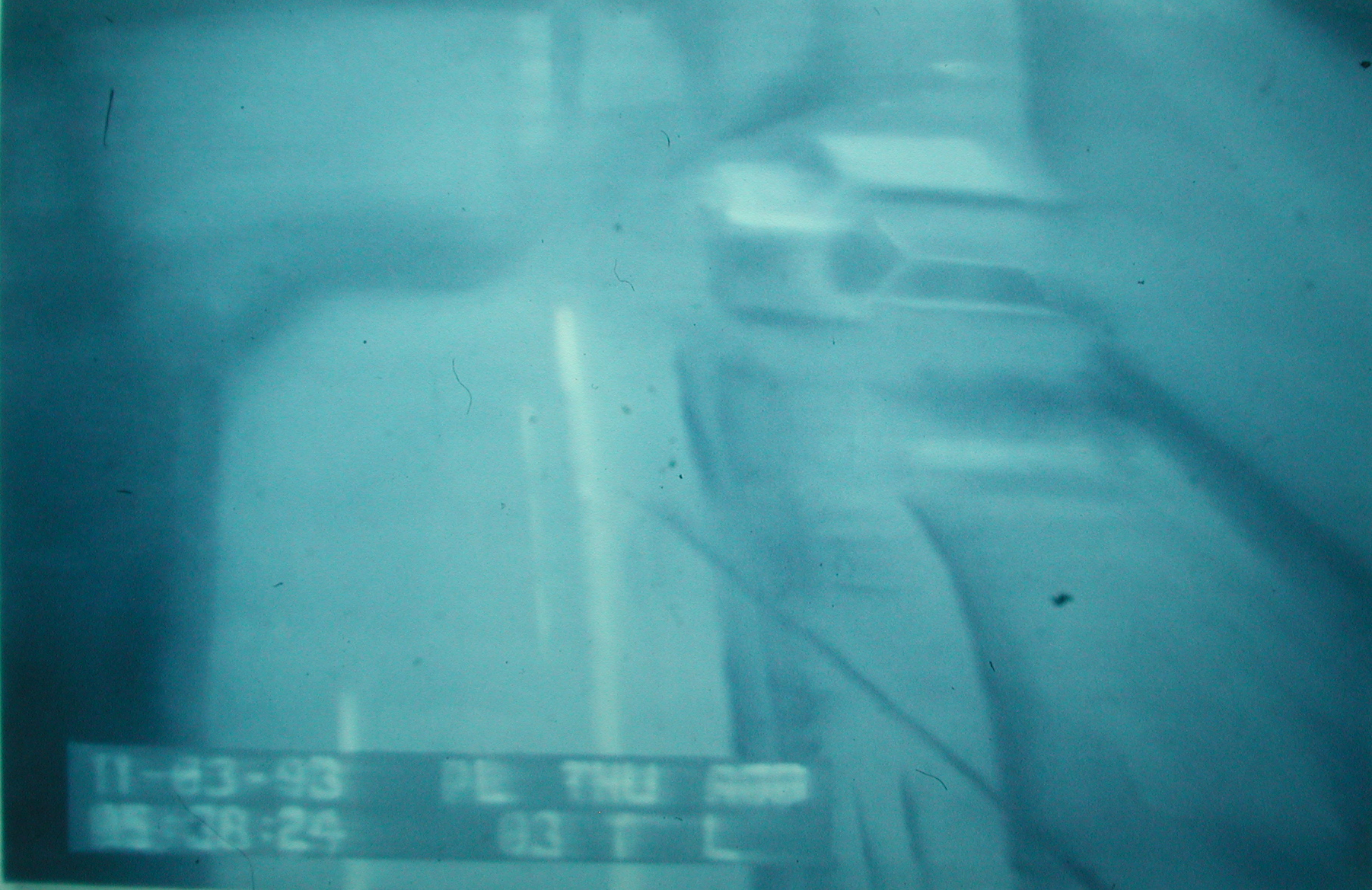
Henry Ward
Oil on canvas, 60 x 90 cm | 23.6 x 35.4 in
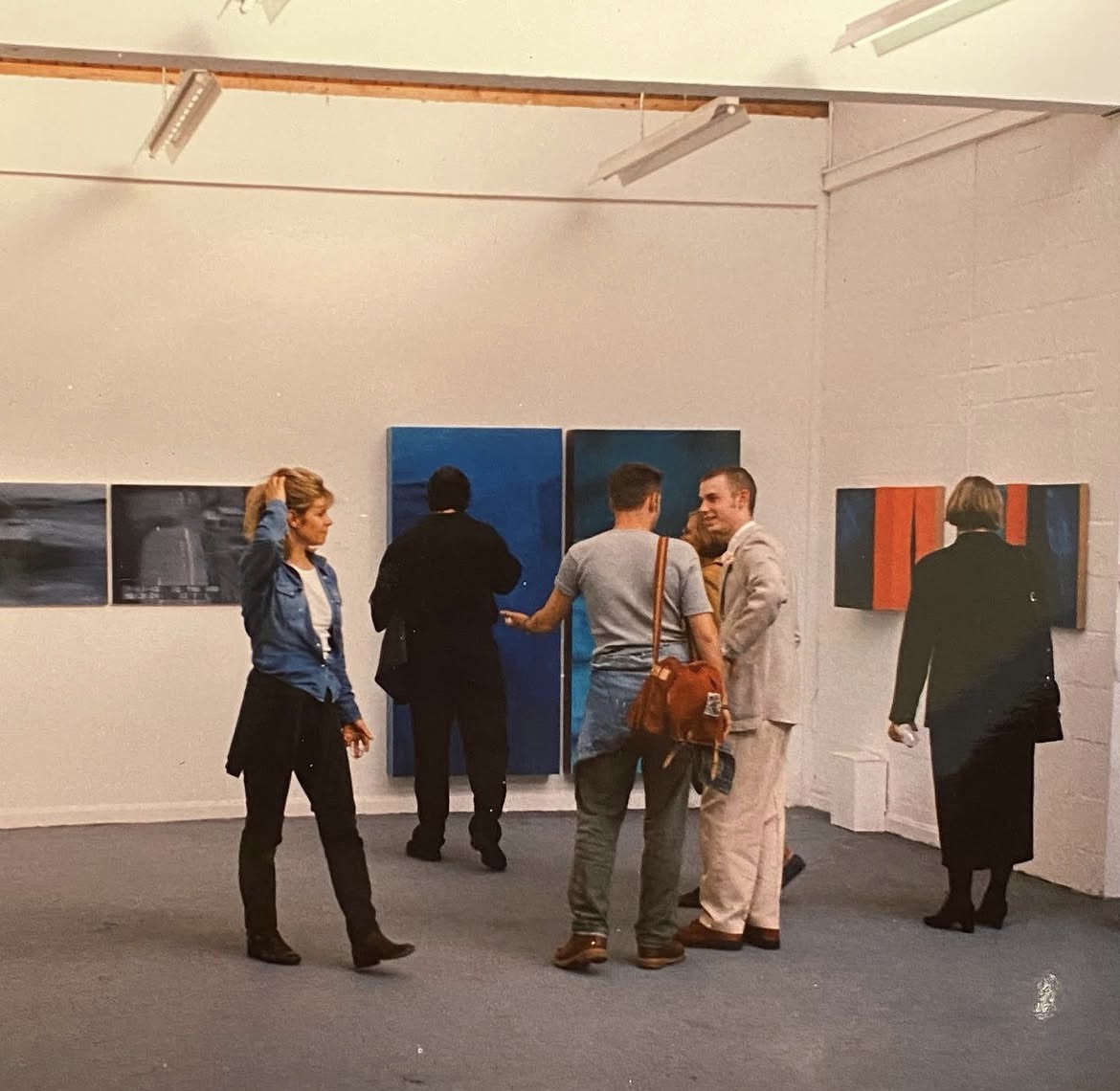
My degree show was a combination of these big, very flat paintings, almost colour field paintings, and then these series of photorealistic paintings of surveillance imagery. But looking back at the ambition of the work, it was pretty extraordinary. I think about how we were making big, ambitious paintings, and we were really encouraged to have that kind of ambition. It was an amazingly rich time, and everything felt incredibly possible.
Often we have this idea of these camps of abstraction and representation. But actually there’s a third camp which is non-representation, and non-representation is not abstraction. Abstraction in its true meaning is to look at something and abstract something from it.
Representation and its true meaning is to look at something and produce a representation of it. Non-representation is neither of those things. So it’s the purest form. It’s not abstracting from the world. It’s not representing the world. It just exists. There are objects in them. There are spaces in them. There are even characters beginning to appear that feel like they might be animated in some way.
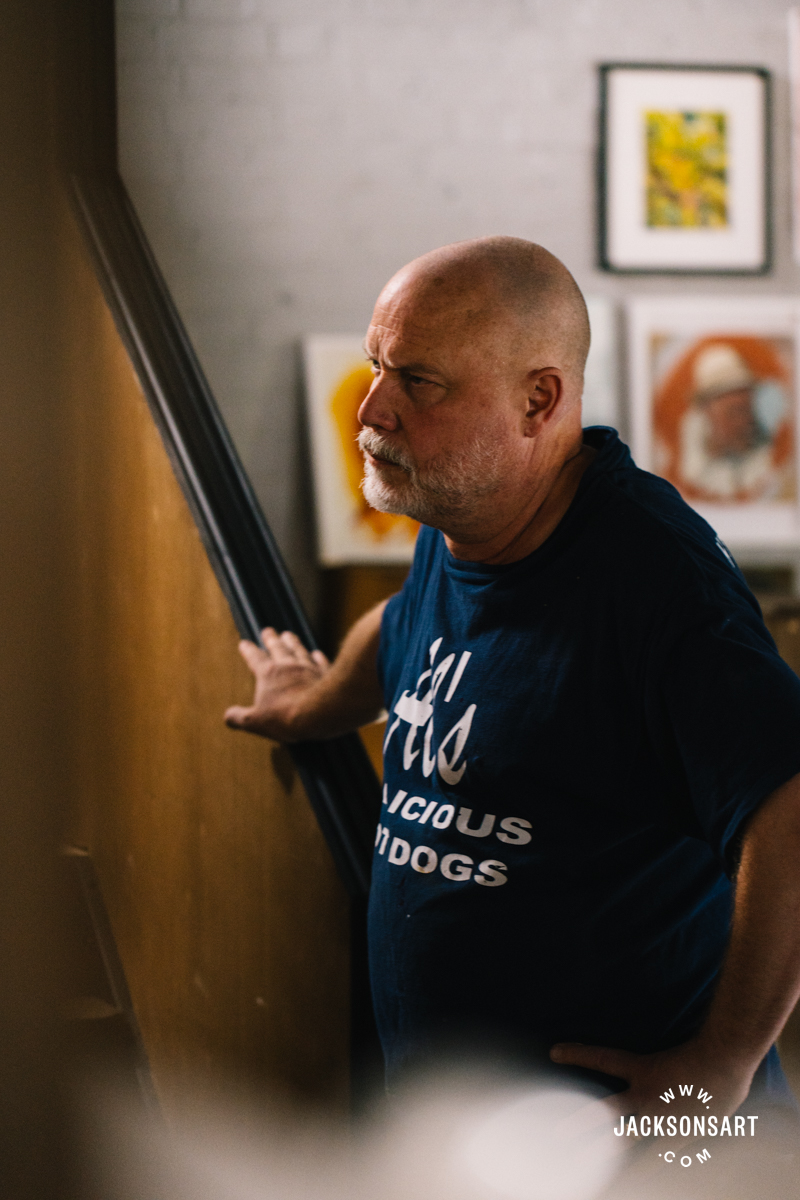
The title of a work carries huge responsibility. I wish I had thought of that years ago, and just named all my paintings as though there were children. If a painting is not necessarily fixed in my mind as to what it is, then I don’t necessarily want it to be fixed in somebody else’s mind. And I know that as soon as I put a title on something, I am effectively opening up certain space for interpretation. But at the same time, closing doors to other avenues of potential exploration and interpretation.
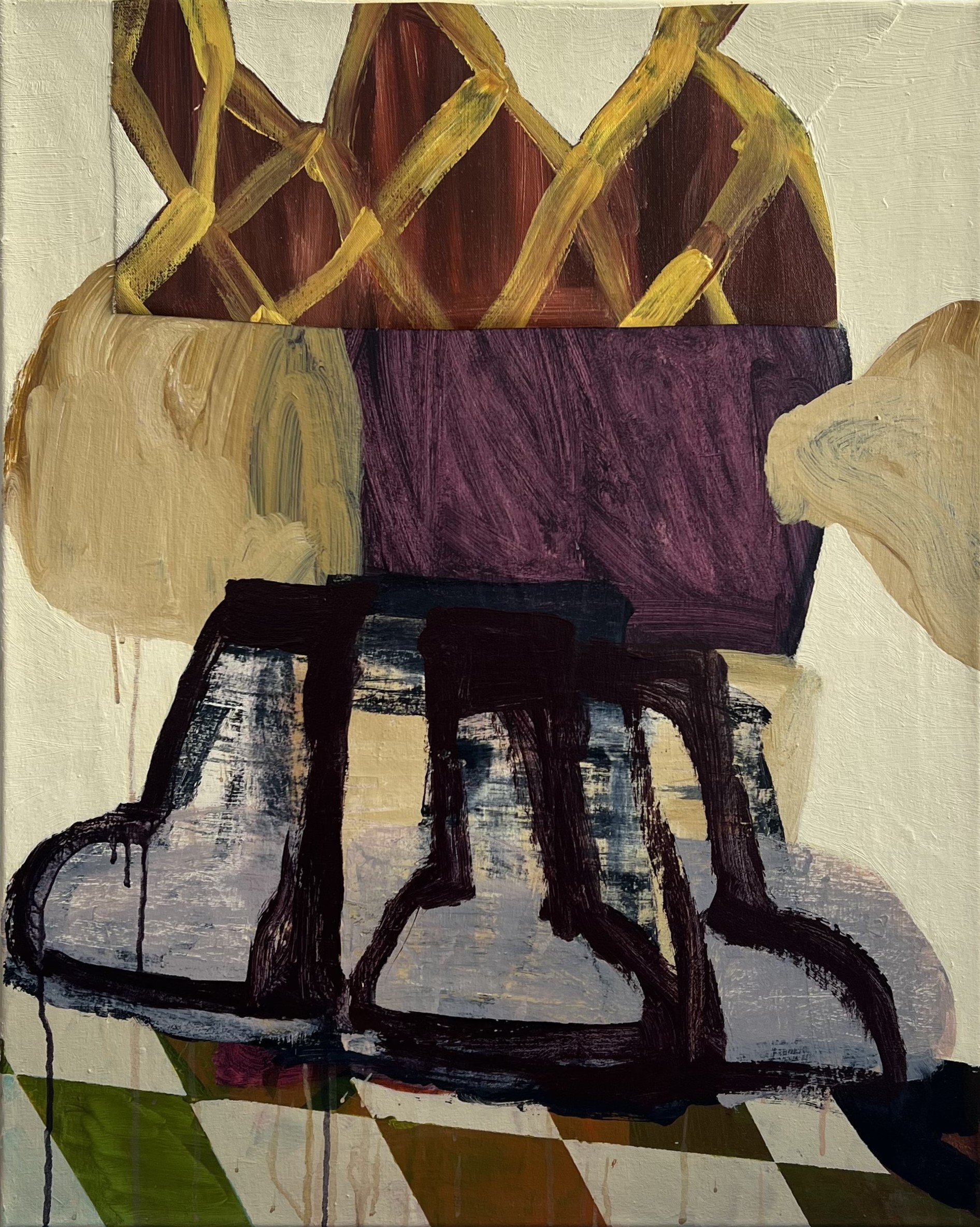
Henry Ward
Acrylic and collage on canvas, 76 x 61 cm | 29.9 x 24 in
Titles generally come after the painting has had its last brushmark, and they tend to be something the painting is making me think about, and then finding a word that is slightly adjacent to that thought.
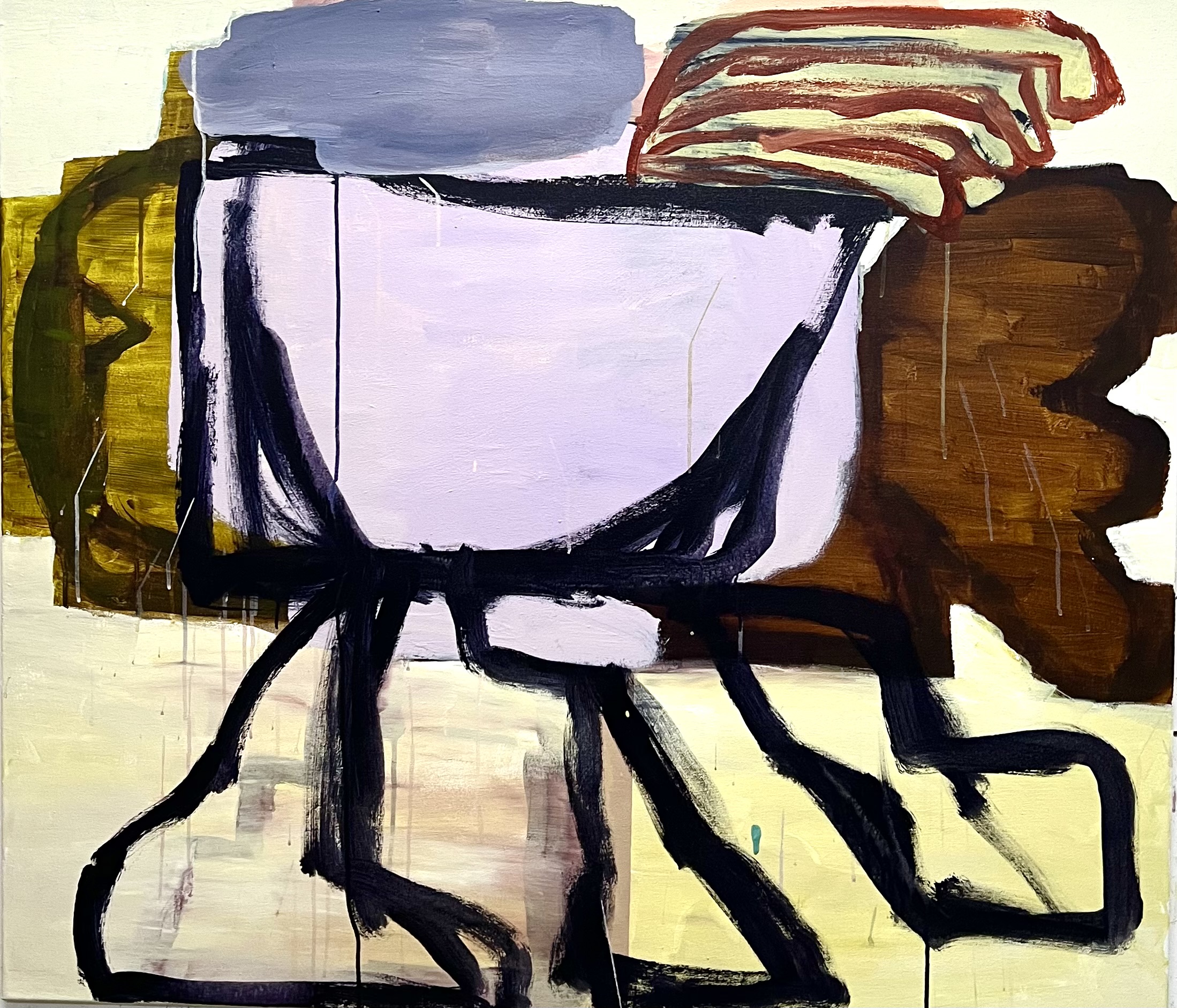
Henry Ward
Acrylic on canvas, 106 x 121 cm | 41.7 x 47.6 in
I enjoy what acrylic allows me to do. I paint really rapidly; I will cover a surface, even a big surface, incredibly quickly. The surface is covered, but the paintings aren’t quick. The paintings might take years. What I love about acrylics is that I can cover a surface, rework, and erase. I like the fact that it’s forgiving in that way. It has a similar breadth to oil paint, but I can also use it like watercolour. I can combine those things in one space. I generally use either Golden or Liquitex. There are some colours I really like that I can find from other brands, such as Schmincke, Holbein, and Old Holland.
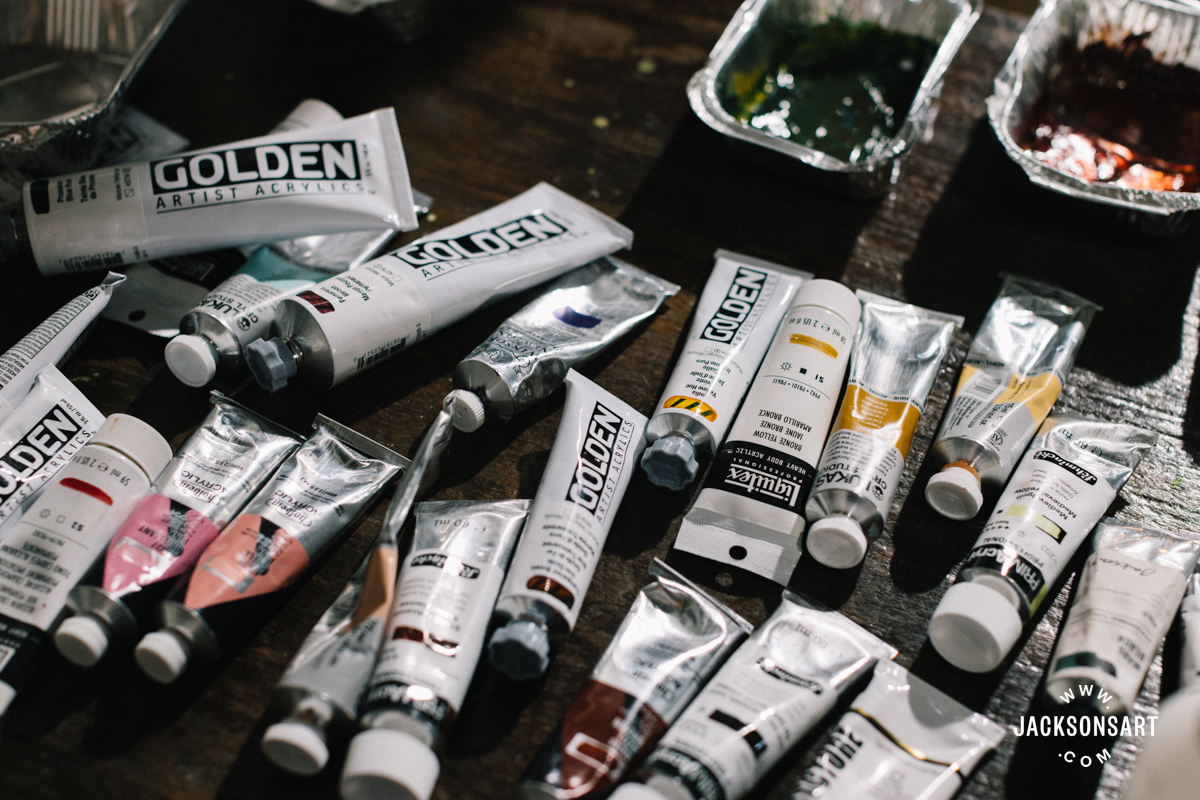
One of the things about evolving into painting in acrylics has been this kind of exploration of medium, and I’ve tried a number of different things. At the moment. I’m using a lot of Liquitex Matt Medium, and I really like the way that it gives a sort of translucency to the paint. It’s partially responsible for giving the paint that more kind of liquidy oil consistency, but it is also doing something quite different from oil.
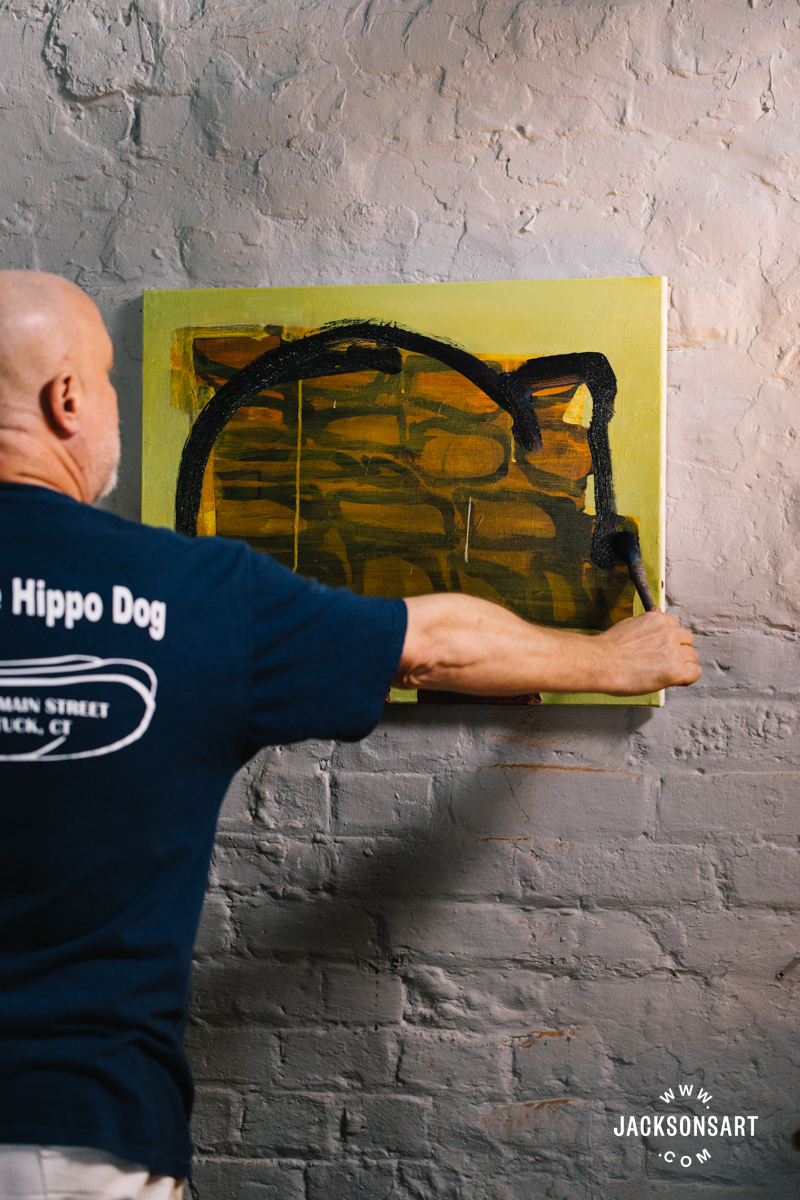
I use a number of different brushes. I guess they’re acrylic and watercolour brushes, everything from ½ in to maybe 2 to 3 in – I like the kind of gesture and mark you get with a big flat brush. I use big round brushes for the more gestural sort of drawing, and then I use a few smaller filbert brushes for occasional fiddly bits.
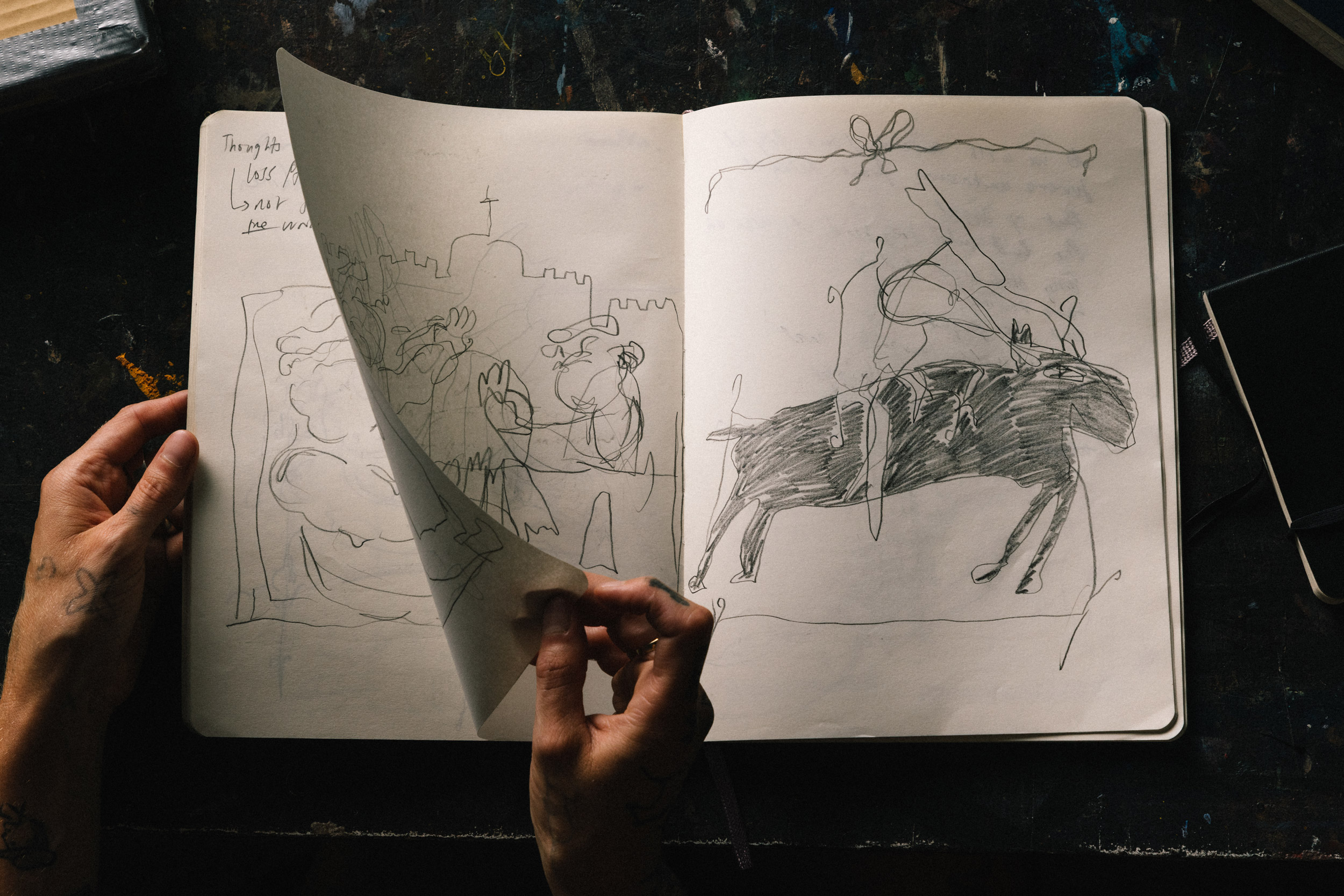
I’ve kept sketchbooks pretty religiously for 30 years. I’ve always made drawings, even when I’ve had periods where I’m not painting. There might be places where I’ll do quite extensive writing, or there might be places where I put shopping lists. My default sketchbook drawing tool is a Sign Pen. I like drawing with pen because I like the inability to erase it. I like its permanence. I like the decisions I have to make with pen.
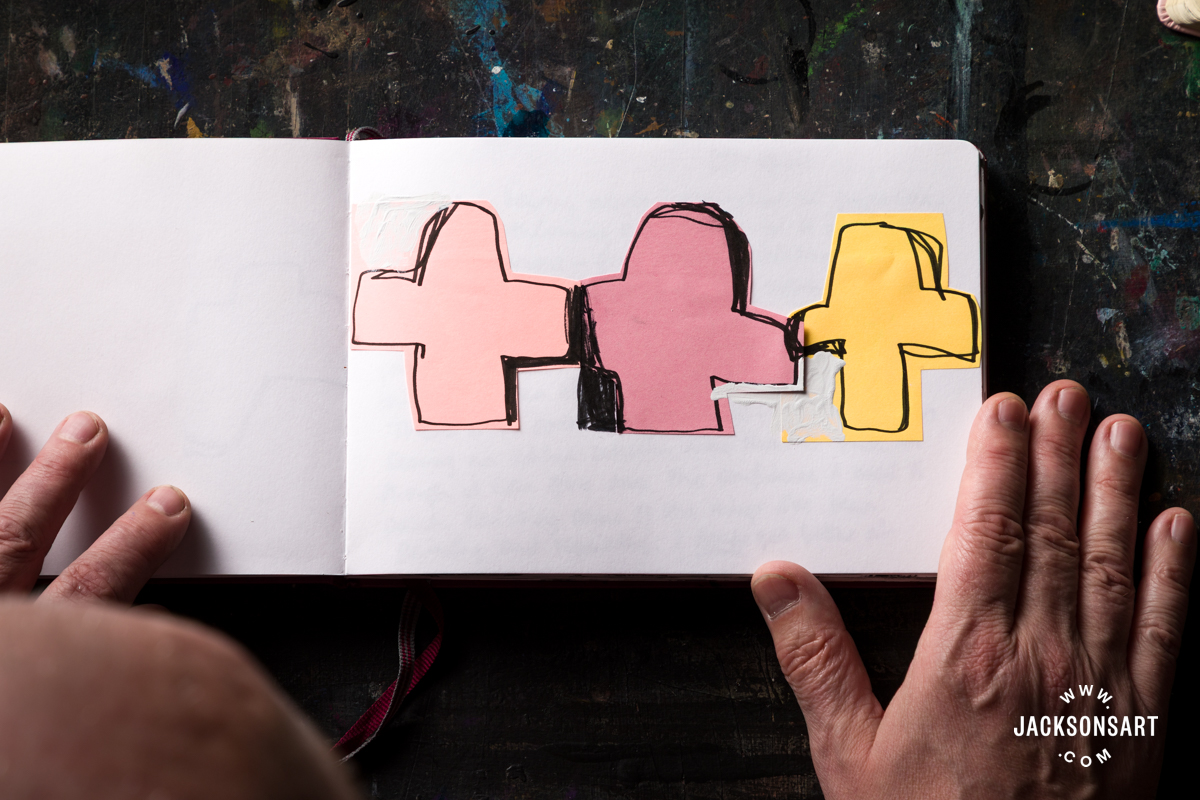
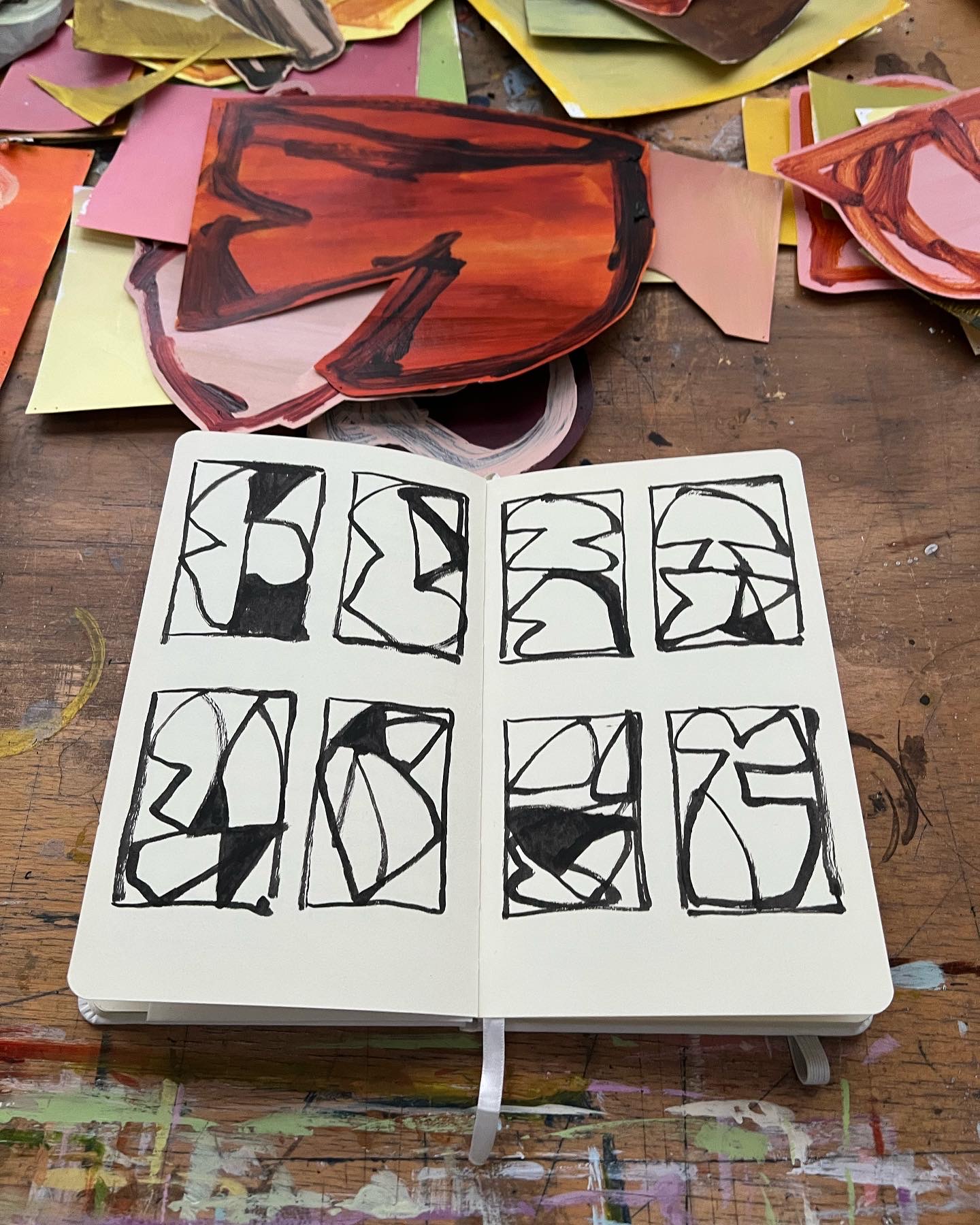
I usually use the same kind of sketchbook. I’ve got shelves and shelves of them, and I like cataloguing them and putting their dates on the outside. I have periods where I go through an intense period of drawing, and sometimes that’s about consciously wanting to shift away from painting. So it’s another way of finding form. I will work in series, and I’m also a little bit more open with drawing to step outside of what’s expected.
I’ve often described my shift into teaching as being accidental. I initially resisted the idea of going into teaching, and part of the reason was that my mum was a teacher. But then a friend, a primary school teacher, asked me to come in and give a talk about my work to her year once, and I said yes.
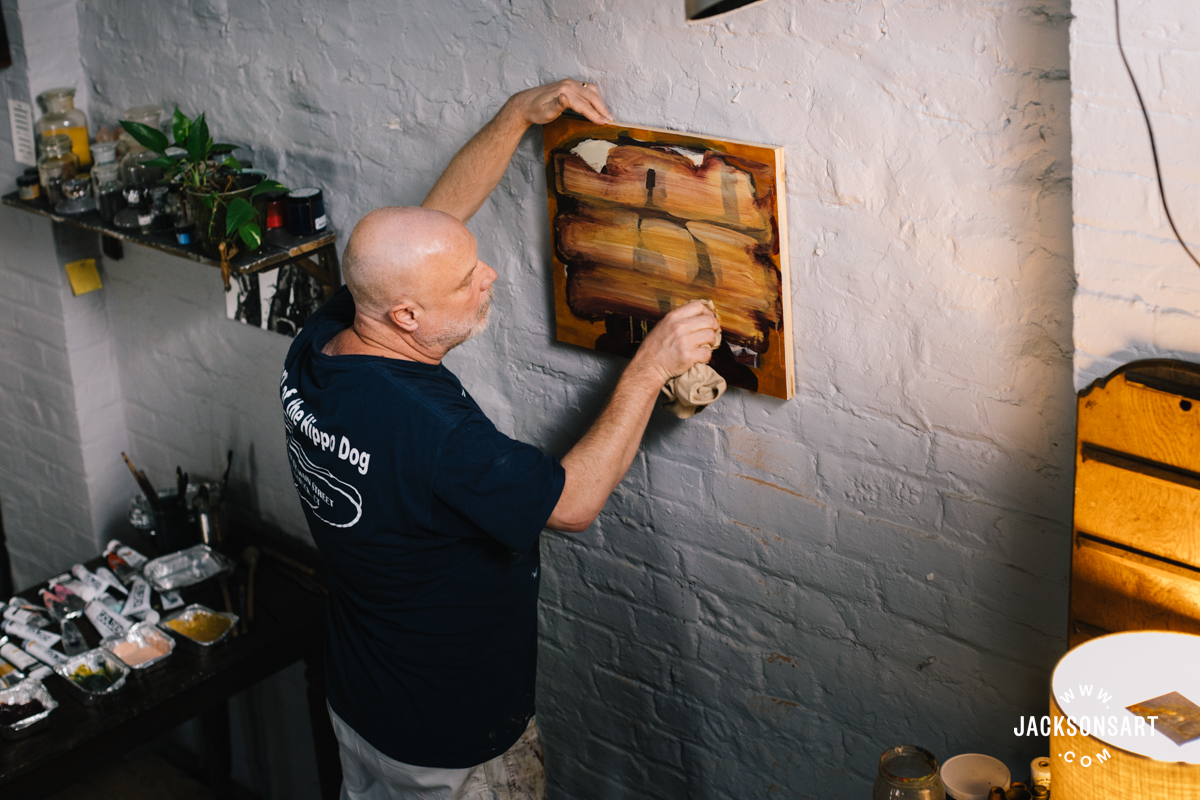
I turned up at this school. I had some paintings with me, and some props and things I was using in the paintings. These kids were bouncing with excitement at the fact that I was in this room with these paintings. And I thought, this is amazing.
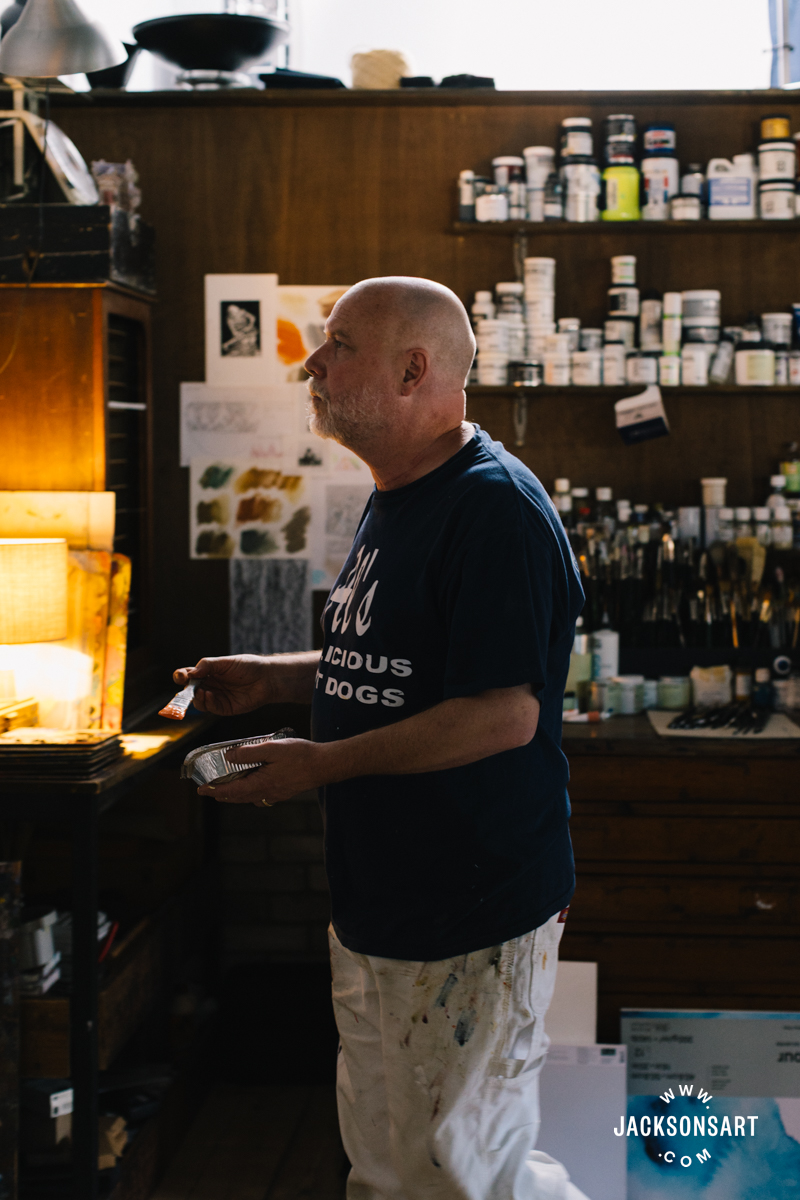
We started talking about the paintings, and they had loads of questions. Then I did a little workshop, and they were making drawings inspired by the paintings, and I couldn’t believe it. I thought, this is a really extraordinary experience. And I remember phoning my girlfriend, and she said, I was so excited on the phone that she knew immediately that I was going to go and teach, because it was like this shift.
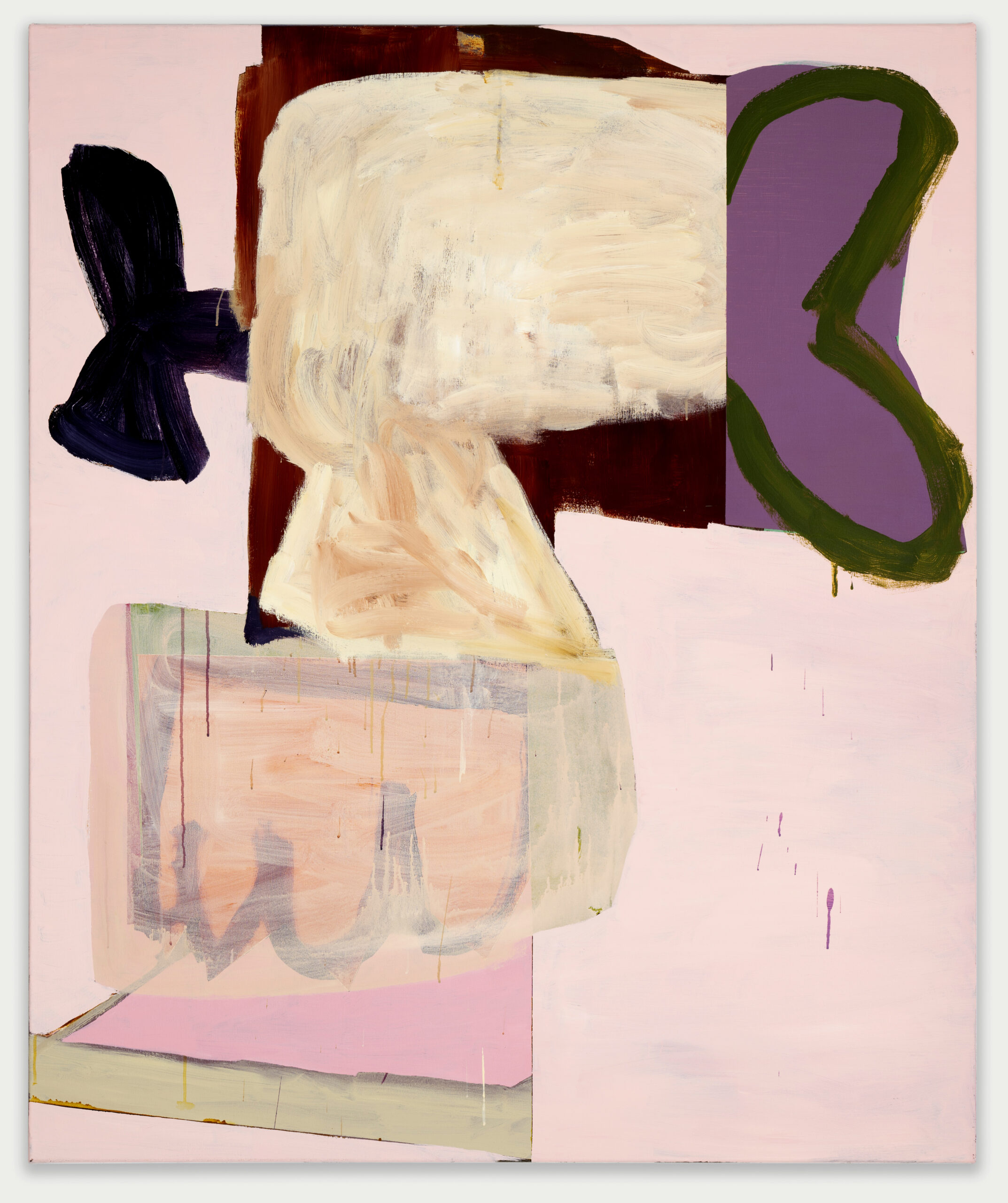
Henry Ward
Acrylic on canvas, 150 x 125 cm | 59 x 49.2 in
I went to Goldsmiths to train to teach secondary art. When I first started teaching, I thought that I could maintain my practice as an artist. For most of my career I taught at one school, a non-selective state secondary school on the edges of Kent and London. We did all sorts of things. We had a gallery. I set up an annual award called the Alternative Prize, based on the Turner Prize for 14 to 18-year-old artists. Then I realised I was becoming more interested in what I was doing in the classroom and that my own practice was expanding outside of painting.
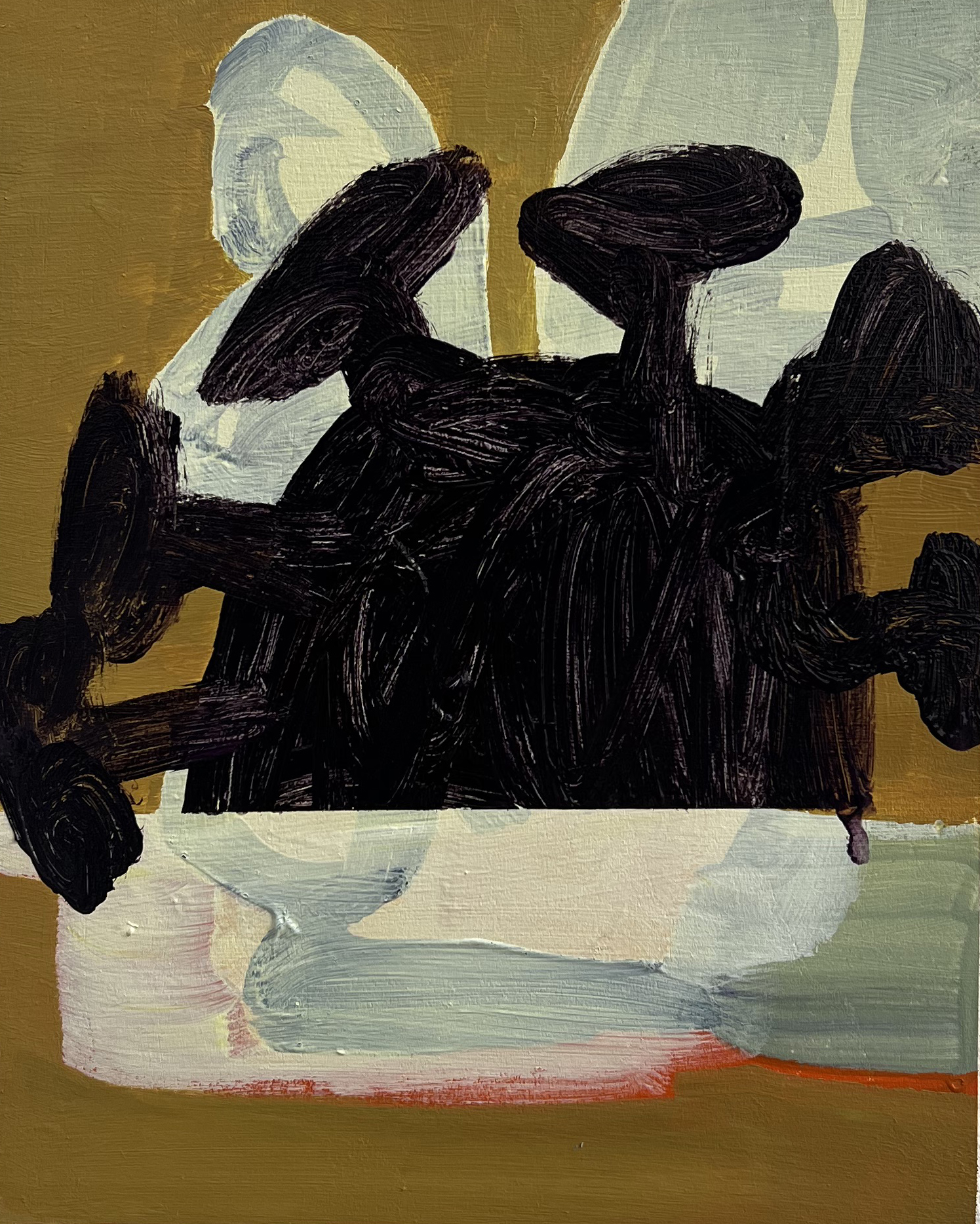
Henry Ward
Acrylic on wood, 25 x 20 cm | 9.8 x 7.9 in
I started to work with one of my colleagues at the school, who was also an artist. We formed a collective called Amalgam, and we did all sorts of things. For example, we gave the kids in our lessons branded chewing gum with instructions that they had to chew the gum and then make sculptures out of it.
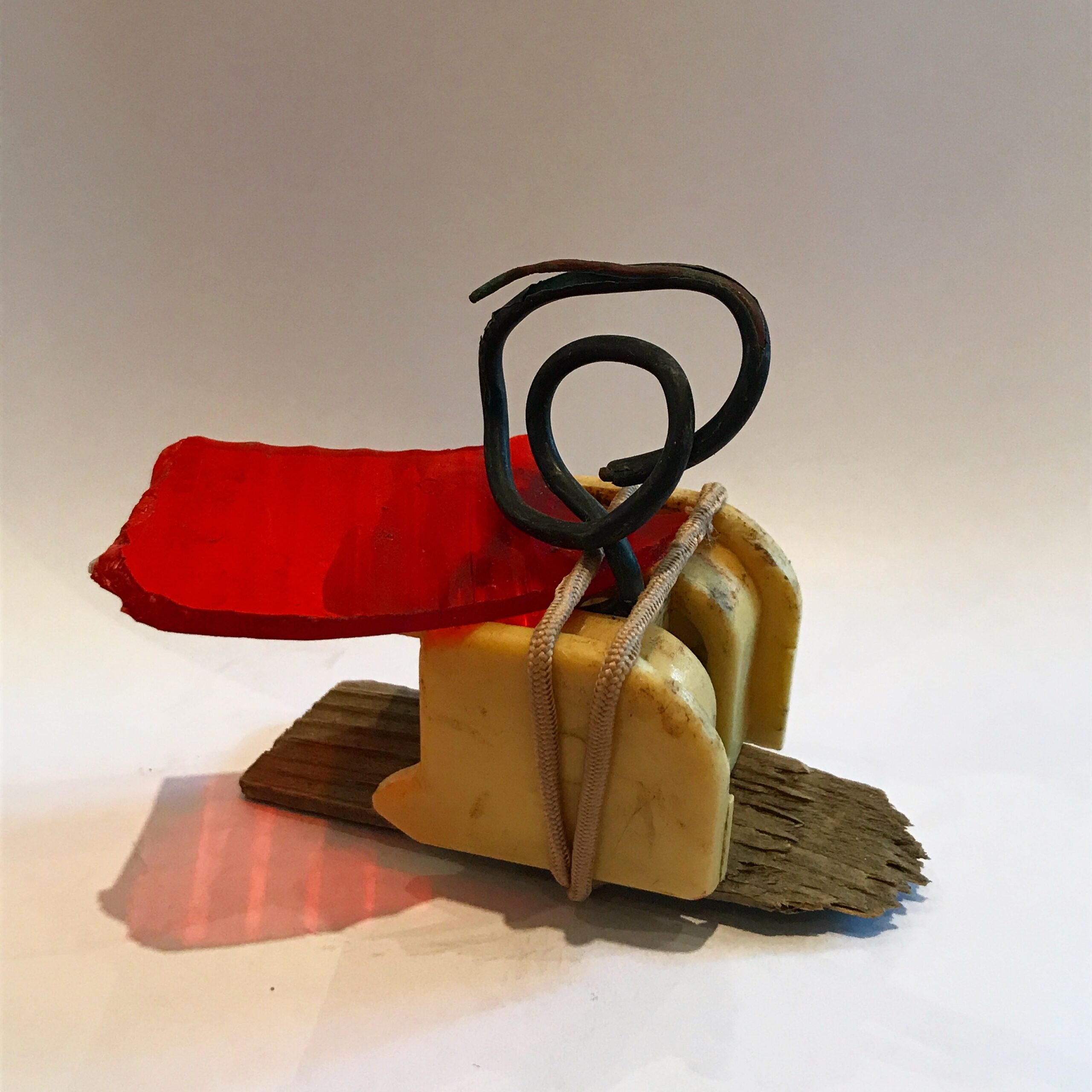
Henry Ward
We made films as starter activities, and we did all sorts of things. I ended up doing this PhD in teaching this artistic practice. So my PhD was really largely about what happens if school actually becomes your material. And so I got really interested in looking at education through the lens of being an artist. But I began to miss being in the studio and painting more regularly and being away from all of that. So I finished my PhD and left teaching in the same month.
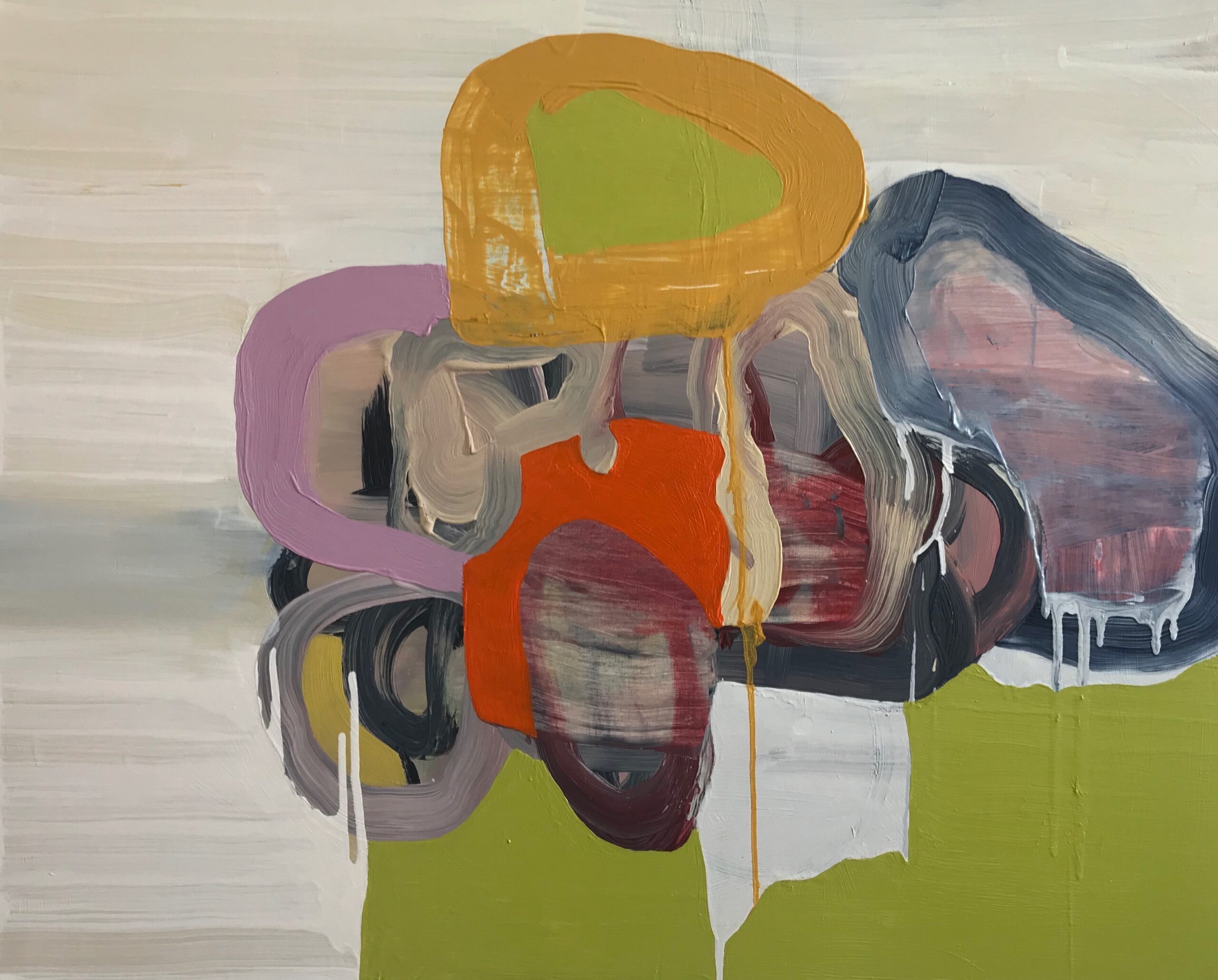
Henry Ward
Oil on canvas, 61 x 76 cm | 24 x 29.9 in
My studio is in a big complex of studios. If I go to the studio often, I can see that other people have signed in, and I’m aware of other people in the building, but you don’t see them. But you can hear little bits of ambient noise that kind of bleed across the tops of the walls, which is quite nice – that sense of making happening in other spaces.
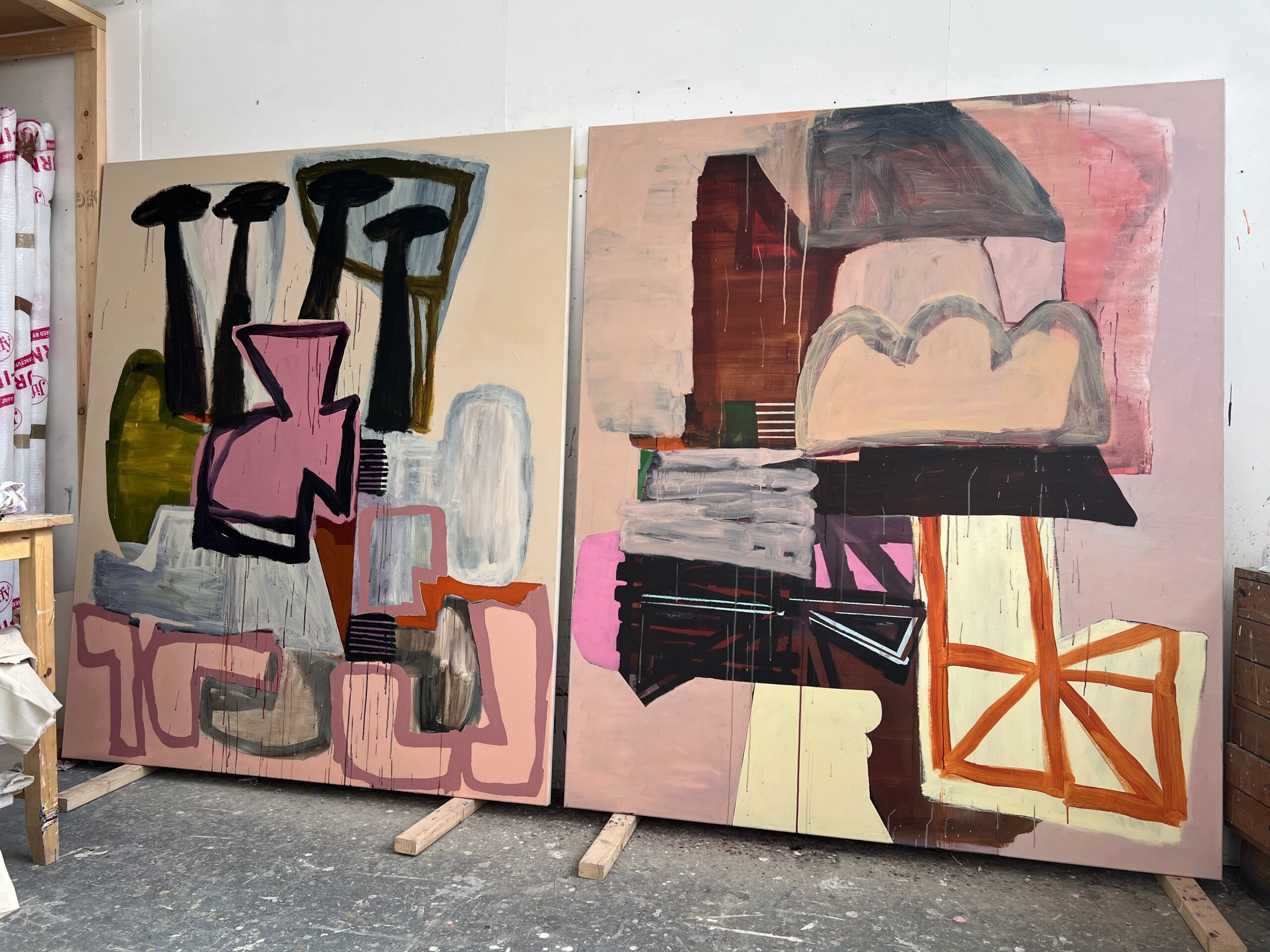
I’ve been in the studio long enough to make it quite comfortable. I’ve got a fridge, a kettle, and a comfortable chair. I’ve got a couple of nice plan chests that are actually ex-1960s school plan chests. I’m fortunate, and it is a nice place to be. I think it’s quite organised. It’s filthy; it’s full of dust, mice, and there’s a lot of paint on the floor. There’s a lot of paint streaking down the walls because I can be a bit messy in terms of actually painting.
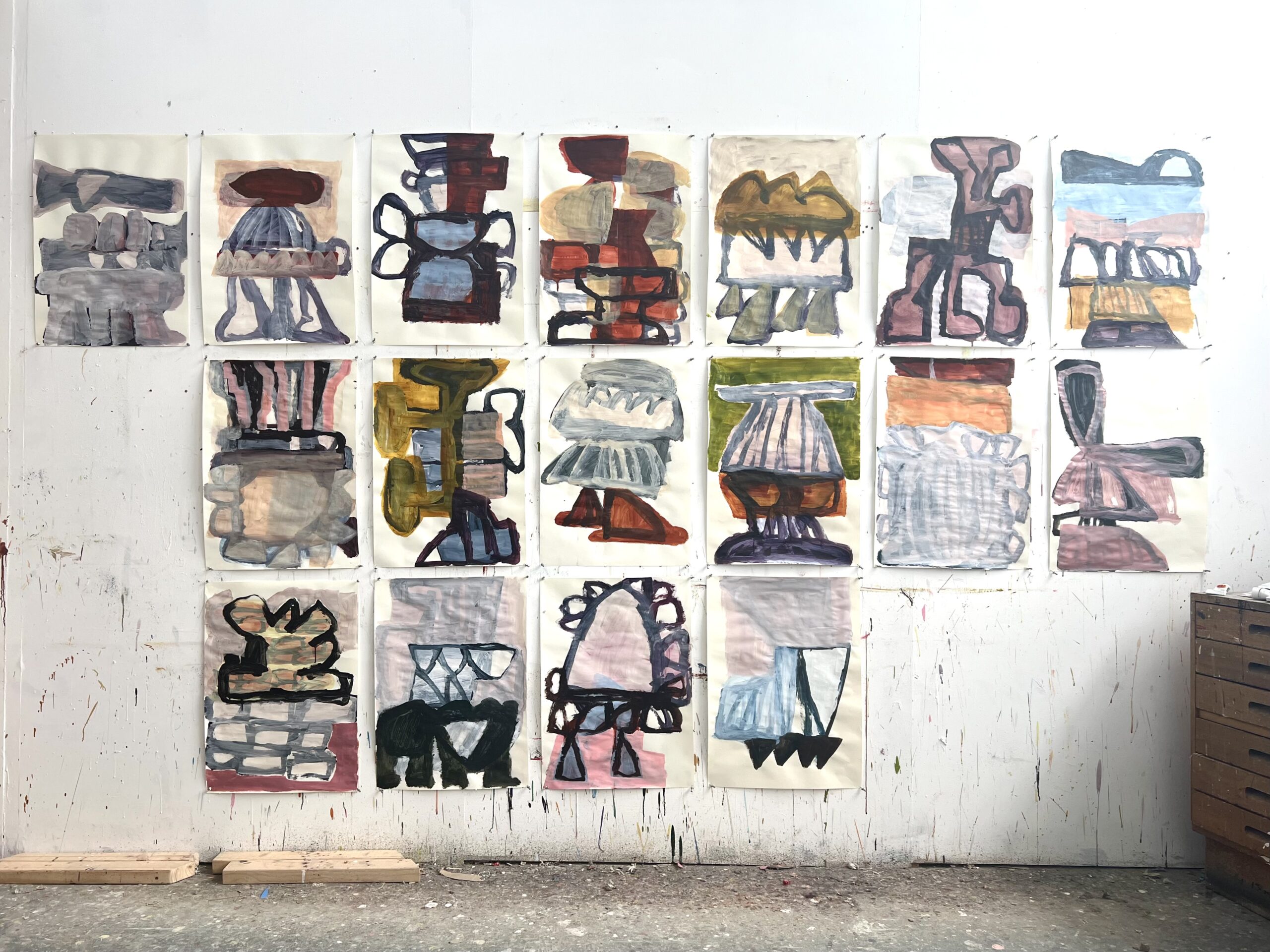
I have a real routine when I’m there. It starts with me having some practical things that I need to do. Sometimes I go to the studio with a written list; sometimes I just list it in my head. The first thing I do is I’ll put the kettle on to make a cup of tea. I’ll get my headphones out. I’ll decide if I’m listening to music or a podcast. That thing as well, of putting the headphones on, feels like there’s a sort of containment thing happening – of cutting out certain other extraneous things and really focusing.
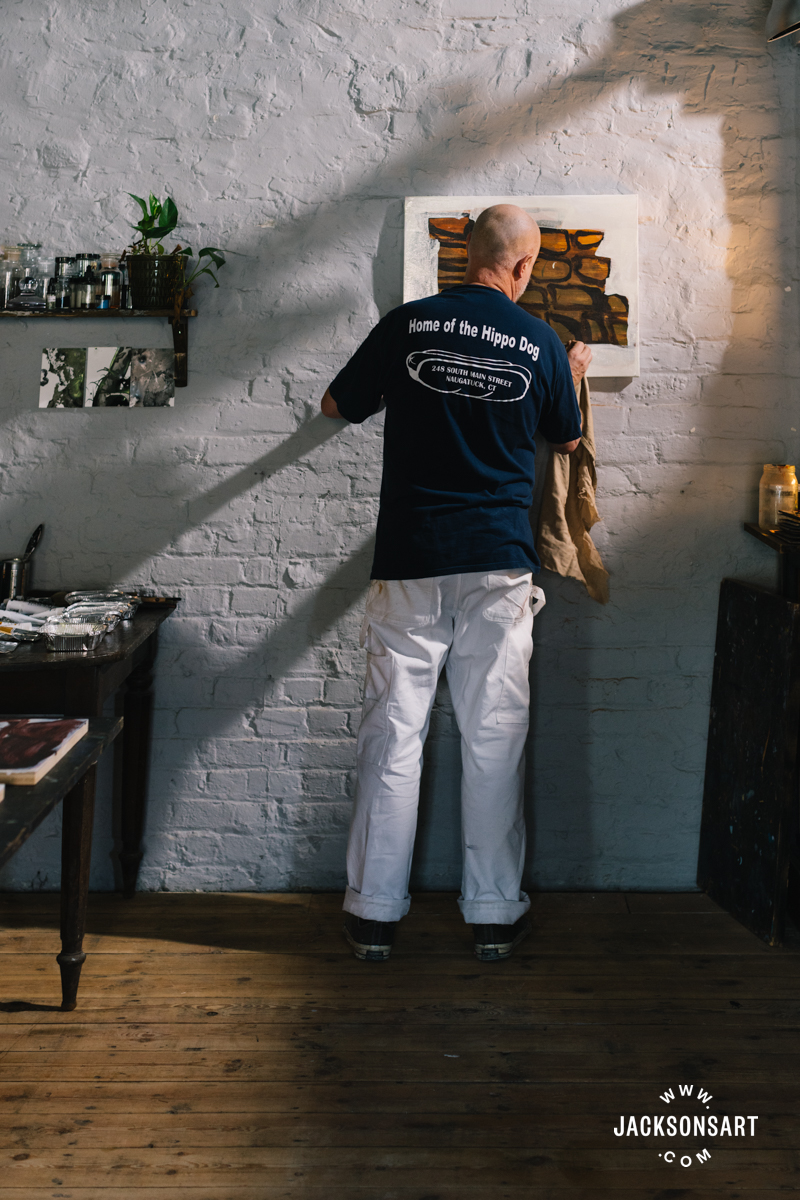
In the studio, I generally gravitate towards 20th-century classical to neo-classical. So I listen to a lot of Steve Reich, Terry Riley, Meredith Monk, Philip Glass, Nils Frahm, and Johan Johansson. I’ll listen to political podcasts when I’m painting, which feels like a complete and utter contradiction in terms of what else I’m doing, but I’m kind of slightly obsessed with them.
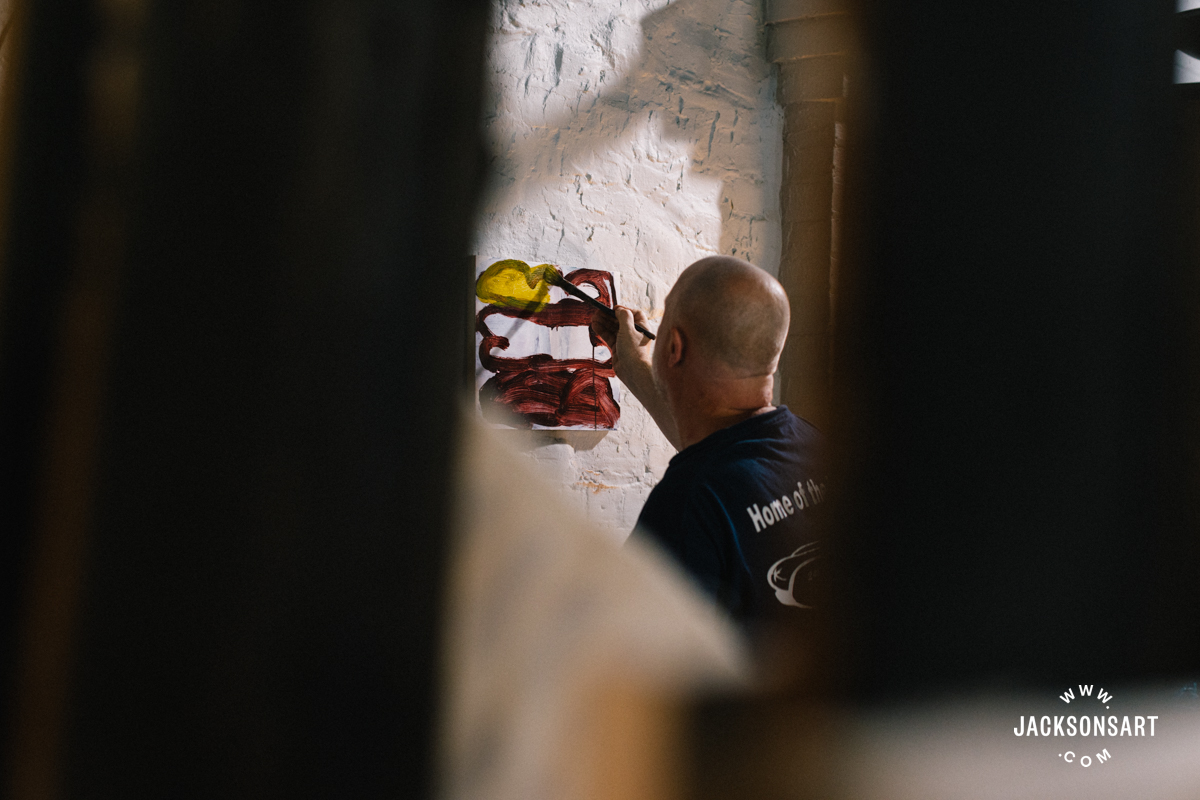
And then I will sort of edge my way into painting. I will go to the studio without necessarily knowing what I’m going to paint. But I know what it is I’m going to do first, and then I’ll be reminded of the things that are in the space. And then by the time I get to the end of that list, I’ve sort of worked out what I need to do first. And then I’ll be working on something, and it might be starting something new, or it might be going back to something I was doing, or it might be pulling something else out.
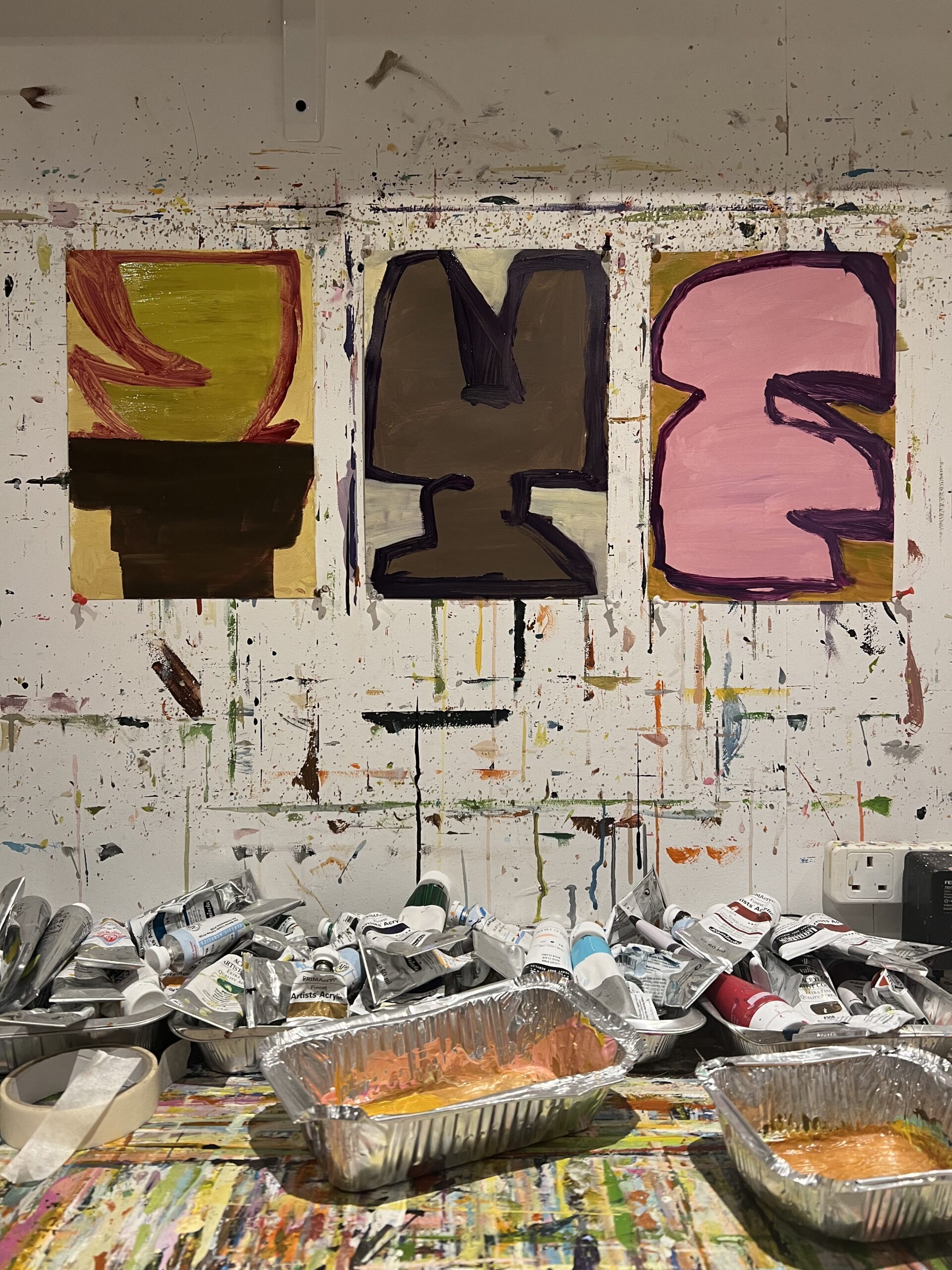
To try and make a painting is kind of a ridiculous thing. Starting is ridiculous and really difficult. It’s difficult because there’s nothing there. But that’s a cliché because that’s extraordinarily true. It’s easier to work on something that already has something there to push against. The starting point of a painting is just to confidently put something there, whether that is a shape or a gesture, or it’s a particular colour, or it’s a certain size or scale or shape or brushmark. It’s just something, and it’s about disrupting the surface, damaging the surface in a way that then gives me something to scrape back, push against, erase, and do later.
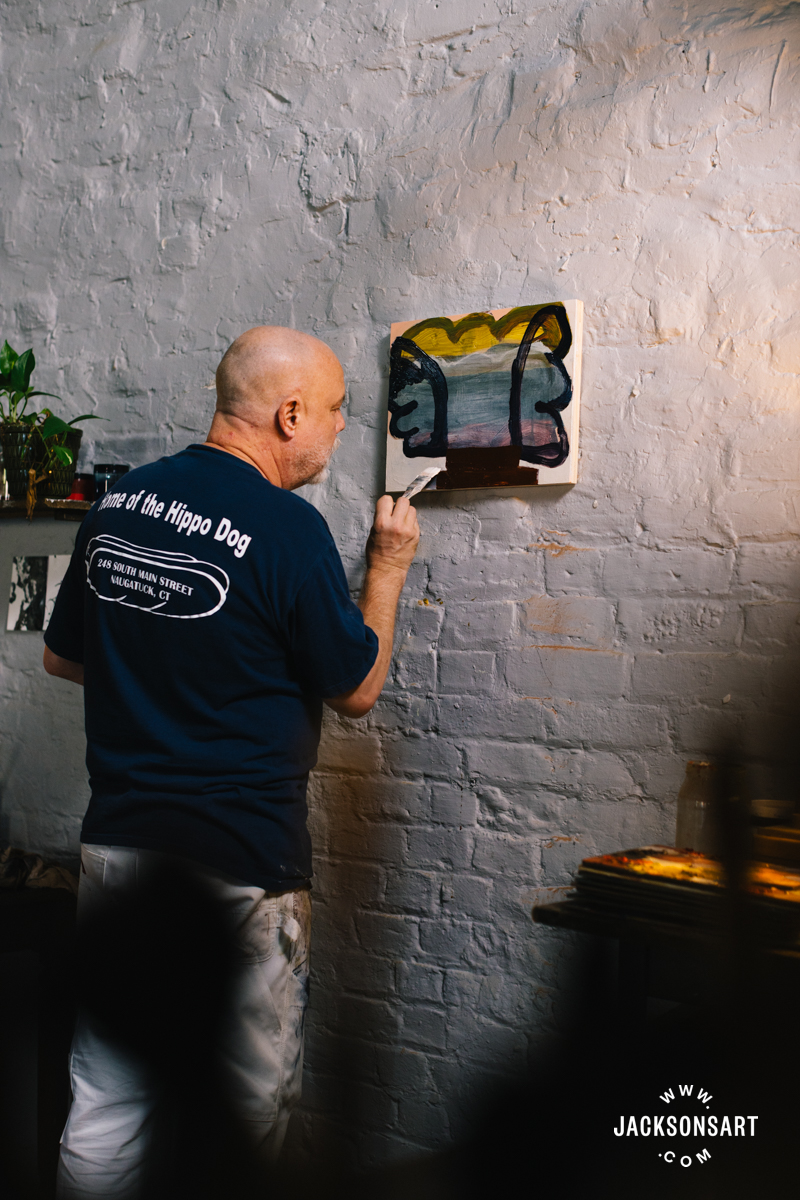
I want to do that as unconsciously as possible. Philip Guston said it was a long preparation for a few moments of innocence. It will come as no surprise to anybody who’s looked at even a couple of pieces of my work that Philip Guston is an important artist for me.
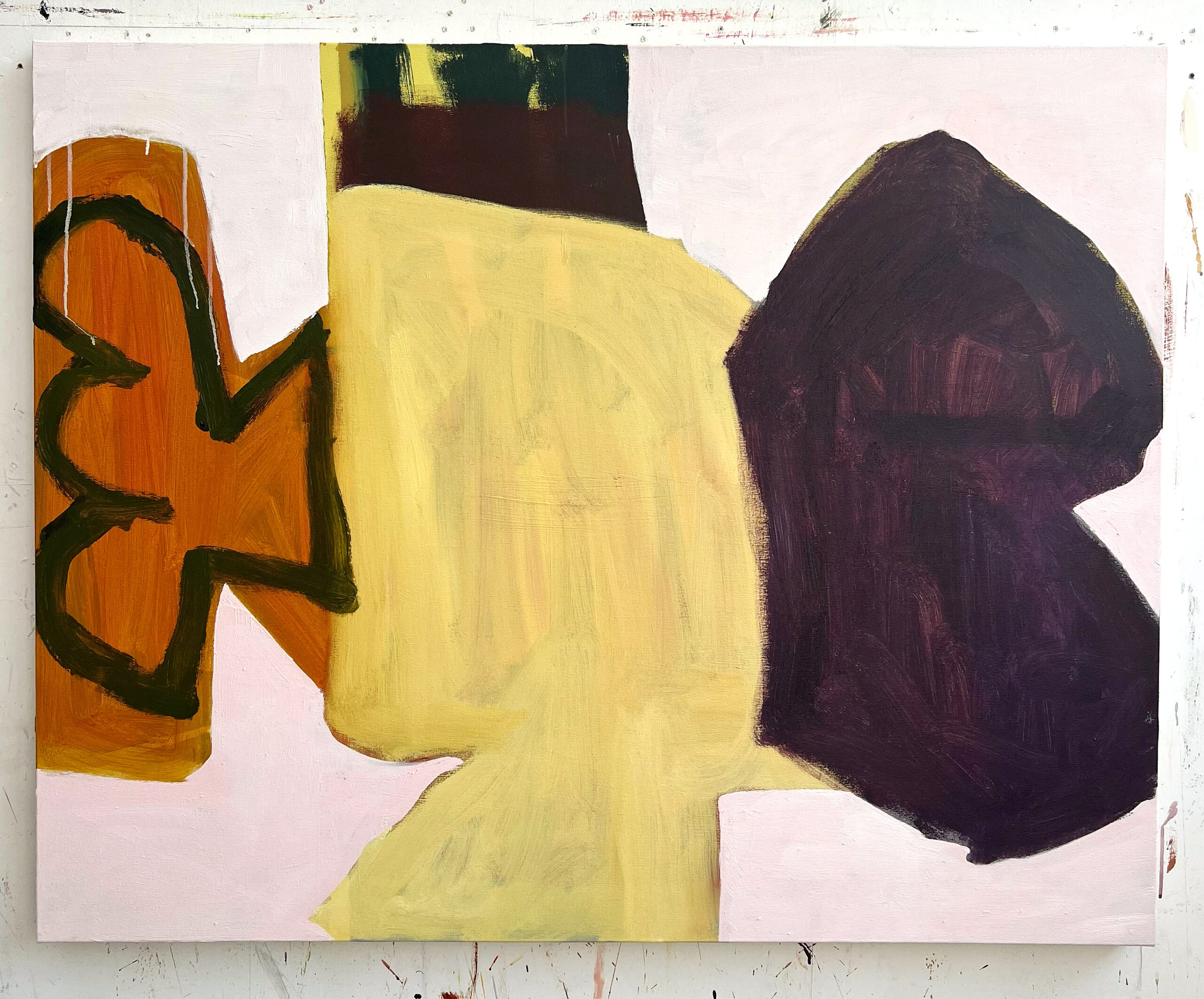
Henry Ward
Acrylic on canvas,100 x 125 cm | 39.4 x 49.2 in
My advice would be to just stick to the things that you think you’re interested in; if you’re interested in it, then it’s probably interesting. And don’t worry too much about what other people think.
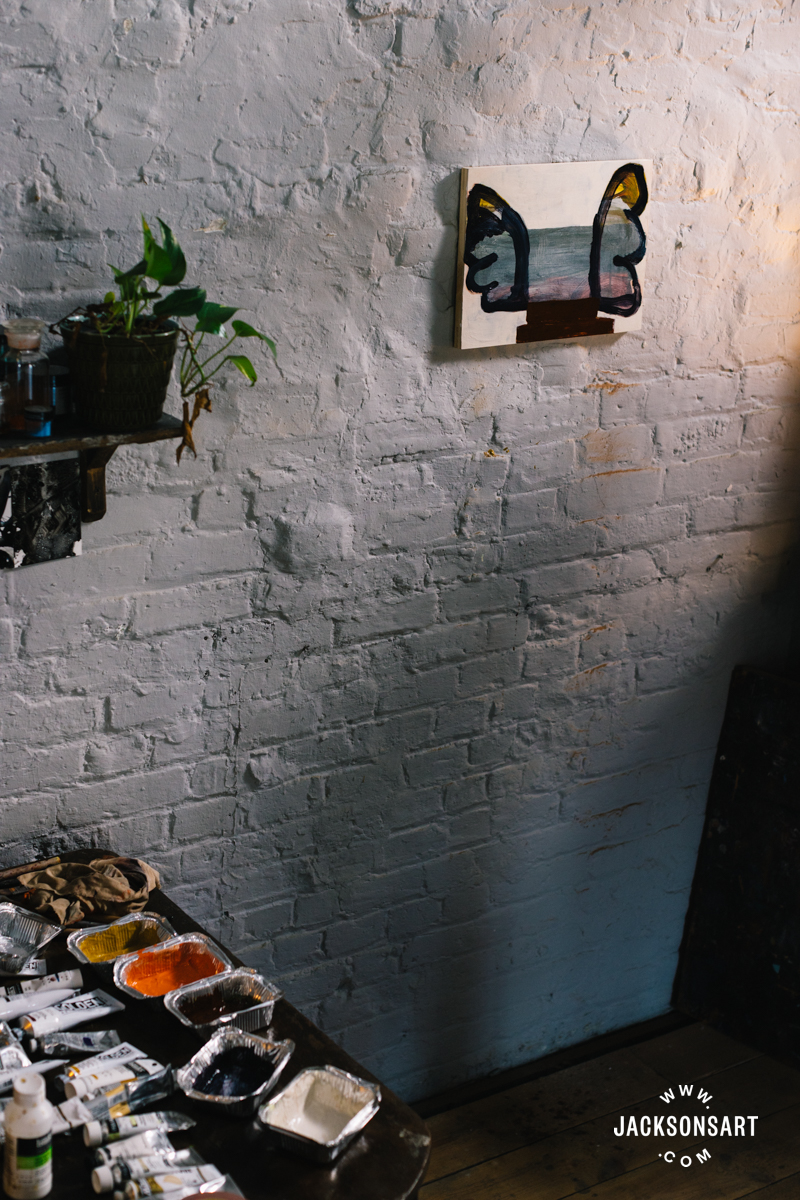
Whether other people think it’s interesting or what you’re doing is good, because the chances are if you keep doing it for long enough and you keep being interested in it, it probably is interesting.
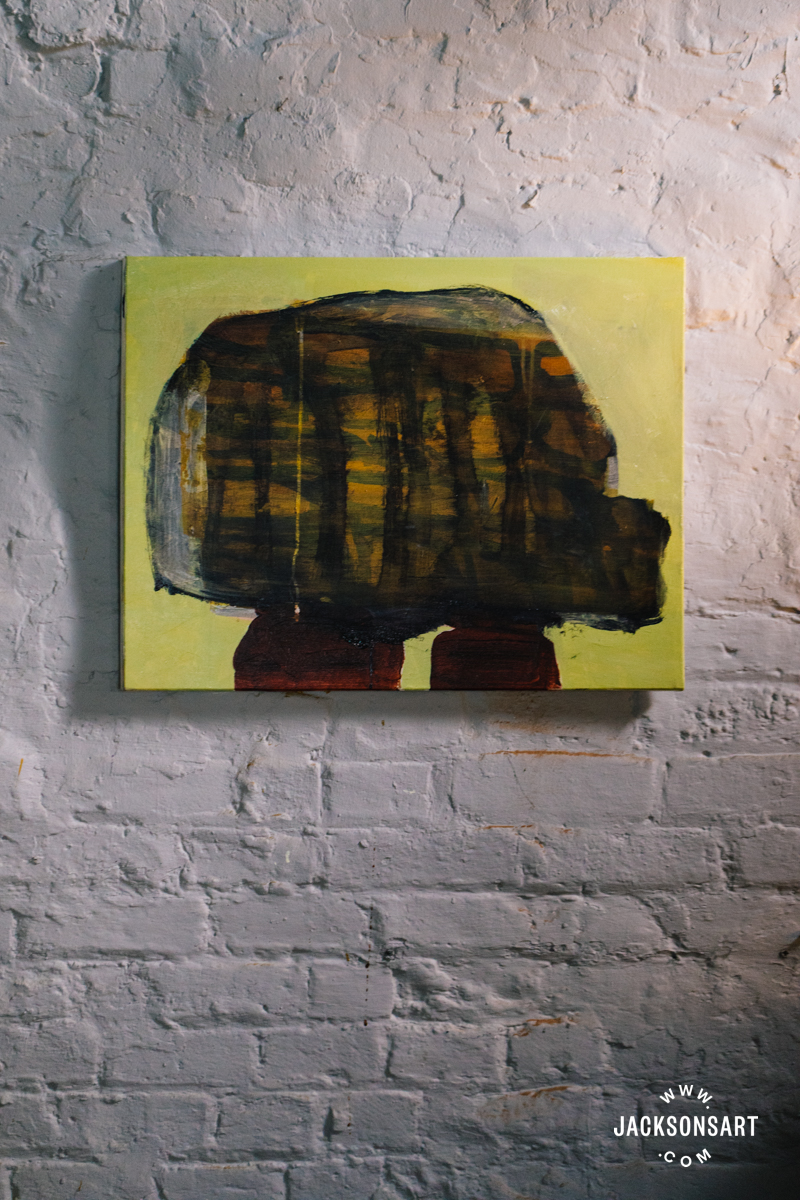
Further Reading
Inside the Sketchbook of Henry Ward
Recreating Philip Guston’s Grimy Pink Palette
A Modern Medium: A Brief History of Acrylic Paint
The Splattering Technique for Painting
Shop Art Materials on jacksonsart.com
1 thought on “Artist Insights: Henry Ward”
Absolutely loved this film – thank you Jackson’s and Henry Ward for sharing it with us all.
Comments are closed.