



If you are a tech savvy, plein air enthusiast, then chances are you may have heard of Haidee-Jo Summers. Haidee-Jo’s energy and passion for painting is astounding. As well as continually creating work (usually in the UK and France, but often further afield too) she is a dedicated blogger and has an unrivalled generosity with sharing her ideas and thoughts as well as images of her experiences painting en plein air. She is a regular exhibitor at the Mall Galleries with societies including the Royal Society of Marine Artists and the Society for Women Artists, and is soon to be exhibiting at Patching Arts Festival for the 3rd time from Thursday 5th – Sunday 8th June 2014.

Oils
10″ x 12″
Painting plein air is the backbone of my working practice. Although I now paint larger works in the studio too I cannot do so unless I have first painted the scene on the spot, from life. To stand and paint from life is about so much more than just the visual, ‘what am I looking at?‘. It’s about being immersed in an experience, a passage of time during which you have held conversations, felt the breeze on your cheek or the sand beneath your toes, listened to the waves against the shore and the cry of the seagulls. In every plein air painting you invest a little of yourself, the thoughts and feelings that you bring with you on the day together with the experiences involved in being fully present.
There is always an anticipation of the unexpected when you kit yourself up and head off out into the world. Nothing will remain static for you, and every situation brings it’s own particular challenges. It is precisely this novelty, difficulty, risk and challenge, that keep me coming back for more. I’ve painted in snow and wind and rain and wind and fog and rain and sometimes even sunshine, which is always a pleasant surprise. I’m addicted to the thrill of the chase, it’s like an affliction. Painting plein air can leave you feeling energised, stressed, physically exhausted, excited, anxious, triumphant and despondent, and it’s not unusual to feel all those things during the course of a couple of hours.

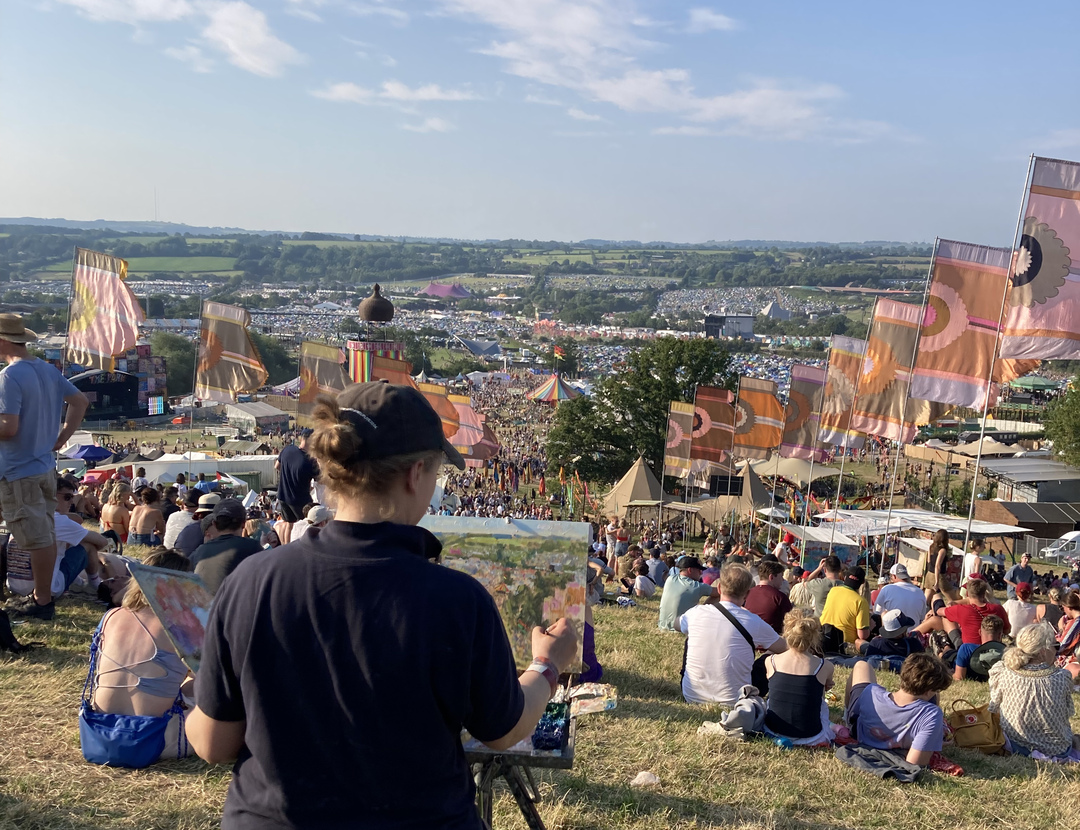
When I talk to artists about plein air painting the number one fear about doing it can be summed up as Other People. It’s a funny thing but if you were to sit on a bench reading a book, nobody would dream of coming up to look over your shoulder to see what you were reading. On the other hand if you’re painting, you can be considered fair game for the curious. However, I urge you to overcome this initial nervousness because once you’re out there you will be surprised actually at how little interest you receive from the general public. This can be especially true in the busiest of places, such as a crowded street. Most people are too busy following their own agenda to worry about what you’re doing. Of those that are interested, only a small proportion will approach you or stop and watch for a moment. Fewer still will actually speak to you, and most of those just want to offer a couple of words of encouragement before they’re on their way again. I’m happy to continue to paint while chatting but if you find that conversations break off your flow then wear earphones and pretend you can’t hear anything that’s said to you even if you can. The hardest part is actually getting yourself out of your own door with your paints. After that, you’re on a roll.

Silver light at Mousehole
Oils
8″ x 10″
Another aspect that women in particular worry about is personal security. To be on the safe side try to find someone to go along with you if you want to paint in remote areas. It doesn’t have to be another artist, any friend might enjoy taking along a chair and a book to a beautiful spot. Or use Facebook and twitter to connect with others in your area who would like to paint more outdoors. Also, take your mobile phone with you and try to let someone know where you are going.
Be prepared for most weather eventualities! Here’s a good line to remember: ‘There’s no such thing as bad weather, only the wrong clothing for the weather’. In particular bear in mind you will often end up feeling cooler than you think you will when you set off on a nice sunny day. Standing or sitting still for a length of time will cool you down in itself, without the other factors like standing in the shade and the weather swiftly changing. Err on the side of caution with plenty of layers, and always have something waterproof for your top layer or coat. When you paint out all through the year you will adjust your kit as you go along. So as winter creeps in the woolly hat and fingerless gloves slip into my painting kit, to be replaced by sunglasses, a cap and sunscreen at the start of summer.
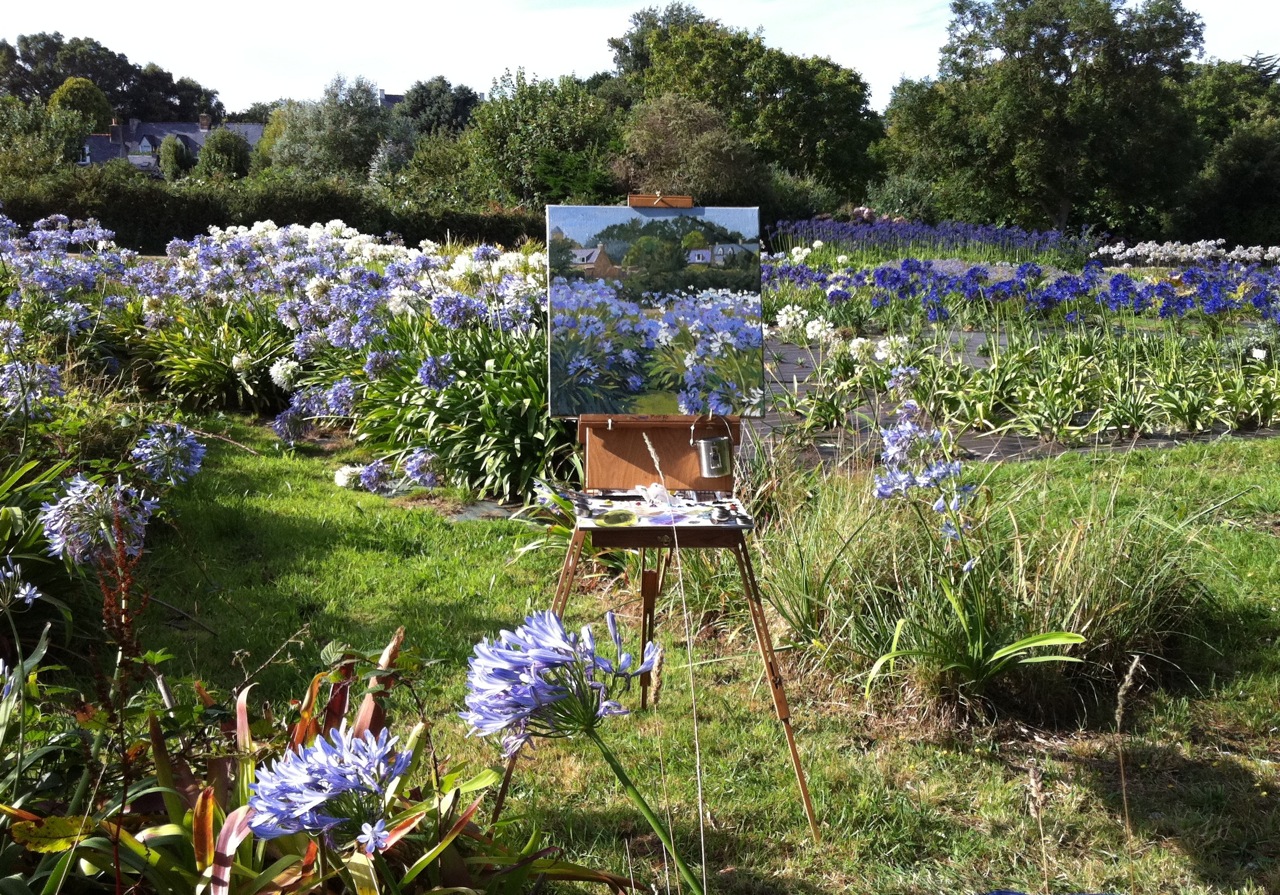
What to carry in your kit depends on how you will be travelling, how far you will be walking, what the terrain will be and what you are able to carry comfortably. We all develop our own must-haves and fine tune what we take along. If you walk miles on a painting trip you would be best with a small rucksack and the smallest pochade you can get, or a watercolour box and sketchbook. I paint in oils and try to take everything I could need and therefore reduce the walking and searching time as much as possible. As long as the ground is firm I prefer to pull my kit along in a small waterproof suitcase. The one I’m using at the moment holds everything I need except my tripod, which I carry on my shoulder. A shopping caddy is another good choice if you’d rather not carry everything on your back. I believe Monet used to use a pram which sounds like a good solution, bearing in mind those big wheels they used to have!

Transporting wet oil paintings is often seen as a barrier, but it’s so easy when you know how! Although I have a range of wet panel carriers I find it annoying to have something extra to carry so I use the Ken Howard matchstick method. All you need is at least two boards of the same size and some matchsticks and pva glue. I’ve put a full explanation of the method on my blog here
When I need to transport wet paintings on canvas I use the excellent canvas clips available from Jacksons.
When you arrive at your destination it’s usually best not to spend too long on the hunt for the perfect subject. Instead get down to work as quickly as possible with the first thing that interests you. You’ll sooner get over your ‘stage fright’ that way too. A viewfinder can really help you to see the myriad possibilities around you. The funny thing is that getting stuck in to a painting truly opens your eyes to other subjects. It can be quite frustrating when you have to pack up and travel home because by then your eyes are so ‘tuned in’ that you are seeing painting subjects everywhere!

Butchers shop in the medina, Essaouira
Oils
10″ x 14″
Train yourself not to spend too long on each painting. I restrict myself to two hours generally. I set an alarm on my phone to mark the end of the first hour as by then I should have everything important in place, and it serves as a reminder of how quickly time is passing and the need to press on. After two hours your subject really has completely changed. The sun, the sky and clouds, the tides, the people, the vehicles… nothing is untouched by the change of the light even if it’s a stationary object. What you want to avoid in labouring for too long is trying to paint a completely different scene on top of the painting that you began with. In time you will develop a good short term memory. I spend a few moments before I begin trying to notice where the shadows fall (if any), where are the darkest darks and the lightest lights. Most importantly, I make sure I am aware of what it was that inspired me to paint the scene in the first instance, and keep that uppermost in my mind throughout.
There’s a saying about painting that I love, and it’s so appropriate to painting plein air:
“Say what you need to say in the painting then get out. There is no use chattering on after you have made your point”.

Haidee-Jo Summer’s List of Recommended Art Equipment for Plein Air Painting
- Umbrella and Clamp
- Pochade Box (to fit on to the tripod) or a Half Sized French Box Easel
- Tripod
- Three or four tinted linen panels, prepared with matchsticks
- Brush roll
- Tubes of paint (which I can do without if I need to minimise weight, by squeezing out the colours on to the palette before I leave)
- Stainless steel turps container & hook to hang it on the easel
- Apron
- Masking tape to stick wet paintings together
- Palette knife
- Cap
- Sunglasses
- Flask of coffee
- Mobile phone
Occasional extras
- Waterproof trousers
- Camera
- Earphones
- Small sketchbook and pen
- Warm gloves and hat
- Viewfinder
- Canvas clips if using canvas instead of boards
Haidee-Jo Summers Online:
Haidee-Jo Summers Artist Page on Facebook
Haidee-Jo Summers will be exhibiting as well as giving Plein Air art demonstrations at Patching Arts Festival from Thursday 5th – Sunday 8th June.


3 thoughts on “Haidee-Jo, Plein Air Painter of the Moment”
Pingback: Plein Air Painting in the Merry Month of May - Jackson's Art Blog
Pingback: Haidee-Jo Summers: Jackson's Open Painting Prize 2019 Expert Judge - Jackson's Art Blog
Pingback: Paint in Numbers! Celebrating Plein Air Events - Jackson's Art Blog
Comments are closed.