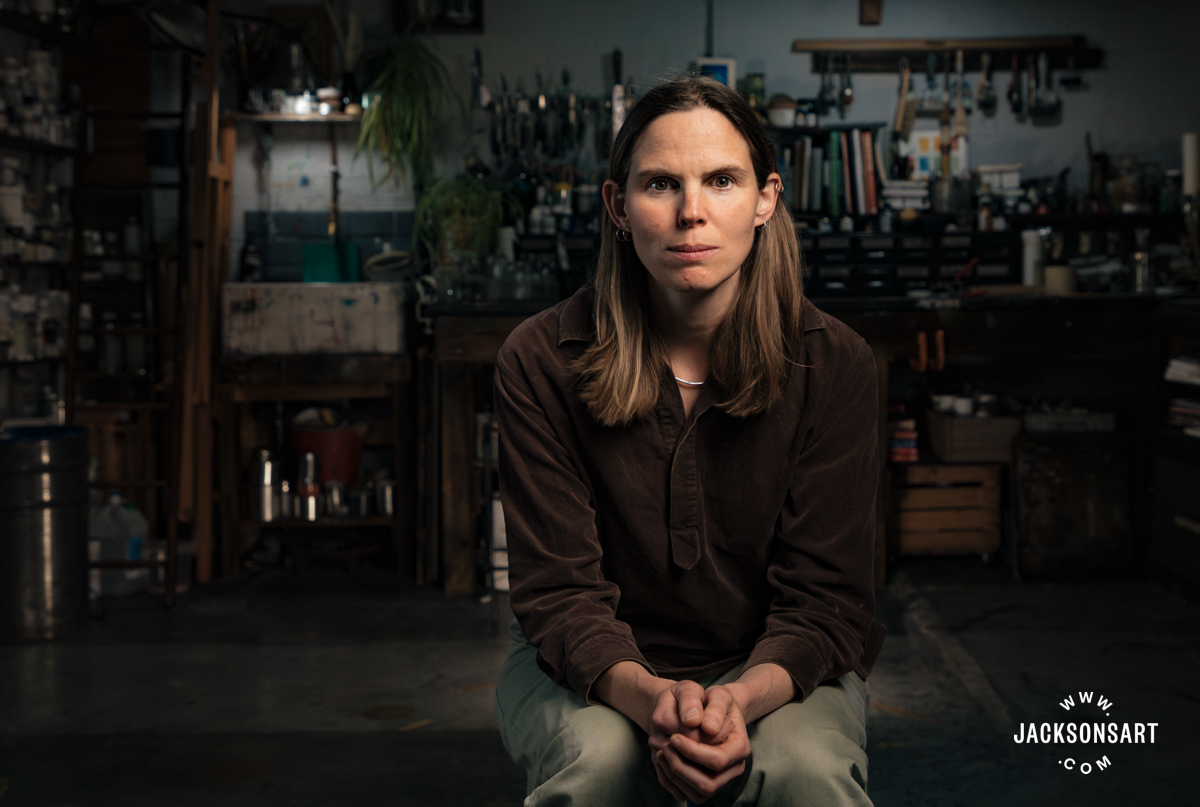



Last year Benjamin Hope won our Pastel Portrait Competition with his work ‘Dad with Thoughts and Tea’. The portrait sensitively captured the Artist’s father, stripping the depiction down to just his face and his hands holding the cup of tea. By leaving the rest of the figure to the imagination, the viewer’s eye is drawn to the contemplative look of the father, whose eyes gaze downwards into space, lost in thought. We’re left to guess what he might be thinking. Two years on from our last interview with Benjamin Hope, we got in touch with him again to ask more about his practice in the run up to a couple of exhibitions he is taking part in – At Island Fine Arts on the Isle of Wight and at Gallery Different in London – this summer.

Benjamin Hope
Pastel, 40 x 55 cm, 2016
Lisa: Your winning pastel portrait, ‘Dad with Thoughts and Tea’ has beautiful rich marks in it – and it could very easily be mistaken for an oil painting. Do you have any preference for one medium over the other and why?
Benjamin: Oil will always be my favourite medium. It’s the king really isn’t it? Nothing quite matches it for richness and clout. However, I also love working in pastel and sometimes charcoal. More recently I have also started to dabble in watercolour because I want to explore what I can get out of it. I think it’s important, for me at least, to experiment with a lot of different mediums because they all inform each other. Each lends itself to a certain kind of mark but these inevitably bleed across into other work. Pastels, for example, can be a good way of getting into the habit of placing nice distinct pieces of paint when working in oil.
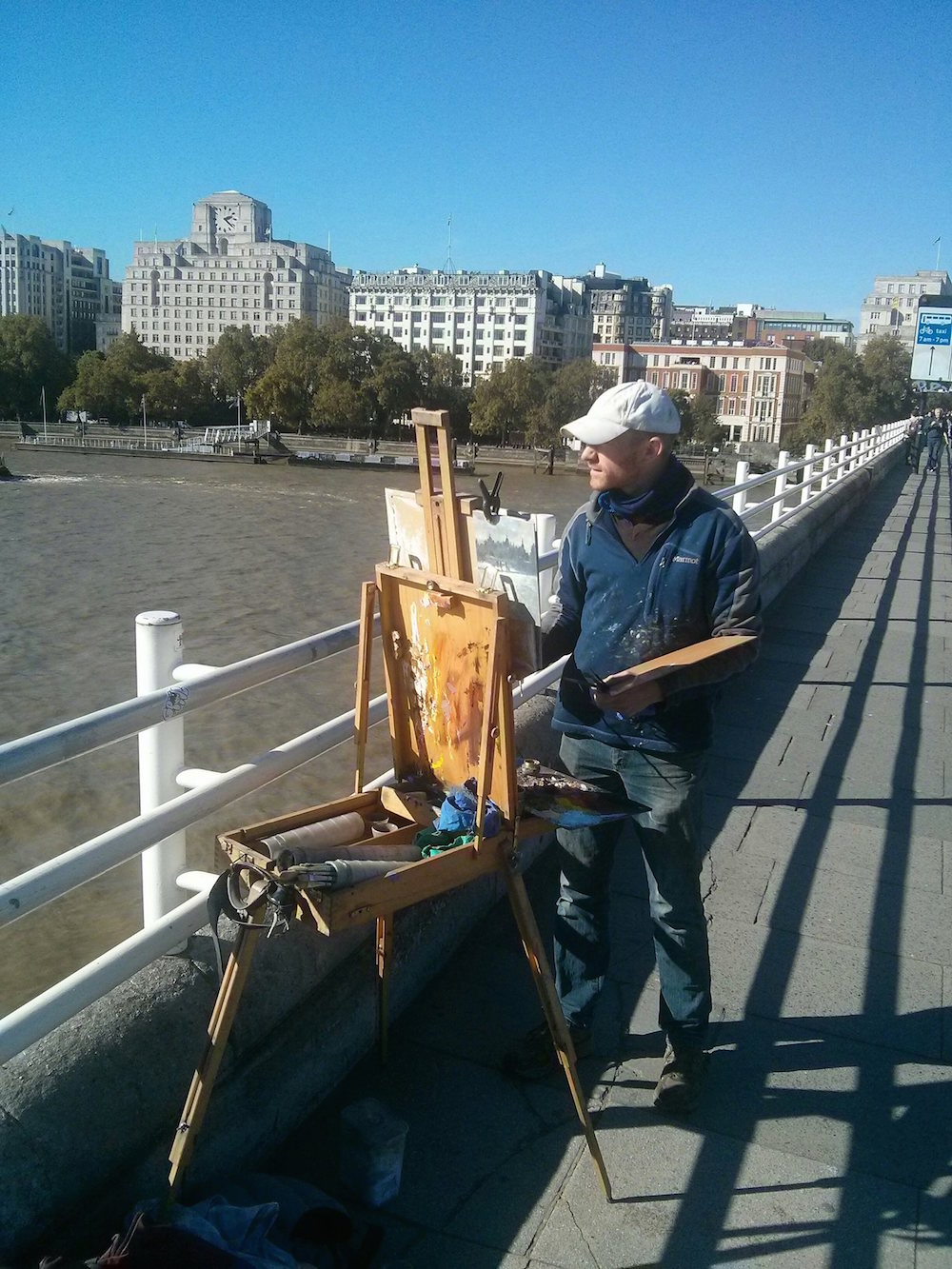
Lisa: I’m interested in the fact that you had no formal art training, and that during your 12 years studying mathematics and physics you barely had any time at all to pick up a paintbrush. Do you think the frustration and obstacles you have faced in the past somehow fuel your drive to make work today? And do you think it has impacted on your approach to making work?
Benjamin: It’s difficult to answer this without living several alternative lives with which I could compare mine. Academic work rarely felt like an obstacle. It held great fascination for me in its own right. At school I always had multiple interests—in particular mathematics / physics, athletics, and painting. All seemed of equal importance and I was not prepared to drop any to the level of a casual hobby. So it was a conscious decision to order my life so as to optimise my experience of all three. Painting came most naturally whereas for scientific training you really do need a young brain and years of formal courses. This is why I decided first to combine athletics with studies (they go well together) before devoting the rest of my life to painting. I think I got lucky with the path I took. Theoretical physics and painting both involve a lot of problem solving and analysis so the former turned out to be quite good training for the latter.
During my undergraduate years, I could paint in the long summer holidays; if there were frustrations and worries, they began during my PhD because it dragged on for years (my fault) and there were no real breaks for painting. The three years I then spent working in the city—saving money to kick-start my painting career—were worse because the career I really wanted felt so close and yet there was still no time to paint. So yes perhaps tasting the alternative of an office job has made me particularly motivated to protect what I have now.
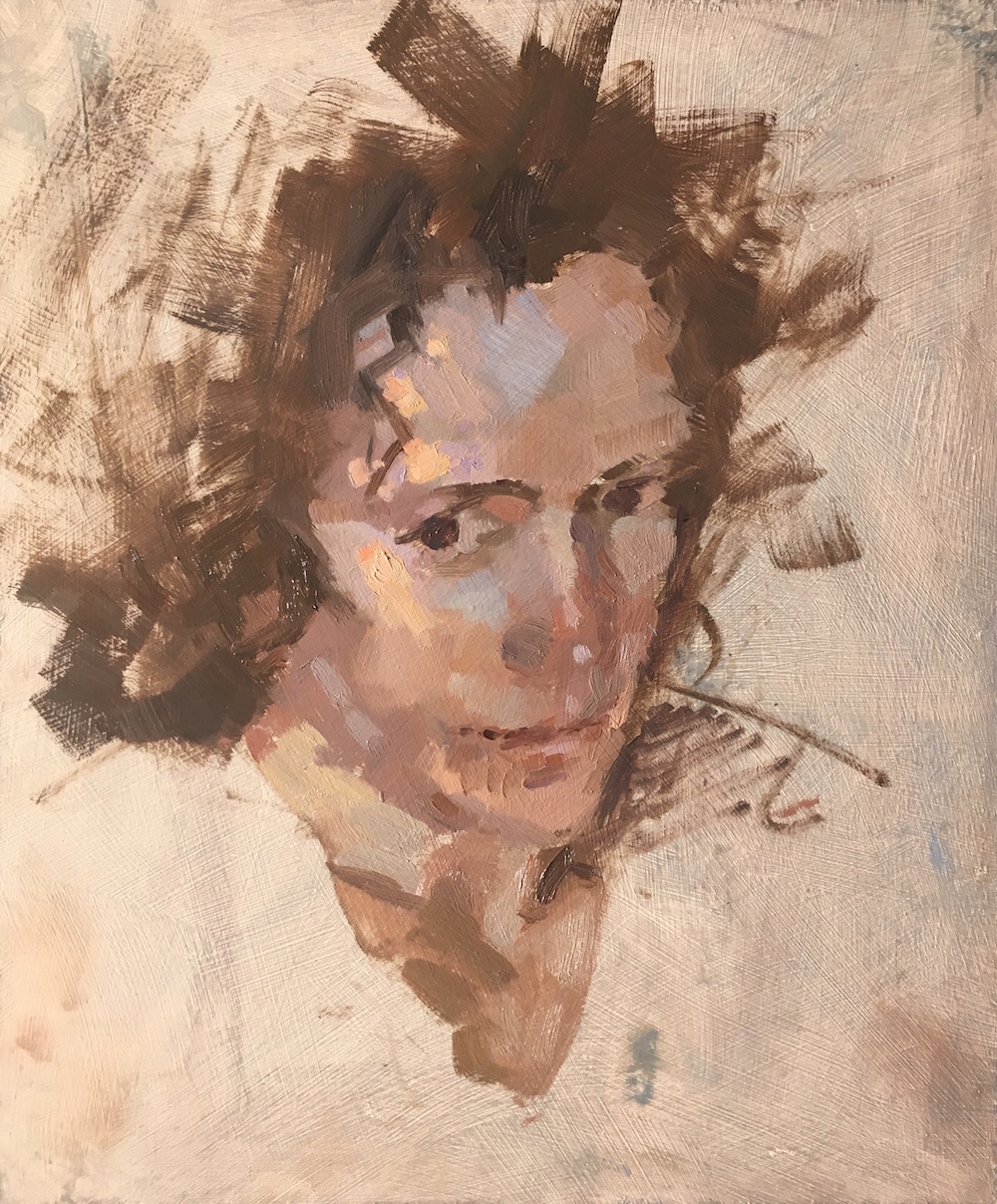
Benjamin Hope
Oil on board, 25 x 30 cm, 2017
Lisa: How important is having a personal connection to the subject matter that you choose to paint?
Benjamin: I would like to say not very important, especially if you’re interested in more abstract features such as light and depth and shapes. However, as you might expect, familiarity does seem to make the execution more successful. With portraits, for instance, if I’m just talking to someone, part of my brain is busily creating a virtual painting of them so if I’ve known someone for years, I will have effectively had a lot of practice without actually painting them. Painting portraits from life also has a lot to do with the rapport you have with the sitter. It helps if you’re both relaxed and you feel able to boss them around. Perhaps most importantly, though, a close connection with the sitter means you are better able to judge whether or not you are really capturing their character.
![Canary Wharf Sunset Series Benjamin Hope Oil on board, 3 x [15 x 15 cm], 2017](https://www.jacksonsart.com/blog/wp-content/uploads/2017/04/Q4-HopeBenjamin-WharfSunsetSeries.png)
Benjamin Hope
Oil on board, 3 x [15 x 15 cm], 2017
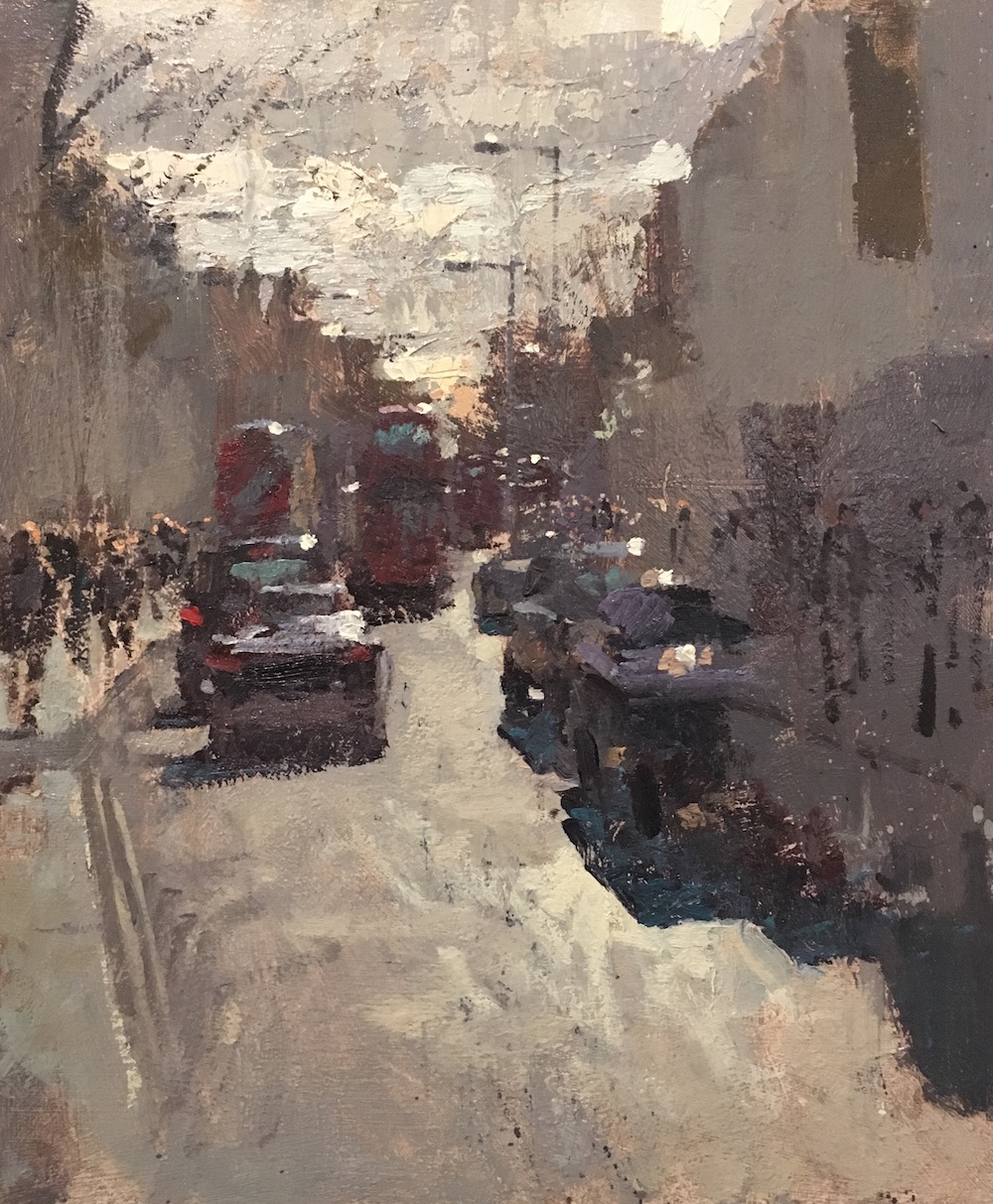
Benjamin Hope
Oil on board, 25 x 30 cm, 2017
Lisa: How do you select the colours you are going to use for a painting? Are these decided before you begin work or as you go along?
Benjamin: For outdoor painting, I prepare a palette in the morning with far more colours than I’ll need. This is just for speed. I need to be able to set up and start as soon as I’m hooked on a painting instead of standing there squeezing out paints like a numpty. I think I still end up using a fairly restricted palette when actually applying the paint but I don’t want to worry that a certain colour won’t be there when I need it. Deliberately working with a restricted palette—especially back in the studio—and being more sophisticated with my use of colour are things I want to focus on more in the future.
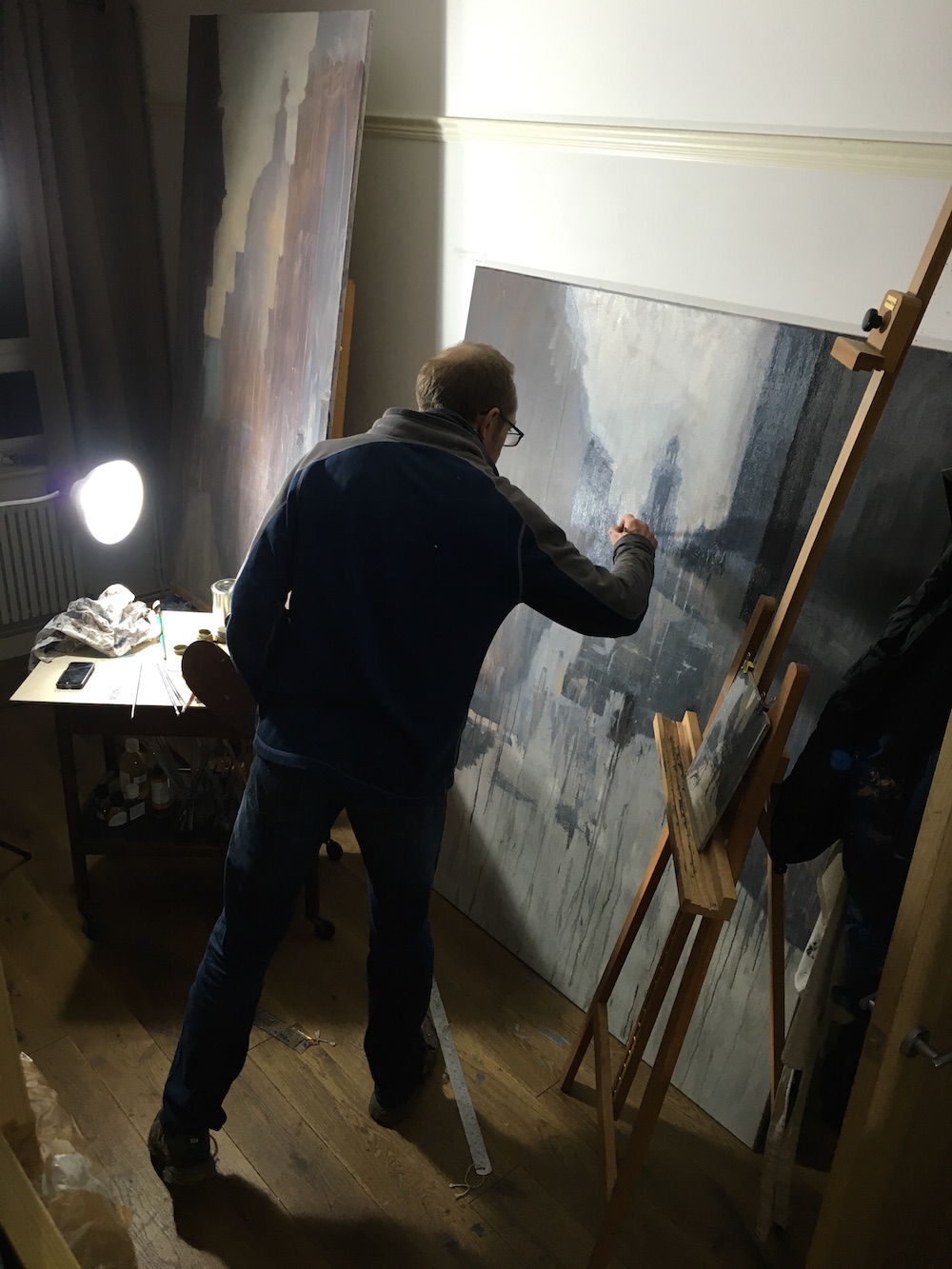
Lisa: What do you hope to achieve with your work in the rest of 2017?
Benjamin: One of my main aims at the start of the year was to create very large studio paintings based on small outdoor studies (that were not merely enlargements). I’ve not really done this before because first I wanted to get up to speed working entirely from observation. Also I didn’t have a large lofty studio so making huge paintings would have been awkward at best. I still don’t have a large lofty studio but I’m not waiting for that day to come. I’ve finished two biggies now and they’re fairly close to what I had in mind.
Most of my paintings for the last year have been cityscapes so after my next show it’s time to get serious again with portraits although I also have some more specific areas of London to explore. I don’t like to plan too much. I think it’s better to feel your way forward responding to nearby short-term impulses whilst also keeping in mind wider aims—like you’re in a dark room looking for the light switch.
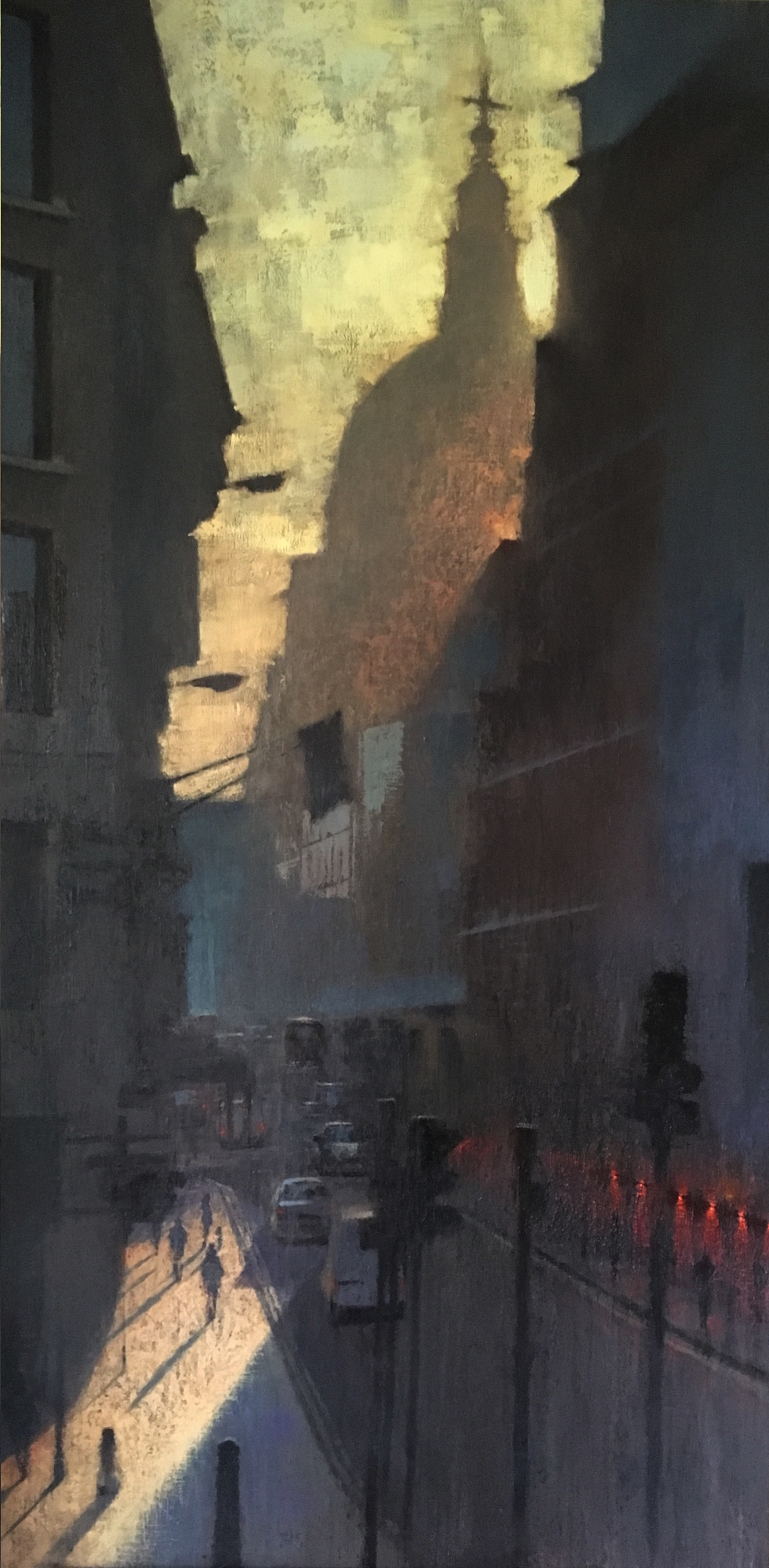
Benjamin Hope
Oil on canvas, 87 x 174 cm, 2017
Lisa: Where online or in the flesh can we view more of your work?
Benjamin: I am on Twitter, Facebook and Instagram and my website is benjaminhope.net.
I have two shows coming up:
1. Island Fine Arts: 27 May – 24 June 2017
(with Hanah Cole and Rod Pearce)
(http://www.islandfinearts.com)
53 High Street
Bembridge
Isle of Wight
PO35 5SE
I recently spent a lovely week painting on the island around Bembridge and Ryde. My work from that week will be in the show.
2. “Works”: 15 – 24 June 2017
with sculptor Ben Hooper. This is a much bigger show with over 60 paintings of mine (mainly London) and sculptures in bronze and wire by extremely talented sculptor, Ben Hooper.
(http://www.gallerydifferent.co.uk)
Gallery Different
14 Percy Street
London
W1T 1DR
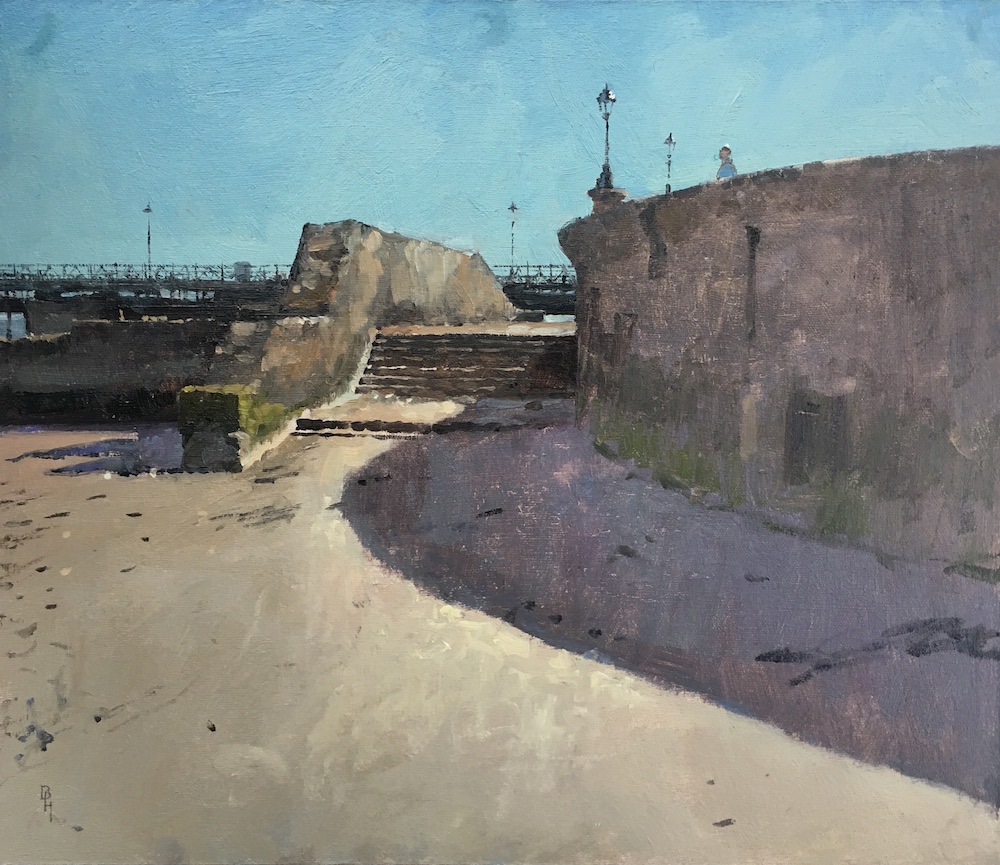
Benjamin Hope
Oil on board, 36 x 30 cm, 2017
Header image: ‘Herne Hill’ by Benjamin Hope, oil on canvas, 76 x 46 cm, 2017