



The new Michael Harding Miracle Medium is an innovative addition to his oil painting product range. The non-toxic formulation gives artists the opportunity to oil paint and clean their brushes without the need for solvents. For those concerned about the health implications of oil painting, and the planet, this is presented as an incredible solution. It is biodegradable, produces no fumes, and is vegan since it’s made from 100% plant material. In this article I will further explore the properties of the Miracle Medium, and discern what distinguishes it from alternative painting mediums on the market.
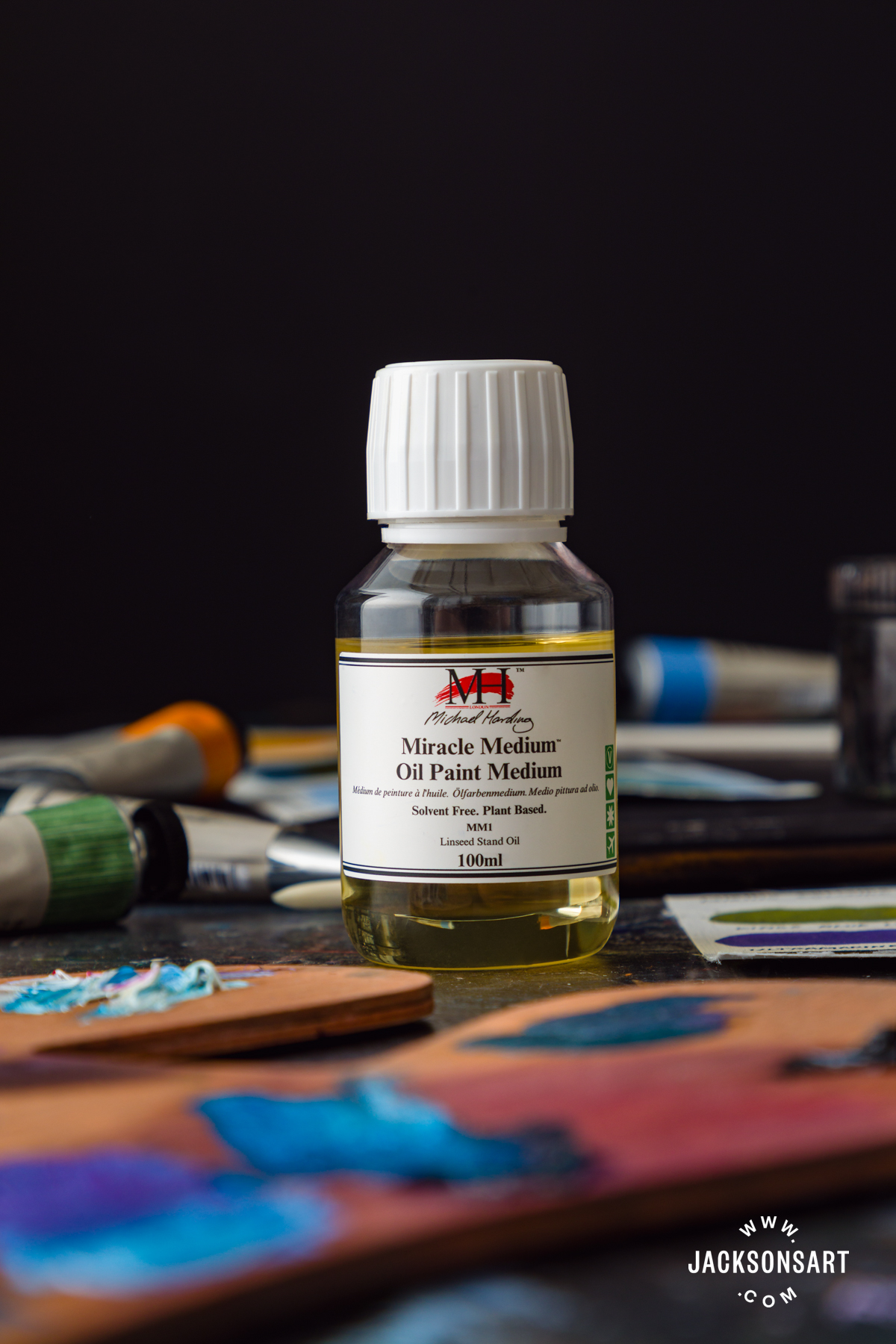
What is the Miracle Medium Made of?
The particular ingredients of this product are not public knowledge, by choice of the company to keep them as a trade secret. They have confirmed that it does not contain palm oil, and we do have access to the safety sheet. It gives assurance that it is non-toxic and safe for the environment. Due to these credentials it is also completely safe to fly with in hold luggage, which is excellent news for travelling painters. Unfortunately painters with a soy allergy should avoid this product, as we have been told that it’s an ingredient.
Painting With the Miracle Medium
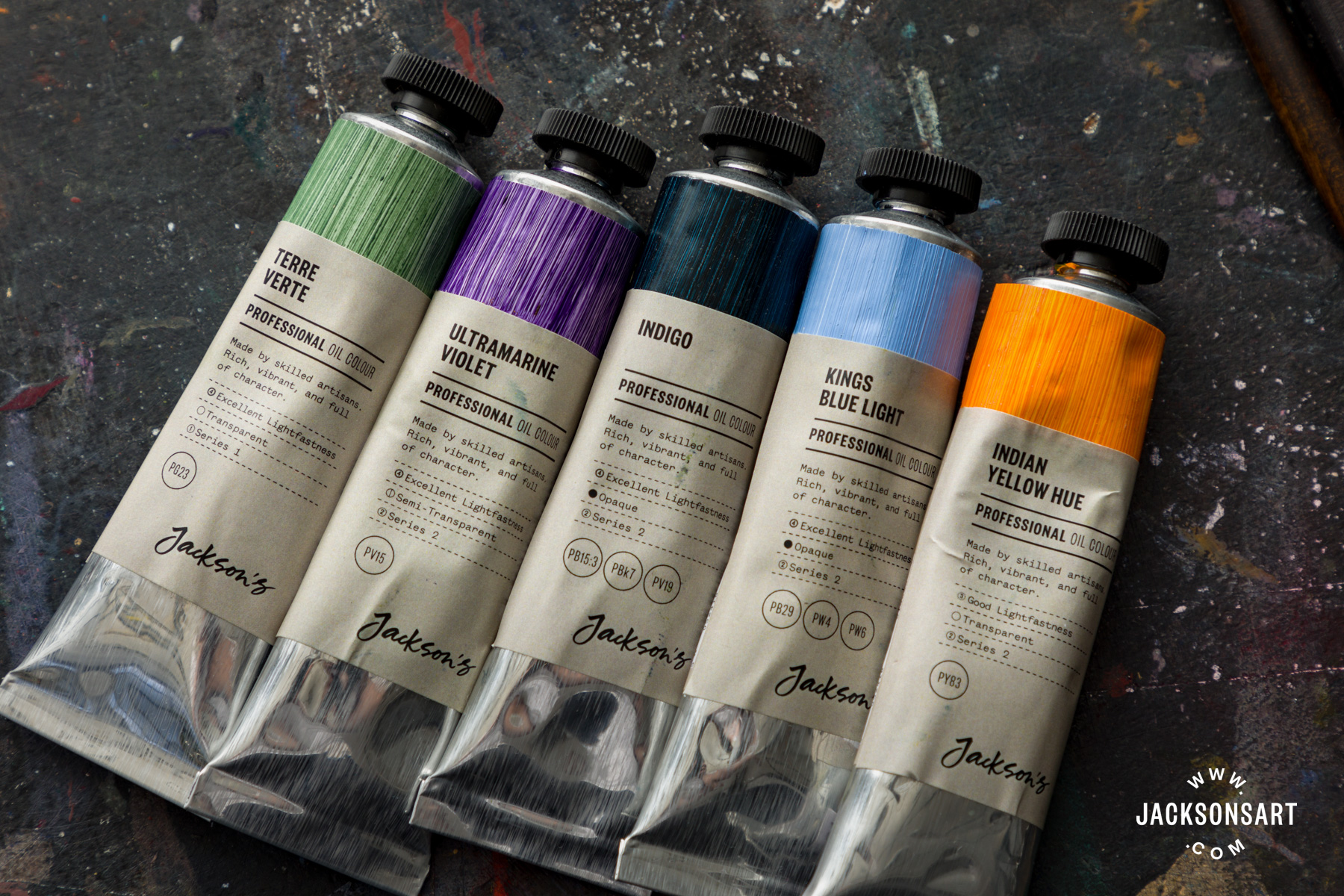
To use this product whilst painting, simply pour some out into a jar as you would your traditional solvent medium. It’s recommended to paint with between 10-20% of the medium to oil colour as needed, so I have roughly stuck to that ratio. In the following swatches I’ve tested the medium with five paints from the Jackson’s Professional Oil Paint range: Terre Verte, Indian Yellow Hue, Indigo, Ultramarine Violet, and Kings Blue Light, on a Jackson’s Oil Paper Block 230 gsm.
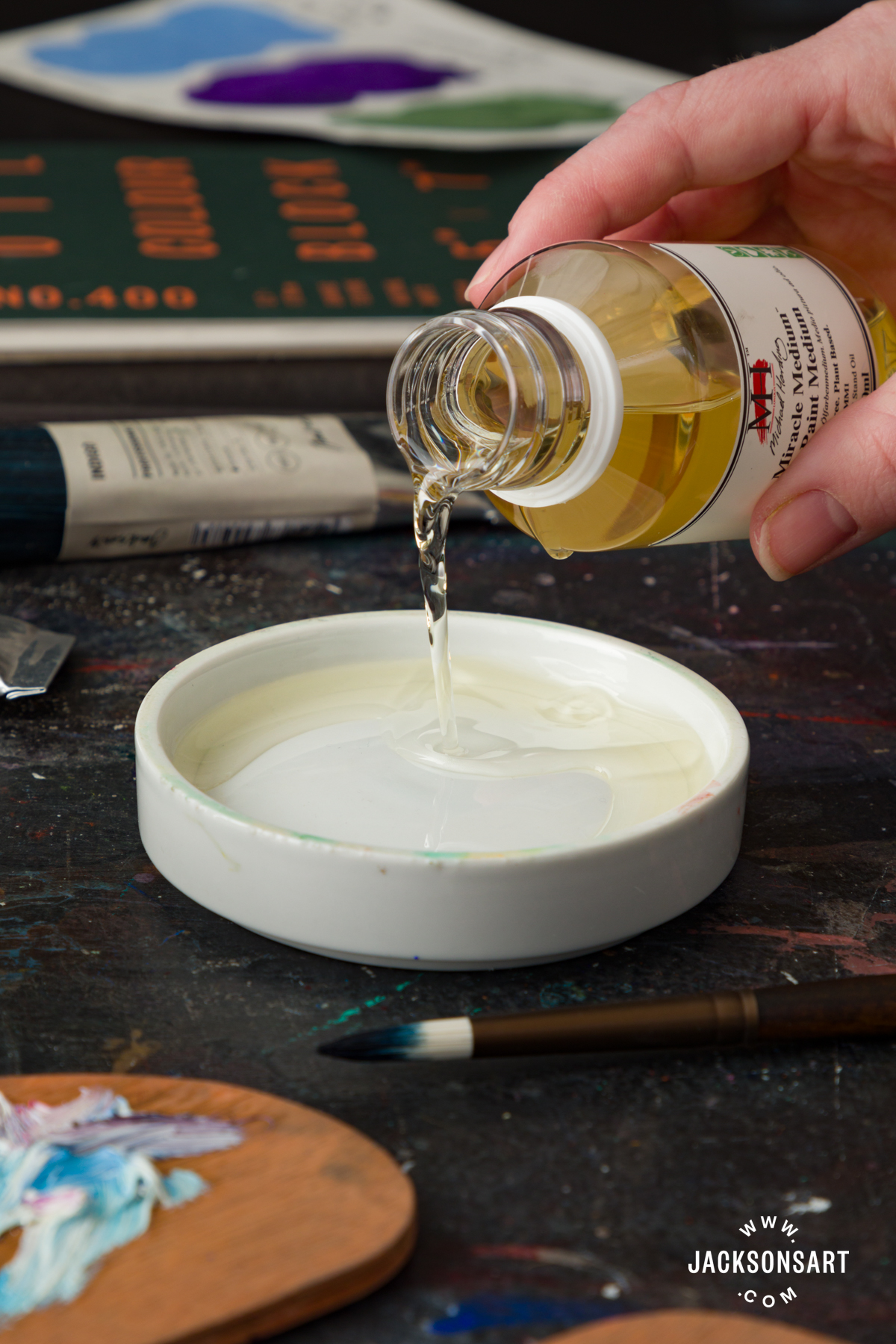
This Miracle Medium will increase the fluidity of your paint, and doesn’t have the body to fatten it up. It’s completely clear, not sticky in consistency, and very thin and watery. Once dried down, this medium will eventually completely evaporate from your work, leaving the paint behind unaltered.
The product has a very light smell like linseed oil. You can’t smell it unless you are intentionally trying to smell it, as it doesn’t produce any kind of fumes. I find compared to some other solvent-free mediums, this one is very natural and neutral, and doesn’t have an off-putting chemical edge.
Comparing the Miracle Medium to a Traditional Medium Mixture
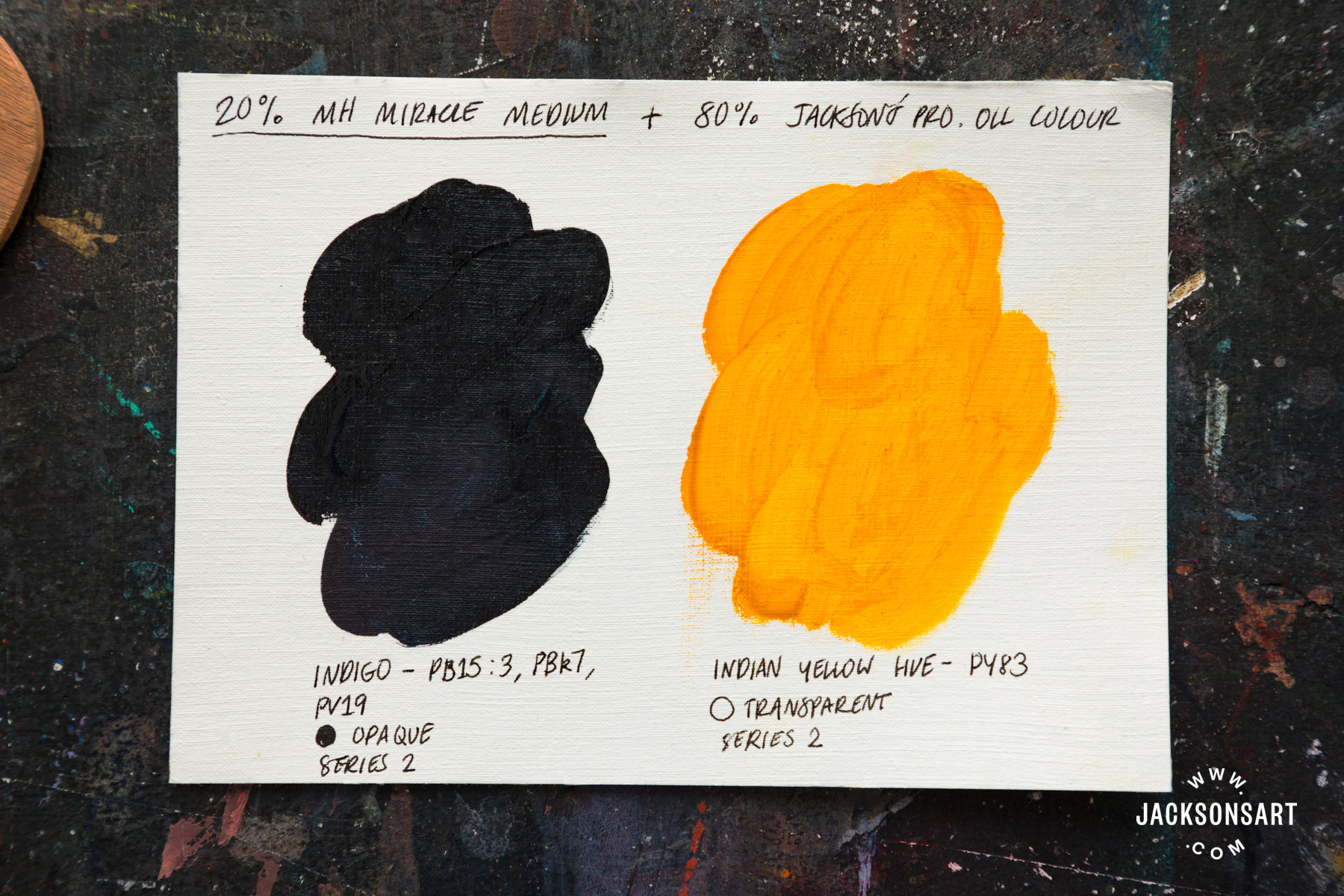
For these first swatches I tested the Miracle Medium at a 20% ratio to paint, alongside a traditional lean medium of turpentine and linseed oil, also around 20%, to see how the drying speeds and visual finish differed.
On first applying the Miracle Medium I found it to be very slick and wet to move around, you could disperse paint very evenly and quickly. I chose colours to swatch with a range of opacities to observe the difference, and immediately noticed how easy it was to make brush stroke effects in the transparent and semi-transparent ones, which also held up with drying. It would be incredibly easy to wipe this slick paint mixed with Miracle Medium off the surface again at this initial stage. It was clear from my first test that the Miracle Medium would be best used built up in thin layers, or to create washes and glazing effects.
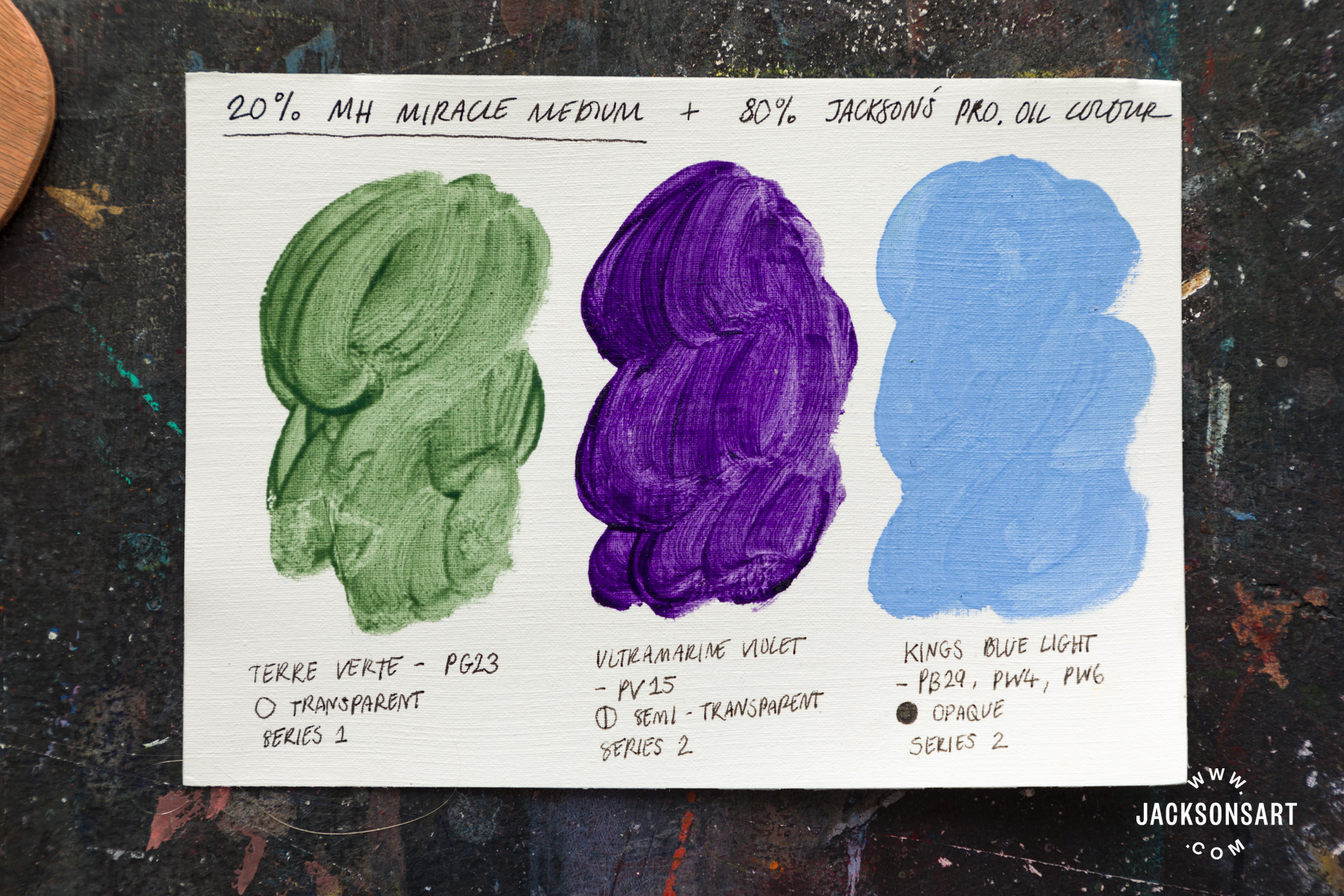
Alongside the turpentine and linseed oil medium mixture, I observed that the movability and flow of the paint was equivalent. In terms of drying time, the Miracle Medium does not affect the drying speed or lightfastness of the paint. Therefore, you really have to allow each paint to dry down at its particular pace. For painters who are used to working with solvents, the drying time with the Miracle Medium will feel much longer because of this. The turpentine and linseed oil medium dried much quicker, since solvents reduce drying time. For example, my swatches with Miracle Medium took about a week to touch dry, whereas the traditional medium took just one day. Although it’s possible to fly with the Miracle Medium, painters should be aware of this slow drying time if they plan on making lots of work on the move that will need to be packed.
If you enjoy working wet-on-wet, or having increased time to resolve your paintings, the Miracle Medium is an excellent choice for you. If you need dried down layers very quickly, then traditional turpentine may be your best solution.
Glazing and Mixing
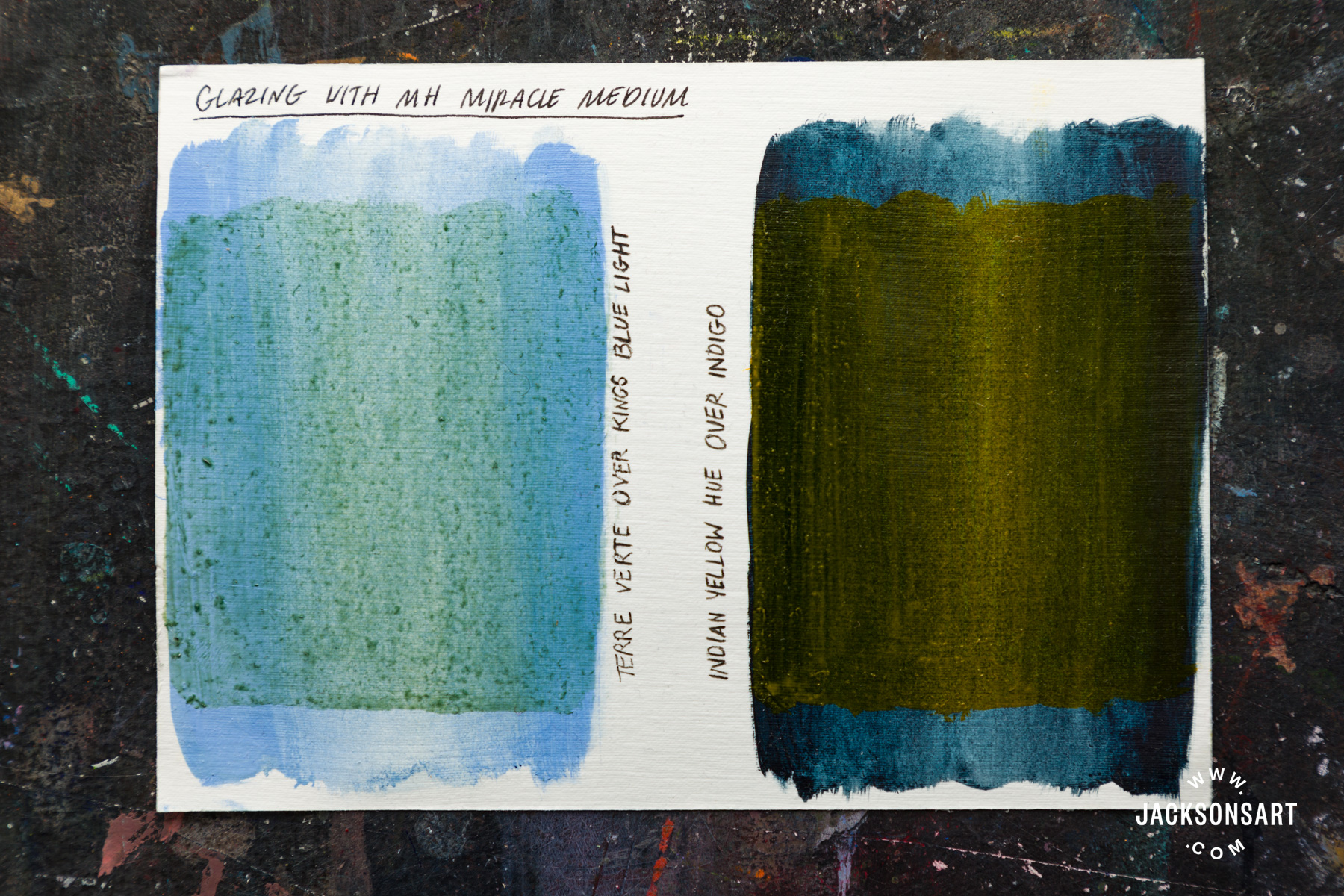
Due to its slick dispersive quality, I tested glazing with the Miracle Medium to see how it handled. For this swatch I glazed the Terre Verte over Kings Blue Light in a gradient, and Indian Yellow Hue over Indigo in a gradient. The fluidity of the Medium made the results very even and smooth. It would be very easy to build up layers of glazes, if you don’t mind the drying time. If you would prefer a quicker drying time, a Miracle Medium Quick Dry Dammar Glaze product is also available.
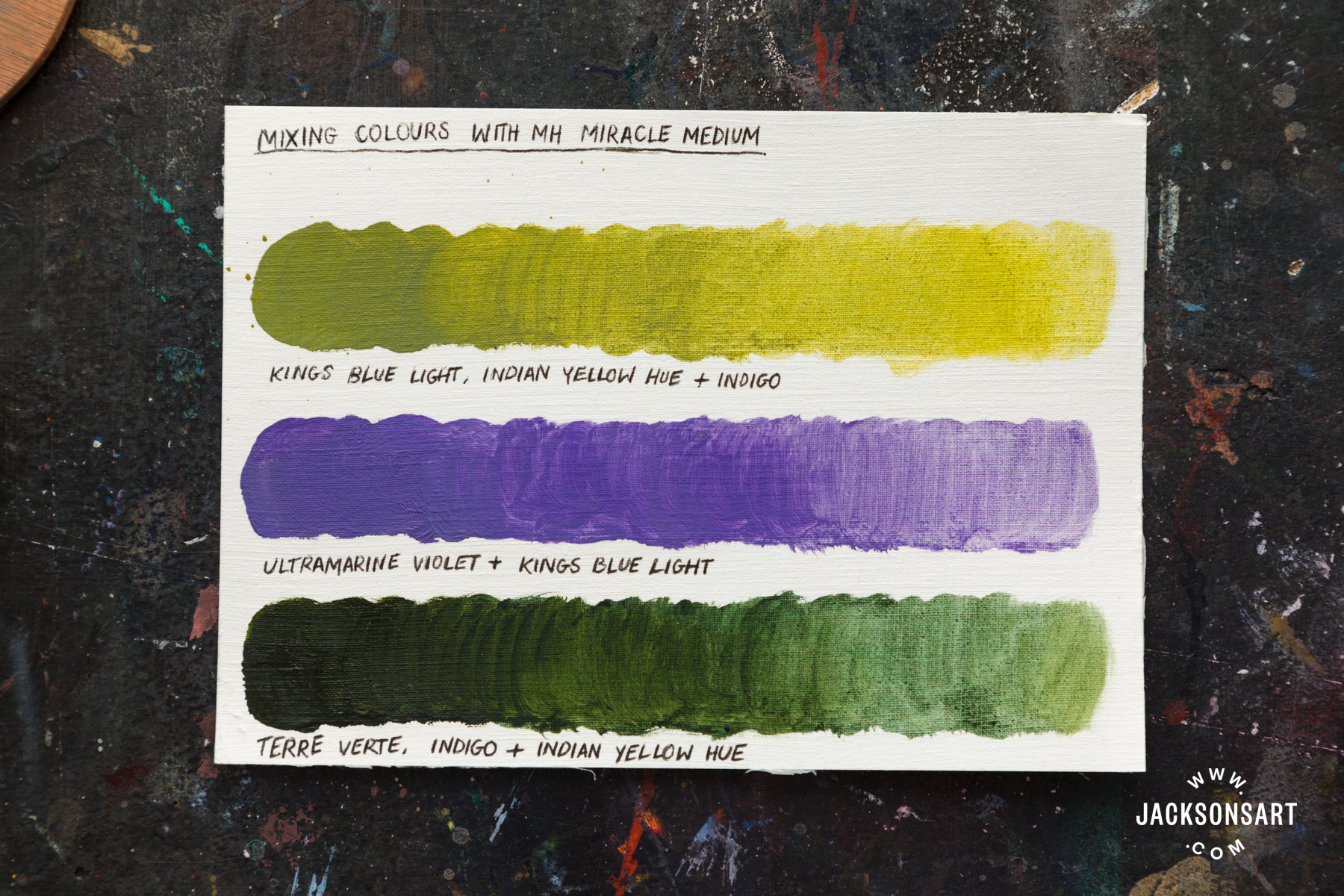
Next, I mixed some colours together using the Miracle Medium and dispersed them in a gradient. I found this to be very satisfying across all the colours, and the thin finish towards the end of the gradient was a lovely effect. Knowing that the very light area isn’t the pigment being broken apart by solvent to achieve the effect is reassuring from an archival perspective.
Using the Miracle Medium as a Brush Cleaner
The Michael Harding Miracle Medium is also promoted as an excellent brush cleaner, so I put it to the test with brushes I just used, and one with dried oil paint, to see what happened.
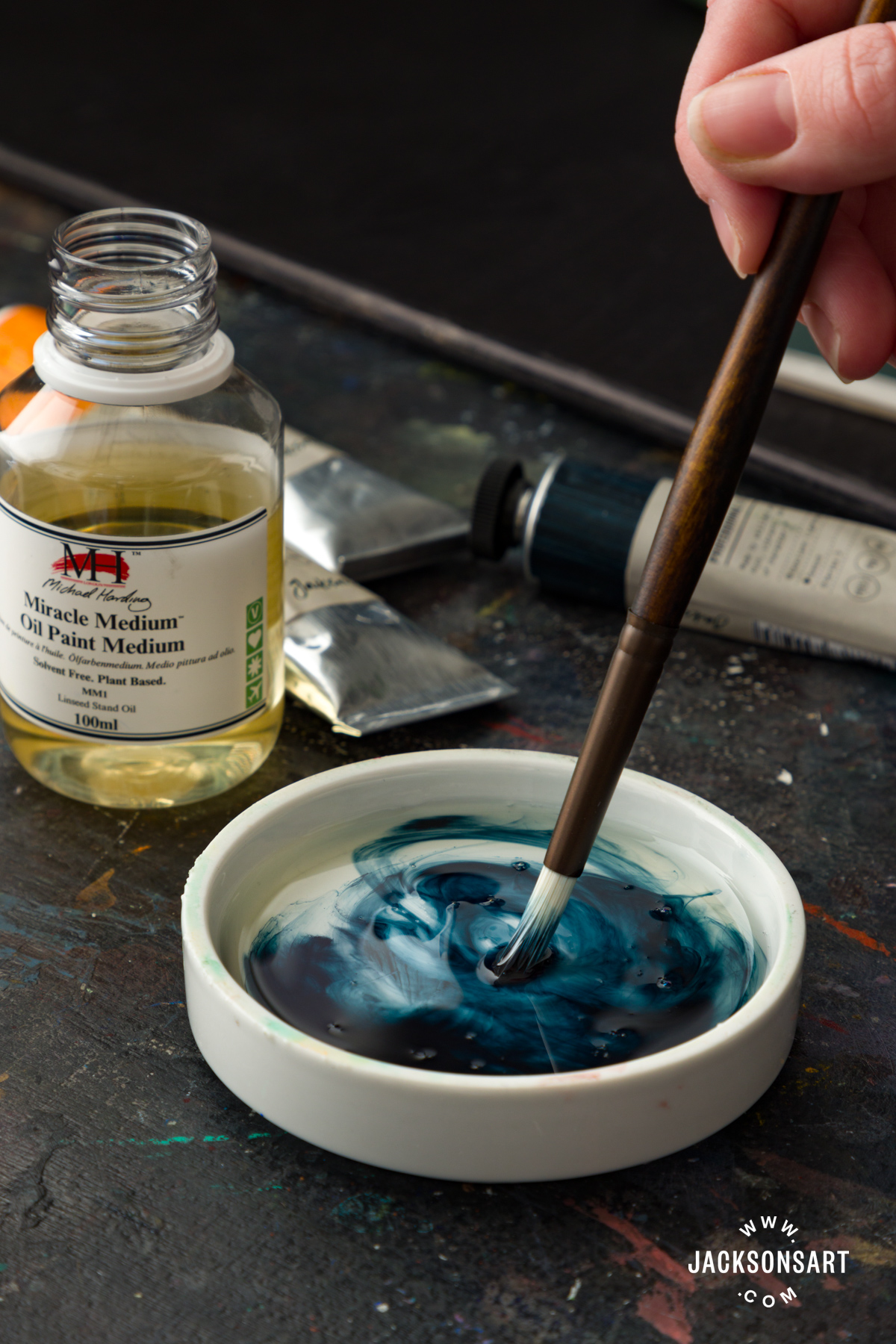
As I was painting the previous swatches I noticed that when I dipped the dirty brushes into the medium, the paint doesn’t immediately enter the liquid as it does when you dip them into pure traditional solvent. Without swirling the brush, you can remove a good amount of paint by dipping your brush and rubbing it onto a painting rag, without dirtying the medium. This is a huge advantage when you may have lots of brushes on the go, or painting outside where you may not have several jars with you to paint and clean from. The brushes cleaned really well, with just some lingering residue that a brush soap would remove very easily.
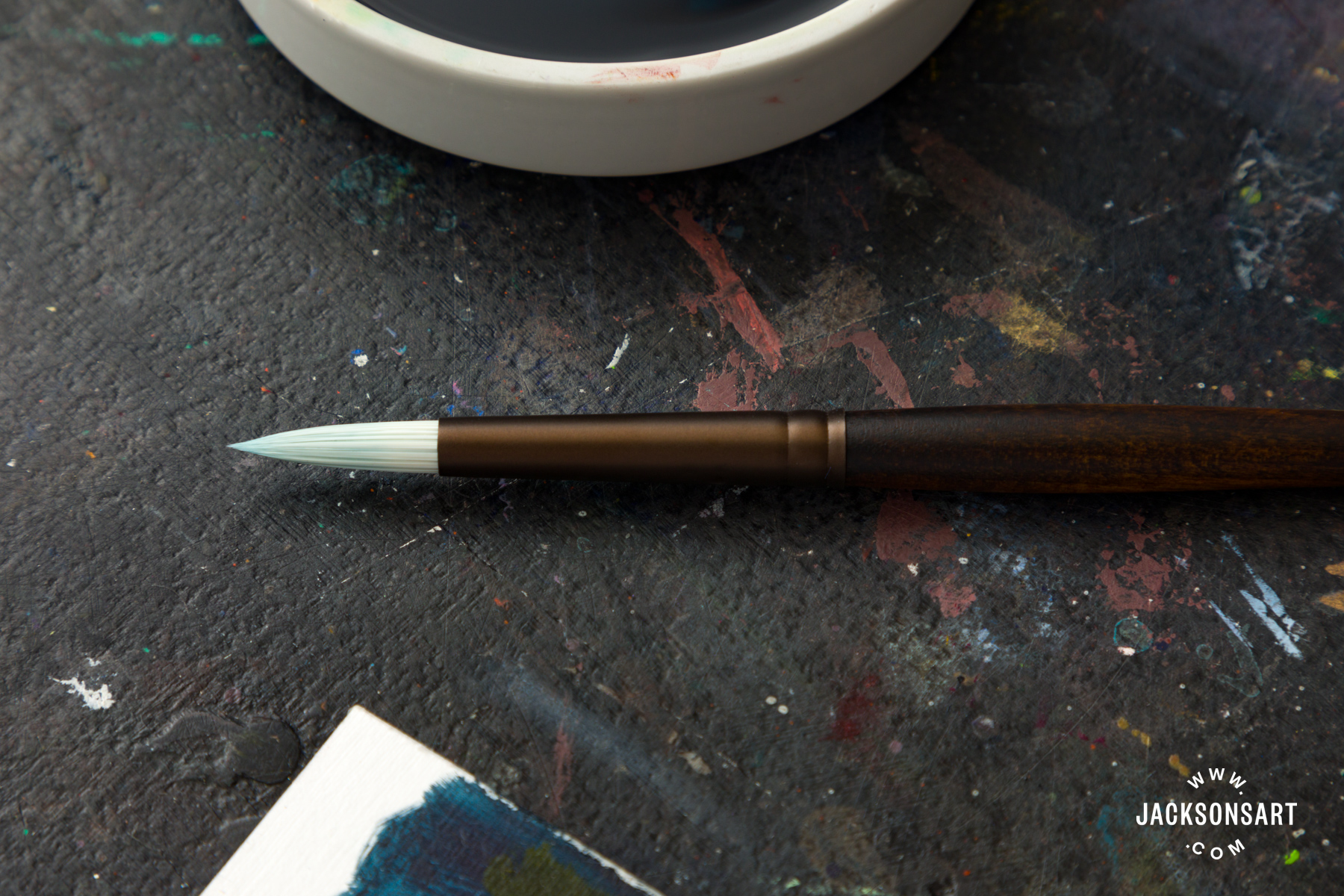
As for the dried stubborn brush, I left it in some of the miracle medium for a whole day to see if it loosened up. It did soften the paint that was dried on, and I was able to better clean the brush. It’s more than fair to say the Miracle Medium is multi-faceted in usage.
Cleaning brushes with solvents can often damage the hairs and glue beyond repair, and mean you have to constantly renew your brushes. Although cleaning with solvents may be quicker, the expense of this damage is problematic. I think all artists have a horror story where a favourite brush has been given a chemical haircut when accidentally left in solvent. I think the Miracle Medium is an asset in that it won’t cause this kind of damage to your tools, saving you money in the long run.
How Does it Compare to Other Alternative Oil Mediums?
From my painting experience, the Michael Harding Miracle Medium is very slick and fluid. To compare it to a ‘toxic’ medium, it handles somewhat like Liquin, without the rapid drying speed and fumes. The Gamblin Solvent-Free Gel Medium is another great non-toxic Medium, though it is stickier in consistency, so that comparison is really up to personal preference.
When I oil paint I sometimes use a Turpenoid, which is a turpentine substitute, to avoid the turpentine headache. Turpenoids tend to have the same drying time as actual Turpentine, so no adjustment is needed to your painting speed. They’re made from petroleum distillates (unlike Turpentine produced from pine sap) and are still solvents, just weaker and produce less fumes than pure Turpentine. Often companies will add a citrus element to Turpenoids to neutralise any smell, but they should still be used in a ventilated space. Although Turpenoids usually have a ‘natural’ or ‘non-toxic’ branding, they still give off fumes, making them toxic at a lower degree. I think the Miracle Medium steps in as a very useful non-toxic alternative to this depending on the painting at hand.
The ‘miracle’ properties of this exciting new medium have to be experienced to be believed. The fluidity, versatility, non-toxicity, fume-free, vegan, and unaffected drying speed of the formulation does almost sound too good to be true, but the proof is in using the product. After my tests I’m personally excited to make some works using the Michael Harding Miracle Medium to see how a completed painting will feel, and further experiment with layering it up. Only time will tell how paintings made with this Medium will hold up. For all oil painters, especially the health and environmentally conscious among us, this innovative product is a must try.
Further Reading
Why is Oil Paint So Expensive?
Tips for Setting Up an Oil Painting Palette
Michael Harding Explains His New Miracle Medium
Shop Michael Harding Miracle Medium on jacksonsart.com


17 thoughts on “Non-Toxic Oil Painting With Michael Harding Miracle Medium”
Surely the comparison that is needed is
with the serious competitor in the
marketplace- Zest-it ? Much cheaper- yet
you don’t mention it – gagged for
commercial reasons I suspect ?
Hi John
She does compare it with citrus thinners.
There are many citrus thinners on the market and they all are made of a base of odourless hydrocarbon thinner with added citrus oil. She didn’t mention any brands, but treated them all as a group.
Zest-it sell a product they call ‘Solvent’ that is the base to which they add the citrus oils. It is a low-odour hydrocarbon solvent (or odourless white spirit). So you can buy their product with or without the citrus oils. Their website explains this all. You can find the page if you Google their SDS (safety data sheet). It’s important to remember that art materials do not require a full list of ingredients like food. A manufacturer can put on the label just the ingredients that they think are most important.
I’m wondering how it compares to WMOs?
Hi Kate, water mixable oils are slightly different because they can be cleaned up and thinned (to a certain extent) with water. I’m sure you could, in theory, add Miracle Medium products to water mixable oils, but it would negate their water-miscibility
Thanks Louise,
That was a great review, I’m going to get
some and see what I think.
Thanks for this, Louise! Having just received my shipment from Jackson’s, I’ve been wondering how I will fare with the new Harding products. I have bookmarked this for future reference, as well as Mr. Harding’s video announcement about its properties. I’m already glad I made the investment.
Curious about the difference between
the miracle medium and Sennelier’s
Green for Oil? Can you shed any light on
that?
Hi Mike, thank you for your question. Sennelier’s Green for Oil is a similar competitor medium, though I haven’t seen a comparison between them so I’m not sure about their differences in composition or handling qualities. This would make a good article in itself, I’ll make a note of it
Is it fat or lean ?
Hi Rania, I checked this with Michael Harding who says that because the Miracle Medium evaporates he catagorises it as fat, but others might debate this
thanks for the review, just to clarify, the
product you test is MM1, which is the
mixture of MM0 thinner and linseed oil? if
so, i am not sure why you say “it evaporate
100%”,as the oil portion will not
evaporate but oxidize. also, i am not sure if
we given the thinner to oil ratio in this
MM1 product, like if the thinner is less
then it is more oil dominant thus drying
time expected to be long. it would be best
to compare with same mixing ratio of
turpentine w/ oil.
or maybe if you can do another test for
MM0 thinner only, to see if that is 100%
evaporative and if that accelerate drying as
traditional solvent.
Hello, thanks for your questions. Louise is referring to the Miracle Medium (that is, the solvent alternative) which evaporates. I did a test with just Miracle Medium on primed canvas and it evaporated completely overnight.
Hi here,
On the bottle, it says “linseed stand oil”,
so does this means it is mixed with
stand oil and MM0 thinner? If so, it may
make sense to compare mix of
turpentine and stand oil for drying time
with same mixing ratio.
Hi, thank you for your question- yes it’s a mixture of stand oil and Miracle Medium.
Hi Louise. Thank you for the review. I’m
using what I think is a similar product
(Wallace Seymour’s Co-Co Bello Natural
Painting Diluent) and love it. I’ve noticed
that the Co-Co Bello (unlike e.g. Zest-it)
hardly settles and therefore re-use is
limited. I wondered whether you had tried
to re-use the Michael Harding Miracle
Medium and had any thoughts?
Many thanks, Beate
Hi Beate, this is a really good question, thank you. I’ve just set up a test in our studio and I’ll get back to you!
Hello again, I found that the pigment settled well over a couple of days, so I there will be no problems re-using it.
Comments are closed.