



Artists’ Books are a revealing and versatile art form that have been created throughout art history. They are used by artists to express their ideas, expand on personal narratives, document and embellish previous works, experiment with materials, and most importantly, distribute their works to a wider audience. The book format allows a multifaceted work of art to be shared with as many people as the artist chooses. In this article, I will explore a history of artists’ books, detail some contemporary artists who champion bookbinding and artists’ books, provide two tutorials for books you can bind at home, and share some advice on choosing a sketchbook to transform into your own artists’ book.
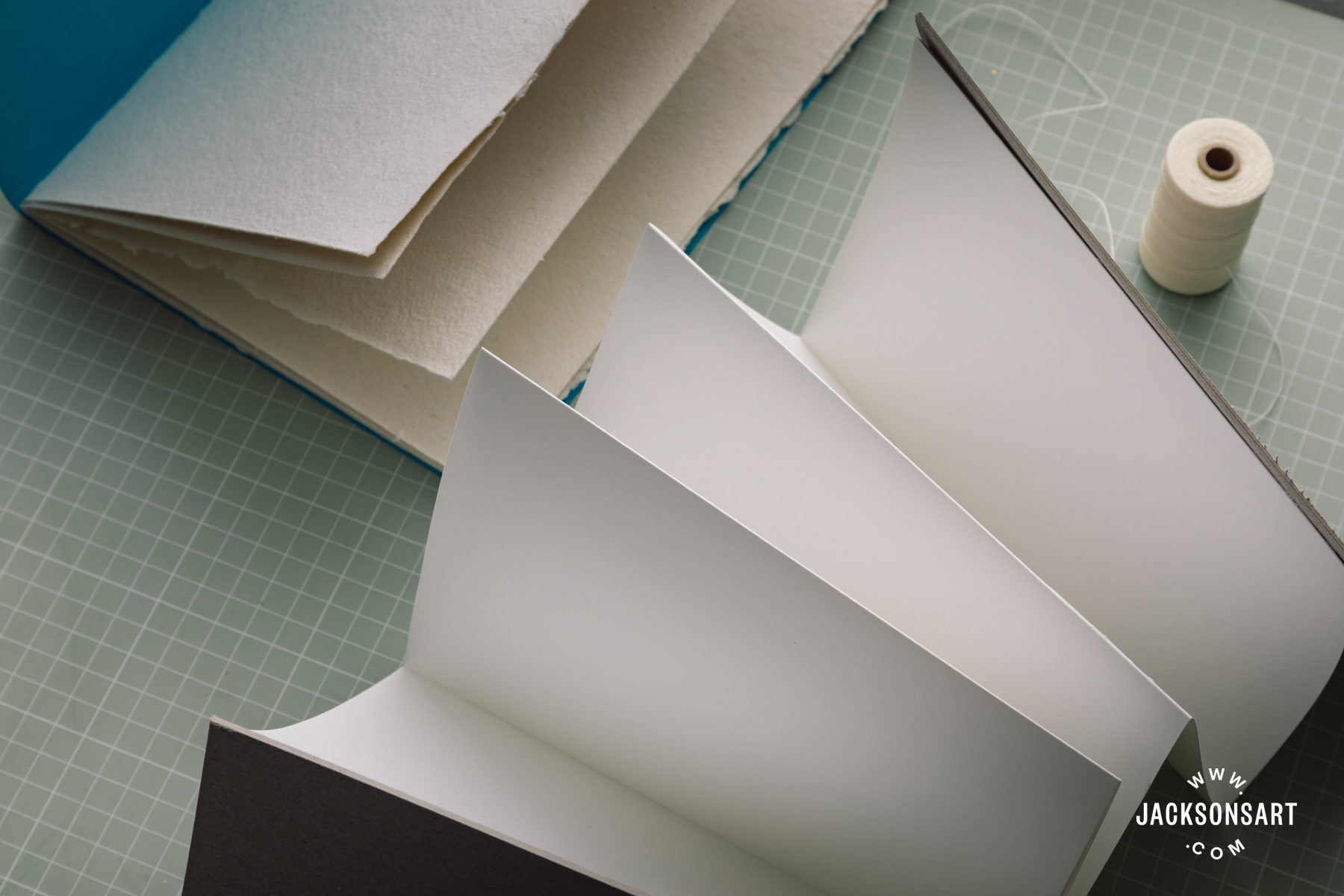
A History of the Artist’s Book and How to Make Your Own
Artists’ Books Throughout History
What is Considered to be the First Artists’ Book?
Do Artists Still Make Artists’ Books?
Two Tutorials for Handmade Books
What To Look For in a Blank Sketchbook to Make an Artist’s Book
What is an Artist’s Book?
Artists’ books are works of art, in the form of a book. This can encompass a variety of forms, from a one-off completely handmade book to a printed edition. The essential point is that the entire book is the artwork, and not about the artwork. They shouldn’t be confused with exhibition catalogues or art history books in this way. A separation from the formal publishing world is important to the history of artists’ books – they are often self-published and funded, hand-printed, painted and drawn, and made in limited editions. They differ from a sketchbook in the light in which they are intended to be seen – a sketchbook is personal and usually preparatory. Artists’ books are made with the intention of being appreciated and enjoyed. A sketchbook (the blank object) becomes an artist’s book as soon as the maker decides that’s what it is.
The book format offers a multifaceted approach, where the repeated (through page turning) and the individual (through looking at one page) combine to convey a sense of a progressing idea, and often narrative. Style can change throughout the course of the pages, and the sense of time given by working your way through affects the reception of the work within the sheets. Some artists’ books may contain pop-outs, be made from unconventional materials, contain text or none at all, and be made of one media, or multiple. They are as varied as the artists who have created them.
Artists’ Books Throughout History
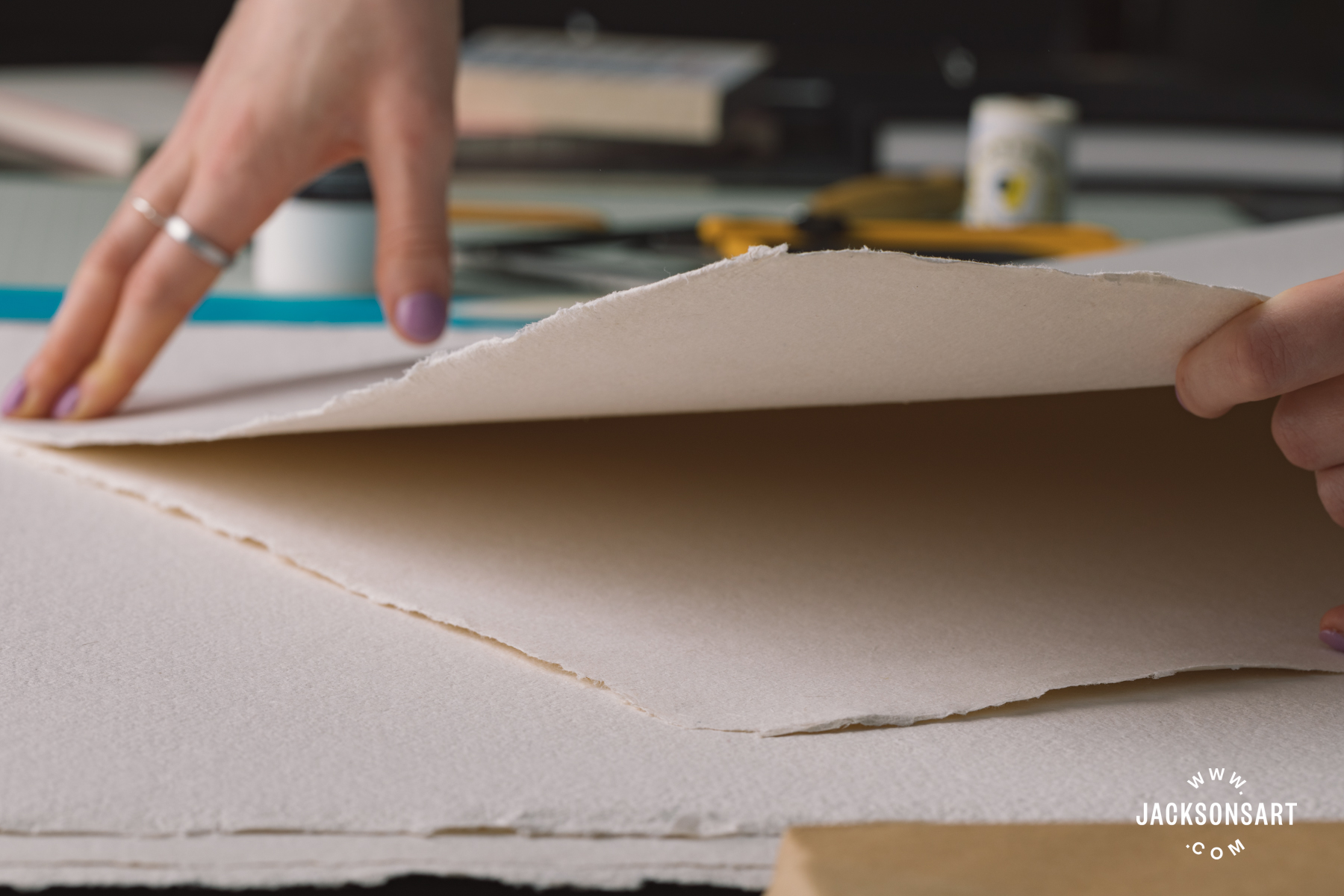
This is by no means an exhaustive history of all the artists’ books ever made – they are as varied and plentiful as any other art form, across cultures and time till this day. The one unfortunate aspect of writing about artists’ books in a blog format is that many of the images of these incredible works are copyrighted. Through your own search, I would encourage you to find a much greater abundance of examples and you can often see them in person through museum collection libraries on request. The ones I have chosen provide a broad stroke of the history of the medium.
What is Considered to be the First Artist’s Book?
Although there is evidence of artists making books since the early Medieval period, by today’s definition they would not be considered artists’ books. Illuminated manuscripts are incredibly detailed, skillfully made objects that are not lacking by any means in artistic touch. Today, they are not usually considered artists’ books because they were created for the Church, or for personal belief.
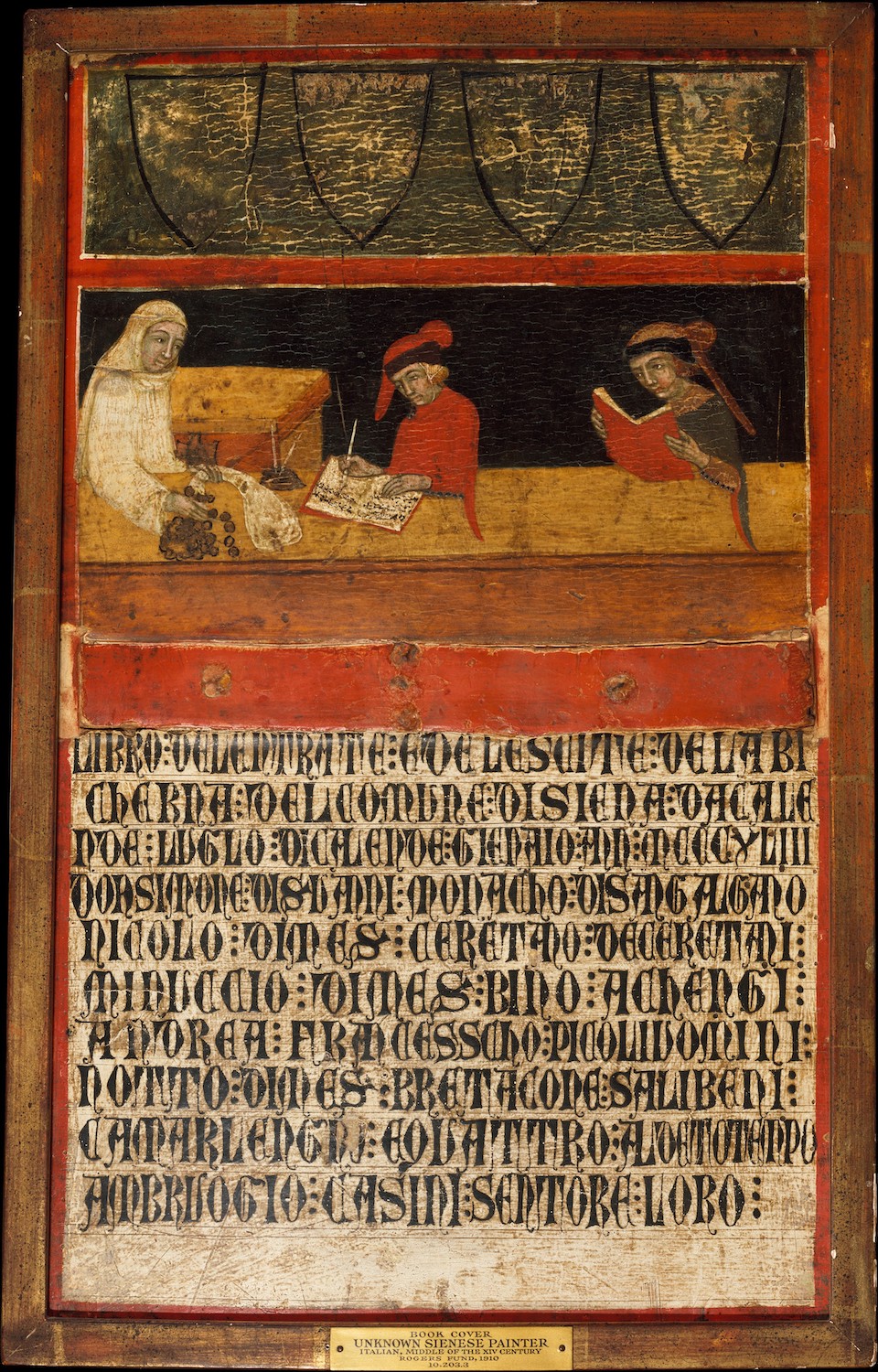
Unknown Sienese Painter
Tempera on wood
The Metropolitan Museum of Art
The first book artist is often considered to be William Blake (1757-1827) since in his prophetic work he was deeply invested in integrating imagery and text, considering the entirety to be of equal importance. Blake made visionary books which he hand-illustrated and bound alongside his wife, without the precedent of a commissioner, with the content being completely self-generated and published. He set the tone for all of the key factors in artists’ books to this day.
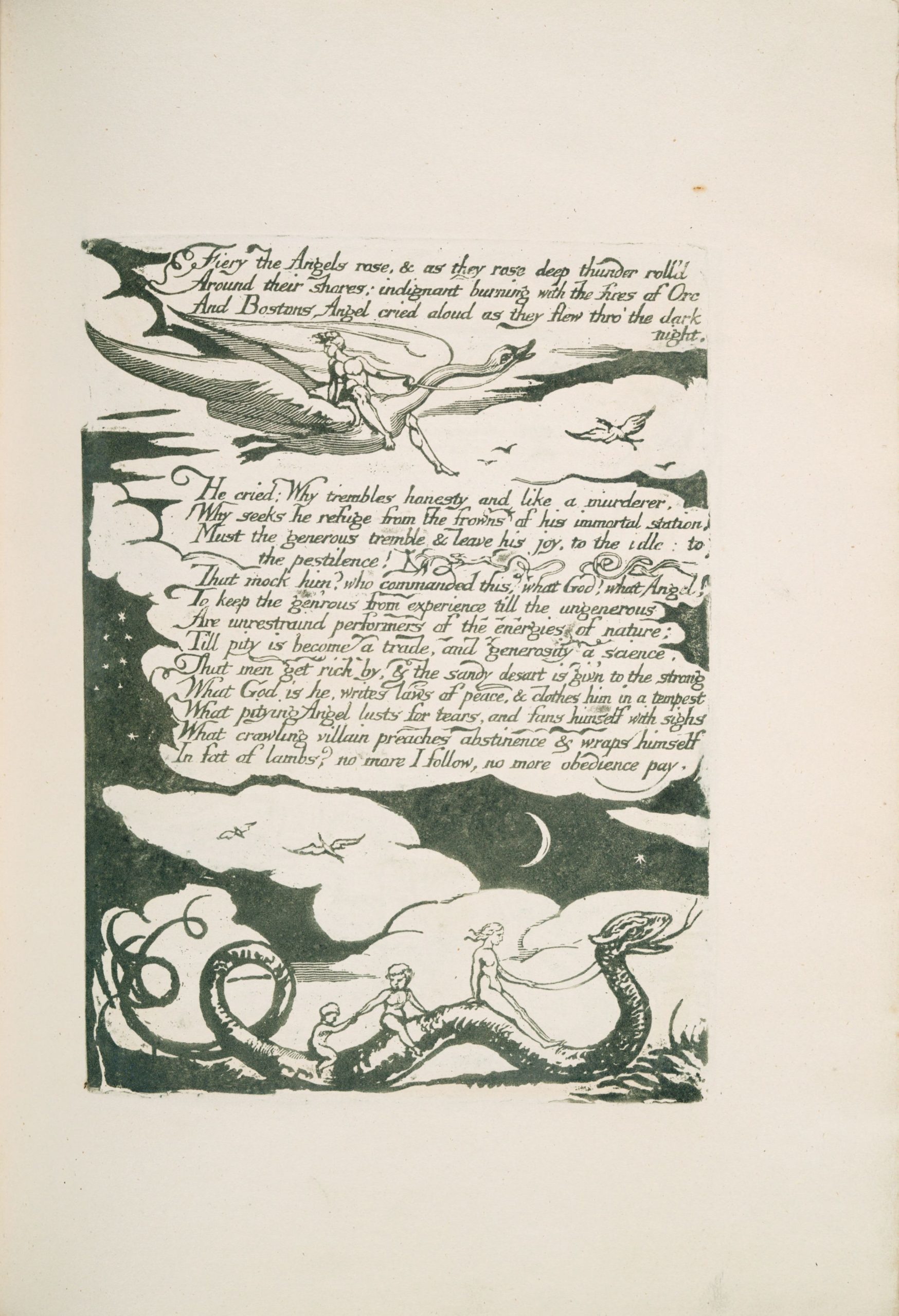
Page from America: A Prophecy (17 copies were made, the full book is made of 18 plates)
William Blake
The New York Public Library Digital Collections
Artists’ Books Through History
By the early 20th Century, typography had become key to the production of artists’ books in both Bauhaus and Italian Futurists’ publications. The materials they used were readily available and cheap, and the book format allowed them to compound their ideas. They used them to distribute their design principles, with the formatting of the book itself embodying the qualities they were seeking. For example, Fortunato Depero created his masterwork Depero Futurista in 1927 as ‘a portable museum’ which charted the array of mediums he tried throughout his career, assembled with typography into a new artwork. It was secured with two bolts so that the pages could be removed and rearranged or displayed on their own. The edition was planned to be 1000 copies, but it’s unclear how many exist to this day. You can view the entire book through the Bolted Book website.
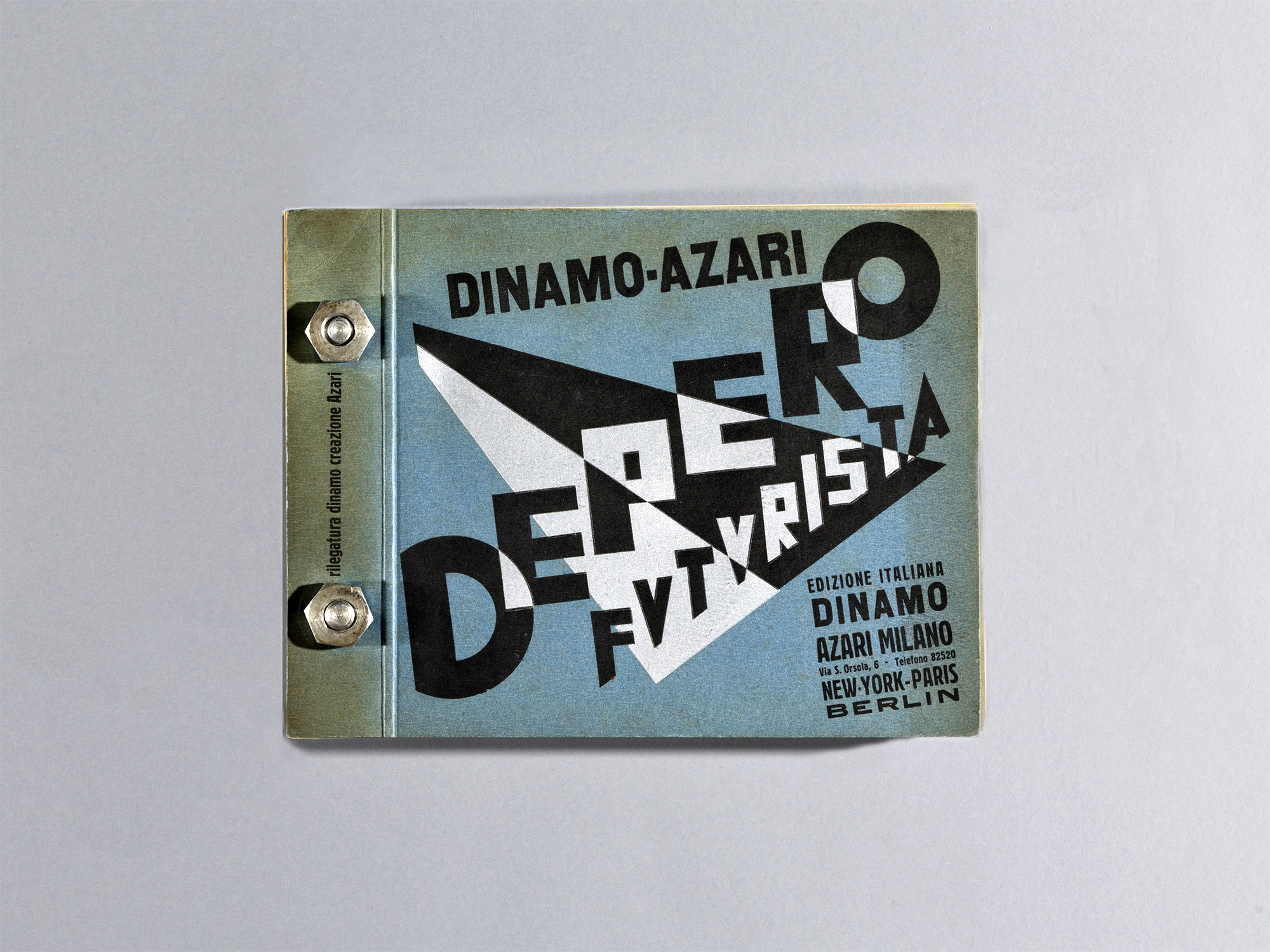
Fortunato Depero
Bolted artist book
The Bolted Book: A New Facsimile
Wassily Kandinsky made an artist book named Klänge which he described as a ‘musical album’. In it, he combined 38 poems he wrote with 56 woodcut prints. He didn’t see these prints as illustrations for the prose, but rather as a synthesis of the arts and music.
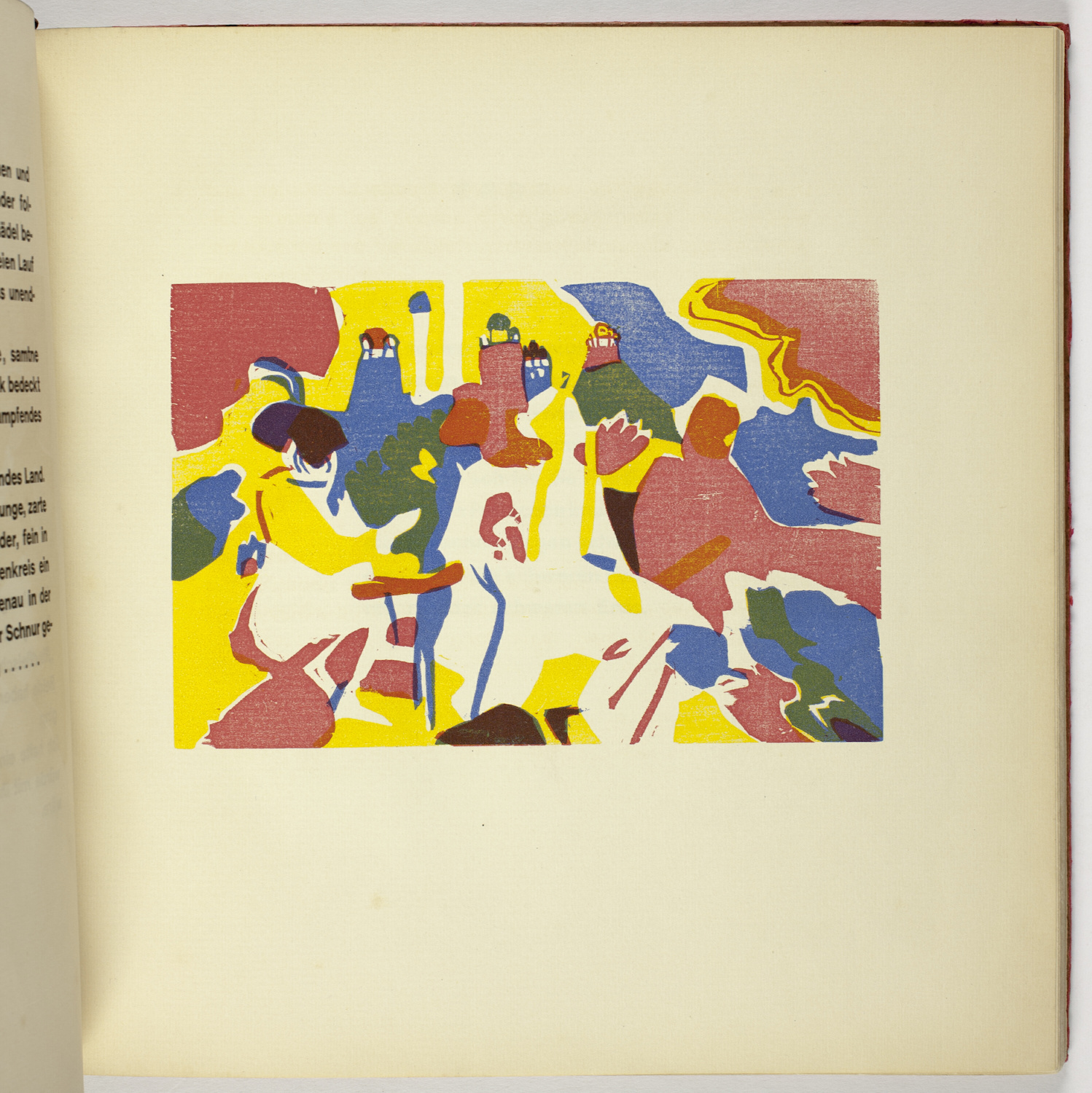
Wassily Kandinsky
Book with 56 woodcut prints
The Art Institute Chicago
In Japan, another kind of artists’ book was being developed. In the 17th and 18th centuries, Japanese textile pattern books were produced to provide examples of potential designs to merchants and their customers called hinagata-bon. By the 20th century the appreciation of the beauty of these books in their own right, as artworks rather than catalogues, was developed by publishers like Yamada Naosaburō. By ascending past the diagrammatic and into the artwork through intricacies of design, personal flair, and beautiful publishing, these zuan-chō became coveted works of art. These published books were made through collaboration with dozens of artists, skilled at printmaking, and the participants often went on to create books full of their own works.
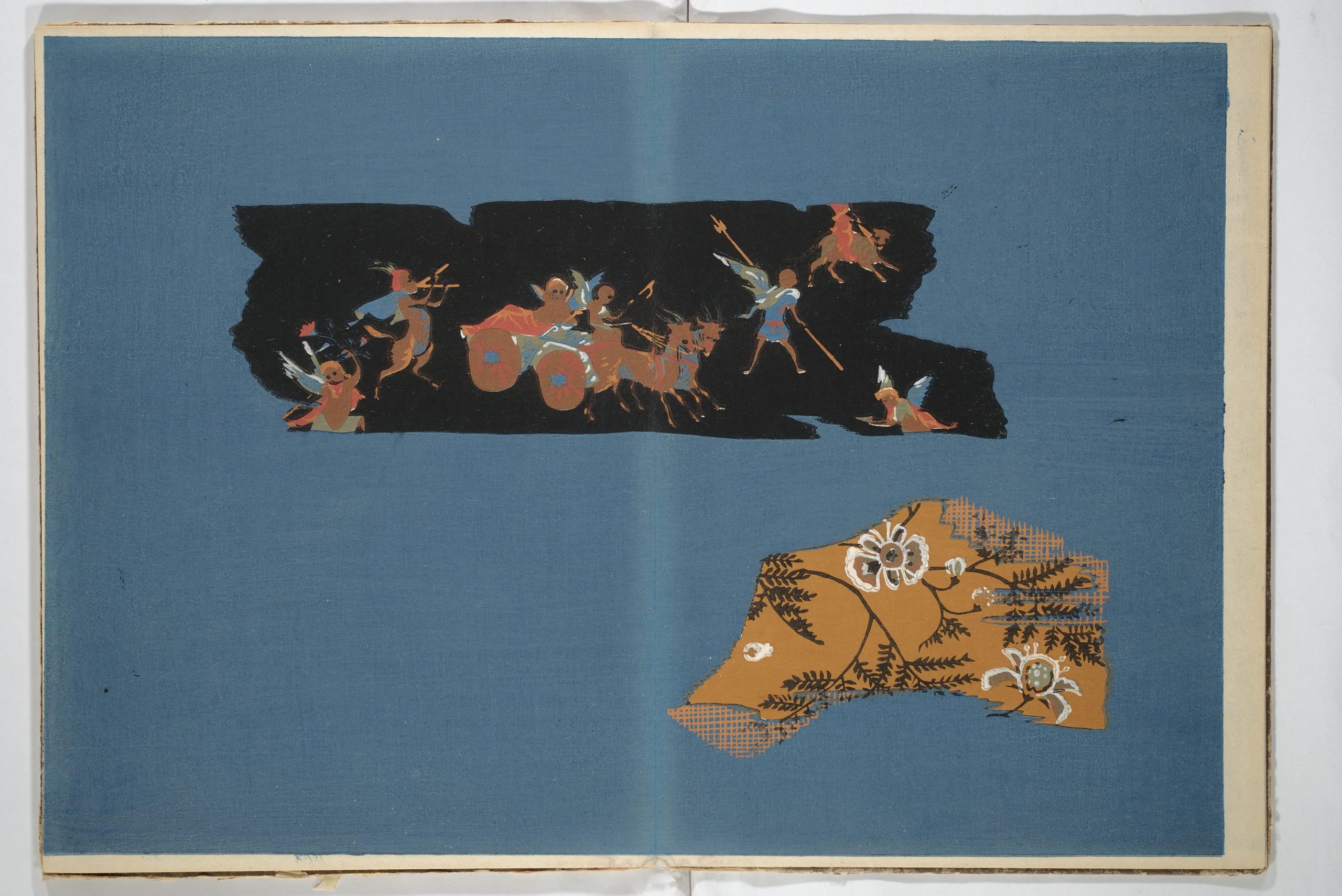
Yamada Naosaburo
Woodblock printed book; ink, colour, mica, and metallic pigments on paper
The Metropolitan Museum of Art
Beyond the early 1900s, many examples of images of artists’ books are not in the public domain, so I’ve listed a few examples from this point forth as a start to your research:
Dieter Roth (1930-1998) is often credited with creating what we’d consider to be the contemporary definition of an artist book, in that they were made purely as artworks, not developed out of an industry or higher calling. He began making his books through printmaking techniques he learnt from working in the publishing industry. He later made more experimental works, such as books where he pressed foods like sausage and chocolate into the pages, to create works that would intentionally eventually rot away. He developed radical books with no text, specific binding order or specific motifs, such as his work Children’s Book (1957). He considered artists’ books in this form to be liberating to his practice, calling them ‘like-minded communities of things’.
A number of conceptual artists turned to artists’ books as a means to document their performances or fleeting works of art. Artists’ books became a necessary means to immortalise or explain as well as share their ideas. These include artists such as Lawrence Weiner, Bruce Nauman, Barbara Krueger, and Sol Lewitt.
Louise Bourgeois (1911-2010) made beautiful, intimate artist books containing her printmaking. Age 90, she created Ode à l’oubli, a fabric book made from items such as her own clothing and wedding linen collaged together.
Kara Walker (1969-) made the book Freedom, A Fable, which contains a story about racism and gender discrimination populated by Walker’s silhouetted figures, with the aesthetics of a vintage children’s book. She considered the book format to conceptually signal that this theme is a never-ending story.
Companion by Kiki Smith (1954-) is a concertina book made from lithographs, with figures encircling the pages amongst wolves, a signature motif for her. It alludes to the tale of Little Red Riding Hood, except the girls are unafraid of the wolf.
Do Artists Still Make Artists’ Books?
Artists continue to make books to this day, there are just far too many examples to detail. There are great collections of contemporary works you can view online through many institutions’ websites and via appointment. I’ve listed just a handful below:
National Museum of Women in the Arts – Collection
British Museum – Artists Making Books
Smithsonian Libraries – Artists’ Books Collection
V&A Collections – Artists and the Book
Center for Book Arts – Collections
Two Tutorials for Handmade Books
Many artists’ books are handmade, with precise decisions being made from the choice of paper to the very binding of the book itself. Here, I’ve detailed two simple tutorials for making your own books as a start to creating your own artists’ books. Feel free to chop and change any of these instructions as you please, like all of the artists I’ve written about have done.
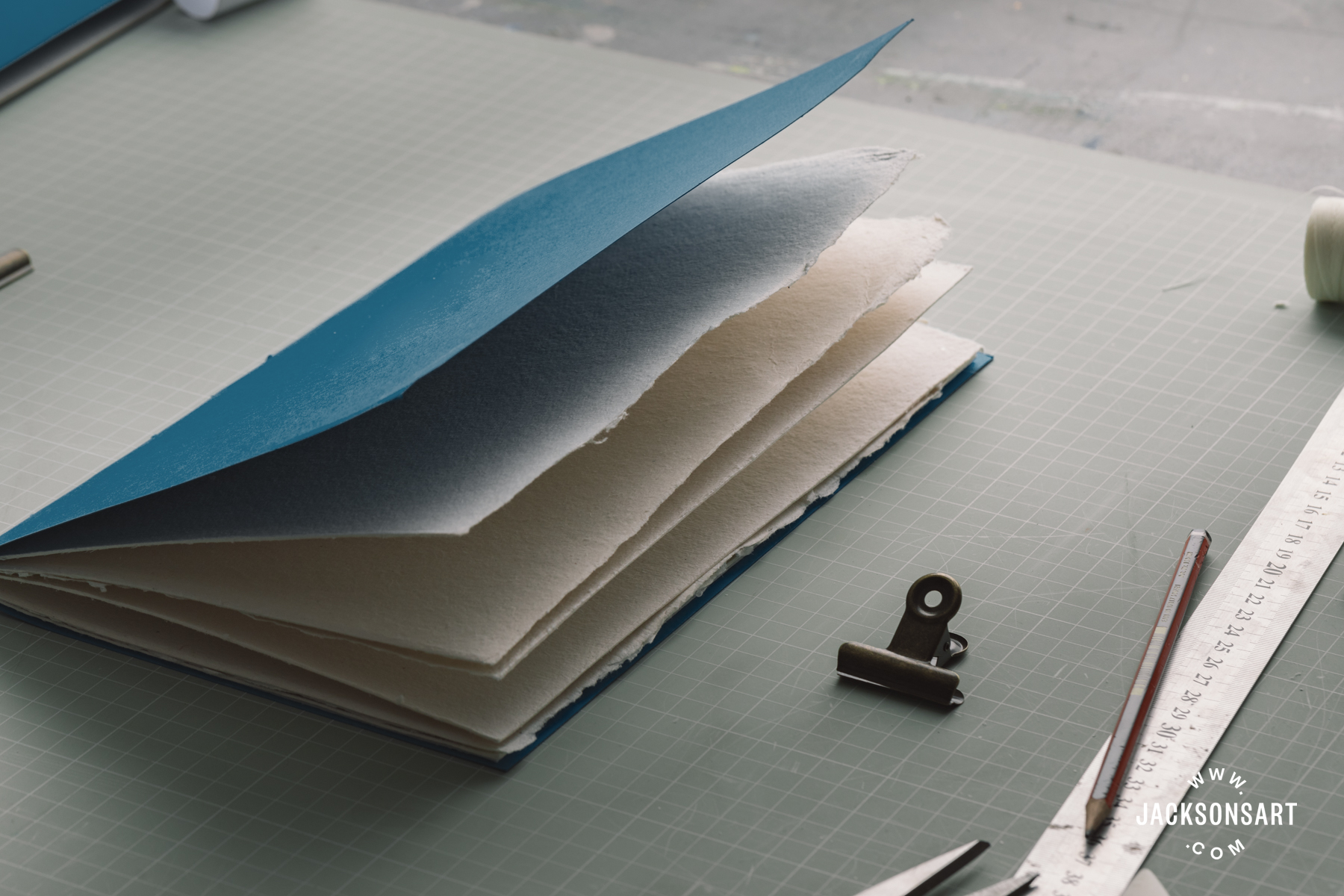
Simple Saddle-stitch Book
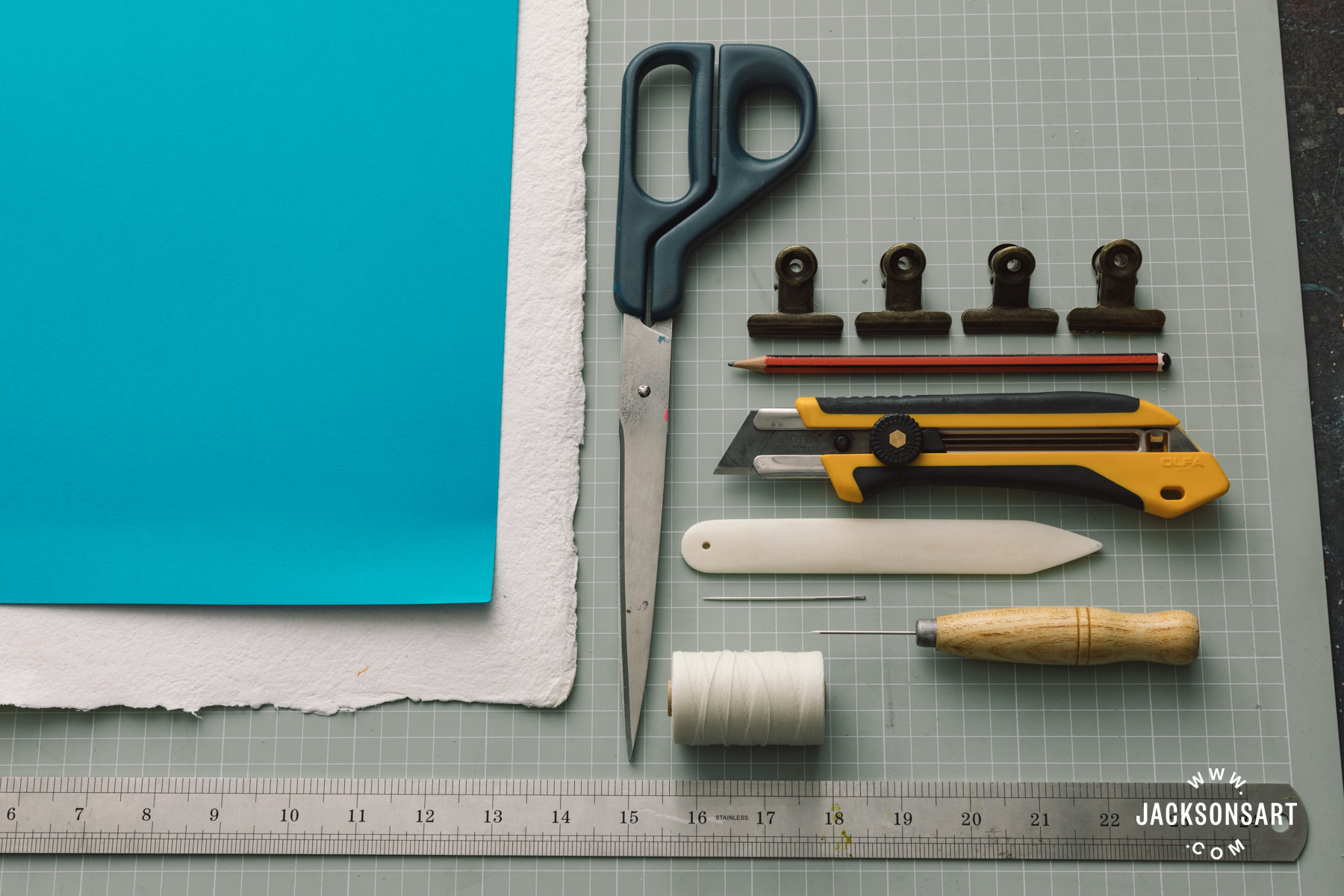
For this book you’ll need:
- Sheets of your chosen paper
- A single sheet of coloured paper
- A needle and thread
- A Ruler
- A Bookbinders Bone Folder
- A Bookbinders Awl
Optional:
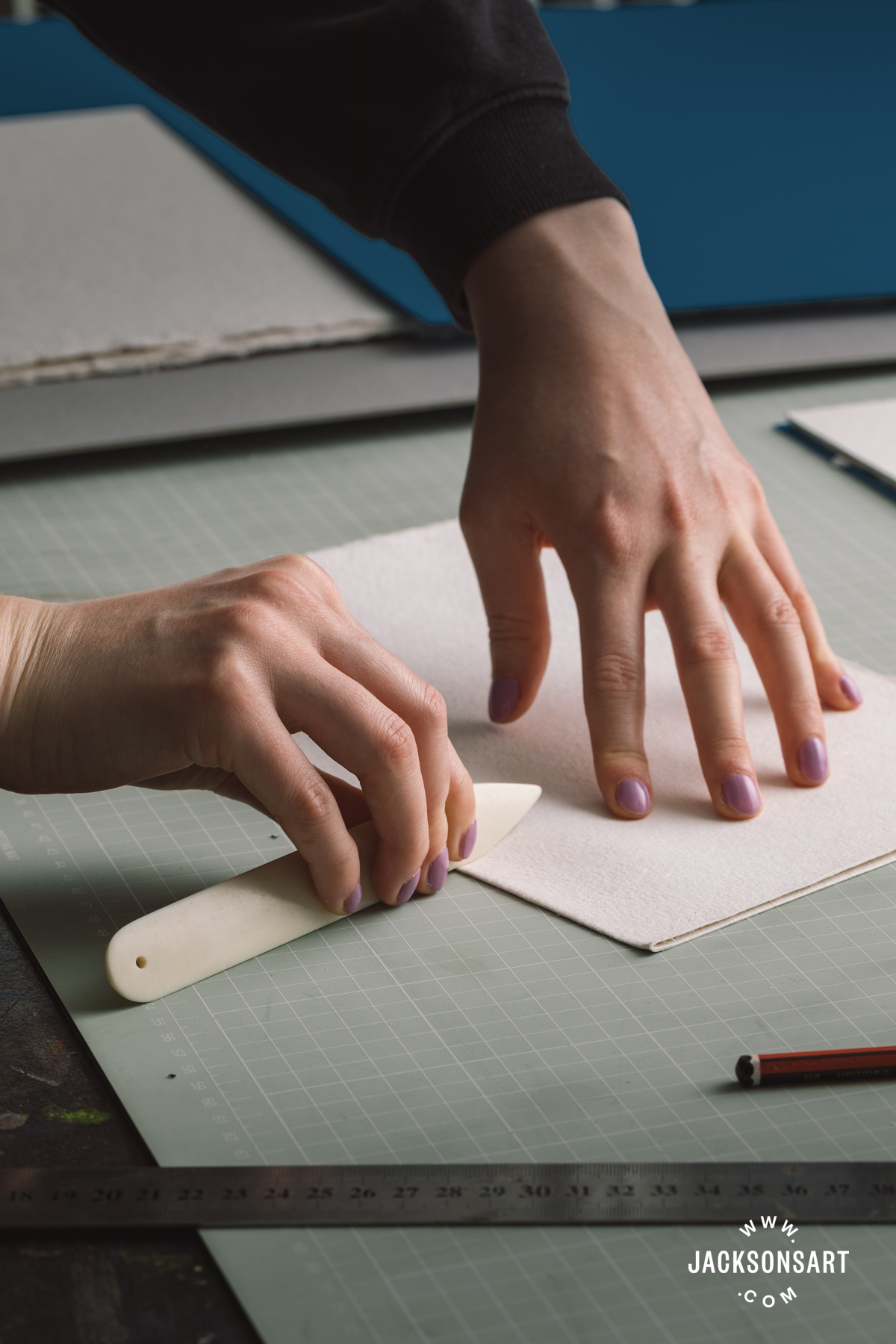
1. Fold your pieces of paper in half one at a time for clean folds. You can use a Bookbinders Bone Folder like I have, or the edge of a ruler, to get a crisp edge. You will need to fold as many sheets as you’d like to have in your book. My paper is one sheet of Jackson’s Eco Paper 300 gsm, which I tore into four sheets before folding.
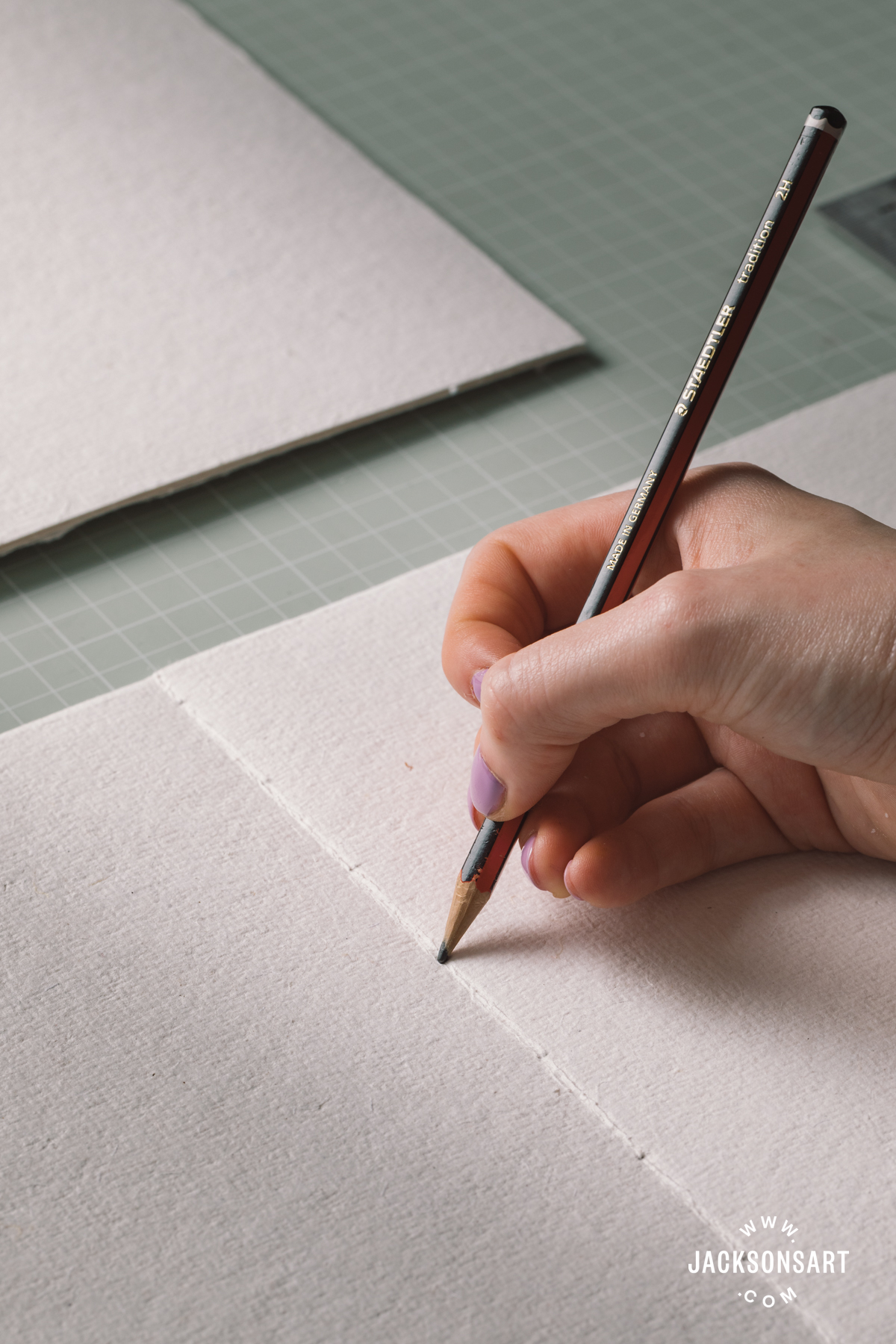
2. Measure out four evenly spaced holes down the fold of the paper, and mark lightly with a pencil. You’ll need to do the same spacing for every sheet so the binding is square.
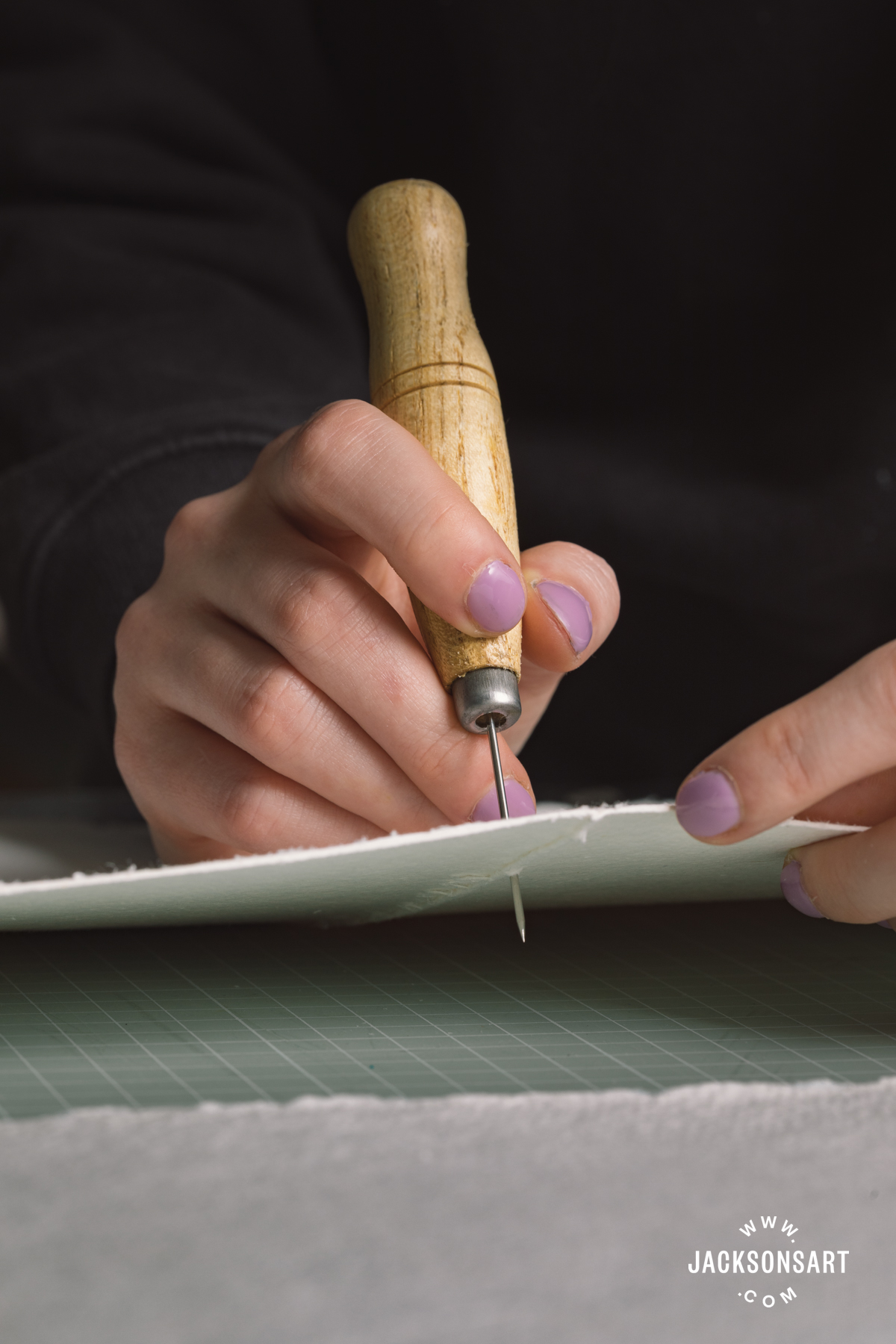
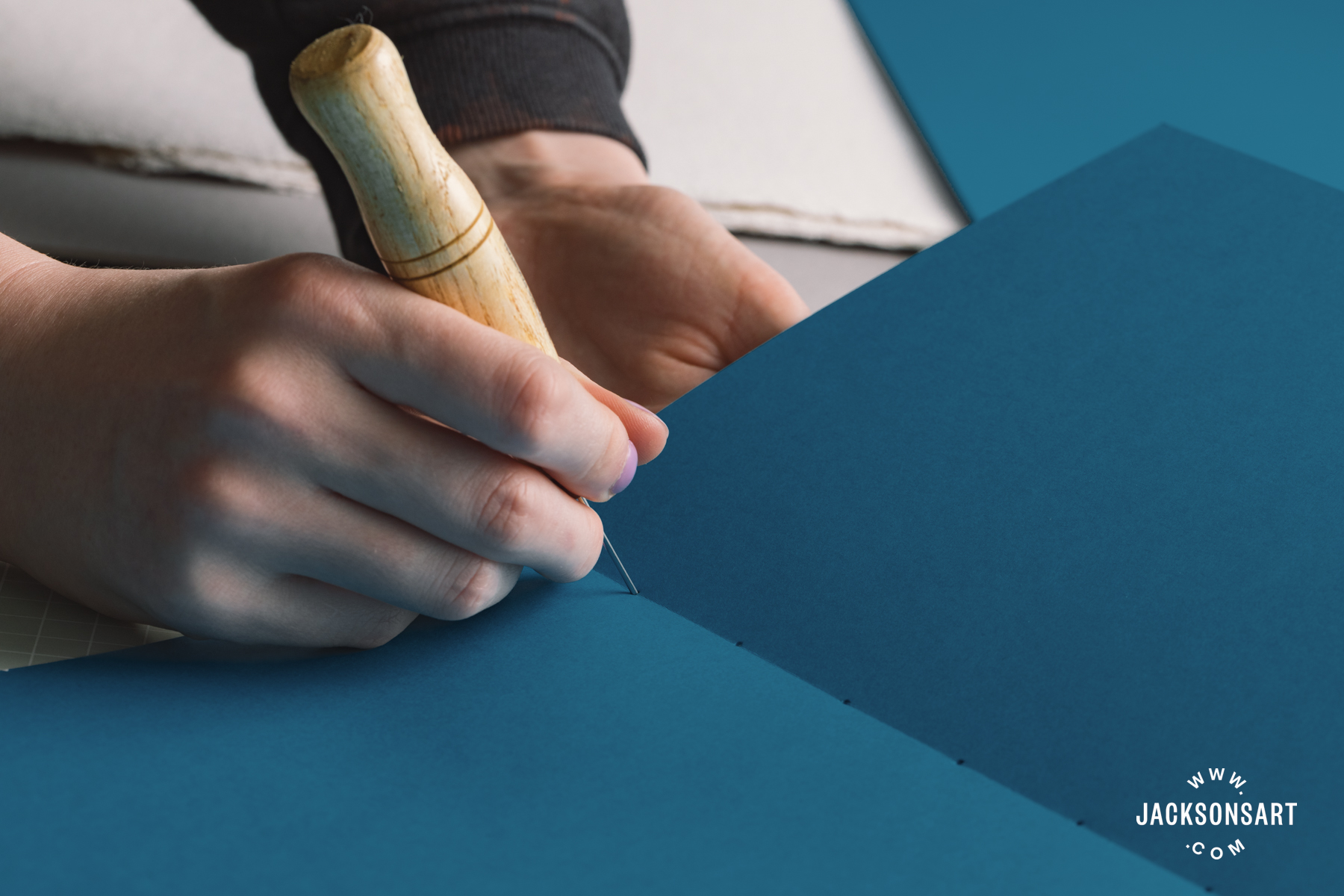
3. Next, poke through the holes with A Bookbinders Awl (or needle if you don’t have one). You could poke through several sheets at once if you have thin paper, but I prefer to do them one at a time in case of ripping or creasing from the pressure.
4. Fold and poke holes through your cover sheet of coloured paper.
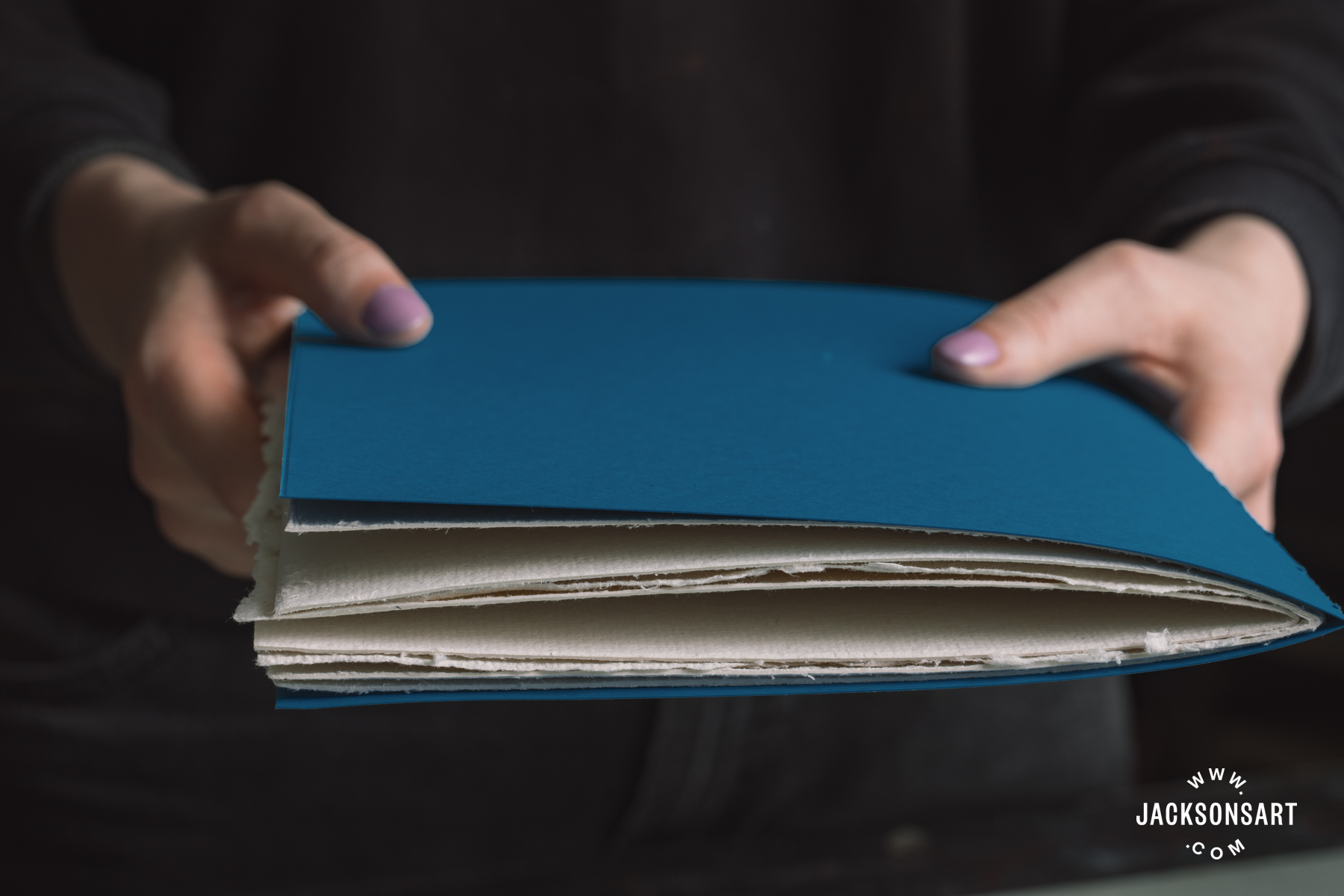
5. Stack your sheets so the holes line up with each other, with the cover sheet at the bottom.
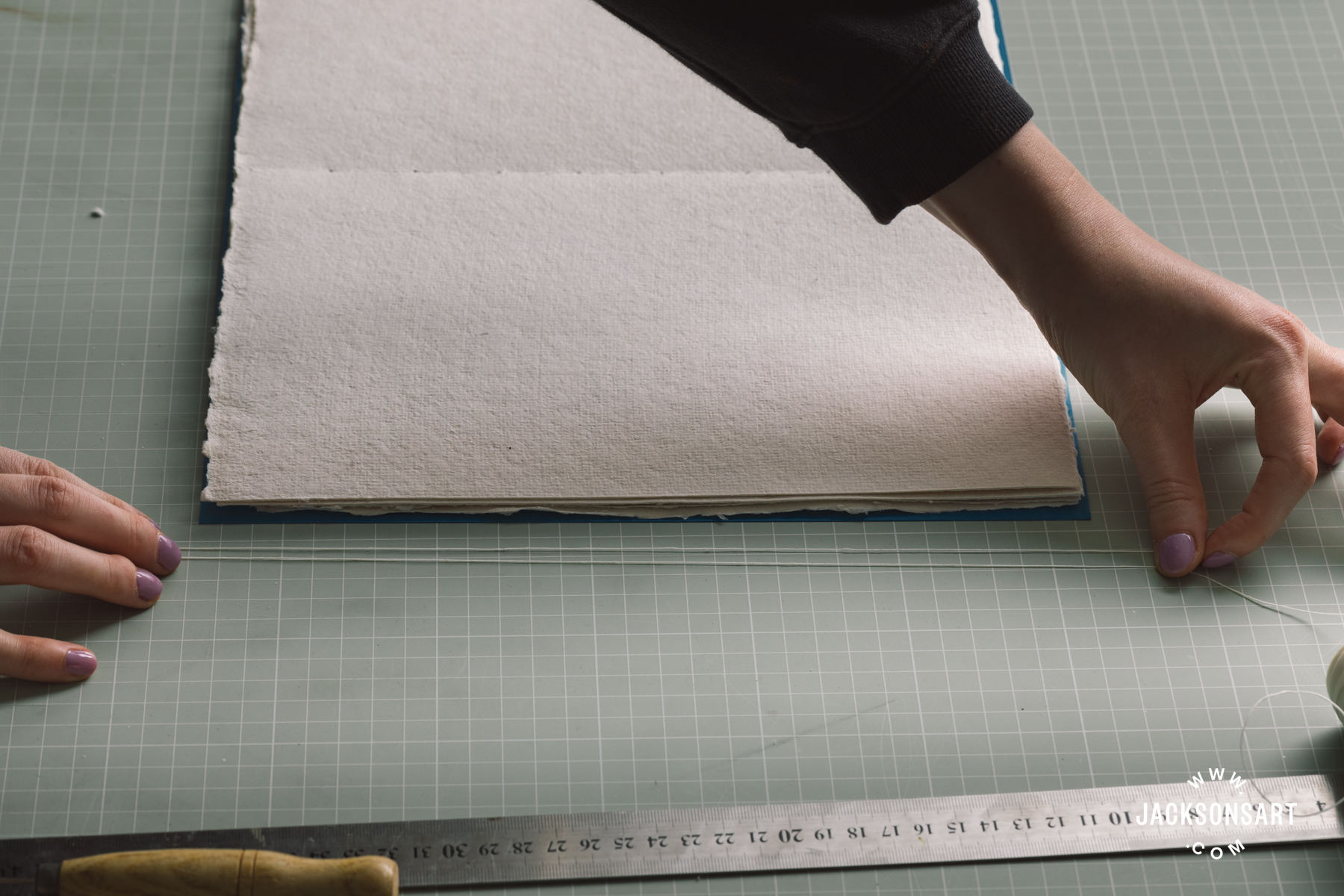
6. Cut a length of thread at least twice the length of the book so you’re sure you’ll have enough to tie it all together.
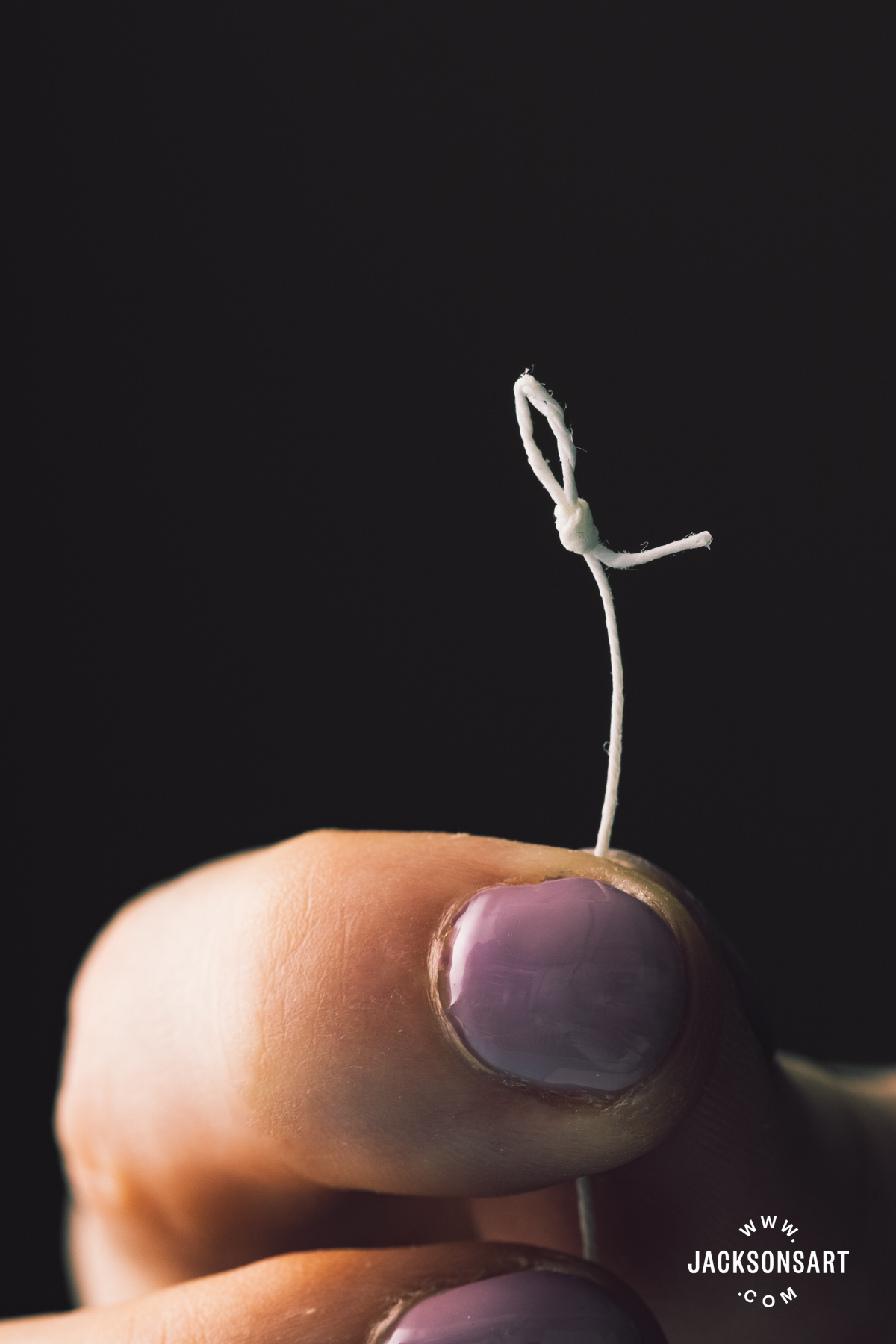
7. Thread your needle and tie a knot at the end, so it doesn’t just slip through the holes.
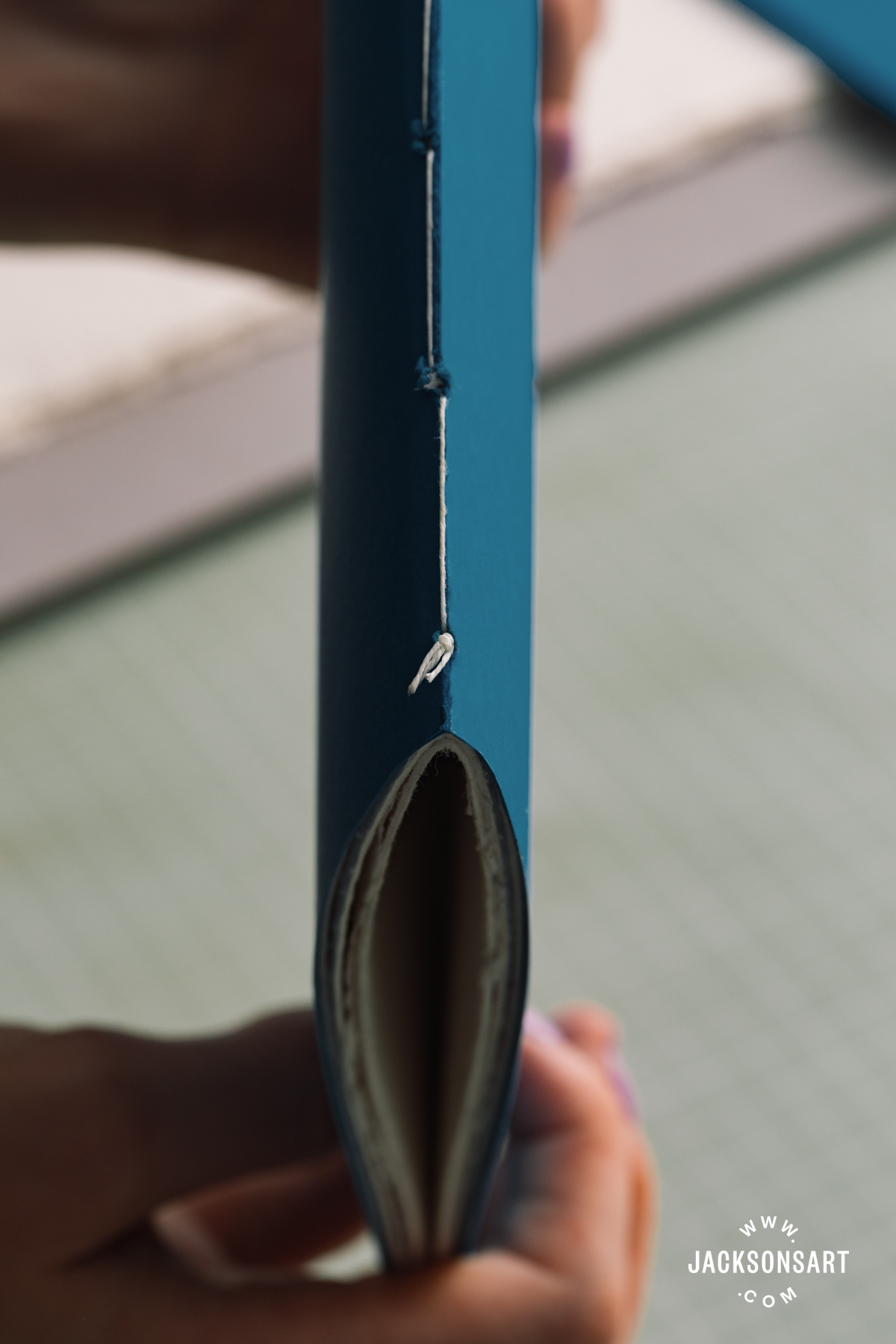
8. Begin to sew the pages together by starting from below, and pushing up through the furthest hole from you. In the next hole push down, pull it up through the next one, and then down again. You are alternating the direction of your needle.
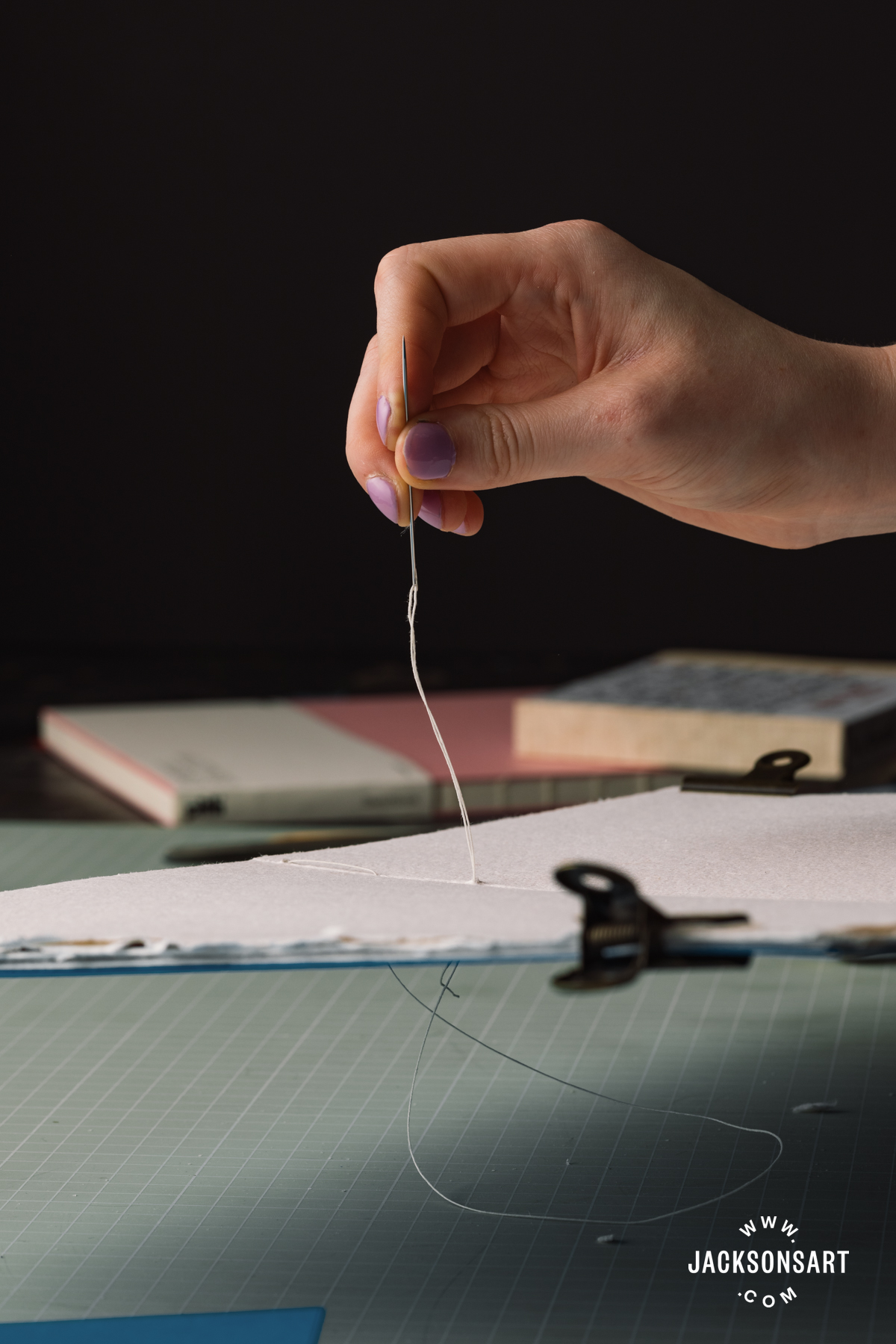
9. Pull this thread tight so there’s no slack in the thread and the knot is against the first hole.
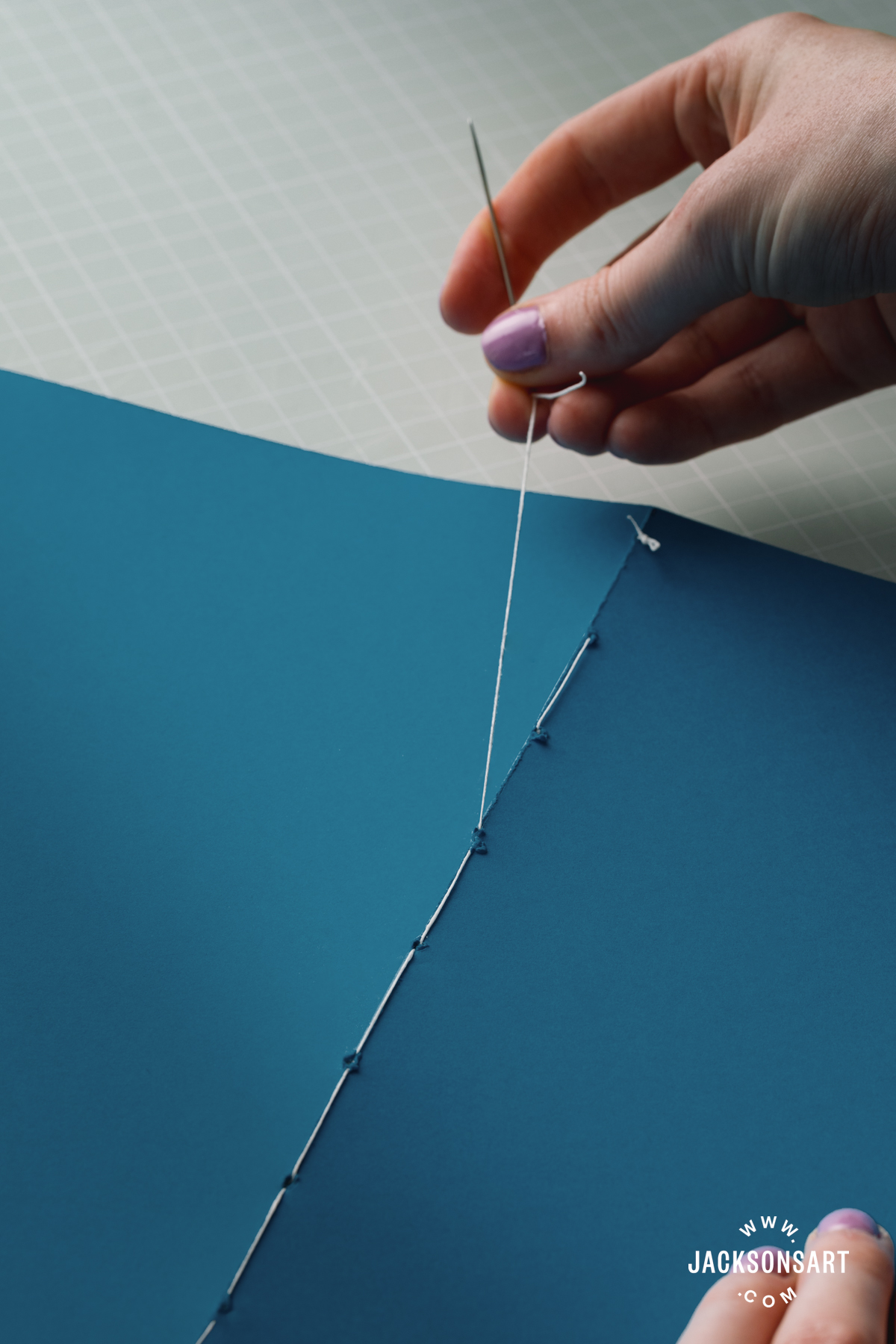
10. Continue threading the holes but in the opposite direction, working back over what you’ve just done, and filling in the gaps between the original stitches.
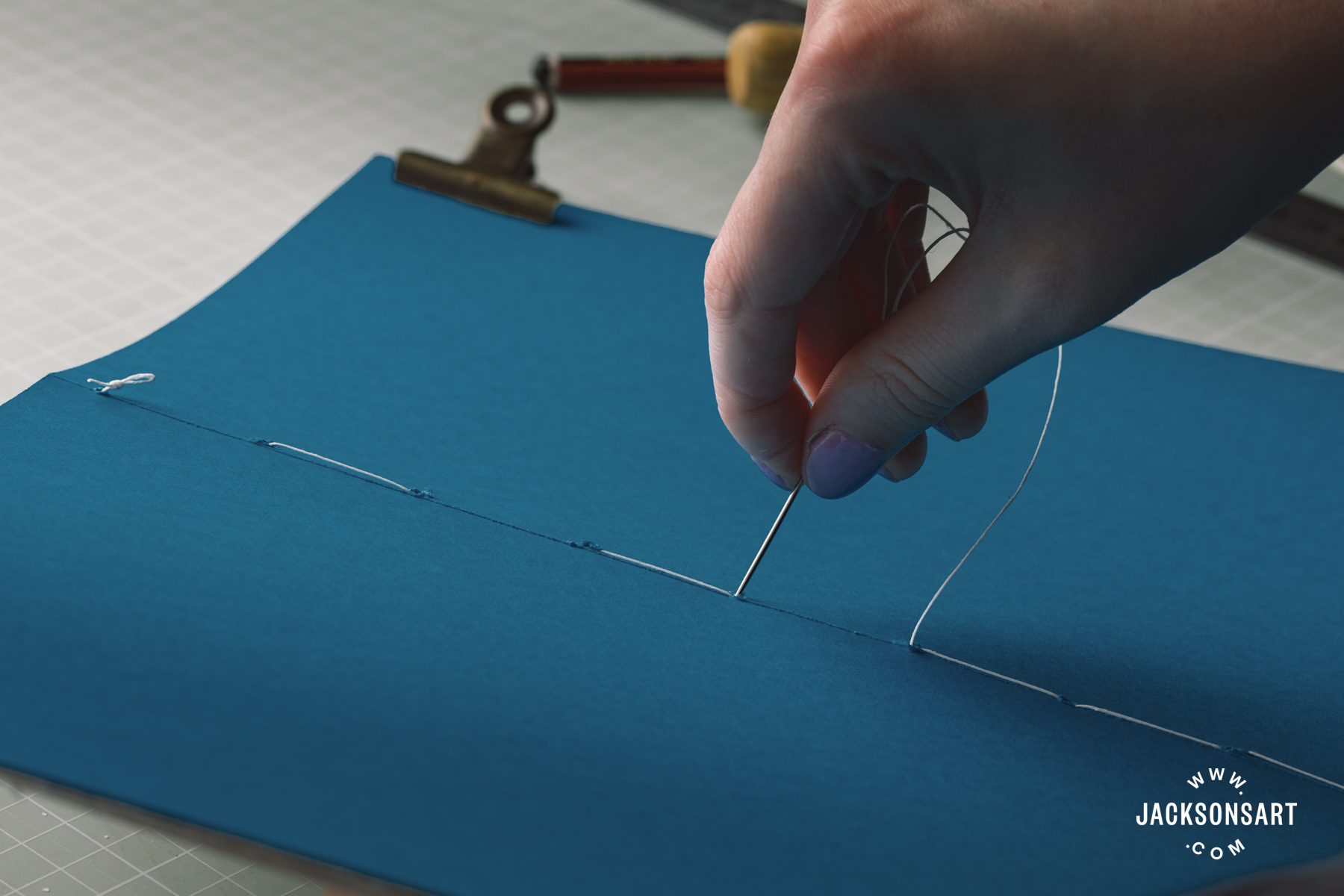
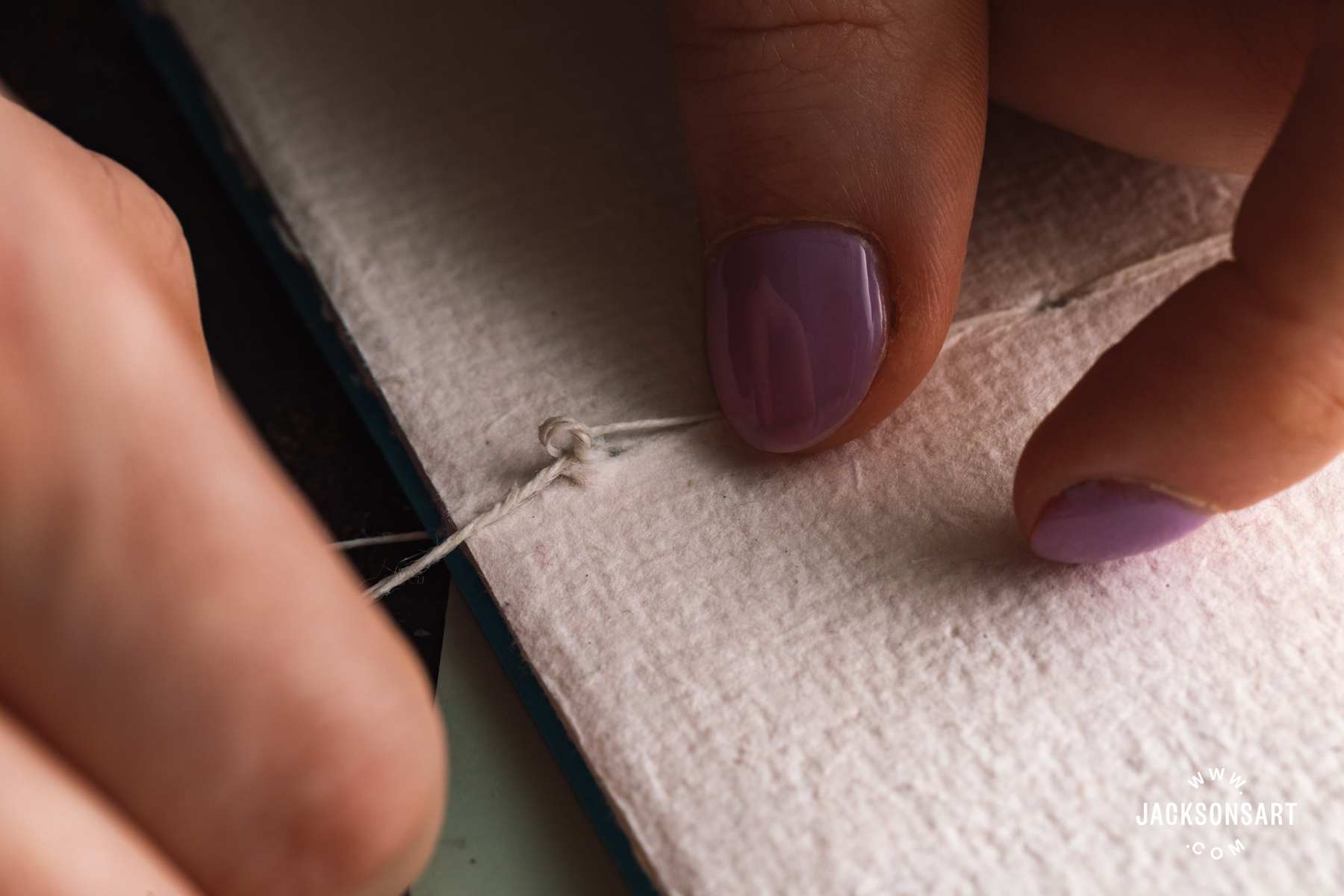
11. Tie a knot at the first hole again on the thread that is going into the hole, then pull the knot through the hole so it’s at the back of the book.

Eight-page Concertina Book
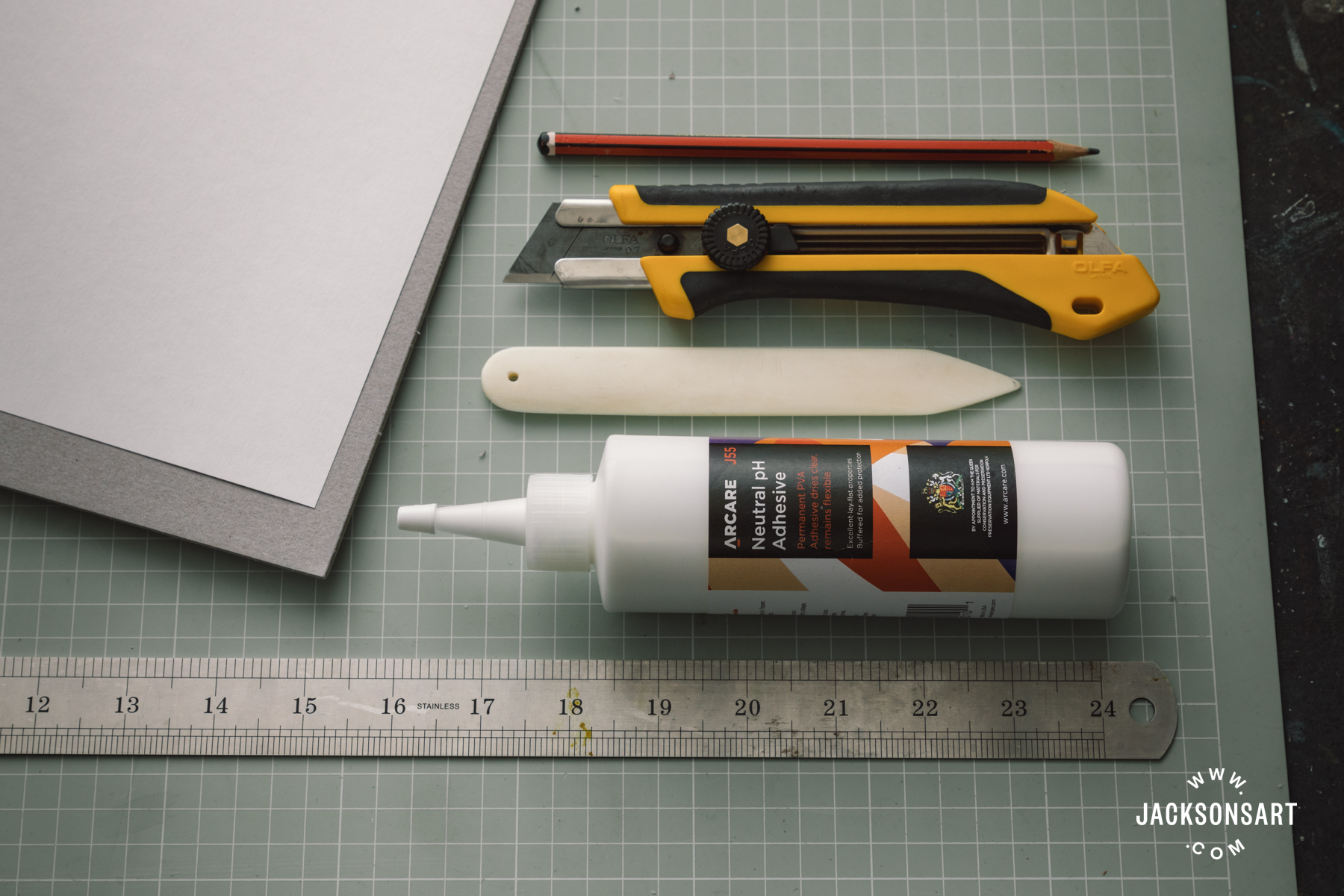
For this book you’ll need:
- A sheet of paper (the larger the sheet the bigger the book will be)
- Scissors
- pH-neutral PVA glue
- Card for end covers
- A Bookbinders Bone Folder
Optional:
1. Fold your paper in half to make it narrow, using the Bookbinders Bone Folder or ruler again to create a sharp edge.
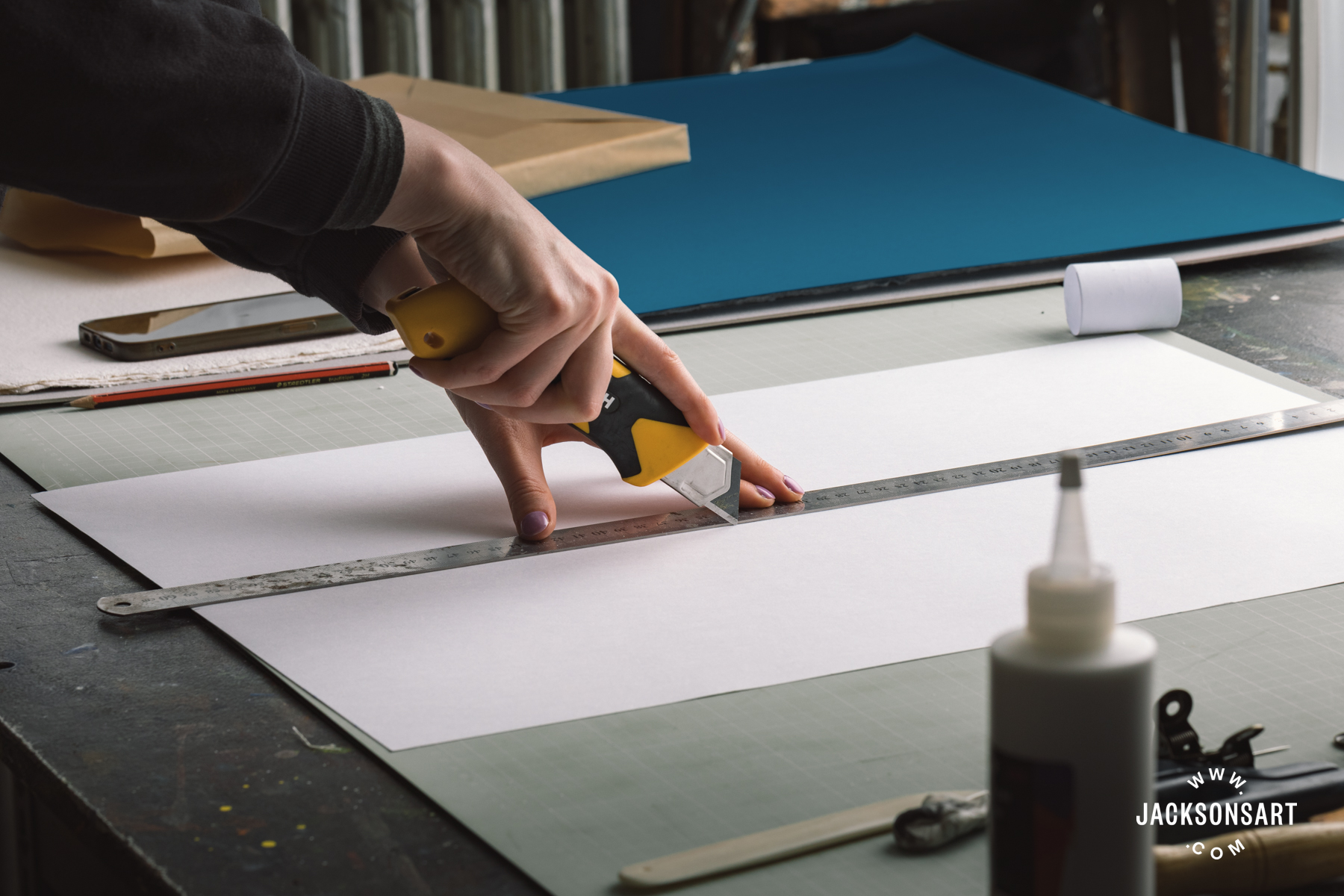
2. Cut or tear along your crease line.
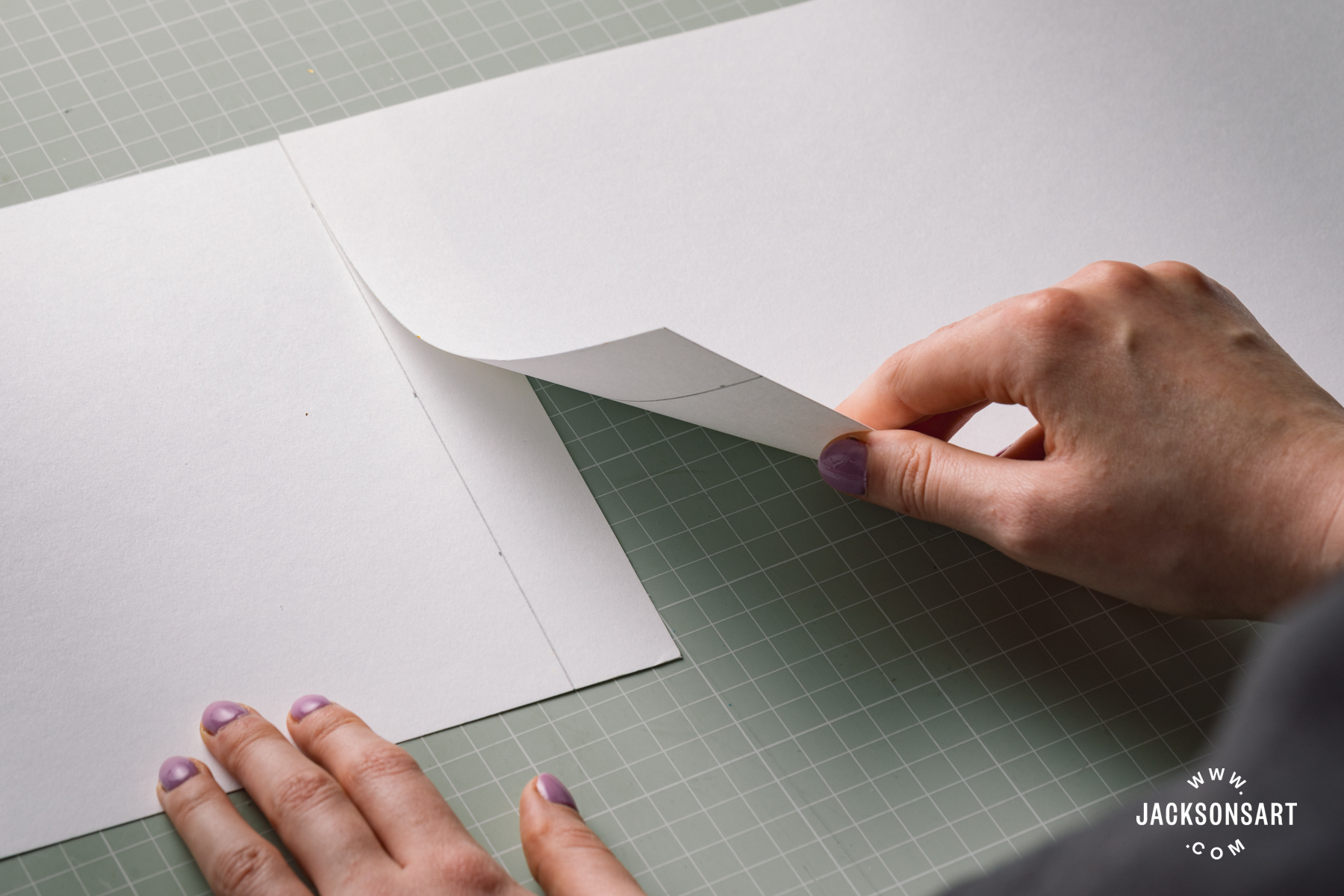
3. Join the paper to make one long sheet with some glue. You can lightly mark out an area of a few centimetres that you’ll apply the glue to, so you don’t get it on a surface you’d like to keep clean.
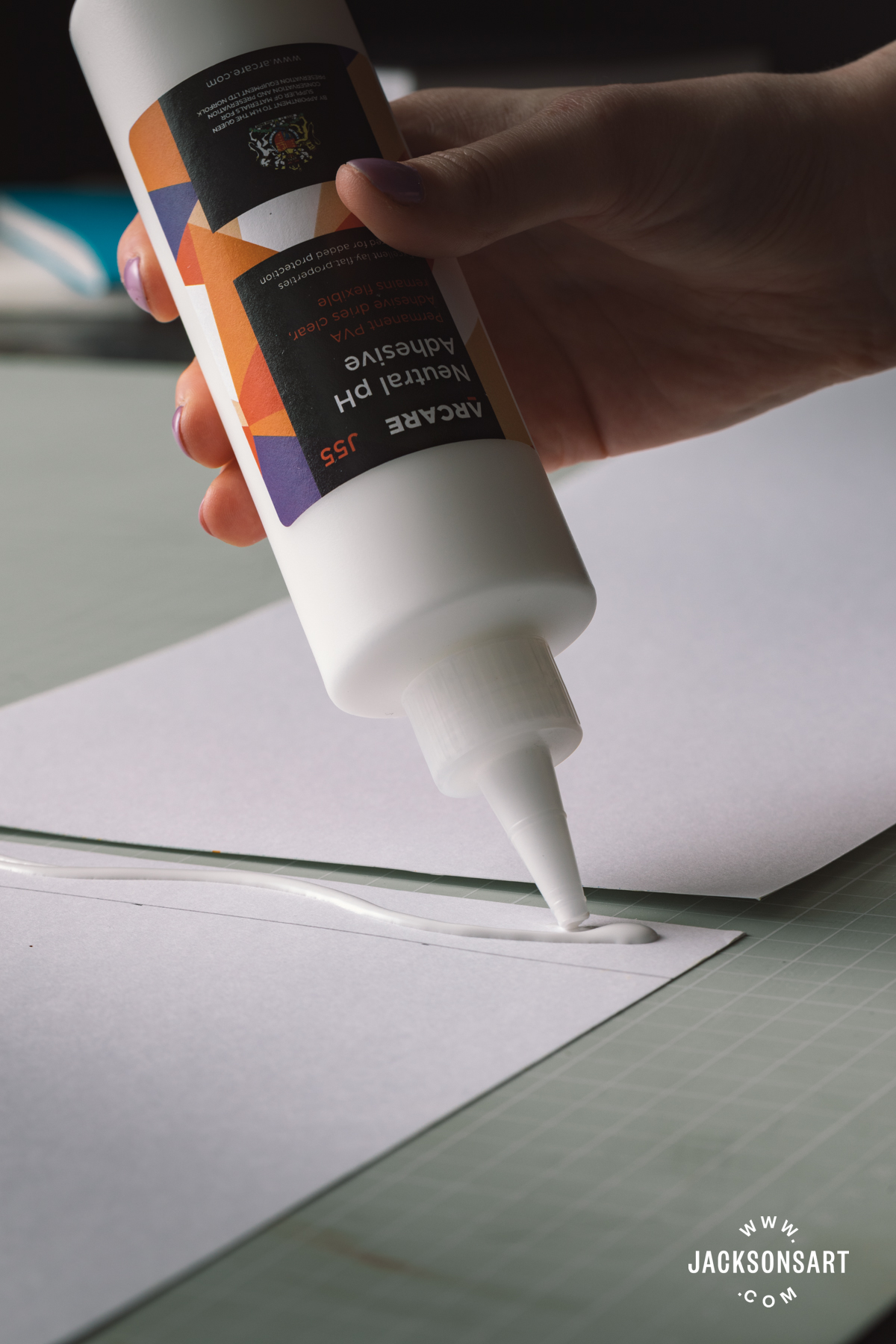
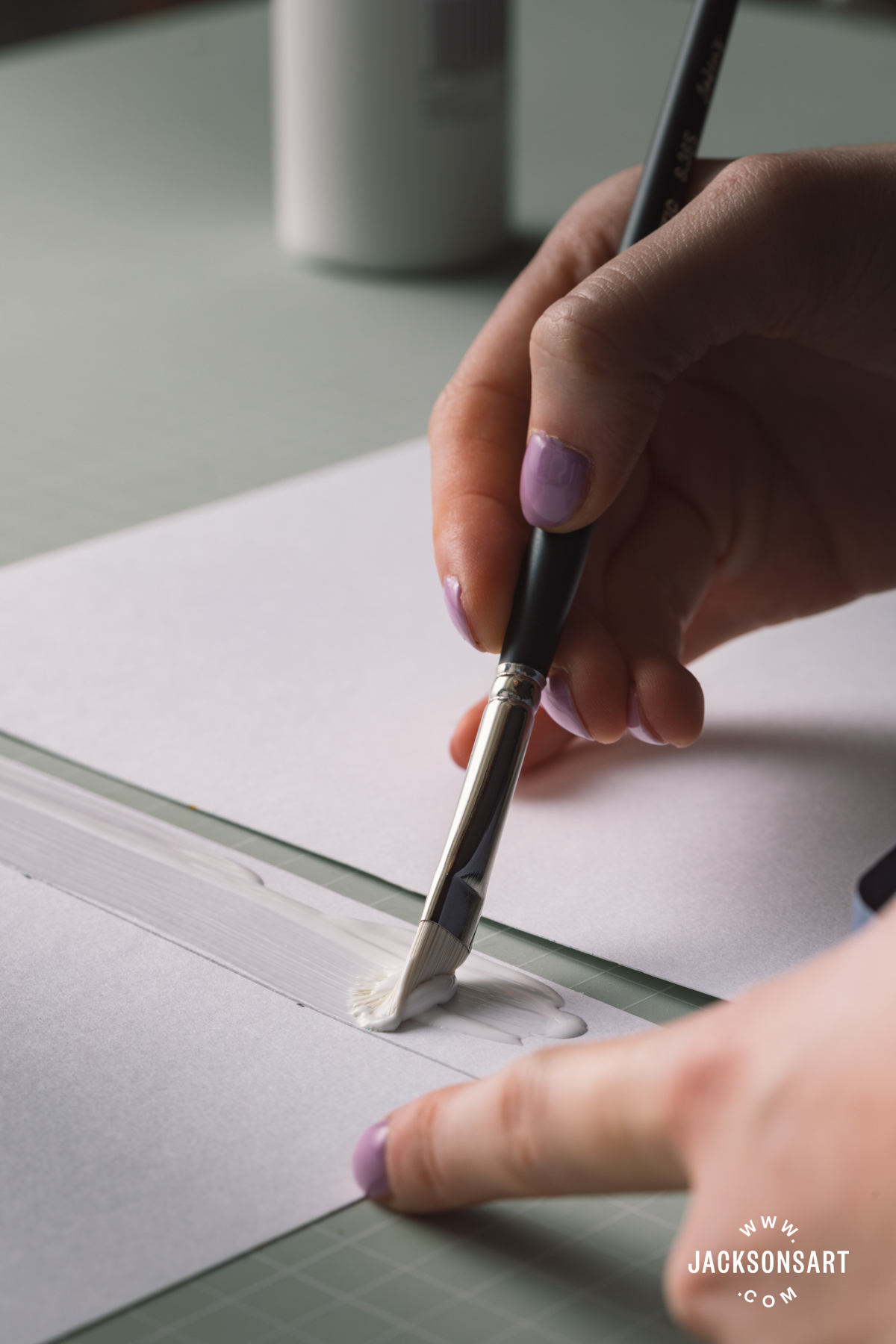
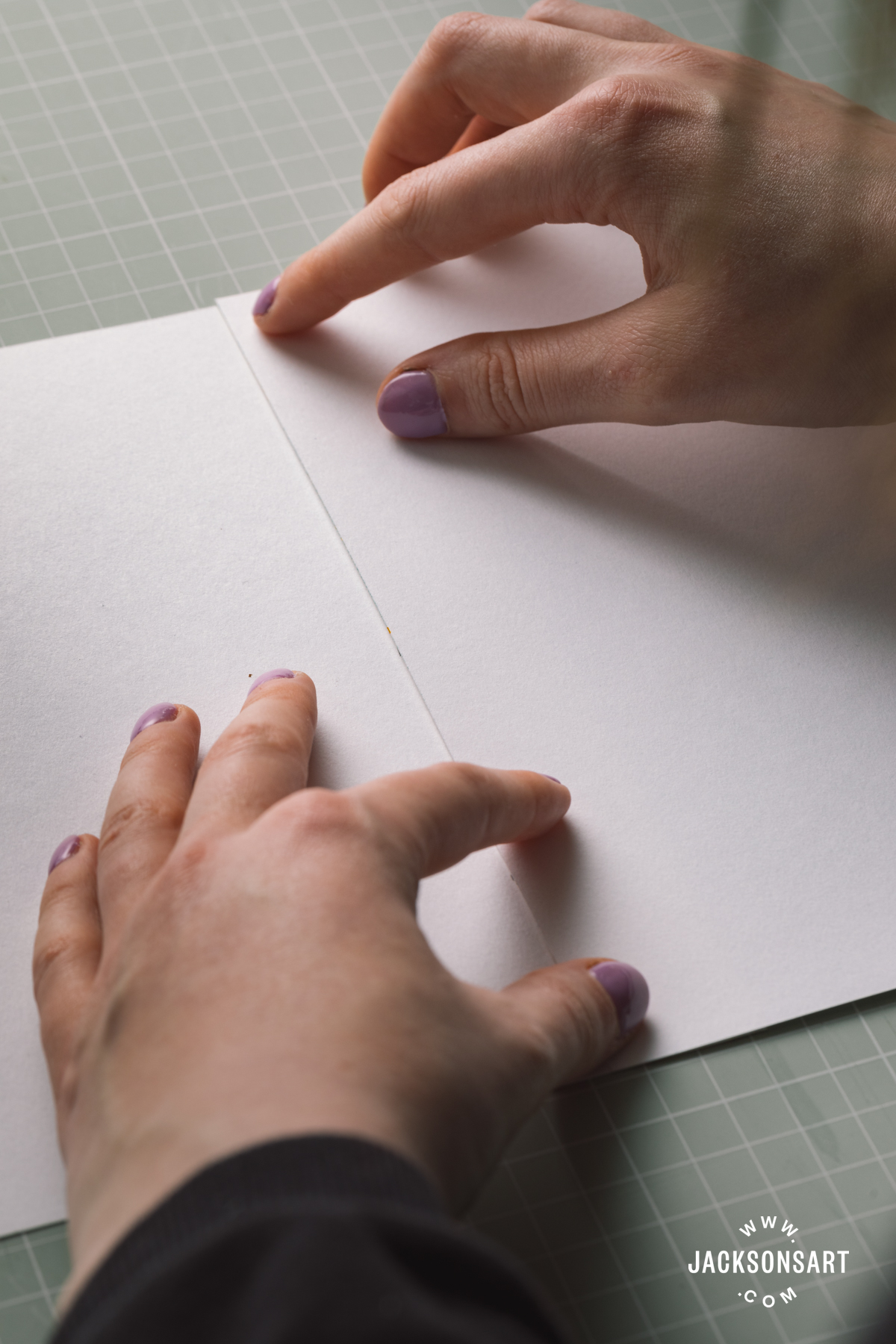
4. Fold the whole length of paper in half and press down on the crease.
5. Open your paper out again, and using the centre fold as a guide, bring one side of the paper in towards it and fold down when the edge meets the middle.
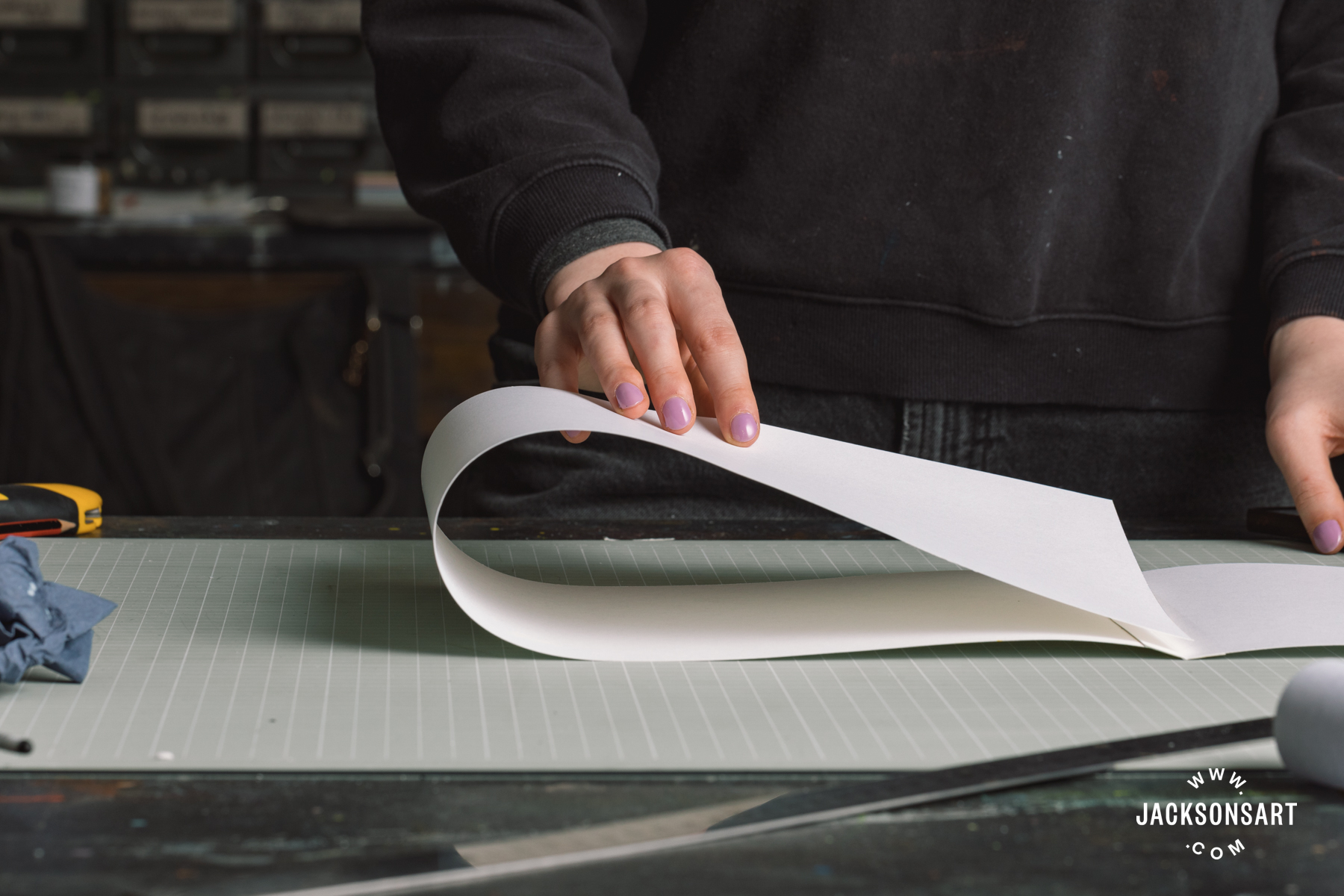
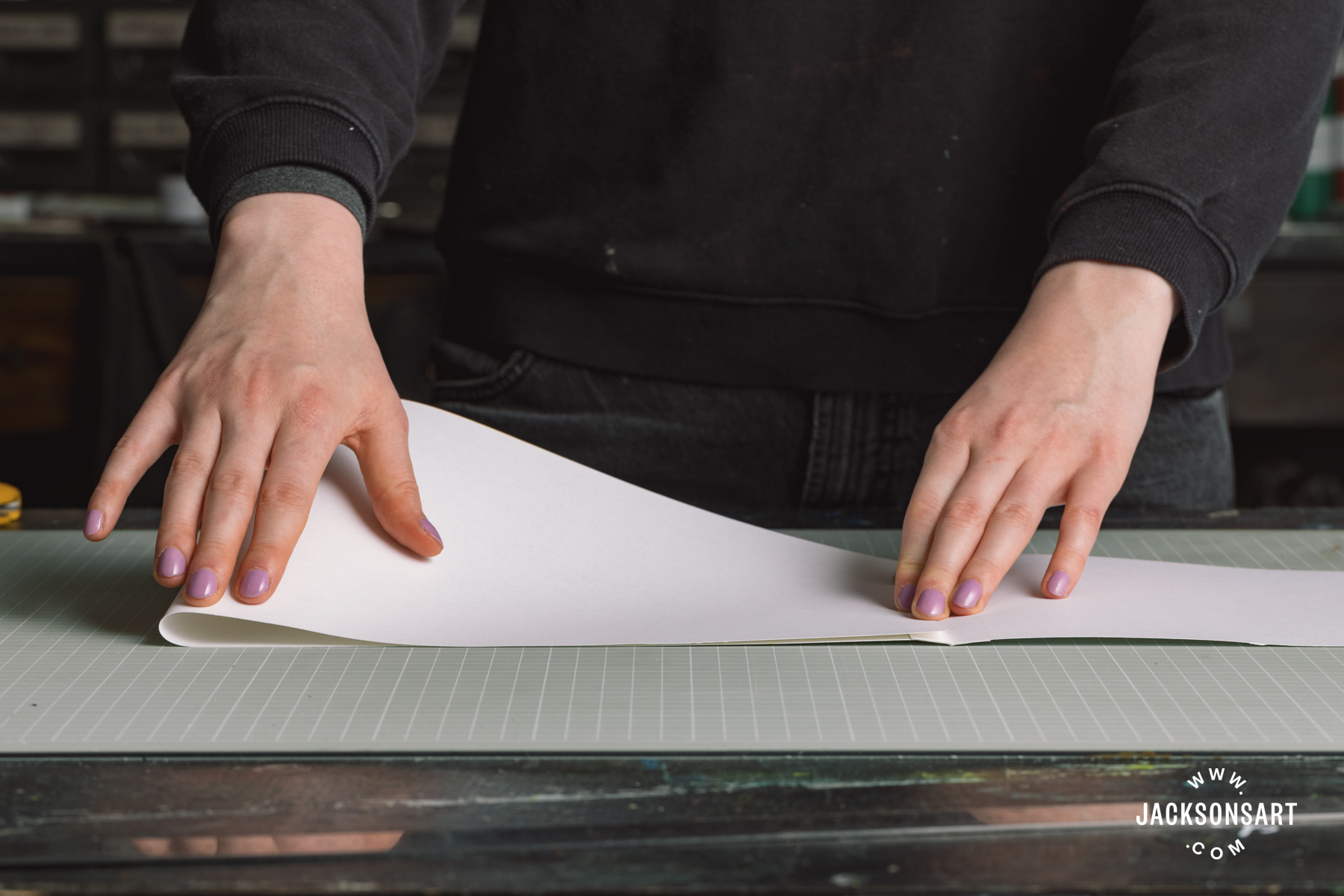
6. Repeat for the other side.
7. Flip your sheet over to the other side.
8. Bring the far left edge over to the nearest crease line, and fold it down.
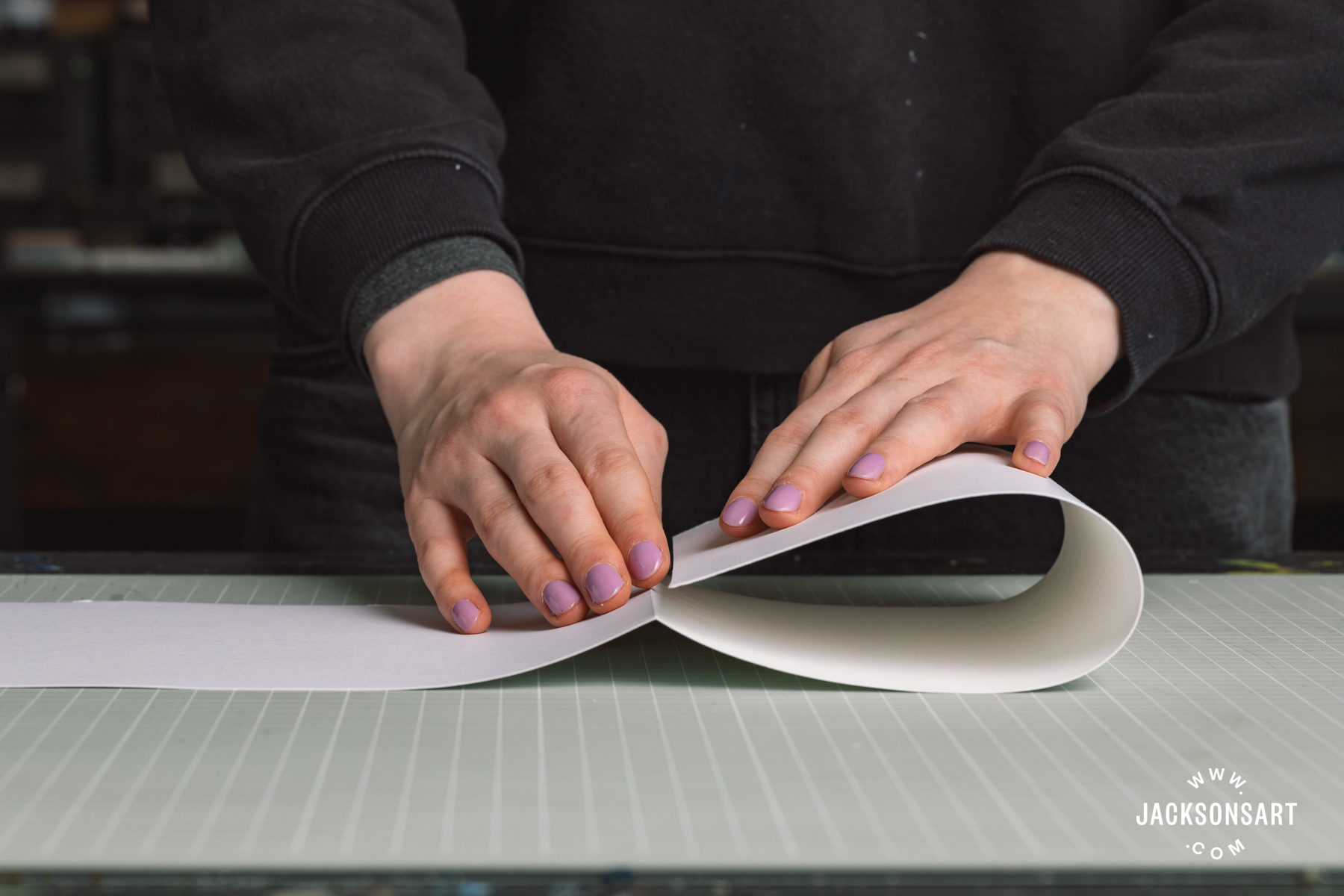
9. Repeat on the right side.
10. Hold the folded left side together, and bring the inside edge over to meet the central crease line, and fold down the paper below it.
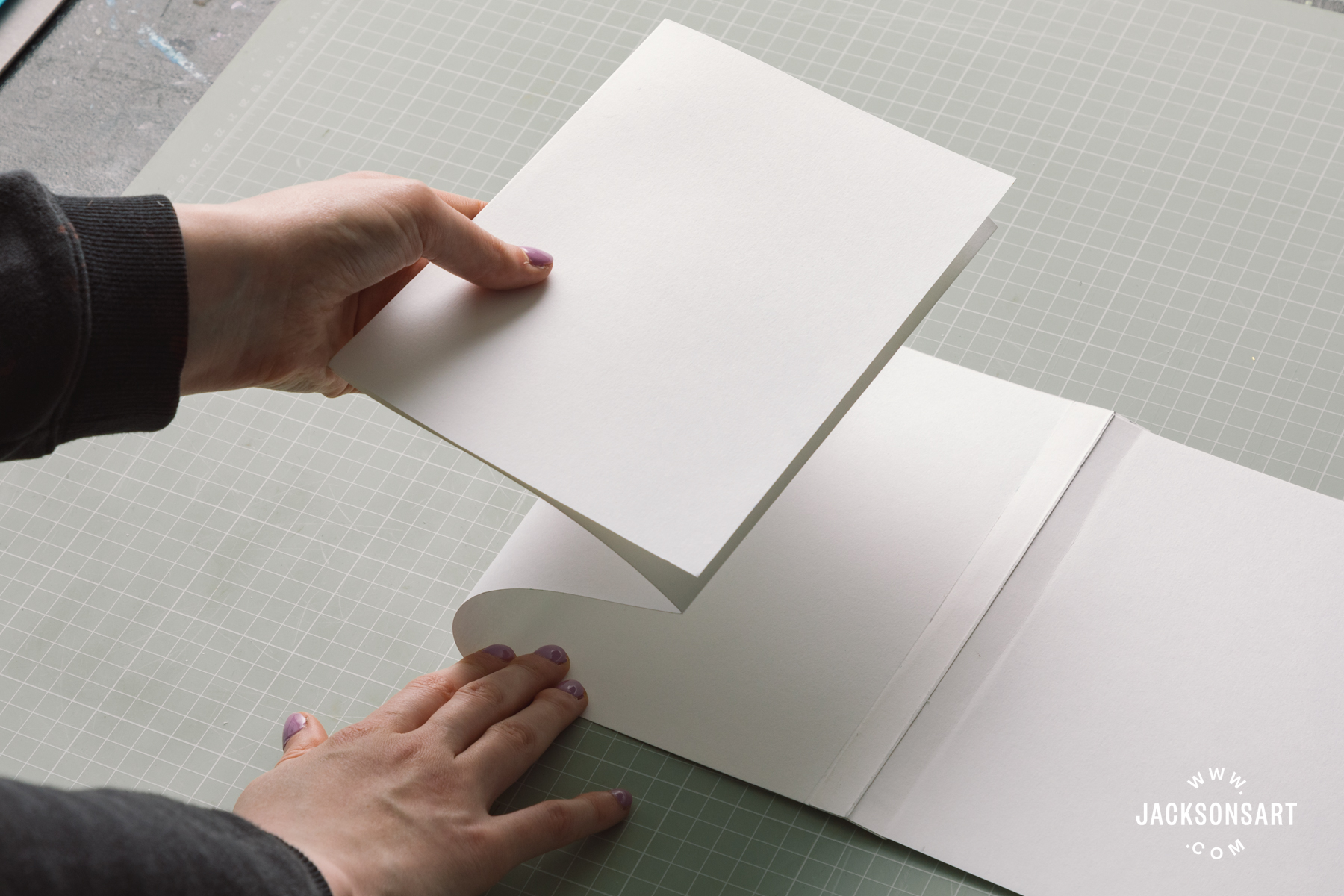
11. Repeat on the right side.
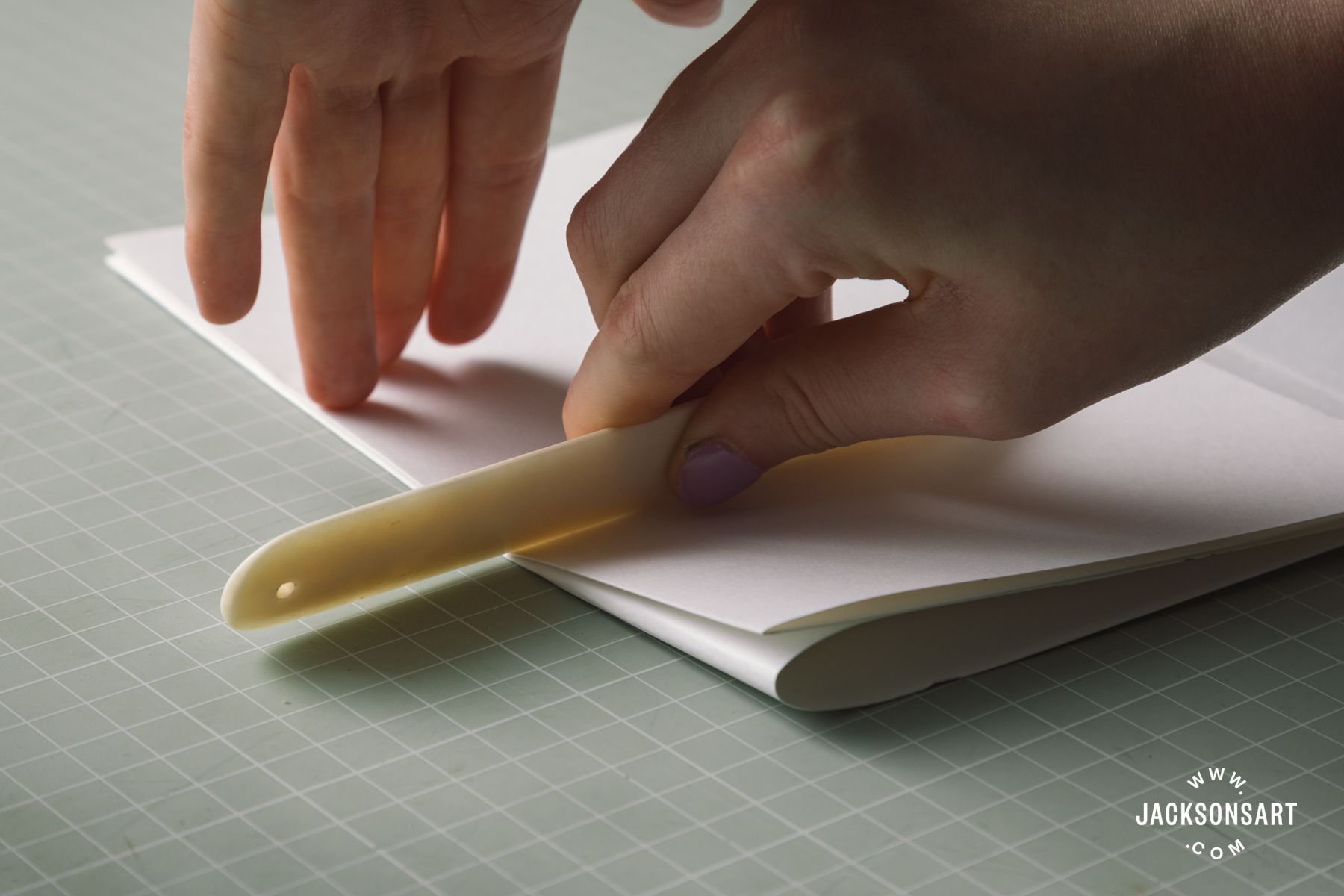
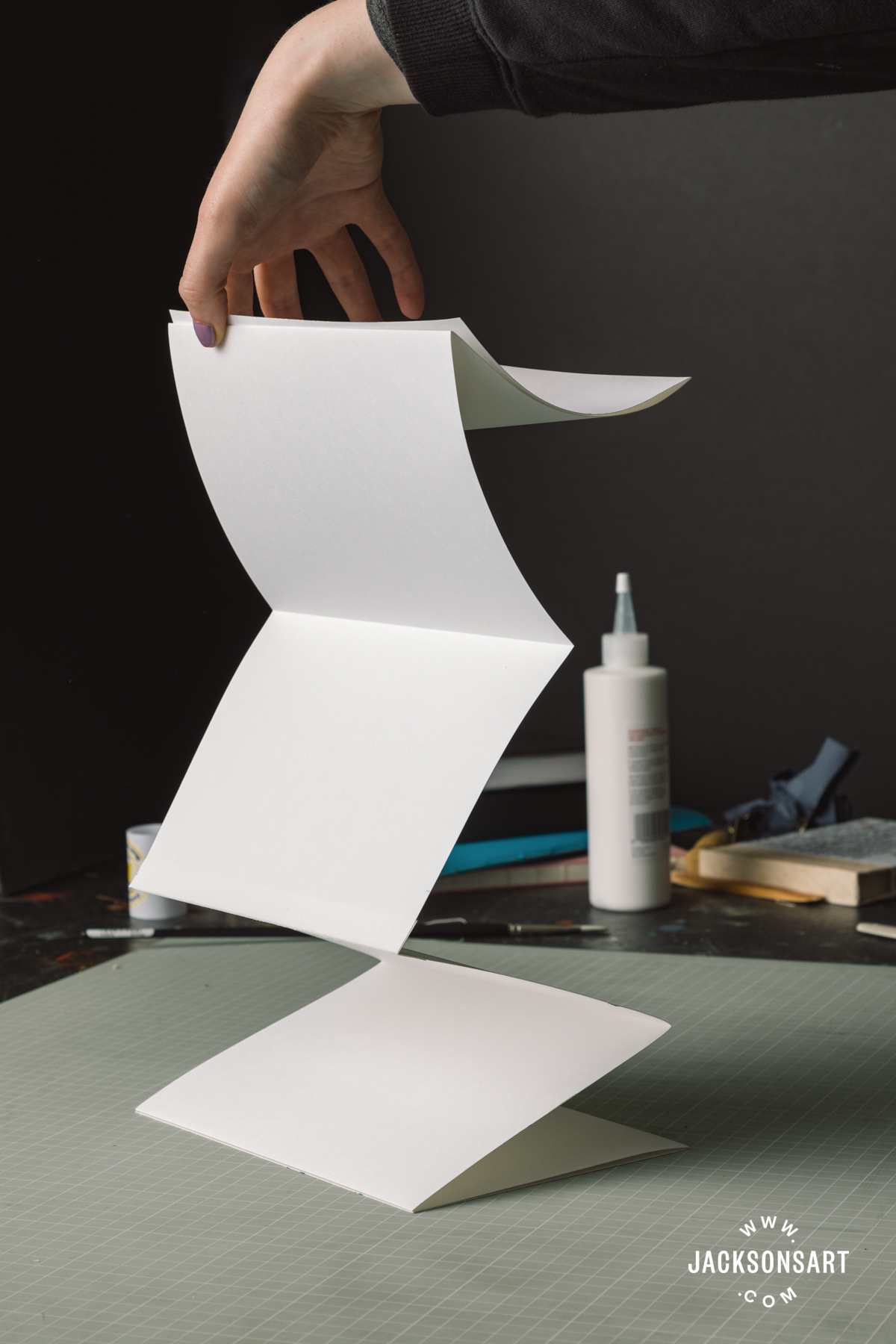
12. You now have your paper folded together in two short stacks. Pick the paper up and make the final fold downwards in the middle line.
13. Measure out the size you’d like your covers to be against the size of your folded paper, and mark it on the card with a pencil, then cut two out.
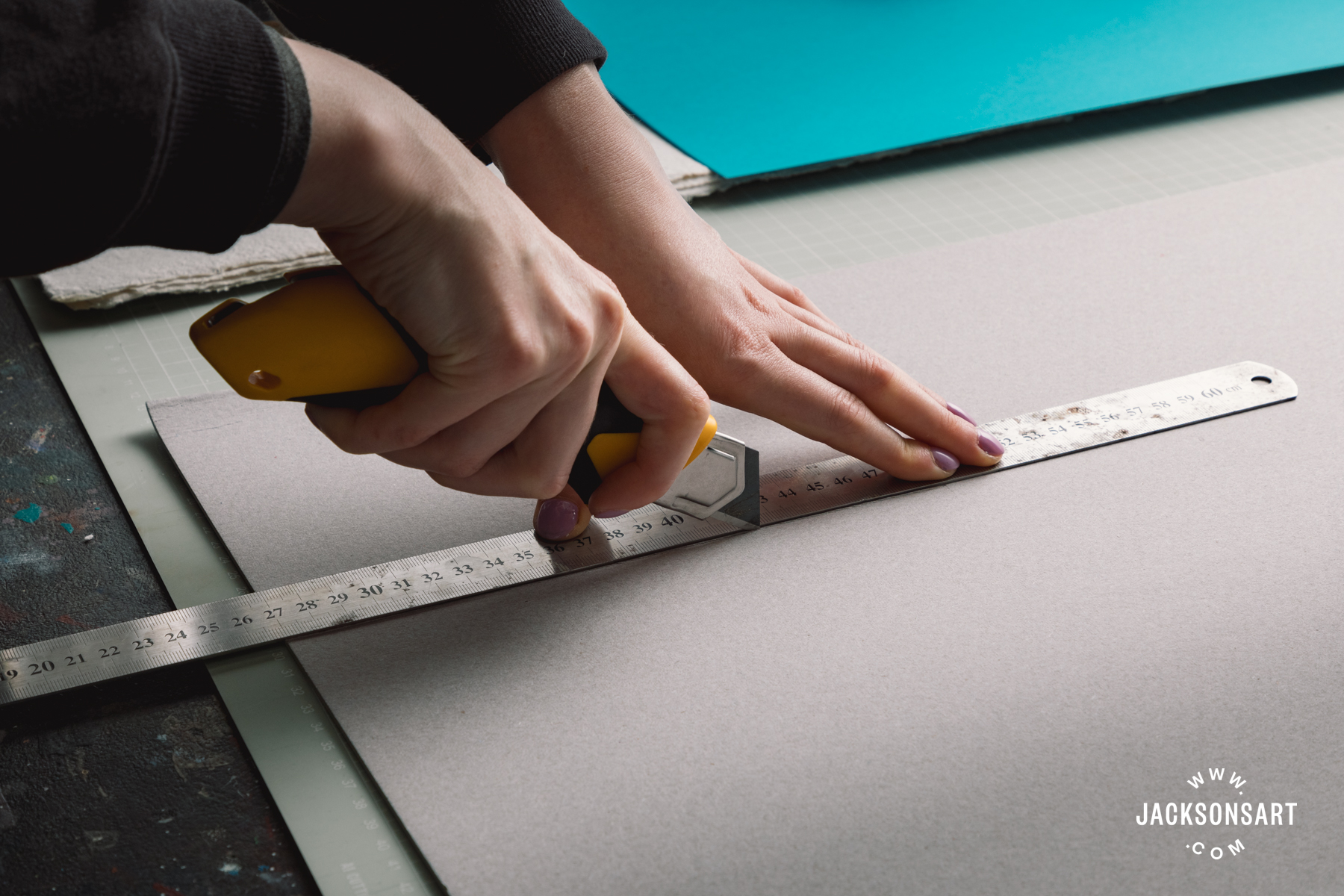
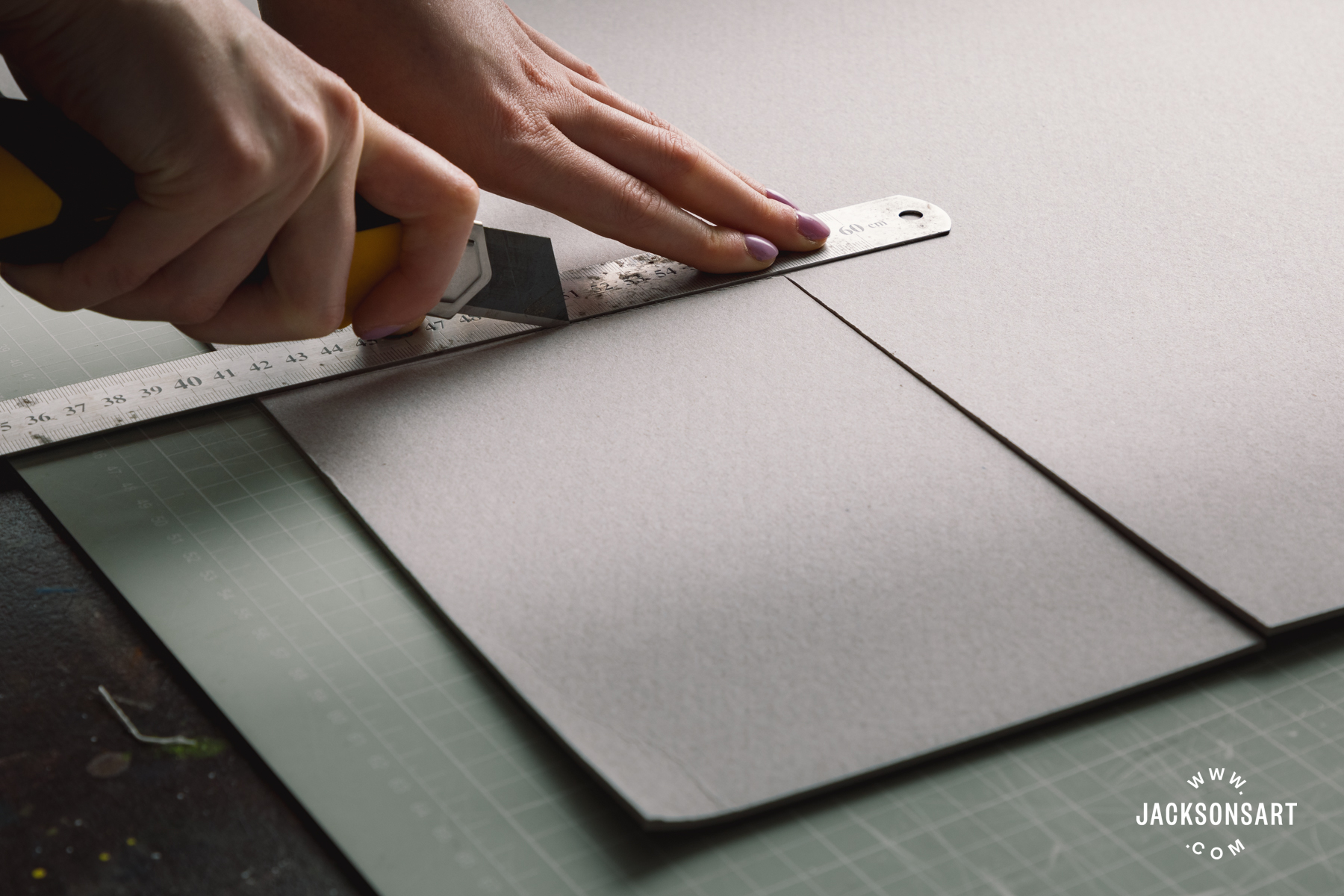
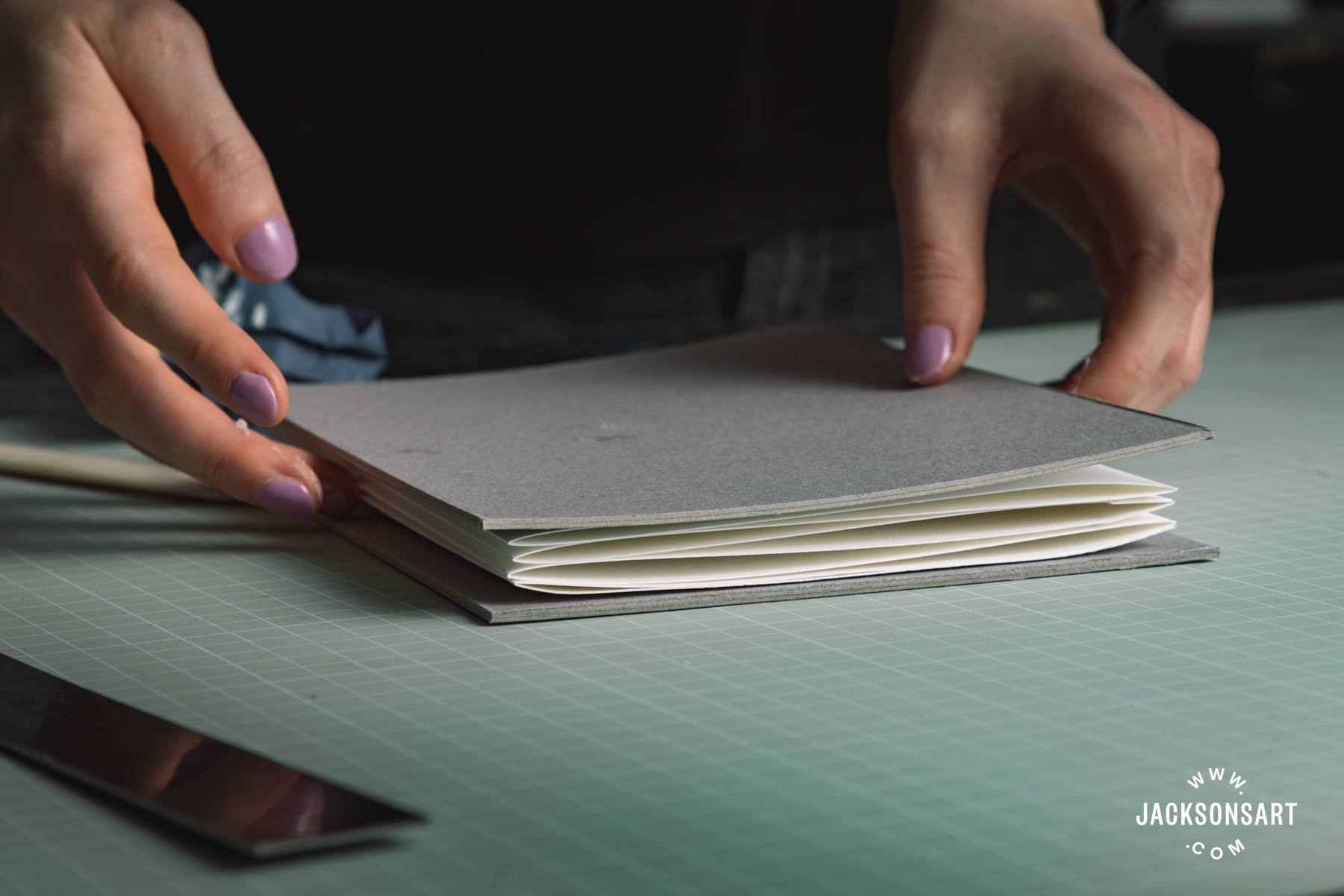
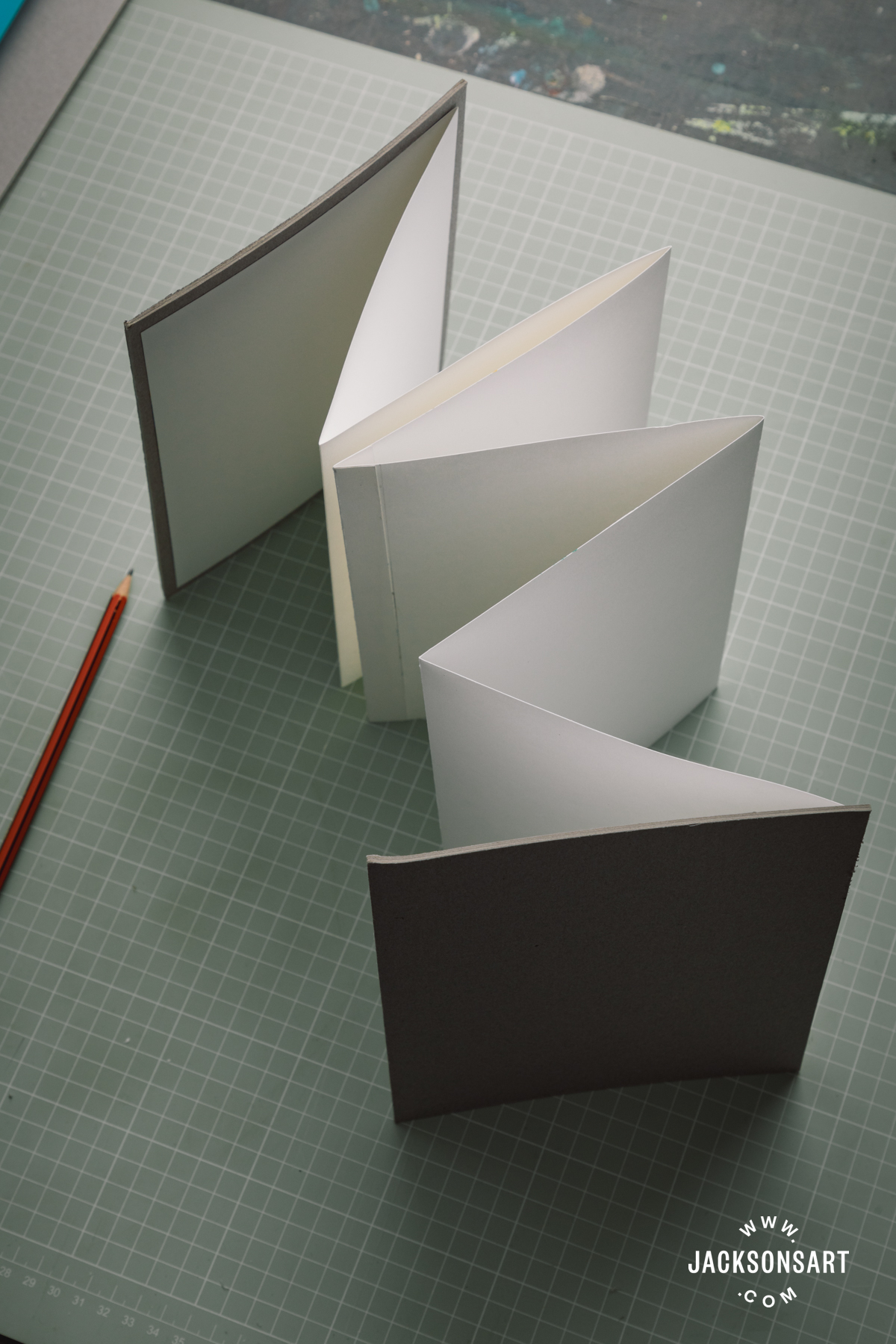
14. Using pH-neutral PVA glue, stick your covers to the end sheets of the concertina, applying pressure and leaving them time to dry.
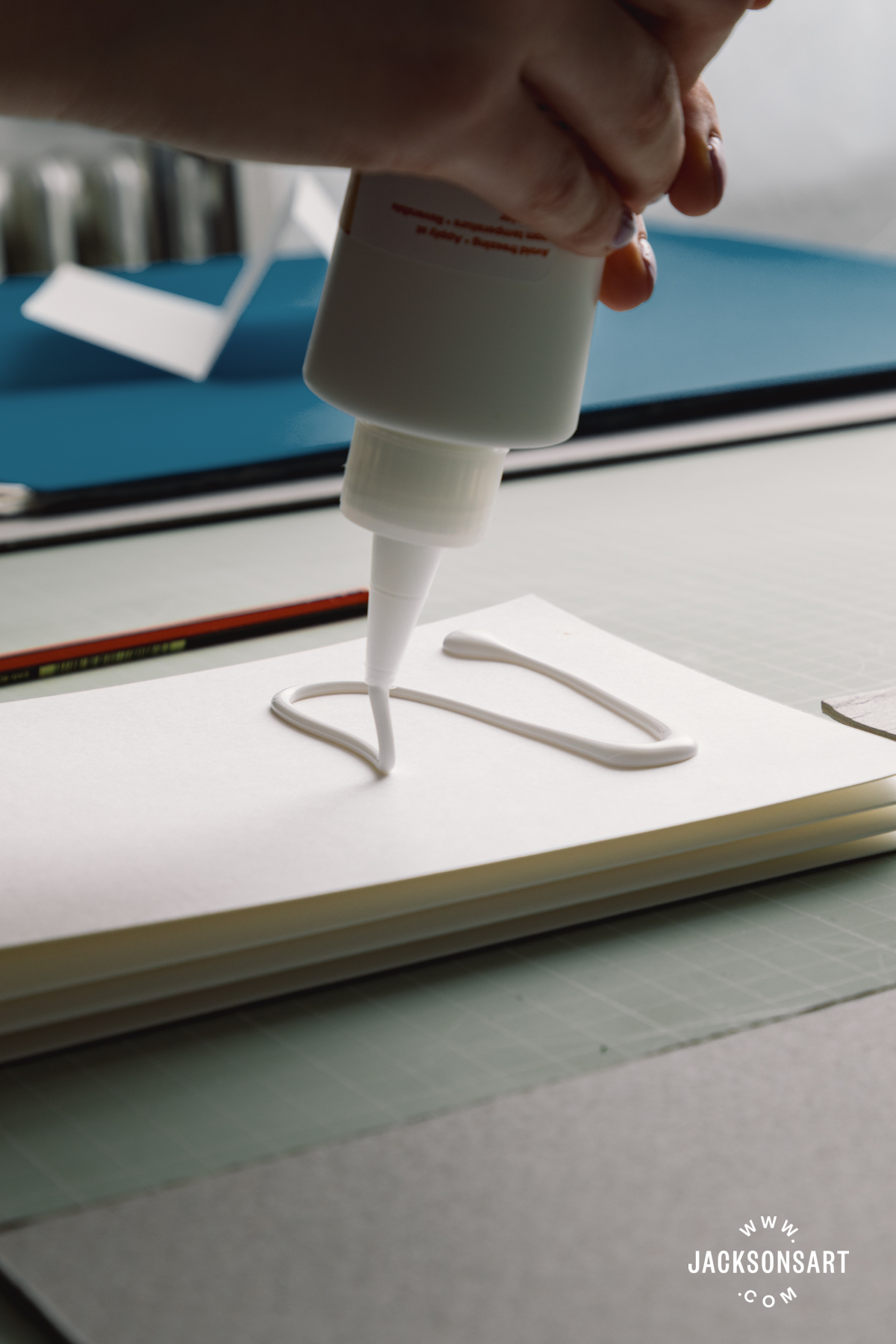
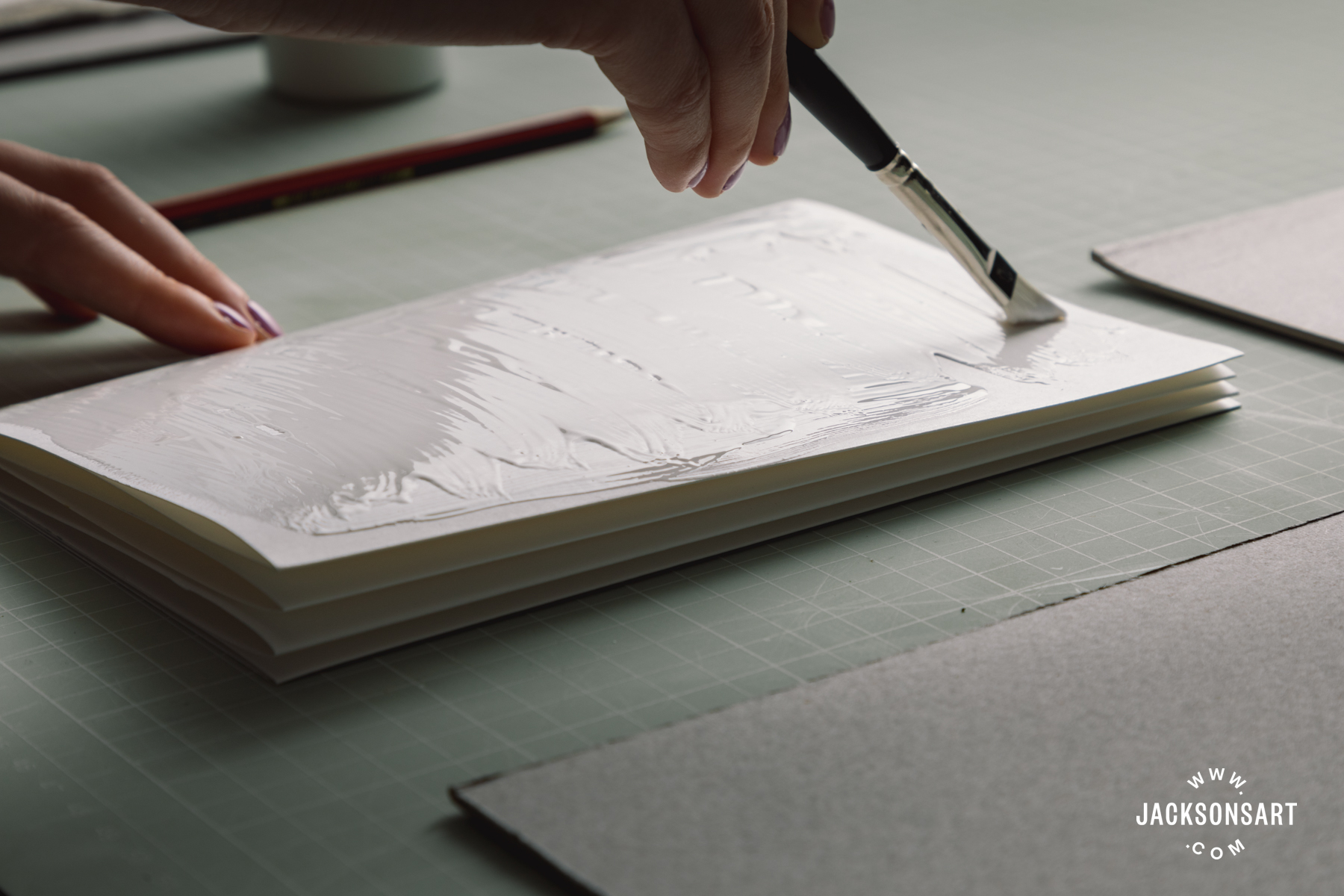
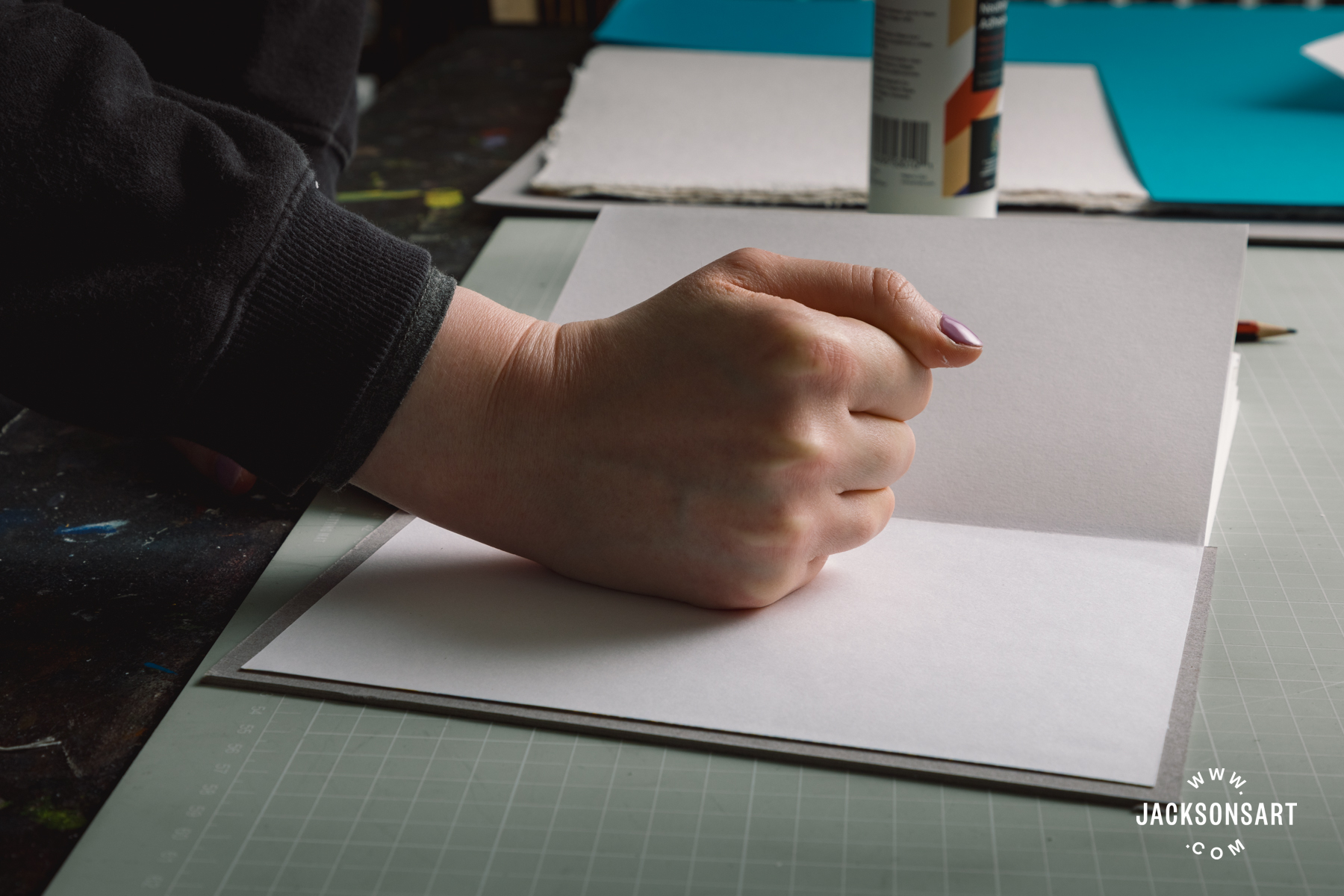
Optional extra: The longer you make the original sheet of joined paper, the bigger the concertina book will be. You could try this same method with several sheets of paper joined together if you please. The only difference may be the amount of folds you’ll need to add to get your desired page size.
What To Look For in a Blank Sketchbook to Make an Artist’s Book
If making handmade books doesn’t appeal to you, then using retailed sketchbooks is a great alternative for creating your own artist’s book. When choosing a sketchbook that you’ll use, think about the effect the formatting of your book will have on the reception of your artwork. For example, a clean black sketchbook that has been machine-bound will have a much more formal quality than one made of handmade paper bound with string. Every element of the artist’s book contributes towards the reading of it as an artwork, so consider which sketchbooks appeal to your vision for the work. This choice is very much up to personal preference, there are endless options for sketchbooks that you can adapt to your own needs, be that removing the cover, destroying some pages, adding new ones or pop-outs, the possibilities are what you make of them.
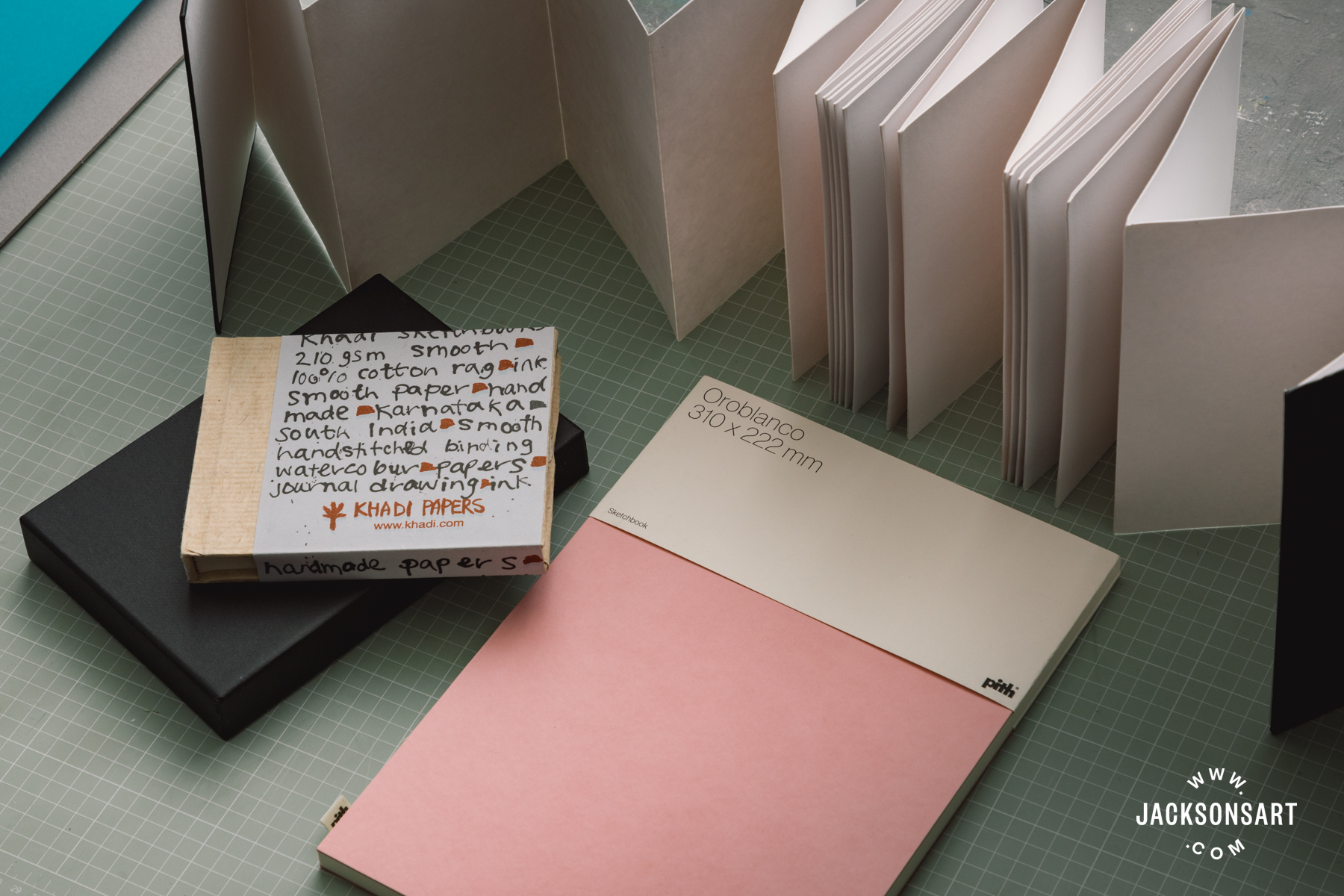
I would tend towards brands that sell handmade books for a more natural touch, like Pith and Khadi. I like the quality brought by human hands being part of the making of your book, even before you’ve started.
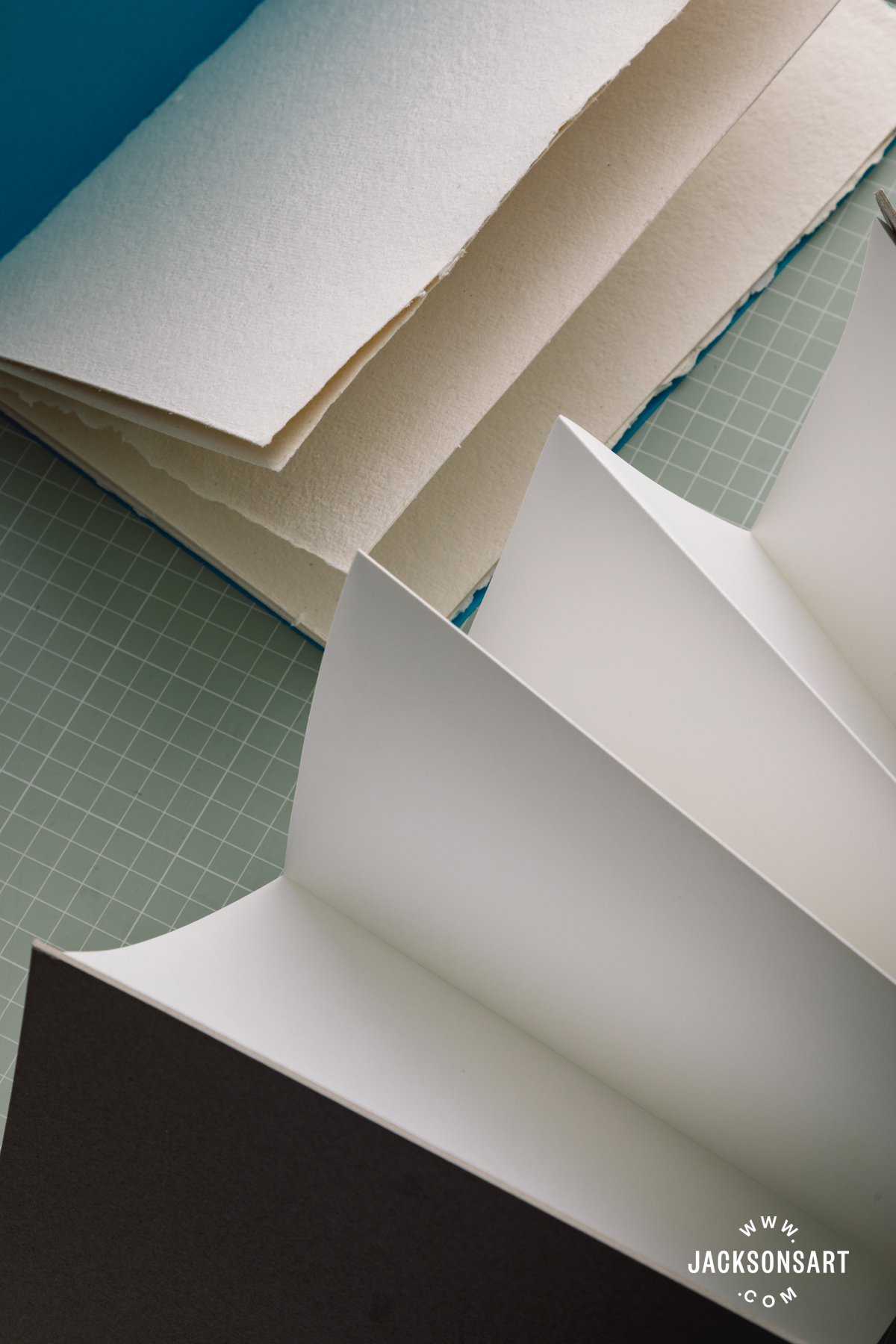
A lay-flat sketchbook may be helpful when creating an artist’s book, so you can work on the contents without being restricted by the binding of the paper, such as this Jackson’s Lay-Flat Hardcover Sketchbook.
If you feel like trying out a concertina book, with its brilliant potential for narrative progression over a long format and double-sided readability, a pre-made one may be cleaner than constructing your own. Such as this Seawhite Concertina Sketchbook that comes with a nice hard cardboard box cover to keep the pages together.
Summarising the history, beauty, and potential of making artists’ books is a challenge in just a couple of thousand words. These works of art are as varied, challenging, compelling, and impressive as the people who have and continue to make them. The format of a book is so special in its intimacy, in that usually only one person can look at a book at one time. Even when artists’ books are printed in editions of 1000, they have still been personally interacted with and sometimes collected by a single person who was compelled by them. Bringing this element of privacy to the viewing of artwork is special in our age, where our media allows art to be shared immediately, by vast audiences. I think in this way artists’ books speak to us all as individuals rather than as a crowd, and that’s a wonderful asset.
Further Reading
How Awagami Washi Paper is Made
Inside the Pages of a Medieval Sketchbook
Customer Review of the Month: Jackson’s Lay-Flat Hardcover Sketchbooks
Inside the Sketchbook of Gemma Thompson
Shop Sketchbooks on jacksonsart.com

4 thoughts on “A History of the Artist’s Book and How to Make Your Own”
So enjoyed this article, I have been
working on creating a book, mainly using
artwork and this has been so helpful.
Thank you
Hi Wendy, thanks for letting us know.
Really appreciate this article – I have been
dabbling with bookmaking but now have a
better sense of what would constitute an
artist’s book for me.
Question about the Kandinsky book with the
woodcuts, it almost looks like he printed it
Japanese style – do you know?
Hi Anette, thanks for sharing that with us. I’m glad you found it helpful for your own bookmaking journey. All I can find about Kandinsky’s Klänge is that it is made with woodcuts. Hard to say if it’s in the Japanese style unfortunately.
Comments are closed.