



In this article, I explain the dry brush painting technique by looking at examples of it applied in Chinese ink painting, Post-Impressionism, and Realism. I follow this history with a practical demonstration of how to apply dry brushing to your work, in ink, acrylic, watercolour, and oil. Articles in the Techniques Series define the meaning and context of art making processes and give practical tutorials on how to work with them.
Contents
What is the Effect of the Dry Brush Painting Technique?
Ink Dry Brush Painting Technique
Acrylic and Watercolour Dry Brush Painting Technique
Oil Dry Brush Painting Technique
Definition: Dry brushing is the application of a minimal amount of paint or ink to a surface with an almost dry brush. This technique picks up the random texture of the brush hairs and the surface itself, so that the finish may appear scratchy, smoky, or scrubbed on.
What is the Effect of the Dry Brush Painting Technique?
In oil, acrylic, watercolour, and ink paintings, areas of dry brushing may provide greater depth, provide textural interest through mark-making, or add a diffused, powdery quality to the work. On a textured surface, dry brushing will pick up the individual grooves or bumps and highlight them. For example, dry brushing over a built-up or rough painting will add highlighted lines and edges along the highest points of the surface, giving the irregular finish definition and depth. In contrast, dry brushing on smooth paper relies on the textural quality of the brush and gives a much smokier, soft, cloud-like effect.
The difference between mediums with this technique should also be noted for how forgiving they are. For example, an area of dry brushing in an oil painting that has gone wrong is easily corrected by being painted over or removed. In an ink painting or layered watercolour, it has to be executed perfectly on the first try, so the marks made become a visual testament to the artist’s skill.
History
The history of dry brushing charts back through centuries of painting, and it appears in just about every art movement and culture. Notably, there are an incredible amount of examples in Japanese and Chinese ink painting, for example here in the needles of the tree in Dragon Pine by Wu Boli, where a dry brush has been applied amongst delicate individual strokes, to give the tree a soft sense of movement and vitality.
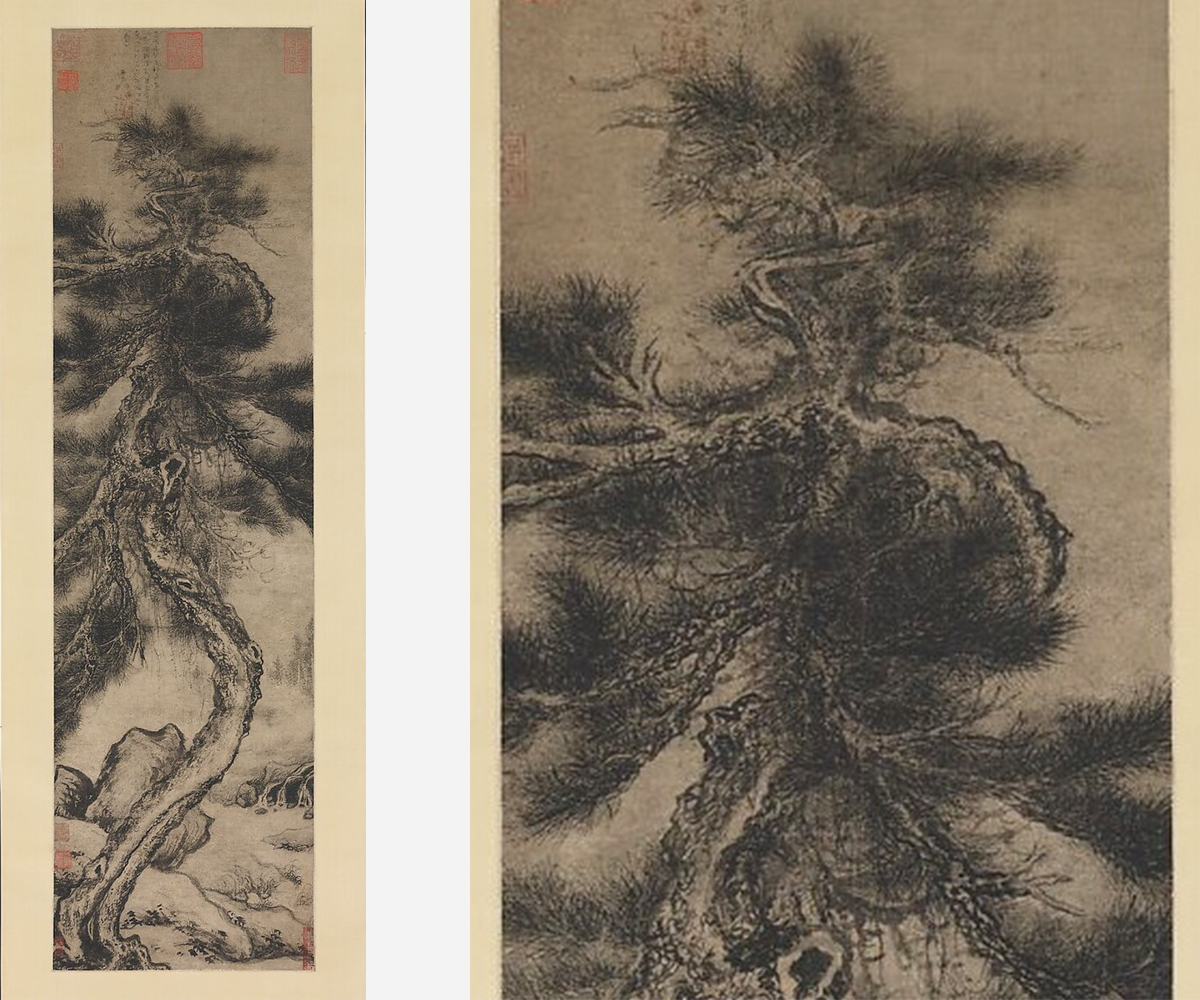
Wu Boli
Hanging scroll, ink on paper, 121.9 x 33.7 cm | 48 x 13 1/4 in
The Metropolitan Museum of New York
Jumping forward in time, many artists in Europe were heavily inspired by Asian ink paintings and prints through trade and borrowed the techniques and compositions from them. One of them was the Post-Impressionist Pierre Bonnard, who had seen Japanese works in Paris when ‘Japonisme’ was in fashion. His paintings were built up in lots of layers of saturated colour, almost scrubbed onto the surface with a dry brush in places, amongst dabs and repetitive strokes. In Jeune Fille en Bleu, à la Rose, he painted his muse and partner Marthe, and we can see areas of dry brushing all over the painting, giving the sitter a pensive hazy quality.
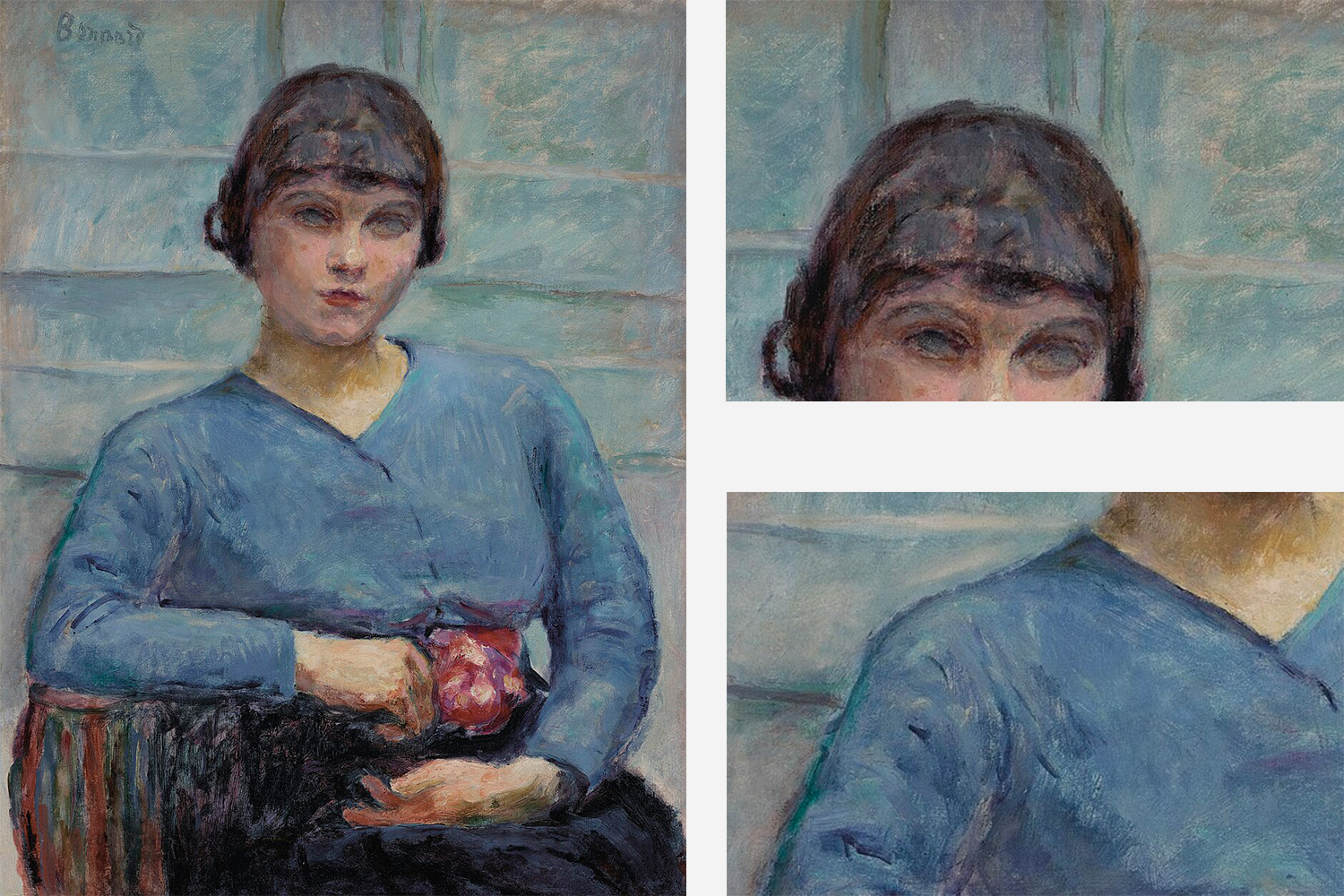
Pierre Bonnard
Oil on canvas, 65.1 x 50 cm | 25 5/8 x 19 ¾ in
Private Collection
In the majority of paintings with dry brushing in them, the dry brushed marks are part of a whole scheme of other marks and thicknesses of paint, where the dry brushing is used to pick out the texture of specific areas. For example, in The Horse Fair by Rosa Bonheur, we see areas of dry brushing in the clouds of dust kicked up by the horses, amongst the trees, and in the texture of the fur itself, which altogether compliment the more thickly painted areas, and give the work textural variation. Bonheur was a pioneering artist who worked at a time when women were still banned from studying in the life room. She turned to animals as her primary subject instead, studying their anatomy in the abattoirs of Paris and working from life. She painted The Horse Fair after observing the event in disguise as a man twice a week.
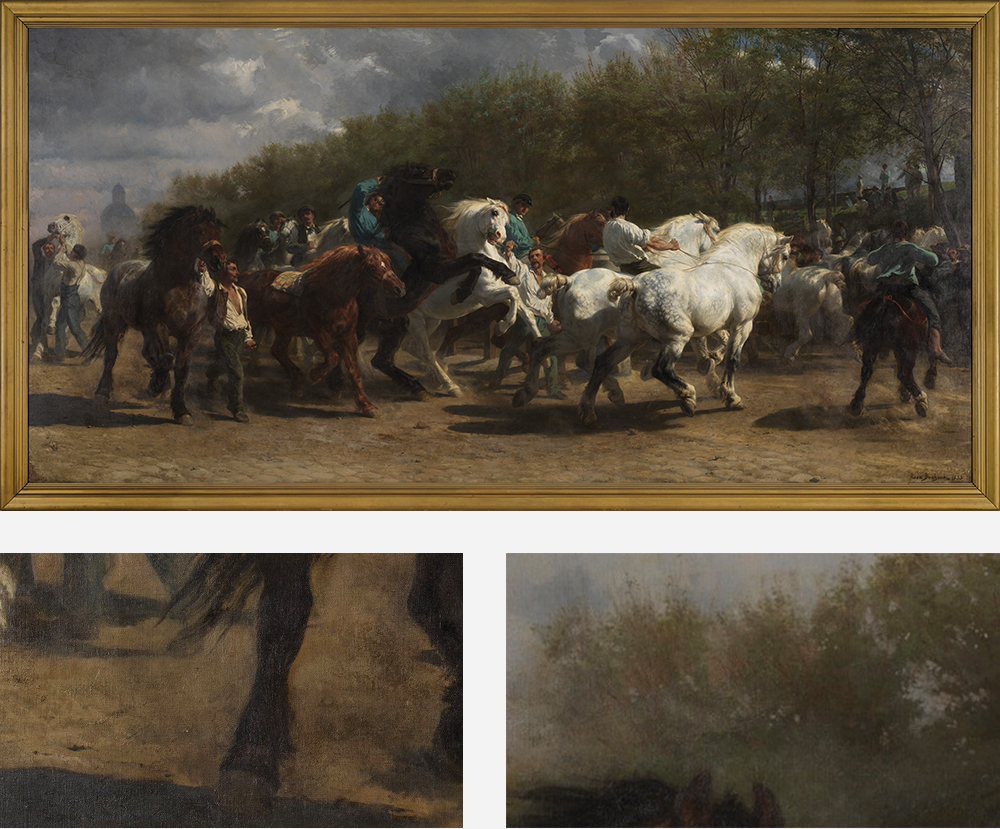
Rosa Bonheur
Oil on canvas, 244.5 x 506.7 cm | 96 1/4 x 199 1/2 in
The Metropolitan Museum of New York
Demonstrations
Ink Dry Brush Painting Technique
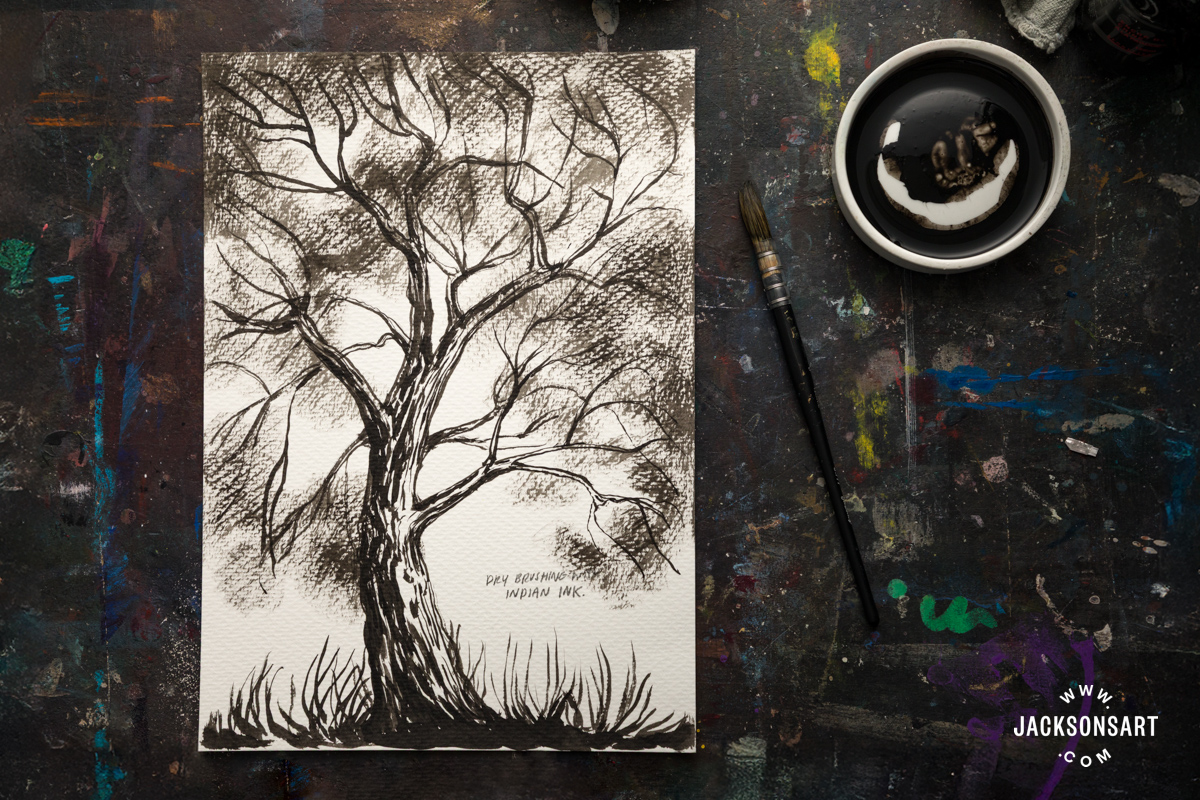
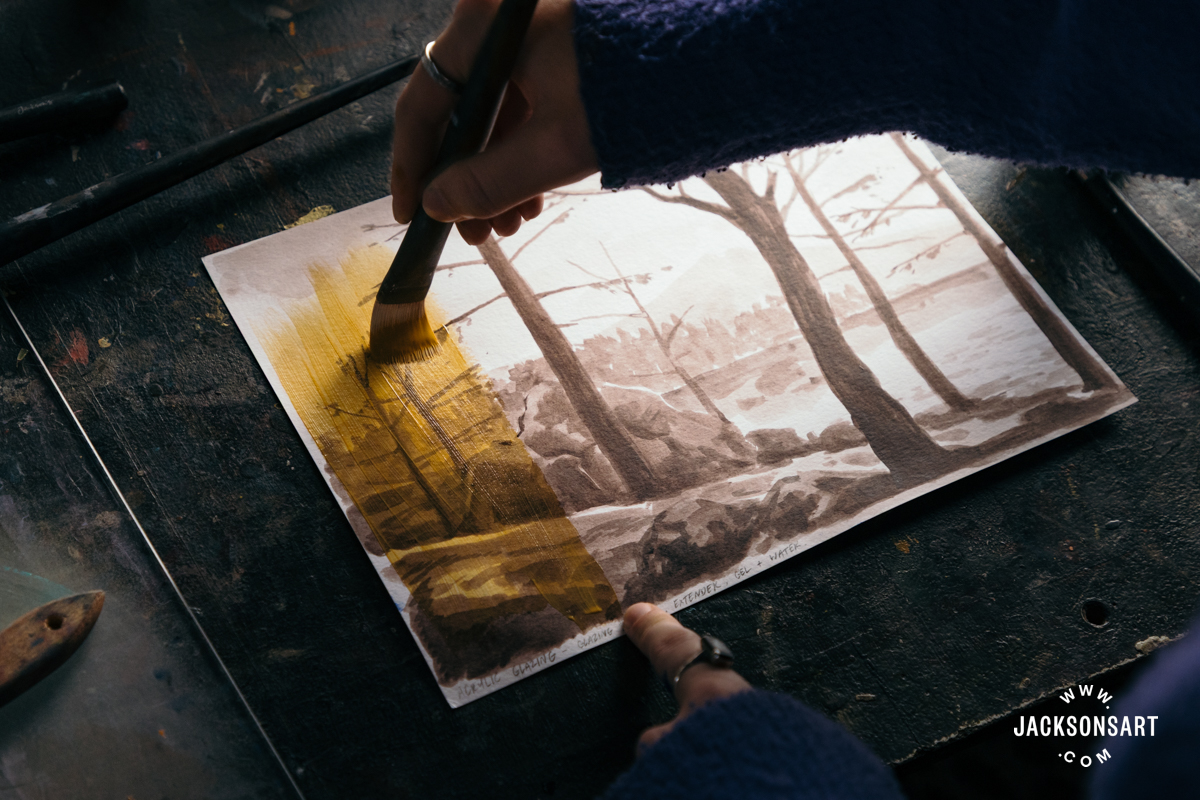
For my first example, I thought I’d try dry brushing with ink like the Chinese painting I looked at earlier, the Dragon Pine. I worked on a sheet from a Jackson’s Bockingford Watercolour Pad, with Sennelier ink.
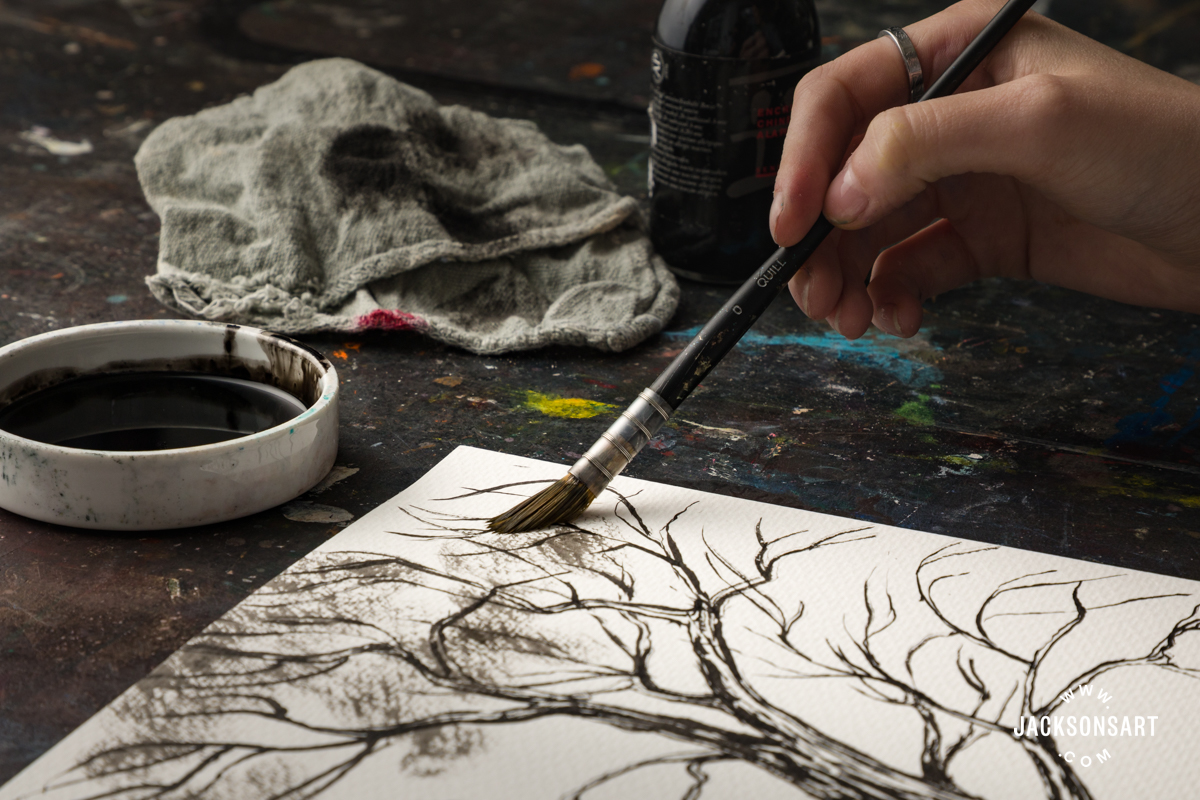
To start I made a more detailed ink painting of a tree trunk, leaving the branches bare of leaves to add later with dry brushing.
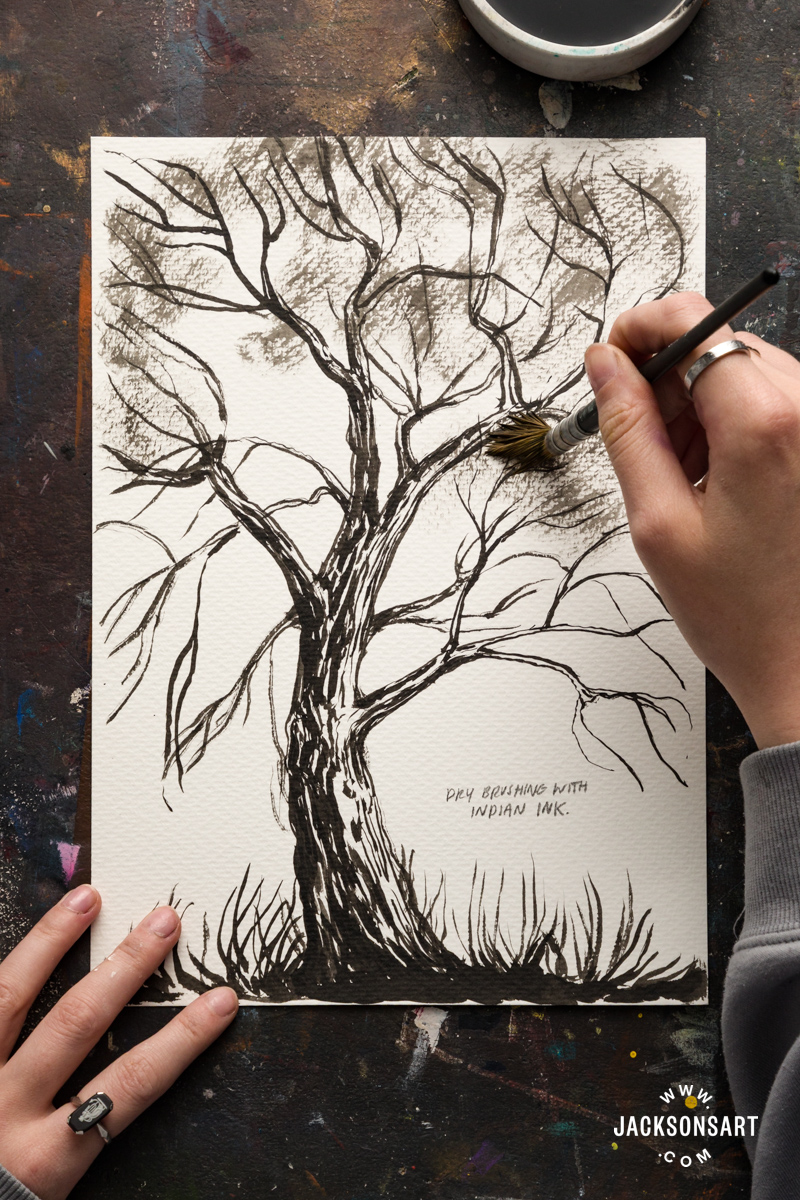
Once this layer was completely dried in, I dipped a bigger brush in the ink before rubbing most of it off into a rag. This left behind the minimum amount of ink to achieve the desired dry brush effect. I am trying to avoid a heavy stroke of ink here.
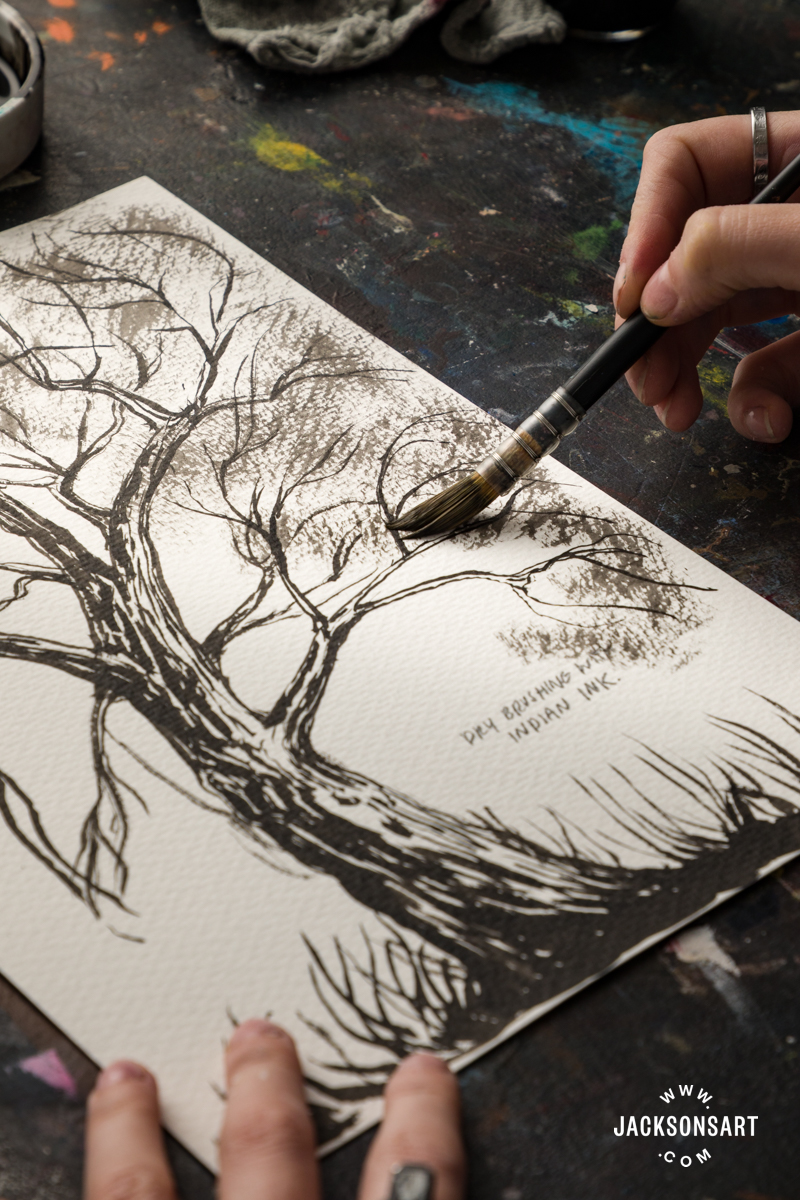
Next, I dry brushed the leaves onto my tree, working in round strokes. The more I applied the ‘dryer’ the brush got, so I was able to achieve very light areas of dry brushing. Once it went completely dry I repeated the process from step 2, to add more.
Tips: Make sure you’re working with a completely dry brush before it’s dipped in the ink. Water hidden inside the brush hairs could ruin the effect and unsuspectingly give you an inconsistent effect rather than a dry brush.
Starting with a light hand with ink allows you to selectively go back over specific areas of the work and deepen them, so it may be wise to work from the lightest touch to the heaviest as you go.
Acrylic and Watercolour Dry Brush Painting Technique
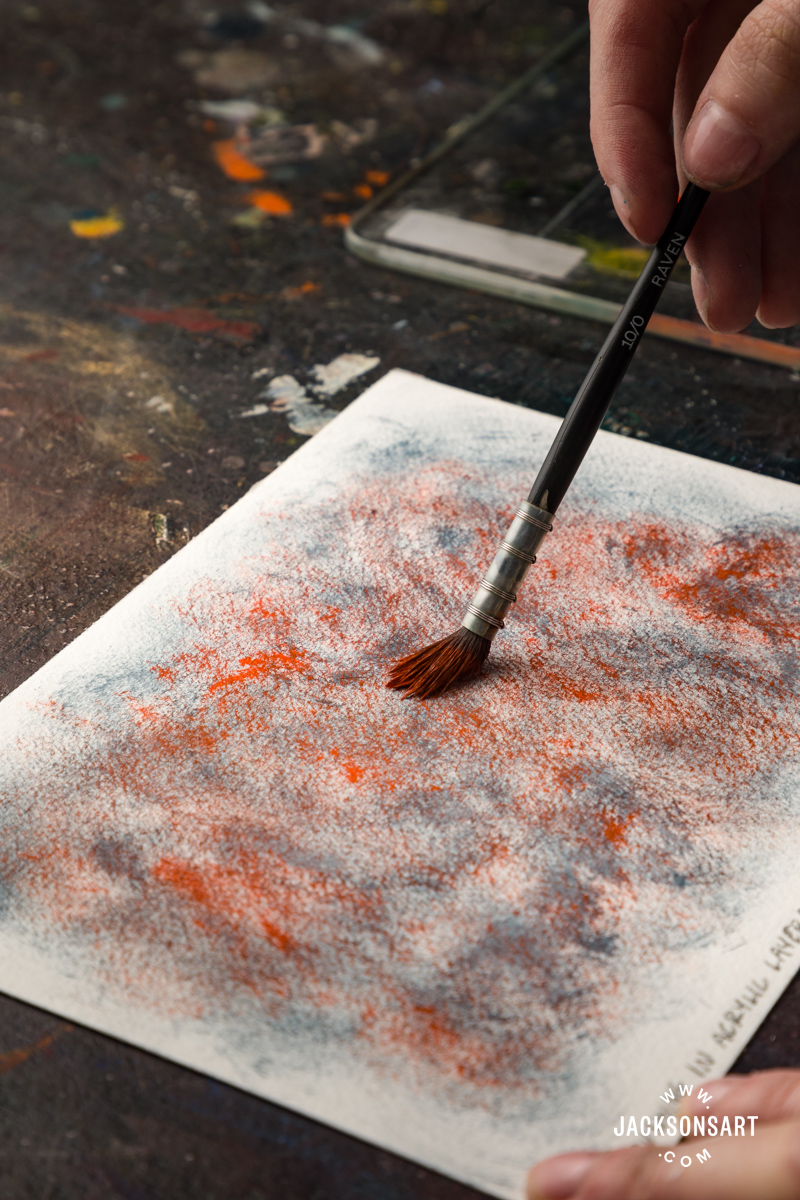
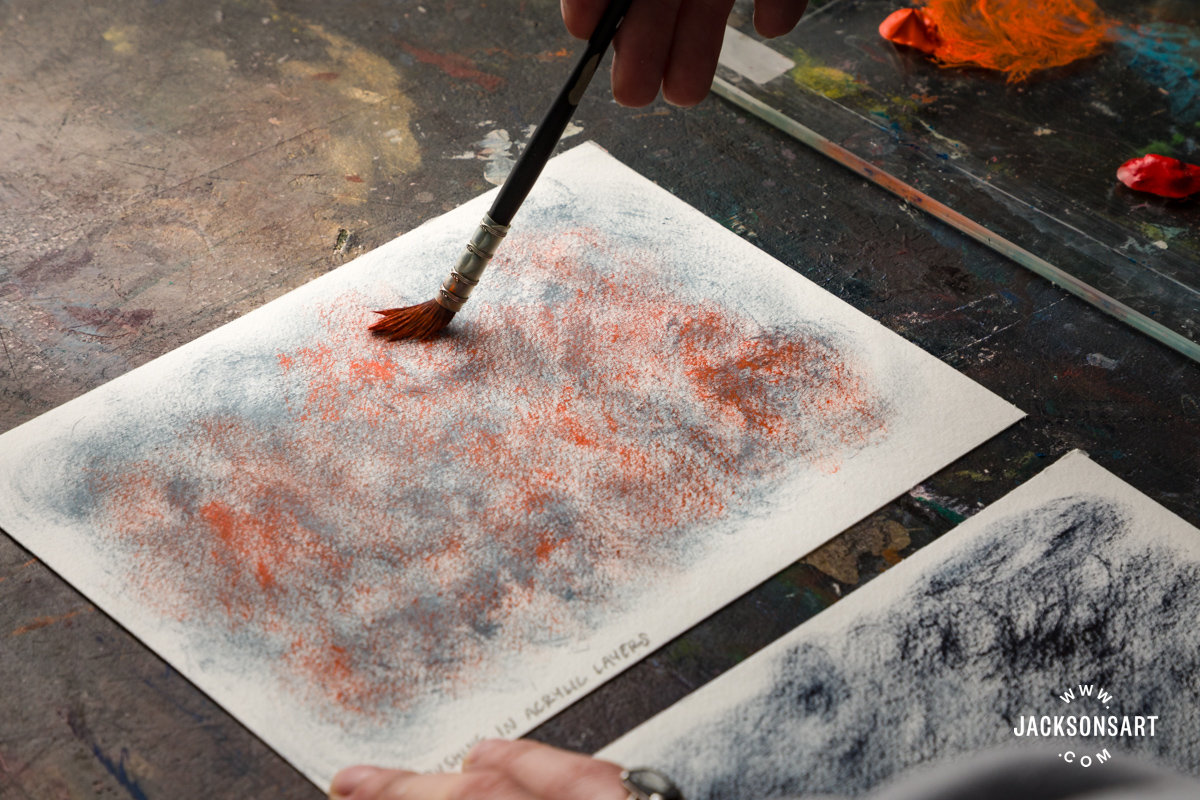
Next, I wanted to try emulating the hazy quality from the Bonnard painting I showed, by building up dry brushing across the whole surface of my swatches. For this example I worked with Jackson’s Professional Acrylic Paint on a Jackson’s Watercolour Paper Block, alongside the same colours in the Jackson’s Artist Watercolour range, on the same paper. I did it this way to draw a direct comparison between the finishes of the paint types when applied the same way.
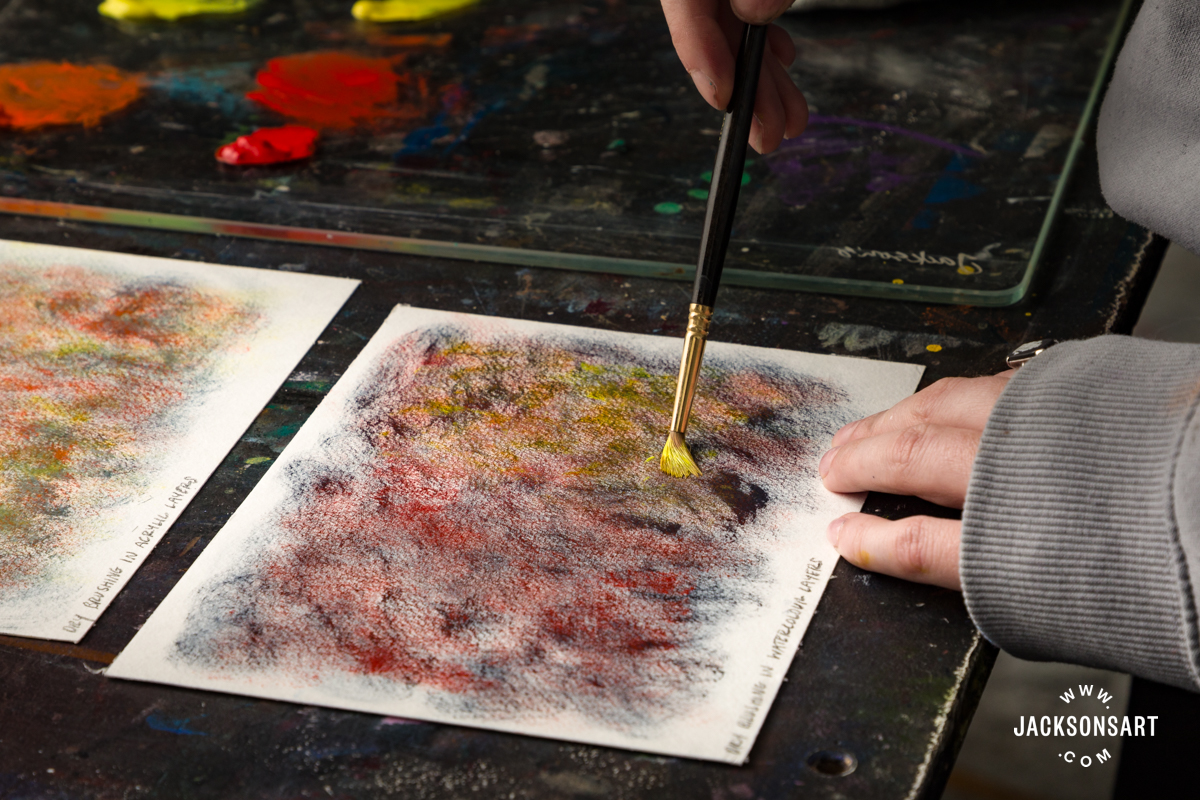
First I created a layer of dry brushing in Payne’s Grey in acrylic and watercolour on their respective sheets. As with the ink, I picked up the colour lightly, and then rubbed the majority of it off into a rag so that only the minimum amount of paint was left. For the watercolour specifically, I used the minimum amount of water to activate the paint, and for the acrylic added no water at all.
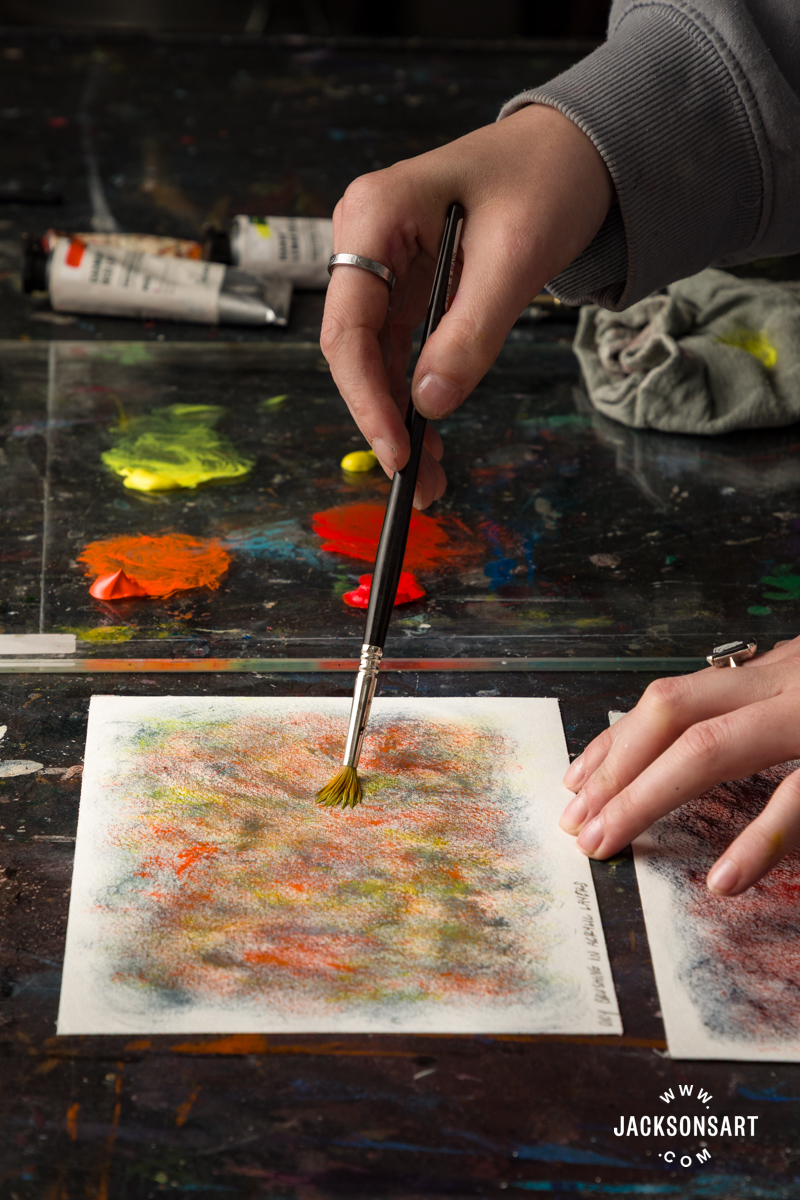
Next, I added a second layer using Cadmium Red Light in each medium.
Finally, I added a final layer of Lemon Yellow on each sheet. The resulting effect of dry brushing in both paintings is very similar, so is equally as effective as a technique in watercolour and acrylic.
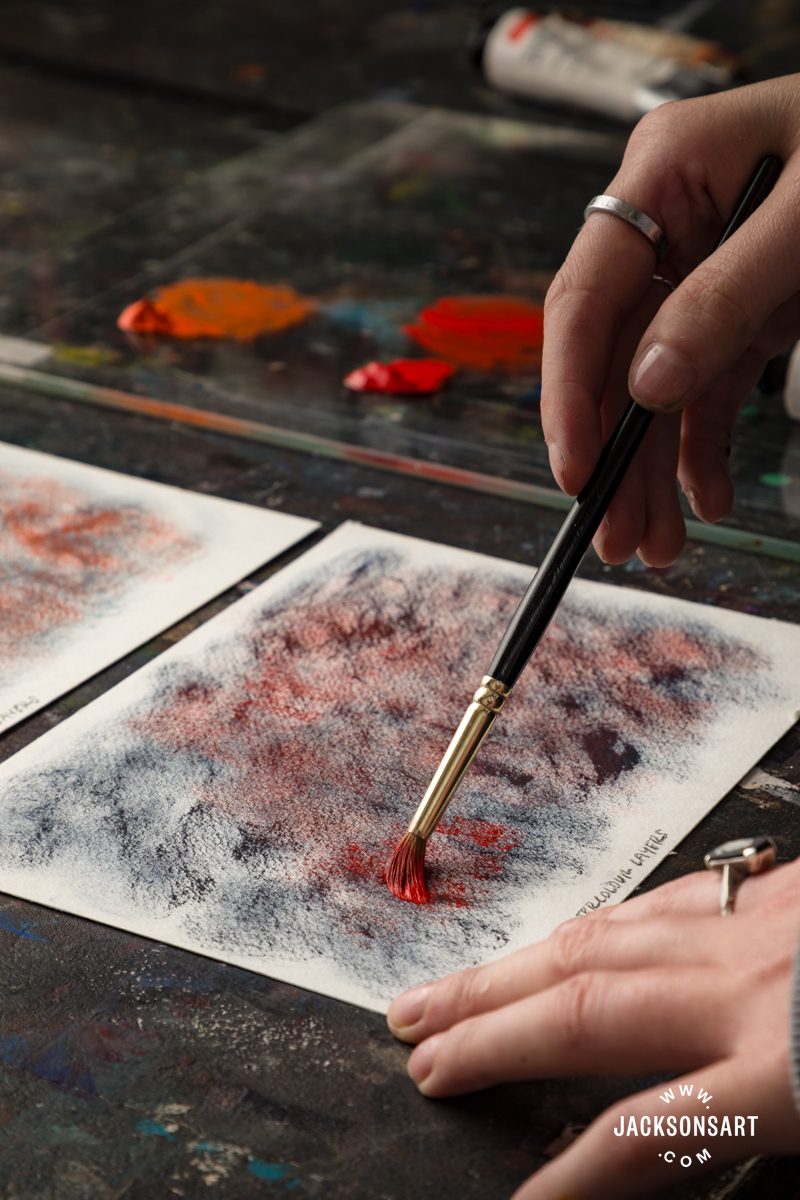
Tips: The texture of the brush you use is important to achieve the desired finish of the dry brushing. If you use a coarse stiff brush, you will get defined brushmark lines, whereas a soft brush may just give you a light dusty version of the pure colour. Trying out different brushes on a spare piece of paper before you start can be really helpful for deciding on the touch you’d like to add.
If you make a mistake, you may be able to lift it if you’re painting with watercolour, so keep a clean brush and a fresh jar of water handy.
Oil Dry Brush Painting Technique
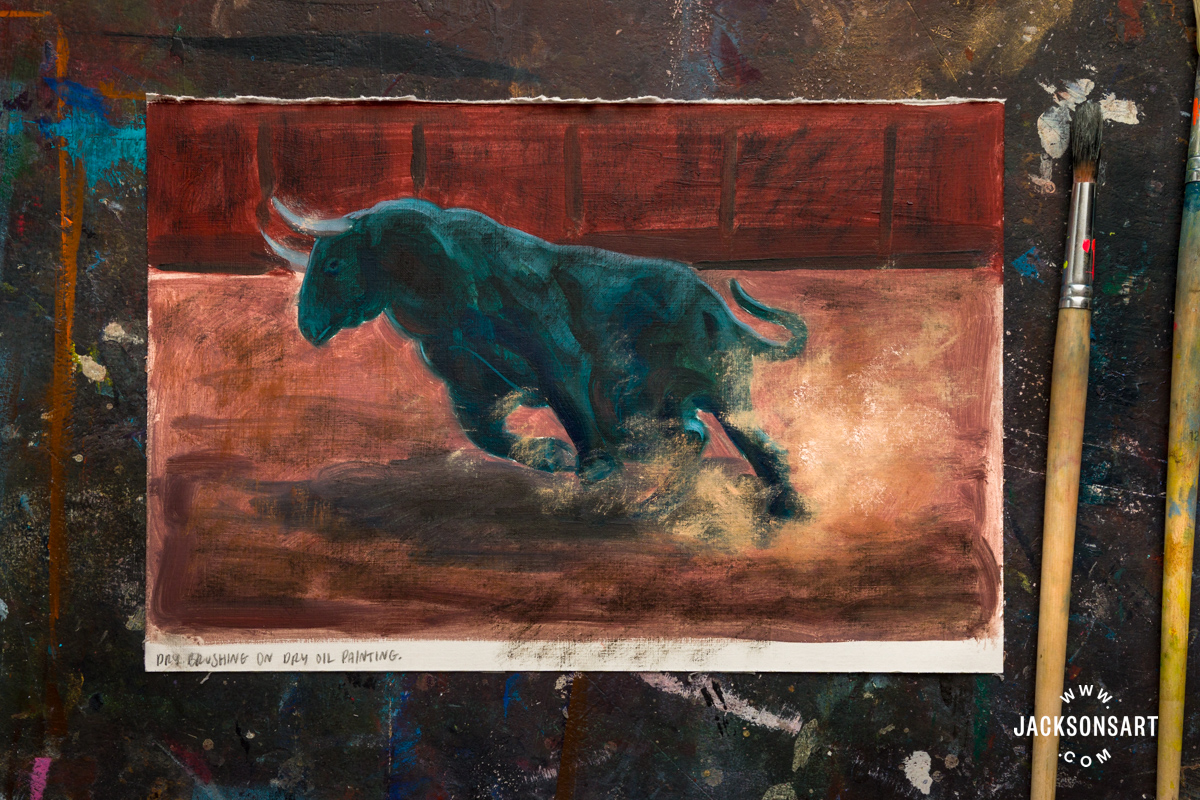
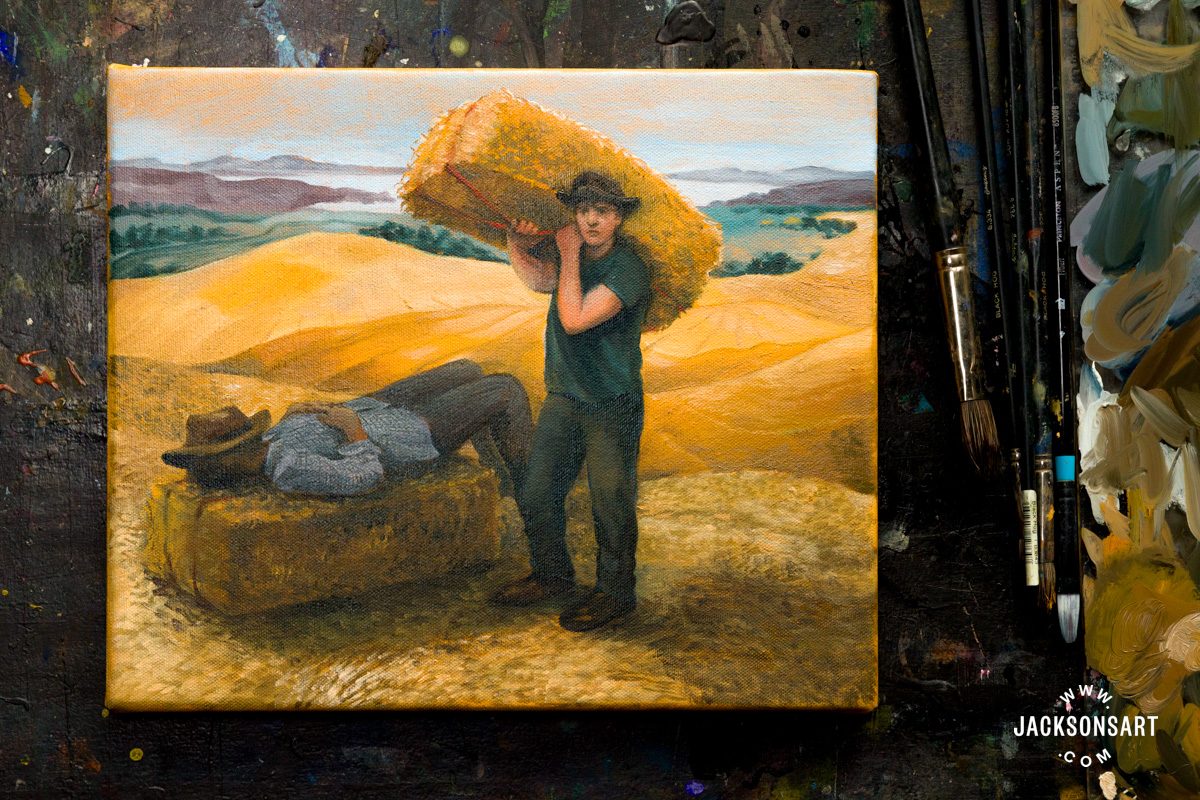
Finally, I looked to Rosa Bonheur’s The Horse Fair for inspiration for my oil painting example, wanting to combine other brushmarks below the dry brushing, and be selective about its placement for effect. For this example, I painted with Jackson’s Professional Oil Paint on a sheet from a Jackson’s Oil Block.
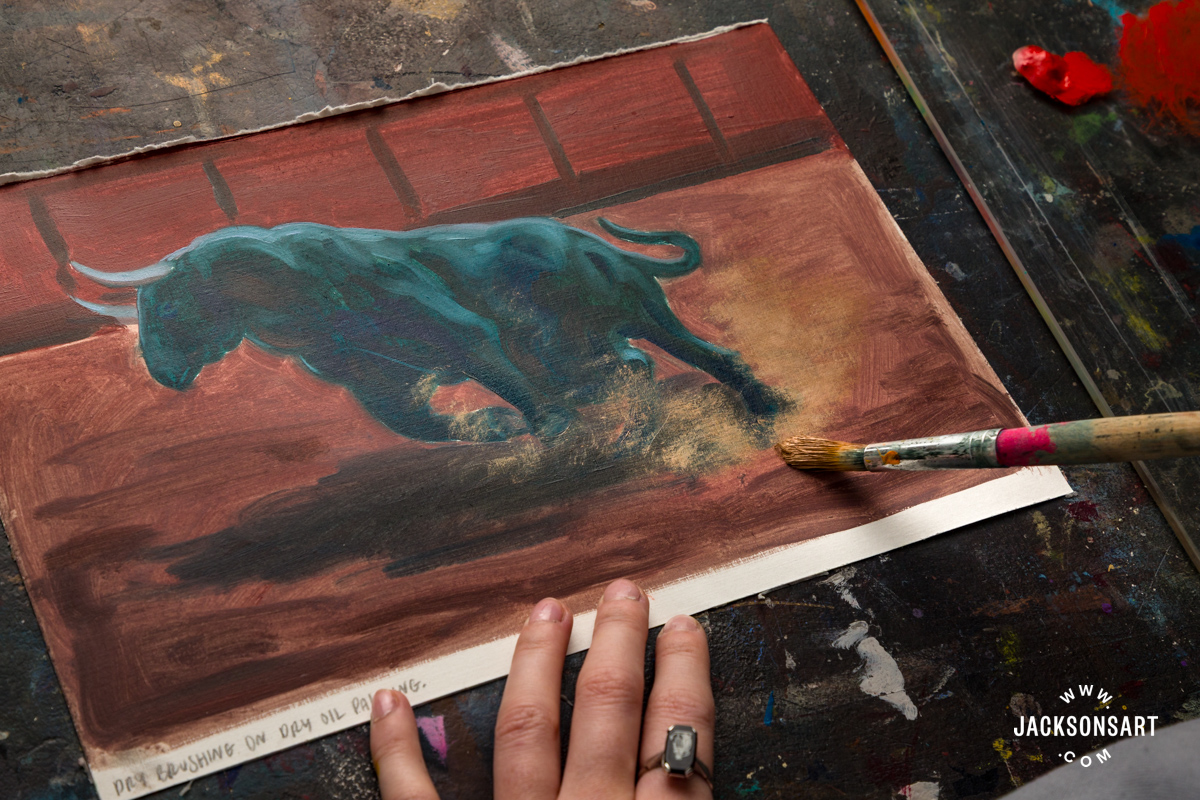
To begin with I made an oil painting in advance, with Indian Red, Kings Blue Light, Raw Umber, and Phthalo Blue, and allowed it to touch dry before moving on to the next step.
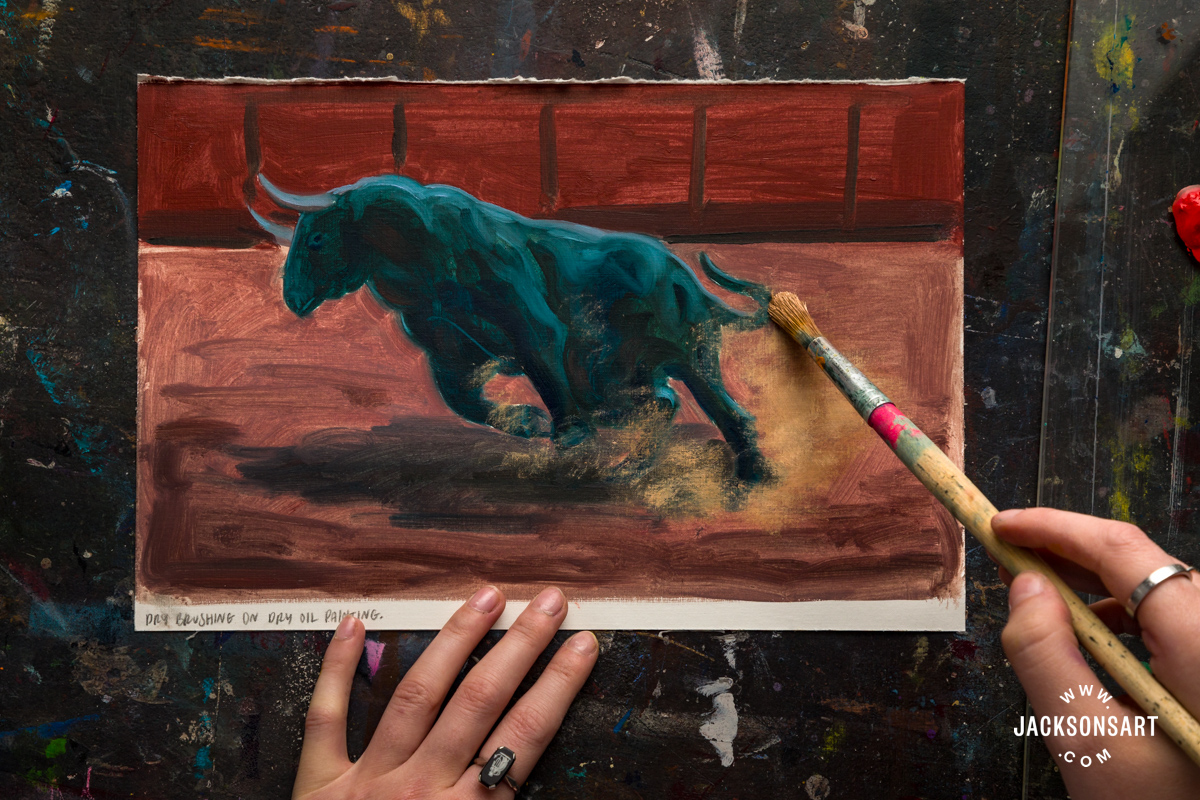
Next, I selected which areas to add my dry brushing to, by considering where the soft marks would be best placed. I dipped my brush in undiluted oil paint, and again rubbed the majority of it off into a rag, making sure the bristles of the brush were coated but not wet.
Using a light touch I added the cloud of dust at the bull’s feet, and added some texture to the ground, wall and fur, with dry brushing.
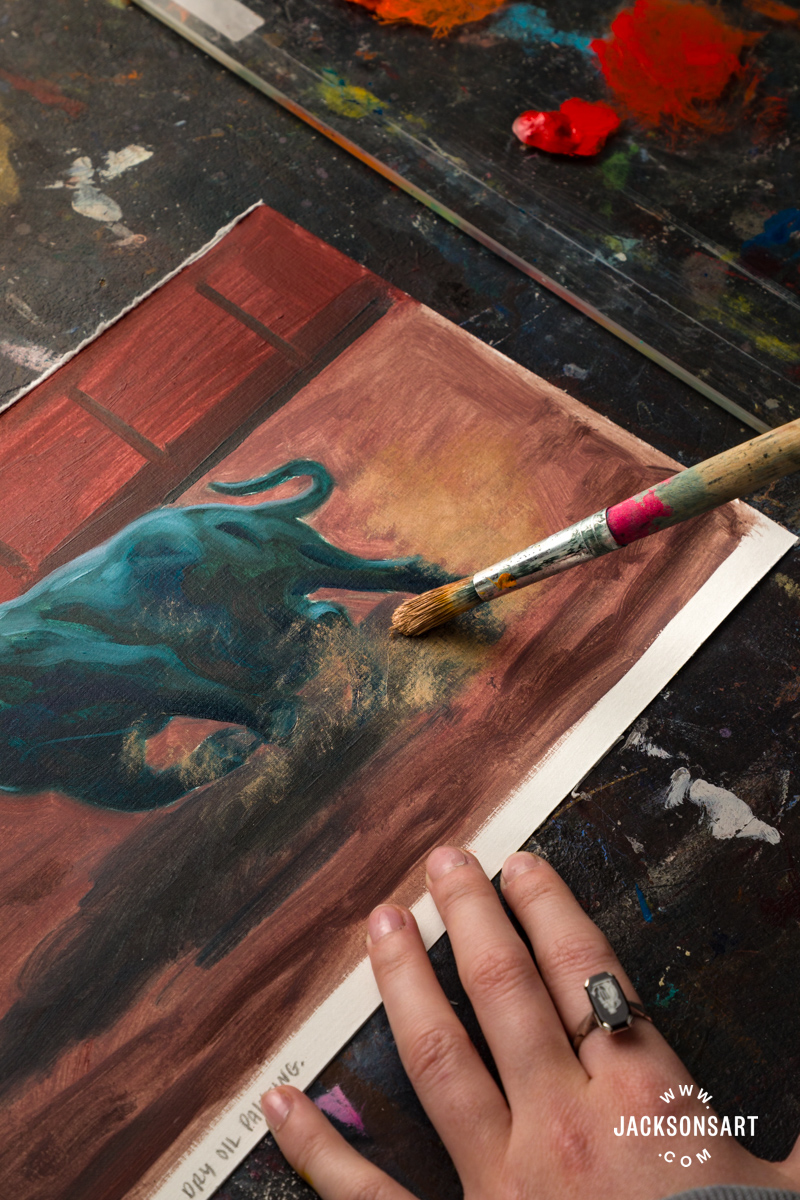
Tips: Make sure that you apply dry brushing on top of oil paint that is touch dry, or at least tacky, so that you don’t accidentally smear your previous work. The dry brush effect won’t work if the surface below is too slick to pick it up. With a dry oil painting, you can also make corrections to dry brushing by removing any errors with a clean rag.
Make sure you start this technique with a dry brush that hasn’t just been cleaned in solvent or dipped in medium, since it may make the desired texture impossible to achieve.
Further Reading
Brushes for Chinese Brush Painting
Everything You Need to Know About Oil Painting Paper
Shop Art Materials on jacksonsart.com
2 thoughts on “Dry Brush Painting Techniques for Oil, Acrylic, Watercolour, and Ink”
I’m so grateful to read your story and
see your demonstration. I found a couple
of old oil paintings I never had finished
of the dove I had. I’ve pondered over
them because they are beautiful but
sooo dark. Seeing your technique is
exactly what I’d been wondering about.
Just som drey brushing lightly in
specific areas I believe will just be
enough to bring her out of the shadow.
I’m a big fan of oriental painting. Yep.
You’ve made my day. Love it.
Lovely article Louise, thank you.
The subjects you use to explore the
history of the techniques are superb and
really opened my eyes.
Perhaps more importantly you have
awakened an interest that will enable or
should I say empower me to explore
beyond my somewhat limited traditional
techniques.
An enjoyable read and very
inspirational… thank you.
Comments are closed.