
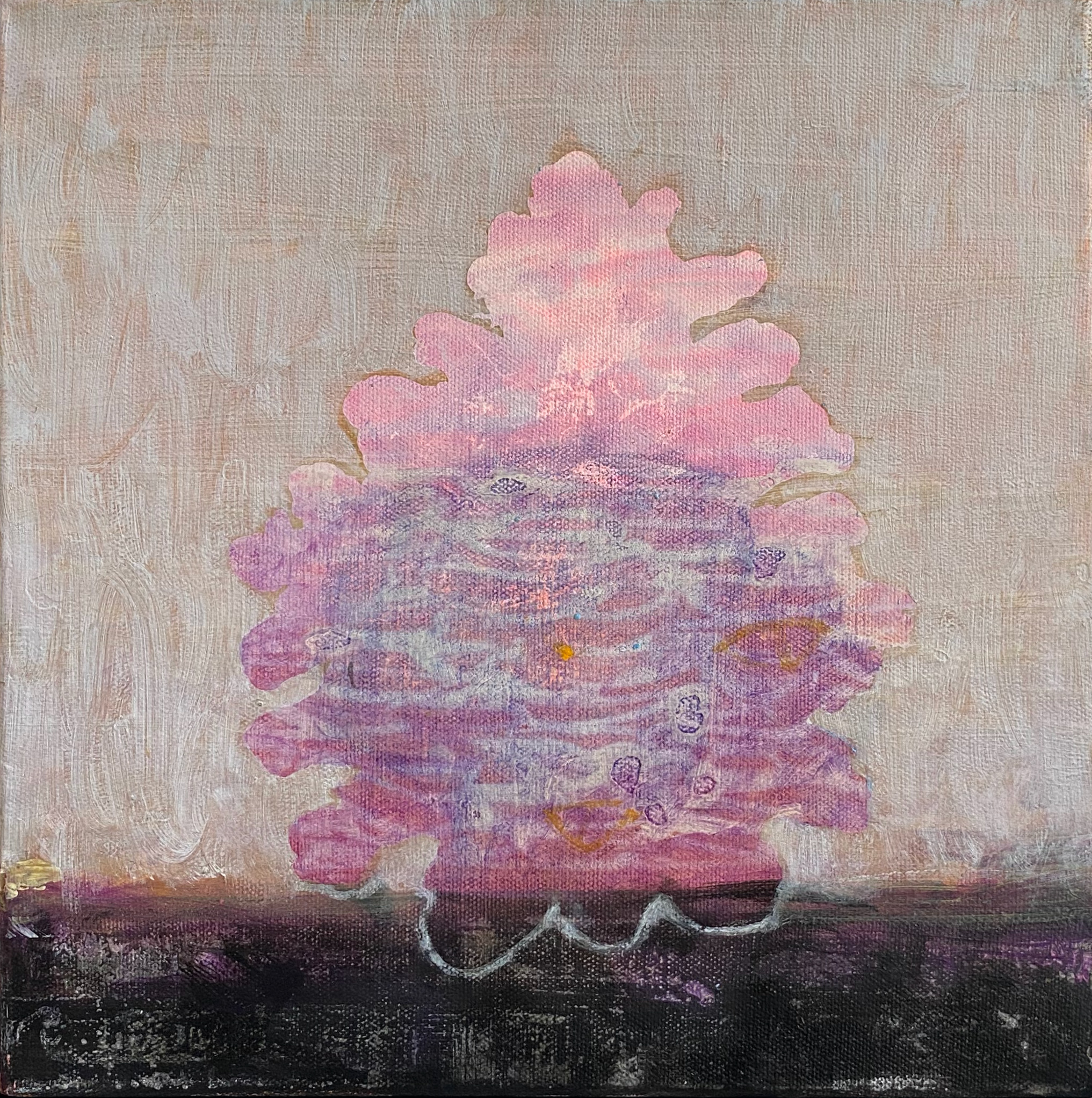
Janie George won Andrew Torr’s Choice Award in Jackson’s Art Prize this year with her work Pine Cone. In this interview, she discusses her practice of writing to help realise an idea, the perfection of indecision, and turning to ceramics to slow her down.
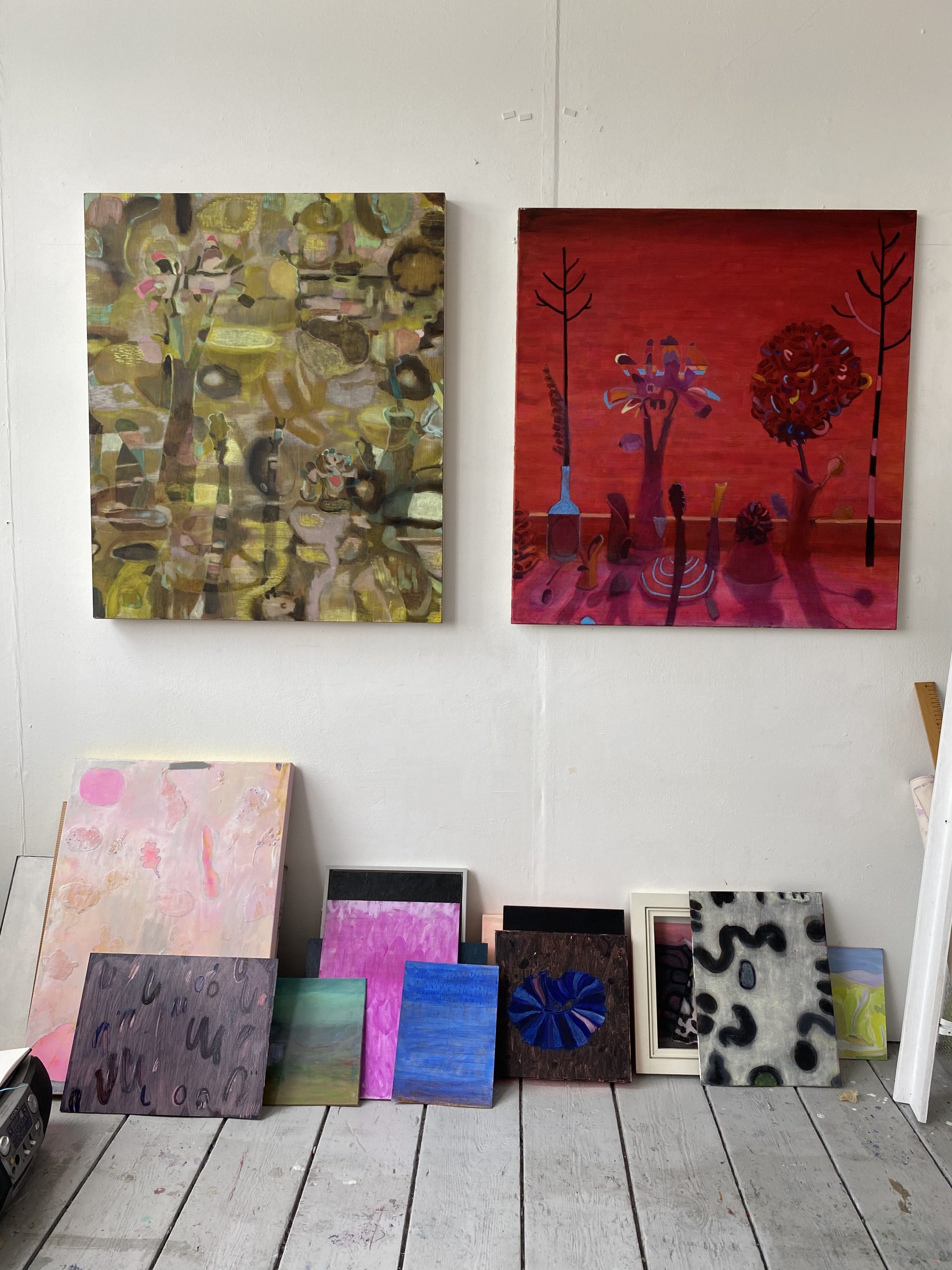
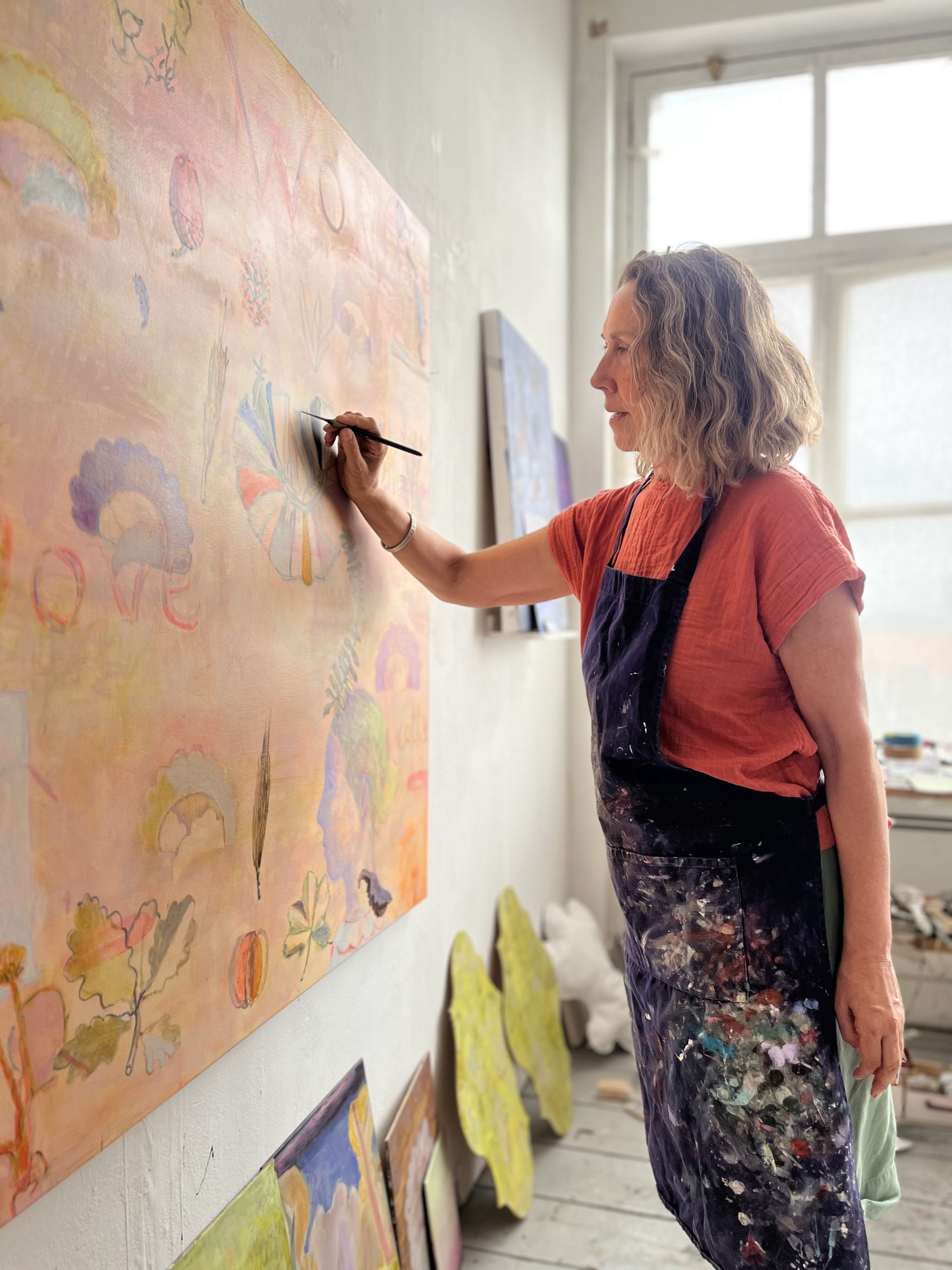
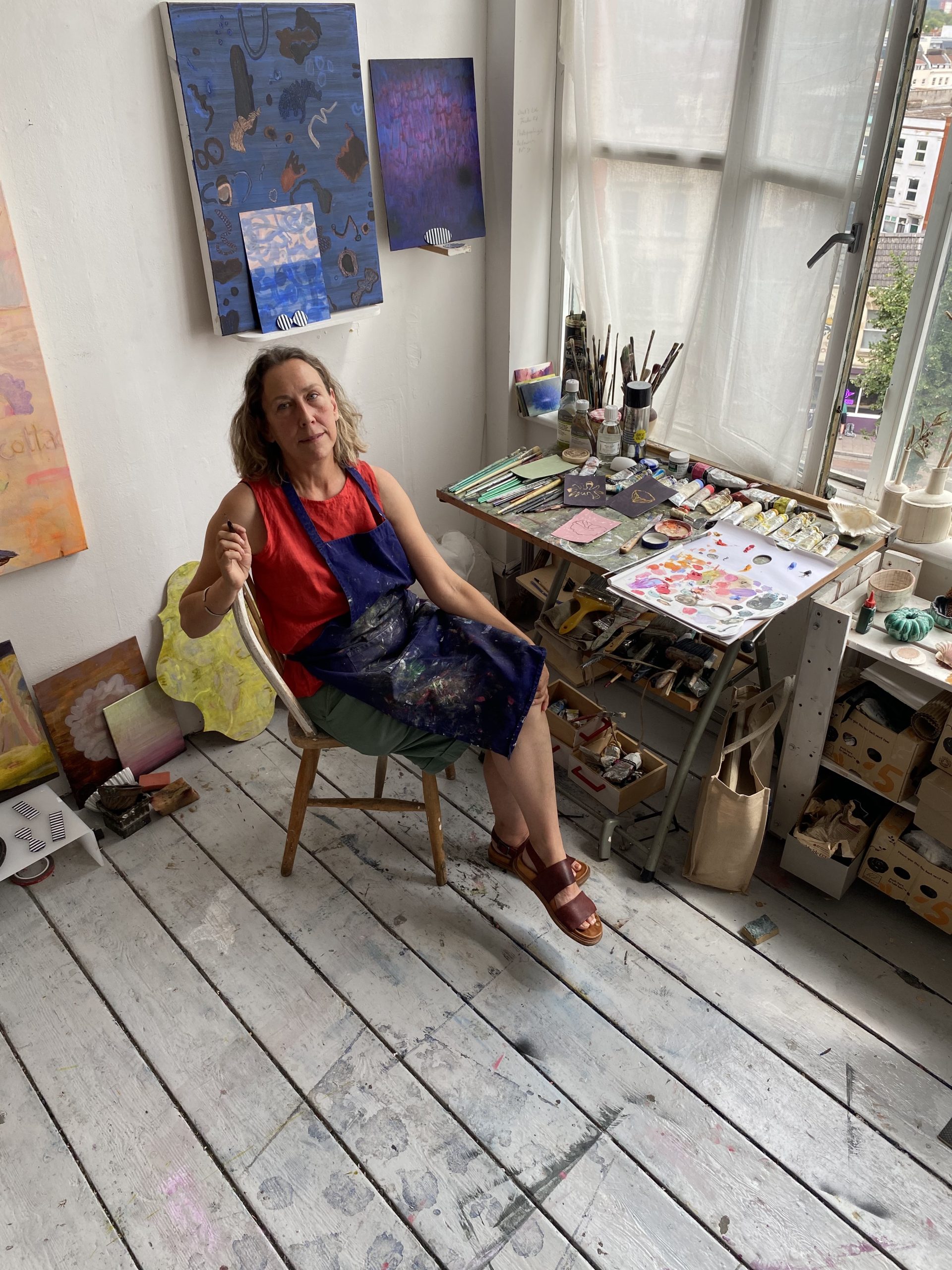
Above image: Janie in her studio
Janie George
Oil on canvas, 30 x 30 cm | 11.8 x 11.8 in
Josephine: Could you tell us about your artistic background?
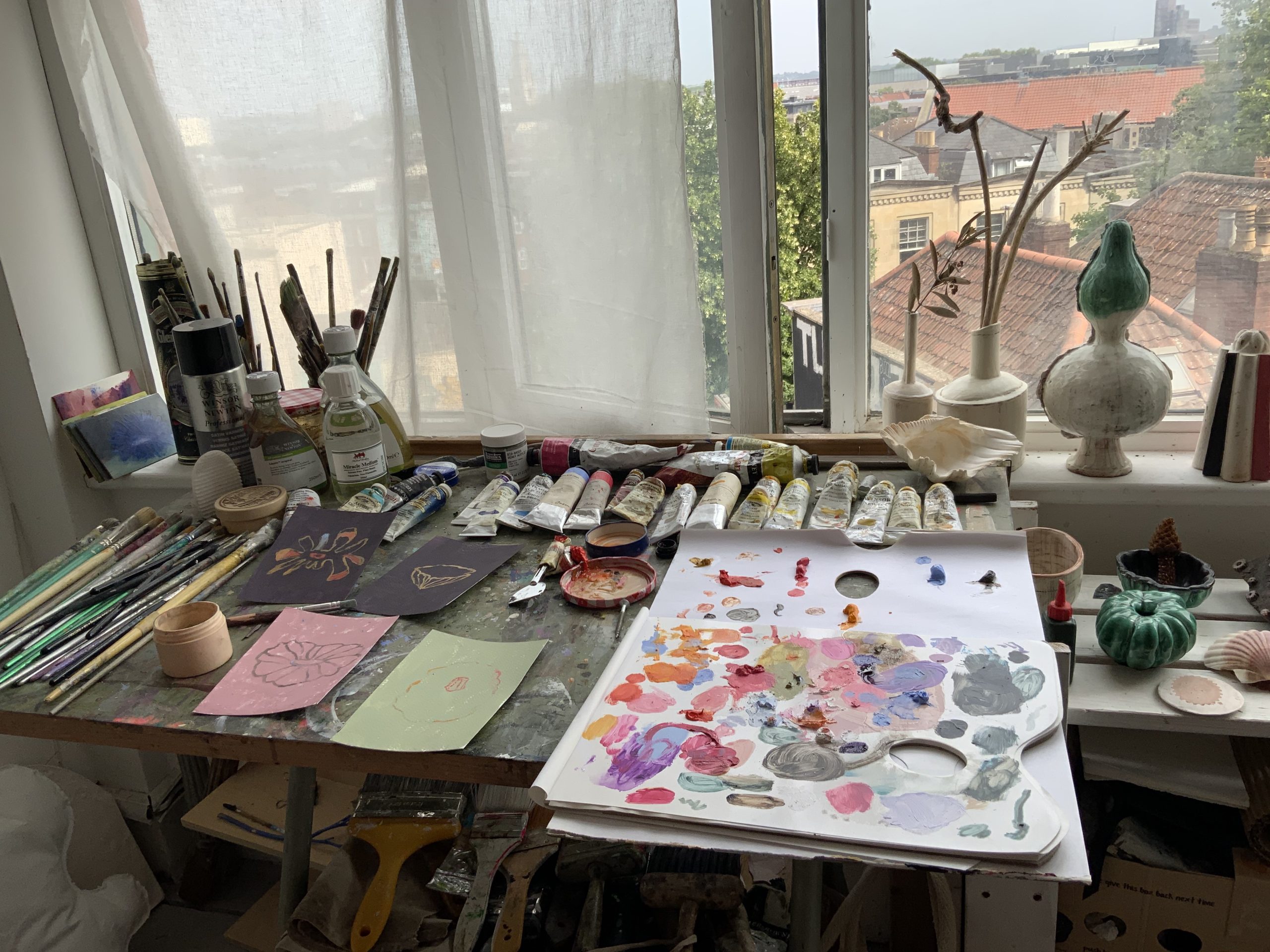
Janie: I owe a lot to my mother who was very good at making things and had a good sense of style. We were a large family and had little money. Everything was pretty much handmade and hand-grown. She taught me how to sew, cook, and garden. She also bought me a sketchbook to record the wild flowers that I found. That experience of drawing to identify and know things was the beginning for me. I still draw things gathered from the fields.
I was lucky in my art college experience; it was a more formal time, but people were pretty nurturing and kind. Although I paint now, I studied printmaking at college and lithography in particular. It was how I learnt to be very precise about colour. After college, I had longish periods without a studio. However, when I started teaching printmaking, I was able to use the equipment after hours. I’ve been at my current studio for about ten years, and it’s been a stable influence on my practice.
I currently work with some great people at the Bristol School of Art. It’s a small college, and we are able to create an environment that is really special. We teach each other our sessions and processes, I have been able to make ceramics and prints and even enamelling there.
Josephine: What does a typical working day in the studio look like for you? Do you have any important routines or rituals?
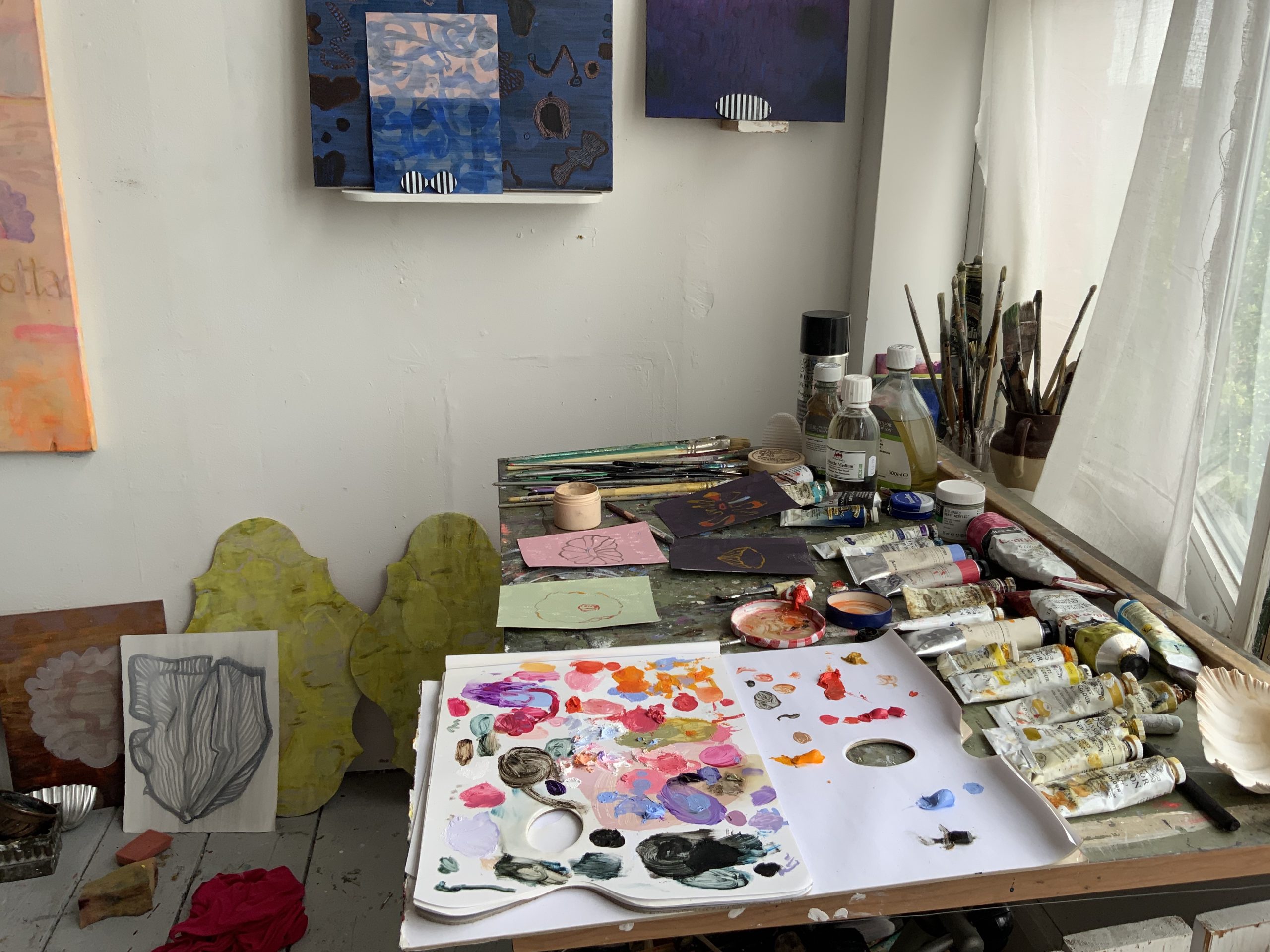
Janie: Usually, I make a cup of tea and look at what I have on the go and ruminate a little. I have lots of things happening at once at different stages. It takes a while to get my eyes working intuitively, so I will complete obvious tasks to start with. Annoyingly, it is usually when I am about to leave that I suddenly see what I should do to a painting, which usually means getting all my equipment out and getting messy again.
Mixing up colours is something I do regularly, I enjoy it, but I need to sit down and pay attention. Sometimes it’s mixing up a large amount of one colour that has to have a specific consistency for a certain mark or area.
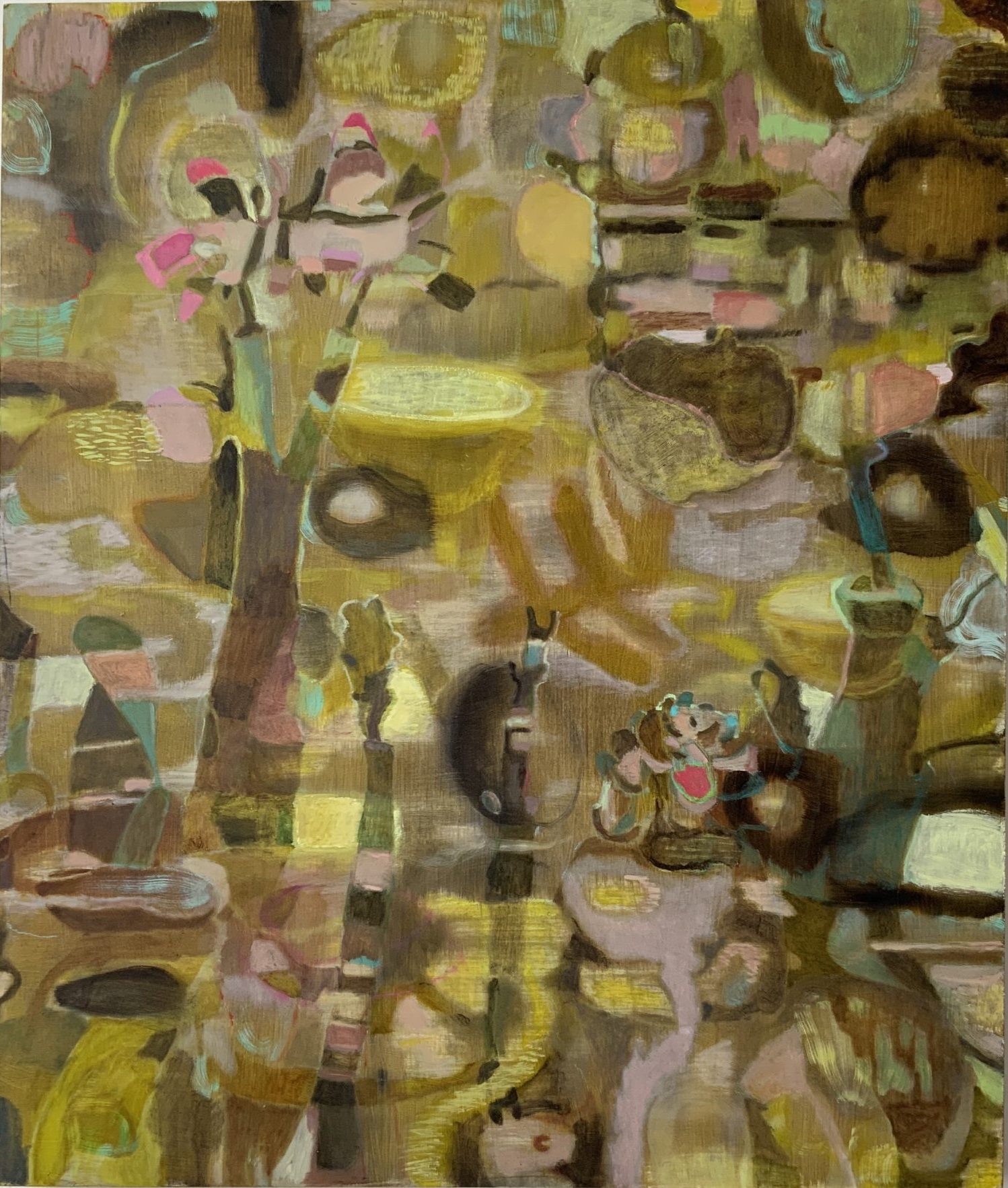
Janie George
Oil on canvas, 120 x 110 cm | 47.2 x 43.3 in
Josephine: Which materials or tools could you not live without?
Janie: I could say brush cleaner, as I use so much of it. Colour is very important too. But it’s probably the additives like liquin, thixotropic mediums, wax, or linseed oil that change the quality of the paint.
The consistency is important to the language of the paint, and I like to work in layers, some of which are semi-transparent. I need the movement to feel right, sometimes stodgy and soft, other times fluid and fast or diaphanous.
Josephine: Do you work from a reference? What is your process?
Janie: Process is hard for me to define, as I like to change how I work. Sometimes there is an image, or an idea, but sometimes just a powerful sense of a colour or colour group. These hang around getting more insistent until they have been given a space to exist.
This means that I have a series of painted backgrounds at any one time, and sometimes they just stay abstract because I can’t improve on them. I also have objects and images, and these must somehow be transformed to show how I see things. I often write about the feeling of the idea, as it can help with the realisation.
Janie George
Oil on canvas, 80 x 90 cm, 31.4 x 35.4 in
Josephine: Do you regularly draw or keep a sketchbook? If so, how does this inform your work?
Janie: I only use line drawings these days as they help me with form and composition. Usually, it’s drawings of objects from the garden, fields, or beaches. I also draw groups of things I have made or collected. These will become something in a painting – if there is a thing.
Josephine: Have you ever had a period of stagnation in creativity? If so, what helped you overcome it?
Janie: Being an artist is not separate from being a person. Sometimes the circumstances of everyday existence are difficult, and this will have an effect on how I feel about everything. Being exhausted is a real issue for me. Otherwise, I think stagnation can be about the end of a cycle, and it’s time to take a break and evaluate.
Having a holiday somewhere far away with no internet helps. Also, for me, turning to ceramics has really helped slow me down and change my thinking.
How we can manage life well with the resources we have is the true test of creativity.
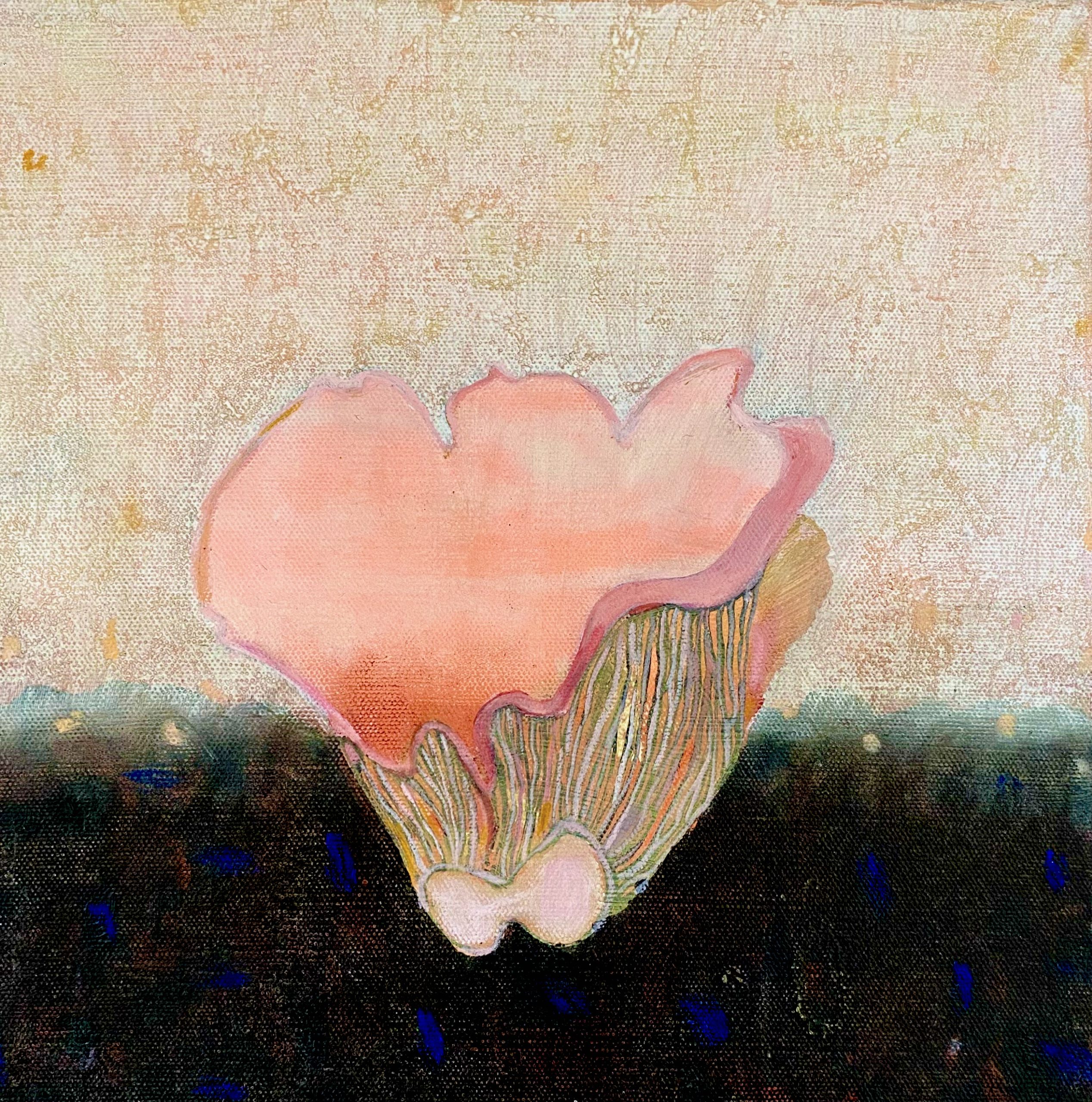
Janie George
Oil on canvas, 30 x 30 cm | 11.8 x 11.8 in
Josephine: Are there any specific artists or mentors who have inspired you?
Janie: I found Agnes Martin’s writing really helpful. Also, Letter of Advice to a Young Poet by Rilke is very good. Otherwise, I have so many good friends who are artists who have given me support and new ways to think about things.
I love the work of artists like Cy Twombly and Paul Klee. But have a special affection for female British artists who work with colour and the blend of toughness and grace they show in their work. Chiefly, I am thinking of Prunella Clough, Mary Potter, Susan Foord, Elizabeth Blackadder, and Edwina Leapman.
Josephine: What were you thinking about or exploring at the time you painted Pine Cone? What inspired it, and how did it come to be?
Janie: I have a few pine cones that lounge around the house and creep into paintings. They are part of the endless collection of small finds that come home with me from walks.
I had made a painting inspired by Dorothy Wordsworth’s Diary, with her interest in gardening and making clothes. I found it touching how her blend of daily observations made it into her brother’s poetry. There was a pine cone in that piece, and I really enjoyed its complexity. I like the way plants and shells make themselves by coiling outwards, pine cones are spirals with woody petals. However, all of that is unseen in this painting; it just contains a sort of landscape.
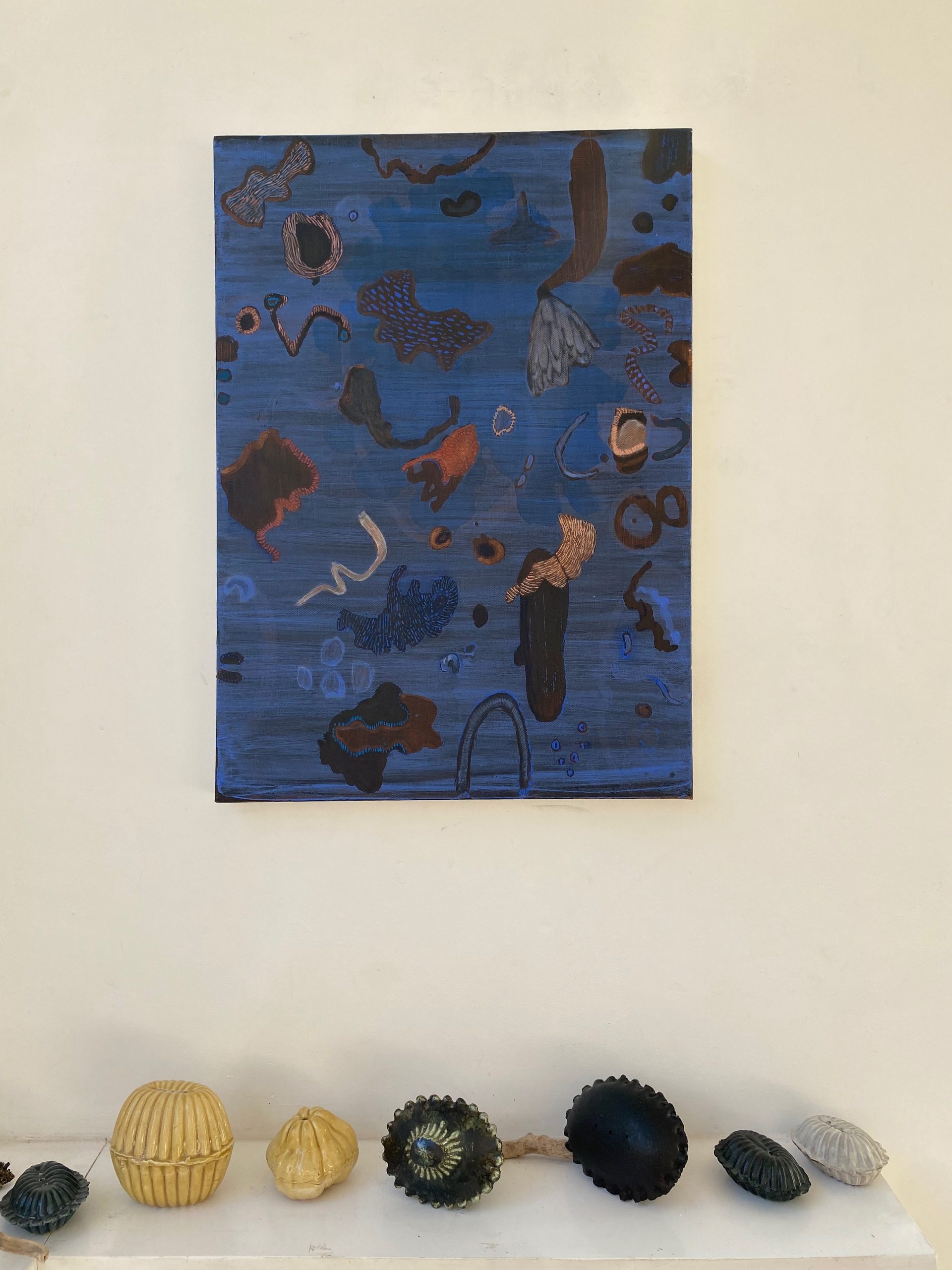
Janie George
Oil on canvas, 45 x 65 cm | 17.7 x 25.5 in
Josephine: Why did this piece feel like the right one to submit?
Janie: I felt that this painting had become itself almost in spite of me and my efforts. I was going to be more specific about the form but it just wouldn’t let me so I had to keep wiping paint away. In the end, the residue of all the attempts made it perfect. It was a perfection of indecision.
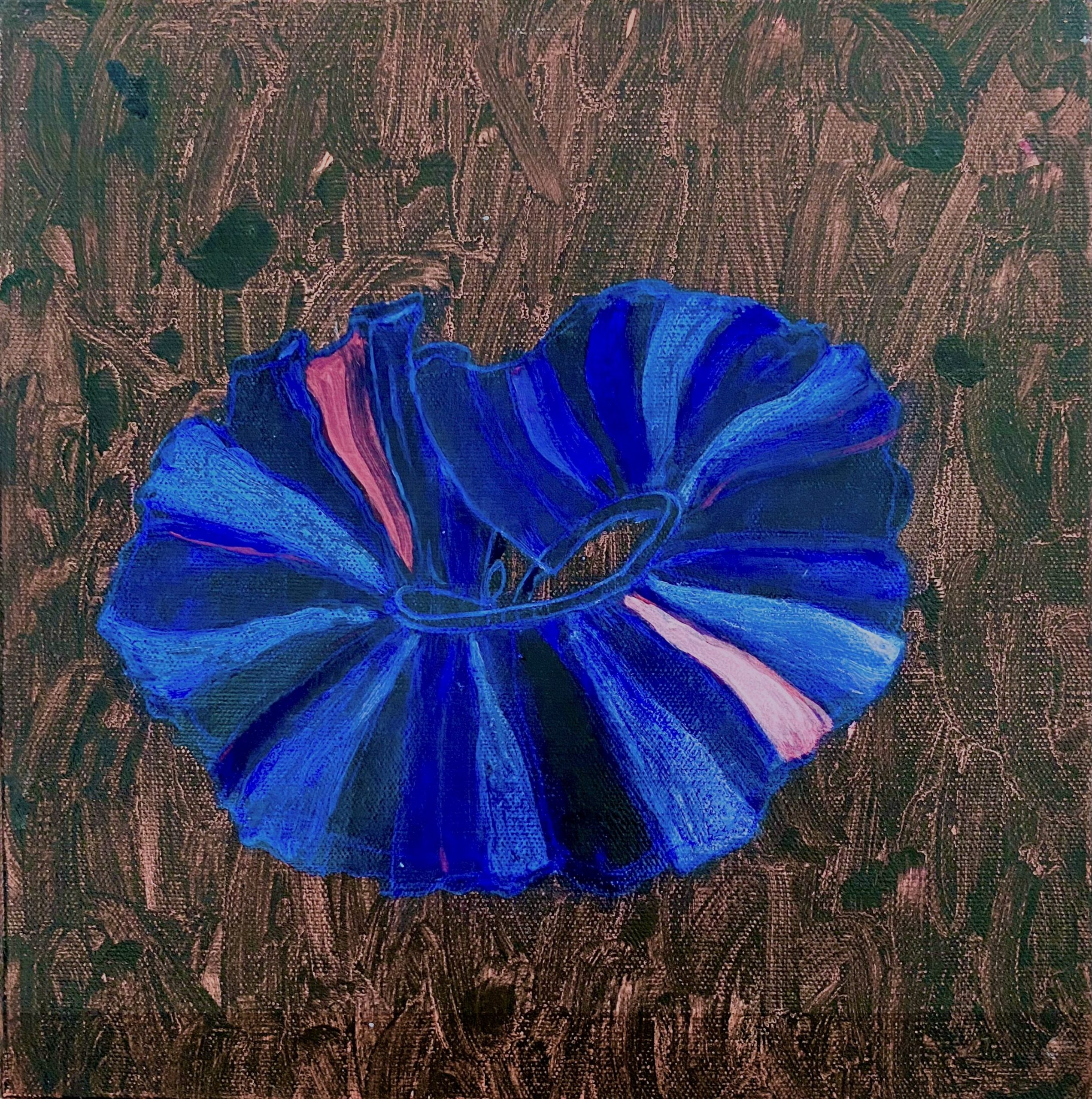
Janie George
Oil on canvas, 30 x 30 cm | 11.8 x 11.8 in
Josephine: How did it feel to move through the stages in the competition and win Andrew Torr’s Choice Award?
Janie: I was amazed because the painting speaks quietly. It is such a small painting but has a big space. Perhaps it took another painter to see that. When I read what Andrew wrote I felt very emotional. It was so generous and thoughtful. The support of other artists is so important.
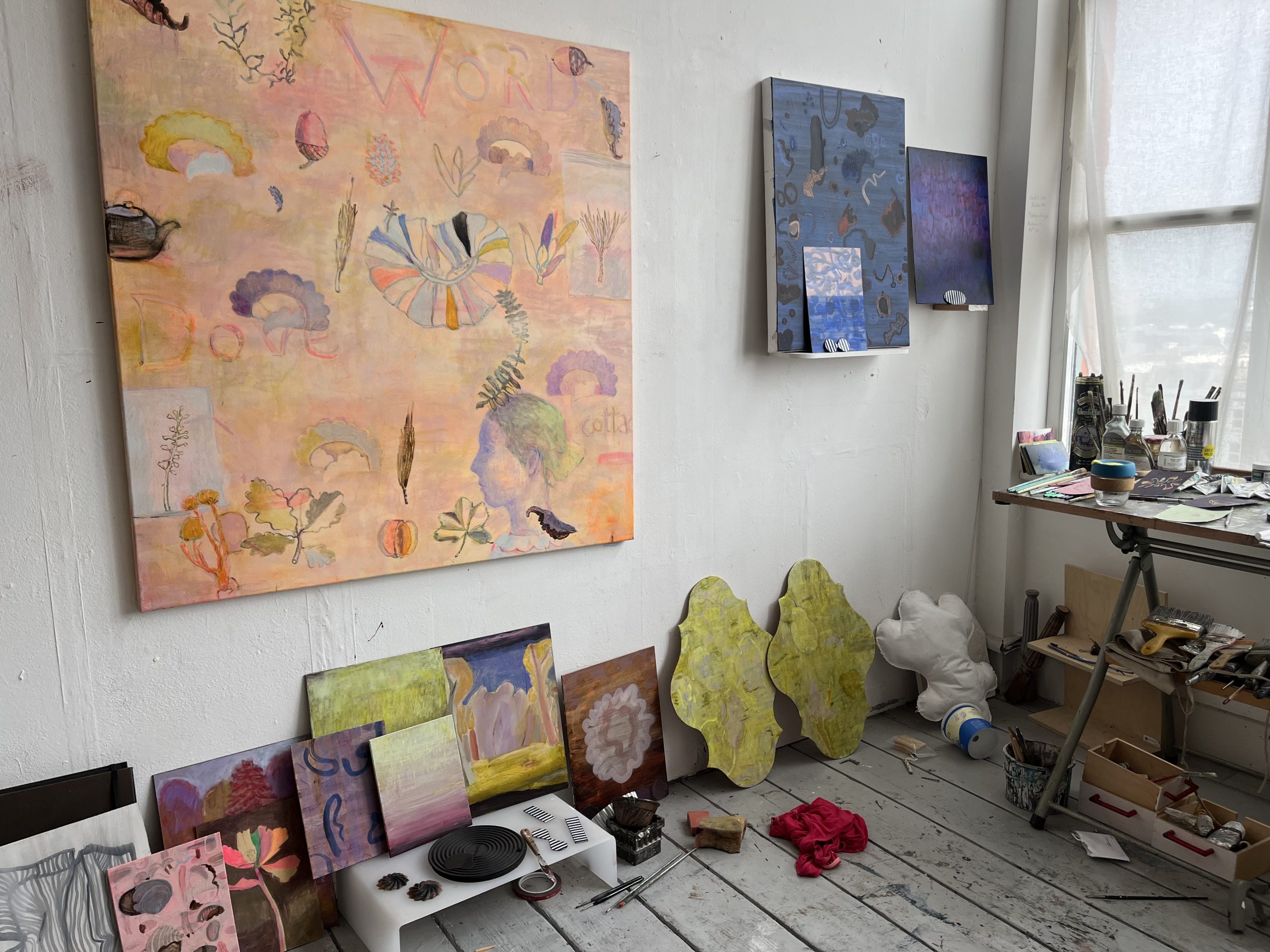
Josephine: What inspired the colours in this painting?
Janie: I work from the ground forward. It’s a bit of a headache but worth it because it influences what comes later. I need to respond to a colour with colour, a white ground doesn’t work for me.
Josephine: There are hints of orange coming through from behind the certain areas, can you talk about how you primed the canvas?
Janie: There is a bright pink in the ground, and I wanted bits of this to shine through as a feeling of affection and love in what was going to happen next. I tried ochre on top at one stage so it appears orange in some areas. I was going mad for Violet at the time. I realised I couldn’t mix the hue I was seeking. I finally bought a tube of Winsor & Newton Cobalt Violet Artists’ Oil Paint. Very expensive, a birthday present to myself. It sits beautifully on the pink.
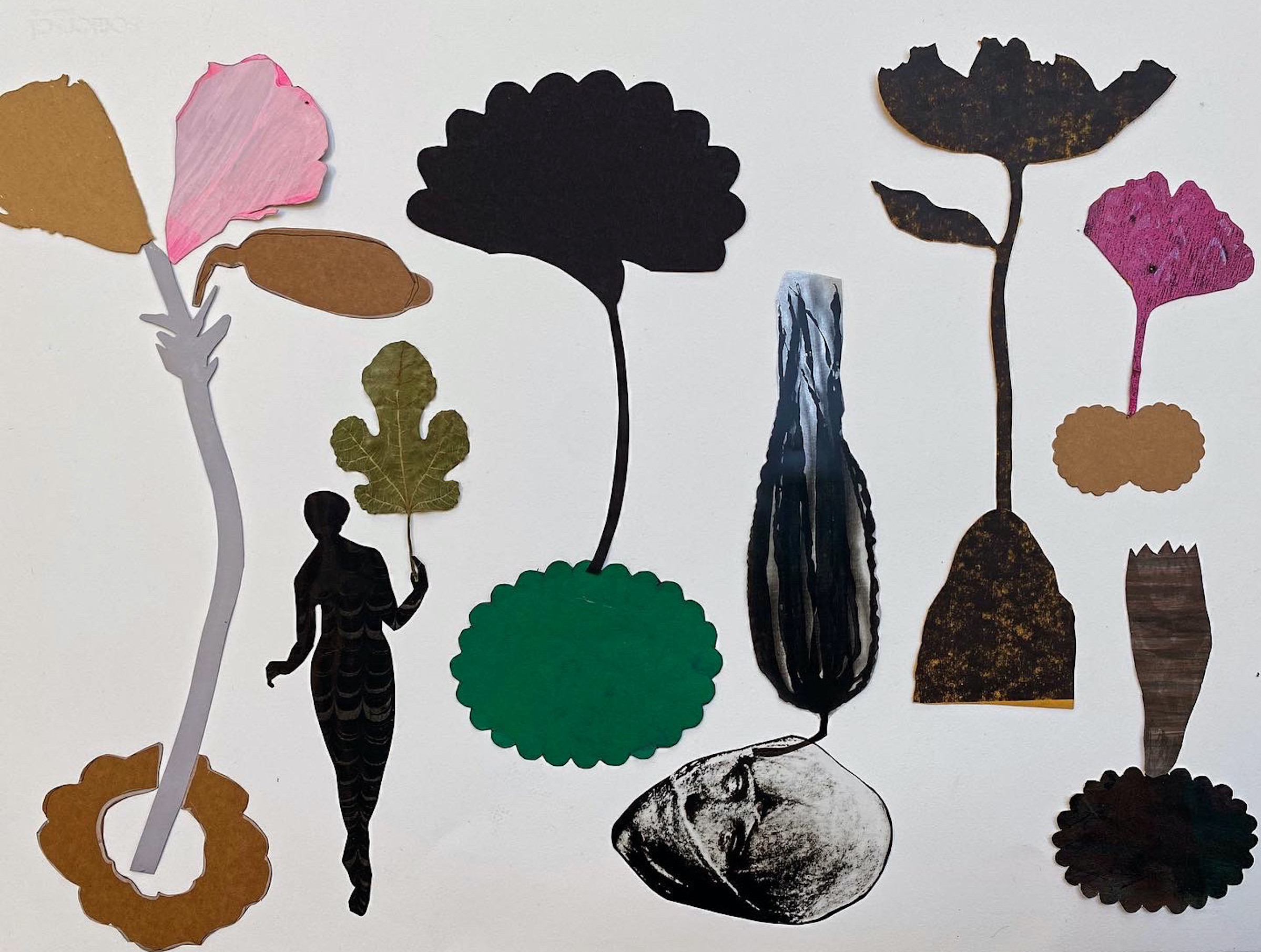
Janie George
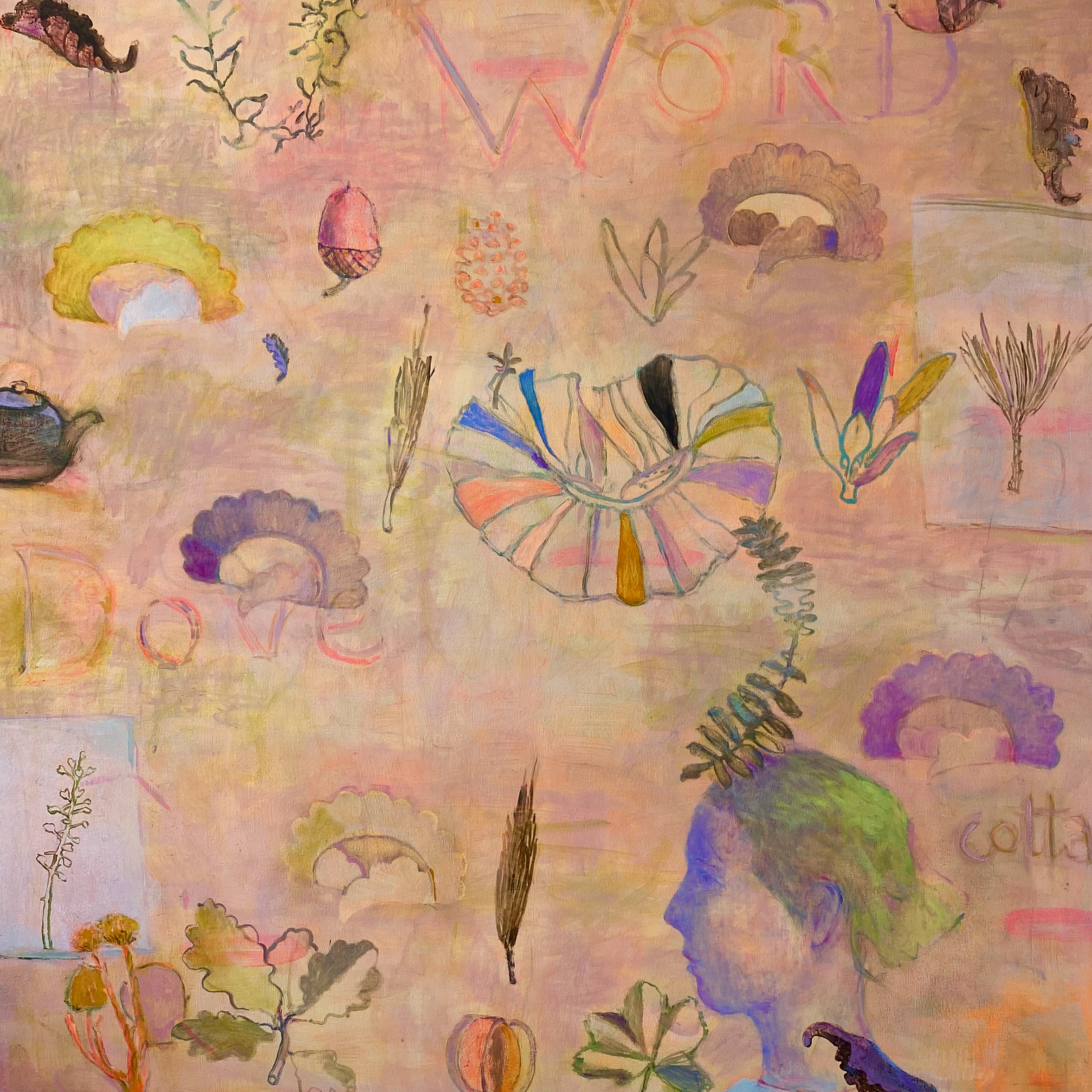
Collage on paper, 45 x 60 cm | 17.7 x 23.6 in
Josephine: Are there any new materials or ideas you’re excited to explore using your prize?
Janie: Yes, I can buy some of the more expensive paints and pigments. I’m also looking at Michael Harding Miracle Medium. It’s not mineral-based and that appeals to me. It feels very pure. I am developing dermatitis, so I am looking at other kinds of solvents or ways of using water-based paints.
Actually, I’m interested in developing a way of working that doesn’t use solvents at all. So I will be buying some pigments and experimenting with these.
Josephine: What’s coming up next for you?
Janie: Thanks to my colleague Jess Turrell’s teaching, I have made some enamelled forms to add to the painted surface of a big canvas. I have a solo exhibition coming up in Tetbury next year. It’s a big space, so I am working with larger abstract unstretched pieces.
Also, I’m working on some simple woodblock prints that are circular flower forms that I can use in community engagement workshops where people can bring their own t-shirts, etc and print on them. I actually prefer to work with other artists, so I’m hoping to lure my friends into exhibiting with me.
Further Reading
Meet Eleanor Johnson, Winner of Jackson’s Art Prize 2025
Jackson’s Art Prize 2025 Exhibition at Affordable Art Fair
How We Collaborate With Artists
Expert Advice on Making Your Way as an Artist
Shop Oil Painting on jacksonsart.com