


Here is a guide to the violet pigments used in artist paints today according to the Pigment Colour Index, identified by the prefix PV. Find out more about the Colour Index and why it is useful to artists in this post.
Violet lies between red and blue on the colour wheel, and while it can be mixed with a combination of those two colours, a single-pigment violet can be a great addition to an artist palette. Violet and purple dyes have been used for centuries – the most famous being Tyrian purple, an expensive dye made from mucus of sea snails. It wasn’t until the 19th Century that the first true violet pigment, Cobalt Violet, was made. Cobalt Violet was closely followed by Manganese Violet, and in the 20th Century the Quinacridone pigments opened up a whole new spectrum of violet.
Violet Pigments
Each swatch is an example of an artist paint that uses that particular pigment, and the actual colour may vary. You can click on each swatch to go to the paint that is pictured.
PV 14 – Cobalt Violet

Colour Description: Can be a reddish violet or a cool pink.
Transparency/Opacity: Semi-transparent to opaque
Cobalt is a metallic element that is mined from the earth’s crust. The word cobalt comes from the German kobald, meaning ‘goblin’, after the mine-dwelling creatures who were believed to be responsible for the dangerous conditions that the miners worked under. Cobalt Violet has a very low tinting strength, making it easily overpowered by highly tinting pigments. However, with the right colours it can make some very subtle, delicate mixtures. With a low tinting green like Viridian (PG 18) it makes some soft greys, and with Cobalt Blue (PB 28) it makes some intense violets. One of its appeals for watercolourists is its granulation, which can be used to create textural effects. Find out more about Cobalt pigments here.
PV 15 – Ultramarine Violet

Colour Description: A cool blue-violet or red-pink
Transparency/Opacity: Semi-transparent
Ultramarine Violet is made by heating Ultramarine Blue pigment with ammonium chloride, and the different shades of Ultramarine Violet are determined by how much sulphur this process removes. PV 15 has a low tinting strength and is a very slow drying pigment in oil paint. Try mixing it with a Lemon Yellow (such as PY 3 or PY 175) to make soft greys. In watercolour, Ultramarine Violet usually granulates.
PV 16 – Manganese Violet

Colour Description: Purple with either red or blue undertones, but red-shade is more common
Transparency/Opacity: Semi-transparent to semi-opaque
Manganese Violet was first produced for artist paints in 1868. It is a slightly dull pigment, which makes it useful for bringing down the chroma in mixtures, although its tinting strength is low. With Viridian (PG 18) it makes a shadowy blue-grey.
PV 19 – Quinacridone Violet

Colour Description: Ranges between a smoky violet and a bright rose
Transparency/Opacity: Transparent
Quinacridone Violet is less purple than Quinacridone Magenta (PR 122), but still leans slightly towards blue. Like other Quinacridone pigments, it is very staining and has a high tinting strength. It makes very deep and vibrant violets when mixed with Ultramarine Blue. Find out more about Quinacridone pigments here.
PV 23 – Dioxazine Violet

Colour Description: Cool, blue-violet
Transparency/Opacity: Semi-transparent to semi-opaque
A cool purple pigment with a high tinting strength that is popular among botanical artists. Try mixing it with Transparent Red Iron Oxide (PR 101) to make deep browns. Dioxazine Violet PV 37 is considered to be more lightfast than PV 23.
PV 29 – Perylene Violet
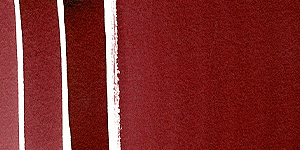
Colour Description: Dull reddish-purple
Transparency/Opacity: Semi-transparent to transparent
Perylene Violet’s strength lies in its low chroma. It can be a great addition to a portrait palette to mix natural flesh tones, and it can also be mixed with Green Gold (PY 129) to make subdued, earthy greens.
PV 37 – Dioxazine Violet

Colour Description: Cool, blue-violet
Transparency/Opacity: Semi-transparent to semi-opaque
An alternative to more fugitive Dioxazine Violet pigment (PV 23), PV 37 is a cool purple pigment with a high tinting strength that is popular among botanical artists. Try mixing it with Transparent Red Iron Oxide (PR 101) to make deep browns.
PV 42 – Quinacridone Violet

Colour Description: Ranges from bright, floral pink to dark, red-violet
Transparency/Opacity: Transparent
Very similar to the more common Quinacridone Violet PV 19, it makes very deep and vibrant violets when mixed with Ultramarine Blue (PB 29). Find out more about Quinacridone pigments here.
PV 49 – Cobalt Violet

Colour Description: Pale, cool violet
Transparency/Opacity: Semi-transparent
Considered to be the ‘lighter’ version of Cobalt Violet (PV 14). Low staining and adds textural granulation in watercolour mixtures. Find out more about Cobalt pigments here.
PV 55 – Quinacridone Purple
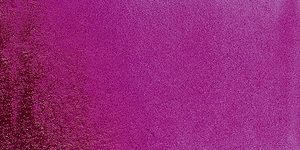
Colour Description: Dark red-purple
Transparency/Opacity: Transparent
Not as red as Manganese Violet, nor as blue as Dioxazine Violet, Quinacridone Purple. Mix with any transparent Orange pigment to make rich browns. You can find out more about Quinacridone pigments here.
This post is part of an ongoing series about the Pigment Colour Index.
- White Pigments (Codes beginning PW)
- Yellow Pigments (codes beginning PY)
- Orange Pigments (Codes beginning PO)
- Red Pigments (Codes beginning PR)
- Blue Pigments (Codes beginning PB)
- Green Pigments (Codes beginning PG)
- Brown Pigments (Code beginning PBr or NBr)
- Black Pigments (Code beginning PBk)


5 thoughts on “Pigment Colour Index: Violet Pigments”
I want to subscribe to your info. It is so
wonderful and too much for me to take
on all it once time! :0)
That’s great! You can up to our newsletter at
the bottom of this page.
Excellent information. Will you be doing
more going round the colour wheel?
Hope so.
Hi Mike, yes we’re doing all the pigments.
As a former pigment chemist, I found this a
good ,concise piece of information. I like
daVinci believe the more you know about
color pigments the better your paintings will
be and the longer they will last.
Comments are closed.