

A Guide to Chinese Painting
Introduction To Chinese Painting
What Do I Need to Get Started in Chinese Painting?
What Is The Difference Between Meticulous and Freestyle Painting?
What Is Chinese Ink and How is it Made?
How Can I Alter the Appearance or Consistency of the Ink?
How Easy is it to Clean Up my Workspace after Chinese Painting?
What Is The Best Surface for Chinese Painting?
Introduction to Chinese Painting
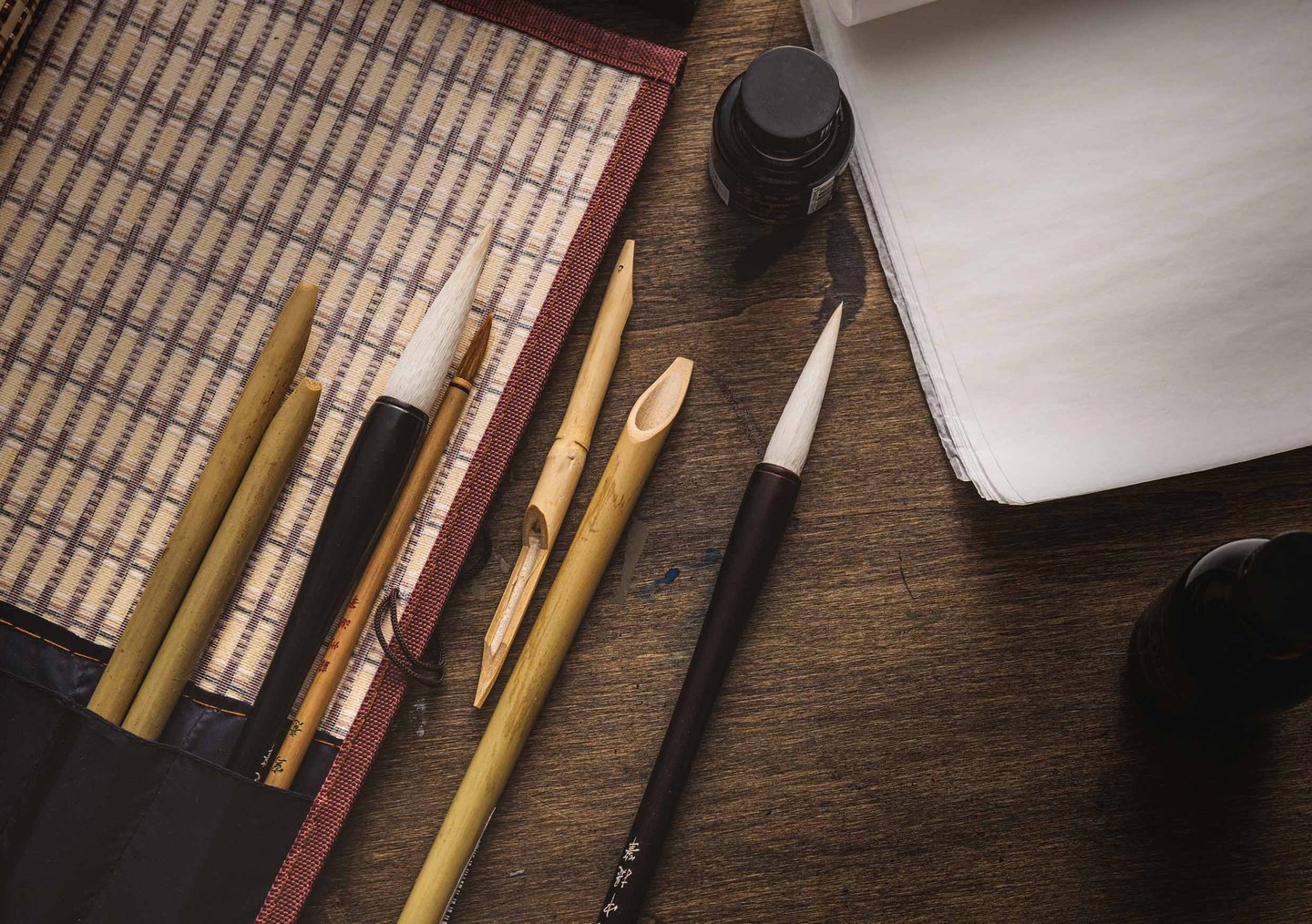
Chinese Brush Painting is the art of using simple and effortless brushstrokes to depict the essence of a figure or scene. It is an ancient art that continues to fascinate contemporary artists. A key feature of Chinese Brush Painting is that each brushstroke is a defining move that is not changed or corrected.
The vivid and varied calligraphic style of Chinese brushwork comes from the combination of three things. These are a soft absorbent brush soaked in strong Chinese or Indian ink, and the permeability of Chinese (rice) paper. The Chinese do not differentiate between brushes that are used for calligraphy and those used for painting. Besides brush handling, another important skill that comes with practice is knowing how much to dilute the ink and how wet your brush should be. A variation of Chinese Brush Painting can also be painted on watercolour paper.
The two traditional styles of Chinese painting are ‘meticulous’ and ‘freestyle’. The meticulous style is detailed and controlled. Freestyle is looser, allowing for more expression through the brush.
The six principles of Chinese painting were established by Xie He, a writer, art historian, and critic from 6th century China. They are as follows:
- 'Spirit Resonance', or vitality. The overall energy of a work of art. Xie He said that without Spirit Resonance, there was no need to look further.
- 'Bone Method', or the way of using the brush. This refers not only to texture and brushstroke but to the close link between handwriting and personality. In his day, the art of calligraphy was inseparable from painting.
- 'Correspondence to the Object', or the depicting of form, which would include shape and line.
- 'Suitability to Type', or the application of colour. This includes layers, value, and tone.
- 'Division and Planning', or placing and arrangement. This corresponds to composition, space and depth.
- 'Transmission by Copying', or the copying of models. Not only from life but also from the works of antiquity.
What Do I Need to Get Started in Chinese Painting?
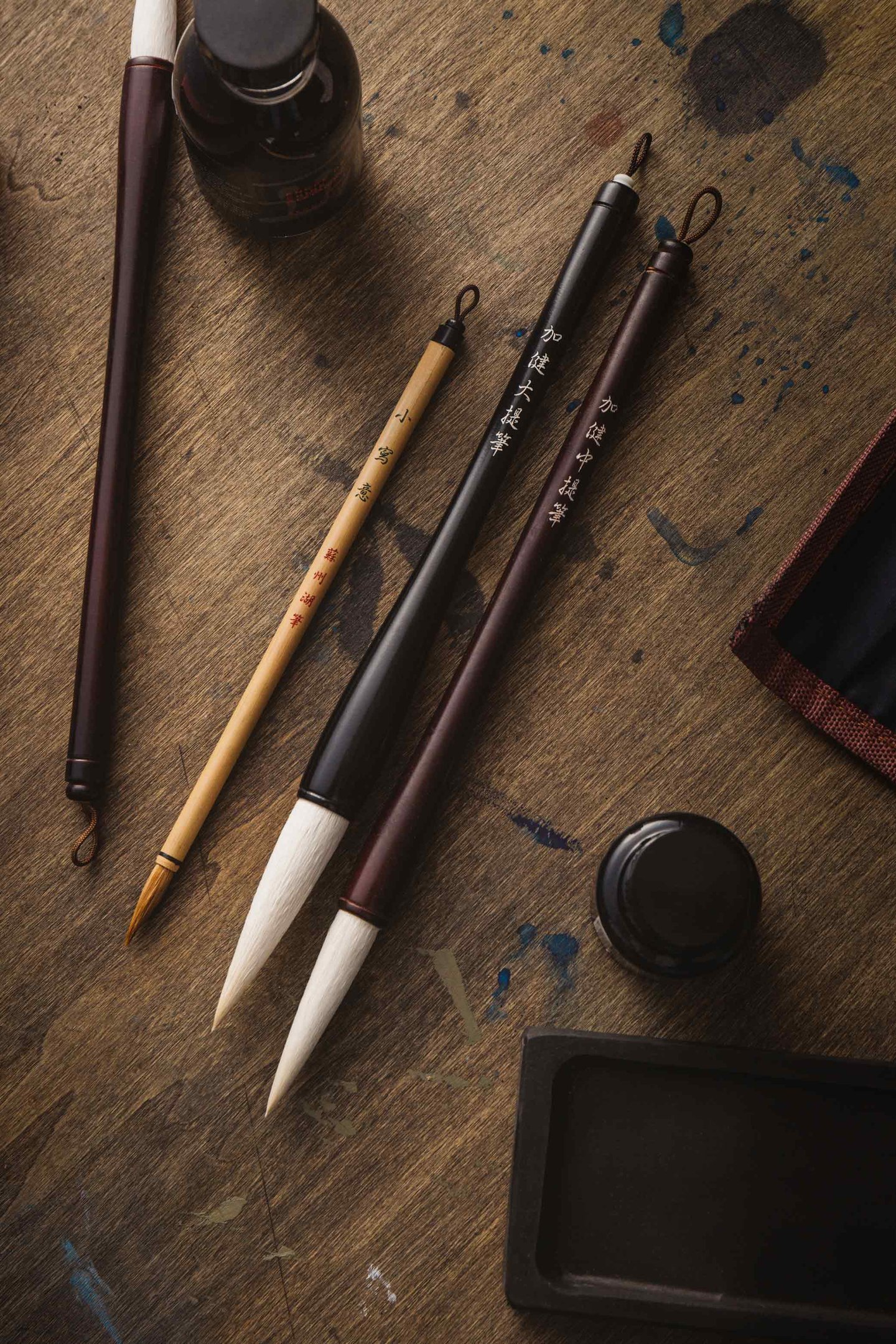
You can start painting with the following materials:
- A few brushes (one of each: soft, medium, stiff)
- An ink stick or prepared liquid ink
- A mixing stone (or inkstone) if you are using an ink stick
- A jar of water
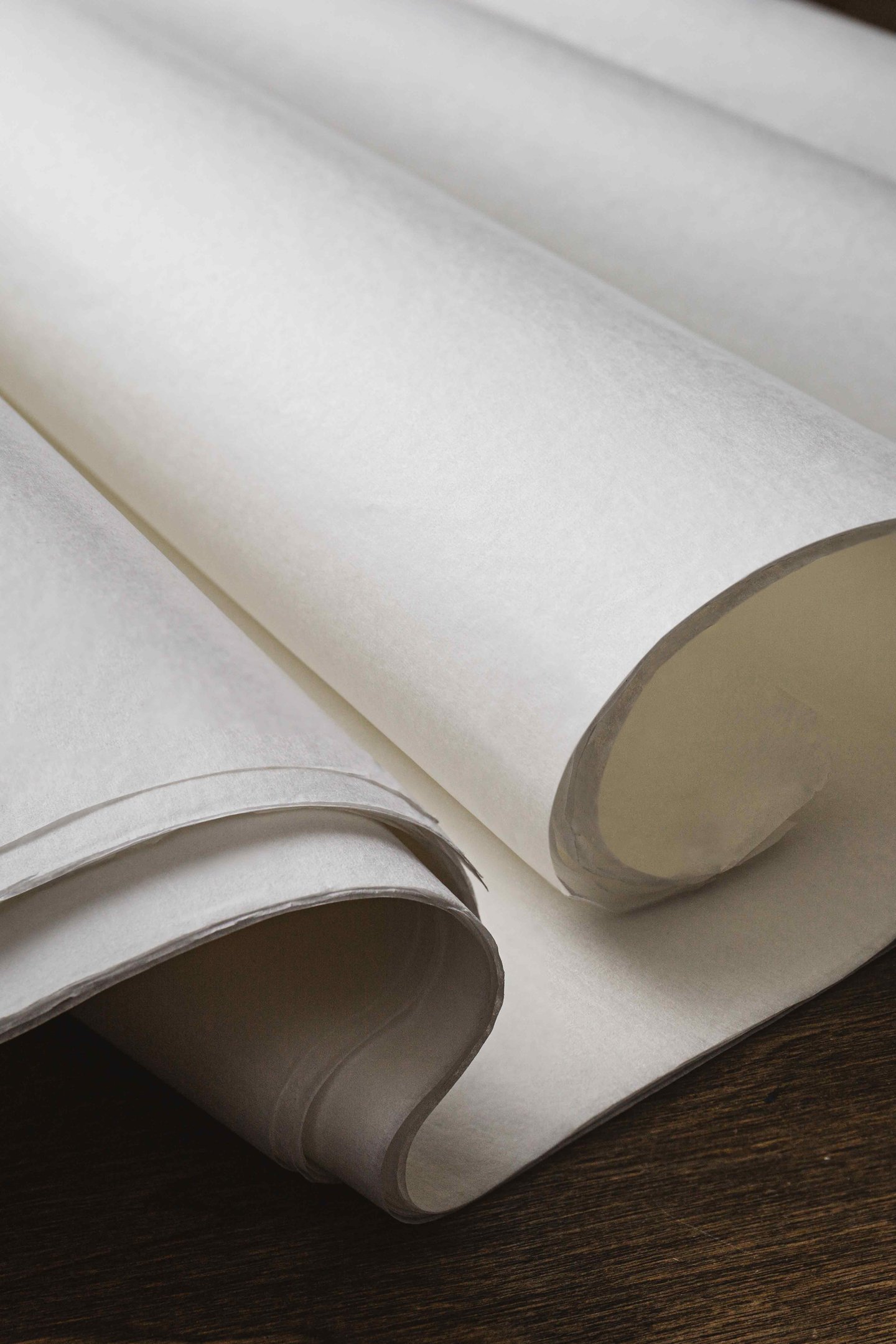
- A roll of rice paper or silk
You can buy prepared ink or make the ink yourself using ink sticks and a mixing stone. Ink sticks can be ground down over a mixing stone with a little water to make Indian or Chinese ink. This is done by holding the ink stone and forcing it down into the mixing stone. It should be moved in a circular motion whilst adding a little water from time to time. You will then have made your own ink with which to paint.
Brushes traditionally have a bamboo handle. The hair can be made from goat, cattle, horse, sheep, rabbit, marten, badger, deer, boar, or hog. To get started, choose a basic set of brushes. You should have a range of soft, medium, and stiff brushes.
Chinese brushes are heavily starched to protect the hair until they are purchased. When they arrive the brush head is very rigid. Before use, the starch should be removed by soaking the brush head for a few minutes in room-temperature water. Then, wash the brush until the entire length of the brush hairs are fully loosened.
The paper you choose tends to be defined by which style of painting you are using. Meticulous painting requires paper that is sized so that paint will run easily across the surface. The paper used for freestyle is usually non-sized, single-ply Xuan (such as rice paper). This will absorb the colour instantly, leaving no opportunity to modify or lift brushmarks once they are made. Other papers, such as regular sized watercolour paper, can be used. They will be more forgiving for those just starting out with this process. Brushes and inks are the same for both.
Box Sets
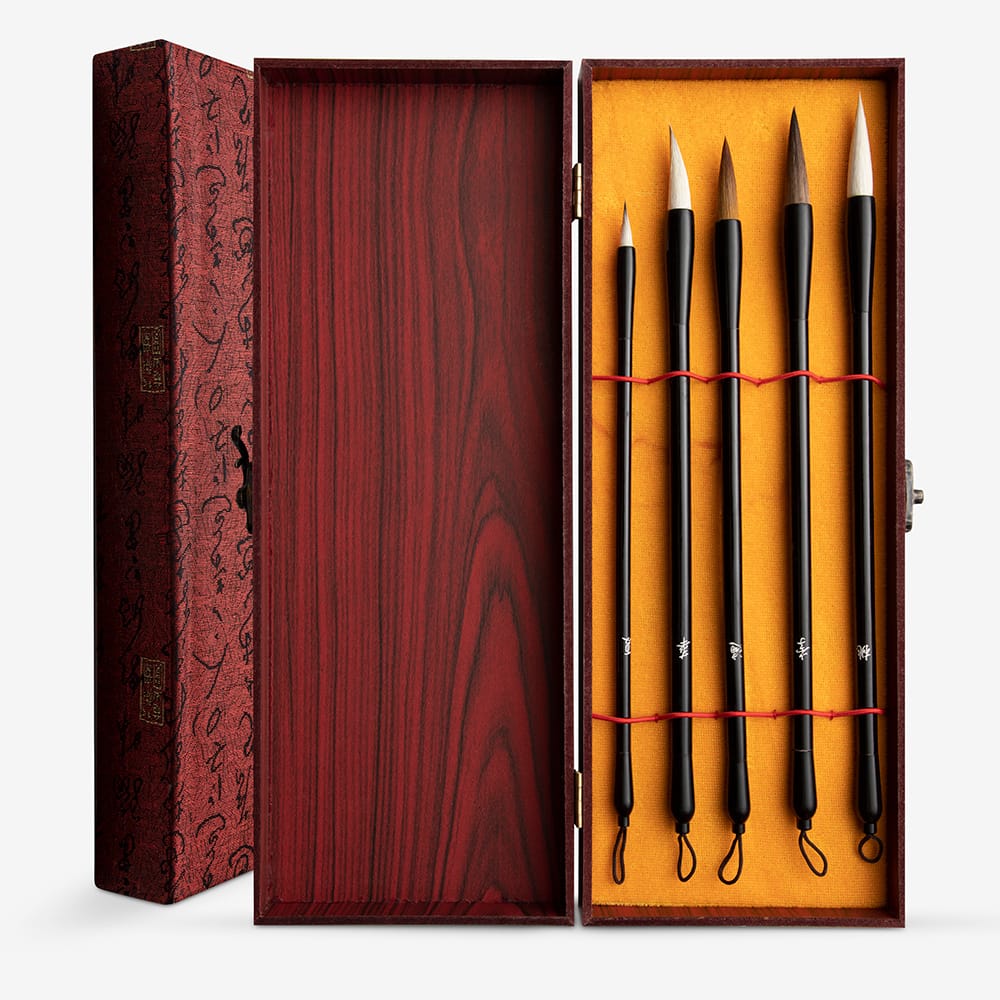
A box set is a good way to start practising Chinese painting techniques. They also make for a beautiful gift. Some typical items that you are likely to find in a Chinese painting set might include:
- A round pointed brush that is well suited to fine detail. They also have the liquid holding capacity for broader strokes and washes.
- A soapstone. In Chinese and Japanese painting traditions, the soapstone should be carved so that it can be used as a ‘name seal’ - a stamped signature on your work which acts as a mark of authorship and authenticity.
- An ink stick. This can be ground down in the mixing stone with a little water to make Indian or Chinese ink. By holding the ink stone and forcing it down into the mixing stone and moving it in a circular motion – whilst adding a little water from time to time – you will make your own ink with which to paint.
- A pot of red stamp ink. To use with your carved soapstone seal.
- A mixing stone. This is a very smooth black stone slab that is designed to be used to grind the ink stone.
- Porcelain water dish and mini water spoon. This water dish is designed to be used with the ink grinding process. Use the mini spoon to add a little water from time to time as you grind the ink stick on the mixing stone.
- Porcelain brush rest.
What Is The Difference Between Meticulous and Freestyle Painting?
Meticulous Painting
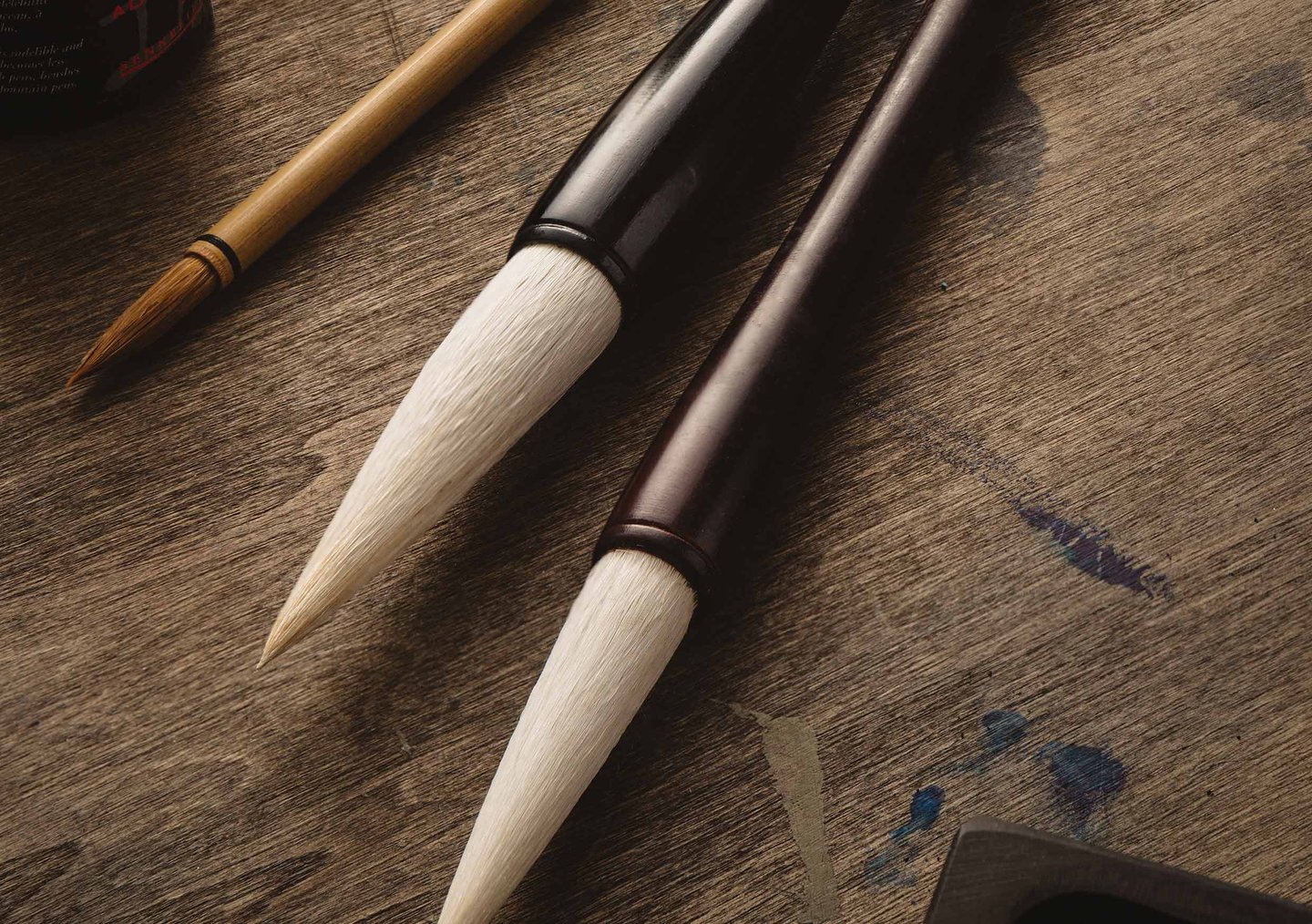
The meticulous style of Chinese painting is called ‘Gongbi’. This term derives from the words ‘Gong Jin’, which means ‘tidy’. Gongbi painting is a careful, realistic technique. It incorporates the most intricate detail and vivid colour to describe narrative scenes. Gongbi often features figures, and most traditionally, figures of nobility. The first Gongbi paintings were made over 2000 years ago during the Han Dynasty (206BC–220AD). This was a period that brought both prosperity and political stability to the region. It allowed for a climate that would nurture a significant development in the advancement of Chinese arts.
Gongbi painting reached its peak of popularity in Chinese culture during the Tang and Song Dynasties (7th–13th Century). At this time, it was de rigueur for Chinese royalty to collect and commission Gongbi works. They were a status symbol for people of the highest social standing. Many of the collectors featured in the works themselves.
If we are to compare Gongbi painting with a Western painting equivalent, there is a loose similarity with religious icon paintings. Traditionally, there are specific ways of painting subjects. These were taught and passed through the generations, with little room for the artist’s expression in how the works were painted. Gongbi painting is based on the idea that there are specific perceived ideals within nature, and it is the job of the artist to pay homage to these ideals using a pre-set visual language.
The Gongbi process involves two stages – contouring and colouring. These use a specific set of brushes. Traditionally, there would be four contouring brushes known as Hong Mao, Yi Wen, Ye Jing, and Xie Zha. Each has a different width to help paint contours. These range from the longer flowing lines for mountains to clothing, flowers, and facial features. The colouring brushes are very soft hair brushes designed to apply thin washes. They are usually called clouds, ranging from a large white cloud to a small white cloud. Contours are painted on first, and then thin washes of ‘underpainting’ are applied. Then, thicker, more saturated colours are added.
In the main, Gongbi paintings are very colourful, opulent depictions of noble Chinese life. However, the artist Wu Daozi pioneered the way for painting Gongbi without colour; he was the first artist to only use black ink. His mastery of the brush would draw crowds who would marvel at his skill. The finished works were the first ink paintings that were not considered merely sketches or works in progress.
Freestyle Painting
Freestyle painting is also known as 'literati painting', or in Chinese, ‘Xie Yi’. This means 'to write an idea'. The Freestyle technique is for those more interested in personal expression than accuracy or detail. Works appear simple and spontaneous. They are made up of a wide range of more visible brushstrokes. It might be seen as the Chinese equivalent of Impressionism. It certainly shares a philosophy with traditional Asian Calligraphy, where the artist aims to capture the embodiment of inner feeling and spirit, rather than a record of what a scene or an object looks like in a literal sense.
Freestyle painting dates back to the 5th Century. In the beginning, the process was executed only in black ink, made from the soot of pine or oil combined with animal glue. Although the works were in black and white, the tonal range that could be achieved with the ink was vast. Artists would find ways of varying the ink load on the brush and playing with the amount of pressure applied with the brush. This helped to vary both the quality of the line and the ink saturation of each mark.
Works were made on the most absorbent rice papers. Once a mark was made, it could not be erased or undone. The skill of the literati painter lies in having the confidence to take a leap of faith and allow the brush to dance across the page, making a series of bold marks that capture the spirit of a subject, editing out superfluous detail.
In the 8th Century, the poet painter Wang Wei created what are thought to be the first literati paintings that incorporated colour. This technique adds another dimension to Chinese Freestyle technique. Instead of having the tonal range possible with just black ink, there was now scope to play with the saturation of a number of colours. Painters could load the brush with different colours and apply multi-coloured marks in a single brush stroke, and watch how colours would fuse together on the paper.
Freestyle painting artists seldom paint from life. Subject matter is usually categorised into the following groups: Flowers and Birds, Fruit and Vegetables, Animals, Landscapes, and Figures.
The two styles of Chinese painting are diametrically opposed. Meticulous painting looks calmer and has a considered elegance. It is realistic and expresses the harmony of nature. It shows how things are at their best within the world. It could be seen as the visual equivalent of a beautifully written passage of prose. Freestyle painting, on the other hand, is poetry. It is simple, spontaneous, and captures the essence of an idea.
What is Chinese Ink and How is it Made?
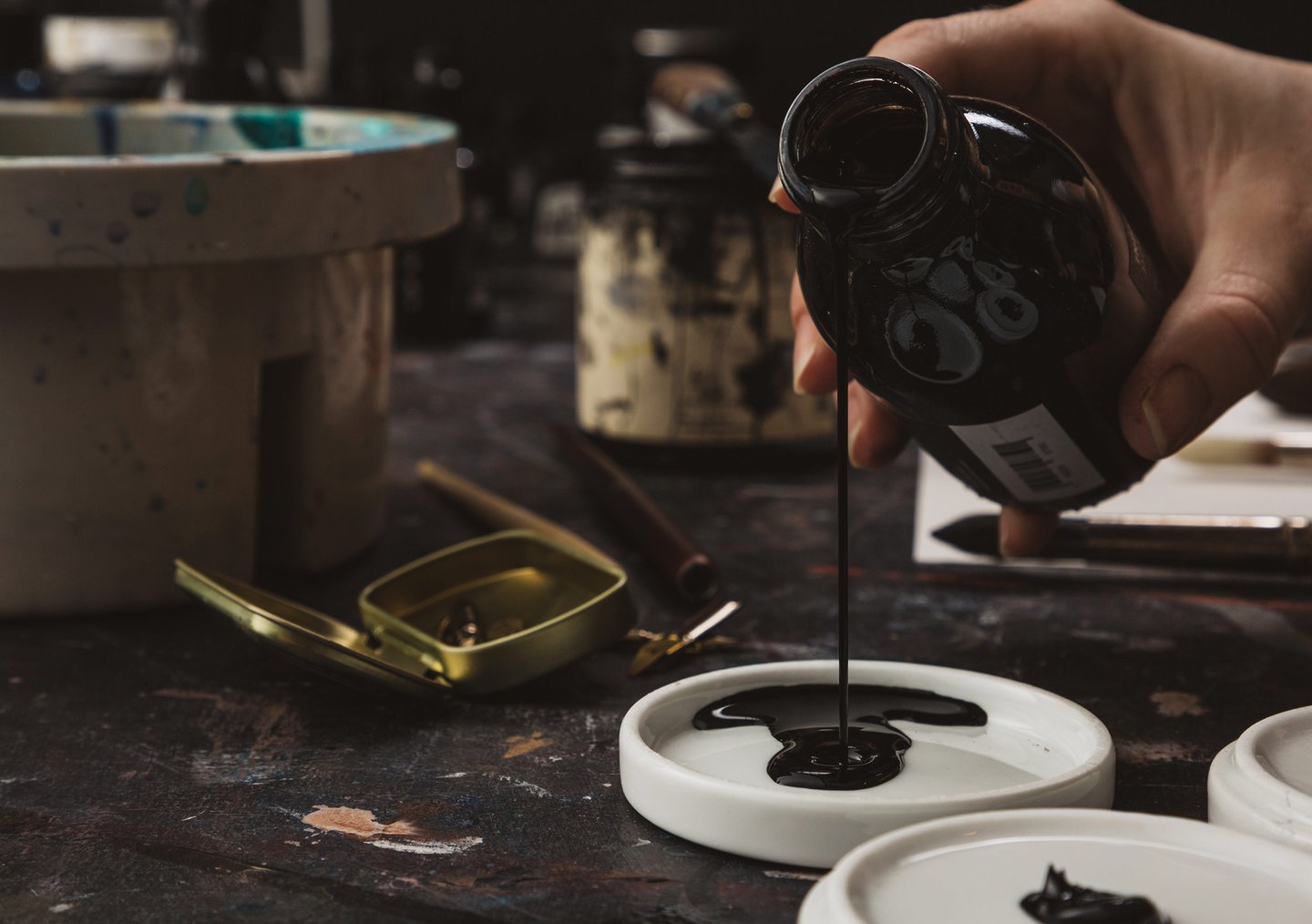
Chinese painters first only used black ink. Ink sticks are made from soot (pine or oil) combined with animal glue. It is then moulded and dried. Good quality ink produces even and smooth tones when diluted, allowing several shades of ink if ground properly. Liquid ink is cheaper but does not allow for the same control of tone as freshly ground ink.
How Can I Alter the Appearance or Consistency of the Ink?
Consistency of Ink
The ink stick is ground down over a mixing stone with a little water to make the ink. The consistency of the ink can be varied by the amount of water added. Thick ink will appear glossy and deep on the paper while thin ink (made with more water) will be more lively.
Pressure Applied with the Brush
A tonal range can be achieved with the ink by varying the ink load on the brush and adjusting the amount of pressure applied with the brush to the paper. This will vary both the quality of the line and the ink saturation of each mark.
How Easy is it to Clean Up My Workspace after Chinese Painting?
Because the inks are water-based, cleaning up only requires water.
Brushes for Chinese Painting
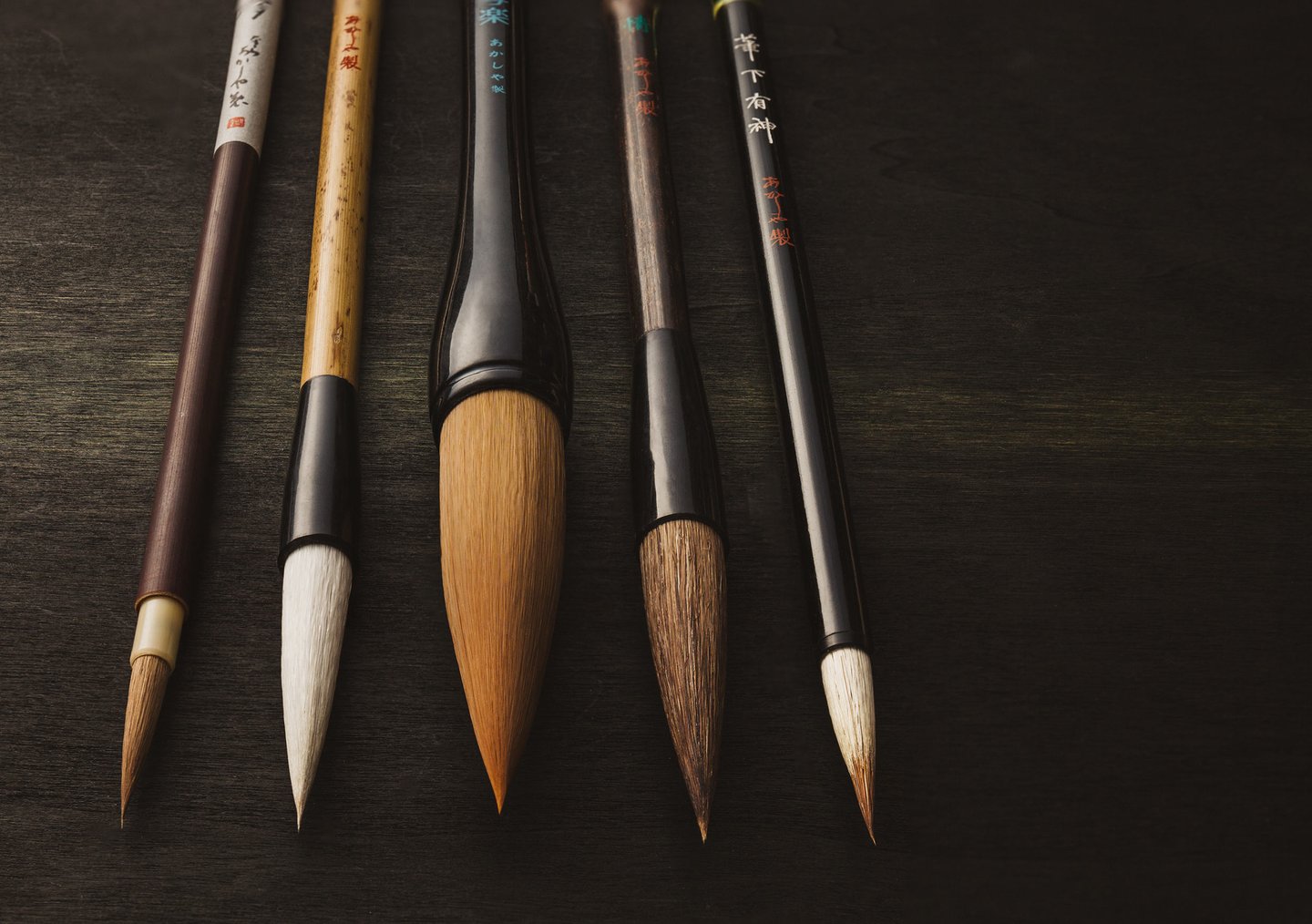
Goat hair brushes are soft and absorb water very well. Rabbit, weasel, and horse hair brushes are stiffer than goat hair and are ideal for controlling the thickness of the brushstroke. The stiffer hairs can also result in sharper strokes, while goat hair brushes are more subtle. Mixed hair brushes combine hairs of varying softnesses, so they sit between the two extremes.
Synthetic Brushes
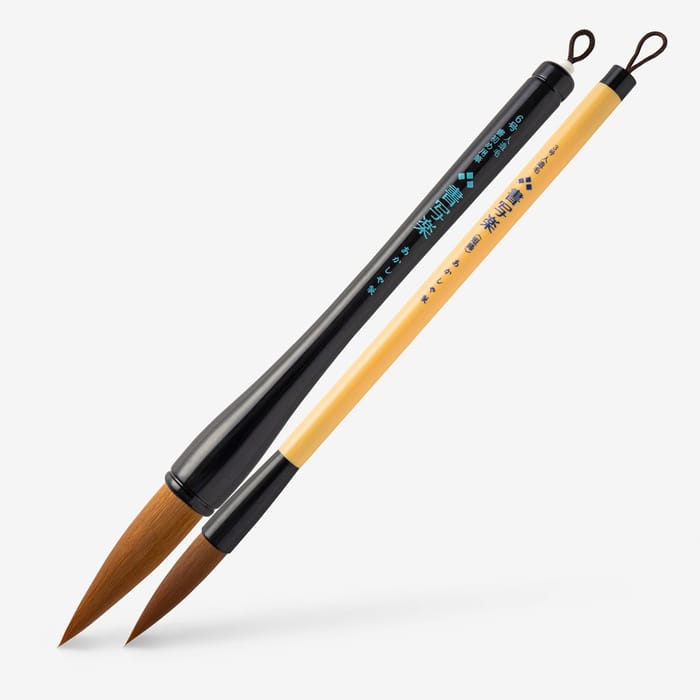
The Sharaku Synthetic Calligraphy Brush is a good alternative to natural hair brushes for Chinese painting. This brush has been developed with high quality synthetic fibre as an alternative to natural hair. It is ideal for calligraphy and all Eastern painting styles, including Chinese painting.
Chinese Sable Brushes
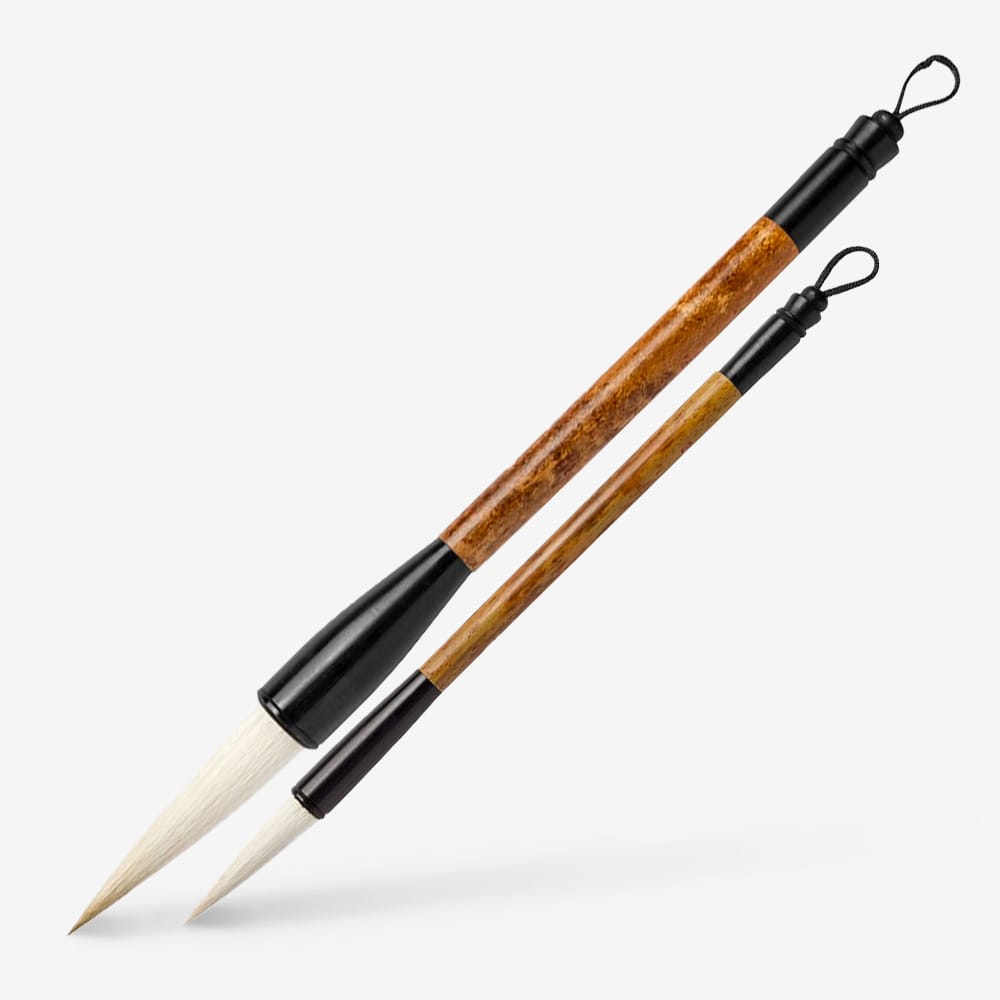
Chinese sable brushes are very simple. The handle does not taper and is a cylinder of plastic with a cone of sable hair that tapers to a very fine point. This can achieve the finest of lines, but with more pressure can also achieve broader marks. The leaves of bamboo are often painted by applying an amount of pressure with the brush and then lifting the brush off in a quick ‘tick’ movement. This will enable you to make the leaf shape that tapers to a fine point itself. These brushes are best used with ink or watercolour paint.
Goat Hair Brushes
Goat is a less expensive hair but still has good liquid holding capacity. It is also soft enough to achieve nice even washes. Goat hair is long, at least two inches in length, and is very absorbent. With a natural inclination to stay together when wet, the hair can be shaped into a fine point, and will, therefore, make it possible to maintain excellent control (after some practice). Few types of hair will hold up well or make good control possible when the direction of a stroke is changed 180 degrees without stopping, or without lifting the tip of the brush off the working surface. Goat hair is very elastic and is one of the few hairs that will survive this type of treatment. They can be difficult for beginners to control, but soft brushes will deliver very interesting and unpredictable lines.
Black Rabbit Hair
The longest brush is made of black rabbit hair. Called a ‘hard’ brush it is still absorbent and relatively soft but the hairs are stiffer. It is more absorbent than weasel hair.
Weasel Hair
In the Chinese brush scale, weasel hair is at the opposite end of the hardness spectrum from goat hair. Called a ‘hard’ brush, it is still absorbent and relatively soft, but the hairs are stiffer and yet very flexible. Even if fully loaded with ink, the brush tip will move fast and with accuracy.
A Mixture of Black Rabbit and Goat Hair
Available as both a small and medium brush, the mixture of black rabbit and goat hair makes for a medium-soft brush. Black rabbit hair in the centre and tip and goat hair on the outside. The small brush is useful for small calligraphic scripts because it is short.
Care and Cleaning of Brushes
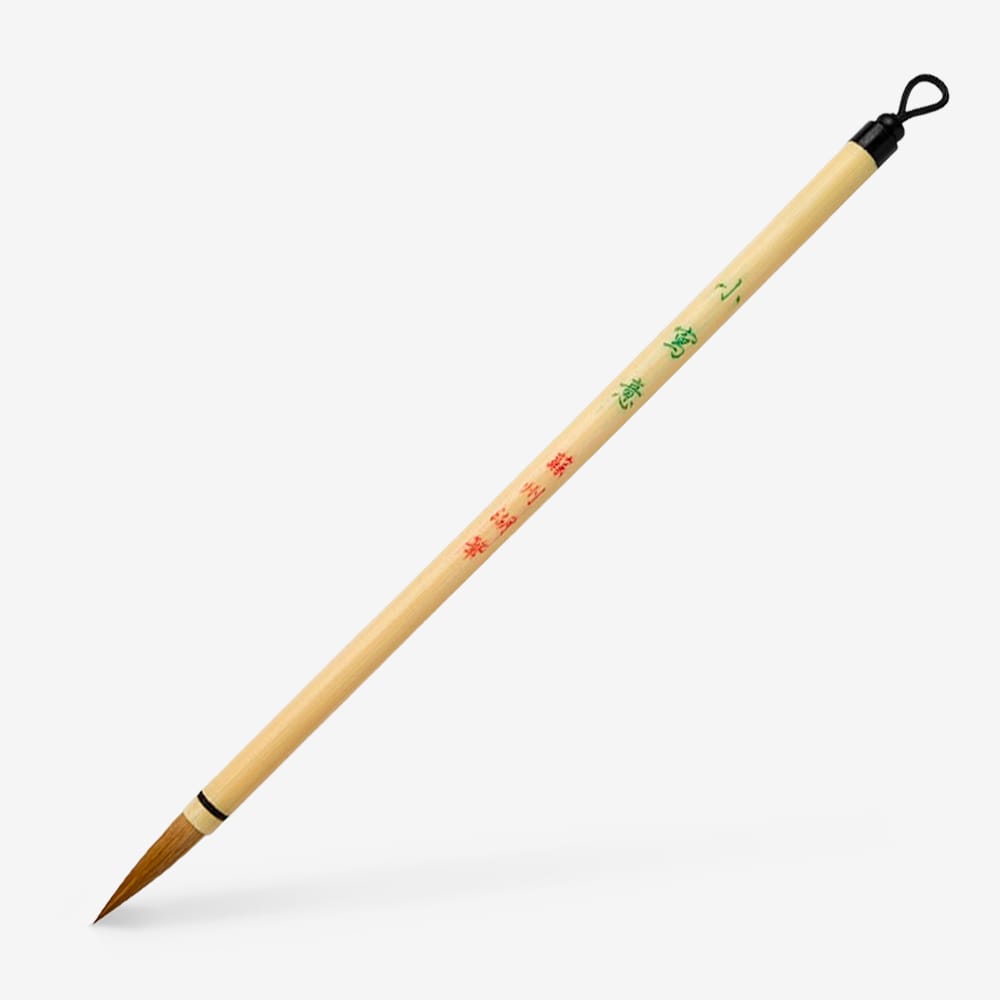
Chinese brushes are heavily starched to protect the hair until they are purchased. When they arrive the brush head is very rigid. Before use, the starch should be removed. This is done by soaking the brush head for a few minutes in room temperature. Then, wash the brush until the entire length of the brush hairs are fully loosened.
After use, wash the brush clean with water. Make sure there is no residual ink where the brush tube meets the hairs. If rinsing the brush under the tap, make sure the hairs are in the same direction as the water flows.
After cleaning, squeeze the hairs of any excess water. Allow your brush to dry by hanging it vertically with the hairs pointing downward.
To learn more about cleaning your brushes, read 'Brush Cleaning Tips for Painters' on Jackson's Art Blog.
Tools for Chinese Painting
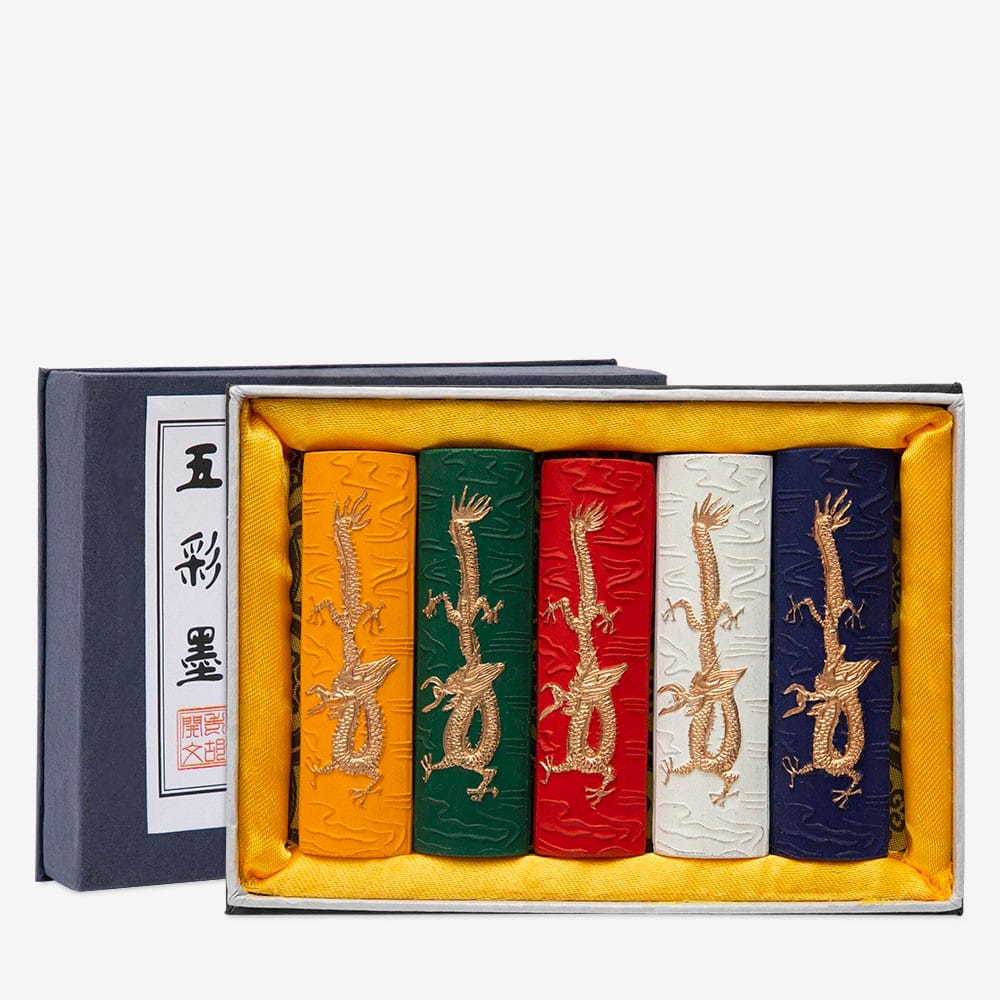
Ink Sticks
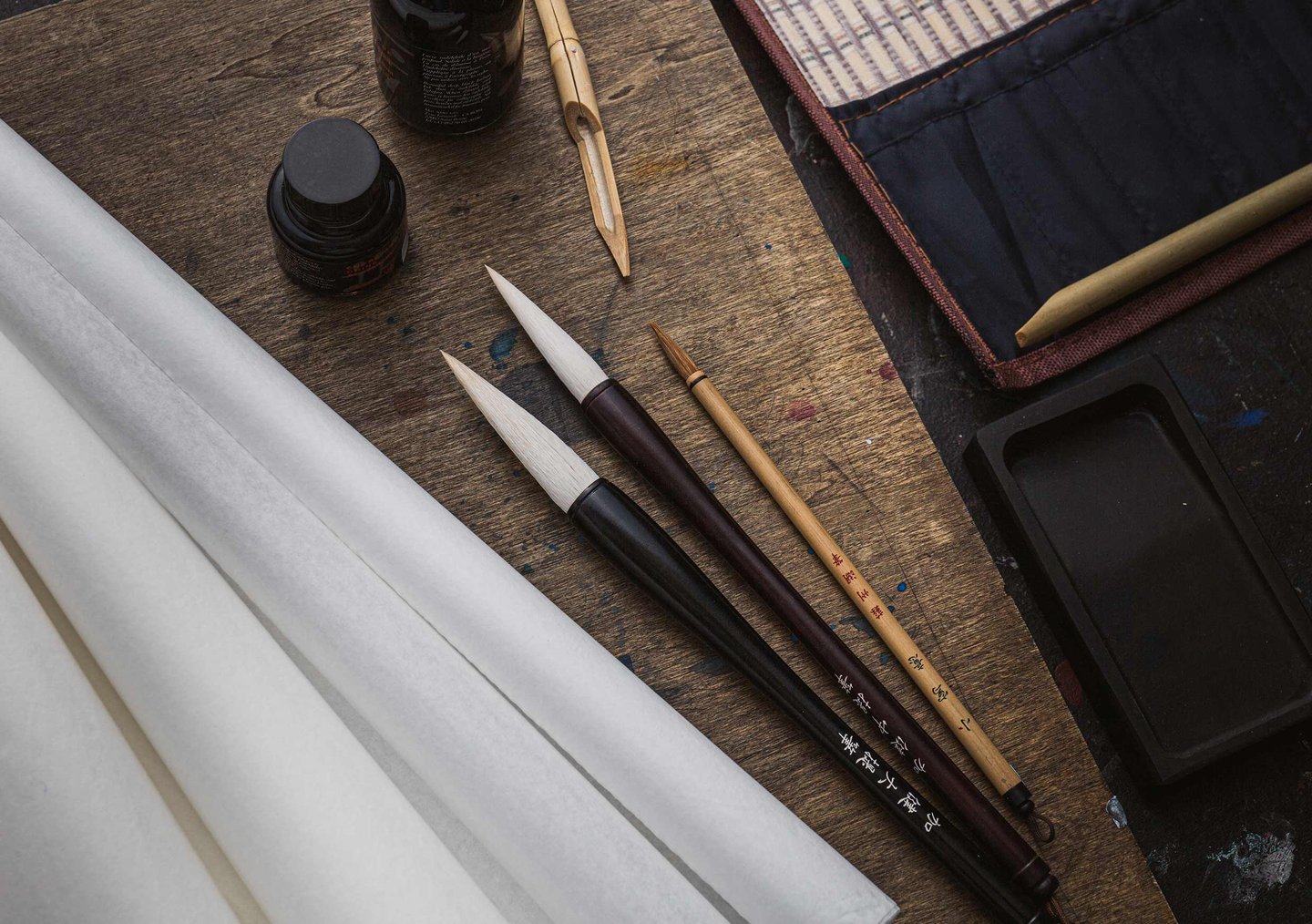
Ink sticks can be ground down in a mixing stone with a little water to make Indian or Chinese ink. To make your own ink, hold the ink stone and force it down into the mixing stone. Move it in a circular motion whilst adding a little water from time to time.
Mixing Stone
A mixing stone – this is a very smooth black stone slab that is designed to be used to grind the ink stone on to in order to make a water-based ink with which to paint.
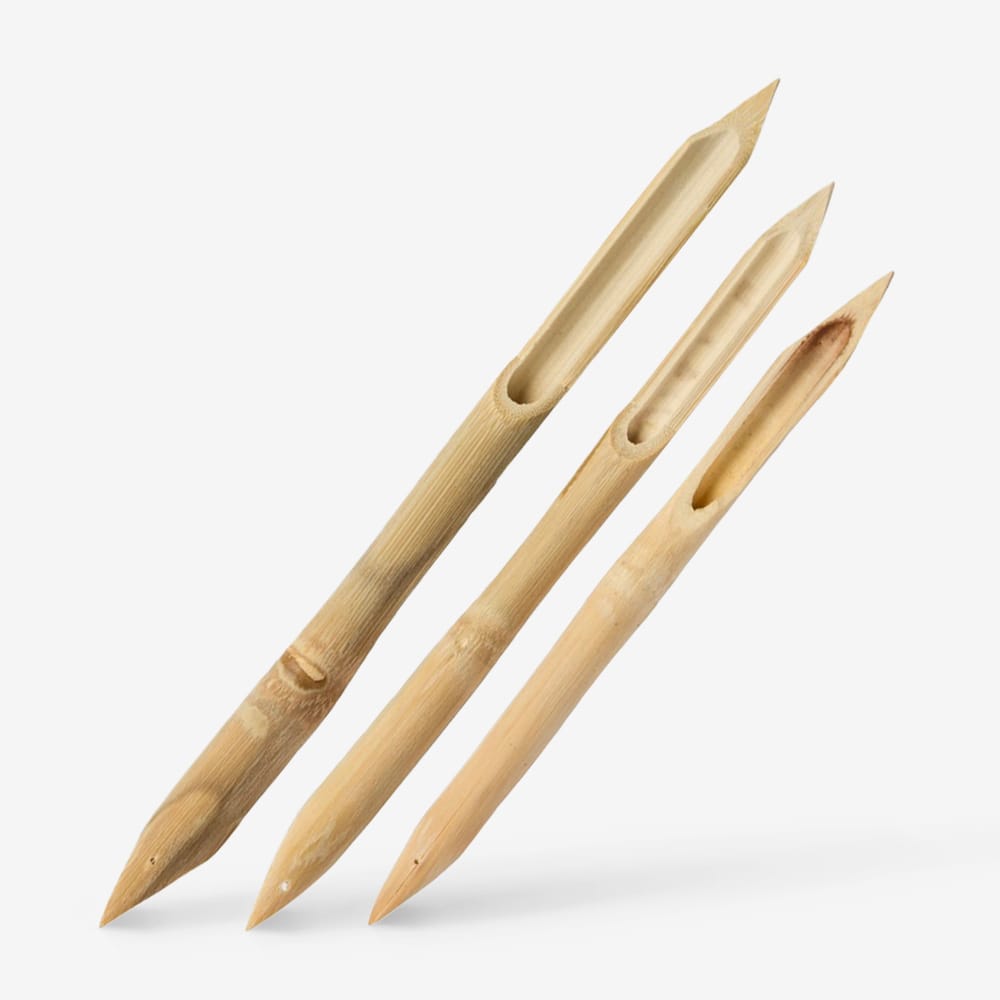
Bamboo Pens
Bamboo pens are used in Chinese calligraphy. They are also expressive drawing tools. Bamboo pens are made of dried bamboo stems and are designed to be dipped into ink. They do not carry much liquid so you will need to dip quite often! It is difficult to create consistent, long flowing lines with a bamboo pen. They are much better for staccato marks, ticks, and for building up textures with short dry marks.
A flat-ended bamboo pen will produce broad square marks. We also sell pointed bamboo pens for fine lines. As well as regular bamboo pens, we also sell a bamboo brush pen. This is double-ended with a round pointed goat hair brush on the other end. It creates gentle flowing lines and carries a lot more ink. The diversity of the marks that can be achieved with this tool is impressively vast.
Chinese Brush Stand
Chinese brushes tend to be made with a little string loop at the end of the handle. The loops can be used to hang your Chinese brushes from the stand. This helps to prolong the life of your brush because it ensures that the hairs keep their shape once cleaned and shaped with your hands. It means any excess moisture runs out of the head of the brush. This stops the moisture causing any rot or deterioration in the brush head over time. The brush stand is also very useful during the painting process as it allows you to identify and select your brushes quickly and easily.
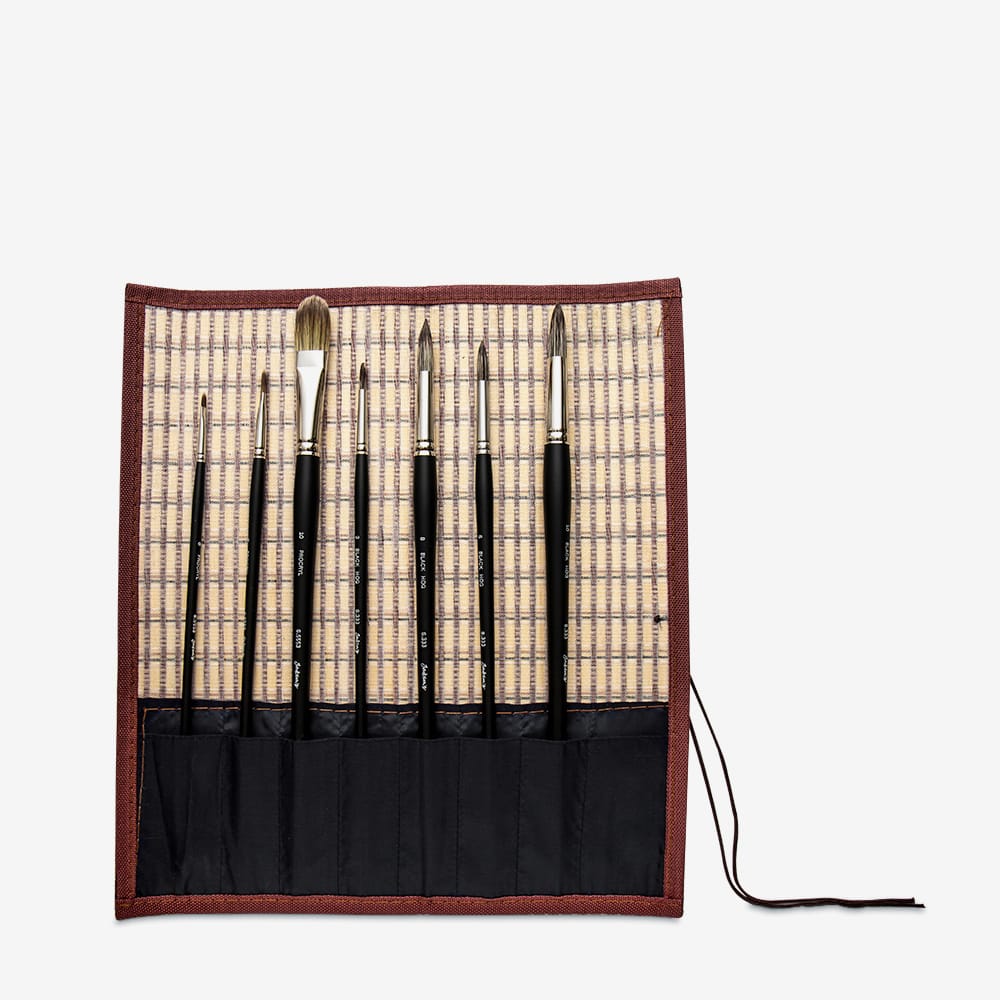
Chinese Roll Up Brush Mat
The roll up brush mat is made of natural straw-like fibres. This absorbs any moisture from wet brushes and prevents rotting. It has gaps between the fibres which allow the moisture to evaporate. Brush rolls are a lightweight and practical way of transporting and protecting your brushes when they are not being used.
Soapstone
The soapstone should be carved so that it can be used as a ‘name seal’. This is a stamped signature on your work which acts as a mark of authorship and authenticity.
A Pot of Stamp Ink
To use with your carved soapstone seal.
Porcelain Water Dish and Mini Water Spoon
The water dish is designed to be used with the ink grinding process. Use the mini spoon to add a little water from time to time as you grind the ink stick on the mixing stone.
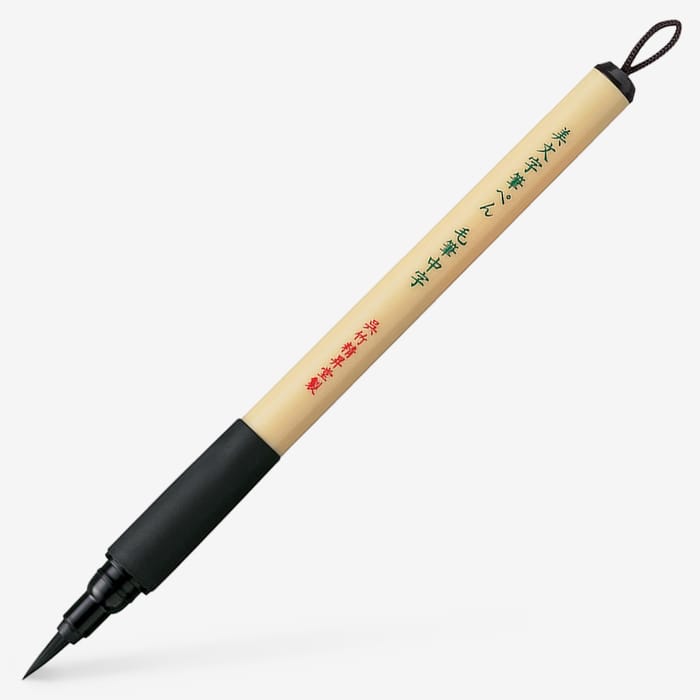
Kuretake Bimoji Fude Pens
Kuretake Bimoji Fude Pens are designed to look and feel like traditional Japanese and Chinese paint brushes. They are felt tipped brush pens which replicate the kinds of marks you can make with a traditional Chinese brush.
What is the Best Surface for Chinese Painting?
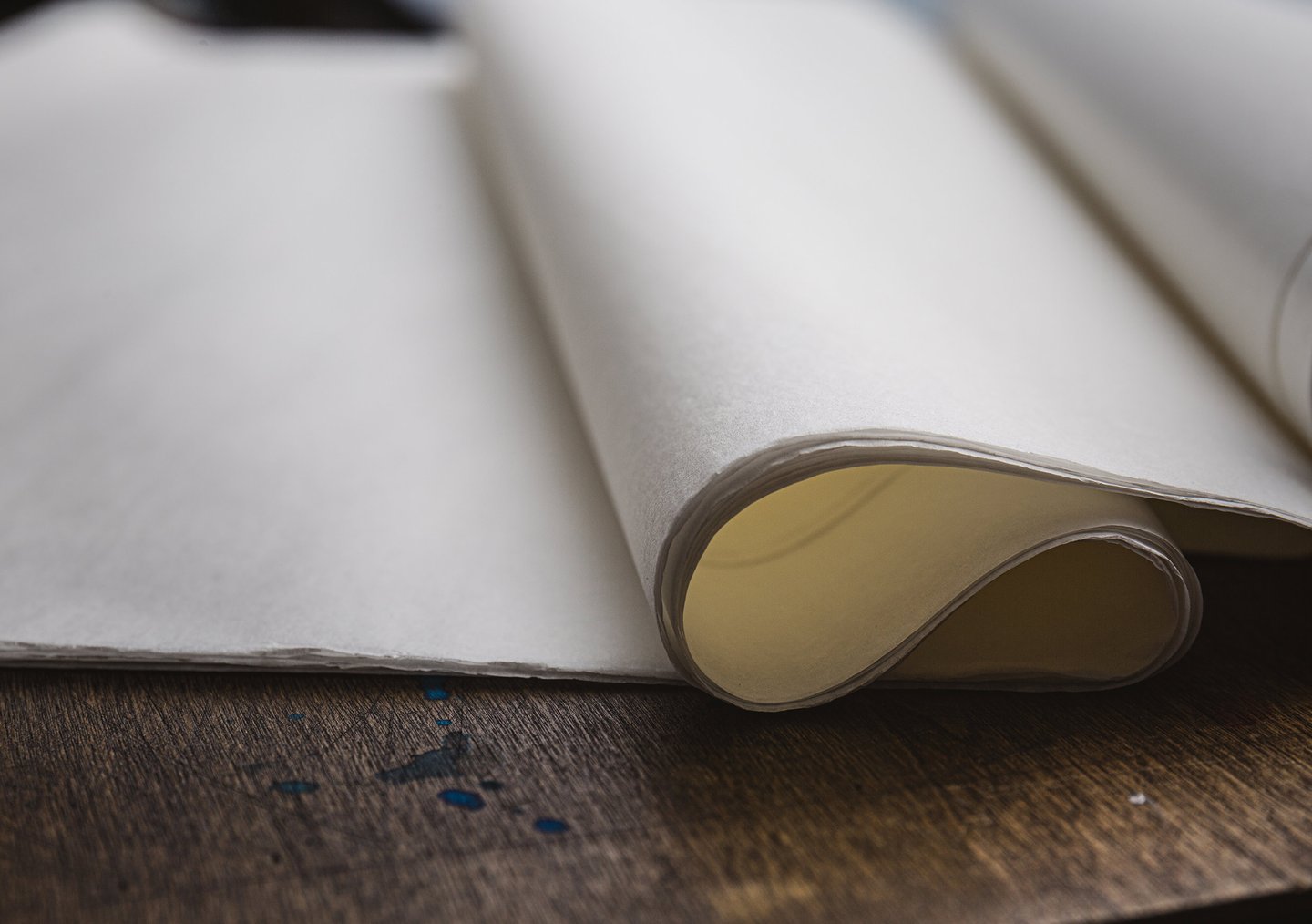
The paper you choose for Chinese painting tends to be defined by which style of painting you are using. Meticulous painting requires paper that is totally sized. The ideal papers for freestyle painting include Washi (Japan) or Xuan (China) paper. The best freestyle painting papers are unsized. As a result, they are very absorbent. They are made from rice. Some artists also work on silk. These unsized surfaces make it impossible to make smooth washes as every brushmark appears visible and unblended. Nowadays, some painters will use papers that contain some size so that washes are possible.
Rice paper is semi-opaque and very absorbent. It is available in sheets and packs. Rice paper allows ink to bleed through its fibres which can create interesting effects. It is best for images made with a few gestural and expressive marks.
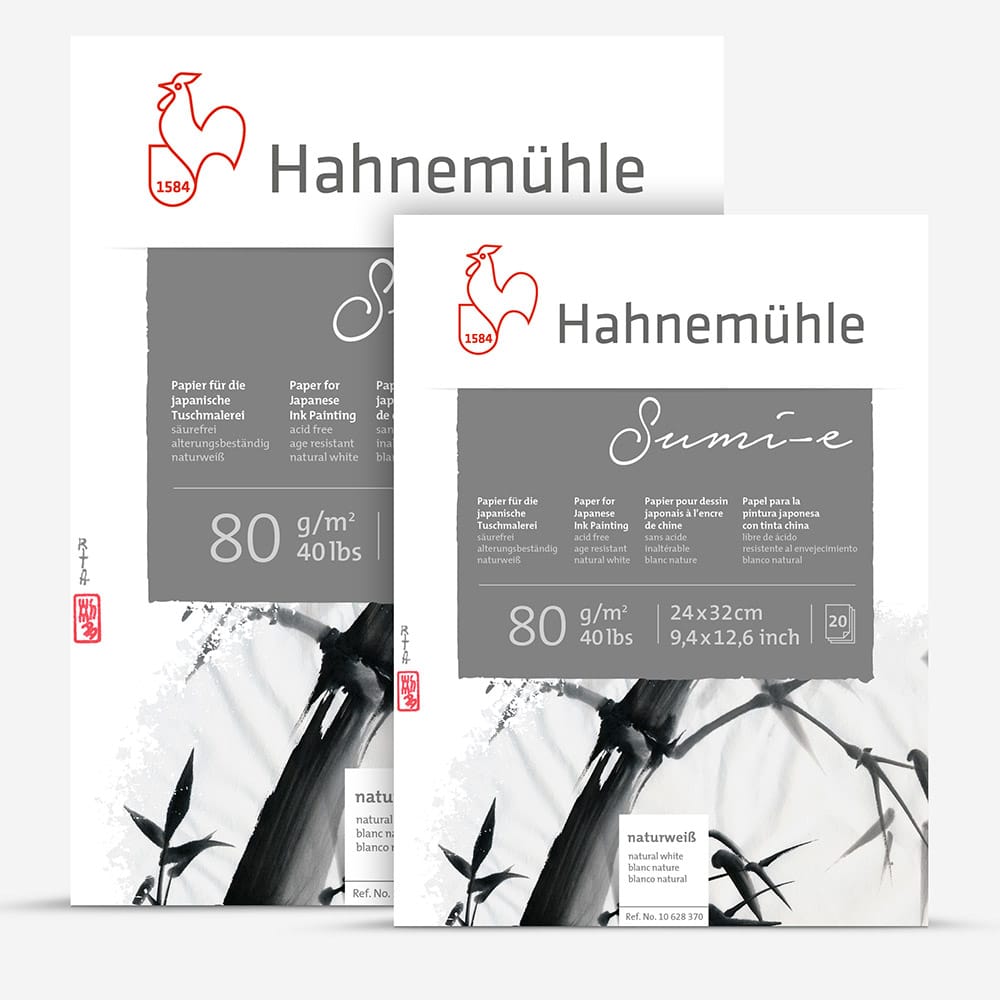
Hahnemuhle Sumi-e Japanese Ink Paper
Hahnemuhle Sumi-e Japanese Ink Paper is a very absorbent paper that is suited to freestyle and expressive yet minimal painting techniques. Sumi-e painting originated from 5th-century Chinese calligraphy techniques.
How to Present and Store Finished Work
Paper scrolls are usually used for Chinese calligraphy. They are hung lengthways. This is so that the script can be written vertically in the traditional way. The painting can be mounted onto a hanging scroll for presentation or storage.
The best way to store finished works is by folding or rolling them before they are mounted or backed, so they are easy to keep in that form. Once backed or made into a scroll, they need to be kept in a dry place in a cardboard tube. The finished work can also be framed behind glass (after being mounted or backed).
Further Reading
Glossary
A
Absorbent Paper
A type of paper, such as Xuan or Washi, that quickly absorbs ink and water. Essential for freestyle Chinese painting.
B
Bamboo Pen
A traditional calligraphy and painting tool. Made from hollow bamboo. Used for expressive lines.
Bone Method
A principle of Chinese painting. Refers to the strength and expressiveness of brushstrokes.
Brush Rest
A small stand, often made of porcelain. Used to keep brushes elevated and clean when not in use.
C
Calligraphy Brush
A soft, absorbent brush. Used for both Chinese calligraphy and painting.
Chinese Ink
A carbon-based ink. Traditionally made from soot and glue. Used in both calligraphy and painting.
Chinese Seal
A carved soapstone stamp used to sign paintings as a mark of authenticity.
Composition
The arrangement of elements in a Chinese painting. Often guided by traditional principles of balance and space.
D
Dry Brush Technique
A method where the brush is loaded with minimal ink. Creates textured, broken strokes.
E
Expressive Brushwork
A hallmark of freestyle painting. Brushstrokes capture the essence of the subject rather than fine details.
F
Freestyle Painting (Xie Yi)
A spontaneous, expressive painting style. Emphasises spirit and movement over detail.
G
Gongbi (Meticulous Painting)
A detailed, precise Chinese painting style. Uses fine brushwork and layered colours.
Grinding Ink
The process of rubbing an ink stick against an inkstone with water to create liquid ink.
I
Ink Stick
A solid bar of compressed soot and glue that is ground with water to create ink.
Inkstone
A smooth stone surface used for grinding ink sticks and mixing ink with water.
L
Literati Painting
A style of Chinese painting developed by scholars. Often features landscapes and poetic brushwork.
M
Meticulous Painting (Gongbi)
A refined and detailed painting style. Often used for traditional figurative and botanical subjects.
O
Oracle Bone Script
An early form of Chinese writing. Sometimes referenced in calligraphic painting.
P
Porcelain Water Dish
A shallow dish used to hold water for mixing ink or pigments.
Q
Qi (Spirit Resonance)
The energy or life force in a painting. Considered the most important principle in Chinese painting.
R
Rice Paper (Xuan Paper)
A soft, absorbent paper. Traditionally used for Chinese brush painting and calligraphy.
Red Seal Paste
A thick red ink used to imprint an artist’s seal onto a painting.
S
Sumi-e
A Japanese ink painting technique. Derived from Chinese freestyle painting traditions.
Stippling
A technique where dots are used to build up texture or shading.
Stroke Order
The traditional sequence in which brushstrokes are applied. Important in calligraphy-based painting.
T
Tonal Variation
The range of light and dark shades in ink painting. Created by adjusting ink dilution and brush pressure.
V
Vertical Format
The traditional composition format for Chinese scroll paintings.
W
Washi Paper
A handmade Japanese paper similar to Chinese Xuan paper. Used for calligraphy and painting.
Wet-on-Wet
A technique where wet ink is applied over an already wet surface. This allows for natural blending.
X
Xie Yi (Writing an Idea)
Another term for freestyle painting. Emphasises spontaneity and emotional expression.
Xuan Paper
A highly absorbent rice paper. Used in traditional Chinese painting and calligraphy.