


What are Mediums?
In painting and printmaking, a medium is any substance added to paint or ink to alter its characteristics. Mediums affect how paint flows, dries, shines, and behaves on the surface.
Artists have used mediums for centuries. From early tempera recipes to modern synthetic compounds, mediums have always been used to get the most out of materials. Whether you need to add more sheen, texture, or slow the drying time of your paint, mediums give you complete control over how your materials perform.
While many paints can be used straight from the tube, mediums allow you to explore new techniques and effects. This guide introduces the role of mediums in all disciplines, the different types available, and how to use them safely and effectively. Understanding the basics will allow you to be more confident in your choices and find new ways to explore your materials.
Definitions
You may also hear the term 'additive' used when talking about mediums, but the two mean slightly different things. Mediums contain some of the paint’s binder, so they become part of the paint film. Additives, on the other hand, alter performance but don’t contain binder. They should be used sparingly to avoid compromising the paint film’s integrity. Put simply, a medium binds to the paint, while an additive adds to it.
To complicate things further, the word 'medium' can also refer more broadly to the material an artist works with. For example, oil paint is an art medium. 'Medium' can also refer to the type of art, for example, painting, printmaking, and sculpture. In this guide, mediums mean substances mixed with paint or ink to modify its handling or appearance.

What Mediums Do
Mediums influence how a paint looks and feels. Some make it dry faster or slower, while others increase transparency, change texture, or add gloss. By choosing the right medium, you can adapt your materials to suit different techniques, such as impasto, glazing, or alla prima.
Mediums can:
- Alter drying time
- Change viscosity (make the paint thicker or thinner)
- Increase flow or reduce brushmarks
- Add gloss, satin, or matt finishes
- Improve adhesion or flexibility
- Help with layering or glazing
Alter Drying Time
Artists alter drying time to gain more control over their materials and techniques. Slowing down the drying process allows more time for blending and achieving smooth transitions. This is important in many types of oil and acrylic painting. An extended working time is key for techniques such as alla prima or sfumato, where soft edges and subtle gradations can take time to form.
Speeding up drying is good for building up layers quickly or preparing work for transport or display. Artists use fast-drying mediums like alkyds or driers to reduce waiting times between layers, particularly in oil painting. This can be helpful when working on commissions or tight deadlines.
The drying time can also affect the final look of a painting. Fast-drying paint can preserve texture and brushstrokes, while slow-drying supports smoother finishes.
Other factors such as humidity and temperature can also impact the drying time. Artists may modify their approach with mediums or other tools to achieve consistent results.

Change Viscosity (Make the Paint Thicker or Thinner)
Controlling paint viscosity opens up a wide range of techniques and effects. Thickening mediums add body to paint, making it ideal for impasto techniques. Artists can create peaks, ridges, and textural elements that catch light and cast shadows, adding depth and dimension to their work. Heavy body gels and modelling pastes are great for building texture in acrylic paintings.
Thinning paint creates a more fluid application. This allows for smooth washes, stains, and pours. Fluid mediums maintain colour intensity while reducing thickness, unlike dilution with water, which can weaken the paint.
For oil painters, alkyd mediums thin paint while maintaining strength. For acrylic artists, flow improvers and pouring mediums create a liquid consistency without reducing adhesion or colour strength.
Controlling viscosity also affects drying time. Thicker layers typically dry more slowly from surface to core, while thinned paint dries more rapidly and evenly.
Artists often work with multiple viscosities in a single piece. For example, using thin washes for underpainting and atmospheric effects, then building up with thick applications for highlights and focal points. This can create visual interest that will enhance the final look of an artwork.


Increase Flow or Reduce Brushmarks
Changing the flow of the paint transforms how colour moves across a surface. This gives artists much greater control. Flow mediums reduce surface tension in paint, levelling out brushmarks and making them appear smooth. This is ideal for photorealistic work or minimalist styles. The self-levelling quality makes it easier to see subtle colour transitions and fine details in both oils and acrylics. This eliminates the texture that might otherwise distract from subtle transitions.
For techniques like wet-on-wet or fluid painting, improved flow lets colours blend organically on the surface of the painting. Artists working with pour painting or fluid art rely heavily on flow-enhancing mediums to create cells, ripples, and marbling effects. This occurs through the natural interaction of different paint densities and surface tensions.
Reducing brushmarks serves both aesthetic and technical purposes. It allows for smooth blends in portraiture and landscape painting, where gradual transitions create depth. Technically, it promotes even application and consistent drying. This helps to prevent issues such as cracking in the finished work.


Add Gloss, Satin, or Matt Finishes
The finish of the surface influences how viewers perceive your artwork. A gloss finish can be mirror-like and create a sense of wetness or dimensionality. Oil paintings often naturally possess a subtle gloss that enhances their luminosity and depth.
A satin finish strikes a balance between reflectivity and subtlety. It reduces glare while maintaining colour vibrancy. This middle ground works well for artworks displayed in varied lighting conditions, as it minimises distracting reflections.
A matt finish will absorb rather than reflect light. This helps to create a soft, velvety look that emphasises colour harmony and composition. A matt finish can mimic the surface quality of ancient frescos or tempera painting, linking the contemporary with the historical.
Artists can also combine different finishes within a single work. This can create a visual interest through surface quality alone. The choice of finish is an integral part of the artwork.


Improve Adhesion or Flexibility
Adhesion and flexibility impact crucial structural aspects of painting. These determine the longevity of a work. Adhesion mediums create stronger bonds between paint layers and between paint and the substrate. This helps to prevent delamination and flaking over time.
Adhesion and flexibility are more important when working on challenging surfaces, such as metal, glass, or plastic. Standard paint formulas might not naturally adhere well to these.
Flexible mediums make paint more elastic as it dries and also when it has fully cured. This helps the paint expand and contract with changes in temperature and humidity, so it is less likely to crack. This is useful for paintings on flexible surfaces, such as stretched canvas, which move over time. Paintings that are handled often or exposed to different environments also benefit from this added strength. For artists using unusual surfaces or making installation pieces, flexible mediums help protect the artwork from damage.
Balancing adhesion and flexibility is a key challenge in painting. If a paint film is too rigid, it can crack under pressure. If it is too flexible, it might not hold its shape over time. By managing these traits, artists can make paintings that stay stable for many years while still looking fresh and vibrant. Today’s polymer-based mediums give artists more control than ever. They let painters fine-tune their materials for different needs, whether for outdoor murals or artworks that need rolling for travel.


Help with Layering or Glazing
Layering and glazing mediums help artists create depth and luminosity by using thin, transparent layers of colour. Unlike direct painting, where colours are mostly mixed on the palette, glazing builds up colour by applying see-through layers over one another. These layers blend optically with the colours beneath them. This produces rich effects that can't be made through mixing alone. Glazing gives the painting a glowing look, as light passes through the layers and reflects back to the viewer.
Glazing mediums make paint more transparent while helping layers adhere properly. They also slow down drying time, giving artists more freedom to adjust the glaze before it sets. This level of control is important for techniques like sfumato, which uses soft transitions to create a hazy, atmospheric look. Glazing is also useful for portraying translucent subjects like skin, water, or glass in a realistic way. Artists during the Renaissance and Baroque periods often used glazing to add light and depth to their work.
Modern glazing mediums support both classic and modern painting languages. They let artists build up many thin layers without worrying about cracking or poor adhesion. For oil painting, alkyd-based glazing mediums add transparency and help the paint dry faster. For acrylics, glazing mediums slow down drying and make the paint more transparent. These mediums keep the right balance between clarity and strength, which is essential for multi-layered painting.

Types of Mediums
Oil Painting Mediums
Oil painting mediums are most often made from drying oils, resins, and solvents. Each component plays a specific role:
- Drying Oils (e.g. linseed, walnut, poppy): Extend drying time, increase gloss, and improve flow.
- Solvents (e.g. turpentine, white spirit): Thin paint and increase drying speed.
- Resins (e.g. dammar, alkyd): Add gloss and improve durability of paint film. Alkyd also speeds drying, but dammar does not.
Popular Mediums:
- Linseed Oil: Increases gloss and transparency.
- Stand Oil: Slows drying, levels brushstrokes.
- Liquin (alkyd): Speeds up drying, ideal for glazing.
- Dammar Medium: Adds gloss and transparency for glazing.
- Cold Wax Medium: Thickens paint and adds a matt, velvety texture.
Fat-over-lean is a rule in oil painting that helps prevent cracking as your painting dries. 'Lean' paint has less oil and dries faster, while 'fat' paint has more oil and dries more slowly.
When building up layers, always apply fatter paint over leaner paint. This lets the lower layers dry first and move less, while the top layers stay flexible. If you paint lean over fat, the top layer may dry too quickly and crack as the bottom layer shifts. Following this simple rule ensures your painting lasts over time.
You can learn more in 'The Fat-Over-Lean Rule in Oil Painting' on Jackson’s Artists’ Blog.
To learn more about oil mediums, read our ‘Guide to Oil Painting Mediums’ on Jackson’s Artists’ Blog.

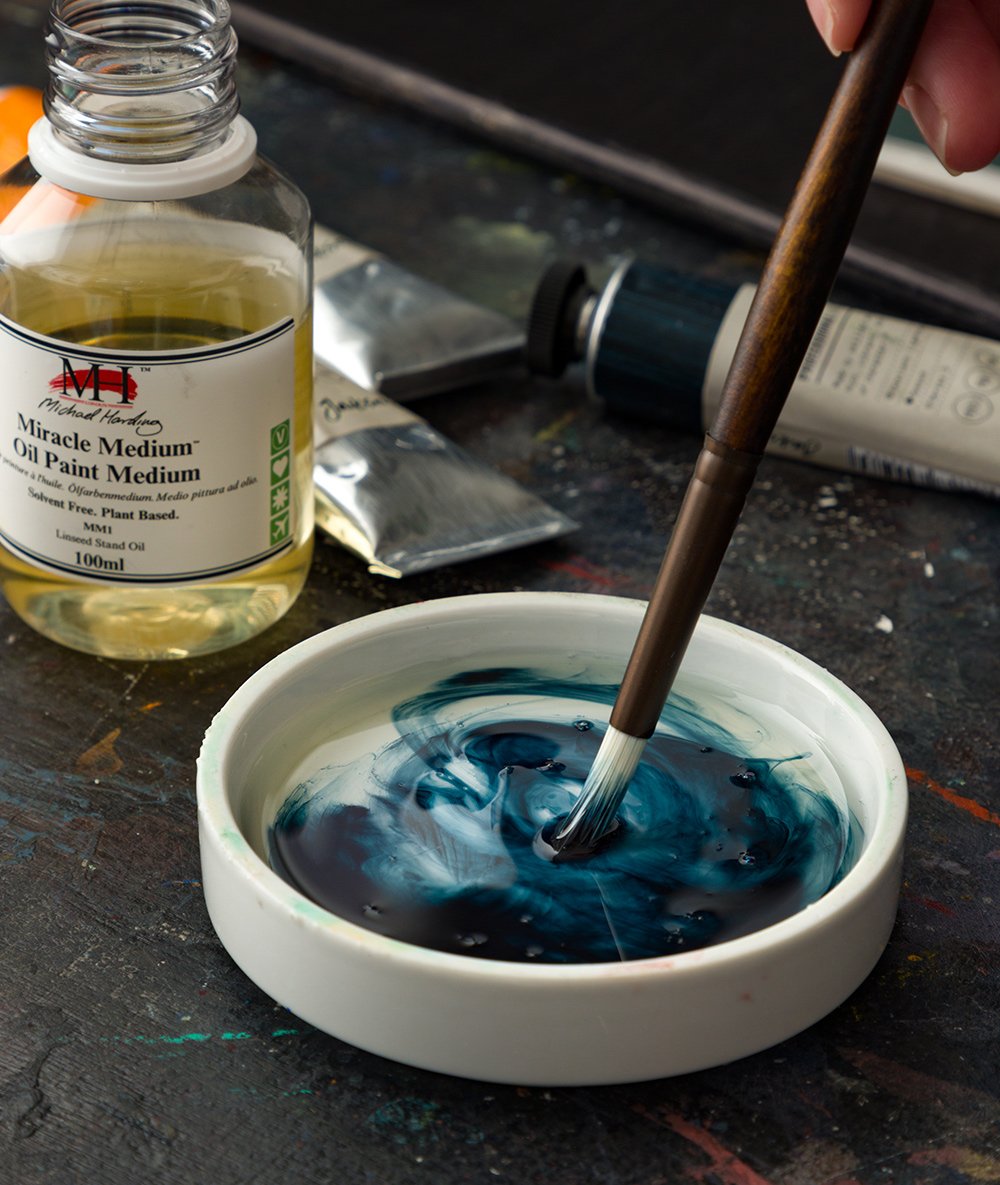


Water-Mixable Oil Painting Mediums
Water-mixable oil mediums are formulated to work with water-mixable oil paints. They offer similar handling to traditional oils, with the benefit that they can be cleaned with soap and water. They are made from modified drying oils and emulsifiers that maintain the water-solubility of the paint.
Popular Mediums:
- Water-Mixable Linseed or Safflower Oil: Increases flow and gloss without affecting water-solubility.
- Fast-Drying Mediums: Accelerate drying time.
- Impasto Mediums: Add body for thick, textured effects. Does not take as long to dry as using neat oil paint.
- Varnishes: Offer final protection and are also water-mixable for easy application and removal.
Water-mixable mediums are great for artists who are sensitive to solvents or work in enclosed spaces. They provide flexibility while preserving the luminous quality of oil paint.
To learn more, read our ‘Guide to Water-Mixable Oil Paint Mediums’ on Jackson’s Artists’ Blog.


Acrylic Painting Mediums
Acrylic mediums help to adjust the drying time, texture, finish, and flow of acrylic paint. They are often made from acrylic polymer emulsion. This is the same base as acrylic paint, so it extends the colour evenly without altering the inherent properties of the paint.
Popular Mediums:
- Matt, Gloss, and Satin Mediums: Control surface sheen.
- Retarder: Slows drying time for blending.
- Flow Improver: Enhances fluidity without thinning the colour.
- Gel Mediums: Add body and transparency for texture and can also be used as a pH neutral glue for collage.
- Modelling Paste: Adds texture and can be sculpted before painting.
- Gesso: Used to prime surfaces. Available in clear, white, and colour varieties.
Gel mediums are available in soft, regular, and heavy body formulas. This lets you customise the texture of your paint based on your technique.
Golden has one of the widest ranges of mediums for acrylic paint. This includes gels, effect pastes, and much more. Understanding which acrylic medium is right for you can be tricky, so we’ve tested out all the main mediums for you. Read our ‘Golden Acrylic Mediums Comparison’ to learn more.
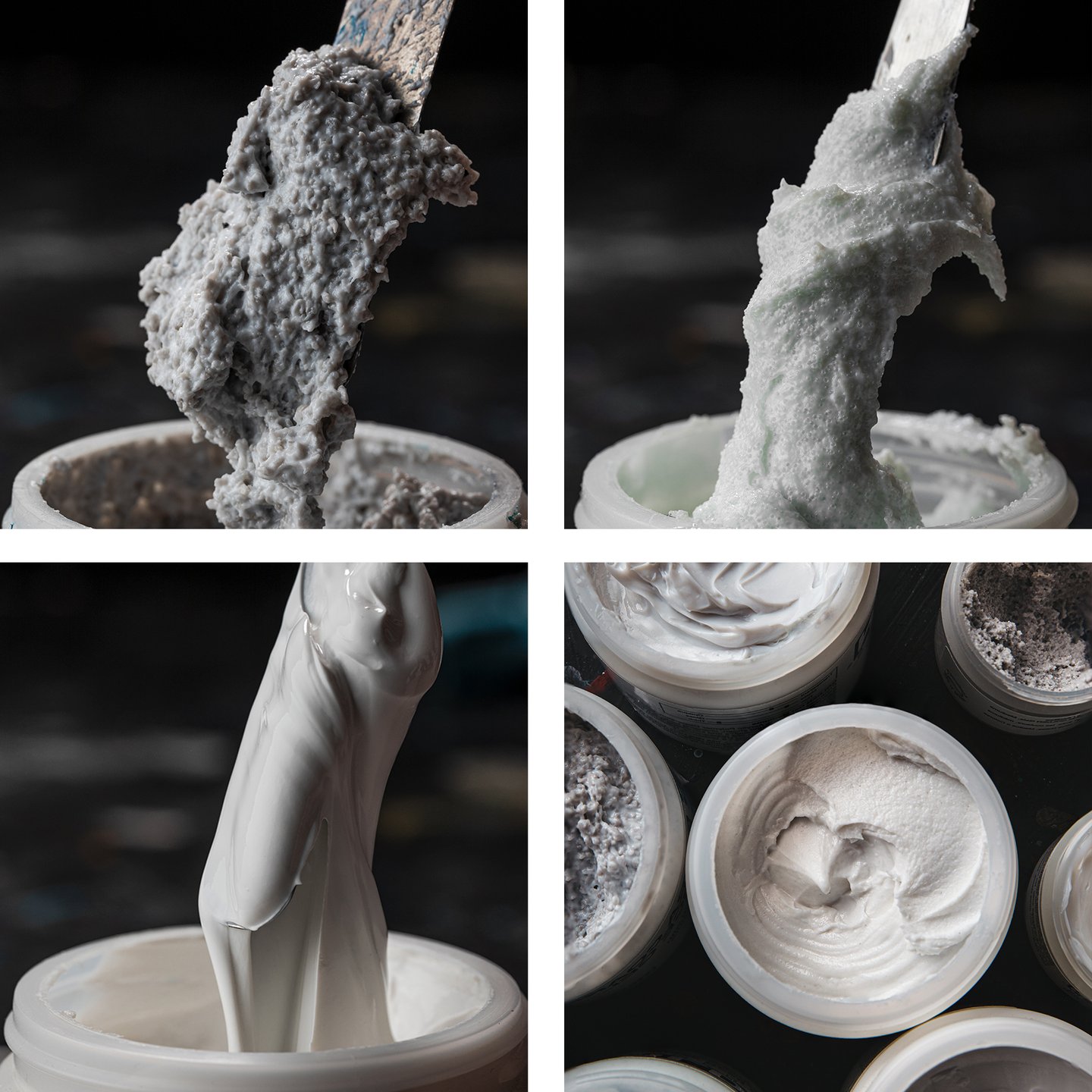


Watercolour Mediums
Watercolour is a simple yet delicate paint which can benefit from the use of mediums. Watercolour mediums can help you control how watercolour paint behaves. This includes its texture, how it flows, how it lifts from the paper, and how fast it dries.
Popular Mediums:
- Gum Arabic: Increases gloss and transparency.
- Ox Gall: Enhances flow and wetting.
- Lifting Preparation: Makes it easier to lift colour from the paper.
- Texture/Granulating Medium: Adds granulated texture effects.
- Watercolour Ground: Prepares non-traditional surfaces (wood, canvas) for watercolour.
Watercolour Grounds
Canvas is one of the most popular painting supports for artists. While not traditionally associated with watercolour, it can be adapted for it with the right preparation. Learn more in our article 'Painting with Watercolour on Canvas: Choosing the Best Watercolour Ground' on Jackson’s Artists’ Blog.
Granulating Mediums
Granulation medium is a popular medium that enhances the textural appearance of granulating pigments. Learn more in ‘Granulation in Watercolours: What is it and How to Use It?’ on Jackson’s Artists’ Blog.
You can also learn about building sculptural form and texture in 'Creating Textural Effects with Watercolour Mediums'.
To find out more, read ‘Your Comprehensive Guide To Watercolour Mediums’ on Jackson’s Artists’ Blog.
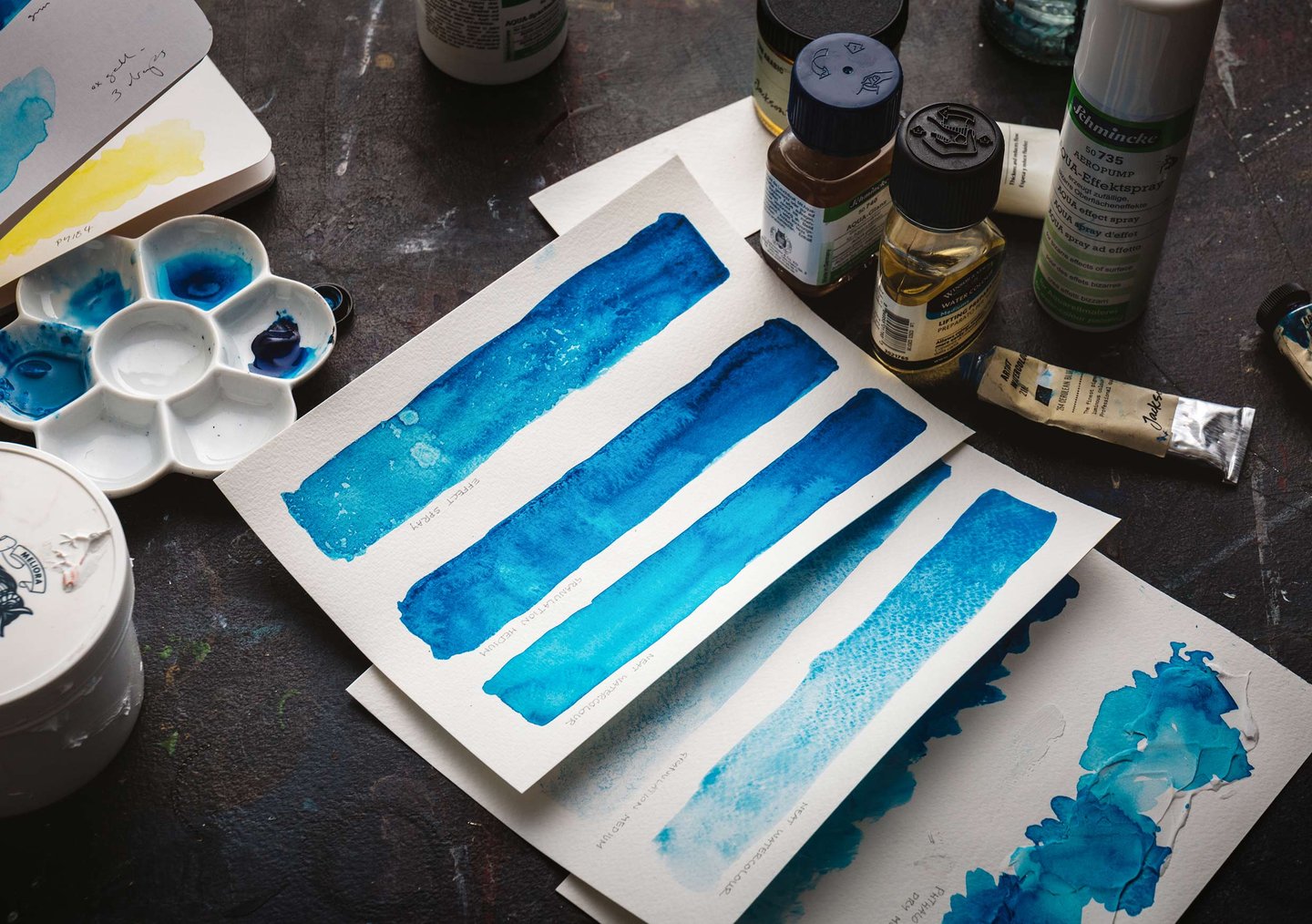
Gouache Mediums
Traditional gouache paint is similar to watercolour but more opaque. Mediums for gouache include:
- Gum Arabic: Enhances binding, gloss, and flexibility.
- Acrylic Medium: Binds gouache to non-absorbent surfaces.
- Flow Improver: Improves application and reduces brushmarks.
- Matt Medium: Maintains the matt finish of gouache while improving flow.
For artists who like to layer, adding a small amount of gum arabic can reduce the chalky appearance. It also increases the luminosity of dried gouache.
You can learn more about mediums for gouache in our ‘Guide to Gouache Painting’.


Drawing and Mixed Media Mediums
Mediums can be used to change the properties of ink, pencil and pastel. They can also be used in mixed media work:
- Fixatives: Protect dry media and prevent smudging.
- Blenders: Smooth or blend coloured pencil or pastel.
- Grounds: Prepare surfaces for mixed media, pastel, or ink.
- Extenders: Add transparency to ink without altering tone.
- Gels and Binders: For working with dry pigments or combining materials.
Drawing mediums, such as blending mediums, help you create special effects and smooth blends with pencils and drawing media. From coloured pencils to Conté and oil pastels, a liquid blending medium allows you to blend, disperse, or paint with the material you've drawn with.
Pencil blenders are soft, colourless pencils made from the binder used in coloured pencils. They allow you to blend two or more colours together, creating smooth transitions and new colour combinations while softening individual strokes and hard edges.
Blender pens dissolve the wax in coloured pencils to create a rich, velvety finish. Additional pencil layers can then be applied over the blended surface to build depth and achieve different effects.
Acrylic-based grounds like pastel and absorbent ground open up new possibilities for using watercolour and pastel on more surfaces.


Printmaking Mediums
Mediums in printmaking are used to alter the properties of ink. This can improve handling, speed drying time, and more. They are useful in techniques like relief and lino printing, intaglio, lithography, monotype, and more.
Popular Mediums:
- Tack Reducers: Soften the ink and reduce stickiness for smoother application. Ideal for relief printing with stiff inks.
- Extenders/Transparent Base: Reduce pigment concentration while maintaining ink body. Useful for creating translucent layers or softening colours without affecting the consistency.
- Magnesium Carbonate: A chalky additive that stiffens ink, reduces gloss, and creates a velvety matt finish. Common in lithography and etching.
- Plate Oil (No.00, 2, or 3): Varying viscosities of linseed oil used to adjust the ink’s flow and transparency. Often used in intaglio to modify the wipe and print.
- Burnt Plate Oil: Thicker and darker than standard plate oil. It reduces ink flow and creates rich, velvety prints. Suitable for etching and aquatint.
- Akua Modifiers: Made for use with Akua soy-based inks. These include blending medium (for transparency), retarder (to slow drying), and release agent (for monotypes).
- Retarder: Slows drying time. Useful for screen printing or monotype when a longer working time is needed.
Things to Consider:
- Some mediums can alter colour intensity or gloss. Always test before committing to a full print run.
- Use appropriate safety precautions when handling mediums. Ensure good ventilation and proper cleanup.
- Water-washable printmaking mediums are increasingly available. These reduce the need for harsh solvents.
For more advice, visit our ‘Guide to Printmaking’ or our printmaking resources on Jackson’s Artists’ Blog.


Choosing the Right Medium
Choosing a medium depends on your paint type, surface, and technique. Here are a few tips:
- For Fast Drying: Use alkyd mediums (oil), fast-drying gels (acrylic), or keep layers thin (watercolour).
- For Blending: Try a retarder (acrylic), slow-drying medium (oil), or blending medium (gouache).
- For Glazing: Choose a slow-drying, transparent medium. Use glaze medium (usually a mix of stand oil, dammar and turpentine) (oil), gloss medium (acrylic), or gum arabic (watercolour).
- For Impasto: Use a thickening medium such as cold wax (oil), heavy gel (acrylic), or dry brush technique (gouache).
- For Experimentation: Mixed media gels, grounds, and texture pastes can mix up your approach and open new possibilities.
Always test a medium with your paints before committing to a full artwork. Mediums may slightly shift colour or consistency. Some mediums dry clear, while others may affect colour saturation or sheen.
For more inspiration, read our articles about all types of mediums on Jackson’s Artists’ Blog.
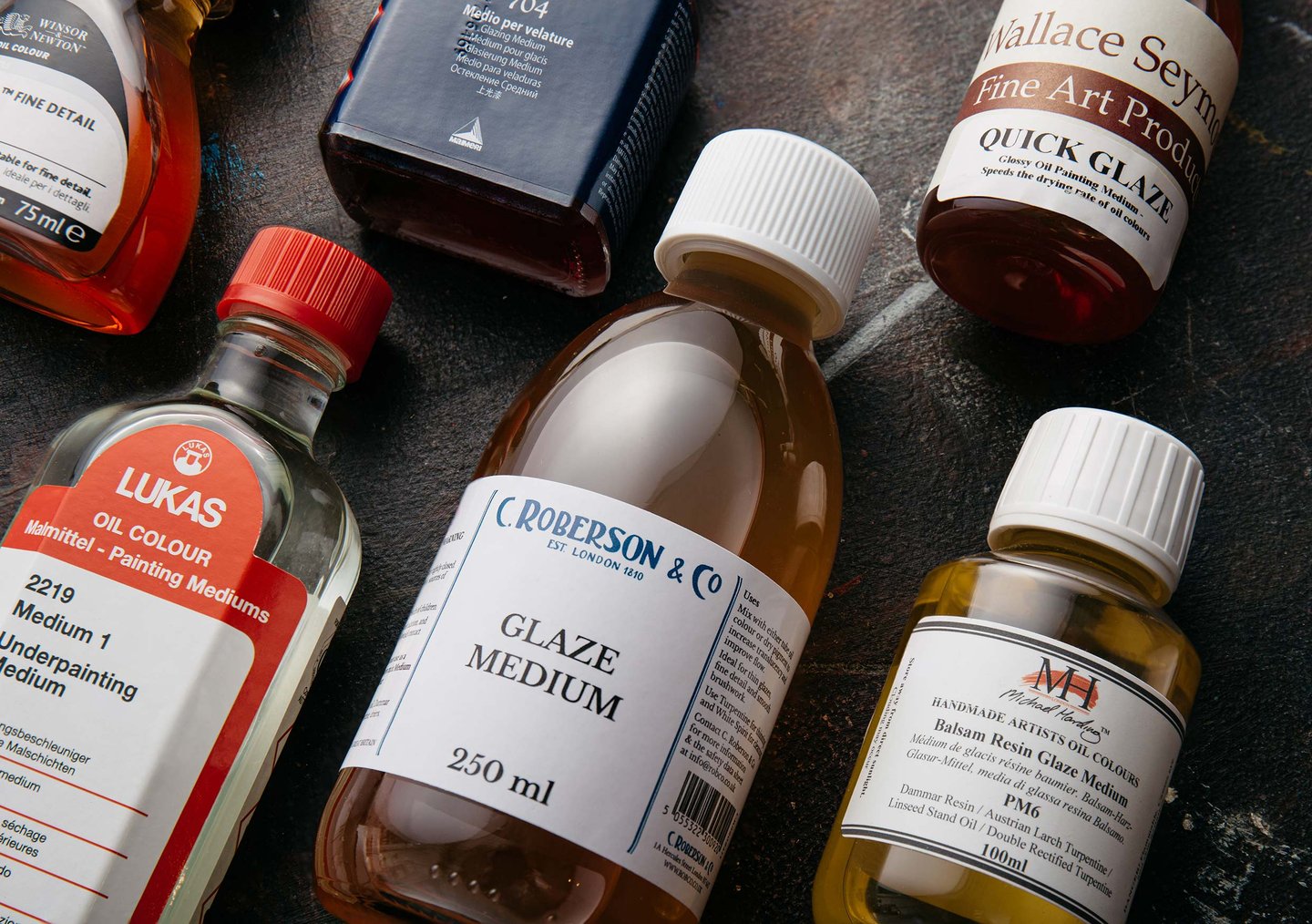
Mixing and Using Mediums Safely
Use mediums in a well-ventilated area, especially if they contain solvents. Wear gloves when handling toxic materials such as turpentine, and keep lids sealed when not in use.
Basic Safety Tips:
- Always read labels and safety data sheets
- Avoid prolonged skin contact
- Store away from children and pets
- Dispose of rags with solvent properly to avoid fire risk
Keep your studio safe by labelling all containers and avoiding food or drink near your work area. For oil mediums, always lay soaked rags flat to dry and dispose of them properly to prevent spontaneous combustion. Yes, this really can occur when oil-soaked rags are balled up or improperly stored. The oxidation process generates heat, which can build up to the point of ignition if not allowed to dissipate.
Water-based paints offer a safe alternative that only requires soap and water for cleanup. For more eco-friendly oil painting, consider low-odour solvents or try water-mixable oil paints.
To learn more about studio safety, watch our film with Michael Craine, Managing Director of Cranfield and his Technical Director, Paul Lee. In this ‘Guide to Studio Safety’, they discuss the subject of art materials toxicology and how to minimise risks.
Frequently Asked Questions
Mediums: Popular Questions from Artists
Understanding the terms heavy body, soft body, fluid, or ink with our Dairy Scale
These terms refer to the thickness, or viscosity, of art mediums. Read ’The Dairy Scale of Paint Viscosities’ on Jackson’s Artists’ Blog to learn more.
Oil painting mediums are used to alter the characteristics of your paint. Depending on the medium, they can speed up or slow down drying time, increase transparency for glazing, change the paint’s thickness and flow, or adjust the final sheen, from gloss to satin or matt.
Using Oil Mediums: Linseed Oil
Linseed oil is the fastest drying of all the drying oils (such as safflower, poppy seed, and walnut oil). It has excellent adhesion properties and dries to a glossy, flexible film. For these reasons, linseed oil is the most commonly used binder in commercially made oil paints.
Linseed oil is an excellent medium for extending oil paints. A linseed oil medium will increase gloss, loosen stiff tube colours, and allow you to control the transparency of the paint. This is great for techniques such as glazing.
By no means do you need to use linseed oil. You can use oil paints straight from the tube or use an alternative drying oil as a medium. Diluting oil paint too much with artist solvents, such as turpentine or mineral spirits, is not recommended. This is because it weakens the paint film. An oil medium, whether linseed oil or another drying oil, is preferable because it extends the paint without under-binding it.
Refined Linseed Oil is a thin, pale oil that increases gloss and transparency, improves flow, and can slow drying slightly. Stand Oil is a thick, honey-like linseed oil that slows drying further, levels brushmarks, and creates a tough, flexible, enamel-like finish, making it useful for glazing and smooth top layers.
Understanding the difference between different drying oils for oil painting
Read 'A Guide to Oil Painting Mediums' on Jackson’s Artists’ Blog to learn about the different types available to artists.
Glazing with oil thinners
It depends on where you are doing the glazing. According to the fat-over-lean rule, the lower layers of a painting should be 'lean' and the subsequent layers should be progressively more 'fatty'. This is to avoid cracking over time. Solvents, like odourless mineral spirits, will make the paint leaner. So, while you could use thinner to make the paint more transparent, it should only be used in the lower layers of the painting.
Glazing tends to take place in the upper layers of a painting, so we would recommend using a glazing medium or stand oil to thin your paint.
Turpentine and the Fat-Over-Lean Rule
Turpentine only affects the fat-over-lean rule when it is used neat to thin the paint. Adding it to oil paint will create a thinner, faster-drying layer that is great for underpainting, so that your next layers will be thicker and fatter. But if it is part of a medium, you can discount it because it evaporates, and you are left with the same amount of oil that you had before.
Any medium that contains oil will increase the overall oil content of your paint when added to it. A lean medium might be 10 parts solvent to one part oil. But adding it to your oil paint still increases the oil content.
Yes. Low-odour and odourless mineral spirits, such as Gamsol or Puresol, as well as citrus-based solvents, can be used as alternatives to traditional turpentine. They reduce strong solvent odours and can lower exposure to harmful fumes, but should still be used with good ventilation and handled responsibly.
Solvents thin oil paint by diluting the binder, creating lean, quick-drying layers with a more matt finish, useful for early washes and underpainting. Oil mediums add body, flow, gloss, and flexibility, making them better suited to later layers that follow the fat-over-lean principle.
Cold Wax on Aluminium Panels
Yes, you can use cold wax medium on aluminium painting panels, provided that it is mixed with oil paint.
Gamblin recommends a maximum of 1/3 cold wax medium to 2/3 oil paint to avoid cracking.
Acrylic mediums can be used as adhesives for mixed media and collage, while heavy and extra-heavy gel mediums provide a stronger hold due to their thicker consistency.
Most acrylic mediums appear milky or white when wet but dry completely clear, meaning they will not change the colour of your paint once the painting is finished.
A retarder slows down the drying time of acrylic paint, allowing for wet-on-wet blending techniques that are usually only possible with oil paints.
Understanding Pouring Mediums
Pouring mediums extend fluid acrylic paints to make them pourable, glossy, and self-levelling. Flow improver is an additive, rather than a medium, as it is added to water to reduce the surface tension and aid flow and spreadability of acrylic. Both can be used within acrylic pouring, but in different ways.
Granulation medium gives paints a mottled or ‘grainy’ appearance. This is excellent for adding texture, such as to rocks or rusted surfaces.
You can mix an Iridescent or Pearlescent Medium directly into your paint. You can also apply it as a glaze over a dry wash to add a shimmering, reflective finish.
These mediums break the surface tension of the water. This helps watercolour paint to flow more evenly across the paper, giving you more control. They are particularly useful when working on hard-sized or very smooth papers.
Further Reading
Your Comprehensive Guide To Watercolour Mediums
Creating Textural Effects with Watercolour Mediums
Golden Acrylic Mediums Comparison
Golden Acrylic Gel Mediums Shrinkage Test
Creating Textural Effects with Acrylic Mediums
A Guide to Oil Painting Mediums
What is the Best Non-Toxic Oil Painting Solvent?
Non-Toxic Oil Painting Mediums and Oil Varnishes
Experimenting with Jackson’s Oil Painting Mediums
Making Beeswax Impasto Medium for Oil Painting
Non-Toxic Oil Painting With Michael Harding Miracle Medium
The Difference Between Michael Harding’s Oil Paint Miracle Mediums
A Guide to Mediums for Water-Mixable Oil Paint
Glossary
A
Adhesion
The ability of paint or medium to stick to a surface or to previous layers of paint. Good adhesion prevents flaking, peeling, or cracking over time. Adhesion can be improved with specific mediums, grounds, or primers. It is important when working on non-traditional surfaces such as metal, glass, or plastic.
Alkyd
A synthetic resin. Used in oil mediums to speed drying and improve durability. Often used in glazing and layering.
B
Binder
The substance in paint that holds pigment particles together and helps them adhere to a surface. Common binders include linseed oil (oil paint) and acrylic polymer emulsion (acrylic paint).
C
Cold Wax Medium
A thickening medium made from beeswax, solvent, and resin. Used with oil paint to create texture and a matt finish.
D
Drying Oil
A natural oil, such as linseed, safflower, walnut, or poppy, that oxidises and hardens when exposed to air. Used in oil painting to bind pigment and control drying time.
E
Extender
A medium added to paint to increase volume and transparency without altering colour tone. Often used in ink and acrylic painting.
F
Fat-Over-Lean
A principle in oil painting that ensures stability by applying paint with more oil (fat) over layers with less oil (lean). This ensures that the upper layers of oil dry more slowly than the paint layers beneath. It prevents cracking as the painting cures.
Flow Improver
A medium that reduces surface tension and improves paint flow. Helps achieve smooth, even application and levels brushmarks.
Fixative
A spray used to protect and stabilise dry media, such as charcoal or pastel. Prevents smudging and fading.
G
Gel Medium
A thick acrylic medium. Used to add body and transparency. For texture and collage.
Gesso
A white or tinted primer. Used to prepare surfaces such as canvas, wood, or paper. Available in absorbent and non-absorbent forms.
Glazing Medium
A transparent paint medium that increases flow and slows drying time. Used for layering thin, luminous colour in oils or acrylics.
Granulation Medium
A medium that enhances texture effects. Granulation refers to the natural tendency for certain pigments to settle into the texture of the paper. This creates a speckled or mottled effect as the pigment particles separate in water.
Gum Arabic
A natural gum sourced from Acacia trees. Used as a binder in watercolour and gouache. It increases gloss, transparency, and flow.
I
Impasto
A technique or effect involving thick, textured application of paint. Can be achieved using thick paint or texture mediums.
L
Lifting Preparation
A watercolour medium that allows paint to be more easily lifted from the surface.
M
Matt Medium
A medium that reduces gloss and gives a soft, non-reflective finish to paint.
Modelling Paste
A very thick acrylic medium. Used to build sculptural texture. Can be shaped, sanded, or carved when dry.
O
Ox Gall
A wetting agent used in watercolour. Improves flow and aids in washes and blending.
P
Pastel Ground
A textured acrylic primer. Allows dry media, such as soft pastel or charcoal, to adhere to surfaces not traditionally suited to them.
R
Retarder
A medium that slows the drying time of acrylic, gouache, or watercolour paint. Gives more time for blending and detail.
S
Silica
A fine-grain additive. Used in mediums to create tooth or absorbency. For pastel or watercolour grounds.
Solvent
A liquid used to thin oil paint or clean brushes. Examples include turpentine and white spirit.
Stand Oil
A thickened linseed oil with honey-like consistency. Slows drying and levels brush marks for a smooth finish.
T
Texture Medium
A general term for mediums that add texture or surface relief to paint. Includes sand gel, fibre paste, and pumice gel.
V
Viscosity
A measure of a paint or medium's thickness or flow. Can be altered with gels, pastes, or flow agents.
W
Watercolour Ground
A surface for watercolour to be used on non-traditional surfaces such as canvas, wood, or metal.
Wetting Agent
A surfactant that reduces surface tension. Improves flow and absorption of water-based paints. Often used in watercolour.