

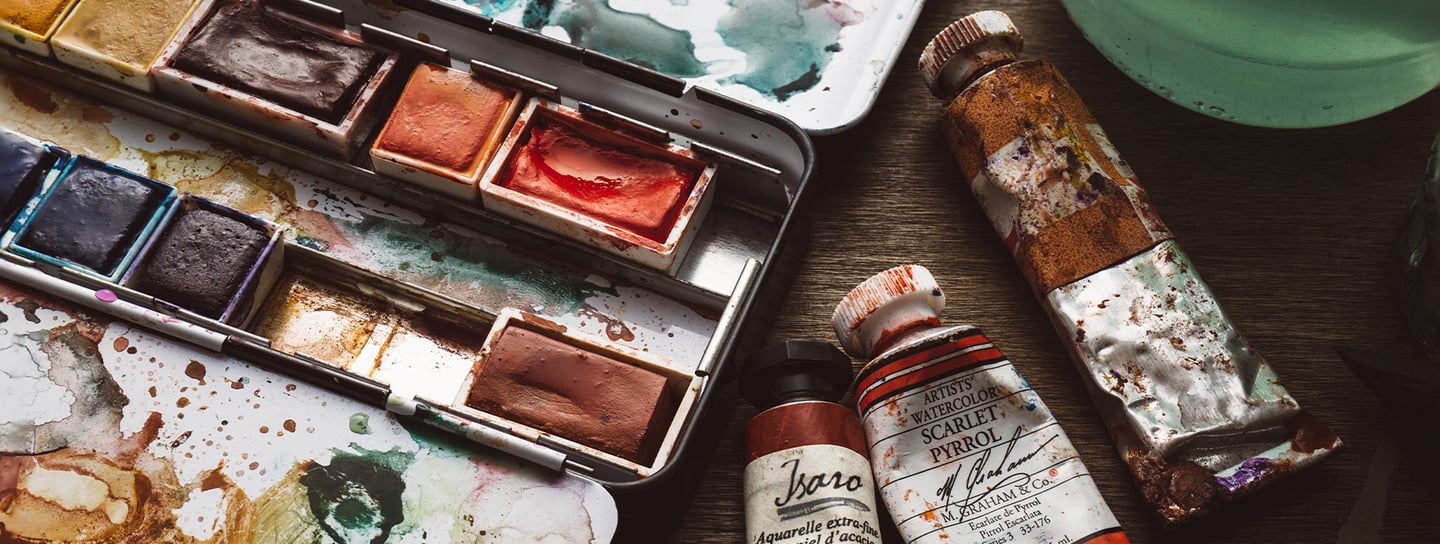
A Guide to Watercolor
What Do I Need to Start Painting with Watercolor?
What Are The Main Properties of Watercolor?
What’s The Difference Between Professional and Student Quality Watercolor?
What’s The Difference Between Watercolor Pans, Tubes, and Sticks?
What Mediums Can I Use With Watercolor?
How Easy is it to Clean Up After Watercolor Painting?
What is the Best Surface for Watercolor Painting?
Introduction to watercolor
Watercolor is known for its light, translucent look and characterful colors. It can create both strong marks and soft washes. The fluid nature of watercolor allows for surprising effects.
Watercolor paint is made from pigments mixed with water and gum arabic. When the water dries, the gum arabic adheres the pigment to the paper. It also slows down how fast the paint spreads, giving you more control. Some artists add extra gum arabic to stop the paint from spreading too quickly.
The character of watercolor depends mostly on the pigments used. This matters more than in oils or acrylics, where the binder plays a bigger role. Because watercolors are applied in thin layers, the natural qualities of the pigment show more clearly.
If you want to try watercolor painting for the first time, Watercolor Painting for Beginners: What You Need to Get Started, lists all the essentials you will need, including brushes, paints and paper, as well as extras that will help you get the best from your painting experience.
What do I need to start painting with watercolor?
With paper, paints, and brushes, you have all you need to start a watercolor painting. Just add a jar of water, and you're ready to paint! There are also other supplies you might find useful:
- Watercolor paints in solid pans or moist tubes
- Brushes
- Paper
- Palette
- Jar of water
Useful Tools:
- Easel
- Masking fluid
- Sponge
- Board and gumstrip (for stretching paper)
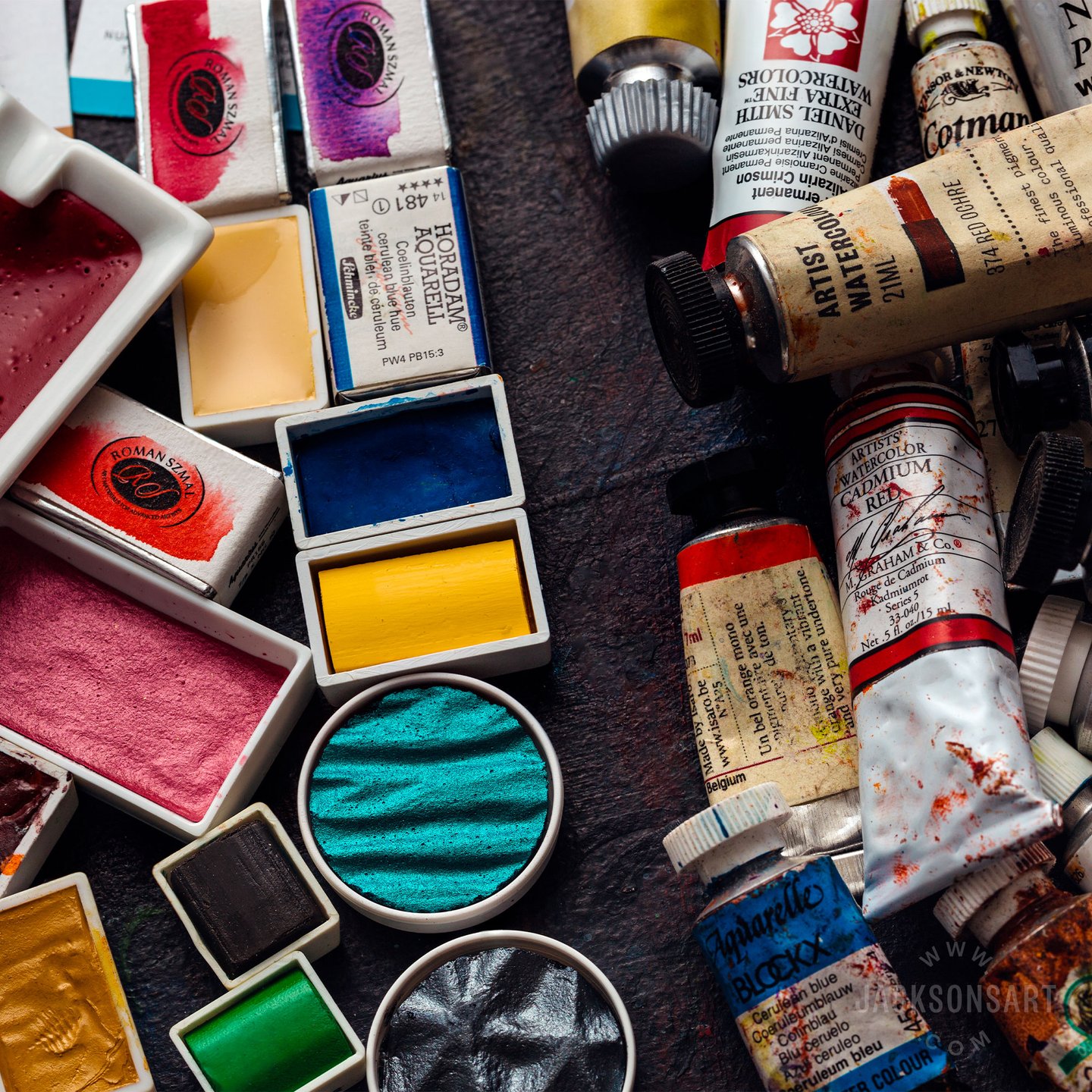
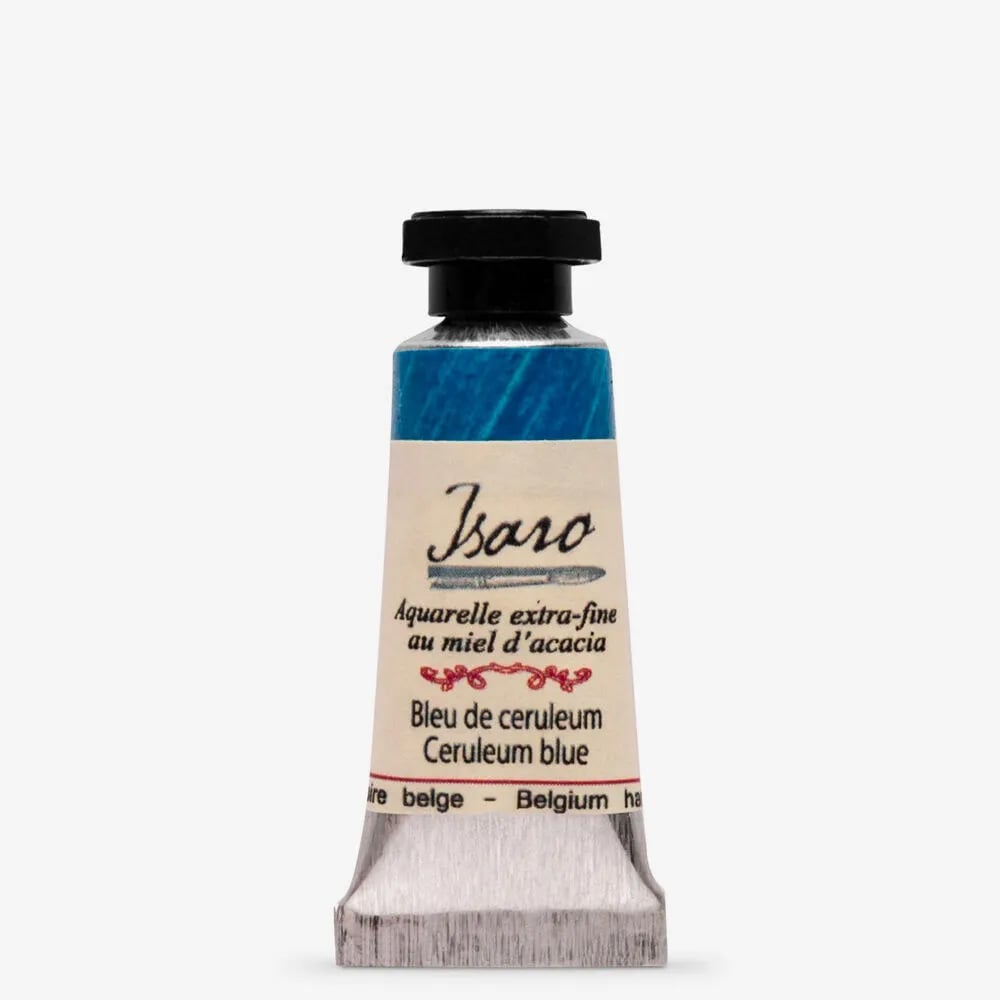
Watercolor paint comes in tubes or dry, solid pans that turn into fluid paint when touched by a wet brush.
For beginners, a set of pans is a great way to start because they are easier to use. Pans let you apply color lightly and build up layers. Tubes can be trickier, as it's easy to use too much color too quickly, which can be hard to control.
An eight pan set of watercolors is small but gives you enough colors to begin painting. Most sets, however, include 12 or 24 colors, offering a broader range to explore.
What are the main properties of watercolor?
When choosing watercolor paints, artists look at three main things:
- Transparency/Opacity
- Staining
- Granulation/Texture
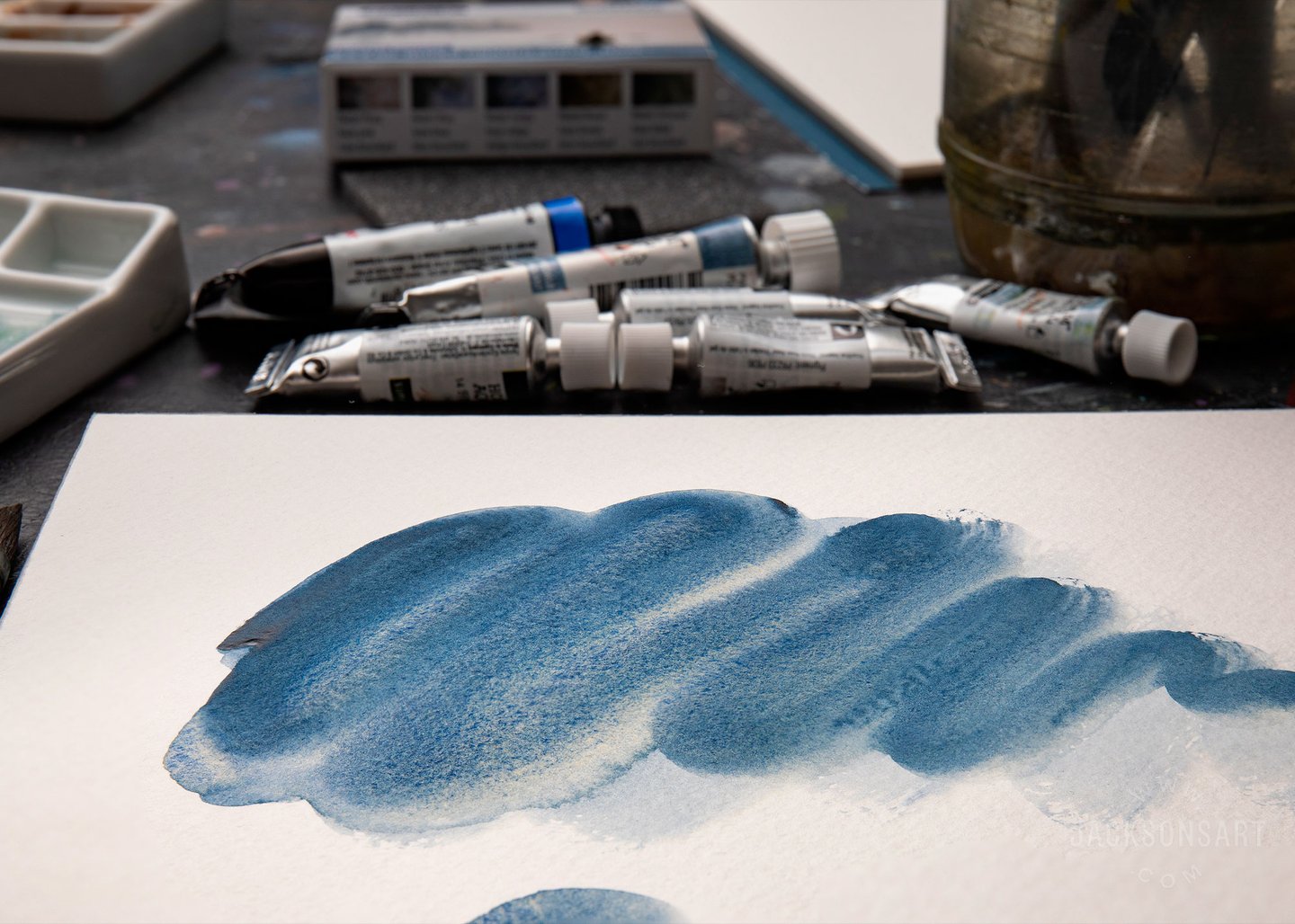
Transparency/Opacity: Watercolors are usually applied in thin layers, so they rarely look fully opaque. The size of the pigment particles determines the level of transparency or opacity, affecting how colors mix and appear on paper.
Staining: Staining refers to how much pigment stays on the paper after blotting with a damp sponge. Modern pigments like Prussian Blue and Alizarin Crimson tend to stain more, while older pigments lift off more easily.
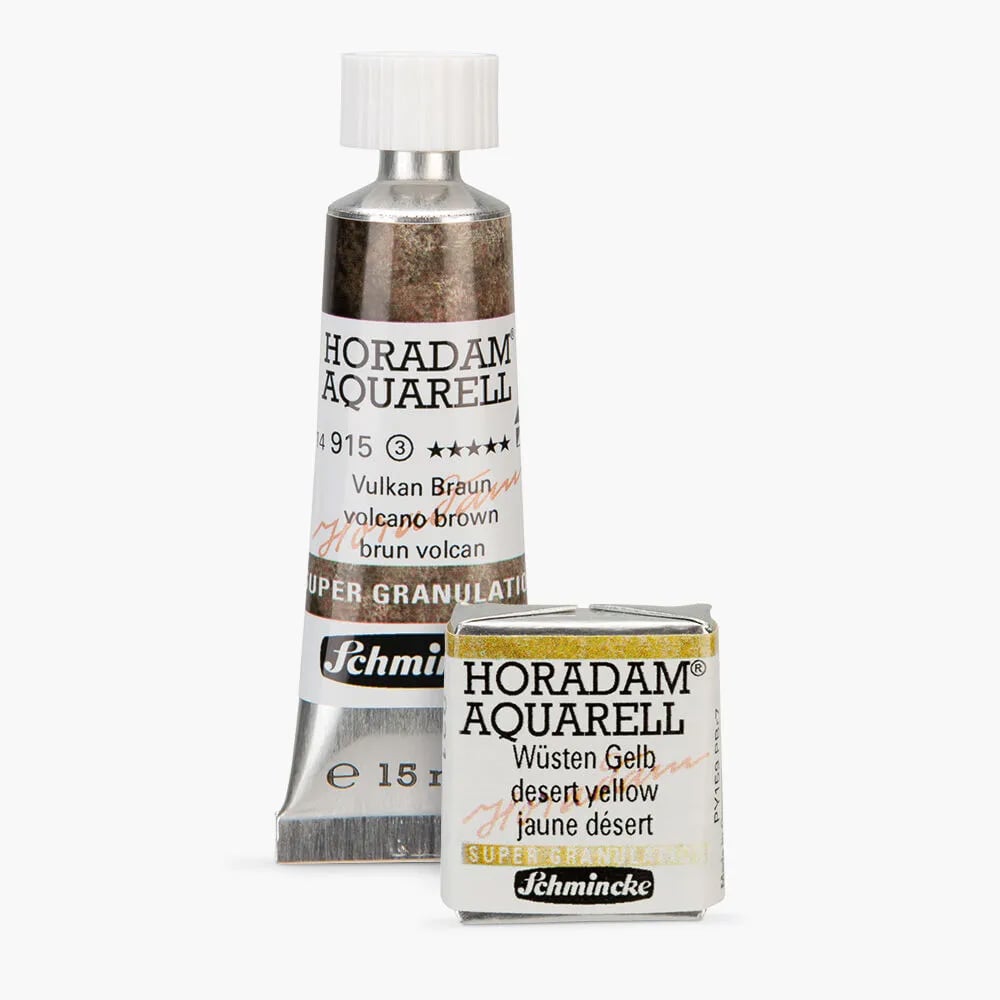
Granulation/Texture: Granulation happens when pigment particles dry unevenly, creating a grainy look. Some pigments are heavier and can’t be ground as finely, which causes this effect. For example, French Ultramarine shows clusters of pigment, while heavier pigments like Permanent Mauve settle into the paper’s texture.
Pigments like earth tones, cobalts, and ultramarines often granulate, while modern colors usually don’t. You can add a granulation medium to increase this effect.
Learn more about granulation in watercolors with Anna Zadorozhnaya, watercolor artist and ambassador for Schmincke and Da Vinci.
Other Considerations:
Permanence
Permanence, or lightfastness, means how well a pigment resists fading in light. Some pigments, like Opera Rose, fade over time if exposed to sunlight.
These colors are still popular because they are bright and vibrant, especially for art kept in portfolios instead of on walls. If you need colors that last, check the manufacturer’s color chart to choose pigments that won’t fade easily.
For more information, read 'Fugitive Pigments: Why Do They Fade, and Does it Matter?' on Jackson’s Art Blog.
Single Pigment Colors
Single pigment colors, like Ultramarine Blue, are made from one pigment. Others, like New Gamboge, are made from two or more. Single pigment colors mix more easily into bright, vibrant hues. Mixing too many pigments can make colors look dull because each pigment absorbs light differently.
Some colors, like Quinacridone Gold, are made from multiple pigments because the original pigment is no longer available. Artist-grade watercolors usually have more single pigment colors, which makes them better for mixing.
Examples of artist quality watercolors include Daniel Smith Extra Fine Watercolor and Jackson's Artist Watercolor.
What’s the difference between professional and student quality watercolor?
Professional watercolor paints, also called artist quality, have a high amount of pigment. This makes the colors more intense, so you need less paint to get strong results.
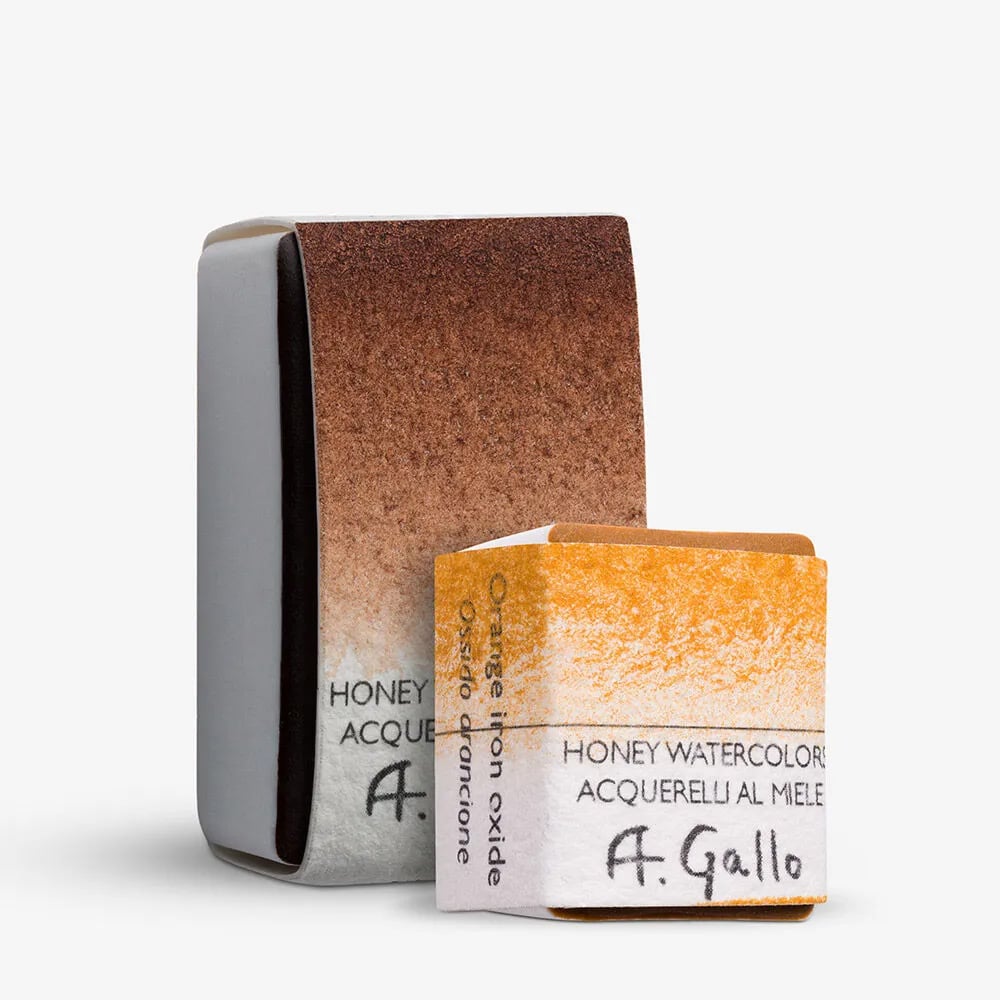
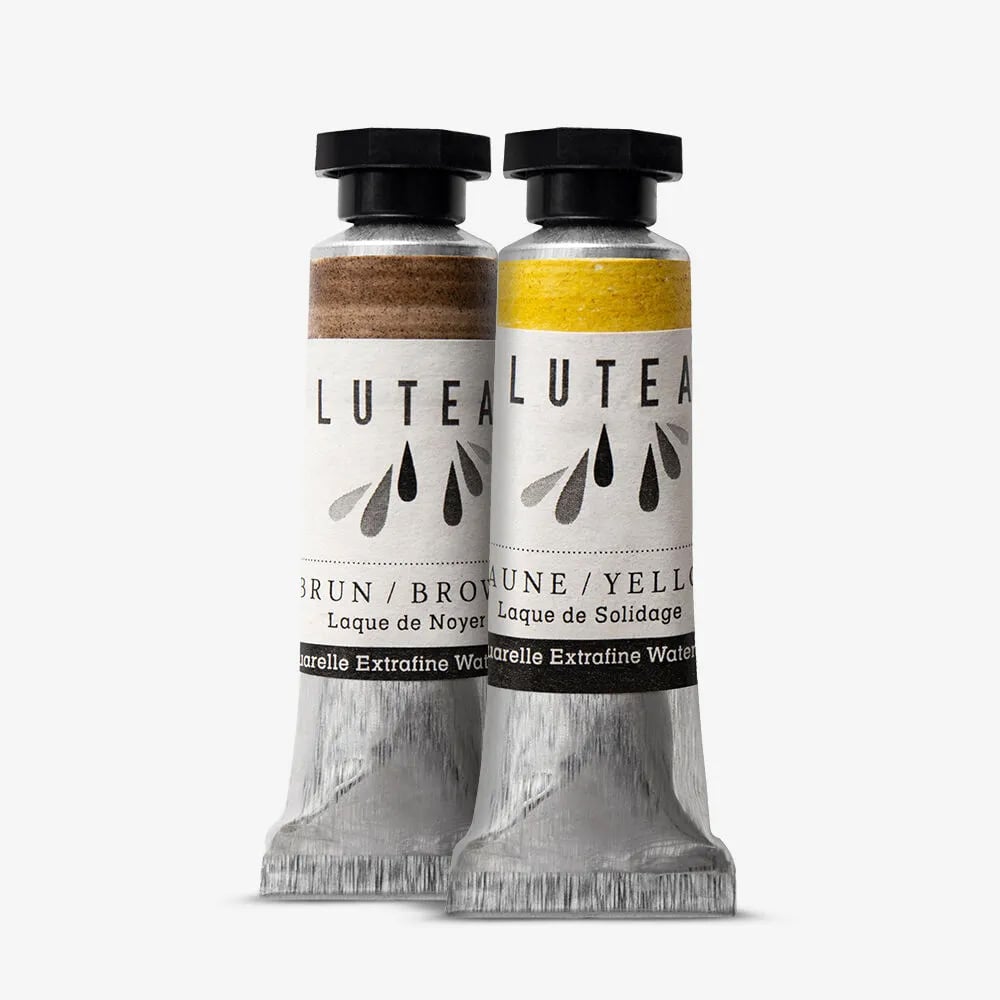
The binder quality also matters. Brands like A. Gallo and Jackson’s add honey to the binder for a smoother feel, but other brands use different formulas. Try a few to see what you like best.
In professional watercolors, pigments are ground finely to show their unique qualities. Some pigments are larger or heavier, which makes the paint look grainy (granulation). Sometimes, the pigment settles over time, causing clear gum arabic to rise to the top of the tube. If this happens, stir the paint with a paperclip to mix it back together.
Student quality watercolors typically have less pigment or use cheaper pigments. When there’s less pigment, the colors act more consistently, which is helpful for beginners. A student set is a good, budget-friendly way to start with watercolors.
Student paints use cheaper pigments and ‘hue’ colors to replace expensive ones like cobalt and cadmium. These paints may not last as long without fading, so if permanence is important, check the color chart.
Examples of student watercolor brands include Daler Rowney Aquafine and Winsor & Newton Cotman.
What’s the difference between watercolor pans, tubes, and sticks?
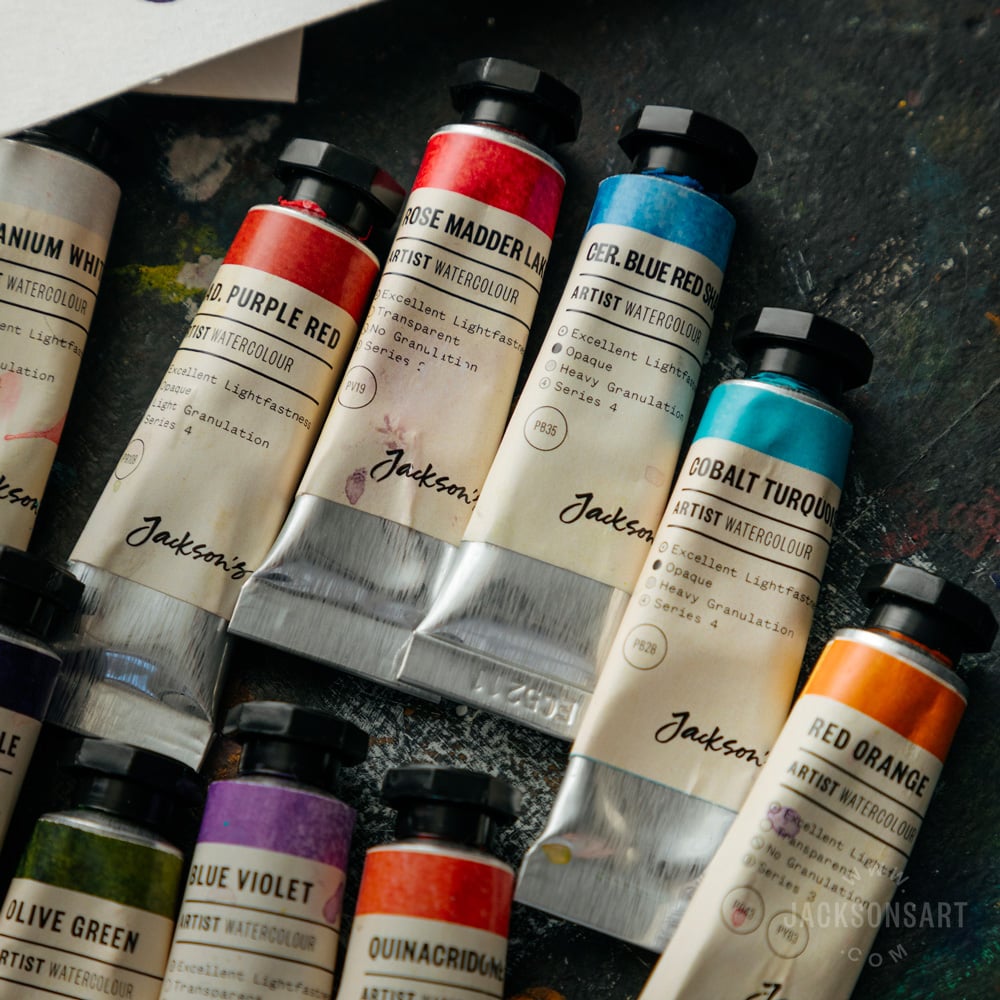
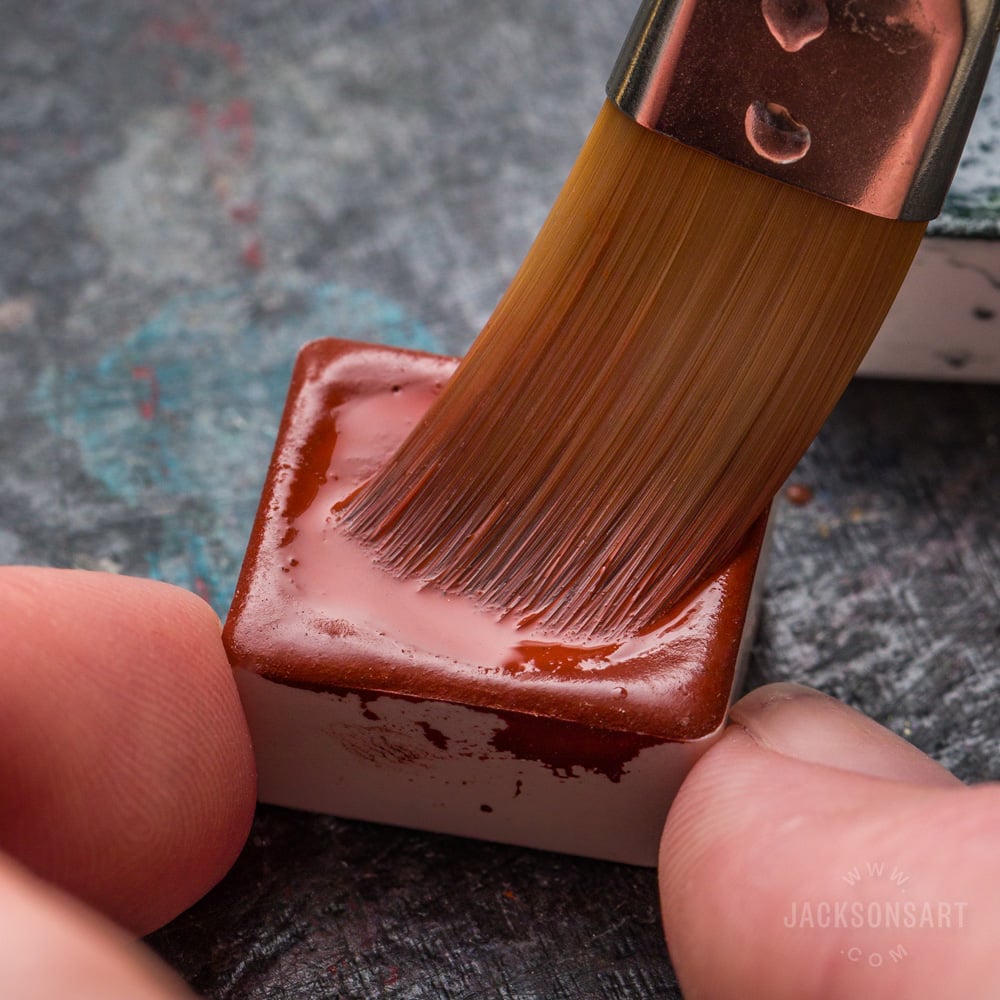
Watercolors are available in tubes, pans, and sticks. Pans are plastic vessels in which dried watercolor is kept. Color is taken from a pan by dragging a wet brush over it. Pans are easy to carry in watercolor boxes. Large pans are available for those who like to work on a large scale or use broad brush strokes.
Tubes contain moist watercolor, which can be squeezed into empty pans if so desired, or onto a palette. They are great if you want to premix a batch of colors to contain in pans. They are also good for painters who like to work with intense colors.
Pans
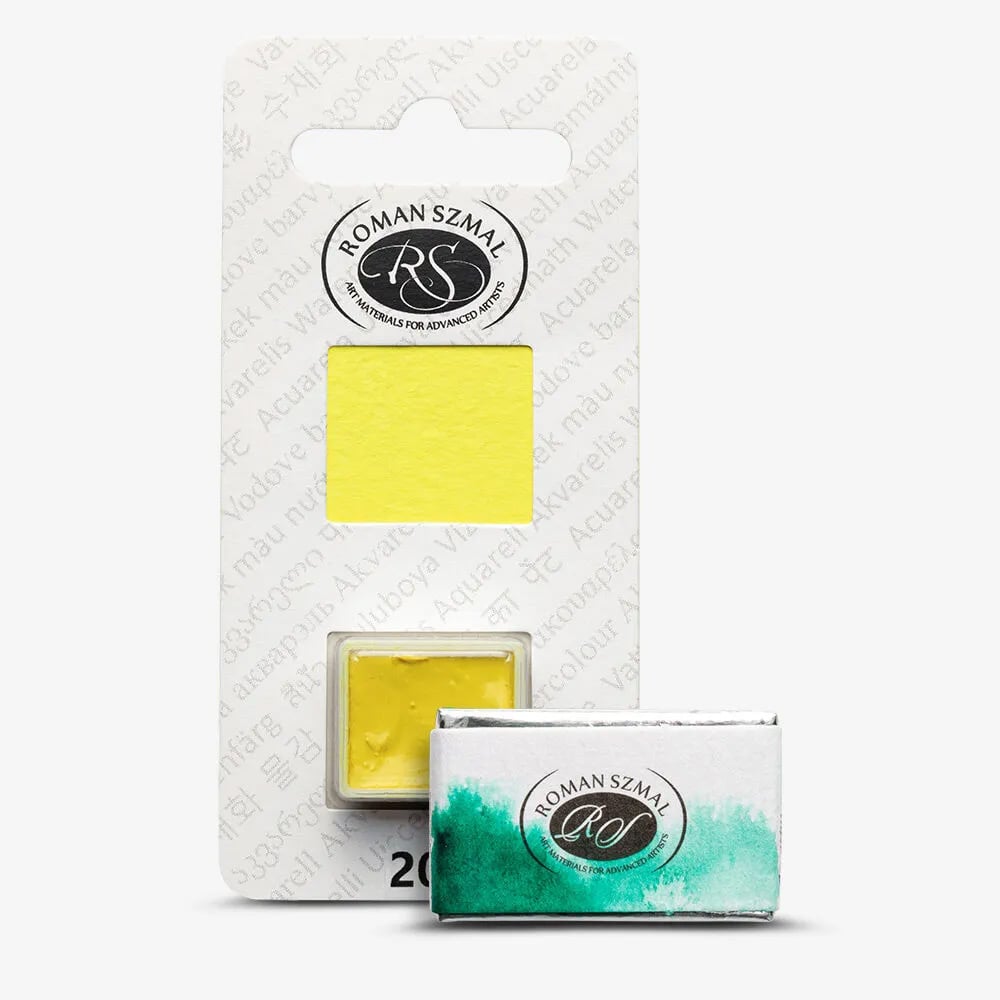
Watercolor pans come in two rectangular sizes: a full pan and a half pan (a full pan is sometimes called a whole pan). Across brands, the sizes of pans are nearly the same standard size, but not quite. That’s why many watercolor boxes have bendable compartments that allow for slight adjustments to hold the pans.
Travel watercolor boxes that do not have adjustable compartments will not work with all brands of pans, because even a millimetre difference means that they won’t fit in the slot.
Some brands do other sizes than the two common ones: Blockx do a Giant Pan (a generous 3.5 by 2.5 inches), Gansai Tambi are much larger than standard and Coliro do two sizes of round pans.
Pans also vary in their formula and method of manufacture. Some pans are extruded like dough, cut into cubes, let to dry, and then placed into pans as a hard cake. These can often be seen sticking up above the rim of the pan. Those that are poured also vary. Some are poured once and allowed to shrink so the pan is only partially full, while other brands top up the pour a second or third time for a fuller pan.
The formula of watercolor paint also differs, with some paintmakers adding some honey, some having different amounts of gum arabic binder, some adding wetting/flow agents, and some not. Some with honey are not as soft because they are extruded, while the poured honey paints can be only semi-hard. These differences in formula are more readily visible in a pan than in a tube, as a shiny/matte, sticky/smooth, or soft/hard surface.
Tubes
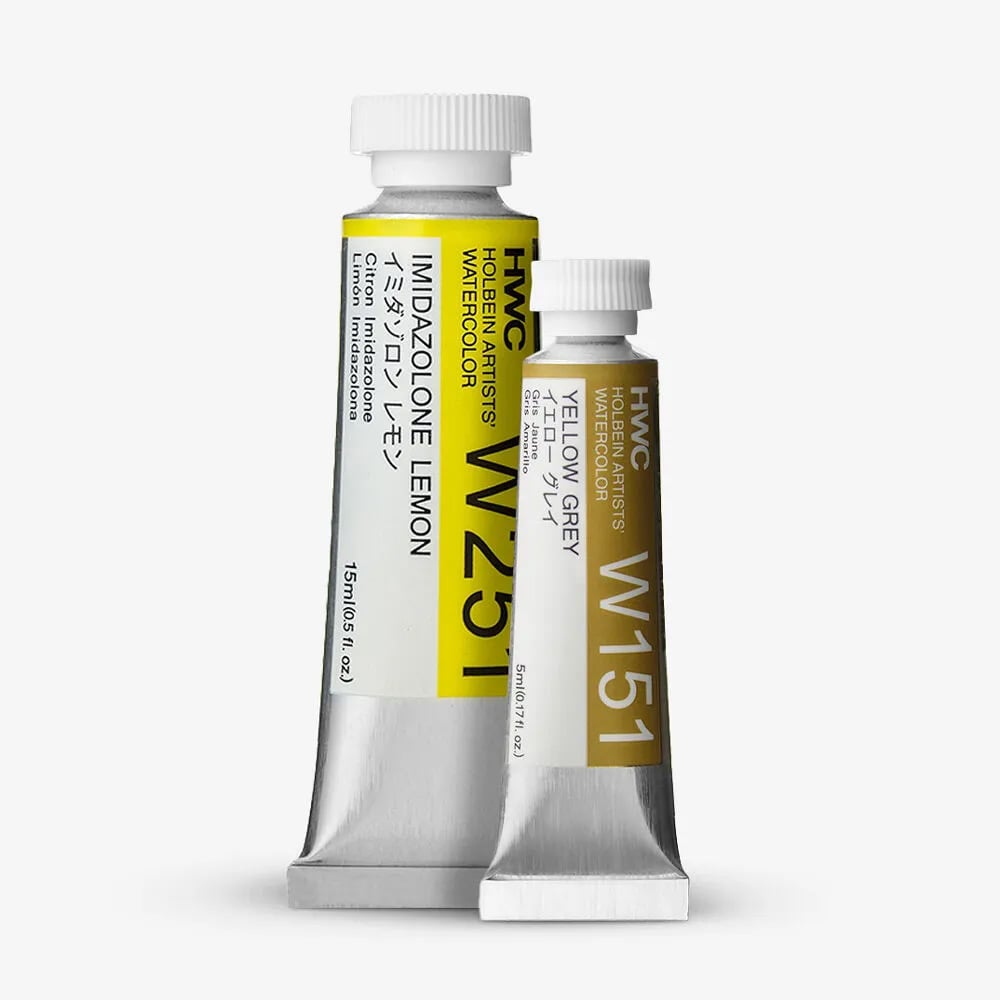
Most brands of watercolor make two sizes of tubes, small and large. The most common sizes are 5ml, 10ml, 14ml, 15ml, and 21ml. Occasionally you may find a favorite paint and not have a choice of format. There are some brands that are only available in one format – some that only come in tubes and some that only come in pans.
Read about the benefits of watercolor paint in pans versus tubes on Jackson’s Art Blog.
Watercolor Sticks
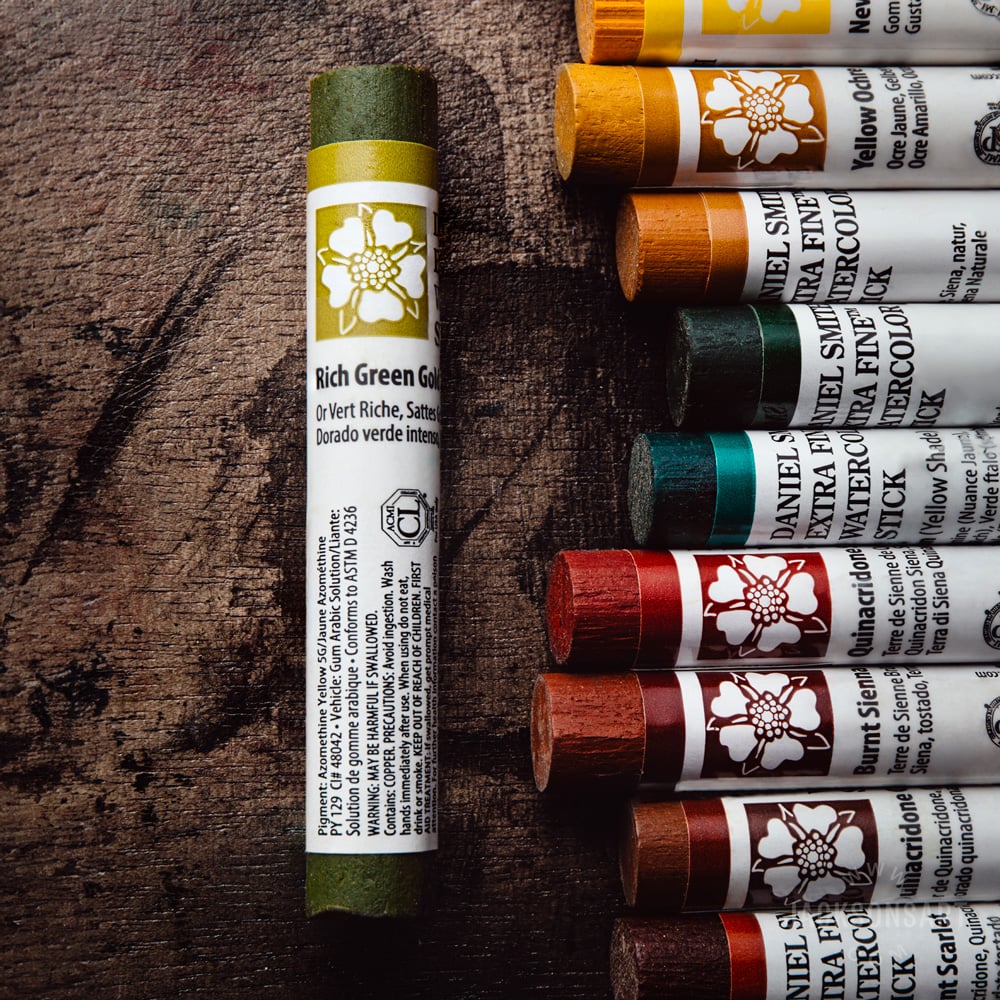
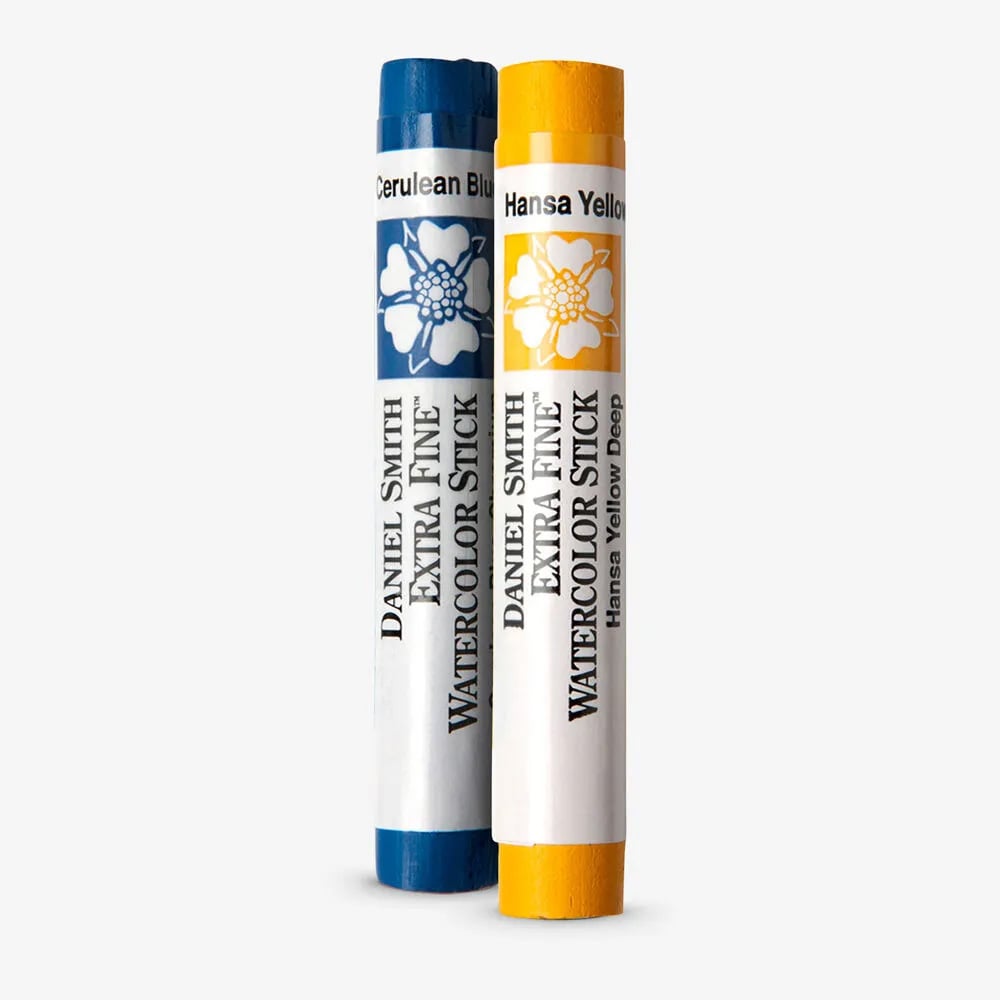
Watercolor Sticks are dried watercolors in stick form. They can be used like pans, i.e. by wetting the brush to extract the color from the stick, and they can also be used as a drawing tool by applying color from the stick onto paper, either wet or dry.
Watercolor sticks are highly pigmented and lightfast. Their special formulation means that they can be used dry and then wetted, after any length of time, for maximum convenience. Simply add water to turn a drawing into a watercolor even years after it was completed.
Watercolor sticks can be used to add details to existing watercolor artworks. The unique shape is great for achieving multiple line thicknesses, and they are also intermixable with other watercolor paints. They are perfect for in the studio or outdoors on the go.
Watercolor Pencils
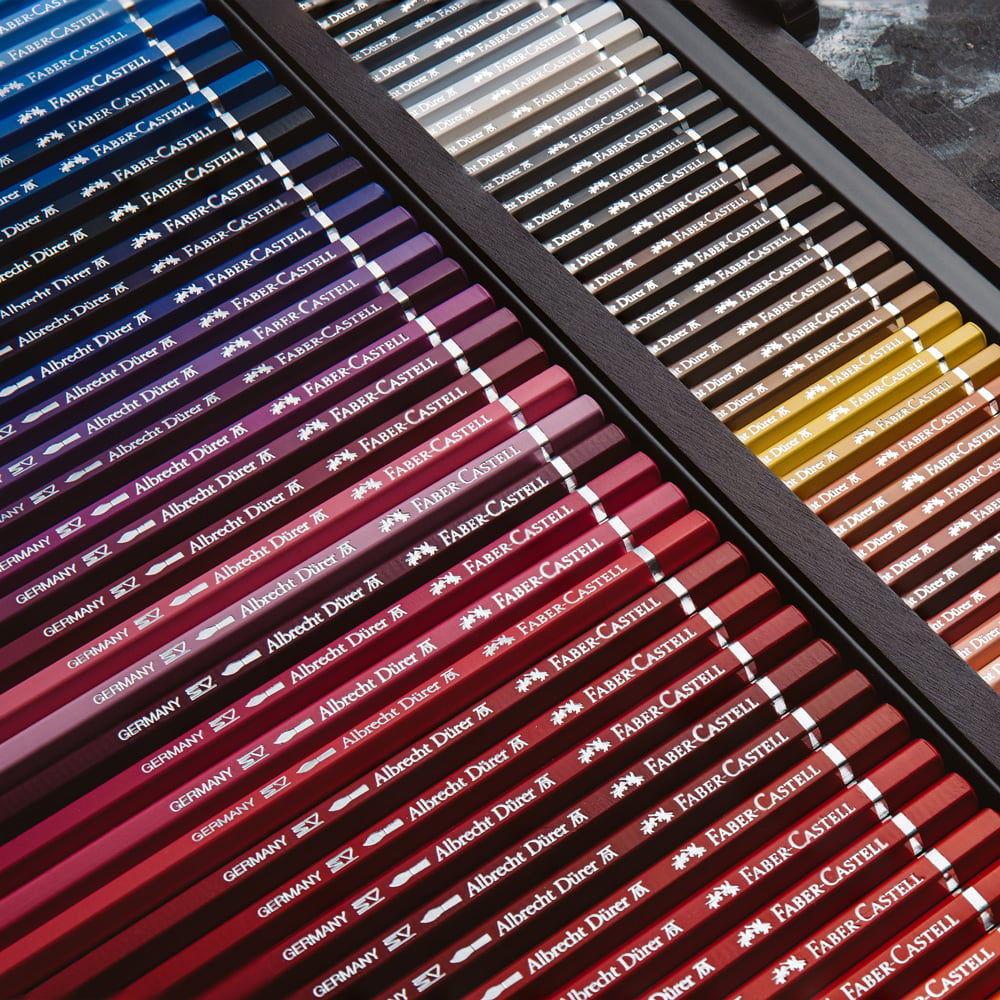
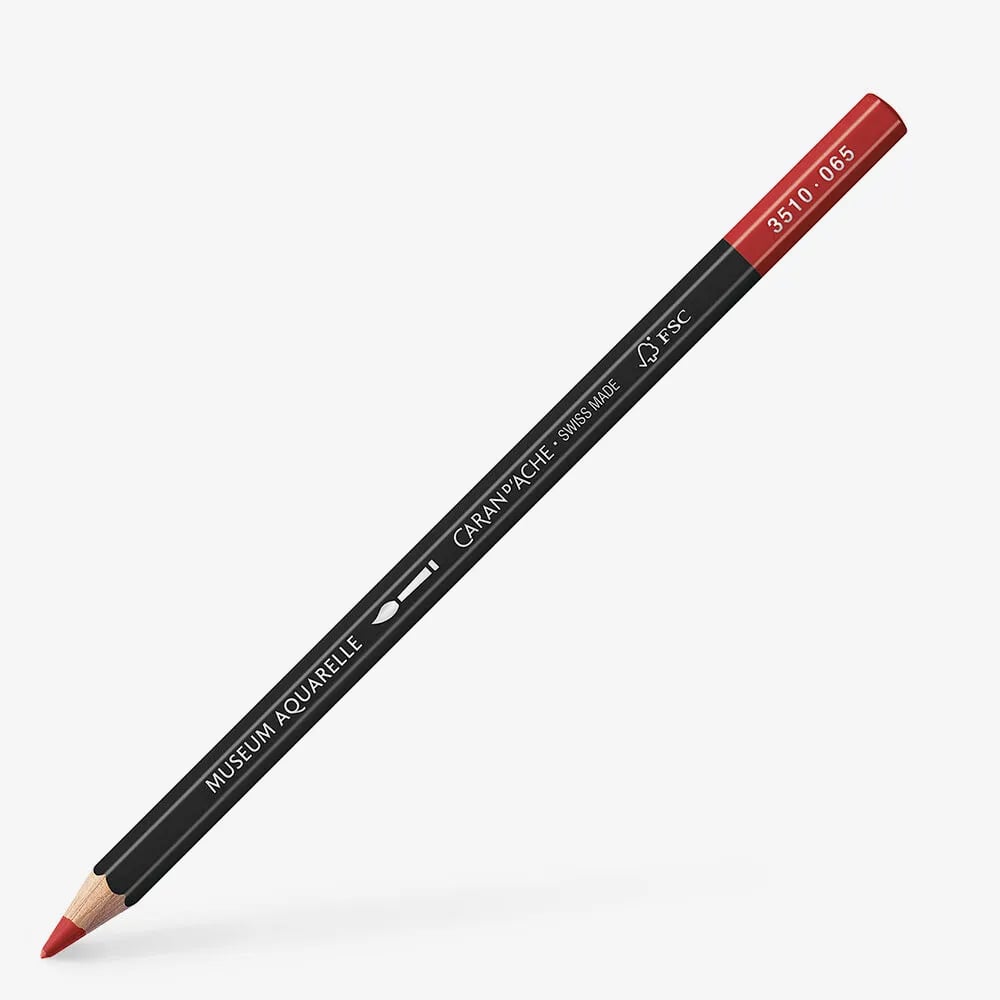
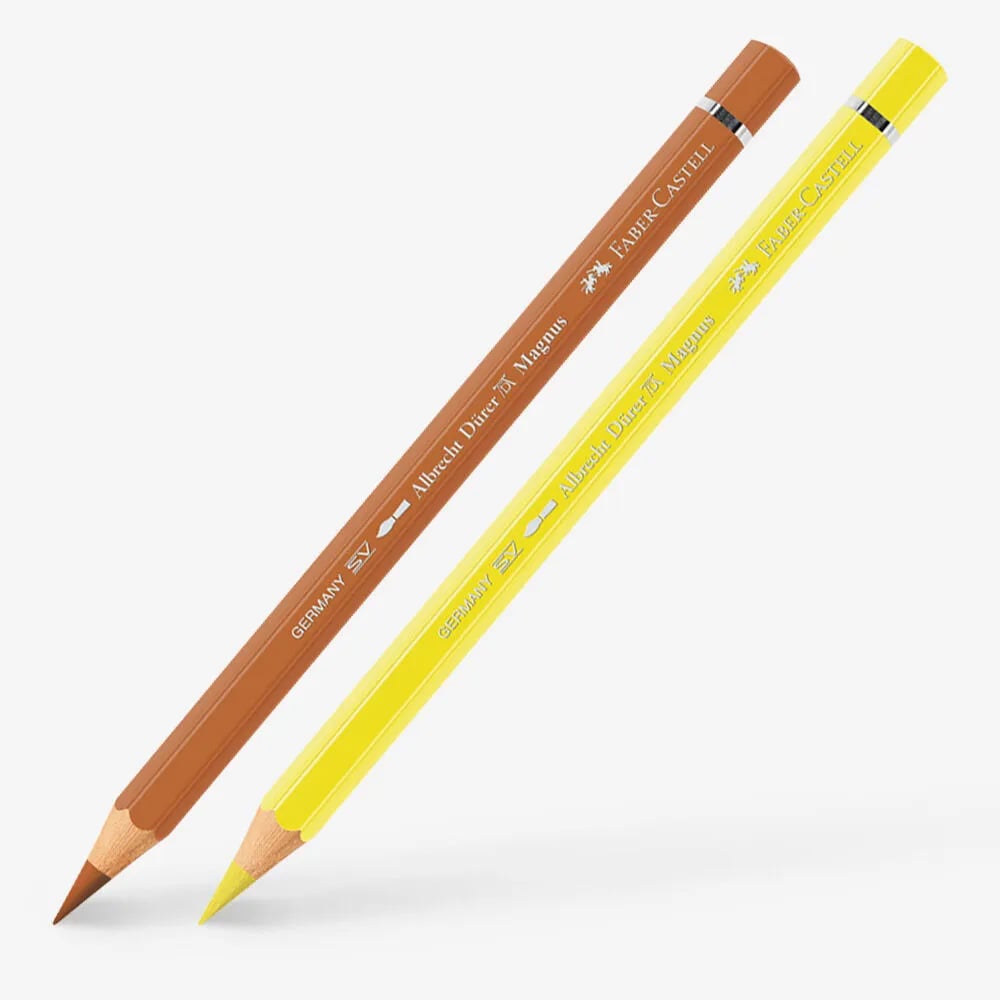
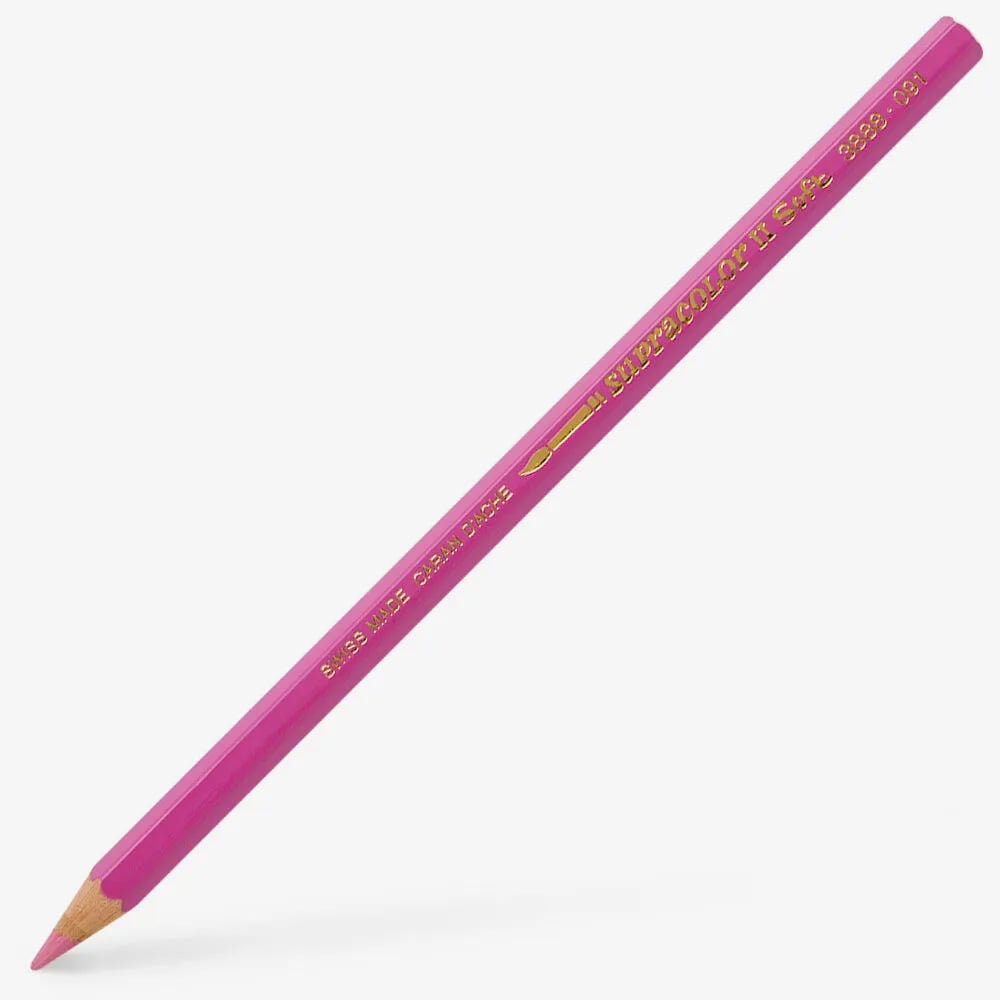
Watercolor pencils are convenient and portable painting tools that are clean and easy to use. Their versatility means you can use a single pencil with many different techniques.
They usually contain some wax to keep the lead solid and can be used on their own or with traditional watercolor paint. They can be used dry as regular colored pencils, or like pans (extracting color using a wet brush), or they can be dipped into water and drawn with, creating intensely saturated marks.
What mediums can I use with watercolor?
Watercolor mediums help you control the paint. They can add texture, improve flow, make lifting color easier, and change drying times.
Read ‘A Guide to Watercolor Mediums’ for a comprehensive look at Watercolor Mediums and their applications.
Gum Arabic
Gum Arabic comes from tree sap. It binds the pigment to the paper but stays water-soluble. It slows down drying, giving you more time to work. It also makes colors brighter.
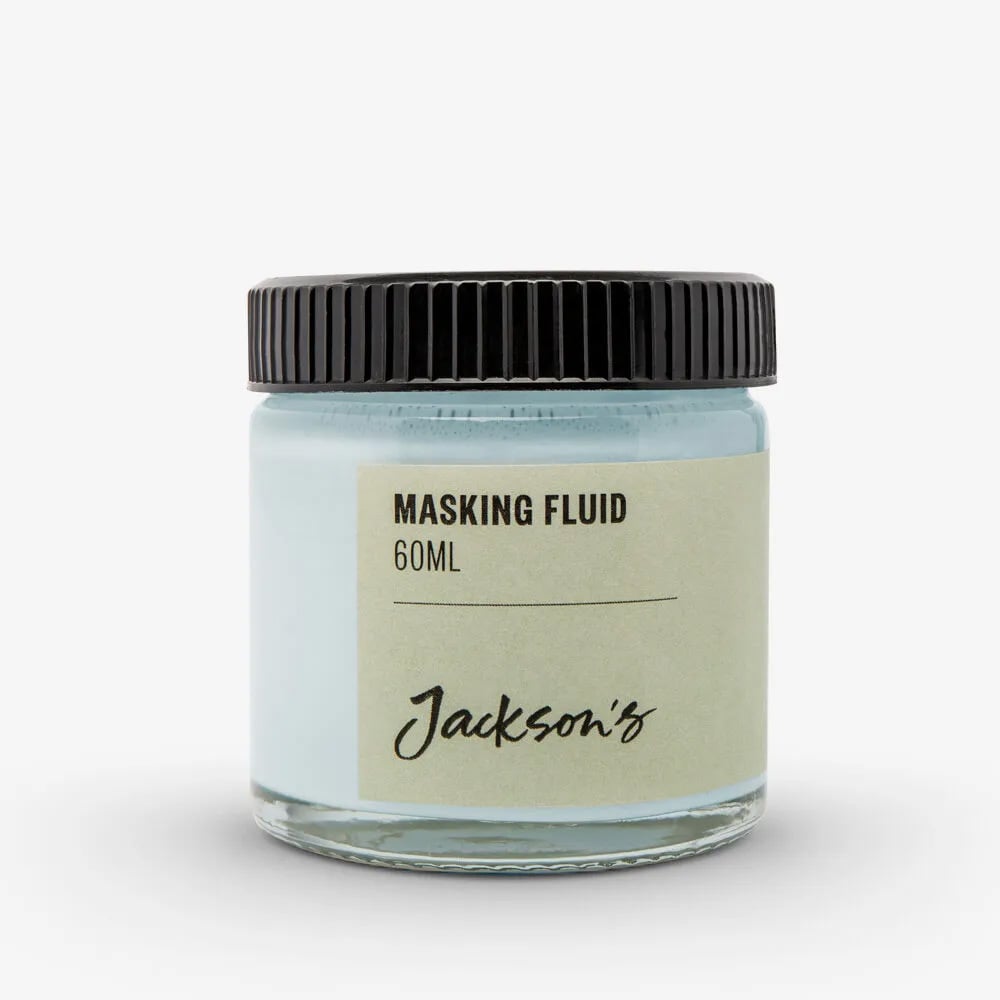
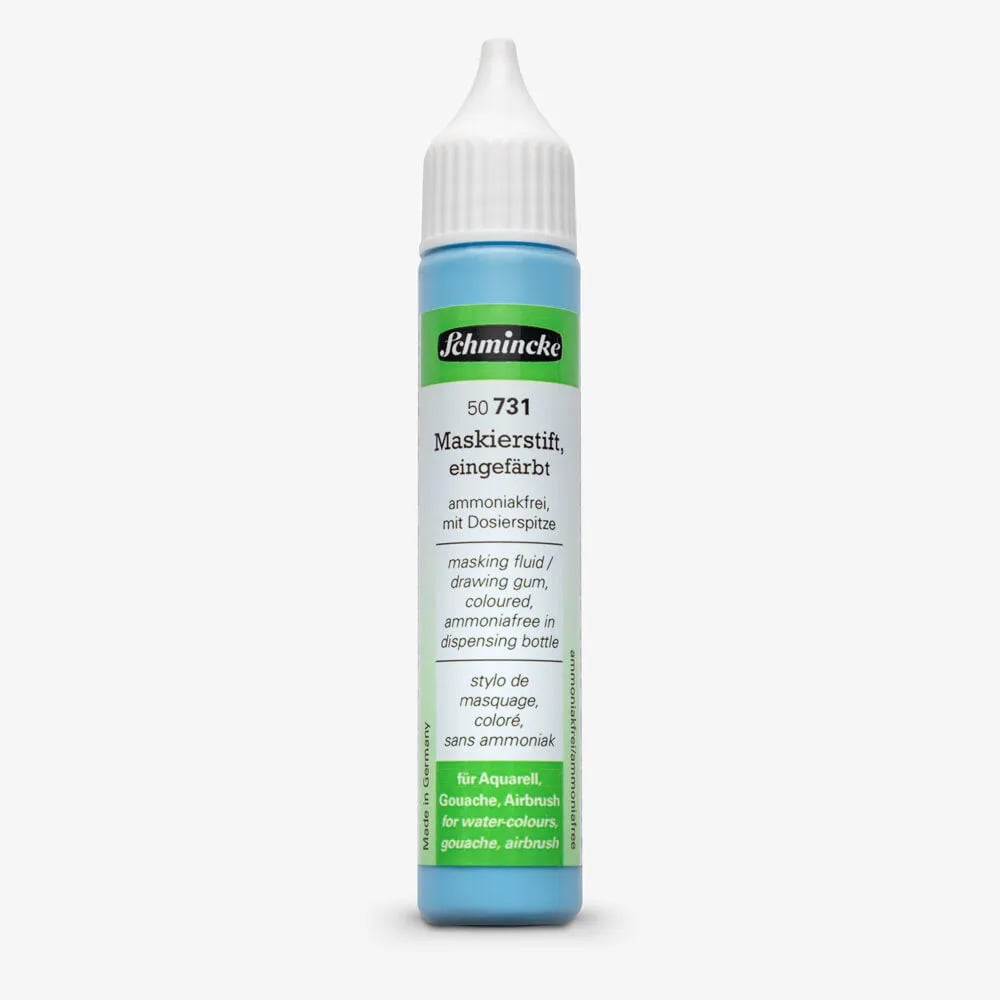
Masking Fluid
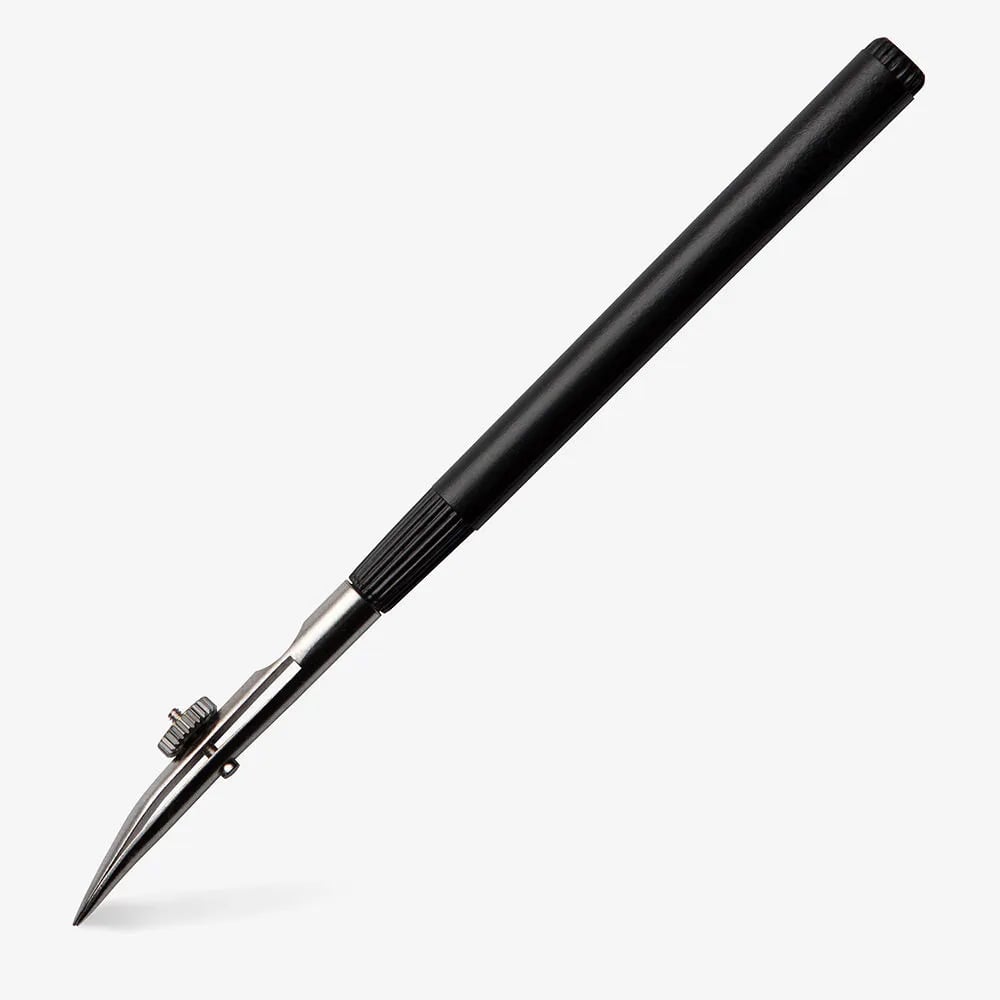
Masking Fluid protects parts of your paper from paint. It blocks the paint from coloring those areas. Use it for details like lines or highlights. Apply with a brush and remove after the paint dries.
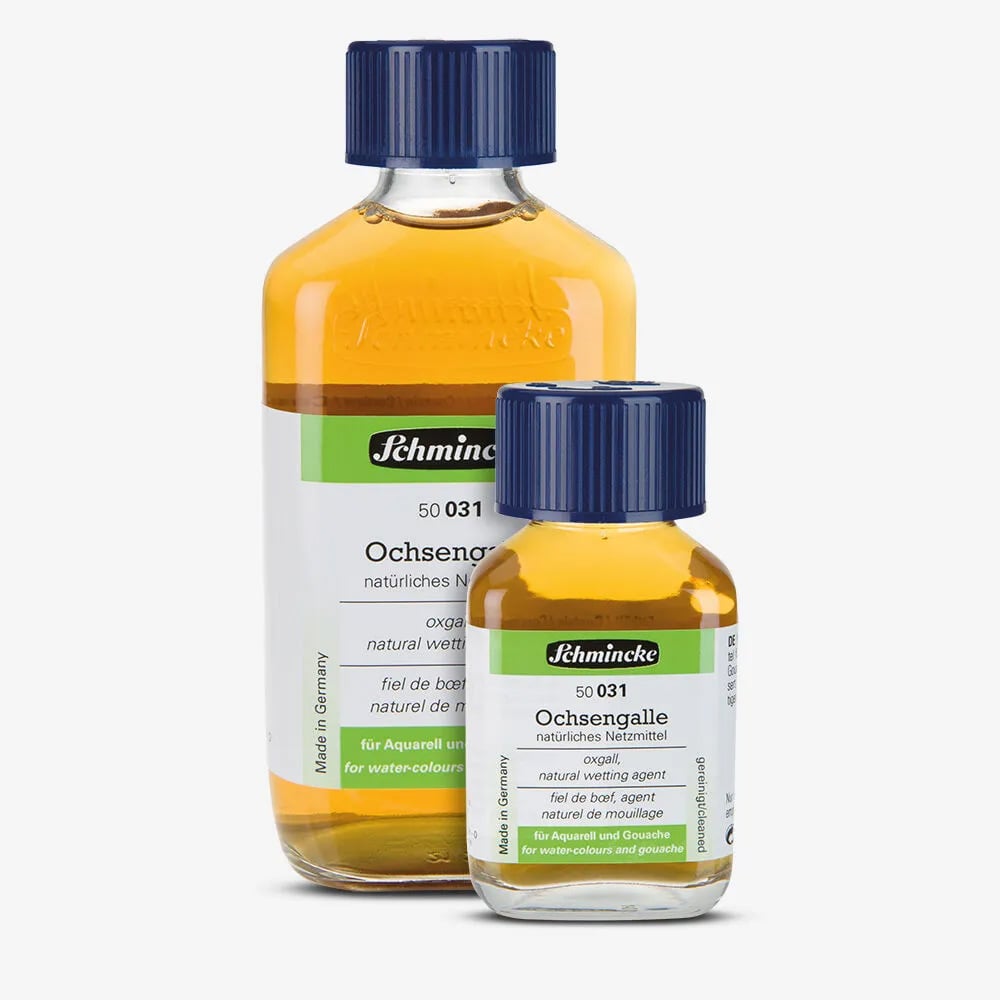
Ox Gall
Ox Gall helps the paint flow smoothly. Add it to your paint for better control.
Blending Medium
Blending Medium slows drying, giving you more time to blend colors. It’s useful in warm climates.
Granulation Medium
Granulation Medium adds texture to your paint. It makes colors look grainy and textured.
Iridescent Medium
Iridescent Medium adds a shimmer to your colors. They also slow drying and stay water-soluble.
Sennelier Binding Medium
Sennelier Binding Medium contains gum arabic, honey, and water. It makes colors shiny and bright. It also helps the paint flow better. For paintmaking or modifying paint.
Aqua Gloss
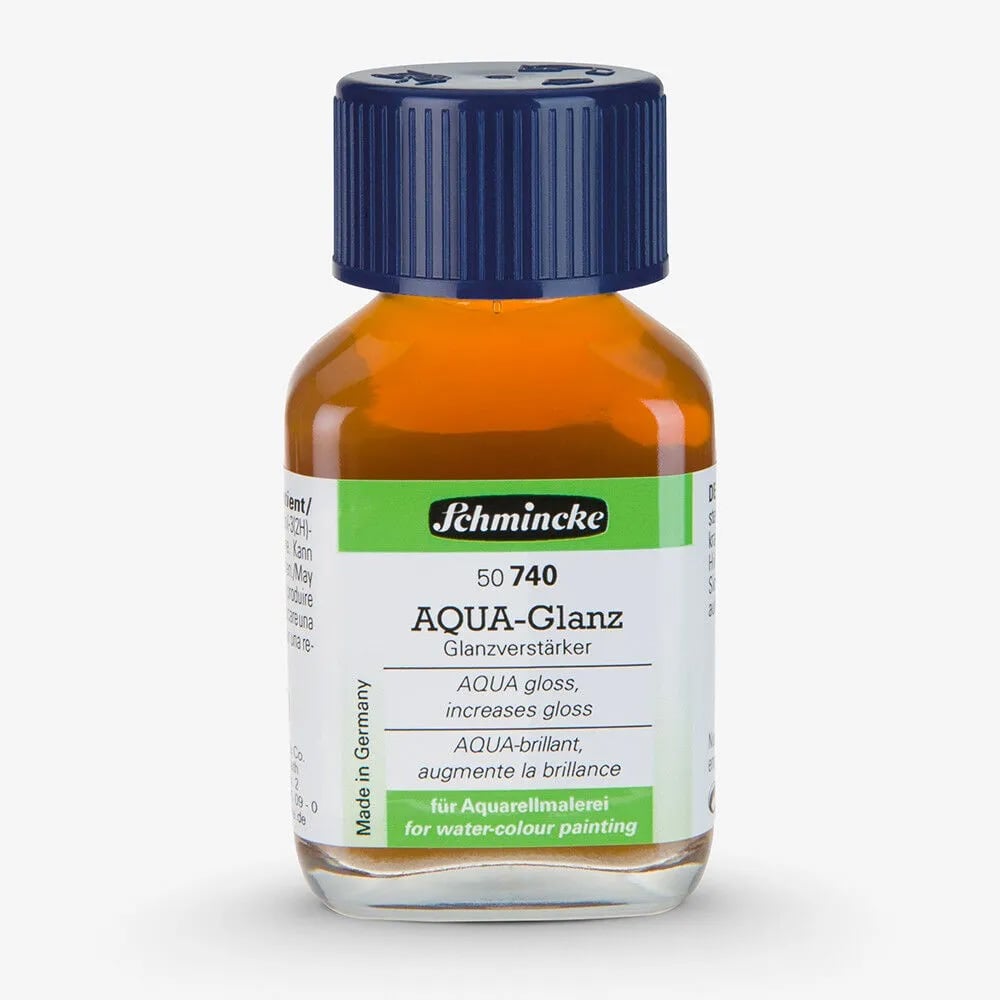
Aqua Gloss makes your paint glossy and slows drying. It stays water-soluble, so you can rework your paint later.
Experimental Watercolor Techniques with Mediums
Aqua Effect Spray
Schmincke Aqua Effect spray creates unusual effects by pooling the pigment. Great for experiments. Test it on a separate piece of paper first.
Aqua Pasto
Aqua Pasto thickens your paint and adds texture. It slows drying and stays water-soluble.
You can learn about building sculptural form and texture in 'Creating Textural Effects with Watercolor Mediums'.
Aqua-Fix
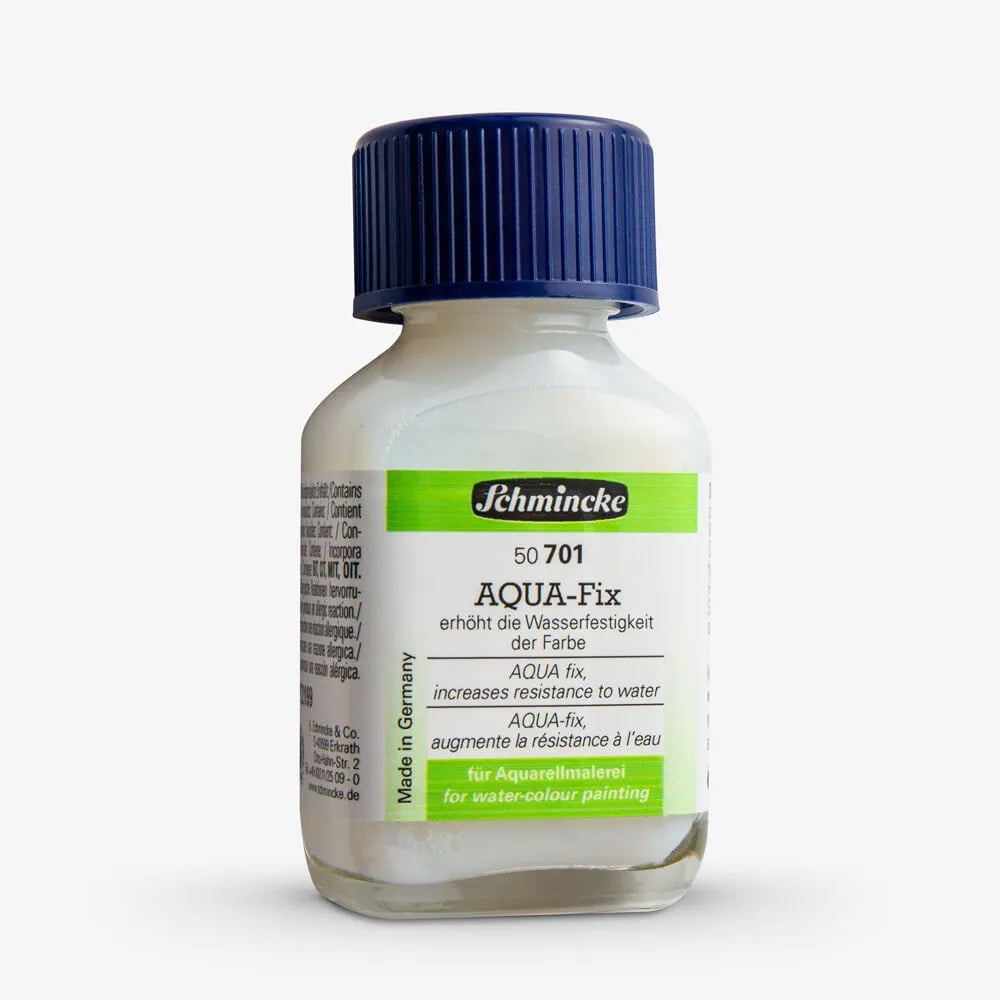
Aqua-Fix enables layered watercolor painting by making watercolors more water-resistant. Use it instead of water to keep colors from dissolving when layering.
Watercolor Surface Preparation
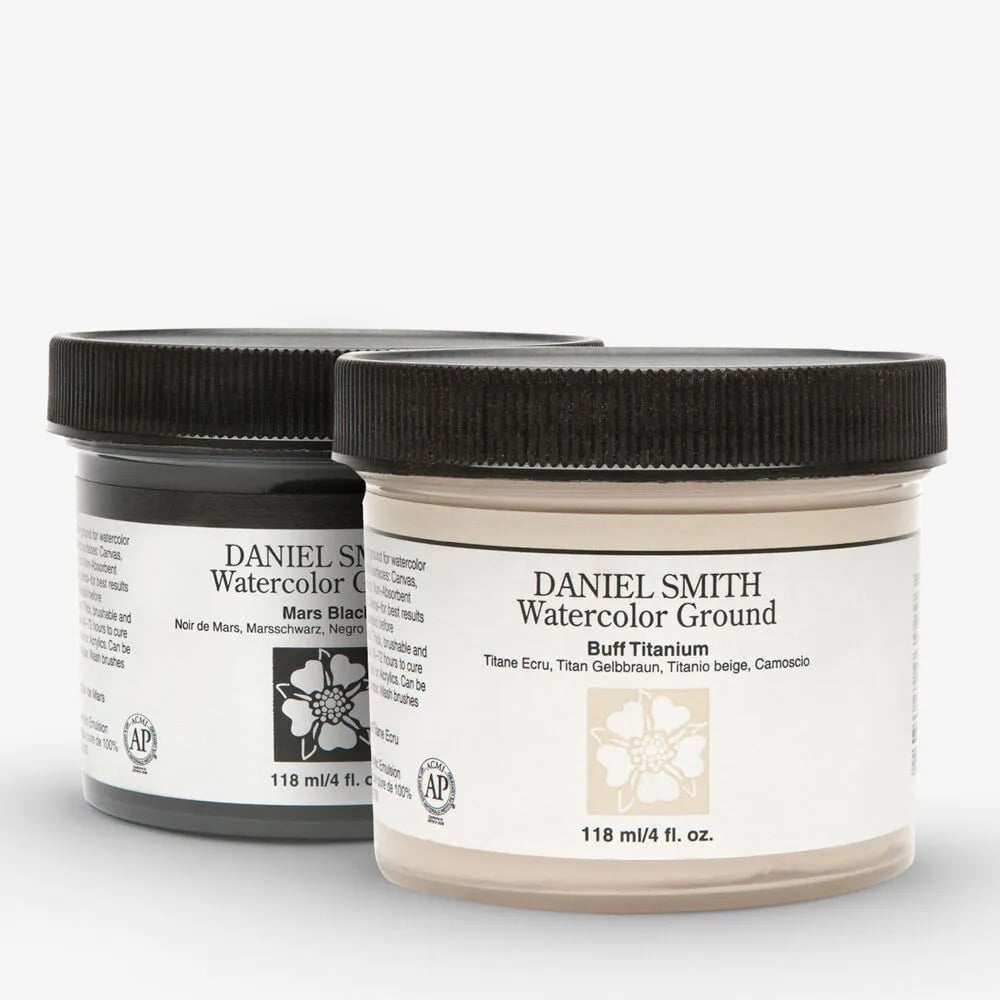
Watercolor primers let you paint on surfaces like canvas or wood. Apply three thin layers to create an absorbent surface. These primers come in different shades and textures.
For more information, read 'Painting with Watercolor on Canvas: Choosing the Best Watercolor Ground' on Jackson's Art Blog.
How Easy Is It to Clean Up After Watercolor Painting?
Watercolors are very easy to clean. Since they are water-soluble, you can wipe away paint from most surfaces with just soap and water.
If you get paint on your clothes, it usually washes out easily by hand or in the washing machine without any extra treatment.
Brushes for Watercolor
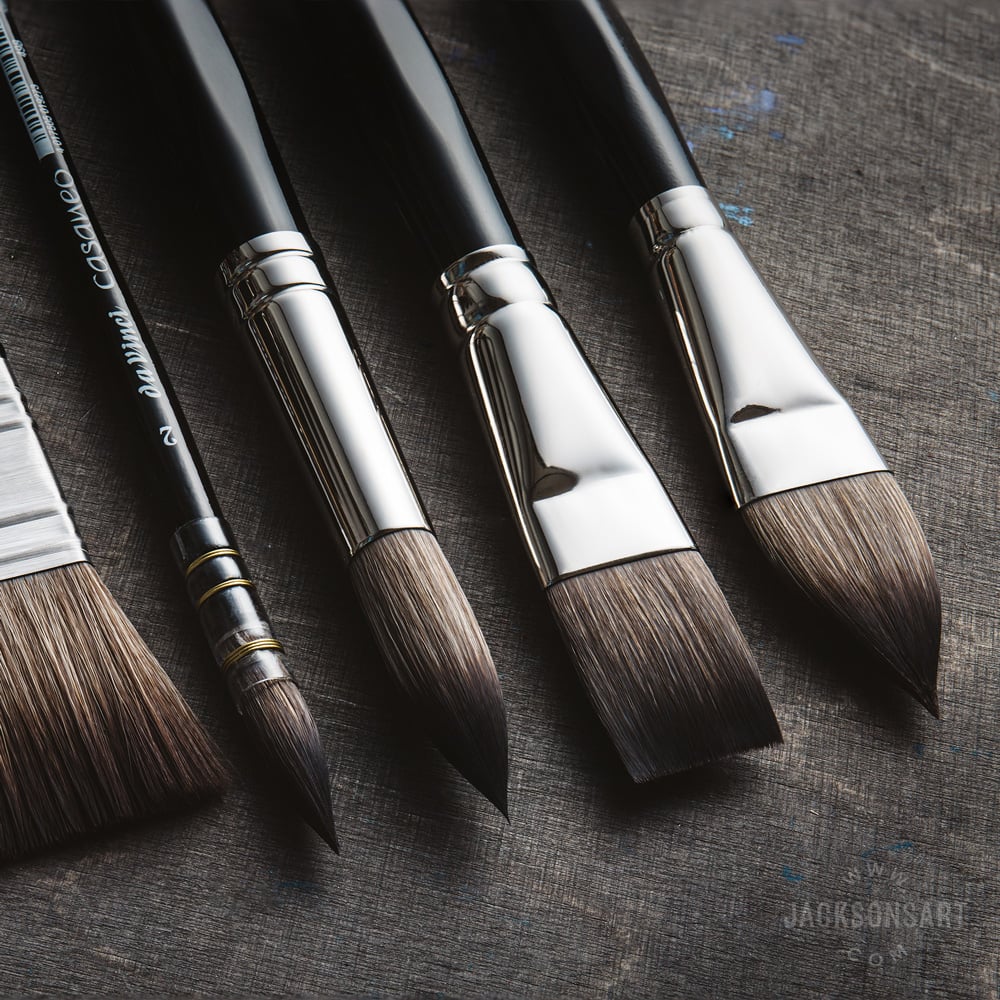
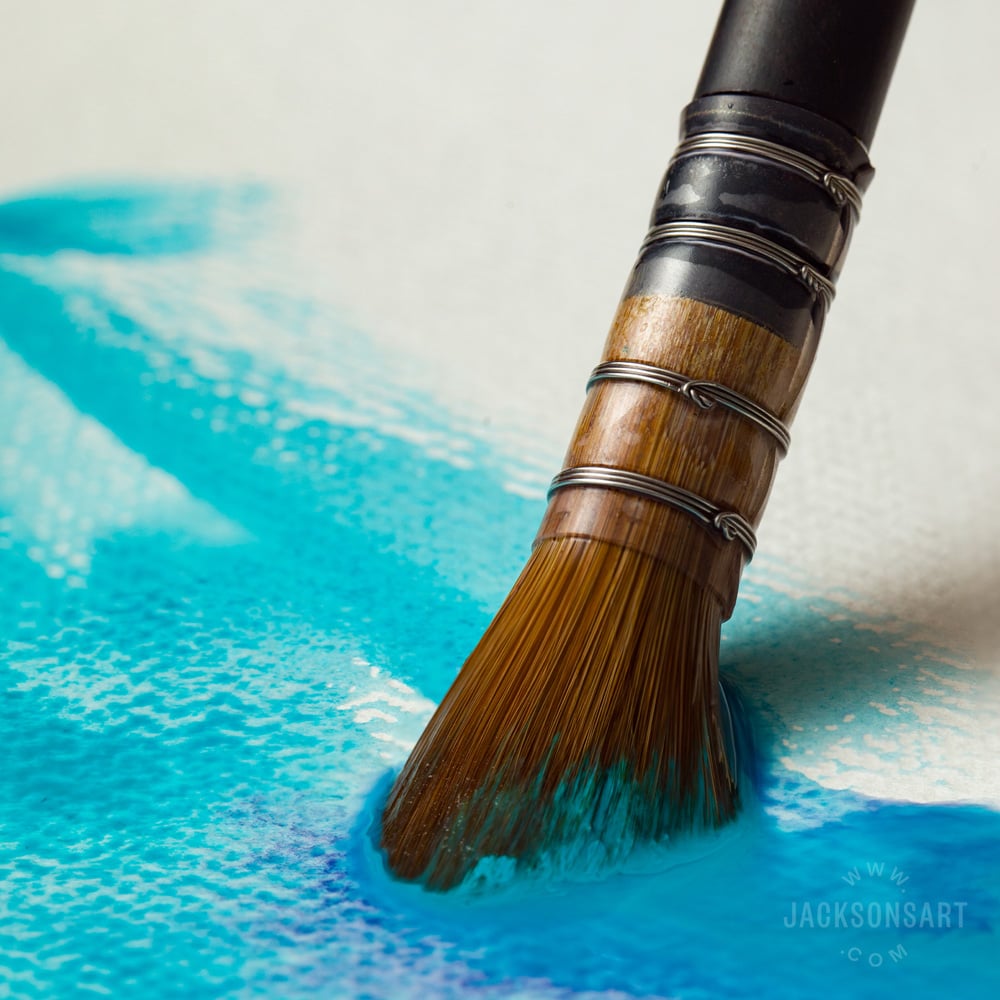
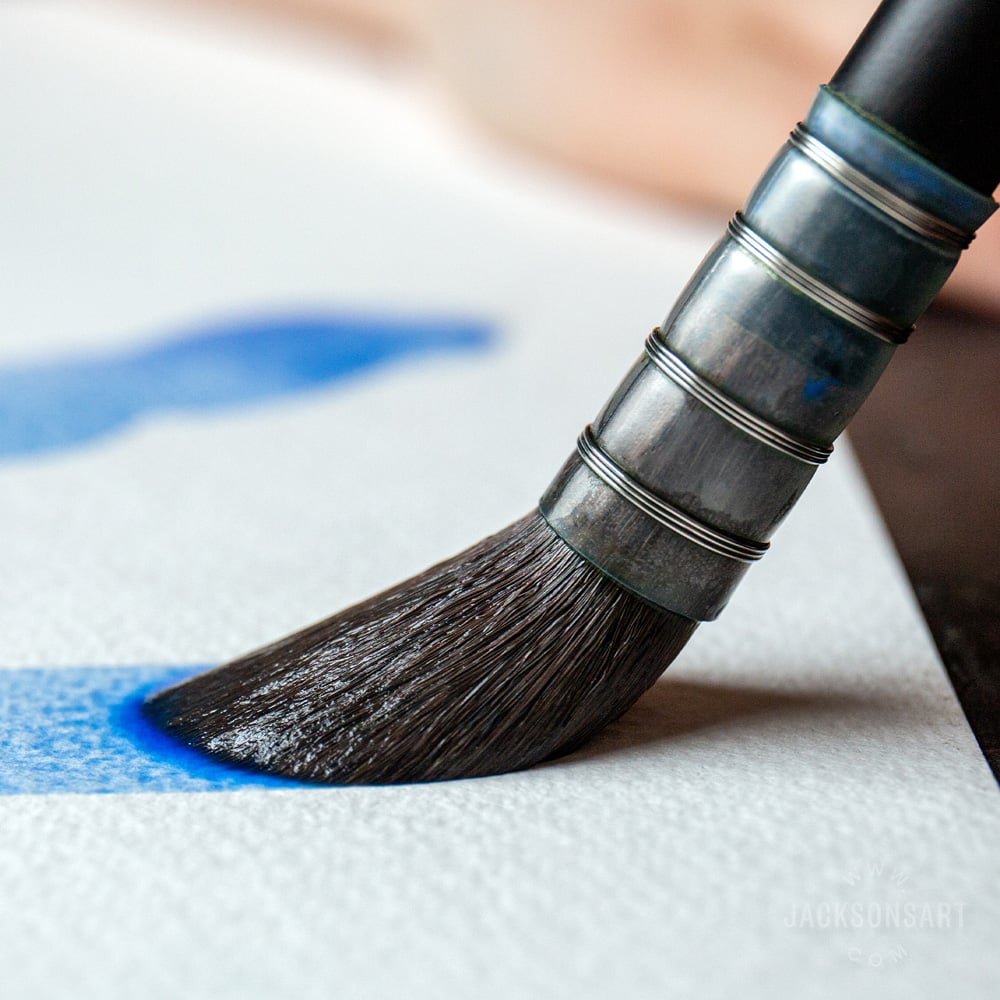
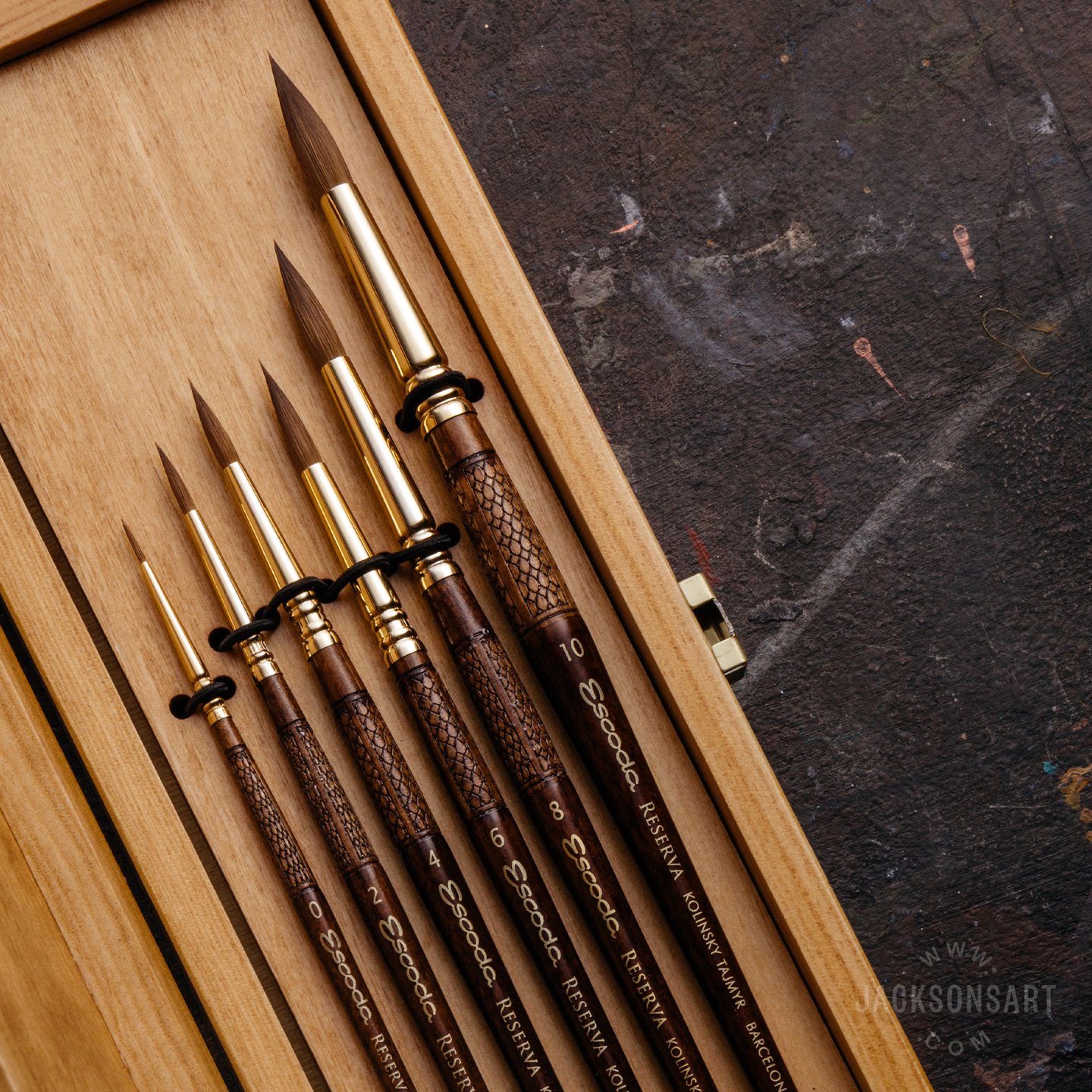
Watercolor brushes have shorter handles than oil and acrylic brushes. They come in many shapes and sizes. Small brushes are good for detail work, while large brushes hold more water and are great for broad strokes and washes.
Traditionally, sable hair is used because it holds a lot of liquid, but there are many synthetic options today. Natural hair brushes like Sable or Squirrel are the most expensive, while synthetic watercolor brushes are a durable, affordable alternative. Some brushes blend natural and synthetic hairs to cut costs and maximize performance.
For beginners, a set with different shapes and sizes is a great way to start. As you paint more, you'll find your favorite brushes. You can then expand your collection with the shapes and sizes that suit your style. Starting with at least three brushes is ideal.
To learn more about watercolor brushes, read our Guide to Watercolor Brushes.
For insight into how brushes are made, read A Family Matter: Handcrafting Brushes on Jackson’s Art Blog.
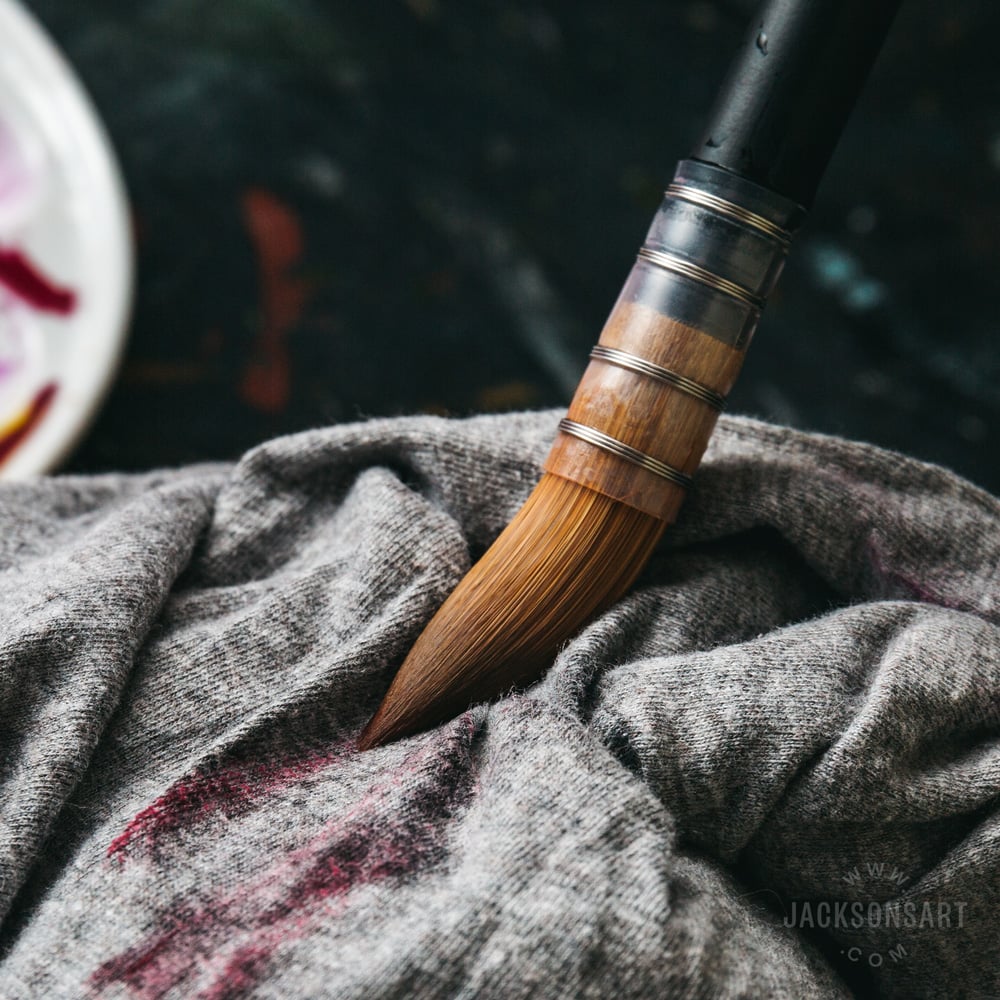
Care and cleaning of brushes
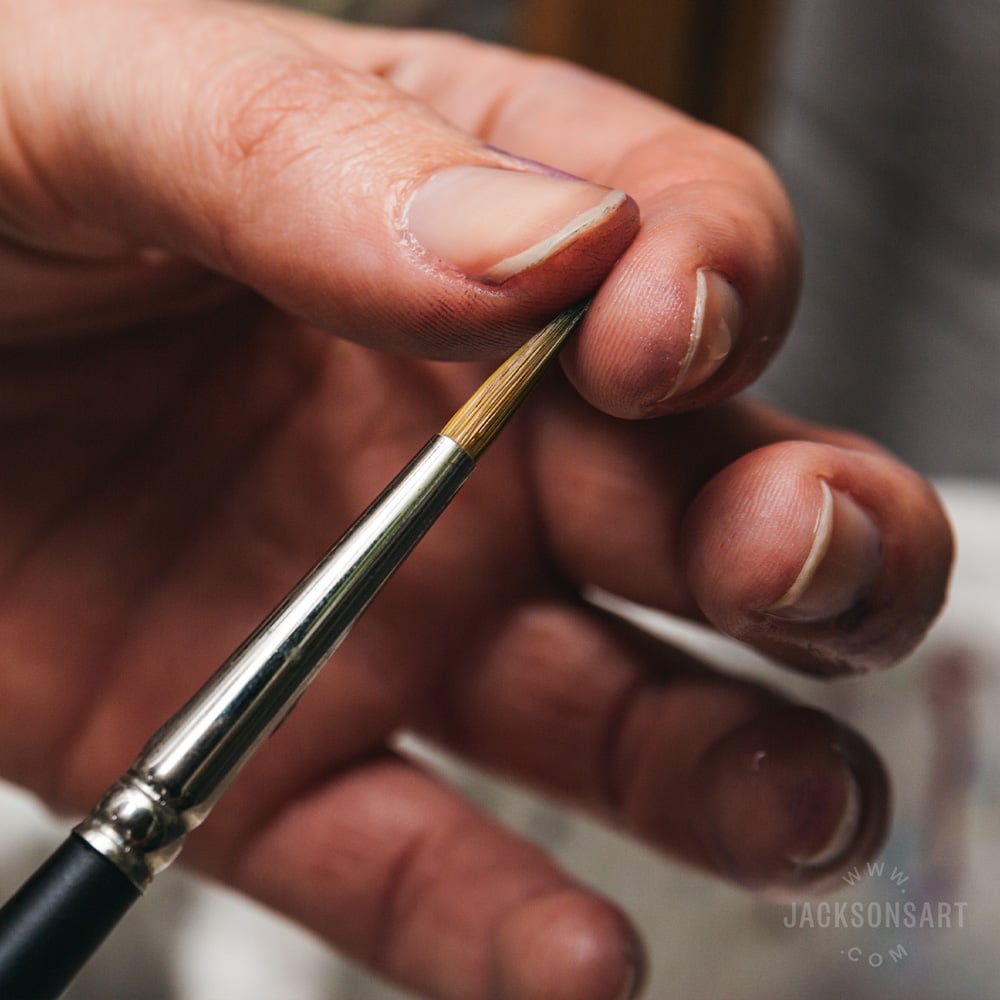
Keeping your brushes clean and well cared for will make them last longer. Both natural and synthetic brushes benefit from cleaning with brush soap, which contains natural oils to keep the hairs strong and in shape. Without proper care, brush hairs can become brittle and break.
Here’s how to care for your brushes after each painting session:
- Remove excess paint. Rinse the brush in water and blot it on a clean rag or paper towel.
- Rub the brush gently on brush soap and work it into a lather with your fingers.
- Rinse under lukewarm water and repeat until the lather stays white. Be sure to clean the area near the ferrule.
- Blot the brush on a clean rag and shape the head with your fingers.
- Let the brush air dry by hanging it from the handle in a well-ventilated area. This helps water drain from the ferrule, preventing handle rot.
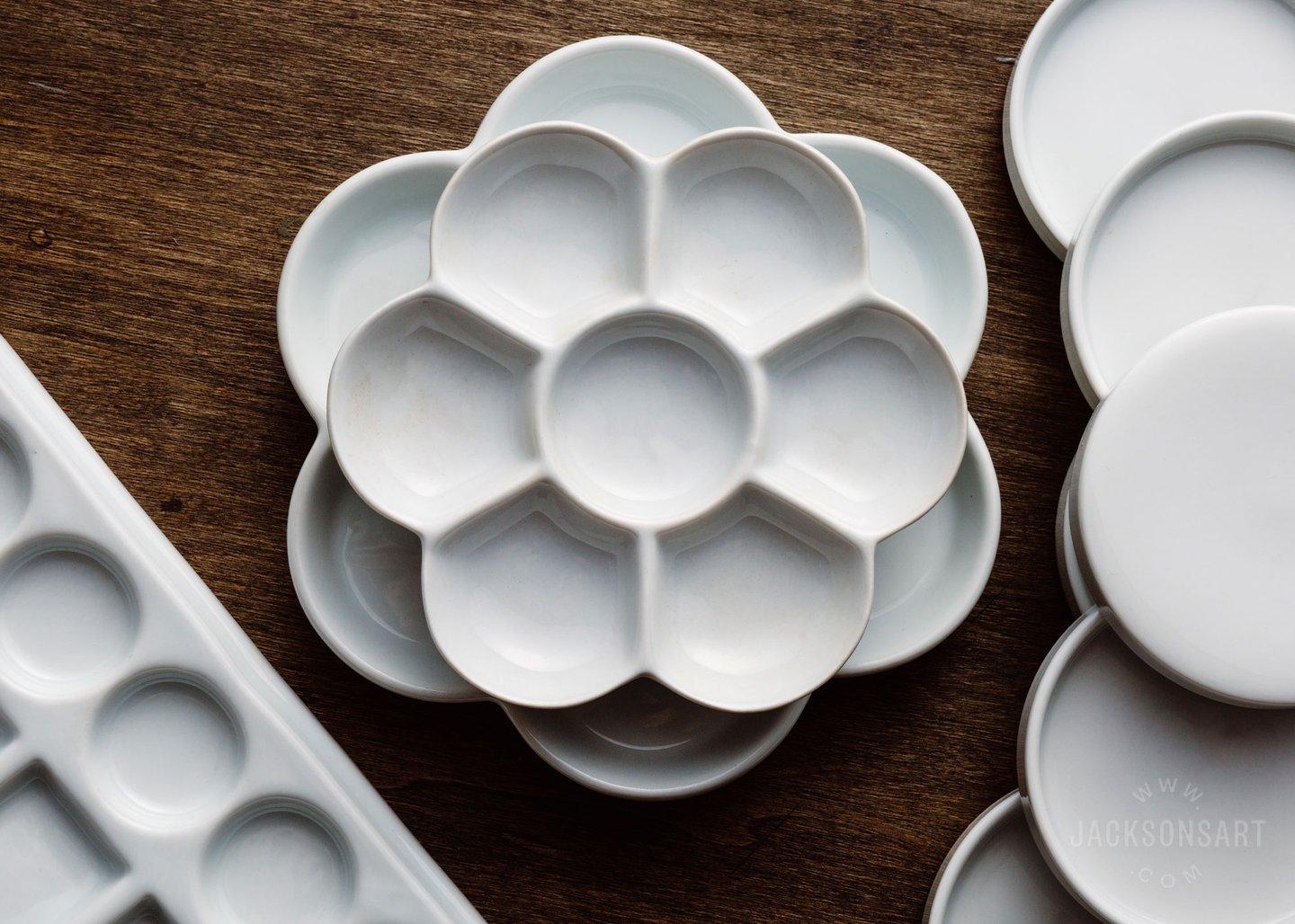
Tools for watercolor painting
Palettes
An extra palette gives you more space for mixing colors, beyond what’s in most watercolor paint boxes. If you want to save your mixes for another day or need to transport them, a palette with a lid is helpful. Watercolor palettes usually have wells to keep colors separate. Palettes come in plastic and ceramic.
New palettes, especially plastic ones, can cause watercolors to bead up. This effect wears off with use, but you can speed it up by lightly scrubbing the palette with a scouring pad and rinsing it well. Porcelain palettes don’t have this issue.
Pencils
A set of artists’ pencils is useful for making sketches before painting. A hard pencil works well for lightly drawing your composition on paper. Graphite or colored pencils won’t smudge, while it’s best to avoid charcoal pencils.
Easel
An easel isn’t necessary, but it can be helpful. It lets you move your work to better lighting or helps you maintain a good posture. If you work at a table, a table easel is compact and easy to store. If you paint outdoors, a sketching easel is portable and lightweight, with folding legs.
Some easels can tilt to a horizontal position, which is useful if you work with very fluid watercolor washes. If you paint large works, an H-frame easel is sturdy but takes up more space.
Sponge
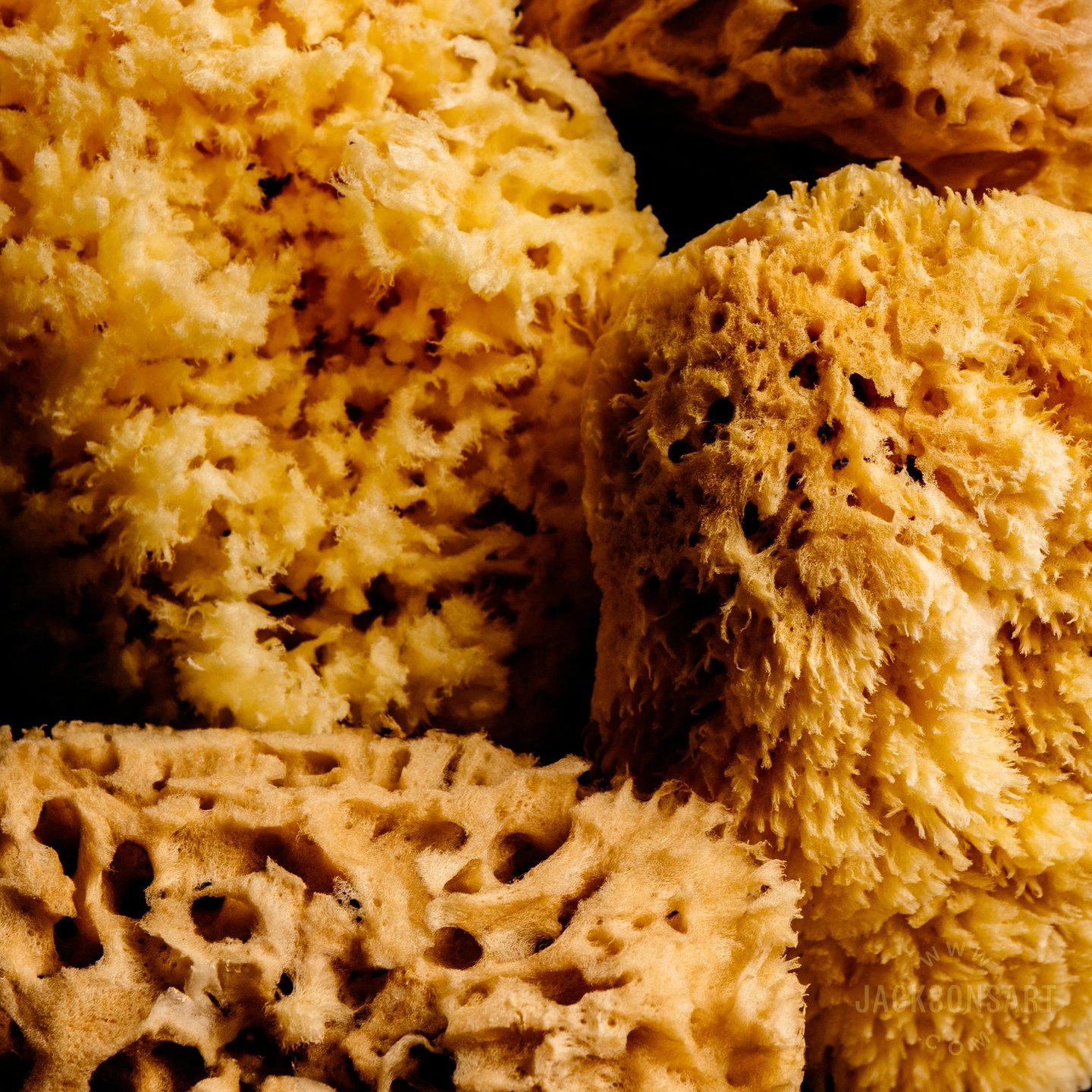
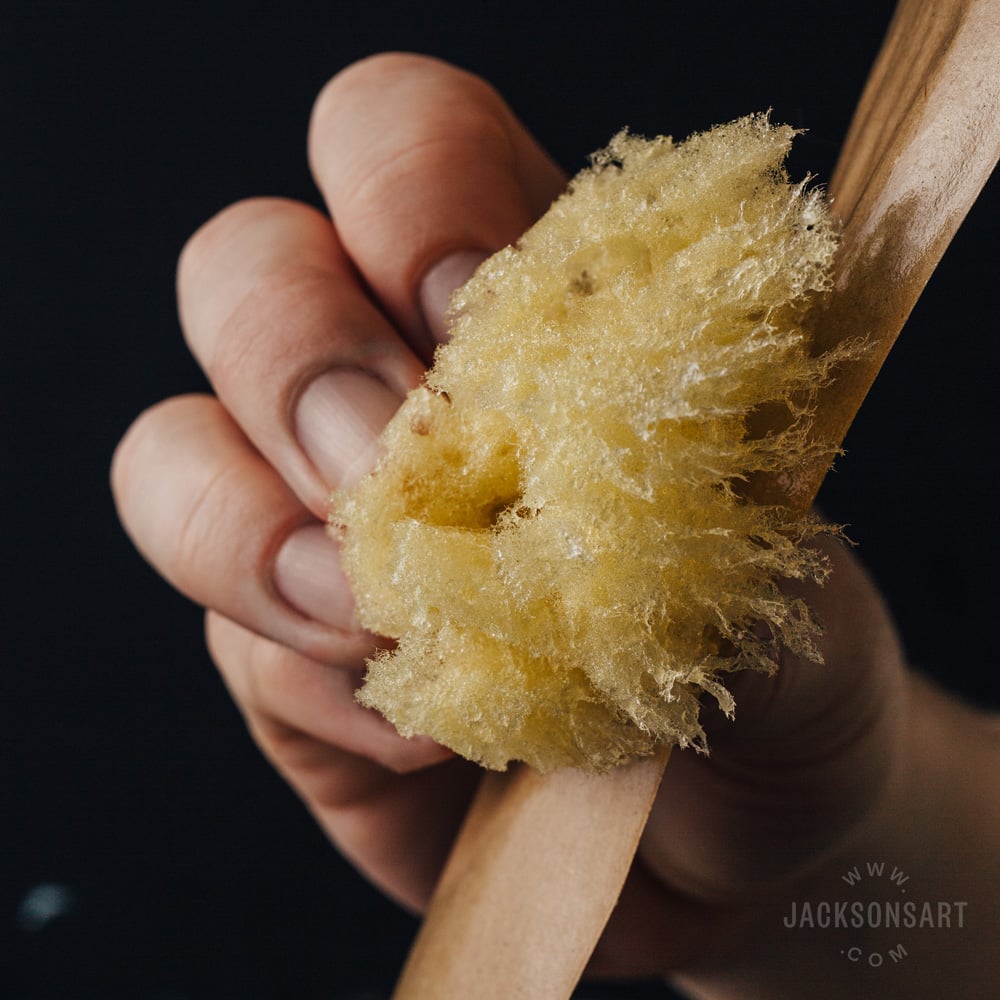
A sponge can lift wet color from your painting, either to lighten it or remove it completely. Since watercolor can be rewet, you can apply clean water to an area and use a sponge to dab the paint away. A sponge is also handy for blotting a loaded brush or for removing excess water when stretching paper.
Pots
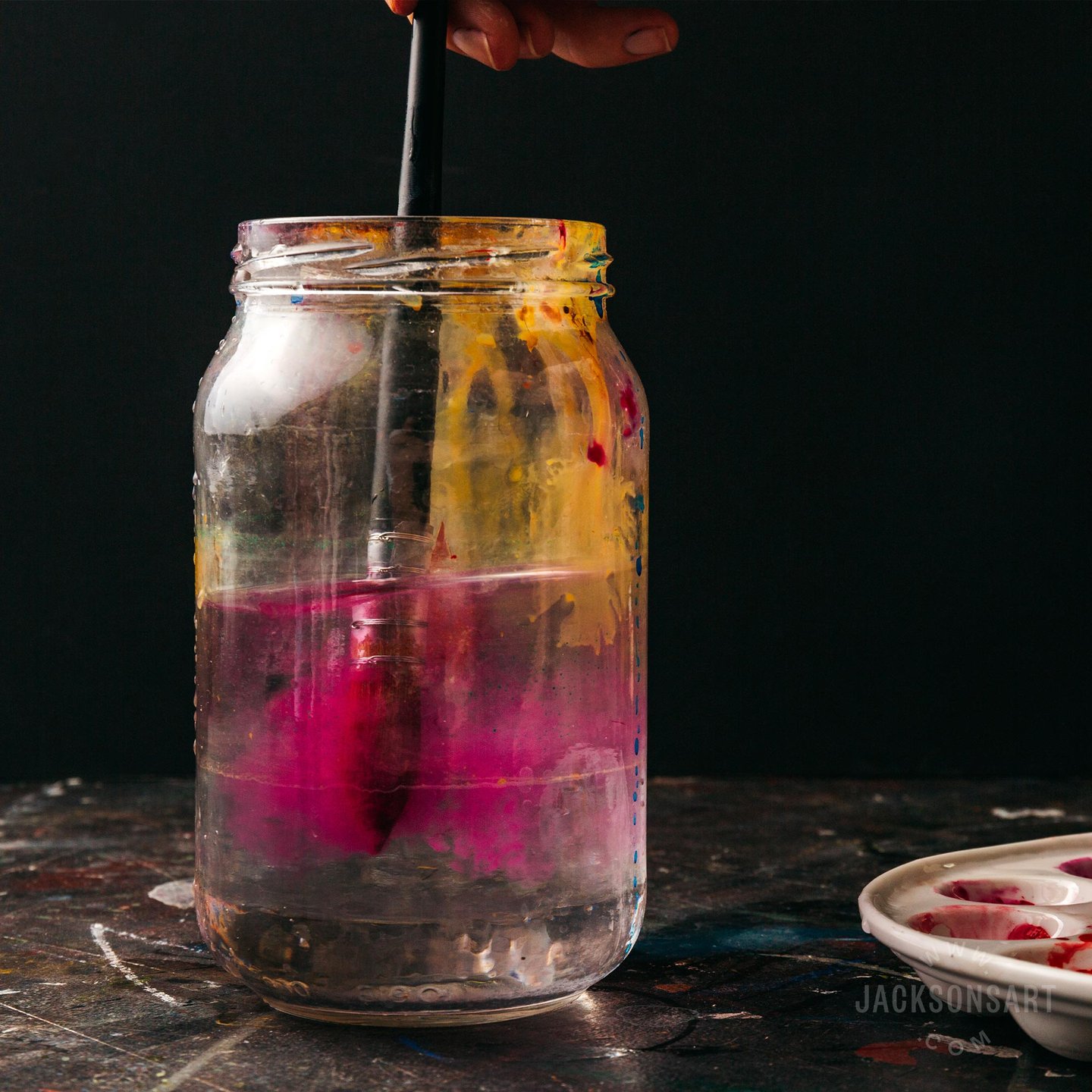
You’ll need a pot of water to rinse your brushes. A glass jar works fine at home, but if you’re painting en plein air, a collapsible water pot is lighter and easier to carry.
What is the best surface for watercolor painting?
Watercolor Paper
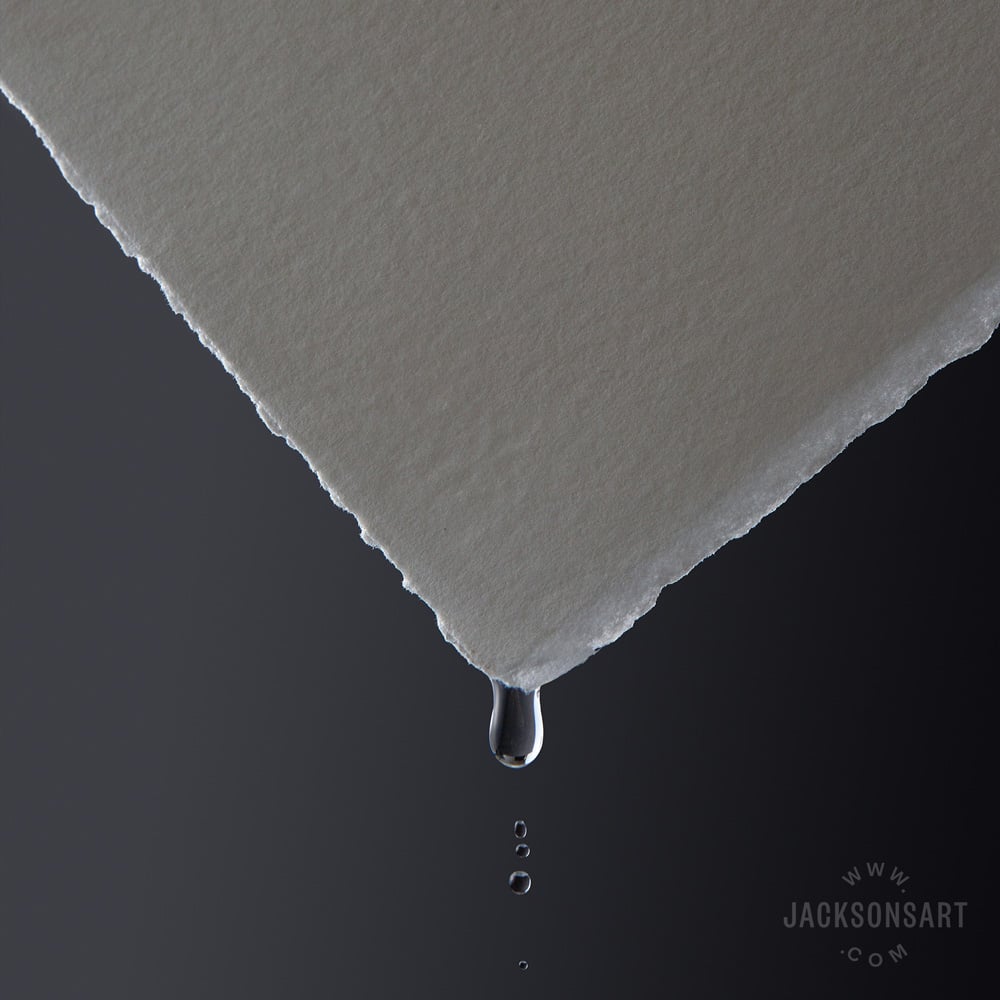
Watercolor paper is the best surface for watercolor painting. It’s absorbent, allowing colors to look their brightest. This paper isn’t just for watercolors; it also works well with acrylics, gouache, pastels, pencils, and more. 100% cotton watercolor papers are especially durable and long-lasting.
Paper Textures
Watercolor paper comes in three main textures:
Cold Pressed (NOT): This paper has a slight texture and is the most popular choice. It’s versatile and works well for most painting styles. The texture helps the paint sink in slightly but still allows for detail.
Hot Pressed: This paper is smooth and great for detailed work. It’s less absorbent, so washes may sit on the surface longer. It’s also good for pen, ink, and graphite drawings.
Rough: This paper has a rough texture, which enhances the textured effects in your painting. It’s best for bold and expressive techniques.
Watercolor Pads and Blocks
Watercolor pads are bound on one edge and are great for sketches. They can be spiral-bound or glue-bound. Watercolor blocks are glued on all four sides, keeping the paper flat as you paint. When you’re finished, just cut the top sheet free. If you like to paint on a large scale, you can use full sheets or even a watercolor paper roll.
Why Does Paper Buckle When Wet?
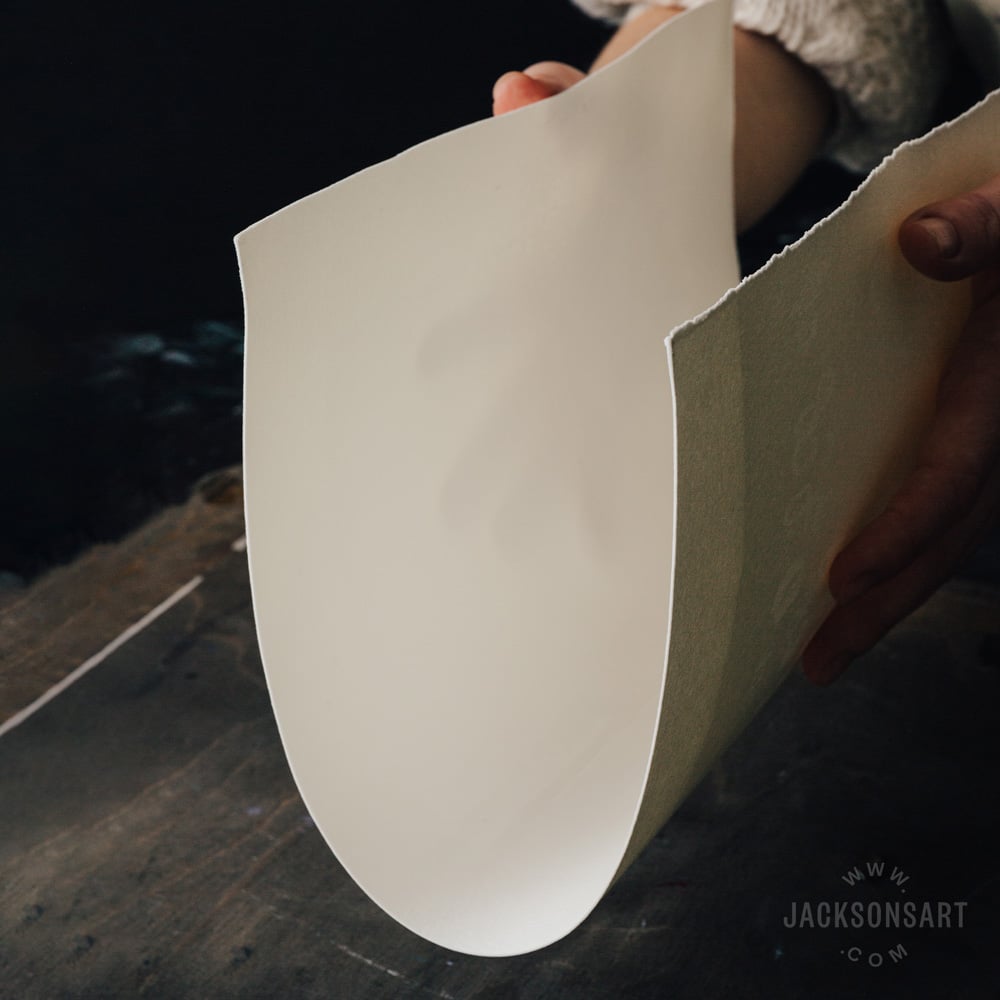
Paper buckles because its fibers expand when wet. If you use a lot of water, heavier paper (425gsm or more) will buckle less. Stretching the paper before painting helps keep it flat.
How to Stretch Watercolor Paper
What you need:
- A tray of clean water or a spray bottle
- A clean sponge or paper towel
- A rigid board (like plywood or plastic)
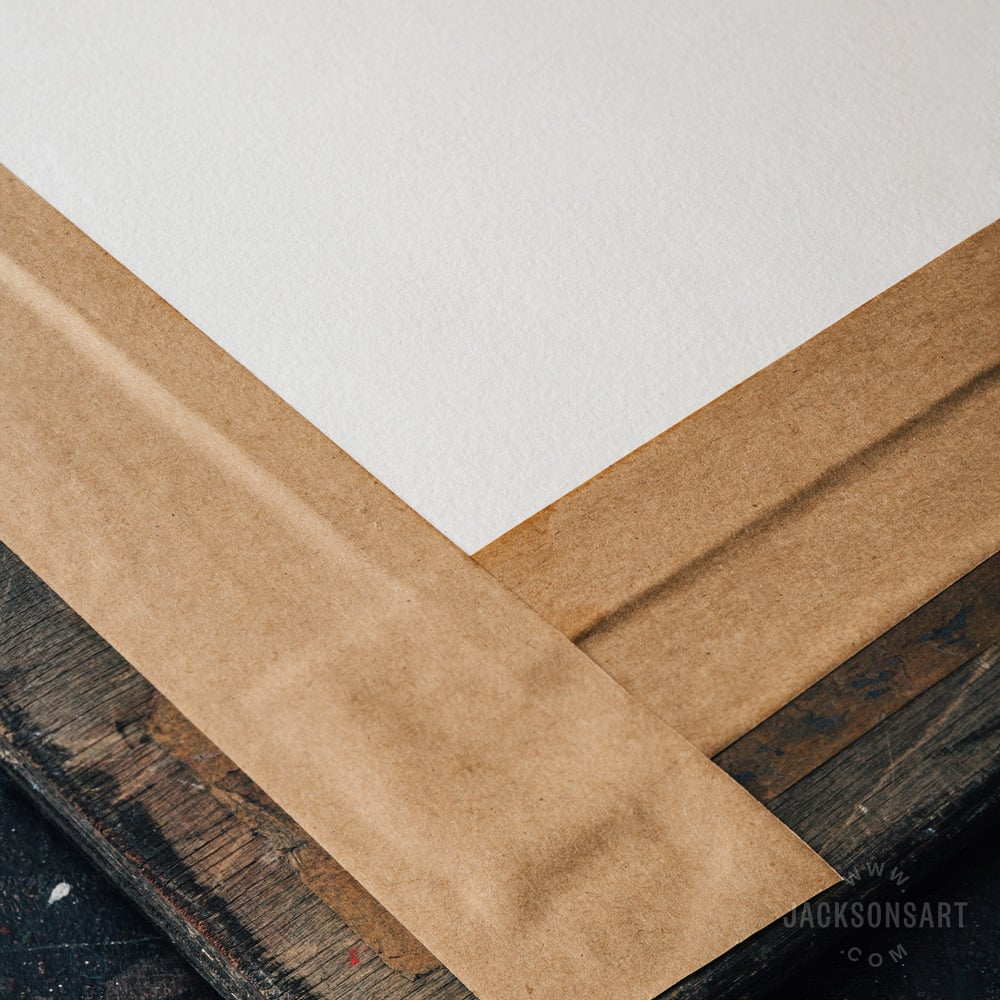
- Gummed tape to fix the paper to the board
Steps:
- Soak the paper in water for a few minutes, or spray it generously if you don’t have a tray
- Lay the paper flat on the board and gently blot off excess water
- Wet the gummed tape and apply it to the edges of the paper, sticking it to the board
- Let the paper dry completely before painting
- After painting, let the paper dry fully before cutting it free from the board
For a fully comprehensive overview, watch our film ‘A Guide to Stretching Watercolor Paper’.
How do I present and store finished work?
Presenting Watercolor Paintings
Watercolor paintings are usually framed behind glass to protect them. Paper can be damaged by dirt, dust, and humidity. Watercolor paint can also dissolve if it gets wet again.
But what if you paint on something other than paper, like canvas? You might wonder if there’s a way to make watercolor paint permanent so it can be framed without glass, like an oil painting.
Varnishing a watercolor painting is not necessary and is not usually done. However, some artists like to varnish because it lets them display their work on canvas or wooden panels without using glass. It also gives the painting a different look.
For more on watercolor varnish, read ‘Watercolor Varnish: Can You Make Watercolor Waterproof?’ on Jackson’s Art Blog.
Storing Work: Using Glassine
Glassine is a smooth, shiny paper that protects artwork from smudging. You can buy it in sheets, which are good for placing between stored works to keep them safe.
Protecting Finished Work: Using Glass
The best way to protect a watercolor painting is by framing it behind glass. When framing, leave a gap between the painting and the glass. This gap lets air circulate and keeps the painting from sticking to the glass. You can use a window mount or spacers to create this gap.
For more information, read ‘Choosing the Right Frame for your Artwork’ on Jackson’s Art Blog.
Visit the Framing Department at Jackson's Art Supplies.
Frequently Asked Questions
Watercolor: Popular Questions from Artists
Getting started with watercolor
To start painting with watercolor, you will need watercolor paints, watercolor paper, brushes, a palette for mixing, two water containers (one for rinsing, one for clean water), and paper towels or a cloth. Optional but helpful items include masking tape, a pencil for sketching, and masking fluid.
Common mistakes when painting with watercolor
Common watercolor mistakes include using too little water (watercolor needs plenty of water to flow properly), working on paper that's too thin (causing buckling), not letting layers dry between applications (resulting in muddy colors), overworking the paint (which lifts previous layers), and using dirty water (dulling colors).
What to consider when deciding between watercolor pans or tubes
Pans are usually more convenient for travel. They are the usual choice for portable paint boxes. However, with pans, it usually takes longer for the paint to soften with water. To soften them up, some painters spray water over their palette a few minutes before they begin painting.
Some pan brands are softer than others. Those containing honey are often semi-moist in the pans and the color lifts easily. Using pans can cause more wear to your watercolor brushes if you scrub the pan to pick up the color.
Tubes contain liquid paint, which is priced lower per ml than in pans. Some painters buy tubes and squeeze them into empty pans. It should be noted that as the water evaporates, the paint shrinks in the pan.
The formula for the paint in the pan and tubes is different for some brands. For example, Winsor & Newton, who extrude the paint for the pans and place it in the pan as a dried cube. They say that their two different formulas mean that their pans are easier to re-wet than paint from their tubes after it has dried on the palette. For other brands, the paint is the same for both. For example, Schmincke fills their pans with the same paint as their tubes. This requires three cycles of filling and drying for a pan to be full.
To learn more, read our article on Jackson’s Art Blog.
To use watercolor tubes, squeeze a small amount onto your palette. You can let it dry if preferred, or use it directly while wet. Add water gradually with your brush to achieve the desired consistency. Always replace the cap tightly to prevent drying, and squeeze from the bottom to avoid waste.
In artist quality paints, the pigment is typically so concentrated that a small amount from a 5ml or 15ml tube goes a long way when diluted with water. A single tube can be used across many paintings and may last for more than a year. If the paint dries in the tube, you can often cut the tube open and use it like a pan by adding water.
The best beginner watercolor sets include sets with 12-24 colors including primary colors, earth tones, and a few convenience mixtures. Pan sets are portable, while tube sets offer more paint.
Watercolor sets are generally more cost-effective than buying individual colors, especially for beginners building a palette. Sets offer color selection at a lower per-unit price, eliminate guesswork about which colors to buy, and often include a palette or storage case.
Sets are great for beginners as they provide a balanced palette of essential colors. Buying individual tubes is better for artists who want to curate a specific palette or replace frequently used colors. An ‘intro’ set is a great place to start, and then you could add more colors as you develop.
Understanding the quality of watercolor paints
Artist quality watercolor paints contain higher concentrations of pigments, resulting in more vibrant, rich colors and superior transparency. These paints offer greater permanence and lightfastness, ensuring your artwork stands the test of time.
In contrast, student quality watercolors contain more fillers and less pigment, making them a more affordable option suitable for practice and learning.
Extra fine watercolors are high quality artist-grade paints, characterized by maximum pigment concentration, finest pigment grinding for smooth application, highest purity pigments without fillers or extenders, superior lightfastness ratings, and best transparency or opacity (depending on pigment). They're more expensive but provide superior results and longevity compared to student grades.
The pigments contained in watercolor paints vary in cost (e.g., earth colors are economical, cadmiums are expensive). Series 1 is the most affordable, while Series 4, 5, or higher indicates a more expensive, rarer pigment.
Many modern watercolor paints are vegan, such as Daniel Smith. However, some brands use honey (as a humectant) or ox gall (for flow). We provide information and filters on our product pages to help you find the best vegan options.
There's no single best professional watercolor brand – it depends on your own preferences, including whether you paint from tubes, pans, or both. Many watercolorists build their palette across several ranges, picking the brand that they feel performs best for each color.
We stock one of the widest ranges available to artists, from the most popular brands to artisan makers. This includes Daniel Smith, Schmincke Horadam, Roman Szmal, Winsor & Newton, and our own Jackson's Artist Watercolors, which deliver professional performance at an accessible price.
Understanding what causes granulation in watercolor
Granulation in watercolor painting occurs when clusters of uneven pigment become visible on the page. It is often used by watercolorists to add texture.
Learn more about watercolor granulation on Jackson’s Art Blog.
Watercolor sticks are dried watercolor paint in a stick or crayon-like shape. They offer the same properties as watercolor from tubes or pans, but can be used for drawing directly onto paper.
Watercolor sticks are very versatile. You can draw directly onto wet or dry paper, and then activate the marks with a brush. You can even treat the stick like a ‘giant pan’ by taking color directly from the tip with a wet brush.
Watercolor sticks are great for travel because they are portable like pans and won't leak in your bag like a loose tube color. One stick is equivalent to approximately three full pans, making them cost-effective and versatile.
Watercolor stick colors can be mixed in a variety of ways. You can layer different colors directly on the paper and blend them with a wet brush, or scribble several colors onto a palette and mix them with water.
Understanding watercolor pencils and their uses
Watercolor pencils are colored pencils that are watersoluble. Their versatility means you can use a single pencil with many different techniques. You can:
- Use watercolor pencils dry
- Use watercolor pencils with a brush
- Use watercolor pencils on wet paper
- Dip a watercolor pencil in water
- Use watercolor pencils as a substitute for watercolor paints
- Use watercolor pencils to add details to a watercolor painting
- Any combination of all of the above!
Watercolor pencils are a great medium for beginners. They can also be combined with other media for more advanced techniques.
Learn more about how to use watercolor pencils on Jackson’s Art Blog.
Yes, watercolor pencils are an excellent tool for adding fine detail or ‘mapping out’ a composition before applying paint. You can also draw over the top of dry watercolor for sharp lines.
Because the core is softer than most standard pencils, we recommend using a high quality manual sharpener or a craft knife to prevent the lead from snapping.
You can blend two colors by applying them dry and then adding water, or you can pick up color directly from the pencil tip with a wet brush for a more controlled application.
Understanding the difference between dye-based ink and pigment-based ink
Dye-based inks are used predominantly by illustrators and graphic artists for their rich and bright colors that are well suited to reproduction. Once dry, they are no longer watersoluble. Being dye-based, they are also not lightfast, meaning they will fade in sunlight.
Pigment-based inks, or watercolor, are made from pigment and a gum arabic binder that remains watersoluble once dried. The colors tend to be more subtle than the dyes. Many modern pigments are described as lightfast, and they are considerably more resistant to fading than dyes.
Artworks painted using dye-based inks can be protected from fading with UV-blocking glass and will not fade under incandescent light.
Most watercolor inks remain watersoluble after drying, allowing you to re-wet and blend them. If you require a permanent finish, try acrylic ink or Indian inks labeled as waterproof.
Because they are highly concentrated, you only need a few drops. You can dilute them with distilled water on a palette or apply them directly to wet paper for wet-on-wet effects.
Mixed media with watercolor
Watercolor is a versatile medium that blends well with various other materials. Artists often combine watercolors with pastels, inks, and watercolor pencils to add different effects.
These combinations can enhance your artwork, allowing for innovative approaches and unique results in mixed media projects. It should be noted that watercolor cannot be mixed with oil-based mediums, because they have different bases. Water and oil do not mix, causing separation and preventing a smooth, cohesive application.
Further Reading
Watercolor Painting for Beginners: What You Need to Get Started
Everything You Need to Know About Watercolor Paper
Understanding Watercolor Paper Textures: A Visual Guide
Stretching Watercolor Paper for a Better Painting Experience
Your Comprehensive Guide To Watercolor Mediums
Making Handmade Watercolors with Dry Pigment
Is Watercolor Better in Pans or Tubes?
What is Watercolor Granulation?
Painting with Watercolor on Canvas: Choosing the Best Watercolor Ground
Glossary
A
Acid-free Paper
Paper that has a neutral pH (i.e., its value is 7 or higher). Paper can be naturally acid-free or neutralized in the manufacturing process. Cotton and linen papers are naturally acid-free, while wood-derived, so-called woodfree papers will contain acidic lignins. Much of the lignin is removed by cooking the pulp in an alkaline solution, and then what remains of the lignin is neutralized with the calcium carbonate buffer.
Archival
There is no universal standard of what ‘archival’ means in practice. But, generally, it refers to the fact that, in addition to the paper being acid-free, the paper should be free from groundwood, unbleached pulp, and not contain optical brightening agents. Alkaline buffers are often added to wood cellulose in order to counter any trace of acids remaining, in order to make it more archival.
B
Binder/Vehicle
The binder or vehicle is the liquid that the pigment is milled into, and is what gives watercolor paint its smooth, glossy consistency. The base of the binder in watercolor will usually be gum arabic or a synthetic alternative, which will increase transparency and color brilliance. Gum arabic is a gum that is extracted from two species of the acacia tree. The most superior gum arabic is known as Kordofan gum. Other ingredients in the binder include a plasticizer, humectant, extender, a preservative, and water.
Blending
The technique of smoothly merging two colors so that there are no hard edges. In watercolor, this is easily done with a wet brush. Blending becomes harder once the paint is dry. A blending medium can keep the paint wet longer, making blending easier.
Blocking In
Often a watercolor painting is started by mapping out the broad shapes of the composition with layers of dilute color, on to which more detail and a ‘stretching out’ of tonal values is added. This first application of paint is known as ‘blocking in’, the initial laying out of color, tone and form in your work.
Blocking Out
Blocking out is a term used to describe the process of covering an area of a watercolor painting in order to prevent paint from being applied to that area. There are a number of reasons why an artist may wish to do this, including creating a highlight of a surface using the white of the paper. Blocking out can also protect an area that has already been painted on (so long as it is fully dry). Also known as ‘masking off’. Masking fluid, stencils, and tape are popular materials for blocking out.
Blossoms/Blooms
Cauliflower-like marks created when extra moisture creeps back into a damp or partially dry area of a watercolor painting. As the excess water levels out, it will ‘push’ the tiny pigments of paint to the outside edge of the watermark. Blooms are used intentionally in paintings to add interesting effects, but they can also occur by accident, usually by dripping water unintentionally.
Blotting
Lifting excess color from your watercolor paper while it is still wet is known as blotting. Blotting will reduce the saturation of the applied color as well as lighten its tonal value. Low-staining colors can be lifted entirely from paper through blotting. A sponge, brush, or piece of tissue paper can be used.
Body Color
Body Color refers to opaque color, such as Chinese White or gouache, that may be tinted with watercolor. It is often used to heighten the sense of depth or help to vary surface quality in a watercolor painting.
Buckling/Cockling
A term used to describe the uneven rippling of a paper caused when it has been over-saturated with liquid and then left to dry without influence from stretching or pressing under weighted boards.
C
Cellulose
Cellulose fibers are extracted from natural materials such as wood, cotton, and bamboo to make the pulp used in paper manufacture. The fibers vary in length depending on their source. The longer the fiber, the stronger the paper. Cotton fibers are longer than wood, and as a result, cotton papers can withstand a greater degree of scrubbing.
Cold Pressed, or NOT
Cold pressed paper is made by pressing the sheet through cold metal rollers lined with felt, and it has a slight texture to it. It is the most popular watercolor paper surface to work on because it is suited to many painting approaches. The paint will sink a little into the dimples on the surface of the paper, but it will also be sympathetic to some detailed work. Cold pressed paper tends to be more absorbent than hot pressed paper.
Color Strength/Saturation
Another term used to define color strength is saturation. Color strength essentially refers to the ratio of pigment to binder; it is a description of how vibrant/brilliant the color appears.
Complementary Colors
Also known as secondary colors. They can be found directly opposite one another on a color wheel. When mixed in equal amounts, they will produce a neutral gray. When painted unmixed alongside one another, they resonate against one another (as they are diametrically opposed), causing the appearance of each color to intensify. Pairings of complementary colors are violet/yellow, blue/orange, and green/red.
Composition
The arrangement of shapes, colors and lines across your picture surface, also referred to as a ‘design’.
Cotton Rag Paper
Made from textile scraps, old fabric, and other post and pre-consumer waste like rope and nets. Cotton rag paper is among the strongest watercolor papers available. Despite being made from recycled fibers, it benefits from the inherent strength and length of cotton fibers.
Cylinder Mold-Made
Cylinder mold-made paper sits between handmade and Fourdrinier machine-made paper. The sheets are formed by pressing them between cold metal cylinders lined with felt, which give the paper its surface texture. It offers greater consistency than handmade paper but is more sensitive to the characteristics of the material than industrial machines.
D
Deckle Edge
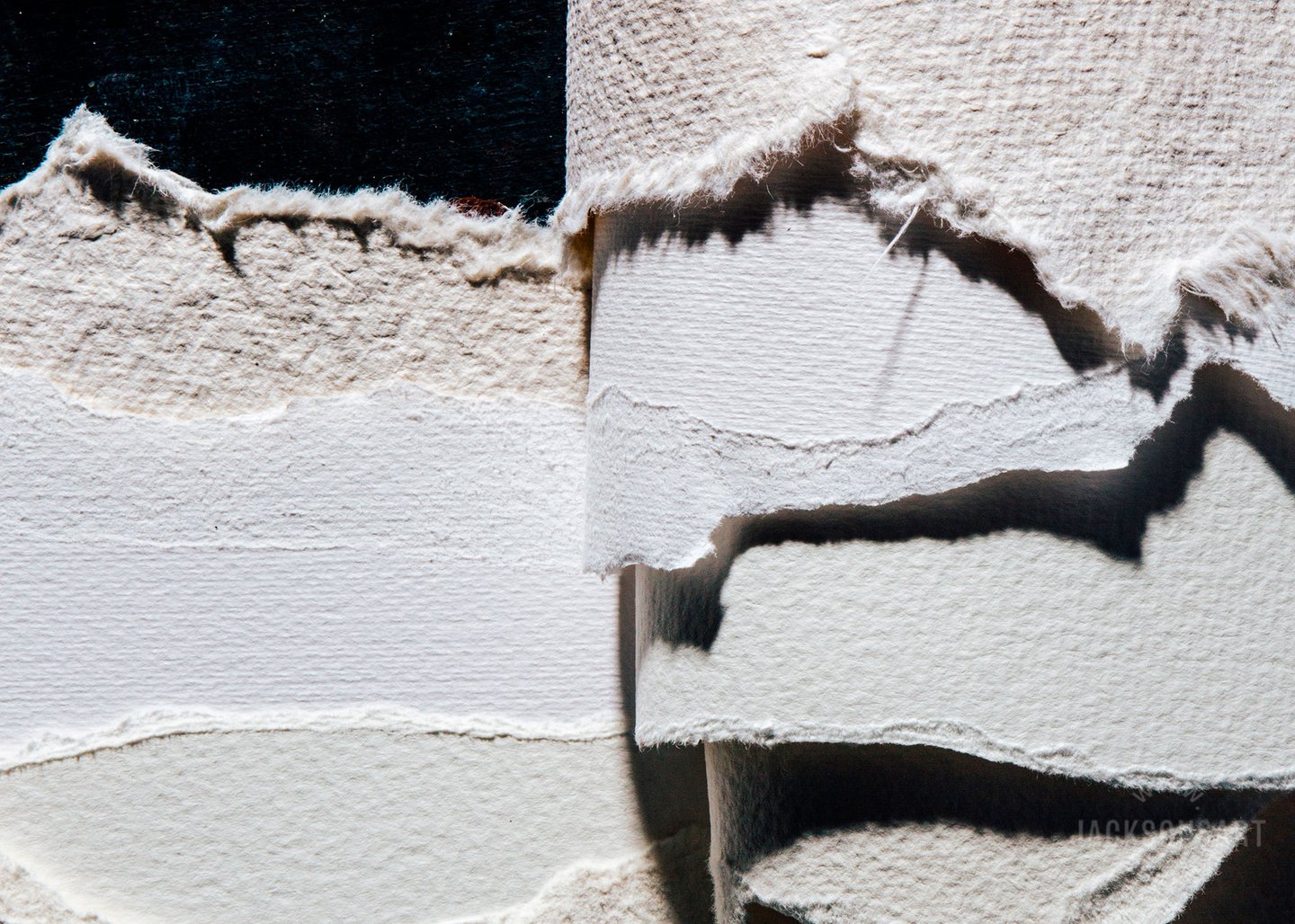
A deckle edge is a rough edge found on many handmade and cylinder mold-made papers. It is formed when some of the wet pulp goes beyond the frame of the mold (the deckle), forming an irregular, thin edge. Handmade papers have four true deckle edges because the sheets are individually formed. Cylinder mold-made papers have two true deckle edges.
Dispersant/Wetting Agent
Accelerates and improves the milling of pigments into the binder. Ox gall is a commonly used wetting agent.
Dry Brush Technique
Applying relatively dry watercolor paint with a dry brush to create a chalky, textured effect. This technique contrasts well with softer, wet washes.
F
Fixative
Watercolor fixative will protect watercolor paintings from fingerprints, humidity, and dust. If applied in thin layers, then the colors of your watercolor painting will not be altered in their appearance. Some fixatives will prevent watercolors from re-wetting.
Flat Wash
Using a single, diluted color to cover the paper (or specific area) evenly. A broad brush, like a squirrel mop, is often used. Artists may paint over the wash once dry or work into it while wet, known as 'wet-on-wet’. Flat wash also refers to a brush shape.
Flocculation
A term to describe a certain kind of granulation. Flocculation is the mutual attraction of small particles of pigment into groups that creates patterns on the paper. An example of a flocculating pigment is French Ultramarine.
Foreshortening
The description in a two-dimensional language of the shift in proportions of three-dimensional forms caused by perspective.
Fugitive Color
Refers to colors that are more susceptible to fading in sunlight. Some fugitive colors still feature in watercolor ranges because they are particularly attractive and will not be impaired by sunlight if the work is kept in a book or portfolio. For a guide to knowing whether you are working with fugitive color, see ‘lightfastness/permanence’.
G
Glazed Wash
Applying a diluted color over a dry watercolor painting to tint the entire surface. The artist must consider how the glaze will affect the underlying colors.
Gloss
Mediums are available that will increase gloss, including those simply called gloss medium, as well as gum arabic and varnish. Some pigments will dry more gloss than others because of the ratio of gum arabic in the ingredients.
Gouache
Also referred to as body color, traditional gouache is opaque watercolor, which offers a matte flat surface. Often used with watercolor.
Grain
Also referred to as ‘texture’, grain describes the surface coarseness of watercolor paper: Hot Pressed, Cold Pressed (‘Not’), or Rough. Hot Press (HP) is the smoothest, pressed through hot metal cylinders and slightly less absorbent due to its harder surface. Not/Cold Pressed has a medium texture, while Rough is highly textured, pressed through felt, and the most absorbent.
Granulation
The grainy appearance of some watercolors when applied thinly. Granulating pigments behave this way due to the size and irregular shape of their particles, which cause them to settle in clusters as they dry, leaving uneven, textured patterns. The resulting effect is that the paint film has a powdery or textured look. Granulating pigments are indicated with a ‘G’. Ultramarine Blue is a well-known naturally granulating pigment. Granulation mediums will allow any pigments to appear grainy in order to add a textual element to your work.
Ground
Watercolor ground is a primer that can be applied to surfaces such as canvas, wood, or aluminum panels. When dry, it provides a semi-absorbent surface which allows for watercolor painting. It is a way of preparing surfaces that would not normally be suited for watercolor painting. Some watercolor grounds are formulated to replicate the surface of a cold pressed sheet of watercolor paper.
H
Honey
In the context of the technical terms of watercolor, honey is a ‘humectant’, which means it is added to the binder of some watercolor paints to enhance brilliance, luminosity, and longevity of colors, as well as retain moisture.
Hot Pressed
The smoothest surface; during production, it is pressed between hot metal rollers. The absence of texture makes it suitable for fine detail. Hot pressed paper tends to be the least absorbent of all of the textures, and watery washes can sit on the surface for a long time, allowing for more time to exact blending techniques. Beyond watercolor painting, hot pressed watercolor paper makes an excellent support for pen and ink drawing.
Hue
Hue is a multi-purpose term. It can describe the appearance of a color (for example, “the sea had a turquoise hue”). It is also a technical term used by paintmakers. In this context, it refers to a color formulated from a blend of synthetic pigments to replicate a natural pigment that is more expensive, not lightfast, or no longer available in its natural form.
I
Imperial
Imperial-sized watercolor paper is a sheet measuring approximately 30 x 22in (76 x 56cm).
Iridescence
A subtle sparkly effect, sometimes also known as pearlescence. Special effects such as iridescence are also possible with special mediums – these are most effective when applied to dark backgrounds.
L
Lifting
Lifting refers to the removing of color from a painting. A damp sponge can be a useful lifting or blotting tool. If a lifting medium is applied to the paper before work, it will make it easier to remove color during the painting process.
Lightfastness/Permanence
Lightfastness or permanence indicates the degree to which a color will fade or discolor as a result of exposure to natural sunlight. Paintmakers refer to either one of two scales designed to indicate the lightfastness of a color – the American Society of Testing and Materials (ASTM) and the Blue Wool Scale (8 = most lightfast, 1 = least lightfast).
ASTM I = Excellent Lightfastness
ASTM II = Good lightfastness
ASTM III = Fair lightfastness
ASTM IV = Fugitive
M
Masking Fluid
Masking fluid is sometimes known as liquid frisket and is used to mask off areas of your work. It is painted on like a soft body paint (you can apply it using a brush, a ruling pen, a color shaper, or a toothpick), and once dry, can be worked over with watercolor. Masking fluid can be applied very finely, and can be invaluable in painting strands of hair or plant veins, or it can be applied broadly to mask off much larger, less delicate areas. Providing the masking fluid is applied on dry paper and is left to dry completely before working over the top, the masking fluid should peel off with relative ease once the painting is fully dry.
Mass Tone
The appearance of the color of the paint as it comes from the tube. Contrasts with the undertone of a color, which is the appearance of the color when it is brushed out in its thinnest state.
Milling
Milling is the process of blending the pigments into the binder during paint making.
Monochrome
The use of only one color in a painting, which is likely to appear in a range of differing tonal values.
Motif
A feature within a composition.
Muddiness
Muddiness describes the dull and dirty appearance of paint mixes that have been created with multiple pigments.
N
Negative Space
The area/s surrounding an object.
NOT
See Cold Pressed paper.
O
Opacity/Transparency
A measure of how much light passes through the paint. Opaque colors let little light through, enabling them to cover what is underneath. Transparent colors allow more light through and show the texture and marks beneath.
The transparency of paint differs depending on the nature of the pigment/s used. The smaller and more intense pigment particles have bigger gaps between them, allowing more light to pass through, and therefore making a more transparent paint. Opaque paints have larger pigment particles (or a mix of varying pigments) in them that allow less light to pass through.
The absorbency of a pigment can influence the opacity of the paint. It determines how much binder is required; a highly absorbent pigment may need more binder, which can result in a more transparent paint.
Optical Brighteners (OBAs)
Optical Brightening Agents (or OBAs) are additives that manufacturers may use to make their paper look whiter. Optical brightening agents will fade over time with exposure to UV light, so manufacturers of archival quality artist papers do not use them.
Ox Gall
The most common wetting agent/dispersant used in watercolor paint manufacture. Wetting agents are used to accelerate and improve the milling or blending of pigments into the binder. They are most useful in the manufacture of watercolor paints that are made with water-repelling synthetic pigments or soft pigments that can cake or compress during milling.
Ox gall can be added to your water pot during the painting process to help improve the flow of the paints. Synthetic ox gall is a vegan-friendly alternative to traditional ox gall.
P
Palette
Can refer to the surface on which you mix your colors, or to the selection of colors an artist has chosen for a painting (e.g., “the painting had a palette of mauves and greens”). Watercolor palettes usually have wells to keep colors separate and are available in plastic or ceramic varieties.
Pigment
Pigments are the building blocks of watercolor; they are chemical compounds that impart color to paint by changing how it interacts with light. They are composed of fine colored particles that can be mixed with a binder to make paints. Tinting strength, opacity, granulation, and other handling properties are all a result of the pigments used in a paint.
Pigments range from natural earth minerals to modern synthetics. Earth pigments are colors which occur naturally in the earth. Their color is determined by the various metal oxides (usually iron and manganese oxide), clays, and minerals that are present, something that is often unique to the geology of a particular location. Earth pigments are extremely lightfast and permanent, making them ideal for artist colors. Modern synthetics are created through chemical reactions or from petrochemicals, offering high tinting strength and excellent lightfastness.
Plein Air
To paint outdoors in front of the subject. Famous artists who painted en plein air include Pissarro and Renoir.
Primary Colors
The foundational blue, red, and yellow from which you can mix most other colors.
R
Rough
The roughest texture paper available. It is pressed between sheets of textured felt during the drying process. The heavier texture means that granulating (irregular settling of pigment particles) effects are enhanced. This paper surface is suited to bolder, more expressive painting techniques.
S
Saturation
Saturation refers to the intensity of a color's appearance. A paint used neat with very little water added will appear more saturated than if large volumes of water are mixed into the color, causing it to be more dilute and less pigment or color saturated.
Scumbling
Applying opaque or semi-opaque color over the top of already painted areas, in a ‘broken brushmark’, i.e., the scumbled mark will be uneven and only cover some of the layer of paint underneath. Scumbling will add depth and texture to your painting. Scumbling is also closely associated with oil and acrylic painting.
Secondary Color
The colors that are made by mixing 2 of the 3 primary colors together, i.e., violet (red and blue), green (yellow and blue), and orange (red and yellow).
Single Pigment Colors
Artist and Professional grade watercolors will have a larger proportion of single pigment colors in their ranges. Single-pigment colors are easier to mix into bright, vibrant hues, as combining too many pigments can result in muddy or dull colors. It becomes harder for light to pass through layers of differently shaped and sized pigments found in mixed colors.
Sizing
Sizing is used during the manufacture of paper to control its absorbency (internal sizing) and add strength (surface sizing). Papers can be sized internally, with size added to the paper pulp during production. Most hand papermakers use a synthetic chemical called alkyl ketene dimer, which protects and coats each fiber. Sizing can also be applied externally (also called surface or tub sizing), after the paper has been formed, pressed, and dried.
Staining
Staining refers to the inability of a pigment to be lifted from the paper once applied. Smaller pigment particles tend to have a greater staining capacity as they more easily penetrate the fibers of the paper. Staining pigments are indicated with an ‘S’. Staining capacity can be reduced by adding gum arabic to your paint.
Sticks
Dried watercolor in stick form. They can be used like pans, i.e., by using a wet brush to extract the color from the stick. They can also be used as a drawing tool, applying color from the stick straight onto paper.
T
Tetrad
A palette that uses four colors that are evenly spaced from one another on a color wheel.
Texture
Watercolors can be thickened with special mediums, which will add texture to paintings. Surfaces with a relief or textural element can be prepared for watercolor with the use of fiber modeling pastes.
Tinting Strength
The power or influence of a color over another color when mixed together.
Transparency
The obvious way to increase transparency is to add more water to your paint. However, you can maintain control over your color as well as add sheen by using gum arabic instead.
Triad
Three colors evenly spaced from one another on a color wheel. A pleasing basis for a palette to be used in a painting.
U
Undertone
The color seen when the paint is applied in a thin, diluted layer. For example, some yellows look dark brown in mass tone but appear bright yellow when thinned.
V
Value
This term means ‘tone’ in visual art. ‘The value of the object’ is a description of how light or dark the object is. The lightest value is white, and the darkest value is black.
W
Wash
A thin, broad application of dilute watercolor paint – the different types of wash can include flat, graded, variegated, or irregular. A mop brush is often used to apply a wash because it can hold a lot of liquid. Washes are often used in the initial stages of watercolor painting. A glazed wash is when a dilute color is applied across the surface of a watercolor painting that has been left to dry completely with the intent of tinting the whole surface with the color of your wash.
Watercolor Easels
Watercolor easels offer upright and flat working positions, giving you the choice to work in either position depending on what techniques you are working with at any time. For example, tilting the easel to a flat position helps prevent washes from running.
Wet-on-wet
A popular watercolor method that involves applying wet color onto a wet surface, be it damp paper or color that has been applied but not yet dried. The color bleeds out, creating soft edges, and colors fuse into one another.